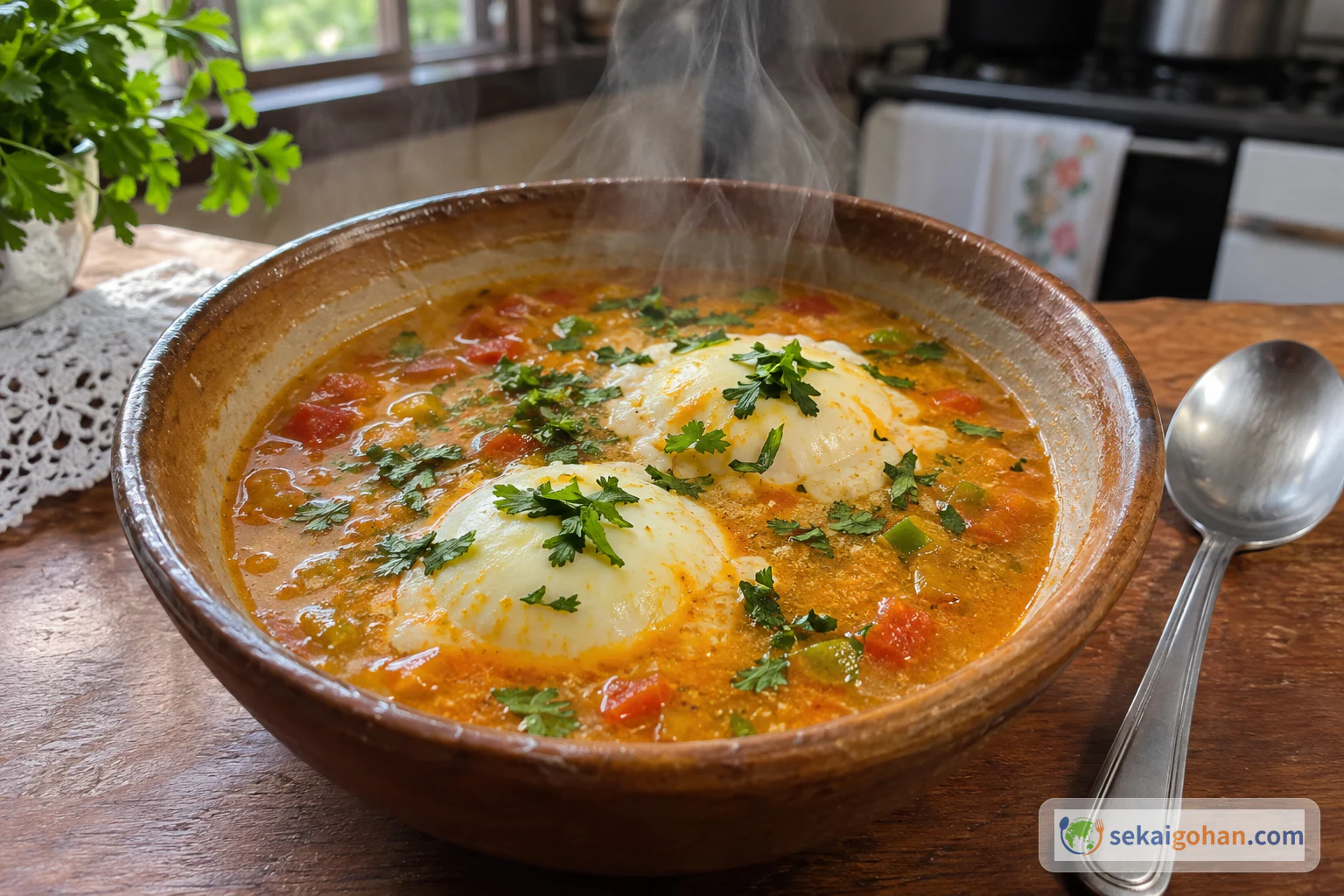
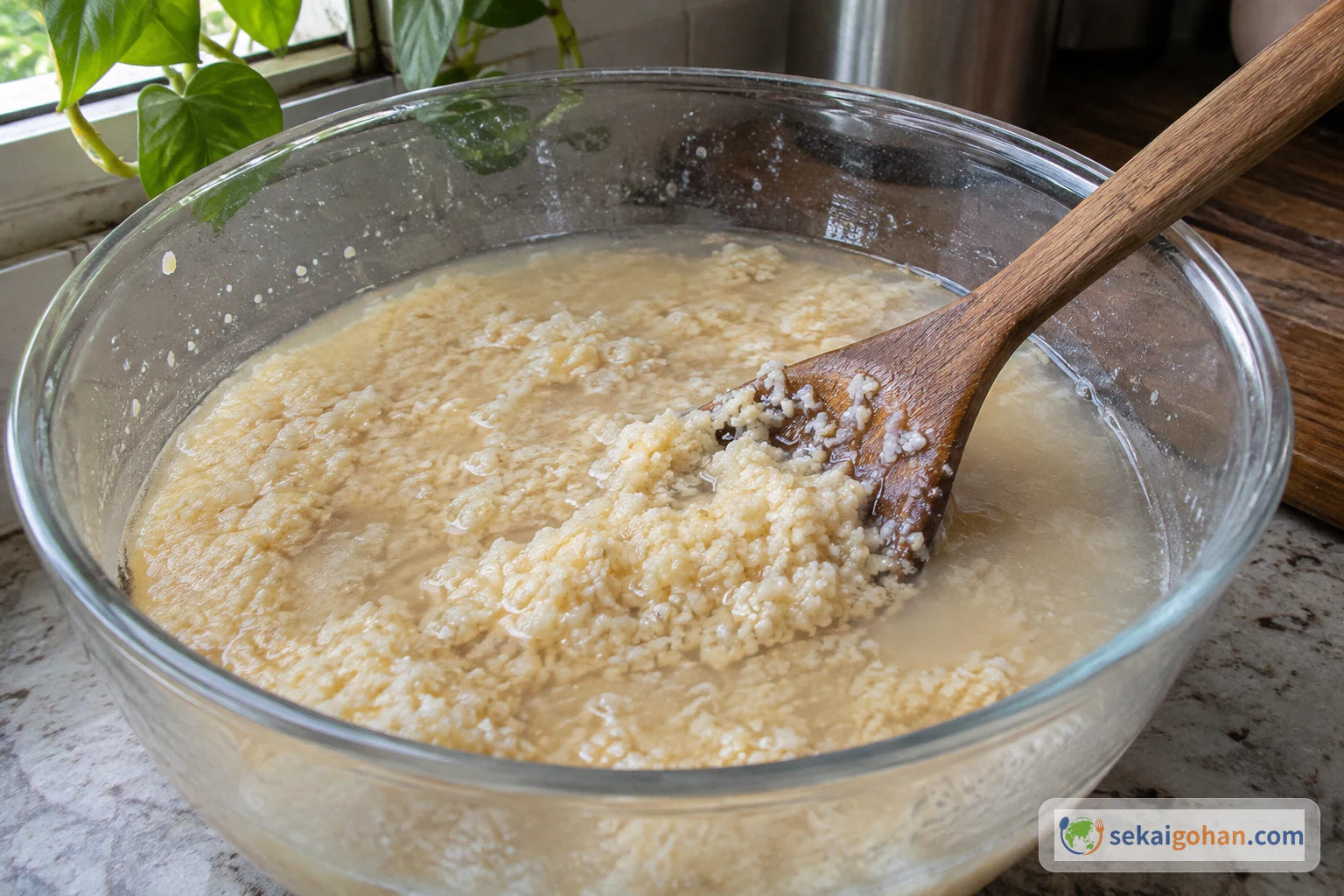
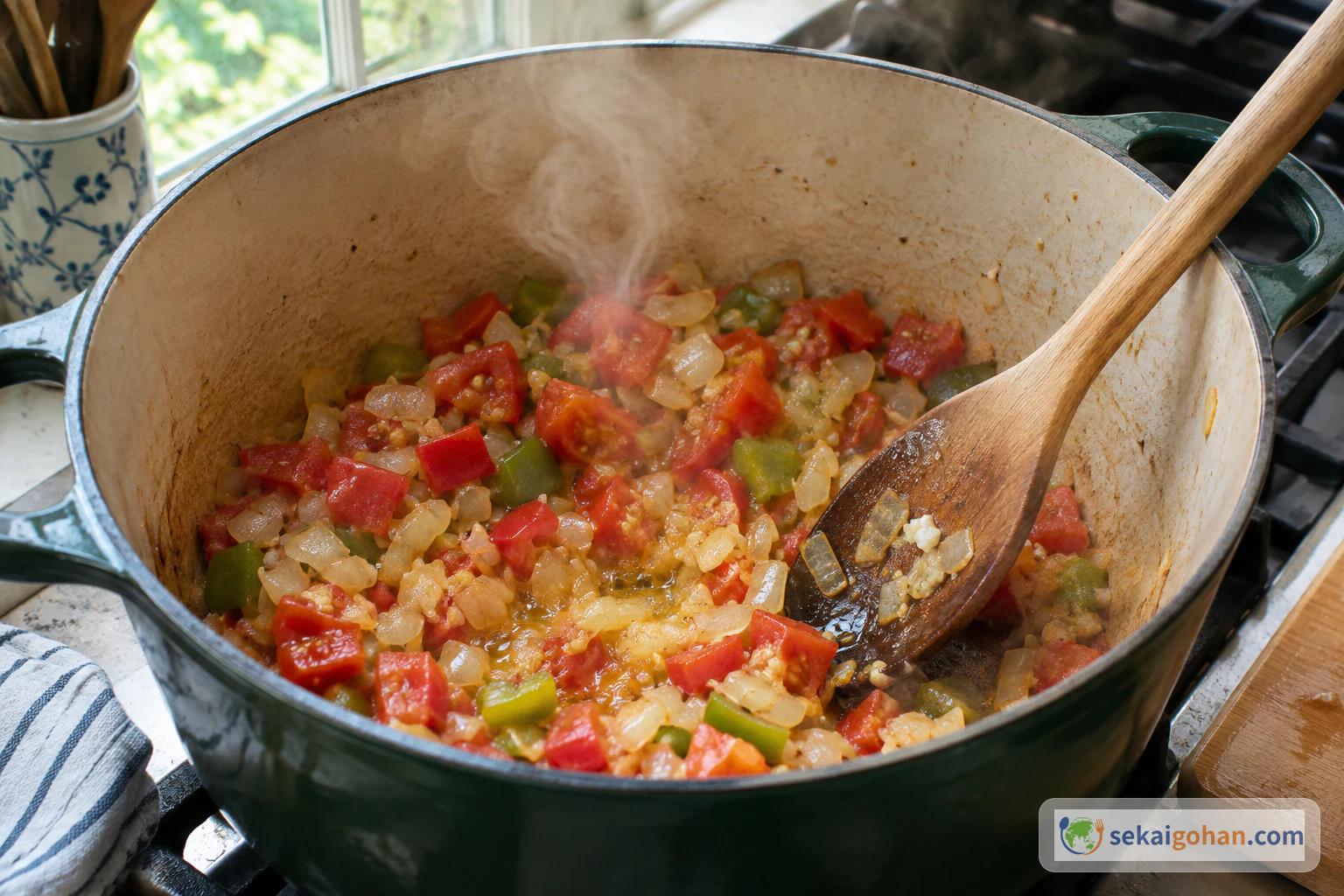
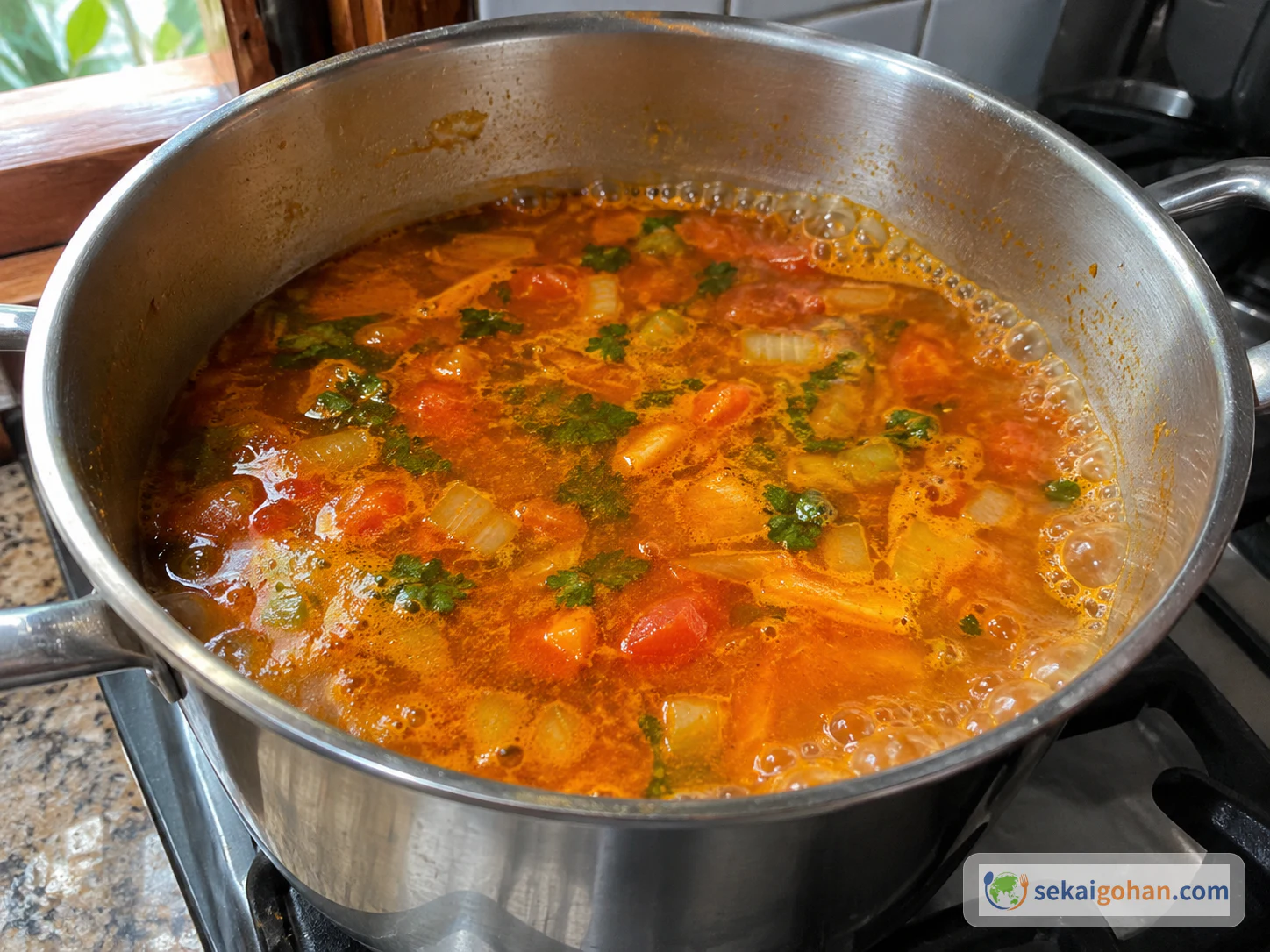
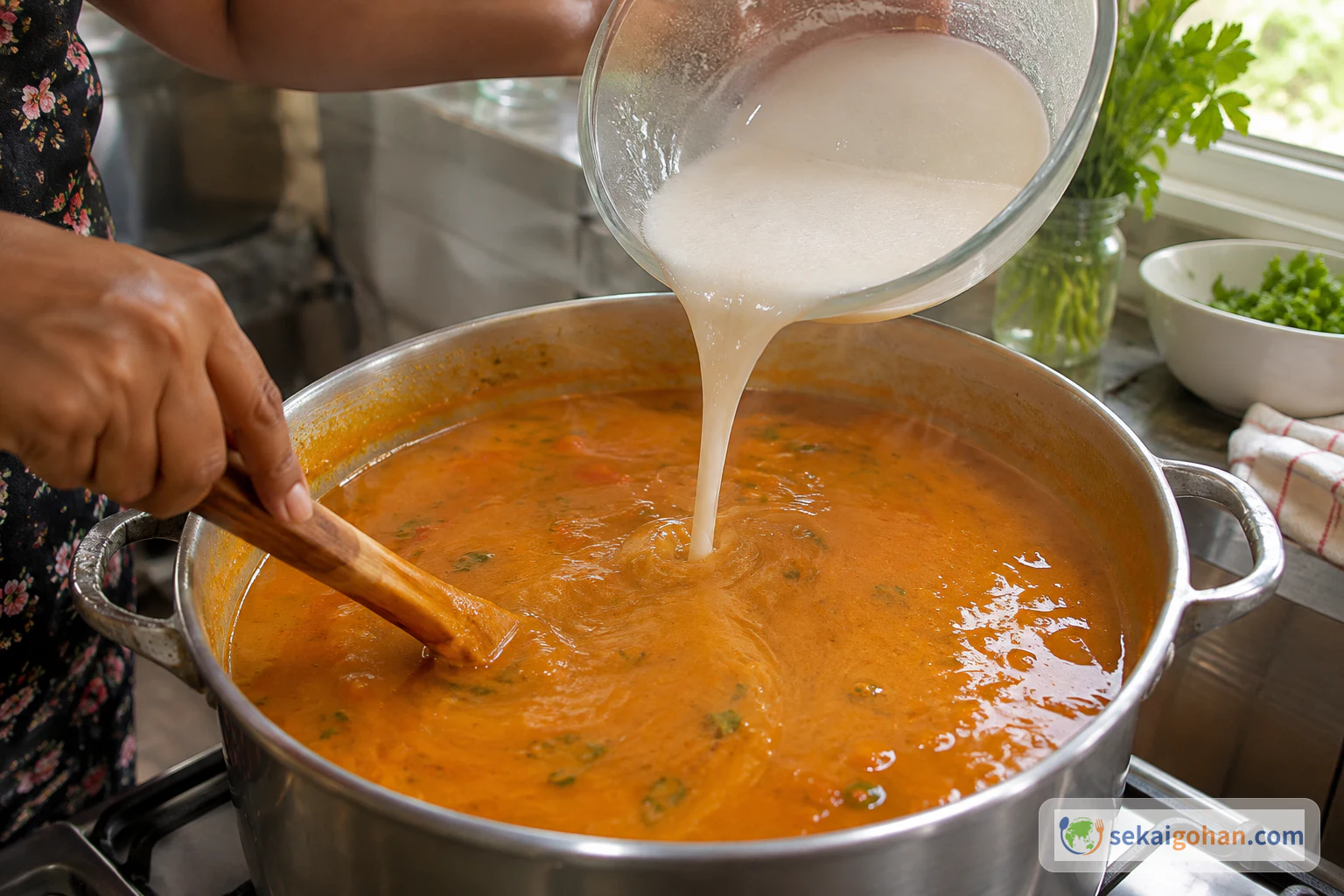
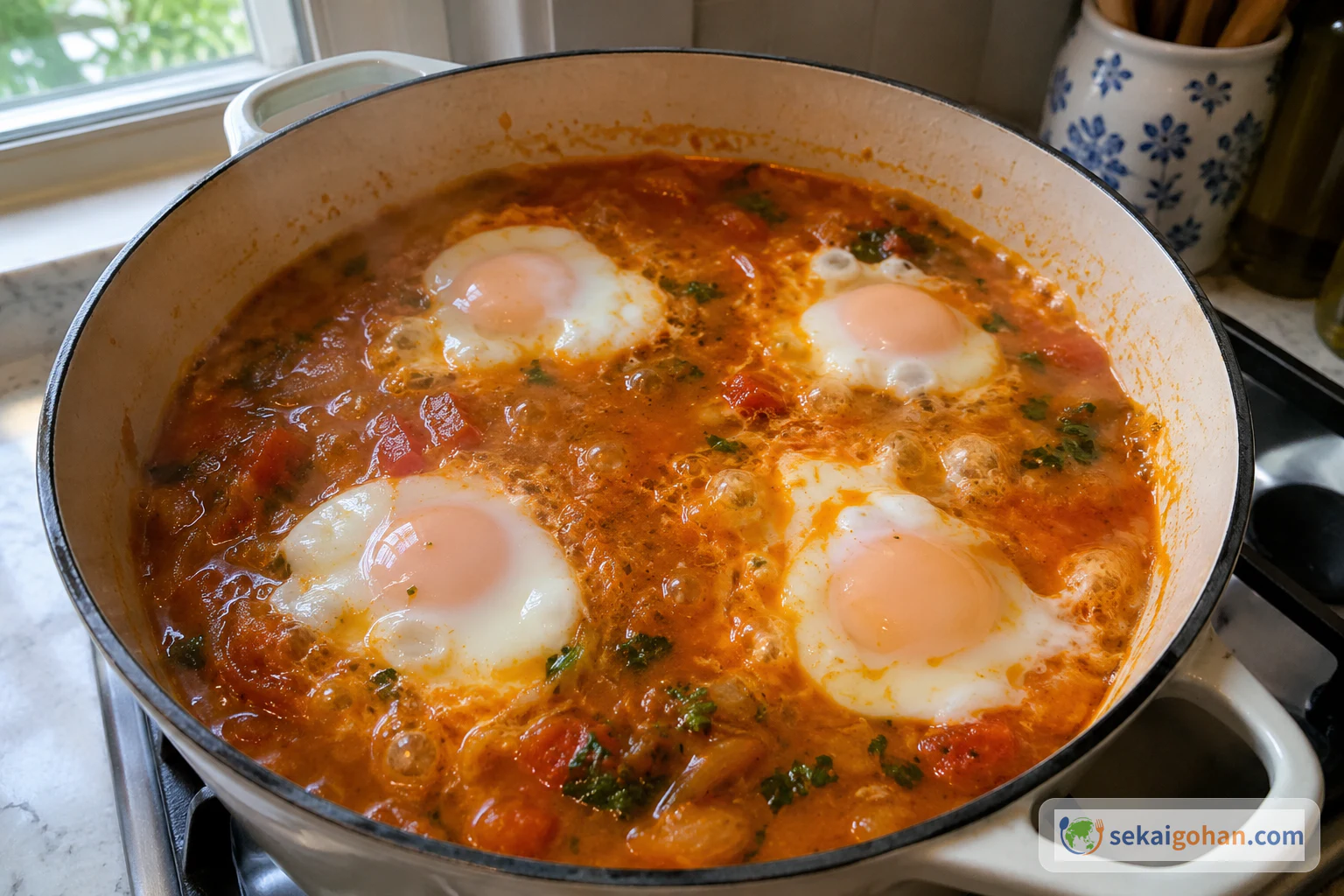

The soaked flour goes into the orange broth in one pour, and from then on the spoon keeps moving. Soon the soup loses its watery shine. It turns soft and slightly thick, like a thin porridge, and the kitchen smells of onion, garlic, sweet pepper and warm lard. Then the eggs slide in one at a time and the pot is left alone while they set.
Cabeça de galo is the cassava flour and egg soup of Northeast Brazil, especially the states of Pernambuco and Paraíba. It is golden, mild underneath, seasoned above all with pepper, and every bowl gets a whole egg.
Rooster's Head: A Northeastern Soup Built on Farinha
The name means "rooster's head", but no part of a bird goes into the pot. The broth is water, a sautéed base of vegetables, cassava flour and eggs.
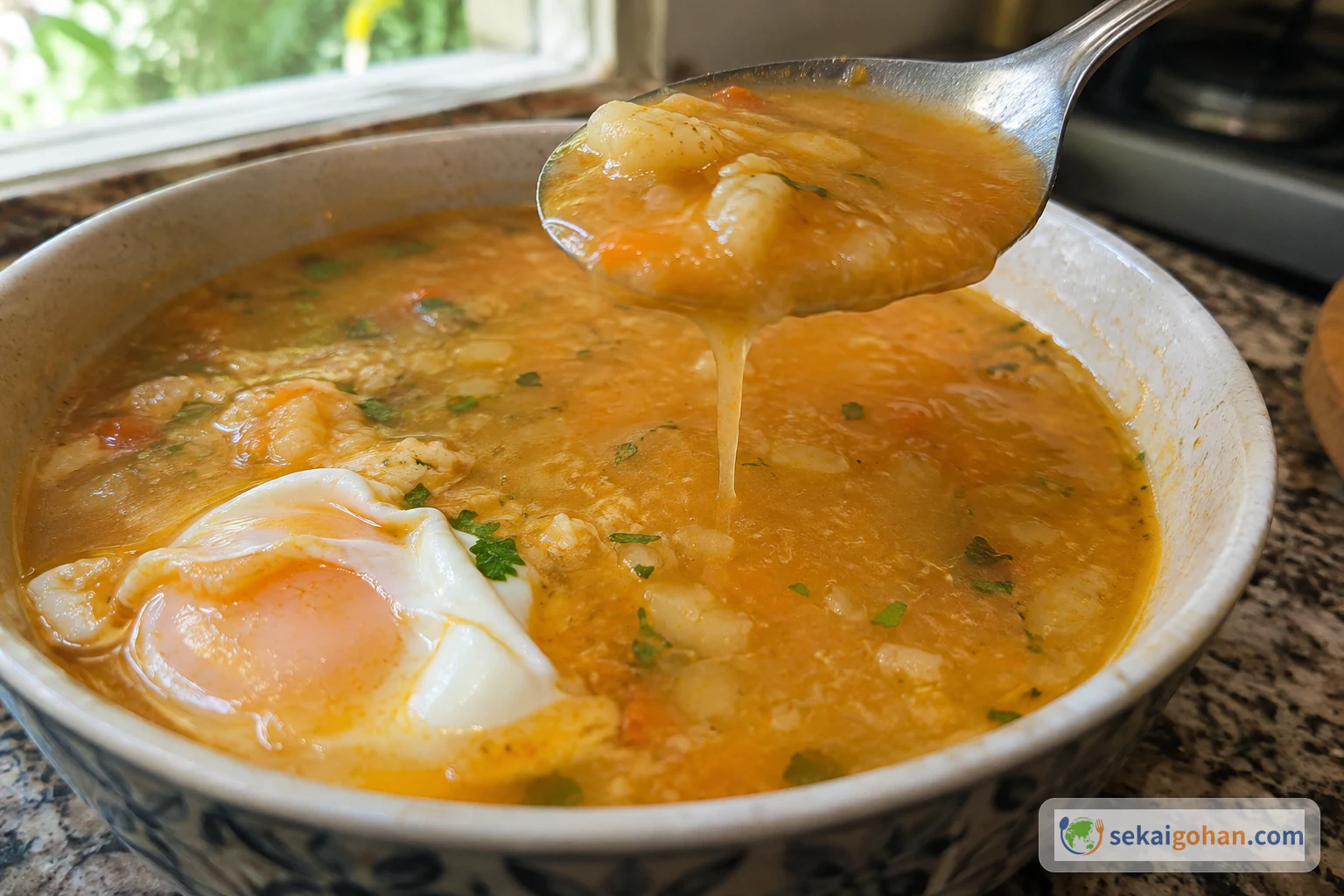
The heart of the dish is farinha de mandioca, the coarse, dry cassava flour found all over Brazil, which is also the base of farofa and many other dishes across the country. Here it does the work flour or cream does in other soups. Soaked in water and then simmered, the grains swell and soften until they give the broth body. They don't dissolve completely, so the texture stays soft and lightly grainy, closer to a loose porridge than a smooth velouté.
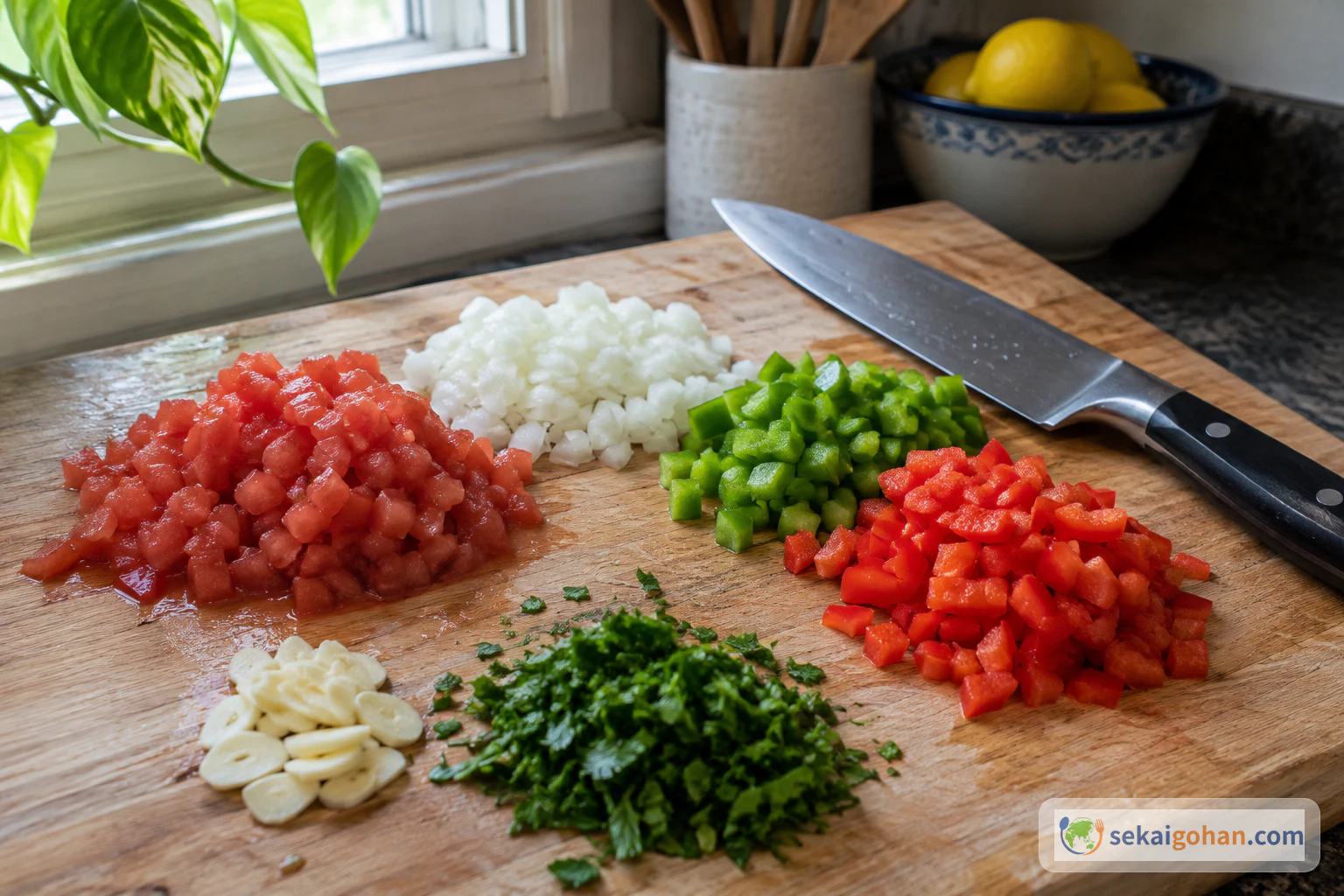
Under the flour sits a refogado, the Brazilian base of onion, garlic, tomato and peppers softened in fat. In this soup it is cooked in lard and coloured with açafrão and colorau, which turns the broth golden-orange. Black pepper is the seasoning people notice most. Herbs go in twice, once in the base and again at the end, so the last spoonful smells as fresh as the first.
Recipes vary from kitchen to kitchen. One pot uses more flour and less water, another adds an extra egg, and some cooks skip the soaking and sprinkle the flour straight into the pot. A version thickened with wheat flour also exists under the name caldo forte, "strong broth." It is a different method with a different texture, and the cassava version below is the one tied to the Northeast.
Cabeça is "head" and galo is "rooster." The same soup is sometimes called sopa cabeça de galo, and caldo forte also turns up as another name.
Ingredients
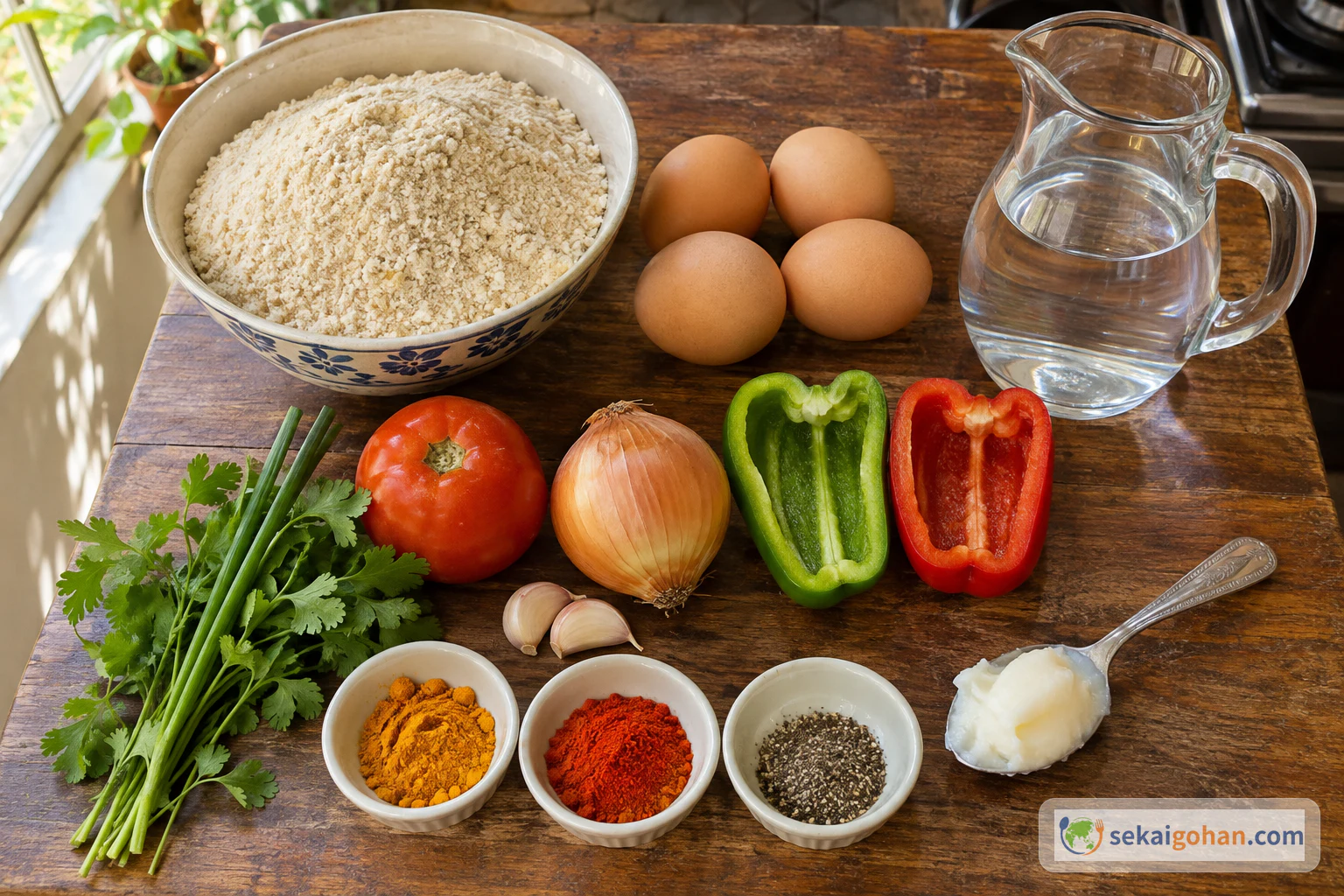
This makes about 10½ cups (2.5 L) of soup with four eggs.
This soup contains egg, and the lard is pork fat. Colorau, spice blends and packaged flours are sometimes processed alongside other allergens, so check the labels on the packs you buy.
Equipment
- Large pot, wide enough for four eggs to sit side by side
- Mixing bowl for soaking the flour
- Cutting board and knife
- Wooden spoon
- Small cup or bowl for cracking each egg
- Ladle
Shopping for Farinha, Colorau and the Herbs
Get the flour right and the rest can bend. Farinha de mandioca is sold at Brazilian food shops. Look for coarse, pale granules. Tapioca starch is a different product. It turns the broth glossy and stretchy instead of softly grainy, so if you use it you get a different soup. Use coarse farinha rather than a fine baking flour, which would not give the same soft, lightly grainy texture.
The other swaps are easy and each changes one thing:
| Ingredient | Swap | What changes |
|---|---|---|
| Lard | A neutral oil | The base works the same. The pork savouriness goes |
| Açafrão | Ground turmeric | Gives the golden colour and earthy aroma |
| Colorau | Sweet paprika with a little annatto | Close in colour. Paprika alone tastes a little sweeter |
| Pimenta-de-cheiro | Leave it out | You lose a floral, fruity note. It brings fragrance, not heat, so don't swap in a hot chili |
| Cheiro-verde | Scallions with cilantro or parsley | Close enough. Keep enough back for the finish |
To taste like the Northeast, the soup needs real farinha de mandioca, black pepper and the egg. Lard, colorau and the aromatic chili add depth, but their substitutes still give you cabeça de galo.
Method
Allow about an hour: roughly 20 minutes at the cutting board and 40 at the stove. Chop everything first, then get the flour soaking in its bowl before the pot goes on, so it has the whole time the base takes to soften. Once the flour is in, stay at the stove and keep stirring. When the eggs go in, the work is done and you just watch.
When It Goes Wrong
| What you see | Why | What to do |
|---|---|---|
| Lumps of flour floating in the broth | The flour went in dry, or the spoon stopped as it hit the pot | Soak the flour first and stir constantly as it goes in. If you add dry flour, sprinkle it in little by little while stirring |
| A burnt smell and dark bits from the bottom | The thick soup sat without stirring | Pour the soup into a clean pot without scraping the bottom, and keep the spoon moving from then on |
| Shreds of egg white clouding the soup | The pot was stirred after the eggs went in | Leave the pot still until the eggs set, then lift each one out whole with the ladle |
| The broth is glossy and stretchy | Tapioca starch or another starch was used in place of farinha | Next time buy coarse farinha de mandioca |
| The soup tastes flat | Not enough salt or pepper | Season after the flour has thickened the broth, and be generous with black pepper |
Serving and Variations
At the table
Cabeça de galo is a one-bowl meal. Put the pot on the table with extra chopped herbs and a dish of sliced chili, and let everyone add what they like. Eat it hot, breaking into the egg with the spoon so the yolk mixes into the golden broth.
Variations
The quick, no-soak version. In a faster version, a little over 5 oz (150 g) of farinha goes into 6¼ cups (1.5 L) of water with five eggs. The eggs go into boiling water first and are left alone, and the dry flour is added gradually afterwards until the broth looks like a thin porridge. It is quicker, but the flour clumps more easily, so sprinkle it slowly and stir while you do.
Caldo forte with wheat flour. Under the name caldo forte, some cooks thicken a similar broth with wheat flour. The texture is different from the cassava version. Treat it as its own recipe and don't mix the two flours in one pot.
Lard or oil. Cooking the base in oil instead of lard gives a lighter, cleaner broth. Lard gives a rounder, savoury depth that carries the pepper.
Frequently asked questions
Is there any chicken in it?
No. The rooster is only in the name. The pot holds water, the vegetable base, lard, cassava flour and eggs, so all the savoury flavour comes from the refogado, the lard and the pepper.
Can I use stock or a bouillon cube instead of water?
Yes. Bouillon in the water is a shortcut some cooks use, and it gives a deeper, saltier broth. Season only after the flour has thickened the soup and you have tasted it.
Can I make it ahead?
Cook cabeça de galo to eat the same day. The cassava flour keeps drinking up broth as it sits, and the eggs are at their best right after they set, so time the eggs for when people are ready to sit down.