

Rissole: Brazilian Breaded Half-Moon Beef Pastries

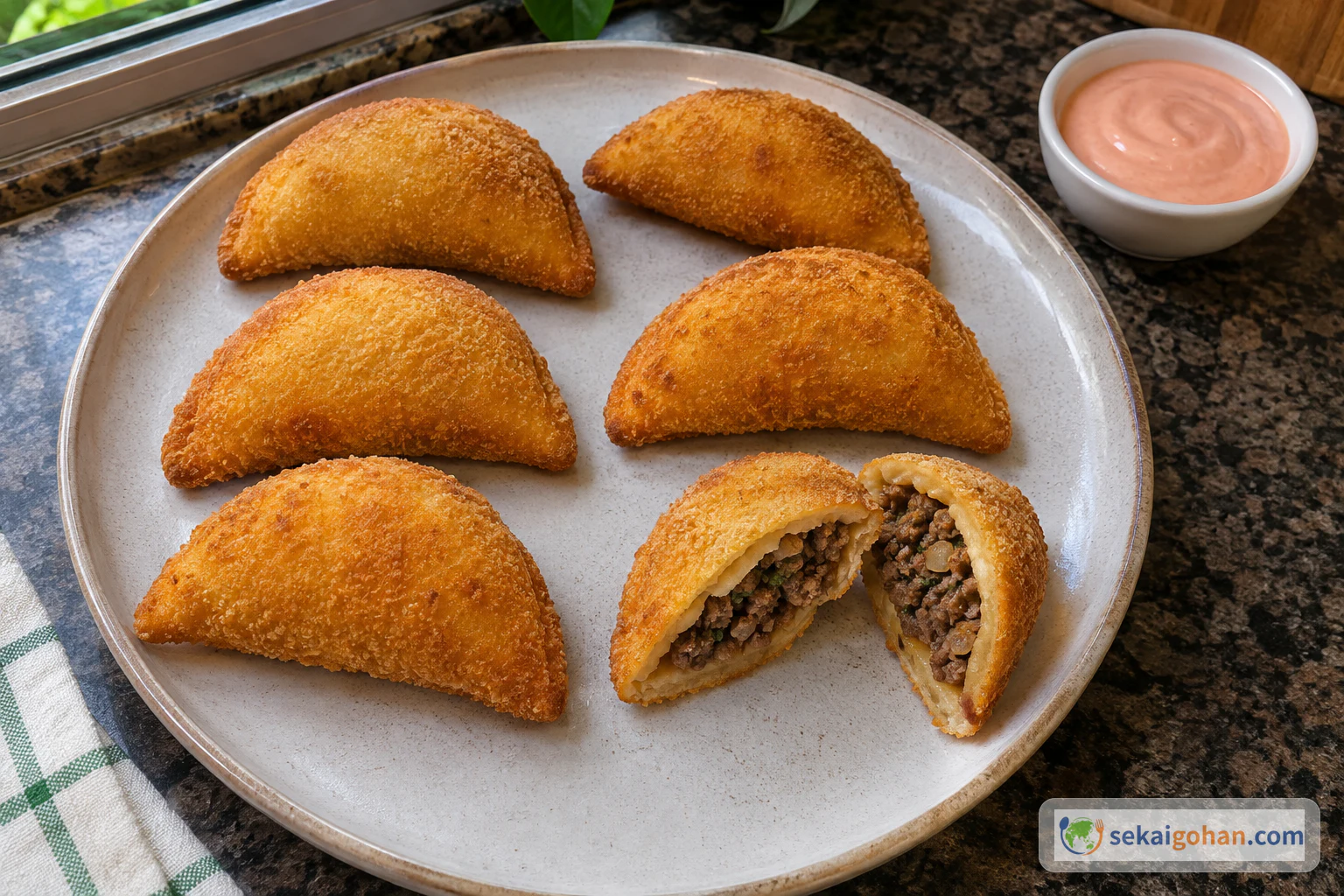
Finished Brazilian risoles: half-moon pastries fried to a golden breadcrumb crust
Level
Intermediate
Cuisine
Brazilian

Brazilian risoles, half-moon pastries of cooked milk dough around spiced beef. How to cook the dough, seal the edges, fry in batches and freeze them raw.

Cooking flow

Cooking steps

STEP11 / 11

Prepare the aromatics

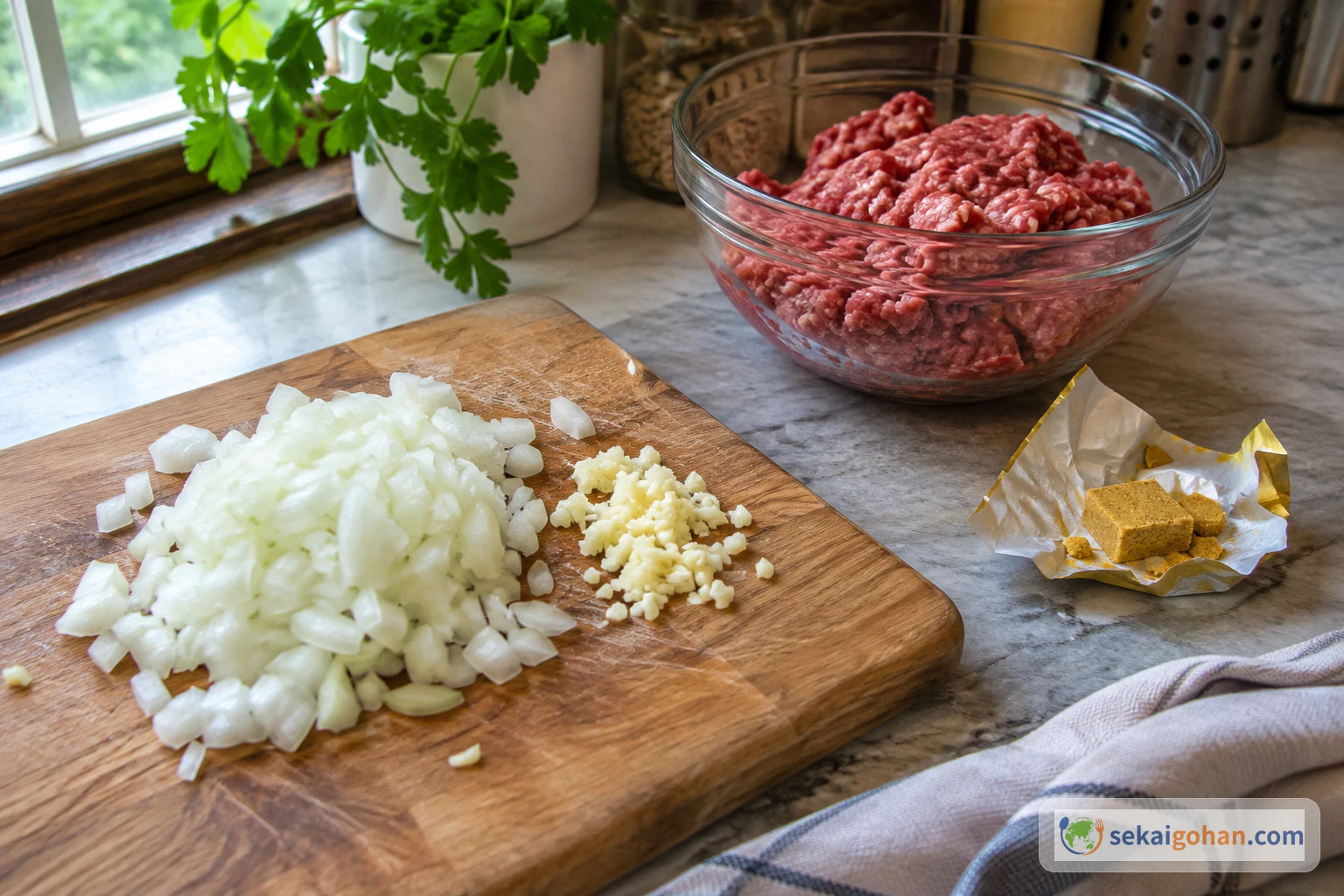
Finely chopped onion and crushed garlic beside a bowl of ground beef
Chop the onion small; large pieces tear the thin dough when you fold it

Chop the onion finely and crush the garlic. Crumble the bouillon cube and set it aside for the dough. Chop the parsley and green onion for the cheiro-verde. The onion should be in small, even pieces that will melt into the beef instead of poking through the thin dough.

STEP22 / 11

Brown the beef

STEP 2

Heat the olive oil in a skillet over medium heat. Add the ground beef and leave it alone at first so the underside takes on color. Once it has browned, break it up with a wooden spoon and keep stirring until it is browned all over.

STEP33 / 11

Season the filling and cool it

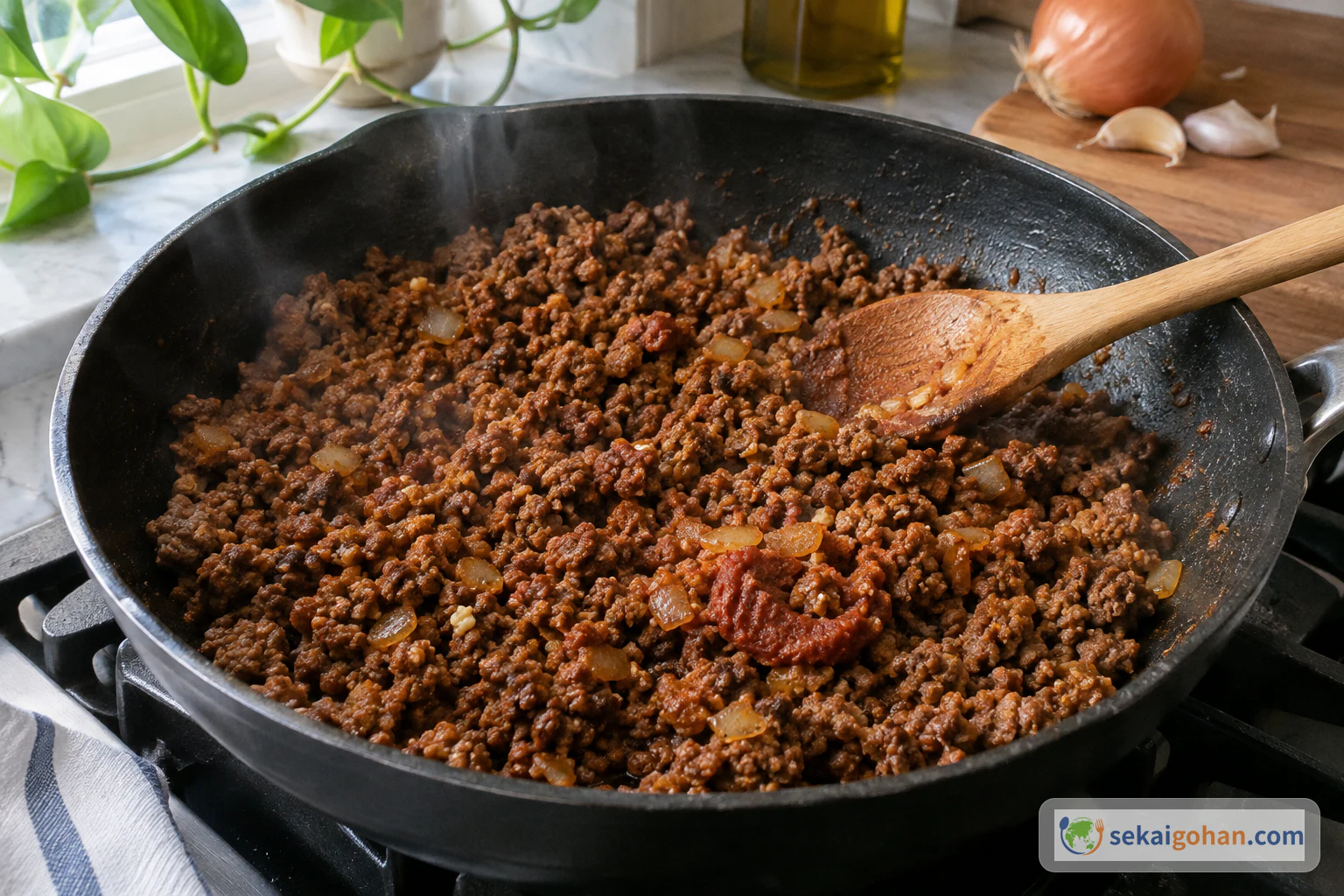
Ground beef browned in a skillet with onion, garlic and tomato paste
The filling should look loose and fairly dry, with no liquid pooling in the pan

Add the onion, garlic, salt, paprika, black pepper and tomato paste to the beef. Stir and cook for a few minutes, until the meat is cooked through completely and the mixture looks fairly dry. Stir in the cheiro-verde near the end. Spread the filling on a plate and let it cool fully before you wrap it.

Cook the beef through

Cook the ground beef thoroughly, all the way to the center of every crumb, before it goes into the dough. The frying only crisps the crust, so the filling has to be fully cooked here.

STEP44 / 11

Bring the dough liquid to a boil

STEP 4

Put the milk, water, crumbled bouillon, margarine and salt into a saucepan. Bring it to a boil, stirring as it heats so the milk does not catch on the bottom. Taste the liquid now and adjust the salt. It is ready when it is boiling, the margarine has melted and the bouillon has dissolved.

STEP55 / 11

Cook the flour into the liquid

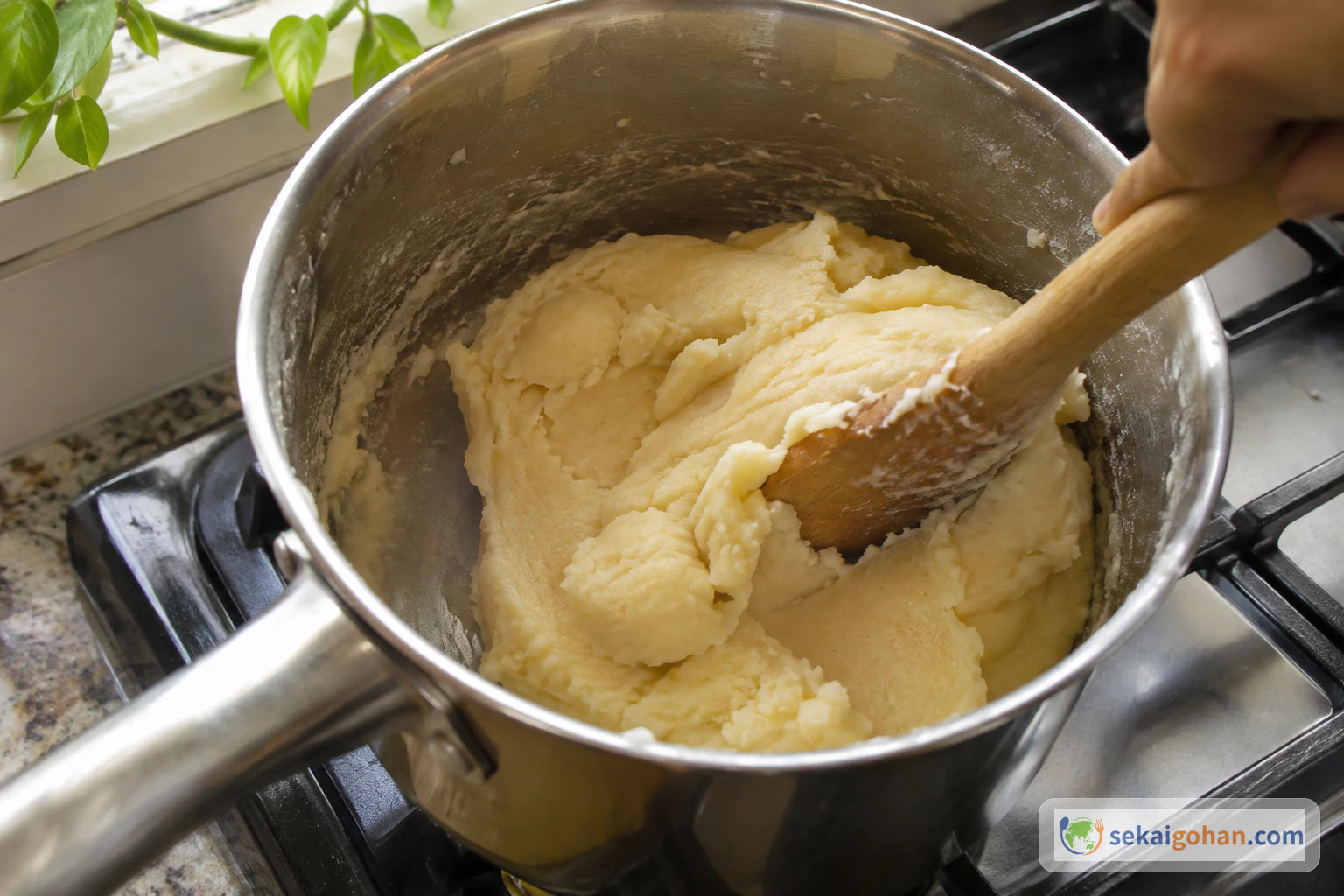
Thick pale dough stirred in a saucepan, pulling away from the sides
When the dough leaves the sides of the pan and follows the spoon, it has cooked enough

Lower the heat. Add the flour a little at a time, stirring hard after each addition so it does not form lumps. Keep stirring until it comes together into one mass, and cook it for 5 to 10 minutes. The dough is done when it is thick and pale and pulls away from the sides of the pan in a single ball.

STEP66 / 11

Knead the dough while it cools

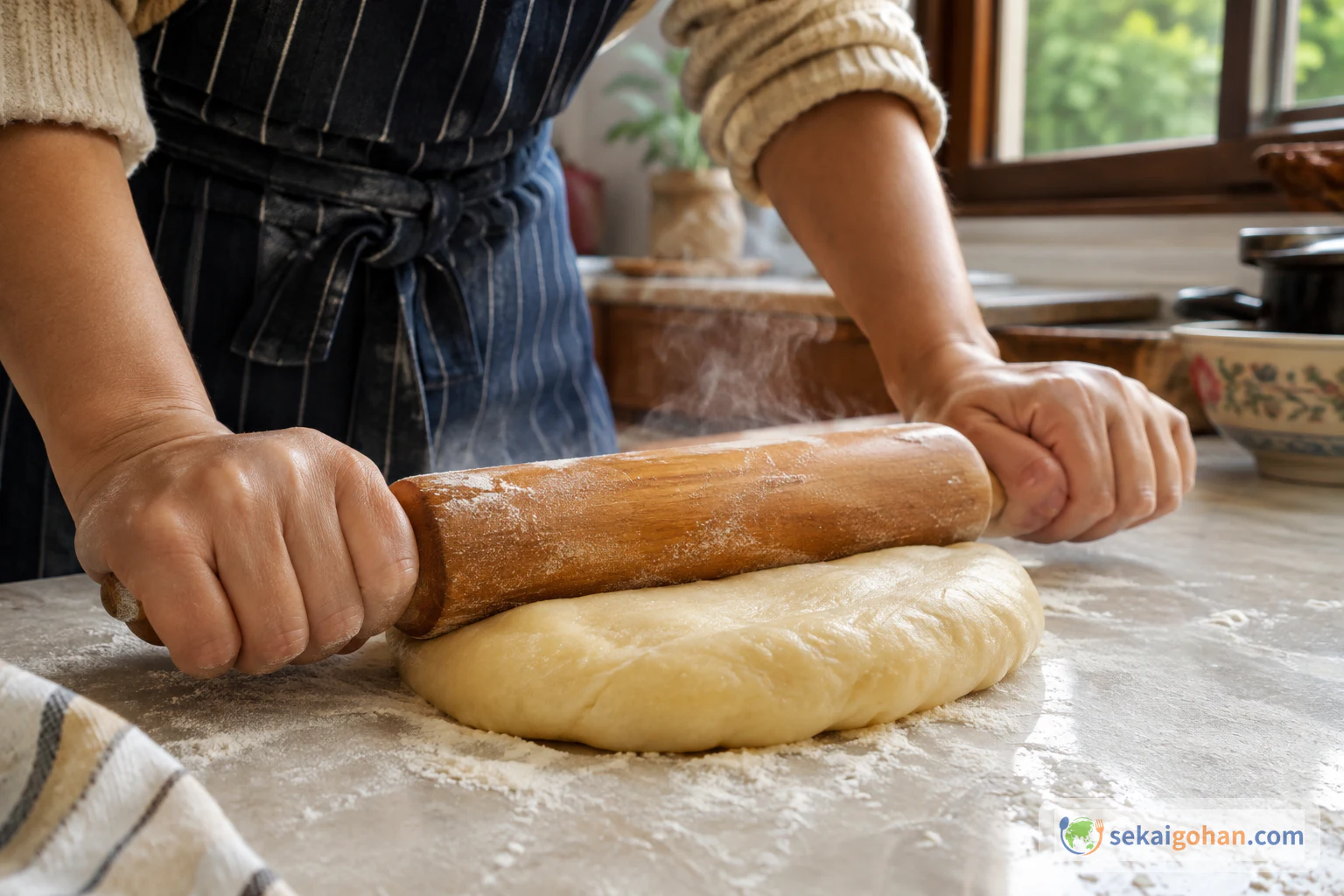
Warm dough pressed with a rolling pin on the work surface, steam rising
Work the dough while it still steams; it smooths out fastest while warm

Turn the dough out onto the work surface. Press it with the rolling pin, fold it over and press again, kneading this way as it gives off steam and cools. Keep going until it is cool enough to handle comfortably. It is ready when it is smooth and supple, with no dry streaks.

Work the dough warm

Knead the dough while it is still warm. Warm dough smooths out quickly under the rolling pin; dough that has gone cold before kneading tends to crack when you fold it.

STEP77 / 11

Roll and cut the rounds

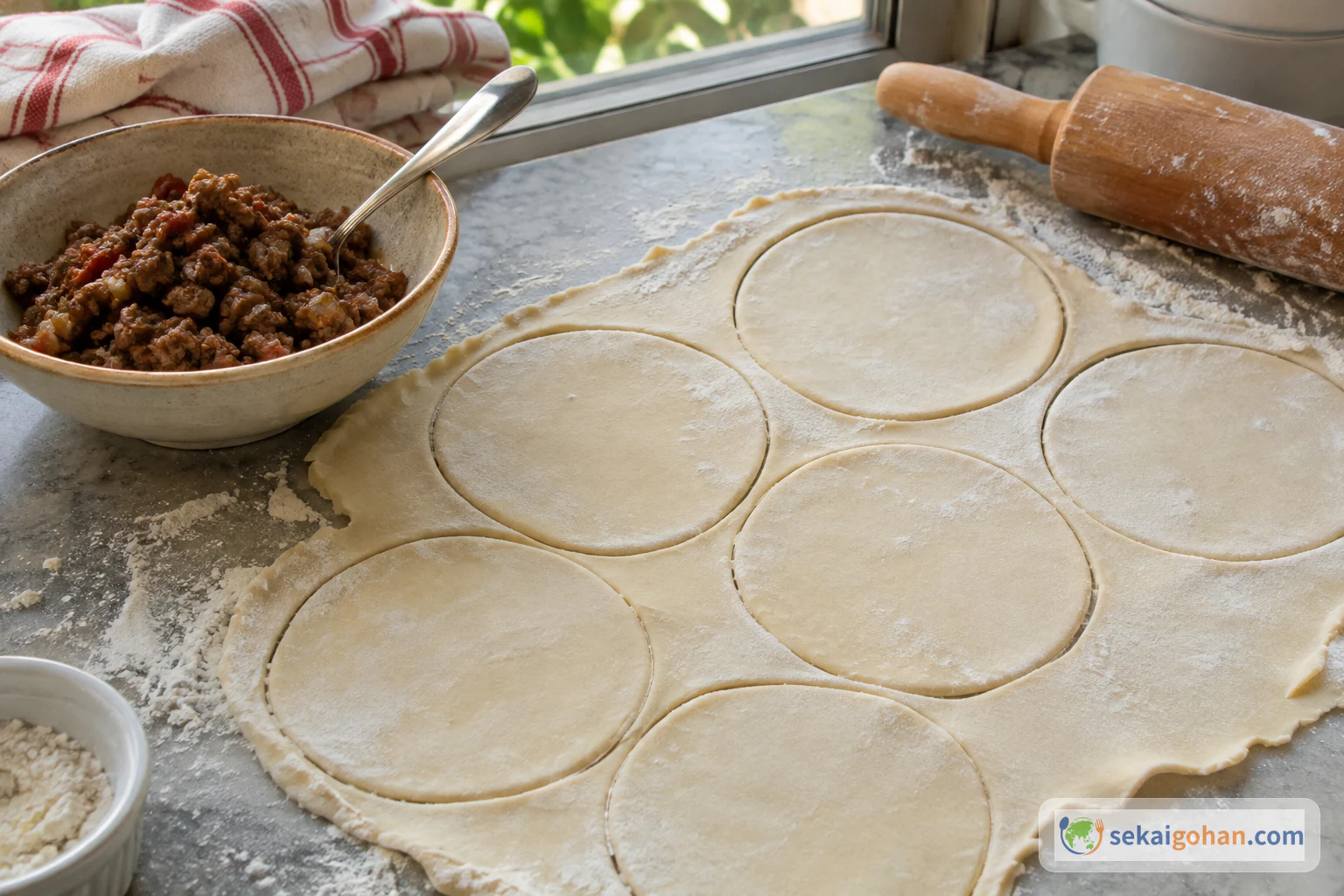
Dough rolled thin and cut into rounds, with a bowl of beef filling nearby
Cut cleanly so the edge seals in one smooth line

Take a portion of dough of about 2 oz (60 g). Roll it into a round about 1/16 inch (2 mm) thick on the work surface, and trim it into a neat circle with the cutter. Keep every portion the same size so the pastries fry evenly. The round is ready when it is even all over.

STEP88 / 11

Fill, fold and seal

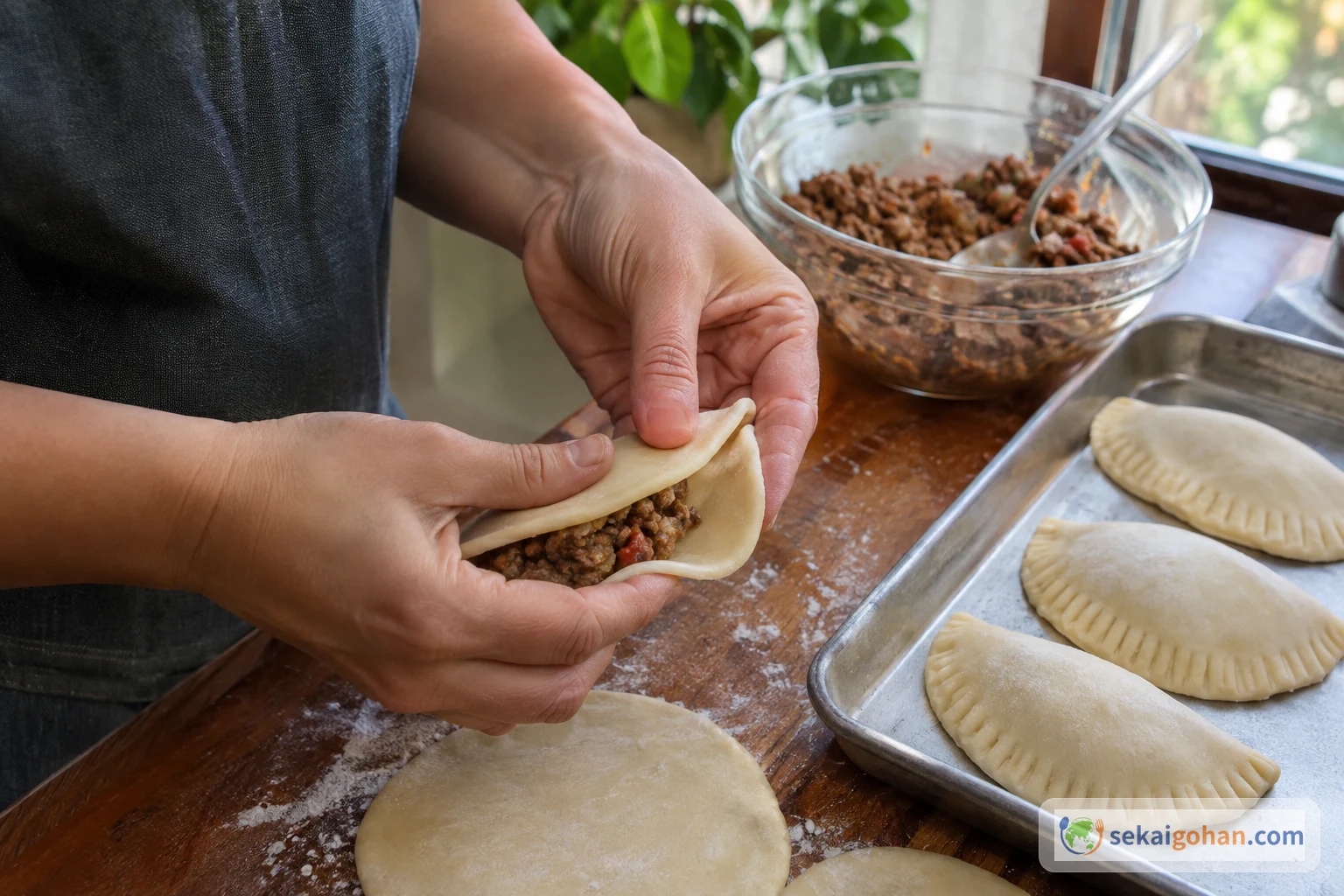
Hands folding a dough round over beef filling into a half-moon and pressing the edge
Press from the filling outward toward the edge to chase the air out

Place a spoonful of cold filling on one half of the round. Fold the other half over to make a half-moon. Press down around the filling and along the edge to push out the air, then trim any ragged edge. Repeat with the rest of the dough and filling. Each pastry is sealed when the edge is flat and stuck all the way round, with no air bubble under the dough.

Air out, edge shut

Trapped air expands in the hot oil and pushes the seam open. Press the air out before you seal, keep the filling to a modest spoonful, and press the edge firmly all the way round.

STEP99 / 11

Coat with egg and crumbs

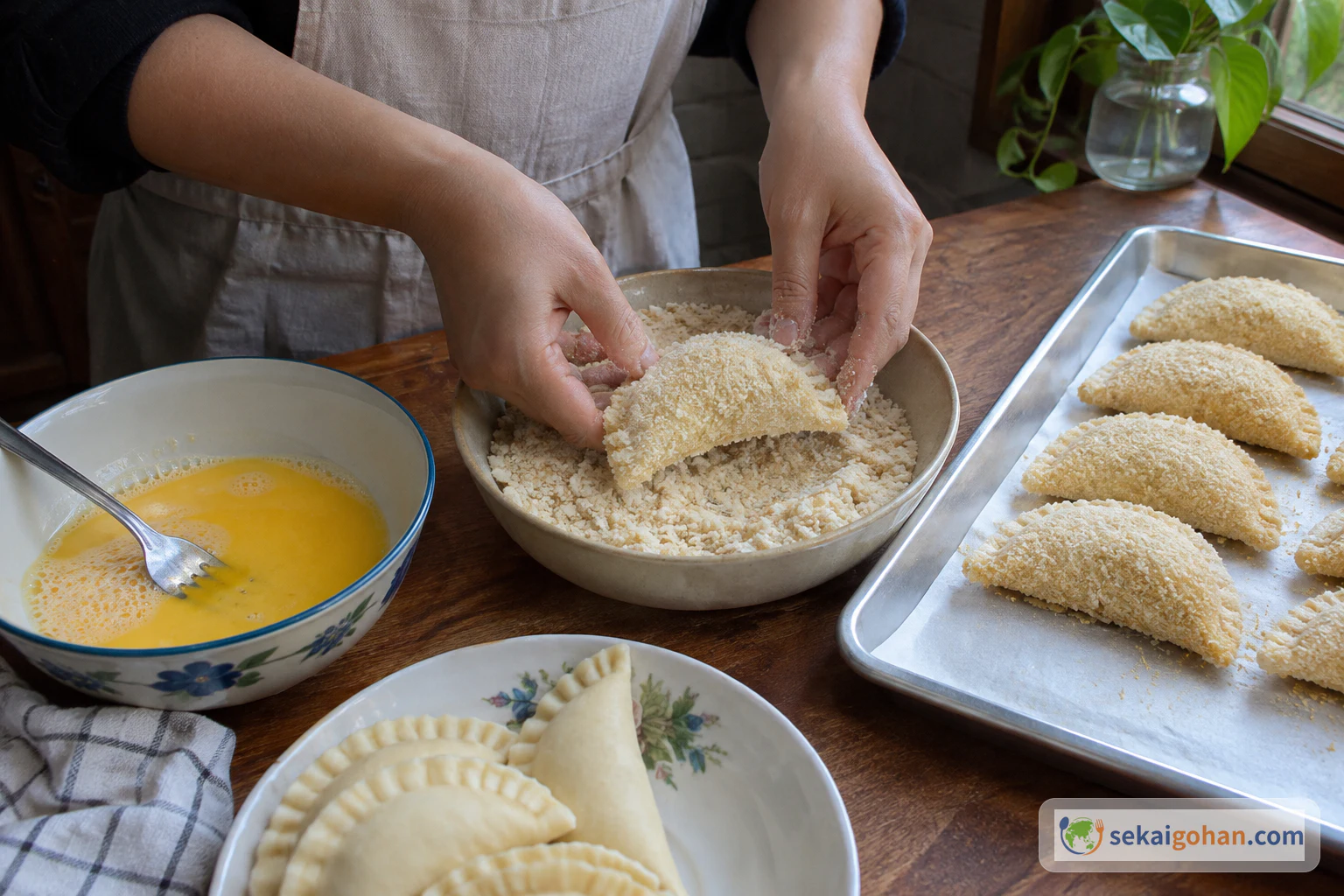
A risole coated in breadcrumbs after the egg wash, more lined up on a tray
A light press is enough; packing the crumbs on makes a heavy crust

Beat the eggs with the water and a little salt in one dish. Put the breadcrumbs in a second dish. Dip each pastry in the egg, let the excess drip off, then lay it in the crumbs and press lightly so they stick on both sides. Set the coated pastries on a tray in one layer. The coating is right when it is even, with no bare patches of dough.

STEP1010 / 11

Fry in small batches

Breaded risoles frying in a pot of hot oil, spaced apart
Leave space between pastries; crowding cools the oil and the crust soaks it up

Heat plenty of oil in a deep pot over medium heat. Lower in a few pastries at a time, spaced apart, so the oil temperature does not drop. Fry them until the crust is golden all over.

Hot oil

Keep water and wet utensils away from the oil. Use a deep pot with plenty of room above the oil, lower the pastries in gently, and never leave the pot unattended while the oil is hot.

STEP1111 / 11

Drain and serve

Freshly fried risoles draining on a rack over paper towels, one broken open to show the beef
Drain them on a rack so the underside stays crisp

Lift the risoles out with a slotted spoon, letting the oil drip back into the pot. Lay them on paper towels or a rack set over paper towels. Serve hot with ketchup or molho rosé.

0 / 0
Ingredients

Ingredients

1 / 1

Ingredients

Ingredient Amount Role
Milk (leite) 1 cup (250 ml) Dough: flavor and richness
Water (água) generous ¾ cup (200 ml) Dough: loosens it
Chicken bouillon cube (caldo de galinha) 1 Dough: salt and savory depth
Margarine (margarina) 1 heaping tbsp Dough: smoothness
Salt (sal) to taste Dough: seasoning
Wheat flour (farinha de trigo) 3 Brazilian measuring cups (xícaras de chá) Dough: structure
Olive oil (azeite) 2 tbsp Filling: browning the beef
Onion (cebola) ½ Filling: finely chopped, sweetness
Garlic (alho) 2 cloves Filling: crushed
Ground beef (carne moída) 9 oz (250 g) Filling: the body
Tomato paste (extrato de tomate) 1 spoonful Filling: color and depth
Paprika (páprica) ½ tsp Filling: color and aroma
Cheiro-verde (chopped parsley and green onion) to taste Filling: fresh herb finish
Salt and black pepper to taste Filling: seasoning
Eggs (ovos) 2 Coating: binds the crumbs
Water ½ cup (120 ml) Coating: thins the egg
Salt to taste Coating: seasoning
Fine breadcrumbs (farinha de rosca) as needed Coating: the crisp crust
Oil for deep-frying as needed Frying
Ketchup or molho rosé to taste For serving
0 / 0

Lift a risole out of the oil and the fine crumb is an even, deep gold, the straight sealed edge of the half-moon still crackling as it lands on the paper. In Brazil these come from the counter at the bakery, from bars, cafés and street sellers, and by the trayful at parties and at Christmas. Inside a thin, soft dough cooked with milk sits a spoonful of ground beef browned with onion, garlic, tomato paste and paprika, and around it all is a crust that breaks with a crunch. The name travels badly: in Australia and New Zealand a rissole is a meat patty, in Ireland a potato croquette, and France and Indonesia each have their own dish under a similar name. This is the Brazilian one, the breaded half-moon of the snack counter.

A Snack-Counter Pastry With a French Name

The name is usually traced to the French verb rissoler, to brown in fat, which in turn comes from the Latin russeolus, reddish. The pastry reached Brazil by way of Portugal, where the same family goes by rissol. When it made that crossing is not settled, but the browning in the name is exactly what the cook is after at the stove: a golden shell.

In Brazil the risole lives where people stop for something savoury and quick. Bakeries, bars and cafés keep them alongside their other fried snacks, street sellers carry them, and they turn up in quantity whenever there is a party to feed, Christmas included. They are made small enough to eat in two or three bites, usually with a dab of ketchup or a pink molho rosé on the side.

The fillings change from counter to counter and kitchen to kitchen. Ground beef, ham and cheese, chicken, shrimp and palm heart (palmito) are all common. A whole second branch of fillings is creamy: shrimp, salt cod, fish, chicken or palm heart cooked with onion, garlic and tomato, then thickened with flour and milk until spoonable. The beef version here is the everyday one, dry enough to stay put inside a thin, rolled dough.

Its closest neighbour is the coxinha, which also wraps its filling in a dough cooked in liquid on the stove. The coxinha holds shredded chicken and is shaped into a teardrop; the risole is a flat half-moon of rolled dough around beef, or ham and cheese. Both belong to the same savoury-snack corner of Brazilian cooking, and a party table often has a tray of each.

Spelling

Brazil writes risole, plural risoles; Portugal writes rissol. Searching in English for "Brazilian risoles" keeps the half-moon pastry apart from the Australian meat patty and the Irish croquette that share its name.


Ingredients
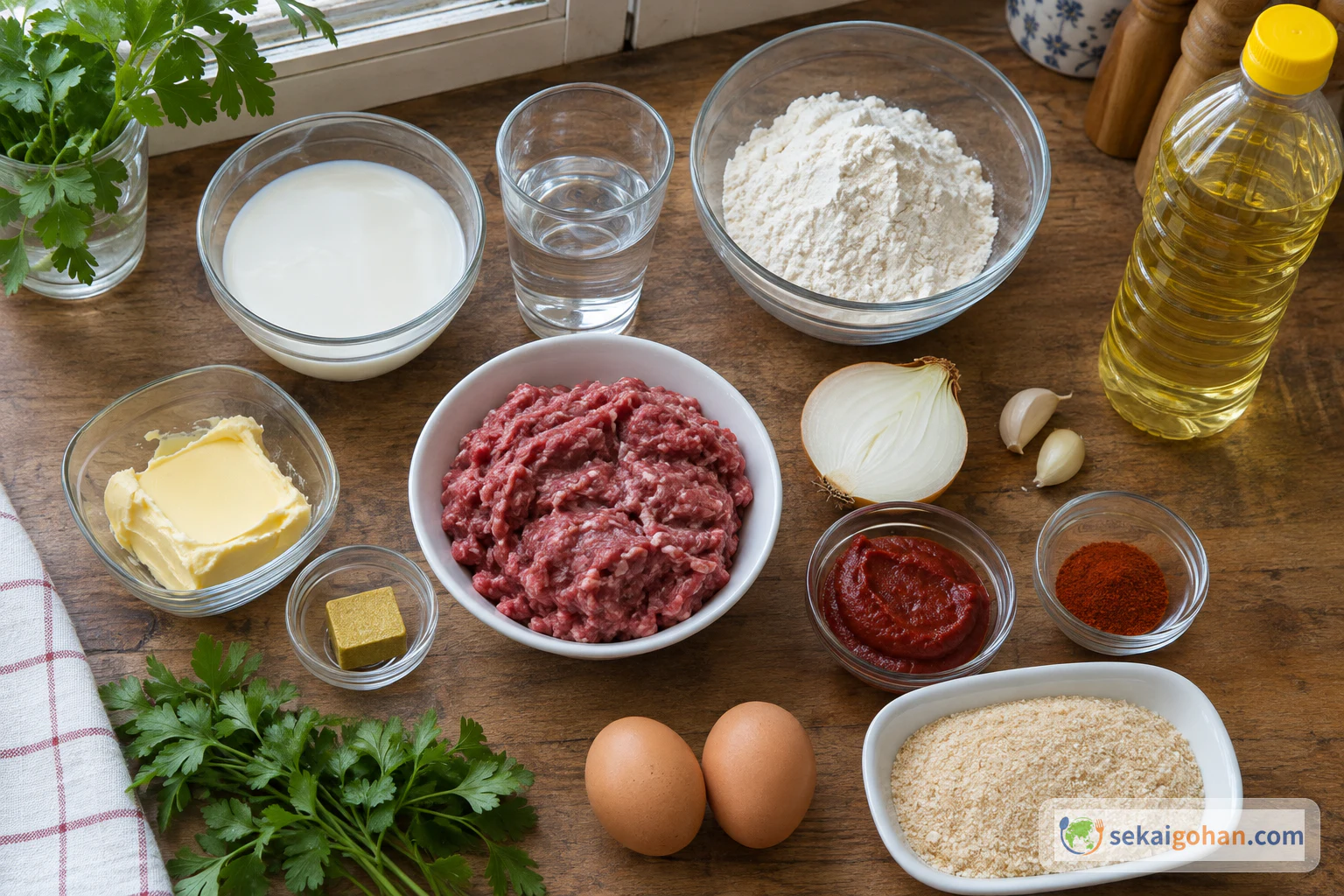
Ingredients for risoles: milk, water, flour, ground beef, onion, garlic, eggs, breadcrumbs and frying oil
The dough needs only pantry staples; the bouillon cube is what seasons it
The crumb decides the crust

Brazilian farinha de rosca is a fine, sandy breadcrumb. It gives the thin, tight, even-gold shell that makes a risole look like a risole. If your breadcrumbs are coarse, choose the finest-ground dry crumbs you can find.

Allergen information

This recipe contains wheat, milk and egg. Check the labels on the bouillon cube, margarine and breadcrumbs for other allergens and shared-facility statements.

Equipment

  • Deep, heavy pot for frying, with plenty of room above the oil
  • Frying thermometer, useful for keeping the oil steady between batches
  • Saucepan for the dough
  • Skillet for the filling
  • Wooden spoon
  • Rolling pin
  • Round cutter or pastry cutter
  • Two shallow dishes for the egg and the crumbs, and a tray
  • Slotted spoon
  • Paper towels or a wire rack set over paper towels

Choosing and Substituting

Nearly everything here comes from an ordinary supermarket. The few Brazilian items have easy stand-ins, and each one shifts the result a little.

  • Margarine → butter. Works well in the dough; the flavor turns richer and more buttery than the Brazilian snack-counter taste.
  • Bouillon cube → granulated chicken stock or another stock cube. Salt levels differ between brands, so taste the liquid before the flour goes in and adjust the salt.
  • Farinha de trigo → all-purpose flour. Brazilian wheat flour is plain everyday flour. All-purpose, or a softer pastry flour, gives the right supple dough; bread flour makes it tough.
  • Cheiro-verde → parsley plus green onion. Chop them together; this is the usual Brazilian herb mix.
  • Farinha de rosca → fine dry breadcrumbs. The finer the crumb, the closer the crust.

What keeps the dish Brazilian is the dough cooked in milk and stock, the half-moon shape and the fine crumb coating. The herbs, the exact fat in the dough and the dipping sauce can follow what you have.


Method

Make the filling first, because it has to be completely cool before it goes into the dough. While it cools, cook and knead the dough, then roll, fill and shape every pastry before you set up the breading station. Breading happens in one run, and the oil goes on only when the whole tray is coated.

When It Goes Wrong

What you see Why What to do
The seam splits open in the oil Air trapped inside, too much filling, or an edge not pressed shut Press the air out before sealing, use a smaller spoonful, and press the edge firmly all the way round
The crust is pale and greasy The oil is too cool, often from adding too many at once Fry fewer pastries per batch and let the oil recover before the next
The dough cracks when you fold it It cooled before it was kneaded smooth Knead it while warm, and roll each portion soon after you take it
The coating is soft after freezing They were fried before they went into the freezer Freeze them raw and breaded, then fry straight from frozen
The crust has bare patches The egg ran off or the crumbs were not pressed on Dip in egg, drip briefly, then press lightly into the crumbs on both sides

Serving, Variations and Freezing

At the table

Risoles are finger food, eaten hot from a platter with ketchup or molho rosé for dipping. They belong on a party spread next to other fried snacks, or on the counter with coffee at a bakery-style afternoon.

Variations

A ham-and-cheese risole cut open, the cheese melting
In the ham-and-cheese version, the filling melts as it fries
  • Ham and cheese. Layer ham and cheese on the dough in place of the beef. It needs no precooked filling, and the cheese melts into a soft, stretchy center. This version is fried at 350°F (177°C) for 1 to 2 minutes.
  • Creamy shrimp or chicken. Cook onion, garlic and tomato, add the shrimp or chicken and cook it through completely, then thicken with flour and milk until creamy. The result is softer and richer than the beef filling.
  • Palm heart. Make the same creamy base with palm heart for a mild, meatless filling.
  • Salt cod. Desalt the cod first, then use it in the creamy base for a briny, more festive filling.

Freezing

Freeze them raw, already breaded. Lay the coated pastries on a tray without touching and freeze for about 2 hours, then move them into a bag. They keep in the freezer for up to 3 months. Fry them straight from the freezer without thawing.


Frequently asked questions

Can I freeze risoles after frying them?

You can, but the coating goes limp. Frying them first and then freezing gives a soft crust instead of a crisp one. Freezing them raw and breaded, then frying from frozen, keeps the shell crunchy.

What is molho rosé and how do I make it?

It is a pink dipping sauce of cream and ketchup. Stir together about 1 cup (240 ml) cream and ¼ cup (60 ml) ketchup, then season with salt and pepper. It is mild and slightly sweet, which suits the salty crust.

Is cheiro-verde the same as cilantro?

Cheiro-verde is chopped parsley and green onion together. It sometimes turns up translated as cilantro, but parsley with green onion is the mix to buy. It adds a fresh green note to the browned beef.
Sources

  • Receiteria, "Risoles de carne moída fácil." Ingredients, amounts and method for the beef risole: the milk-and-stock dough cooked on the stove, portion size, rolling thickness, breading and frying in small batches. https://www.receiteria.com.br/receita/risoles-de-carne-moida-facil/
  • Easy and Delish (Valentina Dimitrova), "Rissoles (Brazilian Risoles): Crispy & Gooey." Ham-and-cheese version and its frying temperature and time, molho rosé, freezing raw and frying from frozen, where risoles are sold and eaten in Brazil, and dishes of the same name in other countries. https://www.easyanddelish.com/rissoles-brazilian-risoles-crispy-gooey/
  • Sabor Brasil (Fernanda Bocconi), "Rissol (Soft Stuffed Pastry)." The name's link to French rissoler and the route through Portugal, the half-moon shape, and creamy fillings of shrimp, salt cod, fish, chicken and palm heart. https://www.saborbrasil.it/?p=2577
  • Wikipedia, "Rissole." Derivation from Latin russeolus to French rissoler, common Brazilian fillings, and the different meanings of the name by country. https://en.wikipedia.org/wiki/Rissole