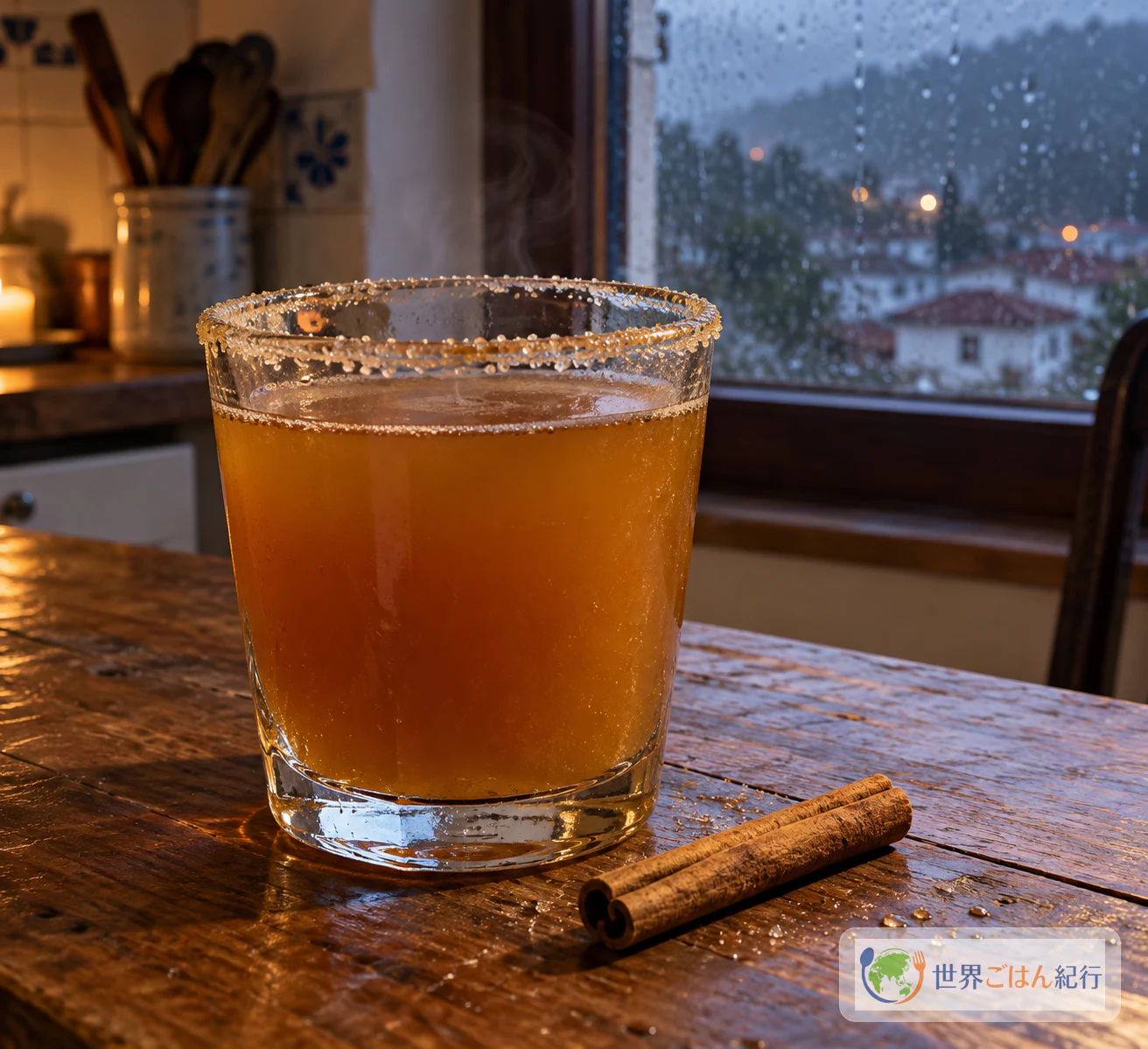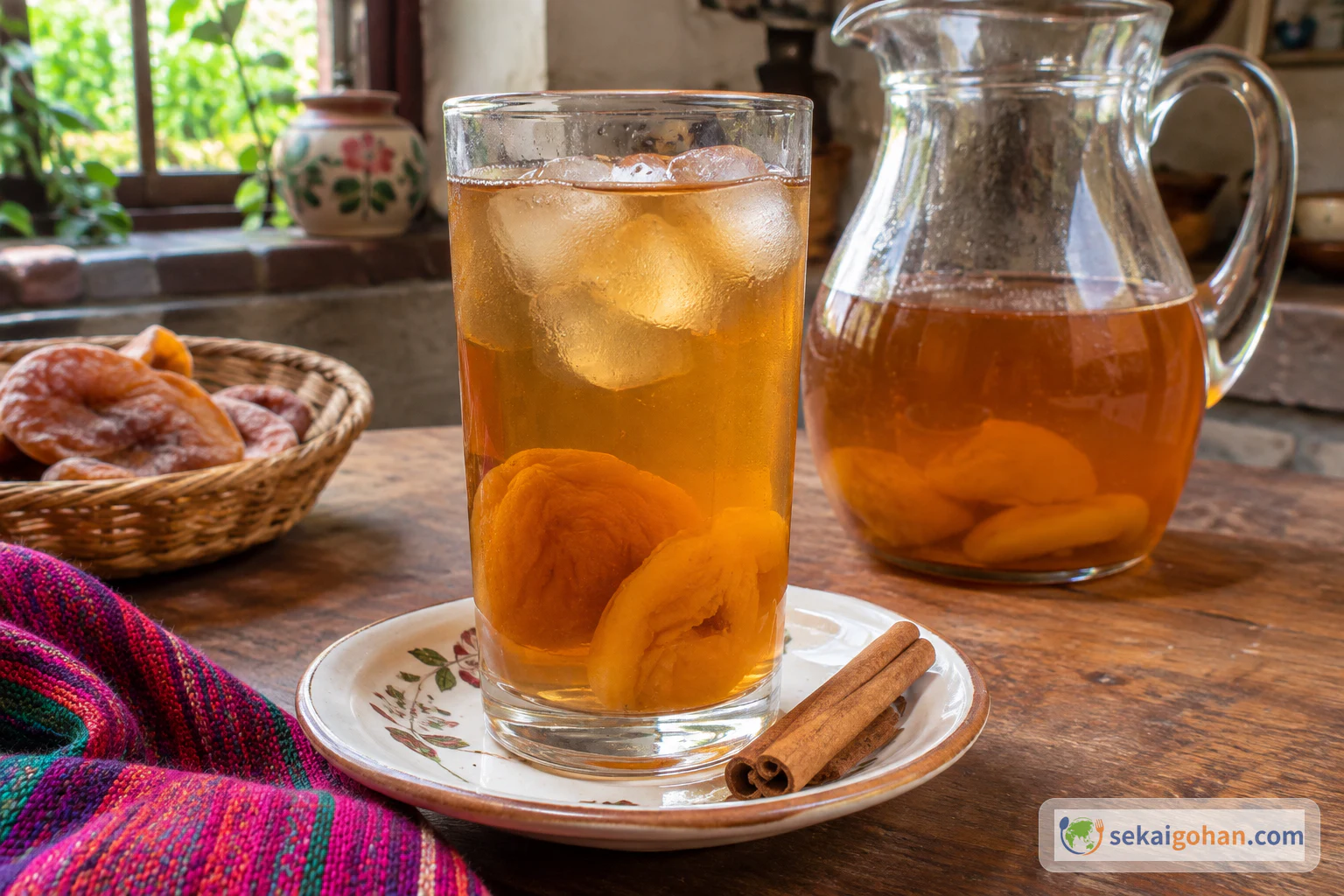
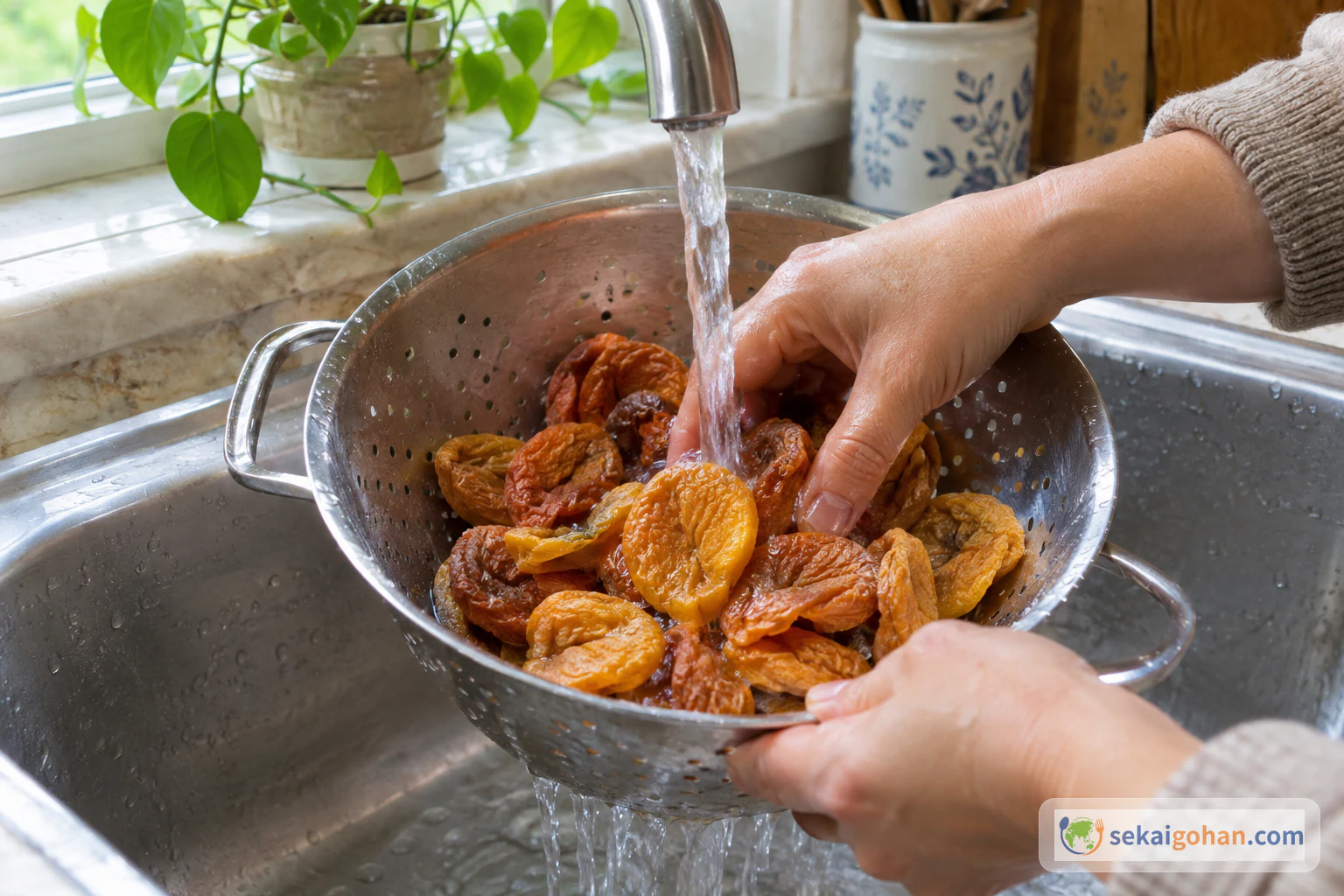
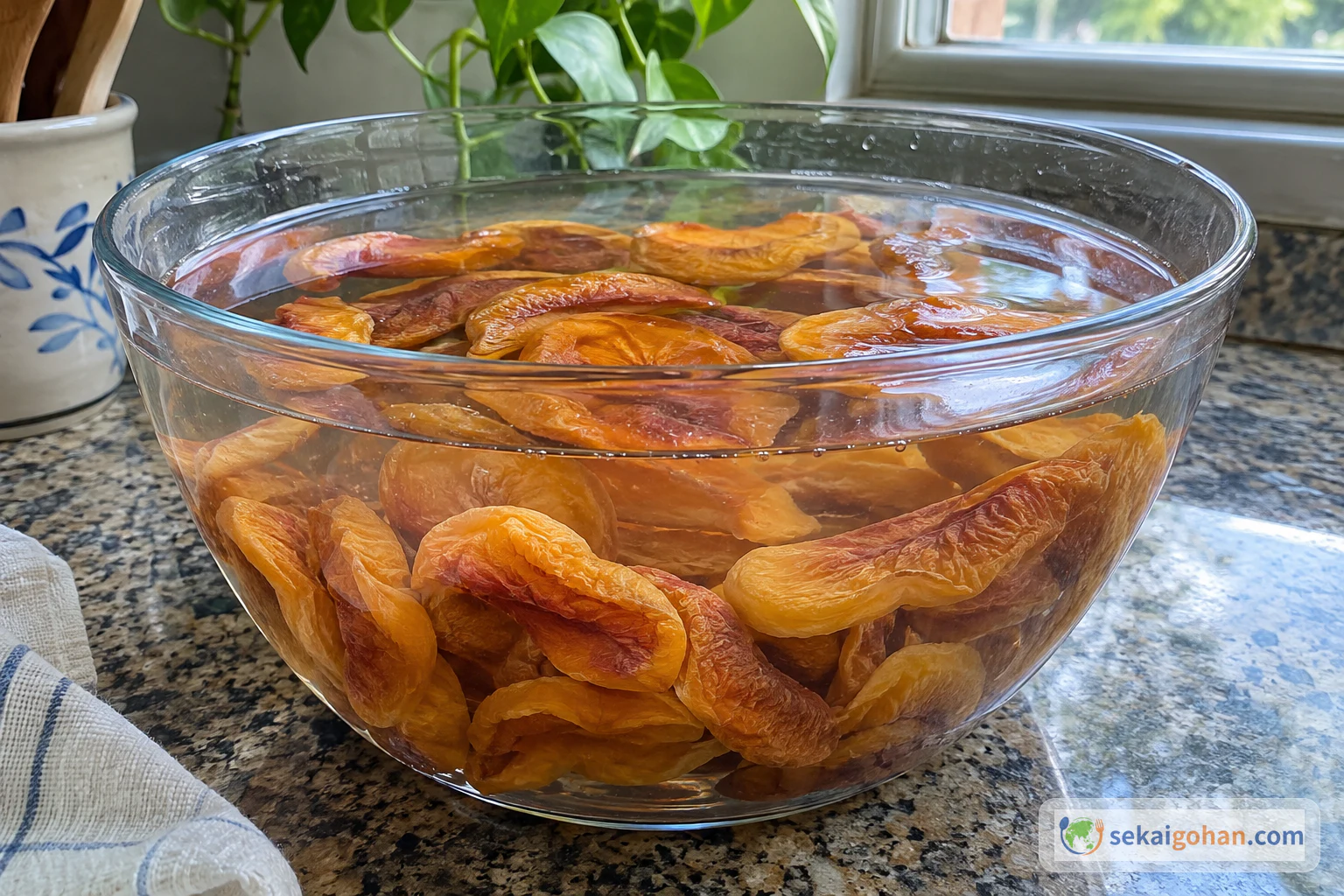
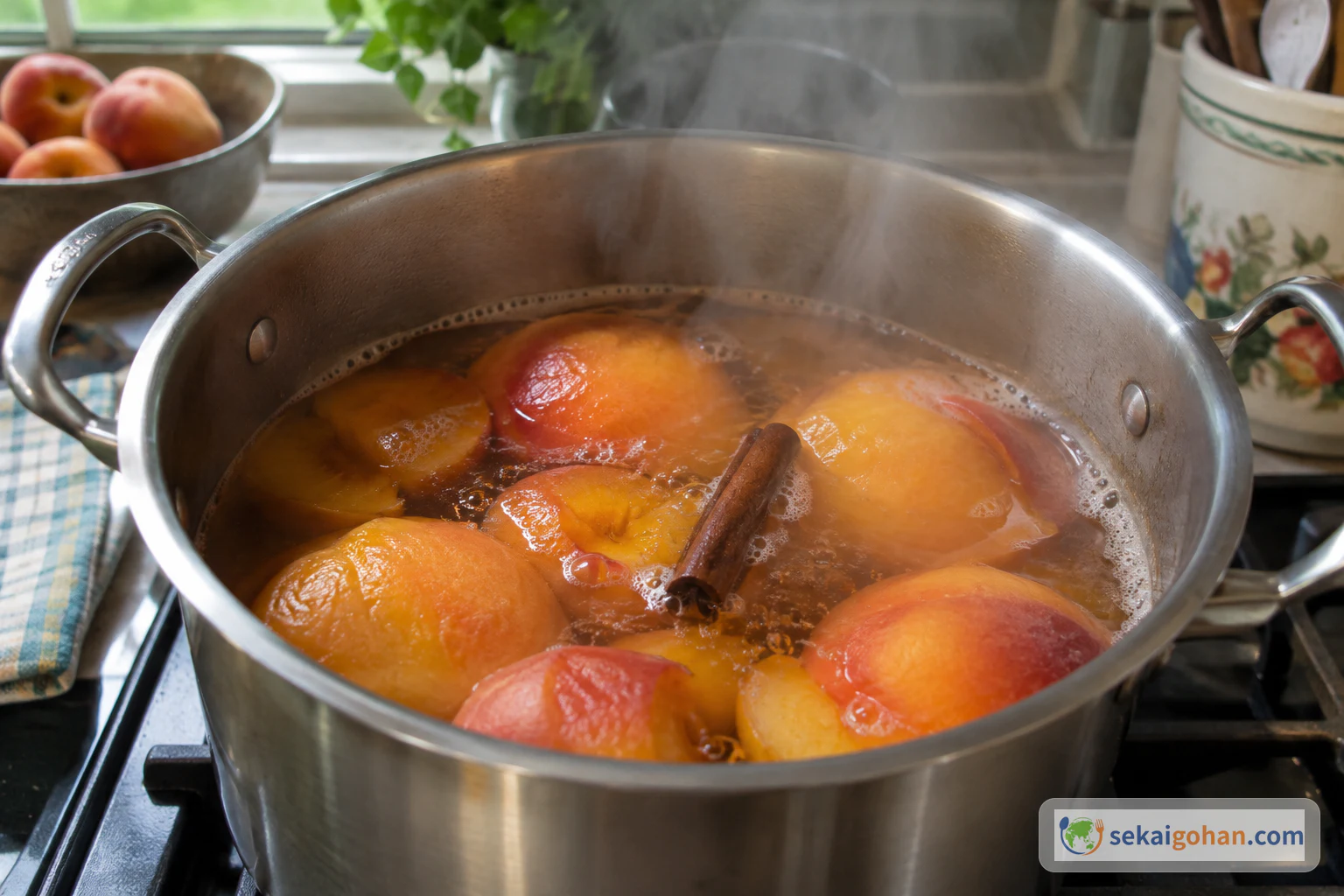
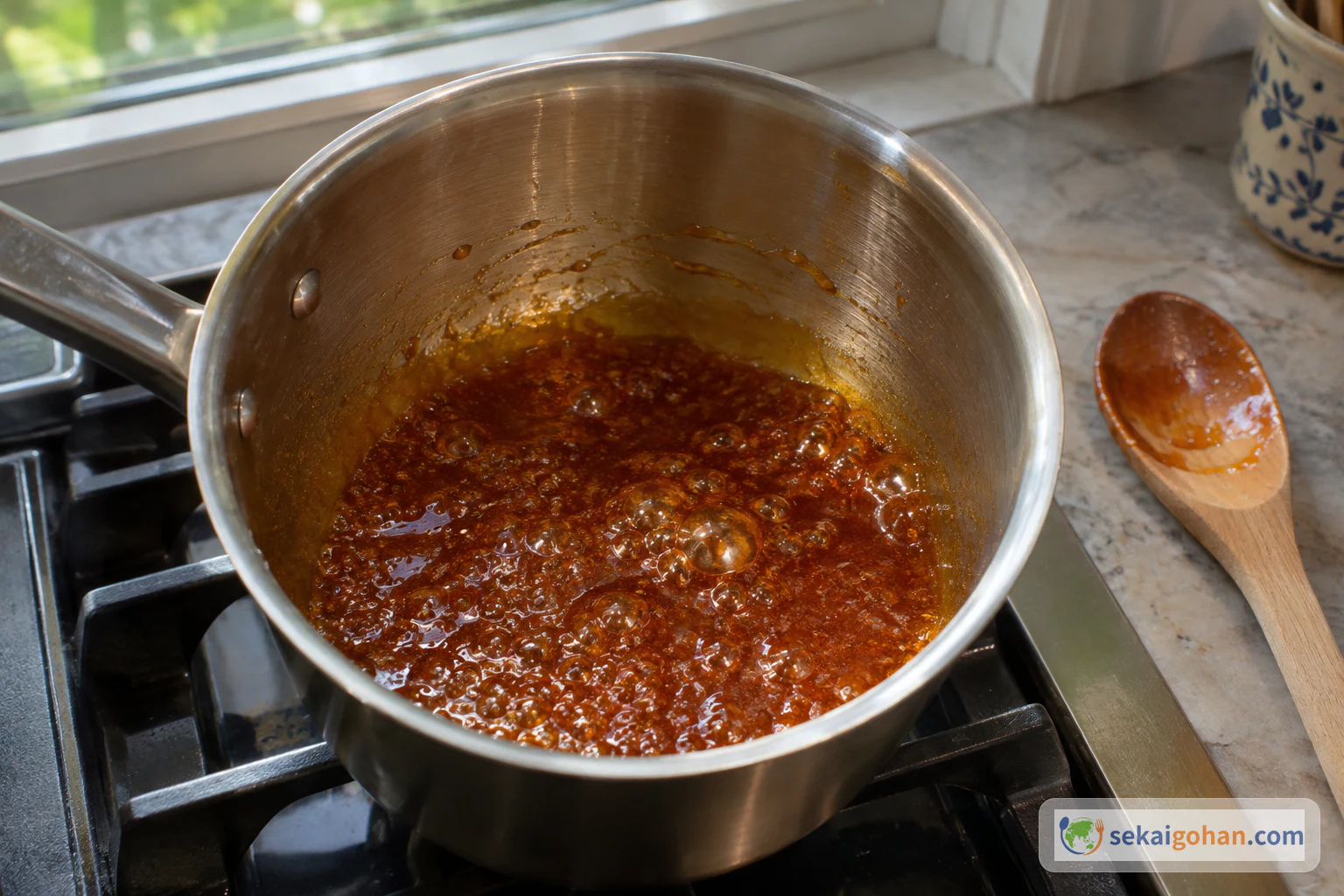
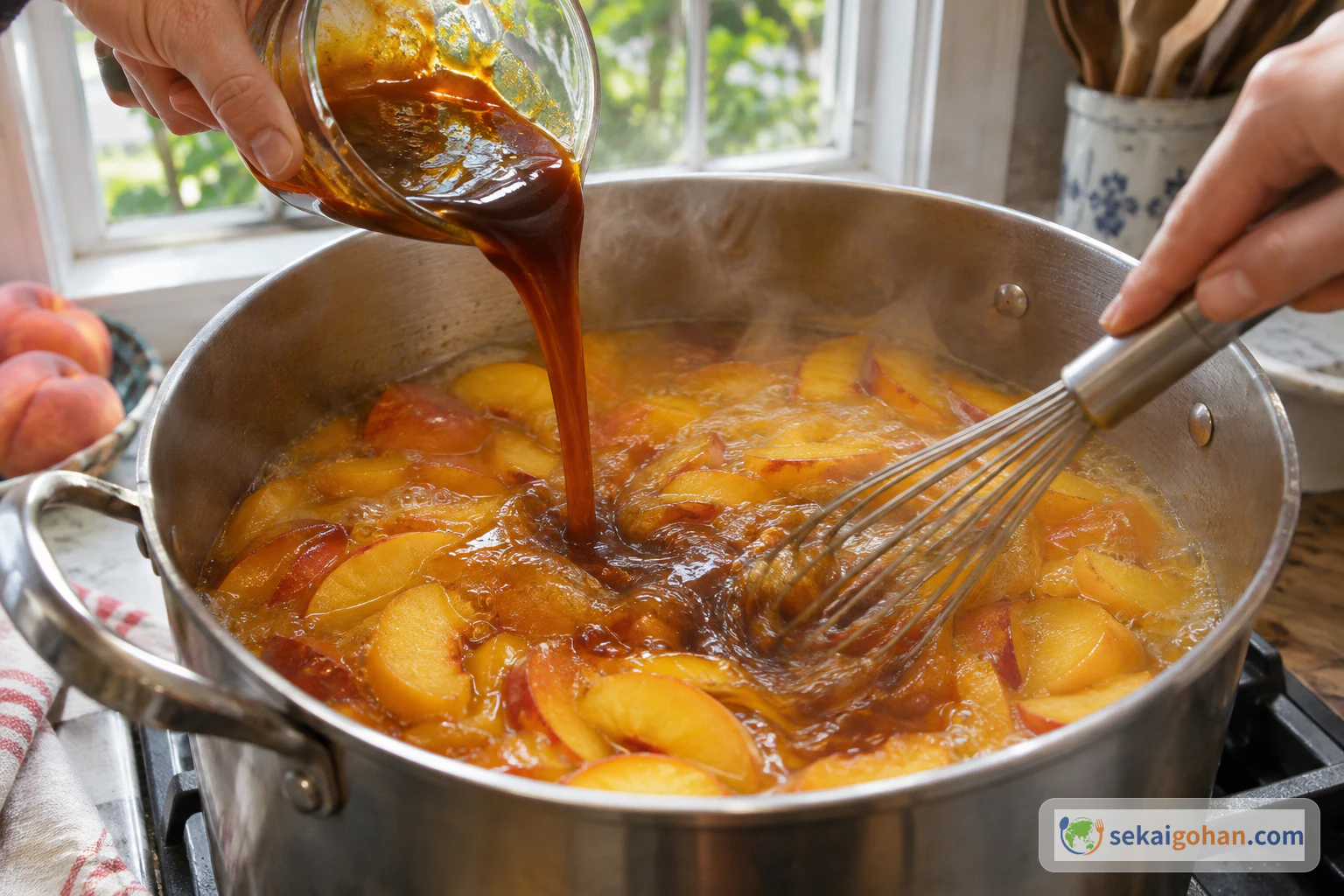
When the caramel goes into the pot, it slides off the spoon in a dark ribbon, hisses as it meets the hot peach water, then melts away. The whole pot turns a deep amber, and the kitchen fills with burnt sugar and cinnamon. Mocochinchi is Bolivia's dried-peach drink: wrinkled whole peaches soaked overnight, simmered until plump, sweetened with caramel and served cold. It tastes of concentrated stone fruit with a toasty edge from the sugar, and the softened peach waiting at the bottom of the glass is the reward at the end.
A Glass of Dried Peaches, From Street Stall to Family Table
The name itself is the recipe. In Quechua, mocochinchi means "dried peach", and the drink takes its name straight from the fruit. The peaches are peeled and dried whole, so they come out shrunken, tan-brown and leathery, ready to drink up water and swell again in the pot. The same drink also goes by fresco de orejón, and the dried peach balls themselves are called quisa.
Where mocochinchi began is not settled. There is no official history, and oral tradition holds that it arrived during the Spanish colonial period. What is clear is where it lives now: in the streets of La Paz, vendors pour it into 250 cc glasses (about 1 cup) at their stalls, and at home families make a big pot to drink after meals. On a hot day it is the cold, sweet thing everyone reaches for, and the whole family shares it.
The ritual of drinking it is the same in both places. You drink the amber liquid first, then fish out the peach and eat it, soft and full of syrup. In 2012 the Bolivian government promoted mocochinchi as a homegrown alternative to Coca-Cola. Mocochinchi sits easily next to the country's savory classics; for more of the table it belongs to, see our Bolivian recipes.
Chile drinks something similar in mote con huesillo, also built on dried peaches in sweet liquid. The difference is the mote, the cooked wheat that Chile adds and Bolivia leaves out. Mocochinchi is just the peaches and their syrup.
Ingredients
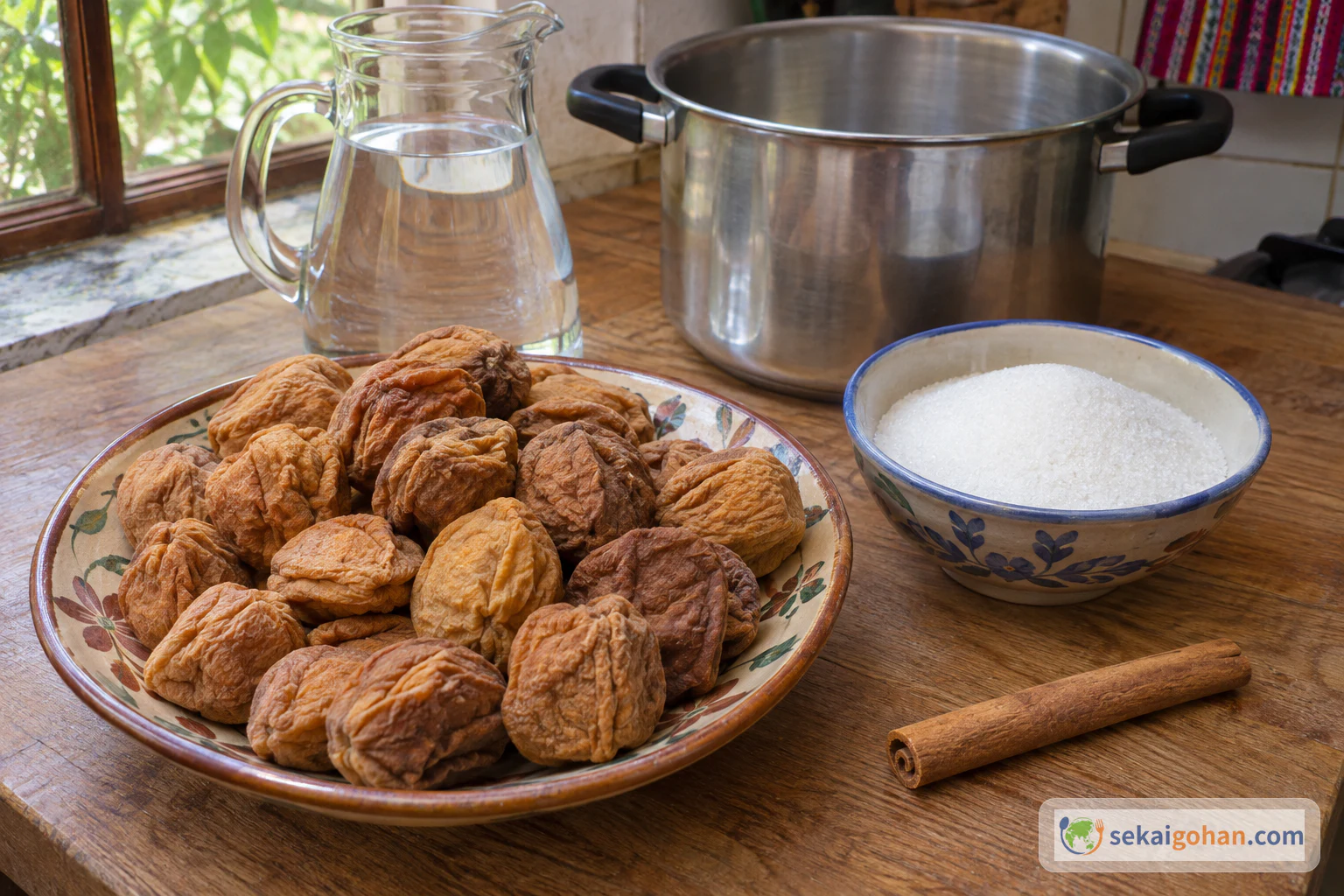
Two things decide how this tastes: the concentrated sweetness of dried peach and the toasty aroma of caramel. Buy the best whole dried peaches you can find, and give the caramel your full attention. The cinnamon is a supporting note.
Commercial dried fruit often contains preservatives such as sulfites. Read the label on your dried peaches, especially if anyone at the table is sensitive to sulfites.
Equipment
- Colander
- Large bowl for soaking
- Large deep pot that holds the water and peaches with room to spare
- Small heavy saucepan for the caramel
- Wooden spoon and a whisk
- Glass pitcher with a lid, or another covered container, for chilling
Finding Dried Peaches and Choosing Swaps
True mocochinchi, the peeled whole dried peach, is easiest to find at Latin American grocers or from online shops that import Andean products. Look for it under mocochinchi, quisa or orejón. Outside South America, ordinary dried peaches are the realistic swap, and they come in a few forms that change the drink.
Choose dried peaches with no added sugar and no preservatives when you can. That keeps the drink tasting of peach and caramel, and the fruit holds together better through the long simmer.
| What you find | What it does to the drink |
|---|---|
| Whole dried peeled peaches (mocochinchi) | The real thing: firm fruit, deep peach flavor, a satisfying peach to eat at the end |
| Unsweetened dried peach halves | The closest supermarket swap; the drink tastes clean and fruity |
| Sugar-infused or candied dried peaches | A sweeter, softer result; the fruit breaks down sooner. Use less sugar for the caramel |
| Dried peaches with sulfites | Brighter color in the bag. Check the label for anyone sensitive |
Cinnamon sticks and whole cloves are in any supermarket spice aisle. Use whole sticks and whole cloves rather than ground spice, so the drink stays clear and the spices are easy to lift out.
Method
The work starts the night before with a quick rinse and an overnight soak. The next day the peaches simmer for about two hours, which is mostly hands-off time. Make the caramel in the last stretch of that simmer so it is ready when the peaches are soft, then cool the pot completely and chill before serving.
When It Goes Wrong
| What you see | Why | What to do |
|---|---|---|
| The drink tastes bitter and sharp | The caramel went too dark | Next time stop at semi-dark amber. A burnt batch cannot be fixed, so pour out scorched caramel and start the sugar again before it goes into the pot |
| The peaches are still leathery after simmering | The fruit was not fully covered during the soak, or it needs more time | Keep simmering gently and check again until the fruit is soft through |
| A hard lump of caramel sits at the bottom | The caramel set when it hit the liquid | Keep the pot over low heat and whisk until it dissolves completely |
| The drink is cloyingly sweet | Sugar-infused dried peaches were used | Cut the caramel sugar next time and taste before adding all of it |
| The peaches have fallen apart into the liquid | The simmer was too hard, or the fruit was soft and heavily processed | Keep the bubble gentle, and choose whole unsweetened dried peaches |
Serving, Variations and Storage
At the table
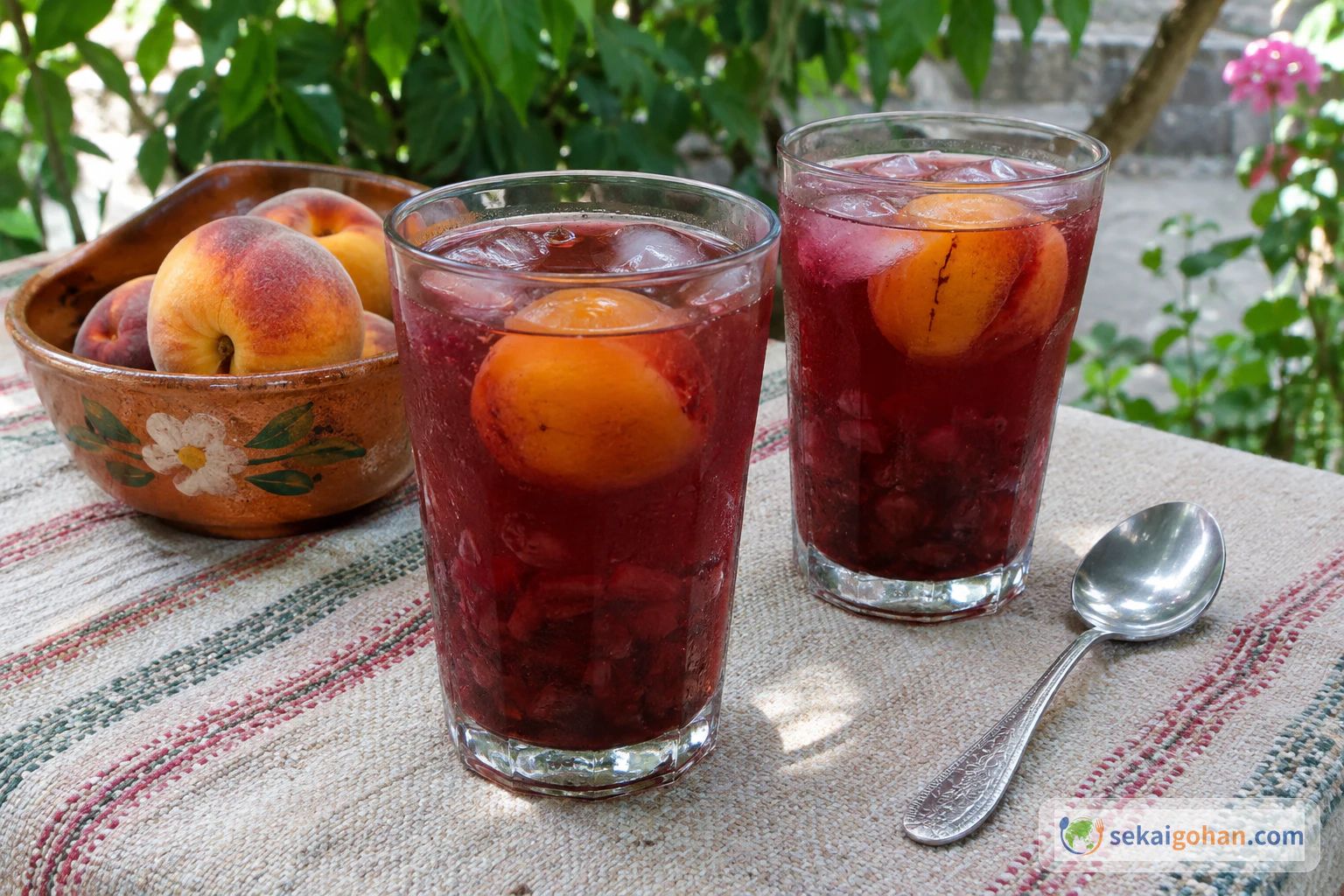
Pour mocochinchi into tall glasses with a peach in every glass, and set out spoons. It belongs after a meal, or on its own on a hot afternoon outdoors, passed around the family. Drink the liquid first and eat the peach last.
Variations
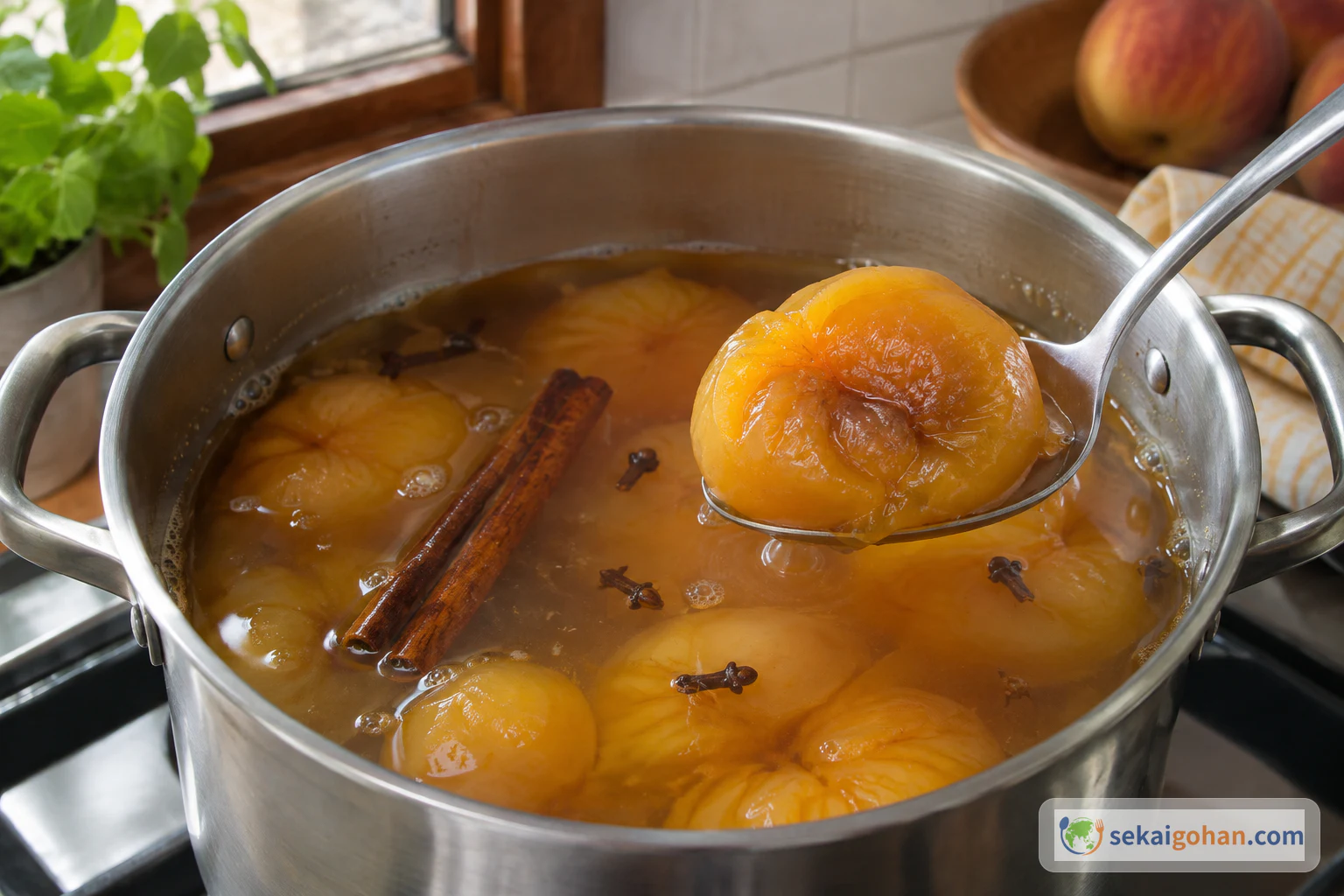
- With cloves. In La Paz homes, cloves go into the pot alongside the cinnamon. Add a few whole cloves in step 3; they push the drink toward a warmer, more spiced flavor.
- Without caramel. Some households add the sugar straight to the simmering pot, sweetened to taste. The drink comes out lighter in color and cleaner in flavor, without the toasted note.
- Without cinnamon. Leave out the stick and the peach and caramel come forward on their own.
Storage
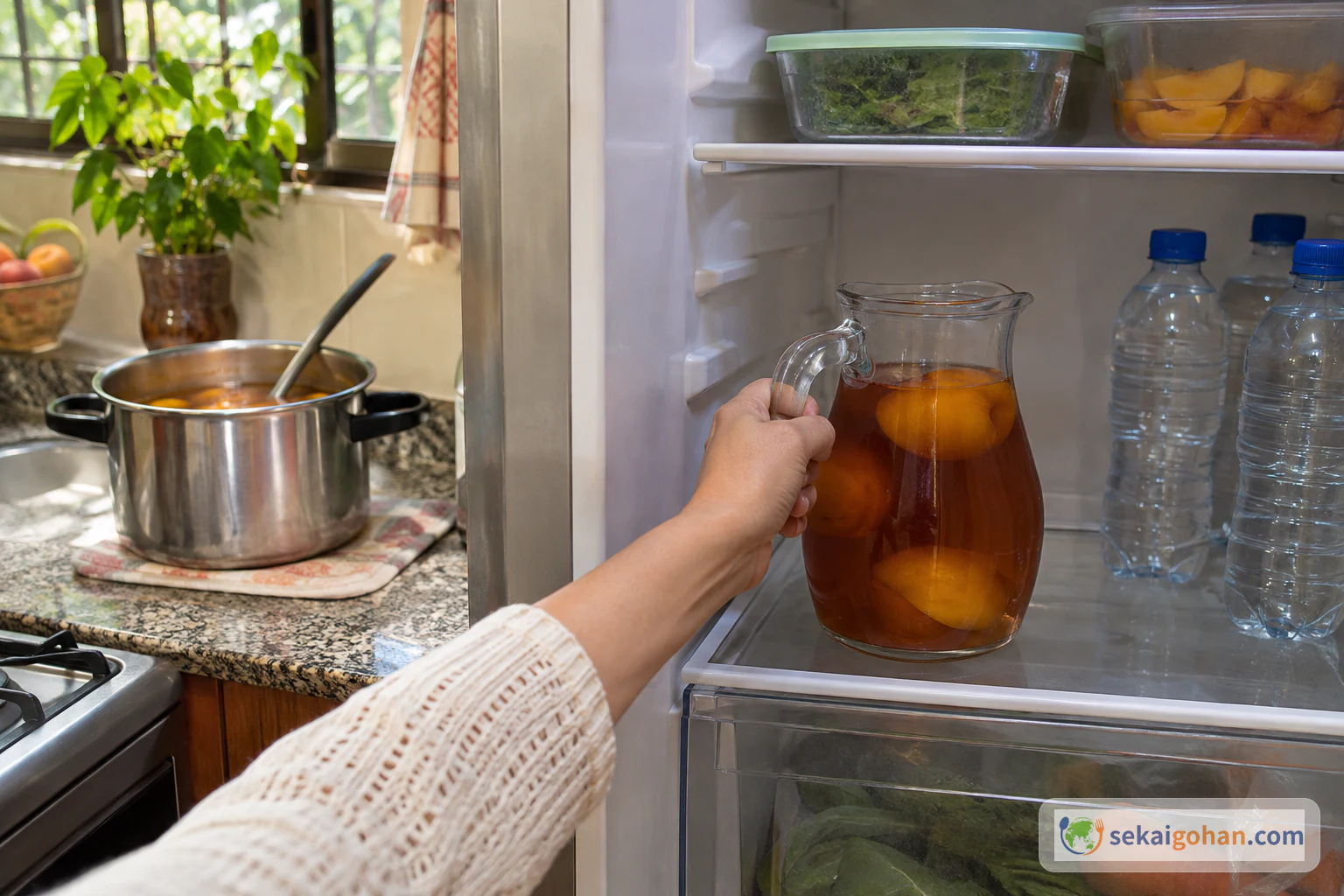
Cool the drink completely, then refrigerate it promptly in a covered container. Drink it soon, keeping it cold between servings.
Frequently asked questions
Do I need ice if the drink is already chilled?
Ice is optional. Over ice is the classic way to drink it on a hot day, and it also softens the sweetness a little as it melts. Straight from the refrigerator, the drink keeps its full peach and caramel flavor.
Can I make it less sweet?
Yes. Use less sugar for the caramel and taste the pot after adding it. Keep in mind that the color comes from the caramel too, so a smaller amount gives a paler drink.
Can I use ground cinnamon instead of a stick?
A whole stick is better. Ground cinnamon clouds the drink and leaves a gritty film on the peaches. The stick gives a clean aroma and lifts out before chilling.