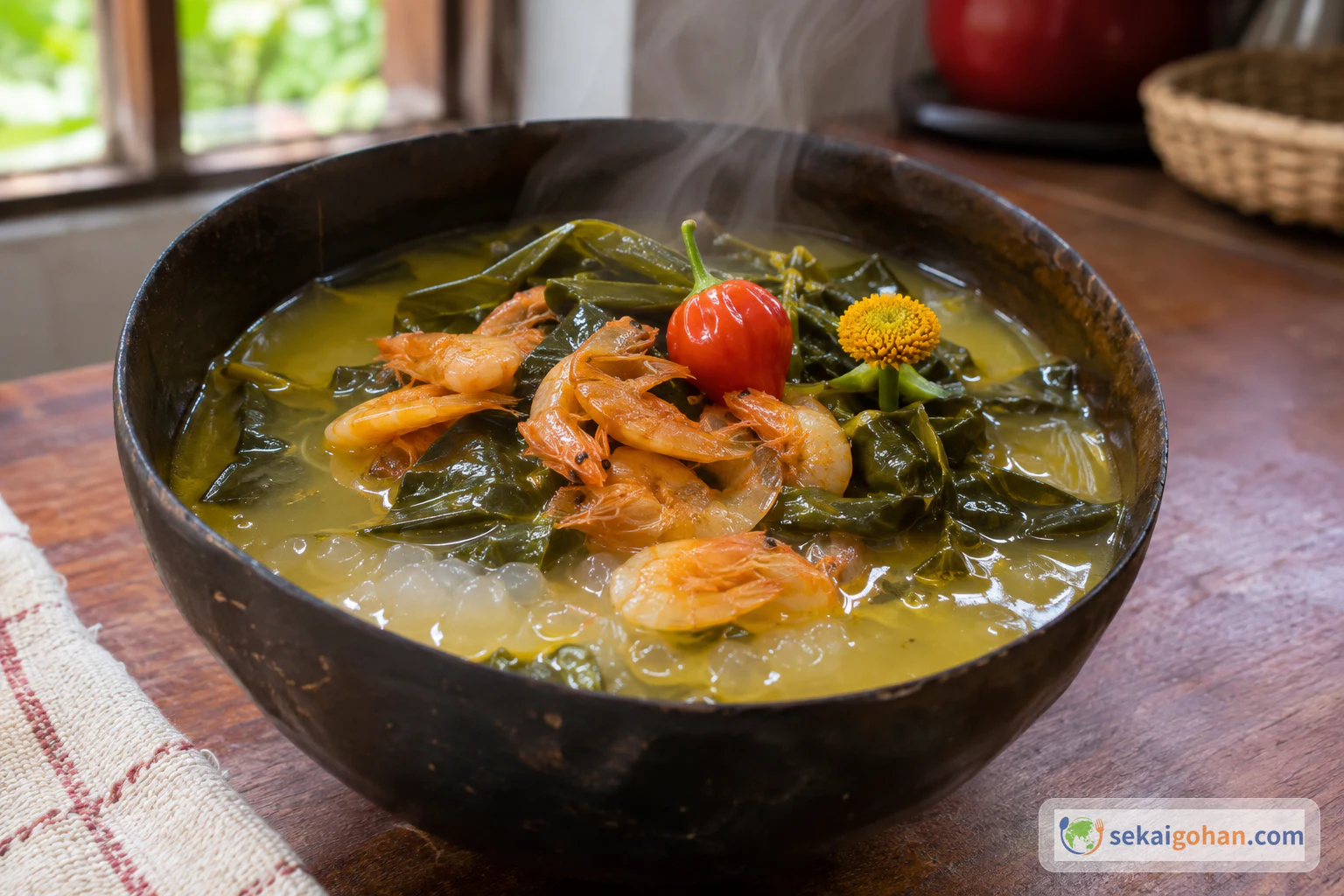
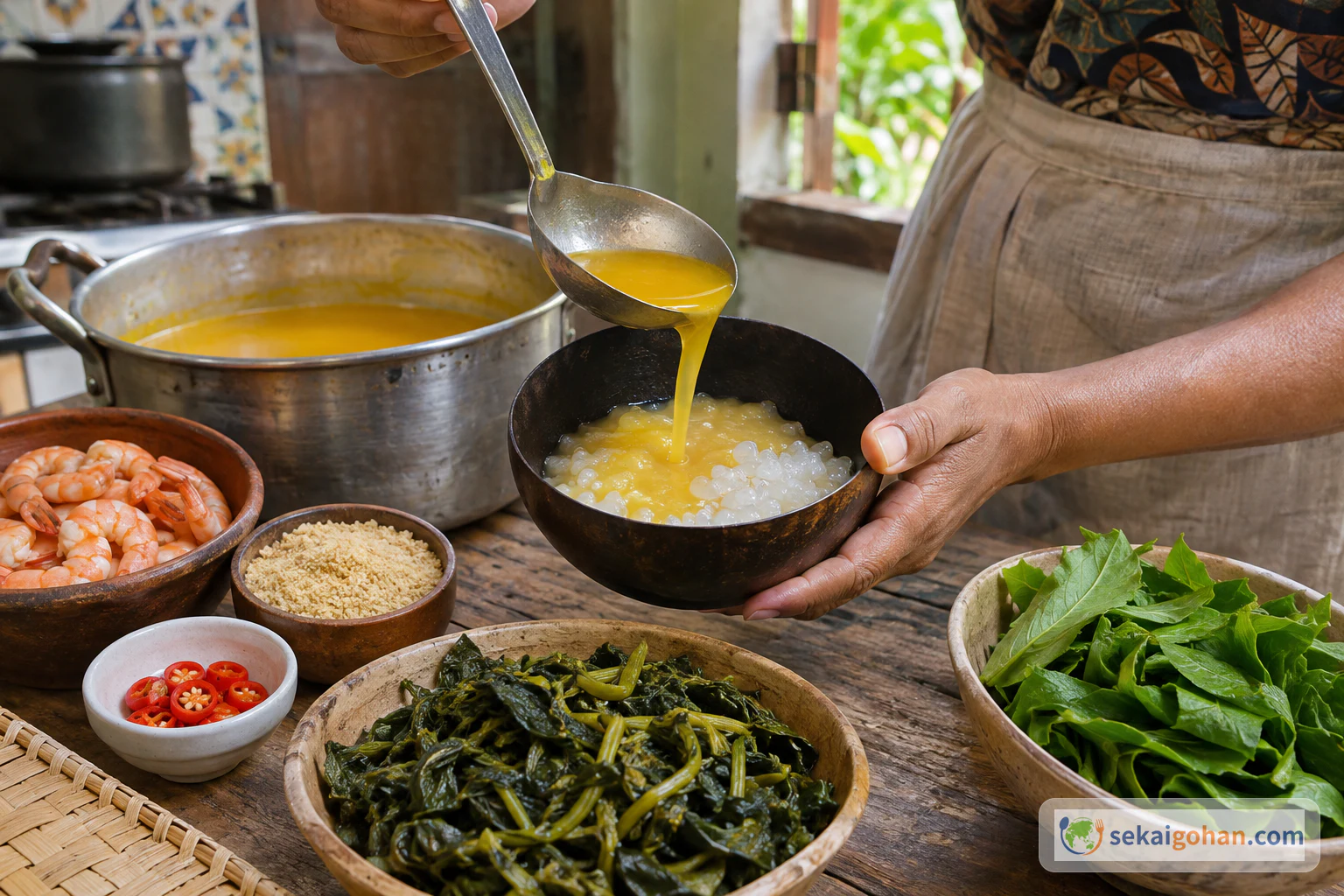
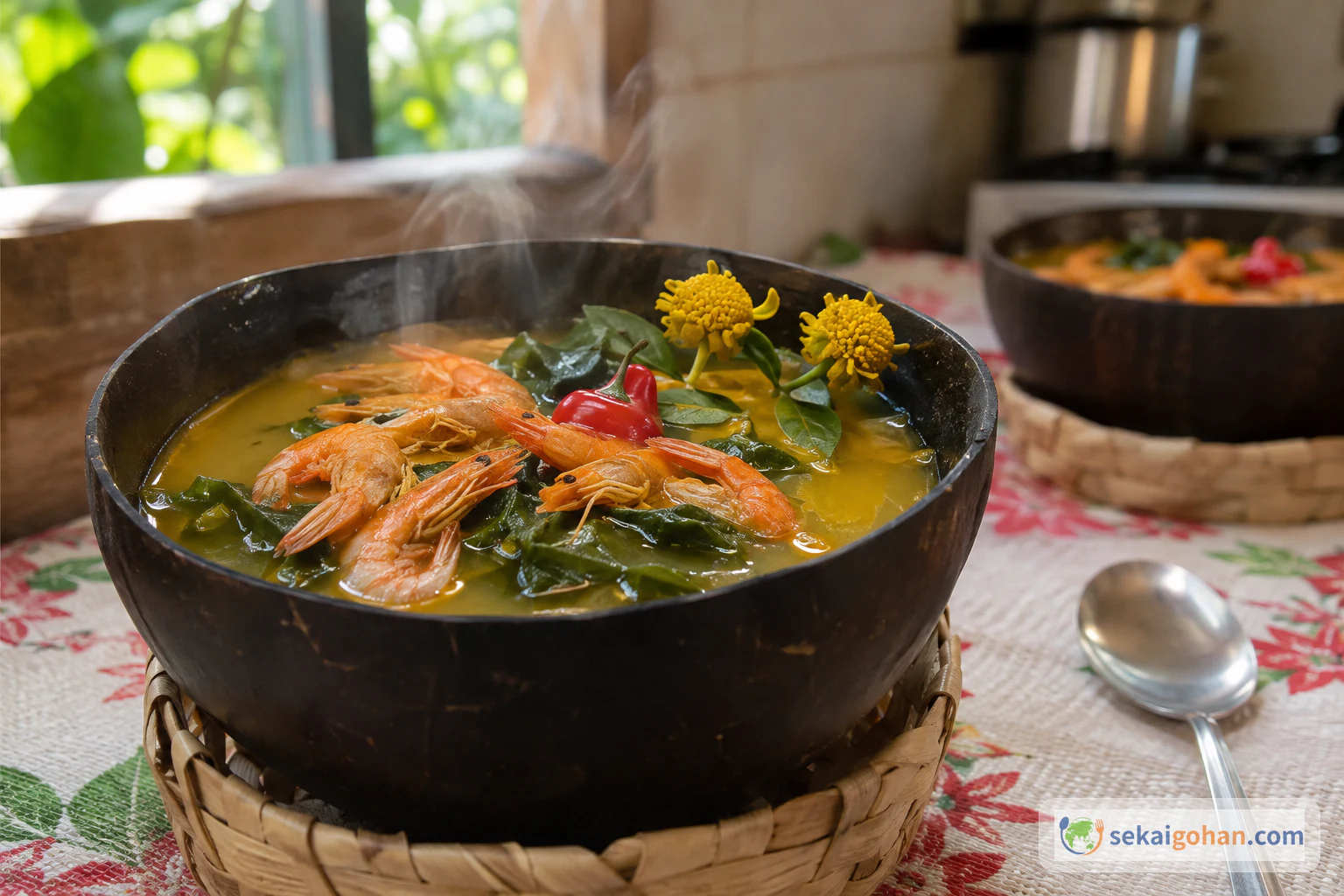
The rain in Pará ends late in the afternoon, and people head for the tacacá stall. A ladle of cloudy yellow broth goes over a pale, glossy tapioca porridge in a dark gourd bowl. Then come soft green leaves, a few shrimp, a small pepper and a yellow flower bud. The first sip is sour and savory. A moment later your lips and tongue begin to tingle, almost buzz. That tingle comes from jambu, and with the tucupi broth it is what makes tacacá taste like the Amazon and nowhere else.
The Broth of the Brazilian North
Tacacá is eaten in Pará and across Brazil's North Region, and it stands as a symbol of Amazonian cooking. It is mostly street food. People eat it in the late afternoon, usually after the rain, standing at a stall or sitting at a simple counter. Families also make it at home for special occasions. Every element comes from the forest and the river: tucupi and the starch both come from cassava, and the shrimp is dried.
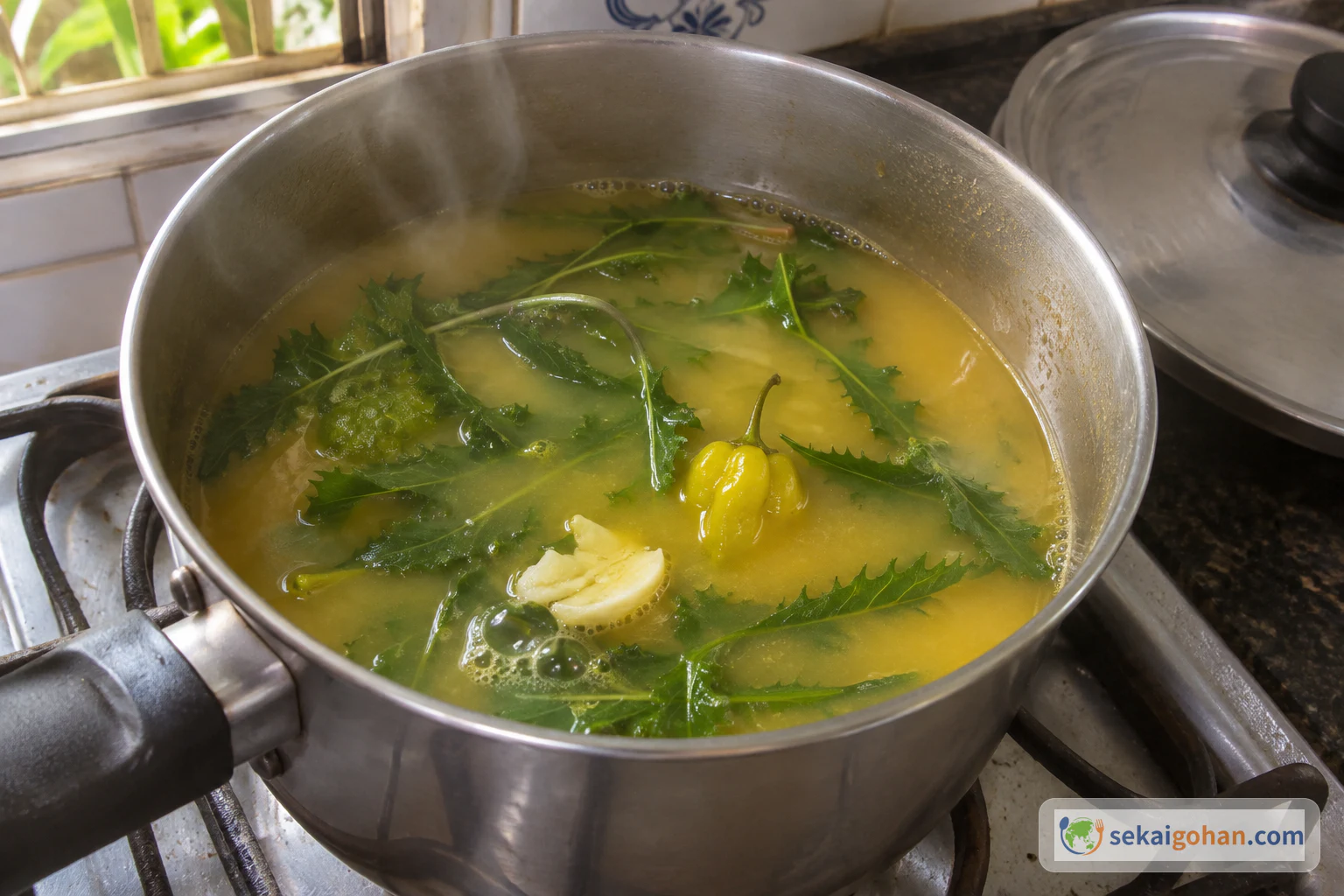
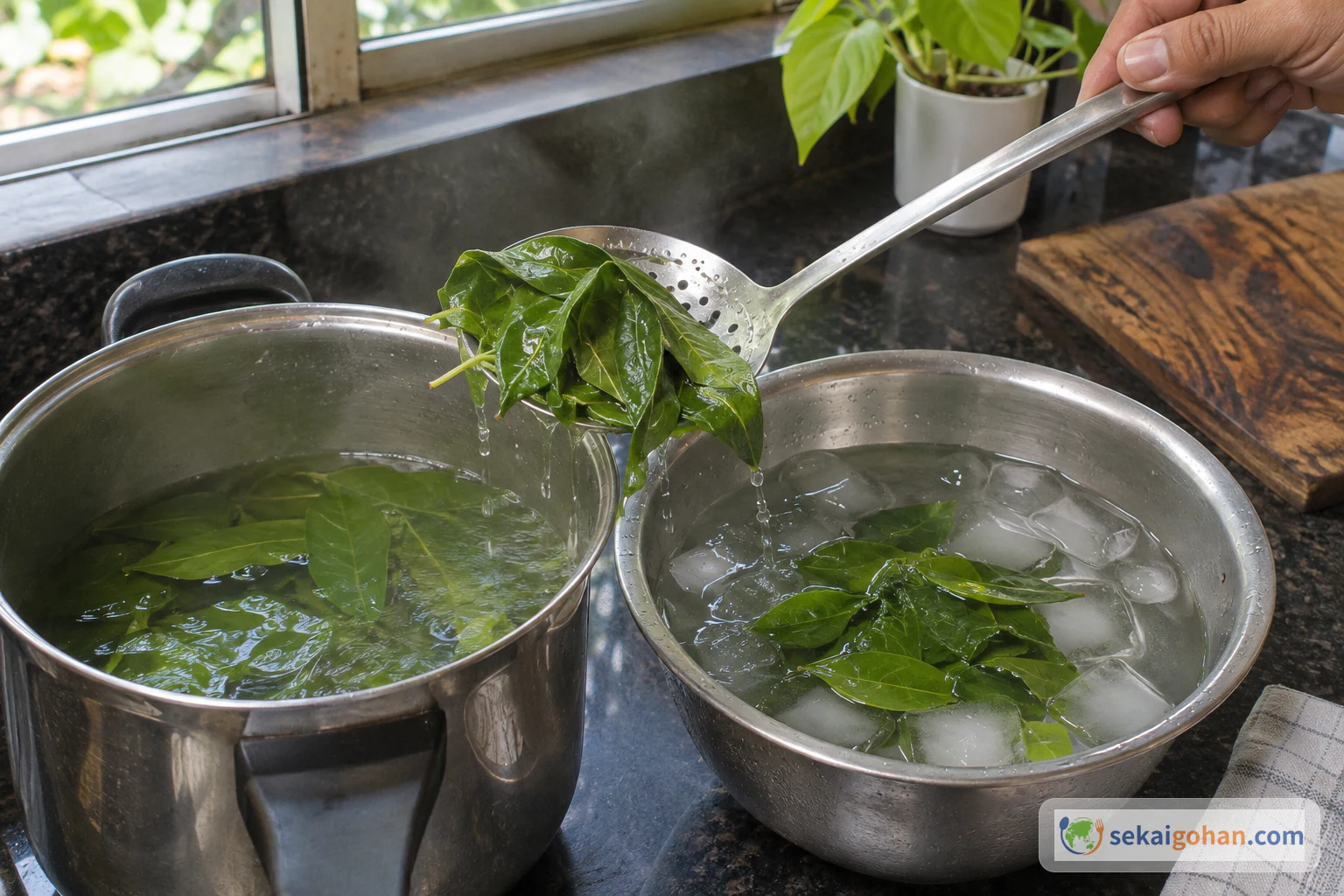
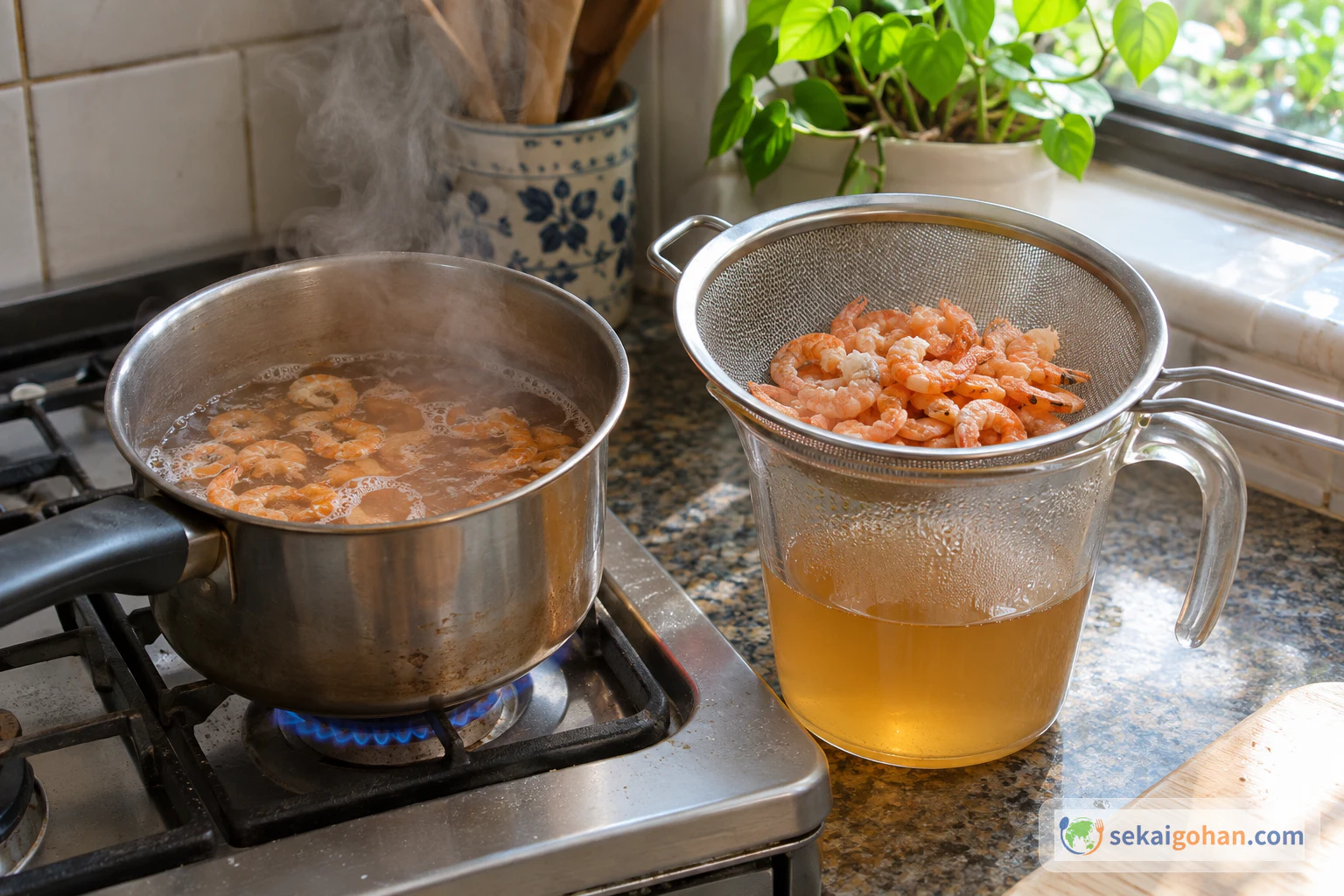
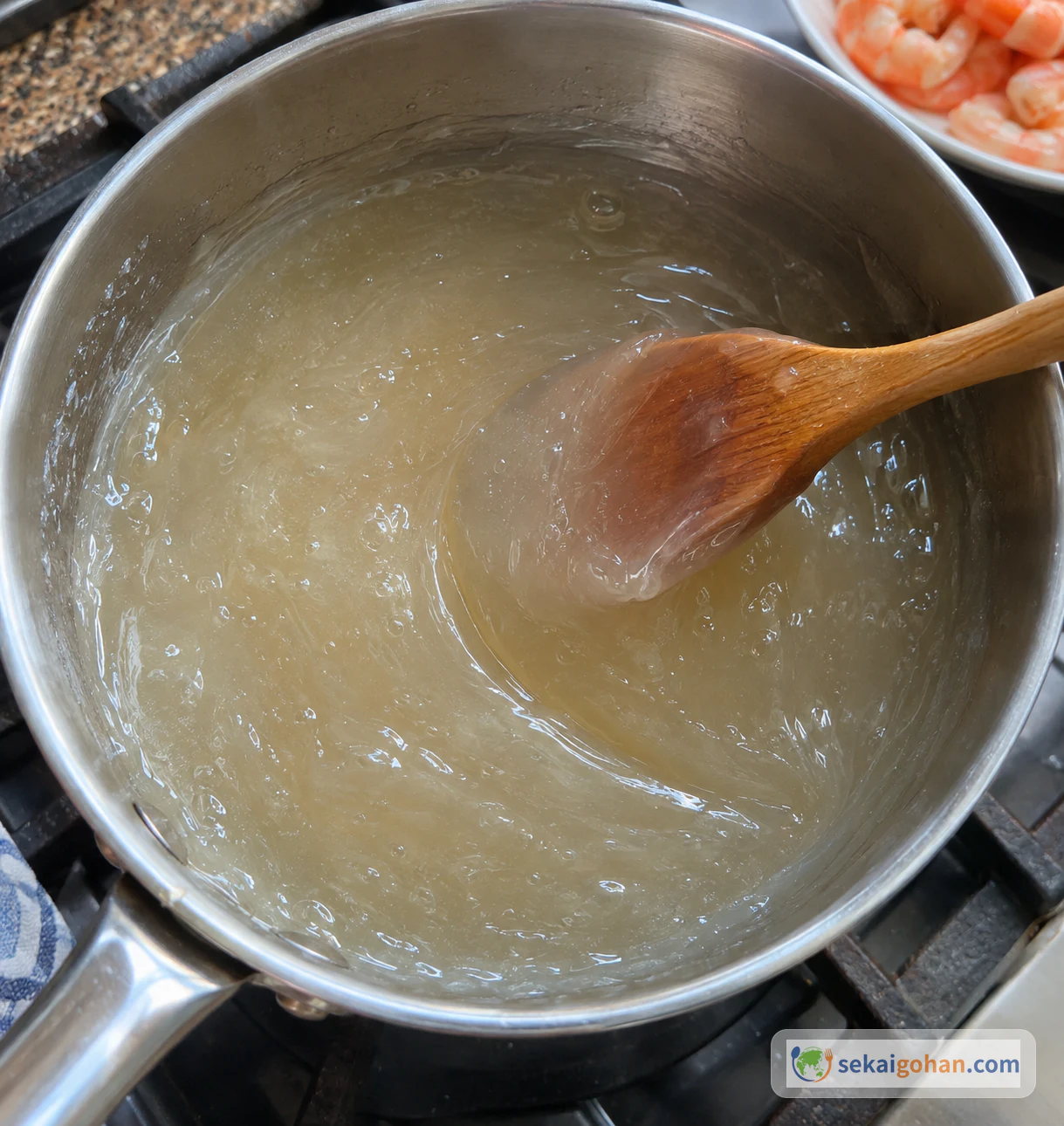
The base is tucupi, the juice pressed from bitter cassava (mandioca brava) and then boiled. It is yellow, a little cloudy, and sharply sour. In this recipe it simmers with garlic, chicória-do-pará and a fragrant pimenta-de-cheiro pepper. Under the broth sits a porridge of tapioca starch cooked in shrimp water. Jambu, a leafy green, is blanched and added to the bowl along with its flower buds, and it makes the mouth tingle. Dried shrimp go on top. Each part is cooked in its own pot, and the four come together only in the bowl.
One Brazilian article traces tacacá to the Indigenous peoples of Pará and to a soup called mani poi, but that is a single account and the origin is not settled. Cooks across the region still disagree on how to build it. Some blend part of the broth with the greens, and others pile on more shrimp and jambu than this recipe uses. For more dishes from around the country, see our Brazil page.
The vendors are called tacacazeiras, and their stalls make the dish part of daily life. In March 2024, Brazil's national heritage institute began research toward registering the tacacazeira's craft as Brazilian cultural heritage. The tacacazeiras have named the pressures on their work: rising ingredient prices, climate change, and no labor or social-security rights.
Tacacá is served in a cuia, a bowl made from a dried gourd and one of the region's own utensils. The dark, rounded bowl makes the yellow broth look brighter. At home, any small, deep wooden or ceramic bowl does the same job.
Ingredients (serves 4)
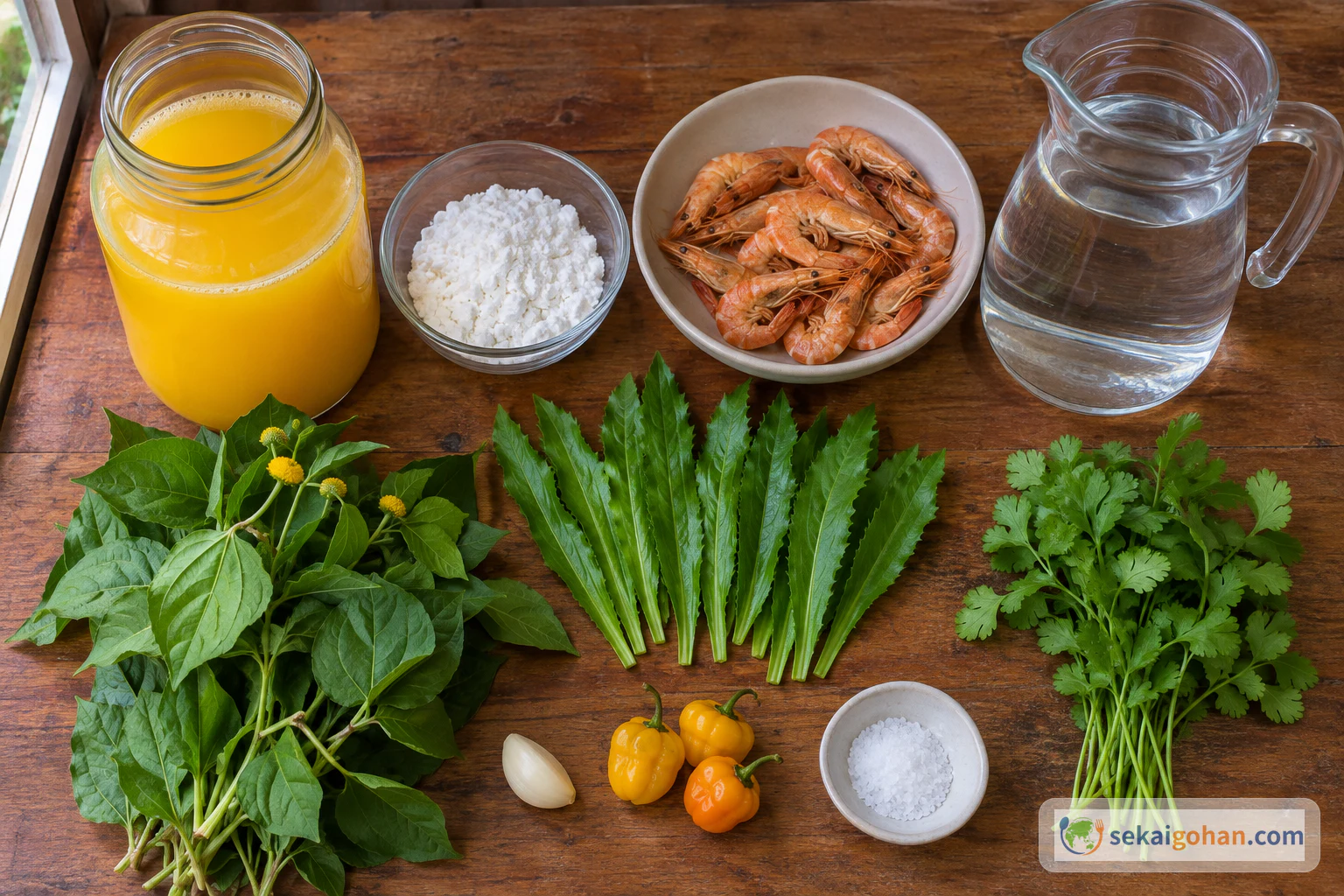
Dried shrimp are salty, and tucupi makes salt taste stronger. Rinse the shrimp thoroughly and add salt to the broth only at the end, in small pinches. Once a pot of tacacá is too salty, there is no fixing it.
This dish contains shellfish (shrimp). Jambu leaves and flowers make the mouth tingle and go slightly numb. Use less for children and for anyone who dislikes heat or numbing sensations, and tell your guests what to expect before they eat.
Equipment
- Medium saucepan with a lid (tucupi broth)
- Small saucepan (shrimp)
- Pot of water deep enough to cover the jambu
- Large bowl of ice water
- Slotted spoon
- Fine-mesh sieve and a jug
- Saucepan for the porridge
- Wooden spoon
- Ladle
- 4 small, deep bowls (cuias if you have them)
Choosing and Substituting
Two ingredients make tacacá what it is: tucupi and jambu. Neither has a substitute. Both can be hard to find outside Brazil. Buy only products sold as food. A bowl made with another sour liquid or another green is a tacacá-style soup, and the tingling, sour flavor of Pará will be missing.
Buy tapioca starch, which is cassava starch. Cooks in northern Brazil often use goma, a cassava starch product, and it is not settled whether goma and dry tapioca starch are exactly the same thing. Do not swap in potato starch or cornstarch. They are different starches and change how the porridge sets and looks.
| Ingredient | Swap | What changes |
|---|---|---|
| Dried shrimp | Fresh shrimp cooked in salted water | The shrimp taste in the porridge water is lighter |
| Chicória-do-pará | Common chicory | The herbal note in the broth shifts a little |
| Pimenta-de-cheiro | Any fresh, mild chili | You lose some of the fruity fragrance. Keep it mild |
| Tucupi | None | Without it, the dish is a different soup |
| Jambu | None | Without it, nothing tingles |
Tucupi comes from bitter cassava, which contains hydrocyanic acid. That acid can cause poisoning if the juice is not processed and cooked enough. Cyanide is volatile and is driven off mainly by fermentation and cooking, so cooking time is what matters. Tucupi from markets has tested high in cyanide when it was poorly processed. Buy tucupi that is already cooked and clearly labeled, keep it refrigerated as the label directs, and give it the full covered simmer in step 1. Never make tucupi from raw cassava at home. The simmer in step 1 is not a guarantee of safety.
Method
Start the tucupi first. It needs half an hour of covered simmering, and that is your hands-off time. While it simmers, blanch the jambu and cook the shrimp. Make the porridge last and keep it warm in its pan. When everything is ready, build each bowl in layers and serve right away.
Let the shrimp water cool before adding the tapioca starch, and stir until no dry specks remain. Then turn on the heat and stir without stopping. Starch that meets hot liquid, or that sits still in the pan, forms lumps you cannot whisk out.
When It Goes Wrong
| What you see | Why | What to do |
|---|---|---|
| Lumps in the porridge | The starch went into warm liquid, or the pan sat unstirred | Next time cool the water first, dissolve the starch completely, then stir nonstop over medium heat |
| Porridge is white and cloudy | The starch is not cooked through | Keep stirring over medium heat until it turns glossy and translucent |
| Broth is too salty | Shrimp were not rinsed enough, or salt went in early | Rinse the shrimp well and salt the tucupi last, in small pinches, tasting each time |
| Jambu is dull olive-green | It stayed in the hot water too long or was not iced | Pull it out as soon as it wilts and move it straight into ice water |
| Not enough shrimp water for the porridge | It evaporated while the shrimp cooked | Add plain water until you are back to 1 quart (1 L) |
Serving and Variations
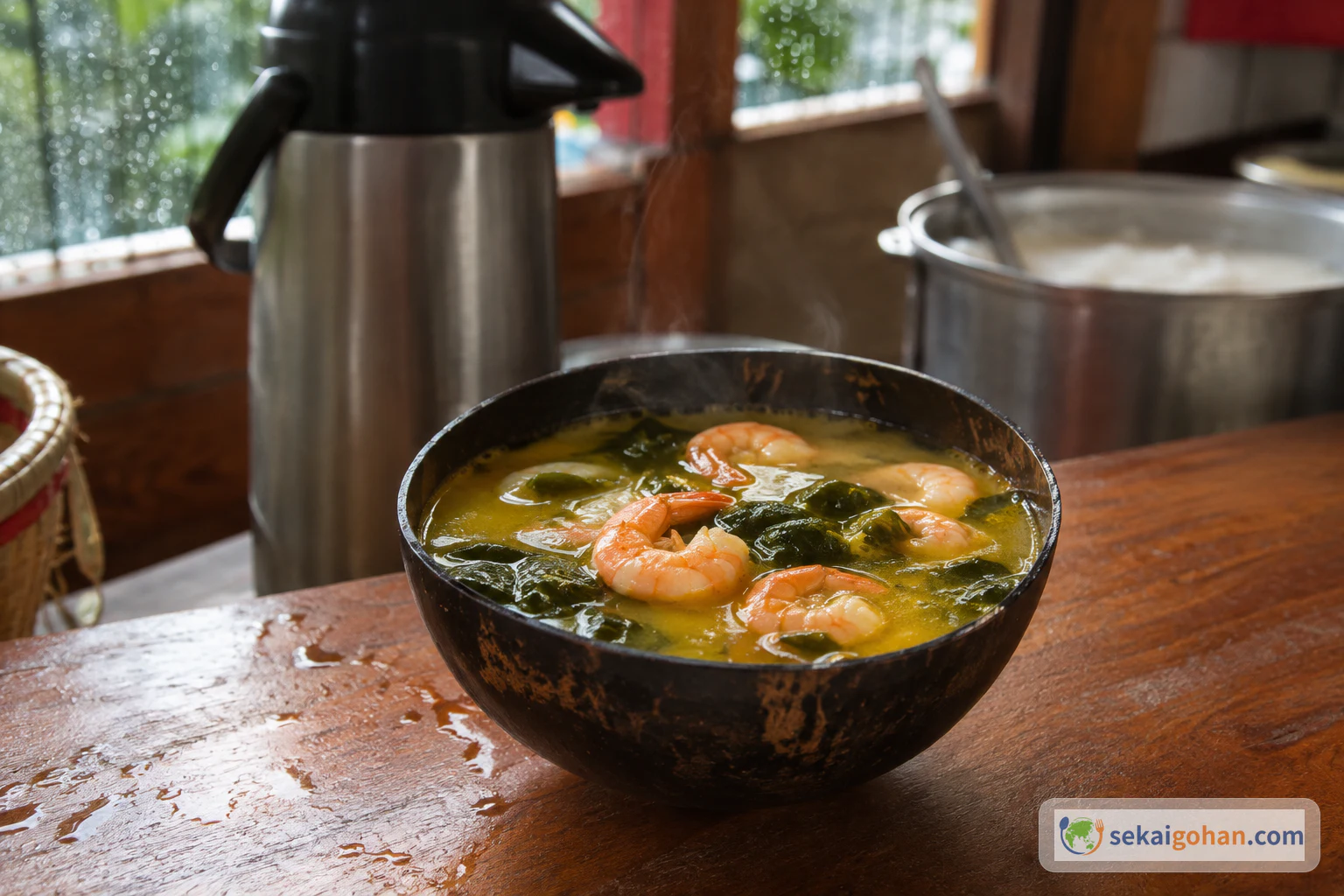
Tacacá is a meal on its own, eaten in the late afternoon or made for a special day. Serve it hot, one bowl per person, with the broth, greens and porridge together, so each sip carries sour broth, a bit of porridge and a leaf of jambu.
Variations
- Murupi pepper or pickled jambu. Either one adds heat and sharpness on top. Pickled jambu adds sourness as well as tingle.
- Toasted tapioca flour. A spoonful on top just before serving gives crunch against the soft porridge.
- Part-blended broth. Blending some of the broth with the greens gives a thicker, greener bowl.
- More shrimp and more jambu. A heavier hand with both makes the bowl more savory and the tingle stronger.
Frequently Asked Questions
Is tacacá a soup or a drink?
Both, in a way. It is a broth served in a cuia, and you sip the hot liquid straight from the bowl. The porridge, leaves and shrimp are eaten as you go, often with a small spoon.
Can I use cornstarch or potato starch instead of tapioca starch?
Use tapioca starch. Other starches thicken differently and look different once cooked, so the porridge will not turn into the glossy, translucent layer that sits under the broth.
How spicy is tacacá?
Mild. The pimenta-de-cheiro simmers whole in the broth, and it adds more fragrance than heat. The strong sensation is the jambu tingle, which feels quite different from chili burn.
Why are the broth and porridge cooked separately?
Each part needs its own cooking. The tucupi simmers covered for a long time, while the porridge needs constant stirring over medium heat. Keeping them apart until the bowl lets each person get a clear layer of porridge under the sour broth.