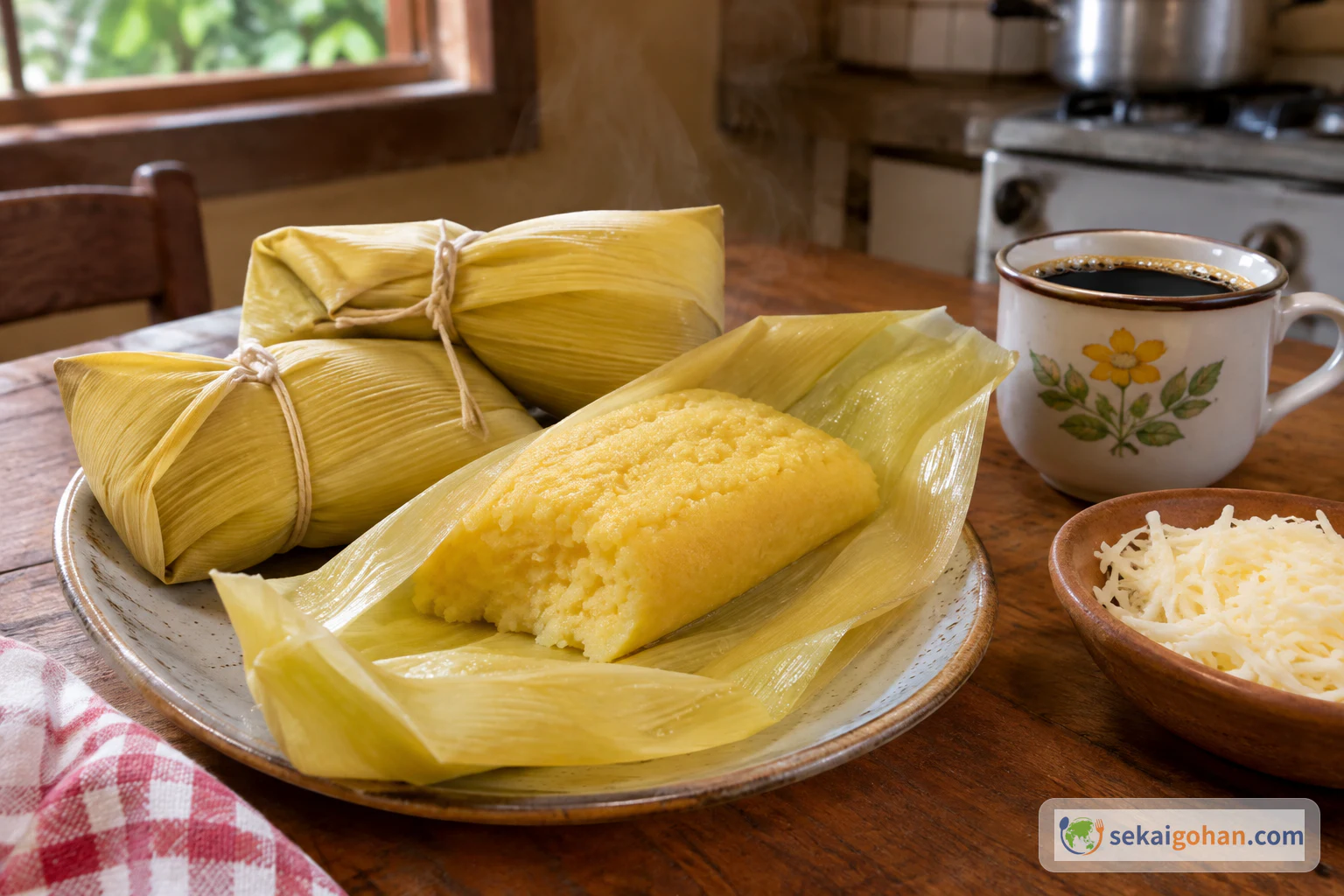
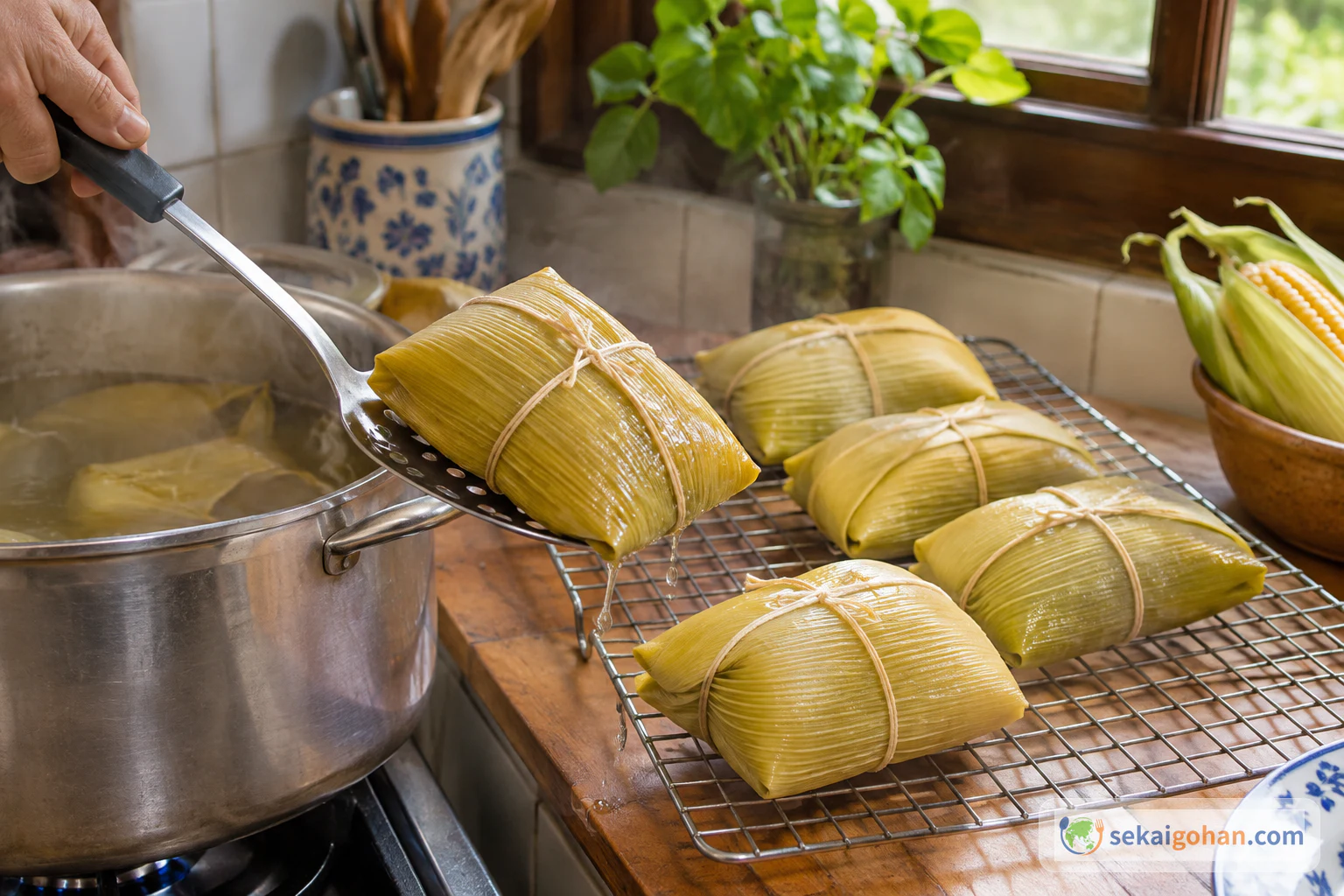
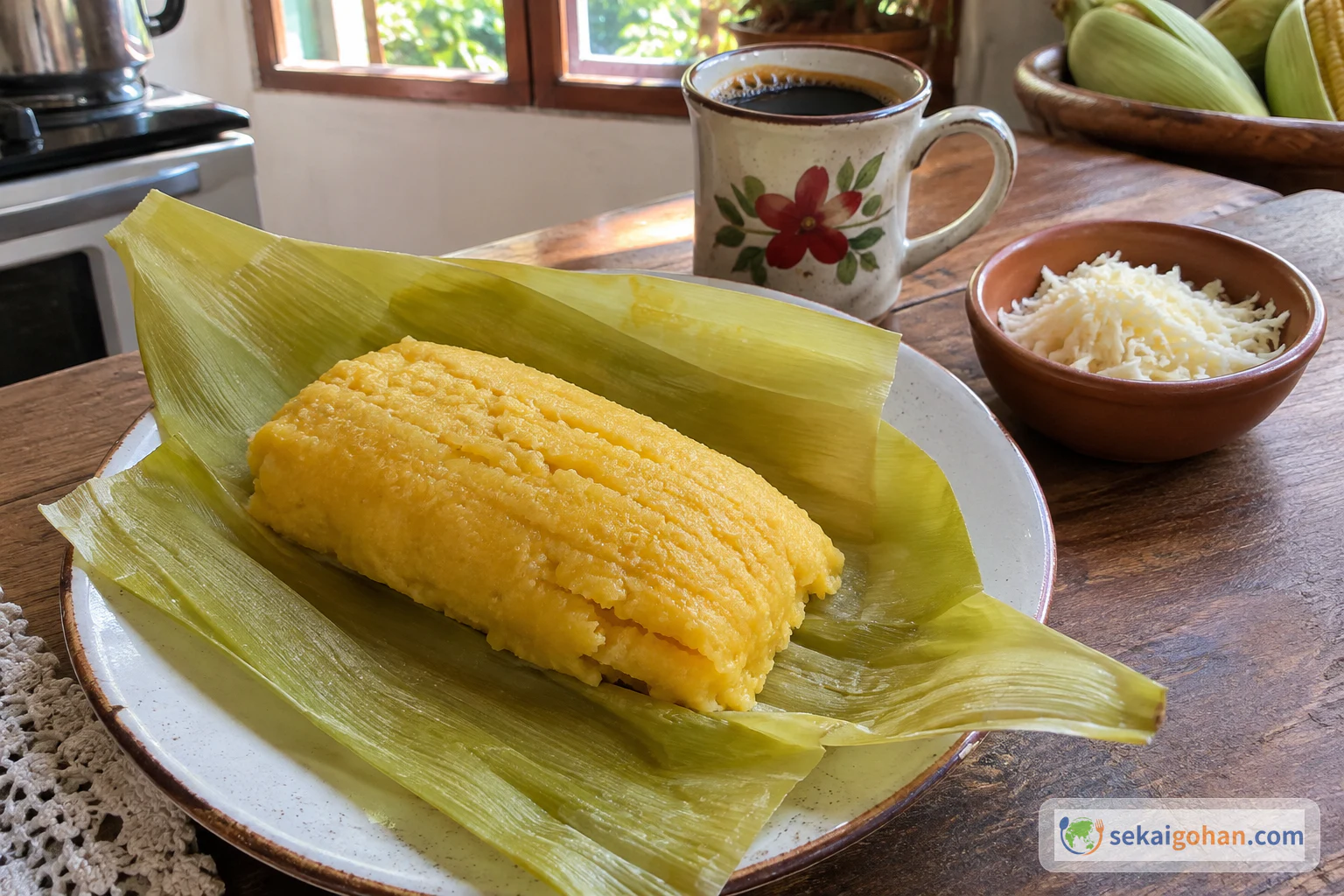
Steam rolls off the pot as the parcels come out one by one on a slotted spoon, green husks tied tight with string and heavy with what is inside. Pull the string and fold back the husk, and there it is: a soft, pale yellow paste of fresh corn, sweet with sugar and coconut. In Brazil, pamonha is a snack people peel open with a cup of coffee and a little grated cheese beside it. It tastes of the corn first, milky and green, and only then of sugar.
Corn, Husk and String: Where Pamonha Comes From
The whole idea of pamonha sits in one ear of corn. The kernels become the paste and the husks become the wrapper, so nothing comes from outside the field except the sugar, the coconut and the string. The Tupi-Guarani peoples grated corn, wrapped it in its own husks and cooked it long before anyone added coconut or sugar. Those sweeter ingredients came later, and the sweet version, pamonha doce, is the one most people now reach for.
The word is usually traced to the Tupi pa'muñã, meaning sticky, which is a fair description of the paste as it clings to the spoon. The spelling of the Tupi root turns up in more than one form.
A dish of the June festivals
Pamonha belongs most of all to the festa junina, the June festivals, when demand for it climbs. In Patos de Minas, in Minas Gerais, it is serious business. The makers there harvest their corn early in the morning, separate the husks and grate the kernels, and pamonha-making is usually dated as taking root in the town around 1970. In 2019 the town's pamonha was recognized as cultural heritage. Beyond Minas, the dish is tied to the Northeast and to Goiás, which tells you how far across the country it travels.
At country festivals a second form has settled in alongside the wrapped one: pamonha baked in a dish with no husk at all. For another Brazilian coconut sweet, try quindim; for a savory cheese bread, pão de queijo. More Brazilian dishes are on the Brazil page.
Across Latin America, corn wrapped in its husk and cooked is a family of dishes. The tamale and the Andean humita are close relatives, each with its own dough and its own way of folding. Pamonha is its own dish, softer and plainer, a paste of fresh corn rather than a dough of dried meal.
Ingredients (serves 8)
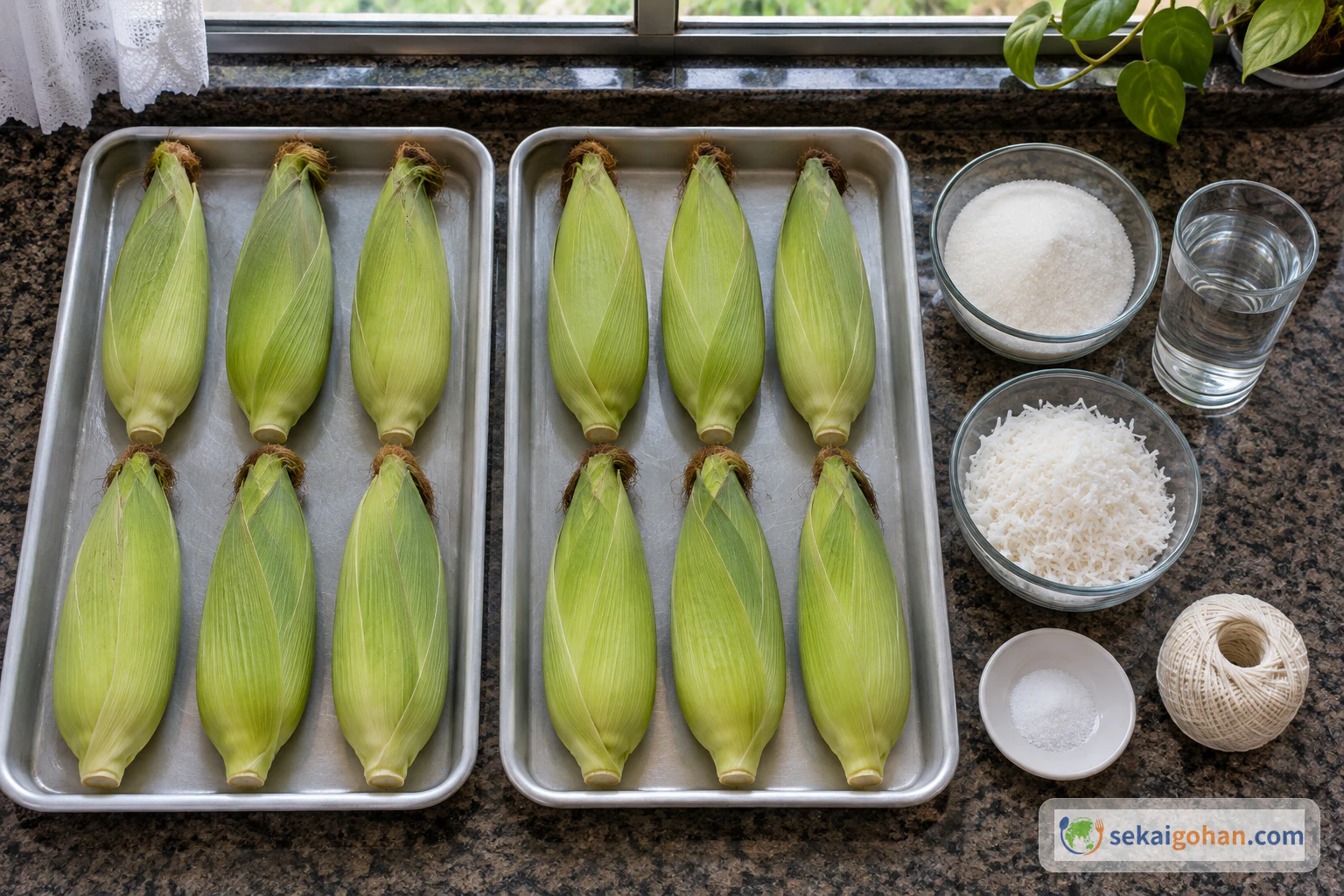
The paste contains coconut. The grated cheese served on the side contains milk.
Equipment
- Sharp knife or grater
- Blender
- Large stockpot
- Slotted spoon
- Silicone spatula
- Food-safe cotton kitchen string
Choosing the Corn and the Coconut
Everything turns on the corn. Buy fresh ears with their husks whole, as long and unbroken as you can find, because the husks are what hold the paste in the pot. In Brazil, milho verde is corn picked green. Outside Brazil, fresh sweet corn in the husk is the nearest thing to buy; its sweetness and starch may differ, so the texture can differ too. Canned or frozen kernels do not come with husks, so they belong to the baked version further down rather than to this one.
For the coconut, dry, finely shredded coconut from the baking aisle is the right thing; look for the fine grade rather than long flakes or sweetened chips, so it disappears into the paste. Ordinary white sugar does the job. For tying, use plain cotton kitchen string meant for food. Colored or synthetic twine has no place in a pot of boiling water.
Method: From Ear to Parcel to Pot
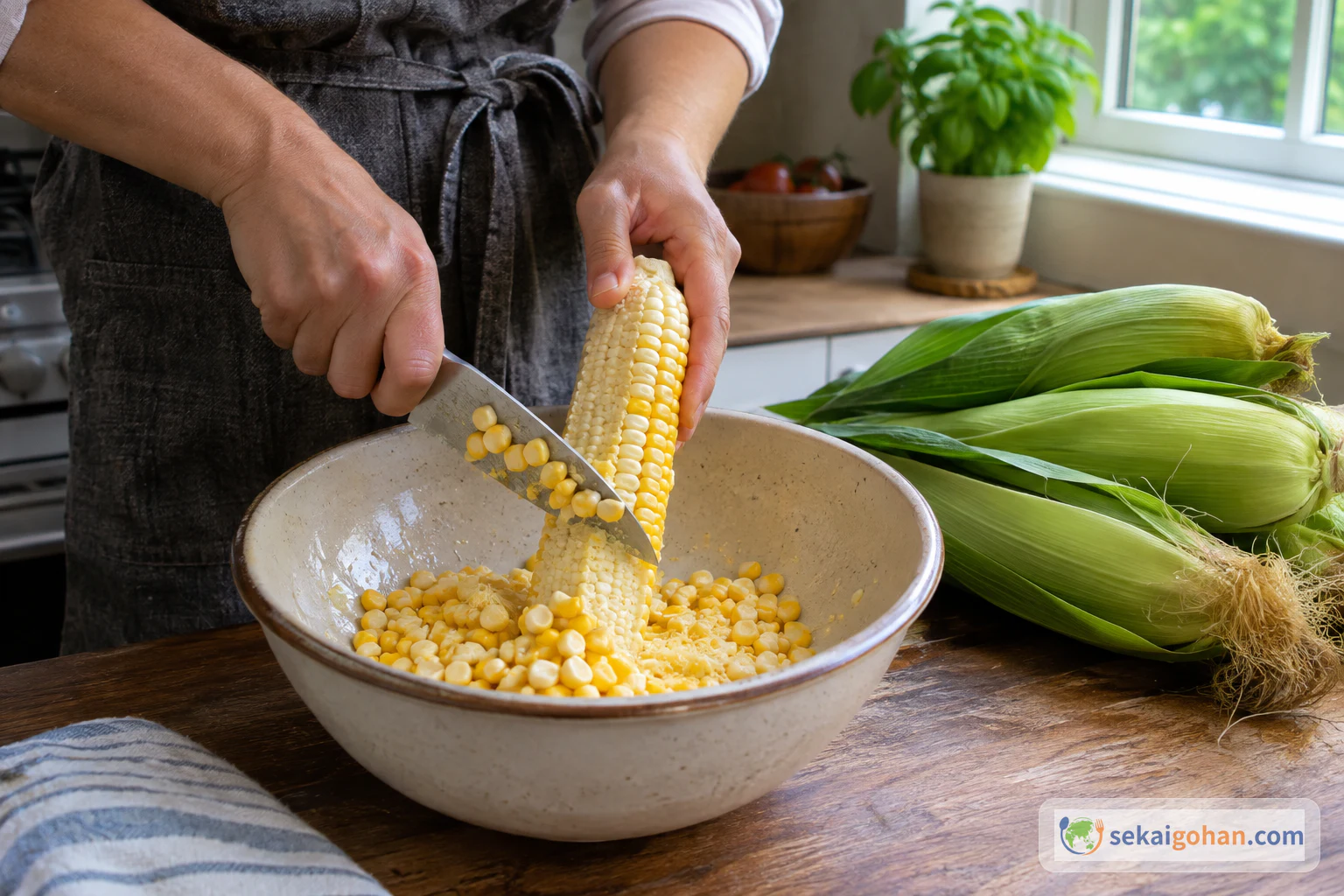
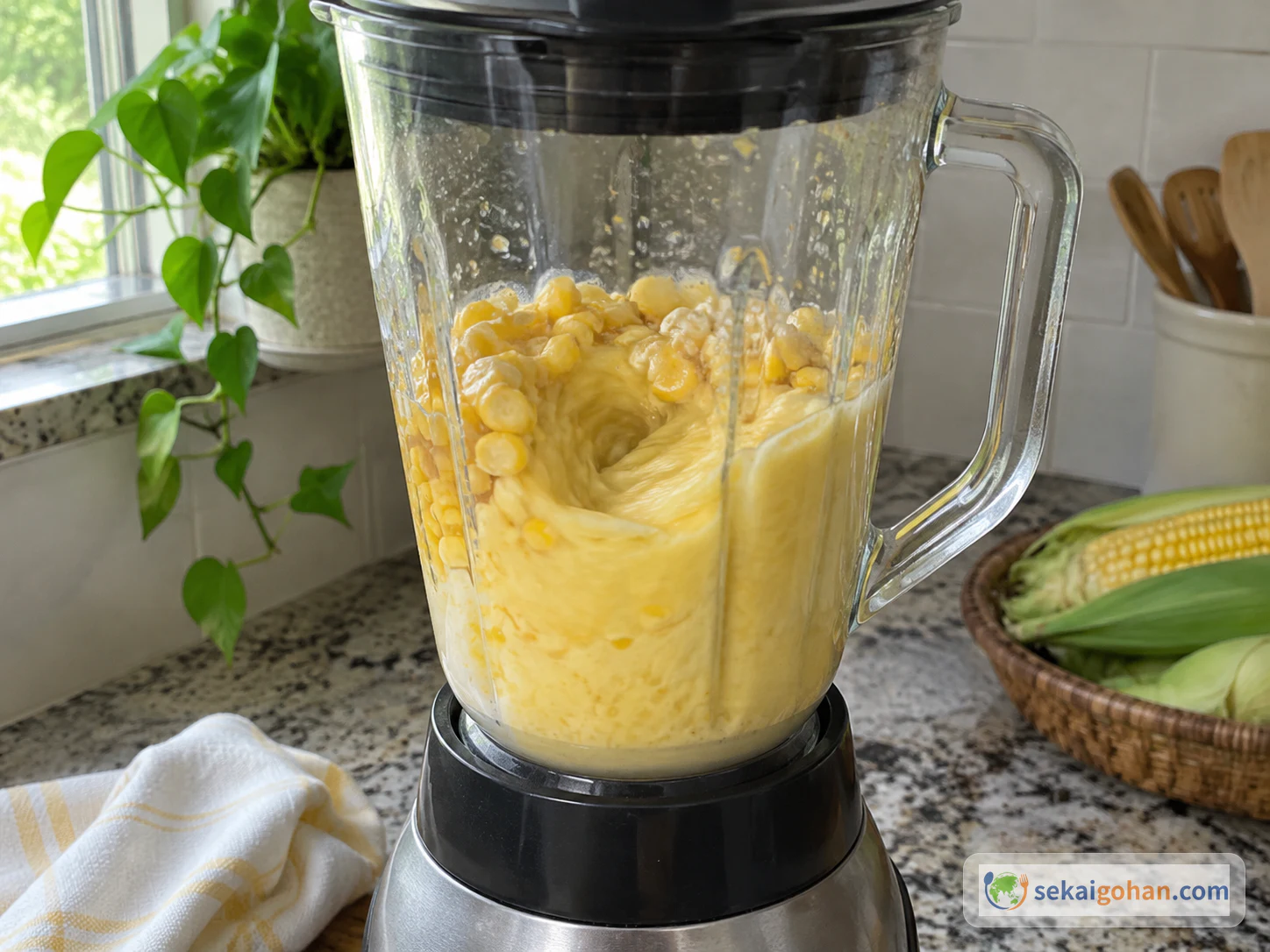
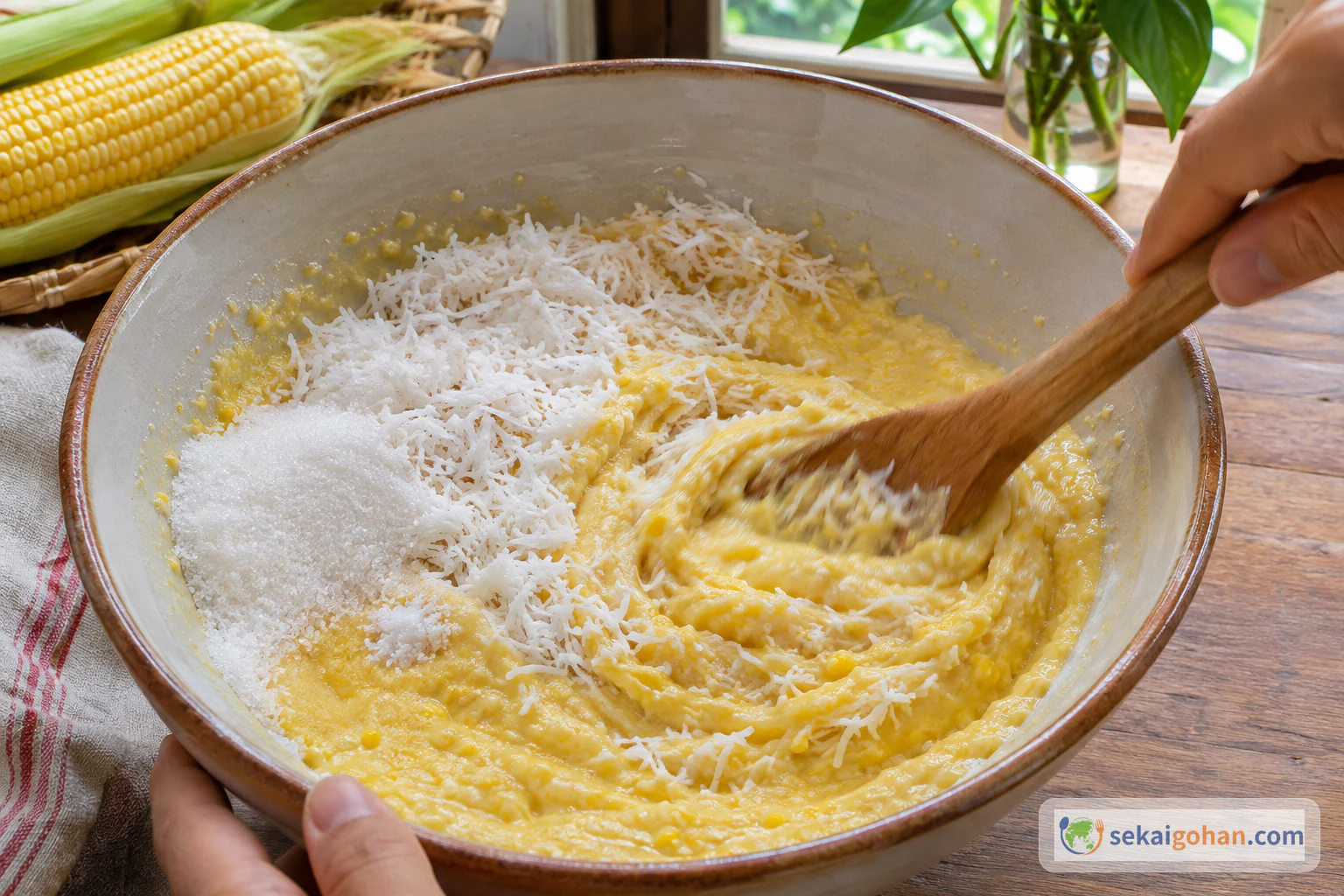
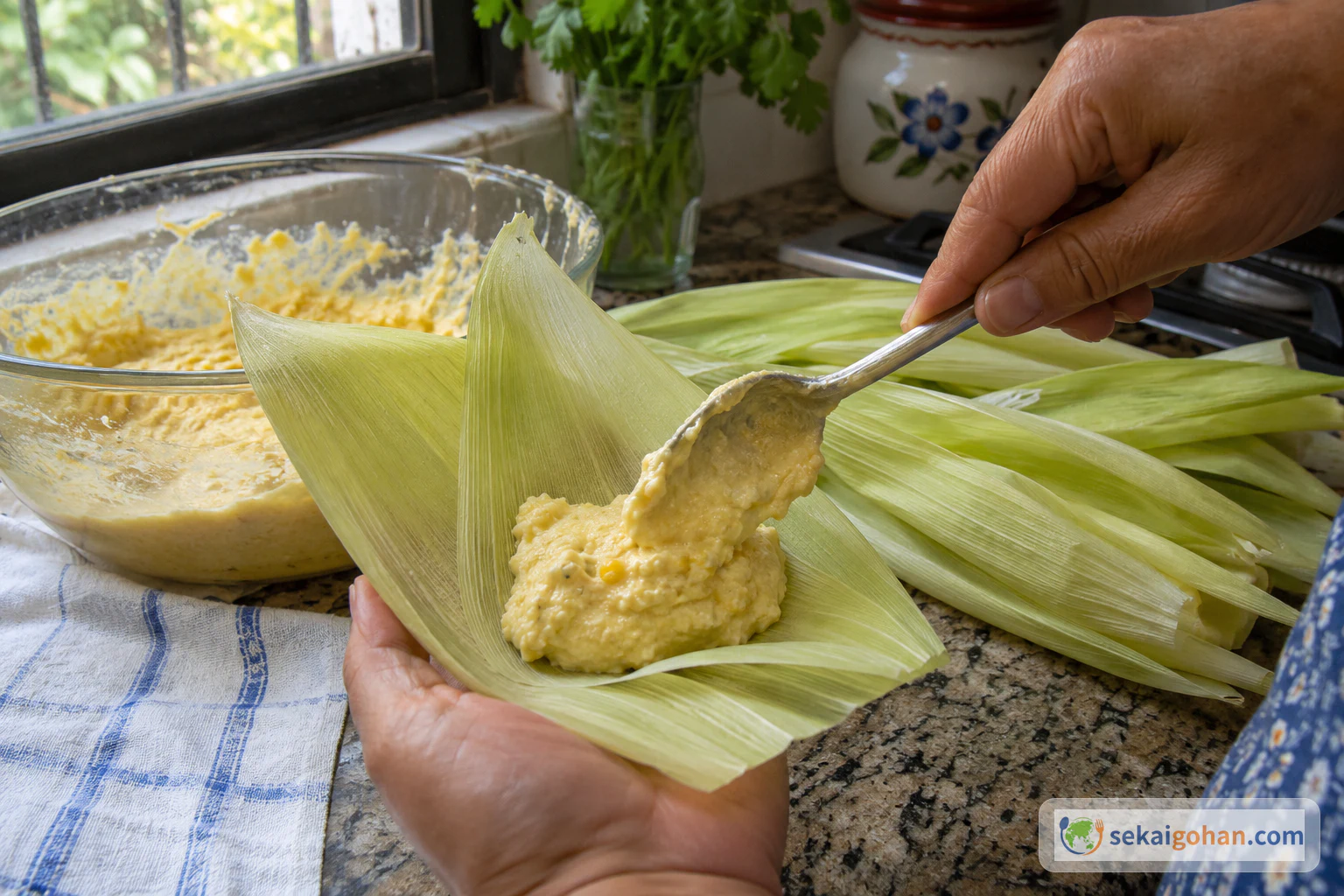
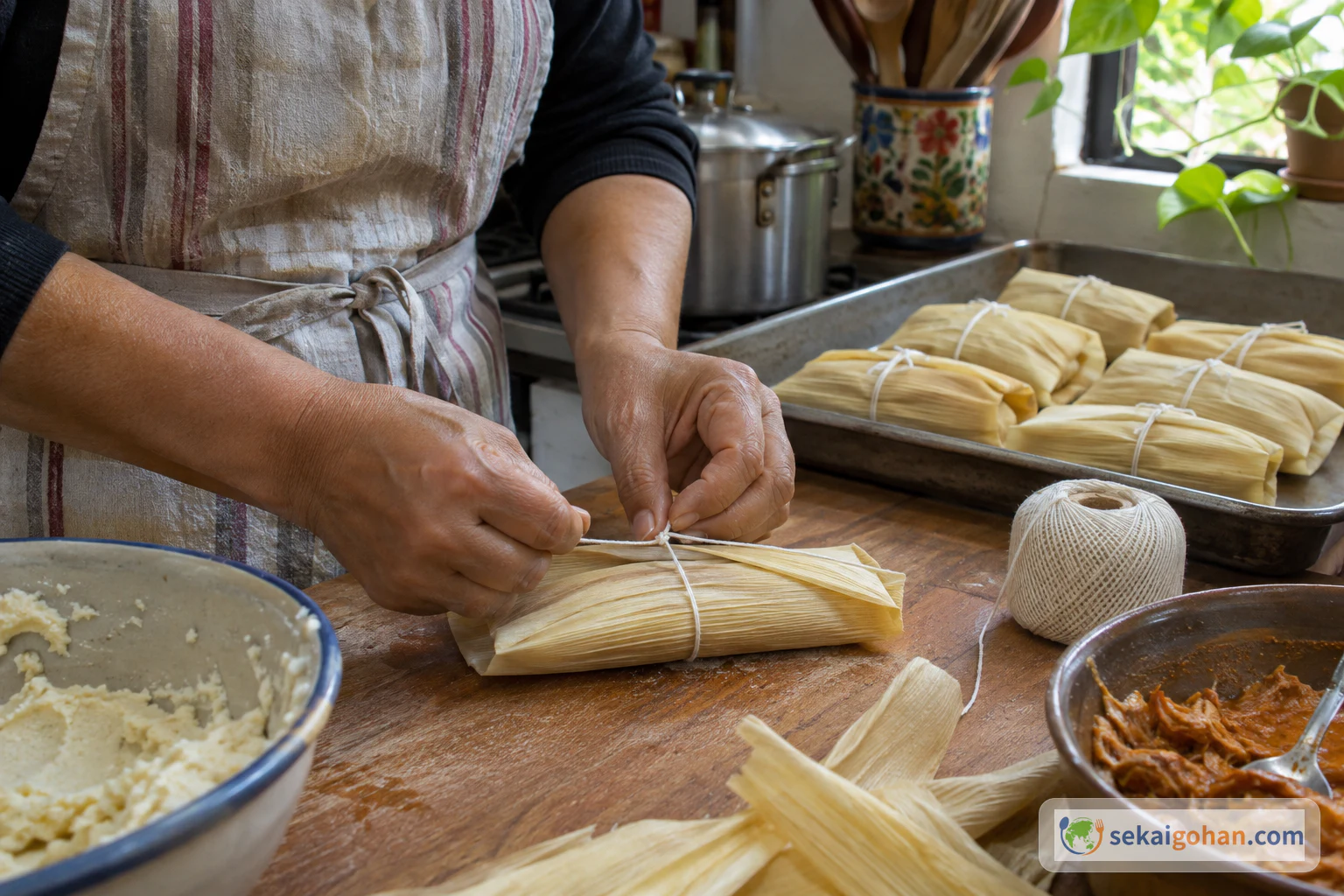
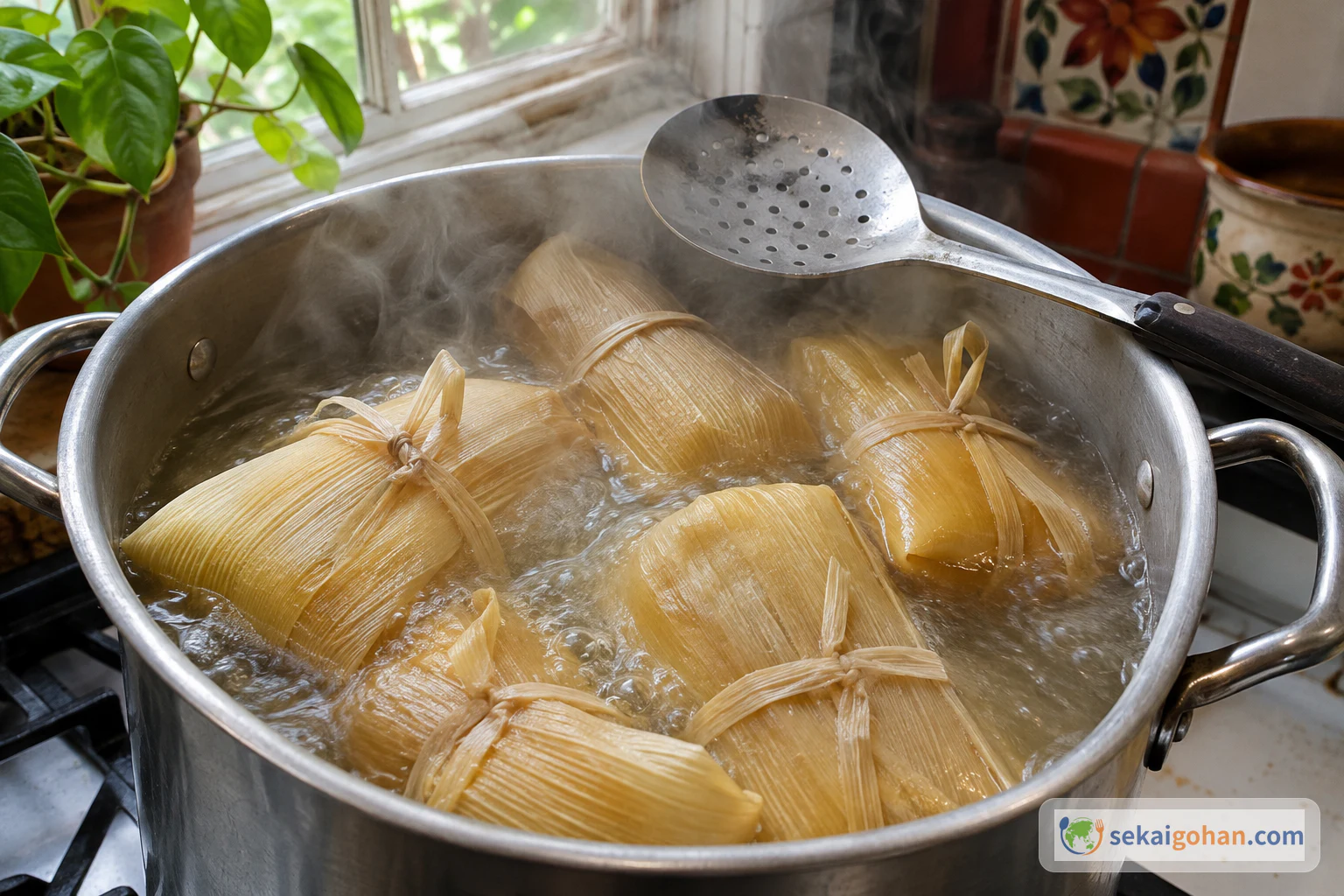
The work comes in three movements. First comes the corn: husk it, take off the kernels and blend them into paste. Then the wrapping, which is the slow, hands-on part and goes faster with two people at the counter. Finally the pot, where the parcels boil for about 40 minutes with nothing to do but keep the water rolling. Put the big pot of water on to heat while you wrap, so it is at a full boil the moment the last parcel is tied.
When It Goes Wrong
| What you see | Why | What to do |
|---|---|---|
| The parcels fall apart in the pot | The water was not at a full boil when they went in | Bring the water back to a rolling boil and add the remaining parcels one at a time |
| Paste leaks from the ends | The ends were not folded in tightly, or the string is loose | Refold the ends over the paste and retie the string tighter before boiling |
| The husk tears while you wrap | The husk was short or ripped when it came off the ear | Lay another husk over the gap so the paste is covered twice there |
| The paste is still loose when you unwrap it | It was opened hot, before it set | Leave the rest on the rack until they cool and firm up |
Serving and the Baked Version
At the table
Pamonha is a snack, set out with black coffee and grated cheese so each bite goes from sweet corn to something salty. At June festival time it appears everywhere, and it suits any gathering where people want something warm in hand.
Pamonha na travessa, the baked version
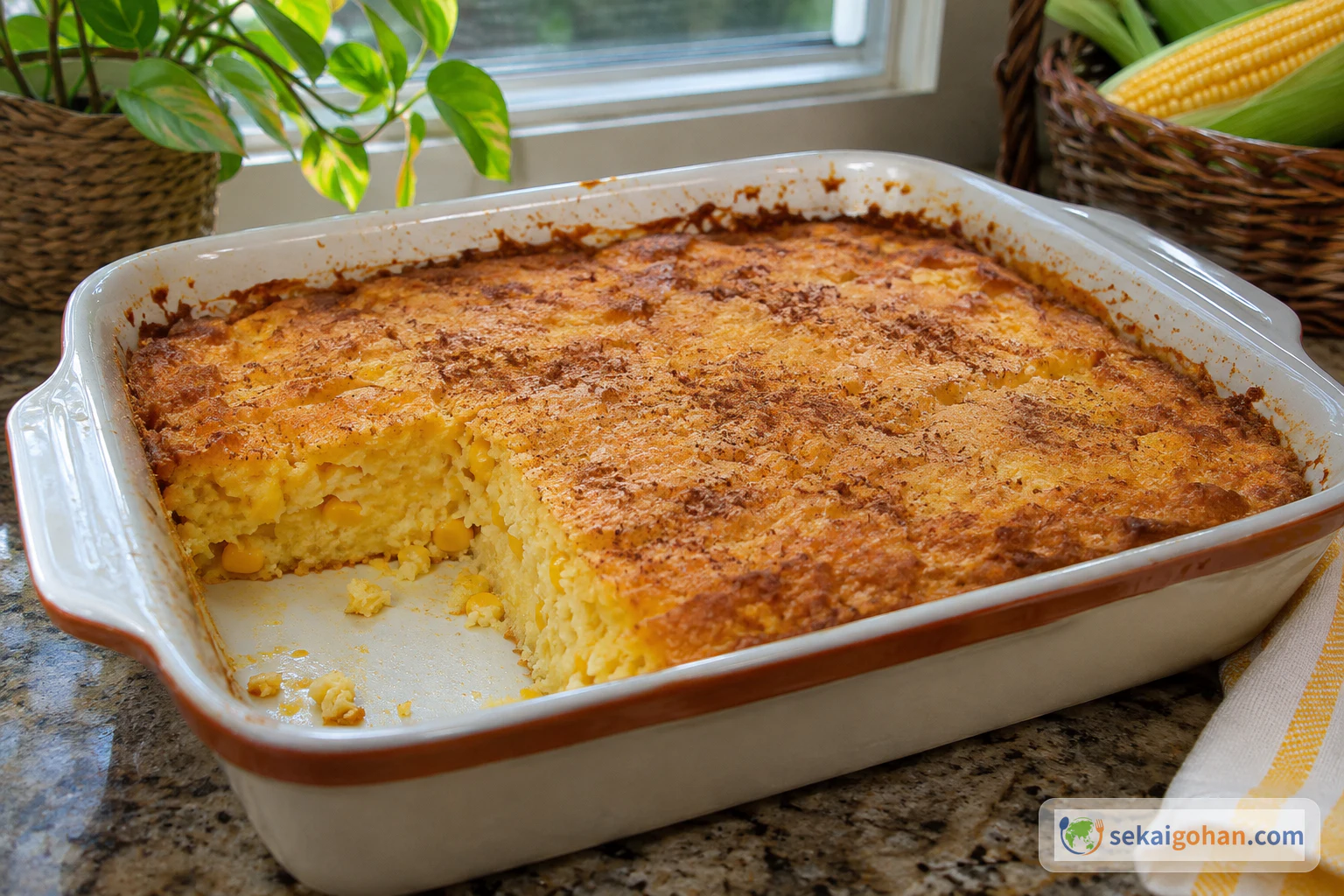
Without husks, pamonha goes into a baking dish. This is a different recipe from the boiled one, so do not mix the two. It uses a 400 g can of corn, 3 eggs, 1½ cups of milk, 1 cup of sugar, ½ cup of unsalted butter, 50 g of parmesan, ⅓ cup of fine fubá (cornmeal) and 1 tbsp of baking powder. Bake it at 170°C for about 50 minutes. It comes out golden on top and creamy inside, richer than the boiled version and a dish of its own. It contains egg, milk and cheese, so it is the one to skip for anyone avoiding dairy.
Keeping
Eat pamonha the same day you make it.
Frequently asked questions
Can I make it with canned corn?
Not the wrapped version, because the husks are part of the recipe and canned corn has none. Canned corn is the base of the baked pamonha na travessa, which is the version to make when fresh ears are out of season.
Is there a savory pamonha?
Yes. Pamonha comes both sweet and salty in Brazil. The sweet one, with sugar and coconut, is the one made here.
Is pamonha the same as a tamale or humita?
They are relatives, all corn wrapped in husks and cooked, but each is its own dish. Pamonha is a sweet paste of fresh grated corn with coconut, boiled in the husk.
Can I eat it cold?
Yes. Chill the pamonhas and serve them with a dusting of cinnamon. Cold, the paste is firmer and the coconut comes forward.