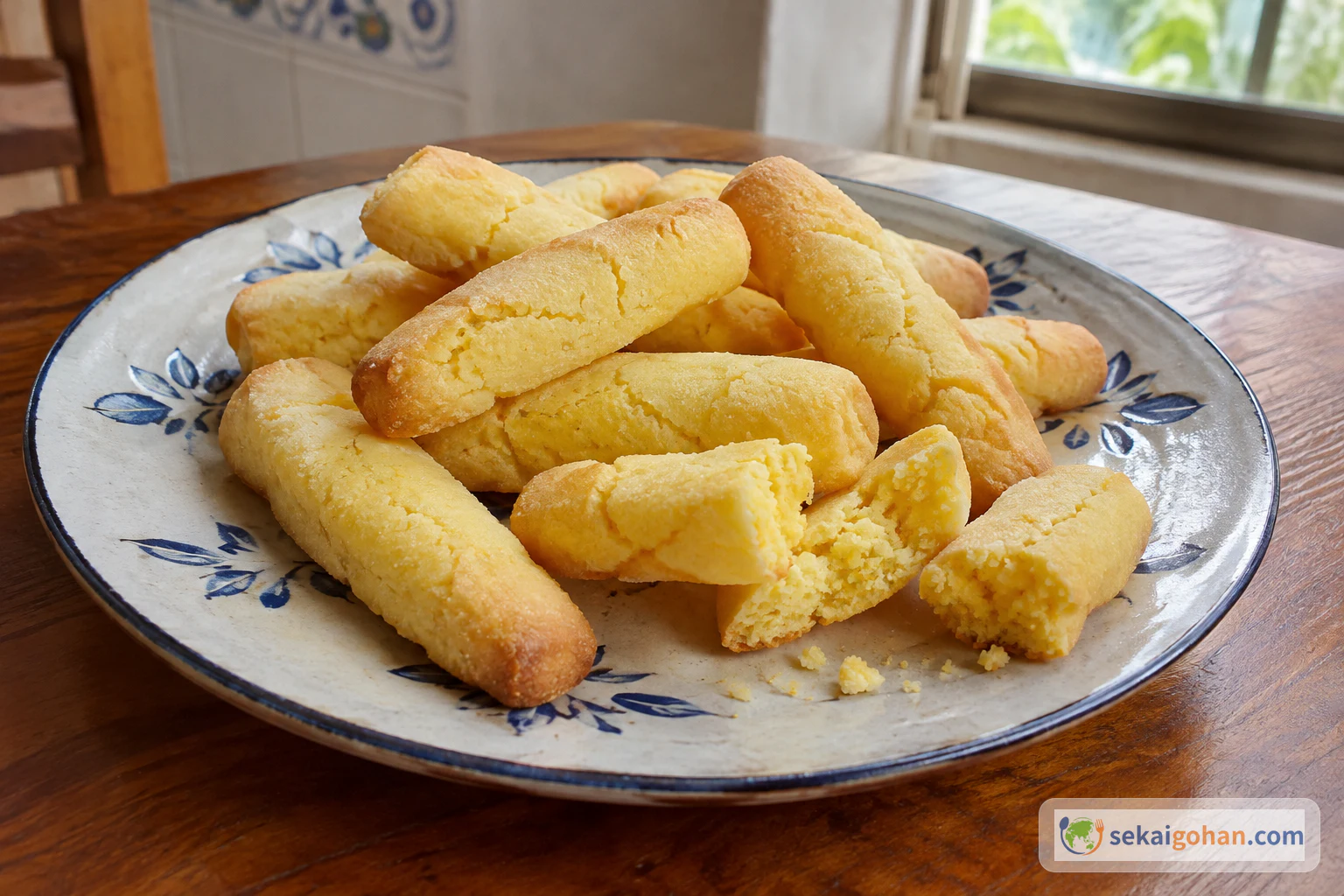
Bite into an achira and it gives way into fine, sandy crumbs that taste of fresh milk and butter, with a little salt at the end. In Fortalecillas, just north of Neiva, the bakeries that make these slender yellow cylinders are busiest in June, July and December. Achiras, also called bizcochos de achira, are the signature biscuit of Colombia's Huila department. The dough is fresh curd cheese worked into starch from the achira root, with one egg yolk, soft butter and salt, and no wheat flour anywhere in it.
From a Garden Root to the Bakeries of Huila
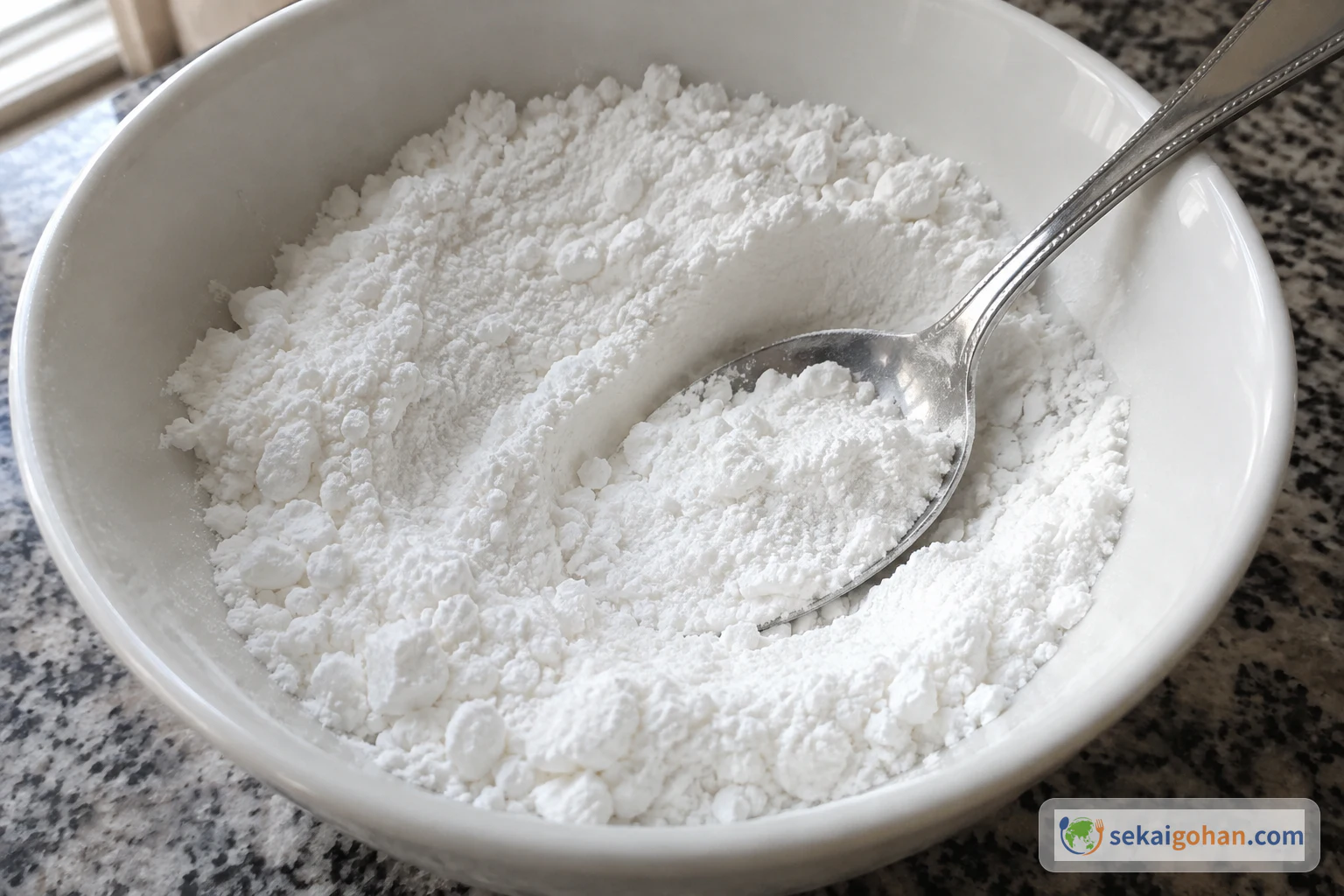
The plant and its starch
The name belongs to a plant before it belongs to a biscuit. Achira is Canna indica, grown for its thick underground rhizome. To make the starch, the rhizomes are washed and grated. The fibre is then sieved off, and the starch that settles out is washed and dried into a fine white powder. That powder is almidón de achira, also sold as sagú, and it gives the biscuit its dry, sandy crumb.
Huila draws on starch made close to home, around San Agustín and El Pital. Local production does not cover what the bakeries use, and much of the starch arrives from Nariño, in the far southwest of the country.
Fortalecillas, Altamira and the Huila name
Two places carry most of the trade. Fortalecillas, just north of Neiva, is known for its achira bakeries, and Altamira is the other main point of production. Biscuits from Huila hold a protected designation of origin, which ties the name to the department. In Huila, achiras share the snack counter with bizcochos de manteca and bizcochos de cuajada. Achiras are the ones made with achira starch.
In the bakeries the biscuits go into wood-fired ovens for about an hour. An older way of baking them went slower still: a clay pot over a wood fire, followed by three to four hours of low heat. A home oven does the job in a fraction of that time, at a higher heat.
The plant and the starch are called achira, sagú, saga or chisgua, depending on who you ask. The biscuits answer to achiras, bizcochos de achira, bizcochos, sagua and chisgua. When you shop for the starch, look under both achira and sagú.
Where it began
The name is usually traced to the Quechua word achuy. The Chibcha people ate achira, and the biscuit is believed to have spread through trade with the Pijao and Páez peoples. Traditional production once reached across Tolima, Huila and Cundinamarca and has slowly faded in places. If you are cooking your way through the Colombian kitchen, achiras sit at the snack end of the table, a world away from a plate of bandeja paisa and closer in spirit to a corn arepa eaten in the hand.
Ingredients
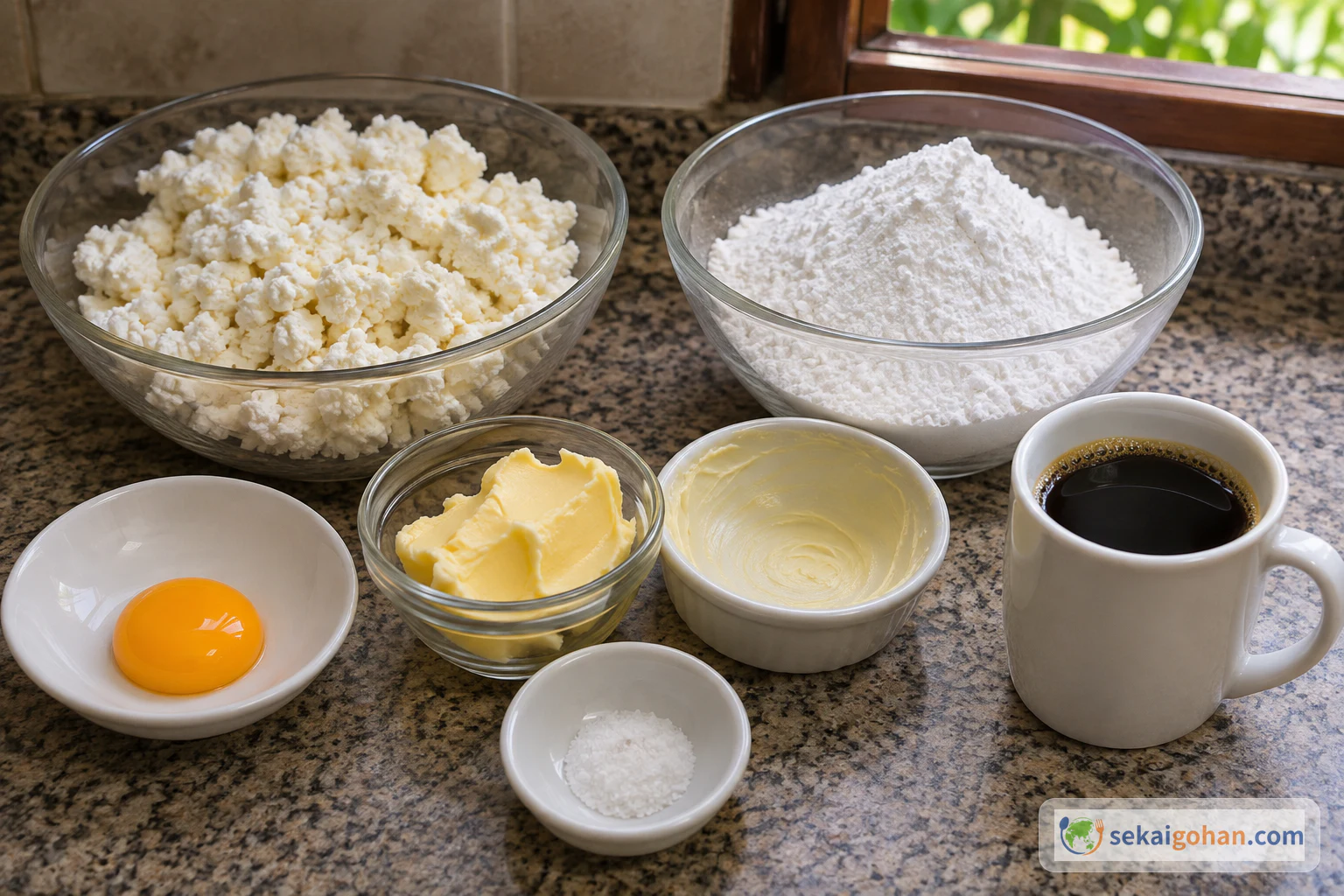
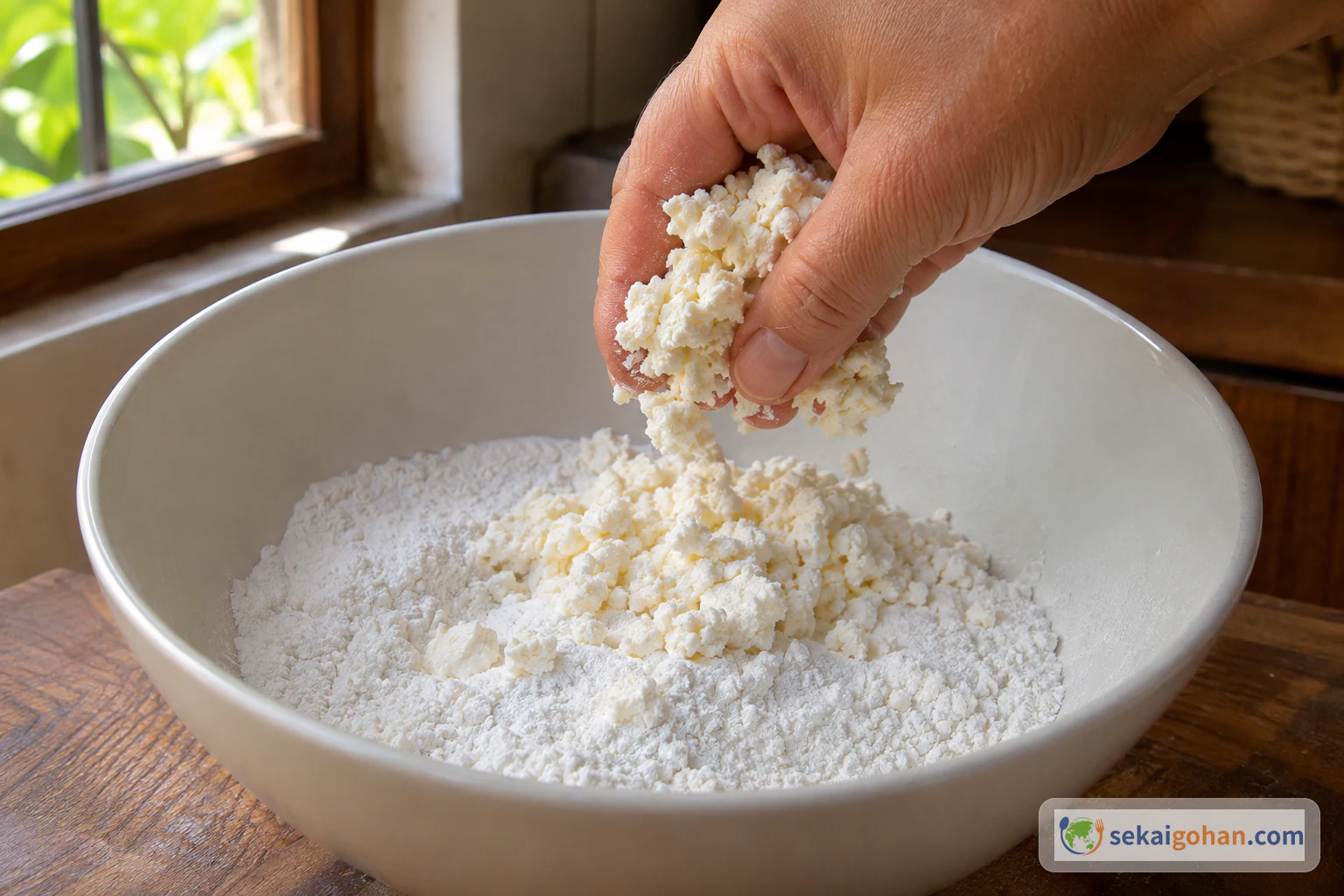
The cheese and starch go in at two parts curd to one part starch by weight. That ratio is what makes an achira, so keep it even if you change the cheese.
Achiras contain milk (cheese and butter) and egg. Achira starch contains no wheat, but packaged starch can be made in facilities that handle wheat; check the label if you are baking for someone who avoids gluten.
Use cuajada made from pasteurized milk. Do not taste the raw dough; it contains raw egg yolk and fresh cheese and is eaten only once baked.
Equipment
- Large mixing bowl
- Clean cloth or fine sieve for squeezing the curd
- Kitchen scale
- Plastic wrap
- Baking tray
- Oven and oven mitts
- Wire rack
Choosing the Cheese and the Starch
Achira starch is the ingredient to hunt down. It can be hard to find; look for it as almidón de achira or sagú. Supermarket starches change the result. Tapioca starch is the closest easy find, and it bakes with a different texture from achira's dry crumb. Potato starch is not the same thing either; treat it as a different biscuit.
Cuajada is a fresh, mild, moist curd cheese. Outside Colombia, drained cottage cheese or ricotta can stand in. Both differ from cuajada in salt and moisture, so the dough and the seasoning will shift. Unsalted butter is the right choice everywhere.
| Keep this for an achira that tastes like Huila | You can let this go at home |
|---|---|
| The 2:1 ratio of curd to starch by weight | The wood fire and the hours of slow baking |
| Curd squeezed until no more water comes out | The exact brand or source of the cheese |
| Thin cylinders of even size | A clay pot or wood oven |
Cuajada and its substitutes vary a lot in salt. Taste a crumb first. If the cheese is already salty, start with less than the full amount and add more only if the dough needs it.
Method
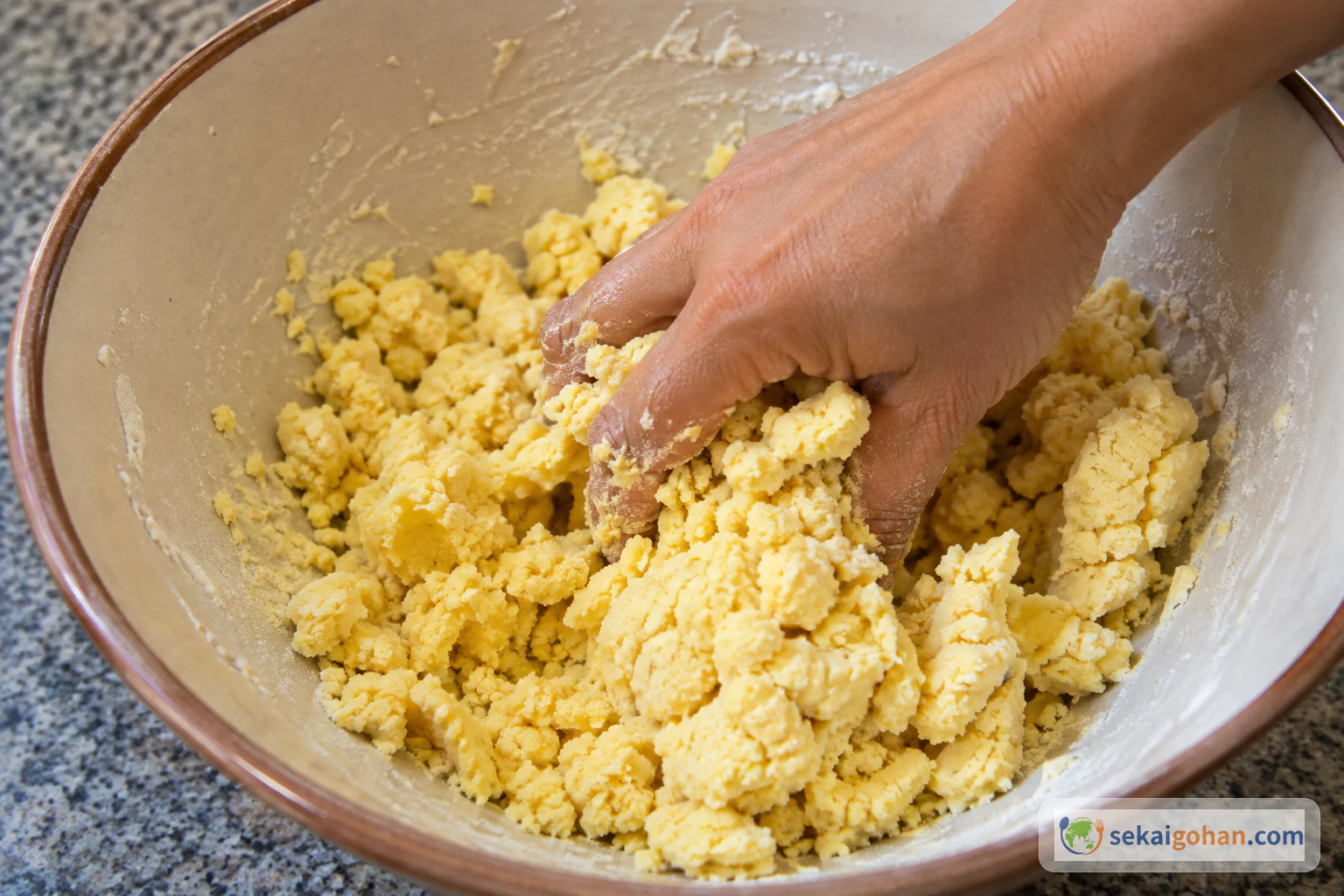
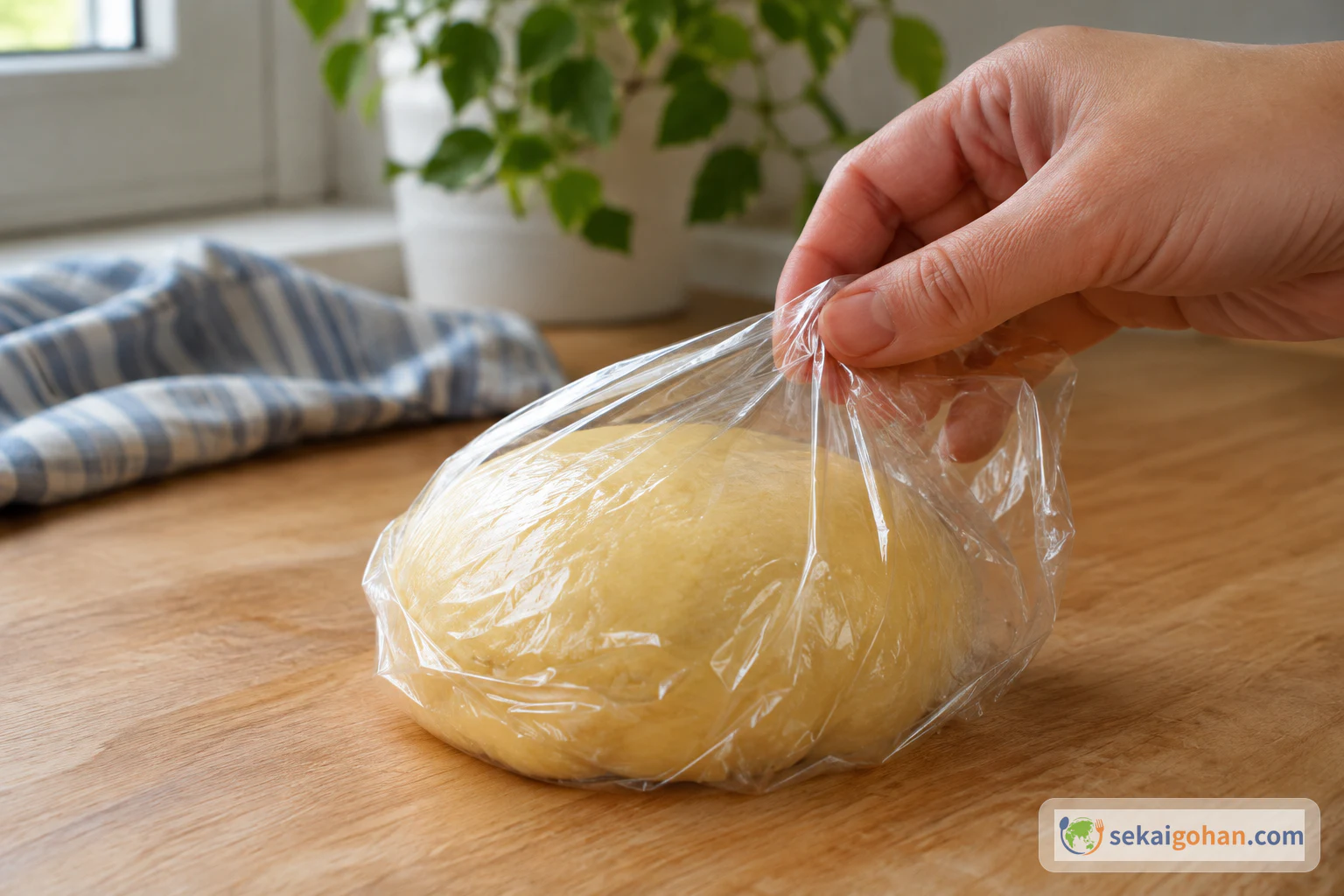
The dough is mixed and kneaded, then rests in the refrigerator for 1 hour. Heat the oven near the end of that hour, then shape the pieces and bake.
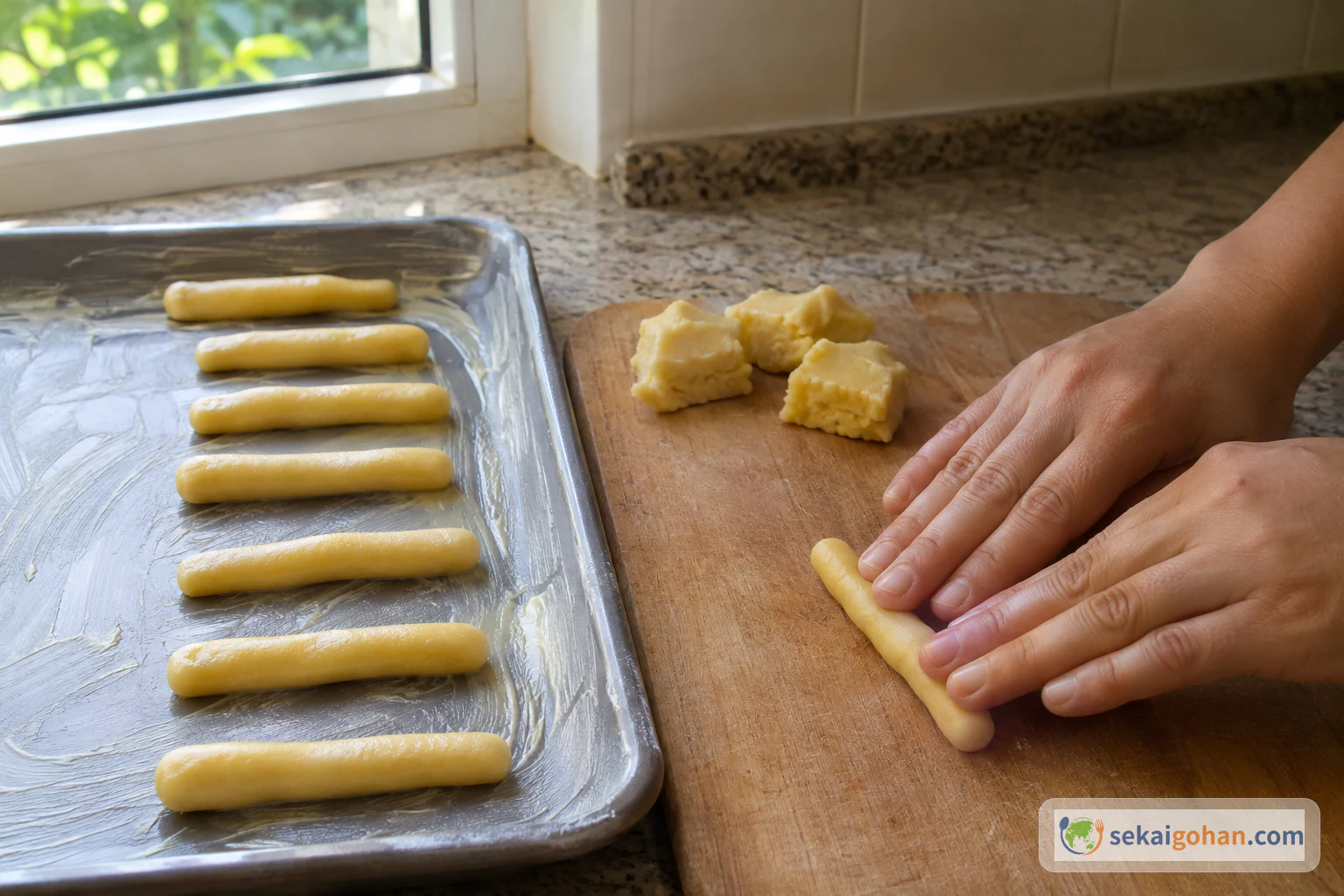
Pieces of the same weight bake to the same colour at the same time. A biscuit twice the size of its neighbours stays pale while the small ones brown, so weigh as you cut.
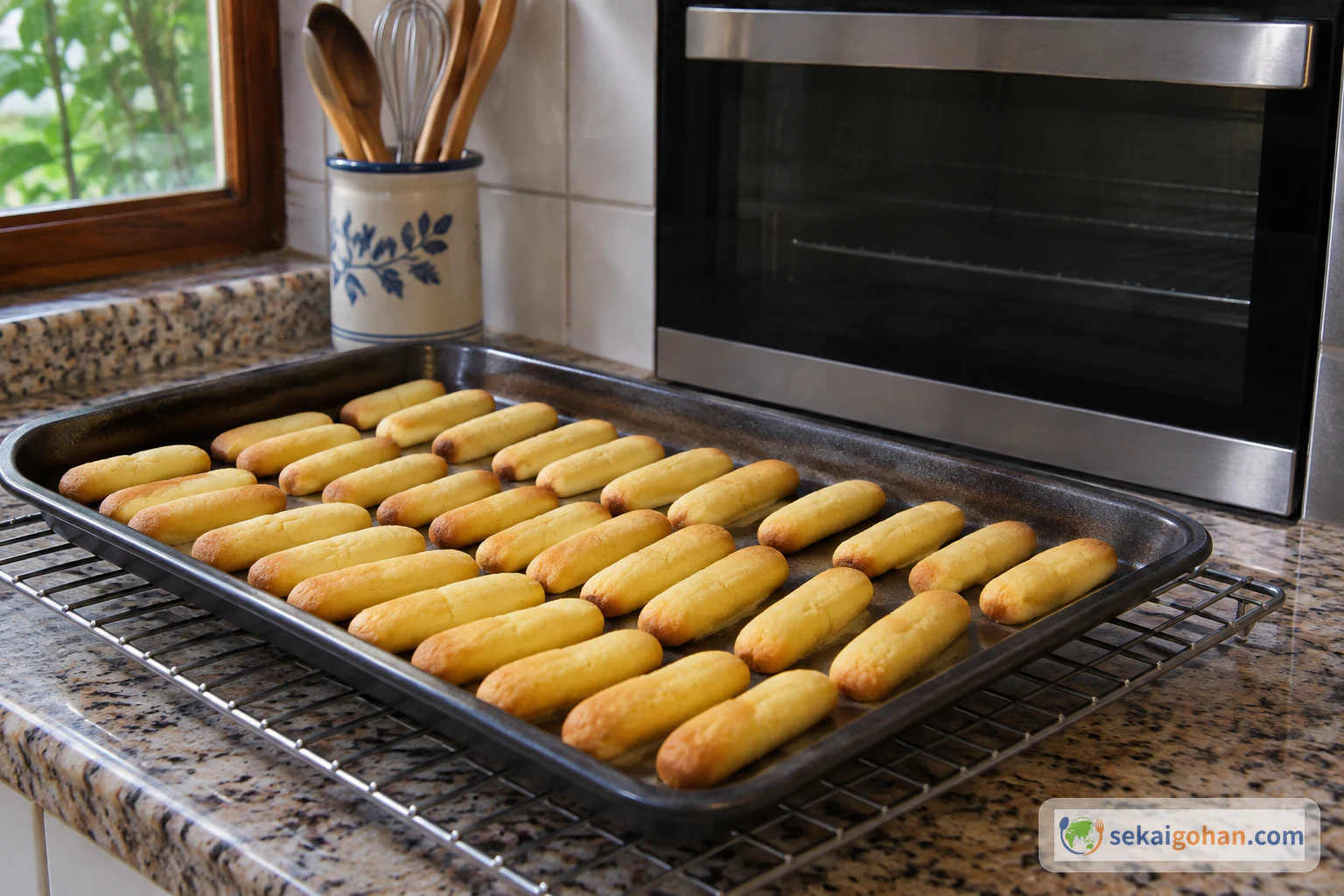
The tray comes out of a 390°F (200°C) oven. Handle it only with dry oven mitts, and let the biscuits cool before anyone reaches for one.
When It Goes Wrong
| What you see | Why | What to do |
|---|---|---|
| The dough is soft and sticky | The curd still held water | Squeeze the curd harder next time; for this batch, chill the dough fully before shaping |
| The biscuits are still pale at 15 minutes | Ovens run differently | Leave them in a few minutes longer, checking the colour, up to about 20 minutes in total |
| Some brown while others stay pale | The pieces differ in size | Weigh each piece and roll every cylinder to the same thickness |
| The biscuits taste too salty | The cheese was already salty | Taste the cheese first and cut back on the added salt |
| The crumb is chewy or dense | A different starch stood in for achira starch | Use achira starch for the true sandy crumb |
Serving and Variations
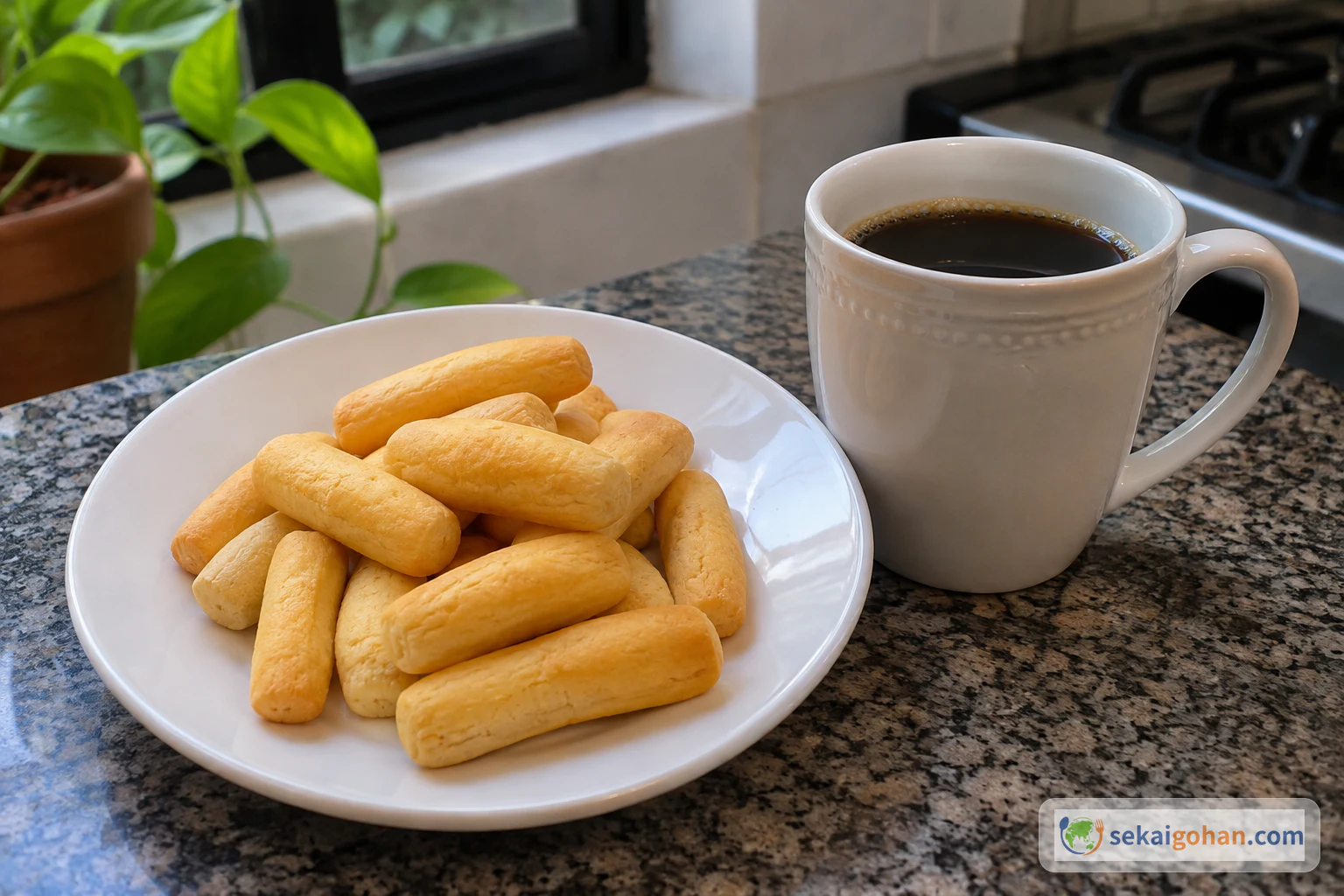
At the table
Achiras are a snack, eaten once they have cooled, a few at a time from a plate or a cloth-lined basket. A cup of black coffee sits well beside them; the bitterness meets the milky salt of the crumb.
Variations
- Longer fingers. Shape each cylinder to about 2 inches by ⅝ inch (5 cm by 1.5 cm). Start checking the colour at around 10 minutes.
- More yolks. Older home recipes keep the same two-to-one curd-and-starch ratio but use several yolks. The extra yolk makes a richer, more yellow biscuit.
Frequently asked questions
Are achiras gluten-free?
The dough contains no wheat; achira starch carries the structure. Packaged starch can be processed alongside wheat, so read the label for shared-facility statements before you bake for someone who must avoid gluten.
Can I use potato starch or cornstarch?
Those starches make a different biscuit. Achira starch gives the dry, sandy crumb that defines the dish. If you cannot find it, tapioca starch is the closest supermarket option, with a changed texture.
Can I copy the slow, low-heat traditional bake at home?
The old method uses a clay pot over a wood fire and then hours of low heat, and it belongs to that setup. In a home oven, the hot, short bake is the way to go.
Can I make the dough ahead?
The method makes the dough up to the end of step 3 and rests it wrapped in the refrigerator for 1 hour. No longer make-ahead or storage time is given, so shape and bake after that rest.