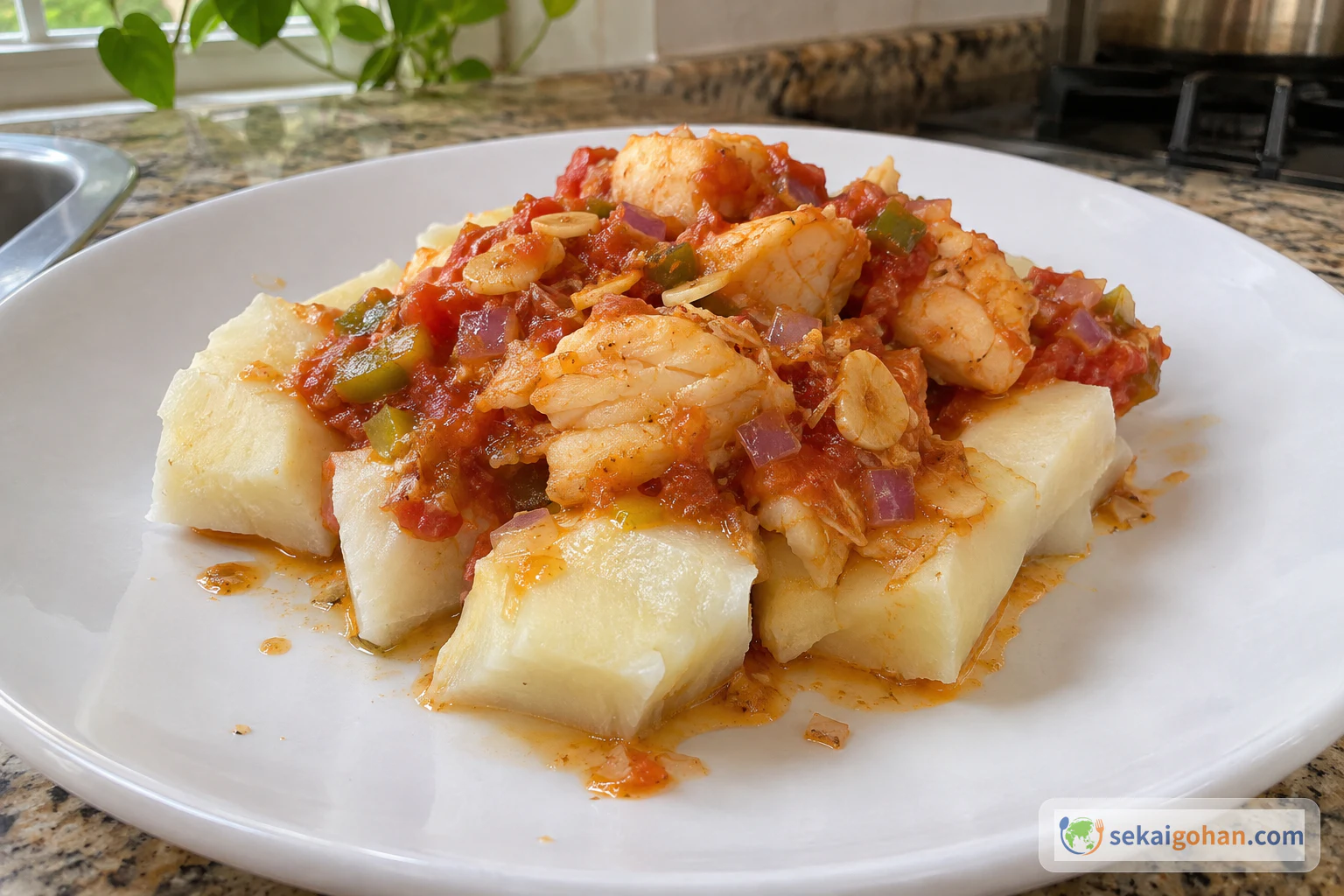
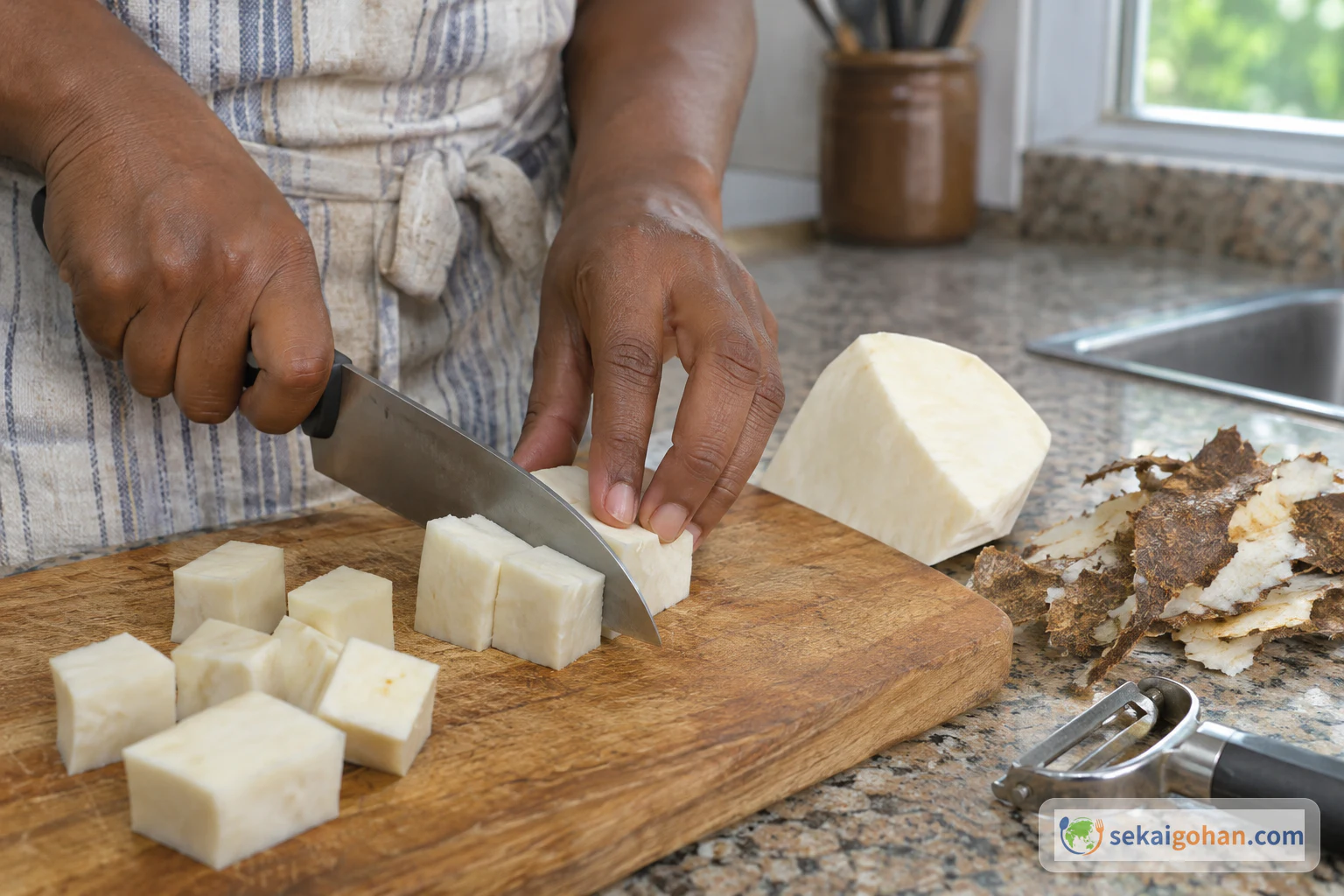
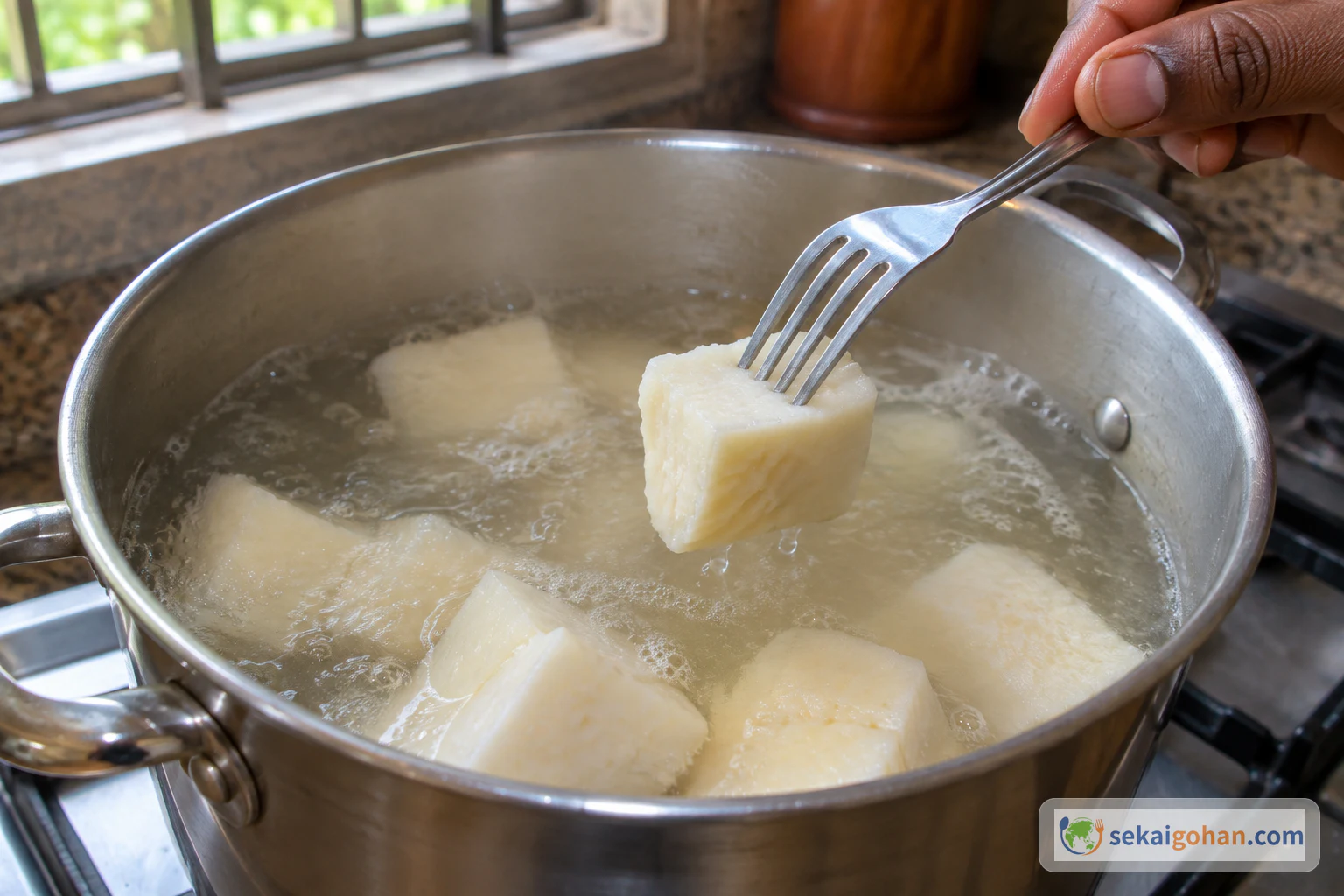
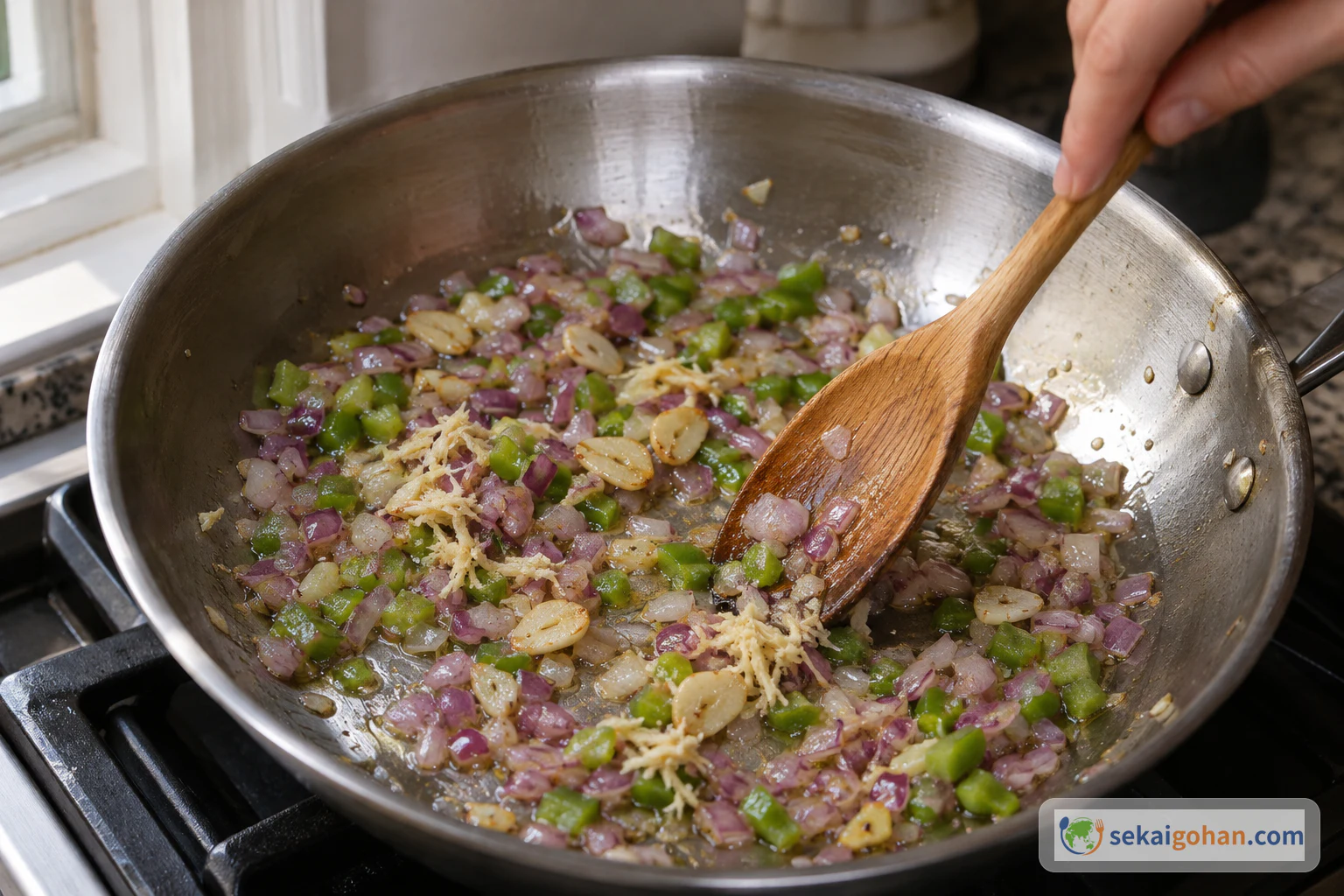
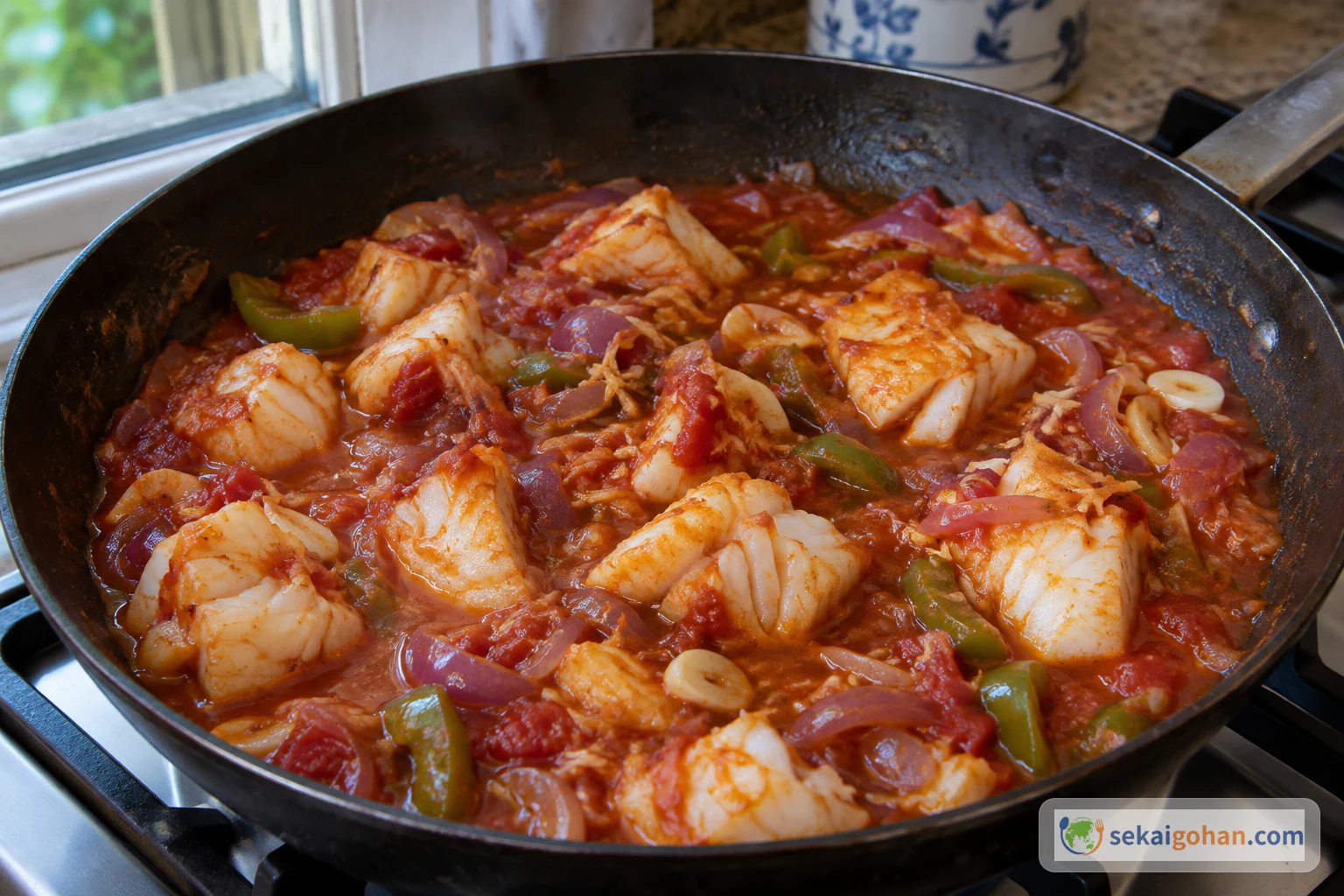
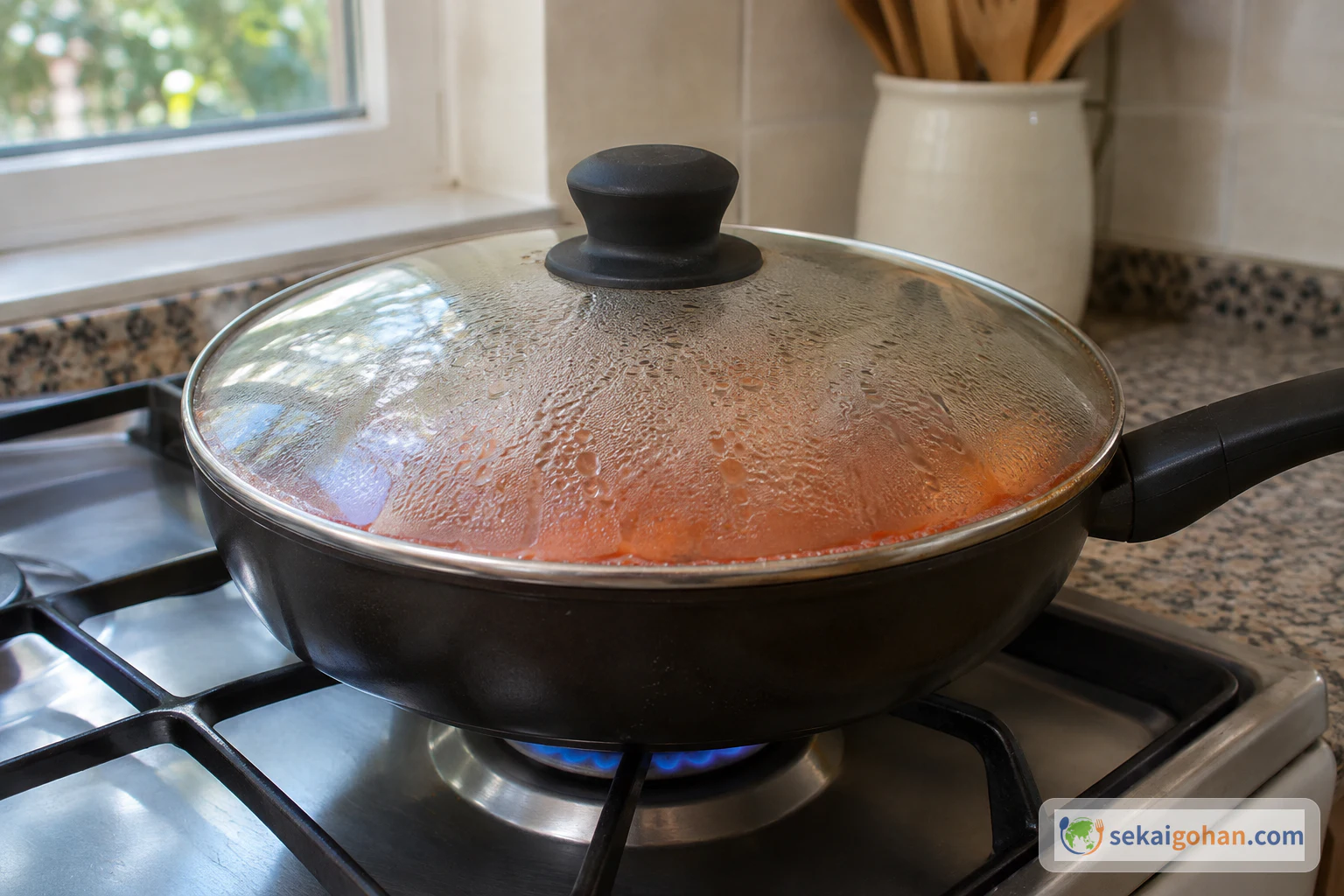
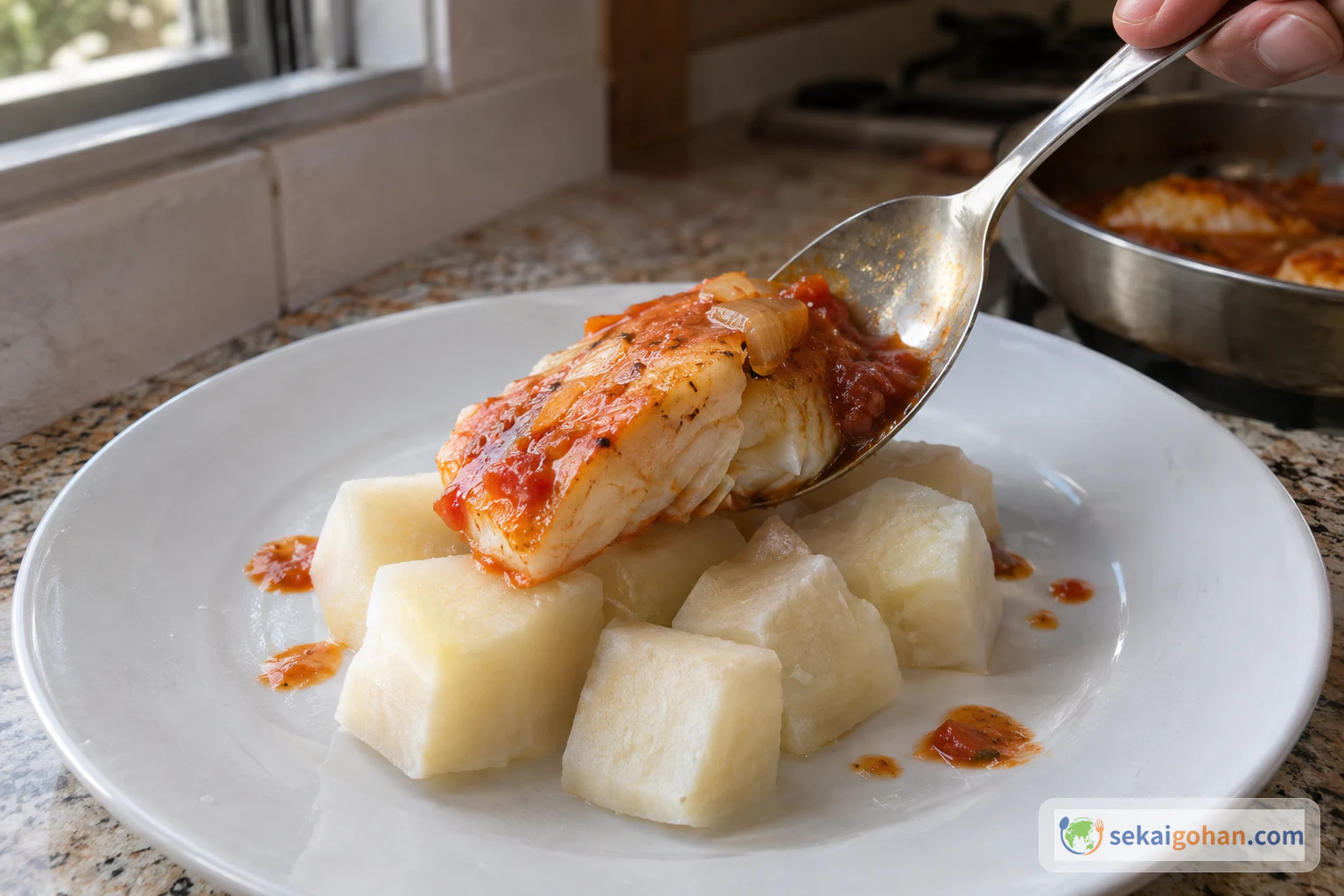
Sliced garlic turns golden in the oil, the onion and green pepper go in after it, and then the soaked salt cod and a splash of white wine meet a little tomato sauce under the lid. Meanwhile, the cubed yam waits in its hot, salted cooking water until the last second. When it is drained and piled in the middle of the plate, the cod goes on top and a few drops of red sauce run down into the pale, soft yam. Ñame con bacalao is a Cuban home plate of boiled yam and salt cod. It tastes of the sea and of garlic, with a mild tomato edge, laid over a starchy base that drinks up the sauce.
From Bundles of Salt Cod to a Remembered Plate
Salt cod reached far into the Caribbean because salting kept the fish from spoiling and made it cheap. In Cuba it was once an everyday fish, and in the countryside people bought it by the bundle, in pencas. Paired with ñame, a starchy tropical yam boiled until soft, it made a filling plate from humble ingredients. Cod turns up in Cuban music and sayings, a sign of how ordinary it used to be.
Today cod is priced out of reach for most Cuban households, and the dish is slipping from an everyday meal into a taste people remember. Cooking it now is partly a way of keeping that habit alive.
The dish belongs to more than one island. It is cooked in Puerto Rico, in Limón on the Caribbean coast of Costa Rica, and in eastern Cuba, so where it began is not settled. Households along that arc change it as they like, with coconut milk in the sauce, ginger, turmeric or curry, or with yuca or yautía in place of the yam.
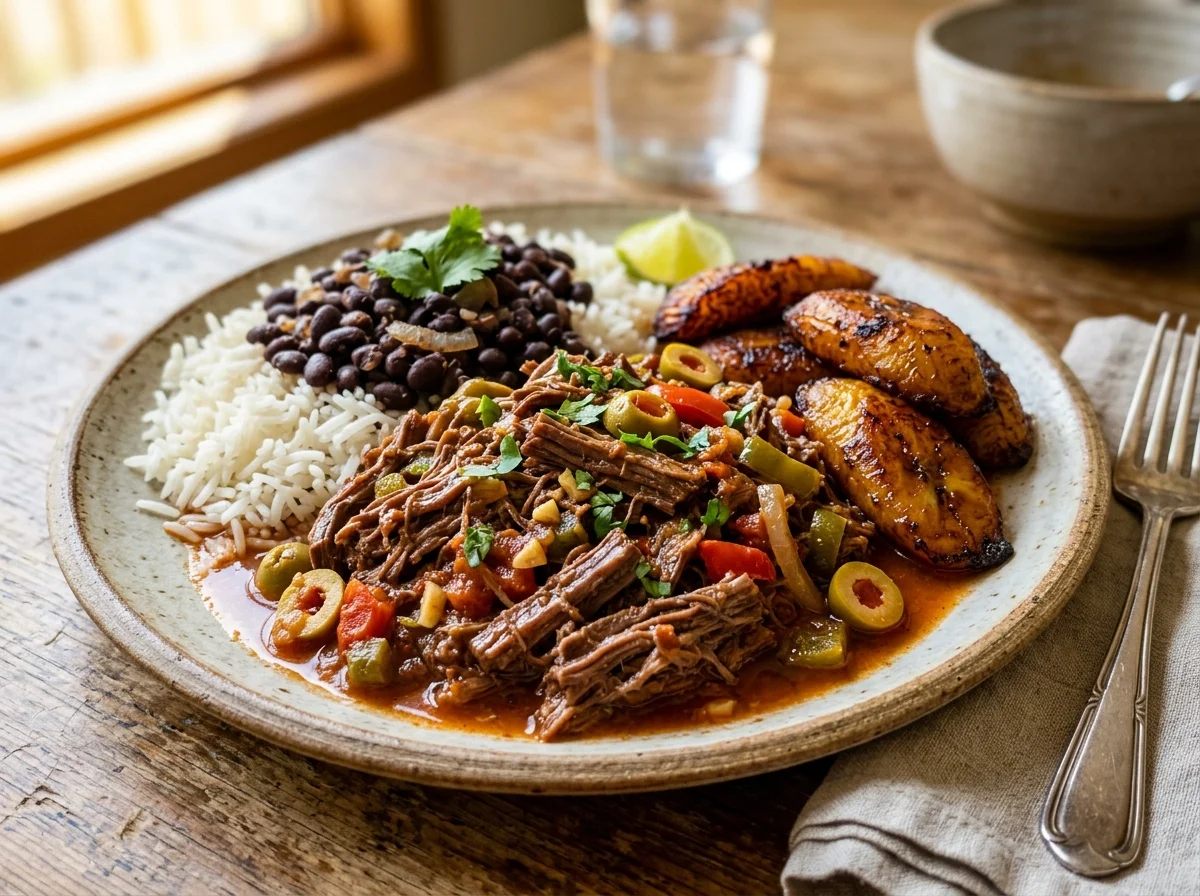
It is a different dish from bacalao a la vizcaína, the Basque-rooted cod stewed with potatoes and tomato. For the Spanish side of salt cod served cold, see esqueixada. For more Cuban home cooking, try meat plates such as ropa vieja and picadillo a la habanera. More dishes from the island are collected on the Cuba page.
The plate is called ñame con bacalao or bacalao con ñame, depending on which ingredient you put first. A local name, chiricunchiri, is also used, and is sometimes connected to the song "Sarandonga." How the two are linked is not settled.
Ingredients (serves 4)
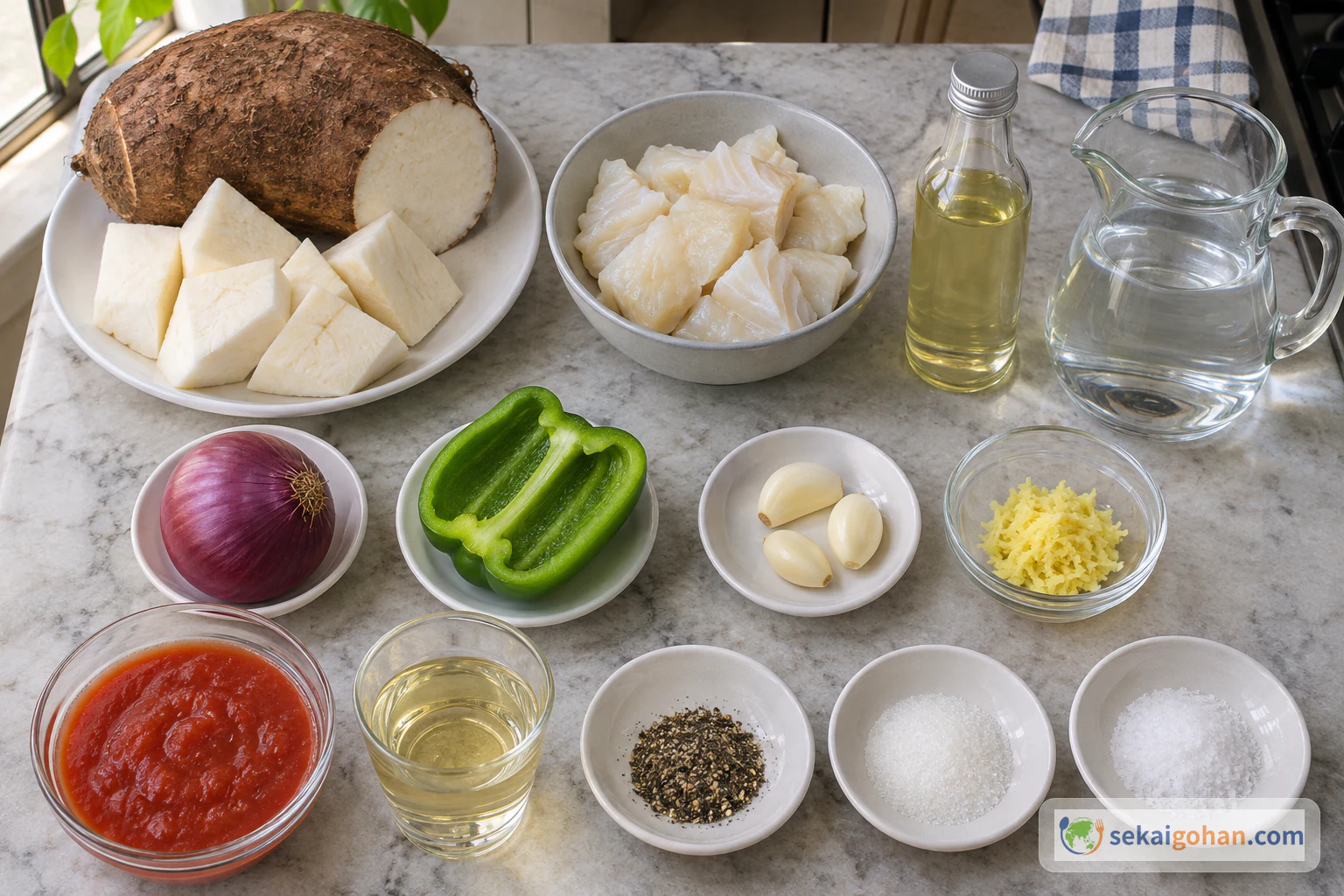
The 18 oz (500 g) is the weight of soaked, boneless cod. Dried salt cod gains water as it soaks, so buy with that in mind and weigh once it is ready.
This dish contains fish (cod). The sauce is cooked with wine and simmers only briefly under a lid, so it still contains alcohol. Keep that in mind when you cook for children or for anyone who avoids alcohol. Always cook yam until soft all the way through, and never eat it raw.
Equipment
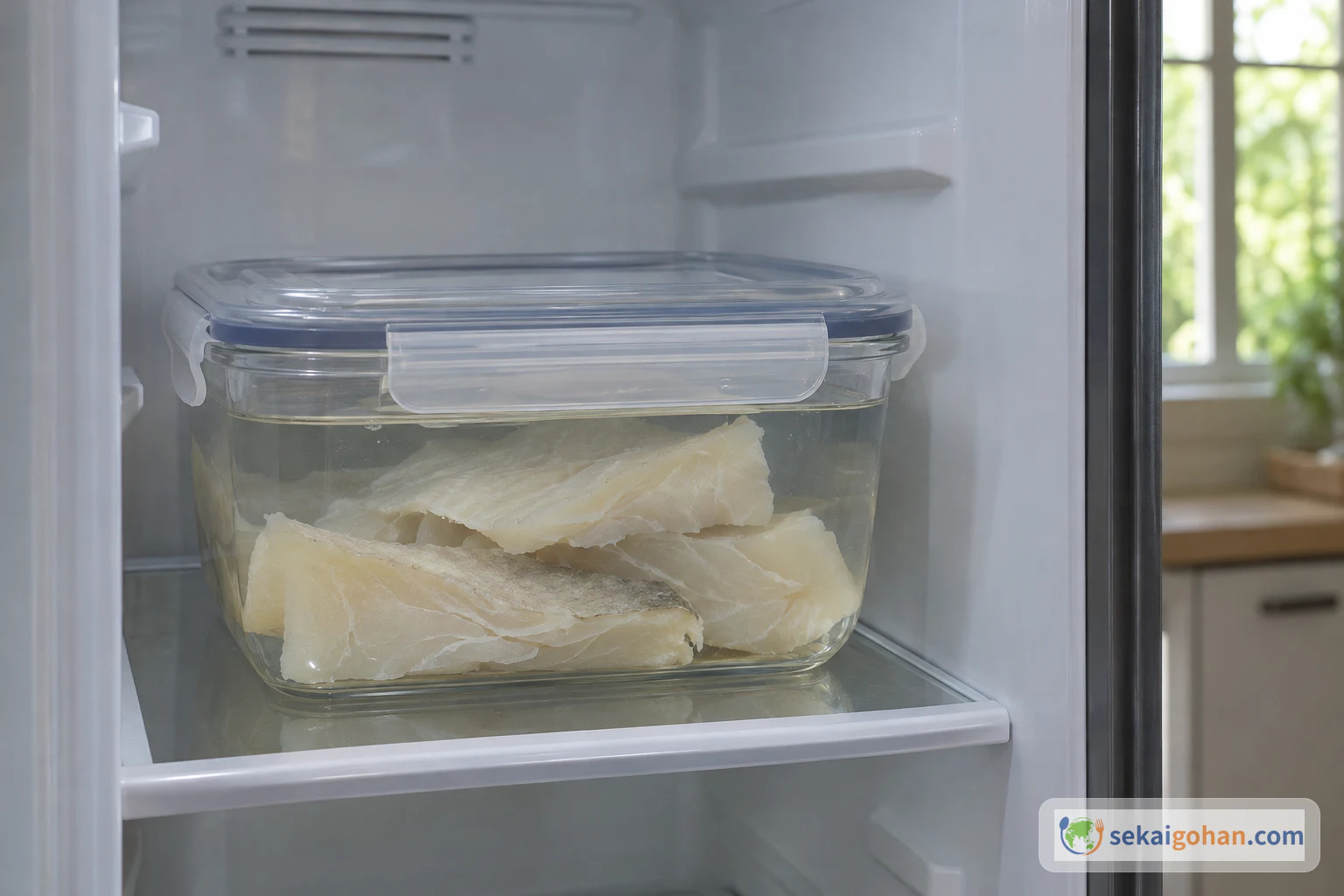
- Glass or ceramic container with an airtight lid, for soaking the cod
- Vegetable peeler and a sharp knife
- Cutting board
- Medium pot for the yam
- Wide skillet with a lid
- Fork, for testing the yam
- Small saucepan, for the taste test
Finding Ñame and Salt Cod
Ñame is the one ingredient worth tracking down. Look in Latin American or Caribbean grocers and import food shops, and check the freezer case. It is a white-fleshed tropical yam of the Dioscorea family, and varieties differ, so cook any yam fully. The Chinese yam or nagaimo sold in Japanese and Asian shops (Dioscorea polystachya) is a different vegetable. It is eaten raw in Japan and has a slippery, crisp texture that does not suit this plate.
If ñame is impossible to find, use yuca or yautía. Both are used in its place in parts of the Caribbean.
For the fish, buy dried salt cod (bacalao), sold whole or in pieces in Spanish, Portuguese and Latin American shops. Lightly salted cod fillets have a different salt level, so treat them as a different starting point: taste before adding salt and season at the end. An ordinary yellow onion works in place of red. Choose a plain, unsweetened tomato sauce so you can judge the pinch of sugar yourself. Black pepper is a good choice for the pepper.
Method
The cod soaks in the refrigerator for 12 to 24 hours before anything else happens, so start the day before. On cooking day, peel and boil the yam first. While it boils, the sofrito and cod come together in the skillet, and their 10-minute covered simmer is the only quiet stretch. Then you drain the yam and plate.
The soak sets the salt for the whole dish. Boil a small piece and taste it rather than going by the clock, and soak longer whenever it tastes sharp.
Soaked cod still carries some salt into the sauce. Season the cod only after the simmer, once you have tasted it.
When It Goes Wrong
| What you see | Why | What to do |
|---|---|---|
| The test piece is harshly salty | The soak was too short, or the water was not changed often enough | Pour off the water, cover with fresh cold water and soak longer in the refrigerator. Test again |
| The finished sauce is too salty | The cod went in before it was soaked enough | Serve it over more yam. Next time, soak until the test piece tastes right |
| The yam is breaking up | It boiled too long | Drain it now and plate gently. Start testing with a fork earlier next time |
| The centre of the yam is firm | The cubes were uneven or the boil was too short | Return it to the boil and test again until a fork slides through |
| The sauce tastes bitter | The garlic browned too far | Start the garlic again in fresh oil and pull it at gold |
| The tomato tastes sharp | The sugar was skipped | Stir in a pinch of sugar and simmer briefly |
Serving and Variations
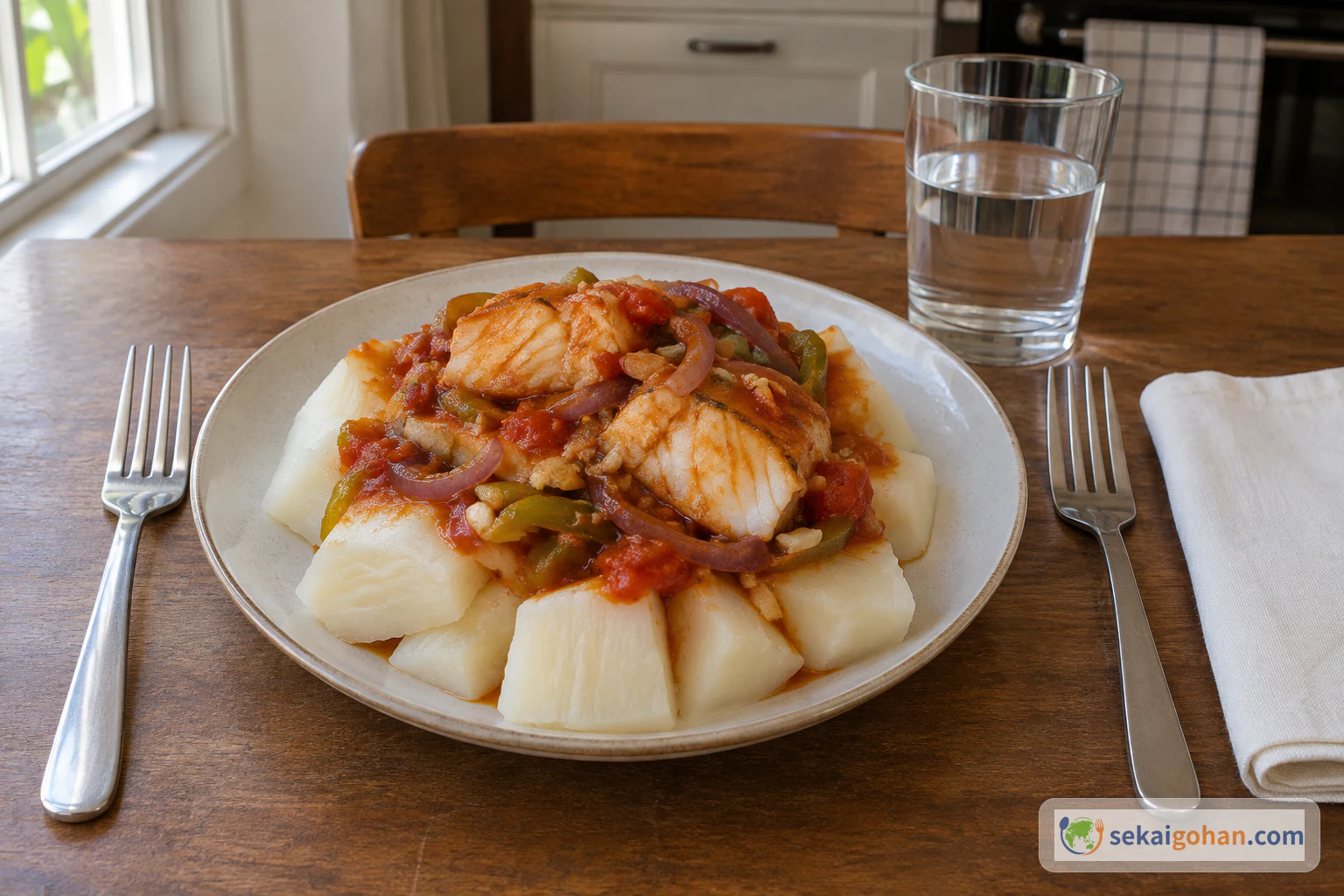
Bring it to the table as soon as it is plated, while the yam is hot and soft. The plate is a full meal on its own. A shared platter works as well as single plates, and anything else you set out alongside is your choice.
Ways households change it
- Mash the yam. Mash the boiled yam into a smooth masa and spoon the cod over it. The sauce sinks into the base instead of running between the cubes.
- Add coconut milk. Add a little to the sauce during the simmer for a softer, richer sauce, as some cooks do.
- Spice the sauce. Increase the ginger, or add turmeric or curry, for a warmer, more golden sauce.
- Swap the root. Use yuca or yautía in place of ñame. Boil either one until soft all the way through, as with the yam.
Frequently asked questions
Can I make it without wine?
Yes. Leave the wine out and the cod simmers in the tomato sauce and the juices from the vegetables alone, so the sauce tastes plainer and more of tomato. Watch the pan during the covered simmer and add a splash of water if it starts to catch. This is the choice to make when you are cooking for children or for anyone who avoids alcohol.
Can I soak the cod on the counter to make it faster?
No. Keep the cod in the refrigerator for the whole soak. If time is short, change the water more often and rely on the boiled test piece to tell you when it is ready.
Why is the yam left in its cooking water?
The hot water keeps the yam warm and moist while the cod simmers. Drained yam left on a plate cools and dries on the surface. Drain it only when the cod is ready to go on top.