Flake the salt cod and the smell of a summer bar fills the kitchen
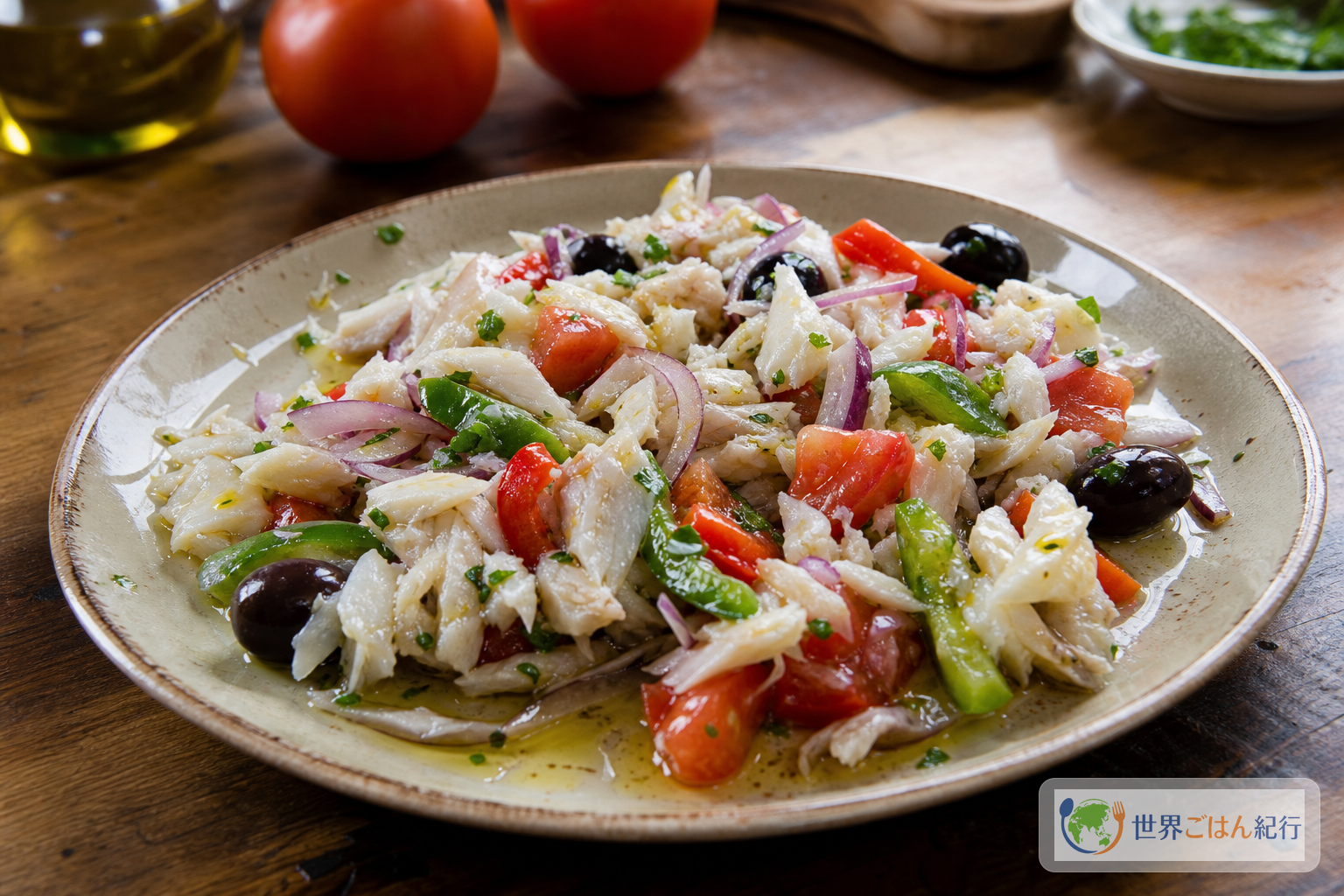
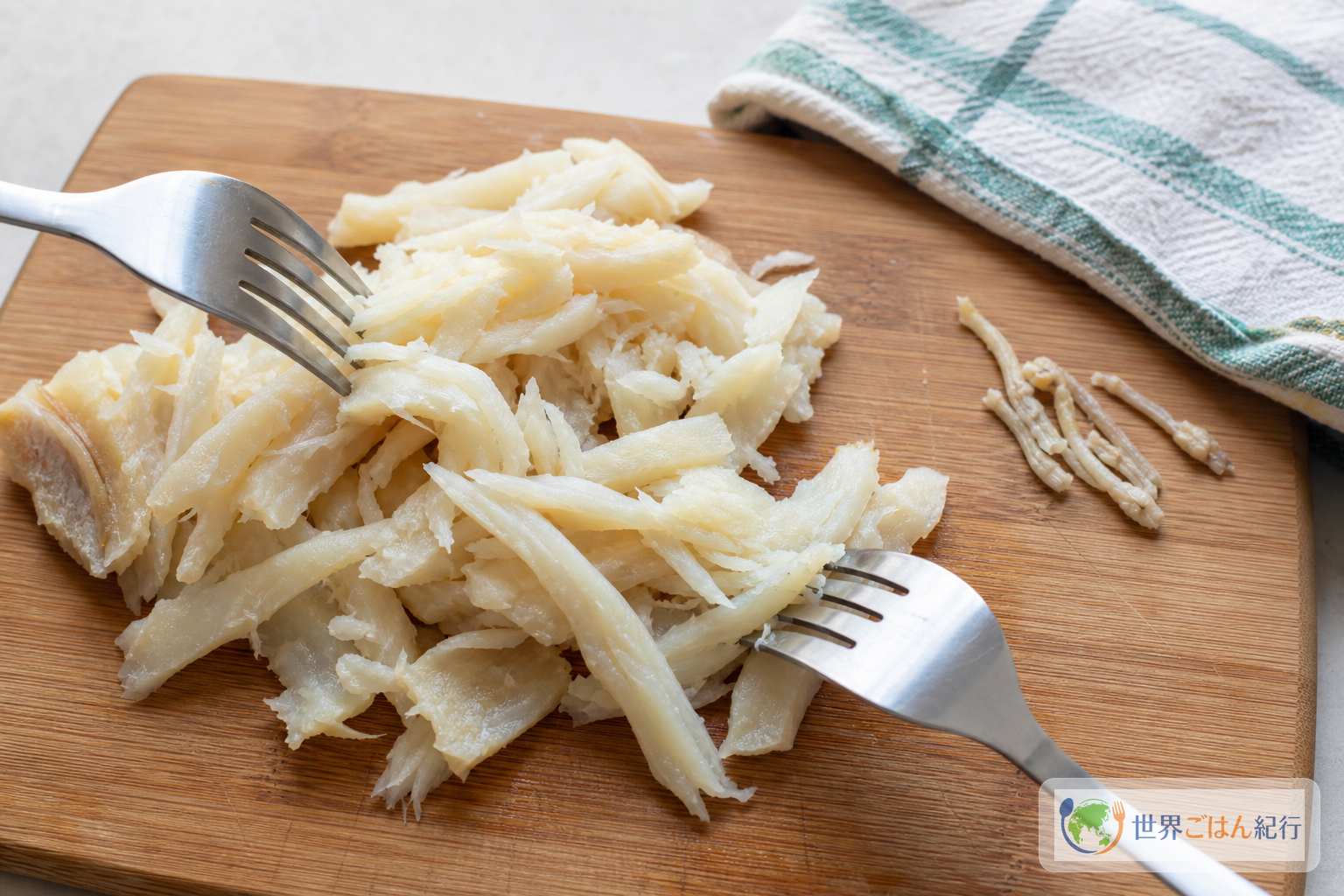
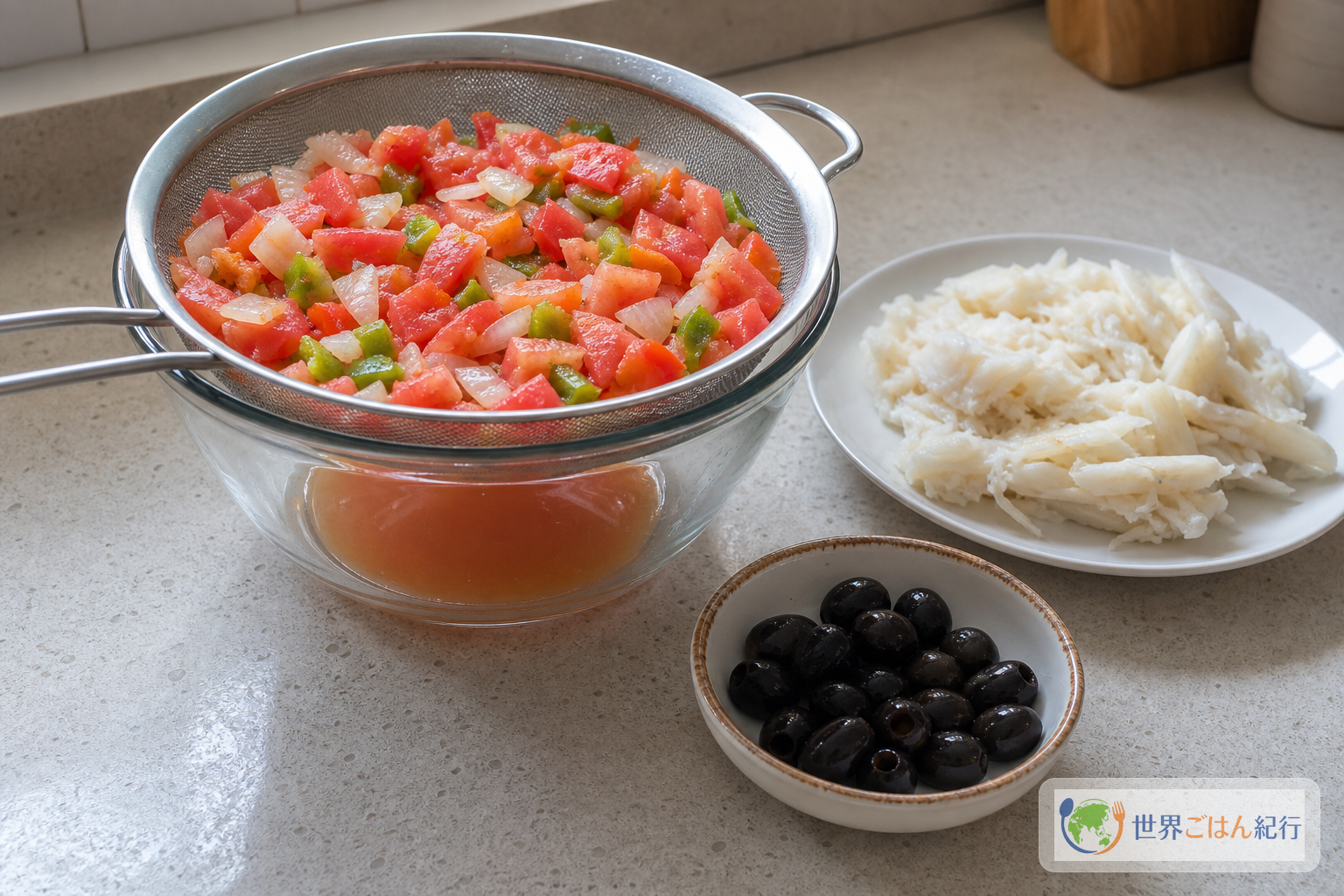
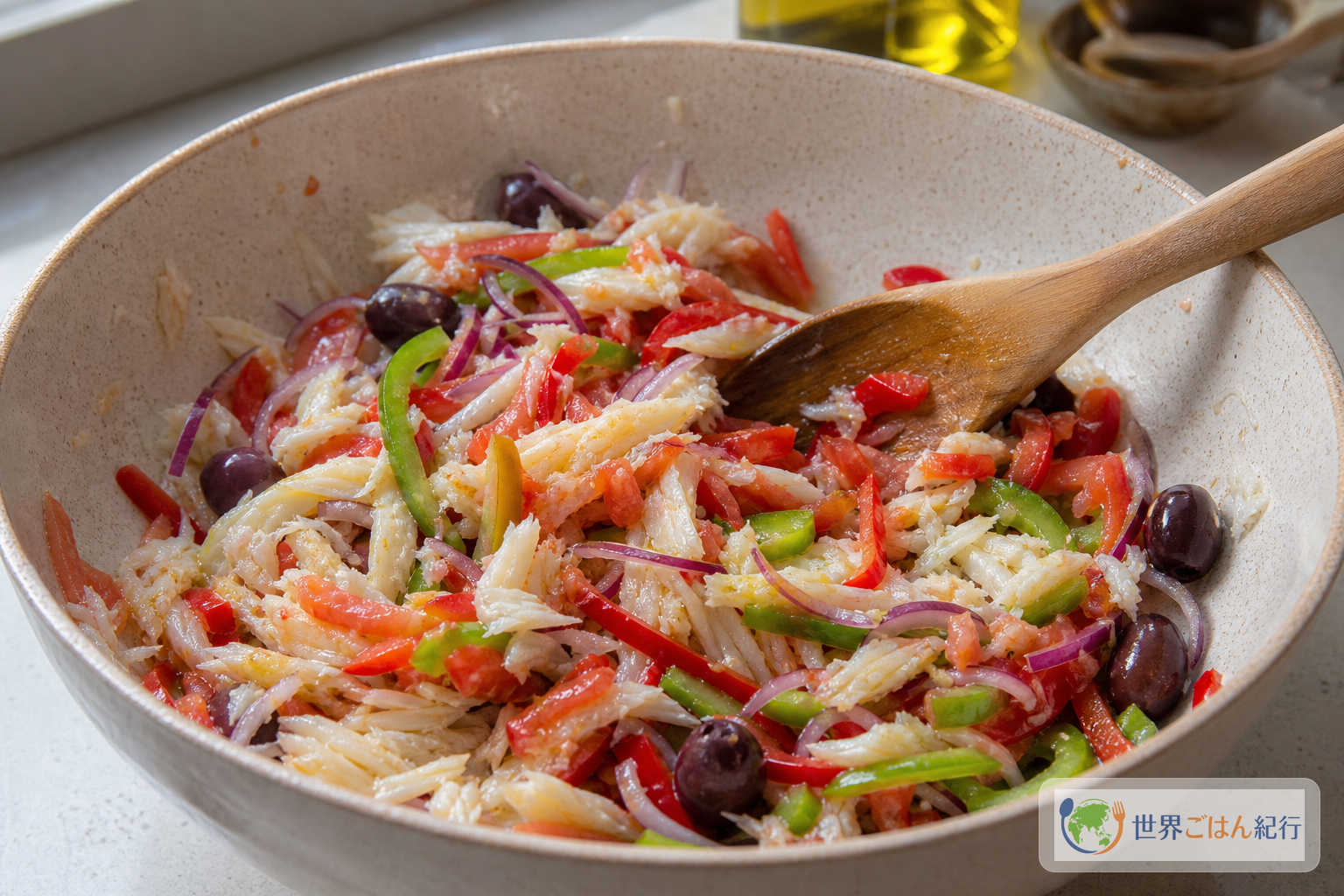
Take the salt cod out of the refrigerator after its soak and pull it apart with your fingers. When the white flesh tears cleanly along the grain, layer on ripe tomato, thinly sliced onion, and black olives, and finish with a swirl of green olive oil. You never take out a pot, yet the cutting board alone turns into a summer table.
Esqueixada (Esqueixada de bacallà) is a cold salt cod dish from Catalonia. The local word bacallà means cod, and in this dish it is the salt-cured kind. Esqueixar means to tear or shred. The TERMCAT culinary dictionary describes it as a cold dish of soaked cod torn into threads by finger. It is not a salad of finely chopped fish; keeping the fibers of the flesh is what connects the name to the texture.
The stumbling points outside Catalonia are less the cutting than salt and water. Soak too much and the outline of the fish disappears; too little and even the tomato's sweetness loses to the salt. And a tomato that is salted and left for long leaves water on the bottom of the plate and dilutes the aroma of the oil. This article does not treat dried salt cod, pre-soaked cod, and lightly salted cod as the same thing; it guides you from the buying stage.
If gazpacho is Andalusia's cold soup, esqueixada is Catalonia's cold salt cod dish. To widen the table, add a warm plate such as tortilla or fideuà, and the appeal of a no-cook starter stands out. If you want more uses for salt cod, it also connects to Portuguese bacalhau à Brás.
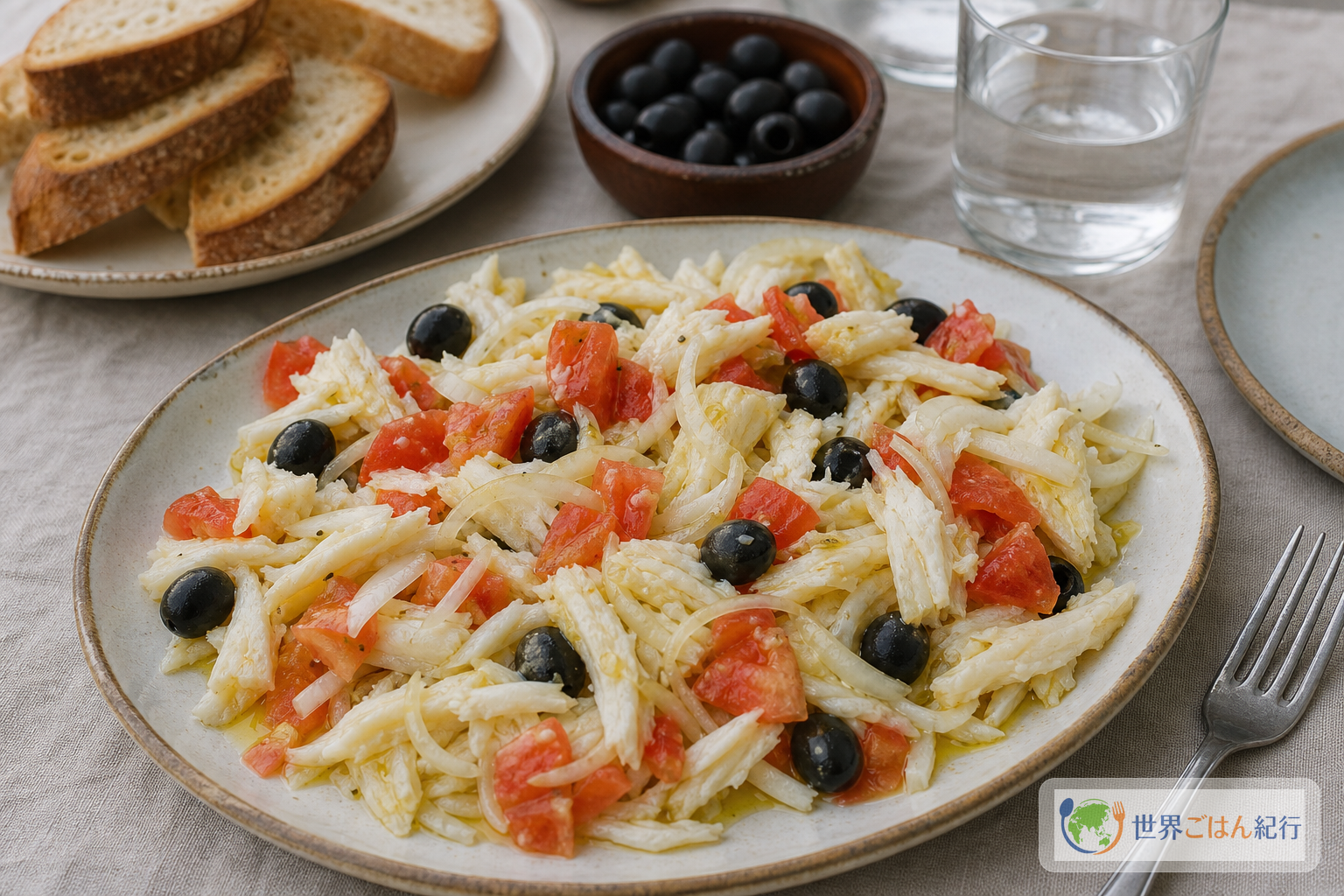
Rather than gathering every authentic ingredient, the priority is to protect the saltiness of the salt cod, the fibers torn by finger, ripe tomatoes, and finishing olive oil. Vinegar is not required. A shorter route using already soaked salt cod is also provided.
The times in the frontmatter are a guide for the short route using already soaked salt cod. Dried salt cod adds a soaking time according to the product label. The nutrition information is an approximation dividing the quantities in the ingredient table by 4, and the sodium varies with how much salt was soaked out.
What the name teaches about the dish's frame: esqueixada and empedrat
Esqueixada brings salt cod, once a preserved food, back to the table with raw vegetables and oil. According to the Catalan government's food information, cod is a cold-sea fish; it is not caught off the Catalan coast but comes from the North Atlantic and the Bay of Biscay. Even so, through the techniques of salting and desalting, cod went deep into Catalan home cooking. Taking a fish from far away and turning it into a local flavor with local tomato, onion, and olive oil: that sense of distance is what makes this plate interesting.
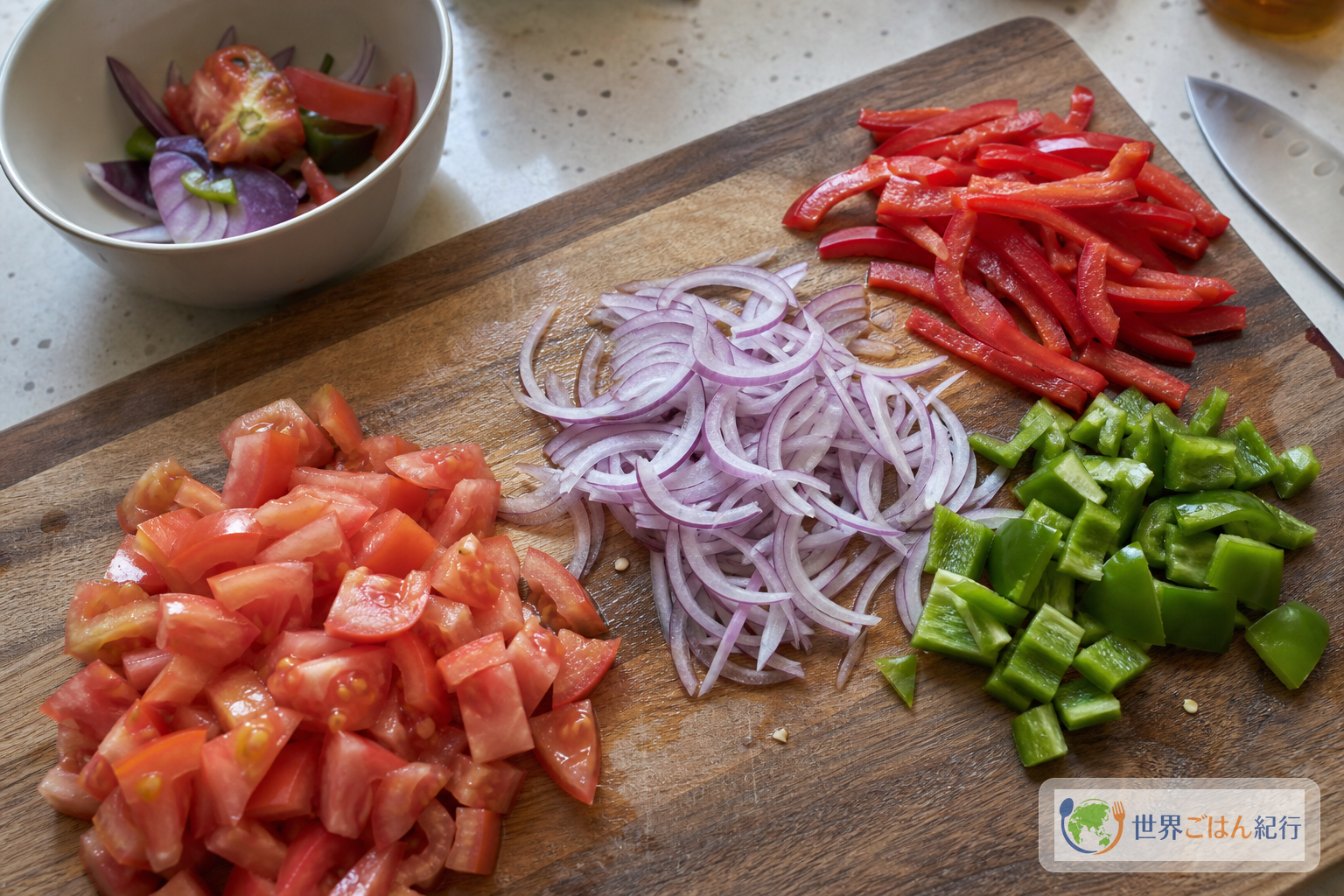
The combination of ingredients has some range. The Spanish tourism board recipe is based on salt cod, onion, black olives, tomato, oil, and black pepper, served cold. On the other hand, the Catalan fishmongers' guild recipe combines soaked, desalted cod with tomato, green and red peppers, parsley, and extra virgin oil, and takes the view of not adding salt because the cod is already salty. Rather than deciding that only one is "correct," understanding it as a dish assembled from the saltiness of the fish and the season's vegetables is closer to how local recipes read.
Some people will want to add white beans here. The combination of beans, tomato, onion, olives, and salt cod suits a Catalan cold dish, but the close relative in which beans take the lead is empedrat. An El País food article also treats esqueixada as a close relative of empedrat and sorts it out by saying white beans are not basic to the former. Adding beans is not a failure. But then it is not "stretching an esqueixada" but a decision to move toward a different dish. Knowing the difference in names keeps the aim of the flavor from drifting.
The name also tells you not to turn the fish into crumbs. Finely chopped fish soaks up the vegetables' juice and turns heavy after resting in the refrigerator. If you leave tears about 1 cm wide, the tomato's acidity comes first, then the cod's savor, and finally the green bitterness of the oil, in order. To keep this order when recreating it, being careful about draining at the end is more effective than the length of the soaking.
Ingredients (serves 4)
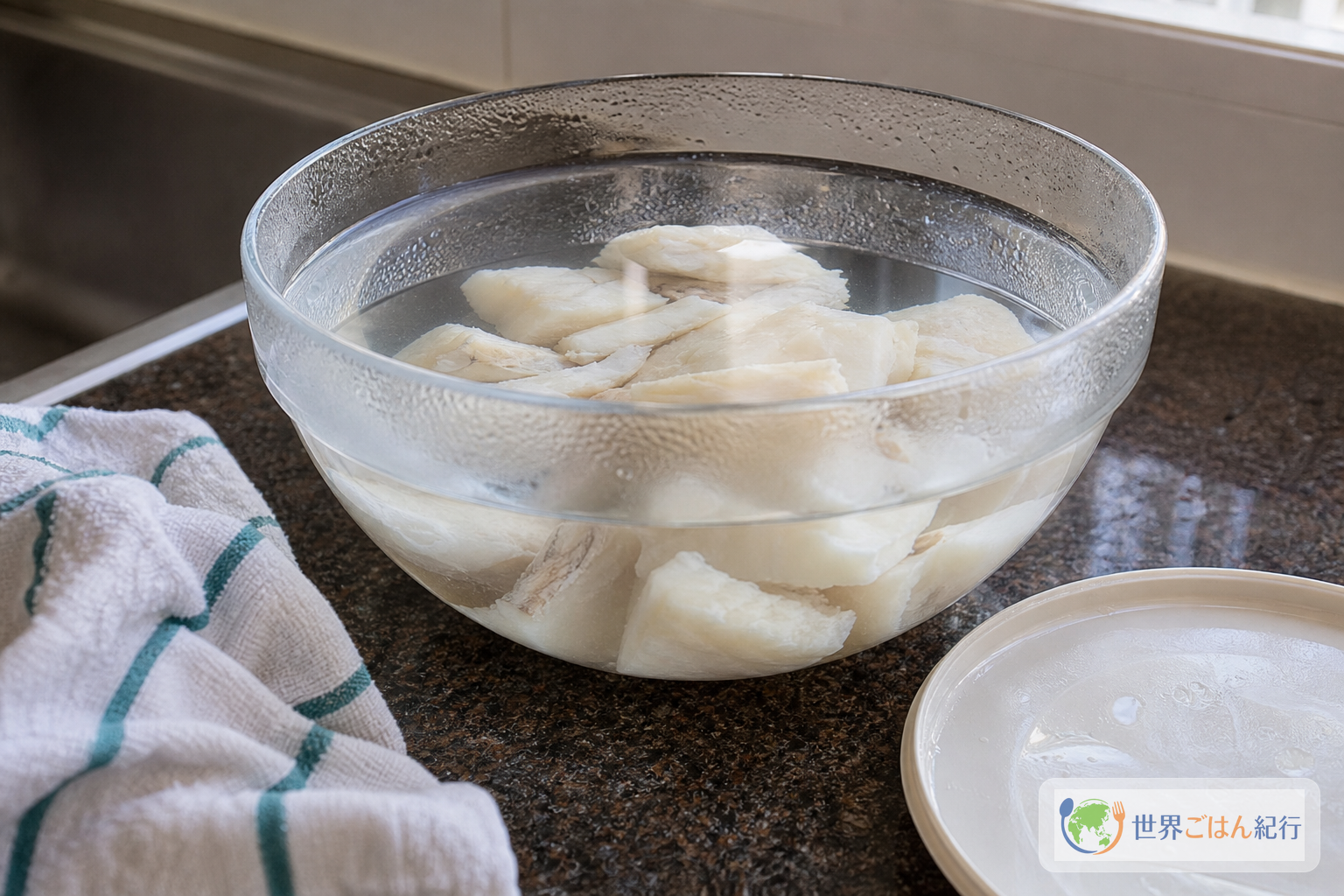
First, decide the state of the cod. The least confusing choice is 300 g of "pre-soaked, ready to use" bacalao desalted as labeled. If you buy dry salt cod, prepare 220 g to 250 g before soaking. Soaking depends on the thickness of the fish and the saltiness of each product, so follow the package instructions first and taste the center at the end.
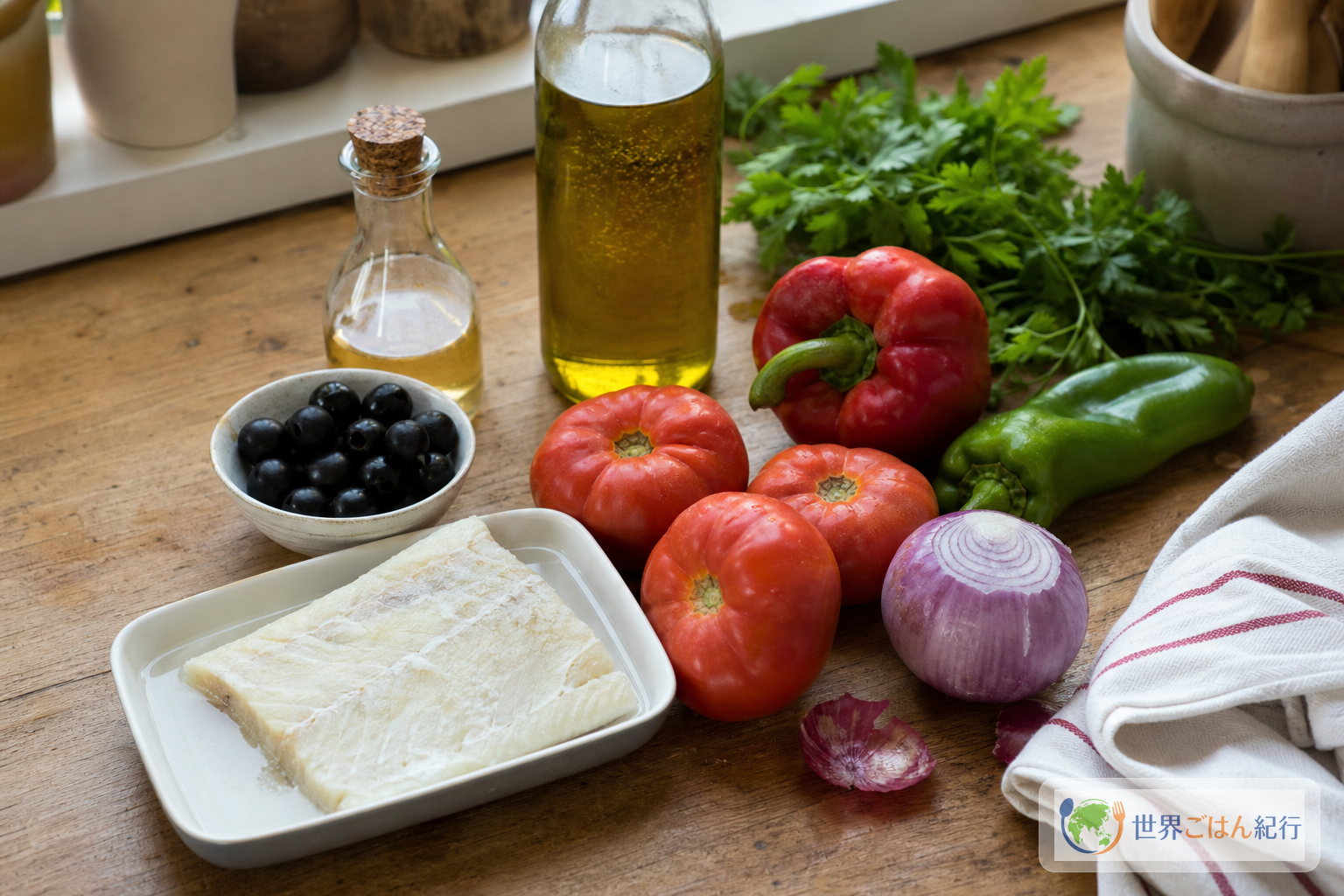
This dish does not cook the fish. Soaking raw cod in salt or vinegar does not make it safe, so do not use fillets without a label saying they are for raw consumption. The basis is salt cod that has been soaked, or a product already desalted as labeled. If you have a fish allergy, do not eat it, and avoid sharing tools used with fish. Wash vegetables under running water, and wash the knife and cutting board used for fish before using them for plating. Keep seafood refrigerated, and do not leave the finished dish at room temperature. For details on handling seafood at home you can also check the food safety guidance of Japan's Ministry of Agriculture, Forestry and Fisheries.
Lightly salted cod as a "flavor-approximating" substitute
350 g of lightly salted cod trades some of the aroma and firm fibers of dried cod for being available at an ordinary supermarket. If you use it, follow the desalting instructions on the label if any; if not, wipe the surface, soak in cold water for 20 minutes, and taste the center. The longer it sits in water, the more of the fish's savor escapes, so it does not need to be made completely unsalted.
However, salting raw fillets yourself in place of this recipe is not recommended. If you use them, buy ones labeled "for raw consumption" and follow the label and the seller's guidance. Otherwise use them in cooked dishes, and make esqueixada with already soaked salt cod, which is safer and gives a more consistent flavor.
What to look for when shopping
Tomato, onion, bell pepper, and green pepper are fine from an ordinary supermarket. The ones worth seeking out are salt cod before soaking, and the olive oil that goes directly onto a cold plate. For both, "expensive" is not the right answer; prioritize being able to read the state of the fish and the volume.
The condition for buying dried cod is that the product name or description says "bacalao," "salted cod," or "needs desalting," and that you can confirm the net weight and whether bones are included. If you are looking for pre-soaked, pass on this. A key check before buying is that it is not a product you can eat immediately after soaking.
Add acidity? When to buy sherry vinegar
Sherry vinegar, if you have it, is a fragrant adjuster, but it is not the core of esqueixada. The basic recipes from the Spanish tourism board and the fishmongers' guild are built on oil, black pepper, vegetables, and salt cod. If you want to make it closer to authentic first, or you can't use up a bottle of vinegar, feel free to skip it.
Buy it only if you will use it for other marinades and dressings too. One point to check is that it is a sherry vinegar from Jerez. Use up to 5 ml at the end. Rather than adding too much acidity and hiding the fish's saltiness, adding a few drops at a time after seeing the tomato's sweetness makes a flavor that is easier to recover.
Buy the finishing oil? Choosing olive oil
Olive oil is not a supporting player in the dressing; it is the main ingredient linking the salt cod and vegetables. The condition for buying is an extra virgin you can use cold and finish up on other salads and bread after opening. If you already have a fragrant oil at home, you don't need to buy more.
Since the recipe uses 80 ml, a small bottle keeps freshness easily, but for those who won't use the rest it can work out pricey. Look at the volume and decide on uses beyond this dish before you choose.
Method: soak out the salt, drain, and bind with oil
No heat is used. That is exactly why you think of desalting, draining, and resting time separately. Only how to soak dried salt cod changes with the thickness of the fish, so rather than memorizing times, move on by the saltiness at the center and the state of the flesh.
Why it fails: too salty, watery, fishy
Judge desalting by the center, not the surface. Even if you taste only the edge and think "it's fine," salt can remain in the thick part, so tear it to about 1 cm wide and eat the inside. If it is salty, resoak in cold water 30 minutes to 1 hour at a time, changing the water. Conversely, if you soak too much and then add salt, the characteristic aroma and firm flesh of salt cod do not come back.
| Result | Main cause | How to fix |
|---|---|---|
| Too salty | Salt remains at the center | Extend desalting in 30-minute steps and wipe dry again after soaking |
| Watery | Salted the tomato, returned the colander liquid | Return the ingredients to a colander for 10 minutes and add oil 1 tsp at a time |
| Heavy fish smell | Moisture left on the surface of the flesh | Press with paper and coat thinly with oil first |
| Flavor is blurred | Cod soaked too much, too little oil | Add olives and adjust finishing salt 0.2 g at a time |
Adding water pushes the flavor of the cod and the aroma of the oil further away. Add one of 50 g tomato, 20 g black olives, or 50 g cooled potato, and let the ingredients absorb it. Add white beans only if you want to move toward empedrat.
Storage and make-ahead
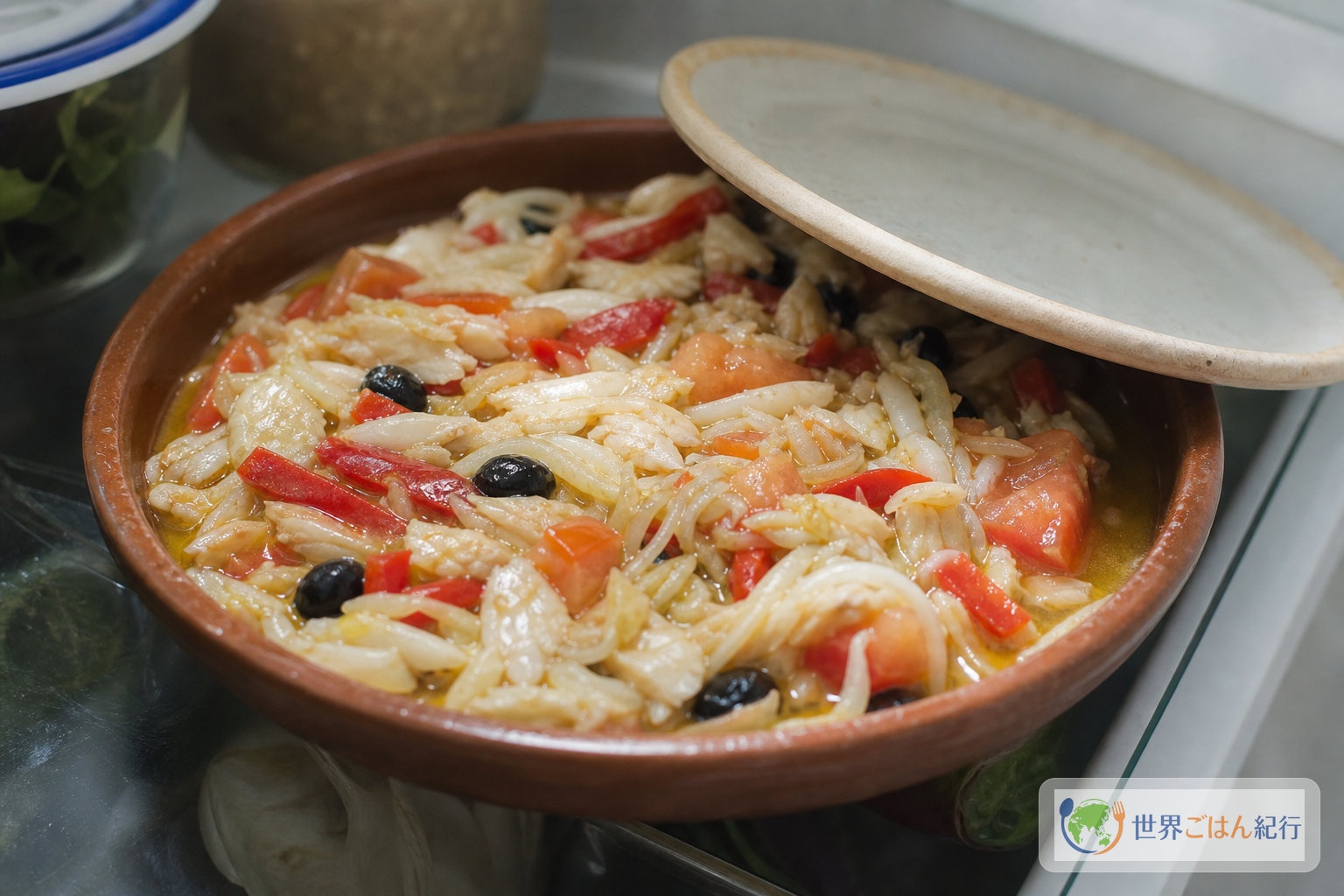
After finishing, put it in a clean container, chill it in the refrigerator, and finish it within the same day to the next day. With cold dishes containing seafood, you cannot judge safety by appearance or smell alone. Following the refrigerated storage guidance of Japan's Ministry of Agriculture, Forestry and Fisheries, keep fish drip from touching other foods, and do not leave the finished dish long at room temperature.
If making ahead, do up to soaking, flaking, and patting the cod dry the day before. Cut the vegetables on the day you eat it, rest them in a colander 10 minutes, then toss. Left overnight as a finished dish, water comes out of the tomato and onion and the texture drops.
Freezing is not recommended. If you freeze only the salt cod, follow the product's storage instructions, and do not freeze it after combining with tomato and onion. Water comes out on thawing and the texture of the flaked flesh breaks down.
How it is eaten locally, and how to fit it into a menu
Esqueixada is a starter served chilled. With bread, you can eat the olive oil clinging to the tomato and salt cod to the very end. What matters here is not to think of it as the same as ceviche, where fish is cured in acid. The fish in esqueixada is not a raw fillet but cod that has been salted and then desalted. The center of the flavor is not acidity but the savor of a preserved food and the thickness of oil.
For a menu, plate the esqueixada in a small dish and put a warm tortilla or fideuà behind it, and the flow is easy to build. If you layer tomato dishes, serve gazpacho in a small glass. On a hot day, rather than lining up only cold plates, mixing in bread, eggs, and one warm dish also calms the strength of the saltiness.
FAQ
Can I make it with fresh cod?
It is not recommended in this recipe. Fresh cod differs from salt cod in fiber and saltiness, and soaking in salt or vinegar does not make it safe. Cook fillets not labeled for raw consumption, and make esqueixada with already soaked salt cod. Japan's Ministry of Agriculture, Forestry and Fisheries also advises cooking seafood that is not labeled for raw consumption.
Is one night enough for desalting?
For a thick block, one night is sometimes enough, but it can need nearly 24 hours. For thin strips there is an official recipe with about 40 minutes and several water changes. Don't decide by time alone; tear open the center, taste it, and if it is salty extend 30 minutes to 1 hour at a time.
Can I use pre-soaked bacalao?
Yes. In fact, choosing a product labeled "desalted" or "ready to use" makes the state of the fish easier to keep consistent. Just pat the moisture off with paper and start from step 2 as 300 g of salt cod. This is separate from the method of salting raw cod to reach the same state.
Can I substitute if I can't eat fish?
There is no ingredient that replaces this dish with the same flavor. If you omit the fish and make a salad of white beans, tomato, onion, olives, and bell pepper dressed in oil, think of it as a different dish, not esqueixada. If you have a fish allergy, use a knife, cutting board, and bowl that have not touched fish, and put the label and medical advice first.
Do I need vinegar or lemon?
Not required. The basic recipes of the Spanish tourism board and the Catalan fishmongers' guild center on oil, black pepper, vegetables, and salt cod. Add sherry vinegar 2.5 ml at a time only when the tomato's sweetness is weak or you want a little more outline. Deciding the acidity first makes it easier to misjudge the desalting.
Can I make it the day before?
You can do up to soaking and flaking the salt cod the day before. Combine the vegetables and seasoning about 30 minutes before eating. If you store it after finishing, refrigerate it and finish it within the same day to the next day.
Sources consulted
- TERMCAT: esqueixada (Catalan culinary dictionary) (the dish name, cold preparation, tearing by finger, range of ingredients. Accessed 14 July 2026)
- Spain.info, Spanish tourism board: Esqueixada de bacalao (basic ingredients for 4, soaking in cold water, 30 minutes chilling in the refrigerator. Accessed 14 July 2026)
- Catalan fishmongers' guild: Recepta esqueixada de bacallà (soaked cod, vegetables, and oil; the view of not adding salt. Accessed 14 July 2026)
- Generalitat de Catalunya Canal Aliments: Bacallà (cod's waters and its place in Catalan cooking. Accessed 14 July 2026)
- El País / El Comidista: Esqueixada (difference from empedrat, saltiness of cod, role of oil, branching of ingredients. Accessed 14 July 2026)
- Ministry of Agriculture, Forestry and Fisheries (Japan): safe cooking of meat, fish, and vegetables (labels for raw consumption, hygiene of seafood and vegetables. Accessed 14 July 2026)
- FDA: Selecting and Serving Fresh and Frozen Seafood Safely (supplementary standard for refrigerating seafood and not leaving it long at room temperature. Accessed 14 July 2026)