One Pot of Potatoes, Two Textures
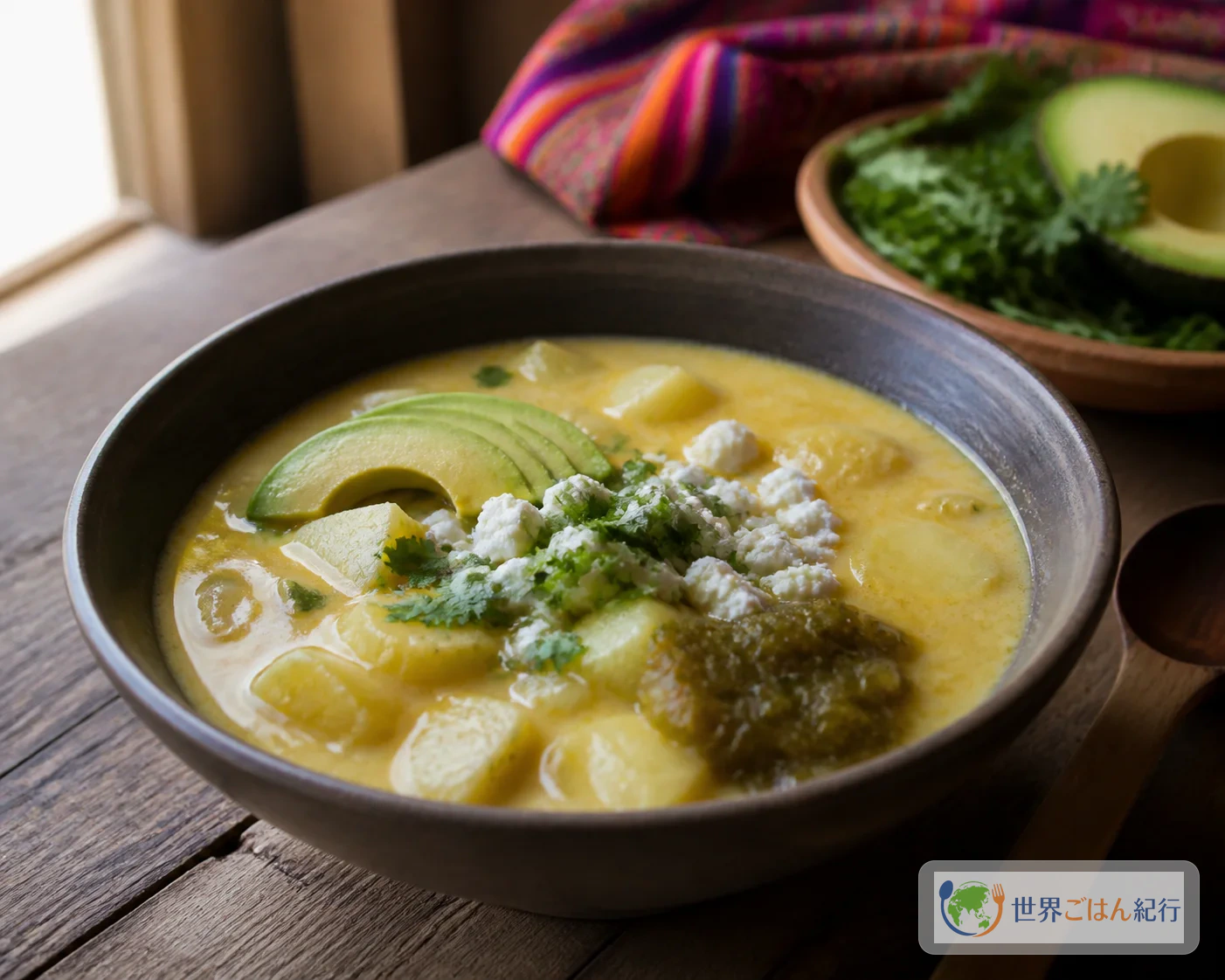
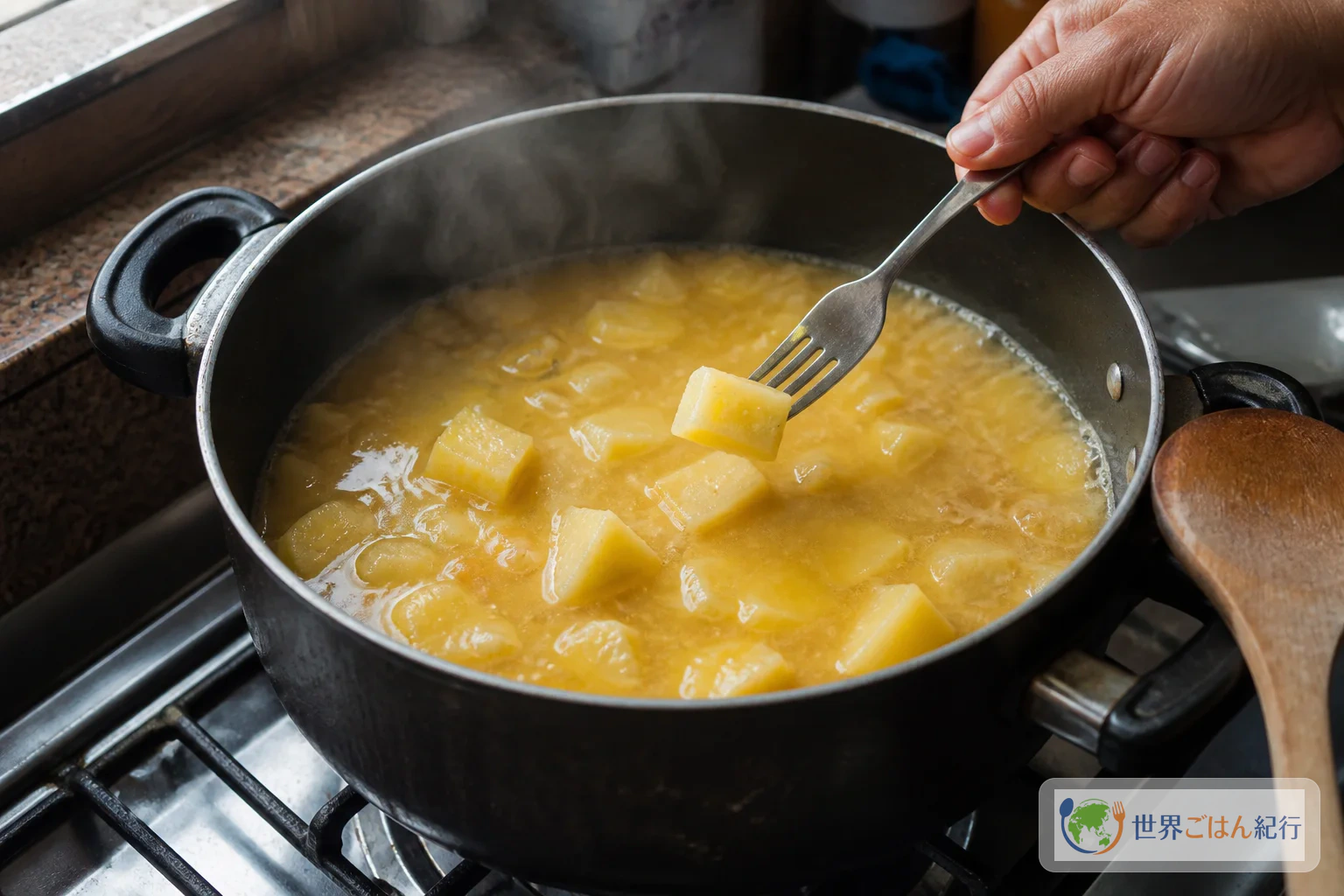
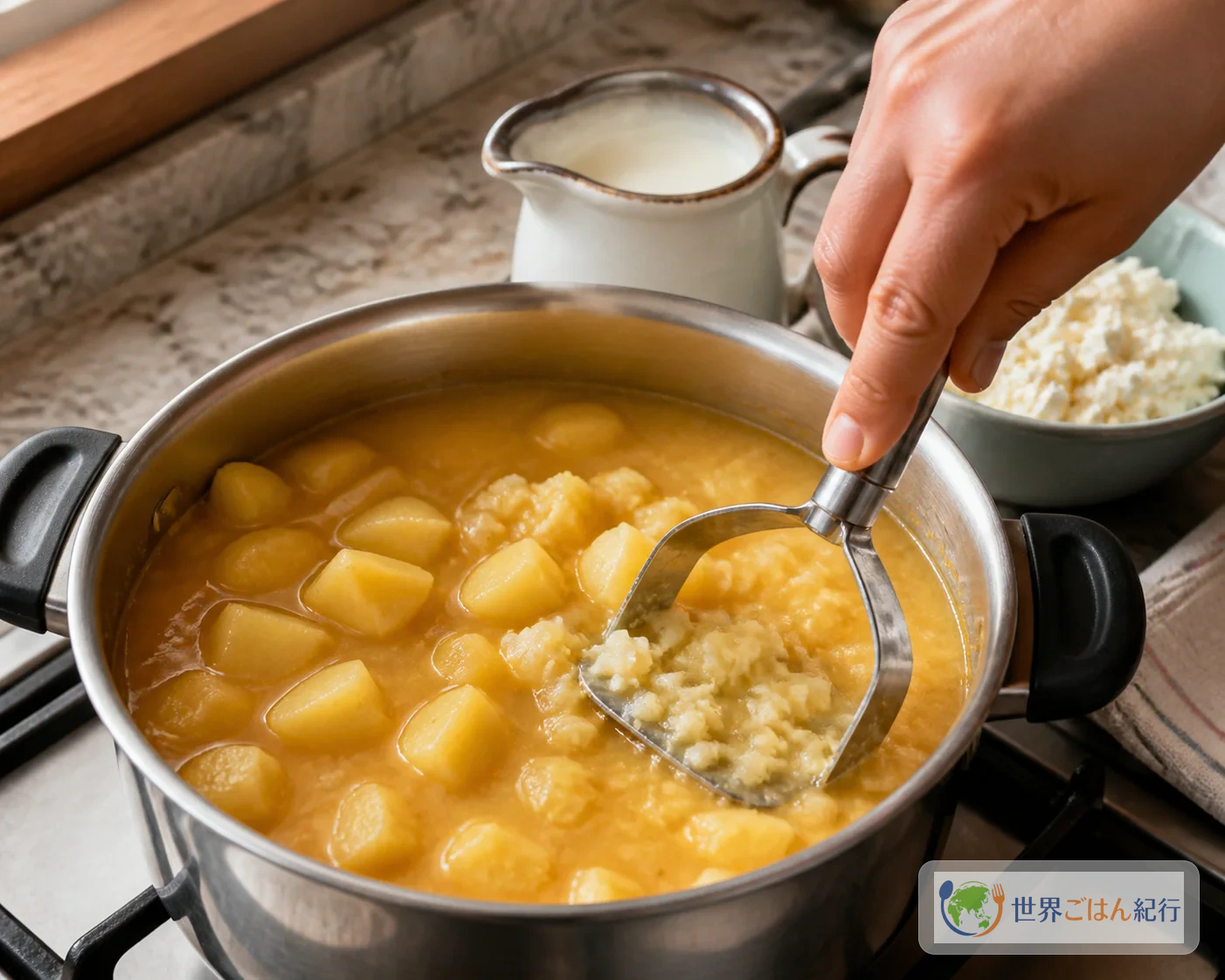
Lift the lid and you see potatoes with their corners still intact, floating in a broth tinted pale orange by achiote oil. Where the wooden spoon has passed once, the soup is smooth; elsewhere, floury chunks remain. Locro de papas is an Ecuadorian potato and cheese soup that does not turn everything into a purée. It layers these two textures in a single bowl.
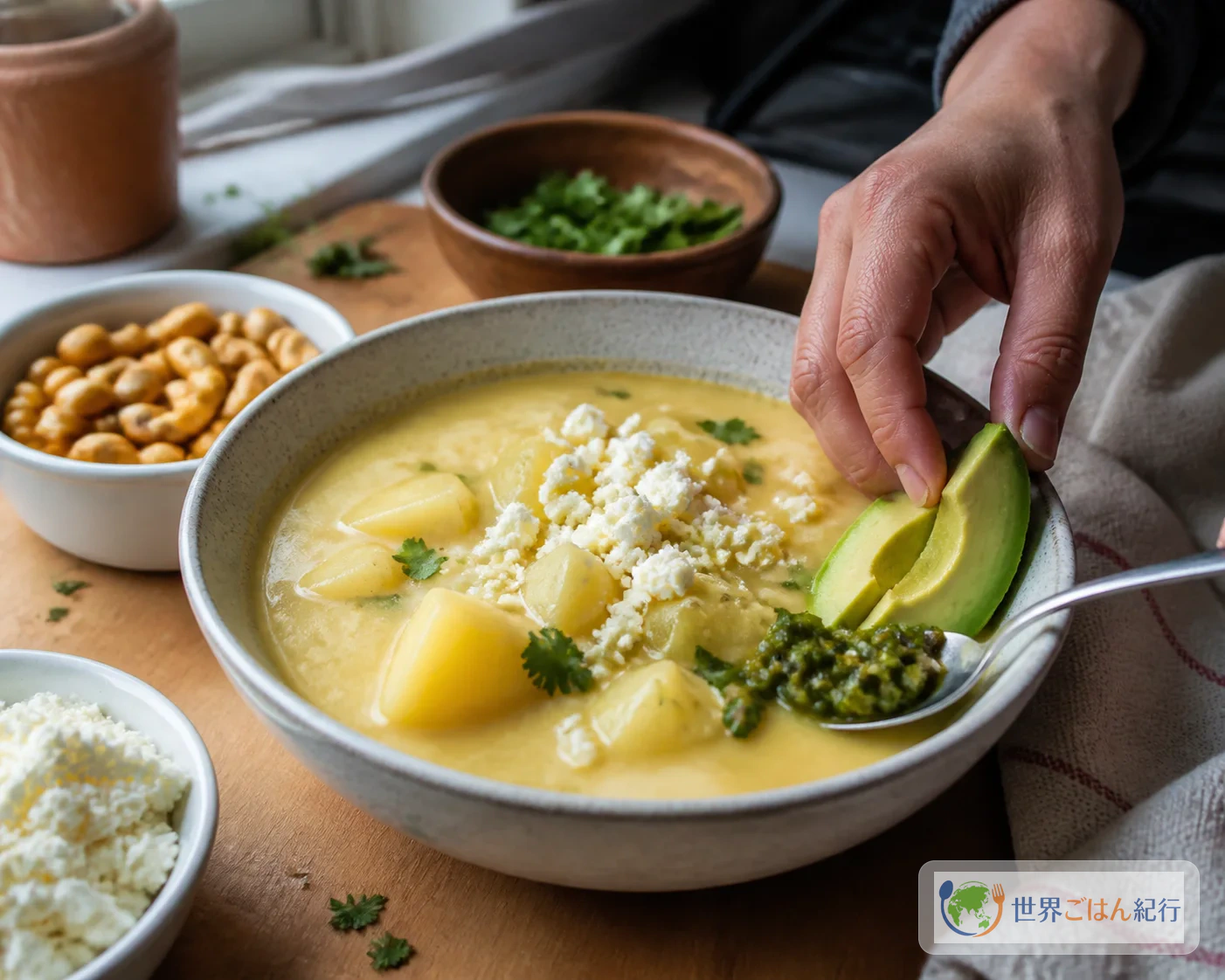
It is loved in the Sierra, Ecuador's Andean highlands, and is often described as a dish of Quito and the north. Milk and fresh cheese round it out, and it is served with avocado and a spicy ají sauce. Avocado against the hot soup keeps the richness of the milk and cheese from lingering on the palate, and everyone can adjust the heat at the table.
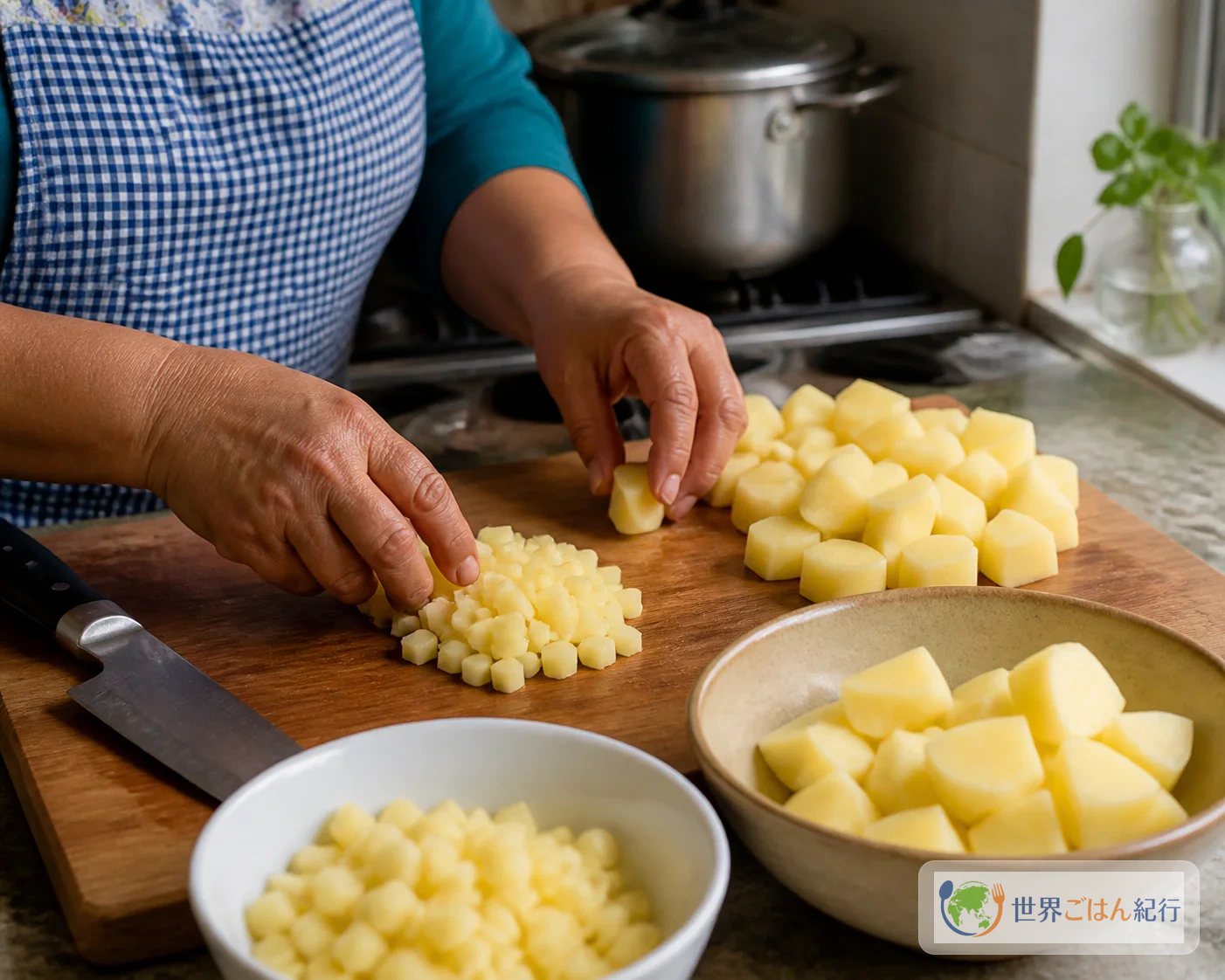
The key when cooking it at home is not to hunt for local potato varieties. It is to cut the potatoes that will break down small, cut the ones that will hold their shape large, and add them at slightly different times. With that, ordinary all-purpose potatoes give you a locro that is not just thin broth. It shares its potato culture with llapingachos, the cheese-filled potato cakes of Ambato, but the two differ: one is about a browned crust, the other about layering textures in a broth.
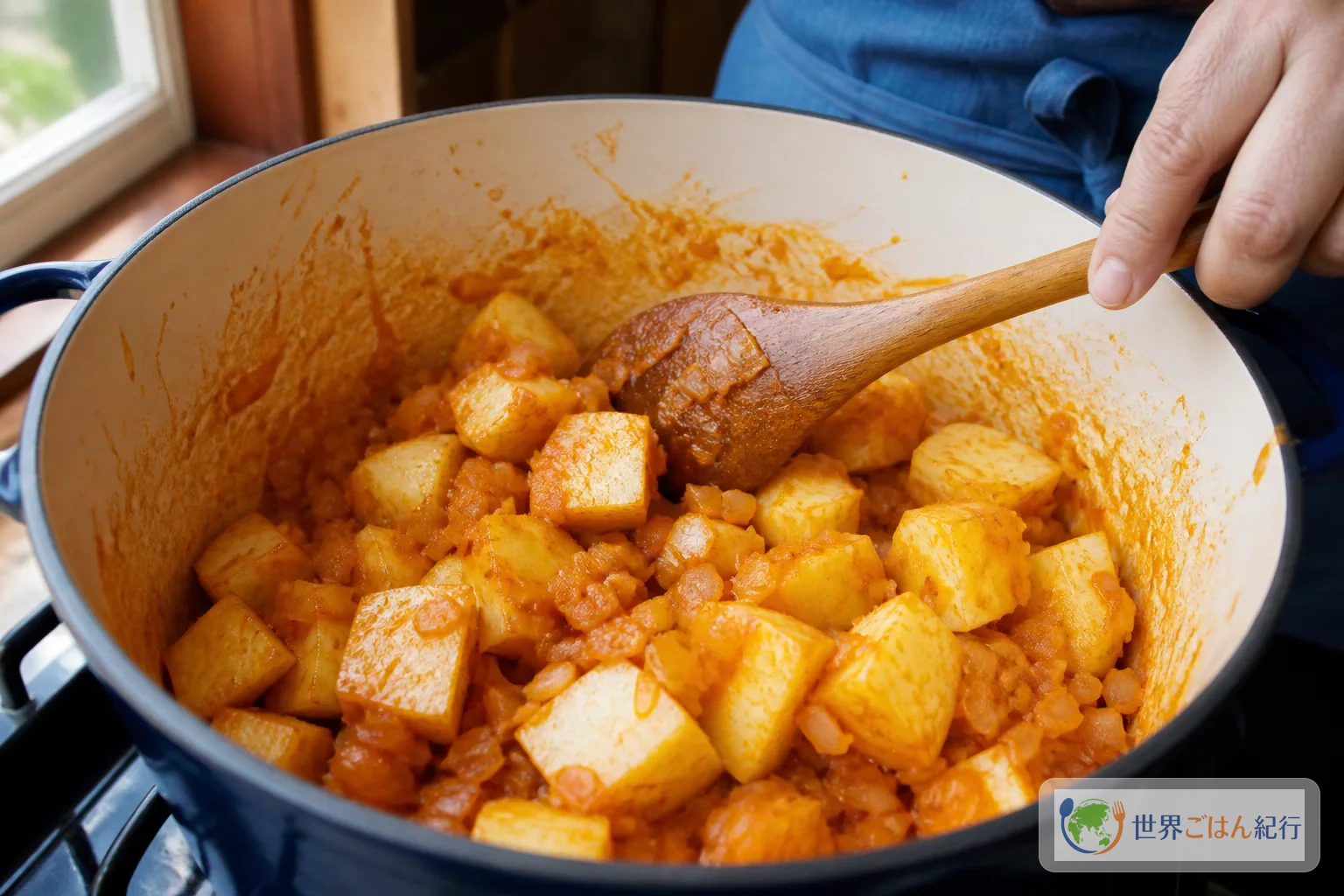
Achiote is more than color; it is a dry, earthy aroma that bridges the onion and the cumin. Mash only the small potato pieces and leave the large ones intact. Add the cheese off the heat, never at a boil. Keep these three rules and the dish holds its shape even with substitute ingredients.
Why Avocado Belongs on the Table in the Sierra
It helps to think of locro as a home dish ladled from a big pot, one portion at a time; that is where the variation shows. Laylita, a source on Ecuadorian cooking, builds the base from potatoes, cheese, milk, onion, garlic and cumin, then adds avocado and ají on the side. It is treated as a dish of the Quito area and the north, yet it changes from home to home and city to city: some cooks add cabbage, corn, peanuts, pork rind or shrimp.
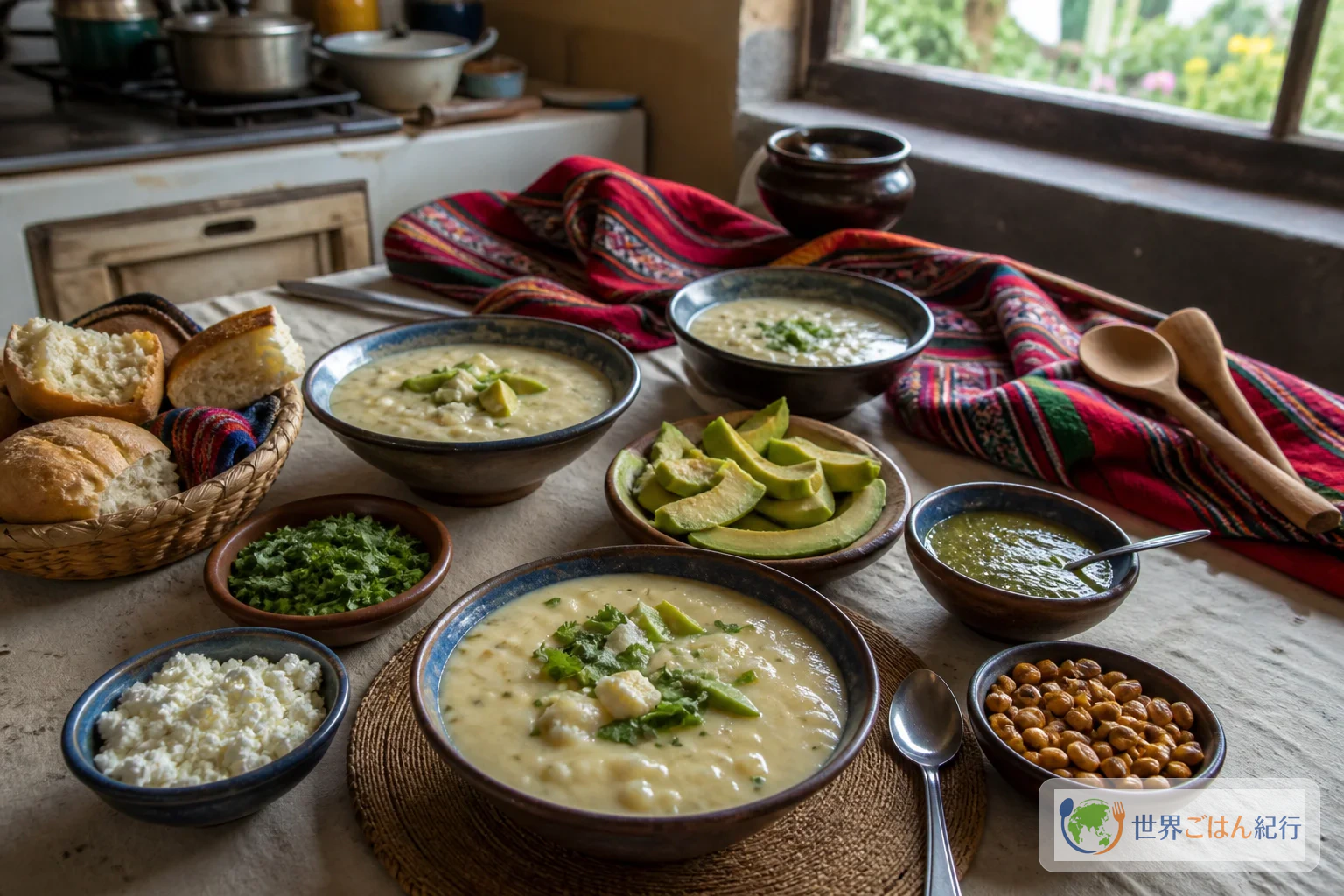
The avocado is not decoration. Its fatty, watery flesh answers the richness of the potatoes and milk. Keep the ají beside the bowl rather than stirring it into the pot, so each person chooses the heat. Some households add toasted large-kernel corn or popcorn for a dry crunch against the soft soup.
The background of the potato also connects to the texture of the dish. The International Potato Center (CIP) describes more than 4,000 native varieties in the Andean highlands, differing in flavor, texture, shape and color, chosen region by region. Even if you use a single kind of potato, cutting it two ways lets you make up for the missing varieties through technique.
The "locro" of Argentina, locro, goes in a different direction: a stew of vegetables, meat and corn. Don't let the name decide the ingredients. This locro is potatoes in the lead, joined by dairy and avocado, and remembering that will keep you from getting confused at the market.
Ingredients (serves 4)
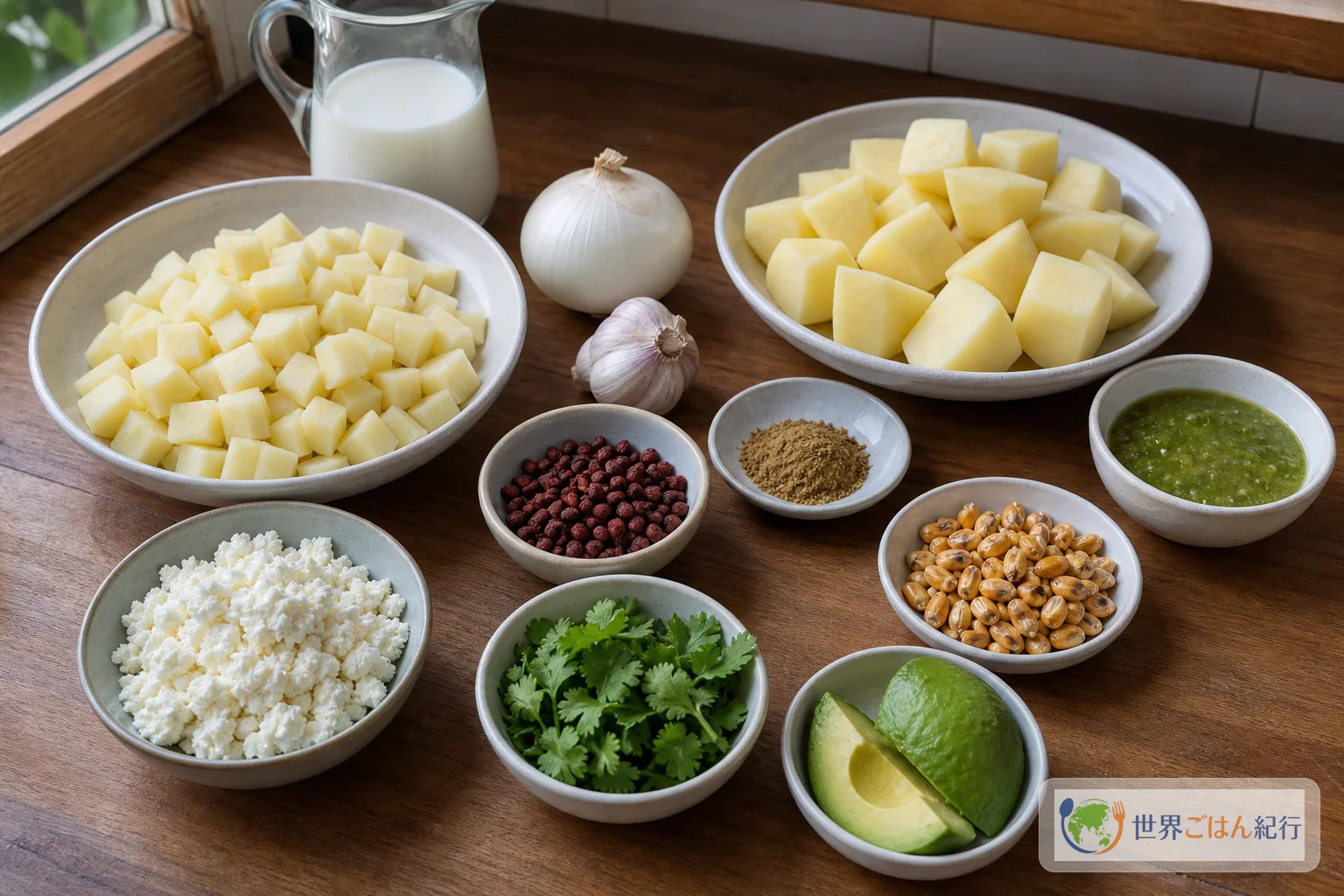
To separate the potatoes that dissolve from those that stay whole, cut the same variety two ways. If you use only an all-purpose or floury potato, cut the part that keeps its shape into 3 cm cubes and add it first so it is not overcooked.
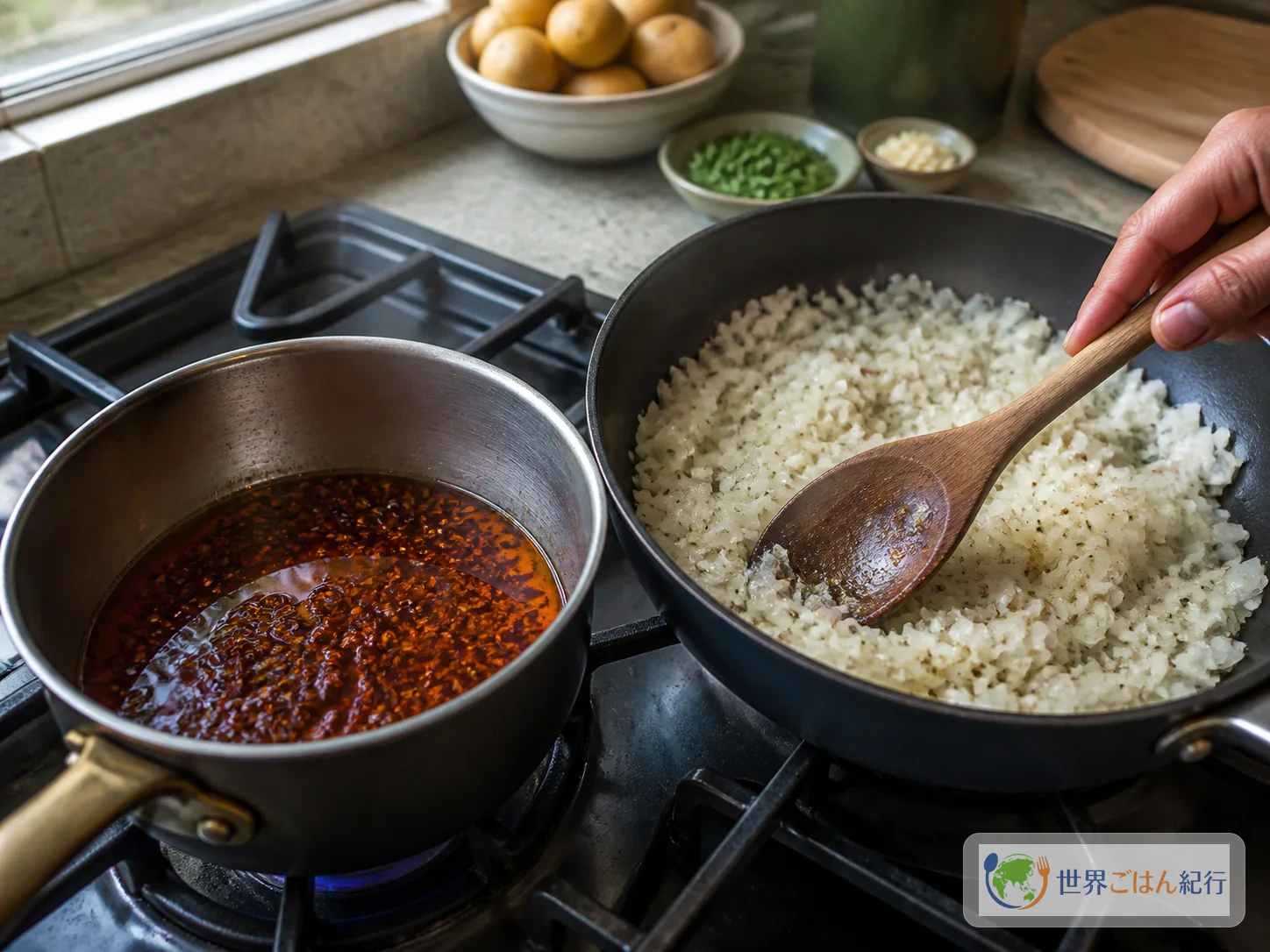
Annatto (achiote) seeds do more than add red color. The aroma, slowly transferred to the oil, fills the space between the onion and the cumin. Ground annatto or achiote paste shortens the work, but making the oil from seeds makes it easier to see the color change and the point just before scorching.
Buy whole annatto seeds rather than a seasoned powder. A large container is more than four servings of this recipe need, so it suits people who also cook Mexican or Filipino food and can use it up, stored airtight in a cool, dark place. If you want to try it once, achiote paste or powder is fine.
Method: From Achiote Oil to Partial Mashing
Total time is 50 minutes. Chill the avocado while you cut the potatoes, and crumble the cheese while the soup simmers, so the final plating is not rushed. Use a deep pot, and once the milk goes in, never let it boil hard.
Cooking Tips: Adjusting the Weight of the Soup
If you grind annatto seeds with cumin or dried chiles, a mortar that can crush small amounts helps. The basic recipe only warms the seeds in oil, so it is not essential. It is worth having if you use dried spices often or want to set the grind of a paste yourself; if you only use achiote paste or powder, you can skip it.
Small cubes release starch into the broth, and large cubes remain as pieces to bite into. You don't need to buy two varieties; cutting alone builds the texture. All 3 cm cubes give a lighter broth, and all 1.5 cm cubes make the pieces vanish.
By the time the oil turns red-orange, the aroma has already transferred. If you keep cooking the onion with the seeds in, black specks and smoke make the bitterness come forward. Warming briefly over low heat and removing the seeds with a strainer makes the later flavor easier to rescue.
Add the milk at the end of the simmering and stop when the edge of the pot trembles. If the surface rolls in big waves, the heat is too high. If it separates, turn off the heat and stir in hot water 1 tbsp at a time; it won't be perfect, but the texture will smooth out.
Fresh cheese, cottage cheese and mozzarella differ in salt. Don't use all the salt at the start; taste after the cheese has sat for 2 minutes. If it is bland, add salt a pinch at a time; if it is too salty, add a little hot water or milk.
Regional Variations, and Substitutions in a Home Kitchen
The core of locro de papas is potatoes simmered, rounded out with dairy, and served with heat and avocado. The additions are not fixed. If your household adds cabbage or corn, put in a small amount once the potatoes have begun to soften. Where peanuts are used, 1–2 tbsp of unsweetened peanut butter dissolved in adds a toasty note. Versions with pork rind or shrimp also exist, but they change the texture and the broth's flavor, so don't treat them as the same as this cheese soup.
A special version, yahuarlocro, made with offal and blood, is also described. It is a different dish from the potato and cheese locro, and because the names are similar, you should not mix their ingredients. For a family dinner, it is easiest to start by making the basic potato and cheese form, and then add corn or cabbage according to season and taste.
Among substitutions, some protect the flavor and some push it toward another dish. If you can't find queso fresco or quesillo, combining low-salt cottage cheese with a little mozzarella gives you both the crumbling white cheese and the stretchy part. But replacing it with only aged cheese makes the saltiness and aroma strong, and the cheese overtakes the avocado as the star. Swapping annatto for paprika brings the color closer but does not keep the aroma of dry tree bark. Substitute green chile sauce for ají and serve it on the side rather than in the pot; that makes it easiest to adjust the heat and to set aside portions for children.
If you look for ají amarillo (yellow chile) paste, it is for people who will use it in several Peruvian dishes and hot sauces. If you are making this soup only once, green chile sauce is a fine substitute.
If you avoid dairy, unsweetened plant milk and a white bean purée can add body, but they cannot reproduce the saltiness and tang of the cheese. Treat this as a separate allergy-friendly recipe, and don't present it as tasting the same as the dairy version. For regional variations that add milk, cheese or peanuts, check ingredient labels and your family's allergies first.
Storage and Fixing Problems
Set aside leftovers before adding the avocado and ají. Cool quickly, transfer to a clean airtight container, and eat within about 2 days in the refrigerator, starting the next day. Cold, the potato starch firms the soup, so reheat over low heat adding 1–2 tbsp milk or hot water at a time, without boiling. Freezing makes the dairy separate and the potato corners break down, so this soup is best refrigerated.
If the flavor is dull, don't add a lot of salt at once; check the salt in the cheese and add a pinch at a time. If it is watery, mash a few more pieces lightly, remove the lid and simmer over low heat for 3–5 minutes. If it becomes too heavy, add hot water 1 tbsp at a time to loosen it. If you scorched the annatto and it turned bitter, cheese and milk cannot fully hide it. If you haven't added the aromatics yet, replace the oil; if it has already simmered, move a little to another pot, dilute it and check whether it is still edible.
Background: How Andean Potatoes Became a Sierra Soup
Treat the potato as just a white root vegetable available anywhere, and the background of locro becomes hard to see. The International Potato Center (CIP) explains that the potato originated in the Andes, was among the first crops domesticated there, and that the highlands hold more than 4,000 native varieties. Varieties differ not only in flavor but in stickiness, floury texture, shape, skin color and adaptation to altitude, selected over a long time by regions and communities. The idea of handling small, easily broken-down potatoes and potatoes that keep their shape in one pot suits a dish that brings this diversity to the table.
Ecuador's locro de papas puts that potato in a soup and builds heartiness with milk and cheese. Laylita presents it as a dish eaten in the Sierra, especially Quito and the north, served with avocado and ají. The Spruce Eats also describes it as a cheese potato soup served with avocado and ají, and leaves room for corn. In other words, the finished pot is not the whole dish: white cheese, green avocado, ají on the side and dry corn are set together, and the eater builds the richness and heat of each spoonful.
This structure also helps when you substitute at home. Even without local varieties or queso fresco, you can keep the actions: mash part of the potatoes, add dairy last, and keep avocado and heat separate. Conversely, swap annatto for paprika and use only aged cheese, and color and saltiness are covered but aroma and mouthfeel change. Looking first at what stays and what changes, rather than replacing ingredients by name, is how you judge a reproduction.
The name locro has spread across the Andean regions, and in Argentina it is known as a stew with meat and corn. Comparing it with Ecuador's locro shows that a dish name does not keep the same form across borders; it changes with each region's staple, dairy, meat and heat. The Ecuadorian table leaves room to add to a hot bowl as you eat, and keeping the avocado and ají separate until the end preserves that way of eating at home too.
Frequently Asked Questions
Q1. Can I make it without achiote seeds?
Yes. With ground annatto, start from 1/2 tsp; with paprika, from 1 tsp. Paprika only brings the color closer and does not reproduce annatto's dry aroma. Choose sweet paprika, not hot.
Q2. Is one kind of potato enough?
Yes. With a single all-purpose or floury potato, cut the part that breaks down into 1.5 cm cubes and the part that keeps its shape into 3 cm cubes, and put the latter in the pot first. Splitting the cut and the timing adjusts the texture more easily than buying two varieties.
Q3. What cheese can replace queso fresco?
150 g low-salt cottage cheese and 50 g mozzarella are easy to work with. Cottage cheese alone crumbles; mozzarella alone is very stretchy. If you use processed or aged cheese, hold back the salt until the end and taste.
Q4. Can I make it ahead?
Eat within about 2 days in the refrigerator, starting the next day. Store only the soup in an airtight container, separate from the avocado and ají. It firms up when cold, so add a little milk or hot water and reheat over low heat without boiling. Freezing easily separates the dairy.
Q5. Is it spicy?
The soup itself is not spicy, and serving the ají on the side lets everyone choose. If you set aside a portion for children, ladle it out before adding the green chile sauce. The fat of the avocado softens the heat, so people who like spice can add ají with every bite.
Sources
- Laylita Recipes: Locro de papa o locro de papas con queso — checked for Ecuadorian regions, variation in ingredients, avocado and ají, basic ingredients and method (accessed and checked 24 August 2026)
- The Spruce Eats: Ecuadorian Potato Soup Recipe — checked for its place as a Sierra dish, avocado, ají and corn, and the step of adding milk and cheese (accessed and checked 24 August 2026)
- International Potato Center: Potato — checked for the Andean origin of the potato and the diversity of native varieties in the Andean highlands (accessed and checked 24 August 2026)
- Food.com: Locro (Ecuadorian Potato-Cheese Soup) — checked for partial mashing, cheese, avocado and corn in an English-language recipe, and differences from Argentine locro (accessed and checked 24 August 2026)