The Moment You Lift the Lid, Glossy Carrots Shine on the Rice
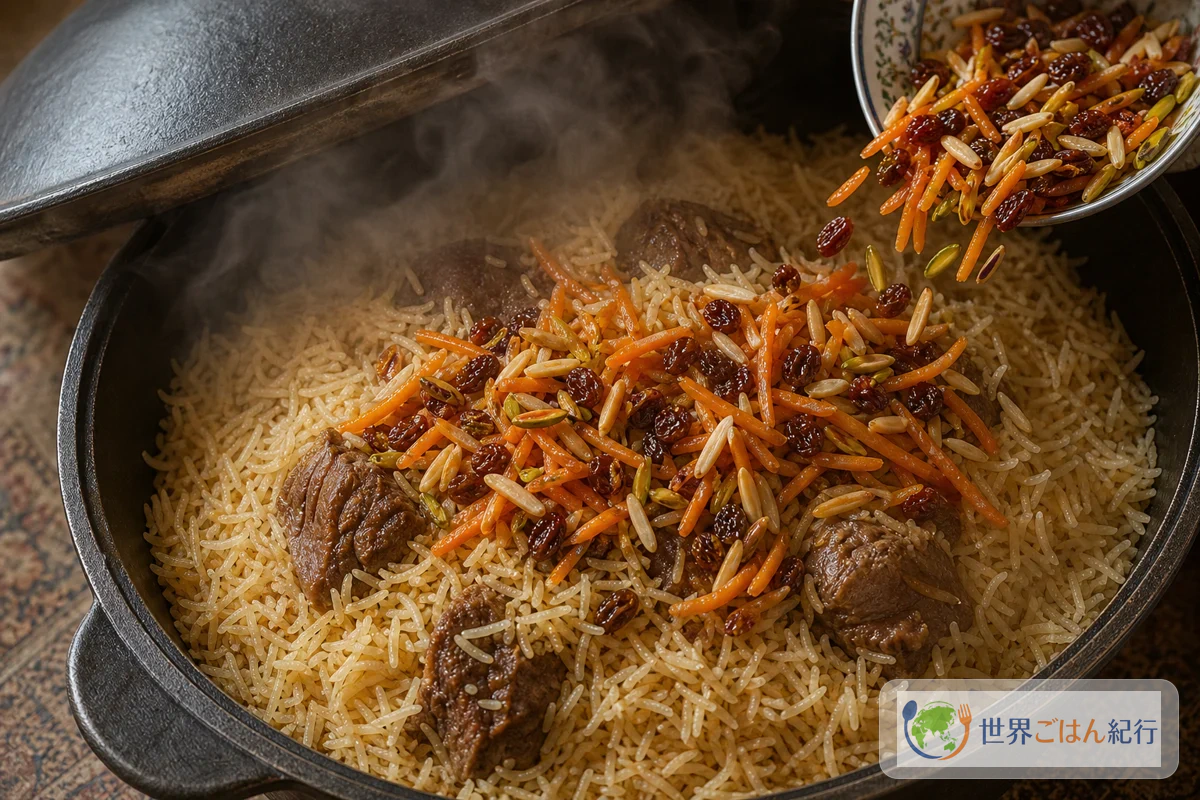
Cooking a rice dish always comes with a little tension as the steam rises. Is it sticky? Is the meat tough? Has the bottom scorched? Kabuli palaw releases that tension the moment you lift the lid. Glossy carrots, plump raisins, and thin slivers of nut sit on top of long, slender grains, and the smell of lamb and cardamom rises from the bottom of the pot.
Kabuli palaw (also written Qabili palau or Kabuli pulao) is Afghanistan's best-known rice dish. Lamb or beef is simmered until tender, basmati is steamed over the resulting broth, and sweet sautéed carrots, raisins, almonds, and pistachios go on top. Unlike an Indian biryani, it doesn't lean on strong spices. You eat your way through the layers of meat broth, fragrant rice, and sweet toppings.
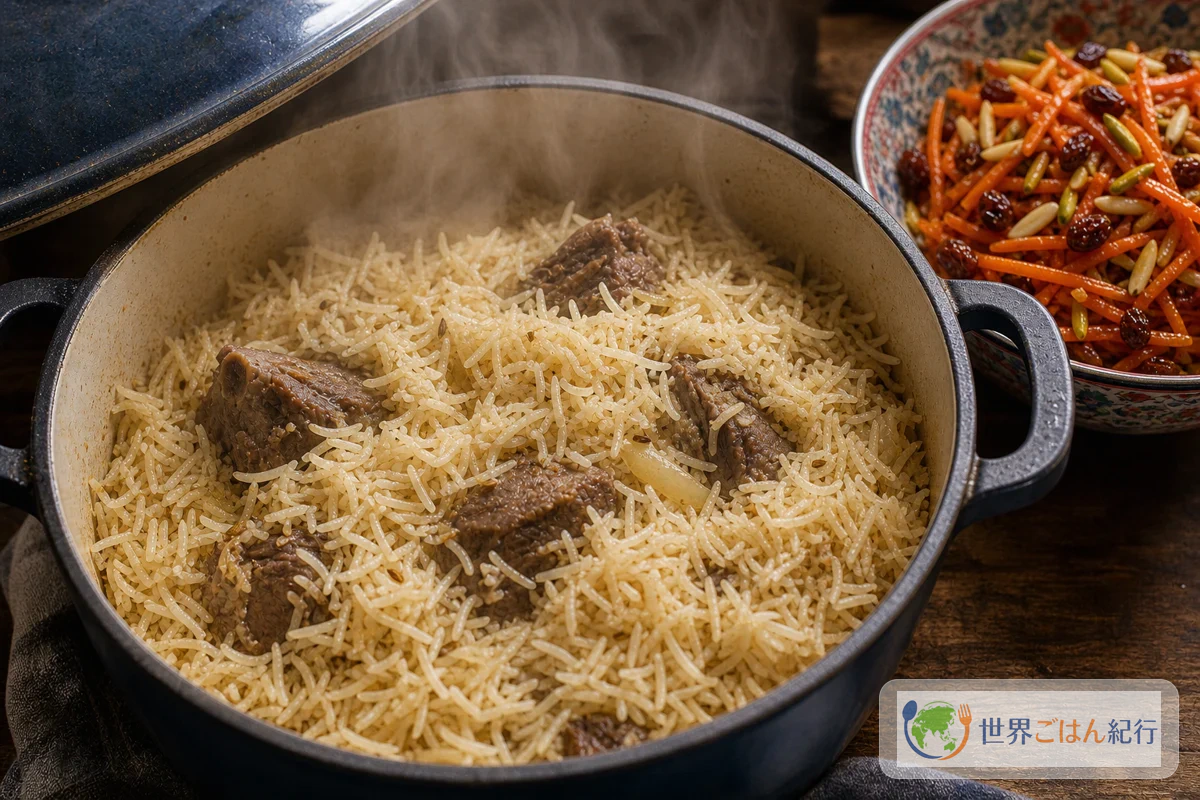
The hard part at home isn't hunting for unusual spices. It's not overcooking the rice, not throwing away the meat broth, and treating the carrots and raisins as part of the flavor rather than as decoration. Keep to these three things and even supermarket lamb or beef gives you the outline of an Afghan celebration rice.
Among South Asian rice dishes, dal bhat puts lentils and rice at the center of everyday meals, while Kabuli palaw is the big platter set in the middle of the table for guests and festivities. Rice is not just a staple here; it is the stage that holds the meat, the sweetness, and the aroma. This recipe scales that idea to a quantity a home kitchen can handle. If you want to move on to Afghan hand-made dishes after the rice, read ashak, the herb-filled dumplings, and mantu, the steamed dumplings. They show a different way of wrapping and saucing from a platter dish.
In English you will see Kabuli palaw, Kabuli pulao, Qabili palau, and more. This article uses "Kabuli palaw" for the most part. Dari and Persian forms say "palaw," while English spellings closer to South Asia say "pulao" or "pilau."
The Story of the Dish: From Kabul to the Guest's Platter
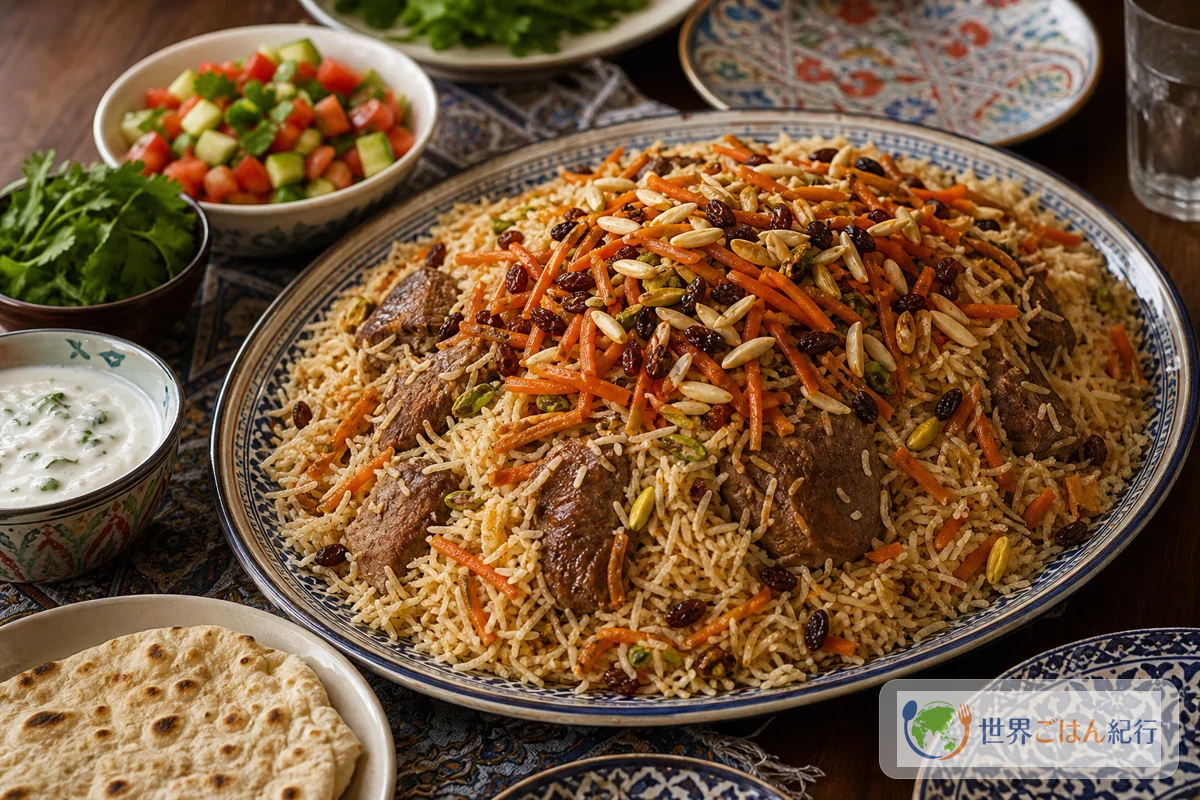
Kabuli palaw is often introduced as Afghanistan's national dish. AramcoWorld's recipe feature explains that in the past, grating carrots and blanching nuts were laborious because graters and ready-peeled nuts weren't easy to come by, so the dish was mostly served at ceremonies and celebrations. It is much easier to make at home now, but it still holds its place as a special-occasion dish.
There are several theories about the name. One explanation ties it to Kabul. Another links it to the Dari word "qabil" (capable, able), saying that a cook who could make it well was considered a good cook. Rather than settling on one, it helps to think of it as a rice dish that carries the capital's name and gives a cook a chance to show off.
What makes the dish interesting is that its splendor comes not from chili or a rich sauce but from how it is layered. The meat is hidden at the bottom, rice covers it, and sweet carrots and raisins go on last. The diner first sees the showy top, and the meat appears as you serve. The drama of a platter dish is built into the way it is cooked.
The spicing is restrained too: cardamom, cumin, cinnamon, black pepper, and sometimes cloves or bay leaf. Unlike Indian chana masala, where spice aroma comes to the front, the spices here are a thin support for the meat broth and the scent of the rice. Push them too hard and you end up with spiced pilaf rather than Kabuli palaw.
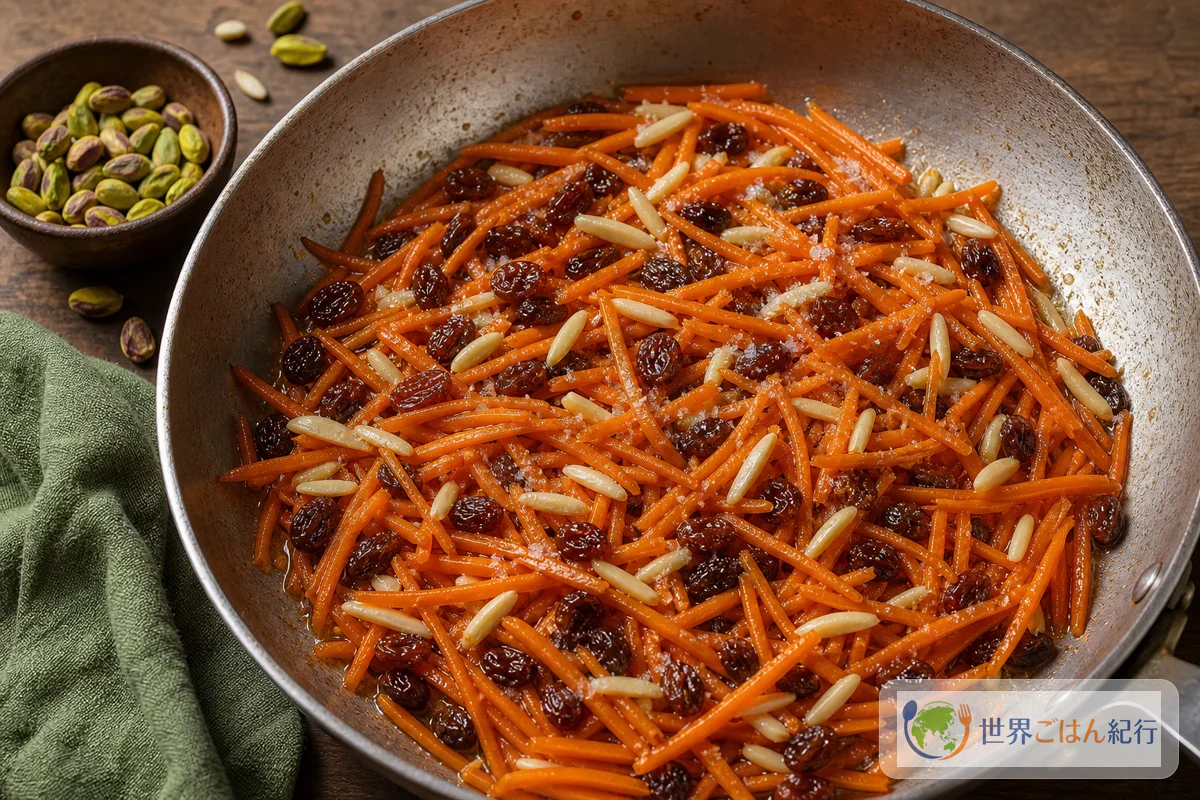
Raisins and carrots are not just there for looks. They switch the mood from the lamb fat and the rice's saltiness to something sweet partway through the bite. A sweet topping on a savory rice dish may feel odd at first, but it is exactly what keeps you from tiring of the plate.
Ingredients: Kabuli Palaw from a Regular Grocery Store
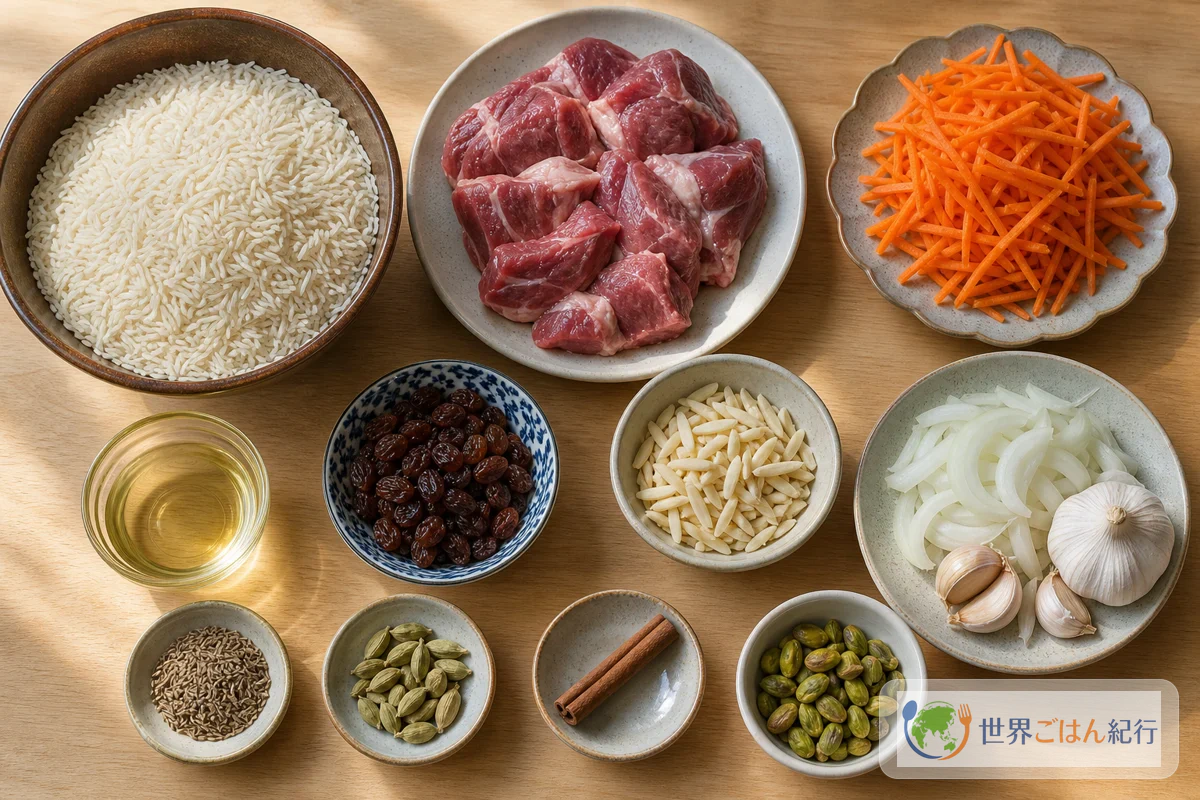
Shopping is easier if you split the ingredients into three groups: rice, meat, and sweet toppings. You don't need to source everything as an imported specialty item on the first try. Do use basmati for the rice if you can. Short-grain rice works, but the lightness of long-grain rice keeps the dish from turning heavy even after it takes up the meat broth.
This recipe uses lamb or beef and tree nuts. It contains no soy sauce, but if you serve it with side dishes or use store-bought stock, check the labels for wheat and soy. Cook the meat all the way through. Japan's Ministry of Health, Labour and Welfare advises cooking meat through to the center, so at home put safety ahead of a "local-style" tenderness.
Gear that matters here
Kabuli palaw changes a lot depending on the rice and the pot. Lamb can be swapped for beef, but basmati and a heavy-bottomed pot are worth having.
Buy carrots, onion, garlic, raisins, and almonds at the supermarket, and get only the basmati and cardamom from a South Asian or Middle Eastern grocer or online. On days when you can't find lamb, use beef shank or beef chuck so the broth keeps its strength. Chicken thighs work too, but shorten the simmering time.
Method: Steam the Rice Over the Meat Broth
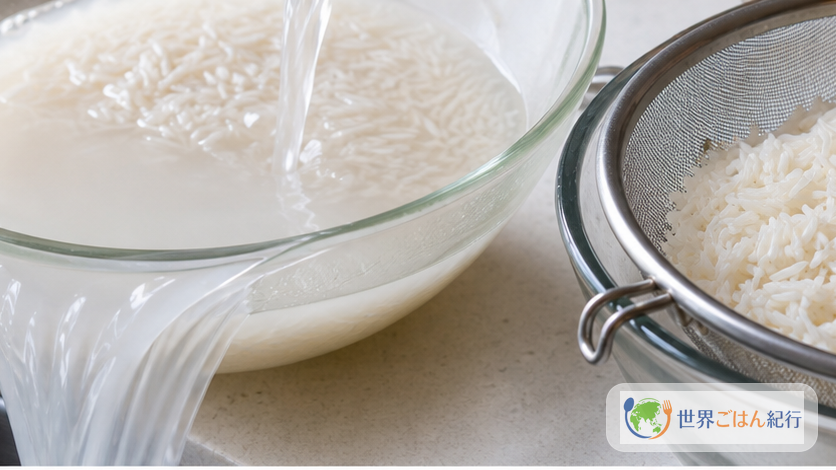
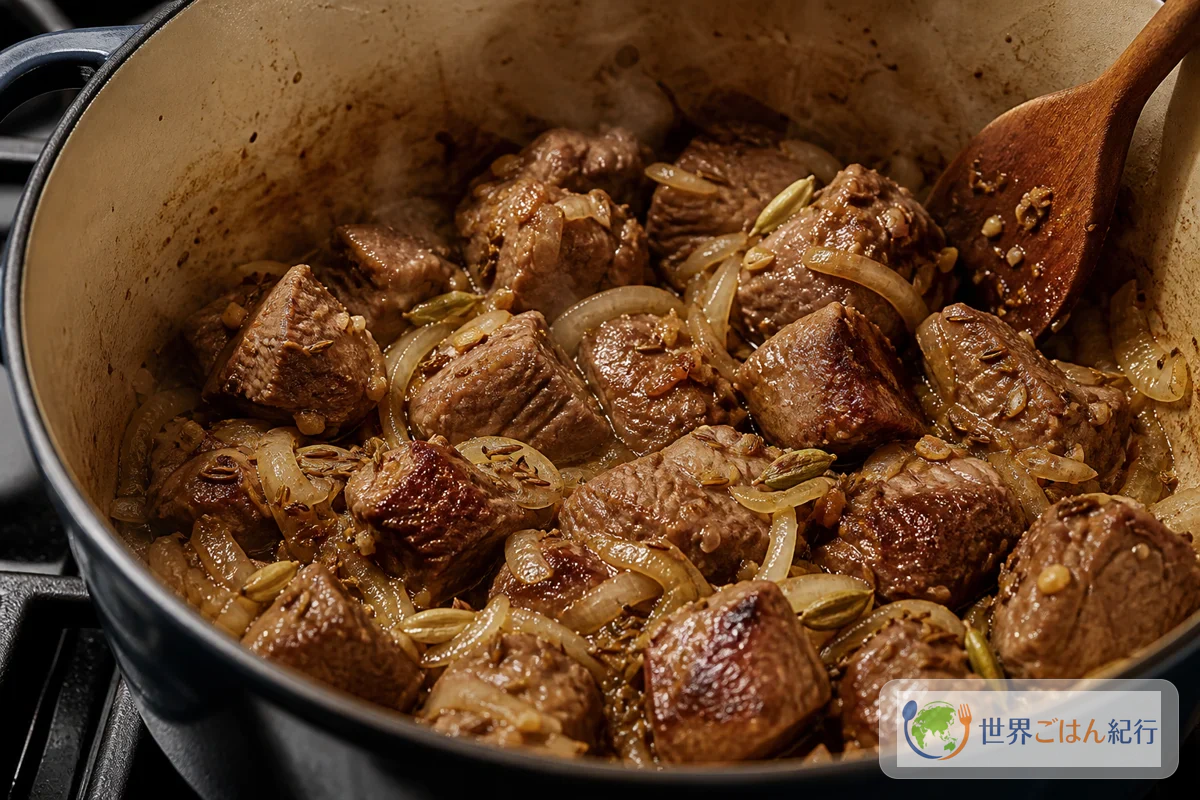
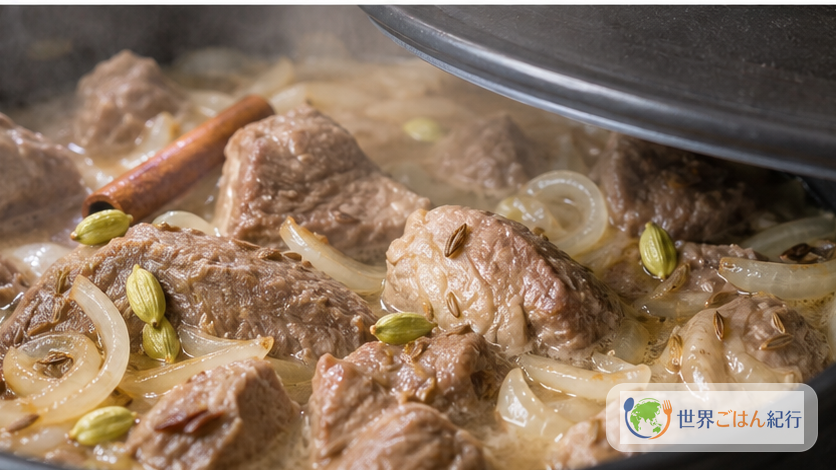
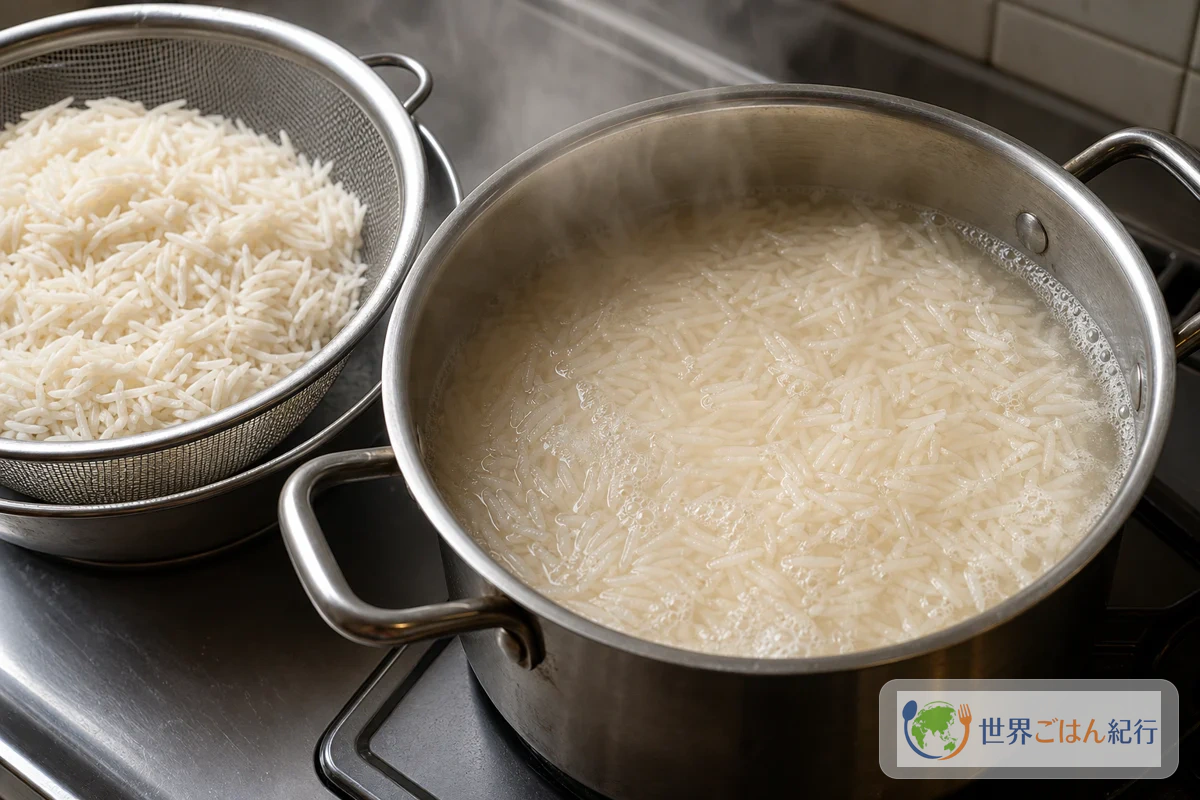
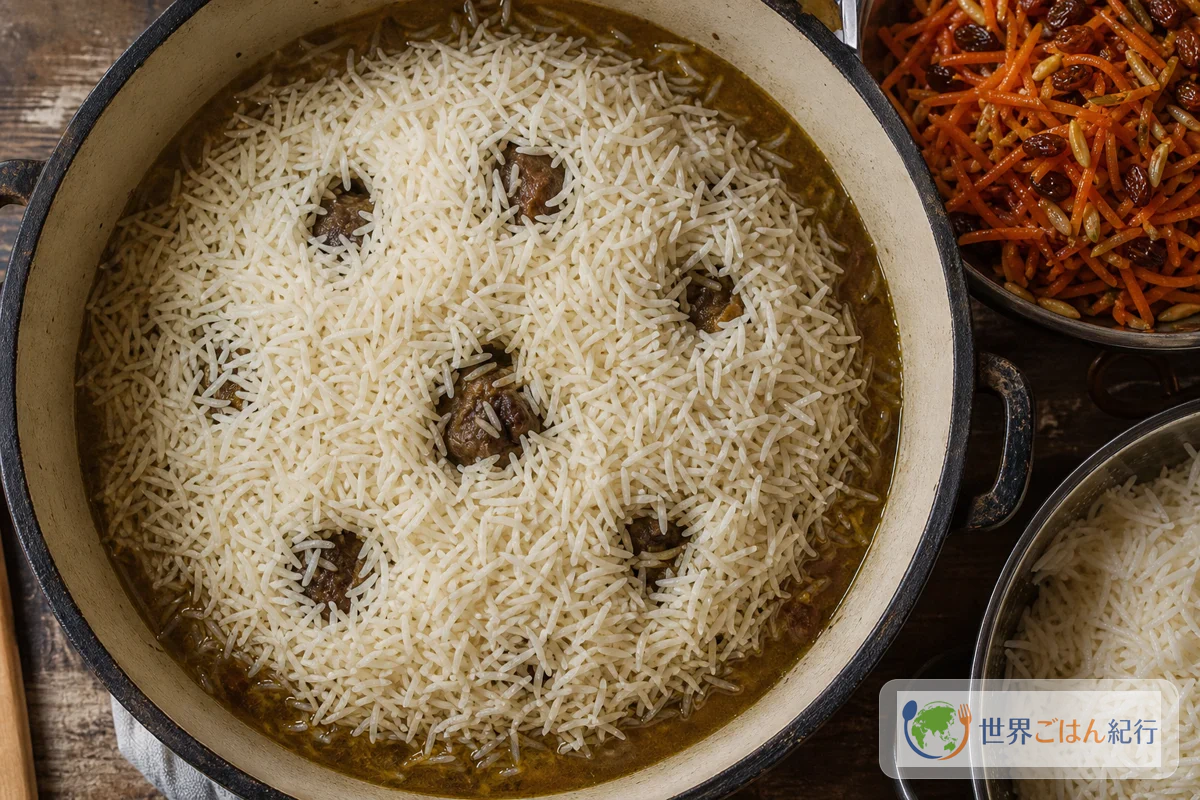
Kabuli palaw runs in this order: simmer the meat, parboil the rice, layer and steam, and finish with the sweet toppings. It takes more effort than putting everything in a rice cooker, but because you can adjust the rice grains and the tenderness of the meat separately, it is actually harder to get wrong.
For lamb or beef, a pressure cooker cuts the time considerably: 15–20 minutes under pressure. Don't cook the rice in the pressure cooker with it, though. Parboiling and then steaming in a regular pot keeps the grains more consistent. Pressure cooker for the meat, pot steaming for the rice: this split is easy at home.
Getting Close to the Real Thing in a Home Kitchen
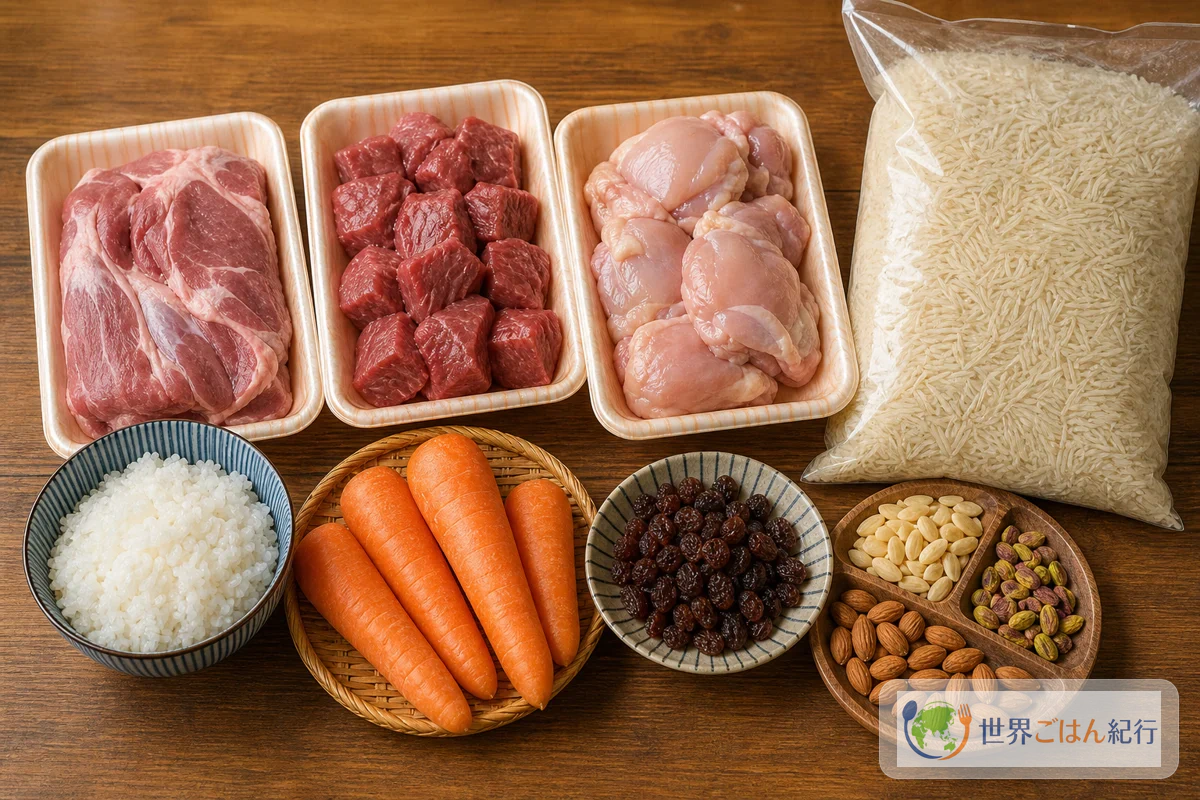
Kabuli palaw still works if you don't make every ingredient authentic. You do need to separate what can be swapped from what you should protect.
| Element | What to protect | Realistic substitute |
|---|---|---|
| Rice | Long, light grains that stay separate after steaming | Basmati. With short-grain rice, cut the liquid sharply |
| Meat | A cut that gives flavor to the broth | Lamb shoulder, beef shank, beef chuck, chicken thighs |
| Aroma | Cardamom and cumin, lightly | A little garam masala can help, but don't overdo it |
| Sweet topping | Sweetness of carrots and raisins | Golden raisins, a few dried cranberries |
| Nuts | Toastiness and crunch | Almonds alone are fine. Peanuts shift the flavor |
| Steaming | No added water, letting rice absorb the broth's aroma | Heavy pot, clay pot, or skillet with lid |
The most important thing is to steam the rice over the broth, not to cook it in the broth. If you add lots of liquid, as in a Japanese-style mixed rice, the raisin sweetness and meat fat go into the rice too much and the dish becomes heavy. Rice light, meat below, sweet toppings above: this separation is what lets a platter dish be eaten cleanly.
If you don't like lamb, beef is enough. Beef shank takes time but gives a strong broth that suits the rice. Beef chuck needs a shorter simmer. Chicken thighs make a lighter dish, but the weight at the center of an Afghan celebration rice gets a bit lighter. In that case, leave the skin on so the broth keeps its oil and aroma.
Center the spices on cardamom and cumin. If you add garam masala, keep it to 1/2 tsp or less. Layering aromas as in Indian cooking pushes the dish toward nihari or biryani. Kabuli palaw tastes better when it keeps the refinement of "rice wearing meat broth" rather than strong perfume.
If you use short-grain rice, accept that it is not a faithful version but a "Kabuli palaw-style celebration rice." For 2 Japanese rice cups, cut the broth to 240–260 ml, skip the parboil, rinse normally, soak briefly, and cook it in a pot. The grains won't stand apart, but you can still enjoy the carrot-and-raisin combination. Learning the flow with short-grain rice the first time and moving to basmati if you like it is a reasonable path.
Troubleshooting: Heavy Rice, Tough Meat, Floating Sweetness
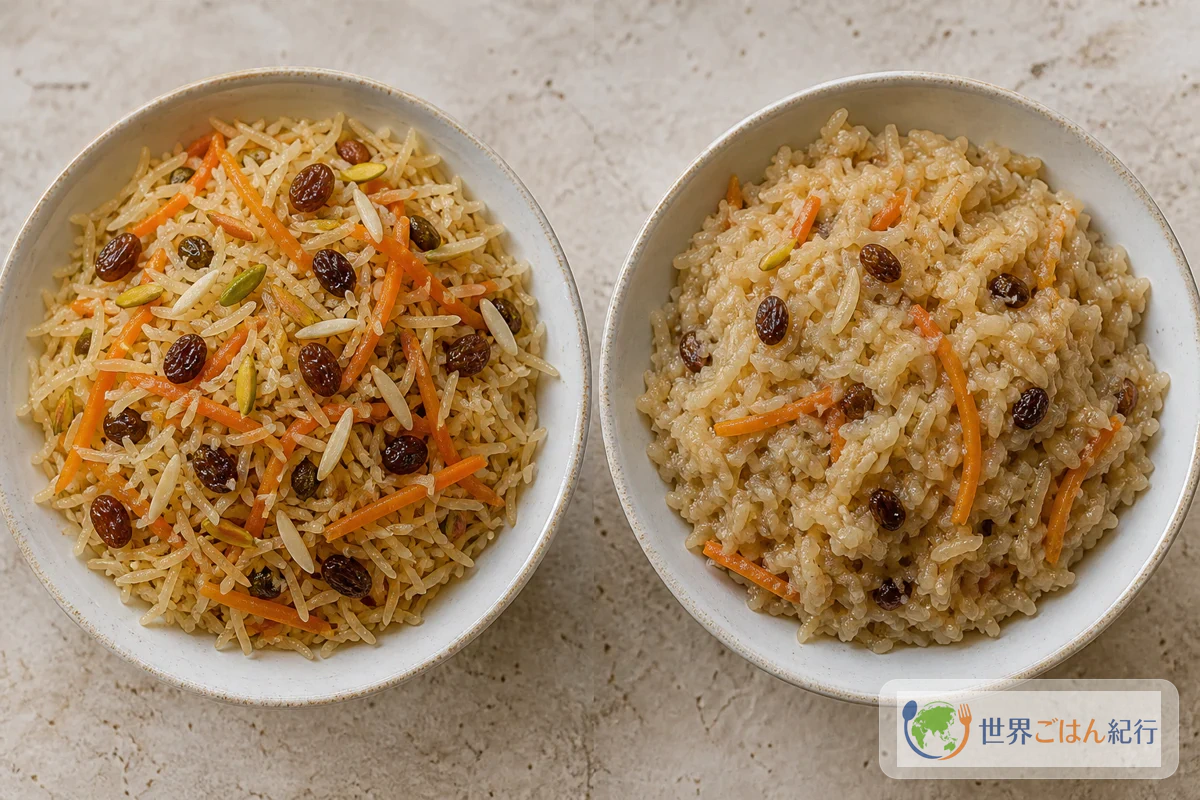
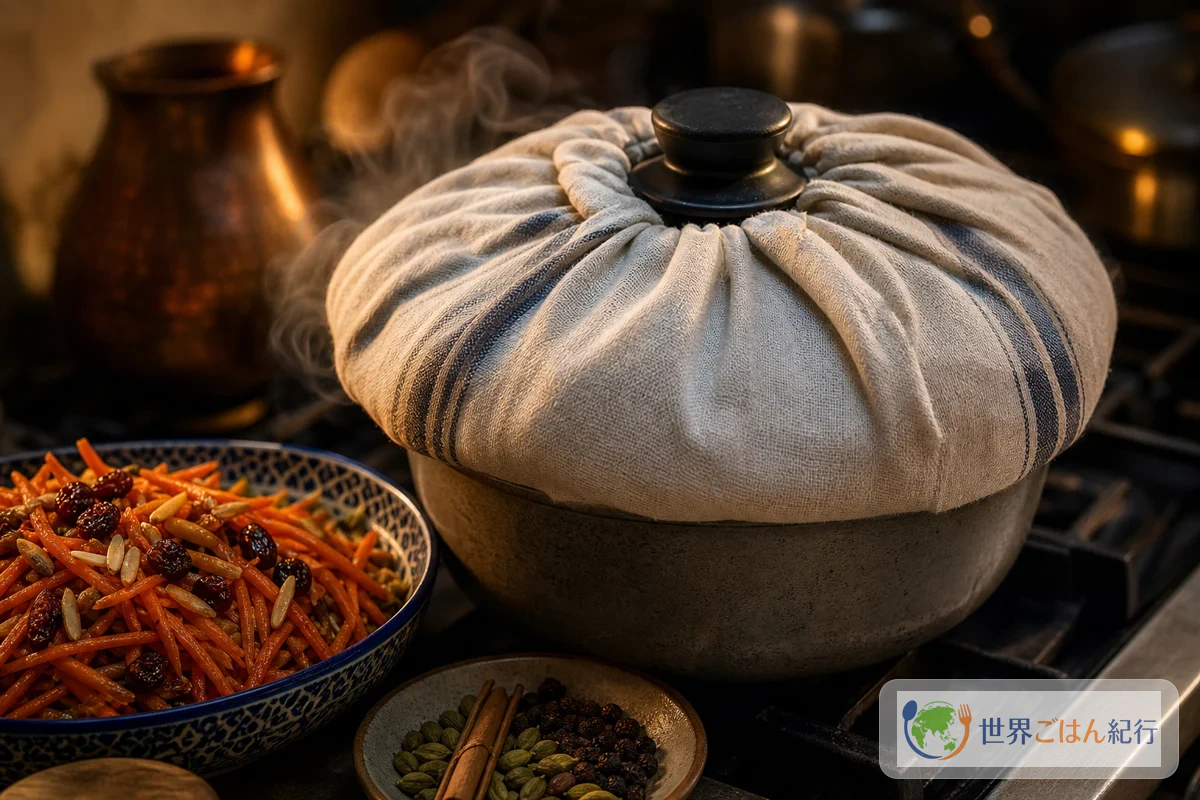
Sticky rice almost always comes from too much moisture. Either the rice was parboiled too long, too much broth went in, or condensation fell from the lid during steaming. Stop the parboil while "a little core remains." The broth in the pot should show only slightly at the bottom, not cover the rice. The towel is there to catch drips.
Tough meat means not enough simmering after browning. With lamb shoulder or beef shank, heat that only reaches the surface leaves the inner fibers unrelaxed. Simmer until the meat is just short of crumbling when pressed hard with chopsticks, then add the rice. Steaming alone can hardly tenderize meat, so finish the meat simmer as its own step.
Sweetness floating apart is usually too little oil for sautéing the carrots and raisins, or too little salt. Don't mix the sweet items into the rice; put them on top. The ideal is for the salty rice and meat and the sweet carrots to come together on the same plate when served. Mixing everything makes it taste like a sweet mixed rice.
A curry-like aroma means you added too much garam masala or turmeric. The rice for Kabuli palaw only needs a pale gold, not a strong yellow. Use small amounts of cardamom, cumin, and cinnamon, and leave out chili and curry powder for a more cohesive dish.
A scorched bottom means the heat was too high at the start of steaming. 2–3 minutes of medium heat to raise steam is enough, then go to the lowest setting. If you still worry with a heavy pot, set a wire rack on the burner and put the pot on it to keep the heat from concentrating in one spot.
If you wrap the lid in a towel, tie the corners tightly on top so they don't touch the flame. Be especially careful over gas. If you're concerned, skip the towel, wipe the lid once, and steam over low heat.
How to Serve It: Yogurt and Something Sour Alongside
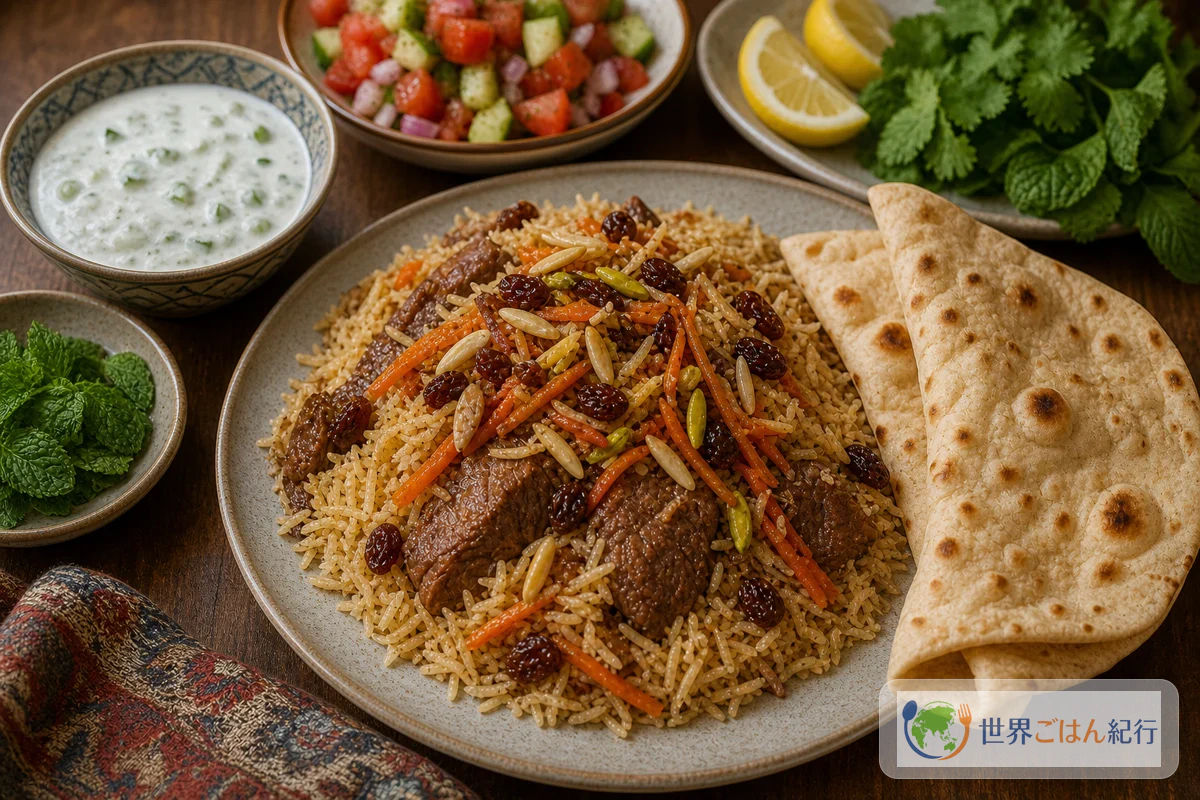
Kabuli palaw looks best served on its platter. Mound the rice, scatter carrots, raisins, and nuts on top, and let just a little meat show. When a guest digs in with a spoon, the meat comes up from below. That gap between the visible and the hidden is what makes it feel like a guest dish.
Light sides suit it better than heavy ones: a quick raita made of plain yogurt, salt, and cucumber; a tomato, cucumber, and onion salad; lemon; fresh herbs. Because the rice and meat already have sweetness, something sour and cold on the side makes it easier to keep eating.
| Occasion | Combination | Aim |
|---|---|---|
| Weeknight dinner | Kabuli palaw + yogurt with cucumber + Afghan salad | Let rice and meat star, and cut the weight with the sourness of chopped vegetables |
| Weekend guests | Kabuli palaw + flatbread + Afghan salad + tea | Put the platter in the center and make serving part of the fun |
| The day after | Reheated rice and meat + lemon + herbs | Tighten the raisin sweetness with acidity and lighten the dish |
For guests, thinking about the order of serving looks better than adding more dishes. First take a generous amount of rice and meat, then a little carrot and raisin, and then yogurt to the side. Rather than mixing everything at once, let sweet, salty, and sour take turns in the mouth, and Kabuli palaw is at its best.
To compare with other rice dishes, try the heavily spiced biryani, the calm lentil-and-rice khichdi (in Japanese), and Nepal's everyday dal bhat. You will see how rice culture differs around South Asia. Kabuli palaw is unusual in bringing sweet toppings and meat broth together on one platter.
If you're serving it with drinks, plate less rice and more yogurt and salad. With the lamb fat and raisin sweetness, a light red wine, a dry white wine, or hot tea is easier to pair than beer. For a home dinner, rather than making a separate soup, ladle a little of the meat broth into a small bowl, adjust the salt, and serve it alongside.
Storing and Reviving the Next Day
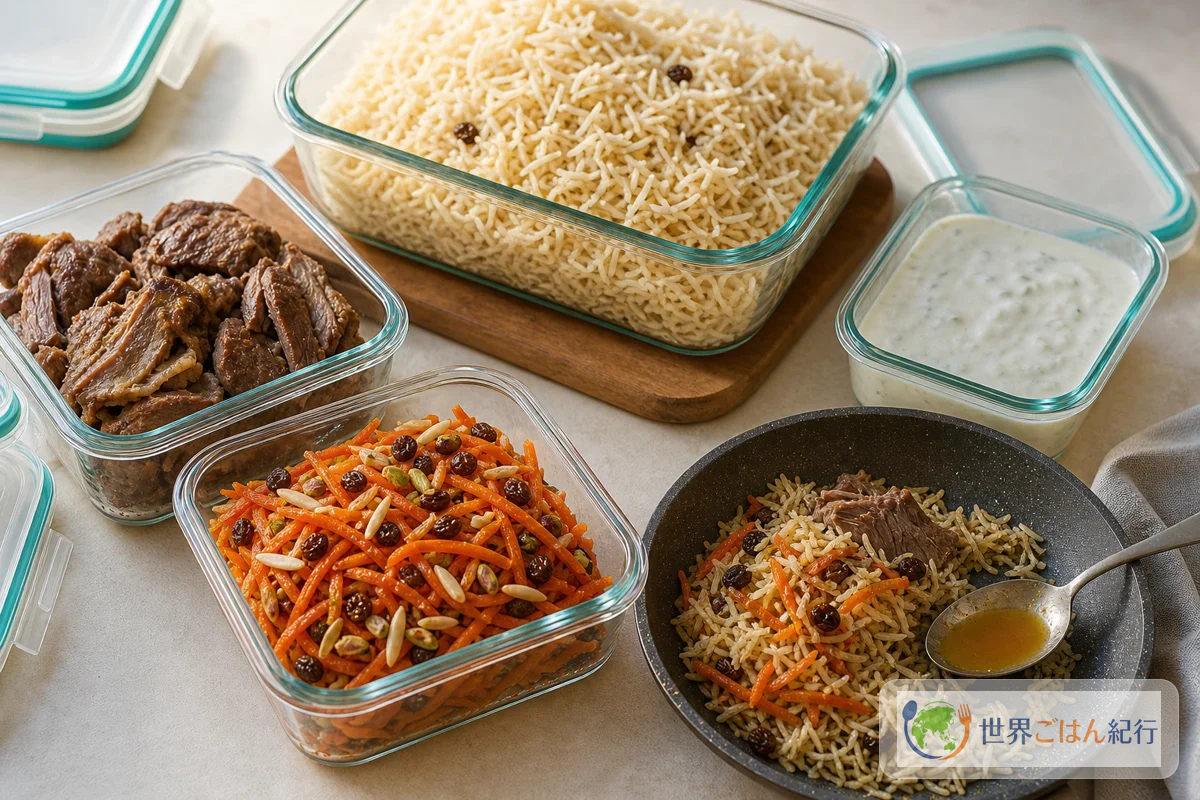
Kabuli palaw is best freshly made, but stored separately it is good the next day too. What you want to avoid is packing platter leftovers into a deep container. Steam from the rice gets trapped, moisture from the carrots and raisins moves into the rice, and everything gets heavy.
If you can, separate rice, meat, and topping. Spread the rice in a shallow container, cool it to just above room temperature, and refrigerate. Put the meat in another container with a little broth. Keep the carrots and raisins separate and add them at the end of reheating. Eat everything by the next day when refrigerated.
To reheat, sprinkle 2–3 tsp of broth or water over the rice, cover, and microwave. Warm the meat with its broth, then return it to the top of the rice. Let the topping come back to room temperature, or warm it briefly in the microwave. Heating everything together hard makes the raisins too hot and the rice easy to crush.
Rather than turning leftover rice into fried rice the next day, it suits better to serve it again as Kabuli palaw with yogurt and salad. If you do want a different dish, shred the meat finely, stir-fry lightly with the rice, and finish with lemon juice to lift the heaviness. Stir-frying hard, though, drives off the basmati aroma.
FAQ
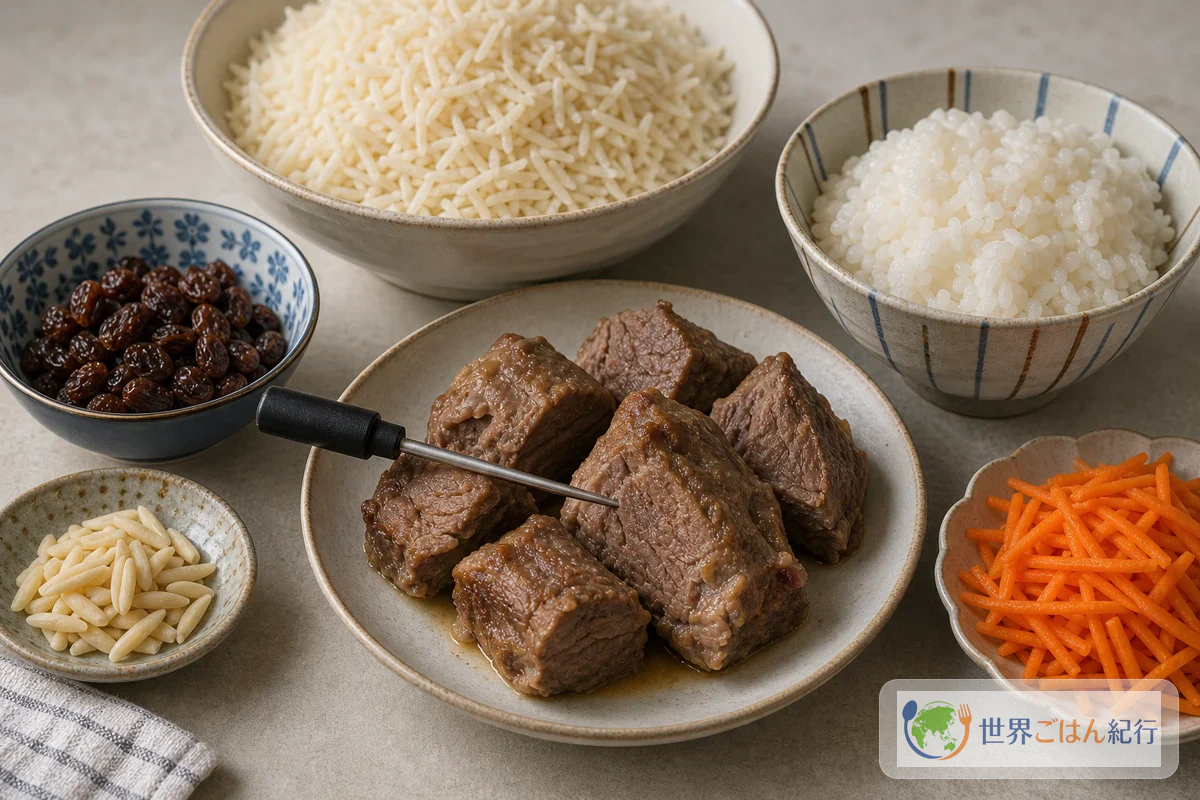
Q1. Can I make it if I don't like lamb?
Yes. Beef shank or beef chuck gives a broth that suits the rice. Chicken thighs work too: shorten the simmer to about 25–30 minutes and cook with the skin on to keep the aroma. Pork is outside Afghan food culture, so I don't recommend it for recreating this dish.
Q2. If I don't have basmati, can I use short-grain rice?
You can, but it becomes a different dish. Short-grain rice is sticky and tends to get heavy when it takes up the broth. If you use it, skip the parboil, cut the broth a lot, and cook it in a pot. To get the Kabuli palaw feel, getting basmati for the rice alone is the shortcut.
Q3. Do I have to use raisins?
It isn't mandatory, but they give the dish its character. If you don't like them, halve the amount and use a few more carrots. A few dried cranberries add acidity, but they move a little away from the Afghan style.
Q4. Can I use a rice cooker?
A simplified version is possible: simmer the meat, then cook the rice in the cooker. The texture will differ from steaming parboiled rice. If you use one, use less broth for 2 Japanese rice cups of basmati than you would for ordinary white rice, and put the toppings on after cooking.
Q5. Can I add chili for heat?
You can, but heat isn't the center of Kabuli palaw. If you want some, serve a pickled green chili or a hot chutney on the side rather than mixing it into the rice; that keeps the dish's outline intact.
Wrapping Up
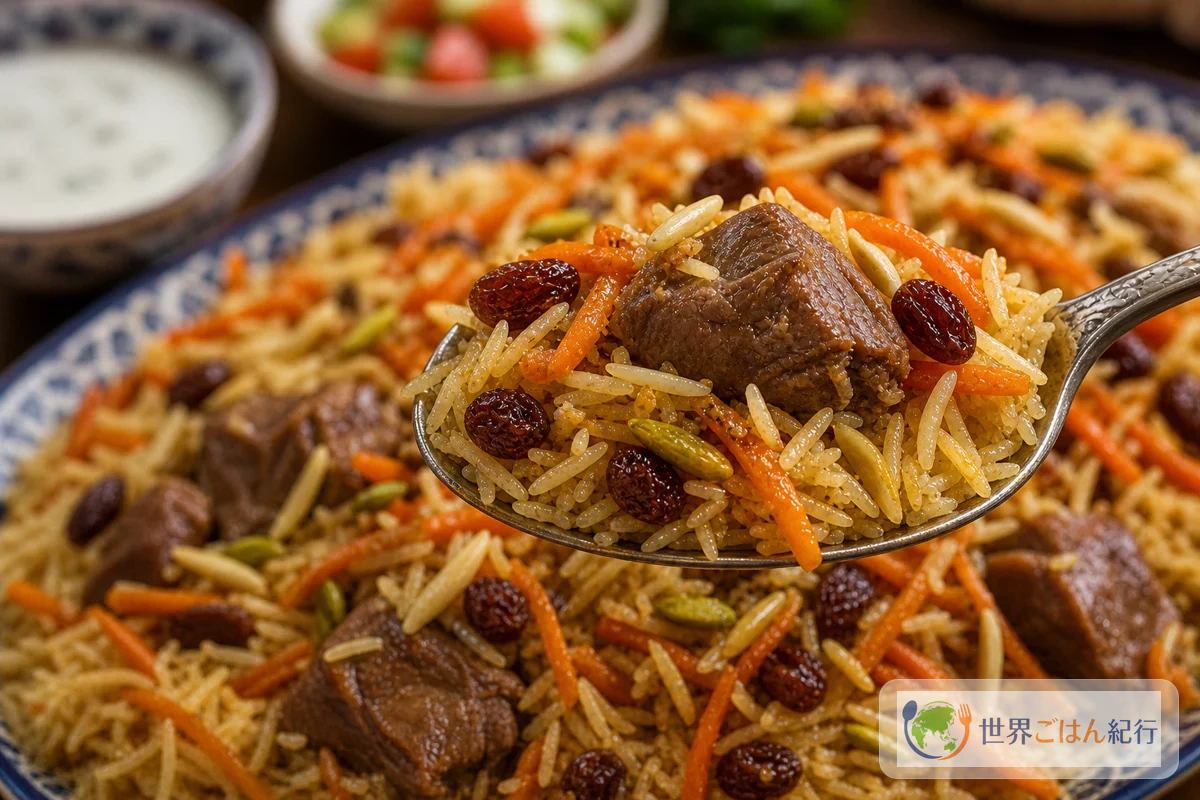
Kabuli palaw does not make its impression with blazing heat. You steam rice over the liquid from simmered lamb, put sweet carrots and raisins on top, and add nuts for toastiness. What you do is simple, but by layering rice, meat, and sweetness without mixing them too much, it becomes a celebration platter.
What to protect in a home kitchen: use basmati, let the rice take up the meat broth, and add the toppings last. You can make it with beef instead of lamb, and cardamom and cumin are enough for aroma. The first time feels like many steps, but if you prepare the rice and carrots while the meat simmers, the flow in the kitchen turns out surprisingly neat.
To widen your range of South Asian rice dishes next, try the fragrant biryani, the lentil-and-rice khichdi (in Japanese), and the everyday dal bhat. Even with rice, each country has its own idea of whether to mix, steam, or serve alongside. Kabuli palaw shows those differences, pleasantly, in one dish.
Sources
For the name, ingredient makeup, towel steaming, and handling of carrots and raisins, I checked English-language recipes and food-culture write-ups. For food safety only, I referred to Japanese public information.
- AramcoWorld: Flavors: Rice with Carrots and Raisins (Kabuli Palaw): used to check the ingredients and method from Parwana and the dish's place as a celebration food
- SBS Food: Afghan lamb pilaf (Kabuli pulao): used to check the lamb, sella basmati, caramel aroma, and towel-steaming method
- Afghan Cooks: Kabuli pulao recipe - Afghan National Dish: used to check the name, storage, and serving ideas for an Afghan home dish
- TasteAtlas: Kabuli pulao: used to check the Kabuli palaw / Qabili palau names, its introduction as a national dish, and ingredient makeup
For food safety when cooking, I also consulted the following.
- Ministry of Health, Labour and Welfare (Japan): Cook meat thoroughly before eating (in Japanese): used to confirm that meat should be cooked through to the center