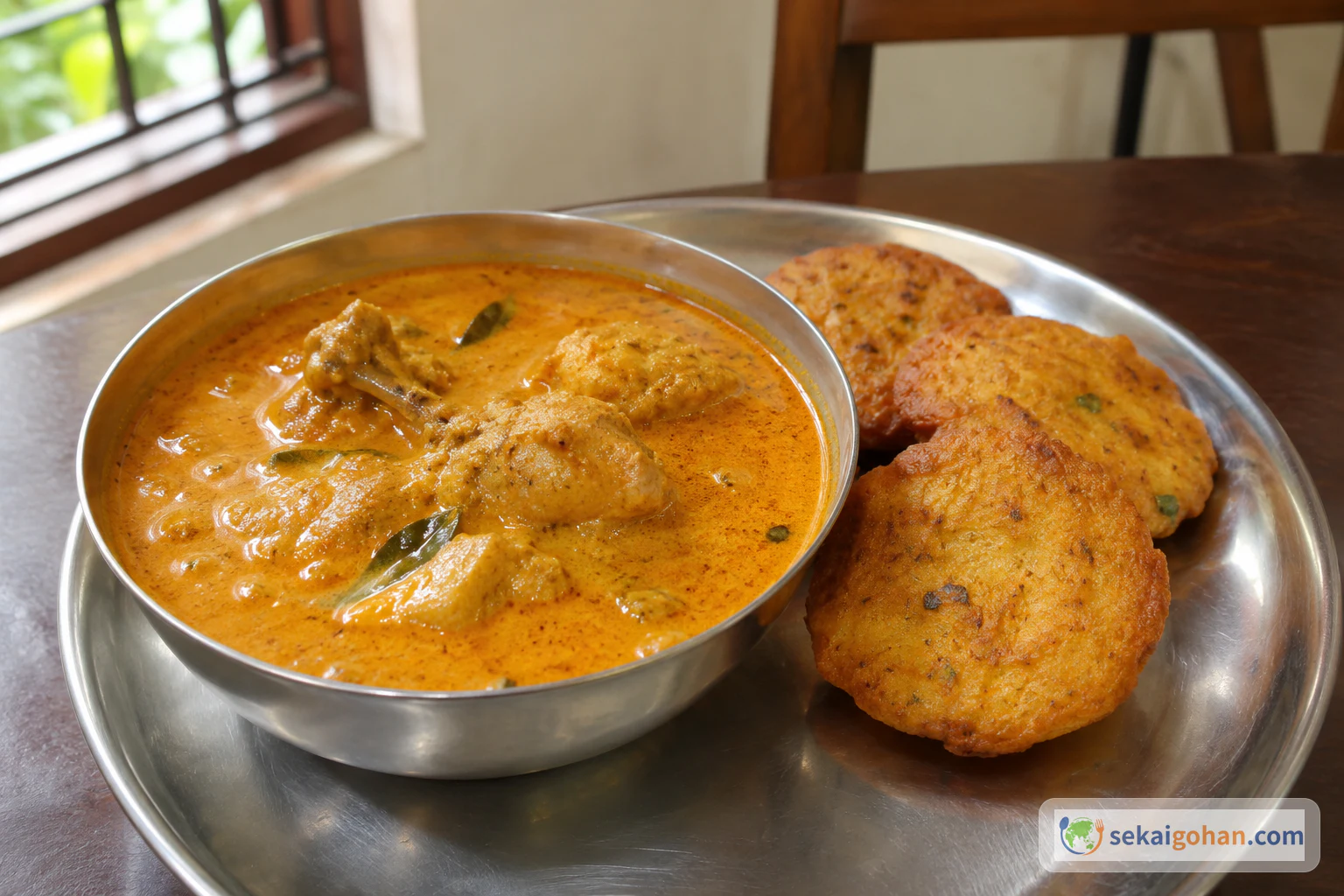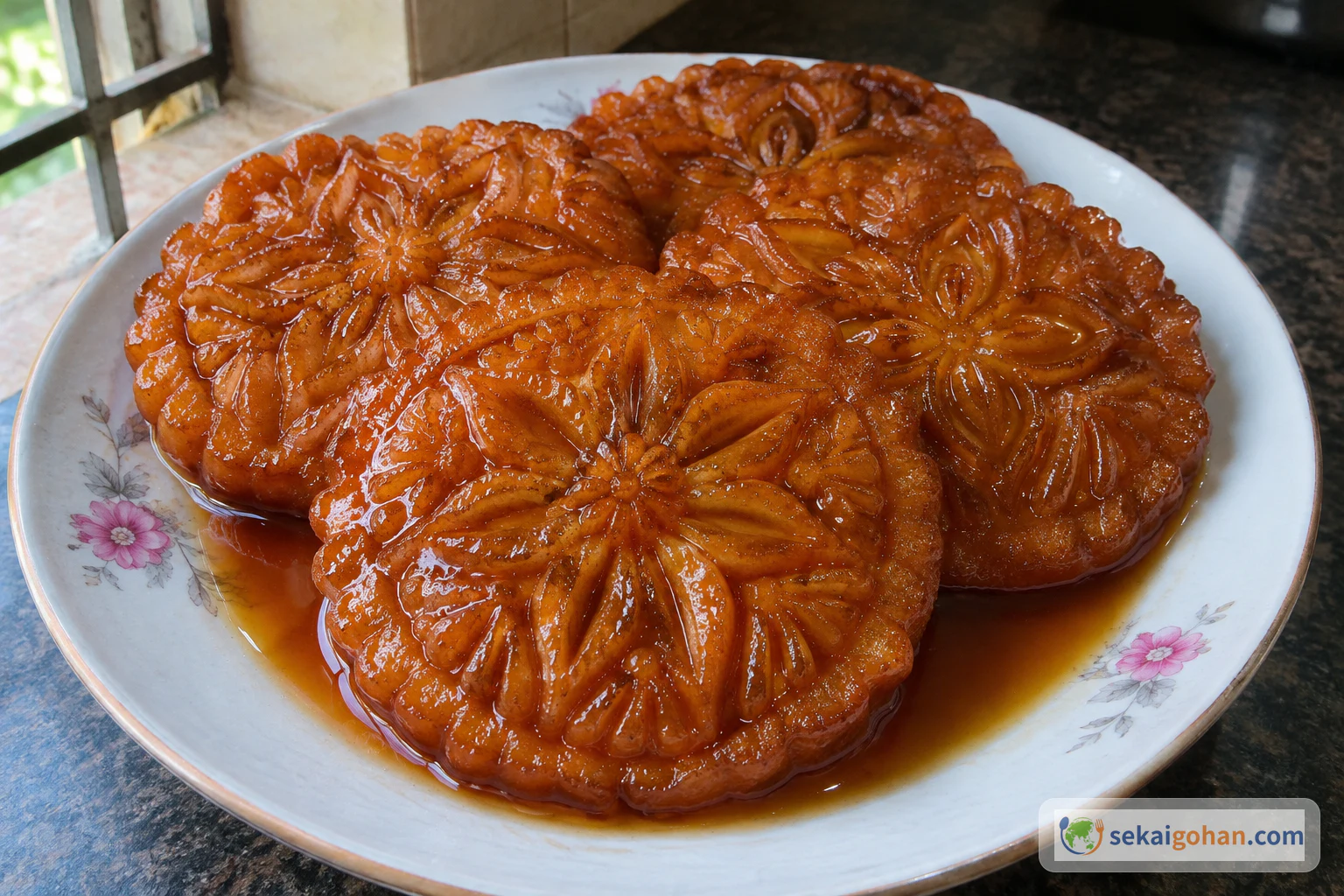
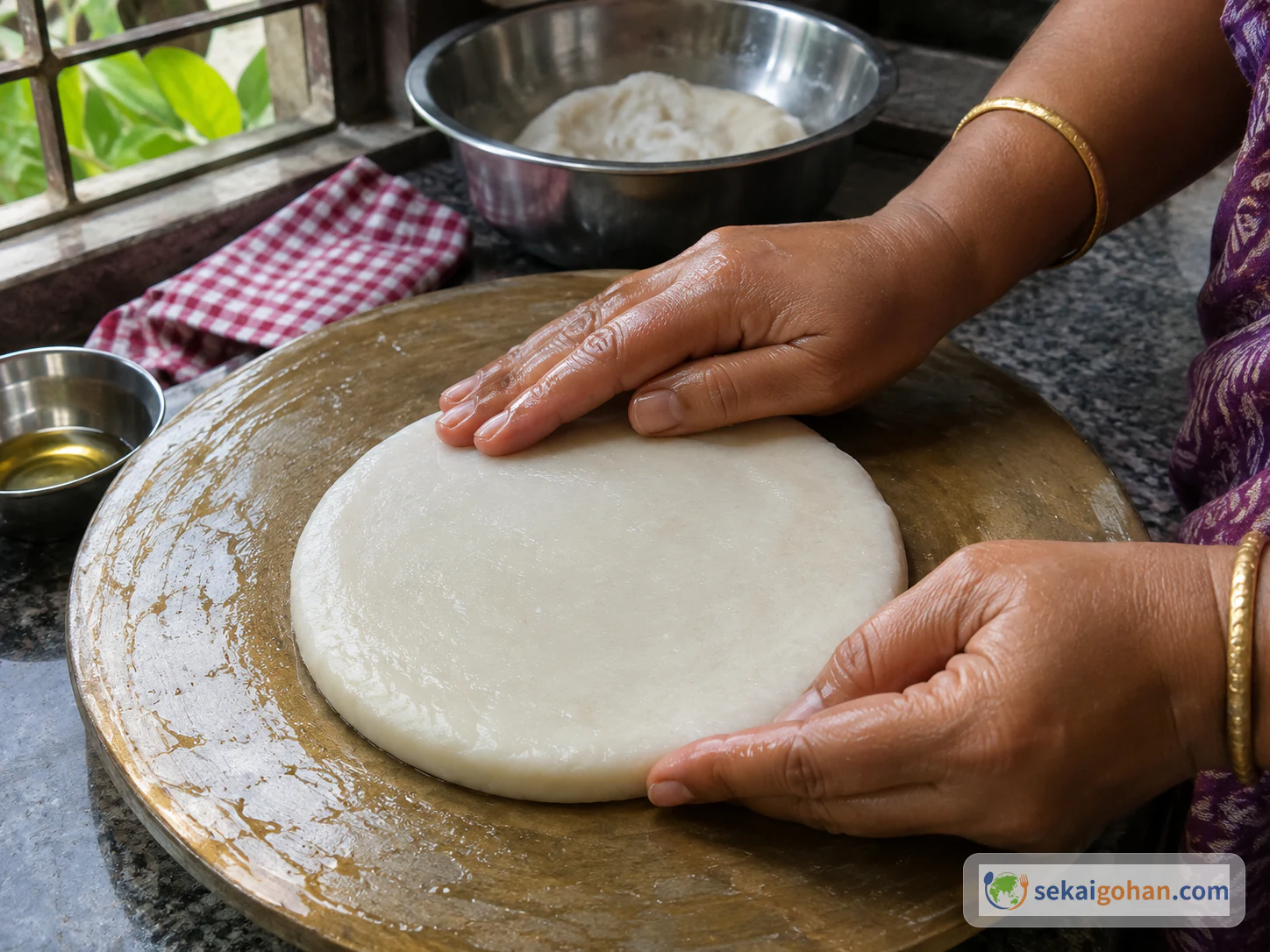
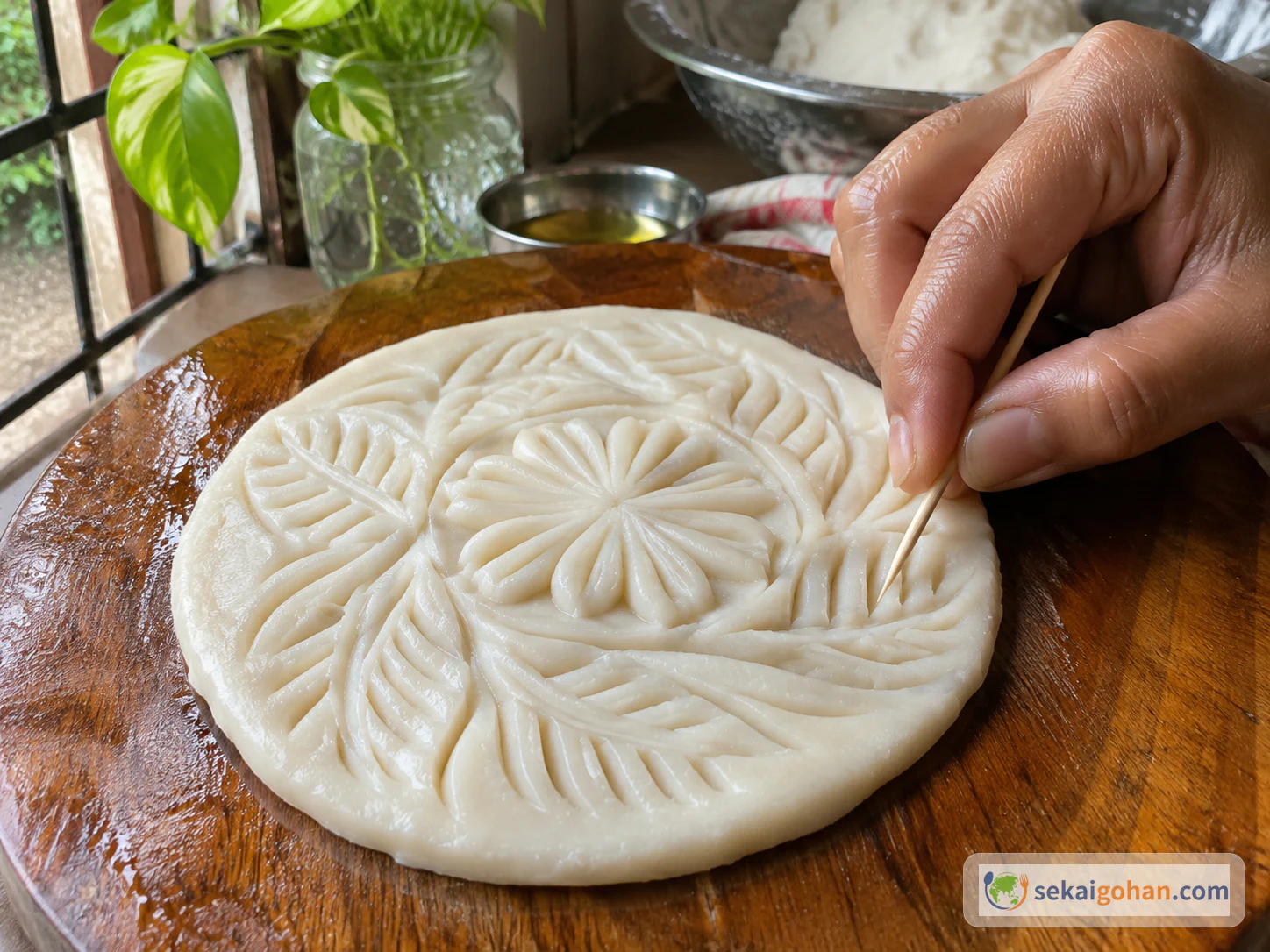
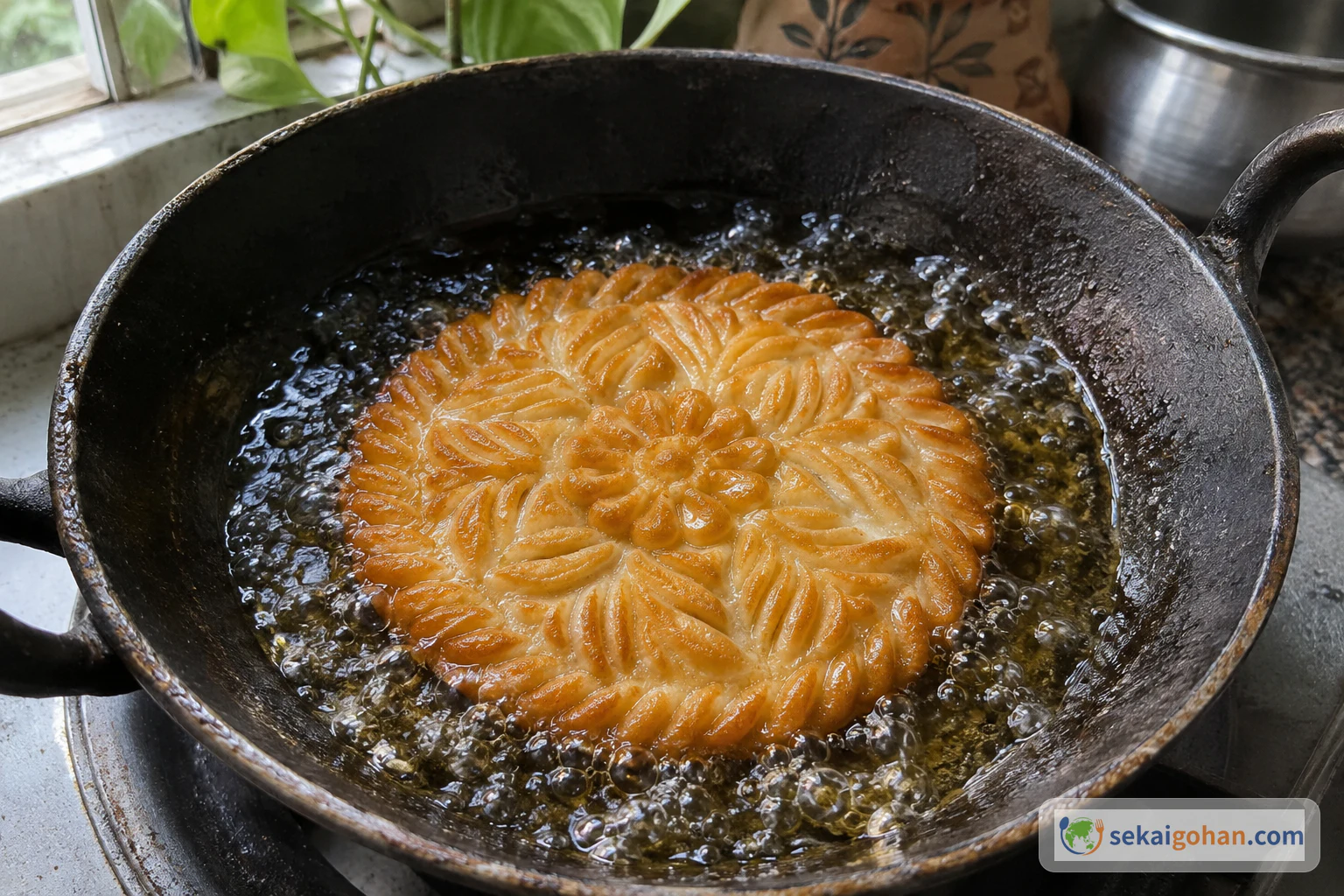
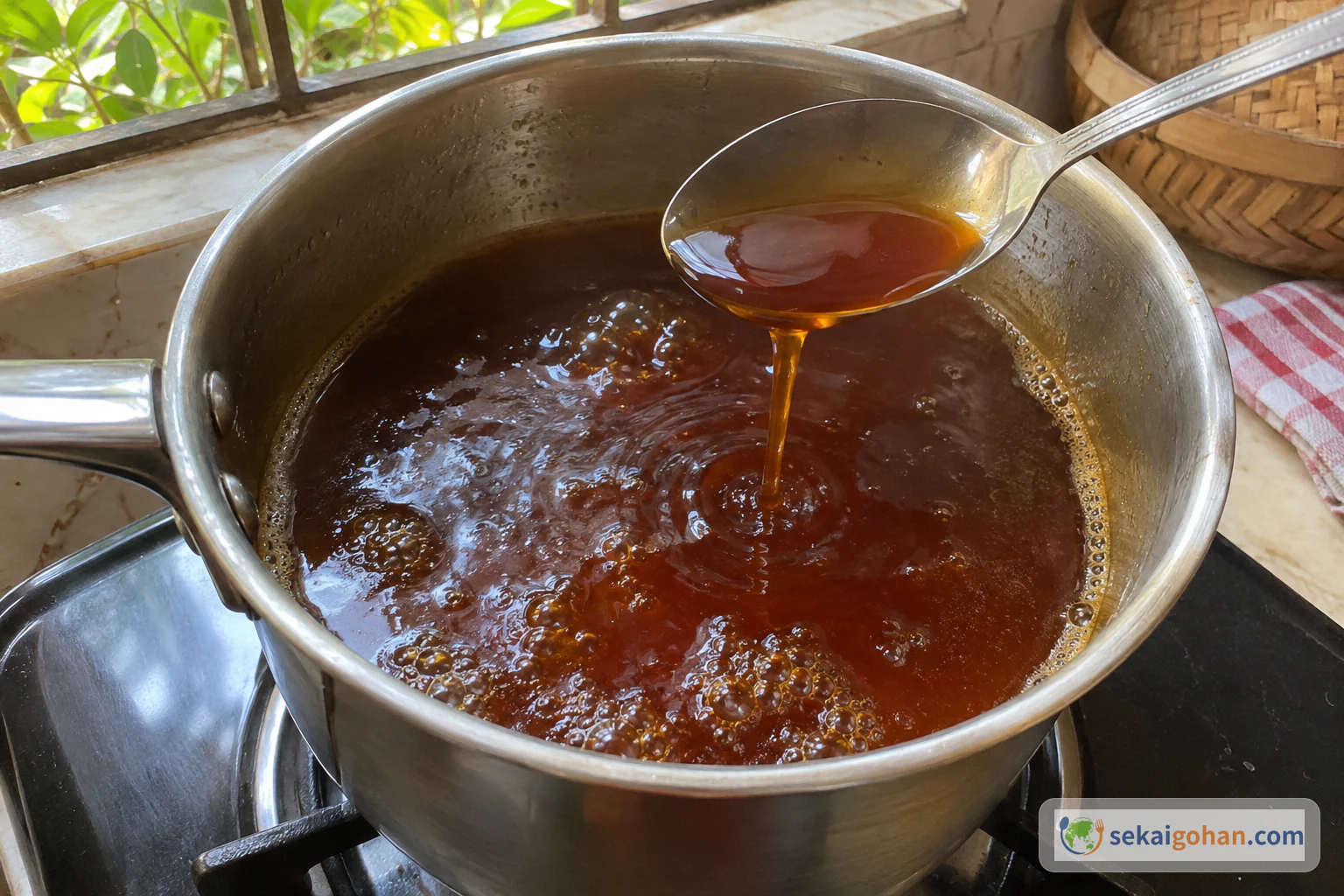
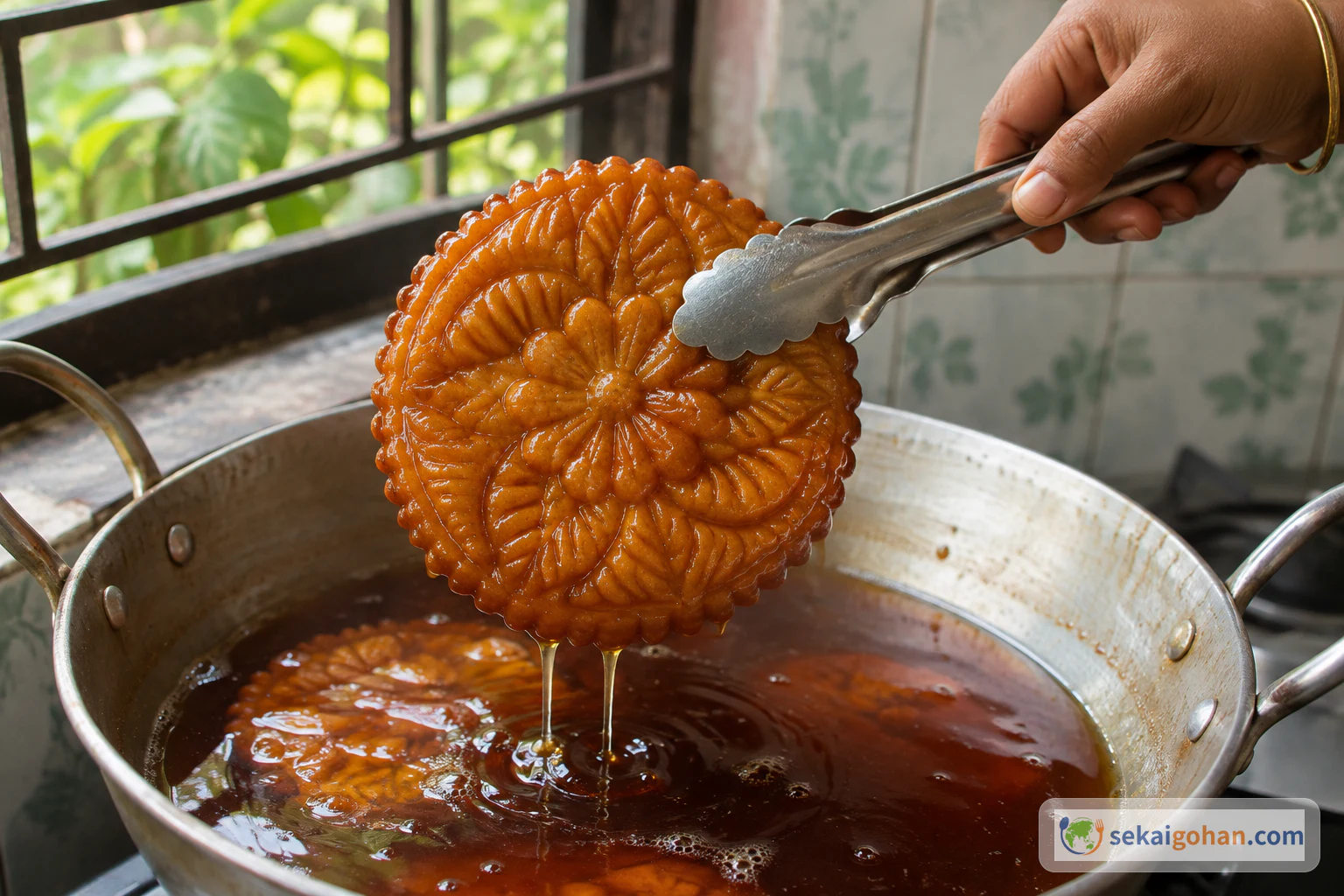
You lift the cake out of the pan with tongs and dark syrup runs back in strings. Under the shine you can still read every line you cut into the raw dough: petals, leaf veins, a flower in the middle. Nakshi pitha is a Bengali winter sweet. Rice flour is scalded into a dough with boiling salted water, then pressed into thick discs. Each disc is carved by hand, fried slowly until golden and crisp, and soaked in syrup made from date-palm jaggery. Every bite gives you crunch and rice, and the syrup has the deep sweetness of khejur patali.
Patterns cut by hand, for winter and for guests
Nakshi is the Bengali word for design or pattern. That tells you where the attention goes. The dough is plain, and the carving is what people look at. In Bangladesh, nakshi pitha is counted as culinary art and women's folk art at once. The women of the Mymensingh region are especially known for it. The patterns have been compared to nakshi kantha, the embroidered quilts of the same region of Bengal. Like a quilt, a plate of these cakes shows whose hands made them.
The old carving tool is a thorn from the date palm, the same tree that gives the jaggery for the syrup. Hairpins, needles and jute stems have all been used too. In a home kitchen today a wooden toothpick does the job. Patterns run from simple rings and leaves to dense flowers that cover the whole disc.
When it comes out
Nakshi pitha belongs to the cold months. It is made for Paus (Poush), the winter month when the new rice is in, and for the harvest festival of Nabanna. In West Bengal it appears around the Poush festival and Makar Sankranti. It also comes out for Eid, Puja, Shab-e-Barat and Muharram, and for weddings. Plates of it are carried to relatives as gifts, and it is set out when guests arrive. Pitha is a large family of Bengali rice cakes, and the steamed kinds are a very different texture. Compare it with bhapa pitha, which is soft and cooked in steam. This one is fried and crisp, then turned glossy in syrup. You can find more of the country's cooking on the Bangladesh page.
Where the cake was first made is not settled. One story places its beginning in Narsingdi, but nothing firmer stands behind it.
Nakshi pitha goes by several names: pakkuyan, teil pitha (oil pitha, after the frying), ful pitha (flower pitha, after the patterns) and pakkon pitha. In English it is spelled both nakshi and nokshi. Some puli pitha are pressed in carved moulds. Those are a different pitha. Nakshi pitha is carved freehand.
Ingredients
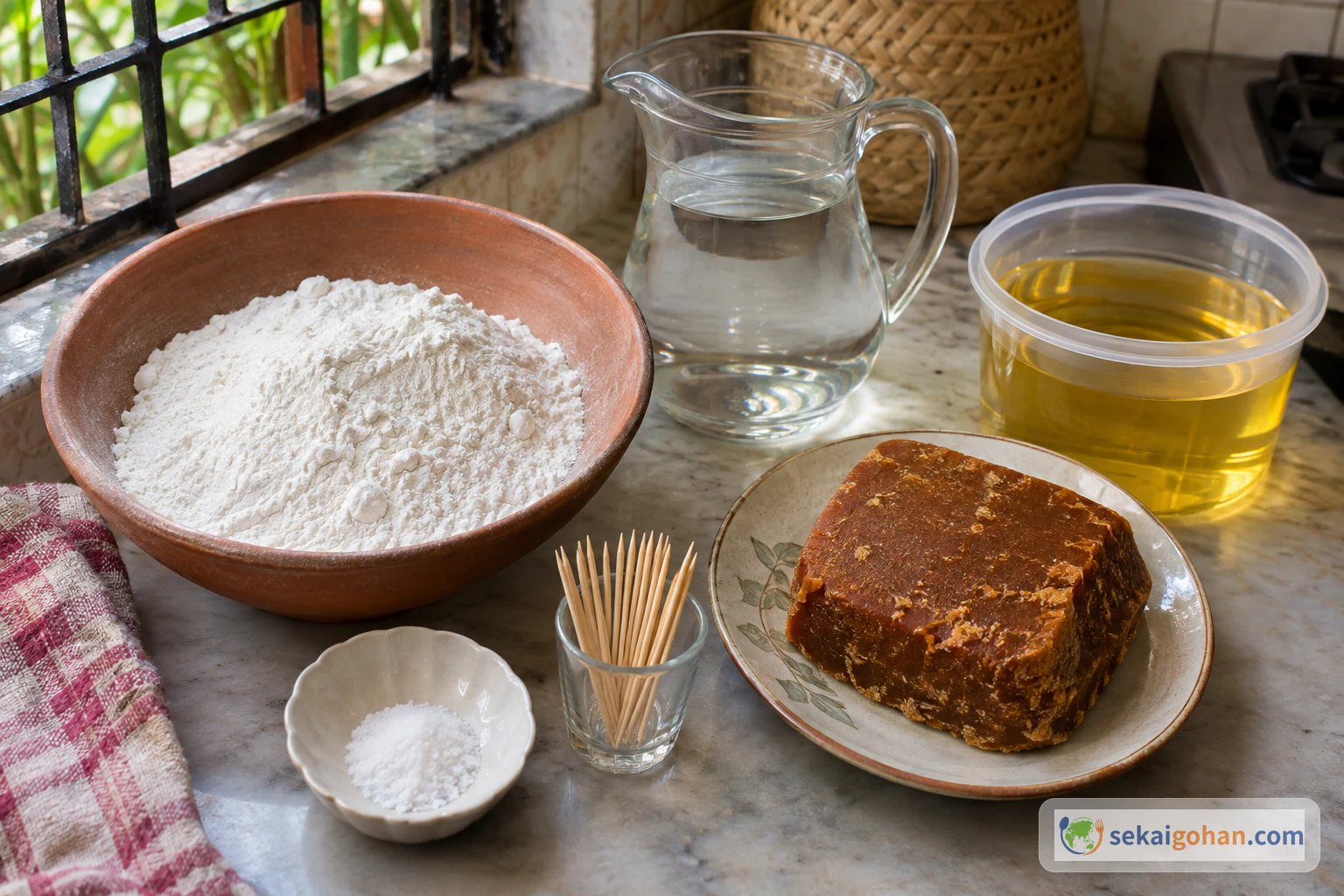
The dough works because rice flour and water are equal volumes. Fill the same cup twice with flour and twice with water. That keeps the ratio right whichever cup you own.
The dough and syrup are rice flour, water, salt and jaggery, with no wheat, egg, dairy or nuts. Check the rice flour label for shared-facility statements. If someone at the table has a nut allergy, choose your frying oil with that in mind.
Equipment
- Saucepan with a tight lid, for the dough
- Wooden spoon and a spatula or bench scraper
- Damp kitchen cloths
- Clean work surface that you can oil
- Wooden toothpicks or a thin bamboo skewer
- Butter paper (parchment)
- Heavy-bottomed pot for deep-frying
- Slotted spoon or tongs, and a rack or paper for draining
- Second saucepan for the syrup
Choosing and substituting
Khejur patali is a hard cake of jaggery made from date-palm sap, and it gives this syrup its character. Look for it at South Asian grocers or online under the name khejur gur. You can use a block of dark cane jaggery or palm sugar instead. The syrup will still be dark and sweet, but the date-palm flavor is gone, and that flavor is what makes the cake taste of a Bengali winter.
At home the flour is atap rice flour, ground from parboiled rice. Outside South Asia, buy plain rice flour from a South Asian or Asian grocer. Rice flours drink up water differently from brand to brand, so judge the dough by feel when you knead. Use a neutral frying oil with a clean taste, because the carved surface takes up oil as it fries.
Method
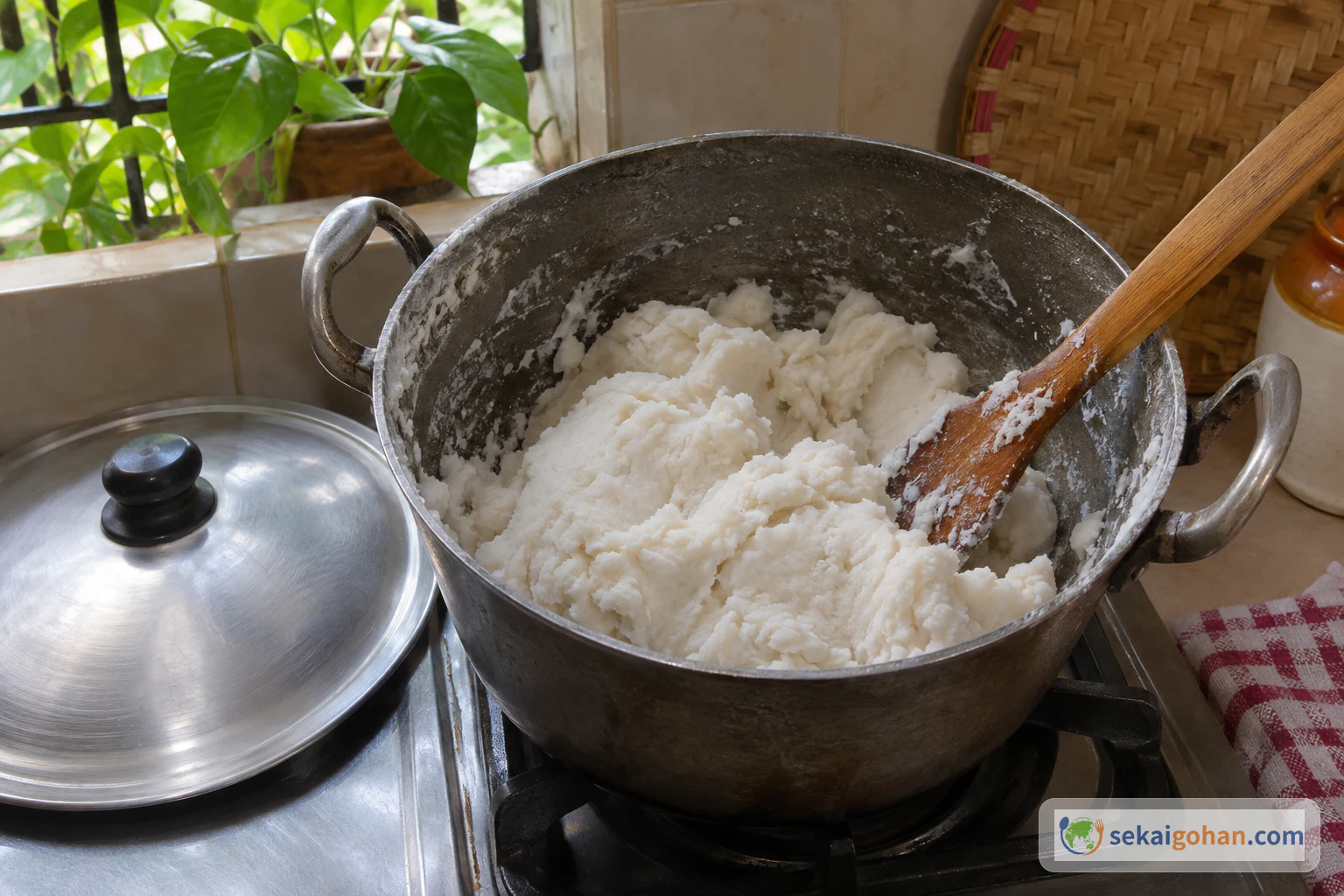
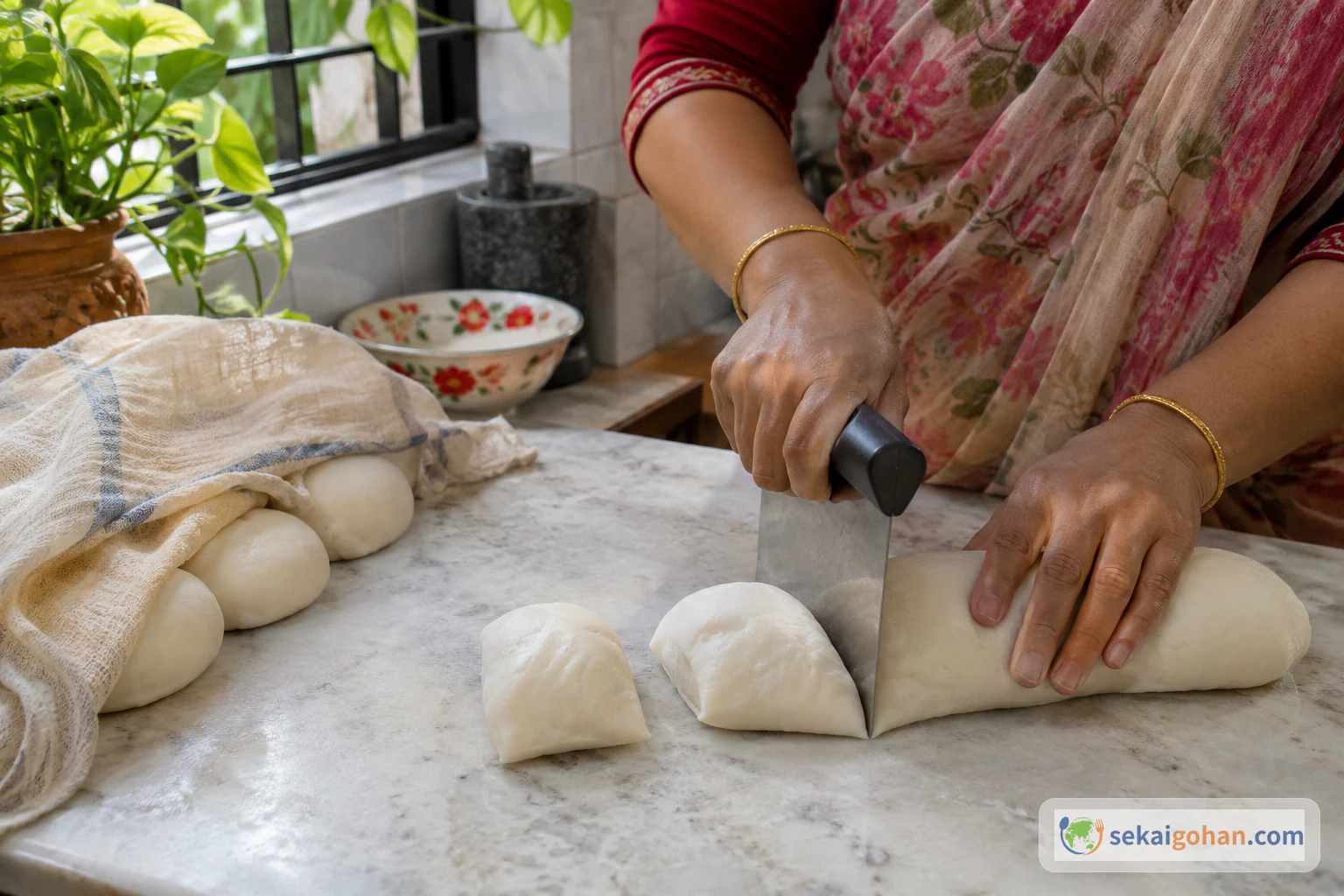
The dough moves fast while it is hot. Have your board oiled, your cloths damp and your toothpick ready before you boil the water. Once all the discs are carved and covered, the pace slows down. Each cake fries on its own for a long time over gentle heat. The syrup goes on at the end, and the warm cakes go into warm syrup.
The scalded dough is very hot when it comes out of the pan. Start working it with a spatula or through a damp cloth, and switch to your hands only when you can hold it comfortably. Fry in a heavy, stable pot. Lower each disc in gently, never leave hot oil unattended, and keep children away from the stove.
When it goes wrong
| What you see | Why | What to do |
|---|---|---|
| The dough cracks at the edge as you flatten it | It cooled before or during kneading | Knead right after the 10-minute rest, keep the waiting portions under a damp cloth, and smooth the edge with oiled fingers |
| The dough stays tacky after kneading | The flour takes up less water than usual | Work in dusting flour a little at a time, no more than 1 tbsp in total |
| The pattern blurs or disappears in the oil | The grooves were too shallow | Cut deeper on the next discs, to more than half the thickness |
| The outside is dark but the centre is pale and dense | The oil is too hot | Lower to medium-low and give each cake its full slow fry |
| The syrup runs off and won't cling | It has not reached one string | Keep simmering and test again with a cooled drop |
Serving and variations
Set the cakes out flat on a plate so the patterns face up. They are made to be looked at before anyone eats them. In Bangladesh they are passed round to guests in the winter season and carried to family at weddings and festivals, so a plate of them counts as a welcome on its own.
Other ways households make it
- Spiced dough, sugar syrup. Some cooks add cardamom and anise to the dough and leave the carved discs to dry for 1–2 hours before frying. They then soak them in a plain sugar syrup. The dough is more aromatic.
- With moong dal. In West Bengal, mug pakon pithe adds moong dal to the rice dough. It is a separate dough from the one in this recipe.
- Moulded instead of carved. Pressing the dough into a carved mould gives a repeatable pattern quickly. The result belongs to the puli pitha side of the family, not to nakshi pitha.
Frequently asked questions
What else can I carve with besides a toothpick?
A thin bamboo skewer, a clean hairpin or a large needle all work. They are the same kinds of tools Bengali cooks have used next to date-palm thorns and jute stems. What matters is a fine point that can go deep without tearing the dough. A blunt tool squashes the lines instead of cutting them.
Can I make the syrup with ordinary sugar?
Yes. Some households soak the cakes in a plain sugar syrup instead. You get a paler, cleaner sweetness. The dark colour and date-palm flavor of khejur patali are lost.
Why fry only one cake at a time?
Each thick disc needs steady, gentle heat for its whole fry. A single cake gets the oil all around it and room to turn. With more cakes in the pot the oil gets crowded, and it is harder to keep every cake colouring evenly at medium-low.