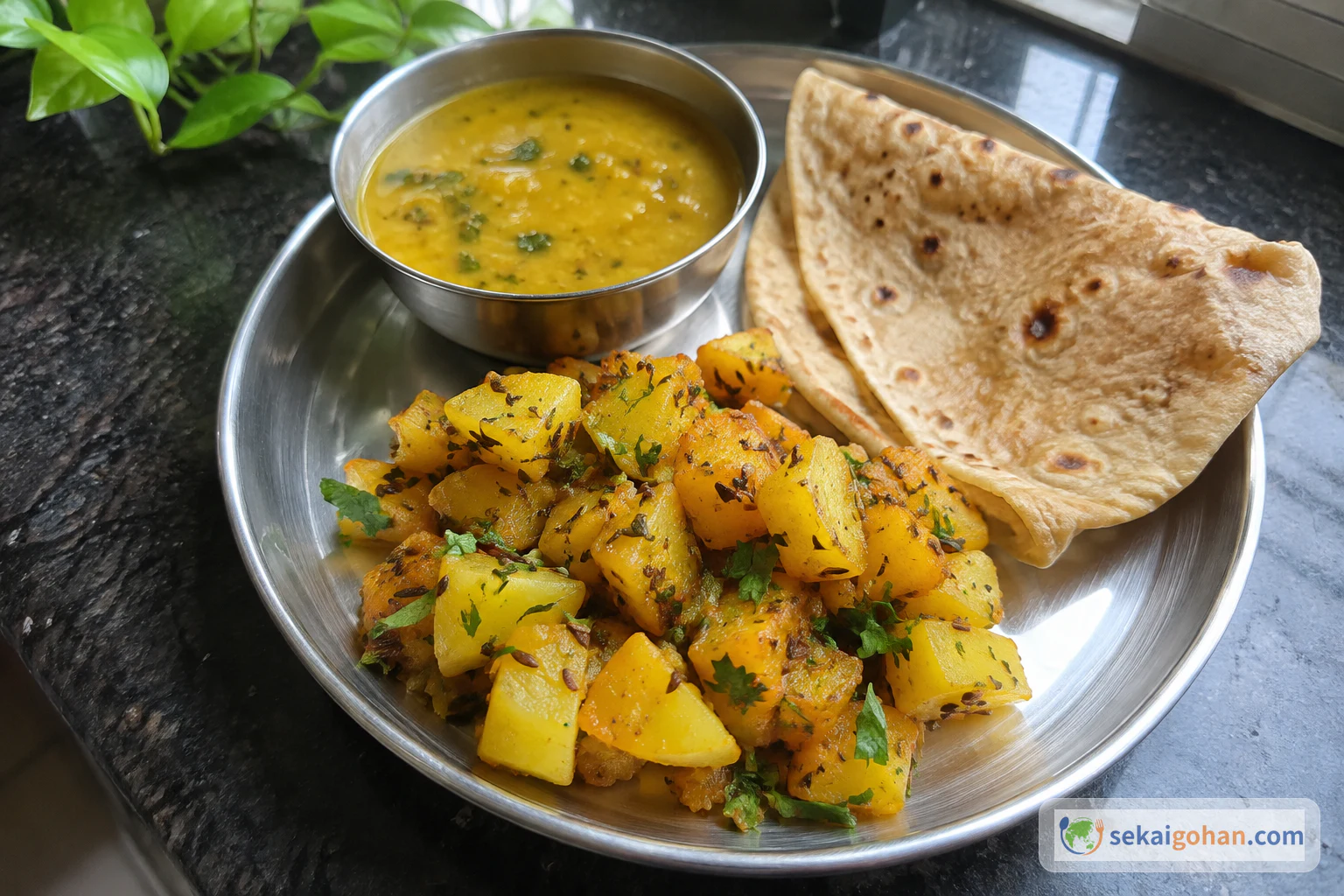
Jeera Aloo: Cumin That Crackles in Oil, Potatoes That Keep Their Shape
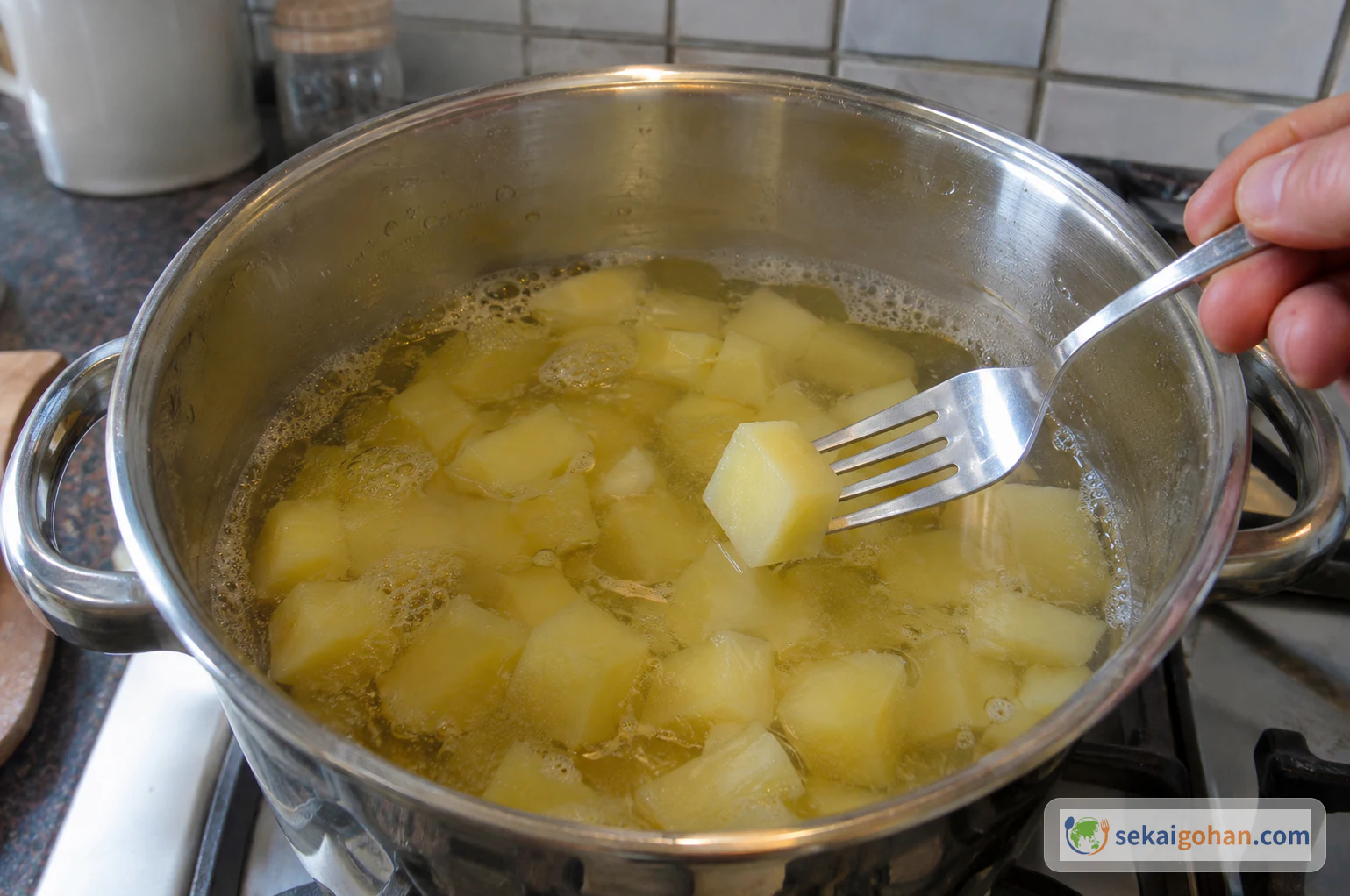
Boil the potato cubes until a fork goes in but they still hold their edges. Let the cumin crackle and turn brown in the oil, never black. Those two things carry the whole dish.
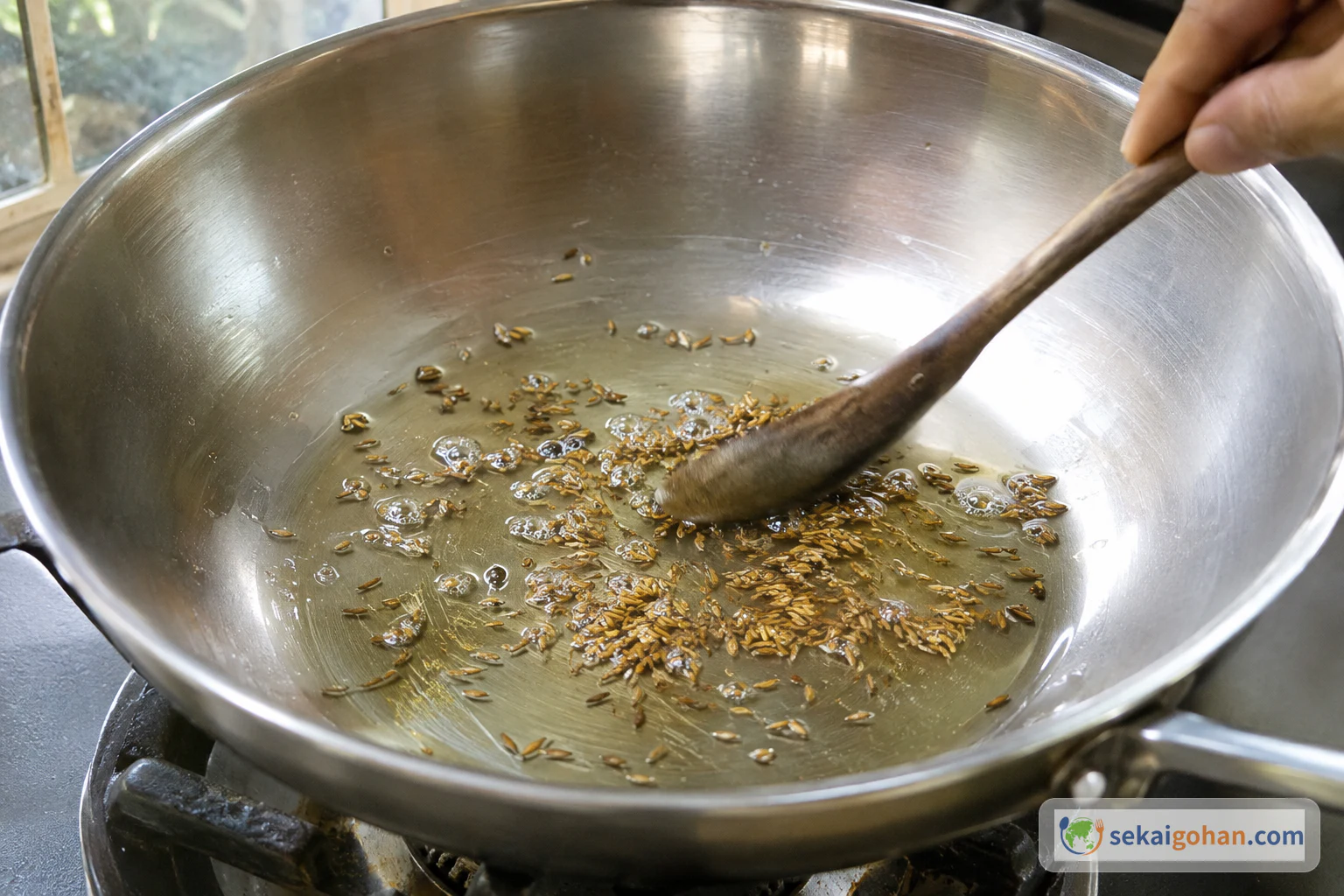
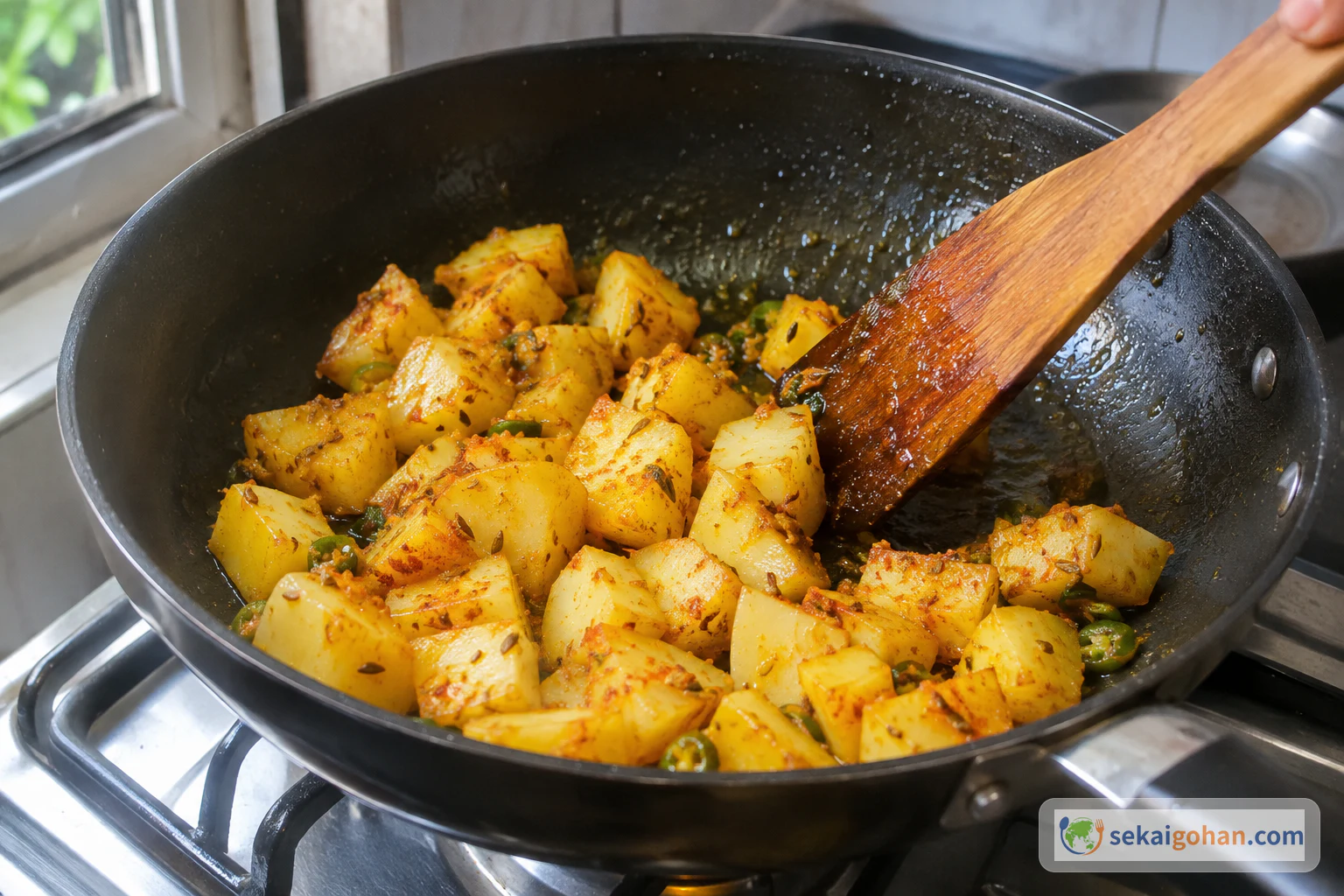
Whole cumin seeds dropped into warm oil start to crackle within moments, turn from pale to brown, and release a toasty aroma that fills the pan. Boiled potato cubes go in next, and that cumin-scented oil coats every surface. That is jeera aloo: jeera is cumin and aloo is potato, and the name describes the dish almost completely.
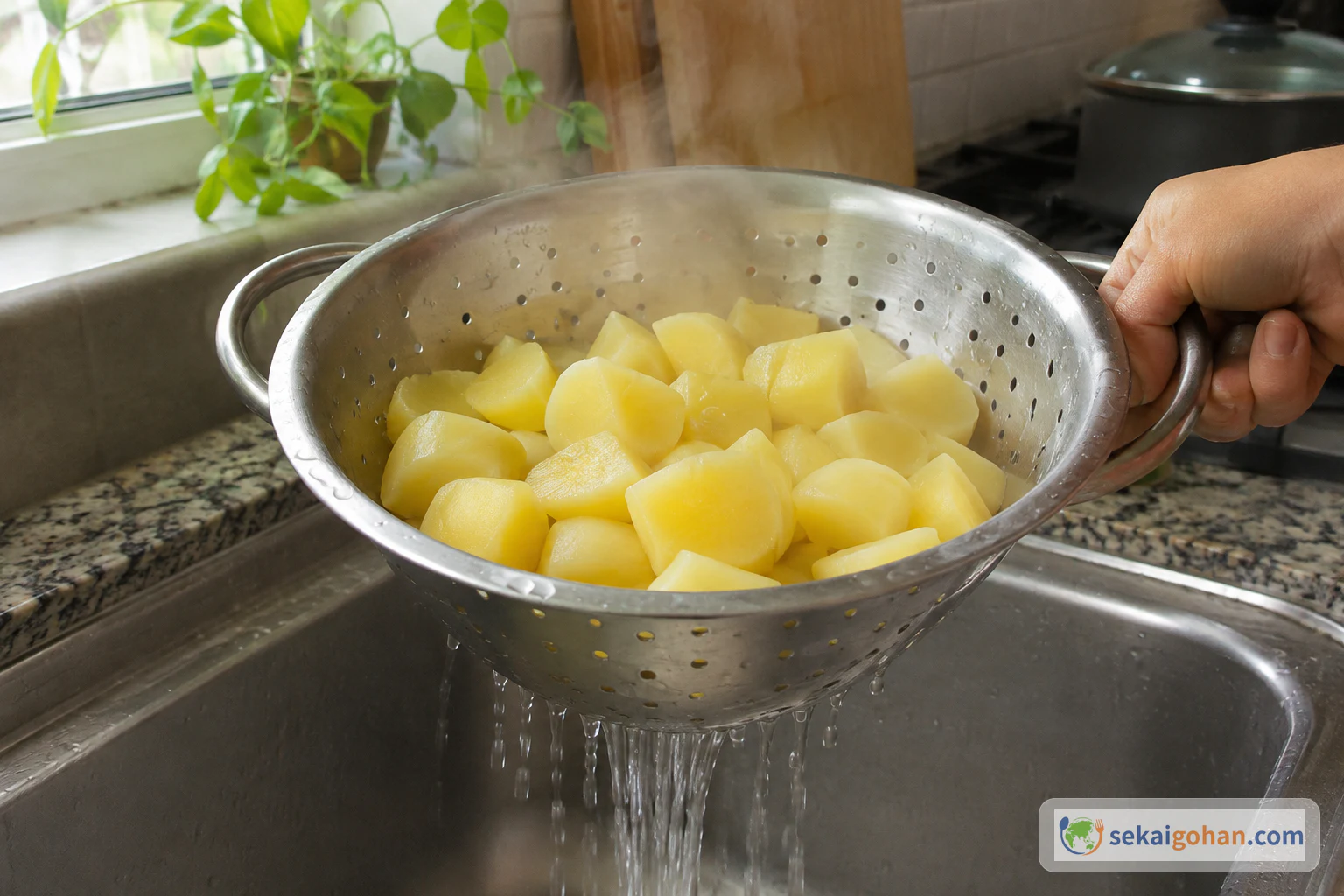
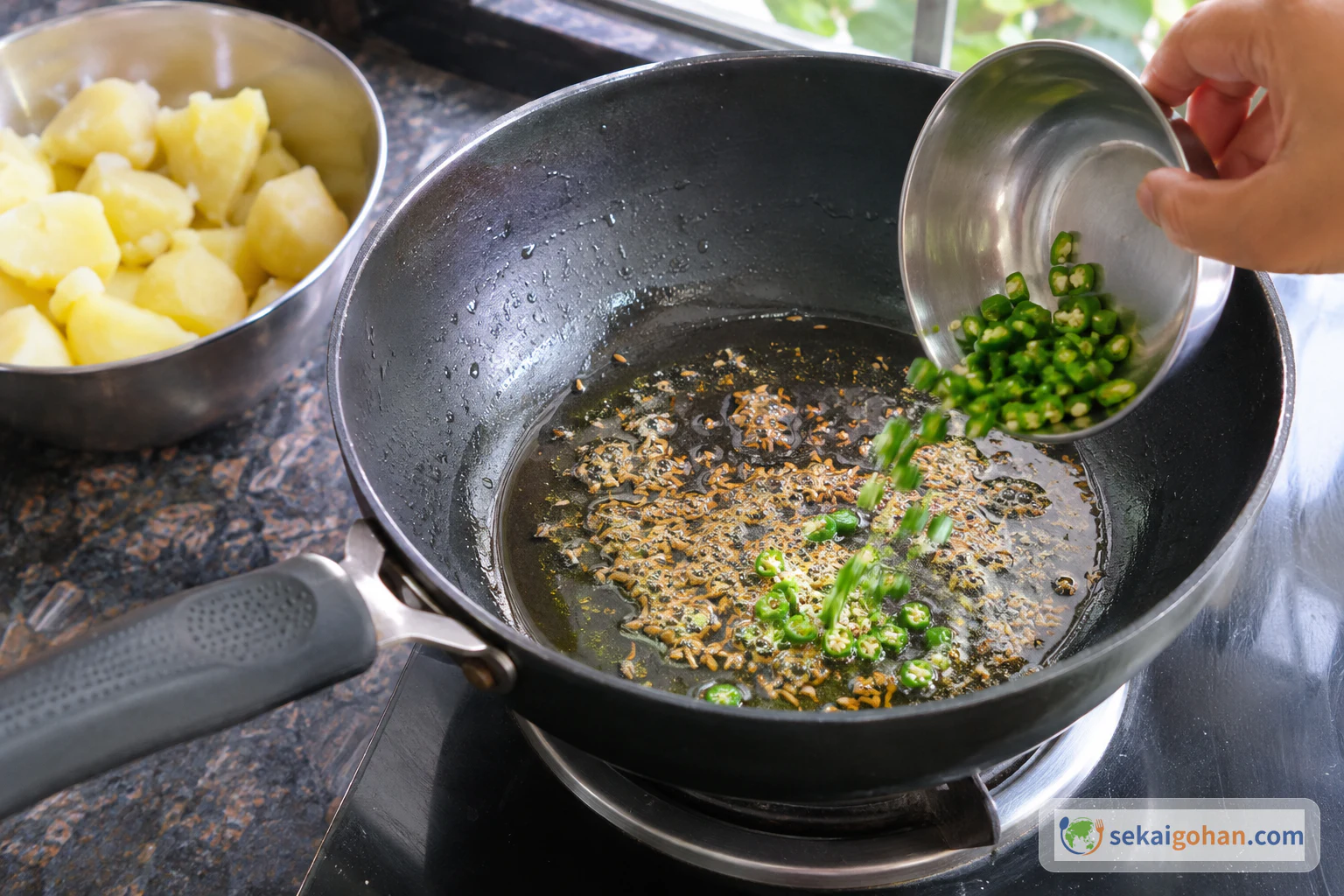
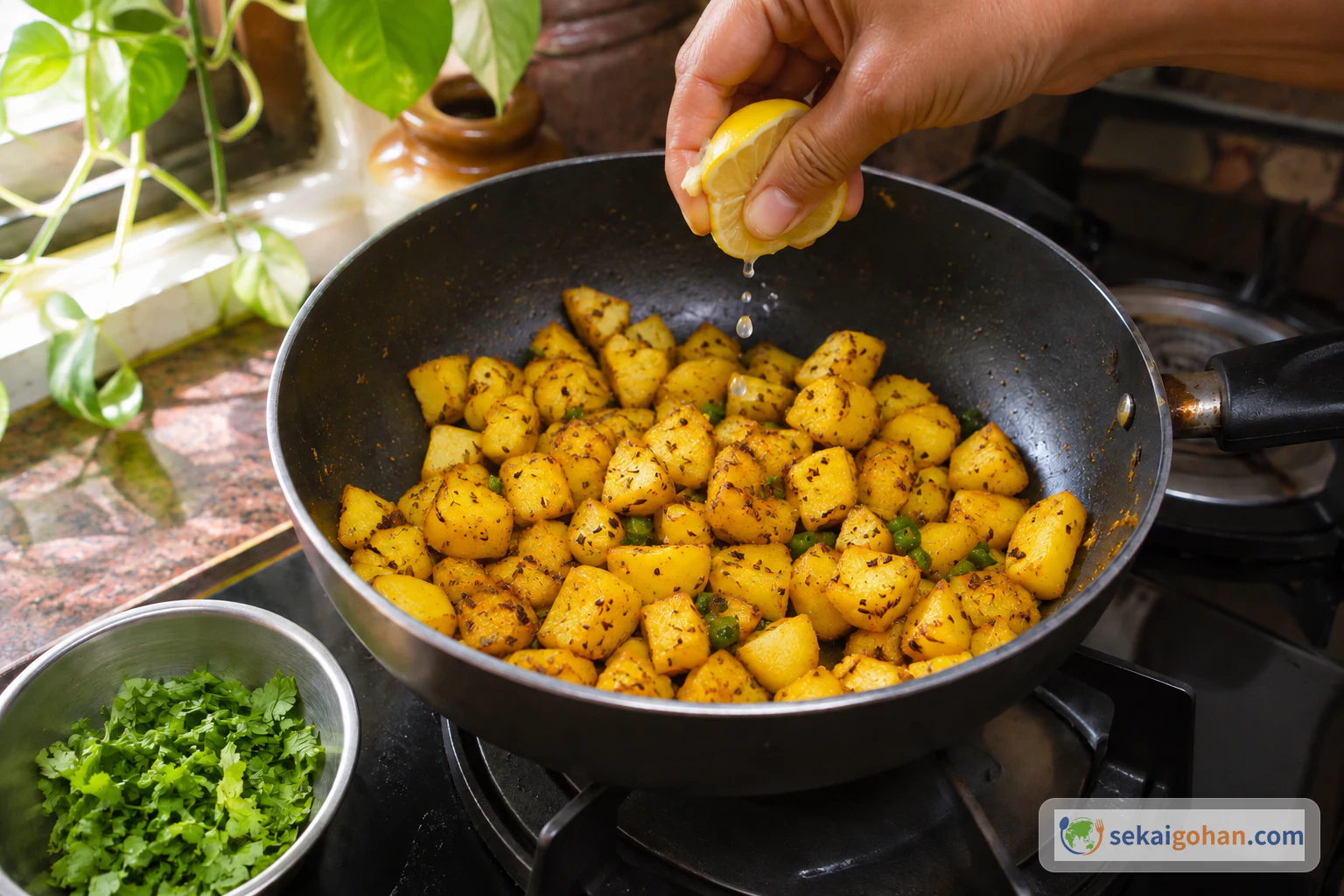
The ingredient list is short, but the result depends heavily on order and timing. Potatoes boiled too long crumble when you toss them; cumin heated too hard turns bitter. This recipe follows one clear method so you can get both right on a first try: peel and cube the potatoes, boil them in salted water until just tender, then temper cumin, add green chilli, add the potatoes with turmeric, red chilli powder and salt, and finish with lemon juice and coriander.
The recipe here follows Dassana Amit's written jeera aloo recipe on Dassana's Veg Recipes, using its saucepan method for boiling the potatoes. The 5 servings are the figure printed on that recipe. The page lists 20 minutes of prep and 10 minutes of cooking (30 minutes total). These are the printed times, not times we measured, and how long the potatoes take to boil depends on your pot and the size of your cubes. This recipe has not been kitchen-tested by Sekai Gohan.
What Jeera Aloo Is: A Dry North Indian Side Dish
Dassana's Veg Recipes presents jeera aloo as a North Indian side dish. It is a dry stir-fry, not a curry with gravy, and it is served alongside roti, chapati, paratha or puri, or with dal and rice. Archana's Kitchen likewise files its version under North Indian cooking as a dry ("sukhi") sabzi, and Sanjeev Kapoor's version is also suggested with puri, chapati, roti or dal.
Those other recipes are useful for seeing how the dish varies from kitchen to kitchen. Sanjeev Kapoor's version adds roasted cumin powder, crushed roasted coriander seeds and amchur (dried mango powder). Archana Doshi's version at Archana's Kitchen uses curry leaves and cumin powder and browns the potatoes. This article does not blend those into the base recipe. Each one is a complete recipe with its own balance, and mixing amounts from different versions would give a dish that matches none of them. If you want to explore other parts of the country's table, see India.
Ingredients (5 servings)
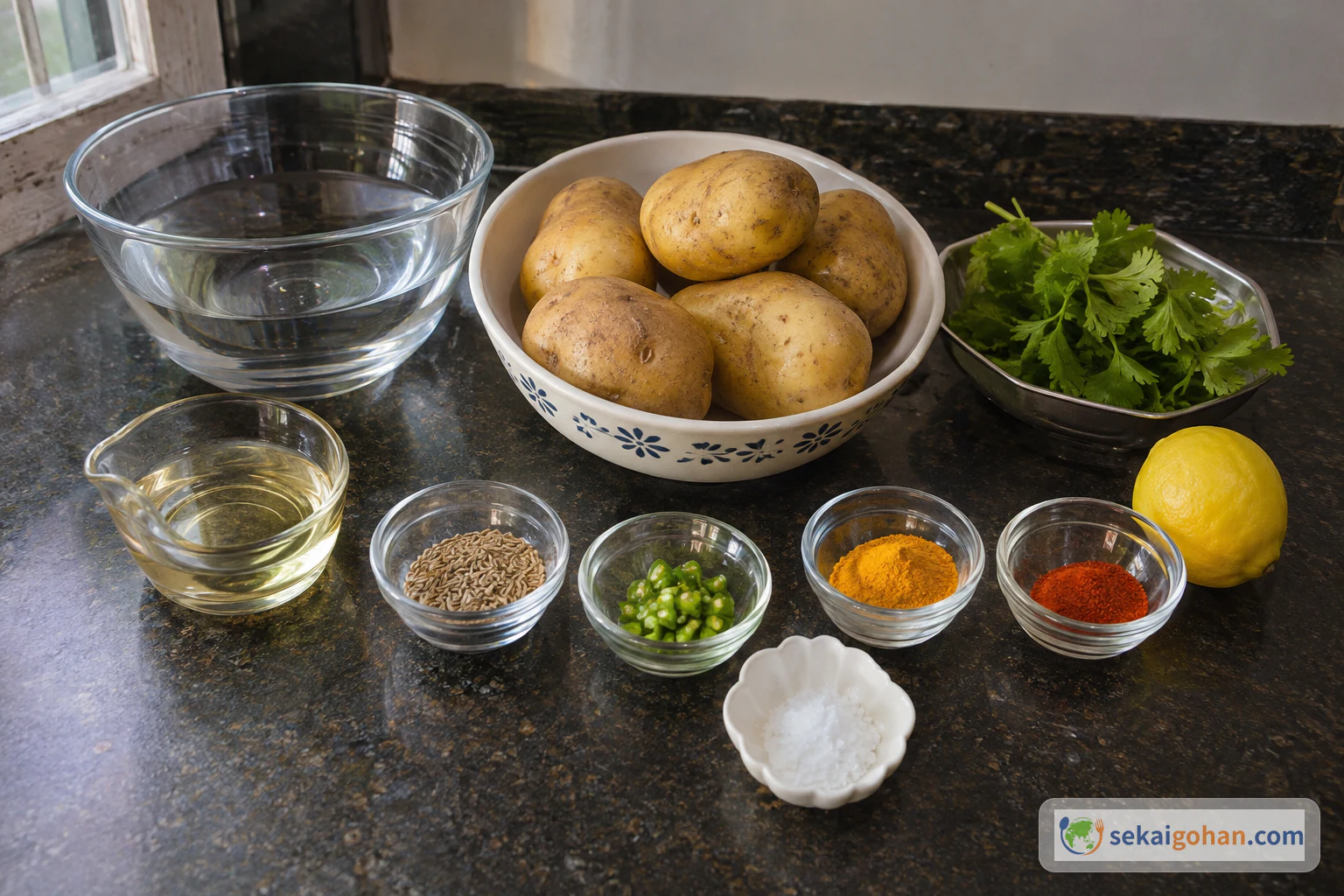
The salt appears twice: once in the boiling water and once to season the finished potatoes. Keep them separate.
Choosing and Substituting Ingredients
Potatoes. Floury potatoes break down easily once boiled, which makes it harder to keep the cubes' edges. Whatever kind you use, the important thing is to stop boiling as soon as a fork goes in.
Oil. Use sunflower, peanut or another neutral-tasting oil. If anyone eating has a peanut allergy, don't use peanut oil; choose another vegetable oil and check its label.
Red chilli powder. Use red chilli powder, cayenne or paprika. Their heat levels differ, so check the heat level on the jar before using the full 1/2 tsp.
Green chilli. A serrano pepper can be used. If you want less heat, see the variations below. Leaving out the chilli changes the aroma as well as the heat.
Allergens and labels. Check the labels of the spices and oil you buy. Don't assume the finished dish meets any particular dietary certification; follow the labeling of the products you use.
Equipment
- Medium saucepan (for boiling the potato cubes)
- Colander
- Wide frying pan or skillet
- Measuring spoons and a 1/4 cup measure
- Fork (for testing the potatoes)
Method: Boil Gently, Temper Carefully, Finish Bright
Step 1 ends when a fork goes into a cube that still holds its shape. Step 3 ends when the cumin is crackling and brown but not black. Everything else follows from those two moments.
Fixing Problems: Broken Cubes, Bitter Cumin, Too Much Heat
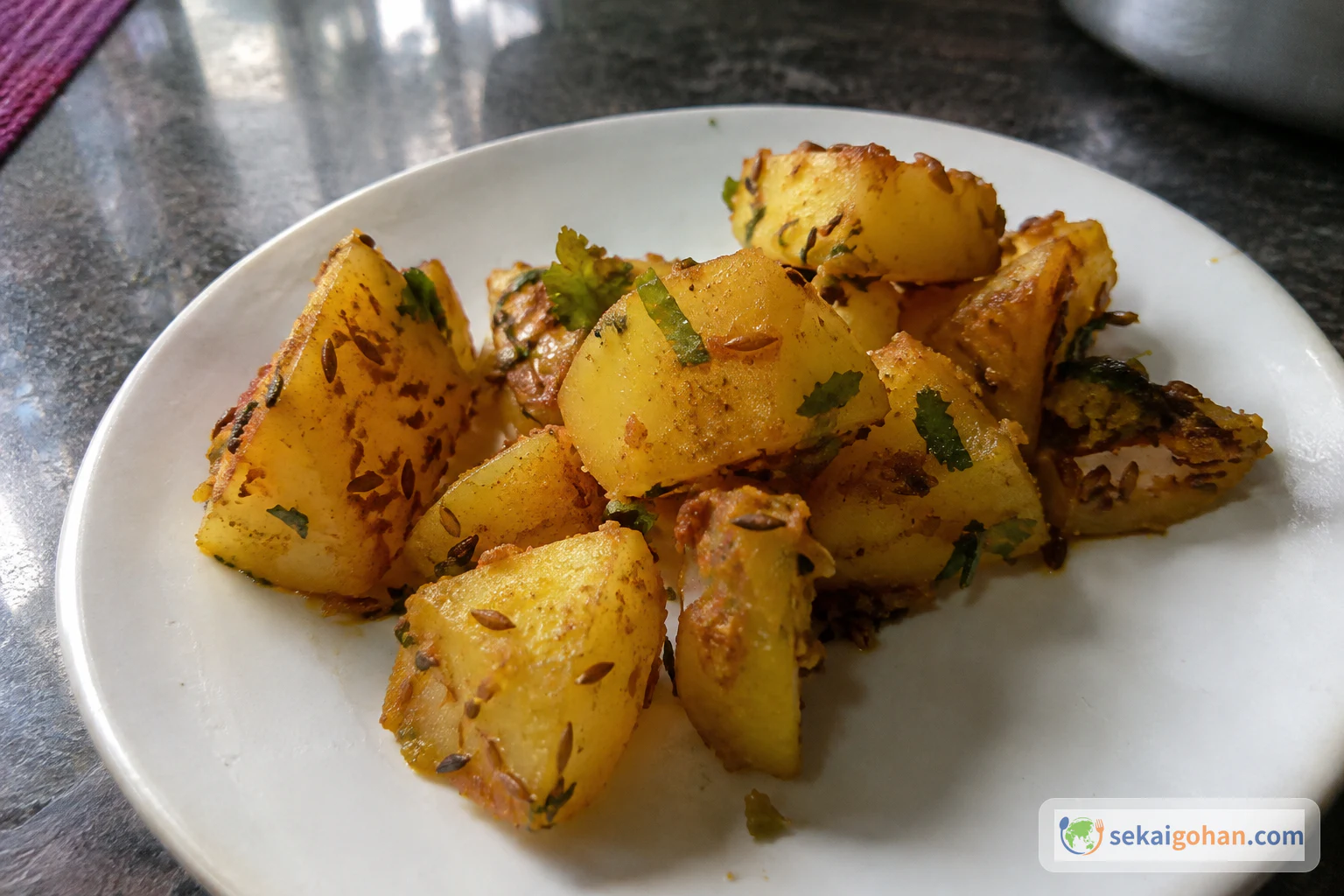
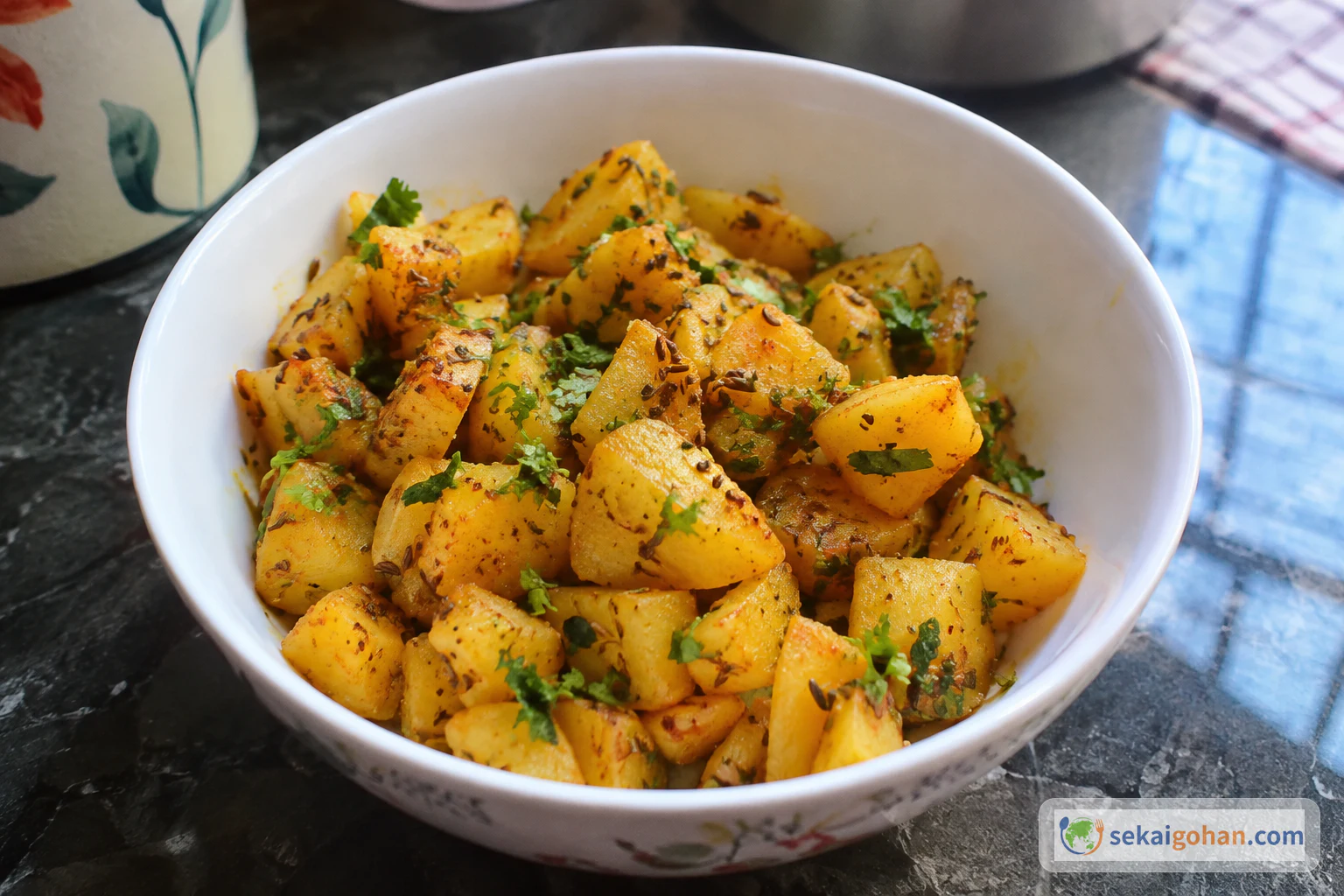
Finished jeera aloo should look like the photo above: separate cubes with intact edges, cumin seeds visible on the surface, a light spice coating, and no wet sauce.
| Problem | Likely cause | What to do |
|---|---|---|
| The potatoes crumble in the pan | Boiled past fork-tender, or stirred too hard | Next time, test often and drain as soon as a fork goes in. In the pan, turn the cubes gently instead of stirring |
| The cumin tastes bitter | The oil was too hot, or the seeds went black | Lower the heat before adding the seeds and stir as soon as they crackle. If they blacken, it is better to start the oil and cumin again |
| Too sour | Lemon juice added all at once | Add 1 tsp at a time and taste in between, staying within 2–3 tsp |
| Too hot | Hot chilli powder, or plenty of green chilli | Use the lower end of the green chilli range, and check how hot your red chilli powder is before using it |
| Wet or saucy | Extra water or other ingredients added | This is a dry dish. Don't add water, tomato, onion or sauce to the pan |
Variations
These come from the notes on Dassana's recipe. They are separate versions, not part of the base recipe above, so make one change at a time.
- Ghee instead of oil. The recipe notes ghee as an option for the cooking fat. It gives a richer, dairy flavor. Ghee is a milk product, so keep that in mind for anyone with a milk allergy.
- Amchur (dried mango powder) instead of lemon. The notes give 2 tsp amchur as the souring agent. Use it in place of lemon juice, not together with it. The sourness and flavor are different from lemon.
- Anardana (dried pomegranate seed powder) instead of lemon. The notes give 2 tsp, added with the powdered spices. Again, use it in place of lemon; the result tastes different.
- A little ginger. The notes mention adding about 1 tsp minced ginger. It shifts the aroma away from cumin as the clear center of the dish.
- Milder, without green chilli. The notes suggest leaving the green chilli out or reducing it to about 1/4–1/2 tsp. The dish will be less hot and less fresh-tasting.
Leftovers and Food Safety
There is no storage test for jeera aloo specifically, so follow general food-safety guidance from FoodSafety.gov for cooked leftovers:
- If you won't eat it right away, divide it into shallow containers and refrigerate promptly.
- Throw away food that has been left at room temperature for more than 2 hours, or more than 1 hour if the surrounding temperature is above 32°C.
- Use refrigerated leftovers within 4 days.
- Reheat leftovers to 74°C (165°F).
Frequently Asked Questions
How soft should the potatoes be after boiling?
Fork-tender but not crumbly. A fork should slide into a cube easily while the cube keeps its edges. The potatoes are tossed in the pan afterward, so overcooked cubes will break apart.
Can I boil the potatoes another way?
Dassana's recipe page also describes other ways of cooking the potatoes. This article follows only its saucepan method: peeled cubes boiled in water with 1/2 tsp salt until fork-tender, with no fixed time. Times from other methods don't carry over to this one.
What can I use instead of lemon juice?
The recipe's notes suggest amchur (dried mango powder) or anardana (dried pomegranate seed powder), 2 tsp each, as separate versions. They give a different sourness from lemon, so use one souring agent, not several. See the variations above.
Is jeera aloo a main dish?
The recipes consulted here present it as a side dish. Dassana's Veg Recipes pairs it with roti, chapati, paratha, puri, or dal and rice. Archana's Kitchen suggests dal, rice and phulka.
Why doesn't this recipe use curry leaves or cumin powder?
Those belong to other versions of jeera aloo. Archana's Kitchen uses curry leaves and cumin powder, and Sanjeev Kapoor uses roasted cumin powder, crushed coriander seeds and amchur. This article keeps to one recipe so the amounts stay consistent.
How should I store leftovers?
Divide into shallow containers, refrigerate promptly, and use within 4 days. Discard anything left out longer than 2 hours (1 hour above 32°C), and reheat to 74°C (165°F). This is general guidance for cooked leftovers, not a storage test of this dish.
Sources
- Dassana Amit, "Jeera Aloo Recipe (Potatoes with Cumin)," Dassana's Veg Recipes. The base recipe: ingredients and amounts, the saucepan boiling method, the order of cooking, the 5 servings and printed times, its description as a North Indian side dish and serving suggestions, and the notes on substitutions and variations. https://www.vegrecipesofindia.com/jeera-aloo-recipe-jeera-aloo/
- Sanjeev Kapoor, "Jeera Aloo." A different version using roasted cumin powder, crushed roasted coriander seeds and amchur, served with puri, chapati, roti or dal. Used only for comparison. https://www.sanjeevkapoor.com/Recipe/jeera-aloo-12048747
- Archana Doshi, "Jeera Aloo Sabzi - Roasted Potatoes With Cumin Seeds," Archana's Kitchen. A dry North Indian sabzi version with curry leaves and cumin powder, paired with dal, rice and phulka. Used only for comparison. https://www.archanaskitchen.com/recipe/jeera-aloo-sabzi-roasted-cumin-potatoes
- FoodSafety.gov, "People at Risk of Food Poisoning — Store Your Leftovers Safely." General guidance on refrigerating, discarding, using within 4 days and reheating cooked leftovers. https://www.foodsafety.gov/people-at-risk