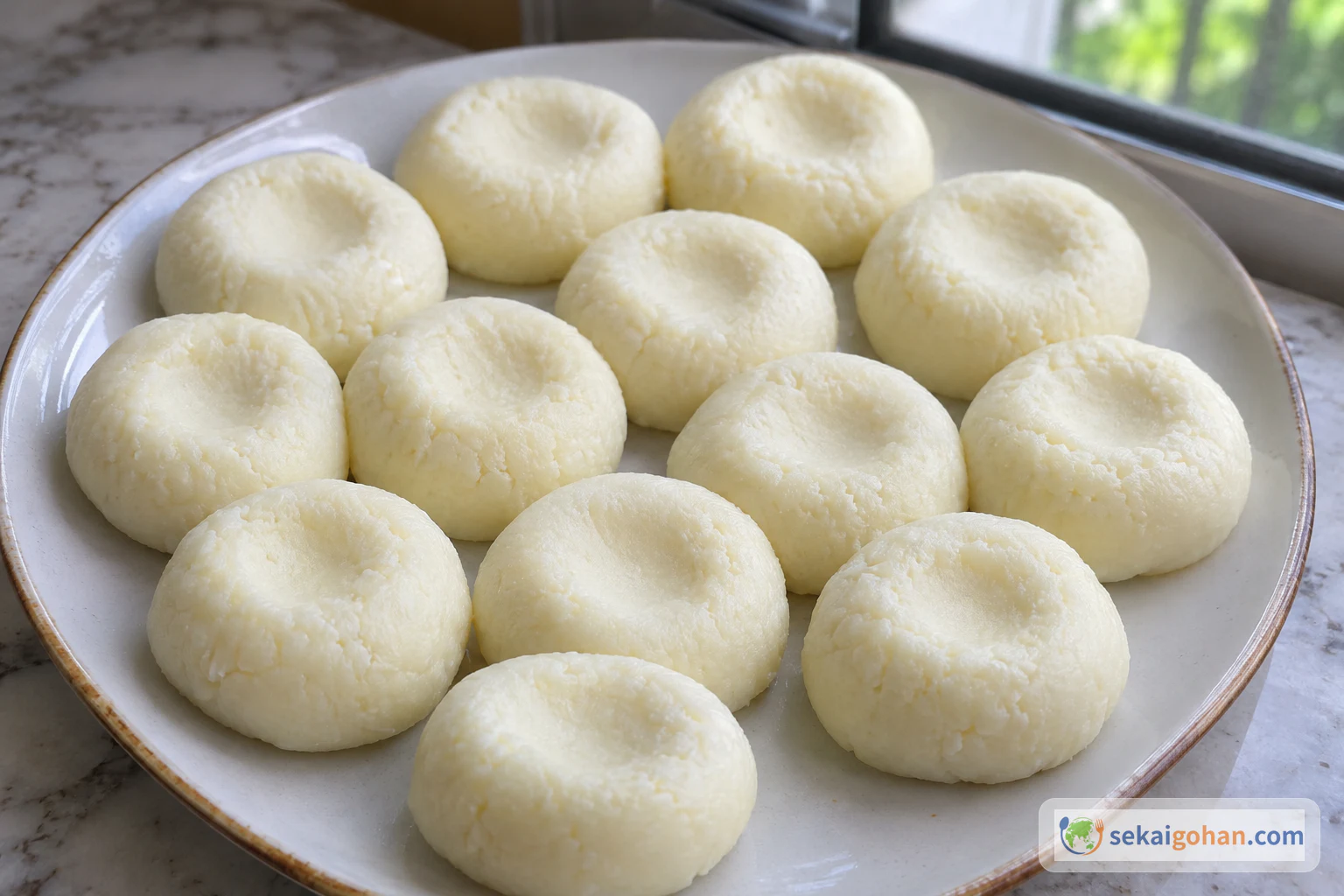
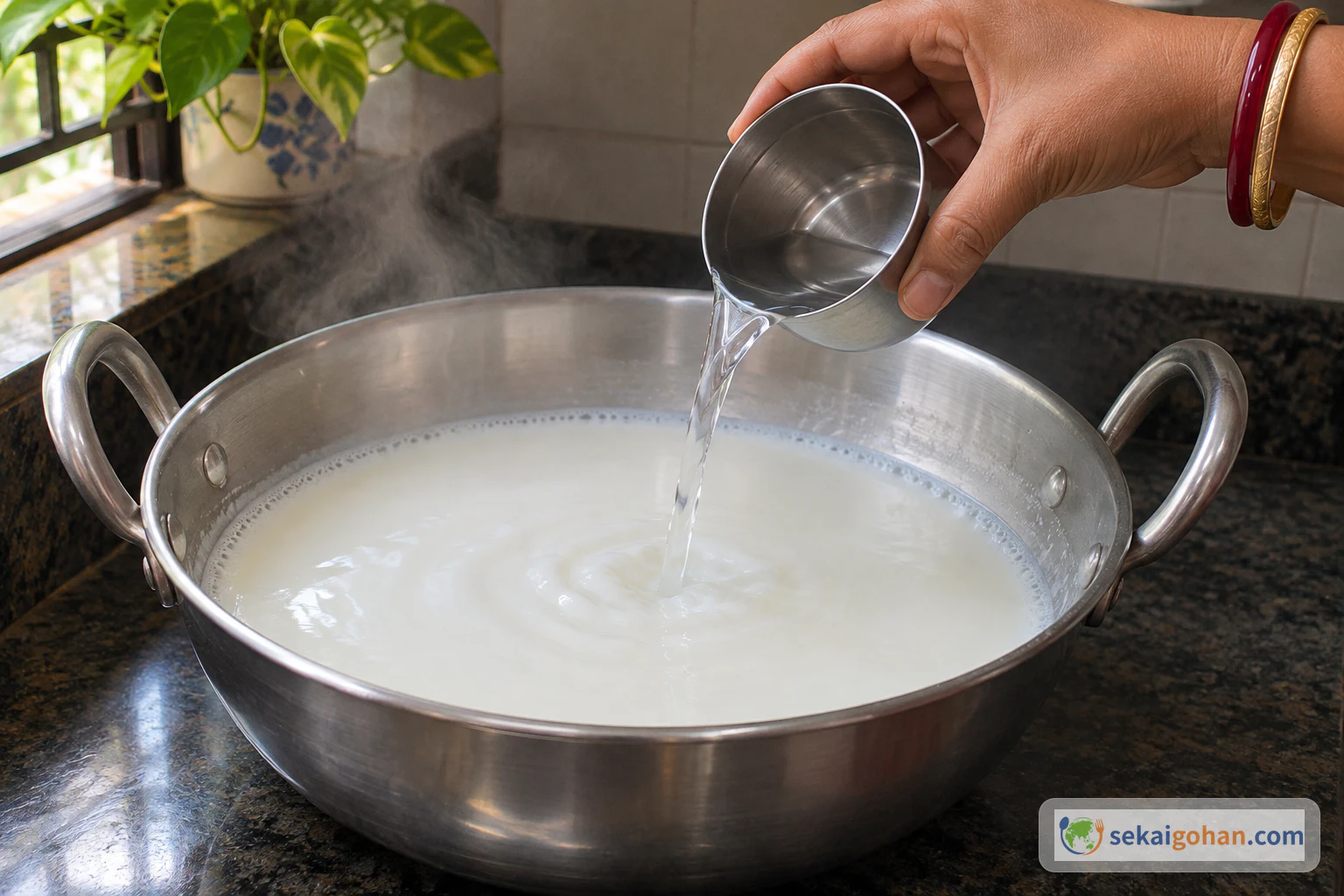
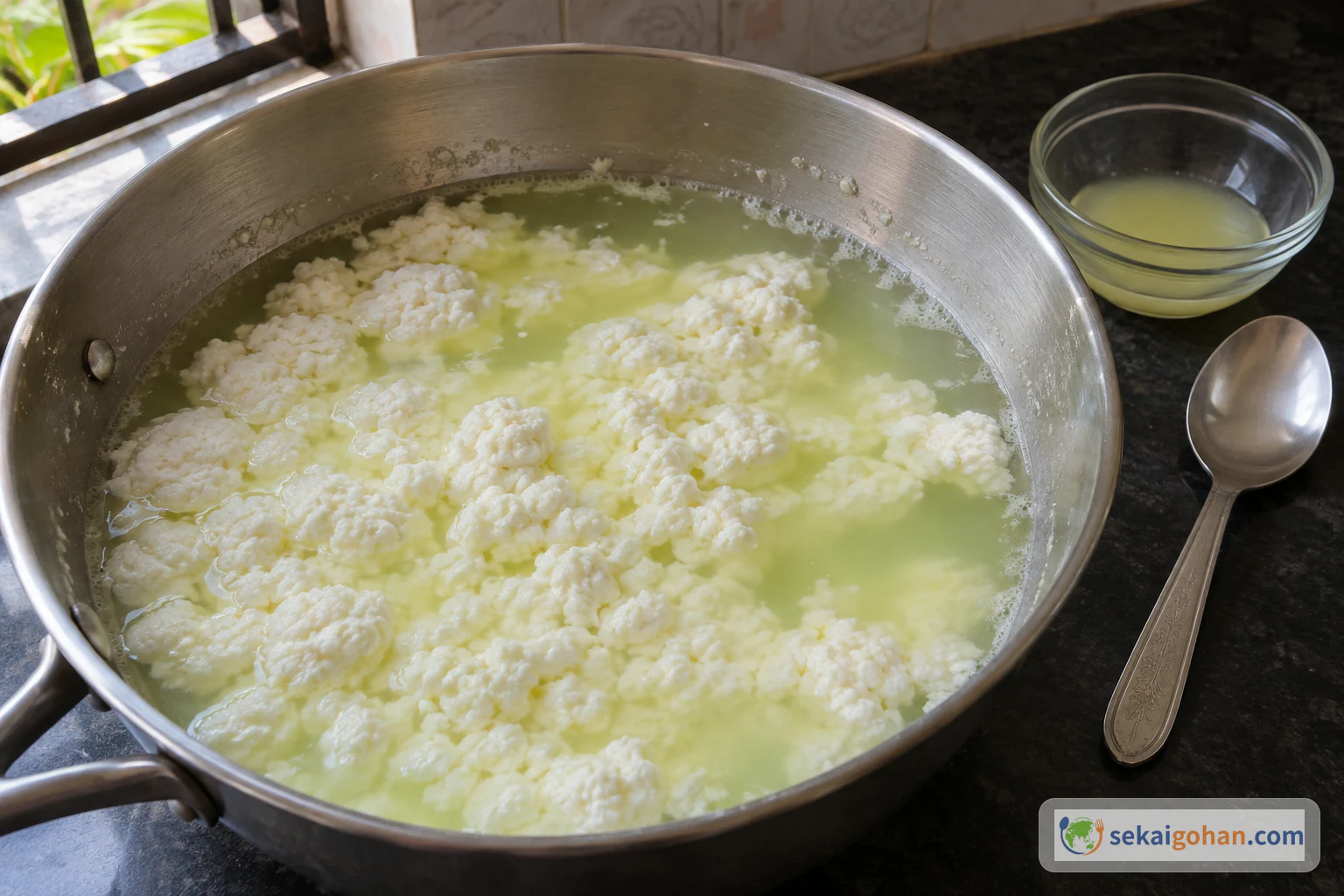
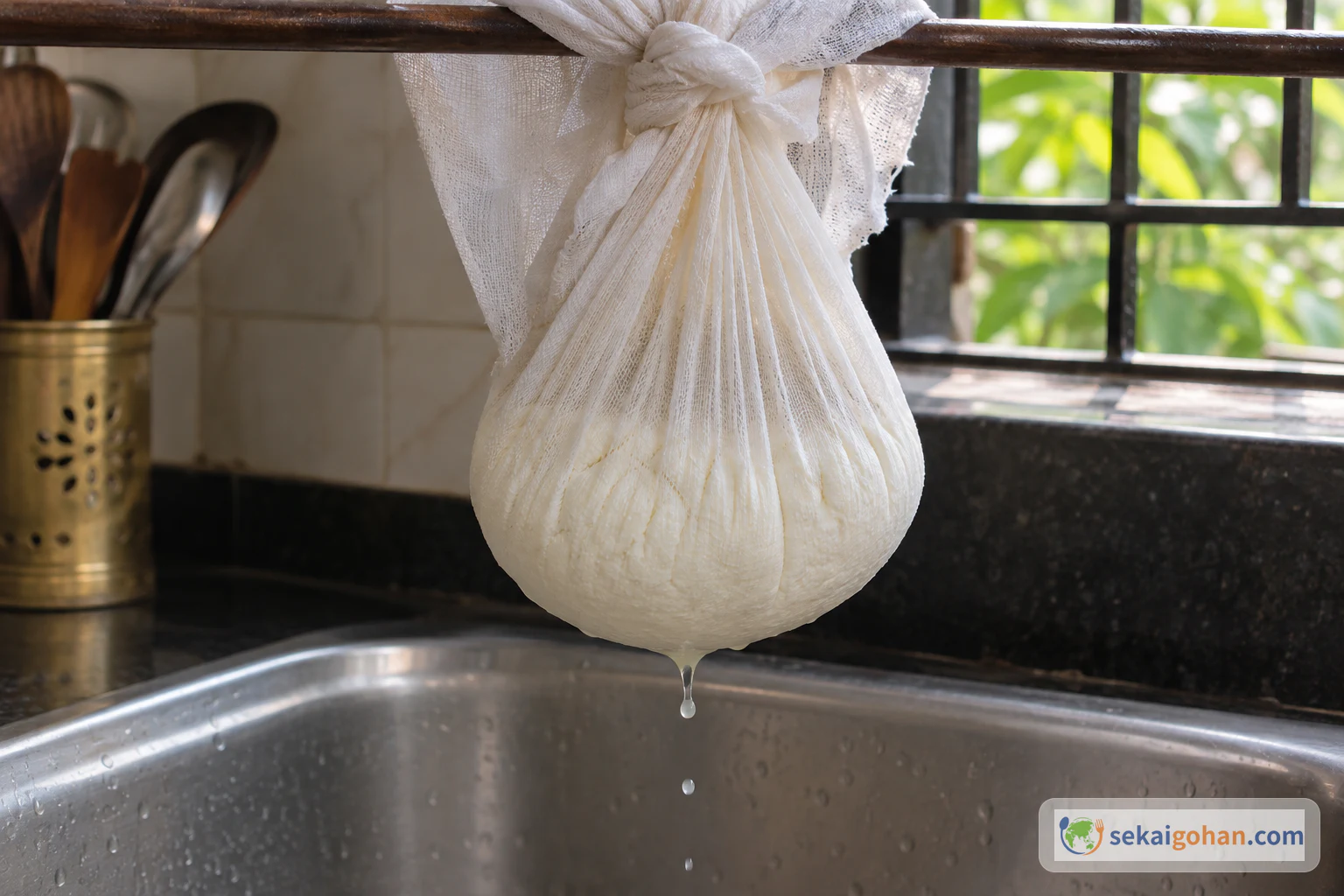
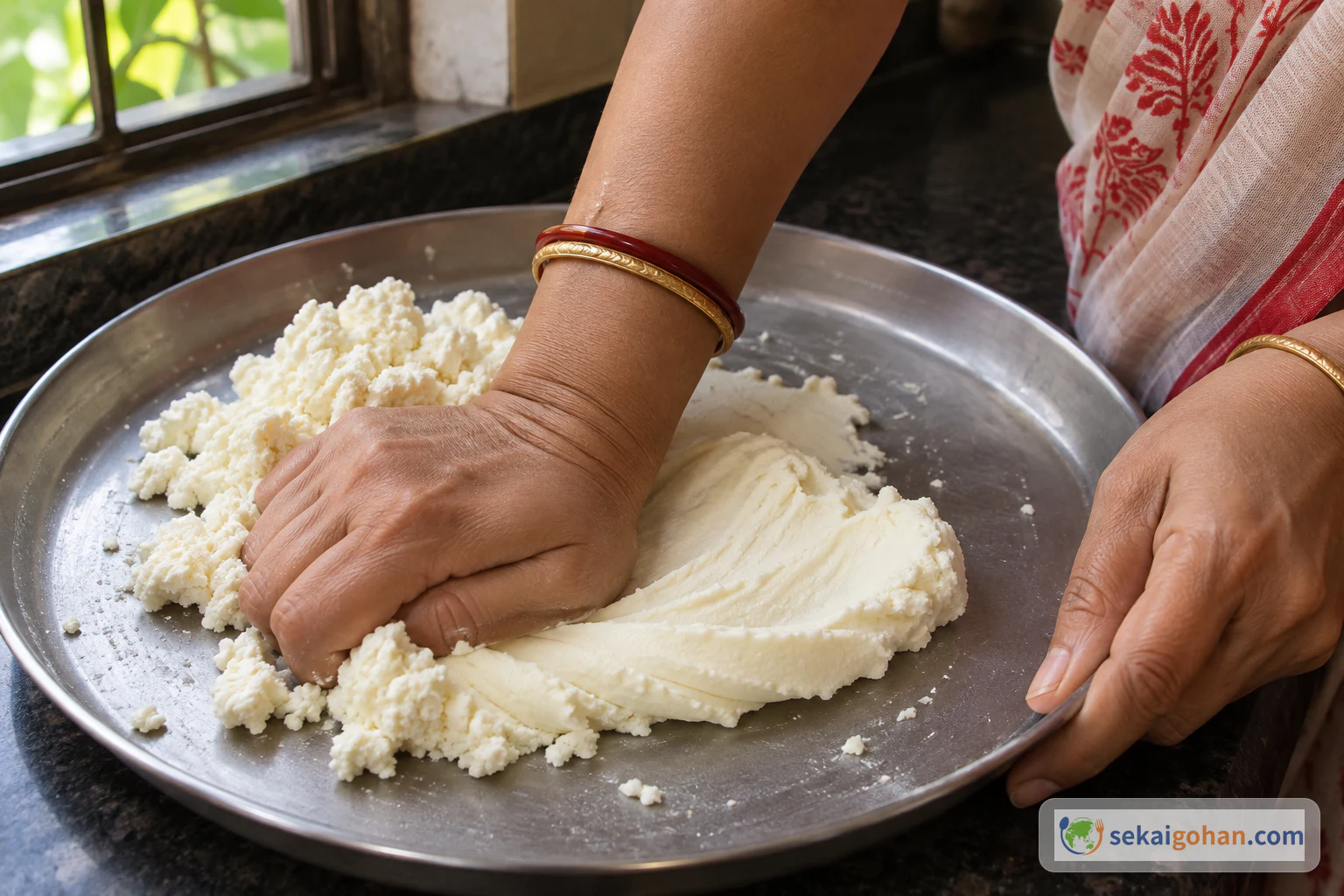
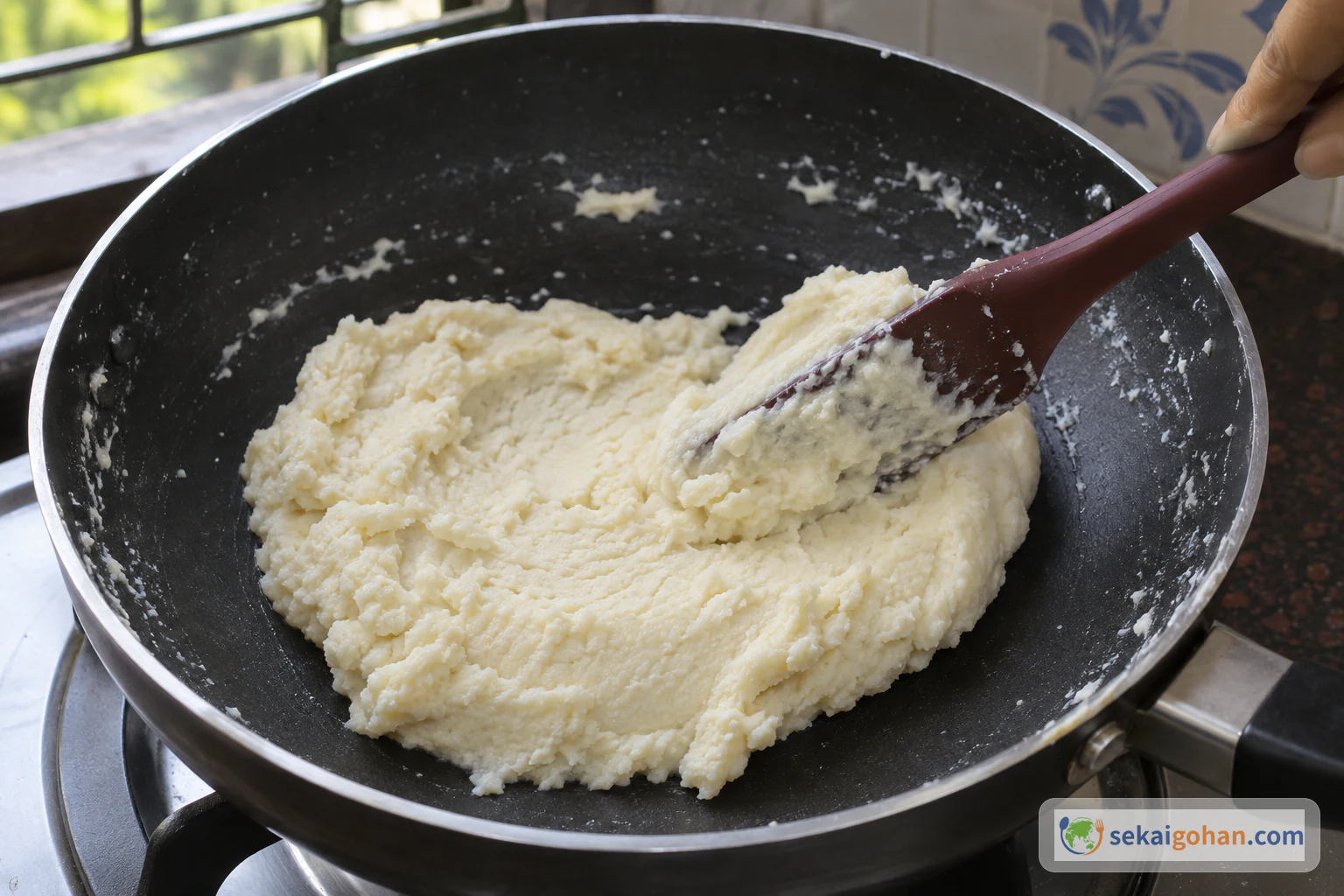
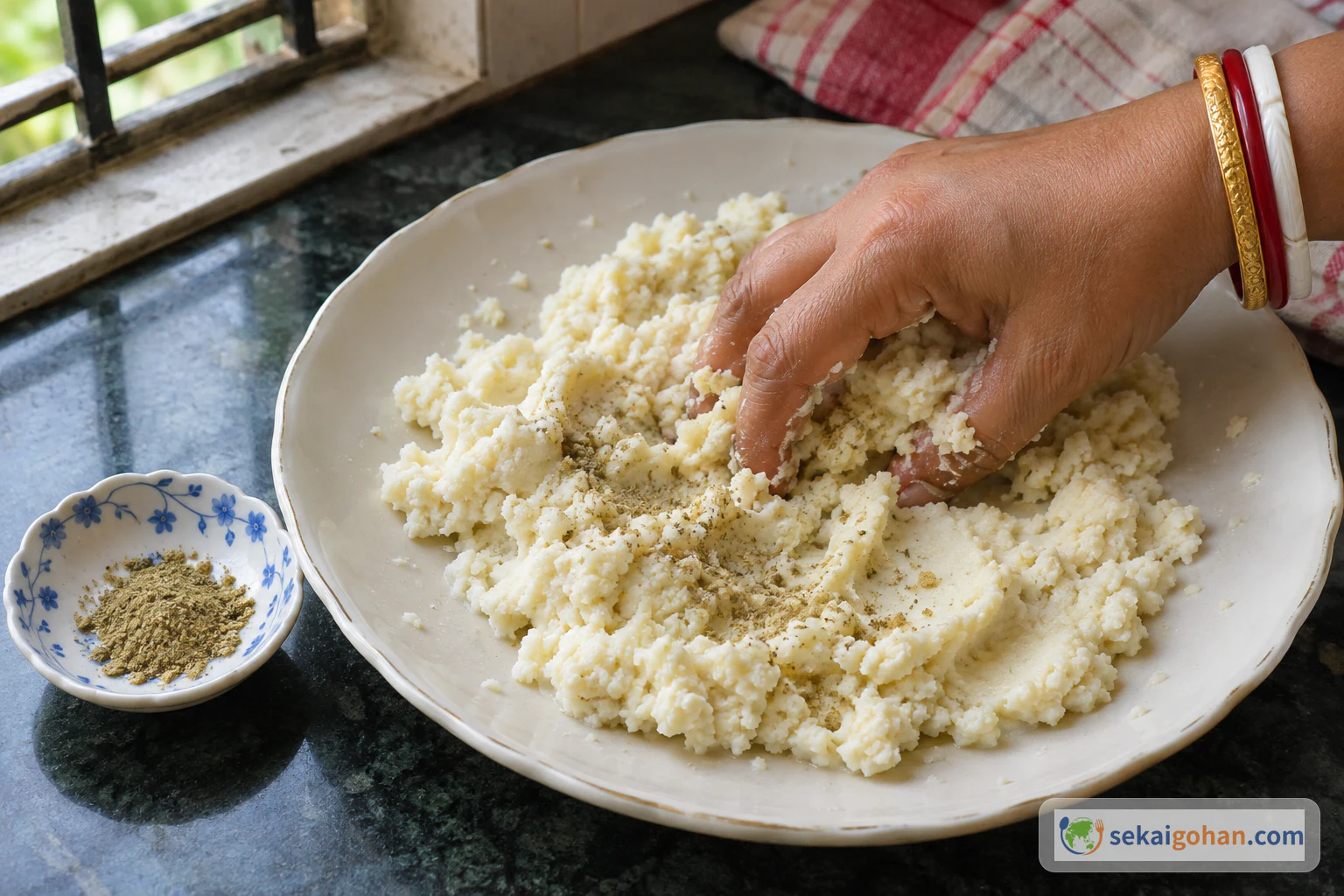
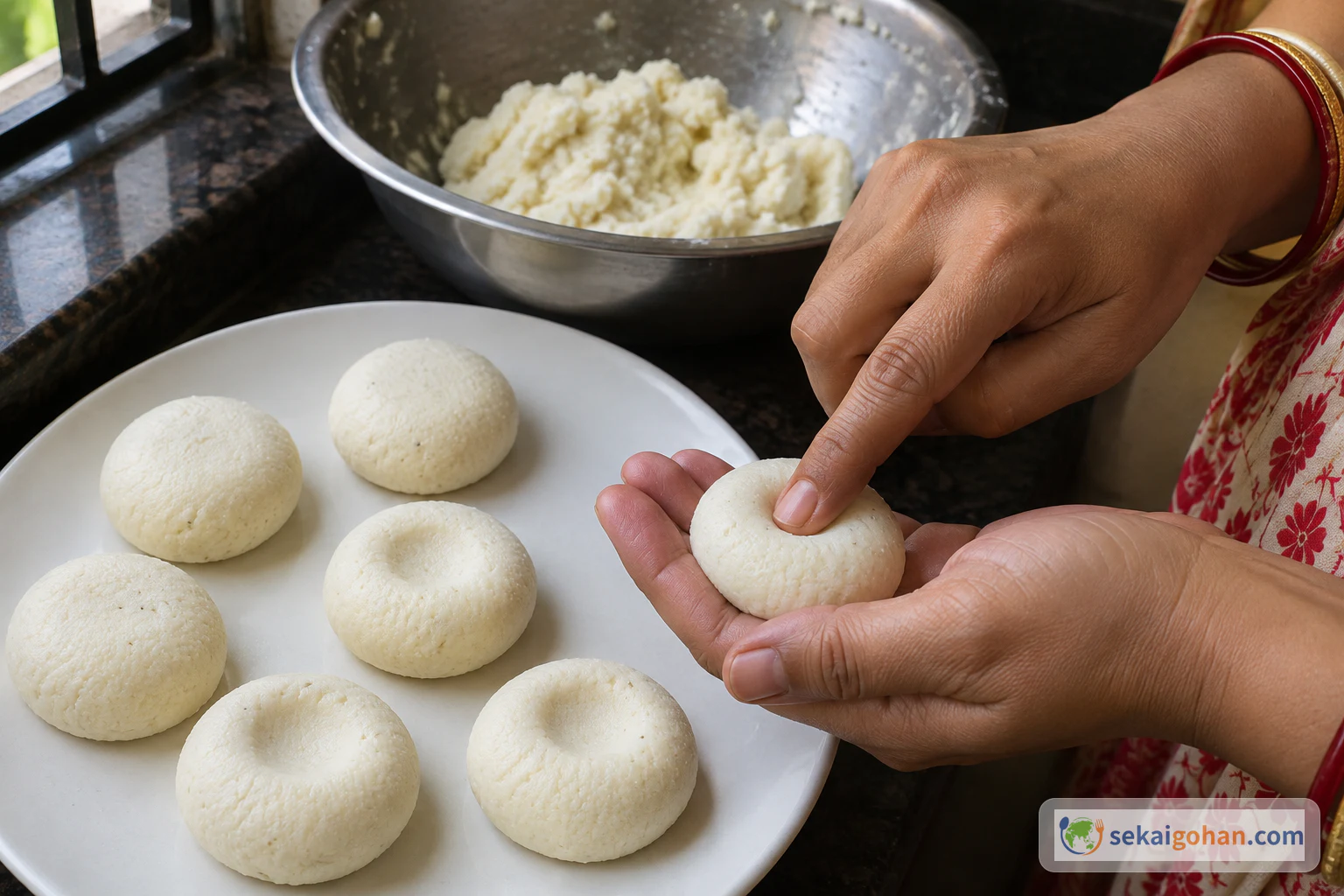
The lemon juice goes into the hot milk one spoonful at a time, and the pan suddenly changes. Soft white curds gather and drift apart from a thin, pale yellow-green whey. That curd, drained in a cloth and worked smooth, becomes shandesh: small, round, white sweets with a thumb-pressed dent in the middle. They are soft and milky, gently sweet, with cardamom rising as you bite.
Where Shandesh Comes From
At its plainest, shandesh is sweetened fresh curd, often pressed into moulds, and it belongs to the sweet shops and home kitchens of Bengal. The curd itself, chhena, is milk split with acid and drained. Banglapedia says the technique of curdling milk changed the sweet-making culture of Bengal in medieval times.
The word is older than the sweet as it is made now. Sandesh appears in medieval Bengali writing, but what those sweets were made of is not settled; they were probably confections of thickened milk. By the late nineteenth century the name had come to mean a chhena sweet, and that is the shandesh on the plate here. Where and when it first took this form is not settled either, so it belongs to Bengal as a whole rather than to one town or one date.
The same sweet is written Shandesh, Sandesh or Sondesh in English, and সন্দেশ in Bengali.
Town by town in Bangladesh
Within Bangladesh, towns hold on to their own versions. Muktagachha, in Mymensingh, is known for manda, a soft sandesh. Dhaka has pranhara, another soft sandesh in which mawa and fragrant flavourings are mixed into the curd. In Jamurki, in the Mirzapur area of Tangail district, sweet shops make two kinds side by side, one sweetened with sugar and one with gur, the local molasses. For the gur version, the molasses is heated on its own and then combined with the drained curd, with just a little cardamom. Jamurki's makers cook slowly over low fire, on earthen stoves fed with particular firewood.
The family of names
Across Bengal the names tell you how a sandesh was made. Makha sandesh, close to kanchagolla, is the simplest: chhena and sugar brought together over low heat, which is essentially the method below. Nolen gur sandesh takes its sweetness and colour from palm jaggery. Jolbhora hides syrup inside. If you want another Bangladeshi sweet for the same table, bhapa pitha is a good companion.
Ingredients (makes about 7 pieces)
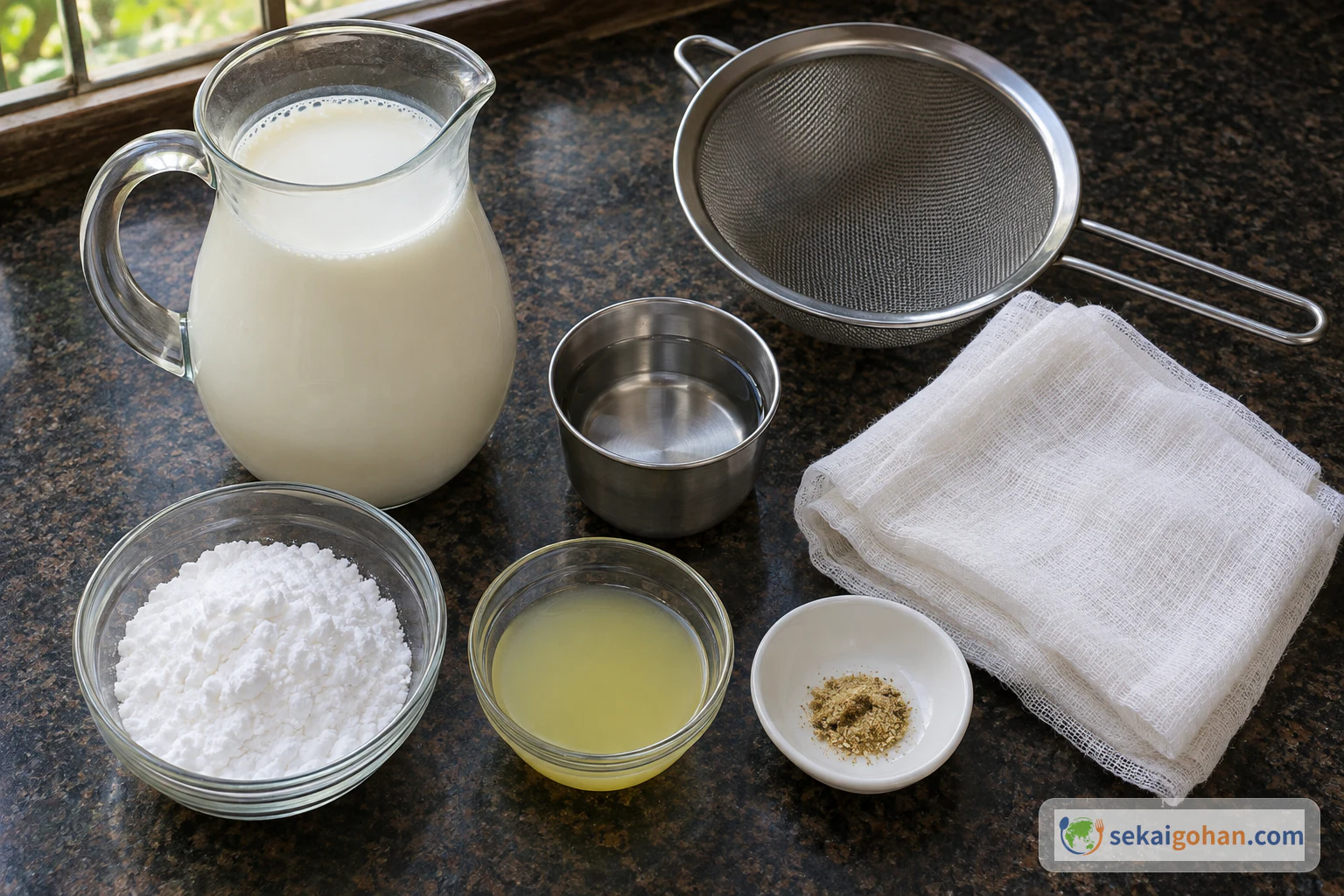
Shandesh is made entirely from milk, so it is unsuitable for anyone with a milk allergy. Pistachio or almond garnish adds tree nuts; leave it off for anyone with a nut allergy.
Equipment
- Heavy-bottomed pan for boiling the milk
- Colander or strainer
- Fine cheesecloth or clean muslin, for straining, squeezing and hanging
- Small non-stick pan
- Spoon and spatula
- Plain plate for cooling and shaping
- Kitchen scale, for weighing the sugar
Choosing Milk, Sugar and Spice
Everything starts with the milk. Use pasteurized fresh whole milk from the chilled case. Low-fat milk gives less chhena, and what you get is hard to shape. Skip shelf-stable UHT milk, and never use raw milk. Make the chhena yourself; cottage cheese and ricotta are not recommended as substitutes for this sweet.
Powdered sugar is the right choice because it dissolves straight into the soft curd; granulated sugar can leave grains you feel on the tongue. The amount in the table is a starting point, so taste and adjust. For cardamom, grinding whole green pods yourself gives the brightest fragrance, and that fragrance is what makes the sweet taste of Bengal. Cardamom pods and pistachios are easiest to find at South Asian grocers or online. Milk and lemons come from any supermarket.
Method
The milk work comes first and runs on short waits of 4 minutes, 5 minutes and 15 minutes, which is when you set out the cloth, the non-stick pan and the plate. The pan stage that follows is quick and needs your full attention. After that, the dough cools on its own and the shaped sweets chill in the refrigerator, so most of the time is hands-off.
Boiling milk rises fast and holds a lot of heat; take the pan off the heat with dry oven cloths and pour the curds carefully. Once the milk has been heated, handle the curd only with a clean cloth, clean hands and clean tools.
When It Goes Wrong
| What you see | Why | What to do |
|---|---|---|
| The milk does not split | Not enough acid | Add more lemon juice, a little at a time, until the curds separate from pale yellow-green whey |
| The sweets taste of lemon | The curds were not rinsed well | Rinse the chhena thoroughly under cold water before squeezing |
| The dough crumbles and will not shape | It cooked too long in the pan | Knead or mash it again until smooth, then shape |
| The sweets are dry and crumbly | The chhena was over- or under-drained | Next time, squeeze only until it clumps in your fist and still feels slightly moist |
| The sweets feel gritty | Granulated sugar was used | Use powdered sugar |
| Too little chhena, hard to shape | Low-fat milk was used | Use whole milk |
Serving, Variations and Storage
At the table
Serve shandesh straight from the refrigerator, a few to a small plate, with a dent in each and a pinch of nuts on top if you used them. They are small enough that people take one, then a second.
Variations
- Gur shandesh. In the Jamurki style, heat the molasses on its own, then combine it with the drained chhena and a little cardamom. The sweet turns brown and deeper in flavour. Jaggery or other dark unrefined sugars sold abroad each taste different from Bangladeshi gur, so expect your own shade of it.
- Saffron or rose water. Either one works as a flavouring in place of, or alongside, the cardamom. Saffron adds colour and a floral warmth, while rose water makes the sweets more perfumed.
- Moulded shapes. Press the cardamom dough into sweet moulds instead of rolling balls. The shapes look like sweet-shop sandesh and hold sharper edges.
Storage
Keep shandesh in a covered container in the refrigerator and eat it within 2 to 3 days, best on the day it is made or within the next two. Leave it out of the refrigerator only for serving.
Frequently asked questions
Can I use vinegar instead of lemon juice?
Yes, vinegar also curdles the milk. The chhena comes out firmer, though, and so do the sweets. Lemon juice gives the softer curd that shandesh is known for.
Can I add water if the dough looks dry in the pan?
No. The only water in this recipe goes into the boiled milk before curdling. If the dough dries out, take it off the heat and knead it smooth again rather than adding liquid.
How much can I cut the sugar?
Adjust the powdered sugar to your taste, starting from the amount in the table.