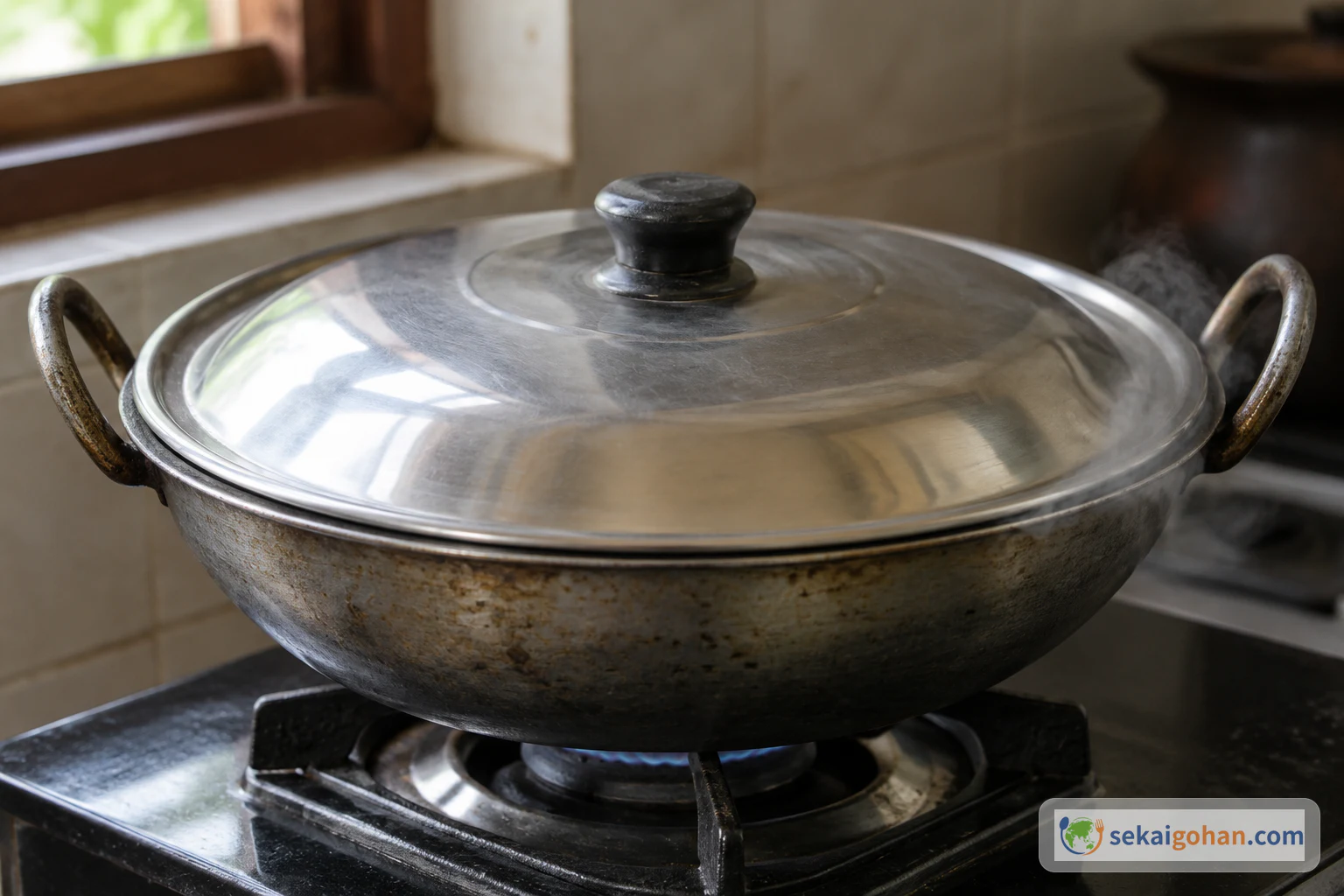
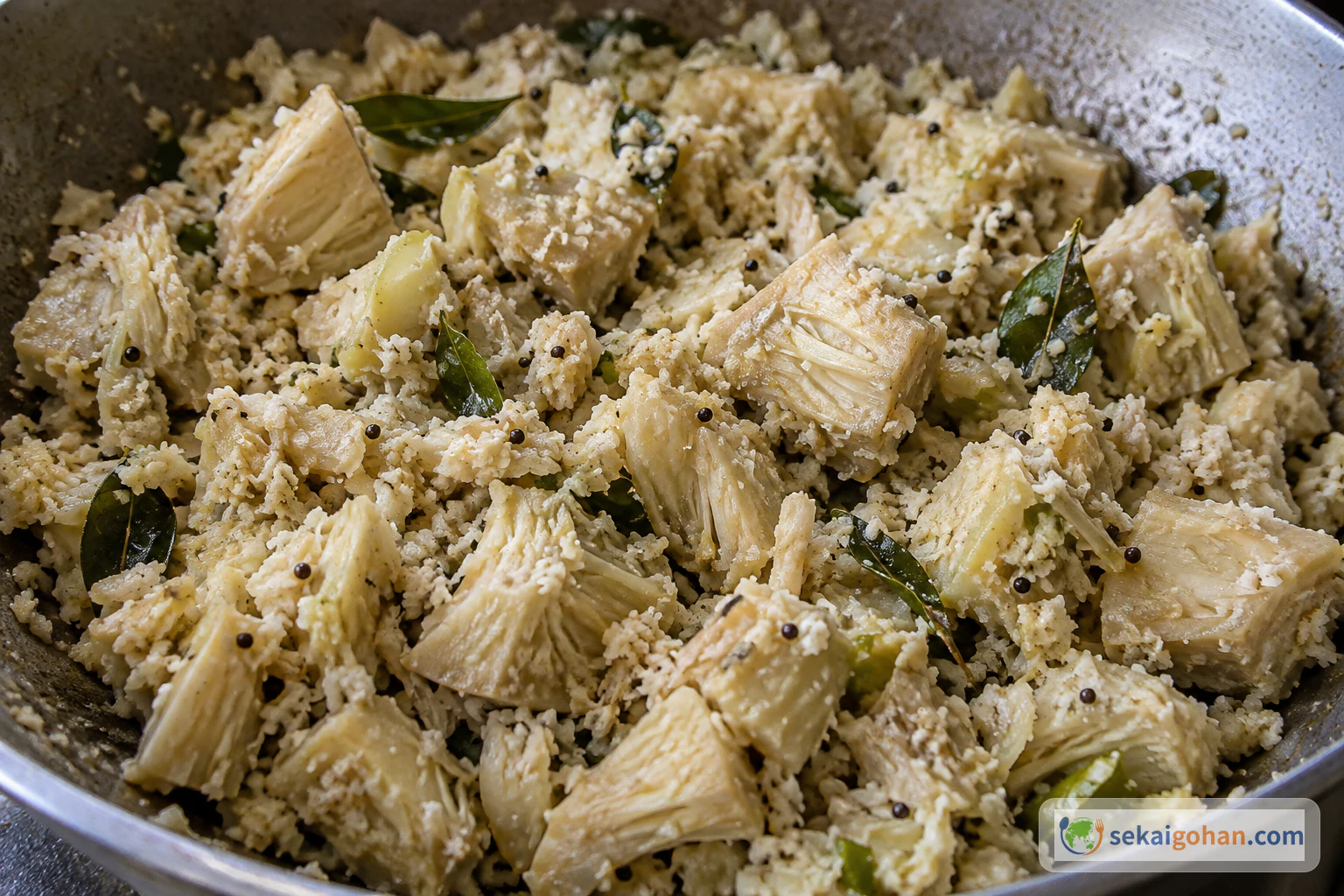
Chakka Puzhukku: Green Jackfruit Cooked Soft and Folded into Coconut
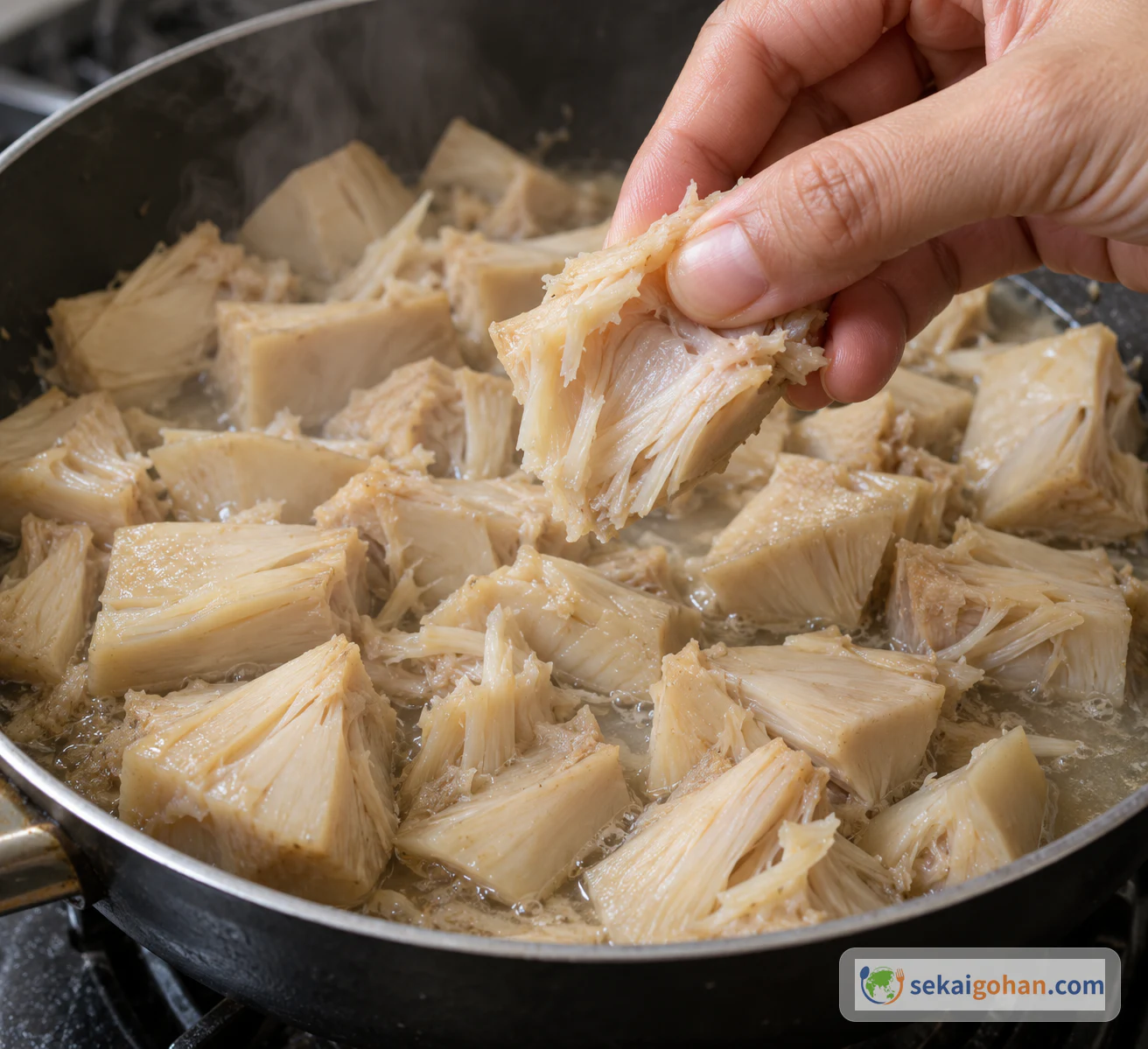
Start with raw, unripe jackfruit, not sweet ripe fruit. Cook it until it mashes easily between your fingers, then fold it into a coarse coconut paste that has been warmed gently, never browned.
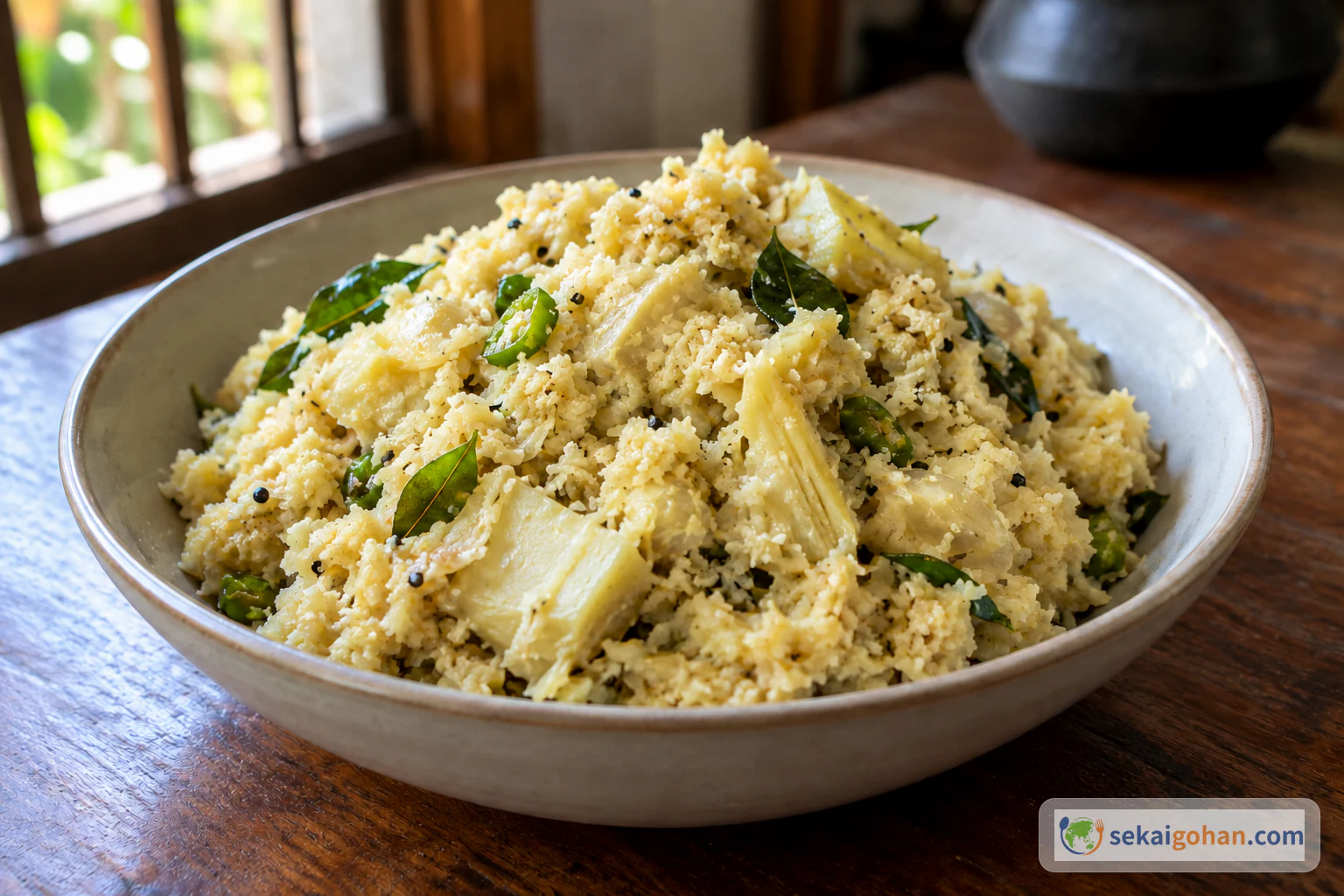
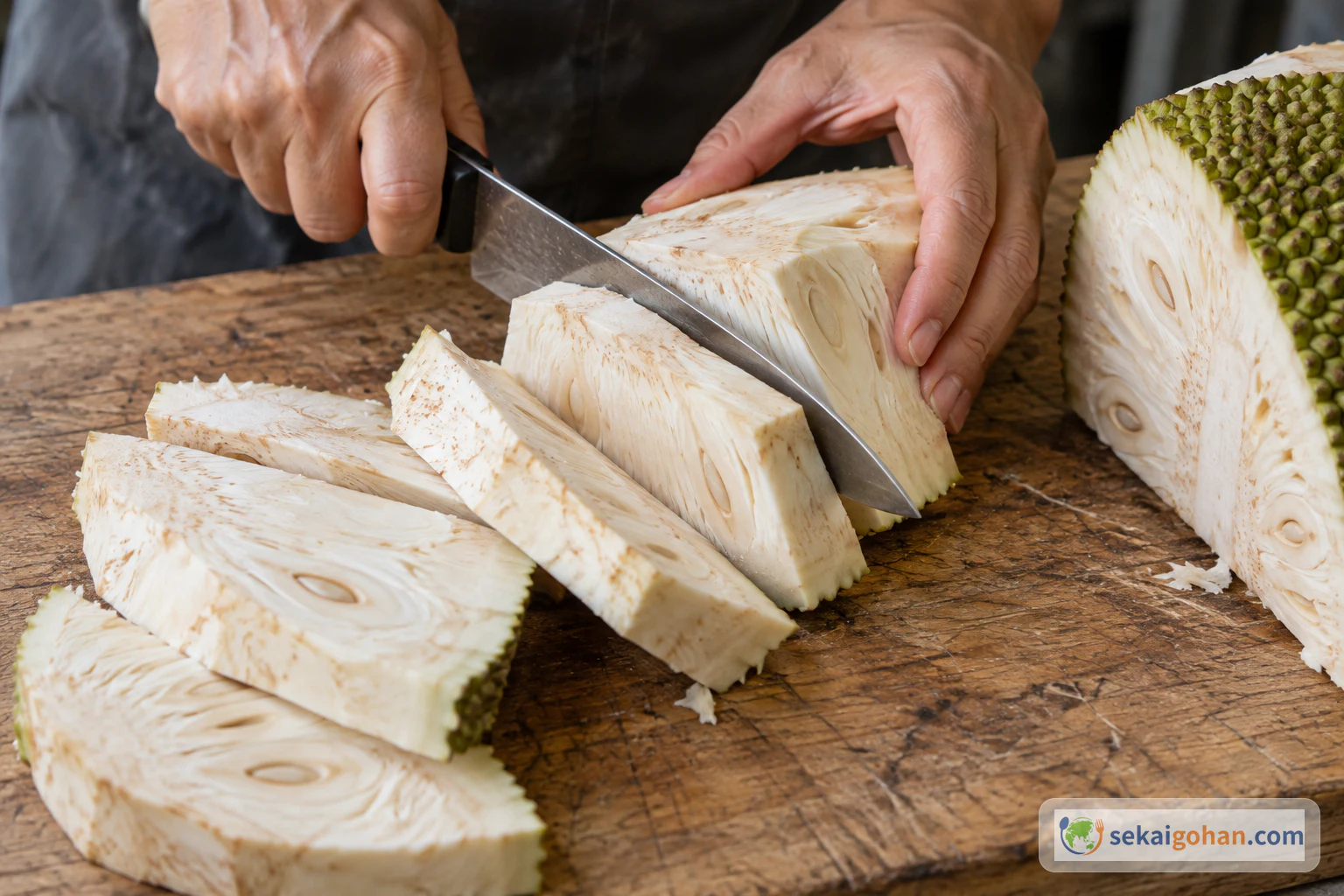
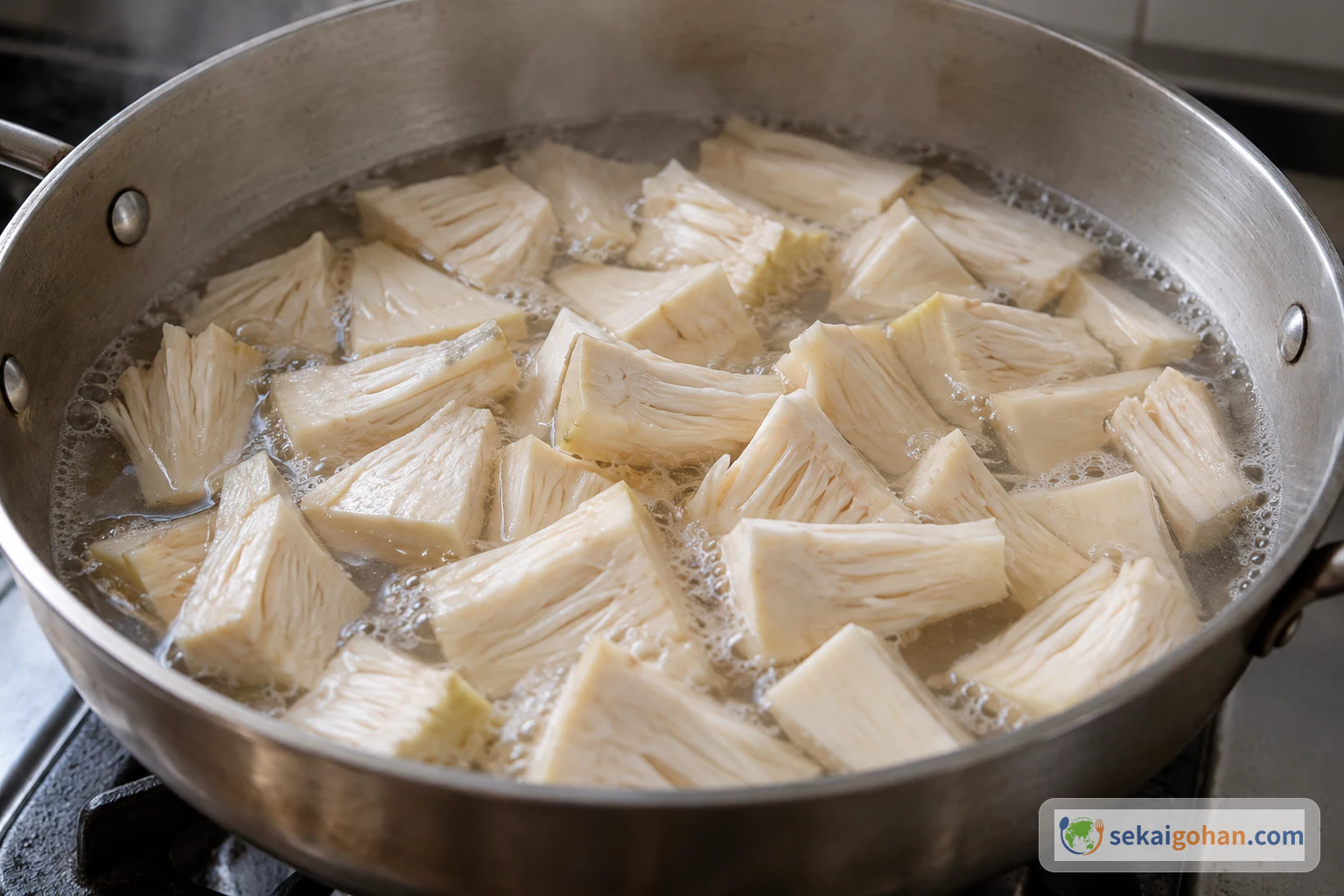
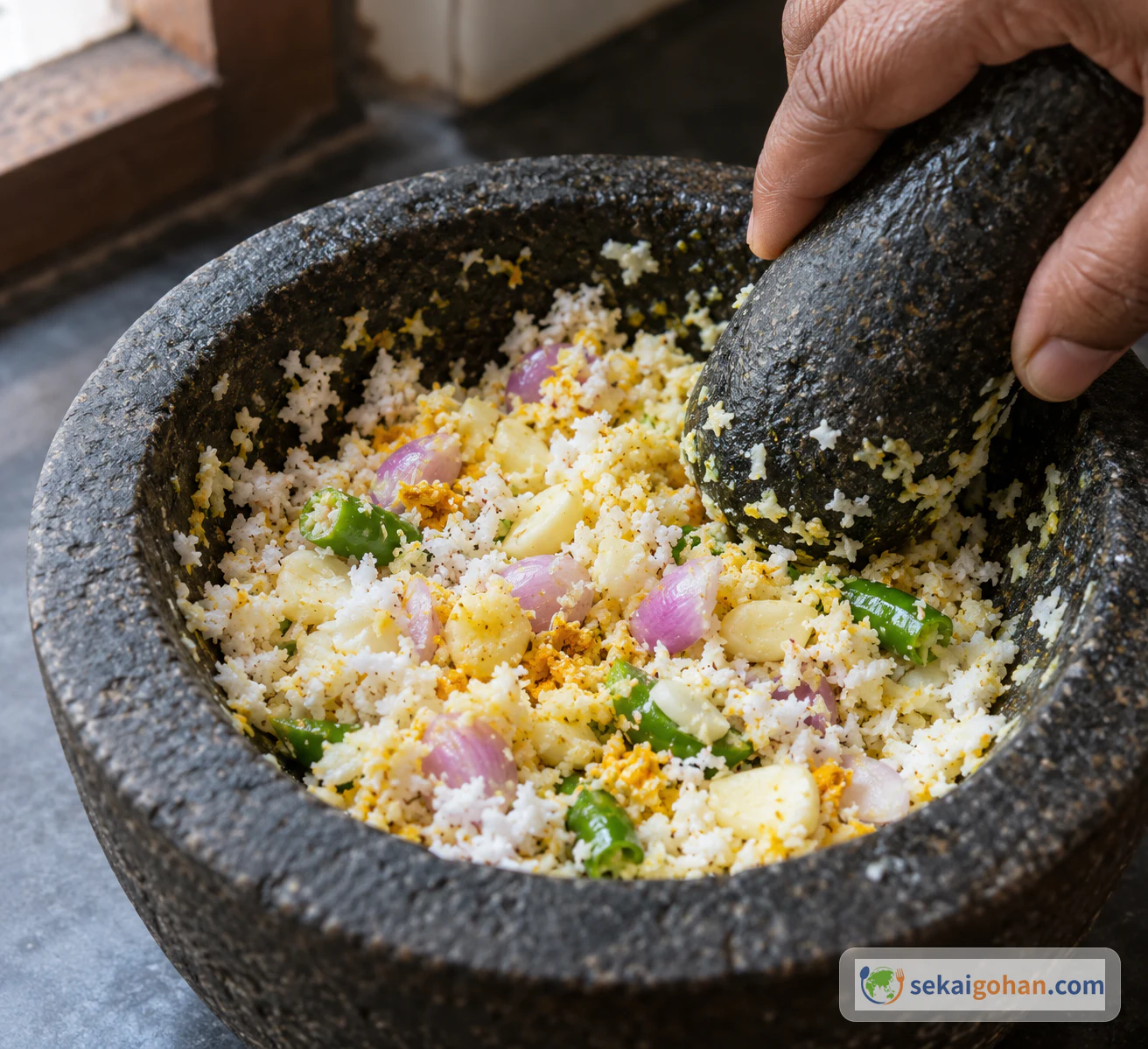
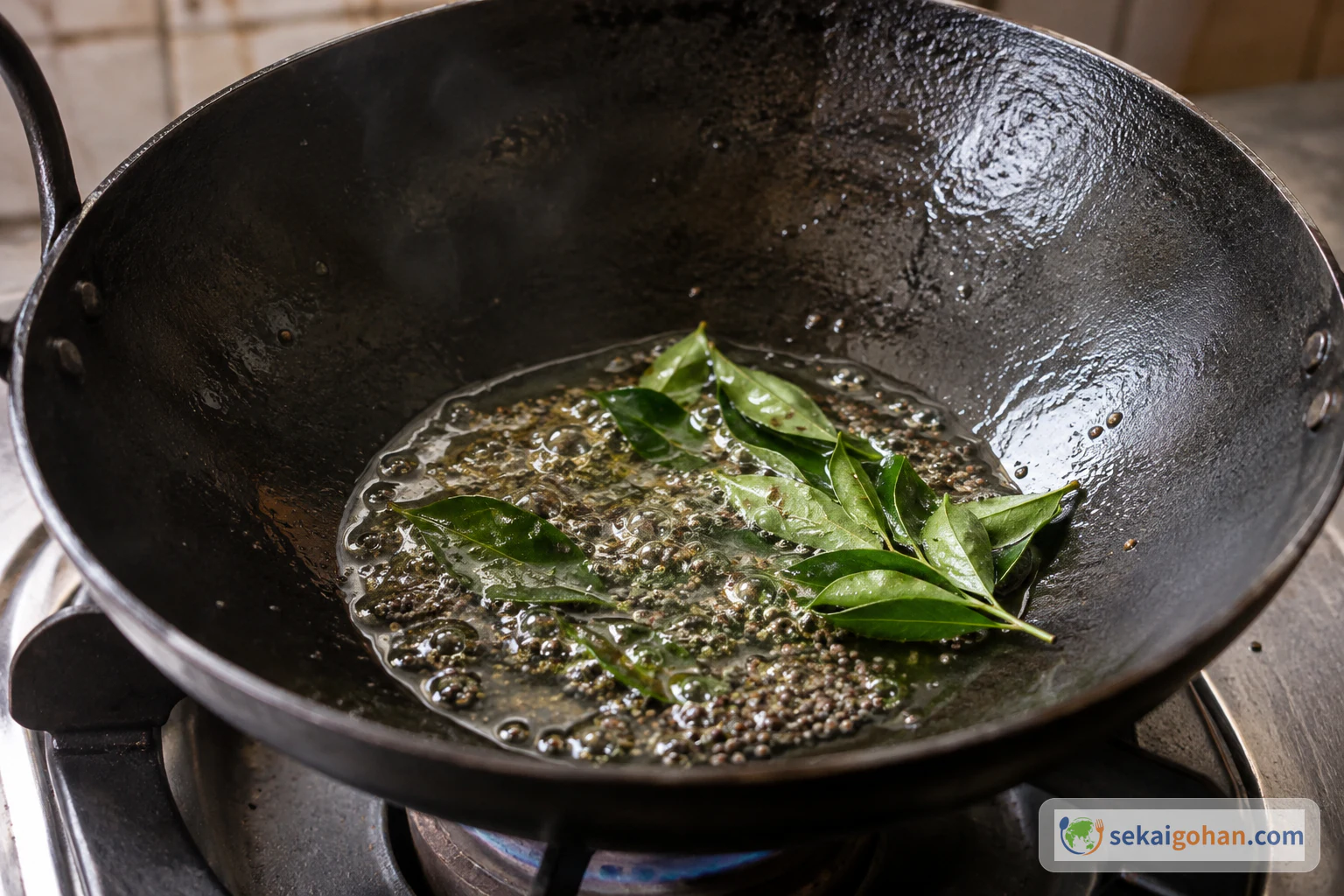
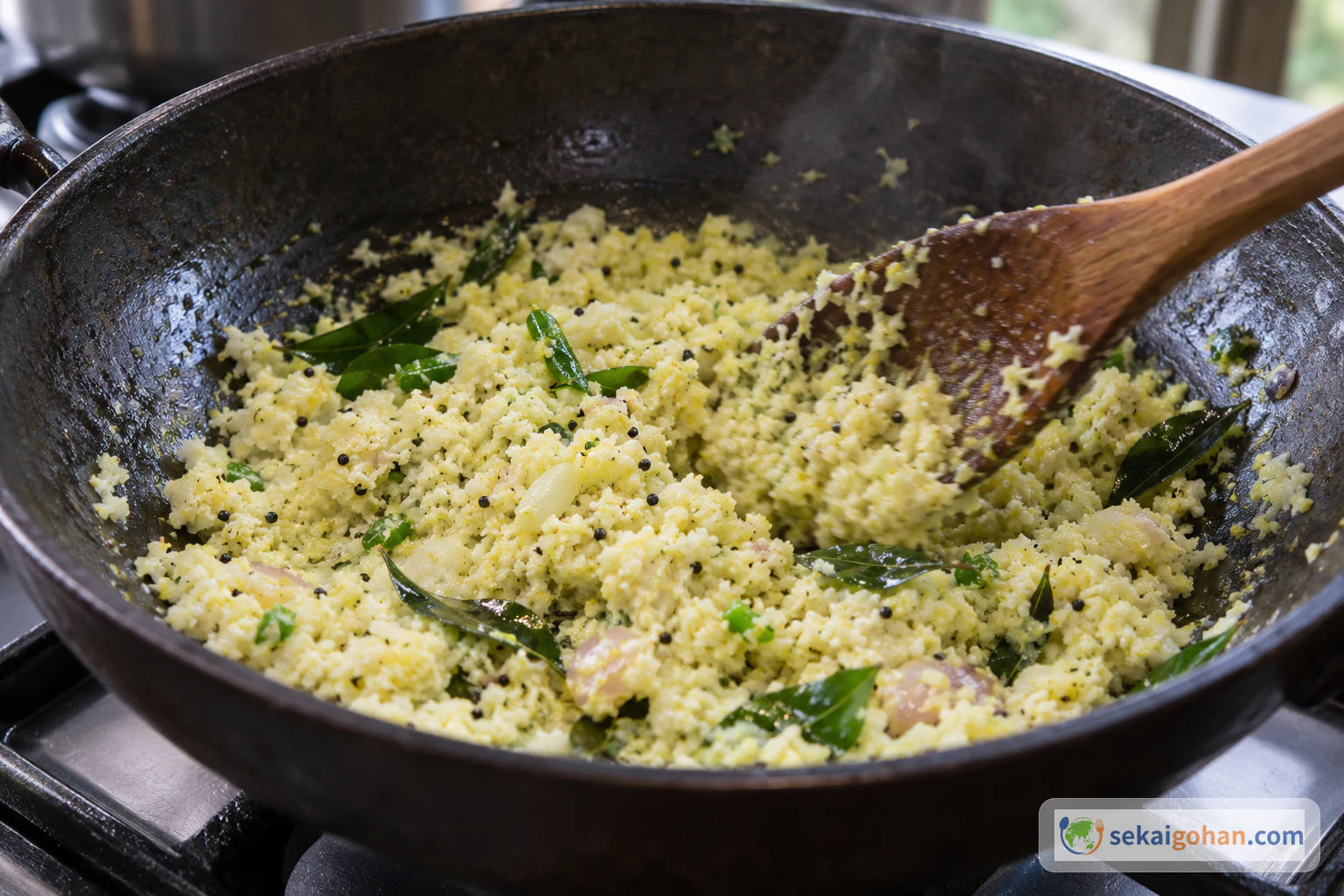
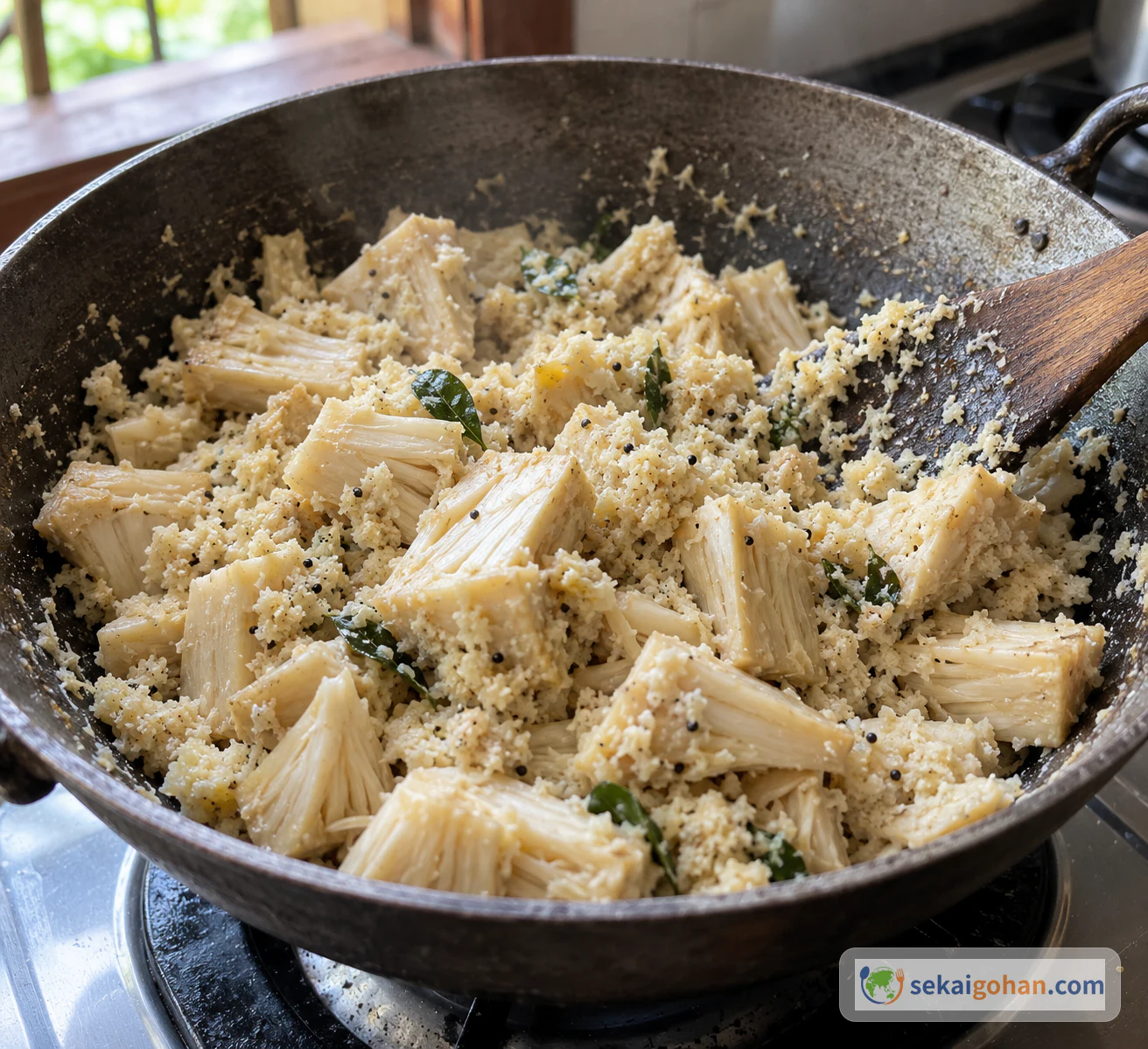
A green, unripe jackfruit is sliced and simmered until soft. In a second pan, mustard seeds pop in coconut oil, curry leaves go in, and a coarsely ground mixture of coconut, turmeric, green chilies, shallots and garlic is stirred over low heat until its raw smell fades. The soft fruit is added, mixed and covered for a few minutes. What comes out is chakka puzhukku: a savory Kerala mash of raw jackfruit with a spiced coconut paste.
This article follows one recipe, Simi George's version published in the GOYA Journal, with every amount and step as the author gives them. Other cooks make this dish differently, and those versions are described later as separate recipes rather than mixed into this one. For more dishes from the same country, see our India collection.
In Malayalam the dish is written ചക്കപ്പുഴുക്ക് (chakka puzhukku). One Kerala recipe site also uses the name Chakka Vevichathu for a raw-jackfruit-and-coconut preparation it calls chakka puzhukku as well. That is one page's usage, not proof that every household treats the two names as identical.
What Is Chakka Puzhukku?
Chakka here means jackfruit, and puzhukku refers to a soft, savory preparation. Across the recipe pages consulted, the dish is described as raw jackfruit cooked with coconut and spices. GOYA calls it a spiced raw jackfruit mash; the Essence of Life food blog describes jackfruit puzhukku as a Kerala dish.
The key word is raw. Ripe jackfruit is sweet, and it is not what this dish uses. The fruit is still green and unripe, cooked as a savory ingredient. The Essence of Life writer offers a helpful buying cue for their own recipe: choose fruit that is raw but not so tender and immature that the pods and seeds have not yet developed. Treat that as one home cook's guidance on choosing the fruit, not a universal standard.
The texture this method produces is a mash, not a smooth purée. The fruit is cooked until it can be mashed, then combined with a coconut mixture that is ground only coarsely, so you can still see and feel its pieces.
Ingredients: Simi George's Formula, in the Author's Own Units
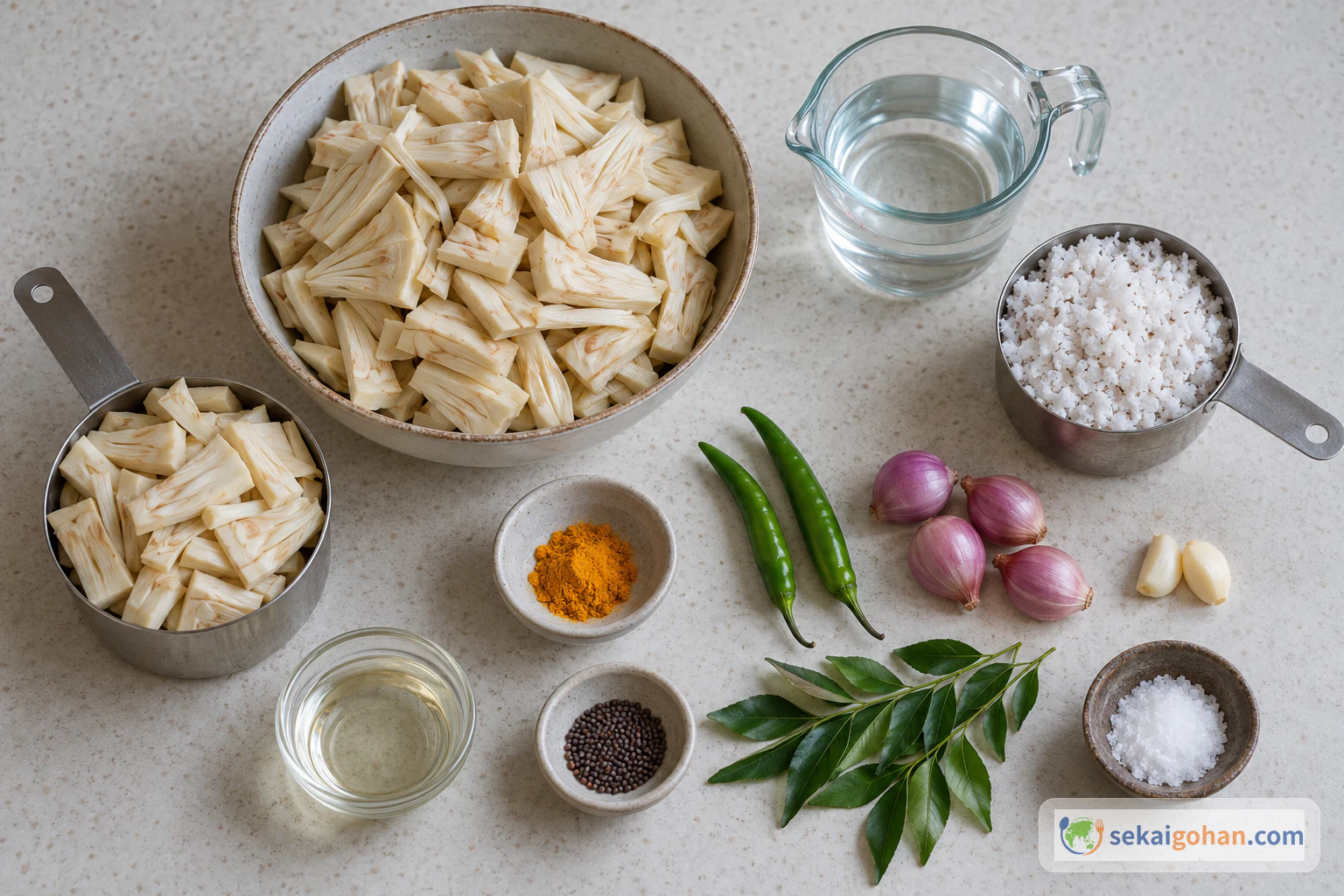
The 4 cups refers to jackfruit that has already been sliced, not to a whole fruit.
The flavor is built in layers: mild unripe fruit, coconut, green-chile heat, shallot and garlic, then mustard seeds and curry leaves carried by coconut oil.
Equipment
- Knife and cutting board
- Measuring cup and measuring spoons
- A pan for cooking the jackfruit
- A heavy-bottomed pan large enough to hold the cooked jackfruit, with a lid
- A grinder or mortar for coarsely grinding the coconut mixture
Choosing the Jackfruit and What Not to Swap
Buy jackfruit sold as raw or unripe, slice the flesh, and measure 4 cups of the sliced pieces. The recipe gives no whole-fruit conversion, so measure what you have prepared rather than estimating from the whole fruit.
- Ripe jackfruit: Not for this recipe. Ripe jackfruit is sweet, and this is a savory dish built on raw fruit.
- Jackfruit seeds: Not part of this recipe. Simi George's ingredient list does not include them, so there is nothing to peel or cook. Some other authors do add seeds; that is a different recipe.
- Canned young green jackfruit: This is not the form of fruit the recipe specifies, and it has not been established as an equivalent.
- Breadfruit: A different fruit. Chakka is jackfruit, and breadfruit is not a substitute in this recipe.
Method: Soft Fruit, a Coarse Paste, One Covered Finish
This is a stovetop recipe in an ordinary pan. The first stage has no set time; you cook the jackfruit until it passes a touch test. The only timed stage is the covered finish of 3–4 minutes.
The recipe ends here. It has no extra drizzle of oil, no garnish and no second tempering. The mustard seeds, curry leaves and paste form a single seasoning sequence in the pan.
When Something Goes Off Track
| What you see | Likely reason | What to do |
|---|---|---|
| The pan is drying before the fruit is soft | The 1 cup of water has cooked off | Add more water, only as much as needed, and keep cooking |
| The fruit doesn't mash easily between your fingers | It needs more cooking | Keep cooking and test again; the recipe uses this touch test, not a fixed time |
| The paste is starting to brown | The heat is too high | Keep the heat low and keep stirring; the paste should lose its raw smell without coloring |
| The paste still smells raw | It hasn't been warmed long enough | Keep stirring over low heat until the raw smell is gone, then add the jackfruit |
| The flavor seems flat at the end | Salt is to taste | Adjust the salt after the covered finish, as the recipe directs |
Other Cooks, Other Puzhukku
The recipes consulted for this article show real differences between authors. They are separate recipes, each with its own proportions, so don't mix their ingredients into the version above.
- Essence of Life (Food): This writer's version uses jackfruit pods together with seeds, which are taken out, shelled and peeled, plus soft rags, cumin and two stages of coconut oil.
- Malayali.me: This page, titled Chakka Vevichathu, starts from one medium whole fruit, adds black pepper and cumin, follows a different cooking order, and keeps the cooked jackfruit firmer.
If you want to try one of those versions, follow that author's full recipe on its own terms.
Serving Chakka Puzhukku
GOYA's article says chakka puzhukku is traditionally served with a fiery fish curry or pork curry. The Malayali.me page likewise describes its version as a main dish often eaten with fish or meat curry. Both are optional serving ideas, not part of the recipe. It can also be served on its own, hot.
Frequently Asked Questions
Can I use ripe jackfruit?
Not for this recipe. Chakka puzhukku is a savory dish made with raw, unripe jackfruit, and ripe jackfruit is sweet.
Do I need to add jackfruit seeds?
No. Simi George's ingredient list does not include seeds, so this version has none. Other cooks include them in their own recipes, with their own preparation steps, but those belong to different recipes.
How long should the first cook take?
The recipe gives no fixed time for cooking the jackfruit. Cook it until a piece mashes easily between your fingers, adding water if the pan dries out. The only timed stage is the covered finish, at 3–4 minutes.
Can I use breadfruit or canned young green jackfruit?
Neither is the ingredient this recipe specifies, and neither has been established as a substitute. Breadfruit is a different fruit altogether.
How much jackfruit should I buy?
The recipe calls for 4 cups of sliced raw jackfruit and gives no whole-fruit amount or weight. Buy unripe jackfruit, slice the flesh, and measure 4 cups of the prepared pieces.
A Pan That Rewards the Right Fruit
Most of this dish is settled at the shop: green, unripe jackfruit, sliced and measured as 4 cups of flesh. From there it comes down to patience until the fruit gives way under your fingers, and low heat so the coconut paste loses its raw edge without browning. Serve it hot, and if you like, put a fish or pork curry beside it.
Sources
- Simi George, "Chakka Puzhukku or Spiced Raw Jackfruit Mash," GOYA Journal. The adopted recipe: all ingredients and amounts, the stovetop method and doneness cue, the covered 3–4 minute finish, and fish curry or pork curry as traditional accompaniments. https://www.goya.in/blog/chakka-puzhukku-spiced-raw-jackfruit-mash-kerala
- SM, "Chakka/Jackfruit Puzhukku," Essence of Life – Food. Puzhukku as a soft, savory Kerala preparation; the distinction between raw and ripe jackfruit; this writer's guidance on choosing raw fruit that is not too immature; and the writer's own separate recipe with seeds, rags and cumin. https://www.essenceoflife-food.com/2019/03/chakkajackfruit-puzhukku.html?m=0
- Malayali.me, "Chakka Vevichathu (Mashed Jackfruit with Coconut)." Use of the names Chakka Vevichathu and Chakka Puzhukku; raw versus ripe jackfruit; serving with fish or meat curry; and the page's own separate recipe. https://malayali.me/veg-recipes/chakka-vevichathu-mashed-jackfruit-with-coconut