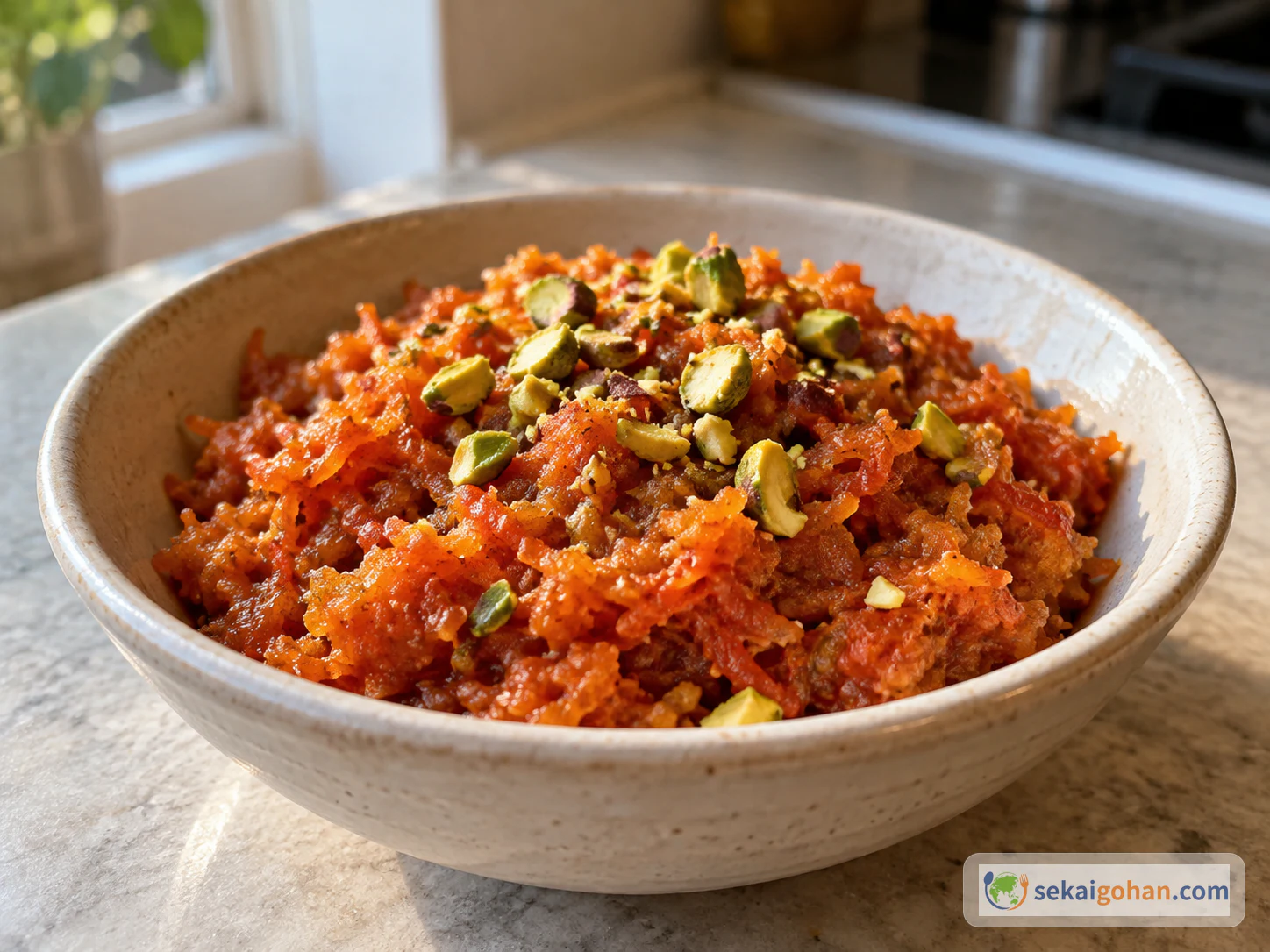
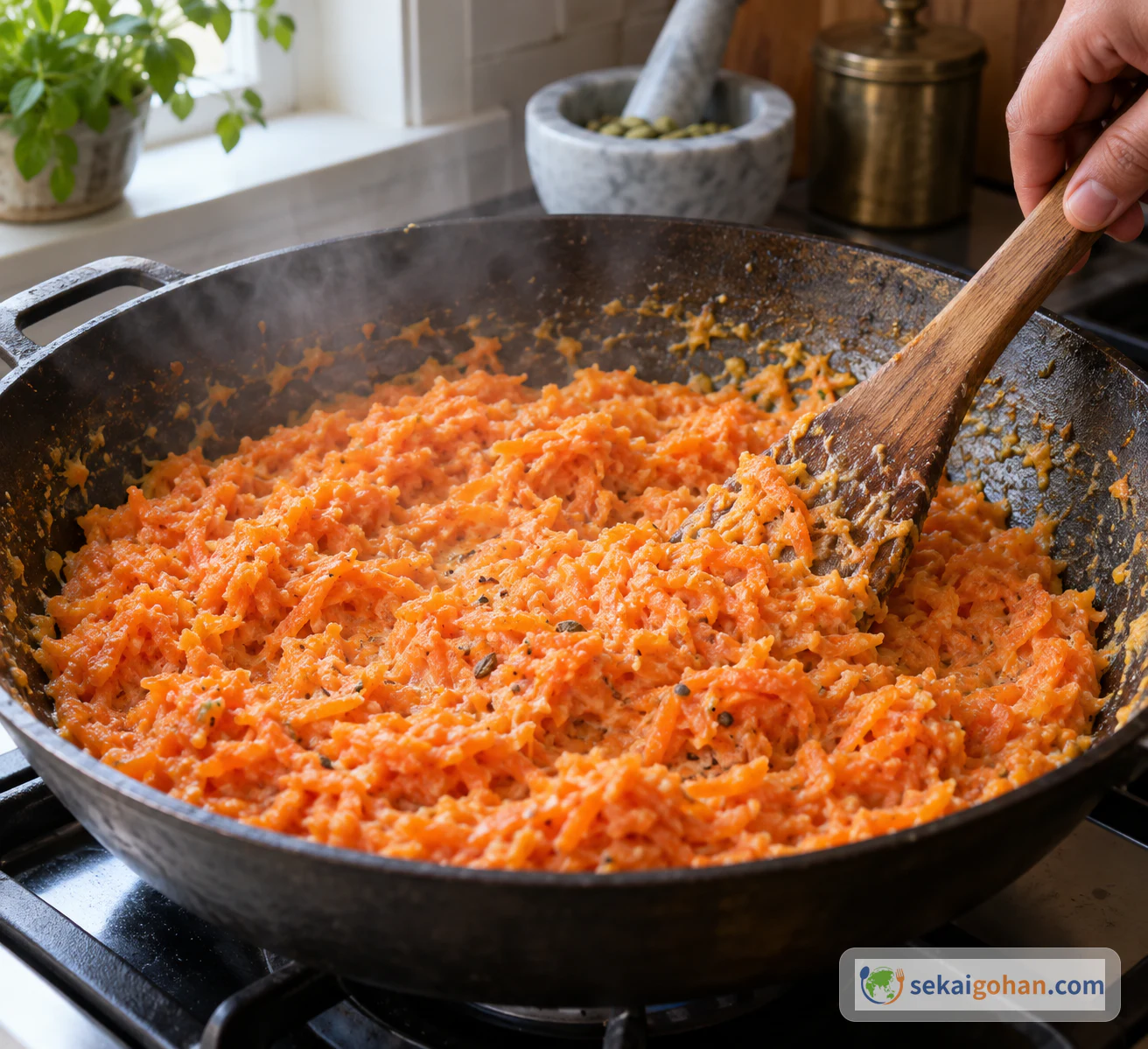
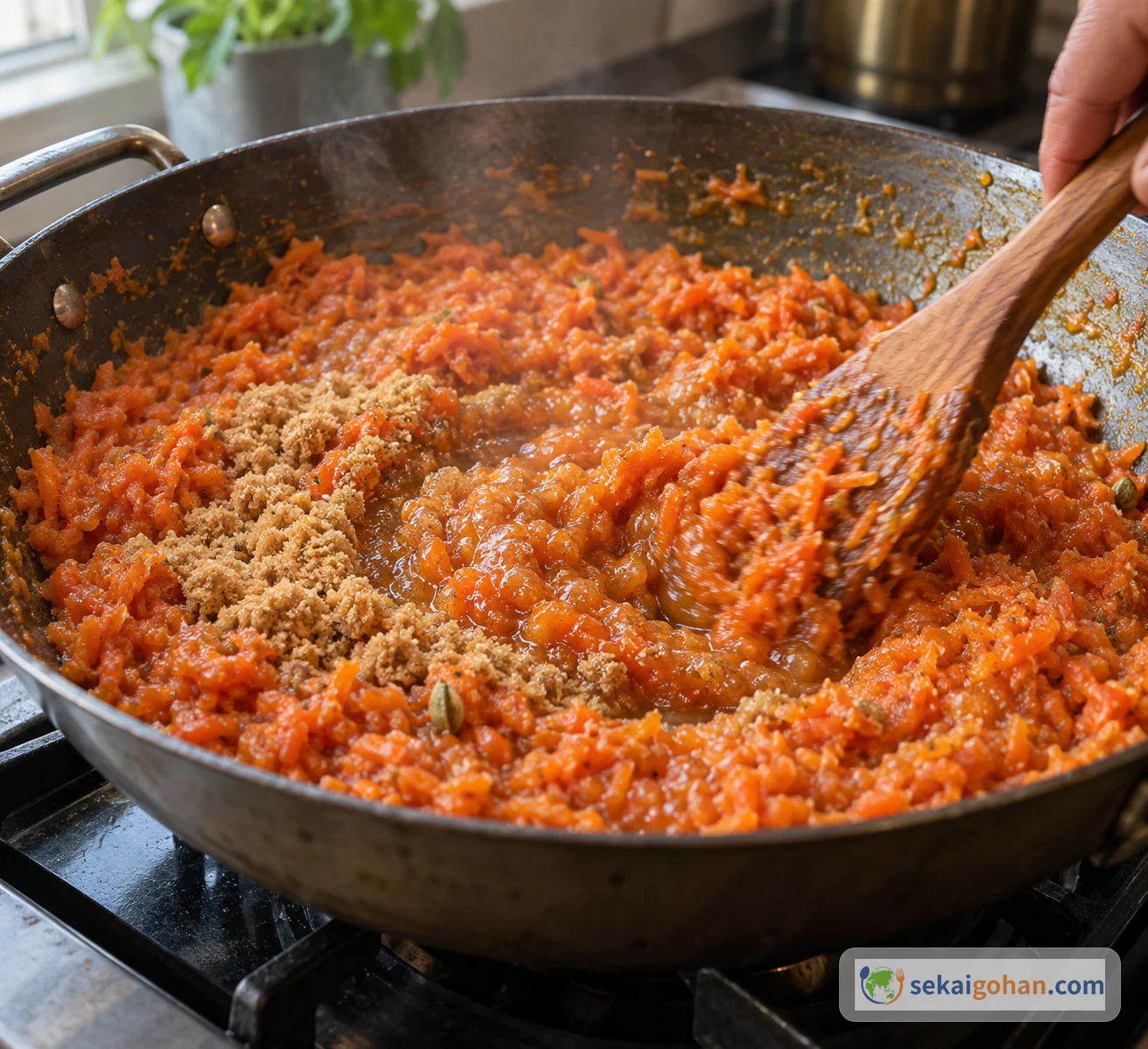
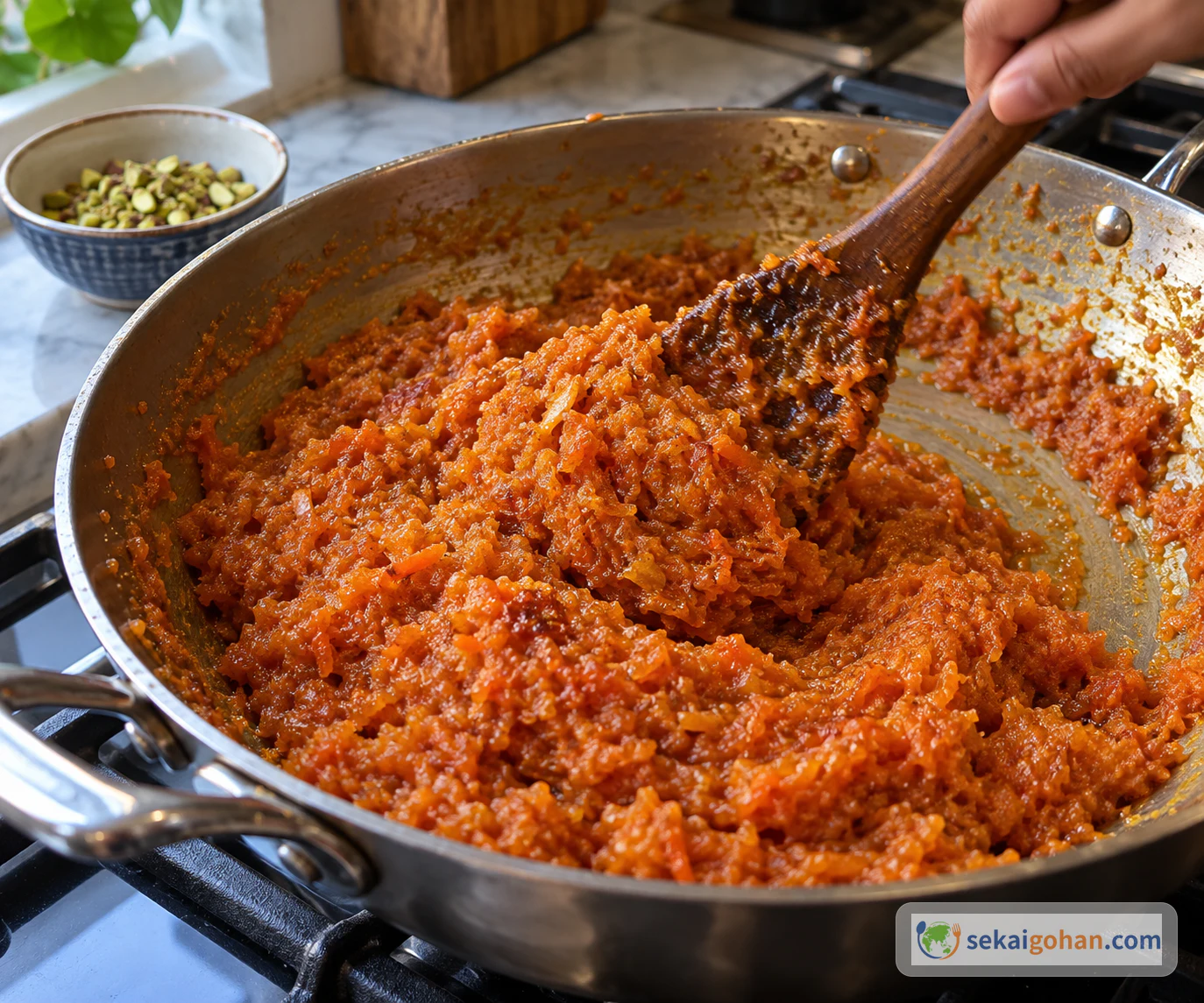
Gajar Ka Halwa: Milk Reduced First, Carrots Left Coarse
Reduce the milk on its own, grate the carrots coarsely, and let the milk be completely absorbed before the sugar goes in. The finished halwa should still have texture rather than becoming a mash.
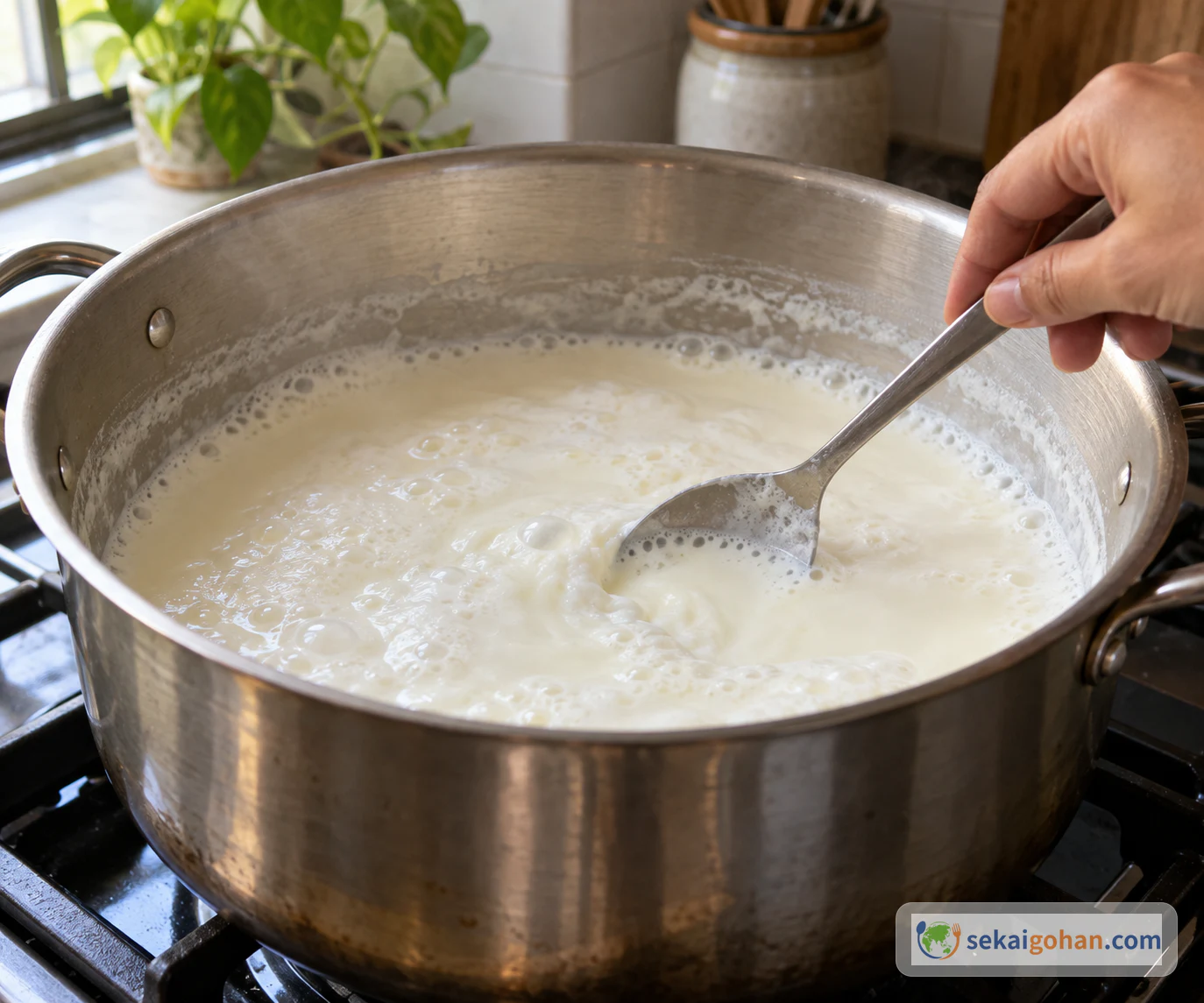
Three cups of whole milk go into a large, heavy-bottomed pot and stay at a low boil, stirred often, until only about 1 1/2 to 2 cups remain. Meanwhile, a skillet is waiting for the carrots. That separate reduction is the defining decision in Nidhi Jalan's written recipe for Food Network Kitchen, and it is the version this article follows.
Jalan calls gajar ka halwa a Punjabi dessert. She writes that her mother-in-law in India usually makes it for special occasions such as Diwali, when the weather starts to cool and lal gajar (red carrots) become available. That is one family's account and one author's formula, not a single standard for Punjab or for India.
Jalan's recipe makes 4 to 5 servings. Her page lists a total time of 1 hour 55 minutes and an active time of 1 hour 10 minutes. The times given in the steps are approximate, so use the visual cues in each step as well.
We have not kitchen-tested this recipe. This article presents Jalan's published version with its fresh-milk, immediate-serving method. Jalan says she made the recipe more than ten times; that is her own statement, not an independent test.
According to Wikipedia, the dish is also known as gajorer halwa, gajarno halwo, gajar pak and carrot pudding, with gajar ka meetha pak and gajrela listed as further names. You may also see the spelling gajar halwo.
Ingredients (4 to 5 Servings)
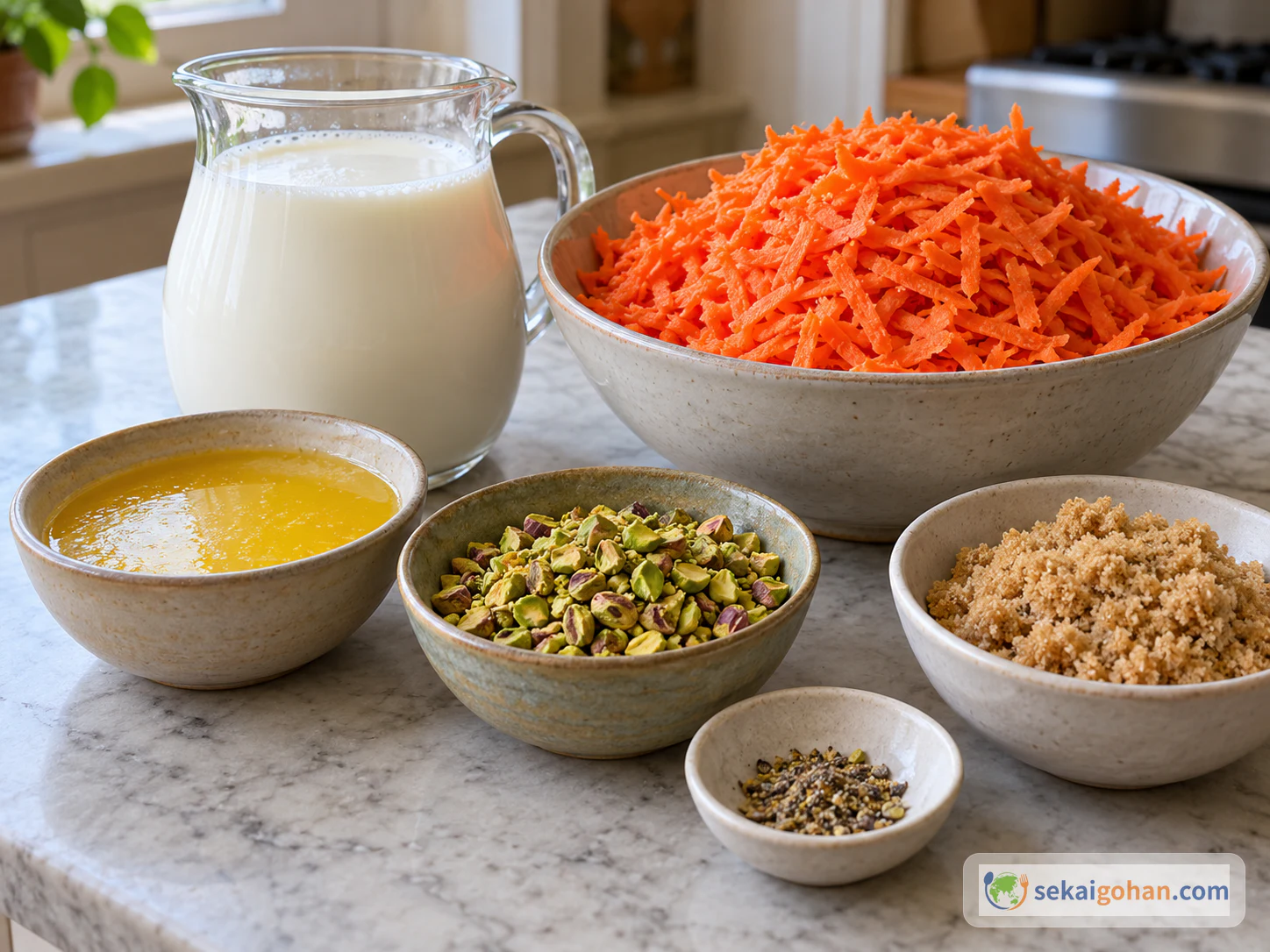
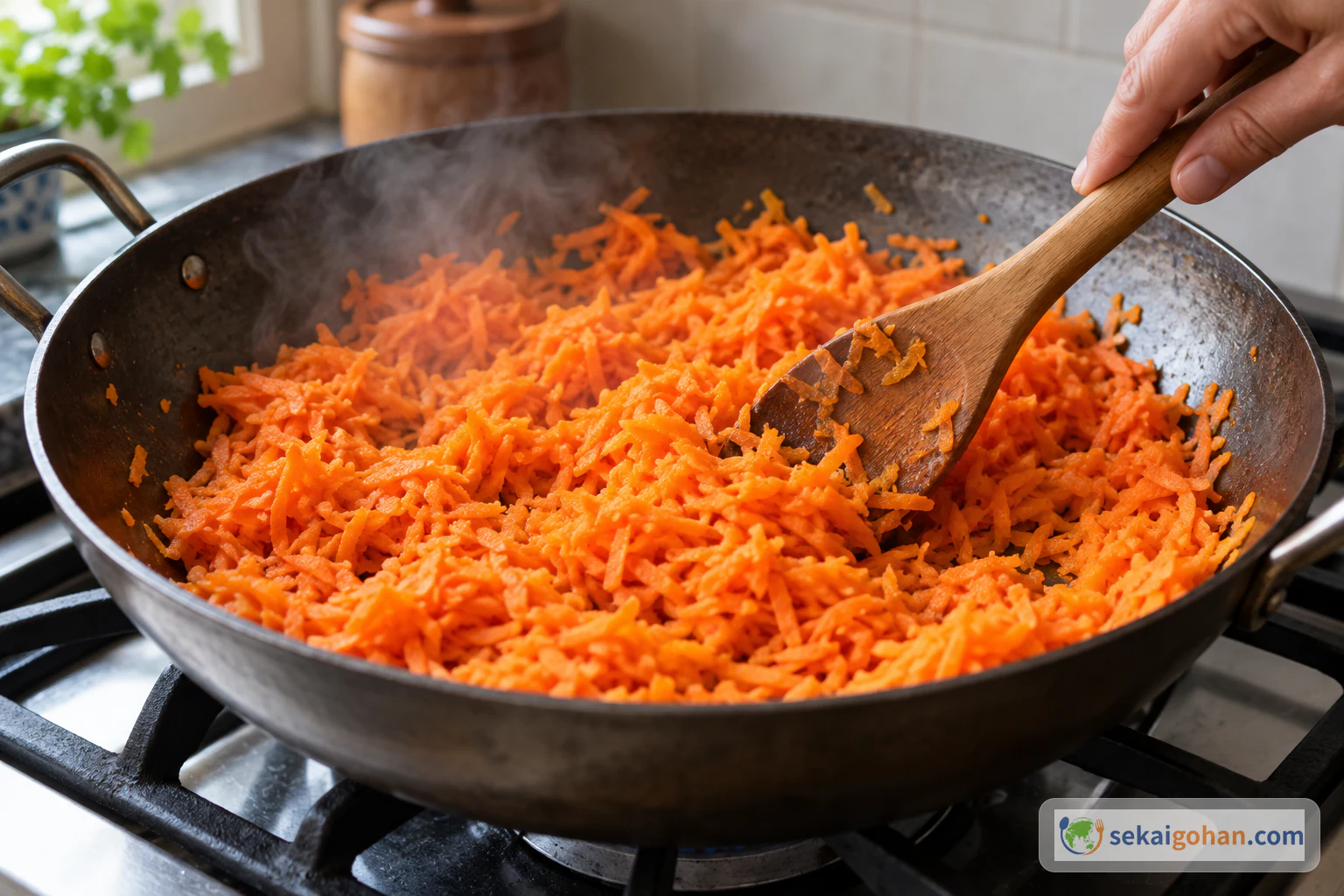
Peel and grate the carrots before you start cooking. Use the large holes of the grater so the shreds stay coarse.
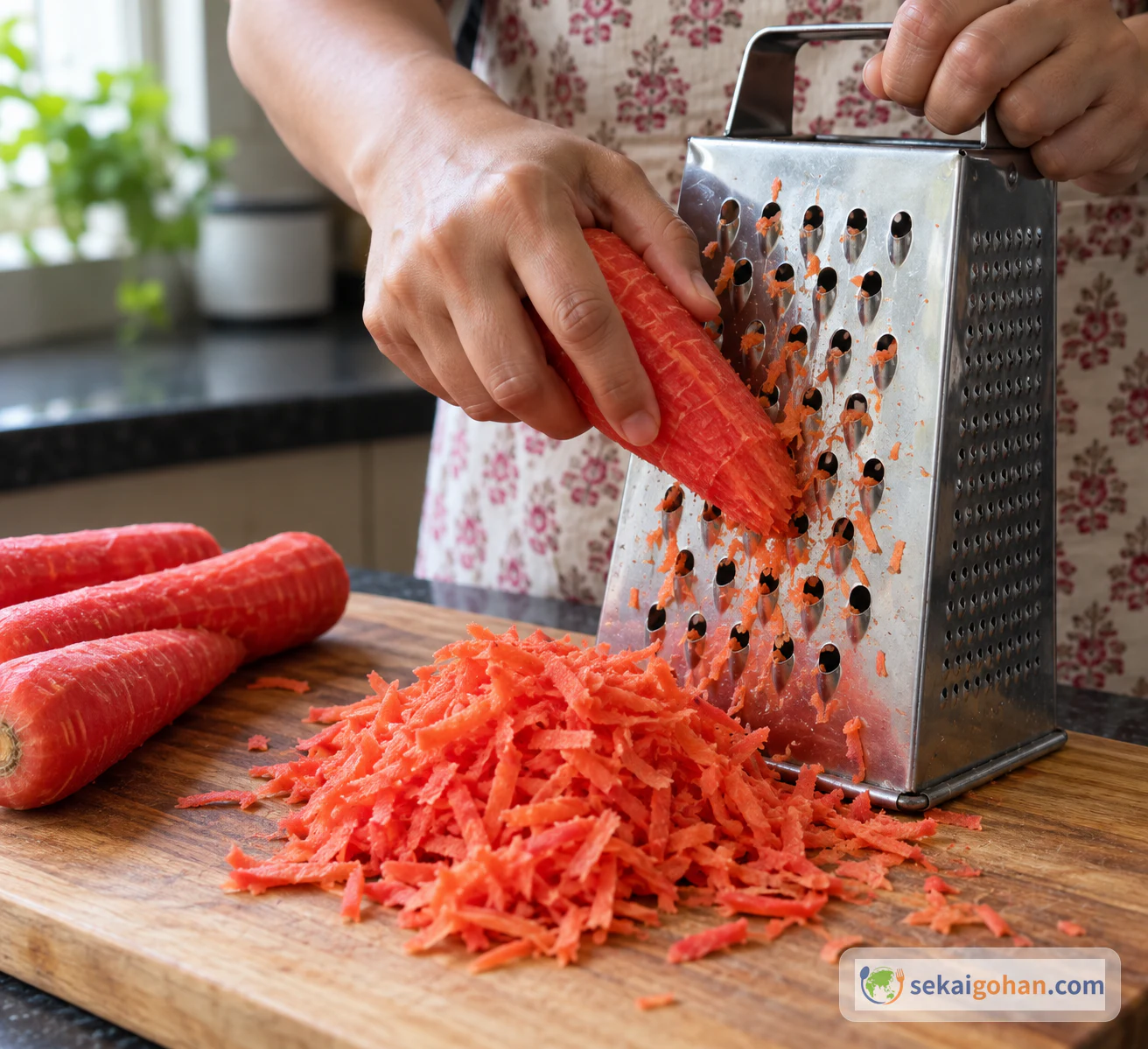
Choosing Carrots, Nuts and Ghee
Carrots. No particular carrot variety is required. The lal gajar (red carrots) mentioned in the family account below are not a requirement, even though the pictures here show red-orange ones.
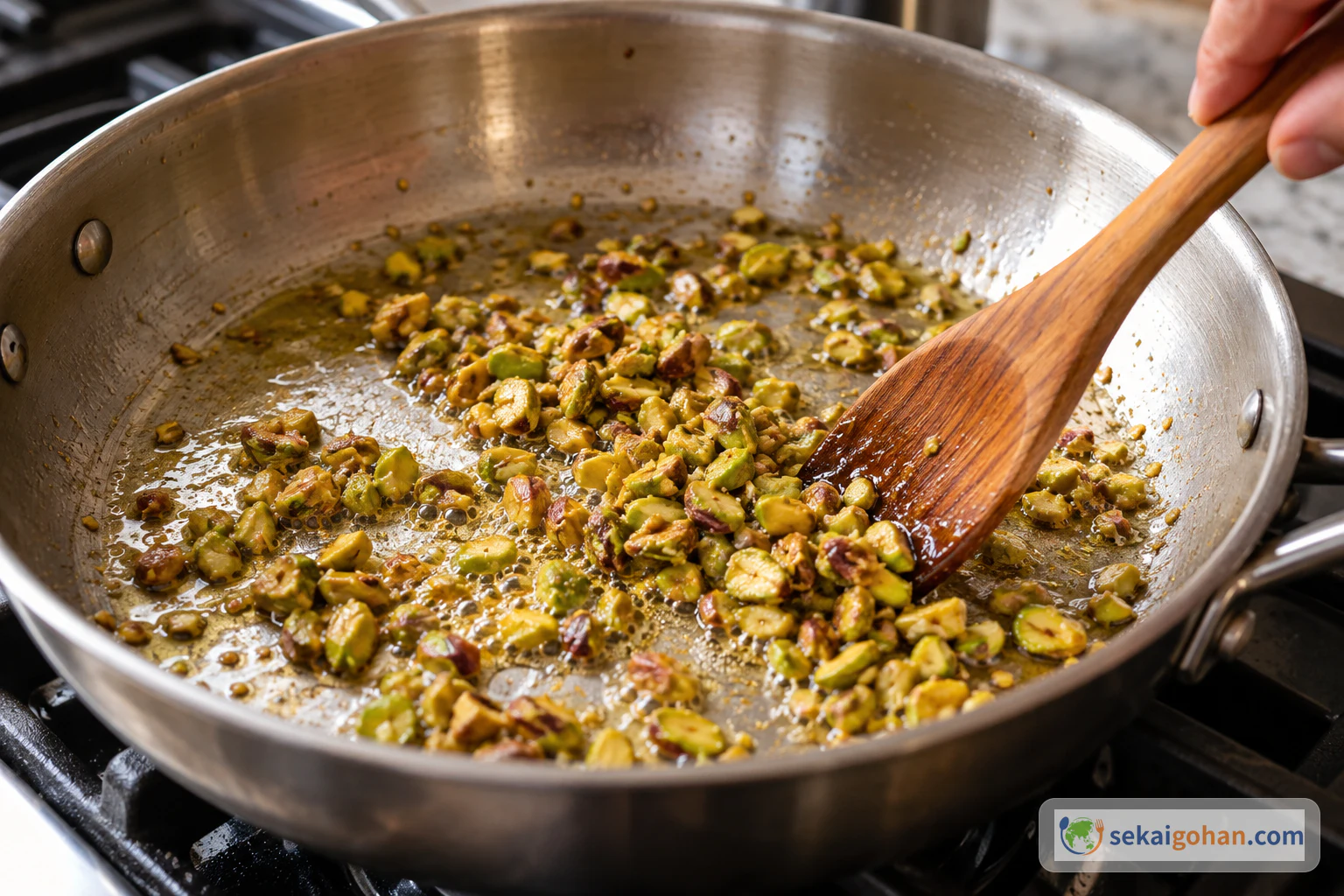
Nuts. Pistachios, almonds or cashews can be used. This article uses pistachios throughout.
Ghee. Plan on 4 to 6 tablespoons in all: 1 tablespoon for the nuts, another 1 tablespoon only if the carrots start to stick, and 3 tablespoons for the finish. We give no use for any amount beyond that, and we have not invented one.
Equipment
- Large heavy-bottomed pot
- Large heavy skillet
- Box grater with large holes
- Paper towel
Reading the Texture and Sweetness
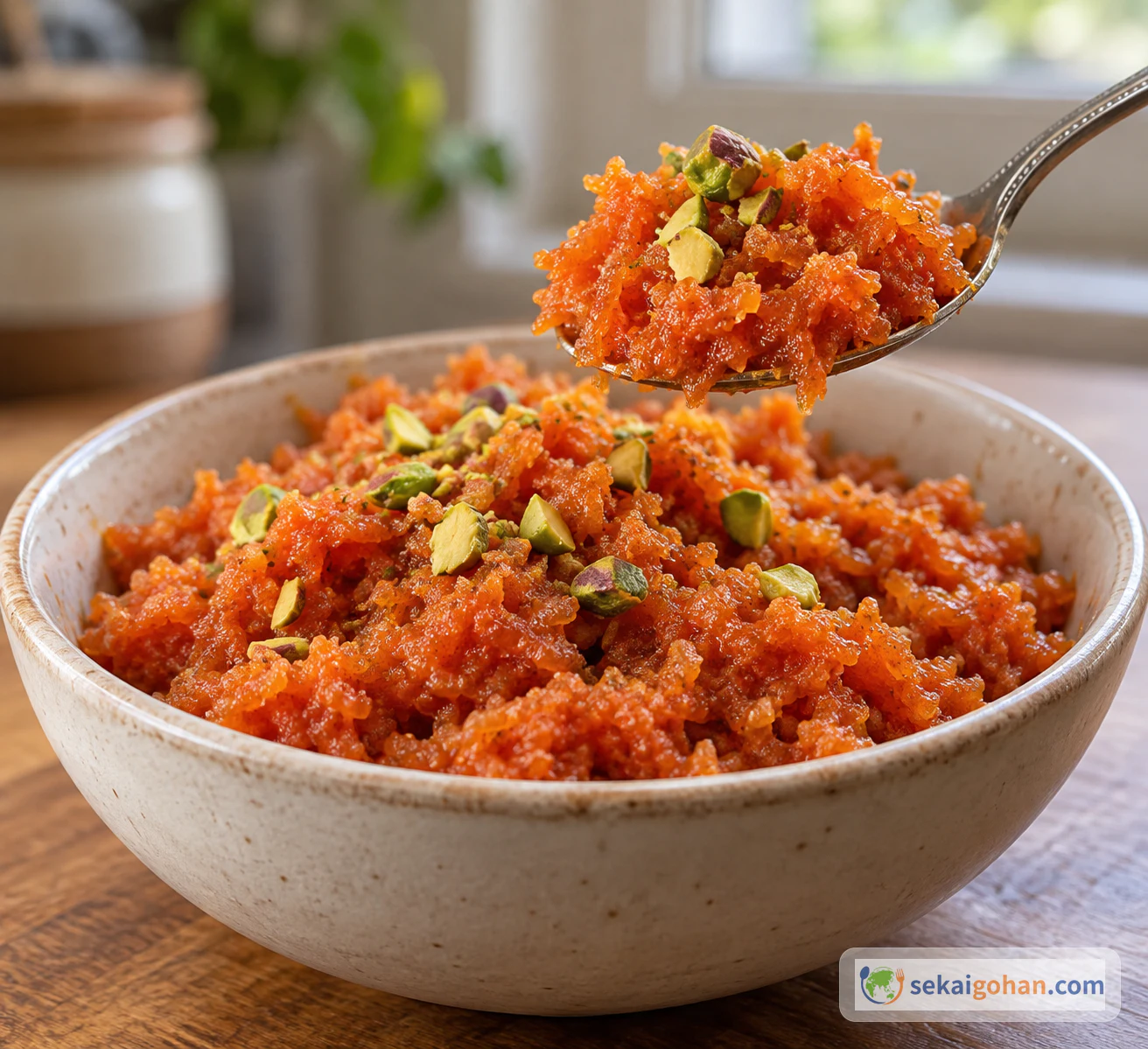
Jalan's Cook's Note says coarsely grated carrots retain texture, so the halwa does not turn into a total mash. Her recipe does not fix an exact final color or level of sweetness. Treat the pictures in this article as a guide to the stages, not as a measure of color, timing or doneness.
| What you notice | What to do |
|---|---|
| The carrots start to stick during step 3 | Add 1 tablespoon of ghee, as the directions allow |
| Milk is still visible at the end of the simmer | Keep stirring at a heavy simmer until it is completely absorbed; the 30 minutes is approximate |
| The halwa tastes less sweet than you would like after thickening | Add more light brown sugar, tasting as you go; the recipe sets no amount |
| The halwa has not begun to pull from the pan sides | Keep stirring; the 10 minutes is approximate, and the cue is the pull from the sides plus a little caramelization |
| The texture is closer to a mash than you wanted | Next time, grate the carrots on the large holes of the box grater |
Variations Within Jalan's Recipe
| Choice | What Jalan offers | What this article does |
|---|---|---|
| Nuts | Pistachios, almonds or cashews | Uses pistachios |
| Cardamom | Optional; the seeds may be removed after the sugar stage if desired | Includes 1/2 teaspoon and leaves the seeds in |
| Milk | Her Cook's Note offers 1 1/2 cups canned unsweetened evaporated milk instead of cooking down whole milk, but says the taste is not as good and the same crunchy caramelization is not achieved | Uses fresh whole milk only |
Halwas made with black or white carrots, described in the next section, are separate regional dishes. They are not substitutions for this recipe.
Family Kitchens, Winter and Regional Differences
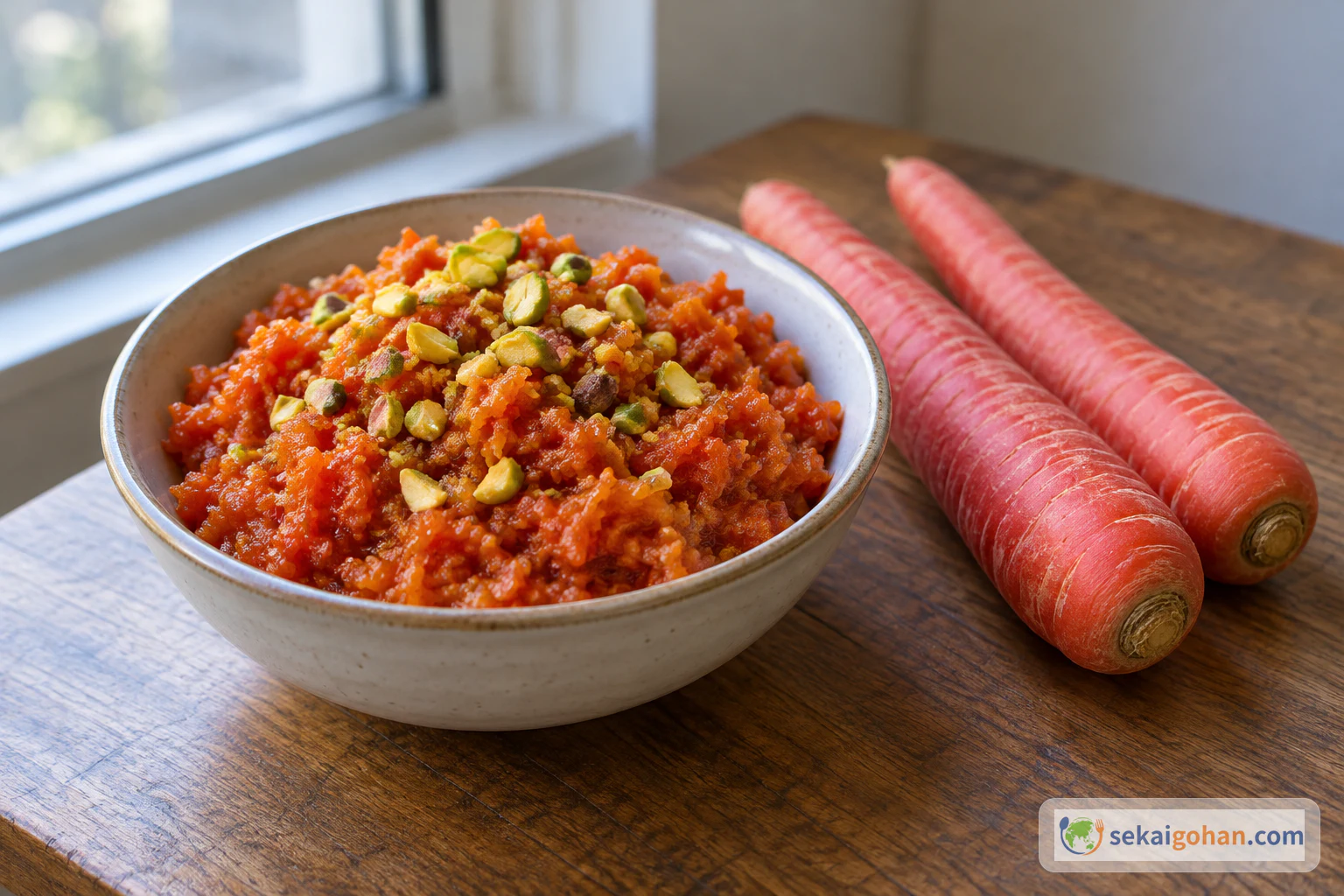
Writers tend to place this dish in a particular household and season, and the accounts below should be read that way.
- Jalan's family. Jalan connects the halwa to her mother-in-law's cooking in India, to occasions such as Diwali, and to the arrival of lal gajar as the weather cools.
- A Delhi family. In an excerpt from her book The Sweet Kitchen, published by Scroll.in, Rajyasree Sen recounts gajar ka halwa in her Delhi family and relates it to the city's cold winters.
- A winter memory. In The Indian Express, Kaushik Das Gupta remembers making it with family in winter: grating carrots, adding them to simmering milk, and stirring while the milk reduced. Jalan's recipe keeps those two stages separate.
Regional differences appear in reporting as well. Sen describes white-carrot halwa in Old Delhi and black-carrot halwa in Lucknow as local variants with their own texture and sweetness. For Scroll.in, Shoaib Daniyal interviewed a shop owner, a historian and a restaurateur about black-carrot halwa in Lucknow, its place in local memory and its winter and wedding-season context. He also reported a white-carrot halwa sold by one Old Delhi shop.
Outside India, the Associated Press reported on cookbook author Hetal Vasavada, whose Indian American family makes Diwali visits and brings sweets to share. Her gajar-ka-halwa-inspired blondie is described as a loose fusion rather than a traditional recipe. This is one diaspora family's example, not evidence of a universal custom.
The dish's origin is less settled. Sen and Das Gupta report differing origin accounts, and Sen says the exact period when halwa arrived in Indian kitchens is uncertain, so we do not offer a definitive history here. For more from the country, see our India page.
Frequently Asked Questions
Can I use evaporated milk instead of reducing whole milk?
Jalan offers that shortcut in her Cook's Note, using 1 1/2 cups of canned unsweetened evaporated milk, but she says the taste is not as good and the same crunchy caramelization is not achieved. The amounts and steps in this article cover fresh whole milk only.
Why grate the carrots coarsely?
Jalan says the halwa should have texture and not be a total mash, and that coarsely grated carrots retain that texture. Her directions call for the large holes of a box grater.
Do I have to use pistachios?
No. Jalan lists pistachios, almonds or cashews. Pistachios are simply the choice made for this article's ingredient list and pictures.
Do I have to use cardamom, and should the seeds stay in?
Cardamom is optional in Jalan's list, and she says the seeds may be removed if desired. This article includes the 1/2 teaspoon and leaves the seeds in.
Do I need red carrots?
No. Jalan mentions lal gajar in her family account, but her ingredient list says only carrots.
Can I make it ahead or store leftovers?
This version is finished and served right away. Jalan's page has a separate make-ahead path, which this article does not cover. We have not verified any storage or reheating guidance, so we give no storage times, temperatures or safety advice.
Sources
- Nidhi Jalan for Food Network Kitchen, "Gajar Ka Halwa Recipe," Food Network. The recipe source for the yield, published times, ingredients, directions and Cook's Note, and for Jalan's Punjabi, Diwali and lal gajar family account. https://www.foodnetwork.com/recipes/food-network-kitchen/gajar-ka-halwa-9423066
- Rajyasree Sen, "How the sweet dish halwa came to India and grew regional variations," Scroll.in, 2022, excerpted from The Sweet Kitchen: Tales and Recipes of India's Favourite Desserts (Aleph Book Company). Supports the Delhi family and winter account, the white- and black-carrot variants, and the uncertainty over halwa's origins. https://scroll.in/article/1028132/how-the-sweet-dish-halwa-came-to-india-and-grew-regional-variations
- Kaushik Das Gupta, "It's Sweeter in the Cold," The Indian Express, 2020. Supports the writer's winter family memory and the point that origin stories vary. https://indianexpress.com/article/express-sunday-eye/halwa-in-cold-6196166/
- Shoaib Daniyal, "Winter food: Discovering Lucknow's obscure black carrot halwa – and Delhi's rarer white version," Scroll.in, 2019. Supports the reporting on black-carrot halwa in Lucknow and white-carrot halwa at one Old Delhi shop. https://scroll.in/magazine/907113/winter-food-discovering-lucknows-obscure-black-carrot-halwa-and-delhis-rarer-white-version
- Albert Stumm, "For a Diwali treat with an American twist, a new cookbook serves up cardamom-spiced carrot blondies," Associated Press. Supports Hetal Vasavada's account of her Indian American family's Diwali visits and sweets, and the description of her blondie as a loose fusion. https://apnews.com/article/diwali-dessert-recipe-cardamom-blondies-fe53549ed287c6ebf8f23a152e52ac1d
- Wikipedia, "Gajar ka halwa." Used for the dish's alternate names only. https://en.wikipedia.org/wiki/Gajar_ka_halwa