Jalebi: A Sweet Spiral Beside a Savory Breakfast
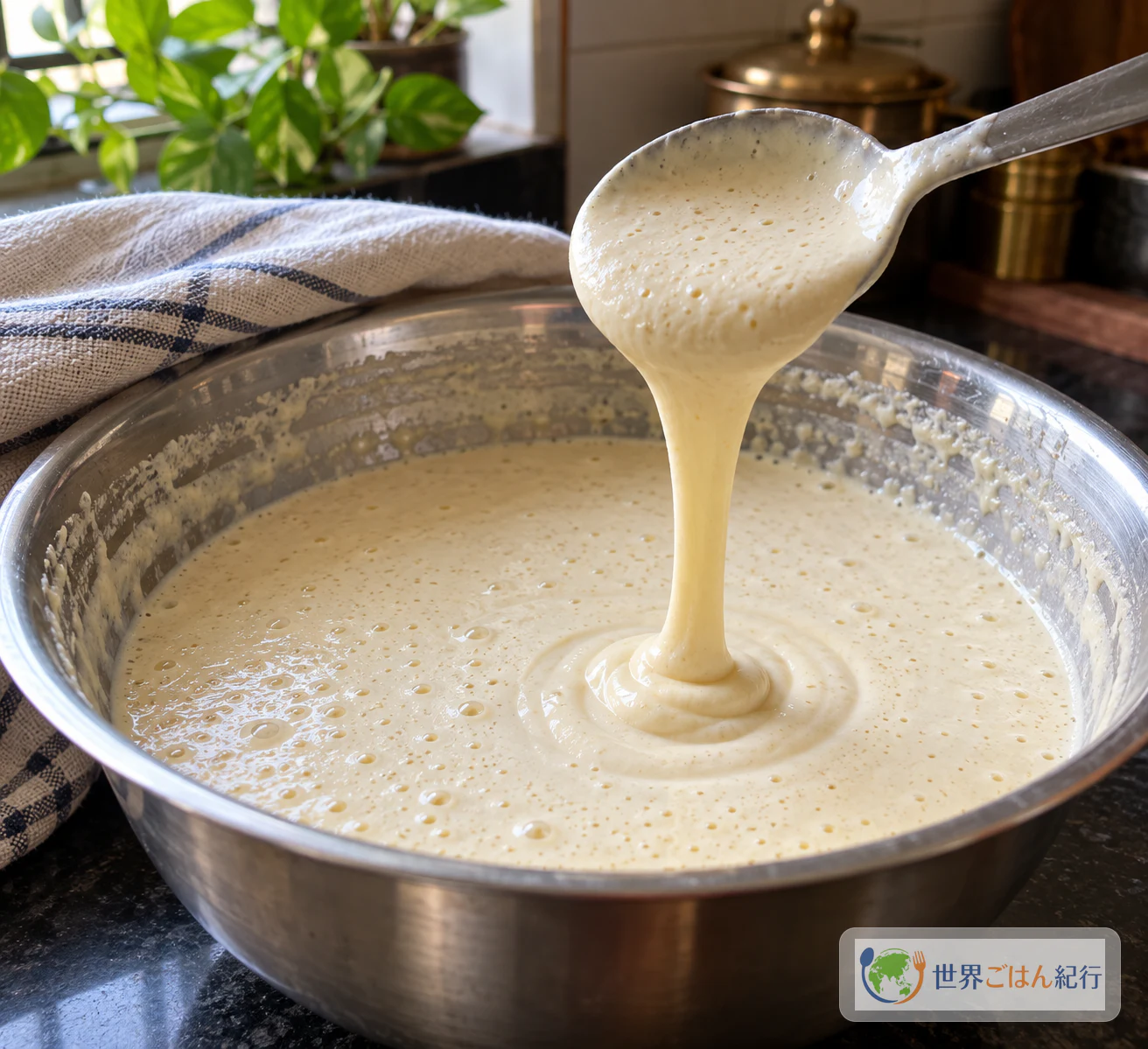
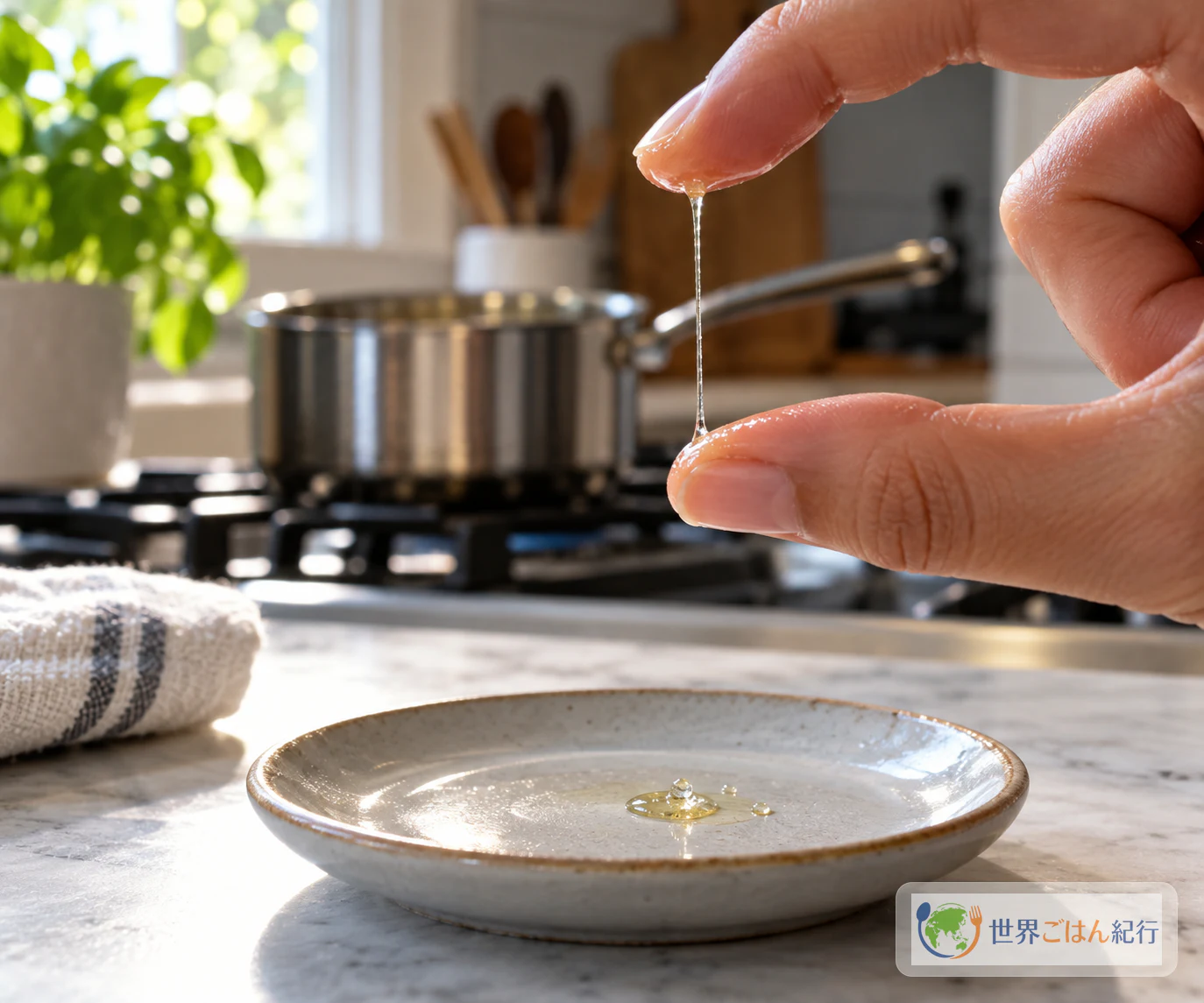
A thin, crisp, golden line on the outside and warm syrup held inside. Judge the batter by its bubbles and flow, the syrup by a single cooled thread, and the oil with a thermometer.
In Indore, in central India, a bowl of yellow poha scattered with crunchy sev is often joined by a few golden spirals of jalebi. India's Ministry of Tourism presents this pairing in its guide to the Malwa cuisine of Madhya Pradesh as a recognizable breakfast: savory, spiced flattened rice on one side and a syrupy fried sweet on the other. Here jalebi is not only an after-dinner bite but part of a morning plate where sweetness sits right next to salt and spice.
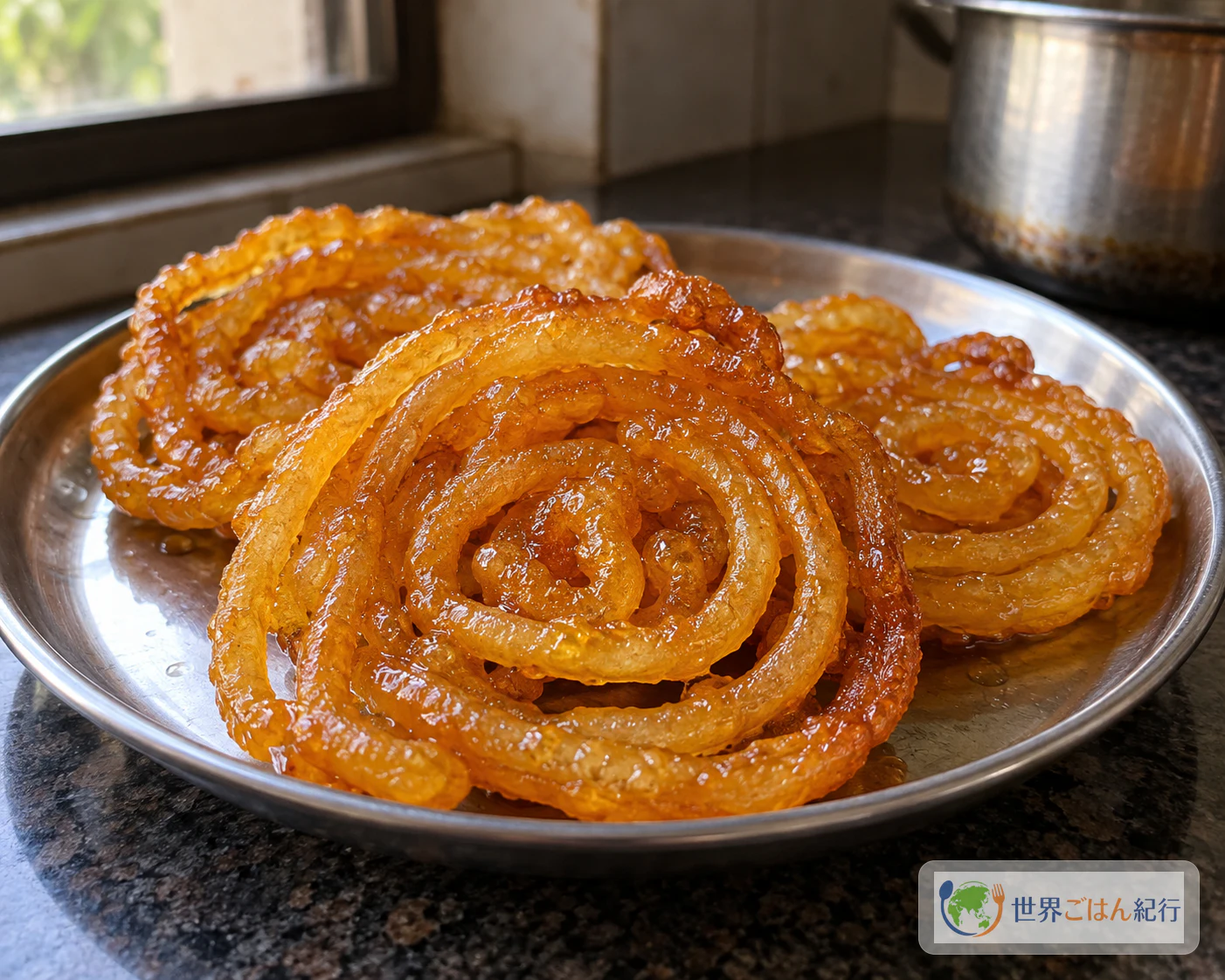
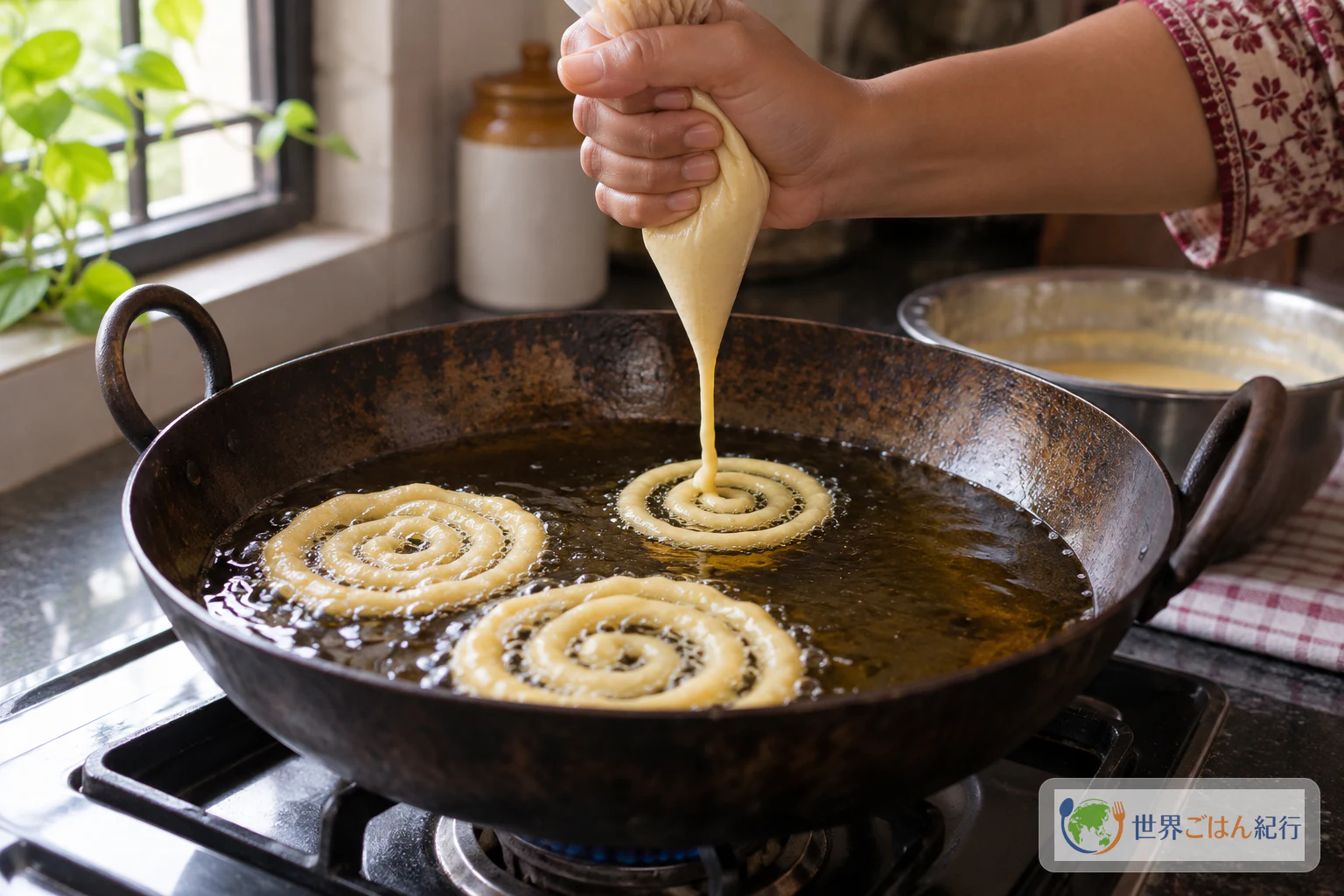
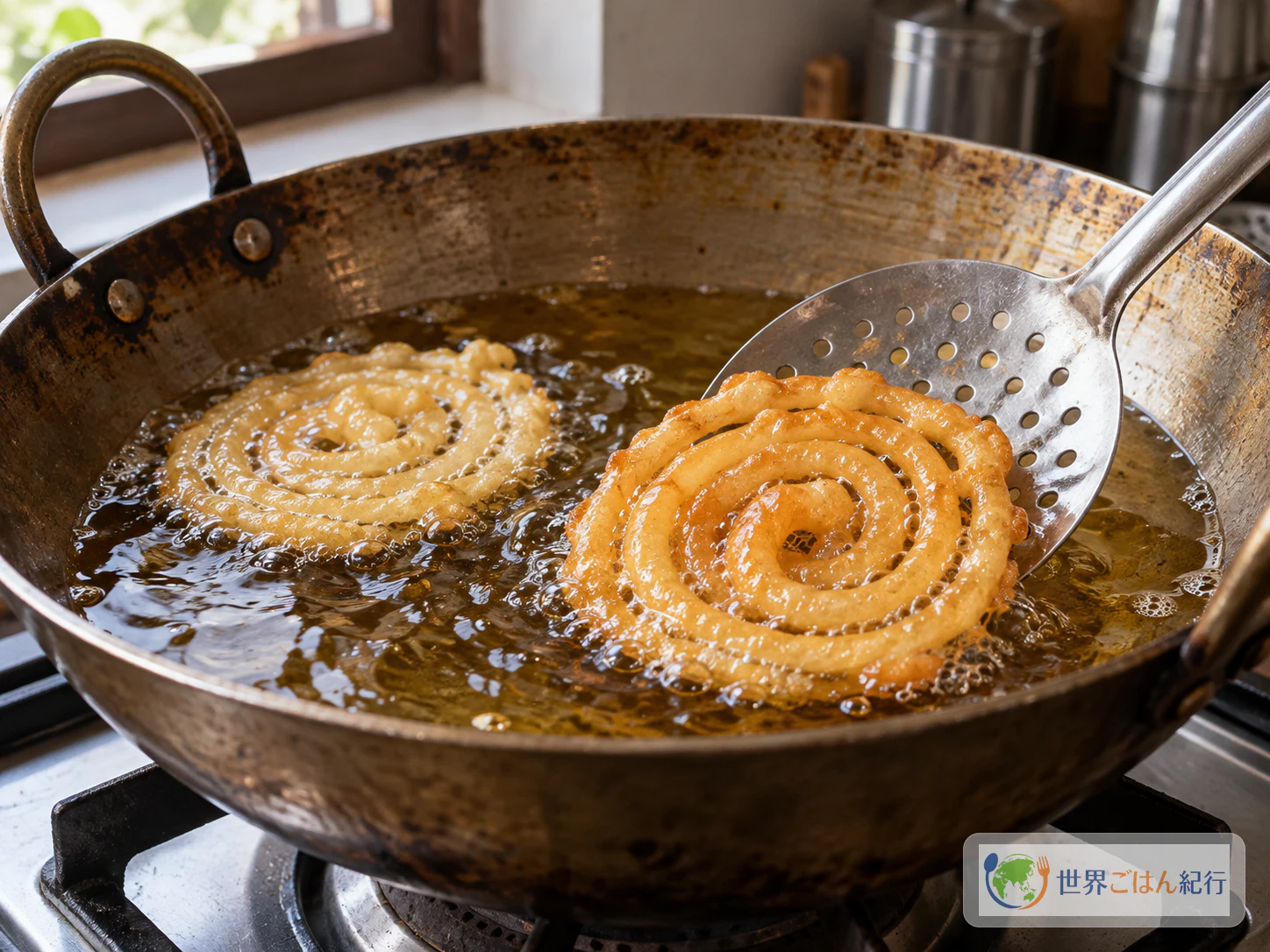
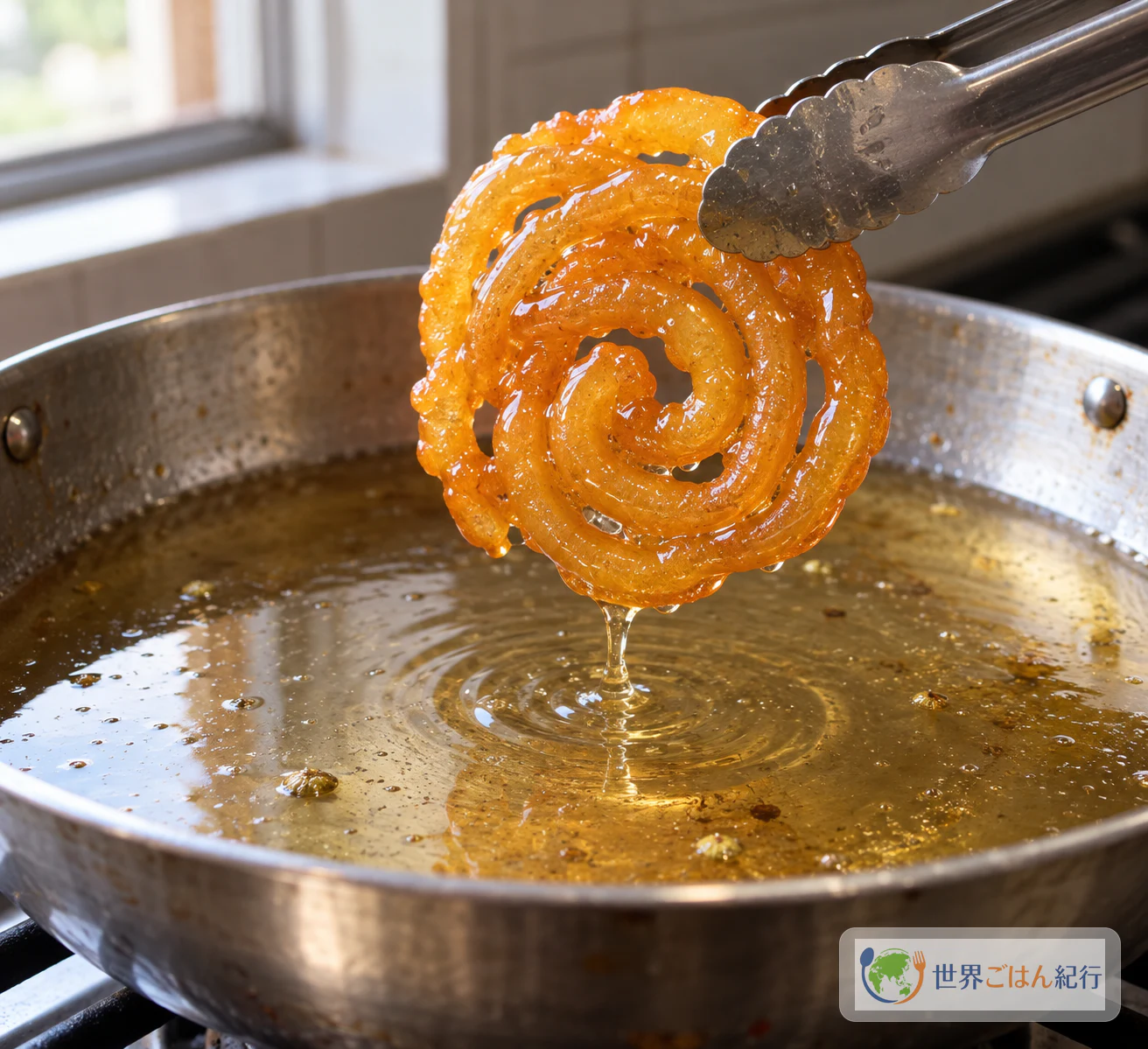
That contrast is what jalebi is built for. A thin batter of wheat flour and besan (chickpea flour) is left to ferment, piped in loose coils into hot oil, and fried until the line sets and turns light gold. While still hot, the spirals go into warm sugar syrup for a short soak, so the outside keeps a light crunch while the inside takes on syrup.
This recipe follows a home method built on fermented batter. The three things that decide success are the thickness of the batter, the strength of the syrup and the temperature of the oil, and the steps below show how to read each one by sight rather than by the clock alone. The Indore breakfast is one regional example, not a description of how all of India eats jalebi.
What Is Jalebi?
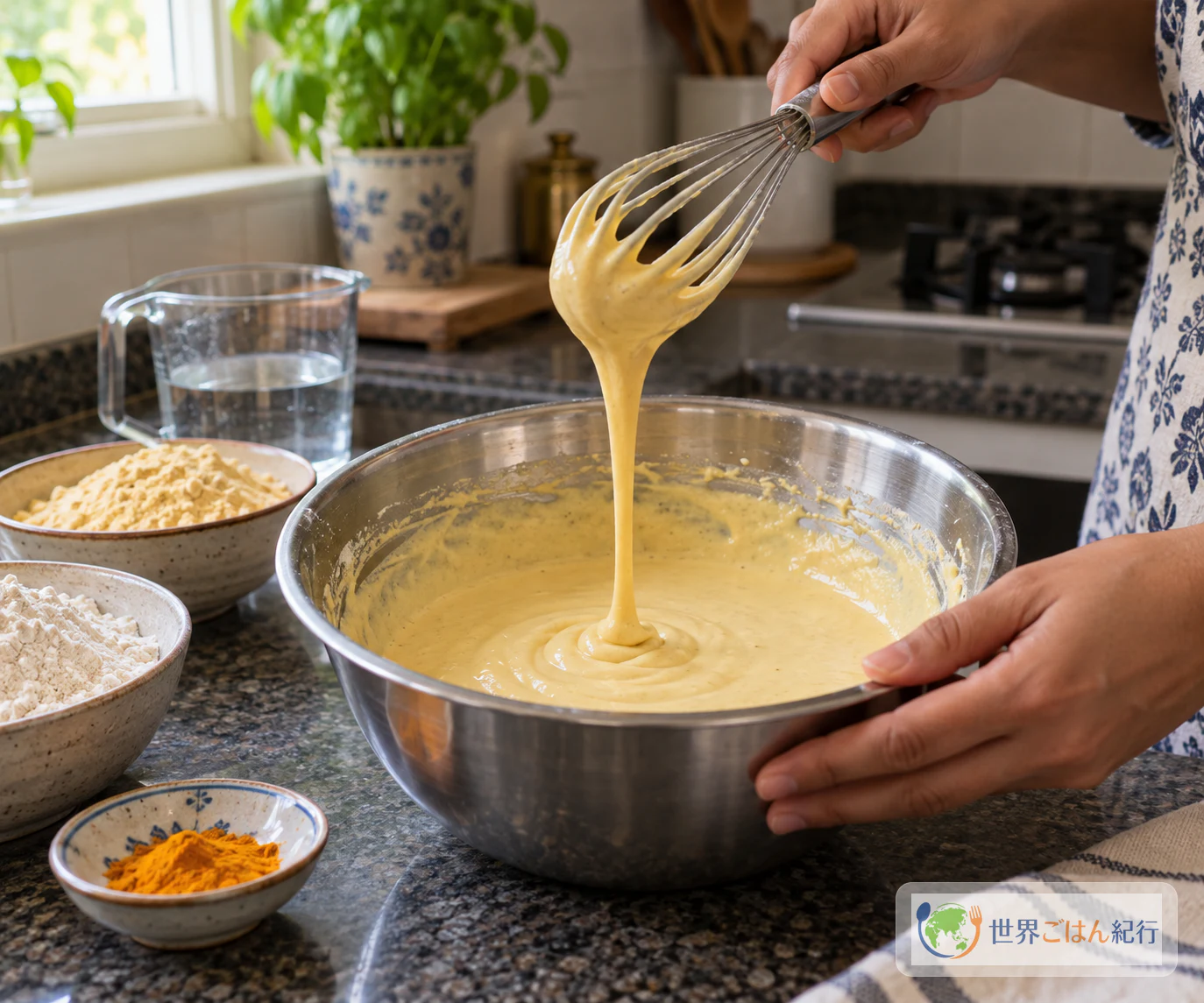
Jalebi (जलेबी) is a sweet made by frying a thin stream of fermented wheat batter in coils and then soaking it in sugar syrup. The recipe used here combines maida (refined wheat flour) with besan and water, and rests the batter for several hours until it ferments. The finished spirals are deliberately a little irregular: overlapping rings with a crisp surface and syrup held inside. Food coloring is not needed; a small pinch of turmeric, or optional saffron, gives a pale gold.
Jalebi is known by related names across a wide area. A history feature on Live History India lists names such as zlabia, zalabiya, zoolabiya, jilbi and jilapi, and reports a recipe in the 13th-century cookbook of al-Baghdadi and an Indian reference in a 15th-century Jain text. The same article also says the actual origin is difficult to pinpoint. It is fair to say that similar sweets and names are found from West Asia to South Asia and that jalebi took on its own regional forms in India, but neither a place of invention nor a single route of travel can be stated as fact. The same feature notes that Indian recipes vary in their ingredients, with versions using urad dal, rice flour, besan, semolina, chhena or khoa.
How Jalebi Differs from Imarti and Jangiri
Imarti and jangiri (also written jangri) look like close cousins, but they are not simply other names for jalebi. A university teaching resource on Indian sweets describes imarti and jangiri as made from urad dal rather than maida, with a more organized, flower-like piped pattern. Jalebi, by contrast, is a fermented wheat batter fried in looser coils. Names, shapes and proportions shift from region to region, so this article keeps it simple: the recipe below is the wheat-and-besan fermented jalebi, and no urad dal batter is mixed in.
Ingredients for 20 Pieces (Source Recipe Card)
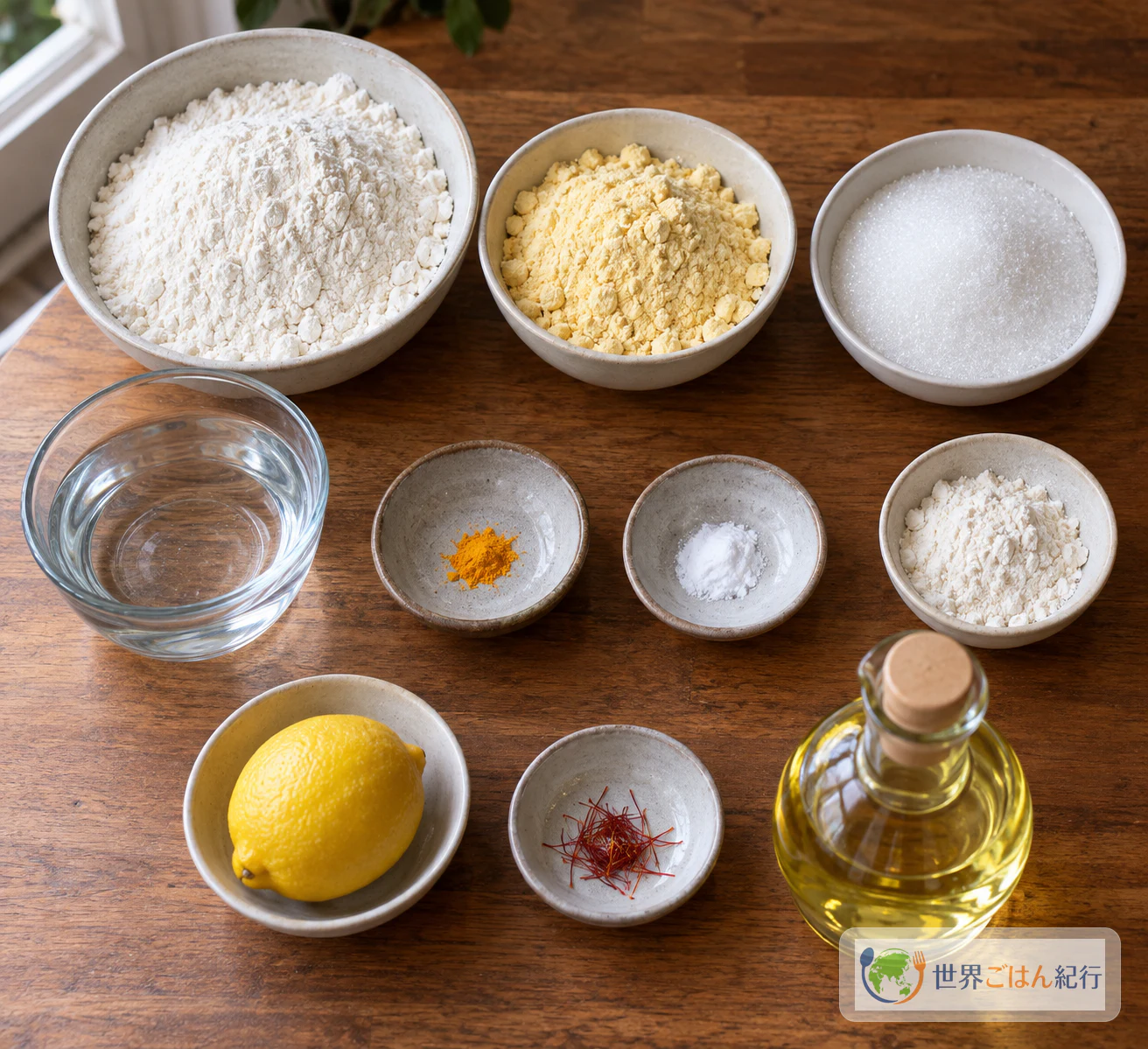
This makes about 20 pieces. How many you actually get depends on how thick you pipe and how wide you make each spiral; expect about 15–20 spirals of roughly 5–6 cm across.
This recipe contains wheat, and besan is made from chickpeas, a legume. It is not gluten-free. Check the labels of your flours for cross-contact statements from the type of flour or the production line.
Choosing Flours, Sugar and Flavorings
Flour. Maida is not exactly the same as any one supermarket flour outside India. Use all-purpose flour. A lower-protein flour leans toward a lighter bite, a medium-protein flour adds more chew, and bread flour is best avoided.
Besan. Look for besan at an Indian grocer first. Other chickpea flours work, but the fineness of the grind changes how much water they absorb, so watch the batter's thickness. Do not replace besan with potato starch or cornstarch; the flavor, absorption and behavior of the batter are different.
Baking soda. Some recipes use about 1/4 tsp baking powder instead, but that changes the rise and the flavor, so it is not part of this recipe.
Sugar. Granulated sugar is the easiest to work with. Less refined cane sugar gives a deeper color and aroma.
Color and aroma. Turmeric can be left out if you don't need the color, and there is no reason to push the spirals to bright orange with food coloring. Saffron is expensive and entirely optional. Swapping it for cardamom gives a different aroma, so treat that as a separate variation rather than a substitute.
Oil. A neutral oil such as rapeseed (canola) oil is fine. Mixing in ghee gives a stronger aroma but can be skipped.
Equipment
- Mixing bowl and whisk
- A clean bowl with a lid for fermenting
- Piping bag with a round tip of about 4–5 mm, or a thick food-safe bag with a small corner snipped off
- Deep pot or kadai with plenty of room above the oil
- Frying thermometer
- Long chopsticks or tongs, and a slotted spoon
- Wire rack
- Saucepan or shallow pan for the syrup
- A small plate for testing the syrup
A round tip makes it easier to keep the line even; a snipped bag tends to give a less even thickness. A bag works, so a piping set is not essential.
Method: Batter, Syrup, Oil, Then the Spirals
Fermentation time depends heavily on the temperature of your kitchen. Make the syrup and set up the frying station while the batter rests, then judge each stage by bubbles, flow, the syrup thread and how the batter behaves in the oil.
Keep water away from the frying oil and never pour water into it. Leave plenty of room between the oil surface and the rim of the pot, and do not leave hot oil unattended. Move the fried spirals into the warm syrup; never pour syrup into the oil pot, and never return wet tools to the oil. Never touch hot syrup in the pan. Because you will be handling hot oil and syrup at the same time, a helper is useful if you have one.
Spreading, Breaking, Sticky: Fixing One Thing at a Time
Change one variable at a time: batter, oil or syrup. Fixing everything at once makes it hard to know what worked.
| Problem | Likely cause | What to do |
|---|---|---|
| Spirals spread and blur | Batter too thin after fermenting | Add flour about 1 tsp at a time from the extra 1–2 tbsp and test again. Make the bag opening smaller |
| Batter won't come out of the bag, or the line breaks | Batter too stiff | Add water 1 tsp at a time. Stir the fermented batter once and recheck its thickness |
| Shapes fall apart in the oil | Oil temperature off, pot crowded | Check the oil with a thermometer, pipe a small test first, and fry only 2–3 at a time |
| Sticky, not crisp | Oil too cool, syrup too thin, or soaked too long | Check each one separately. Note how far you reduced the syrup and how warm it was |
| Sugar turns white and crystallizes as it cools | Syrup cooked too far | Use the 1/4 tsp lemon juice, and don't cook beyond one-string |
| Strongly sour smell | Over-fermented | Next time, stop by bubbles and aroma rather than time. If the smell is unpleasant, discard the batter |
Variations
- Saffron syrup. Add a pinch of saffron to the syrup in step 3 for aroma and a golden tone. Keep it light so it doesn't overwhelm the spirals.
- Clear syrup without lemon juice. Possible, but it gives less protection against crystallization. Try it only as a comparison, not as your standard batch.
- Round tip versus a snipped bag. A round tip gives a more even line; a snipped food bag is easy to improvise but varies more in thickness, so practice a few spirals first.
- A faster batter. Other recipes take a different route, such as a short rest with yoghurt and rice flour. That is a separate formula, not a shortcut for this batter (see the FAQ).
Jalebi on the Table in India
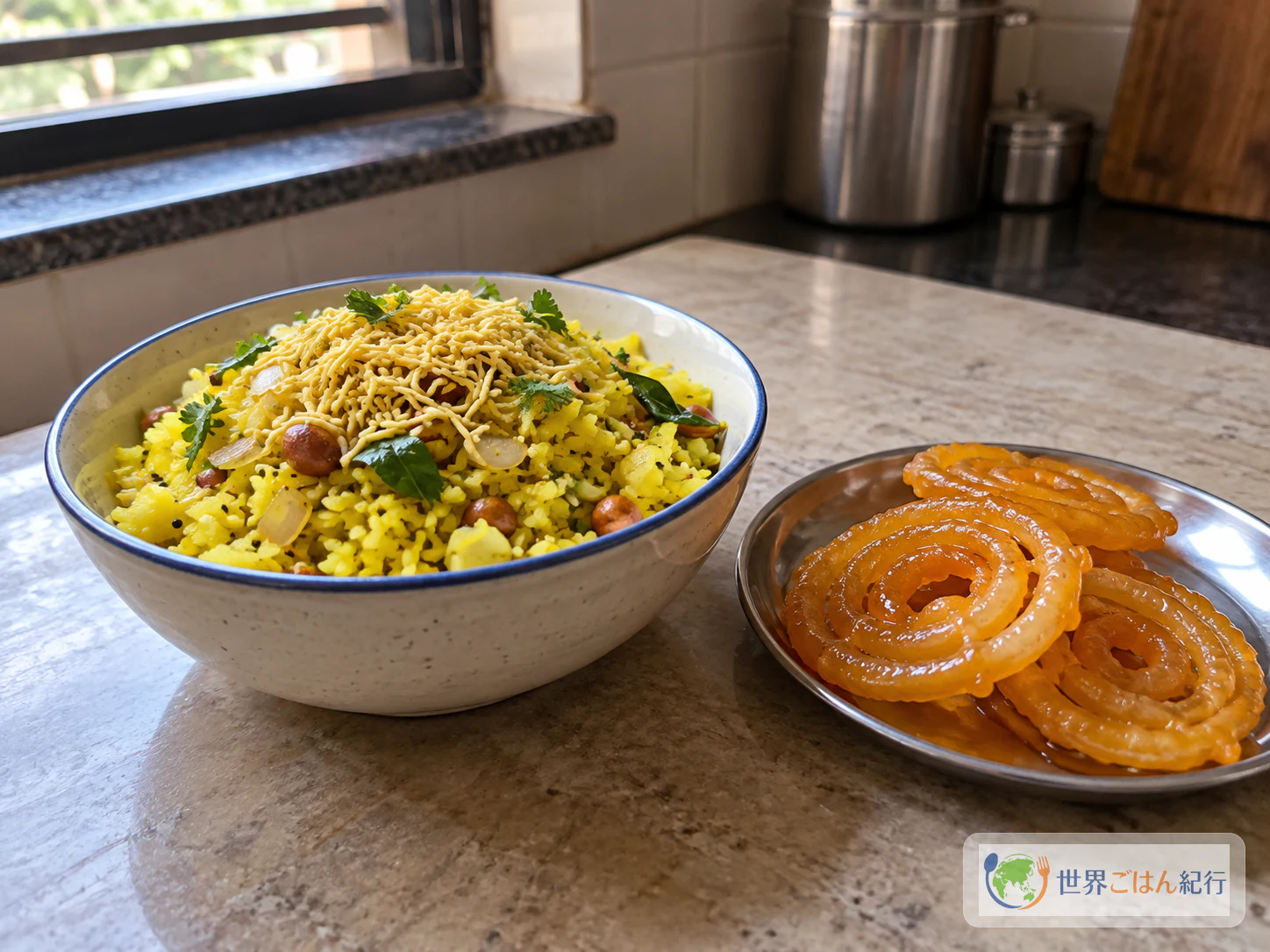
In Indore, the Ministry of Tourism's guide to Malwa cuisine describes poha served alongside jalebi and sev as a well-known breakfast. Spiced, savory poha and a sweet fried spiral are eaten side by side, sweetness and salt in one meal. The same guide notes that Malwa's cooking draws on neighboring Gujarat, Maharashtra and Rajasthan.
This is a regional picture from central India, not a nationwide custom. Across India, jalebi takes different forms: recipes vary in their flours and ingredients, and the university resource on Indian sweets notes that jalebi may be served warm or cool and that optional flavorings vary. SBS Food presents jalebi as a celebratory Indian sweet. At home, a few warm spirals next to a savory breakfast is one way to taste the contrast the Indore pairing is built on.
Leftovers
Jalebi is best eaten the day it is made, ideally warm. The source recipe suggests keeping leftovers in an airtight container in the refrigerator, but the crisp texture can be lost. This is not a sweet that keeps for long at room temperature; if you do store some, refrigerate it promptly.
Frequently Asked Questions
Can I shorten the fermentation?
Let the batter's bubbles and aroma decide, not a target time; warm kitchens ferment faster on their own. There are faster recipes, such as one from SBS Food that uses yoghurt and rice flour with a rest of about 4 hours, but that is a different formula. Don't mix its ingredients or amounts into this batter.
Can I replace besan with potato starch or cornstarch?
No. Flavor, water absorption and how the batter behaves are all different. Look for besan or another chickpea flour, and adjust the water if the grind is different.
Can I make it without a piping bag?
Yes. Use a thick food-safe bag and snip a small opening in one corner. The line tends to vary more in thickness, so pipe one test spiral and adjust before frying the rest.
Is jalebi the same as imarti or jangiri?
No. They can look similar, but imarti and jangiri are made from urad dal batter and piped into a more regular flower shape. This recipe is jalebi made from a fermented wheat-and-besan batter.
Do I need food coloring?
No. A small pinch of turmeric gives a pale gold, or you can leave it out. Saffron adds aroma as well as color.
Will jalebi stay crisp the next day?
The lightness of a fried sweet fades with time, so it is best fresh. Refrigerated leftovers can lose their crisp texture, and this recipe does not promise how long they keep.
Sources
- Dassana Amit, "Jalebi Recipe (Crispy)," Dassana's Veg Recipes. The basis for this recipe's ingredients and amounts, the 20-piece yield on the recipe card, the fermented maida-and-besan batter and how fermentation depends on climate, the one-string syrup test, frying at about 176°C, the warm 2–3 minute soak, and practical troubleshooting. A personal recipe, not a standard; times vary with climate and flour. https://www.vegrecipesofindia.com/jalebi-recipe-how-to-make-jalebi/
- Angela Nahas, "Jalebi," SBS Food. Presents jalebi as a celebratory Indian sweet and gives a separate, faster yoghurt and rice-flour batter with about a 4-hour rest; referred to here only as a different method, not combined with this recipe. https://www.sbs.com.au/food/recipe/jalebi/fowo2ctt0
- Incredible India, Ministry of Tourism, Government of India, "Malwa Cuisine of Madhya Pradesh - A tinge of rich flavours!" Indori poha served with jalebi and sev as a recognizable breakfast, and Malwa's culinary links to Gujarat, Maharashtra and Rajasthan. A regional overview, not a source on origins or a single jalebi recipe. https://www.incredibleindia.gov.in/en/madhya-pradesh/indore/malwa-cuisine-of-madhya-pradesh
- Amrusha Chati, "Jalebi - Swirls of History," Live History India. Related names such as zlabia, zalabiya, zoolabiya, jilbi and jilapi; the reported references in a 13th-century al-Baghdadi cookbook and a 15th-century Jain text; regional ingredient variations. The article itself says the origin is difficult to pinpoint. https://www.livehistoryindia.com/story/living-culture/jalebi-the-swirls-of-history
- Chhatrapati Shahu Ji Maharaj University, Gyansanchay teaching resource, "Indian Sweets." Jalebi as a fermented wheat batter fried in coils and soaked in syrup; imarti and jangiri as urad-based with a more organized flower pattern; warm or cool service and optional flavorings. Used only for these broad distinctions. https://gyansanchay.csjmu.ac.in/wp-content/uploads/2021/11/indian-sweets.pdf