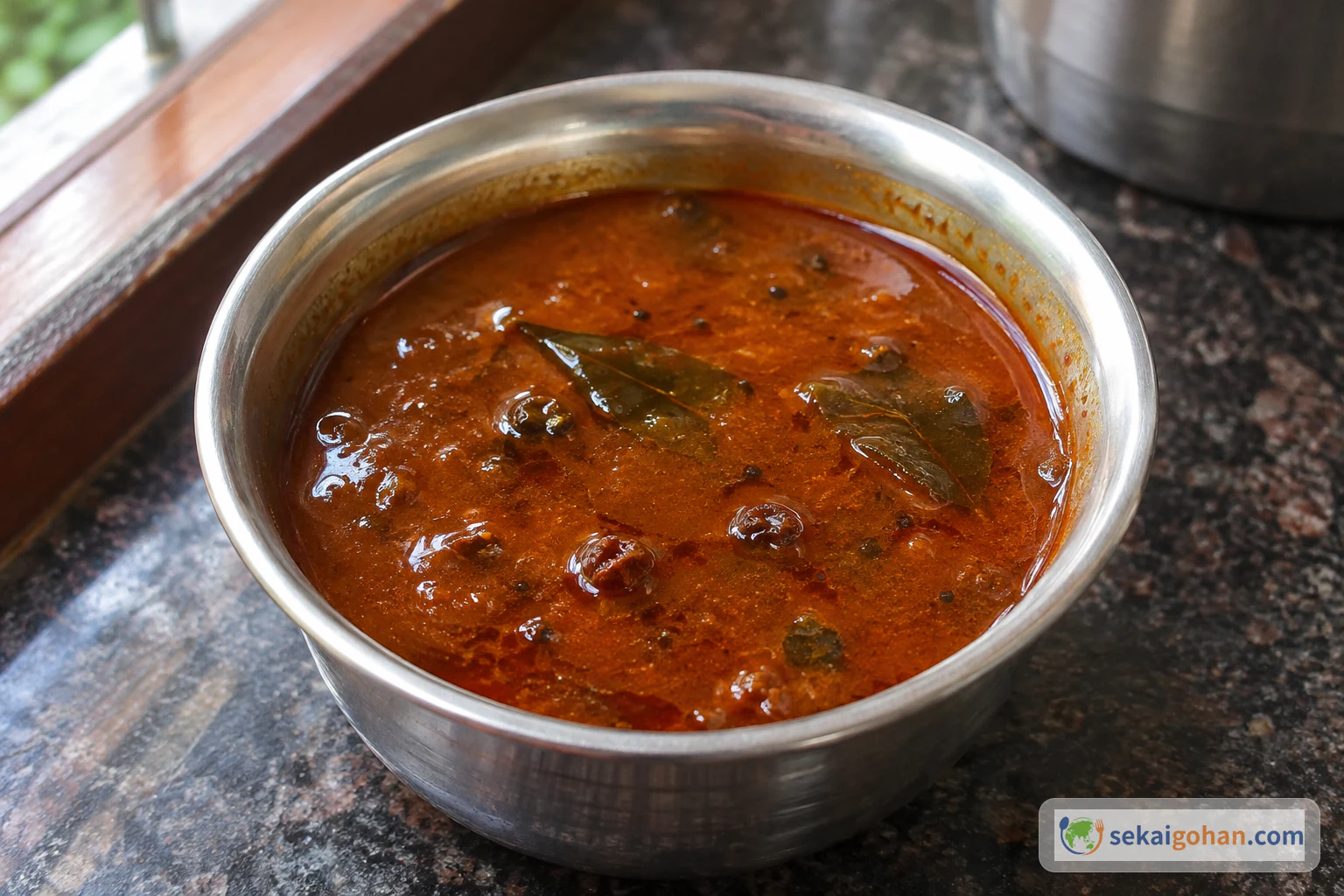
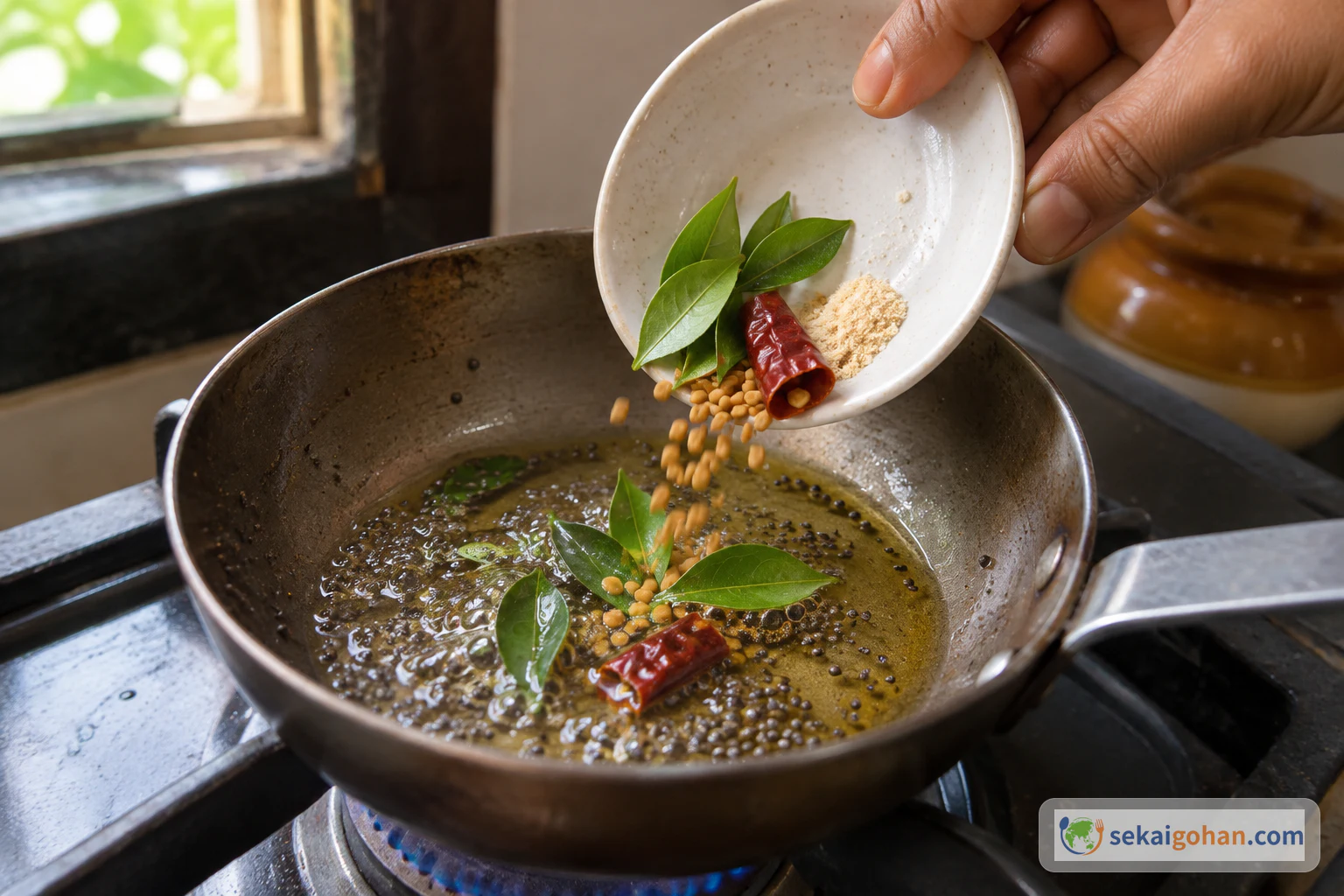
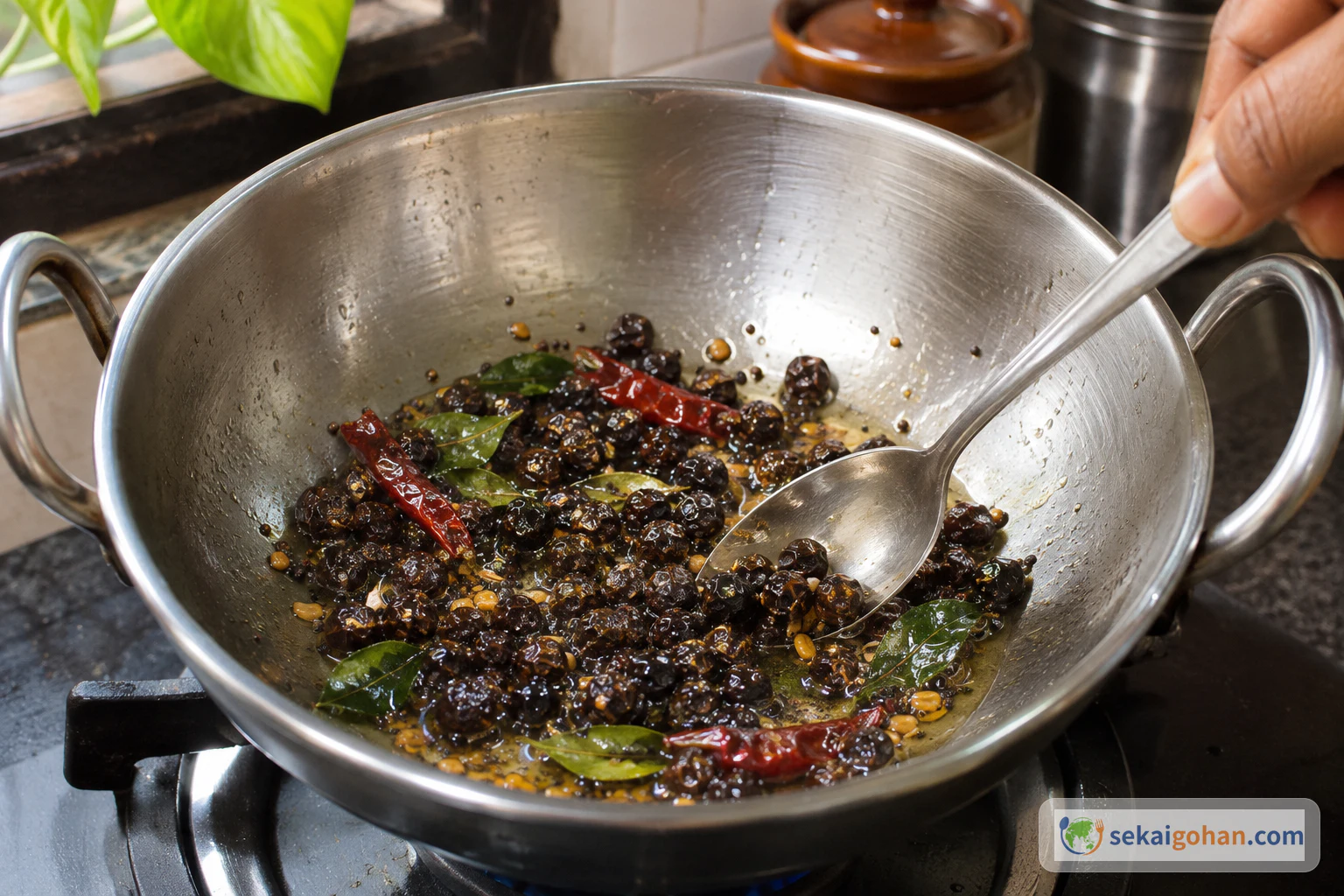
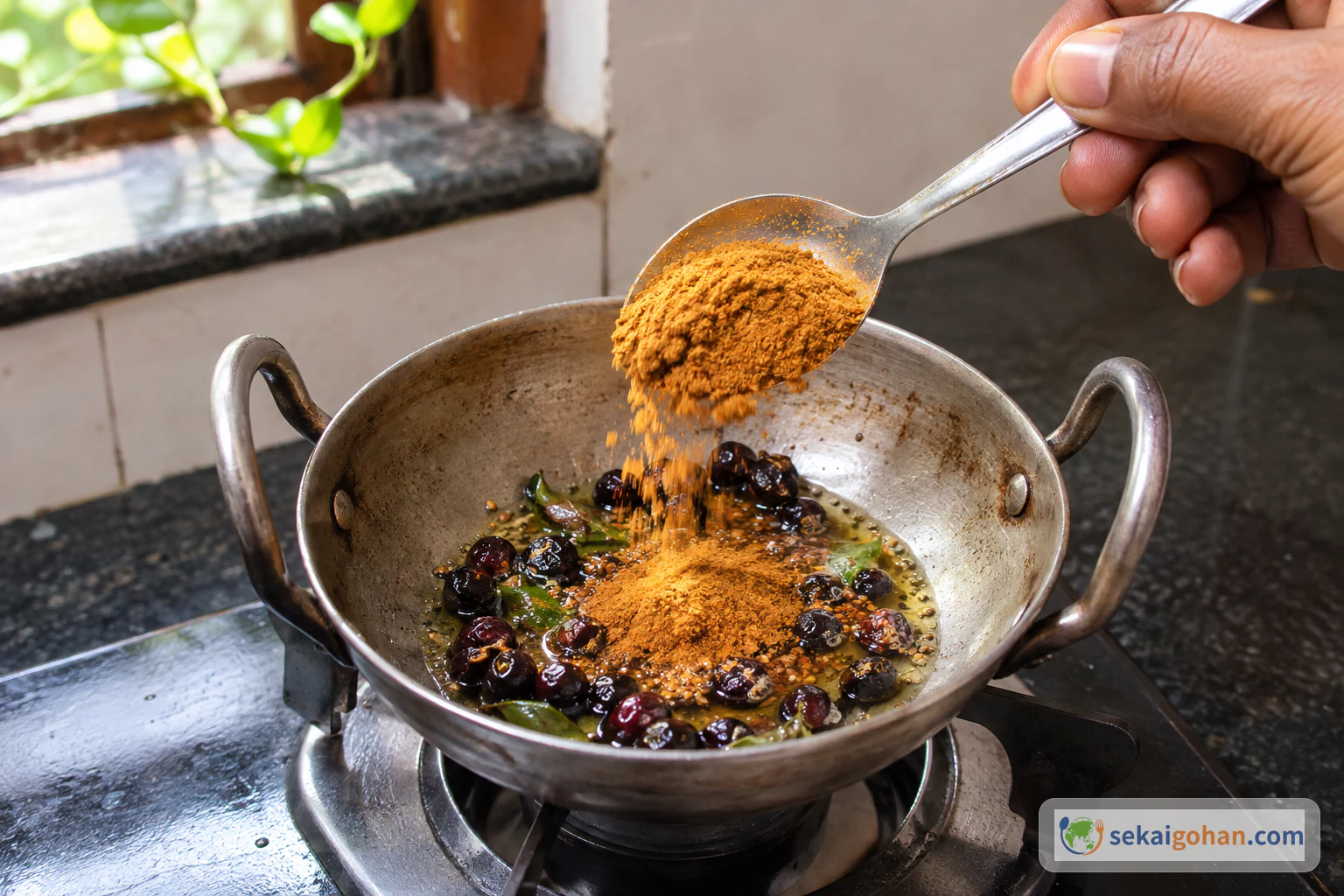
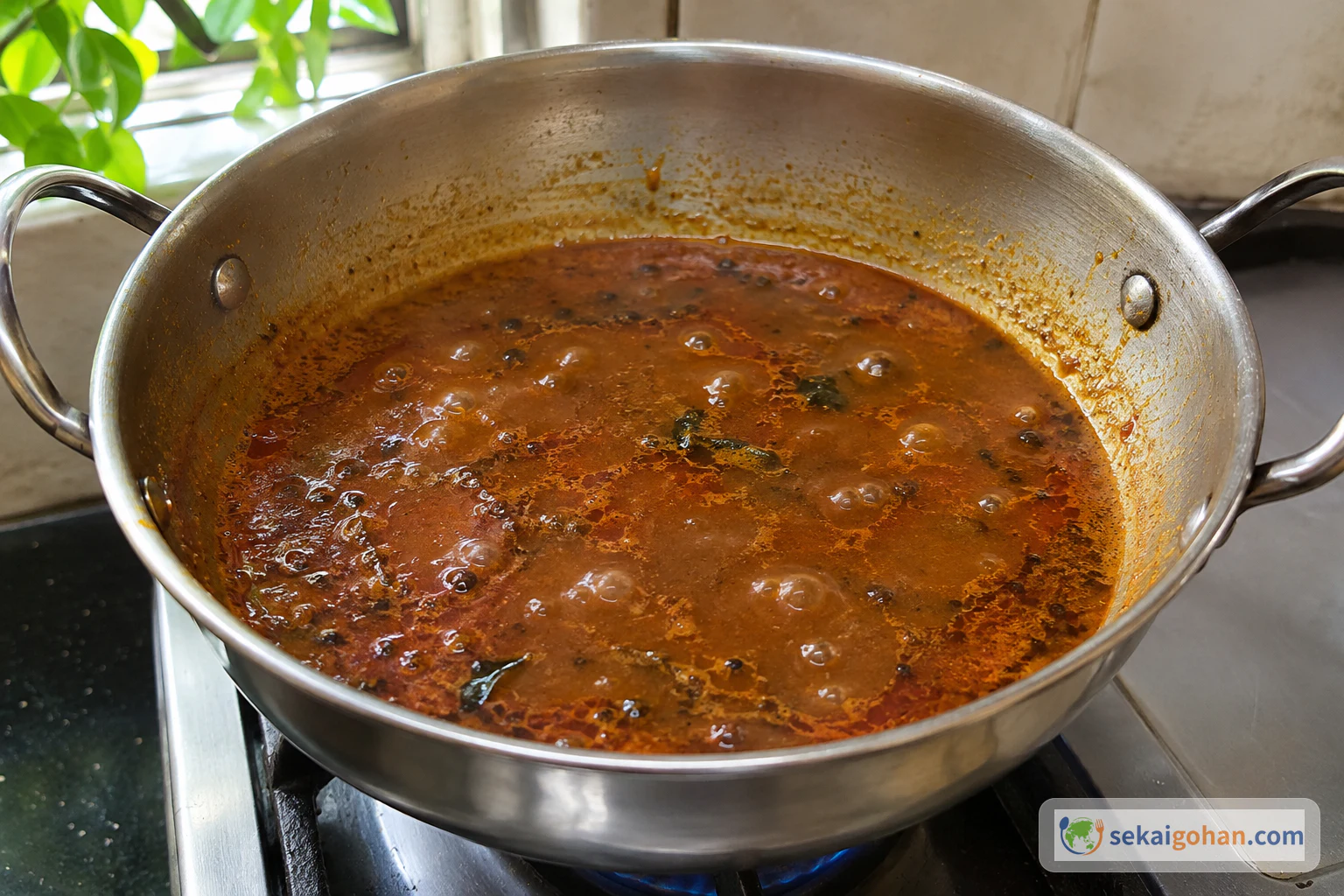
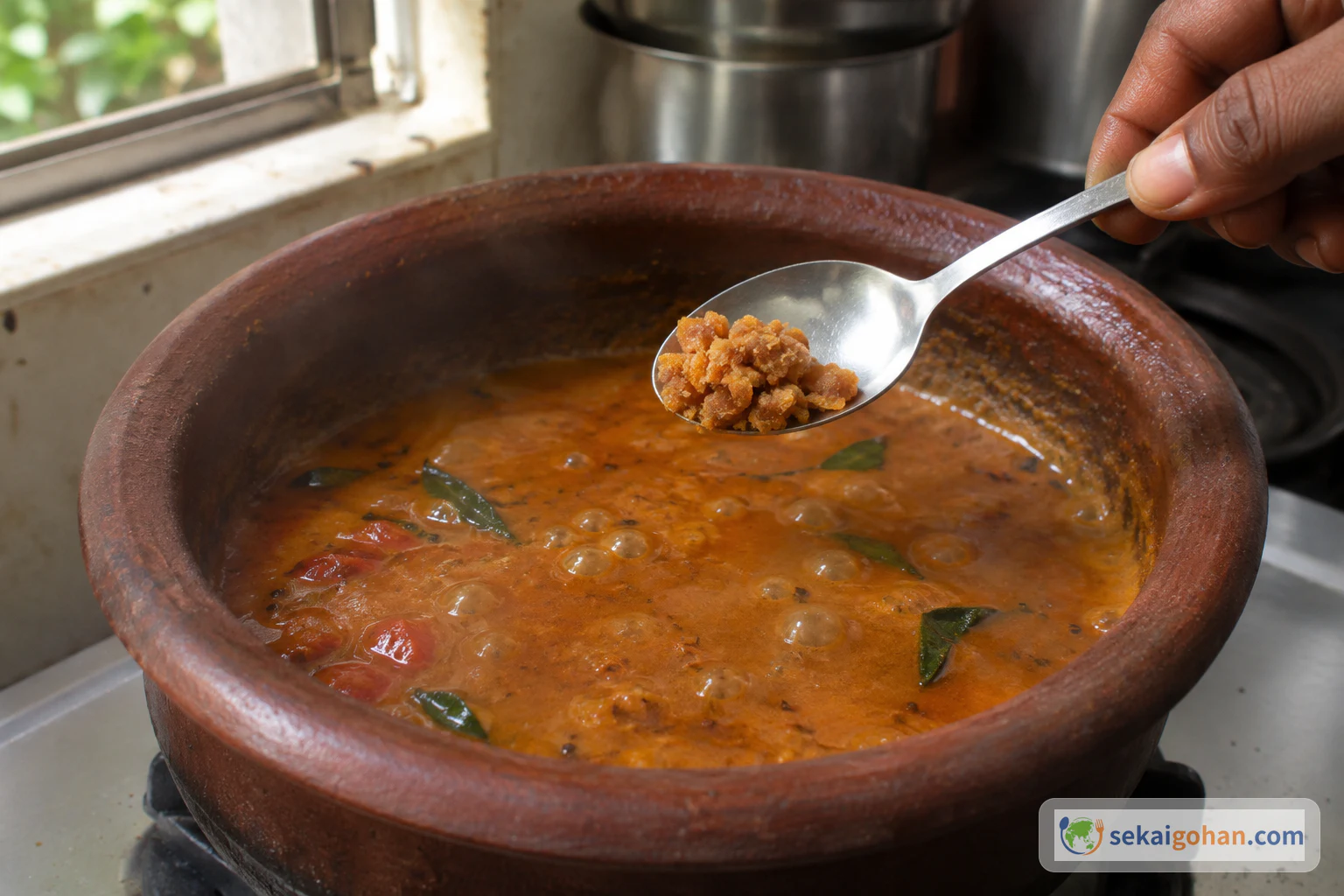
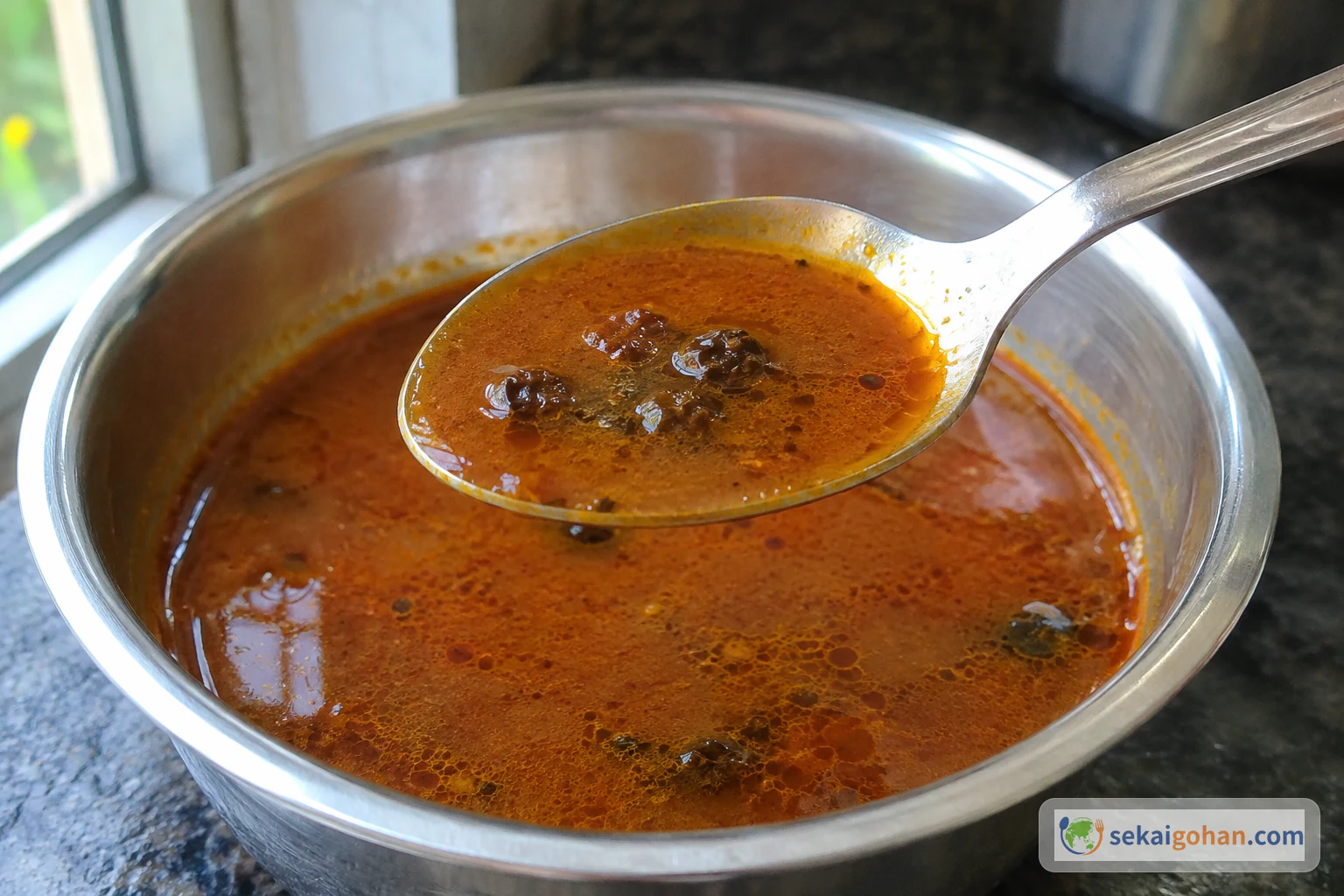
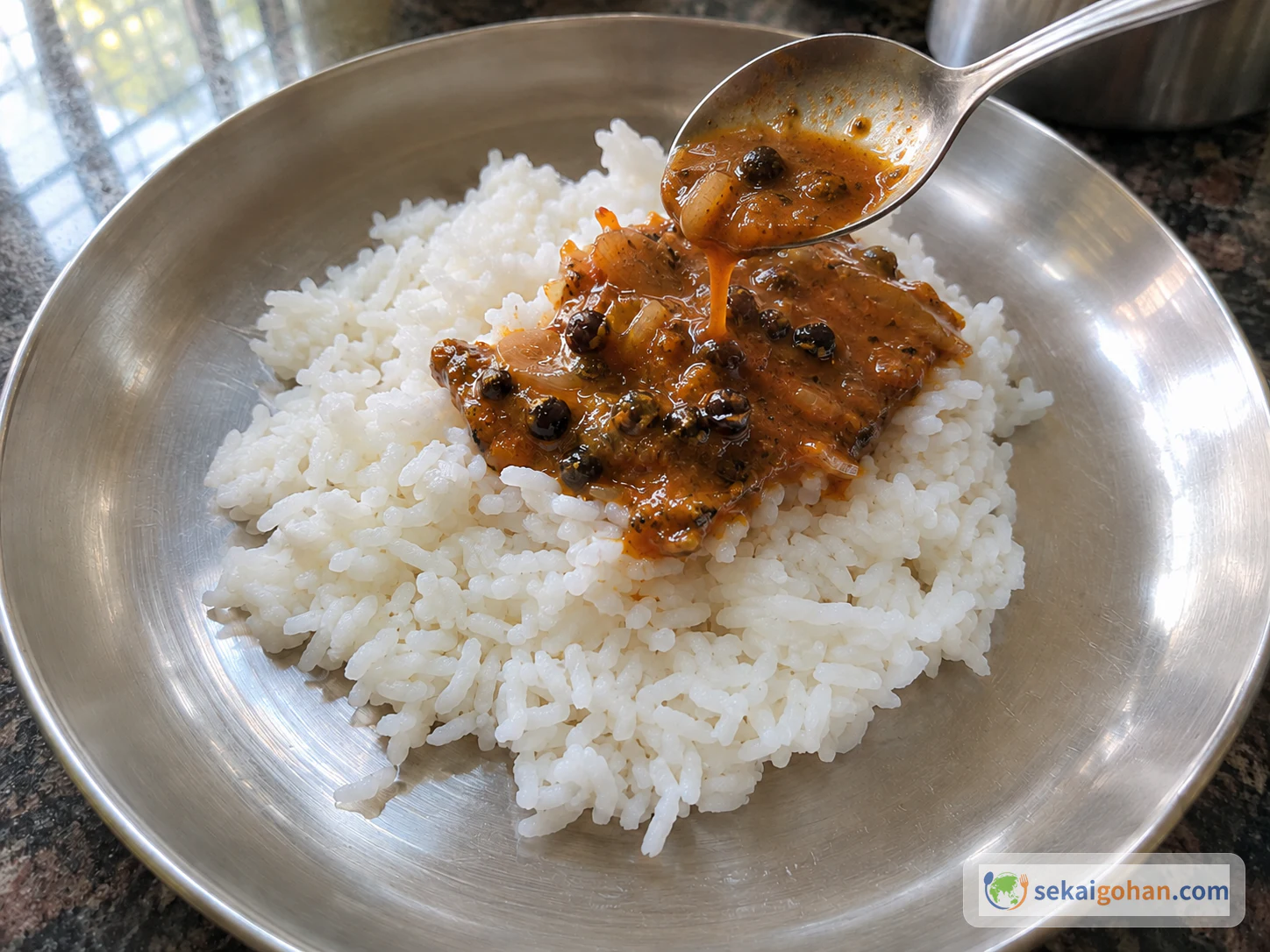
The mustard seeds crackle in a thin pool of sesame oil, the curry leaves hiss, and then a spoonful of small, dark, wrinkled berries goes in. They shift colour within seconds, and the kitchen fills with a toasty, slightly bitter smell. What follows is manathakkali vathal kuzhambu, a Tamil tamarind gravy built on sun-dried nightshade berries. It is sour first, then bitter, then warm with chili and sambar powder. You eat it a spoonful at a time, mixed into hot white rice, and a little goes a long way.
A Gravy Named for the Pot, Flavoured by a Dried Berry
In Tamil kitchens, kuzhambu is a broad name for gravies cooked to go with rice, most of them sharpened with tamarind. It names a family of dishes, and the pot changes completely from one recipe to the next. In Chettinad cooking, a vathal kuzhambu is made with eggplant, pearl onions and sundakkai, a different dried berry that is fried crisp and set aside before the gravy goes on. A Tamil menu can list a mixed-vegetable sambar under the name kuzhambu, thick with toor dal and vegetables. Paruppu urundai kuzhambu is something else again: coarsely ground lentils shaped into balls and simmered in tamarind gravy until they float.
The version here is the plainest of them. It has no onion, no garlic, no dal and no vegetables. Its body comes from tamarind water and sambar powder, and its character comes from the vathal. That separates it clearly from a dal-and-vegetable sambar, which is fuller and milder, and from a thin, peppery rasam, which is sipped as much as it is poured. Kuzhambu sits between the two: thicker than rasam, sharper than sambar, and served in smaller amounts.
What vathal brings
Vathal means vegetables or berries dried in the sun, and manathakkali is the berry of black nightshade. Dried, the berries turn dark and hard. Fried briefly in oil, they soften in the gravy and give each mouthful a clean bitter note that the tamarind's sourness and the chili's heat play against. Some households fold in onion or garlic, and some use sundakkai instead of manathakkali, so the same name covers several pots even within one town. You can read more about the wider table on our India page.
Kuzhambu is also written kulambu, and the dish appears as vatha kuzhambu, vathal kulambu or vatha kulambu. The berries are sold as manathakkali vathal, manathakkali vatral or vatra, and sometimes in English as dried black nightshade berries or sun berries. Searching under several of these spellings helps you find the dried berries in shops.
Ingredients (serves 4)
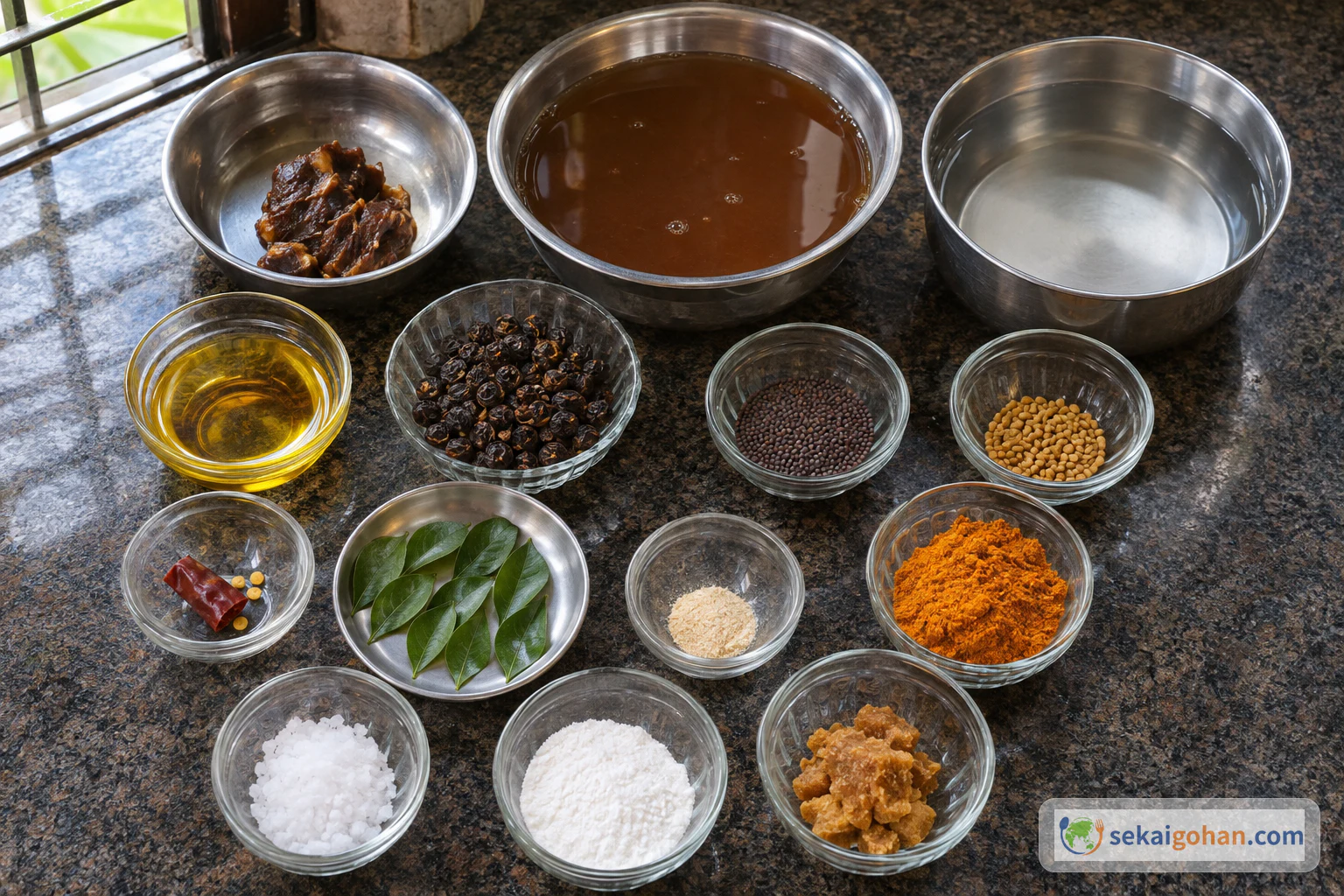
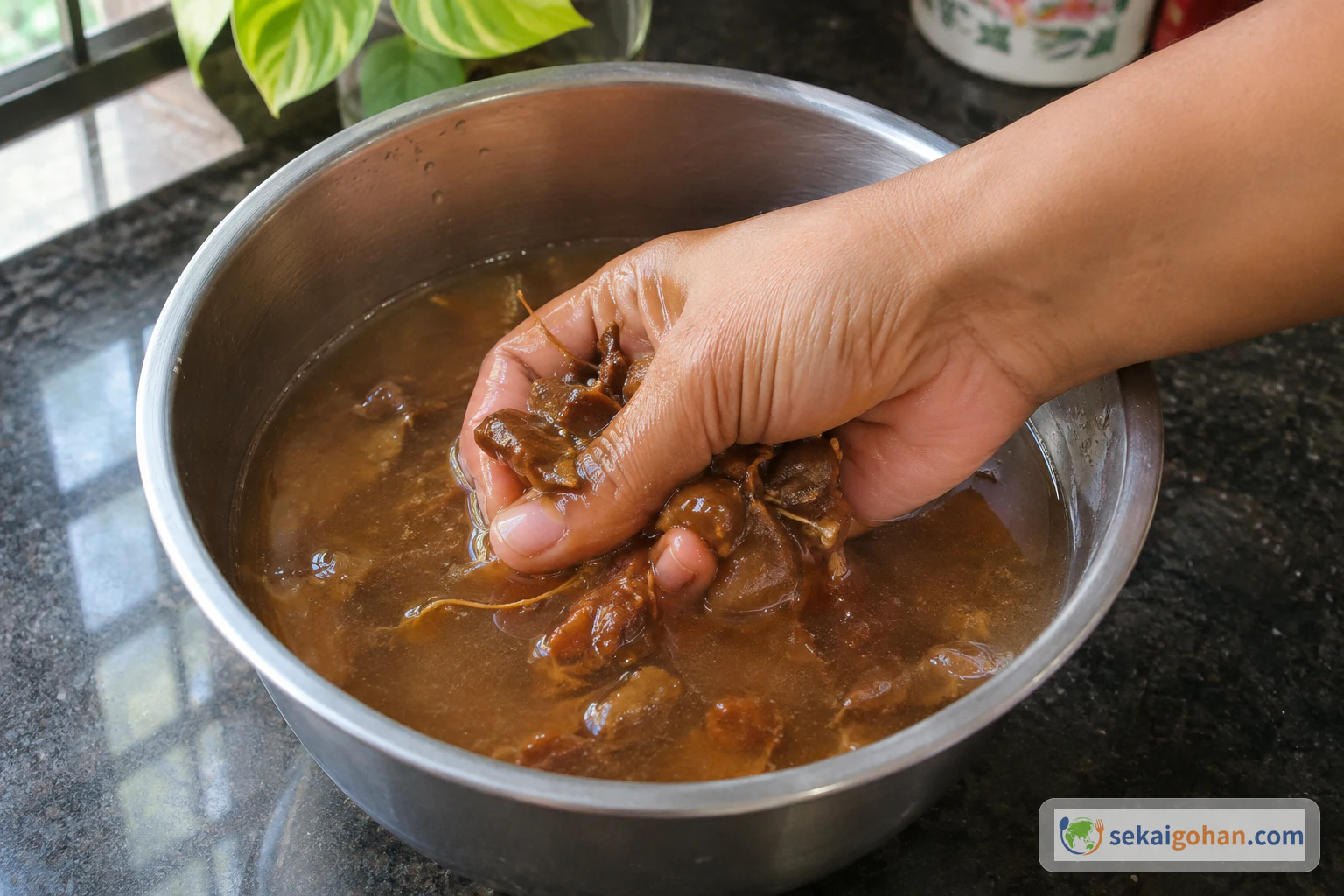
Press the tamarind firmly into the tablespoon until no air pockets remain. A loosely filled spoon gives a weak, flat gravy, because the tamarind is the only source of sourness in the pot.
The dish contains sesame through the gingelly oil. Manathakkali vathal is traditionally cured in buttermilk before drying, and asafoetida and sambar powder blends can contain wheat or other fillers. If milk, wheat or other allergens matter at your table, read the labels on the berries, the hing and the sambar powder before you cook.
Equipment
- A small, heavy-bottomed pan or pot
- A small bowl with a lid or plate for soaking the tamarind
- A fine strainer
- A spoon or small spatula for stirring
- A small dish for the tempering spices
What to Buy and What It Changes
Manathakkali vathal is the one ingredient worth a special trip. Look for it at Indian or South Asian grocers or from online Indian food shops, sold in packs labelled manathakkali vathal or dried black nightshade berries. Check that the pack is sold as food and lists its ingredients; a label may read simply berries and salt. Eggplant or other dried fruit cannot stand in for it, because they lack the bitterness that defines the dish.
Use only dried manathakkali vathal sold as food. Never use fresh or green nightshade berries, berries picked from a garden or roadside, or ornamental plants, because unripe green nightshade berries are poisonous and the related plants are hard to tell apart even for botanists. Do not try to cure or dry the berries at home.
The rest comes from the same shop or a well-stocked supermarket. Gingelly oil is cold-pressed oil from raw sesame seeds, pale gold and mild; toasted sesame oil from East Asian cooking is a different, much darker oil and brings a strong roasted smell the dish does not have. Tamarind sold as a pressed block is easy to pack into a spoon. Sambar powder differs a lot between brands in heat and salt, so taste the gravy before you add the final salt. Curry leaves and hing are both sold at Indian grocers, and curry leaves keep their aroma best fresh.
Jaggery and rice flour are both optional. Leave out the jaggery and the gravy tastes sharper and more direct; leave out the rice flour and it stays thin and pourable. Neither changes what the dish is.
Method: Low Heat Up Front, a Quiet Simmer After
Start the tamarind first; its soak is the only waiting time before the stove work. While it soaks, measure the tempering spices into one small dish and set the berries and sambar powder beside the pan, because once the oil is hot each step follows the last within seconds. After the liquid goes in, the pot simmers mostly on its own.
When It Goes Wrong
| What you see | Why | What to do |
|---|---|---|
| The gravy tastes harsh and burnt | The fenugreek, berries or sambar powder scorched in the oil | Burnt spice flavour does not cook out. Start again with fresh oil, keep the heat low and add the powder only with the flame off |
| The gravy is thin and watery | It has not simmered long enough, or the flame was too low | Keep it at a gentle boil until oil droplets rise to the surface; the optional rice flour also helps |
| It has reduced too far and tastes too strong | The boil was too hard or the pan too wide | Next time keep the bubbles small and judge by the surface rather than the time. Serve it in smaller amounts on more rice |
| It is too sour | The tamarind was strong, or the portion on the plate is too large | Serve less gravy to more rice; the optional jaggery softens the edge |
| Grit or fibres in the gravy | The tamarind extract was not strained | Always strain the extract before it goes into the pan |
| It is too salty | Sambar powder brands differ in salt | Taste after the simmer before adding any more salt; next time salt more lightly at the start |
Serving and Variations
At the table
The kuzhambu goes with hot steamed white rice, mixed in at the table a little at a time. It is a strong, concentrated gravy, so serve it in a small portion beside the rice. A vegetable side such as avial balances the plate with something mild and fresh.
Changing the pot
- More heat and aroma. Use 2 dried chilies, 10 curry leaves and up to 2 tbsp sambar powder. The gravy gets hotter and more fragrant.
- Thin and sharp. Leave out both the rice flour and the jaggery. The gravy stays loose and the sour and bitter notes come through more directly.
- Sundakkai vathal. Some cooks use dried sundakkai (turkey berries) instead of manathakkali. It makes a different version with its own bitterness; buy it the same way, dried and sold as food.
- Chettinad style. Eggplant, pearl onions and sundakkai make a fuller Chettinad vathal kuzhambu. That is a separate recipe with its own amounts, so cook it on its own rather than adding vegetables to this pot.
Frequently Asked Questions
My tamarind recipe says "a lemon-sized ball." How does that compare?
A lemon-sized ball of tamarind and a tightly packed tablespoon are the two common ways to measure the same job. The packed tablespoon is easier to repeat from one cook to the next. If you prefer the ball, use one about the size of a lemon and taste the gravy for sourness before adding salt.
Can I cook the sambar powder on low heat instead of turning the flame off?
Yes. Low heat works too, as long as you stir constantly and keep it brief, for about the same minute. Turning the flame off is the safer choice on a strong burner. Either way, add the tamarind water as soon as the powder smells cooked.
Why is there no onion or garlic?
This version of vatha kuzhambu is made without them, so the tamarind, spices and dried berries carry the flavour alone. Some households do add onion or garlic, which makes a sweeter, rounder gravy.
Does the dish contain dairy?
Nothing dairy goes into the pot. The dried berries are traditionally cured in buttermilk before drying, so read the pack if you are cooking for someone who avoids milk.