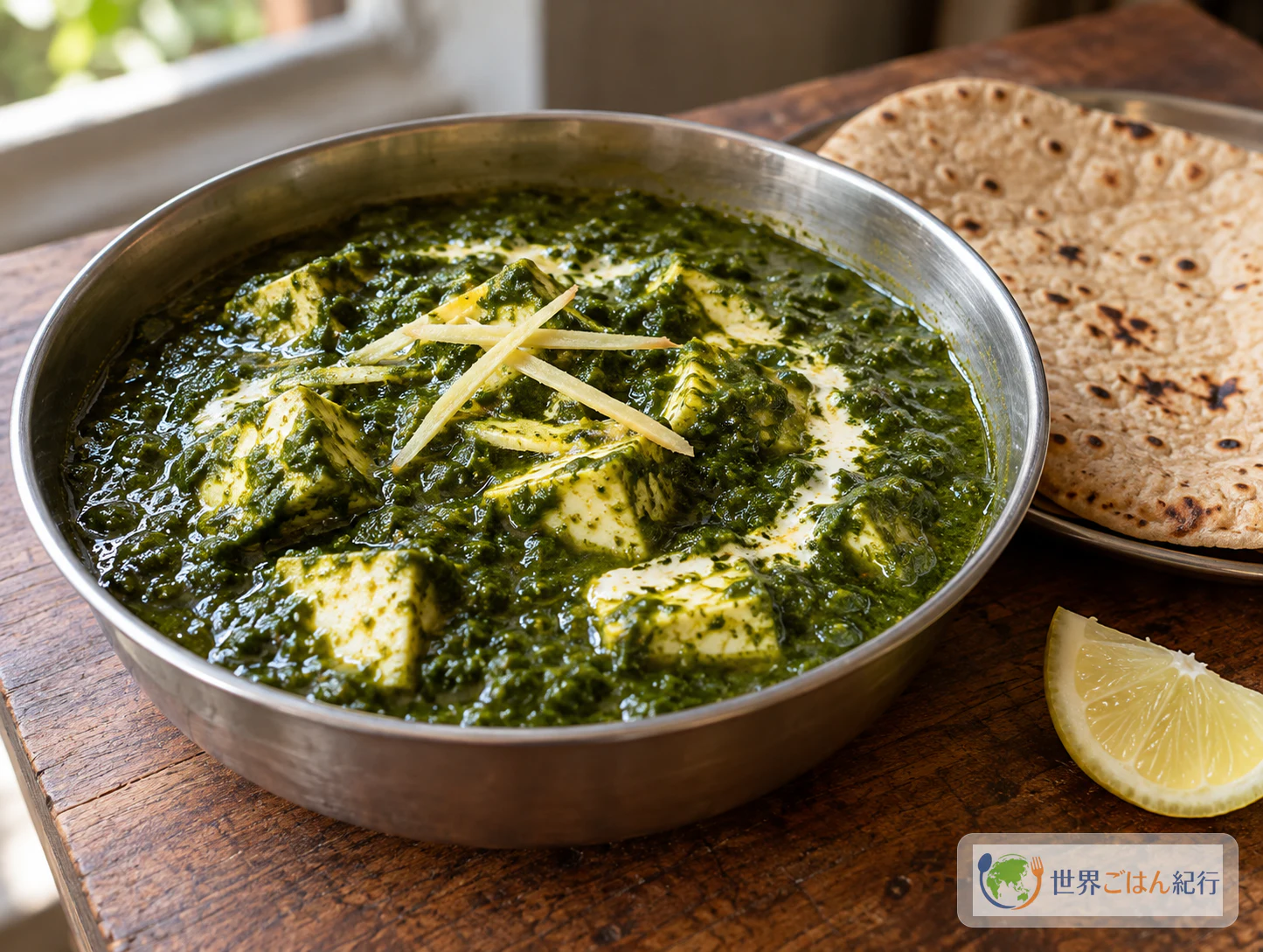
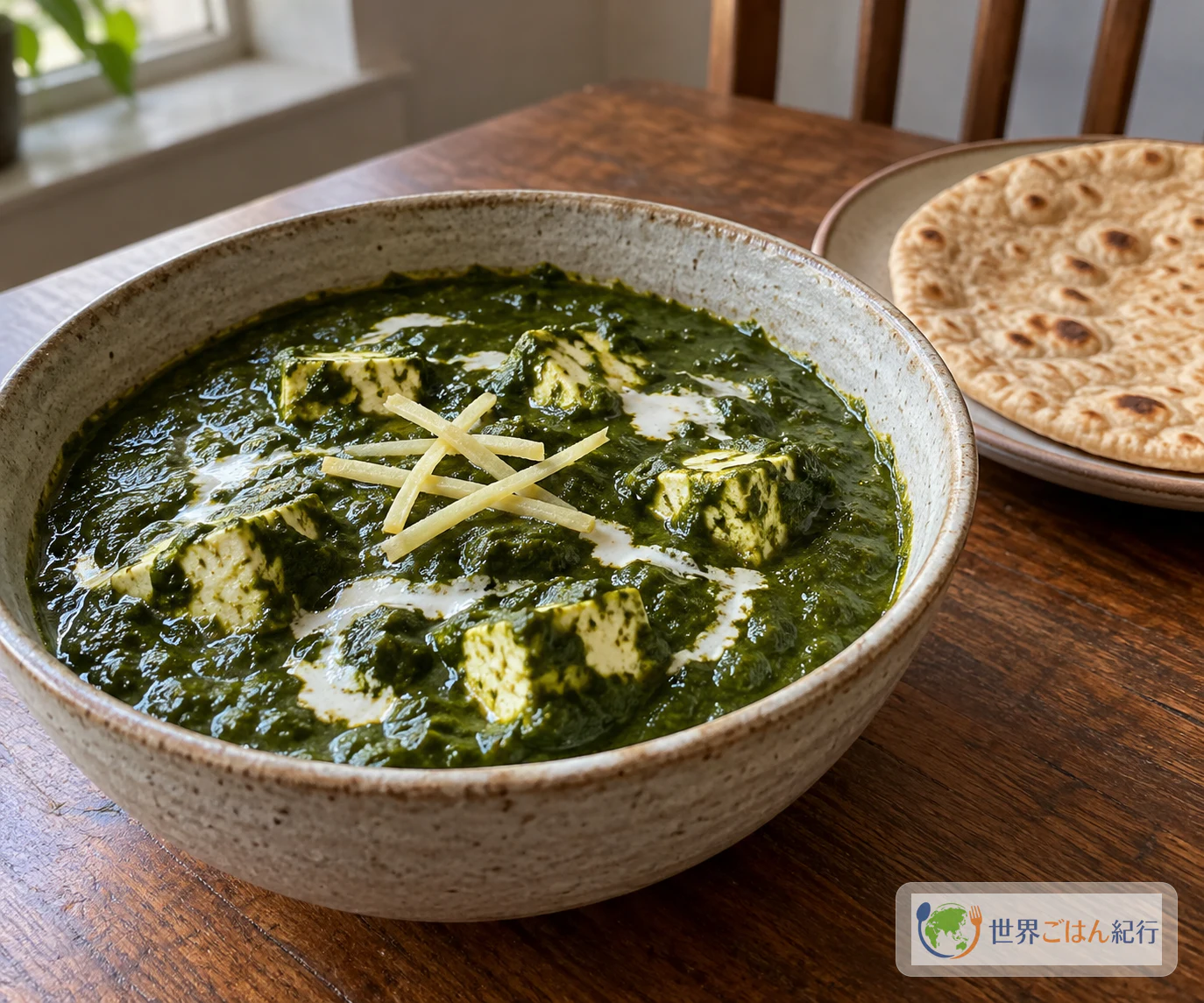
Palak Paneer: Bright Spinach Wrapped Around Soft Cubes of Paneer
Keep the spinach green and fresh-tasting, the onion-tomato base gentle, and the paneer cubes whole. Each step below protects one of those three things.
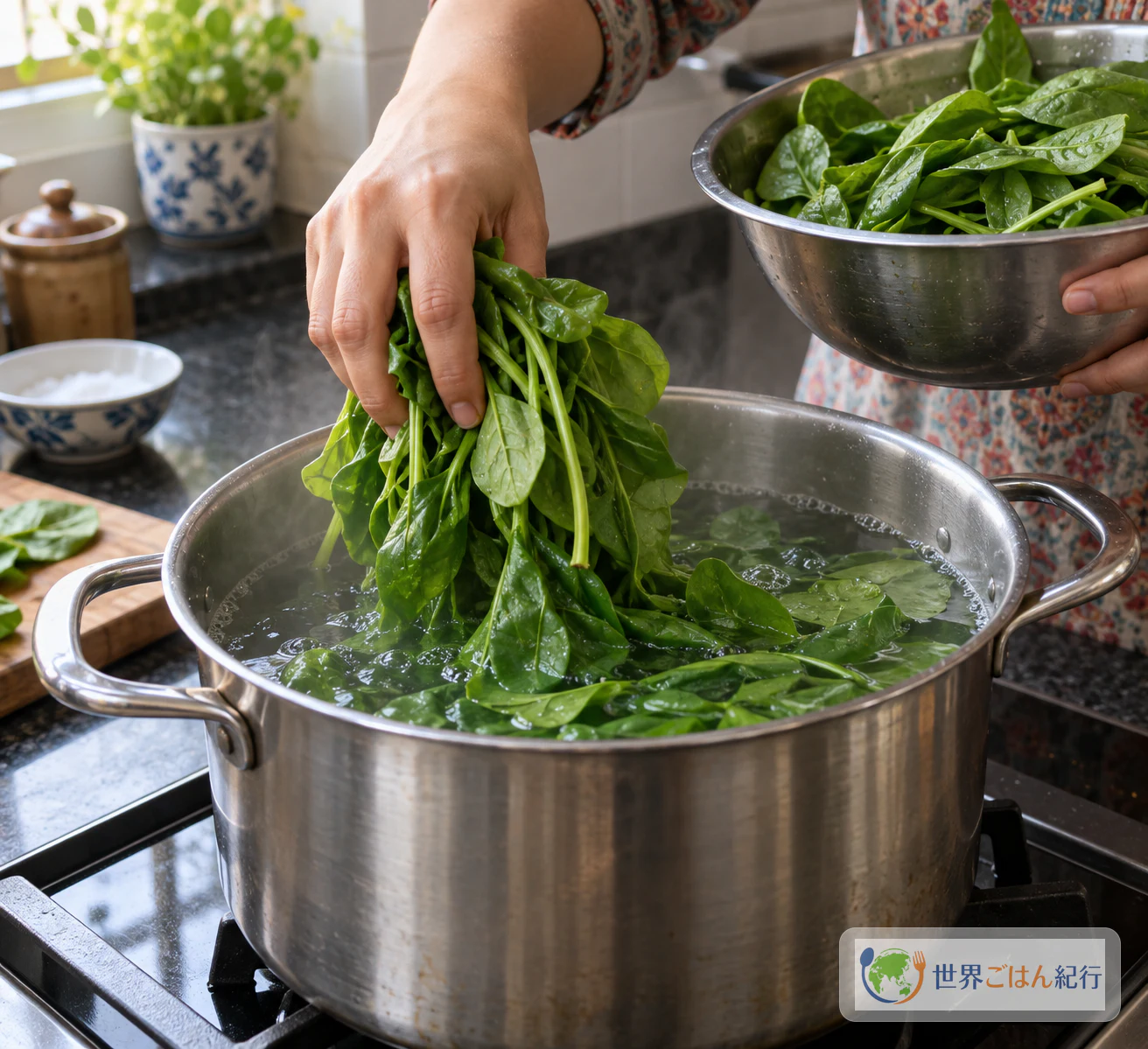
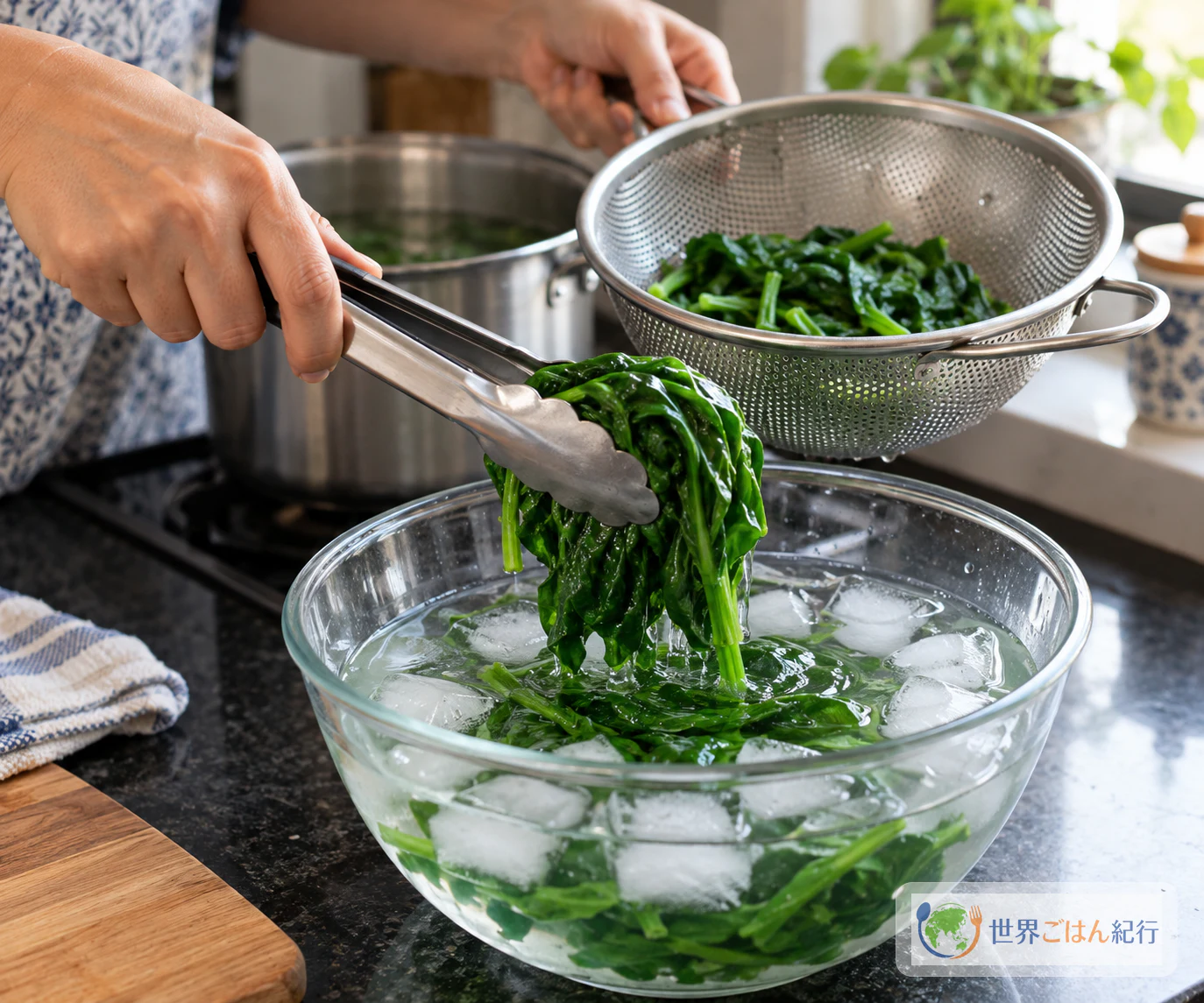
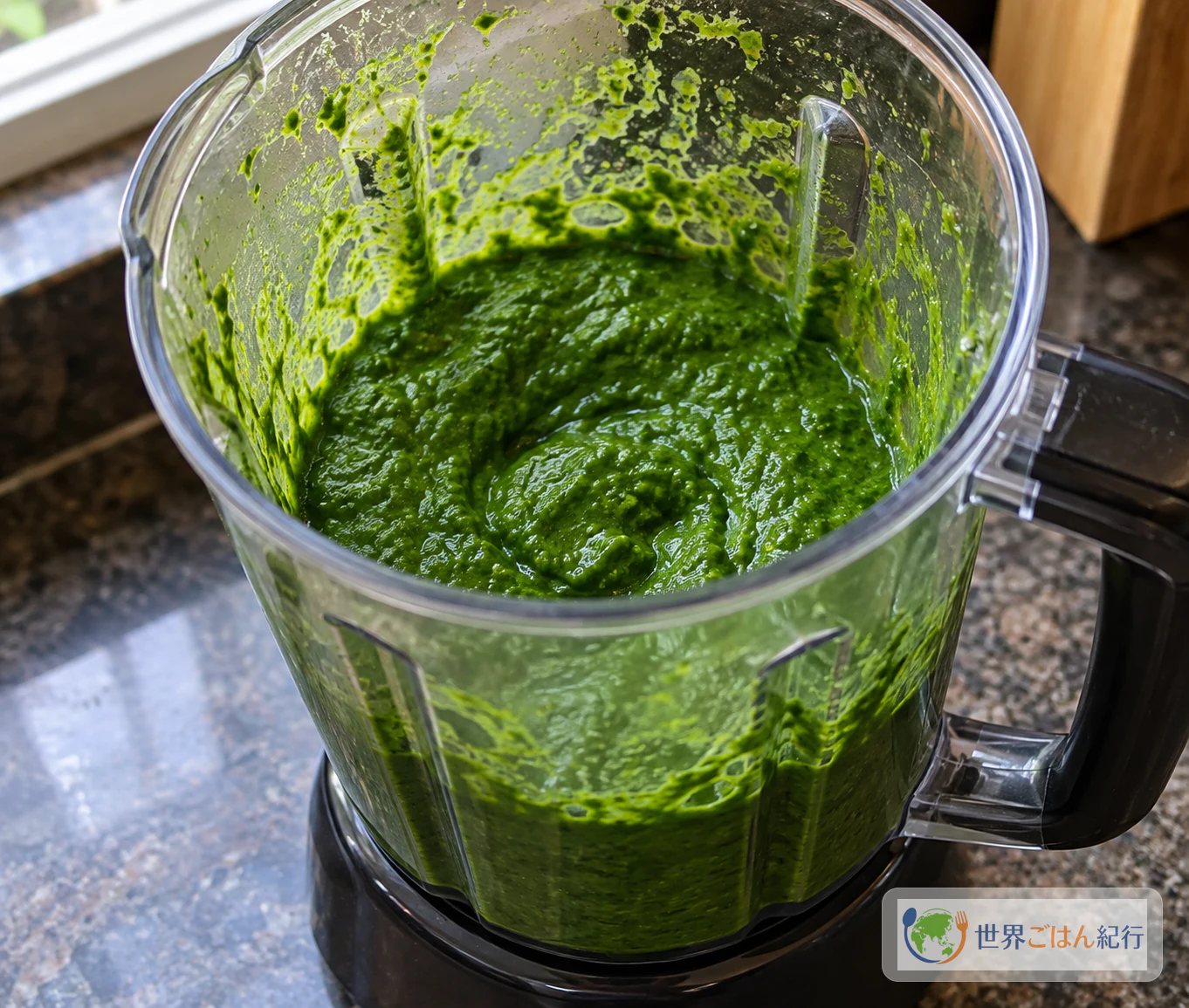
The greens go into just-boiled salted water for about a minute and come straight out into a bowl of ice water. That short sequence is the heart of the dish. Palak means spinach, and palak paneer is spinach blended into a smooth purée, cooked into a lightly spiced onion and tomato masala, and finished with soft cubes of paneer, a fresh cheese.
This recipe follows a homestyle version that Dassana Amit of Dassana's Veg Recipes presents as North Indian and describes as her mother's recipe. It includes onion and tomato, and the spinach is blanched and cooled before blending. The same source gives a separate restaurant-style recipe, which is not used here.
For more dishes from the same country, see the India page.
Ingredients for 4 Servings: Purée, Gravy and Finish
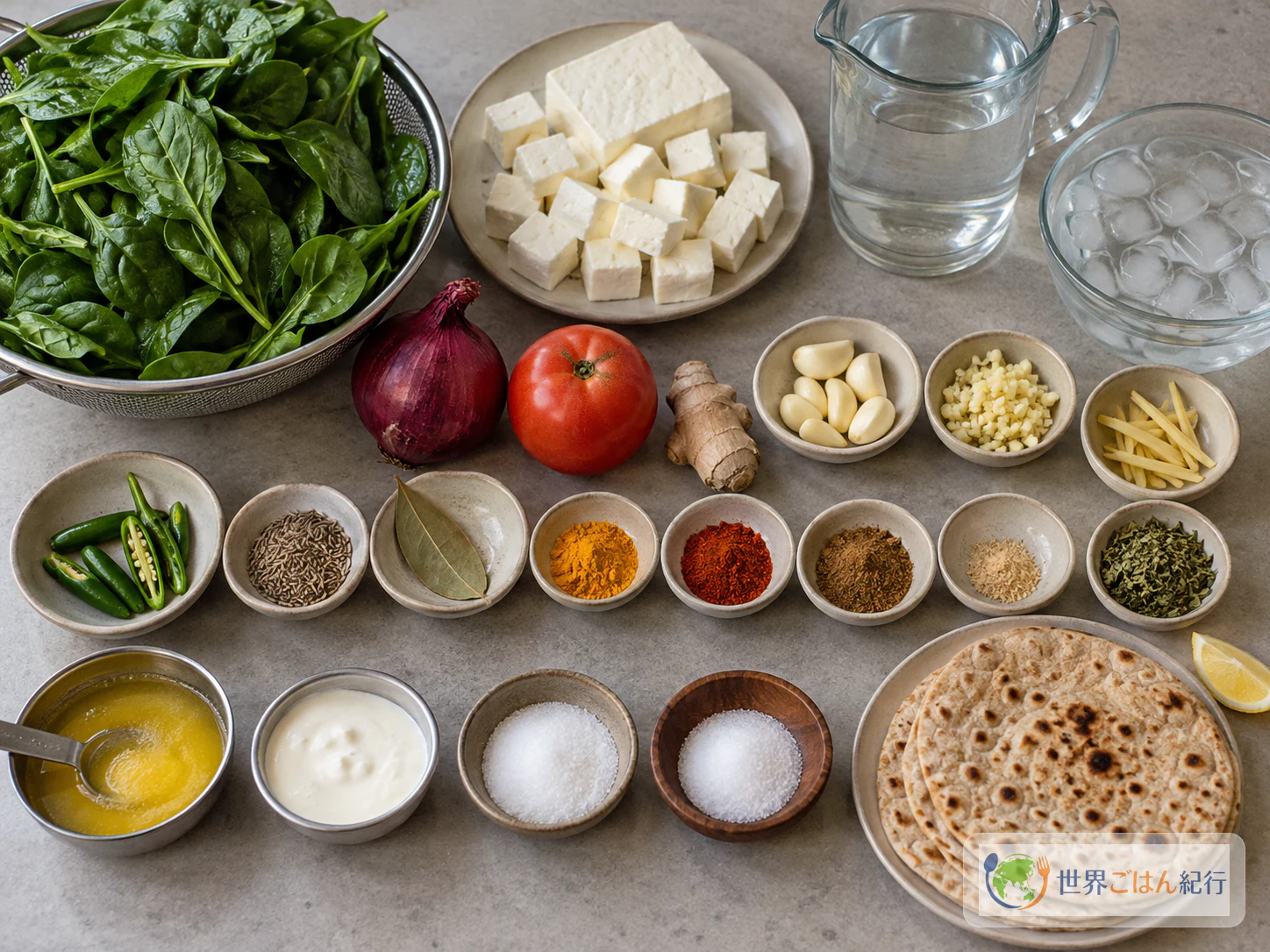
Ginger, garlic and salt each appear more than once because they do different jobs at different stages. Keep each amount separate.
Choosing and Substituting
Paneer. Look for it at Indian grocers, international food shops or online. Products differ in salt and firmness, so read the label and ingredient list. If you use packaged or frozen paneer, follow its thawing and heating directions first. The "fold in and turn off the heat" step in this recipe does not guarantee that every product is safely heated.
Tofu instead of paneer. Tofu is an option. It is a different food, though. You lose the milky richness, and the texture changes.
Green chilies. Use one for a milder pot and two for more heat. Alternatives are 1 serrano or 1–2 Anaheim peppers.
Red chili powder. Cayenne and paprika are both options. Paprika is milder and adds mostly color, so the dish will taste less hot.
Tej patta. Indian bay leaf has a different aroma from European bay laurel, so don't treat them as the same thing. If you can't find tej patta, leave it out.
Hing and kasuri methi. Both are optional. Without them you lose some depth of aroma, but the basic recipe still works. Neither is a must-buy.
Spinach. This is a spinach dish, so don't swap in other greens. If you mix in other leaves, the pot moves toward a saag-style dish rather than palak paneer.
Paneer, ghee, cream and butter all contain milk. Roti contains wheat, and some hing products are blended with wheat, so check the label if you avoid gluten. Swapping paneer for tofu adds soy, and if you still use ghee or cream, the dish is not dairy-free.
Equipment
- Pot for the blanching water
- Bowl for the ice bath
- Strainer or colander
- Blender or hand blender (needed for a smooth purée)
- Heavy-bottomed pan
- Measuring spoons and cups
Method: From Bright Purée to Finished Gravy
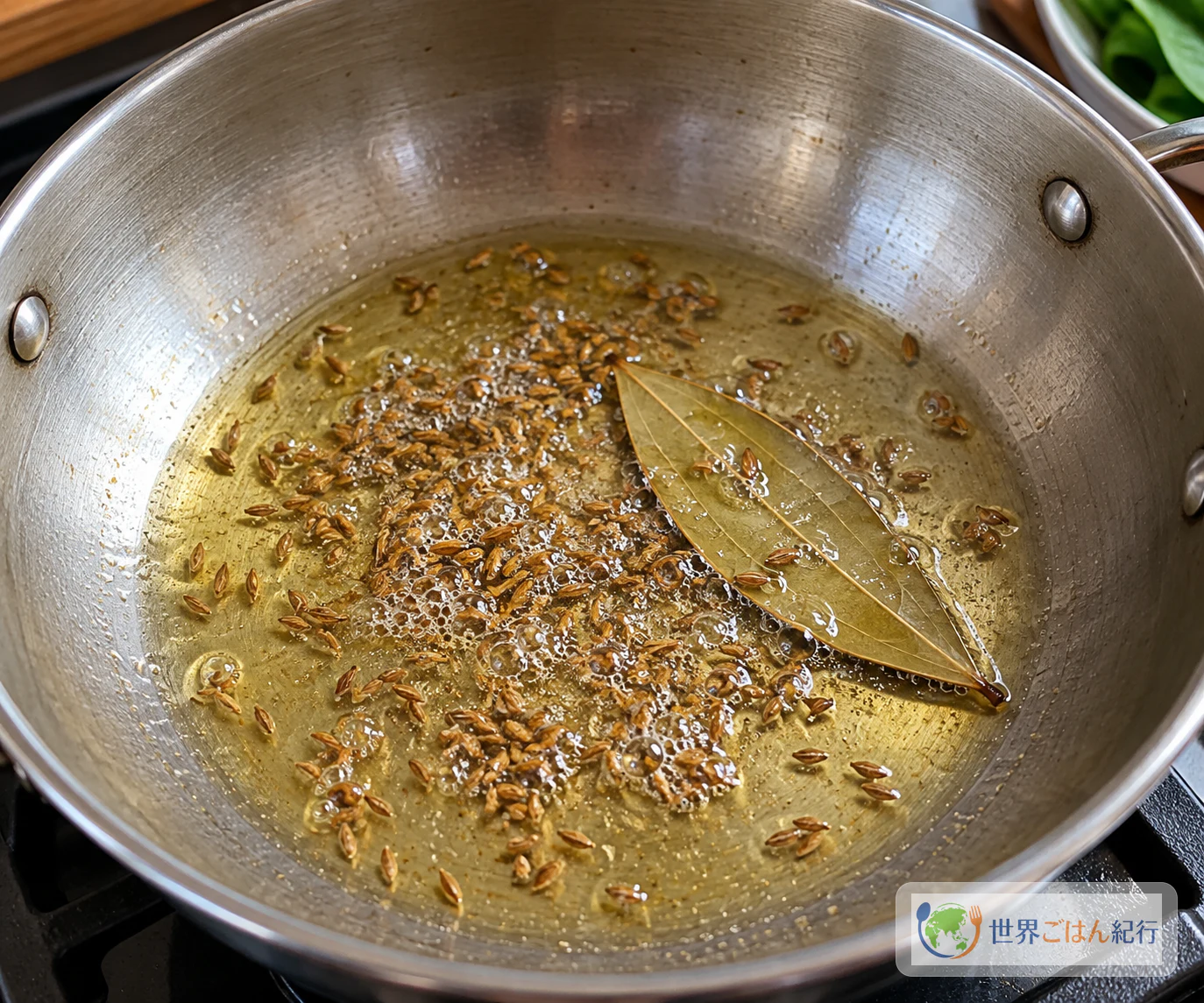
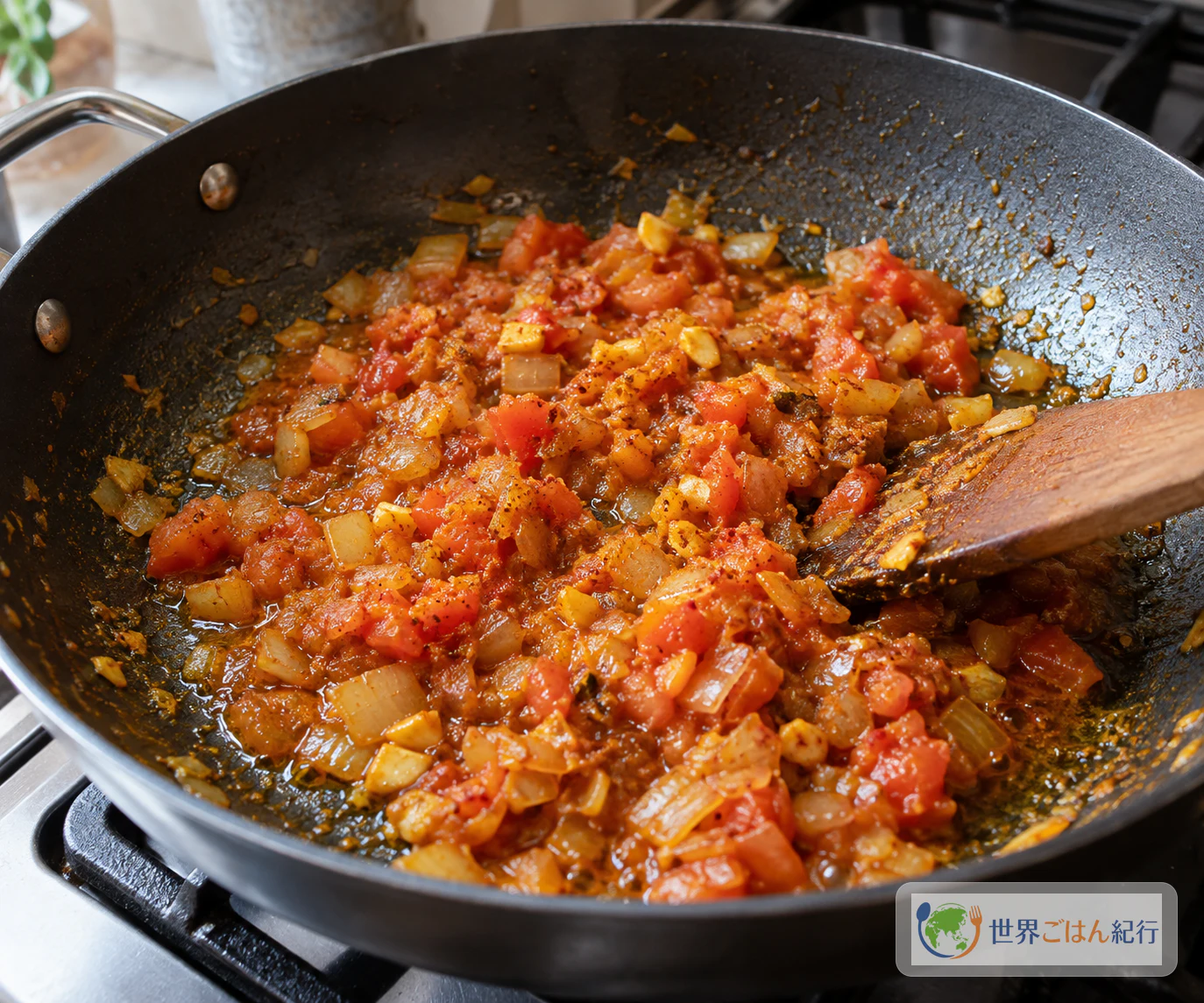
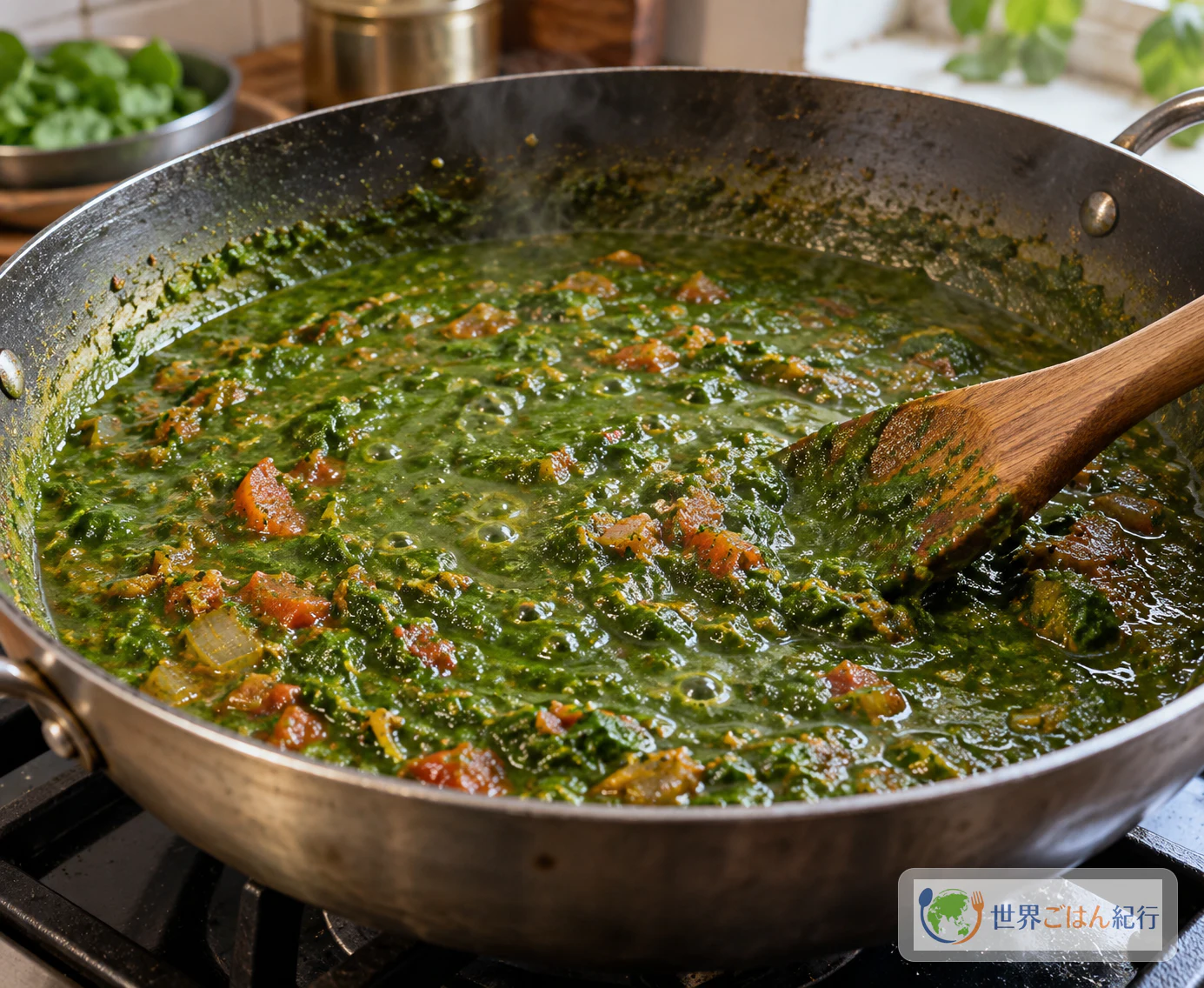
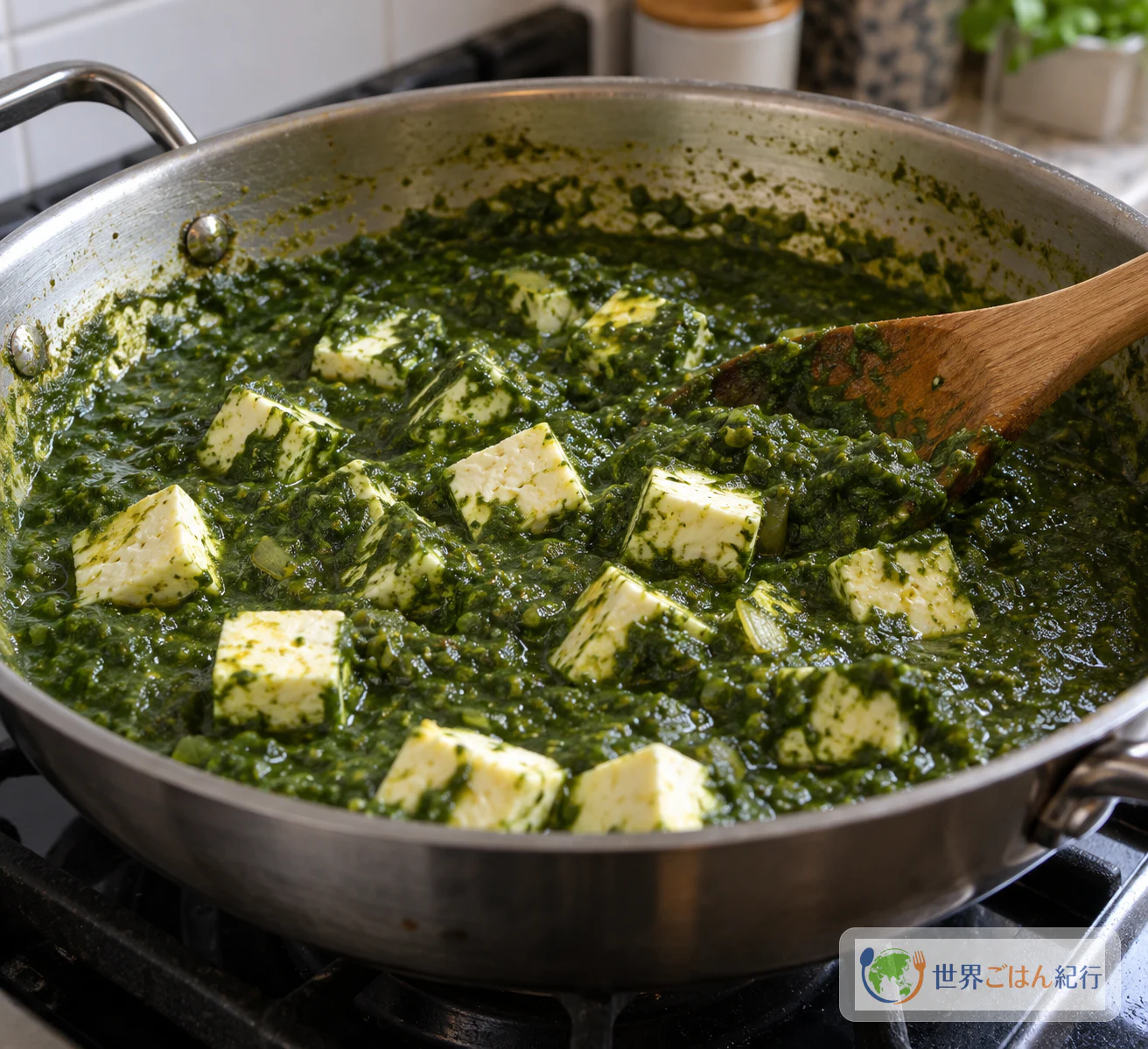
Blanch the spinach briefly and cool it straight away. Then cook the purée only as long as the gravy needs. Add the paneer at the very end, then turn off the heat and add the cream.
Troubleshooting: Color, Raw Taste, Thin Sauce, Broken Paneer
| Problem | Likely cause | What to do |
|---|---|---|
| The green looks dull | The spinach wasn't cooled right away, or the purée cooked too long | Move the spinach straight into ice water after blanching, and don't simmer the purée for a long time. Some color difference also comes from the spinach and the pan |
| A raw, grassy taste remains | Blanching or simmering was cut short | Give the spinach its 1-minute blanch and the gravy its 6–7 minutes. If you extend the simmer, taste as you go |
| The sauce is watery | Spinach not drained well, or too much finishing water added at once | Press out the excess water before blending, and add the water a little at a time |
| The paneer breaks apart | It was stirred hard or kept cooking | Fold it in gently and turn off the heat once it's in |
| Garlic or butter scorches | The heat is too high | Lower the heat. Move on to the next ingredient before the butter colors |
| The cream looks out of place | It went in over the heat | Add the cream only after the heat is off |
Leftovers
The source gives no storage period, and none is given here. Follow general home food-safety practice from Japan's Ministry of Health, Labour and Welfare. Divide leftovers into shallow containers so they cool quickly, refrigerate them promptly, and do not leave them at room temperature for long. Reheat thoroughly, until the center reaches 75°C for at least 1 minute.
Variations
These are optional changes to the recipe above, not other traditional versions.
- Milder heat: Use 1 green chili and add more heat at the table after serving.
- Greener flavor: Use less cream than listed so the spinach's aroma and color come forward. This is an adjustment to the source's amount.
- Pan-seared paneer: The source suggests this as an option. Lightly brown the paneer in a little oil first. Once it's in the gravy, don't simmer it. The paneer gains a toasty edge but becomes a little less soft.
- Tofu instead of paneer: An option the source lists. The texture and milky richness will be different, and the dish will contain soy.
- Without kasuri methi or hing: Both are optional. The aroma will be a little flatter, but the dish still holds together.
Palak, Saag and Neighboring Dishes
The name says what the dish is: palak (spinach) and paneer. Not every spinach-and-paneer recipe is the same, though. Other home cooks publish versions with different blanching times and paneer amounts, so this is one homestyle recipe rather than the only correct one.
Saag can refer to several kinds of leafy greens, which is why "saag paneer" and "palak paneer" don't always mean exactly the same thing. India's Ministry of Tourism describes Punjab's sarson da saag as a dish of mustard greens, spinach and other greens, commonly eaten with makki di roti. The same Amritsar food guide lists shahi paneer as another North Indian, Punjabi paneer dish.
Further north, the Kashmiri Wazwan feast includes Waza Palak, spinach with small meatballs, and Ruangan Chaman, paneer in a tomato and milk gravy. Both are separate dishes with their own character. Sharing spinach or paneer does not make them versions of palak paneer.
Frequently Asked Questions
Are palak paneer and saag paneer the same?
Not necessarily. Saag can cover several kinds of greens, while palak means spinach. This recipe is the spinach-only version.
Can I use frozen spinach?
The source notes that frozen spinach is often already blanched. If so, thaw it, squeeze out the water and skip the blanching. Check the package directions, and adjust the finishing water because frozen spinach can hold more moisture.
What if I can't find paneer?
The source lists tofu as an alternative. Expect less milky richness and a different bite, and note that it adds soy.
What should I serve it with?
The source suggests roti, naan, paratha or jeera rice. A little julienned ginger and a squeeze of lemon or lime at the table brighten it.
Sources
- Dassana Amit, Dassana's Veg Recipes, "Palak Paneer Recipe (Homestyle & Restaurant Style)." The main recipe: homestyle ingredients, amounts and method for 4 servings; blanching and ice-bath steps; serving suggestions; the author's North Indian framing and family attribution; the saag terminology note; and following packaged or frozen paneer directions. https://www.vegrecipesofindia.com/palak-paneer/
- Ranveer Brar, "Easy Palak Paneer recipe पालक पनीर." Used only to show that other homestyle recipes differ in blanching time and paneer amount; not used for amounts here. https://ranveerbrar.com/recipes/palak-paneer-recipe/
- Incredible India, Ministry of Tourism, Government of India, "Amritsar Gastronomy - A Culinary Journey." Sarson da saag made with mustard greens, spinach and other greens, paired with makki di roti; shahi paneer as a North Indian, Punjabi paneer dish. https://www.incredibleindia.gov.in/en/punjab/amritsar/a-foodies-wonderland
- Incredible India, Ministry of Tourism, Government of India, "Feast for the Senses in Gulmarg: The Complete Guide to Wazwan." Waza Palak and Ruangan Chaman as separate Kashmiri dishes. https://www.incredibleindia.gov.in/en/jammu-and-kashmir/gulmarg/feast-for-the-senses-in-gulmarg-the-complete-guide-to-wazwan
- Ministry of Health, Labour and Welfare (Japan), "Six points for preventing food poisoning at home" (in Japanese). General home guidance on heating to a center temperature of 75°C for at least 1 minute, and on cooling leftovers in shallow containers and reheating. https://www.mhlw.go.jp/stf/seisakunitsuite/bunya/kenkou_iryou/shokuhin/syokuchu/01_00006.html