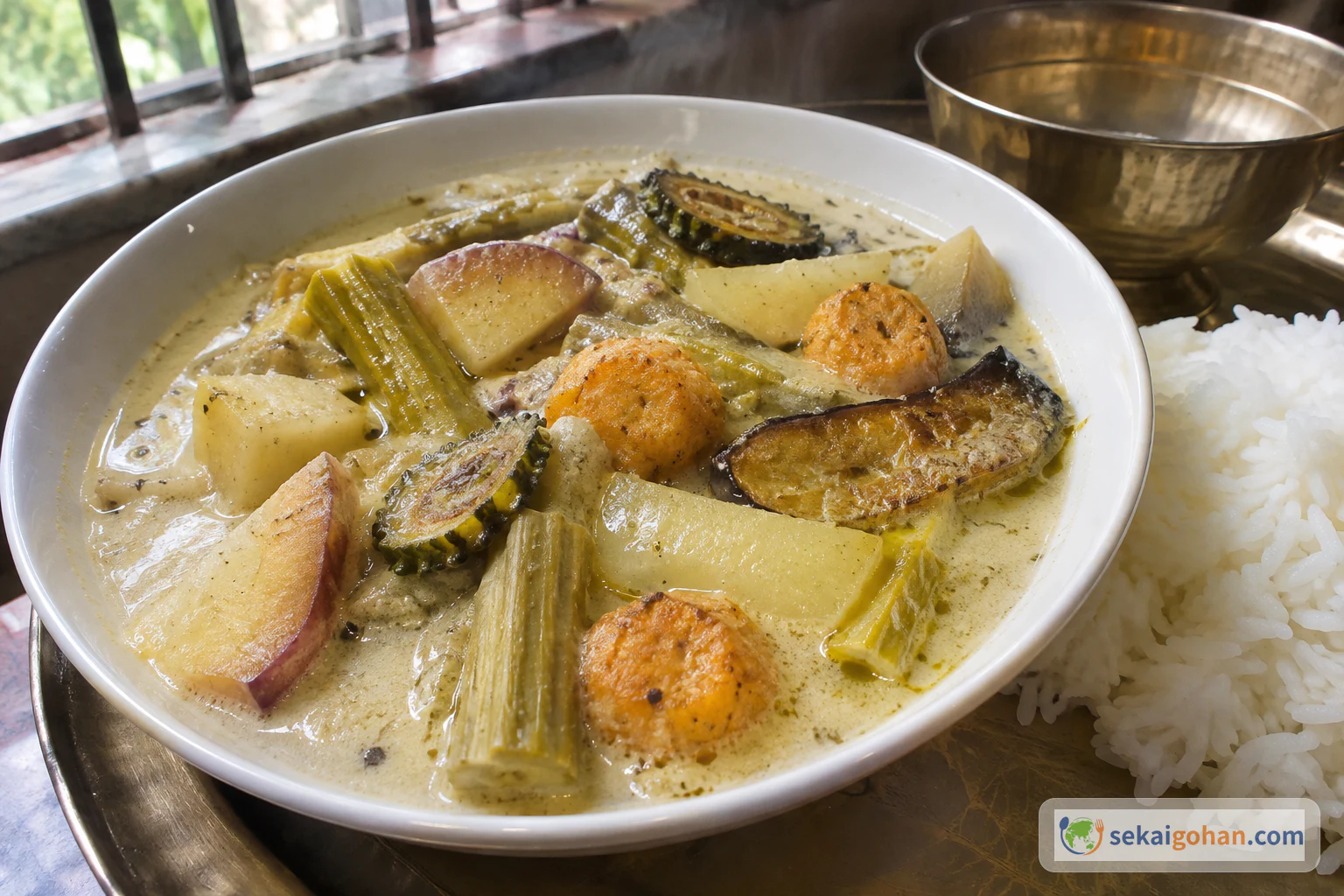
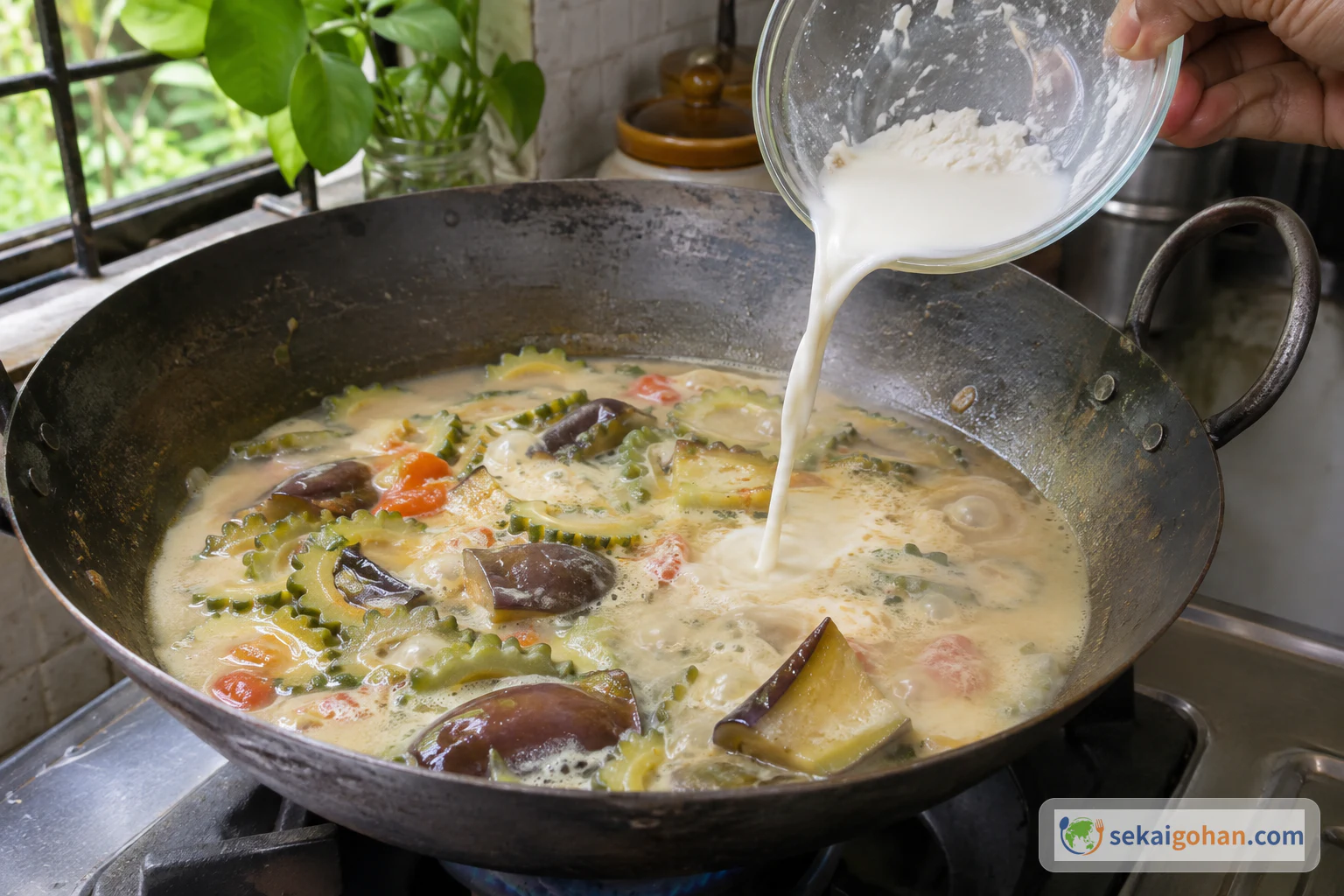
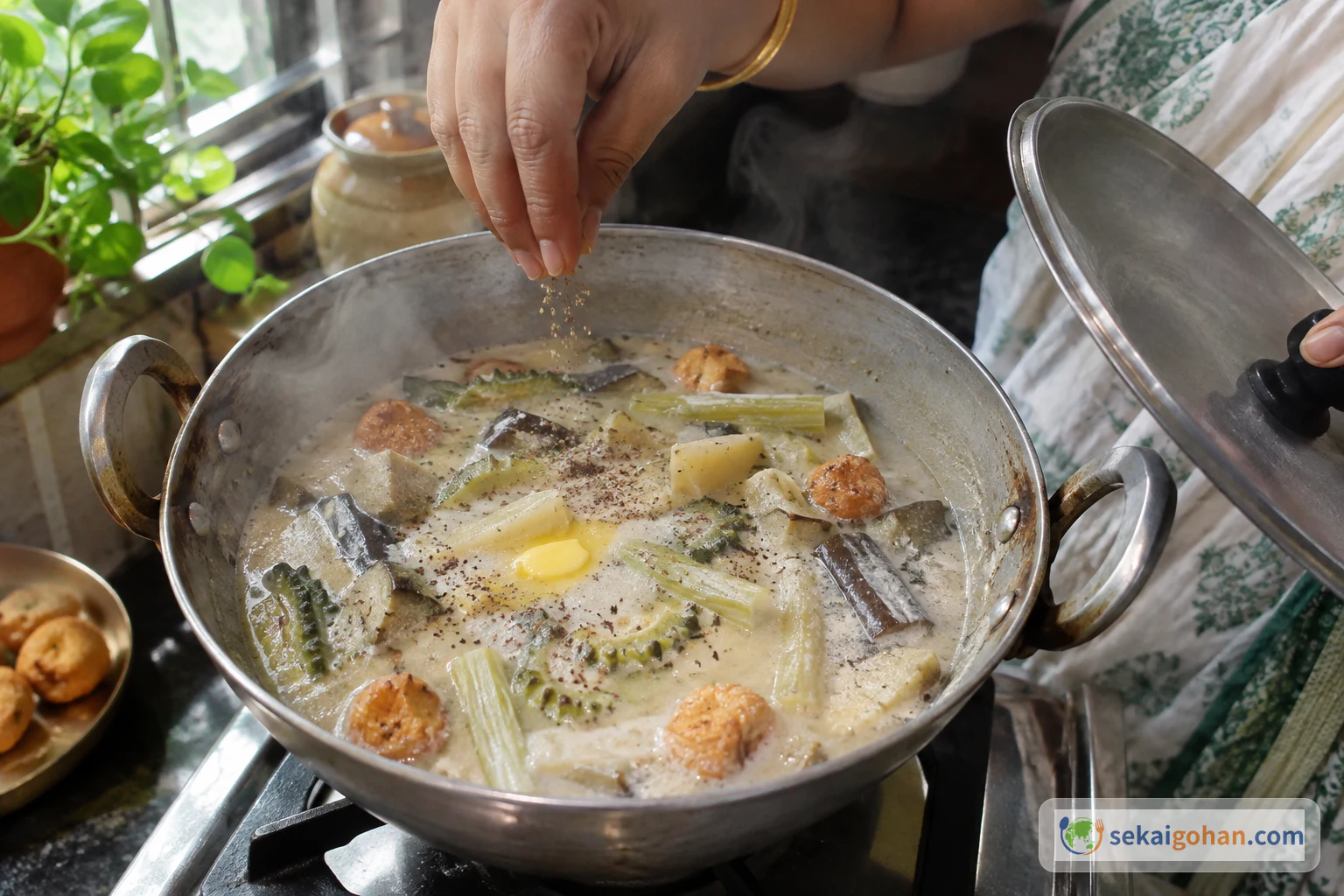
The milk goes in last. It turns the mustard-yellow broth pale ivory around the golden lentil dumplings, the drumstick pieces and the slices of fried bitter gourd. Then a pinch of ground radhuni and a spoon of ghee go on top, and the lid comes down for a minute. In a Bengali home, this is the first thing on the plate with the rice: a mild, milky stew of many vegetables, slightly sweet, with a clean bitter edge that wakes up the appetite for everything that follows.
A Bitter Dish to Open the Meal
Shukto is cooked across Bengal, in West Bengal in India and in Bangladesh, and it is usually eaten with plain rice. The word covers a whole family of Bengali curries, not a single recipe. The one here is dudh shukto, the milk version: eight vegetables, some boiled and some fried, brought together in a sauce of ginger and fresh mustard paste, finished with milk, coconut and ghee. It is light and not spicy at all. There is no chilli heat. The interest comes from the bitter gourd, the sweetness of sugar and sweet potato, and the gentle bite of mustard.
What surprises newcomers is where it sits in the meal. A traditional Bengali meal moves in order, and shukto comes at the very start, after the bitter greens called shaak and before the dal. The bitter taste is meant to open the appetite, so it comes first. Bitterness is the reason the dish exists, and the cook keeps it in balance.
In most Bengali homes, shukto is everyday food. It is also a feast dish. It appears at the start of banquets for the big occasions of family life: the annaprasana, a baby's first rice; the sraddhya, the rites after a death; and the bibaha, the wedding. Wedding feasts in particular are known for it. One recipe writer says a gentle bowl of shukto is often recommended at home for an unsettled stomach.
Shukto is named for the treatment, not one fixed set of vegetables. There is lau'er shukto with bottle gourd, pepe'r shukto with papaya, shosha'r shukto with cucumber, and dhula shaak'er shukto. Some versions add fish. Next door in Odisha, a similar mixed-vegetable stew is called santula. Kerala's avial is a separate dish, made without milk.
How households differ
Every Bengali kitchen argues about shukto. Some cooks add turmeric and some refuse. Some temper the oil with panch phoron, others with radhuni alone, others with fenugreek and mustard seed. Some add ginger at the start and some only at the end. Some add the bitter gourd near the end so its bitterness stays soft. Some cooks fry in mustard oil, while the version below uses neutral vegetable oil. One variation thickens the sauce with poppy-seed paste alongside the mustard and adds white radish. The recipes consulted agree that the finished dish should look pale and have a good amount of gravy. It is a stew to spoon over rice, never a dry stir-fry.
For more on the country's cooking, see our India page.
Ingredients (serves 6)
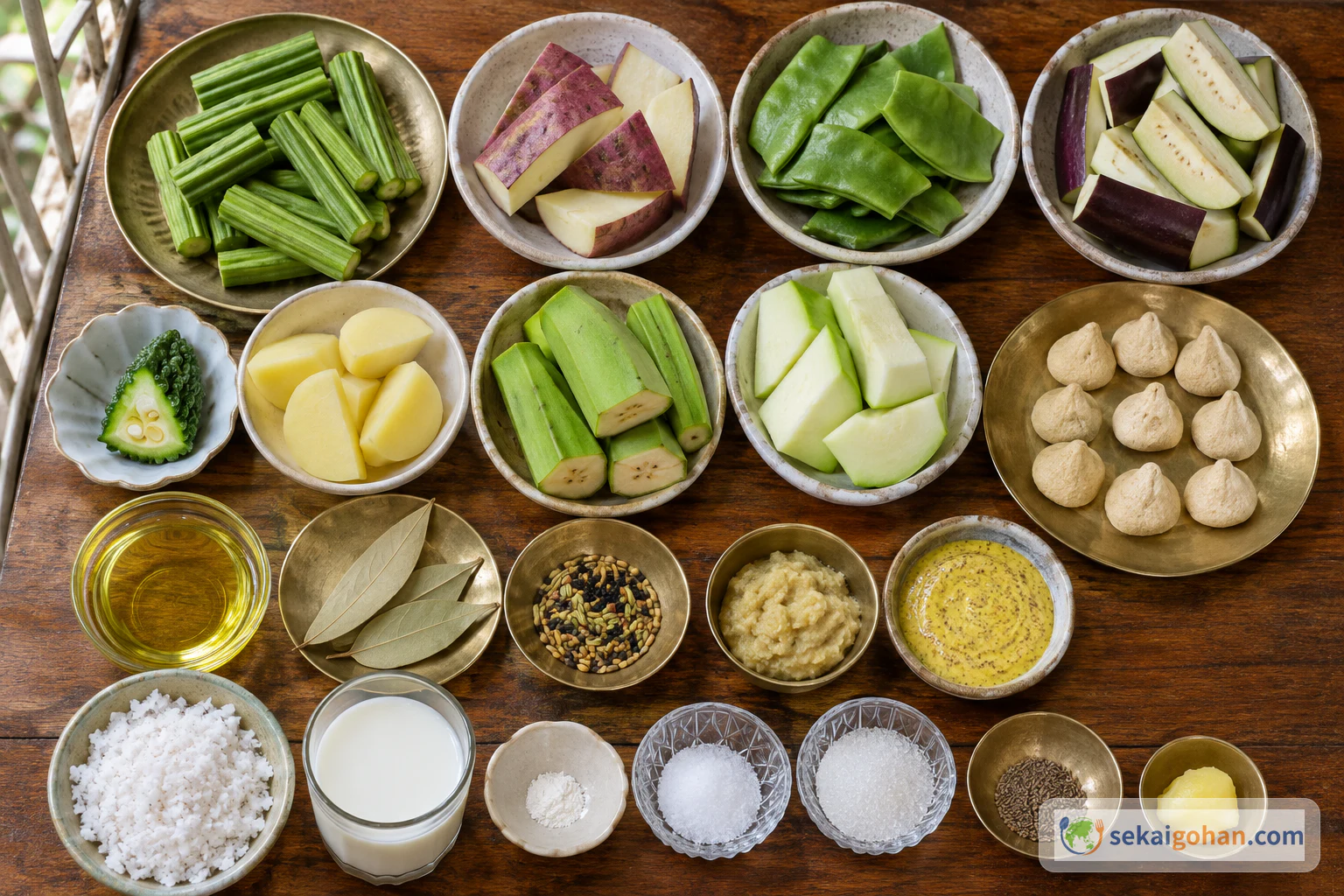
The vegetables are weighed, and the weights set the balance. Keep the bitter gourd at its small weight, because it flavours the whole pot.
Shukto contains milk and ghee (dairy), mustard, wheat (in the flour) and coconut. The bori are made from lentils. Check the labels of packaged bori, panch phoron and ready-made pastes for other allergens and shared-facility statements.
Equipment
- Medium pot with a lid, for boiling
- Colander and a bowl to catch the cooking water
- Wide pan, wok or kadai, for frying and the stew
- Slotted spoon and a plate lined with paper towels
- Wooden spoon
- Mortar and pestle or spice grinder, for the radhuni
- Thin skewer, for checking the vegetables
Shopping and Substitutions
An Indian grocery store has most of what you need: panch phoron, radhuni, dried bori, ghee, and often frozen or canned drumsticks. Thai and Southeast Asian shops are the best places for unripe green papaya and green bitter gourd. Potato, sweet potato and brinjal come from any supermarket.
| What | What to buy | If you cannot find it |
|---|---|---|
| Drumsticks | Frozen or canned, from an Indian grocer | Leave them out. Do not add more of the other vegetables to make up the weight |
| Flat beans | Sheem from an Indian grocer | Romano beans or green beans. Similar texture, a little sweeter |
| Unripe banana | Green cooking banana | Green plantain is the closest choice. It is a little starchier |
| Bitter gourd | Small Indian korola | Larger varieties can taste more bitter, so weigh carefully and keep to the amount |
| Bori | Dried dal bori from an Indian grocer | Leave them out. You lose the crunchy-then-soft bites |
| Panch phoron | A ready-made mix | Equal parts nigella, cumin, fenugreek, fennel and mustard seeds. Mustard seed alone also works, with a simpler aroma |
| Radhuni | Whole seeds, ground at home | Celery seed is a close relative and the best stand-in. The aroma is close, though not identical |
| Ghee | Jarred ghee | Butter, with a milkier, less nutty finish |
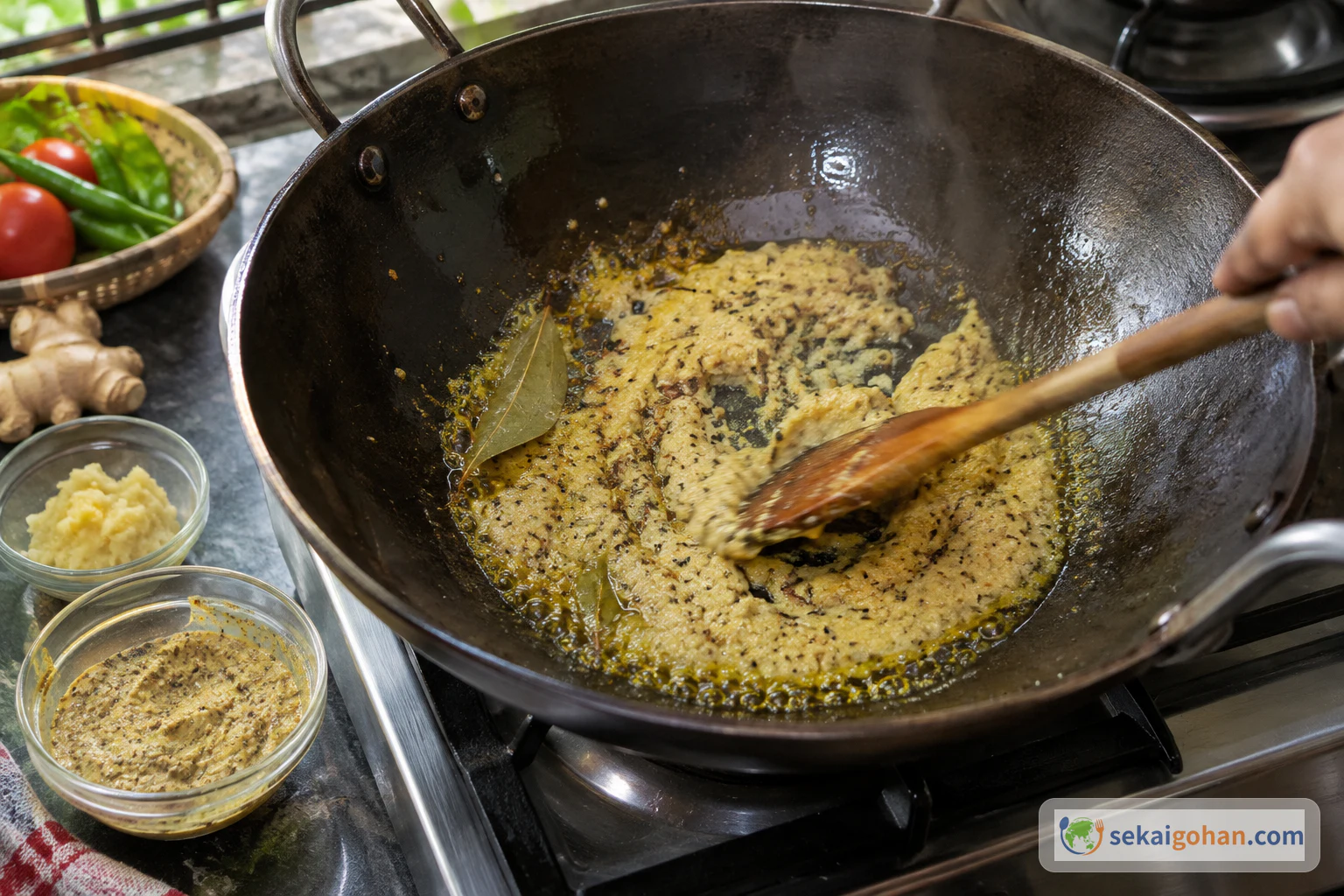
Grainy or prepared mustard will not work. Its vinegar is sour and can split the milk. Grind yellow or brown mustard seeds with a little water into a smooth paste. A paste of mustard powder mixed with water is a possible shortcut, but it can be much hotter. Taste a tiny bit before you use the full amount.
The salt comes to 20 g in all, 5 g for boiling and 15 g for the stew. If you prefer less salt, add only part of the stew salt at first and taste before the milk goes in. The sugar stays, because it is what makes the bitterness pleasant.
Method
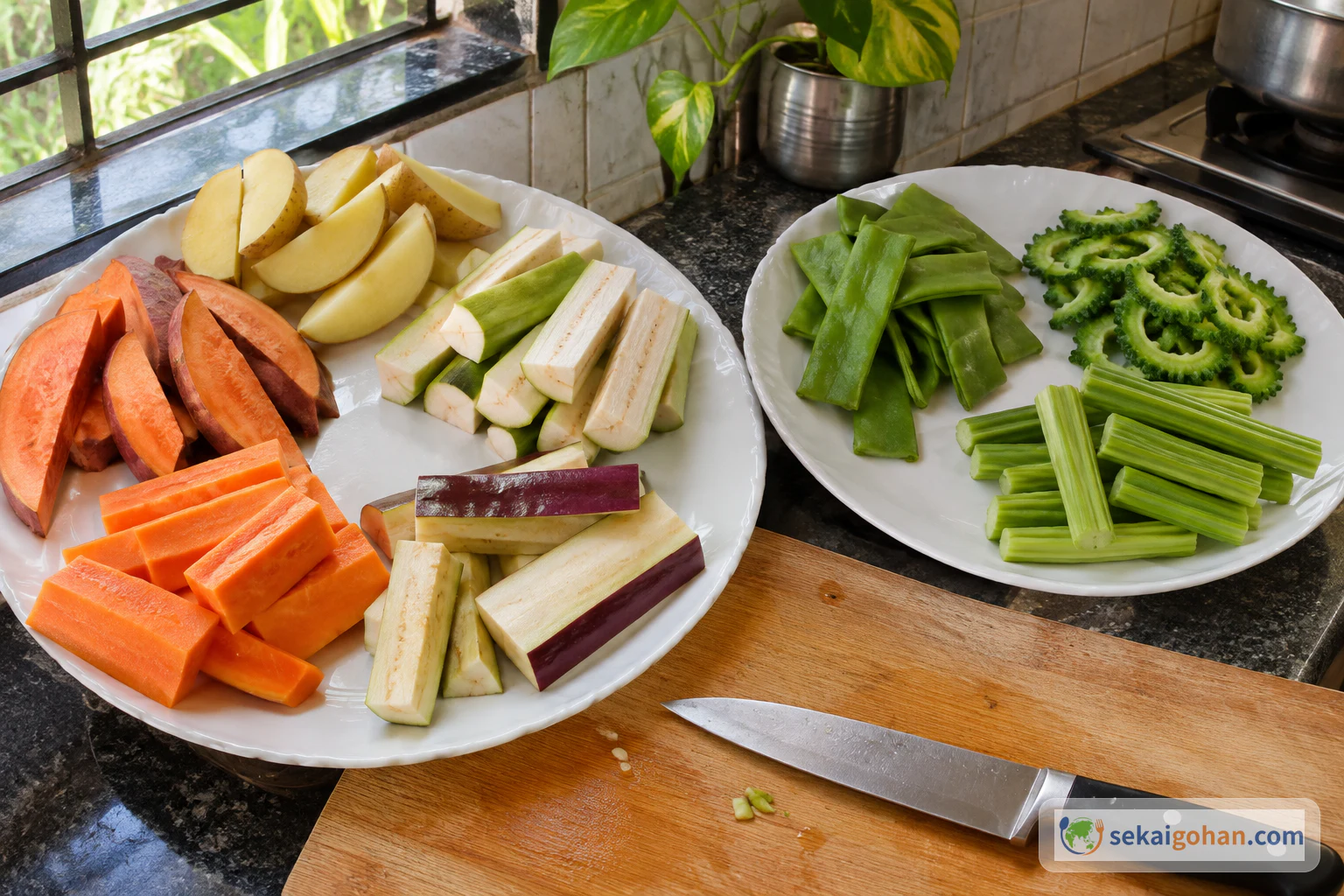
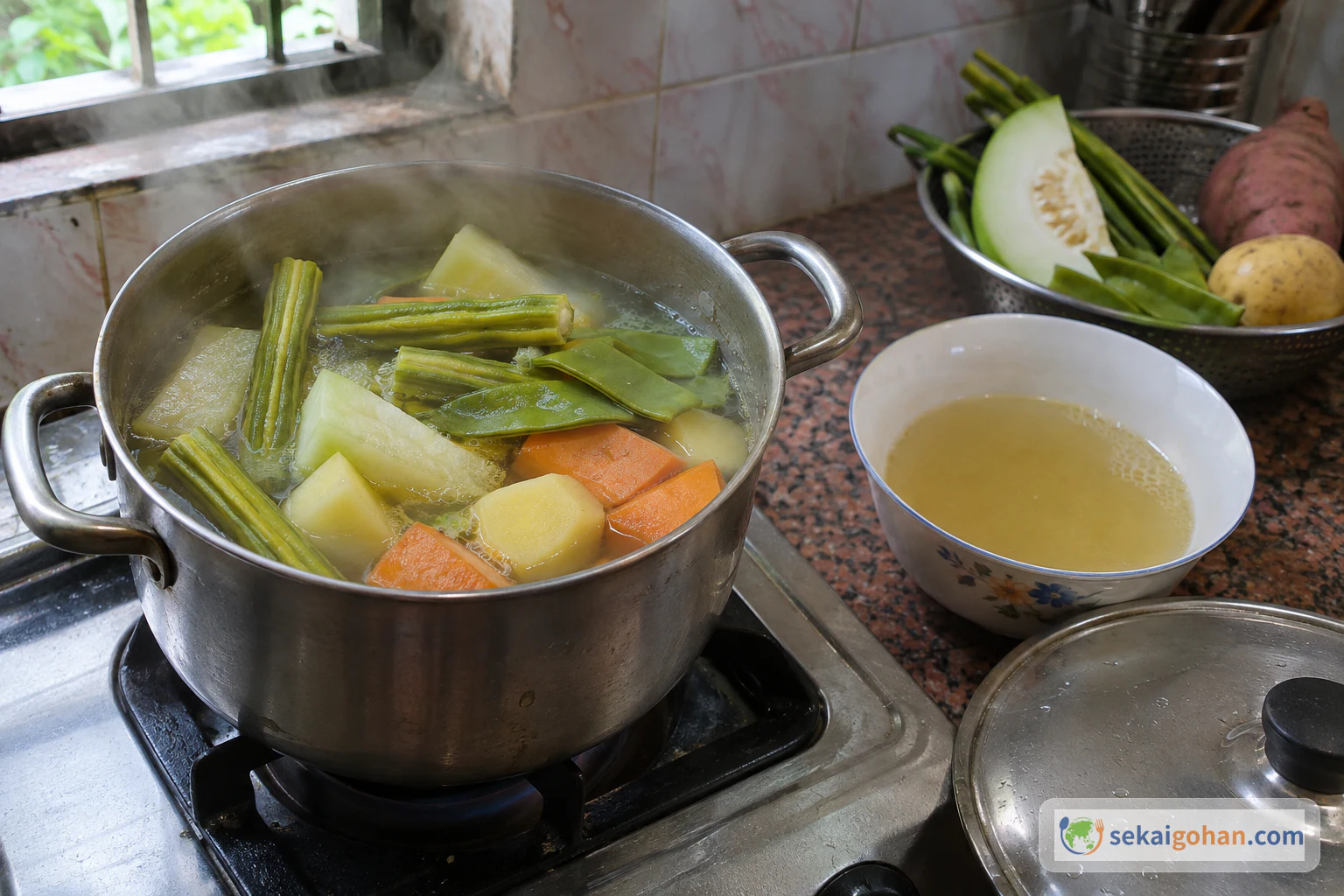
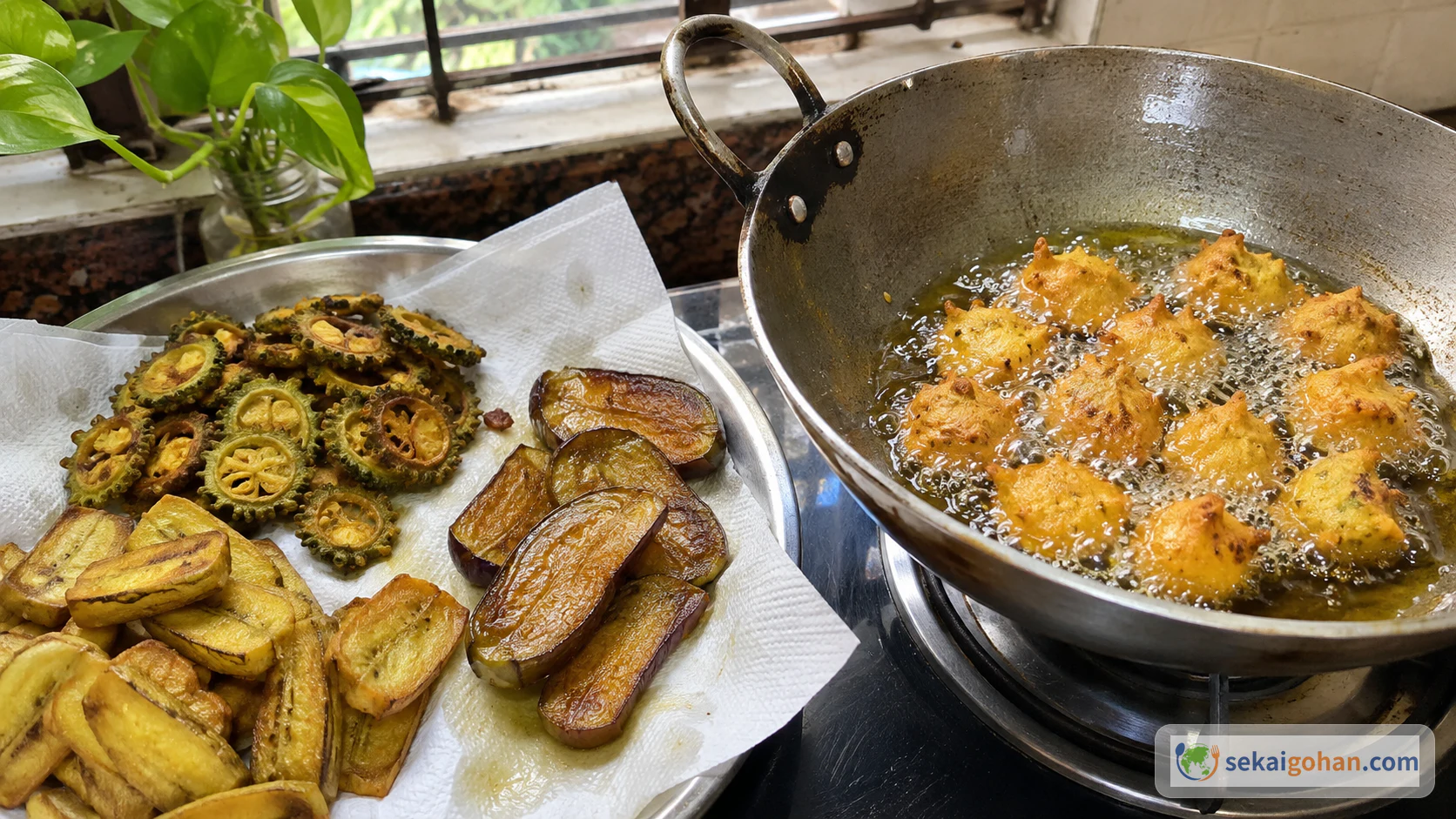
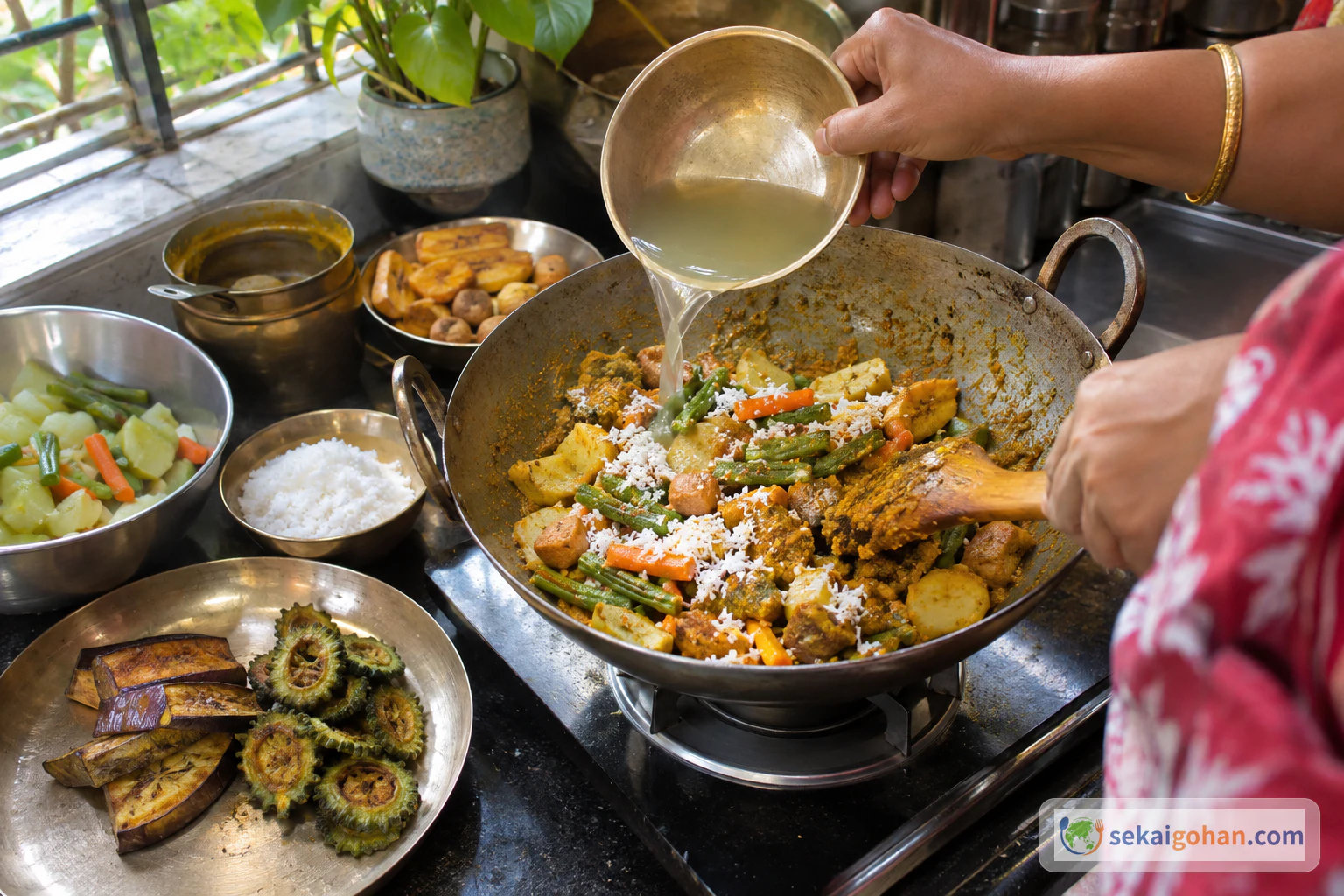
Cut everything first and sort it into two groups. One group boils and the other fries, and that split is the key to this dish. The boiled vegetables stay soft and hold their shape. The fried ones turn golden and keep their outlines in the sauce. The brinjal and bitter gourd are fragile, so they wait on a plate until the end. All the work happens in a wide pan, and the reserved cooking water is used again and again: to loosen the mustard paste and to make the gravy. The only hands-off time is the parboil.
When It Goes Wrong
| What you see | Why | What to do |
|---|---|---|
| The broth looks grainy or curdled | The milk boiled too long, or something sour went in | Keep the heat at a low simmer after the milk goes in, and add no acidic ingredients. Stir the milk with the flour before adding it |
| The brinjal and bitter gourd broke into shreds | They went in too early or were stirred hard | Add them last and fold them in gently. After that, shake the pan instead of stirring |
| The mustard paste scorches and sticks | The paste dried out over the heat | Add a splash of reserved cooking water at once, scrape the bottom, and keep the heat low |
| The oil never separates from the paste | Too much water went in at once | Keep frying over low heat until the water cooks off and the oil appears at the edges |
| The whole pot tastes harshly bitter | Too much bitter gourd, or a very bitter variety | Next time, weigh the bitter gourd exactly. You can also rub it with salt and a little turmeric for 5 minutes before frying |
| The stew is thick and tight | Too little cooking water went back in | Loosen it with more reserved cooking water. Shukto should have plenty of gravy |
Serving, Variations and Storage
At the table
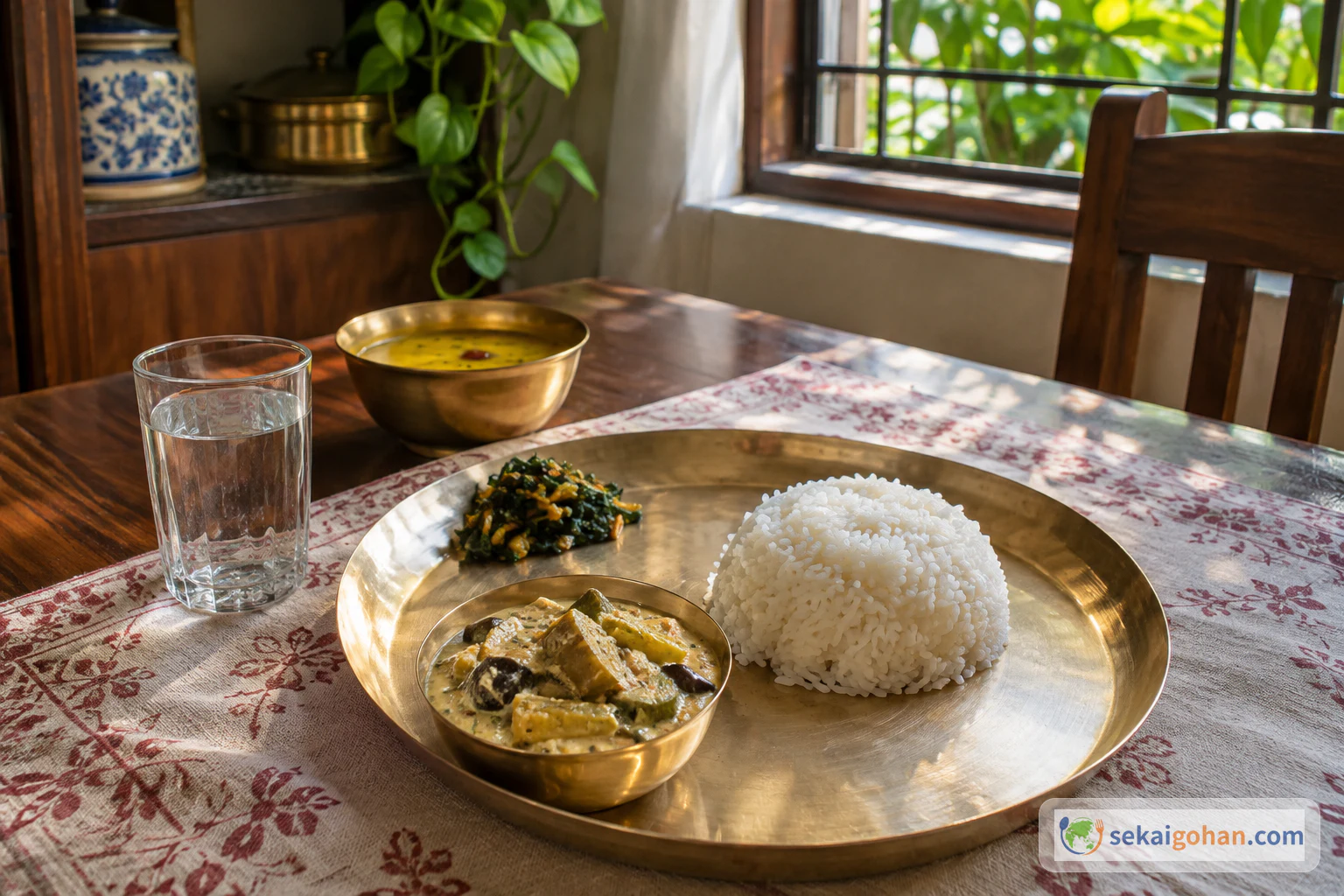
Serve a small portion of shukto at the front of the plate with plain steamed rice. Mix a little of the gravy into the rice and eat the vegetables one by one, so each one has its own texture: the soft papaya, the creamy sweet potato and the bori soaked with broth. Then the meal moves on to dal and the rest. Bong Eats suggests pairing it with fried jute leaves (paat shaak bhaja) and a mutton curry.
Variations
- Poppy and mustard: Add poppy-seed paste with the mustard paste and use mustard oil. The sauce becomes thicker and nuttier, with a sharper edge from the oil.
- Lighter household style: Temper with fenugreek and mustard seed, add turmeric, and add the ginger at the end. The colour turns faintly yellow and the ginger tastes brighter.
- Softer bitterness: Add the bitter gourd near the end instead of frying it with the others. Its taste spreads less through the pot.
- Single-vegetable shukto: Build the pot around bottle gourd, papaya or cucumber for a simpler dish with one texture.
Storage
Shukto is best eaten on the day it is made. To keep leftovers, cool them, then refrigerate promptly in a clean, covered container. Warm them gently over low heat without boiling hard, so the milk stays smooth.
Frequently asked questions
Is shukto spicy?
No. It has no chilli at all. The warmth comes from ginger and mustard, and the main tastes are mild, milky, a little sweet and lightly bitter. It is a good first Bengali dish for anyone who avoids heat.
How do you eat the drumsticks?
Pick a piece up with your fingers and scrape out the soft flesh and seeds with your teeth. Leave the fibrous outer shell on the side of your plate. That pile of chewed shells is a normal sight at a Bengali table.
Can I leave out the bitter gourd?
You can, but you will be cooking a mild vegetable stew, not shukto. The small amount is already gentle. Fried golden and mixed with milk and sugar, it gives a light bitter note instead of a harsh one. If you are nervous, use the salt-and-turmeric rub before frying.
Why boil some vegetables and fry others?
Each group needs different handling. The dense, starchy vegetables need water to soften evenly, and they leave behind flavourful cooking water for the gravy. The banana, brinjal and bitter gourd are fried instead, and the golden surface helps them keep their outline in the sauce.