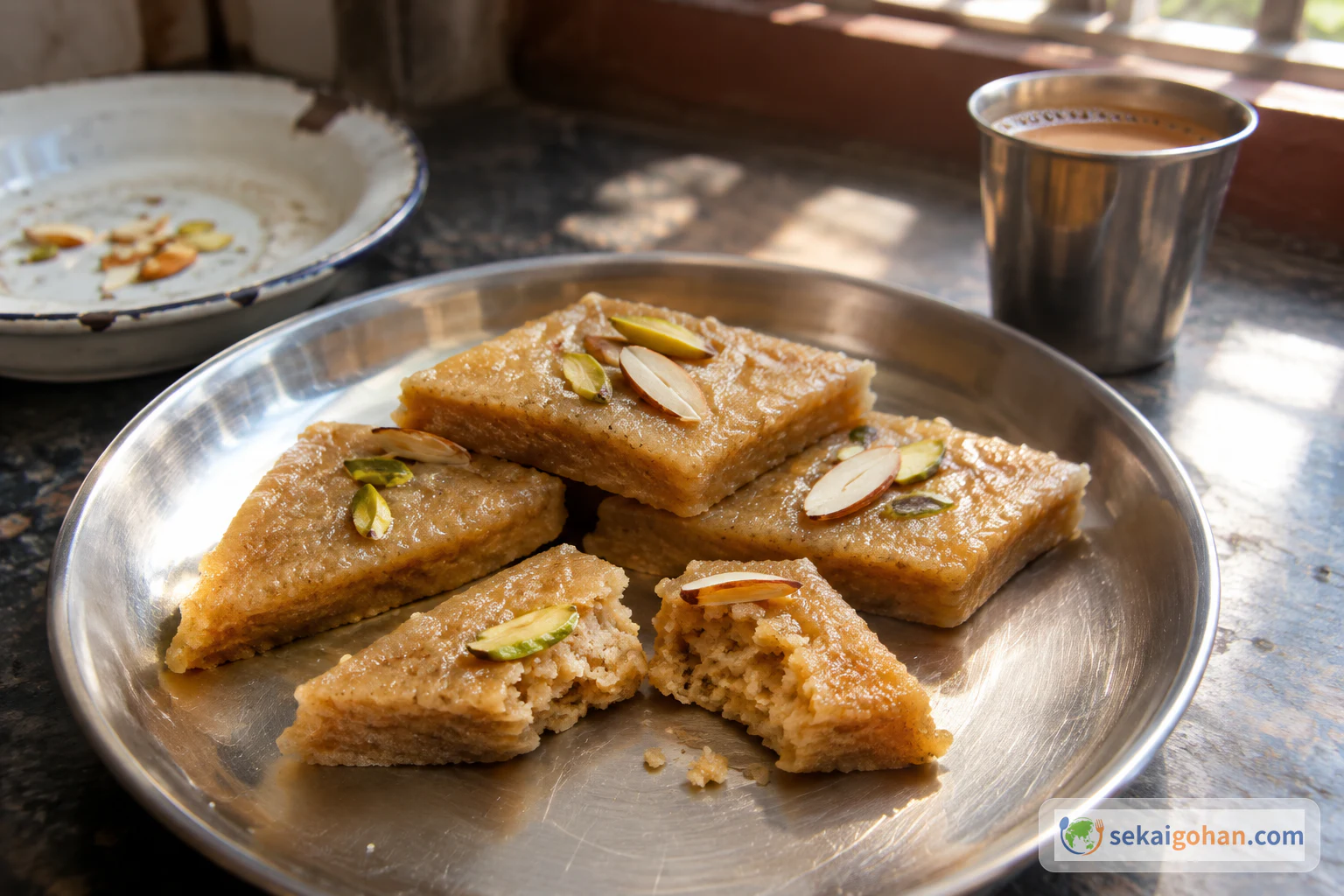
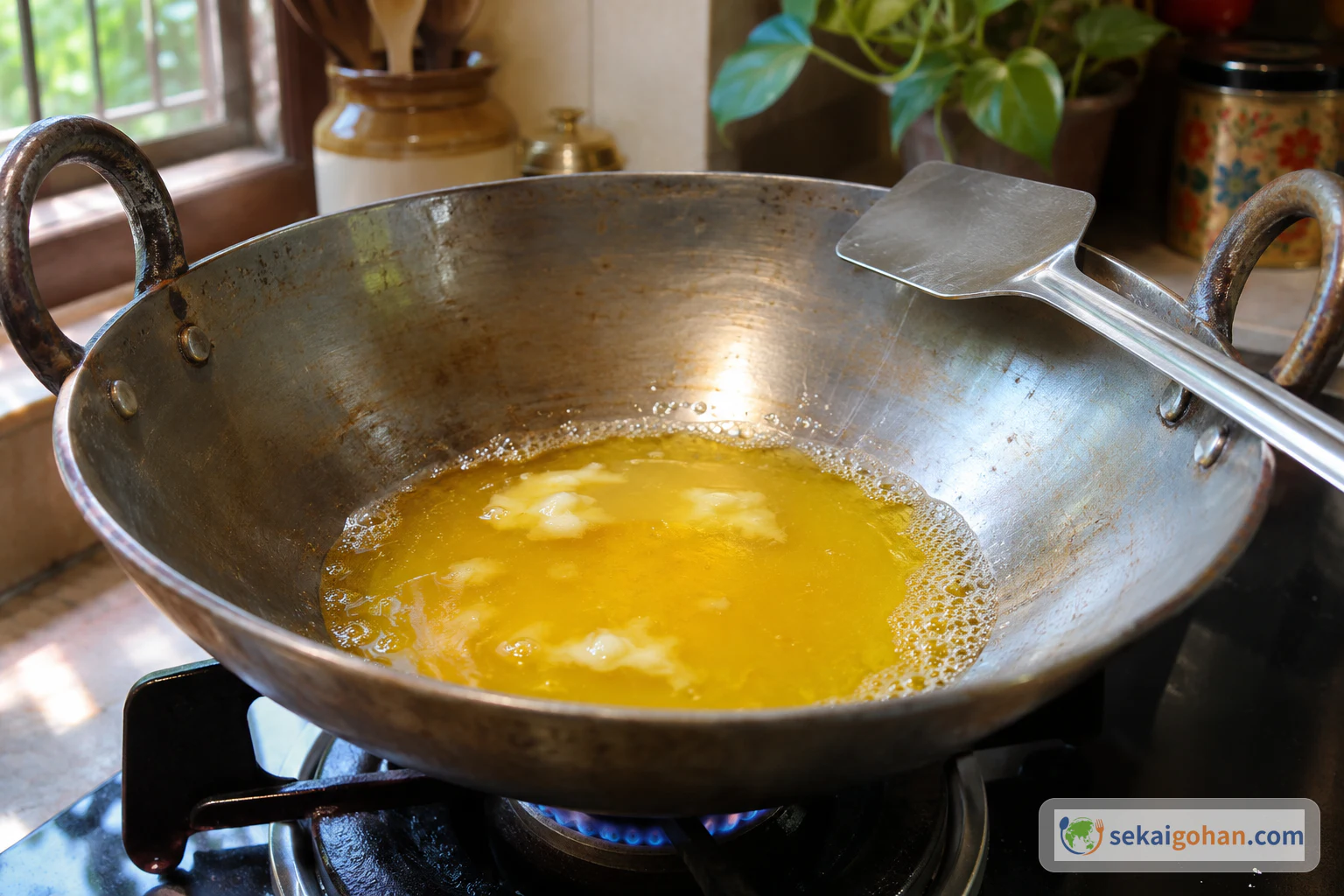
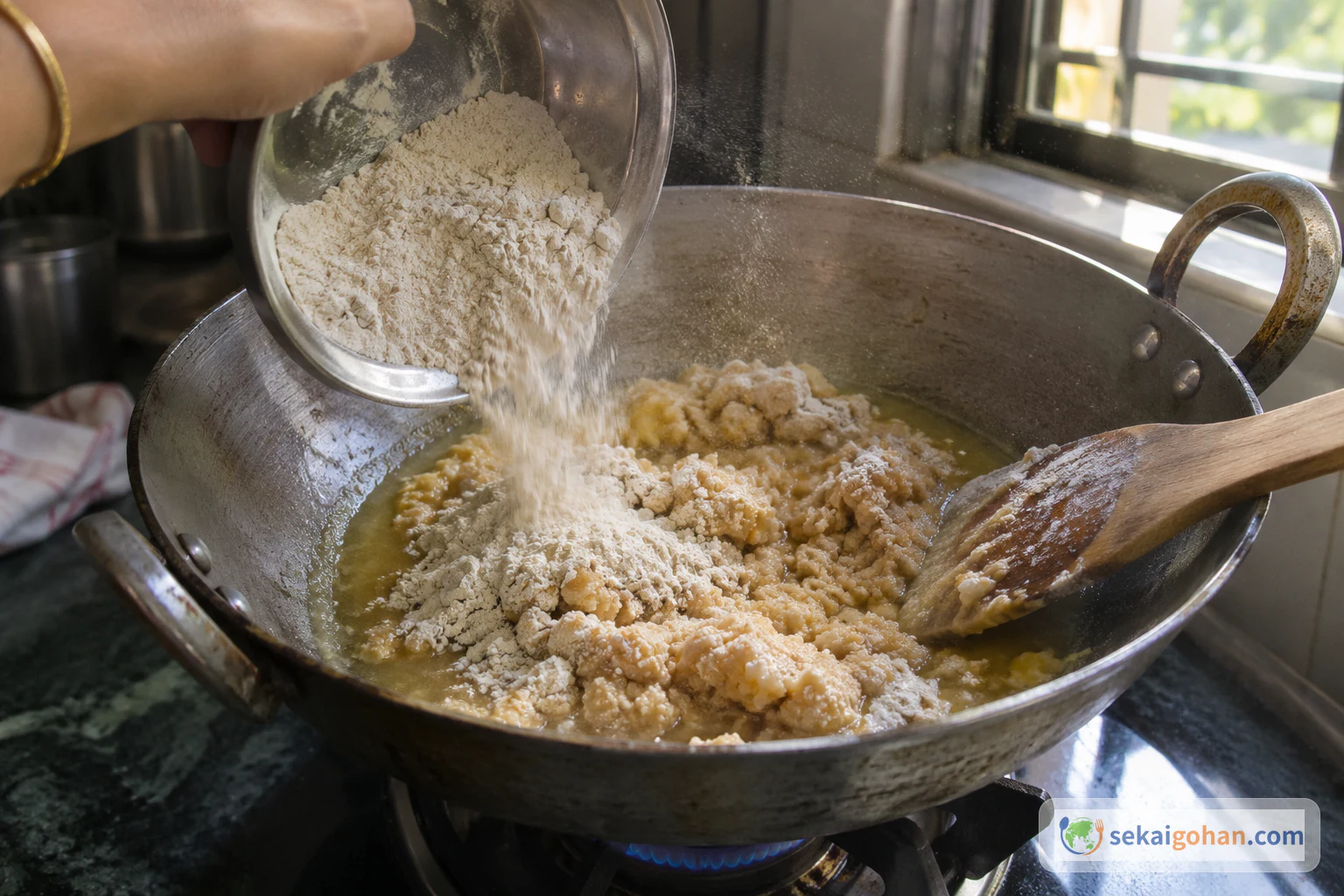
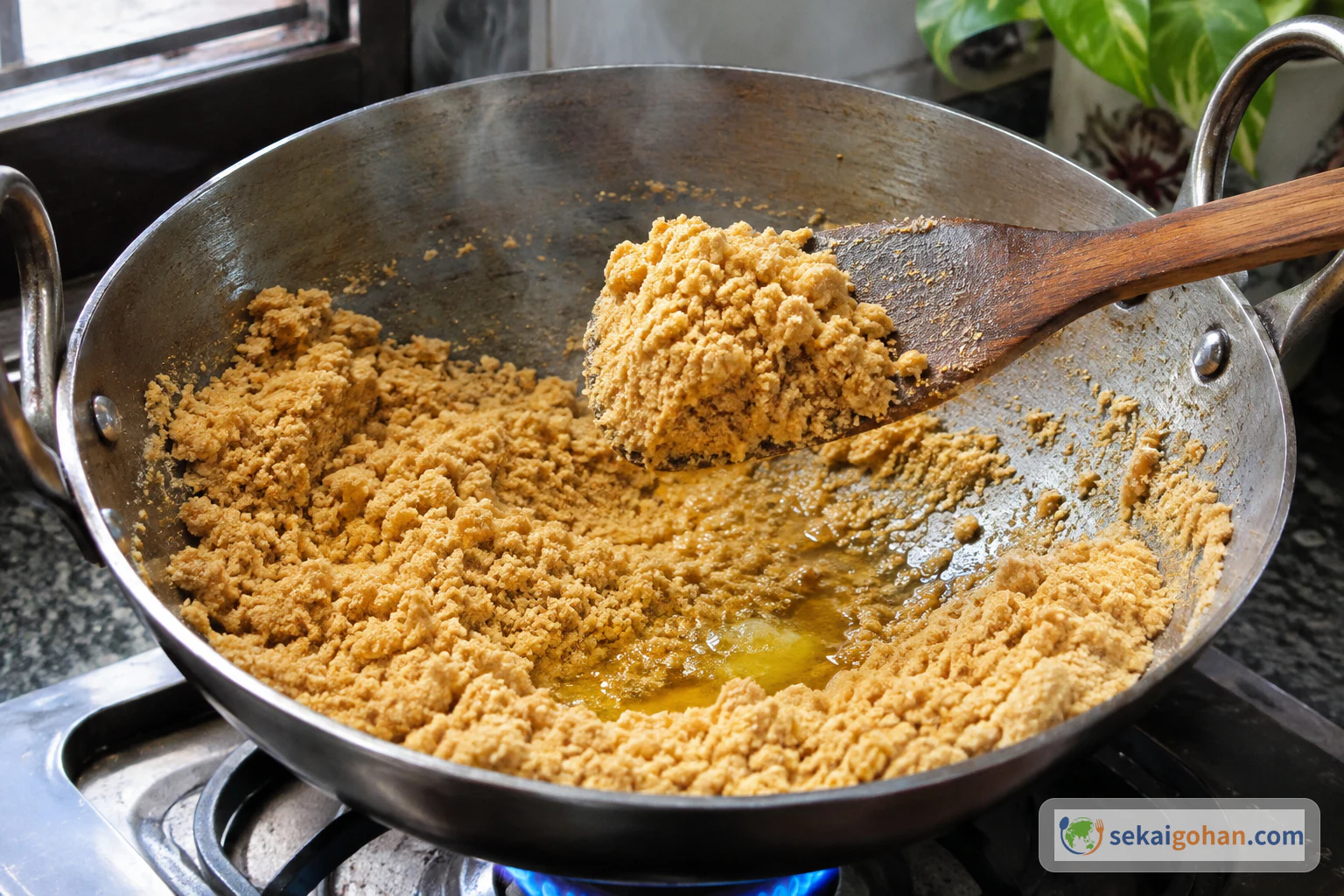
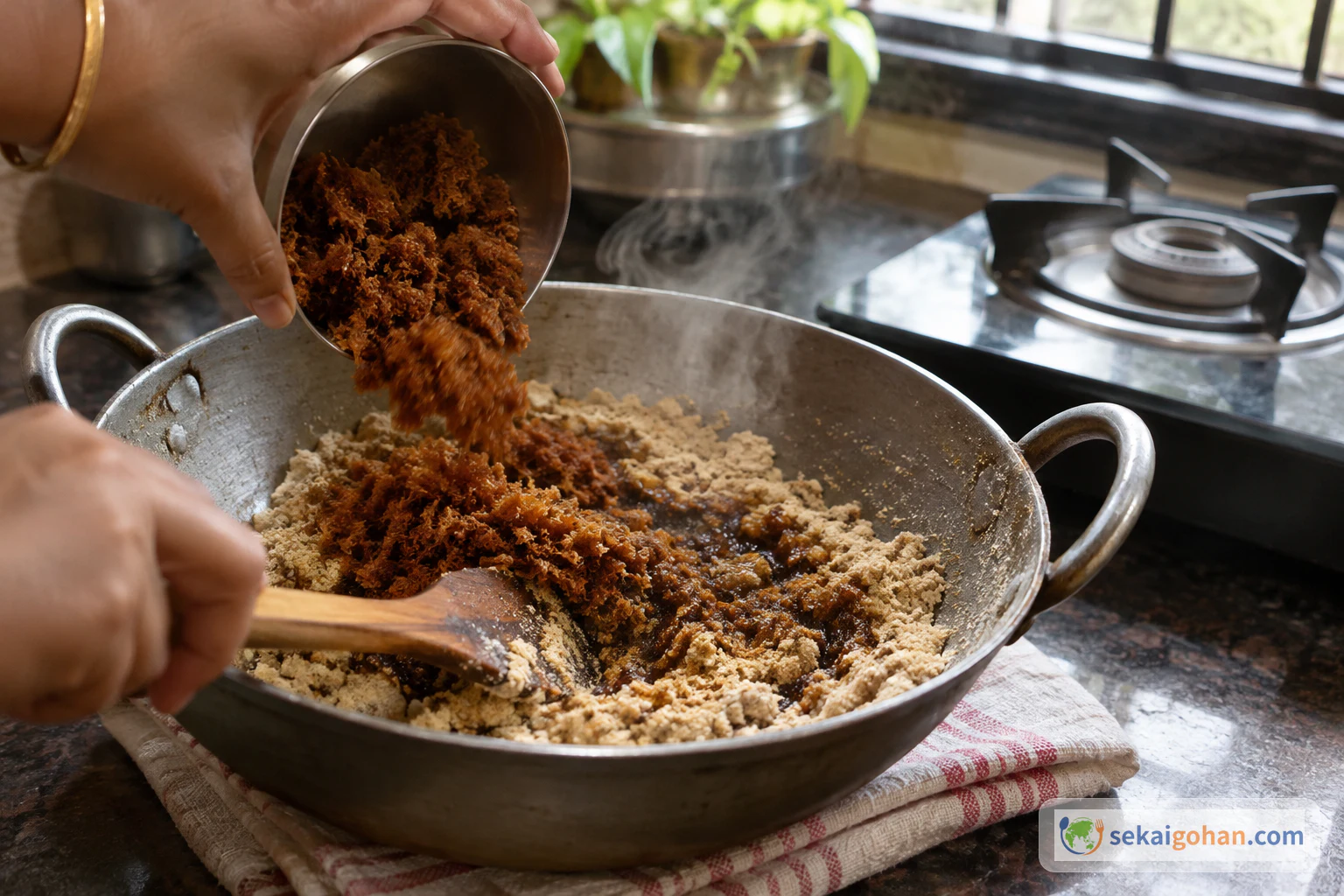
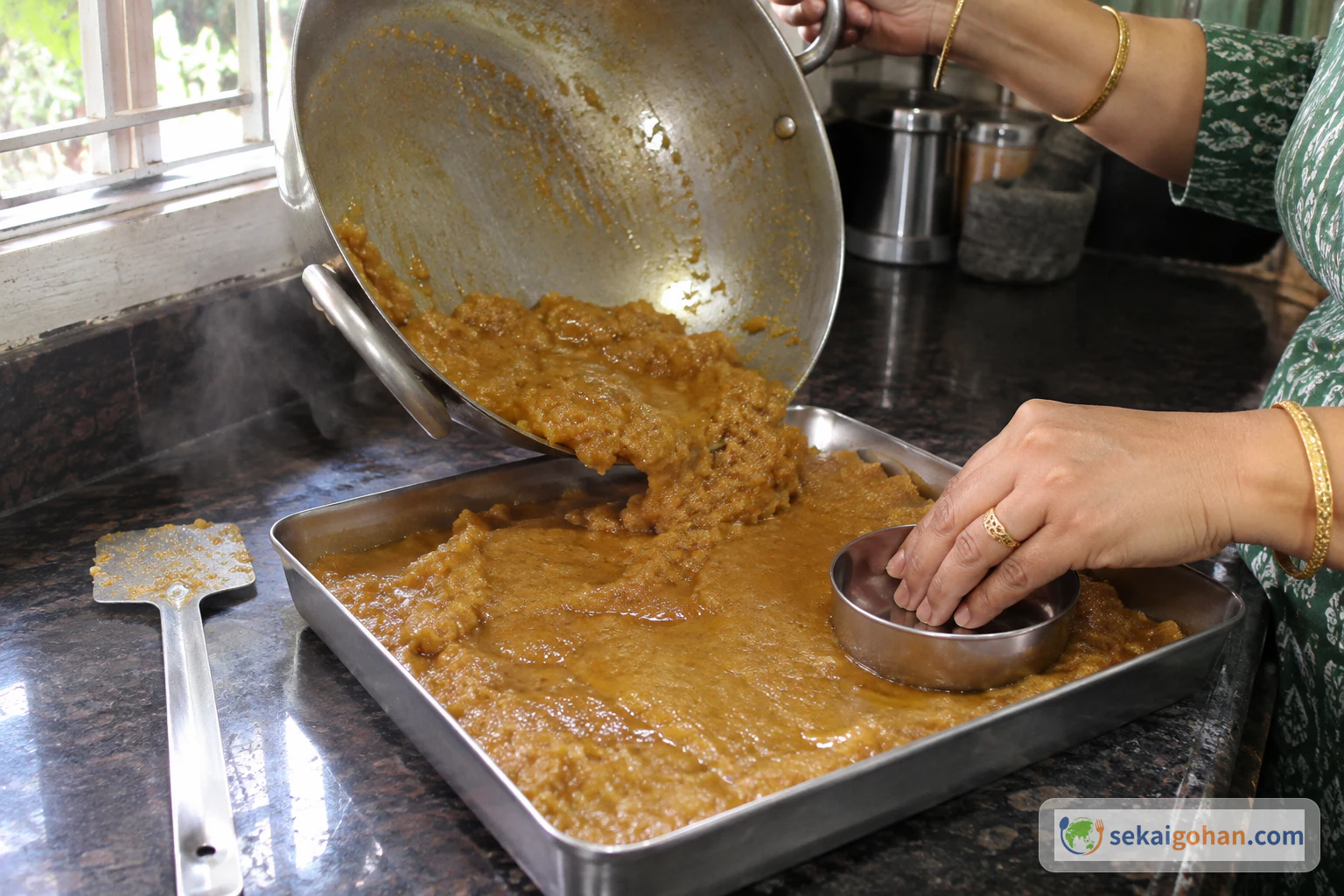
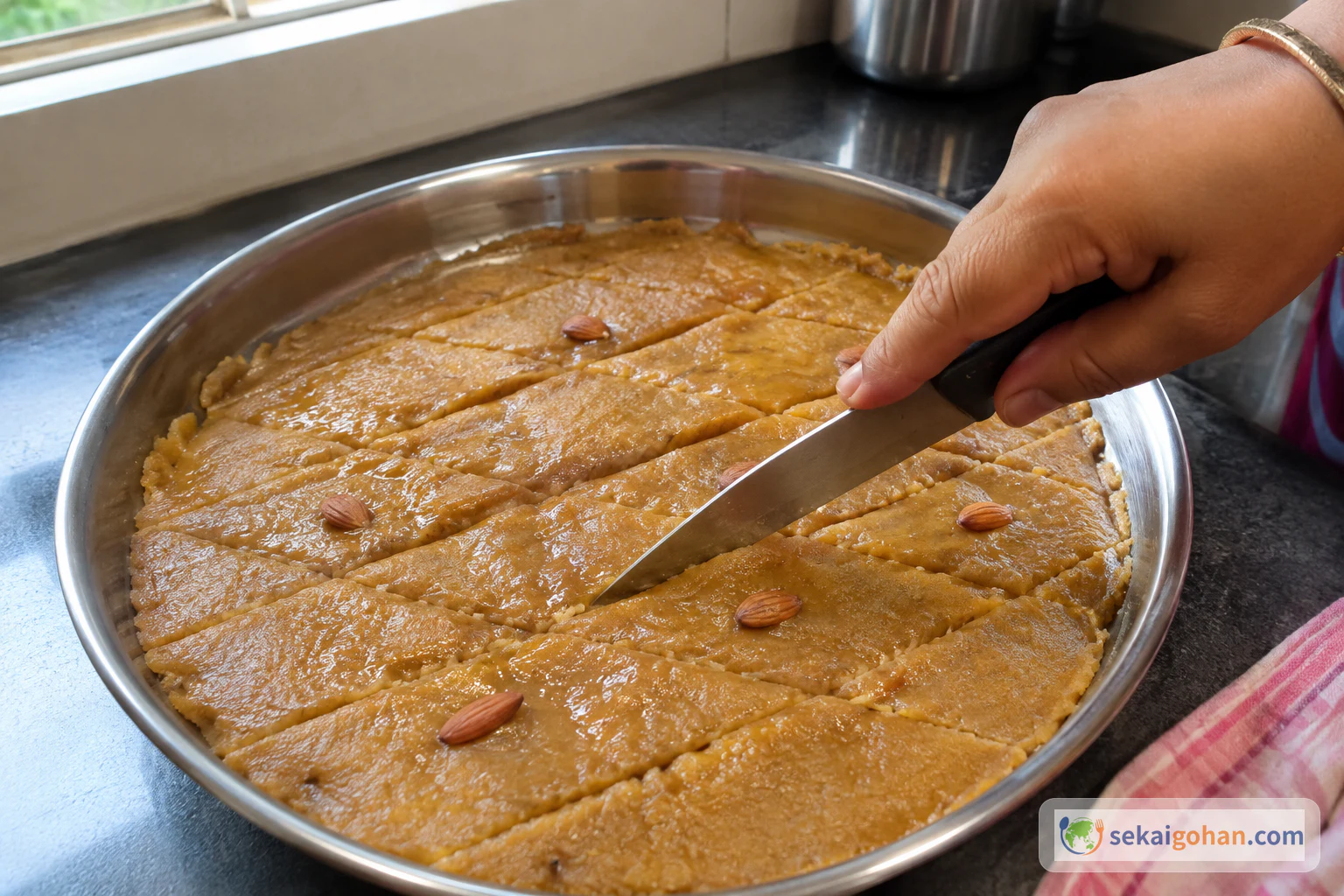
The flour has been turning in hot ghee for a while. It goes from a heavy paste to something loose and light, the kitchen smells of toasted wheat, and clear ghee starts pooling at the bottom of the pan. That is when the flame goes off. You wait a minute, tip in the grated jaggery, and watch it melt into dark streaks from the pan's heat alone. Sukhdi is a sweet from Gujarat made of whole wheat flour, ghee and jaggery and nothing else. It sets into a slab that is cut into diamonds. Each piece is soft and a little crumbly, it tastes of browned wheat and caramel, and it leaves a gloss of ghee on your fingers.
A Sweet Named for Happiness
In Gujarati the word sukh means happiness, and sukhdi is the sweet people make when there is something to celebrate. It is a winter sweet, eaten through the cold months. It also turns up at Diwali, Holi and Ganesh Chaturthi. With only three pantry ingredients, it is the sweet a Gujarati home can make on short notice. It is one of many dishes from India that start with a sack of atta and a jar of ghee.
In Gujarati it is written સુખડી, and in English as Sukhdi or Sukhadi. The other common name is gol papdi or gur papdi. Gol and gur mean jaggery, and papdi means a thin slab. It has nothing to do with the fried papdi crisps used in chaat. A related sweet made with edible gum (gond) is a different confection, known as gundar pak.
The prasad you cannot carry home
The Jain temple at Mahudi, in the Mansa taluka of Gandhinagar district, offers sukhdi and only sukhdi as prasad. It comes warm, with ghee seeping from the edges of each piece. By custom, visitors share it and finish it inside the temple grounds. Taking it beyond the gate is forbidden, according to visitors' accounts.
Every household's ratio
Ask three Gujarati cooks for their sukhdi and you will get three ratios. This recipe uses ¾ cup of ghee to 1 cup of flour. Some homes go leaner, with ½ cup each of ghee and jaggery, pour it thick into a small tray and cut it into squares. Others make it 1:1:1, a cup of everything, which takes about an hour to firm up. Roasting times differ just as much, from 8 minutes to 25 minutes depending on the cook. What every household agrees on is the order of the work. The flour roasts in ghee, the heat goes off, and only then does the jaggery go in.
In school snack boxes today
Sukhdi is also a weekday snack. Gujarat's state school nutrition scheme, the Mukhyamantri Paushtik Alpahar Yojana, rotates it on a fixed schedule with chana chaat, pulses and millet snacks for children across the state. Enriched versions made with ragi (finger millet) and soy flour also exist. They are meant to balance a sweet that is high in energy but not nutritionally well balanced.
Ingredients (makes 25 pieces)
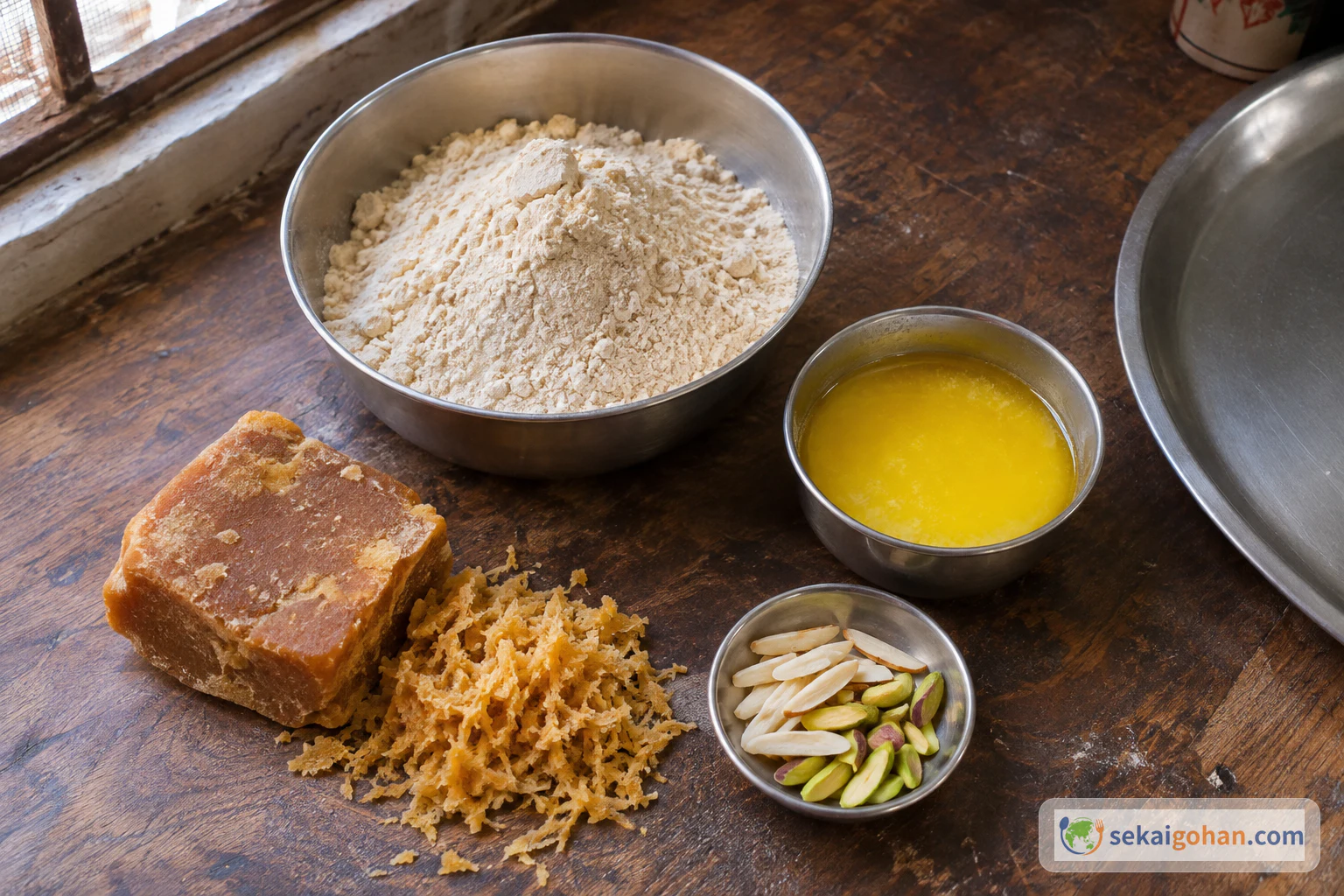
No water goes into sukhdi at any stage.
Skimping on ghee makes sukhdi hard. The ¾ cup includes what you use to grease the tray, so take that little bit from the measured amount rather than adding extra.
Sukhdi contains milk (ghee, or butter if you substitute) and wheat. With the garnish it also contains almonds and pistachios, or whichever nuts you use. It is not vegan as written.
Equipment
- Heavy-bottomed wide pan or kadai, about 10 inches (26 cm)
- Wooden or silicone spatula
- Shallow rectangular stainless steel tray or thali
- Small steel katori, or any small cup with a flat base, for leveling
- Knife
- Grater for the jaggery
- Damp kitchen cloth and a folded dry cloth to set the hot pan on
Buying and Swapping: What Changes When You Substitute
Indian grocers and online shops sell all three ingredients. For flour, look for bags labeled atta or chapati flour. It is ground finer than most supermarket whole wheat flour, and that fine grind gives the melt-in-the-mouth feel. Ordinary whole wheat flour works, but it is usually coarser, so it absorbs ghee differently and leaves a grainier piece. Coarse bhakri flour is also used, and it gives a rustic, sandy bite.
Ghee is sold in jars. You need ¾ cup, so buy a jar large enough to cover it. Unsalted butter works in its place. Its milk solids catch and brown faster, so the flour colors sooner and the aroma is lighter. Keep the heat low the whole time.
Jaggery comes as blocks or powder. Blocks need grating, and powder melts faster. Soft varieties such as desi or chikki jaggery melt most easily. The color of the jaggery sets the color of the sweet. Light jaggery, such as the Kolhapuri kind, gives a light brown slab, and dark jaggery gives deep caramel.
| Swap | What it changes |
|---|---|
| Unsalted butter for ghee | Browns faster and smells milder. Roast on the lowest heat |
| Supermarket whole wheat flour for atta | Grainier and less melting. Absorbs ghee differently |
| Grated or powdered dark cane sugar, such as Japanese kokuto, for jaggery | Close but not the same. Color, melting speed and how fast it scorches all shift |
| Vegetable ghee (vanaspati) for ghee | Makes a vegan sukhdi, but without the milky aroma. The result is a different sweet |
Keep the full measure of ghee and the off-heat jaggery. Those two decide whether you end up with sukhdi. You can let go of the exact flour grind or the nut garnish.
Method: Roast, Turn Off the Heat, Then Add Jaggery
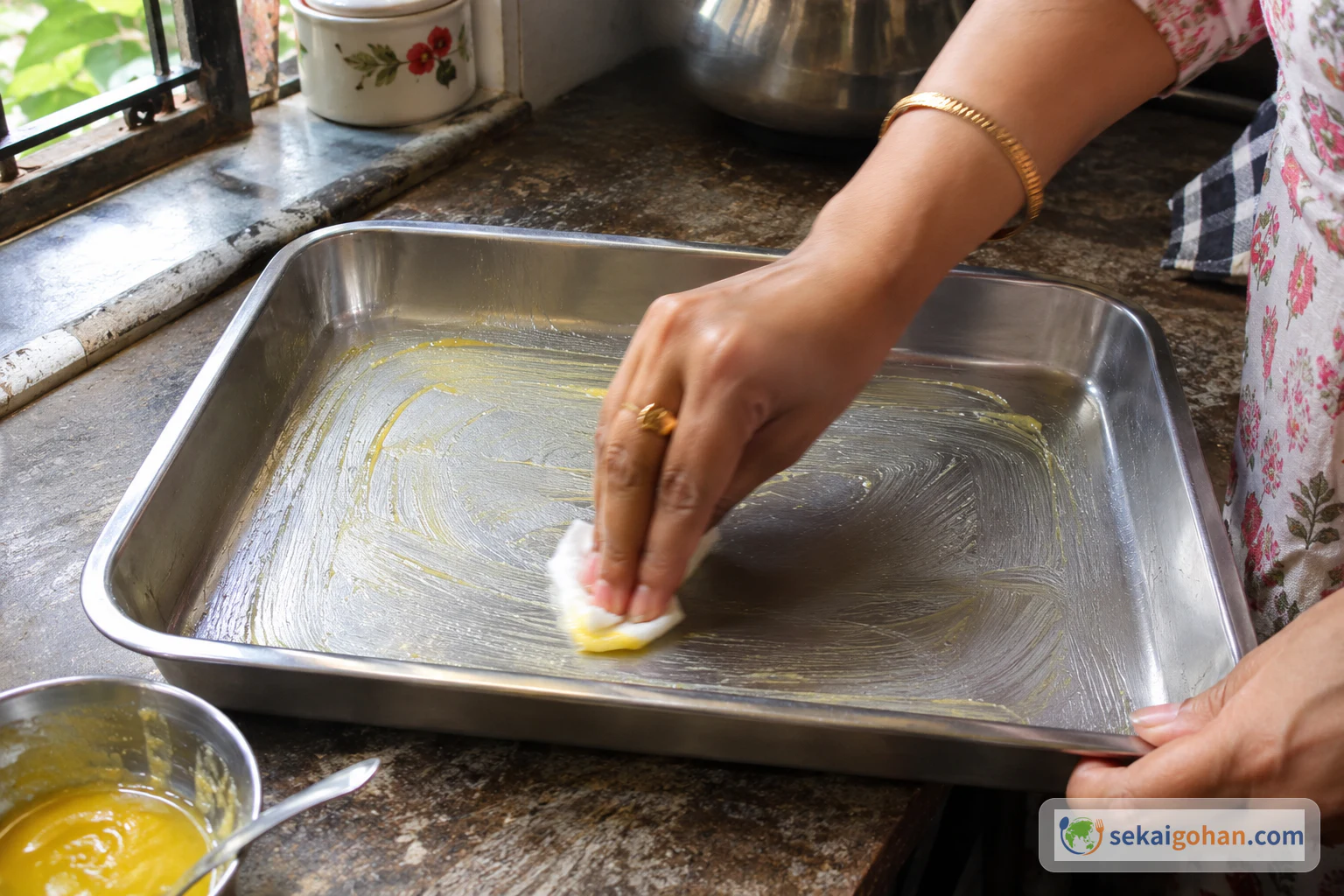
Grate the jaggery and grease the tray before anything touches the stove. Once the flour is roasted, the work moves fast. Most of the time goes into slow, steady stirring over a low flame. After the jaggery goes in, the mixture starts to set quickly.
You will be stirring a large amount of very hot ghee and flour. Use a heavy pan, keep a damp cloth within reach, and keep children away from the stove. Always add the jaggery off the heat. Over a flame it boils, and hot sugar syrup can spatter onto your hands.
Over a flame, jaggery boils to the one-string stage, and the sweet sets hard and brittle. The minute of waiting off the heat matters as much as the roast, so wait the full minute before adding it.
When It Goes Wrong
| What you see | Why | What to do |
|---|---|---|
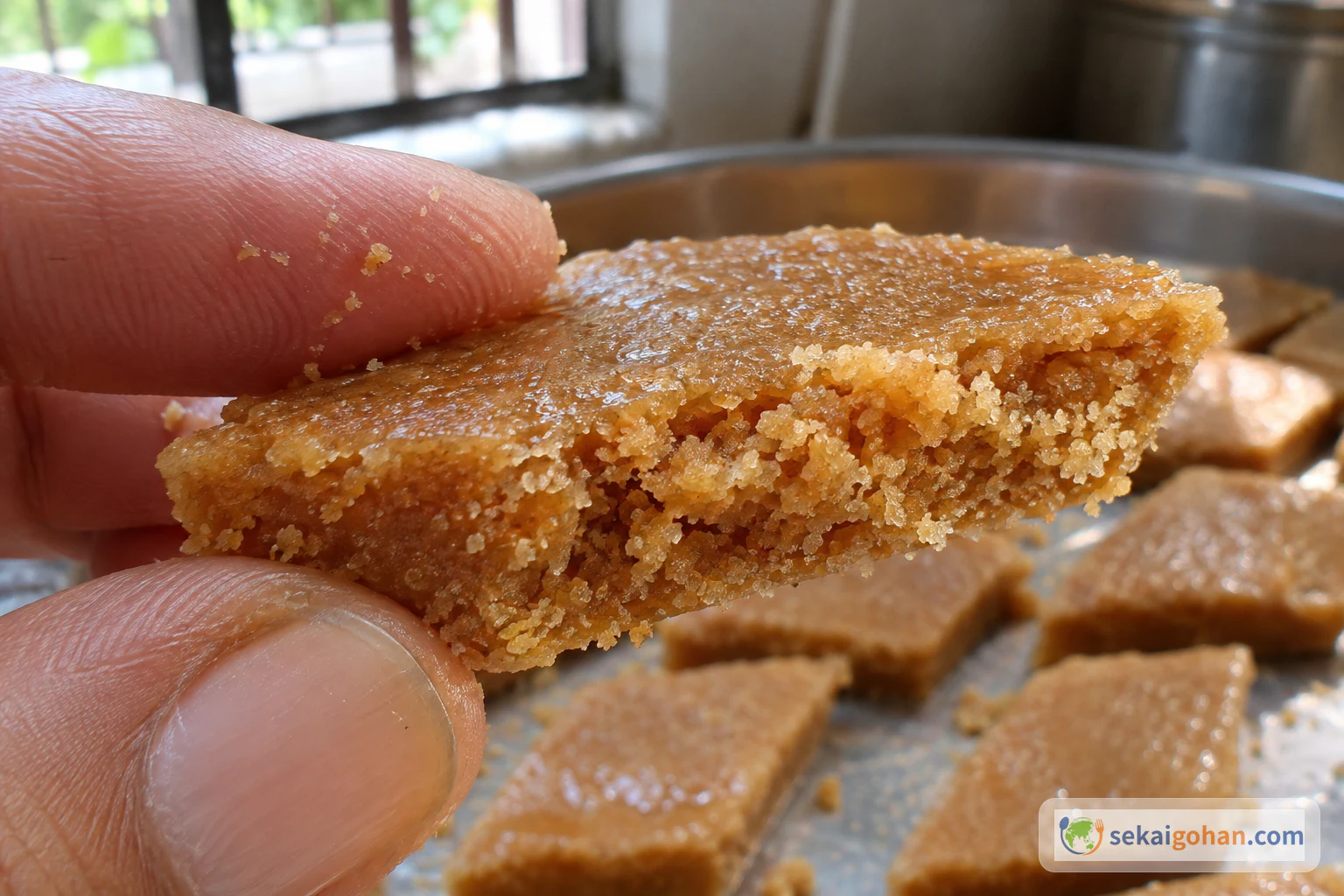
| Hard pieces that shatter | Jaggery went in over the flame and reached the one-string stage, or there was too little ghee | Next time, turn off the heat, wait a minute, then add the jaggery. Keep the full ¾ cup of ghee |
| Raw, floury taste | The flour was under-roasted, or high heat browned the outside while the inside stayed raw | Stay on low heat and keep stirring until the mixture loosens, smells toasted and the ghee separates |
| Pieces crack when cut | The slab cooled before cutting | Cut after 4 to 5 minutes, while it is warm. Do not recut cold pieces |
| Burnt, bitter smell | The heat was too high, or stirring stopped near the end | The bitterness does not go away, so start again with low heat and constant stirring |
| Slab sticks to the tray | Bare patches in the greasing | Grease the whole inside of the tray, corners included |
Serving, Variations and Storage
On the table
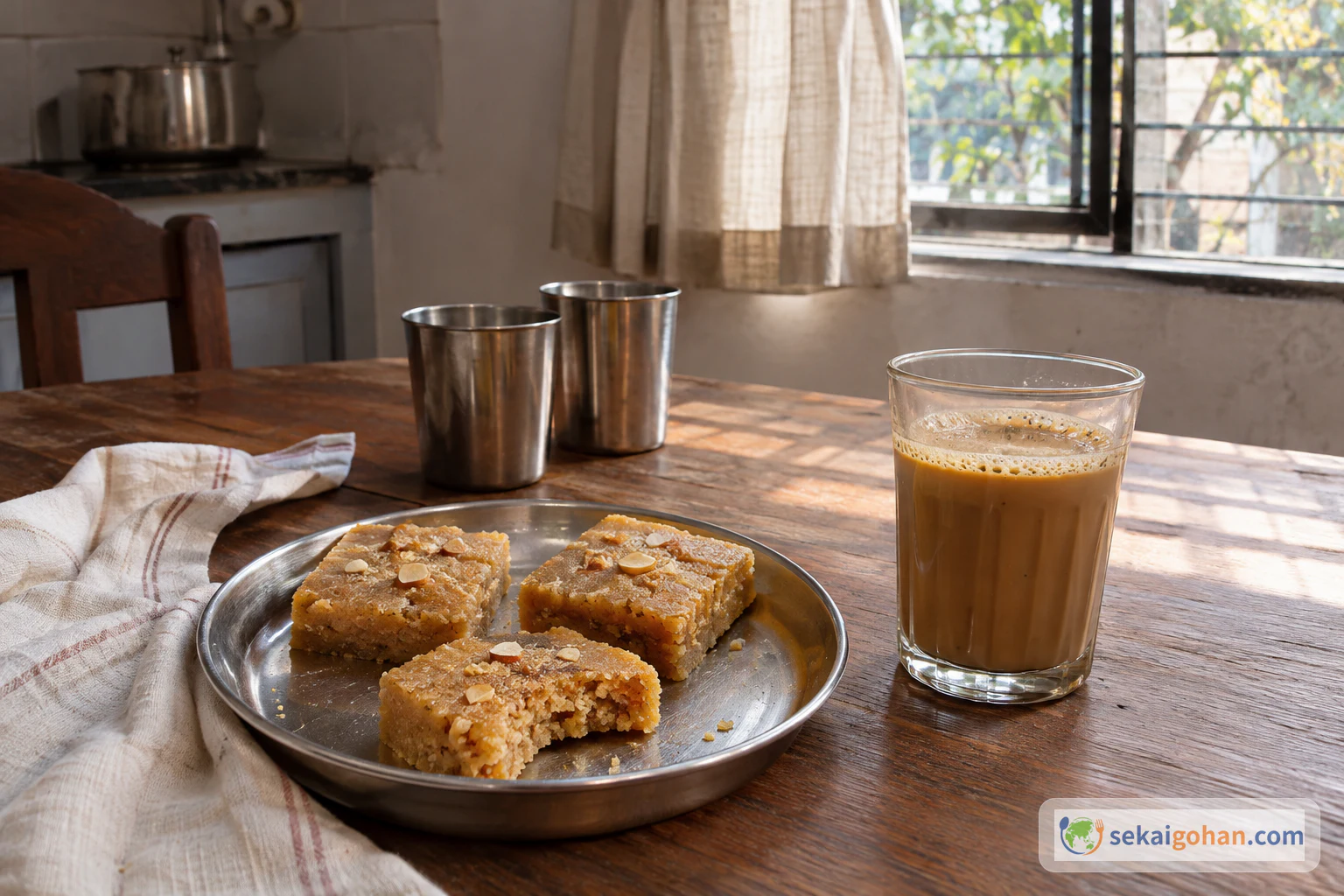
Sukhdi is set out at festivals and family celebrations, and it is passed around through the winter. Serve it warm, not hot. A piece eaten straight from the pan irritates the throat. The warmth you want is the gentle warmth of a piece that has rested, with the ghee just soft.
Variations
- Cardamom. Add a little freshly ground cardamom right after the heat goes off. The perfume takes the lead and the ghee tastes lighter.
- Nuts mixed in. Stir chopped nuts or nut powder into the roasted flour instead of only scattering them on top. Every bite gets crunch, not just the surface. Cashews and walnuts work as well as almonds. Dried fruit can go in too.
- Thin or thick. Spread it thin in a large tray for diamonds, or pour it thick into a small one for a fudge-like square. A thick slab cuts better into squares than diamonds.
- Jaggery color. Without changing the ratio, light jaggery gives a pale golden sweet and dark jaggery gives a deep caramel one with a stronger molasses taste.
Storage
Cool the pieces completely, then store them in an airtight container at room temperature for up to 15 days. They need no refrigeration and do not freeze well. As our own suggestion, not part of the room-temperature guidance above, a hot, humid summer kitchen may call for the fridge, though cold sukhdi turns firmer. Warm a leftover piece in the microwave for 5 to 10 seconds before eating.
Frequently asked questions
The mixture looks dry before the jaggery goes in. Should I add water?
No. Sukhdi never takes water. Dry-looking flour almost always means it has not finished roasting. Keep stirring on low heat until it loosens and the ghee separates. That separated ghee is the moisture the jaggery melts into.
Can I cut the ghee to make it lighter?
You can go down to ½ cup of ghee to 1 cup of flour, as leaner households do, and still get proper sukhdi. Below that it turns hard rather than soft. For a more nourishing version, look at enriched recipes that add ragi or soy flour rather than taking out fat.
Is sukhdi suitable for children?
It is made of wheat, milk fat and jaggery, so check for wheat and milk allergies, and nut allergies if you garnish it. Let pieces cool from the pan before handing them over, because a very hot piece irritates the throat. Gujarat's school snack scheme includes sukhdi in its rotation for schoolchildren.
Can I make it ahead for Diwali or as a gift?
Yes. It keeps well in an airtight container at room temperature. Make it, cool it completely, and pack it into tins. Freezing is the one thing to avoid.