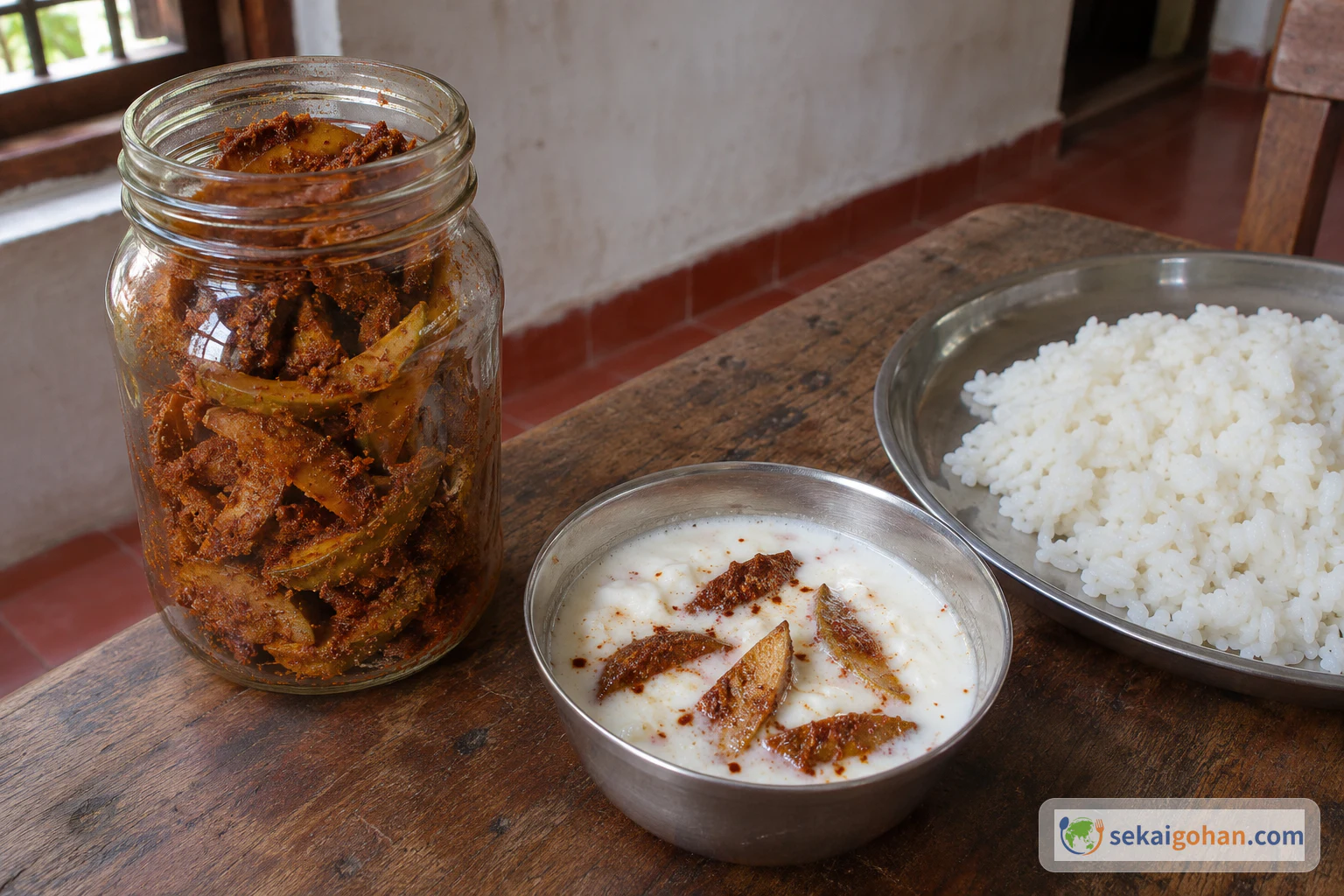
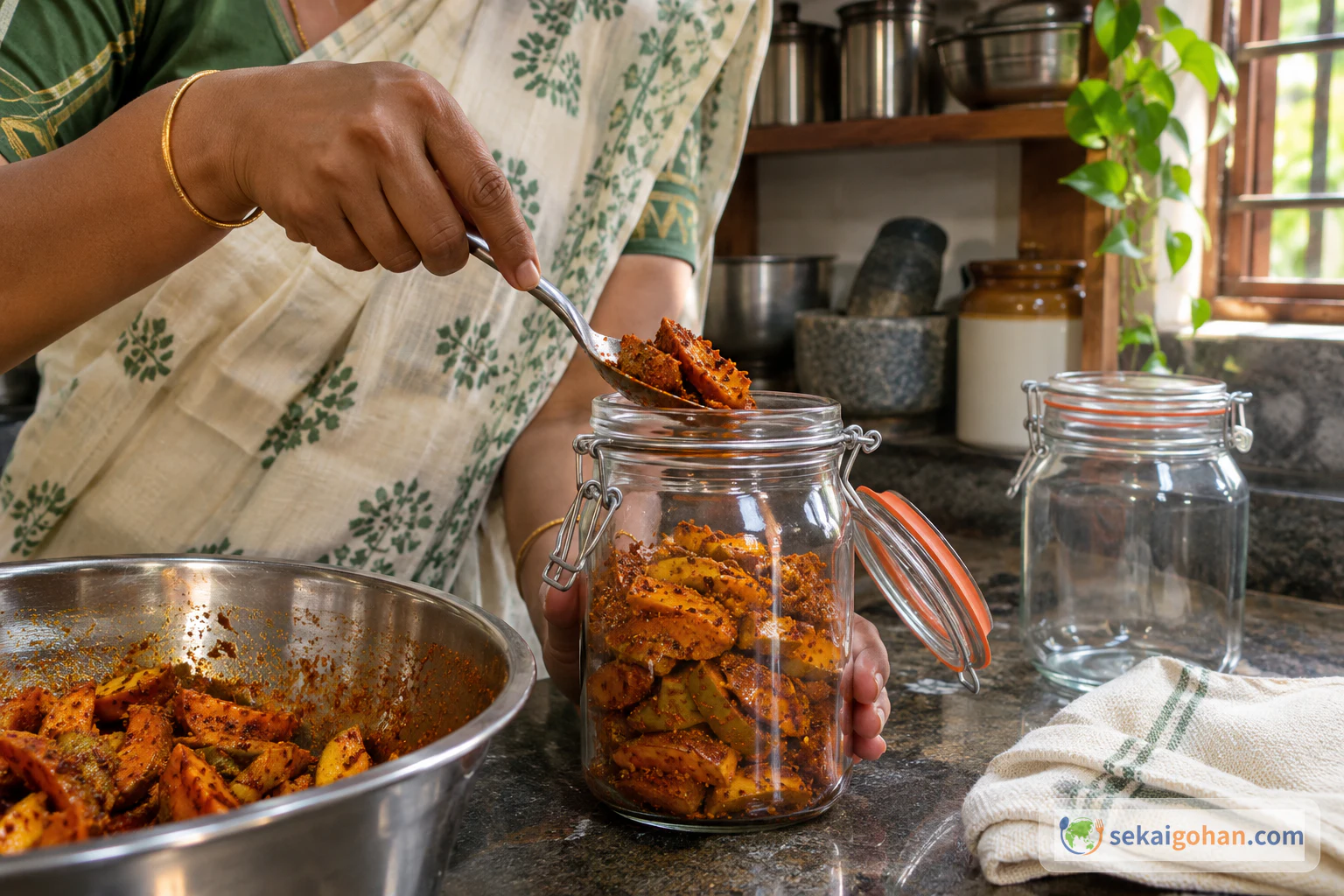
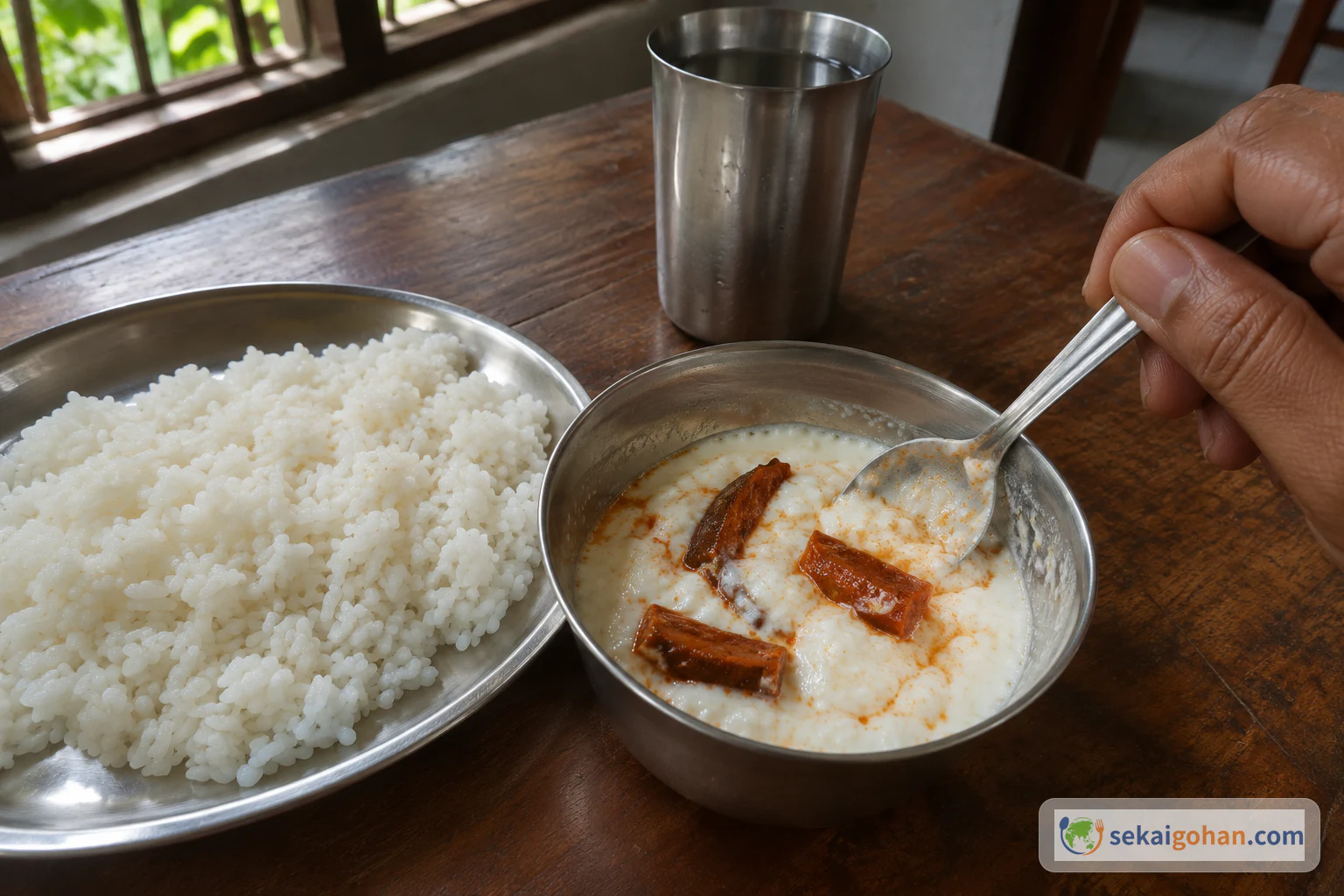
A spoon goes into the jar and comes out with two or three shrunken, amber pieces of mango, each one dusted rust-red. They drop into a bowl of cool plain curd, and as you stir, the white turns pink and the smell of fennel and black pepper rises. Then the bowl goes next to a plate of hot rice. That is thuramanga, the salted, sun-dried green mango of Wayanad in the hills of Kerala. It tastes sour first, then salty, then hot, and the fennel stays sweet underneath all three.
A jar of dried mango from the Wayanad hills
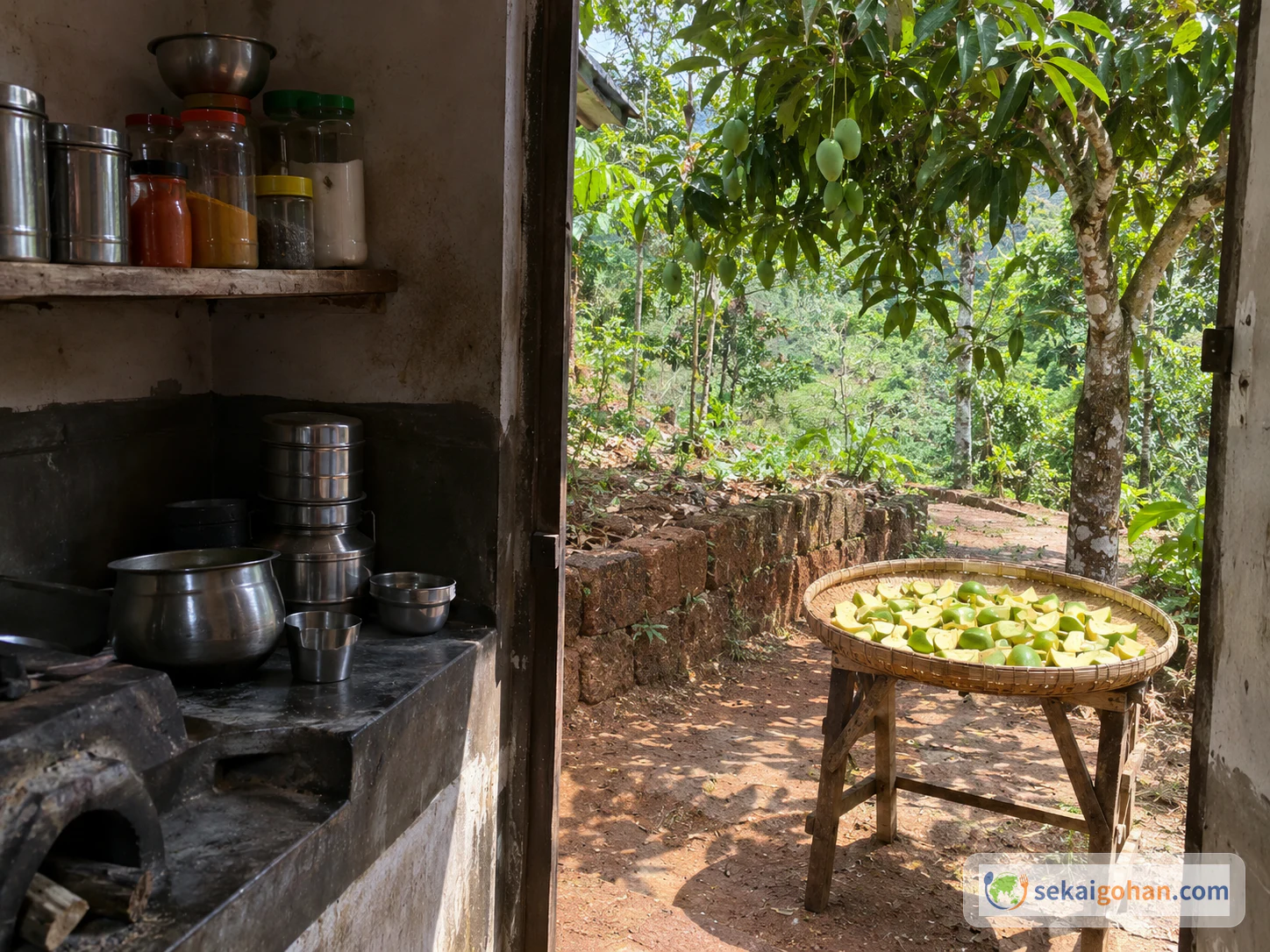
Wayanad is a highland district on the eastern edge of Kerala, and it is mango country. At one mango festival there, Mambazha Peruma, 31 varieties went on show, 18 of them native to the district, with names like thora mango, then mango, adakka mango and Perakka mango. Mango pickles and other preserves were sold at the same event. A place with that many mangoes has always needed ways to keep them.
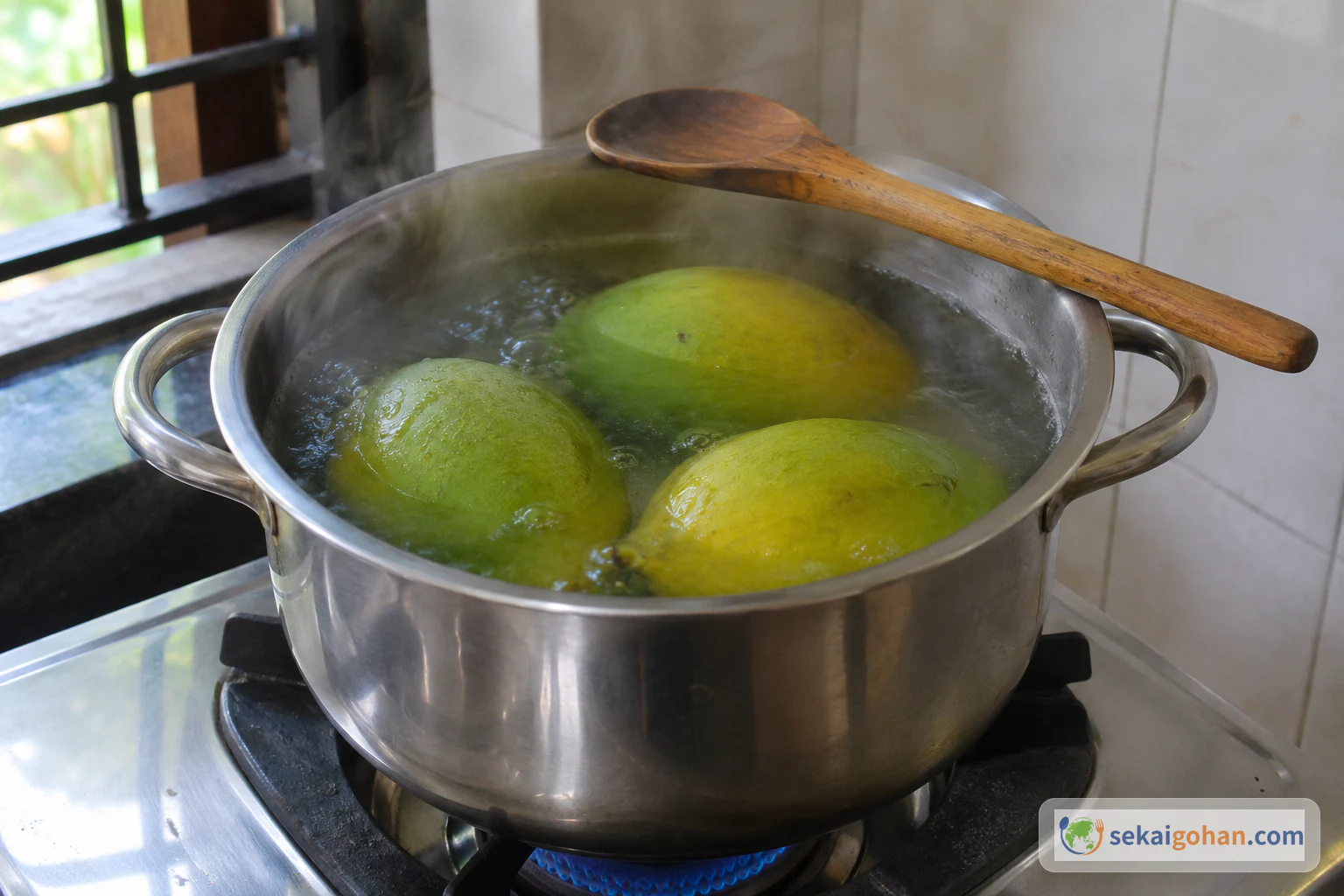
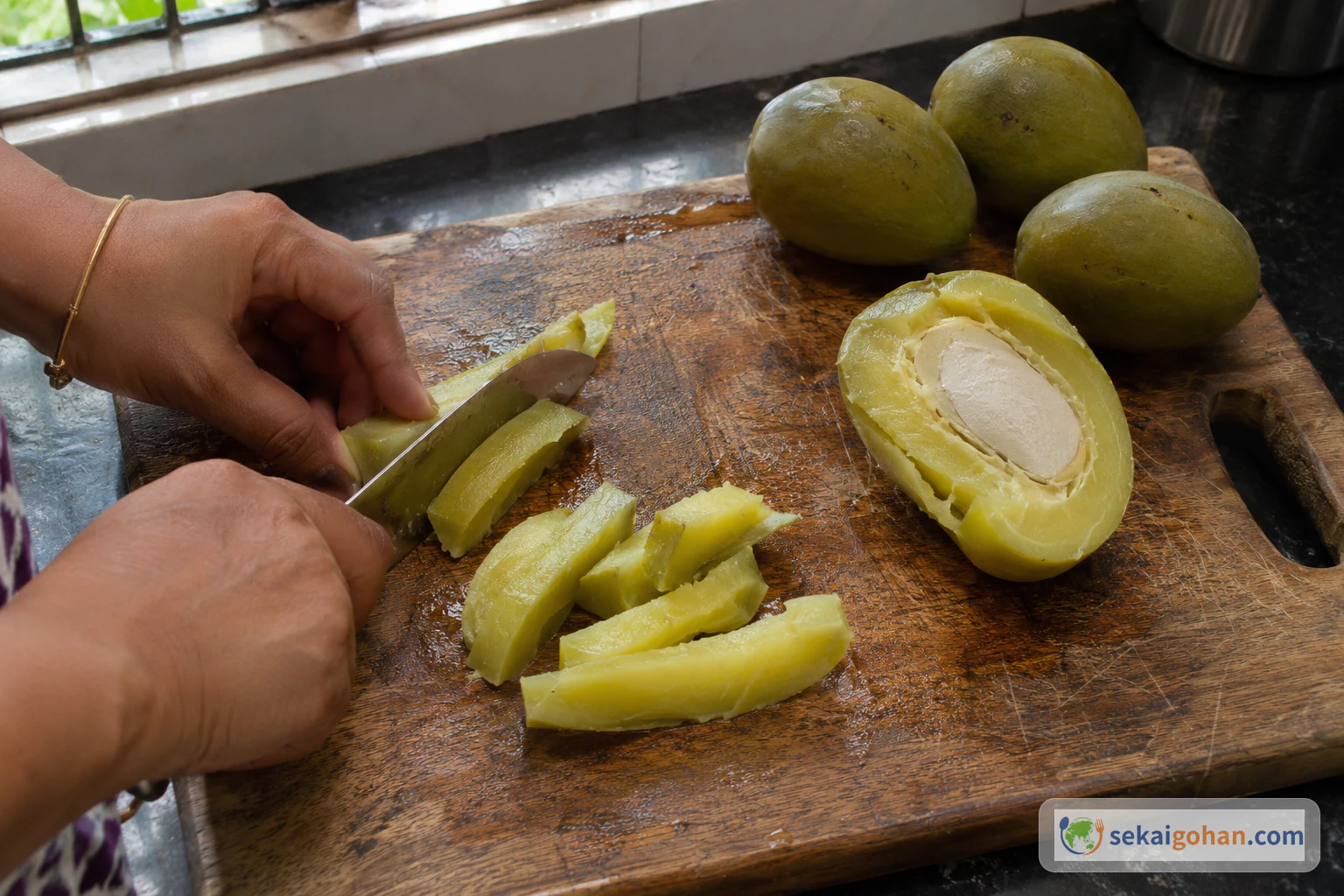
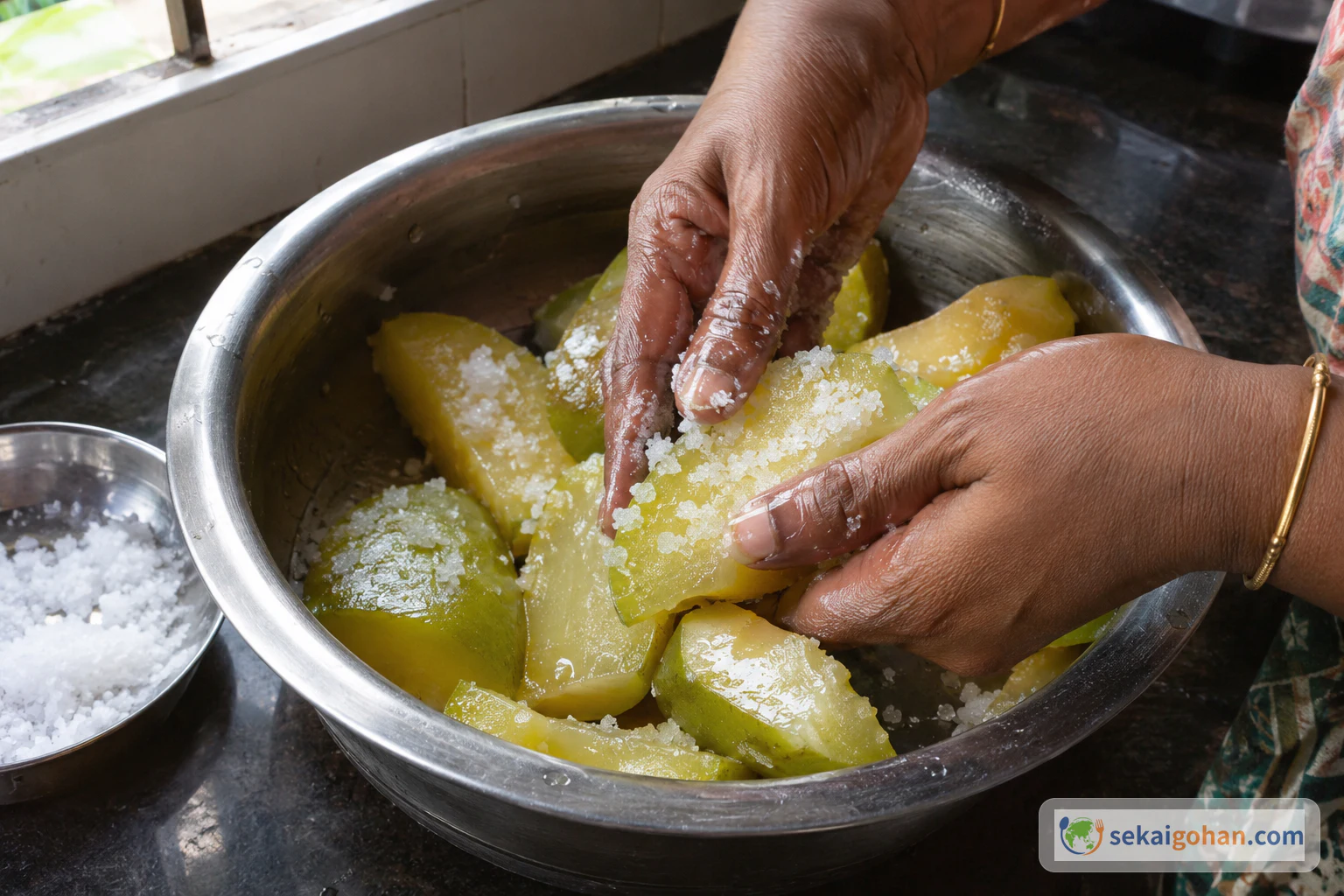
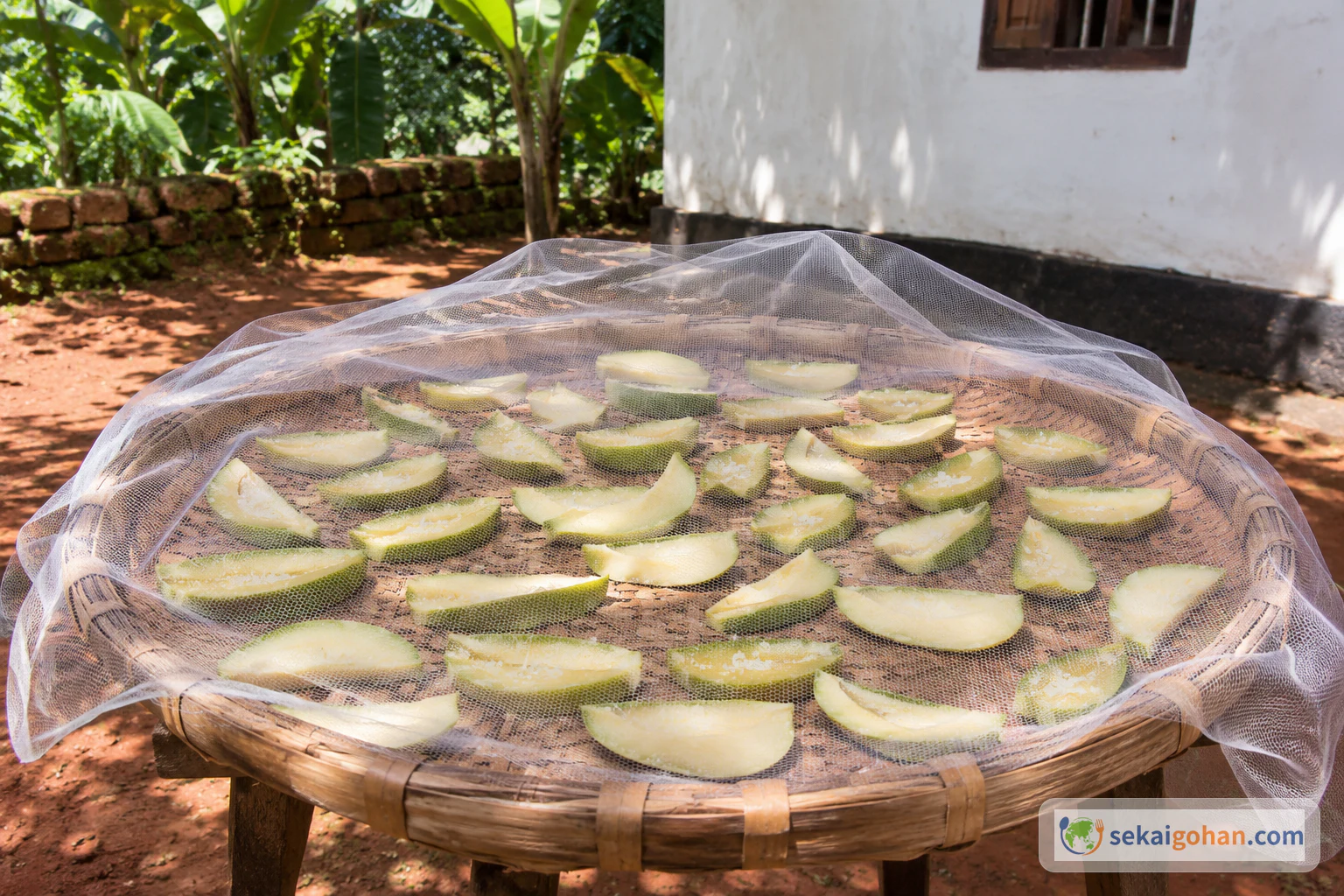
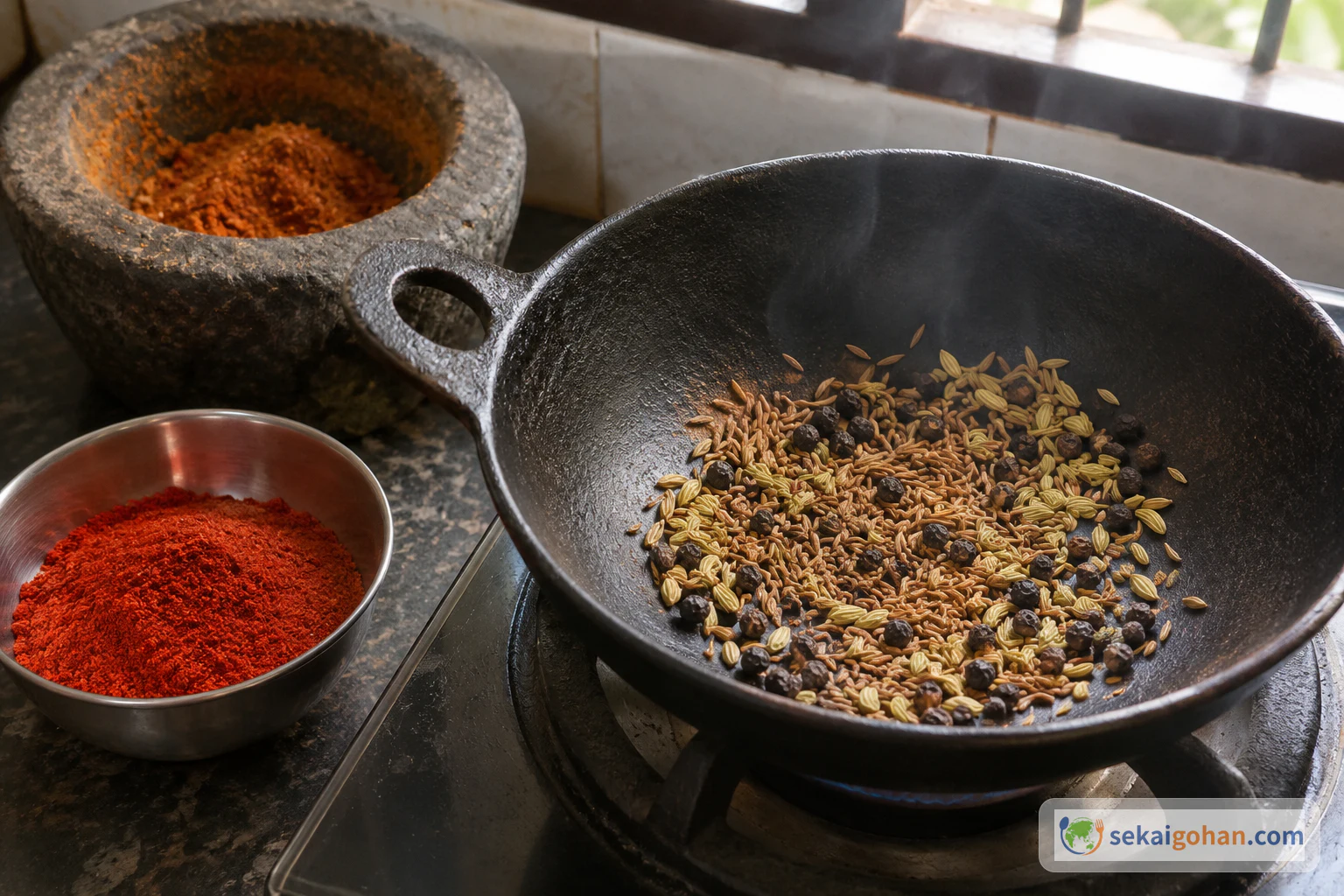
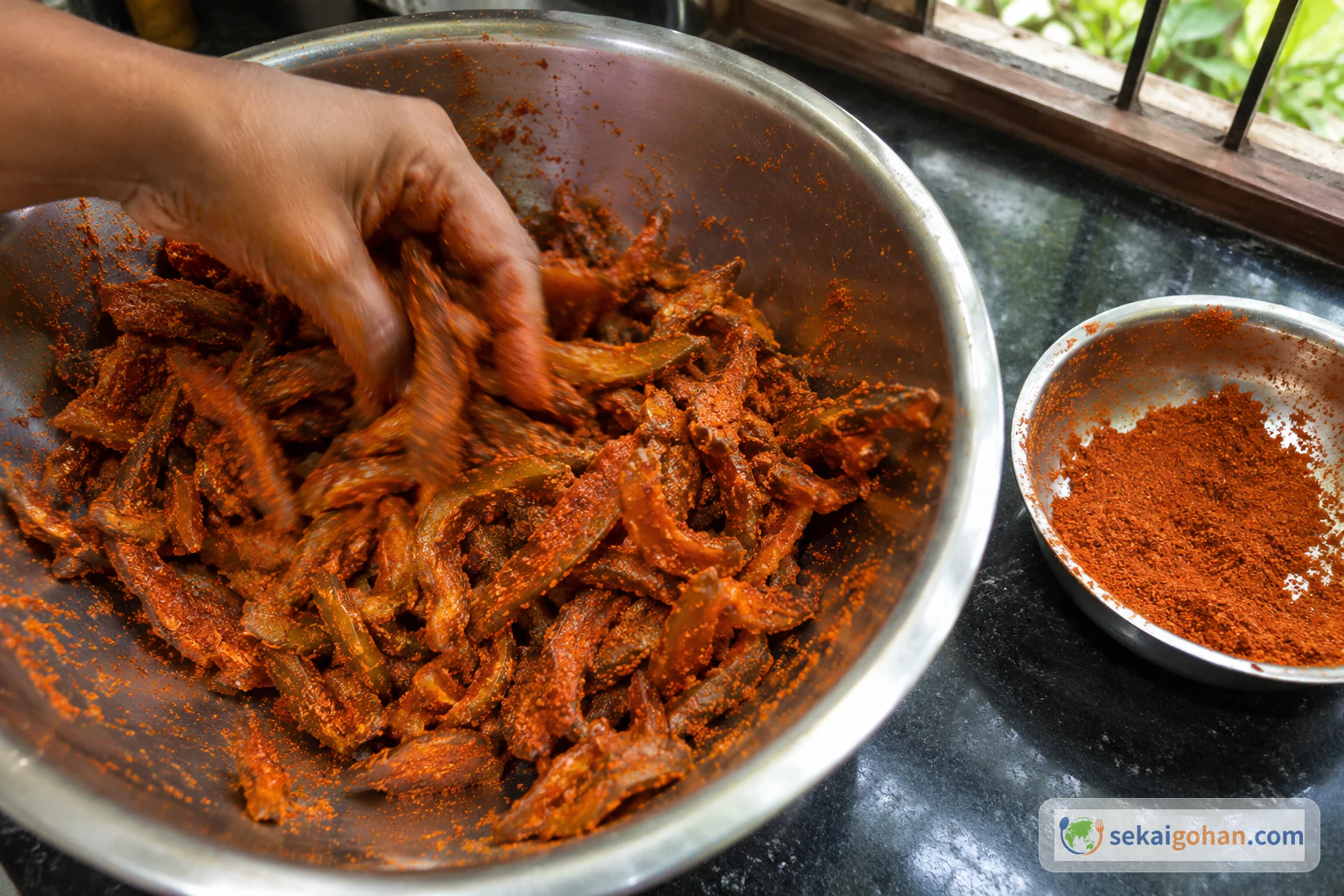
Thuramanga is one of those ways. Households make it in quantity during mango season and put it away to use later in ordinary meals. The fruit goes in green and hard. It is boiled whole, cut, rubbed with salt and laid out in the sun for days. Then it gets a coat of roasted, ground chili, fennel, cumin and black pepper and goes into a sealed jar. The finished pieces are strongly salty and hot, so they are not really a snack. They are a seasoning for the table, loosened in curd and eaten with rice, the everyday Kerala pairing of rice, curd and something sharp on the side.
In English you will see Thuramanga and Thoramanga; in Malayalam തുറമാങ്ങ, also written തൊറമാങ്ങ. Spice shops abroad sometimes sell it as Wayanadan dried salted mango. Wayanad also grows a native variety called thora mango, and whether the dish takes its name from that fruit is not settled.
Why it is dried, and not soaked
Kerala has another salted mango, uppumanga (or kadumanga), where small whole mangoes sit in brine. Thuramanga takes the opposite route and pulls water out instead. Raw mango slices have long been kept both ways, in brine and in dry salt, and the two behave differently. Brine often grows a film of scum on top and needs a lot of storage space. Dry salting cuts the risk of spoilage and keeps the colour, aroma and texture of the fruit. The boil at the start softens the flesh so the salt goes in and the sun can draw the water out evenly.
Salt is a balance here. Commercial dry-salted mango slices made with very high salt, 15 to 20 percent, turn soft and brown. That figure belongs to the factory, not to this jar. At home you rub on a light, even coat and let the sun do most of the work.
Cousins on the same shelf
Other households in Kerala make their own versions. A style tied to Kuttiyadi cures the mango with salt and turmeric and adds fenugreek and mustard to the spice mix, then rests it far longer. It is a separate preserve; keep the two apart and follow the Wayanad method below. Across the border in Bangladesh, aam er achar also starts from green mango but sinks it in mustard oil with panch phoron, a rich, oily pickle where thuramanga is dry and lean. Amchur, the dried mango powder in Indian spice racks, shares only the drying, with no salt or spice at all. For more dishes from the region, see Indian recipes.
Ingredients
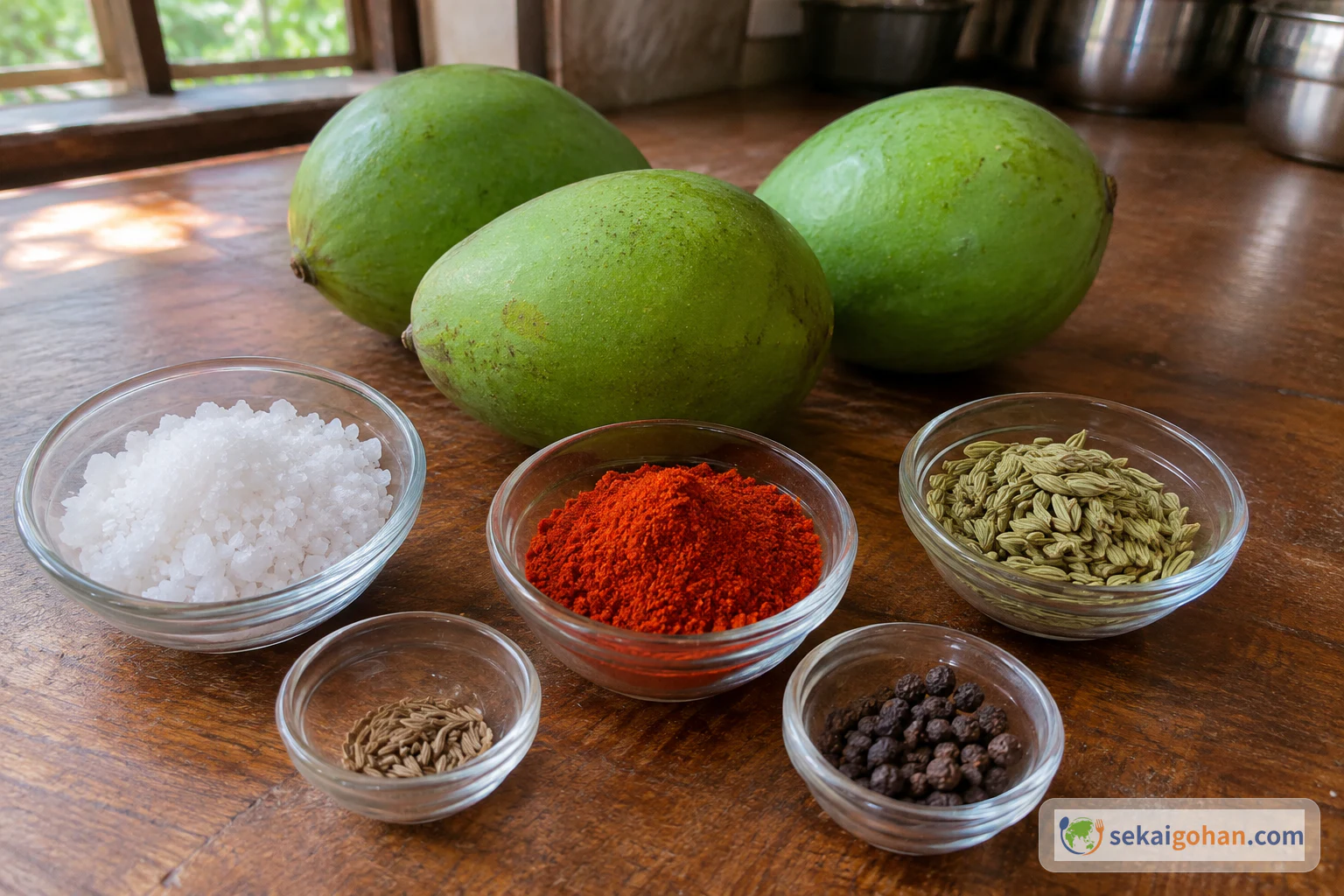
The preserve itself contains only mango, salt and spices, with no milk, wheat, peanut or soy. Mixing it with curd adds dairy. Some people get itchy hands from mango skin; wash your hands after handling the skins.
Equipment
- Large, deep pot that holds three whole mangoes fully under water
- Colander
- Cutting board and sharp knife
- Wide bowl for salting and coating
- Raised drying tray or mesh rack (a wide basket lined with a clean, dry cloth also works)
- Thin mesh net to drape over the tray
- Small heavy pan for dry-roasting
- Spice grinder or mortar and pestle
- Clean, completely dry airtight glass jar
- Dry spoon for packing and serving
Choosing and substituting
Green mangoes decide everything. Look for them at Asian or Indian grocers, where Thai and Philippine green mangoes are the easiest to find. Pick fruit that is fully green and hard, with taut skin. A ripe mango makes a sweeter, less sour preserve and dries into something else entirely. Green papaya has different flesh and aroma and does not work.
For the chili, buy Indian red chili powder, sold at Indian grocers and online. American "chili powder" is a blend with cumin and oregano and pulls the flavour away from Kerala. Cayenne works but runs much hotter; start with 2 tsp the first time. Fennel seeds are sold in any spice aisle; anise seed tastes strongly of liquorice and is a different flavour. Use whole cumin seeds if you can; ground cumin goes in only in a small pinch. Keep the peppercorns whole until you roast and grind them, since pre-ground pepper has lost much of its aroma.
What has to stay: green fruit, the four spices and nothing more. Turmeric, mustard and fenugreek belong to other mango preserves.
Method
The work splits into three short sessions with days of sun in between. On day one you boil, cut, salt and lay the mango out. Then the tray goes out each morning and comes in each night for three to four days. On the last day you roast and grind the spices, coat the mango and fill the jar. Start only when the forecast shows at least three clear, dry days.
When it goes wrong
| What you see | Why | What to do |
|---|---|---|
| Spots of mould, slime or a sour, off smell during drying | Humid weather, the tray stayed out overnight, pieces touched, or the salt was too light | Throw the batch away. Next time start on a clear forecast, space the pieces, bring them in every night |
| Pieces dried rock-hard | Dried too long, or cut too small | Chop them fine and stir into curd, or mix into hot rice and let it stand a moment |
| Far too hot | A very hot chili powder at the full amount | Stir into more curd and eat with more rice. Next time start at 2 tsp chili |
| Flat, dull taste | Light salt, or spices ground long before use | Add a pinch of salt and freshly ground pepper at the table. Grind spices right before coating |
| Harshly sour | The mangoes were very young | Use richer, full-fat curd and mix with more rice. Next time choose fruit just starting to colour |
| Clumps of raw-tasting spice on some pieces | All the powder was pushed onto the mango | Use those pieces sparingly, well mixed into curd and rice |
Serving, variations and storage
At the table
Thuramanga sits at an everyday Kerala meal of rice and curd, the sharp thing that wakes the plate up. It also holds its own next to a cucumber raita, a bowl of dal, or sambar over rice, since the salty, sour mango works with both dairy and lentils. For children, keep the chili and add more curd so the heat spreads thin; taking the chili out changes the dish more than softening it does.
Variations
- More or less curd. More curd rounds off the salt and heat and makes a mild, rice-friendly bowl; less curd lets the preserve speak plainly.
- A different rice. Short-grain white rice wraps the heat in its sweetness; basmati, with separate grains, makes the salt stand out.
- Deeper or lighter roast. Roasting the fennel longer gives a darker, sweeter aroma; a light roast keeps a fresher, greener note. Change the depth and the chili amount, never the list of spices.
- Drying point. Pulled early, with a strong spring, the pieces taste fresher and chewier; dried further, they keep better. Choose one end and dry the whole batch to it.
Storage
Keep thuramanga in its airtight jar in the refrigerator. Use a clean, dry spoon every time so no water gets in. Mix it with curd only right before eating, never ahead. Throw the contents away if you see mould, notice an off smell or feel any sliminess. It needs no reheating.
Frequently asked questions
Can I make a bigger batch?
Keep to three mangoes at a time. Every piece needs its own space on the tray, and a bigger batch means more pieces to bring in each night and more lost if the weather turns. Make a second batch once the first is in the jar.
Can I eat the pieces straight from the jar?
Yes, though they are strongly salty and hot. Nibbling one on its own gives a sharp, chewy hit; most of the jar goes into curd with rice, where a couple of pieces season a whole bowl.
What do I do with leftover spice powder?
Store it in a small dry jar and use it soon, while the aroma lasts. A pinch over curd with rice, or over the same bowl when a batch of thuramanga tastes flat, brings back the fennel and pepper.
Can I dry it entirely in a dehydrator?
Yes, if your weather will not give you three clear days. Follow the dehydrator's manual for setting and time, and judge the end by the same signs: a dry surface, a springy press, pulled-in edges and whitish cut faces.