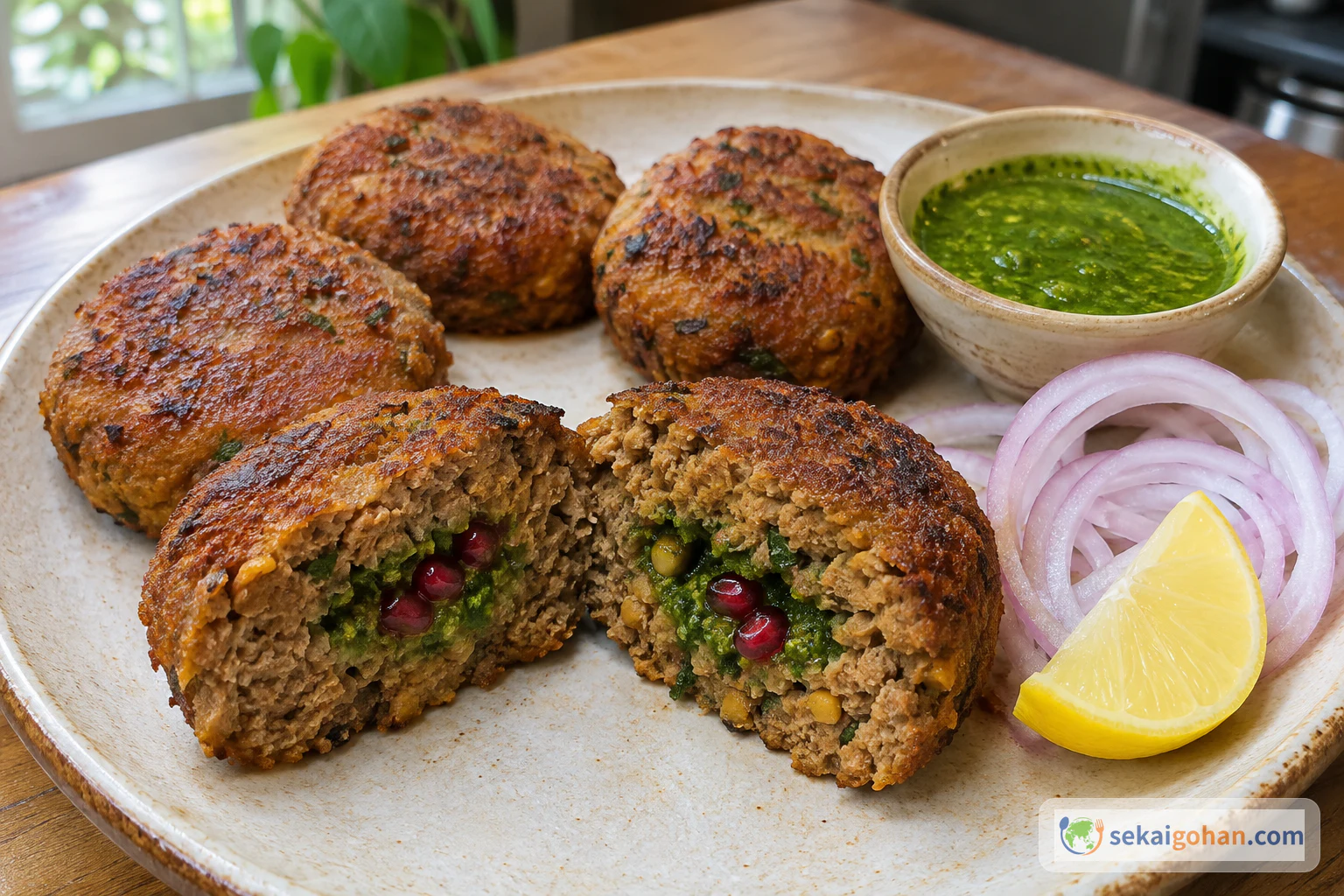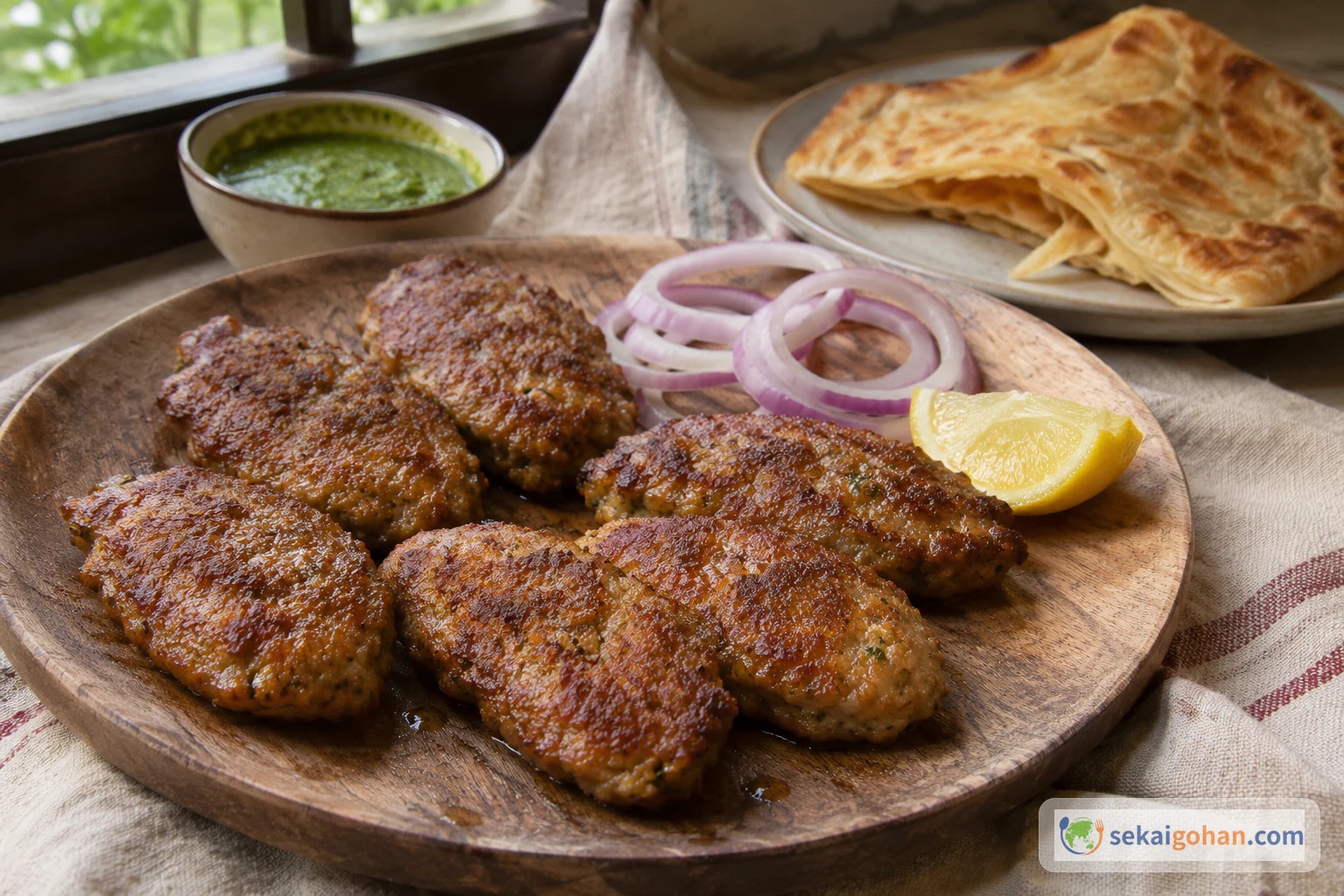
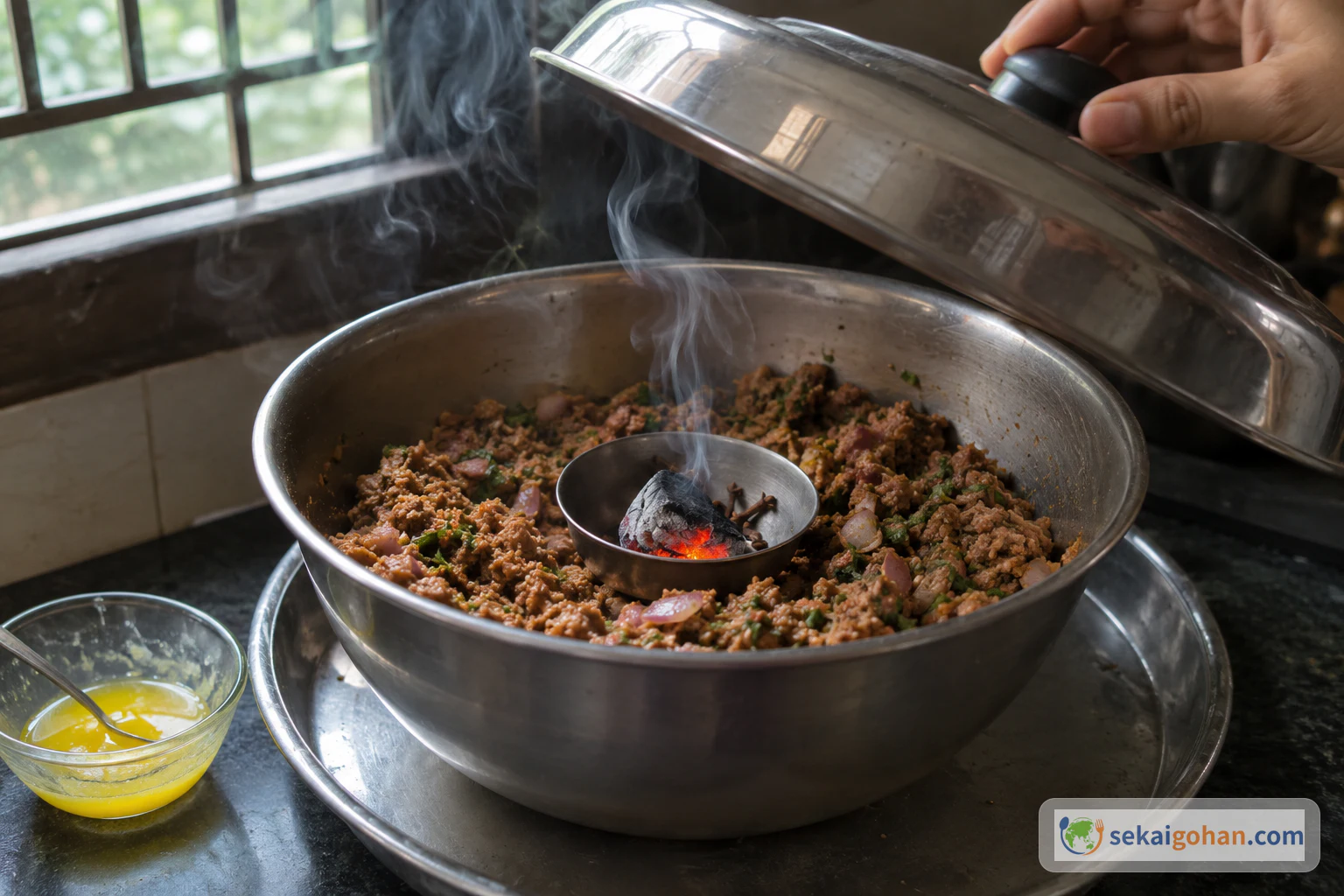
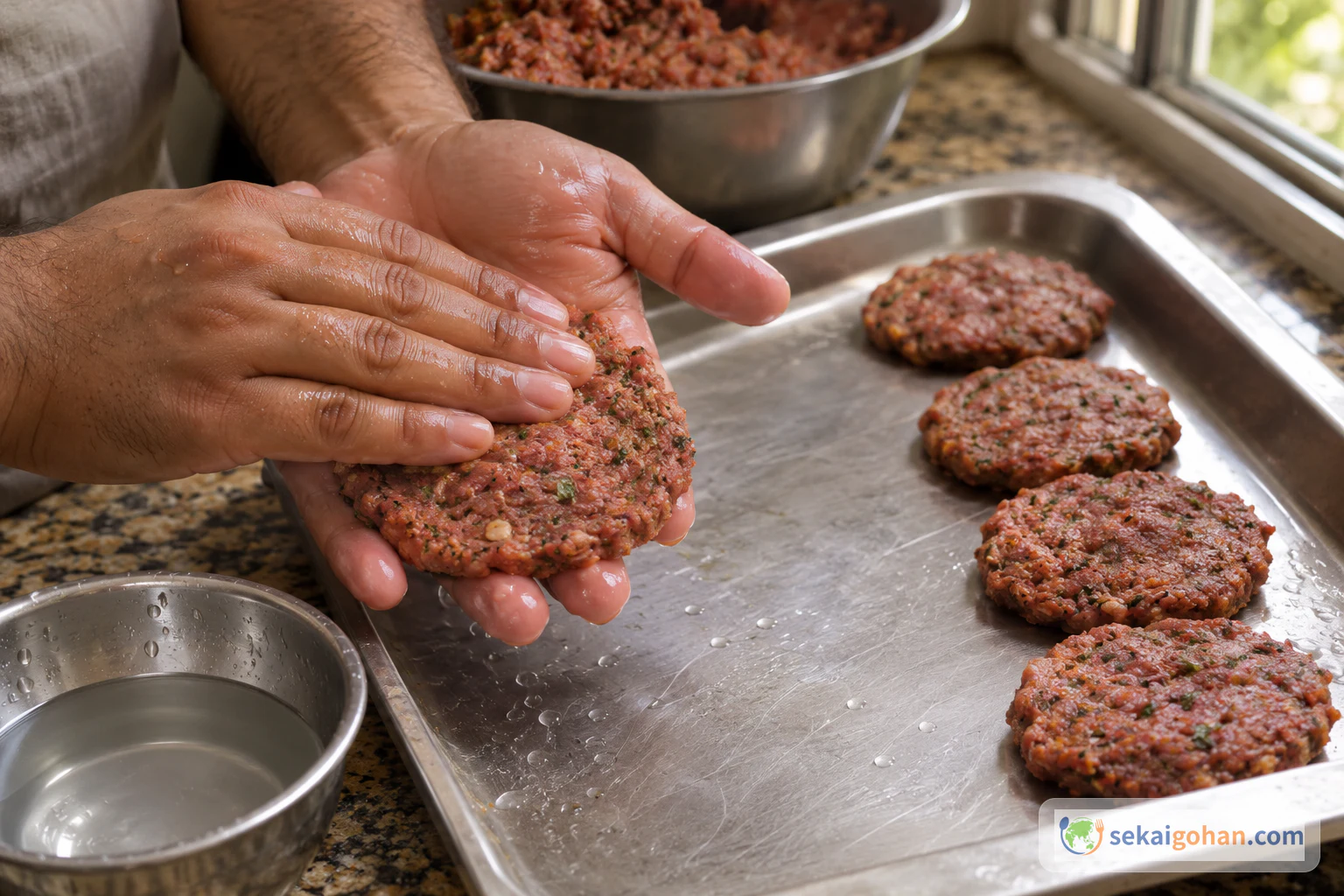
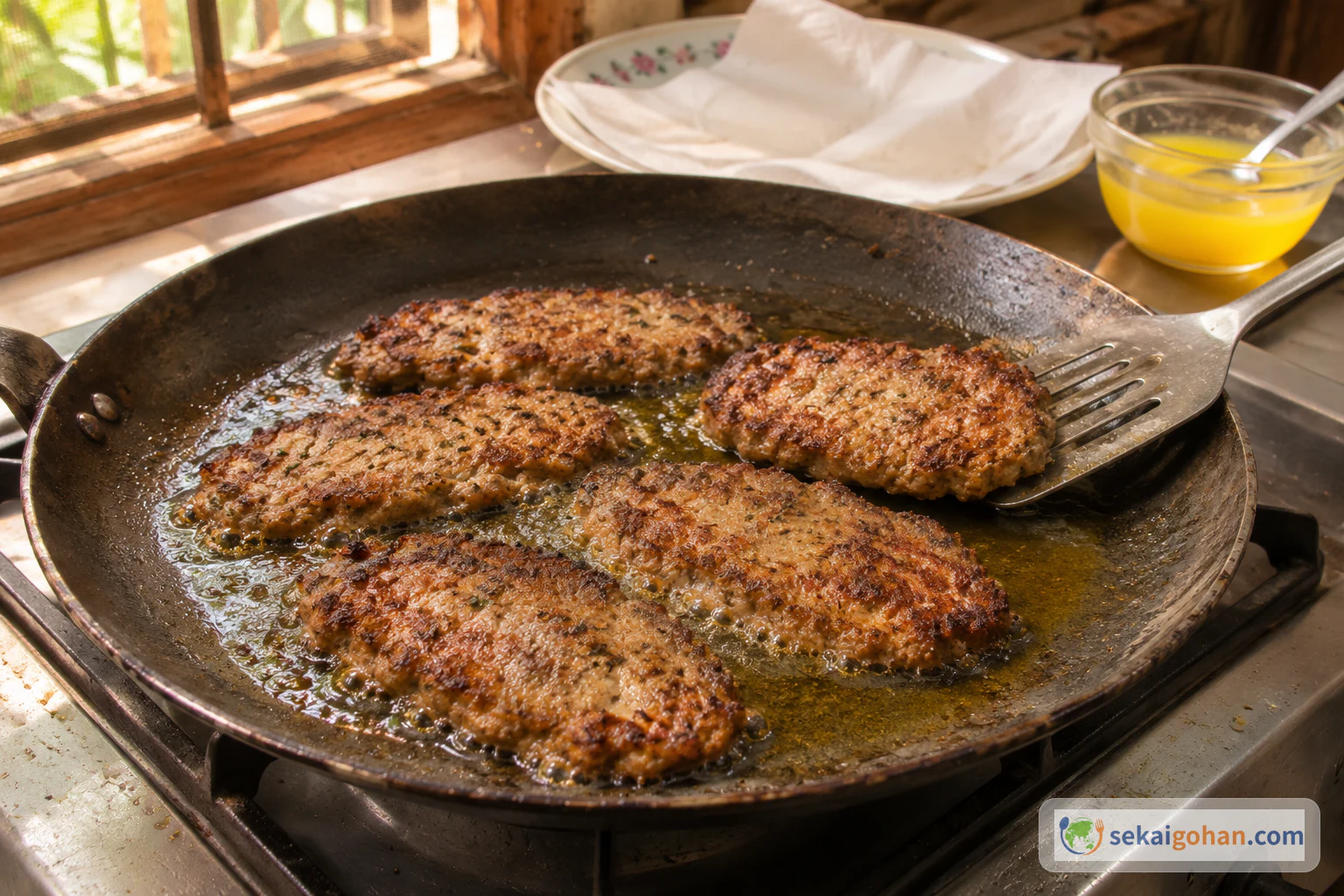
You lift the lid off the steel bowl and a thread of clove smoke comes out of the spiced lamb. A small cup of glowing charcoal sits in the middle of the mixture. Later the first thin patties go into a film of hot ghee and their edges start to bubble. In Lucknow these kebabs are eaten in the old Chowk quarter, folded into flaky paratha with raw onion. The meat is ground so fine and softened so far that it gives way under the tongue. The spice is deep but rounded, and there is a trace of smoke under all of it.
A One-Armed Cook, a Toothless Nawab, and a Kebab Named Soft
Tunde ke kabab is the shop name that stuck to the dish. The dish itself is galawat ke kebab, usually shortened to galouti, a word explained as meaning "soft." It belongs to Lucknow, in Uttar Pradesh, the old heart of Awadh. Its ancestor is the shami kebab. Most people picture a kebab as meat on a skewer, but this one is minced to a paste, pressed into small flat ovals and shallow-fried on a flat pan. In that way it sits closer to Pakistan's chapli kebab, another flat patty of minced meat, than to the skewered kebabs of Turkey. Chapli kebab does not soften its meat with fruit, though.
The shop in Chowk
In 1905 a cook named Haji Murad Ali opened a small shop in the Chowk quarter of Lucknow, near the Akbari Gate, and the building still stands. He had only one arm. The story goes that he fell from a rooftop while flying a kite and lost his left arm. He is also remembered as the fastest onion-chopper around, one hand or not. In Urdu tunda means "without an arm," and tunday is local speech for someone with a disabled hand. So his kebabs became tunday ke kebab, the one-armed man's kebabs. In 1996 his grandson Mohammad Usman opened a second shop in Aminabad. In 2025 the name reached Dubai and then Mohali.
In 2017 the Chowk shop sold four kebabs with two ulte tawe ka paratha, flatbreads cooked on an upturned griddle, for 64 rupees. Each kebab weighed 22–23 g, about ¾ oz. That is a small kebab, and a thin one cooks through quickly.
The nawab who could not chew
The legend most people tell is about a nawab of Awadh who had lost his teeth. He promised court patronage to whoever could make the softest kebab, and Haji Murad Ali won. Which nawab it was is not settled. Some name Asaf-ud-Daula, who ruled Awadh from 1775 to 1797 and was troubled by his weight and his teeth. Others tie the name to Wajid Ali Shah, who is said to have asked who made the kebab, so that it became "tunday ke kebab." Either way, the dish was built around one need: meat that would melt in a mouth that could not chew.
Papaya and the secret blend
Raw papaya is what makes it so soft. Green raw papaya, or sometimes raw mango, is worked into the mince to soften it. It is usually said that a hakim, a physician of the Unani tradition, advised adding it in the founder's time, for tenderness and for digestion. The spice blend is a family secret, mixed only by members of the household. Nobody agrees on how many spices go into it.
Lucknow's galouti is famous for its spice count, but the number changes with who tells it: more than 120, more than 125, around 160. The list has never been made public. The recipe below has about a dozen spices and aromatics, and this is the version for a home stove.
For more of the country's regional cooking, see the India country page.
Ingredients
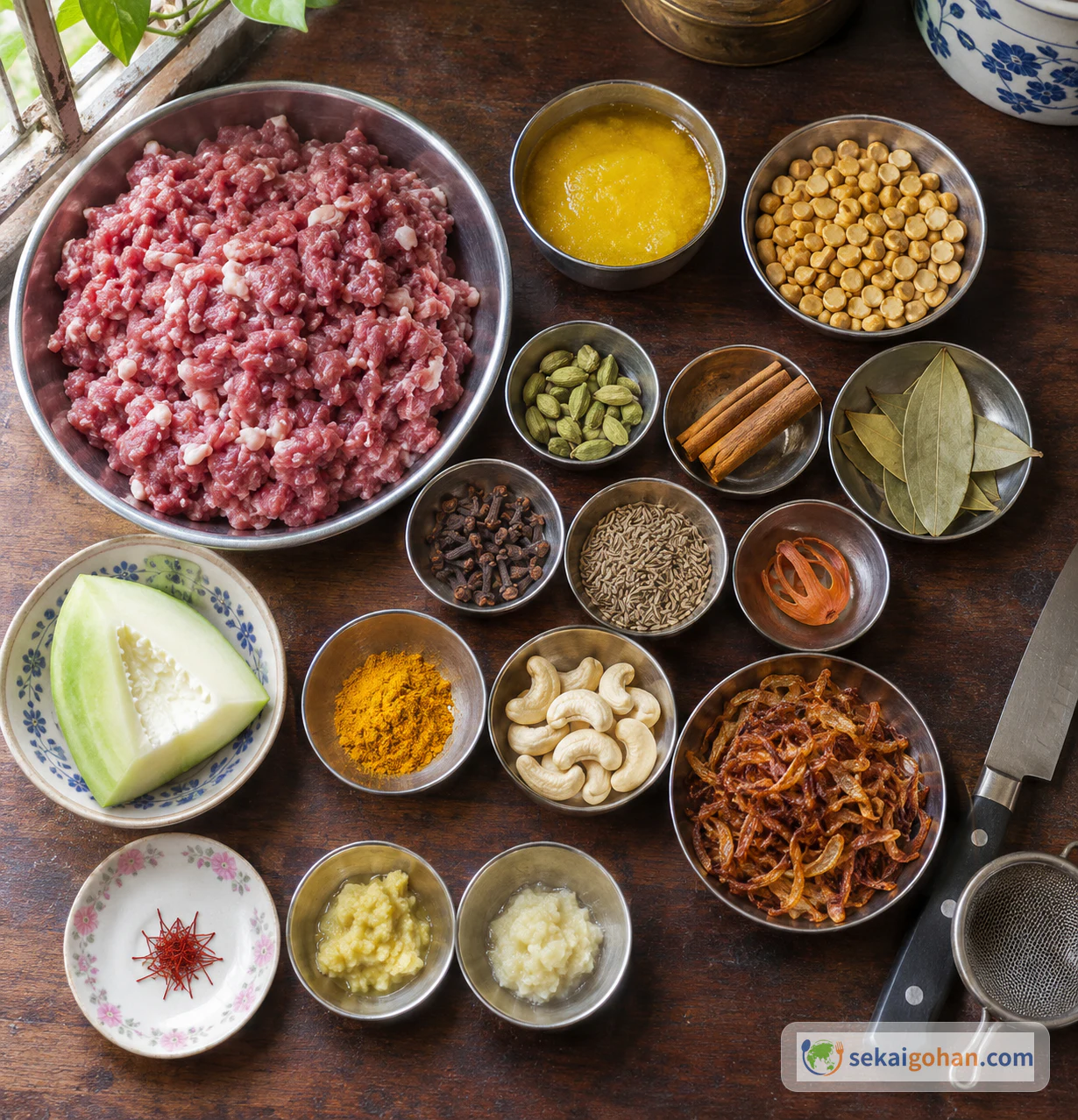
¾ oz (20 g) of green cardamom looks like far too much. It is part of what the dish is, so don't cut it. If you make less, halve everything, the spices included, so the balance stays the same.
This recipe contains dairy (ghee) and tree nuts (cashews). The cashews both bind the mixture and give it richness, so there is no good replacement. Leave the dish out for anyone with a cashew allergy.
Equipment
- Food processor, for mincing the lamb to a paste
- Spice grinder or small mill
- Fine-mesh sieve
- Mortar and pestle, for the onion and cashew paste
- Wide steel mixing bowl with a lid that fits
- Small heatproof bowl, a piece of charcoal, tongs and a wire rack or burner to light it on
- Heavy flat frying pan, 10–11 inches (26–28 cm)
- Flat spatula
- Instant-read thermometer
- Wire rack for the cooked kebabs
What to Buy and What You Can Swap
Most of this shopping happens at an Indian grocer or online. Buy a lamb block, not mince. Boneless shoulder or leg that you mince yourself gets you nearest to the dish. With store mince you can't tell how much fat is in it, and that changes how wet the mixture is. Mutton has a stronger flavor and is fine if you like it, but lamb is the base.
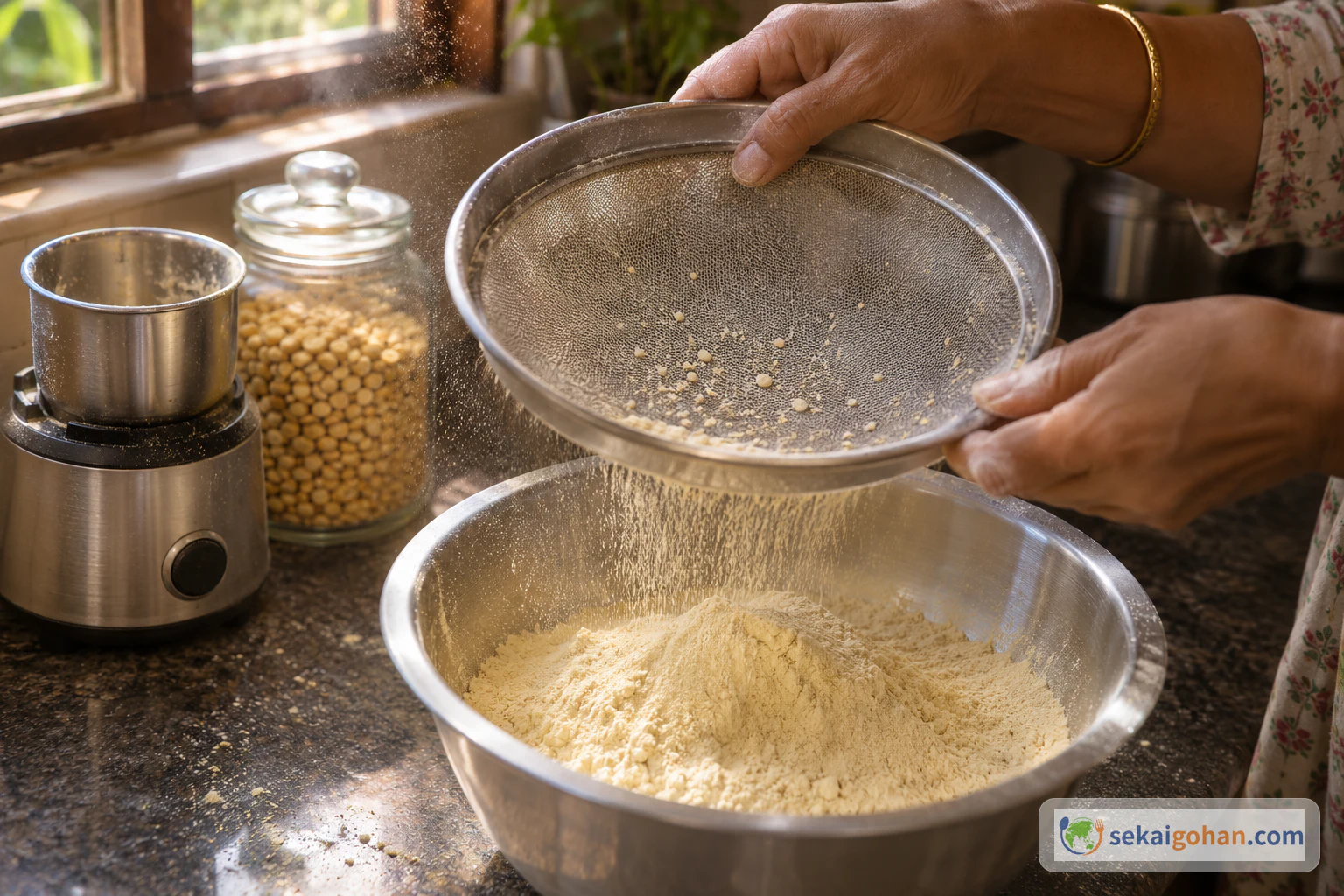
Look for green, hard, unripe papaya. Asian grocers often carry it. Ripe papaya does not soften the meat, so it can't stand in. Roasted chana dal is sold as "roasted chana" or "roasted split chickpeas". If you can't find it, dry-roast split chickpeas in a pan and grind them. The flavor and grain will be a little different, and you can adjust with the sieve. Buy cardamom, cumin and cloves whole and grind them yourself.
| Ingredient | Swap | What changes |
|---|---|---|
| Ghee | Unsalted butter, melted and clarified | Close in flavor, with less of the toasty, nutty depth |
| Mace | Nutmeg | A flatter aroma that turns bitter more easily |
| Yellow chili powder | Paprika with a pinch of hot chili | Different color and heat. Chilies vary a lot |
| Cinnamon | Ceylon or cassia | Cassia is stronger and a little astringent |
| Fried onion | Store-bought fried onions | Different oil and more salt, so salt the mixture more carefully |
| Kewra water | Leave it out | One layer of aroma is lost. Rose water gives a different floral note entirely |
| Galouti masala | A ready-made jar from an Indian grocer | Blends differ from brand to brand |
Method: Grind, Knead, Rest, Smoke, Fry
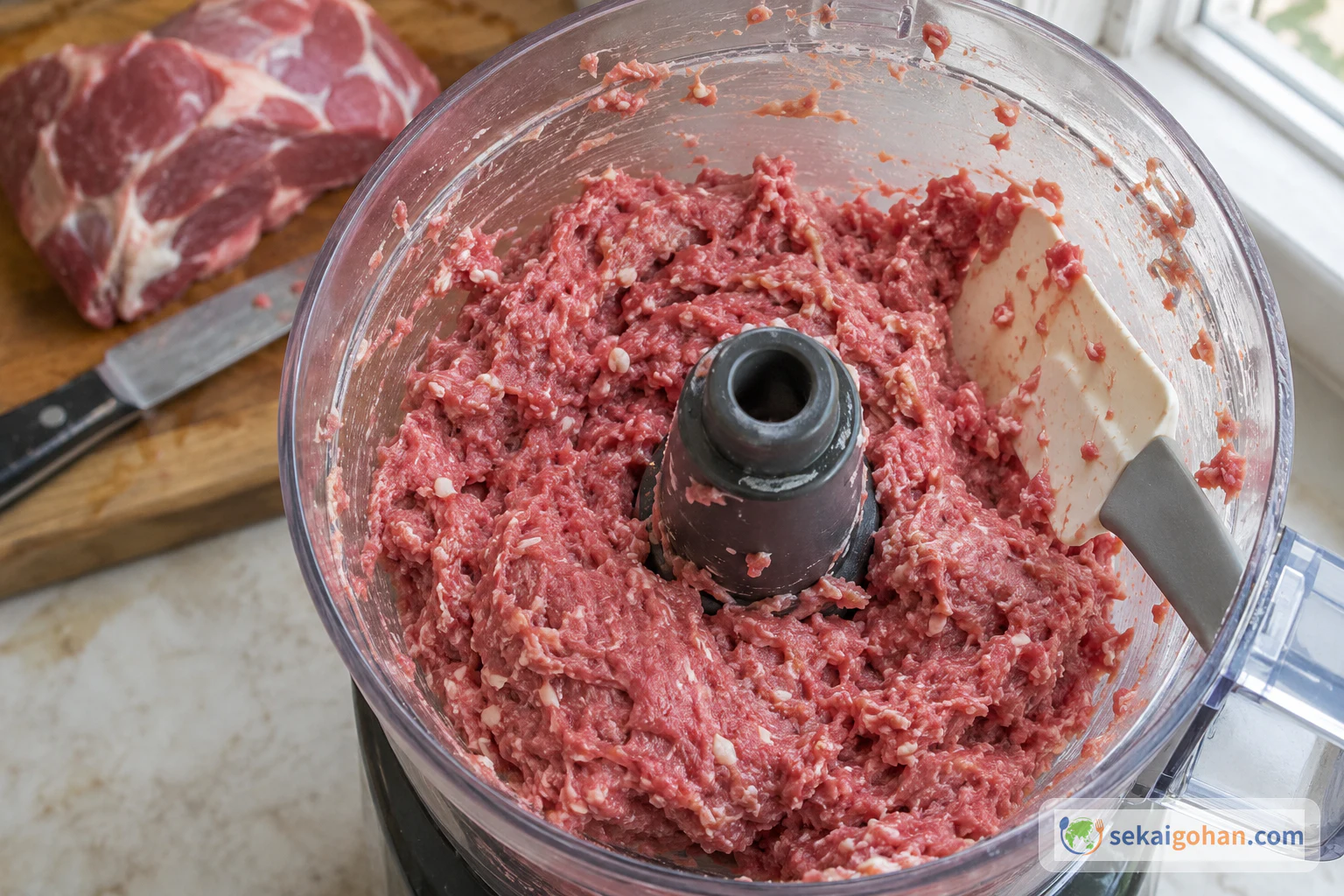
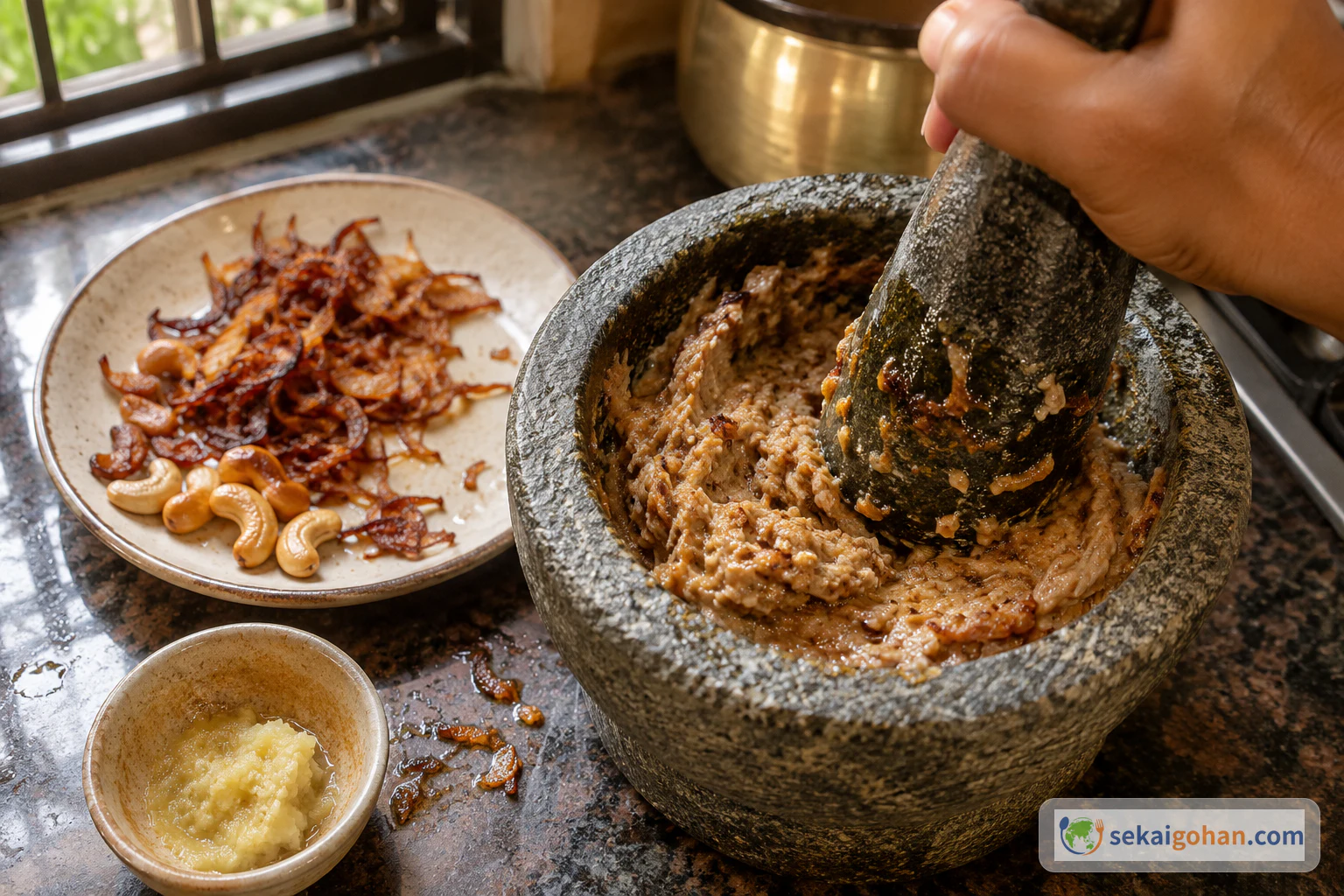
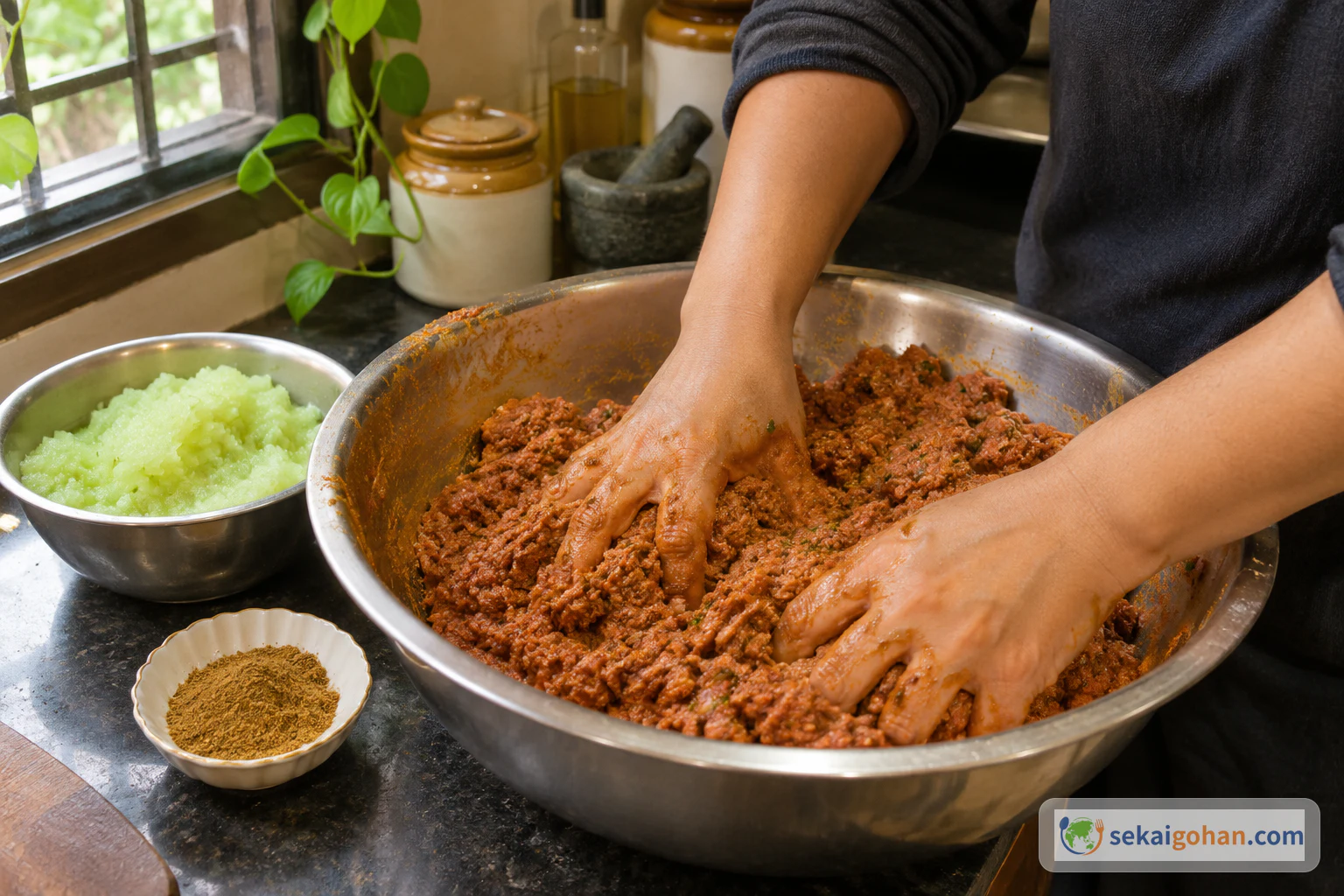
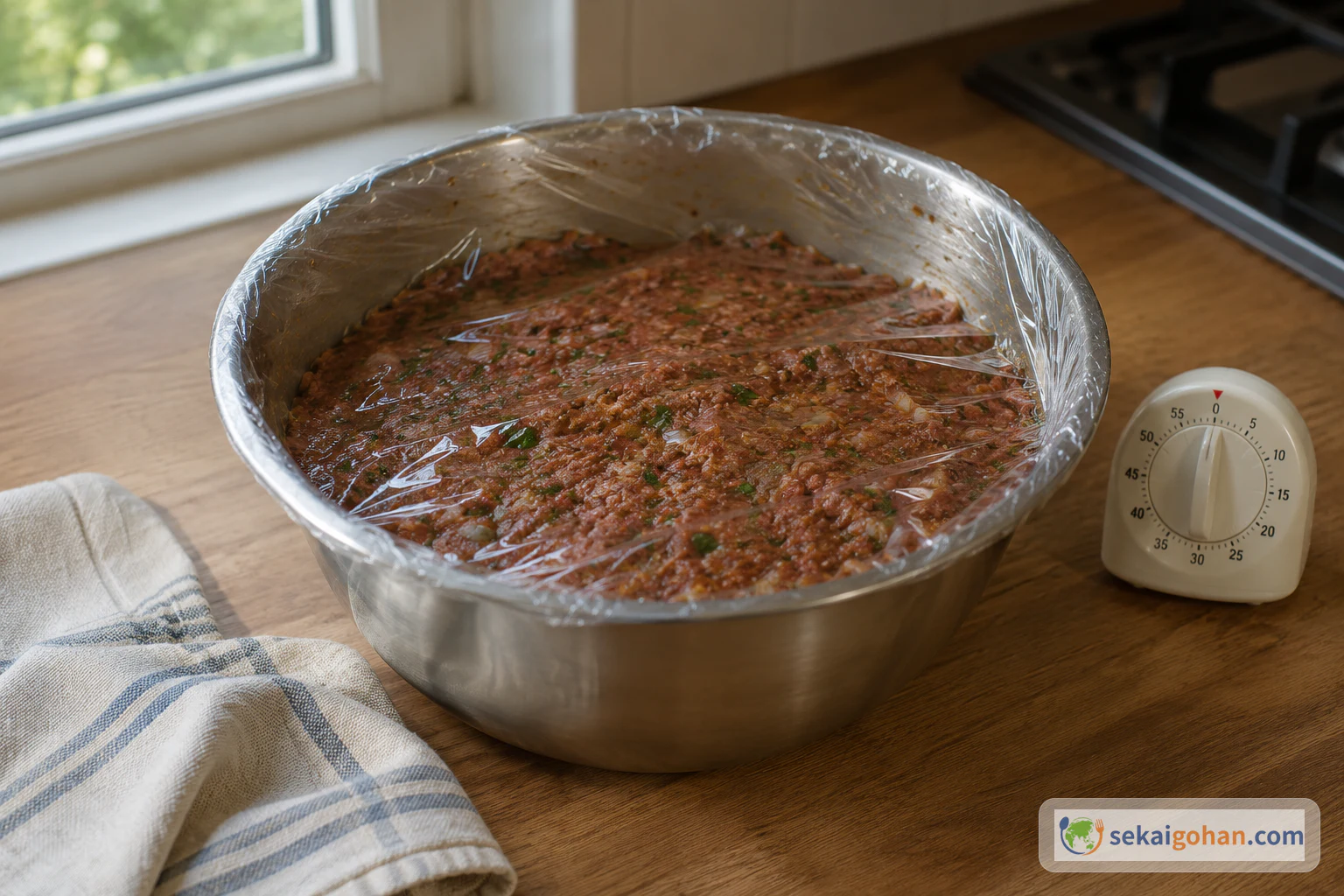
Do the dry work first: grind and sieve the chana dal, grind the whole spices and set the saffron to soak. Then mince the lamb and make the onion and cashew paste. Once the mixture is kneaded you have 30 minutes of resting to clean up, set up the charcoal and heat the pan. The ten minutes of smoking and the frying at the end go quickly.
Keep the patties thin. The heat reaches the center before the outside burns, which keeps the inside soft and makes the safe internal temperature easy to reach.
Minced meat can carry bacteria all the way through, and raw or undercooked meat can cause serious food poisoning however fresh it is. Never serve this meat raw or rare. Use separate tongs, utensils and plates for raw and cooked meat, and keep raw juices away from other food. Take extra care that the kebabs are fully cooked for anyone pregnant, young children and older people. Smoke with good ventilation, use only a single piece of charcoal indoors, keep it away from children, and never leave it burning unattended. Burning charcoal releases carbon monoxide and can start a fire. Turn the patties gently so hot ghee doesn't spatter.
When It Goes Wrong
| What you see | Why | What to do |
|---|---|---|
| Patties crack as you shape them | The dal flour was gritty, or your palms were dry | Sieve the flour finer next time. Wet your hands again and press the cracks closed |
| The mixture is mushy and falls apart | Too much papaya, or riper papaya | Use only 1¾ oz (50 g) of green papaya, and rest for 30 minutes, no longer |
| The kebabs taste bitter | The onion or cashews were fried too dark | Fry them only to golden, and throw out any dark pieces before grinding |
| The outside is dark but the inside is pink | The pan was too hot | Lower to medium and keep cooking until the juices run clear and the center reaches 167°F (75°C) |
| Barely any smoky flavor | The lid went on too late, or the coal wasn't glowing | Heat the coal until it is red all over, and close the lid the moment the ghee hits it |
Serving, Variations and Storage
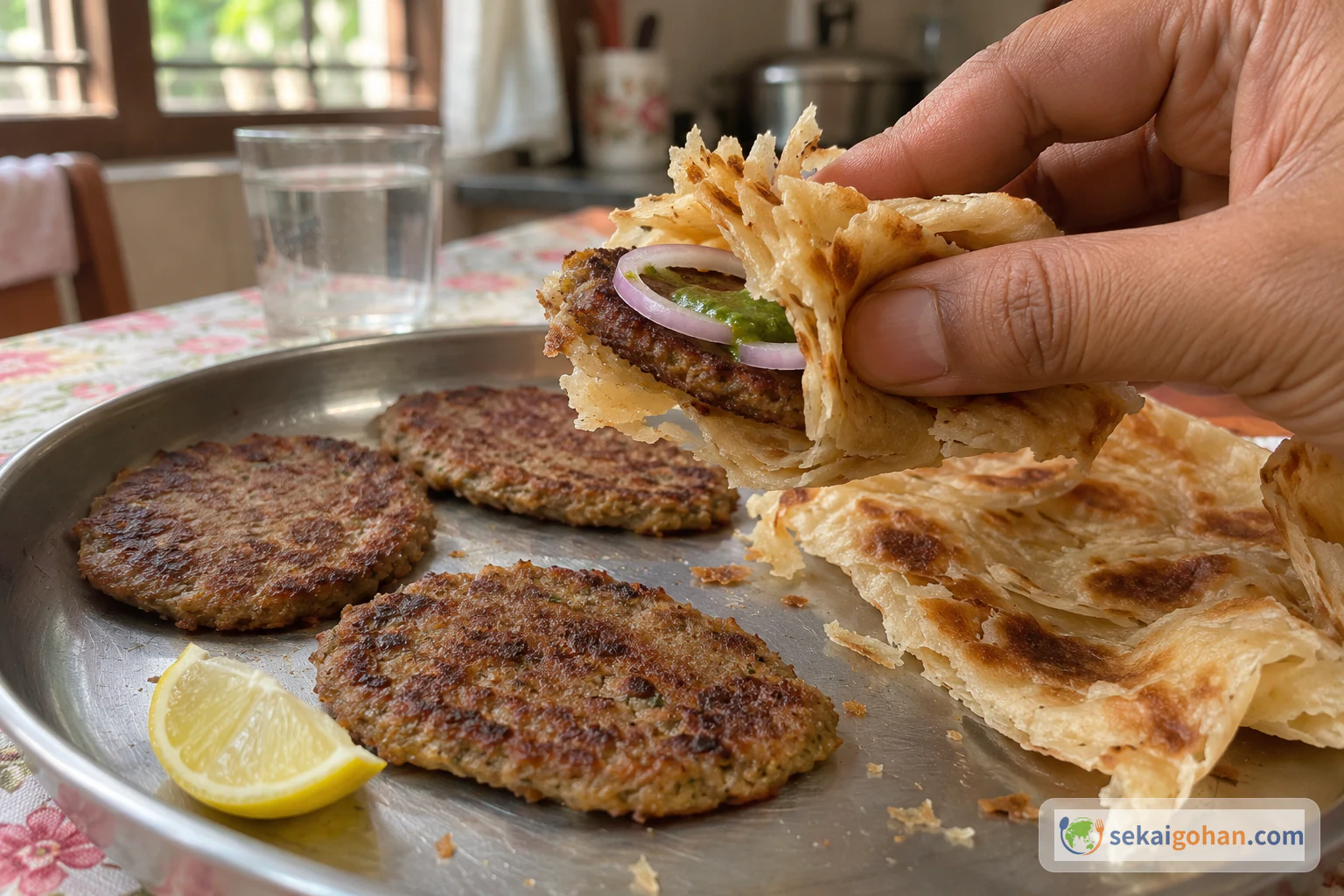
At the table
In Lucknow the kebabs come with paratha and are eaten by hand. Put raw onion rings, lemon wedges and a green mint chutney on the table, so everyone can tear a piece of bread and fold a kebab into it. The sharp onion and the lemon cut through the ghee. If you are cooking a bigger Indian meal, tandoori chicken makes a good contrast. It gets its tenderness from a yogurt marinade, where these kebabs get it from papaya.
Variations
- Half batch. Halve every amount, spices included. The proportions are what make the dish, and the spices still look like a lot.
- Without galouti masala. Use only the individual spices. The kebab is a little less layered but still clearly galouti.
- No smoking. Skip step 6 when you can't use charcoal. You save ten minutes and lose the smoky layer under the spice.
- Beef or chicken. Beef mince works, though the kebab is less juicy and less rich. Chicken crumbles easily and needs gentle handling.
- Other breads. Naan, roti or plain rice all work in place of paratha.
Storage and reheating
Cool cooked kebabs, then refrigerate them promptly in a covered container. To freeze, wrap the cooked kebabs in plastic wrap, one portion at a time, and put them in a freezer bag. Reheat until the center reaches 167°F (75°C) or higher. If you have to stop before frying, keep the raw mixture in the refrigerator, and make sure it is fully cooked through when you finish.
Frequently asked questions
Is this the same as kakori kebab?
No. Kakori kebab is another soft minced-meat kebab from Lucknow, but it is a separate dish. It is softened with mango from Malihabad, while galouti relies on raw papaya. The two often get mixed up because they come from the same city and are both very tender.
What meat is used in Lucknow?
The shop in Chowk used buffalo meat (bade ka meat) for a long time, and the Aminabad shop also makes them with goat, which more people eat. Lamb is easier to find abroad. Buffalo, goat and lamb have all been used for this kebab over the years.
Can I stop partway and fry later?
The recipe rests the mixture for 30 minutes and no longer, because too much papaya makes the meat fall apart. If you have to stop before frying, keep the mixture covered in the refrigerator and cook it through when you start again.