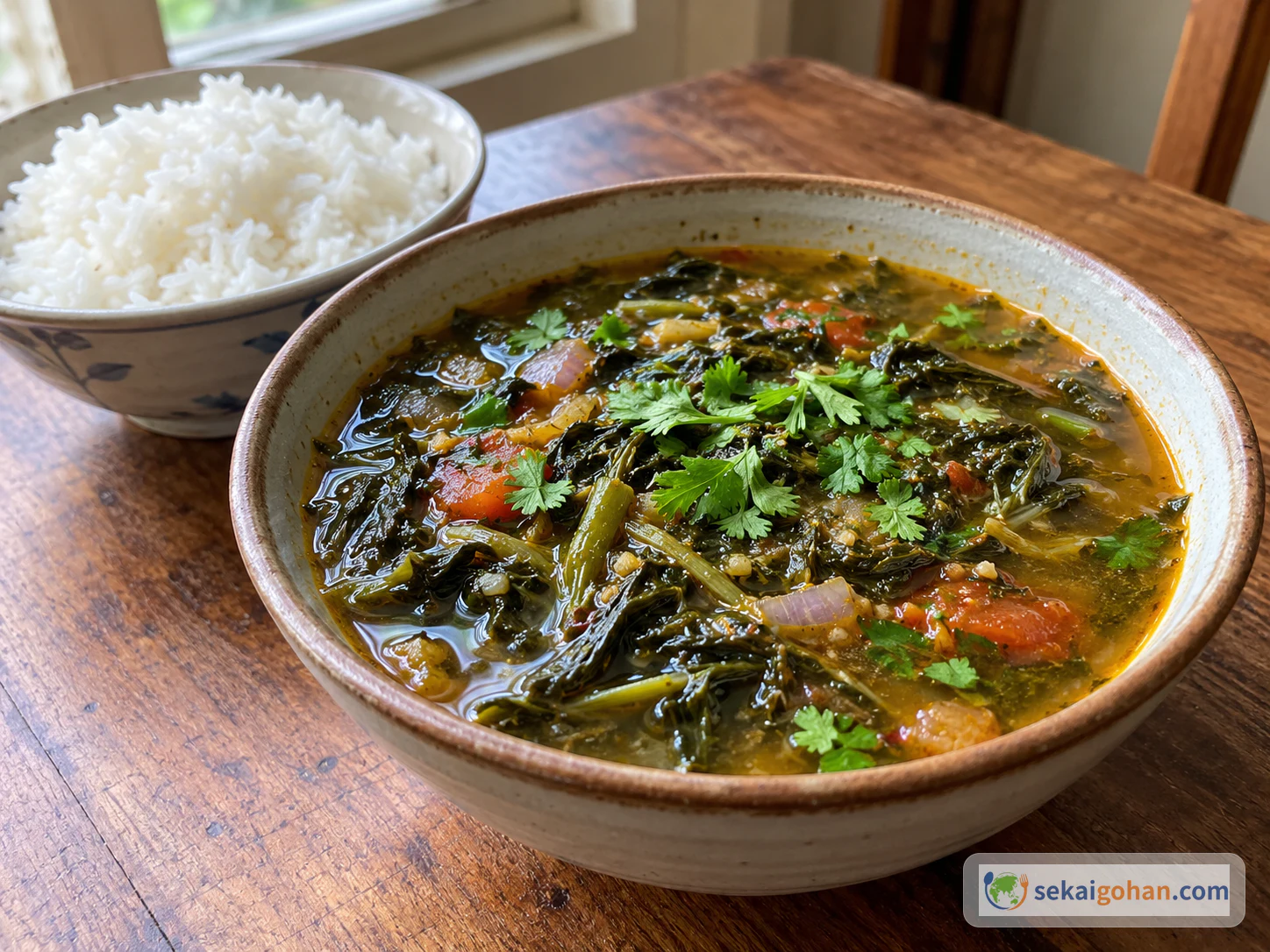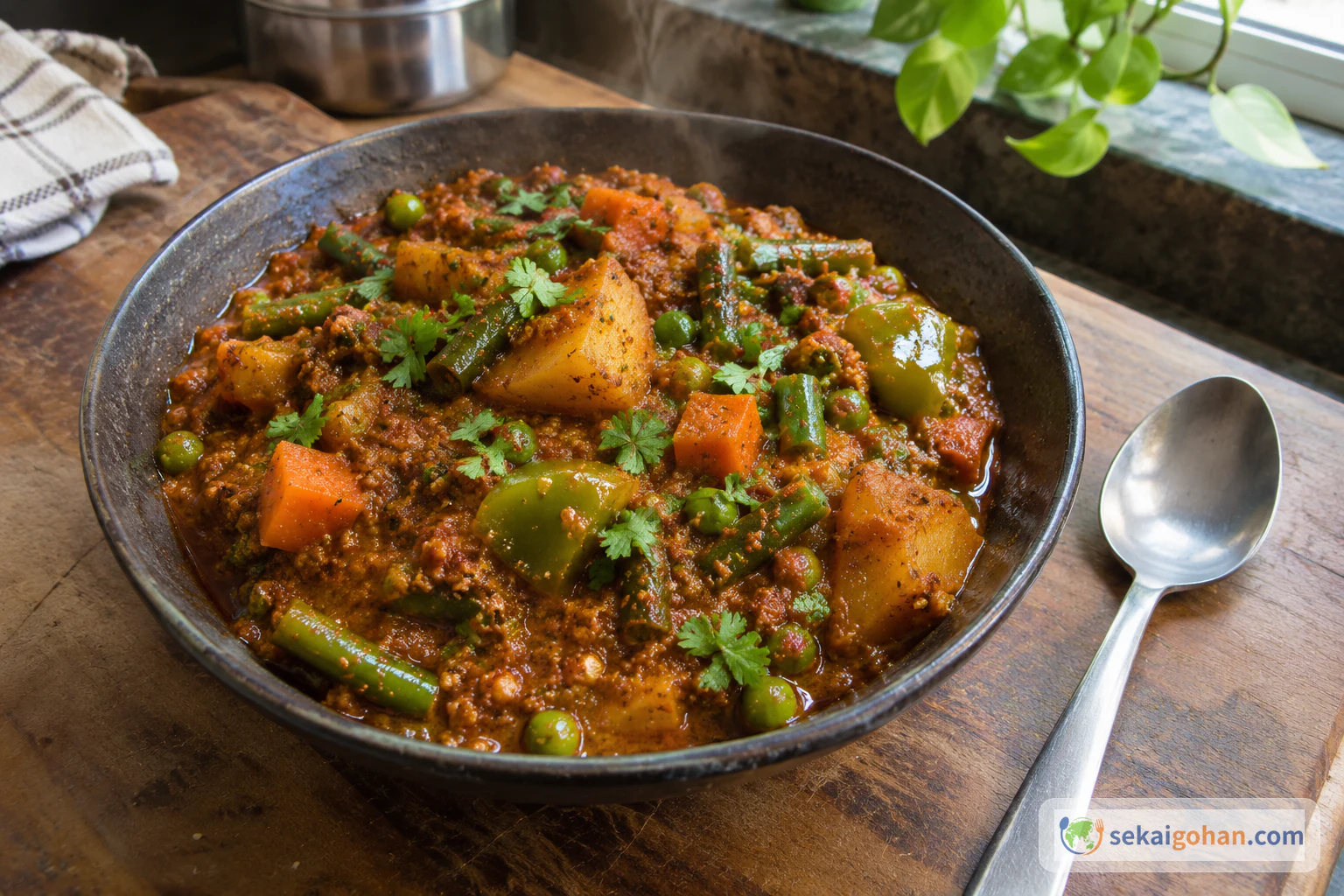
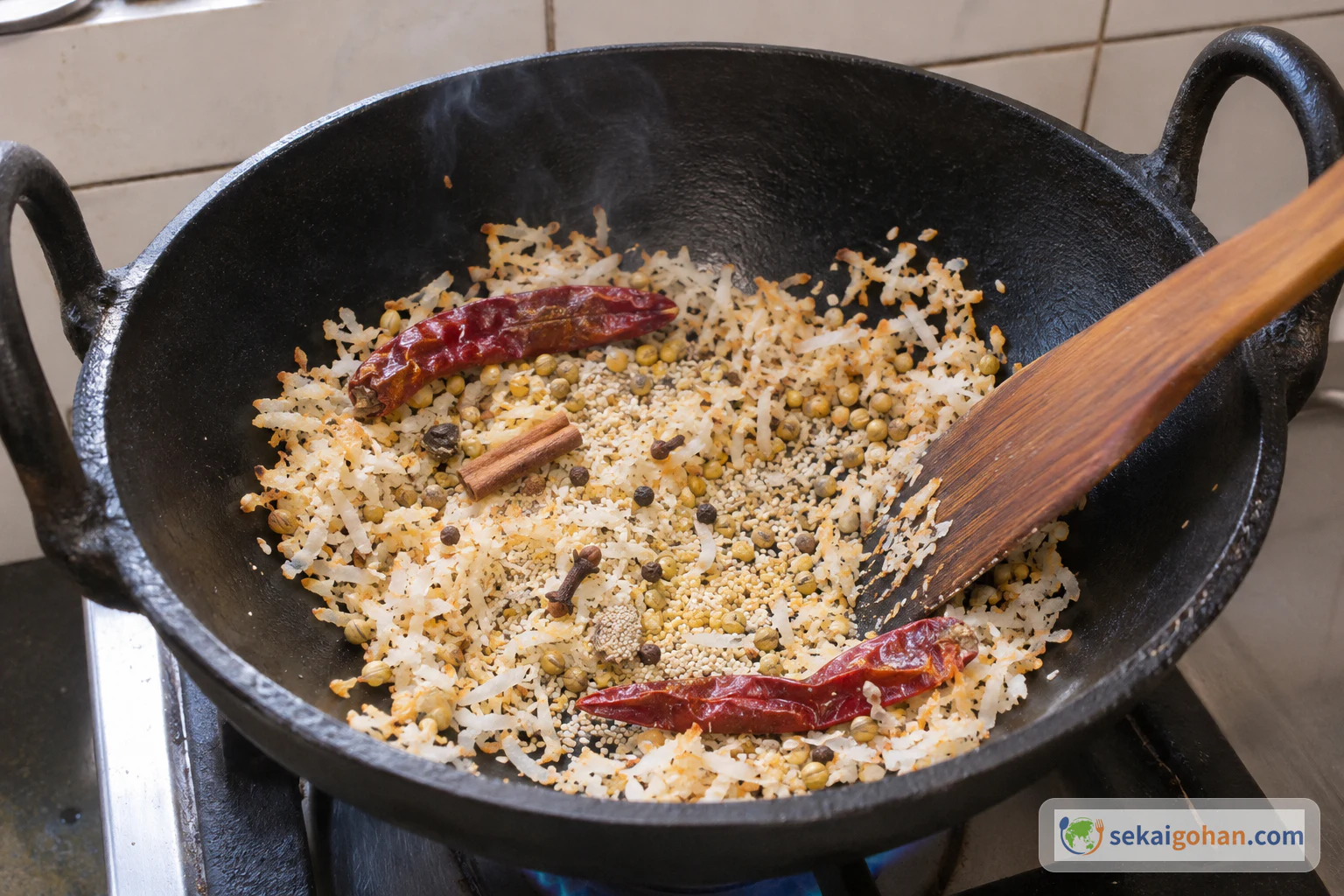
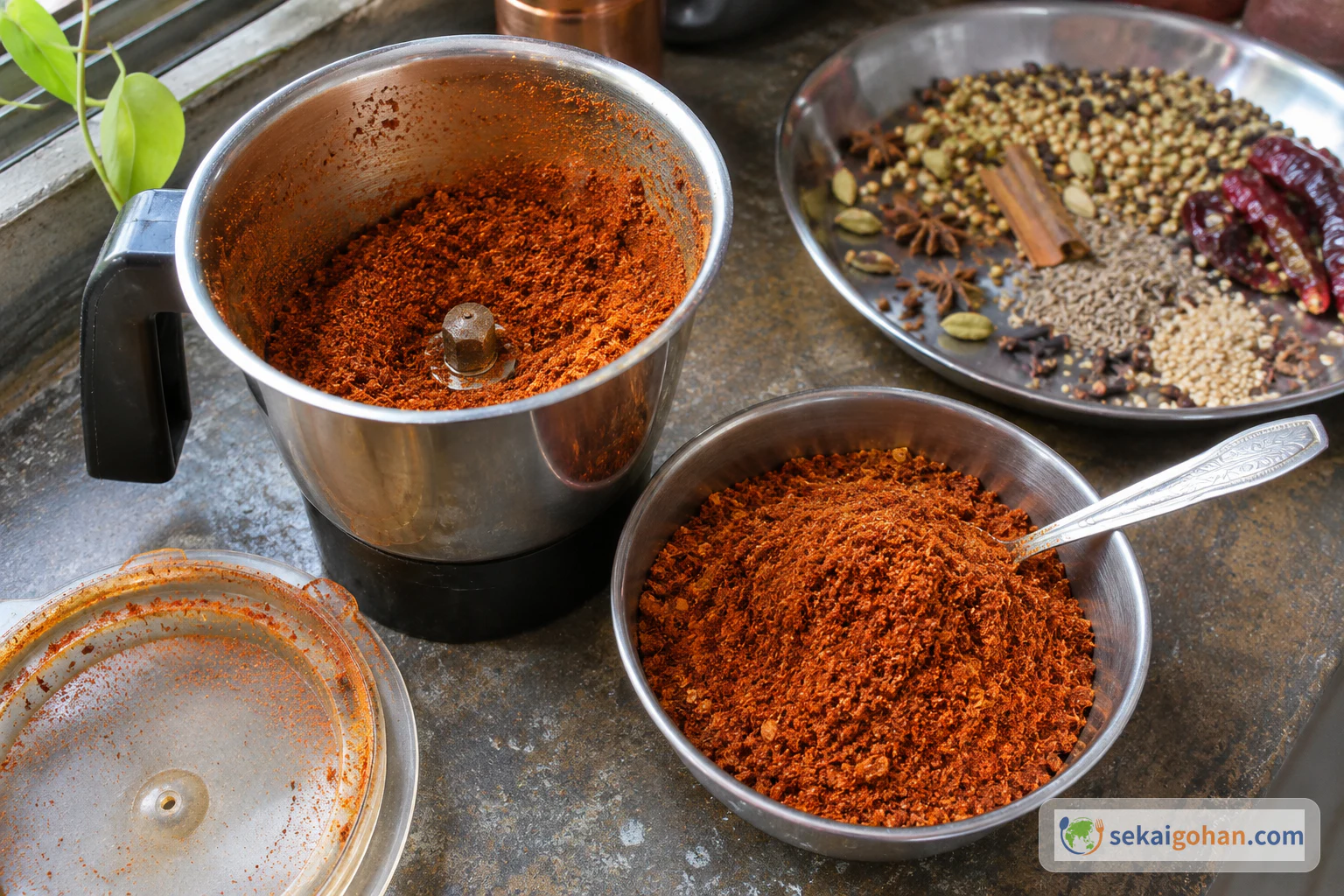
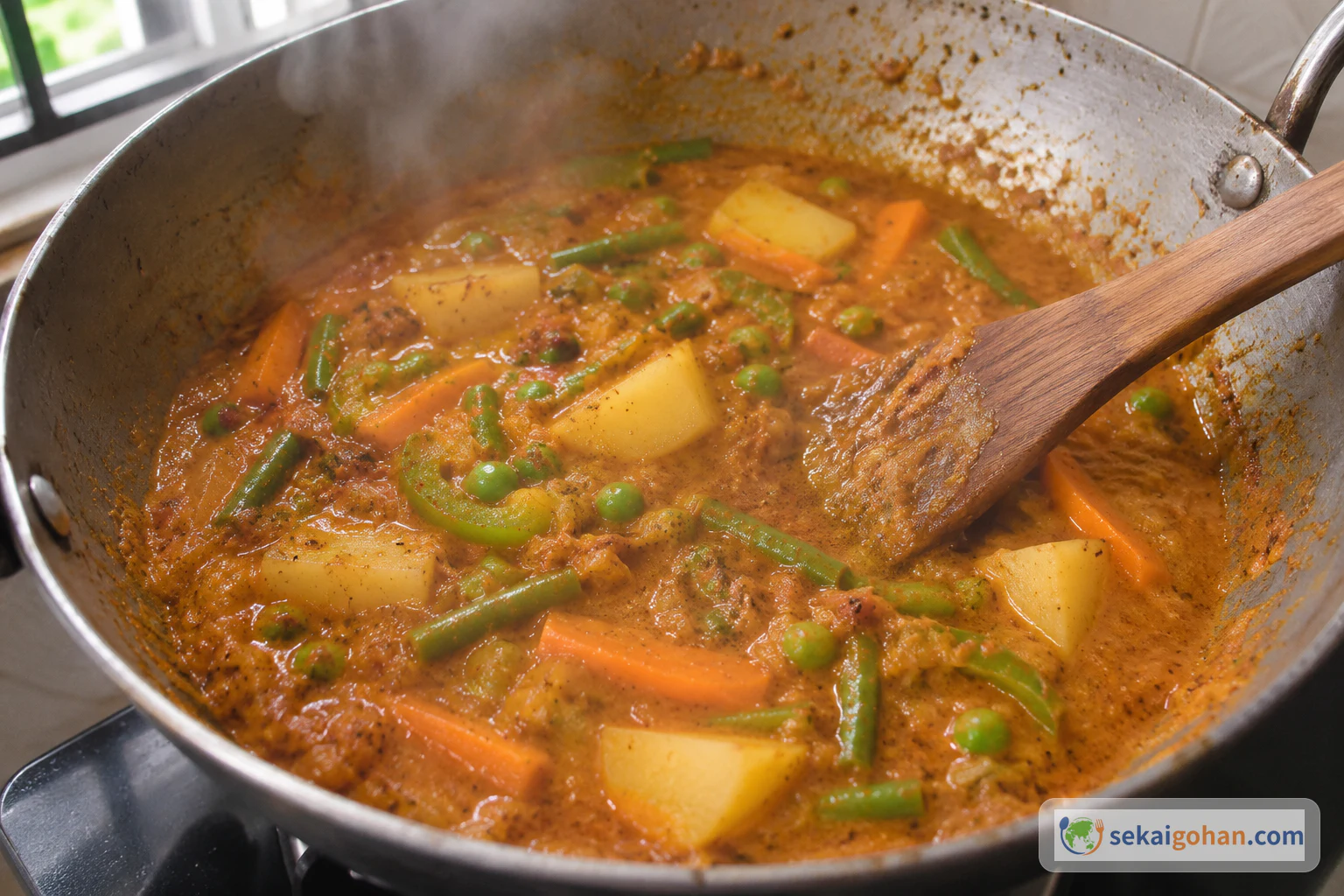
The coconut goes into a dry pan with two red chillies and a small heap of whole spices. Within a minute or two the kitchen smells toasted and sweet, with a sharp edge of chilli in the air, and that is the moment to pull the pan off the heat. Veg Kolhapuri is a Maharashtrian curry of potato, green beans, peas, carrot and green pepper. The vegetables are folded into an onion-tomato base, together with a masala of dry-roasted coconut, chilli and whole spice ground to a powder. It eats very spicy, with the coconut coming through as a mild, nutty sweetness underneath, and a splash of milk at the end rounds the edges. On restaurant menus across North India it turns up almost everywhere, scooped up with naan.
Kolhapur's Masala, Carried Over to Vegetables
A city of mutton, misal and red chilli
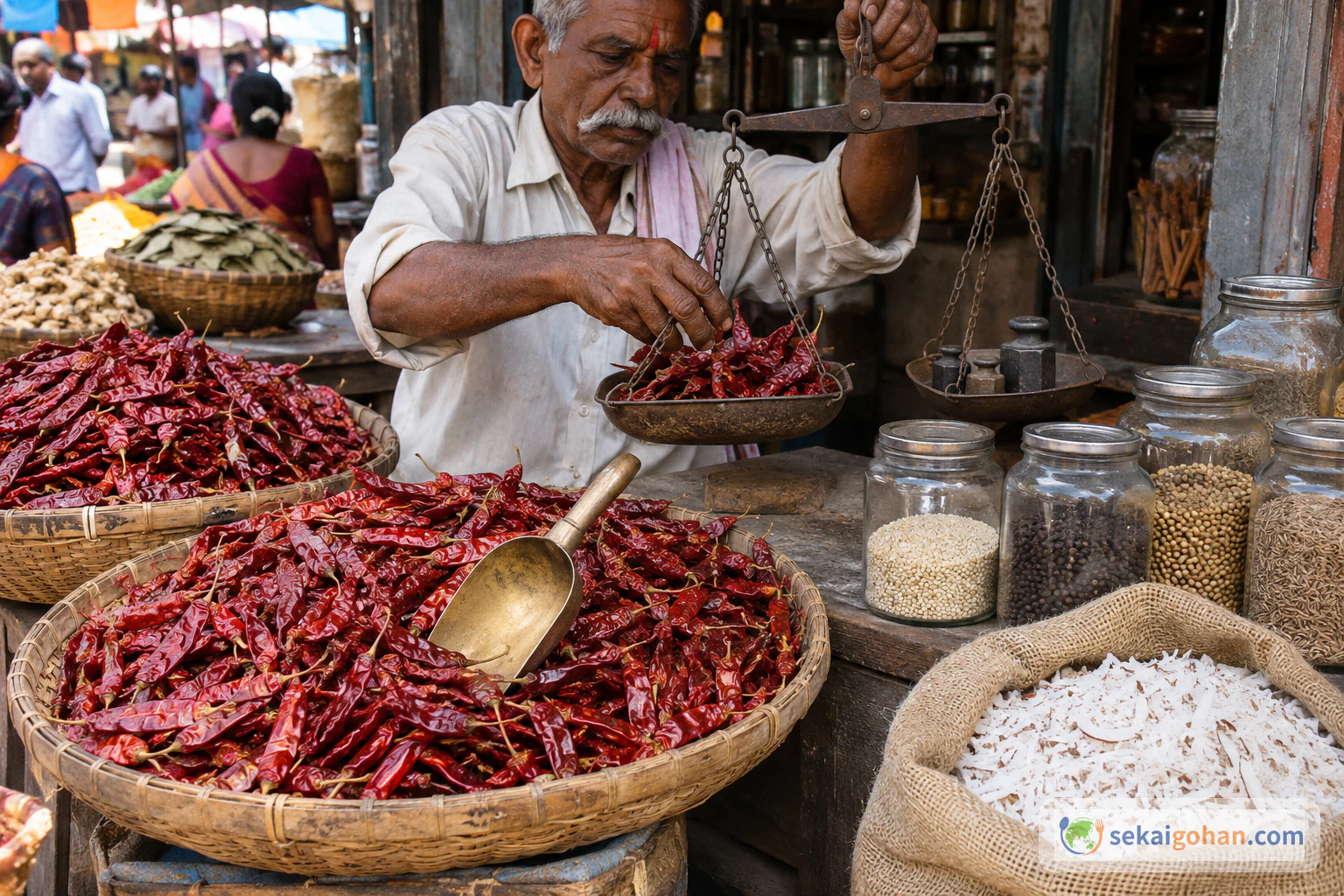
Kolhapur sits in the southwest of Maharashtra, along the Western Ghats, the range known locally as the Sahyadri. It was a seat of the Bhonsle rulers, and its food carries a martial swagger to match. Kolhapuri cooking is bold in taste, look and presentation. The curries glisten with oil and use dry coconut and spice without any timidity, and the city is sometimes summed up as the land of three Ms: machismo, misal and mutton.
The classic table there centres on mutton. There are at least fourteen kinds of rassa, the thin, fierce mutton curries, and the best known go by colour: tambda (red), pandhra (white), pivla (yellow), hirva (green) and kaala (black). Rassa is eaten with flatbread. Behind much of this cooking stands kanda lasun masala, a red, moist spice chutney pounded from Byadgi chillies, dry coconut, oil, roasted sesame and dried sea salt.
The city has vegetarian food too, and misal is the loudest of it. A usal of moth beans or green gram is topped with kat, a red, hot liquid of dry coconut, onion, tomato, ginger, garlic, coriander, cumin, garam masala, hing and a great deal of oil.
Where the vegetable version fits
Veg Kolhapuri is the version most people outside the city meet. It keeps the same frame of dry coconut, dried red chilli and dry-roasted whole spice and moves it onto mixed vegetables. Kolhapur is known for growing hot red chillies, and the name signals that heat. Where and when the vegetable dish was first cooked is not settled; today it is a popular Maharashtrian dish and a fixture of restaurant menus far from Maharashtra. Why Kolhapuri food runs so hot is also open. One explanation ties it to a hot, dry climate and to good vegetables once being hard to come by.
The vegetables stay in distinct pieces, each wrapped in thick masala. Mumbai's pav bhaji goes the other way and mashes its vegetables into the pan. Veg Kolhapuri is open-ended, and cooks swap vegetables freely. The five here make a balanced pot: starch from potato, sweetness from carrot and peas, and snap from beans and green pepper. For more dishes from across the country, see our India page.
"Kolhapuri" is attached to mutton, chicken, paneer, fish and misal dishes, and each of those is its own dish with its own masala. The masala that is prepared first and then added to the pot, as it is here, is sometimes called lalwani masala.
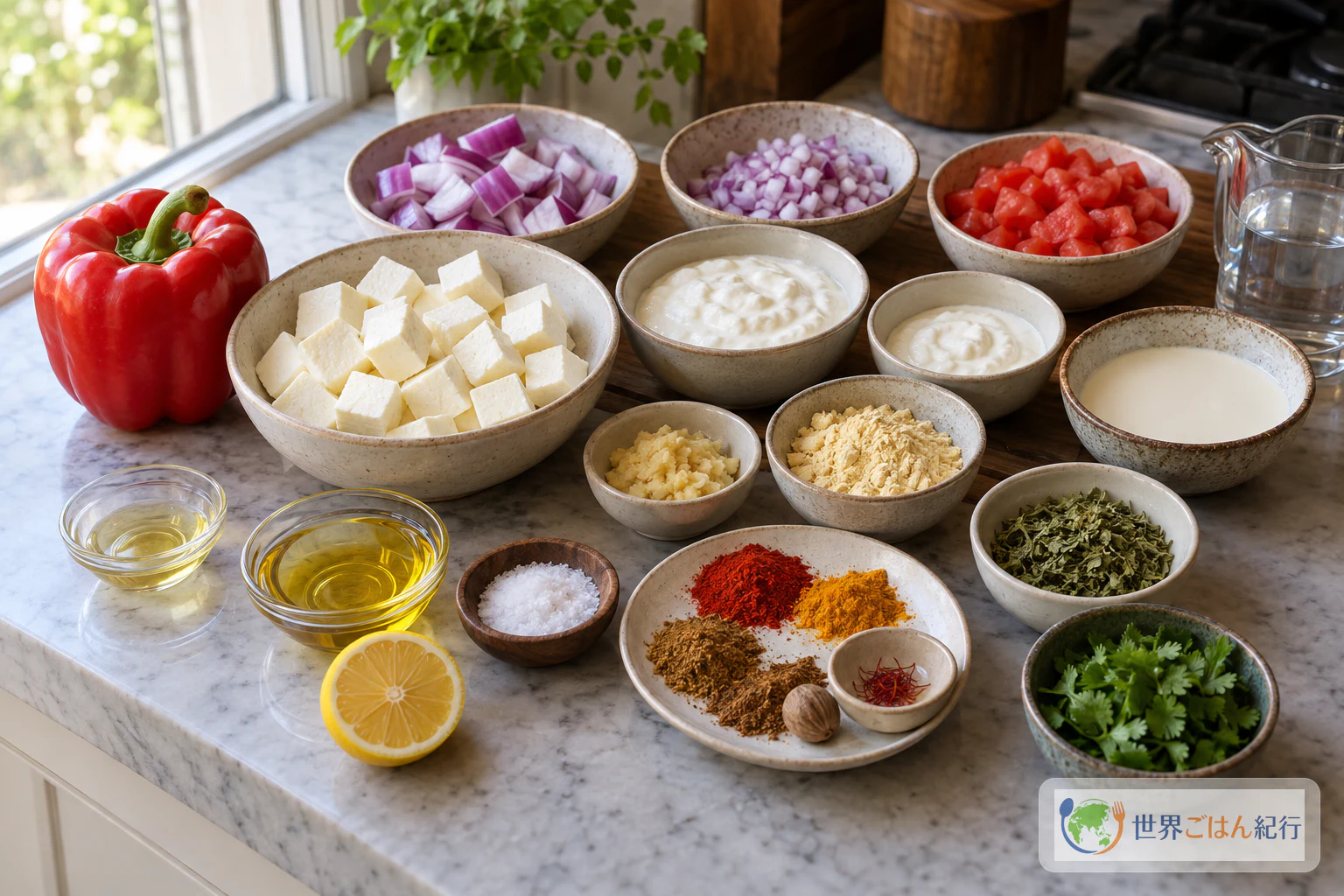
Ingredients (serves 3)
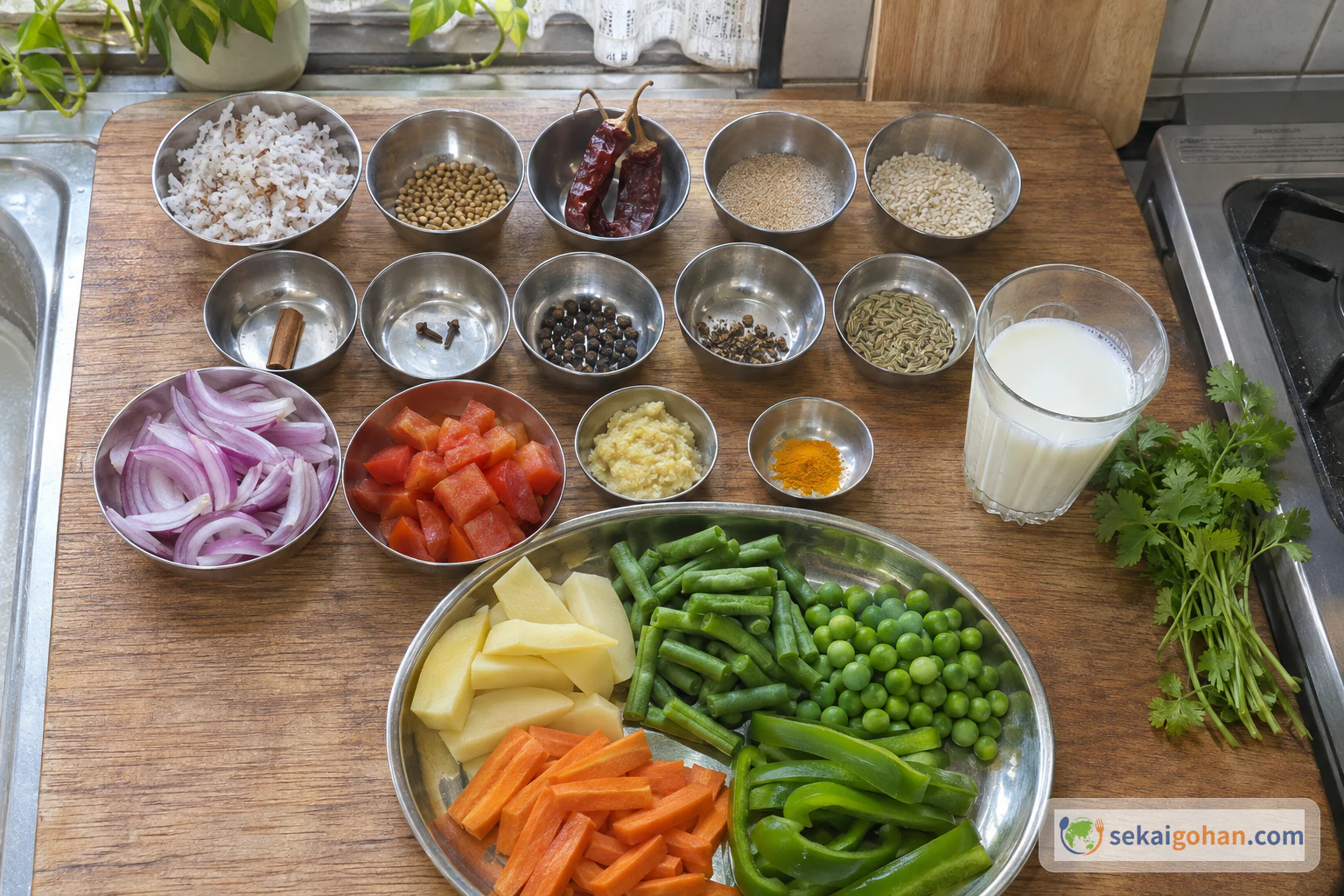
The masala amounts are small, and all of the ground powder goes into the pot. The five vegetables are measured in equal volumes, so the pot stays balanced whatever cup you use.
Put all nine masala ingredients in a single small bowl before the pan goes on. The roast is over in moments, and a pan left on the heat while you hunt for cloves burns the coconut.
This curry contains sesame and, if you use it, milk; water replaces the milk completely. Cashews used in place of poppy seeds add a tree nut. No peanuts are used. Naan, chapati and paratha served alongside contain wheat.
Equipment
- Heavy pot or kadai, 9½–10 inches (24–26 cm) across
- Mixer jar or spice/coffee grinder for dry grinding
- A plate for cooling the roasted spices
- Saucepan for blanching
- Colander
- Wooden spatula
- Measuring cups and spoons
Buying and Substituting
An Indian grocer or an online spice shop covers the specialty items in one order: dry coconut, dried Kashmiri chillies, coriander seeds, poppy seeds, black cardamom and fennel seeds. Everything else is supermarket produce.
Dry coconut is the flavour decider. Dried coconut (kopra) gives a Kolhapuri gravy more depth than fresh or desiccated coconut. Finely shredded dried coconut is the easiest form to find and roasts evenly. Kashmiri chillies bring deep colour with gentler heat. If you can't find them, Korean chilli flakes (gochugaru) for colour plus a small pinch of hot chilli powder for heat comes close. Whole coriander seeds can be replaced with ground coriander, but the roasted aroma drops.
| Ingredient | Swap | What changes |
|---|---|---|
| Poppy seeds | 1 tsp watermelon seeds, or 3–4 cashews | Both thicken the masala the same way; cashew is slightly sweeter |
| Black cardamom | Seeds of 1 green cardamom pod | Lighter and more floral, less smoky |
| White sesame | Pre-ground sesame | Duller aroma; lightly chopping toasted whole seeds keeps more of it |
| Ginger garlic paste | ½ tsp grated ginger and ½ tsp grated garlic | Same result, made fresh |
| Fresh tomato out of season | 2 tbsp canned tomato | Fills in acidity and colour |
| Potato | A waxy variety | Holds its shape best through the final simmer |
| Green beans | Frozen beans with a shorter blanch | Softer bite |
| Green bell pepper | Thick-walled red or yellow pepper | Sweeter and more yielding |
| Milk | Water | Sharper heat, dairy-free |
| Coriander leaves | Spring onion tops | A different, oniony fragrance |
What keeps the dish Kolhapuri is the dry-roasted, ground-to-powder masala with dry coconut and red chilli at its centre. Vegetables, dairy and the exact chilli can all move.
Method
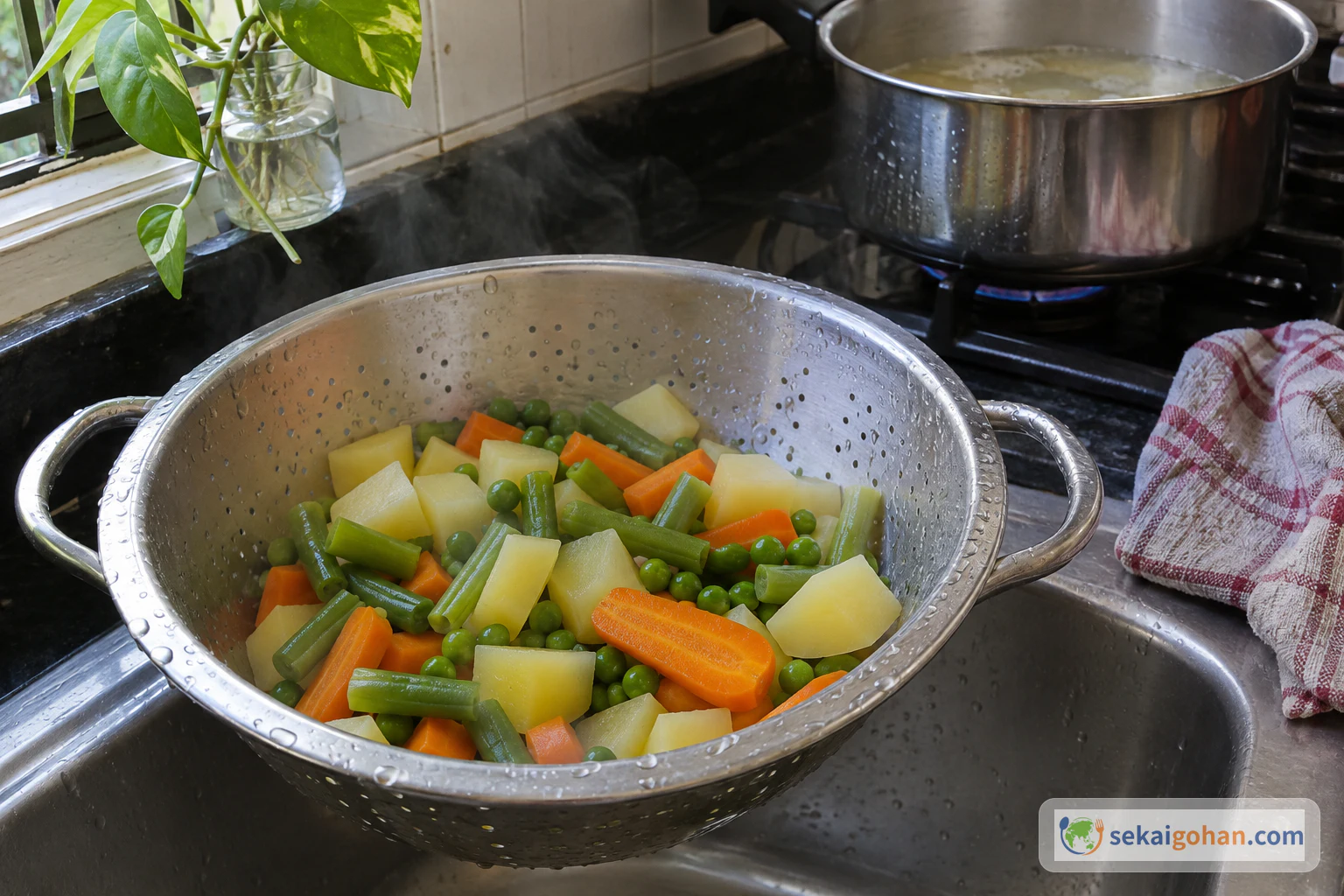
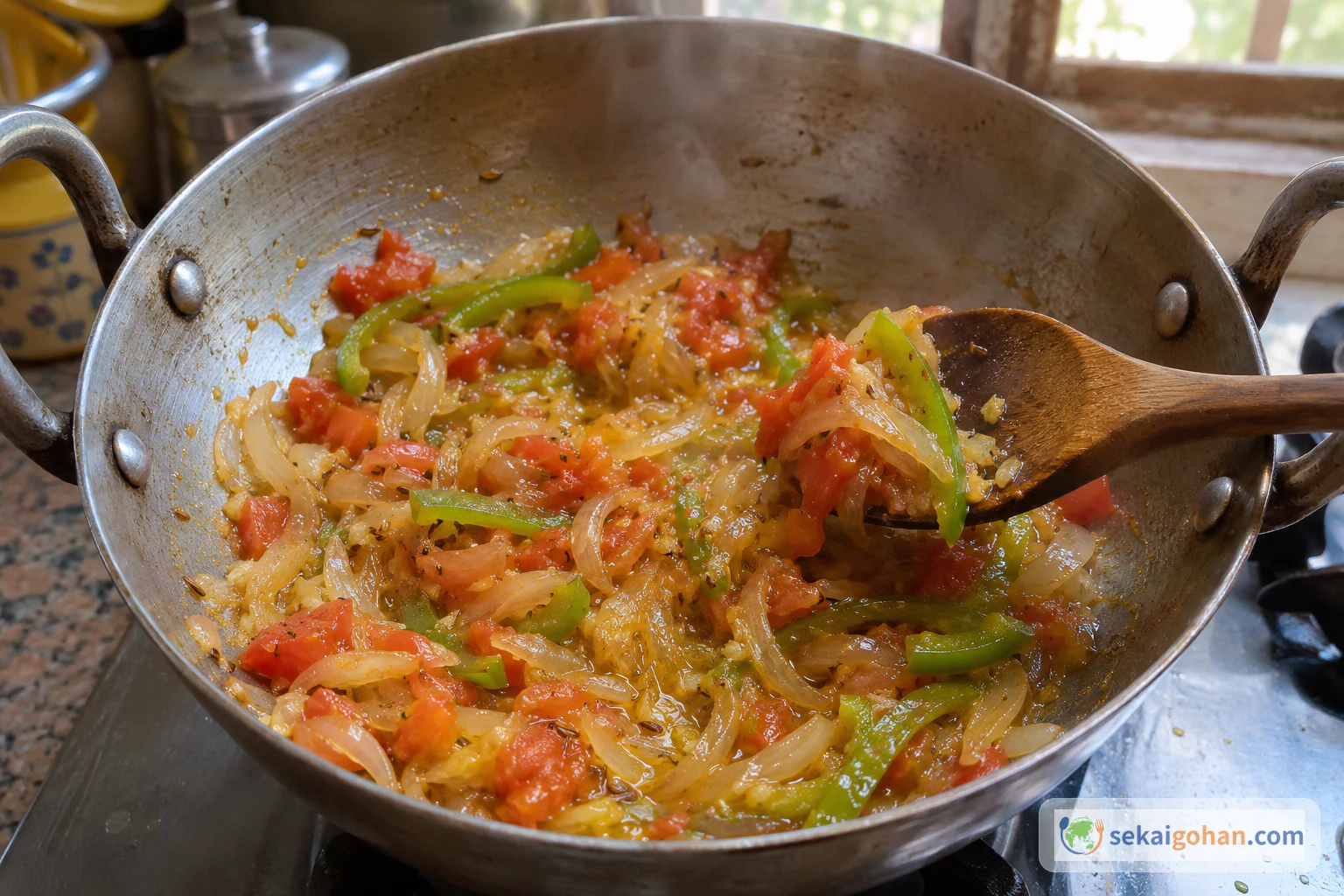
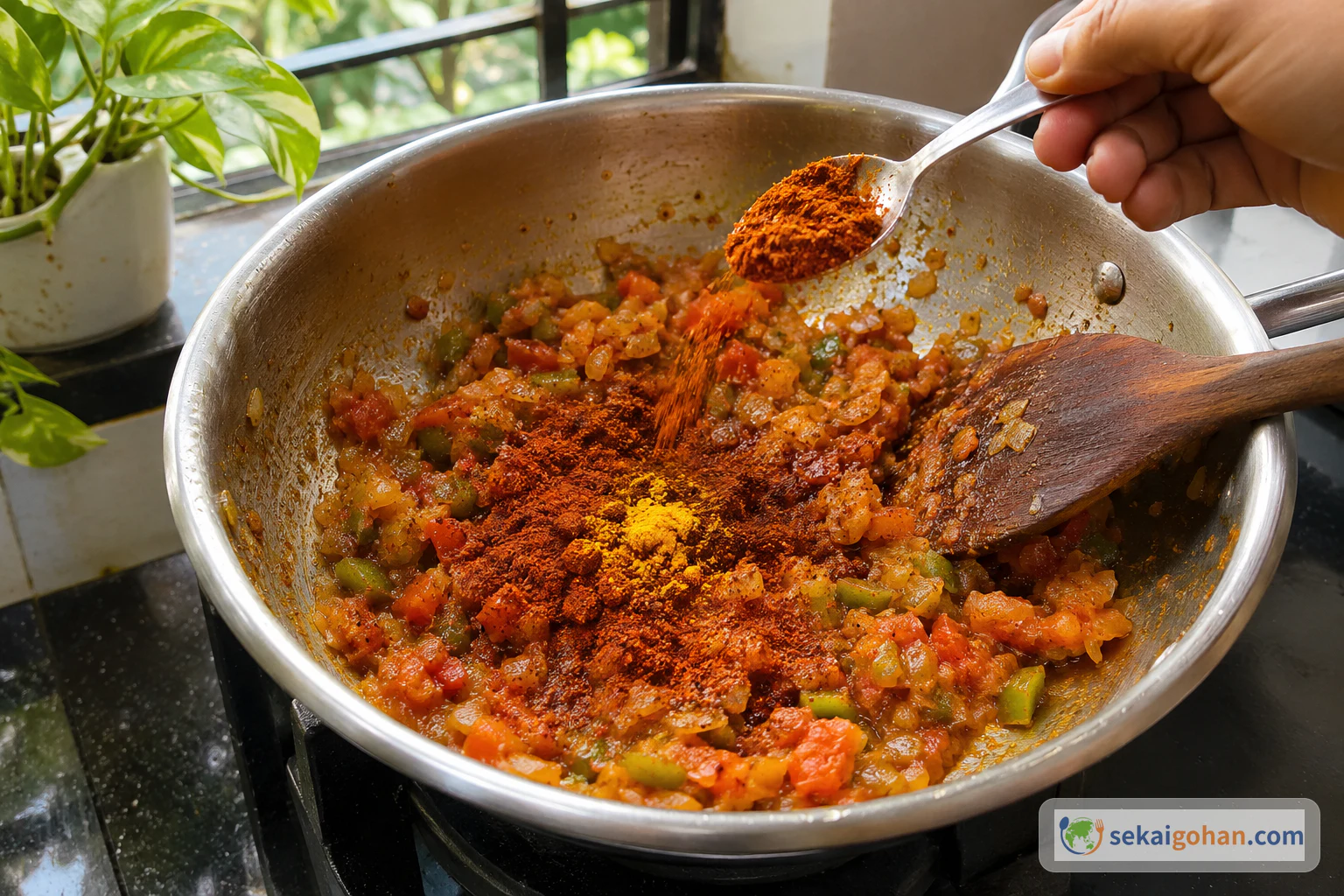
Roast and grind the masala first. Blanch the vegetables while it cools, and slice the onion and chop the tomato at the same time. From the moment the fennel hits the oil, the cooking runs continuously, one addition after another, so have every bowl ready at the stove before you start frying.
Dry-roasting whole spices smokes quickly, so open a window or run the extractor fan. Wash your hands after breaking or handling dried chillies, and keep them away from your eyes and face. Chopped tomato spits when it hits hot oil; add it close to the pan surface and step back.
Pull the spices off the heat as soon as the toasted aroma rises, while the coconut is still pale. Coconut keeps darkening from the heat of the pan, and once it browns the whole masala turns bitter.
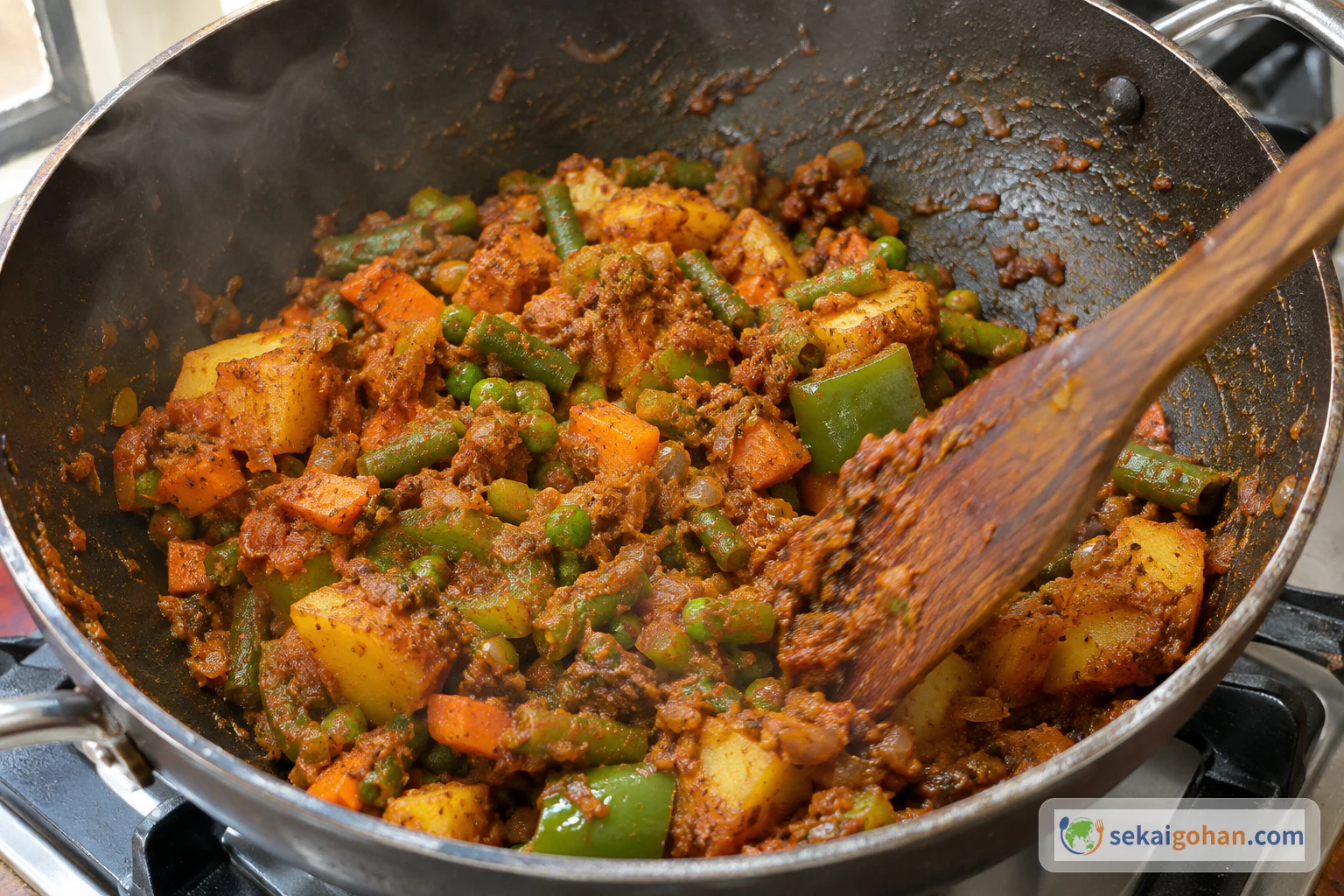
Drain the blanched vegetables well and add them to the masala with no water. The masala fries onto the vegetables in the oil, and that frying is where the aroma comes from. Water added early steams it flat.
When It Goes Wrong
| What you see | Why | What to do |
|---|---|---|
| The masala tastes bitter | The coconut browned during the roast, or warm, damp powder caught in the pan | Roast only until fragrant, cool the spices fully before grinding, and scrape the pan while the powder fries |
| Vegetables break up in the gravy | They were boiled past the 90% point | Pull them while still crunchy; fold rather than stir after they go in |
| The flavour is flat and muddy | Water went in with the vegetables, or they went in wet | Drain thoroughly and add liquid only in the last step |
| Too hot for the table | Two Kashmiri chillies is a very spicy pot | Next time use half a chilli or none, and add chilli powder with the turmeric to taste |
| The milk splits | The gravy boiled hard after the milk went in | Keep it at a gentle simmer and stir; make it with water if you are worried |
| The gravy is too thick | It simmered past the point you wanted | Loosen with a splash of water or blanching water and warm through |
Serving, Variations and Leftovers
At the table
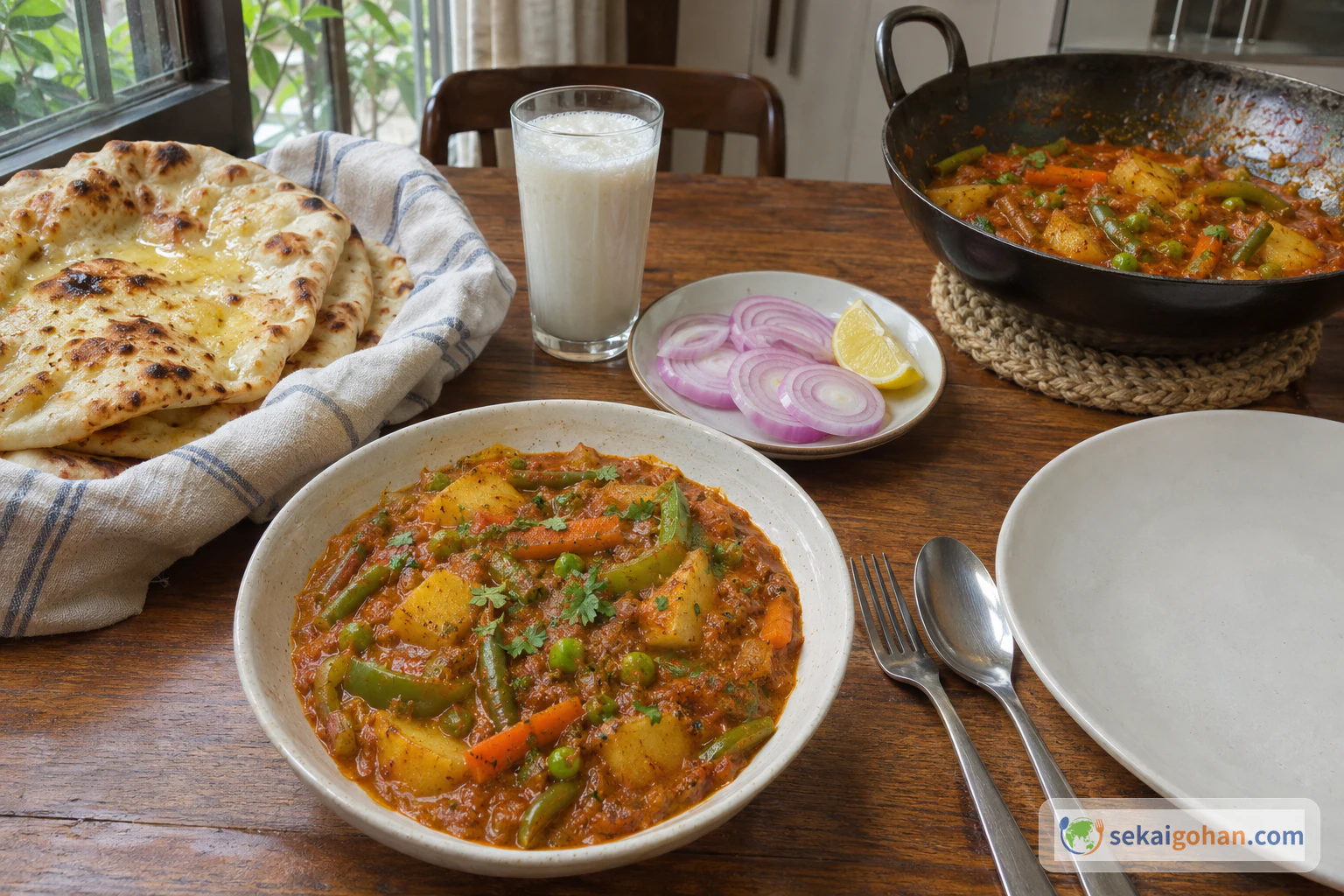
Serve it the restaurant way, with butter garlic naan, a plate of sliced onion salad and a glass of lassi to cool the heat. At home, phulka, chapati or paratha work just as well for tearing and scooping. Plain rice also takes the gravy well, thinned with a little extra water.
Variations
- Turn the heat down. With two Kashmiri chillies the dish is very spicy. One chilli gives a medium heat, and half a chilli or none makes a mild pot for children. As the chilli drops, the coconut's sweet, roasted aroma moves to the front and the dish reads gentler and nuttier.
- Add a seasonal vegetable. Fold in one of cauliflower, ash gourd (white gourd), broccoli or paneer alongside the five. Cauliflower and ash gourd soak up the gravy, broccoli adds a green bitterness, and paneer makes the pot richer. Keep the total volume close so the masala still coats everything.
- Make it dairy-free. Use water in place of the milk and the curry is fully plant-based. The finish is sharper and the heat less softened.
- Try the paste method. Some cooks grind the roasted spices together with sautéed onion, garlic, ginger and tomato into a smooth paste, often with mustard seed, mace, fenugreek and bay leaf, and stir it into steamed vegetables. Others put cumin and cardamom in the masala and finish with a swirl of cream. The paste method gives a smoother, more blended gravy than the powder method here, and each of these is its own recipe with its own proportions.
Leftovers
Let leftovers cool, then refrigerate them in a clean, covered container promptly. Reheat in a pan over low heat, loosening the thickened gravy with a little water, and stir until hot all the way through.
Frequently asked questions
Can I use a store-bought Kolhapuri masala instead of roasting my own?
The freshly roasted coconut is what gives this curry its sweet, toasted depth, and the roast and grind take only a few minutes. Bought blends vary in what they contain and how hot they are. A blend pushes the dish toward a different flavour, so roasting your own is the way to get this taste.
Can I steam the vegetables instead of boiling them?
Yes. Steam them to the same point, about 90% cooked and still crunchy. Steamed vegetables hold less water, which suits the dry fry with the masala. Use plain water in the last step, since there is no cooking water to add.
Is Veg Kolhapuri vegan?
Made with water instead of milk, it is entirely plant-based. Every other ingredient is a vegetable, a spice, coconut or oil. Serve it with phulka or chapati rather than butter naan to keep the whole meal vegan.
Can I make the gravy thinner to go with rice?
Add a little more water or blanching water in the last step and keep the simmer short. The masala stays the same, so the flavour holds. A slightly looser gravy soaks into rice and keeps the grains moist.