Paneer Tikka Masala: Browned Edges First, Creamy Gravy Last
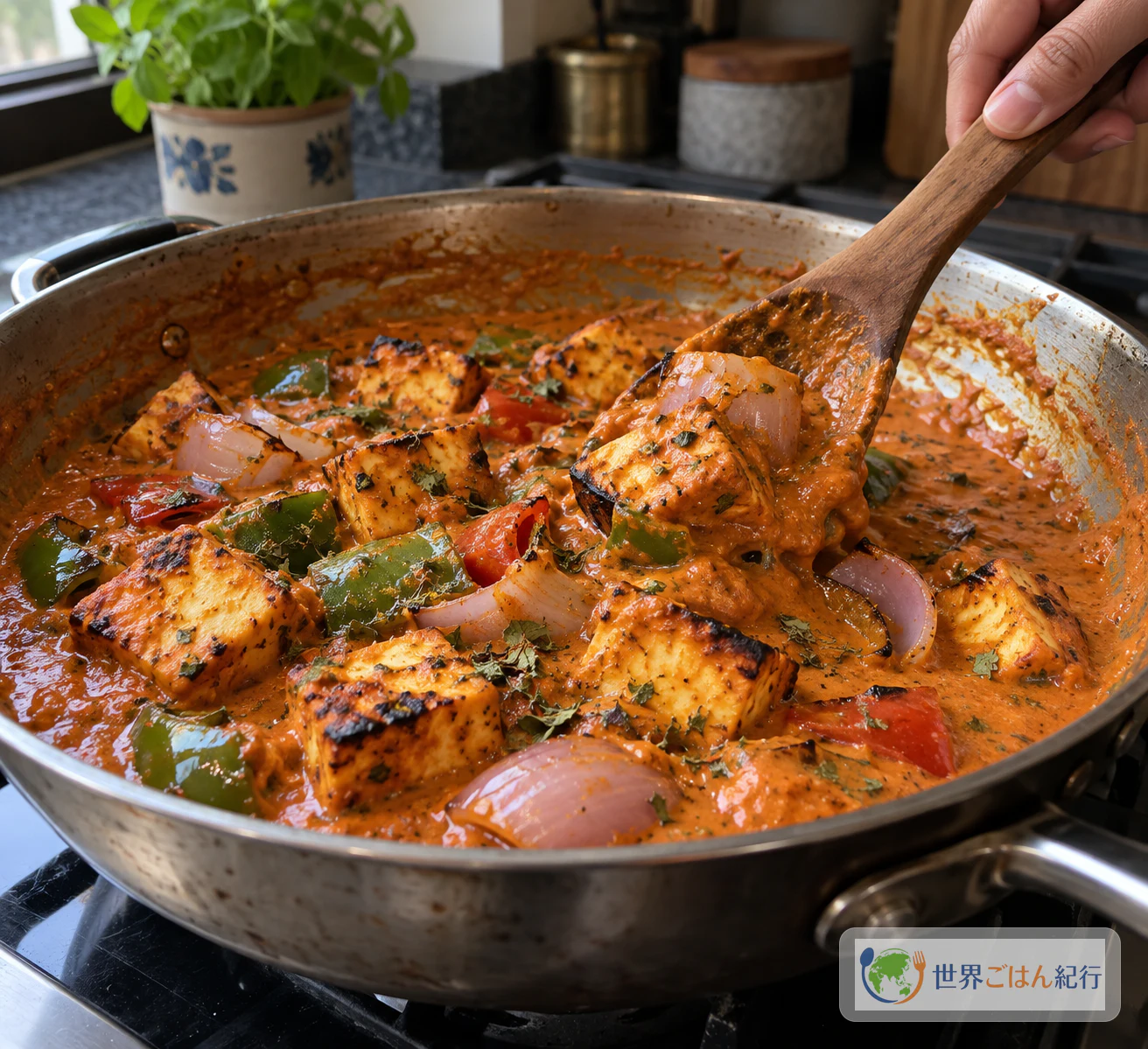
Grill the marinated paneer only until its edges pick up light brown spots, and fold it into the gravy at the very end. The contrast between the grilled pieces and the smooth tomato-onion sauce is what this dish is about.
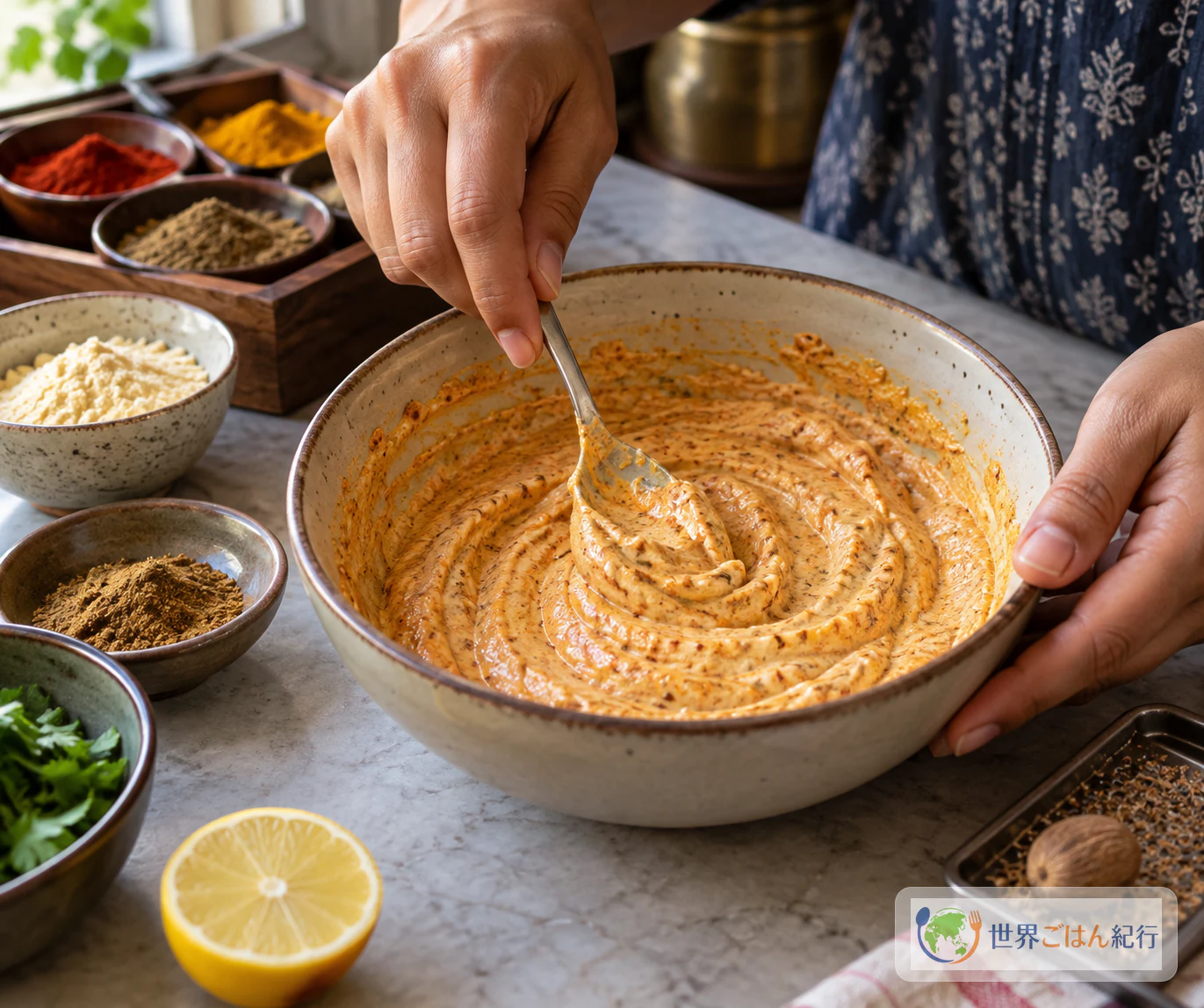
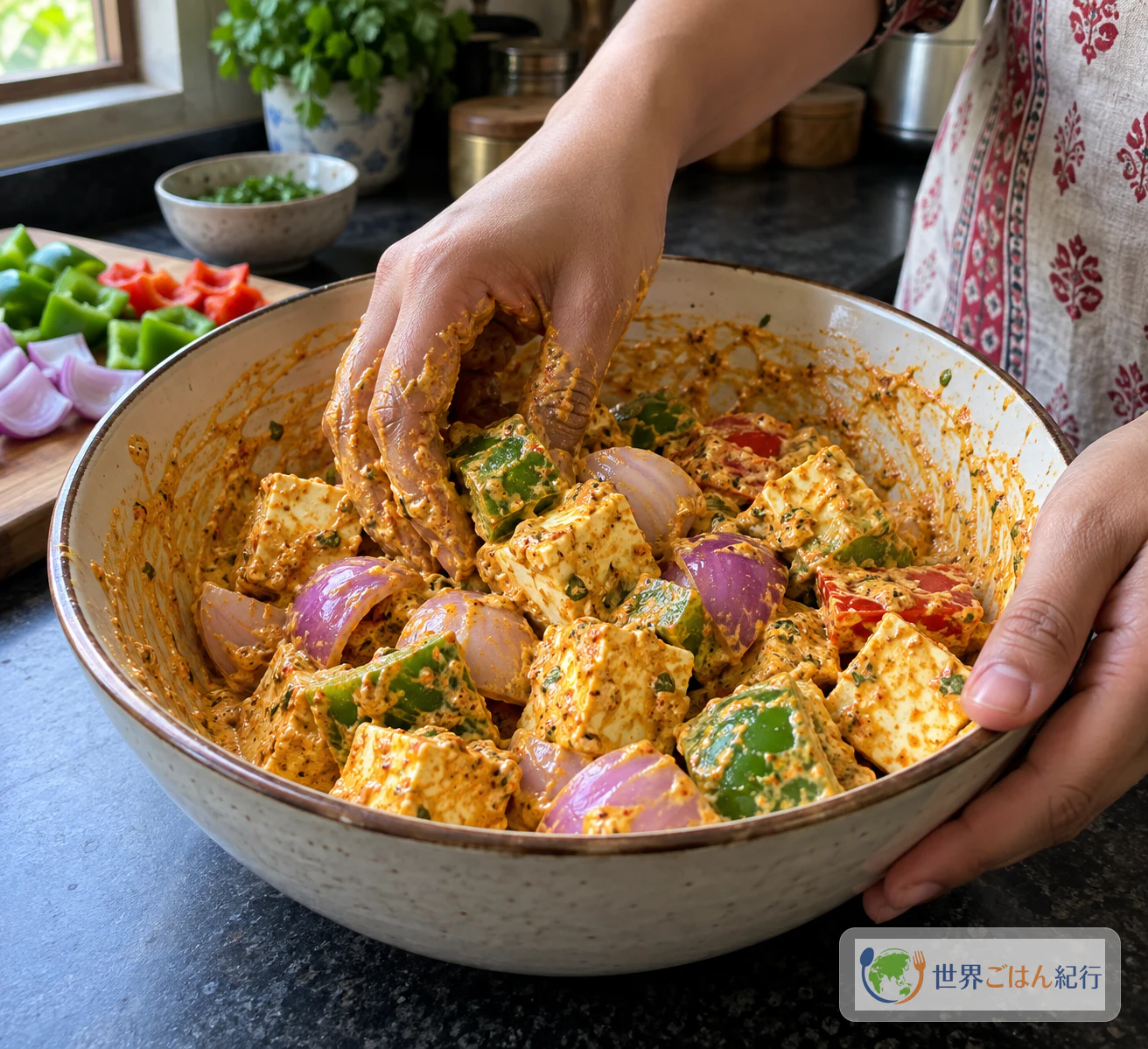
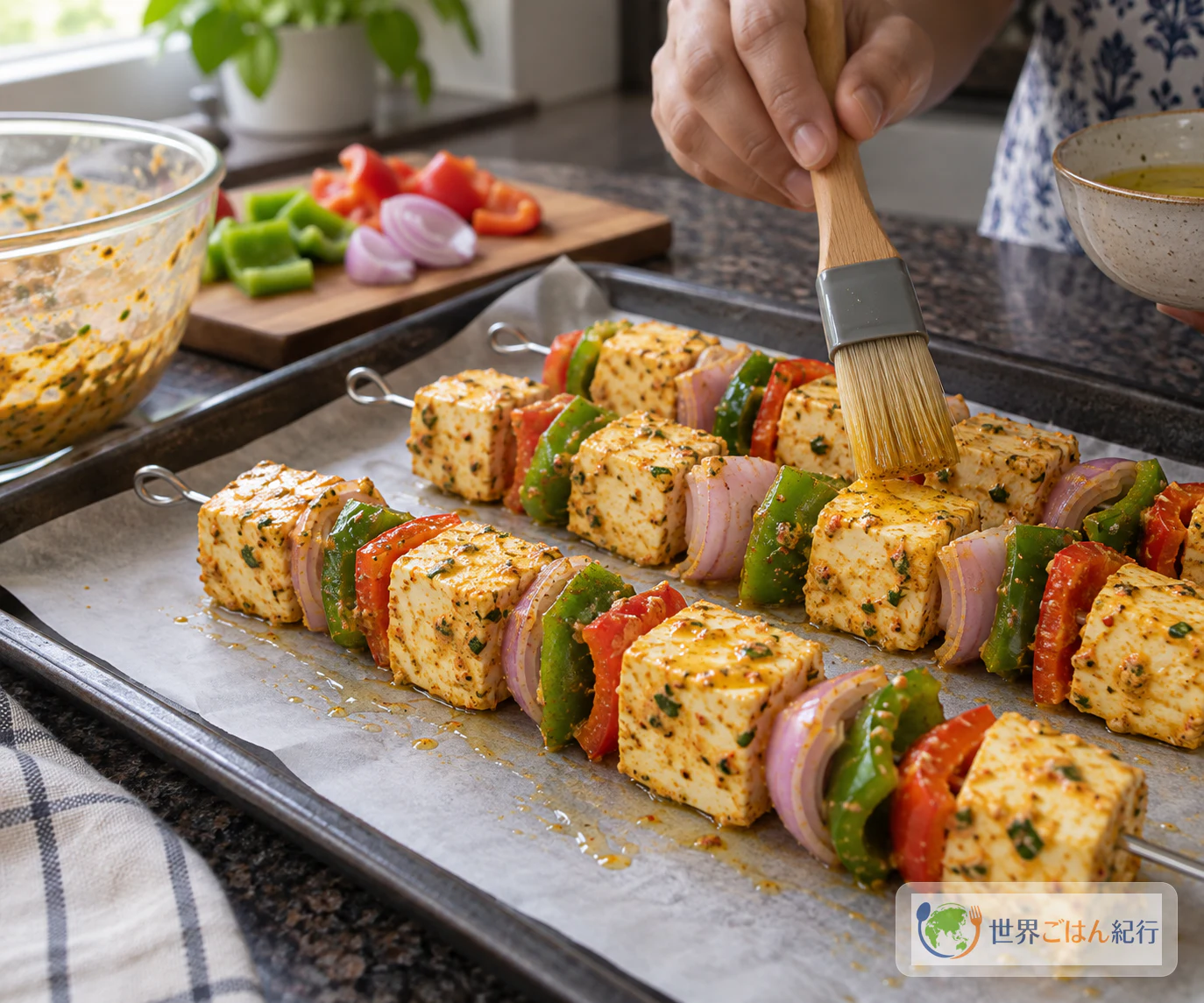
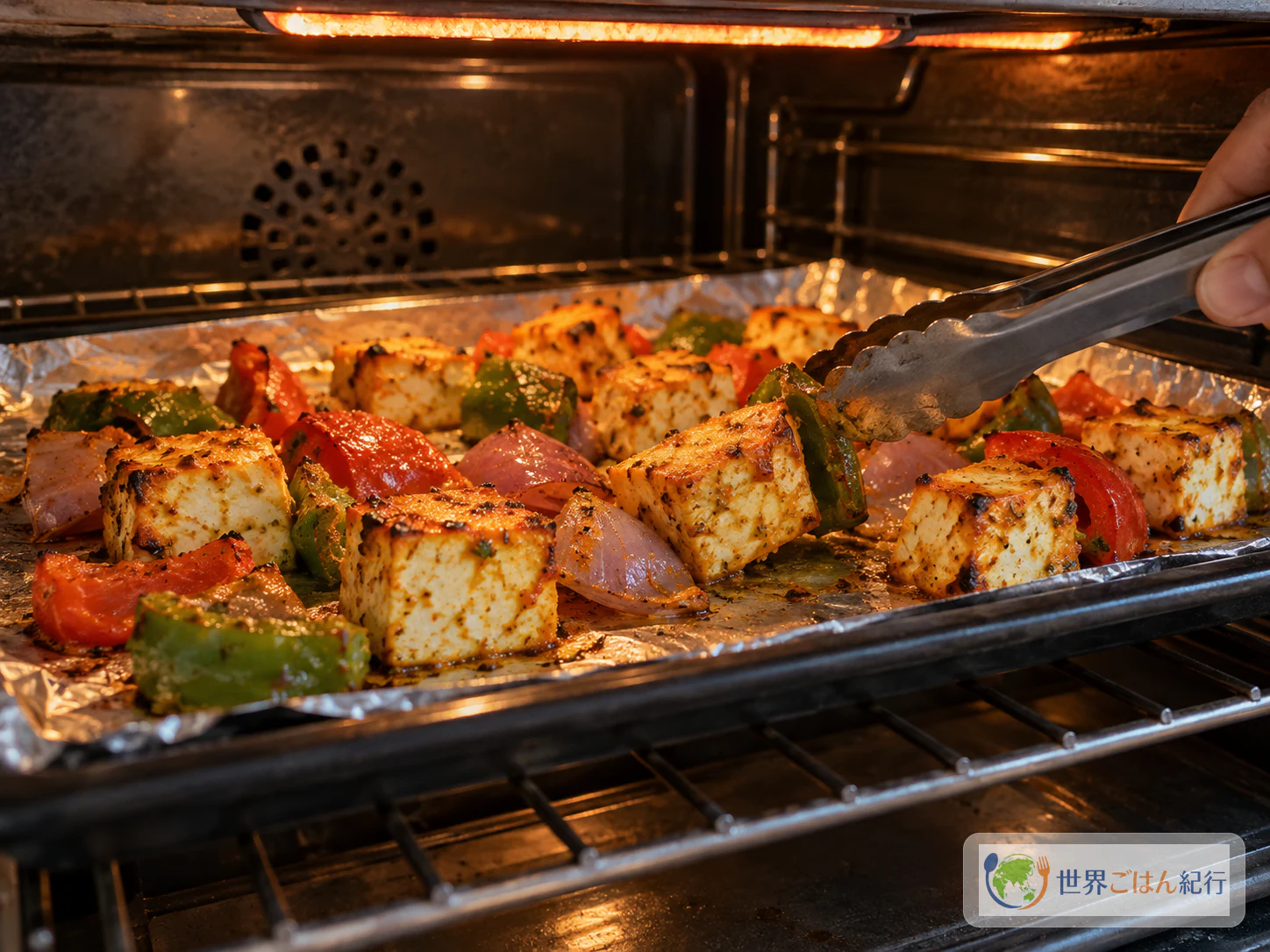
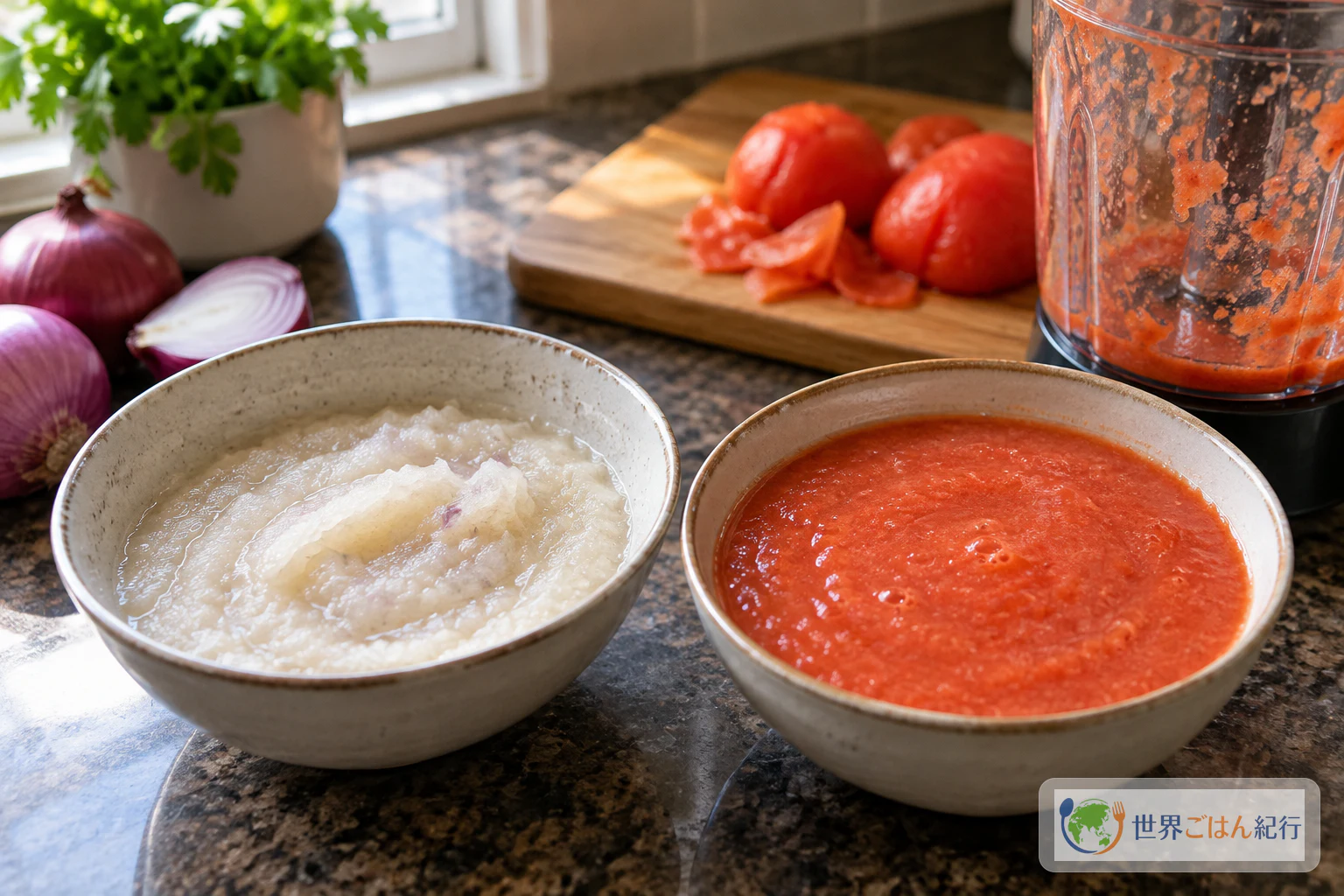
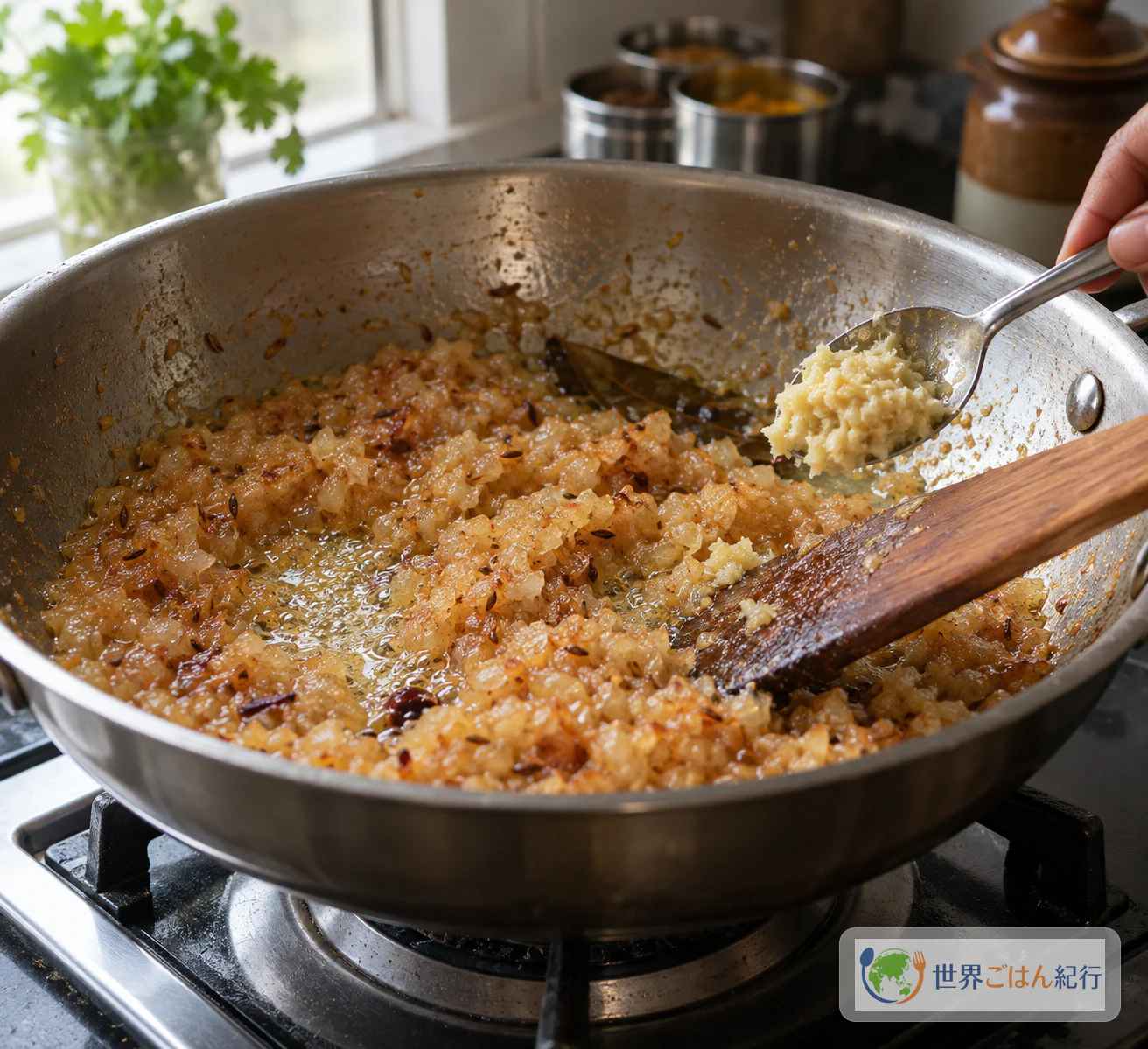
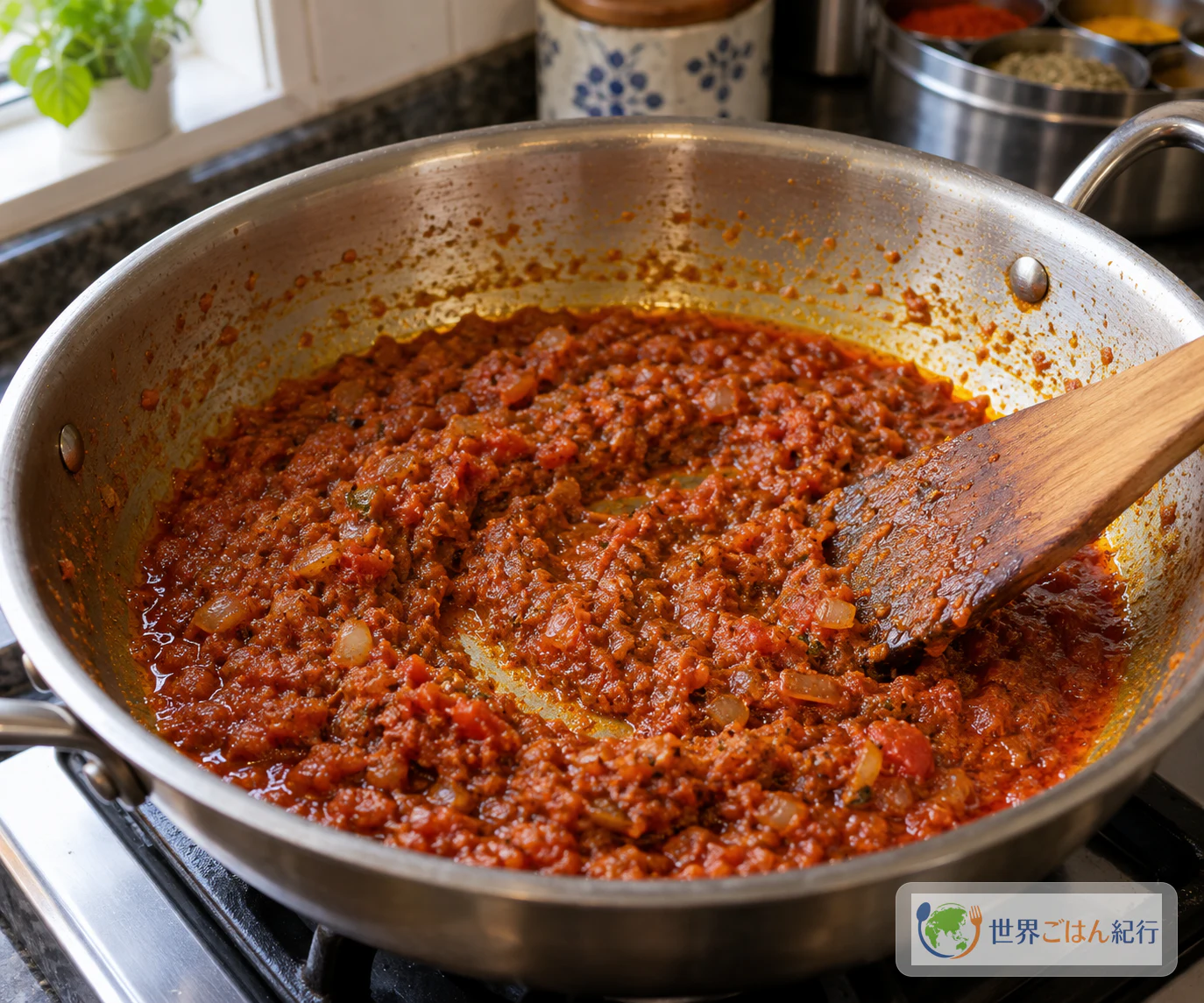
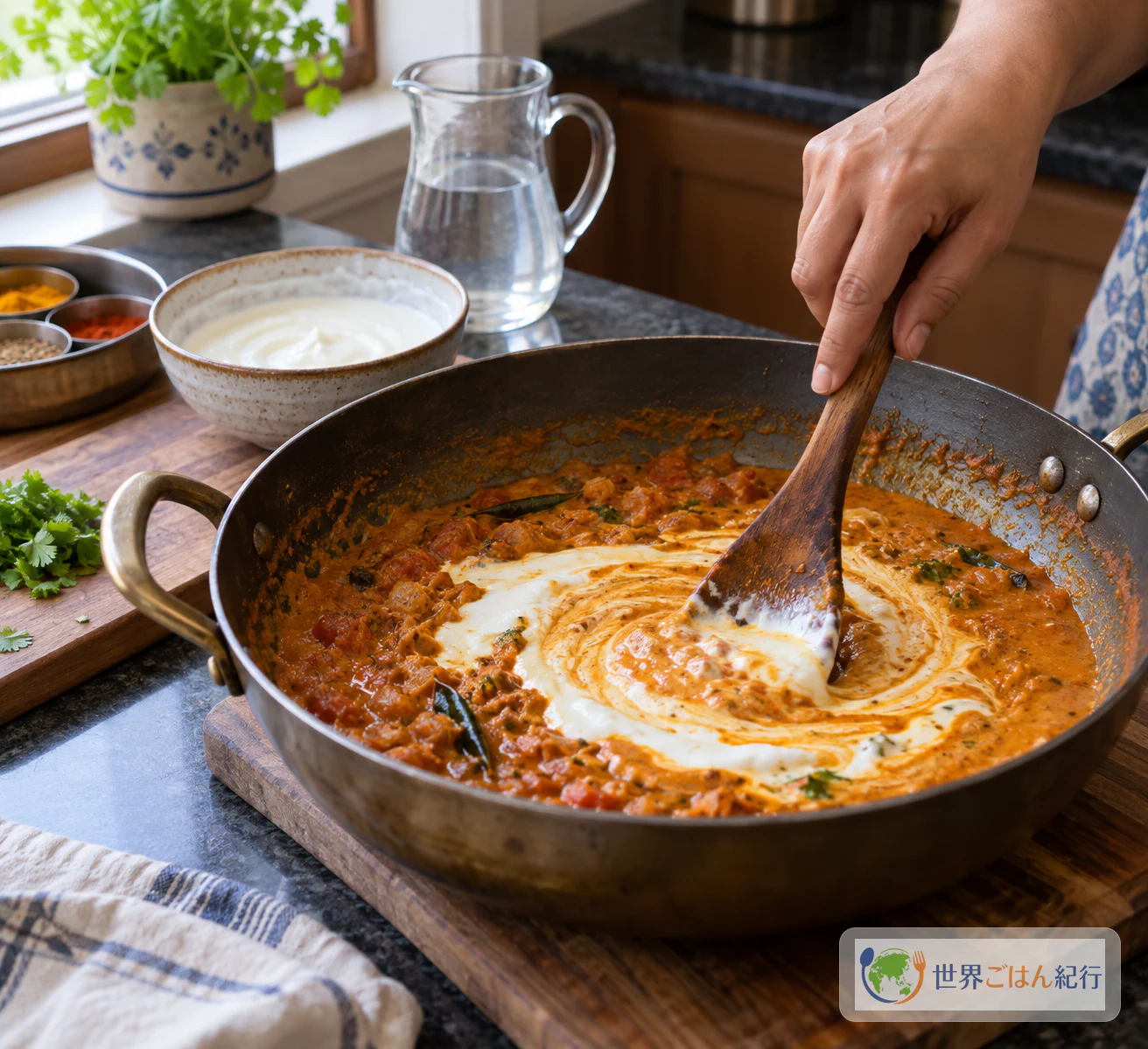
Cubes of paneer, petals of onion and squares of bell pepper are threaded onto skewers, coated in a thick yogurt marinade tinted red-orange with Kashmiri chilli and turmeric. Under the oven's top element, small golden-brown spots begin to appear along the edges. Meanwhile, in a separate pan, onion paste turns golden, tomato puree and ground spices cook down until oil gathers at the rim, and the sauce is softened with yogurt and cream.
This recipe follows a single recipe from Dassana's Veg Recipes, scaled for four servings. The recipe card lists 1 hour 30 minutes of preparation and 30 minutes of cooking, about two hours in total. The work splits cleanly into two parts: first the paneer tikka, marinated and grilled; then the masala gravy, into which the tikka goes at the end. Keeping those two parts separate is what makes paneer tikka masala different from simply simmering paneer in sauce.
The amounts here are taken from one recipe card only. Where the card offers a range or a choice, this version picks one option and says so. Nothing is borrowed from other recipes.
What Sets Paneer Tikka Masala Apart
Paneer tikka is the grilled paneer itself; paneer tikka masala is that tikka finished in a gravy. The source recipe describes paneer tikka as marinated pieces that are grilled or pan-fried, and the masala as the tomato-onion gravy they are added to. If you stop after grilling, you have paneer tikka, a dish in its own right. Carry on with the gravy, and it becomes a main-course curry.
The recipe's author describes this version as a restaurant-style Punjabi curry and files it under North Indian and Punjabi cuisine. That describes the style of this particular recipe; it is not a settled account of where or when the dish began, and this article does not claim one.
Paneer butter masala is often mentioned alongside it, but it is a separate dish: it does not start from grilled tikka, and its sauce is built differently. A similar name does not mean a shared recipe.
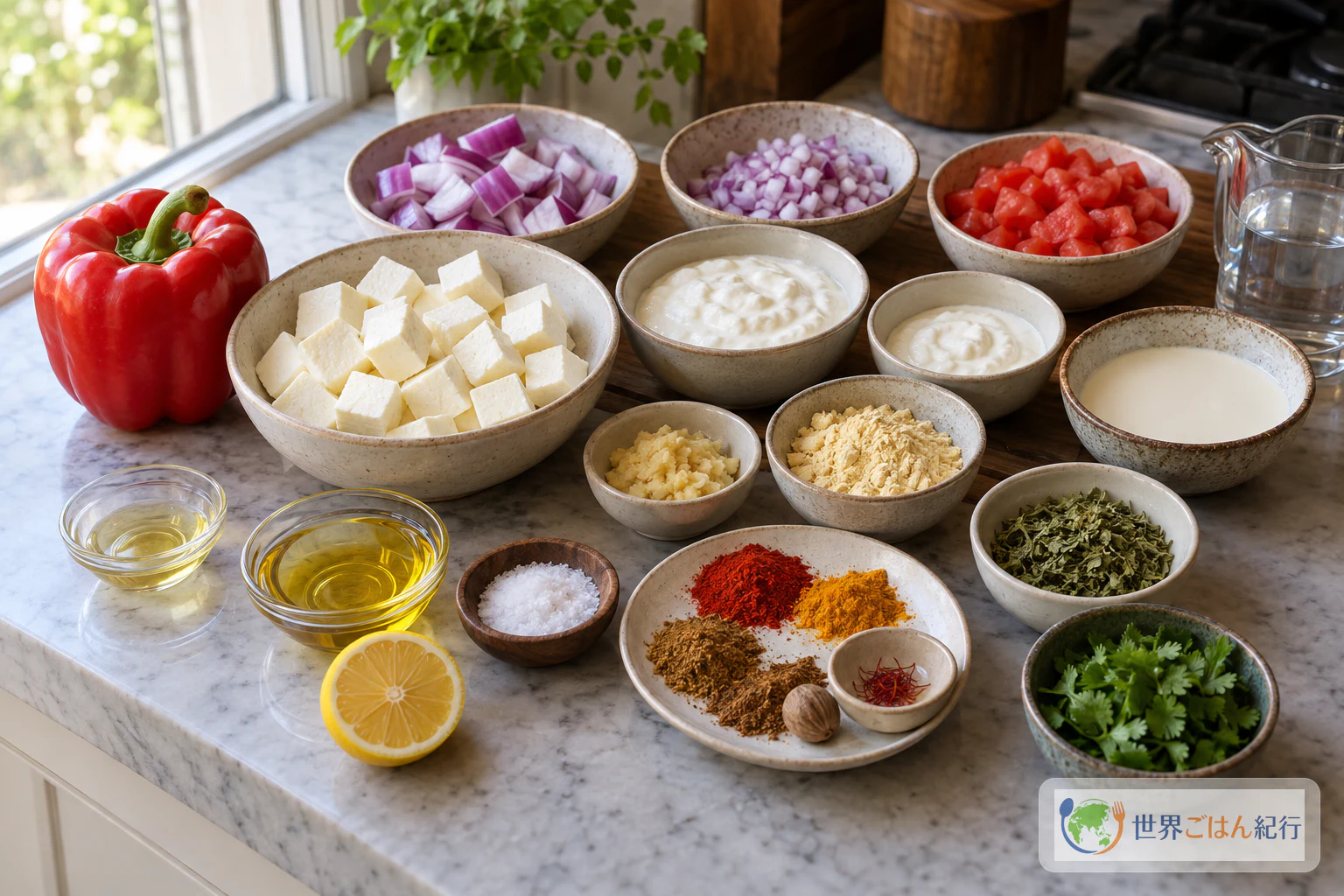
Ingredients for 4 Servings: Tikka and Gravy Measured Separately
Several ingredients appear twice: onion, ginger-garlic paste, yogurt, oil, salt and some of the ground spices. Measure each set separately so the marinade amounts and the gravy amounts never get mixed up.
This dish contains dairy (paneer, yogurt, cream) and chickpea (besan). Check the ingredient labels of spice blends such as garam masala or tandoori masala, as well as any shared-facility statements. Roti and naan served alongside may contain wheat. The dish is vegetarian, but because it contains dairy it is not vegan.
Equipment
- Oven with a top heating element
- Baking tray, lined
- Metal skewers (oven-safe)
- Pastry brush, for the oil
- Tongs, for turning the skewers
- Mixing bowls
- Small pot, for blanching
- Blender
- Sauté pan, for the gravy
- Whisk or fork, for the yogurt
No tandoor or special grill is needed; a home oven works.
Choosing and Substituting: Paneer, Chilli, Besan and Kasuri Methi
Paneer is an Indian fresh, unripened cheese made by heating milk and curdling it with acid. It has a firm, cohesive body and a mild, slightly sweet, slightly tangy, nutty flavor, and it holds its shape when cooked instead of melting. Its texture varies with the type of milk and the way it is made. Tofu and ordinary cheeses differ in moisture, milky flavor and how they brown, so they are not equivalents in this recipe. Look for it under the name "paneer" or "Indian fresh cheese".
Kashmiri chilli powder gives color with gentle heat. Sweet paprika covers the color, but its heat and aroma are not the same. Hotter chilli powders should not be swapped in at the same amount. Whatever you use, check the label and start small.
Besan (gram flour, made from chickpeas) is the option chosen here to help the marinade cling. Cornstarch also works; if you use it, use it in place of the besan, never both together. Other starches have not been checked for this recipe.
Kasuri methi is dried fenugreek leaves. Ground fenugreek seed is a different ingredient and should not be used in its place.
Cream: this version uses 3 tbsp light cream. Use 3–4 tbsp if you use light cream, or 1–2 tbsp if you use heavy cream. Light cream is roughly 25–35% fat; product names differ from country to country, so check the fat percentage on the label.
Optional spices: the marinade’s 1/2 tsp coriander powder, saffron and the gravy’s cumin are optional; the gravy’s 1 tsp coriander powder remains part of the base recipe, and nutmeg can be left out too. Each has its own aroma, so leave them out individually rather than replacing them all with another spice.
Method: Grill the Tikka, Build the Gravy, Bring Them Together
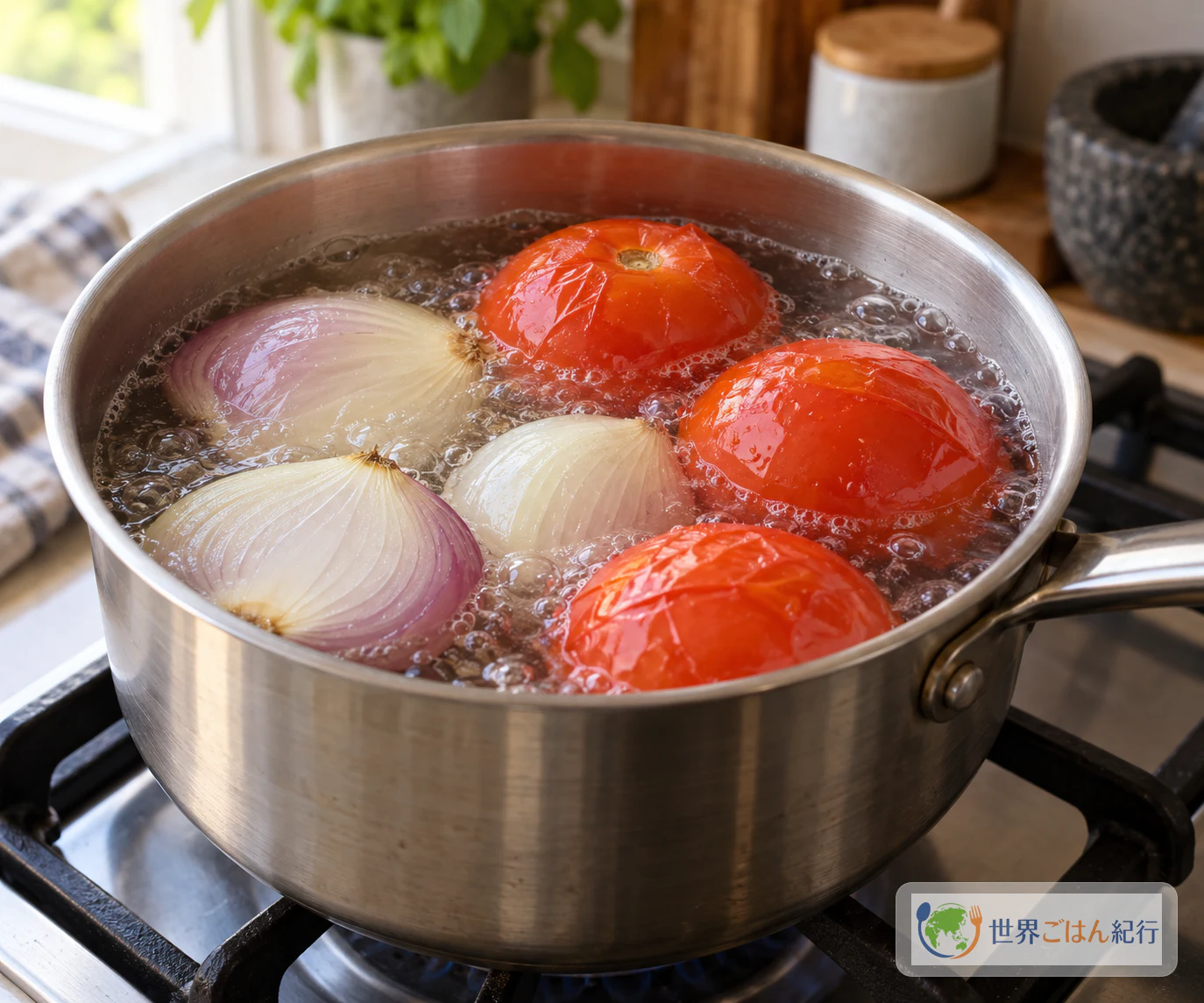
Steps 1–4 make the paneer tikka; steps 5–9 make the gravy; step 10 joins them. While the paneer marinates, you can blanch and puree the gravy vegetables.
When Things Go Wrong: Rubbery Paneer, Runny Marinade, Split Yogurt
| Problem | Likely cause | What to do |
|---|---|---|
| The paneer is hard and rubbery | Grilled too long, or simmered in the gravy after it was added | Check from 15 minutes for light browning at the edges. Turn the heat off before adding the tikka to the gravy |
| The marinade slides off | Yogurt too watery | Use hung curd or a thick Greek yogurt. Besan helps it hold |
| The yogurt in the gravy split | Cold yogurt added to a pan still on high heat | Take the pan off the heat and stir in well-whisked full-fat yogurt |
| The tomato tastes too sharp | Underripe or very acidic tomatoes | Choose ripe red tomatoes. If needed, add a little of the optional sugar, tasting as you go |
| The kasuri methi has little aroma | Dried leaves added whole | Crush them finely between your fingers or palms before adding |
| The gravy tastes bitter | Onion or ginger-garlic paste burned | Watch the color in steps 7 and 8 and lower the heat before it catches |
If the yogurt does split, there is no guaranteed fix. The best protection is the step itself: pan off the heat, yogurt whisked smooth, then stir.
Variations Within the Same Recipe
Cooking on a tawa instead of in the oven. The source recipe also mentions pan-frying, and a separate home recipe from Neha's Cook Book cooks marinated paneer and vegetables on a tawa over low-to-medium or medium heat, turning until browned. That recipe has its own quantities and order, so they are not mixed in here. If you try the pan route, keep this recipe's amounts, cook a few pieces at a time, and judge by the browning on the surface rather than a fixed time. The same page describes the tandoor as a source of smoky flavor; neither an oven nor a pan will reproduce charcoal smoke.
Milder color, less heat. Sweet paprika in place of Kashmiri chilli gives color, but not the same heat or aroma.
Leaving out optional spices. The marinade’s 1/2 tsp coriander powder, saffron and the gravy’s cumin can each be left out; retain the gravy’s 1 tsp coriander powder. Leave out only what you choose to; don't replace them all with one other spice.
Adjusting sweetness. The sugar is optional. Add it only after tasting the finished gravy.
Salt. Paneer and spice blends vary in salt, and the gravy salt has no fixed amount. Taste before seasoning.
Paneer, Punjabi Restaurant Style, and the Tawa at Home
The recipe followed here presents itself as a restaurant-style Punjabi curry from North India. That is a description of this version's style. The origin and date of paneer tikka masala as a dish could not be confirmed from the sources used, so no origin story is told here.
What can be said is about paneer itself. A scientific review describes it as an Indian fresh, unripened dairy product made by heating milk and curdling it with acid, with a firm, cohesive body and a mild sweet-acidic-nutty flavor. That firmness is why it can be marinated, threaded onto skewers and grilled without melting. The same review discusses the history of paneer, but the evidence it presents is debated and geographically broad, and it does not tell the story of this particular curry.
Home cooks have more than one way to grill the tikka. The recipe followed here uses the oven; another home recipe cooks the tikka on a tawa, the flat griddle common in Indian kitchens, and offers it as a way to make the dish without an oven. Neither is presented as the one standard for every household. For more dishes from the same country, see India.
Serving and Leftovers
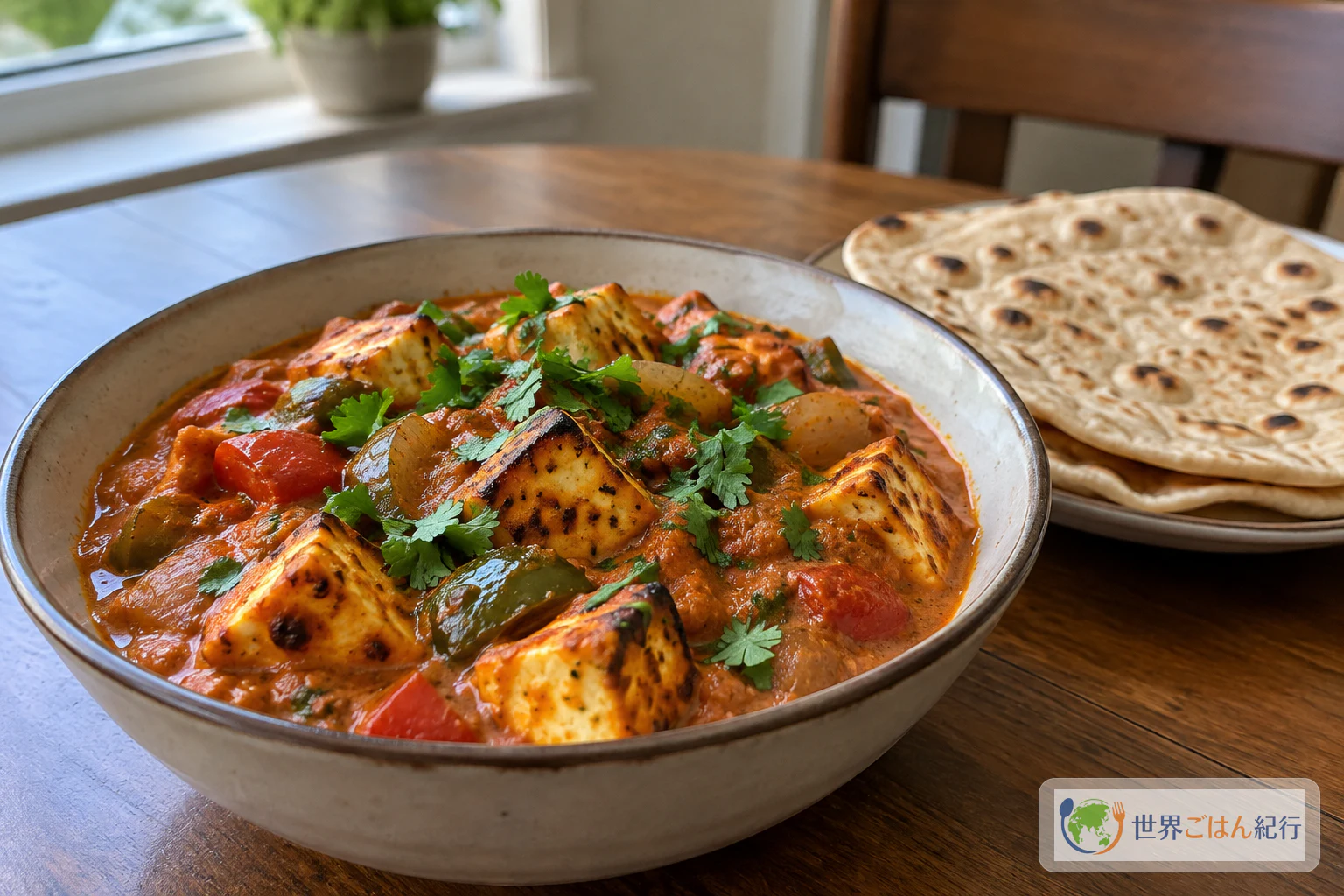
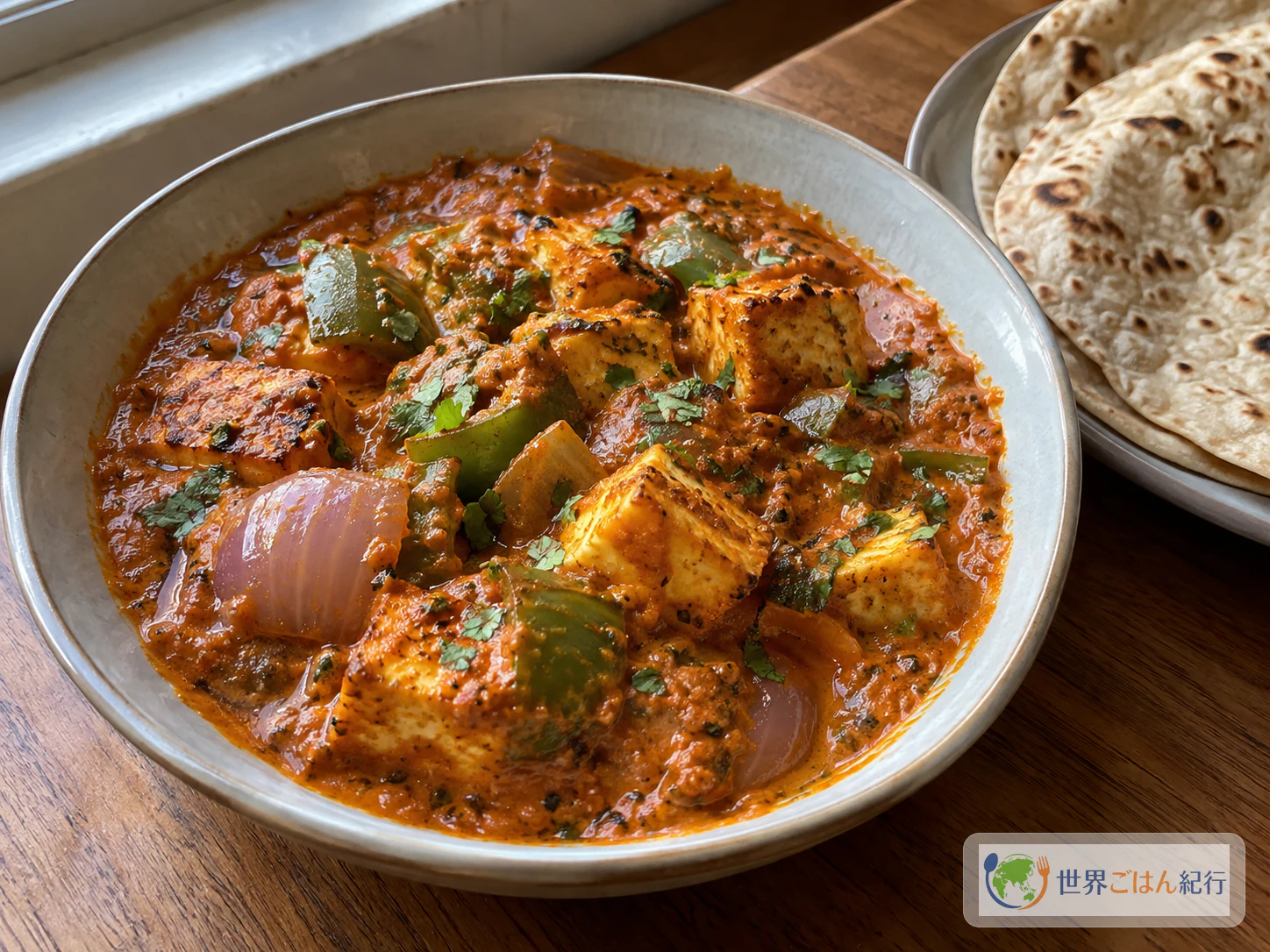
The source recipe suggests serving paneer tikka masala with naan, roti, chapati or paratha. A plain roti on the side lets you scoop up the gravy with the grilled pieces.
The source recipe does not give a storage period for the finished dish, so none is given here. Following general home food-safety guidance from Japan's Ministry of Health, Labour and Welfare: cool leftovers quickly in shallow containers, don't leave them at room temperature for long, and when reheating, heat until the center reaches 75°C for at least 1 minute.
Frequently Asked Questions
What is the difference between paneer tikka and paneer tikka masala?
Paneer tikka is paneer marinated in spiced yogurt and grilled or pan-fried. Paneer tikka masala takes that tikka and folds it into a tomato-onion gravy, making it a curry served as a main dish.
Can I use tofu or another cheese instead of paneer?
Not as an equivalent. Paneer is an acid-set fresh cheese that keeps its shape when heated, and tofu and other cheeses differ in moisture, flavor and how they brown. Look for paneer under that name, or as Indian fresh cheese.
What if I don't have an oven?
The source recipe mentions pan-frying, and a separate home recipe cooks the tikka on a tawa. Keep this recipe's amounts, don't mix in the other recipe's formula, and judge by browning; heat and timing need to be watched as you go.
How do I keep the paneer from turning hard?
Don't over-grill it: stop when the edges show light brown spots. Once it goes into the gravy, let it warm through with the heat off instead of simmering.
Why does the yogurt in the gravy split?
Adding cold yogurt to a pan on high heat makes it more likely to separate. Take the pan off the heat, whisk full-fat yogurt until smooth, and stir it in well before adding water and simmering.
How long does it keep?
The recipe followed here does not state a storage period, so no number of days is given. Cool leftovers quickly in shallow containers, and reheat until the center reaches 75°C for at least 1 minute.
Sources
- Dassana Amit, Dassana's Veg Recipes, "Paneer Tikka Masala Recipe." The recipe followed in this article: four servings, preparation and cooking times, the marinade and gravy amounts, oven grilling at 200°C, the warning about over-grilling, the recipe's own description as restaurant-style Punjabi and North Indian, and the suggested breads. https://www.vegrecipesofindia.com/paneer-tikka-masala-recipe/
- Neha's Cook Book, "Paneer tikka masala | how to make paneer tikka masala | paneer tikka gravy." A separately written home version cooked on a tawa, cited only to show that a pan-cooked variant exists and for its mention of the tandoor's smoky flavor; its quantities and timings are not used here. https://www.nehascookbook.com/paneer-tikka-masala-how-to-make-paneer-tikka-masala-paneer-tikka-gravy/
- Kumar, Rai, Niranjan and Bhat, "Paneer—An Indian soft cheese variant: a review," Journal of Food Science and Technology (full text on PubMed Central). Paneer as an acid-coagulated, fresh, unripened cheese, its firm texture and flavor, and how texture varies with milk and method. Not used as evidence for the origin of paneer tikka masala. https://pmc.ncbi.nlm.nih.gov/articles/PMC4008736/
- Ministry of Health, Labour and Welfare, Japan, "Six points for preventing food poisoning at home" (in Japanese). General home guidance on cooling food in shallow containers and heating to a center temperature of 75°C for at least 1 minute. https://www.mhlw.go.jp/stf/seisakunitsuite/bunya/kenkou_iryou/shokuhin/syokuchu/01_00006.html