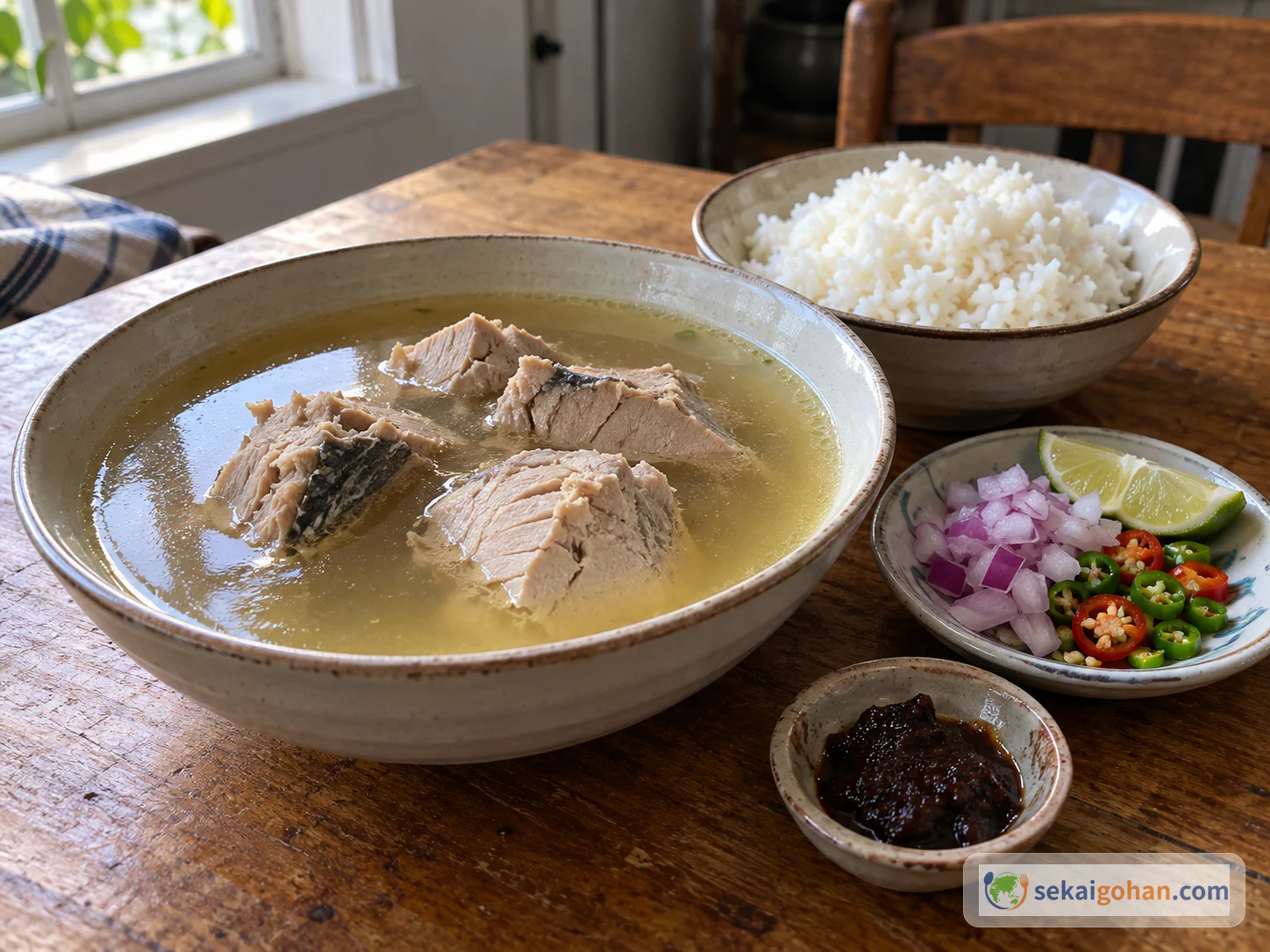
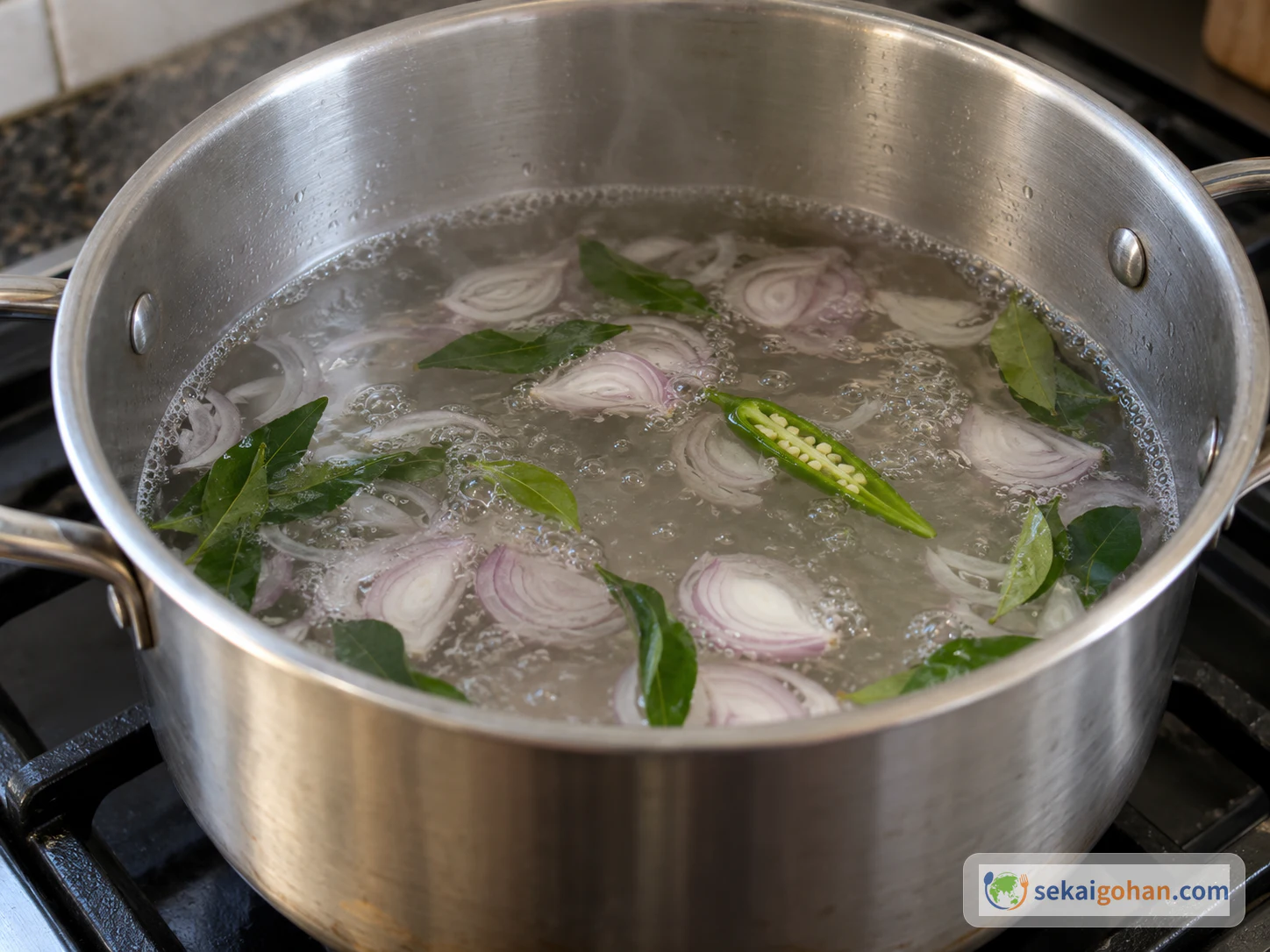
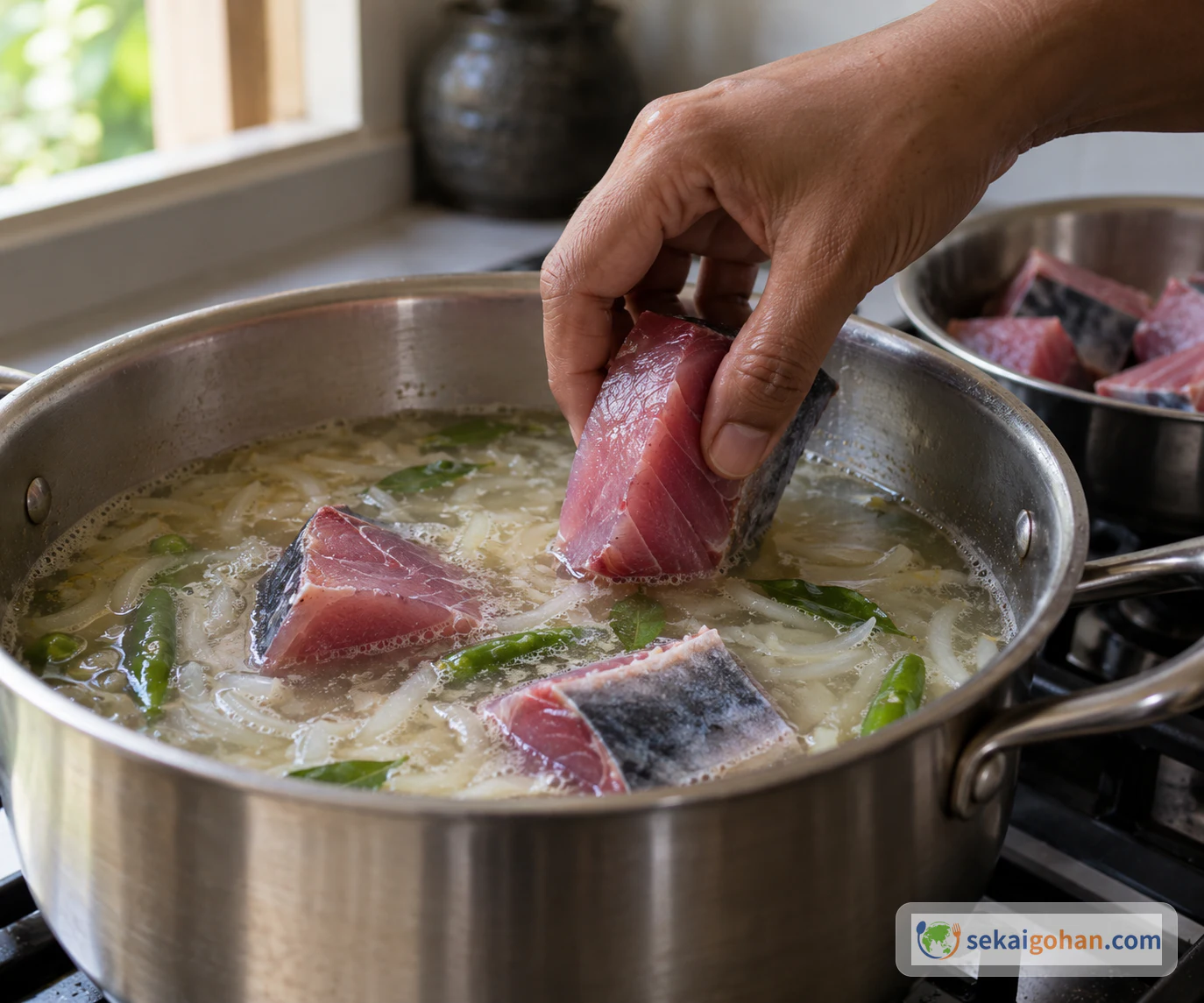
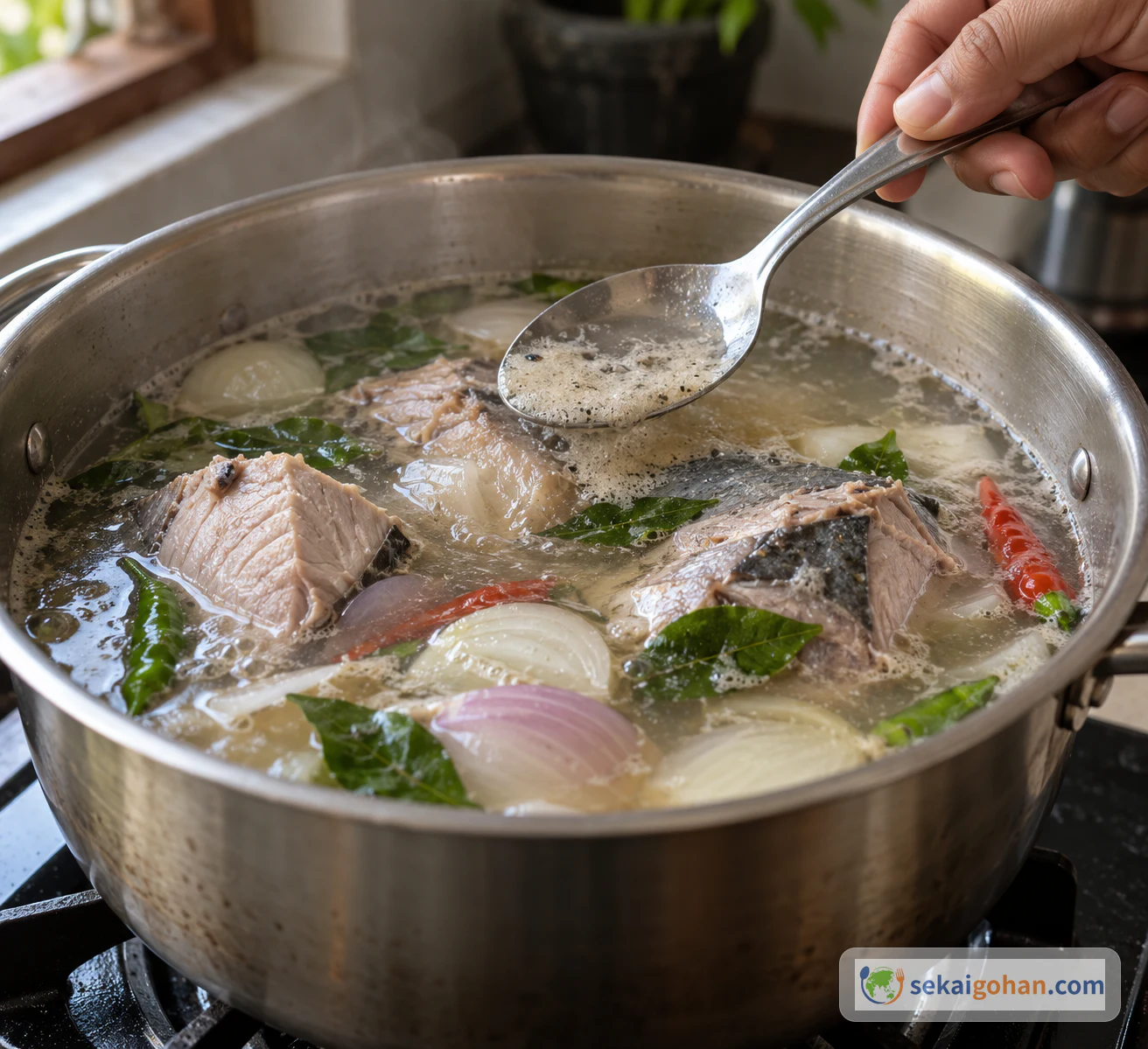
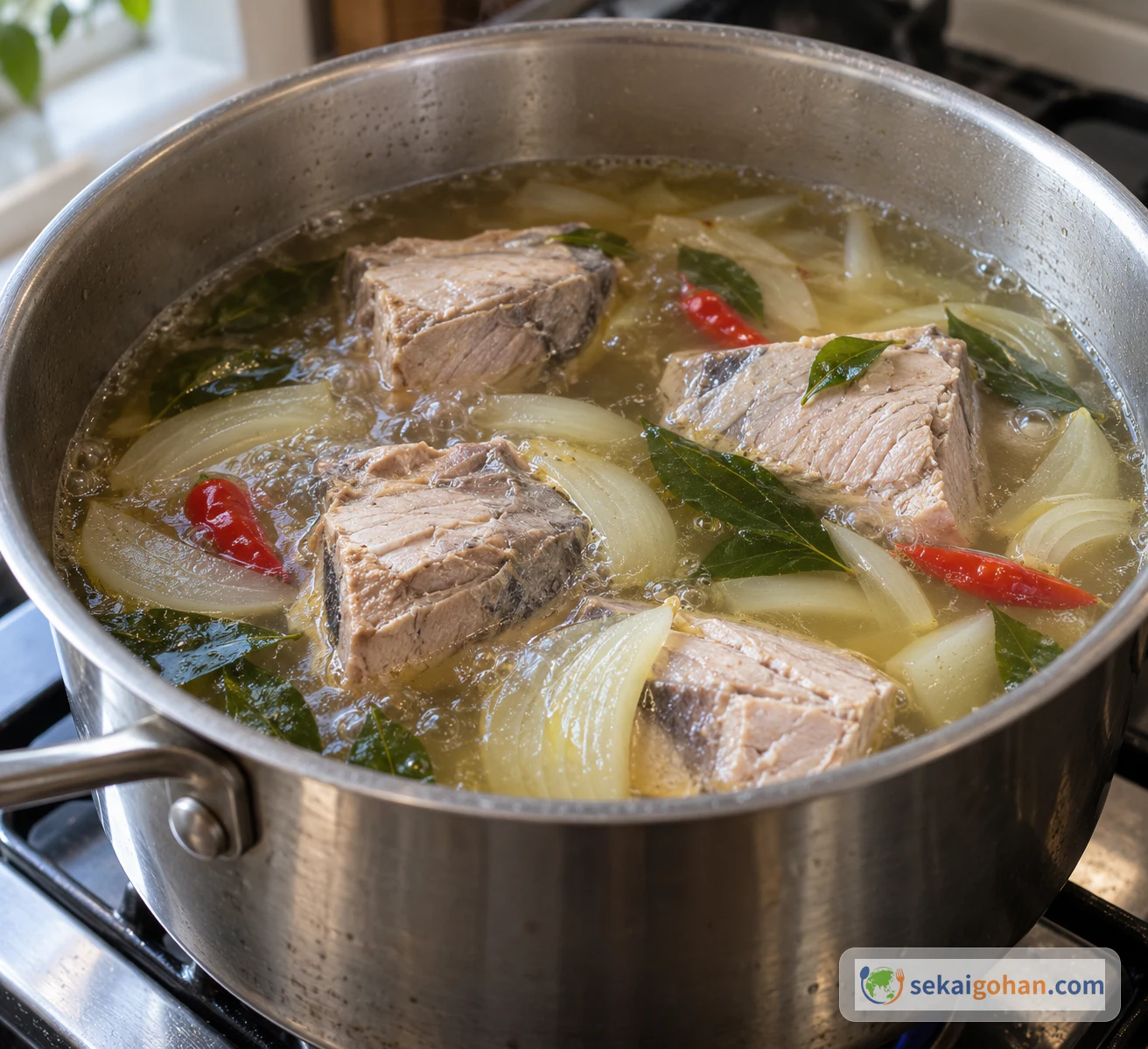
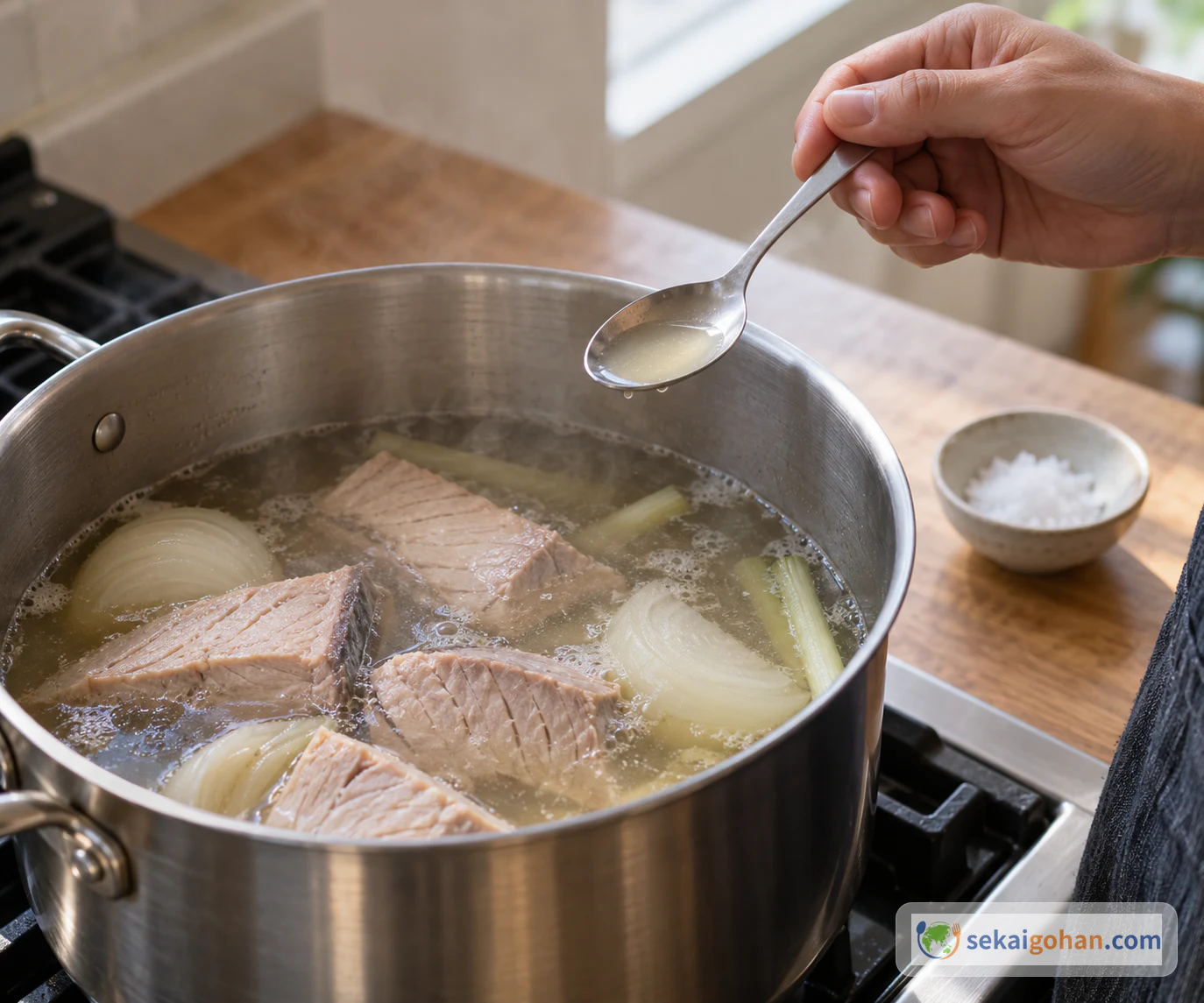
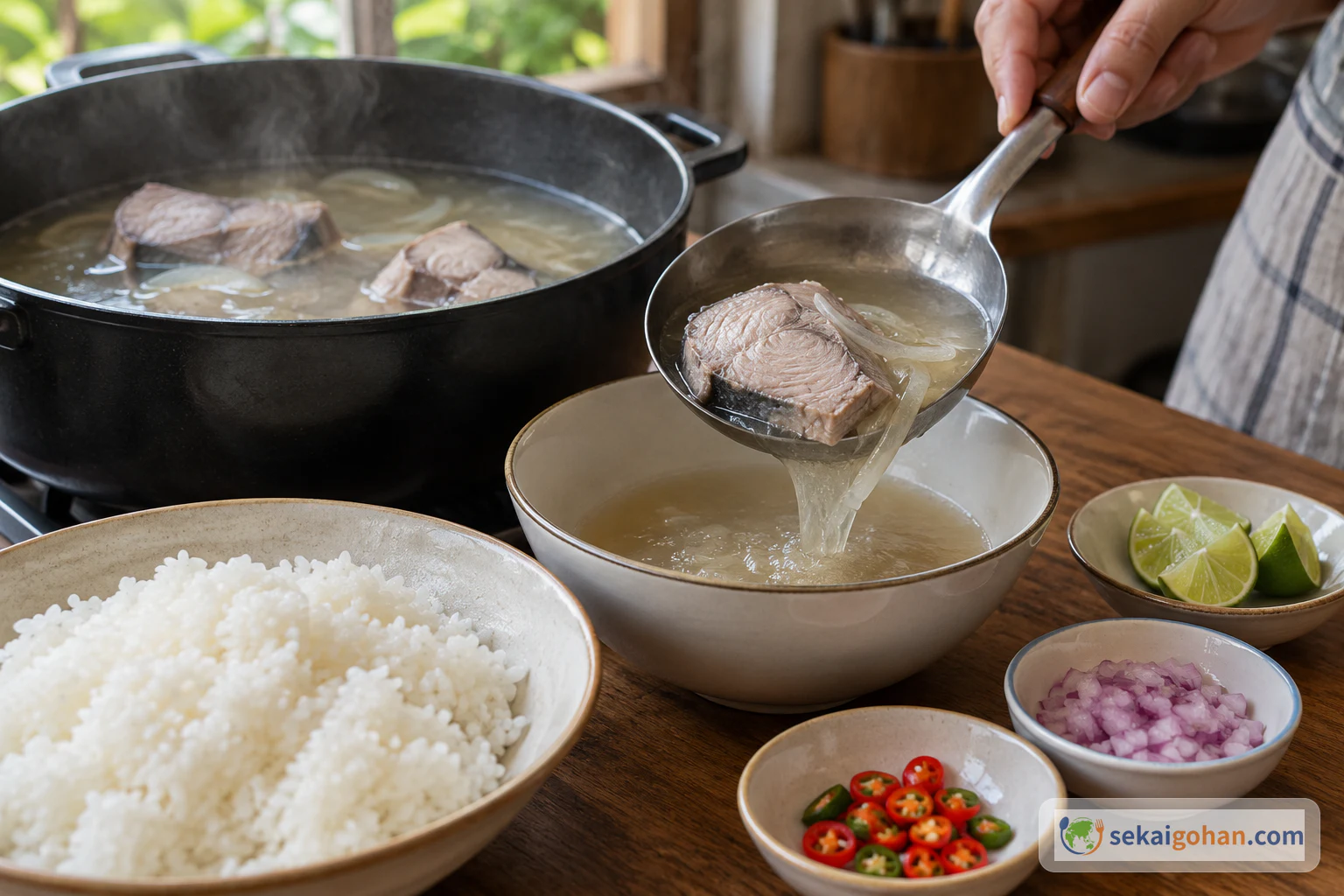
A few minutes after the tuna goes into the pot, a grey foam gathers on the surface. Lift it away with a spoon and the broth underneath turns clear and pale gold, with slit chillies and curry leaves drifting around big pieces of fish. That is garudhiya, the Maldivian broth of tuna simmered in salted water. It goes to the table hot, beside white rice, lime, fresh chilli and chopped red onion. The taste is clean and lightly salty, savoury from the fish, with nothing else crowding it.
A Pot of Fish and a Plate of Rice
Garudhiya is built from very little: fish, water, salt, a small onion, a chilli or two and a handful of curry leaves. Tuna is the usual fish, and which tuna goes in depends on what is available that day. It might be skipjack, yellowfin or one of the smaller tunas. With so little in the pot, everything depends on how the fish is handled. Cut it into large pieces, lower it in gently, skim it early and simmer it without a hard boil. The fish and the broth are eaten together. The fish flakes into the rice, and the broth is spooned over the top.
Across the Maldives, fish and coconut run through the whole cuisine. Garudhiya with rice, garudhiya and baiy, is a pairing eaten through the week. Lime and chilli sit beside it, along with whatever small extras the household keeps. The amounts move from kitchen to kitchen. Every household fills its pot and salts its broth a little differently, so the quantities below describe a pot, not a fixed rule.
The name stretches to cover close relatives. Kirugarudhiya is cooked with coconut milk and becomes a richer, different dish. The plain version here is only fish, water and salt, with a few aromatics, and that plainness is the reason to make it.
On the island of Fuvahmulah, garudhiya is also made with kattelhi, a fish the island is known for. The pot holds the fish, water and salt, with onion, chilli and curry leaves optional. It is served with rice, or with taro and grated coconut. It is its own island dish and sits apart from the tuna pot below.
Ingredients (serves about 4 with rice)
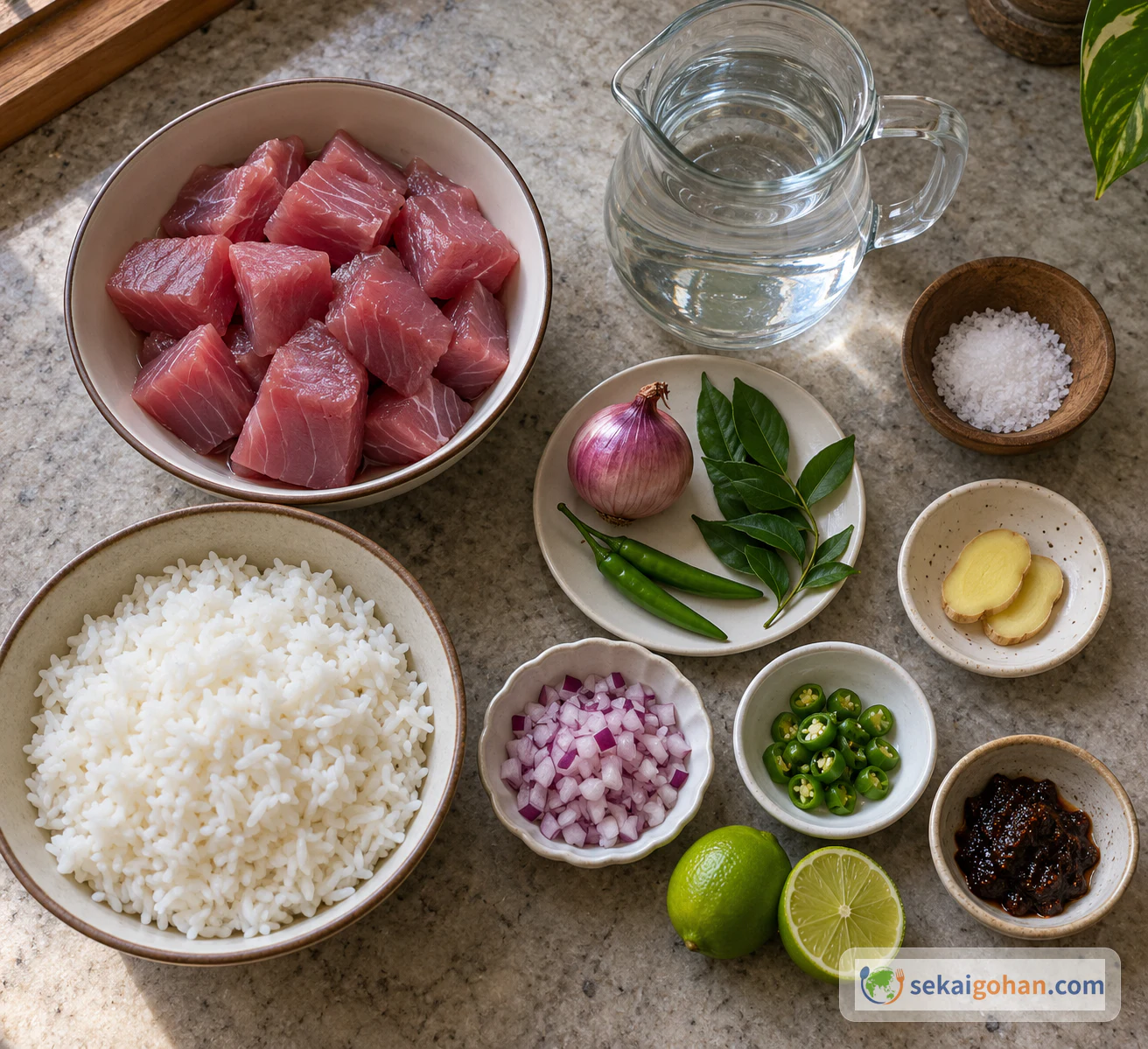
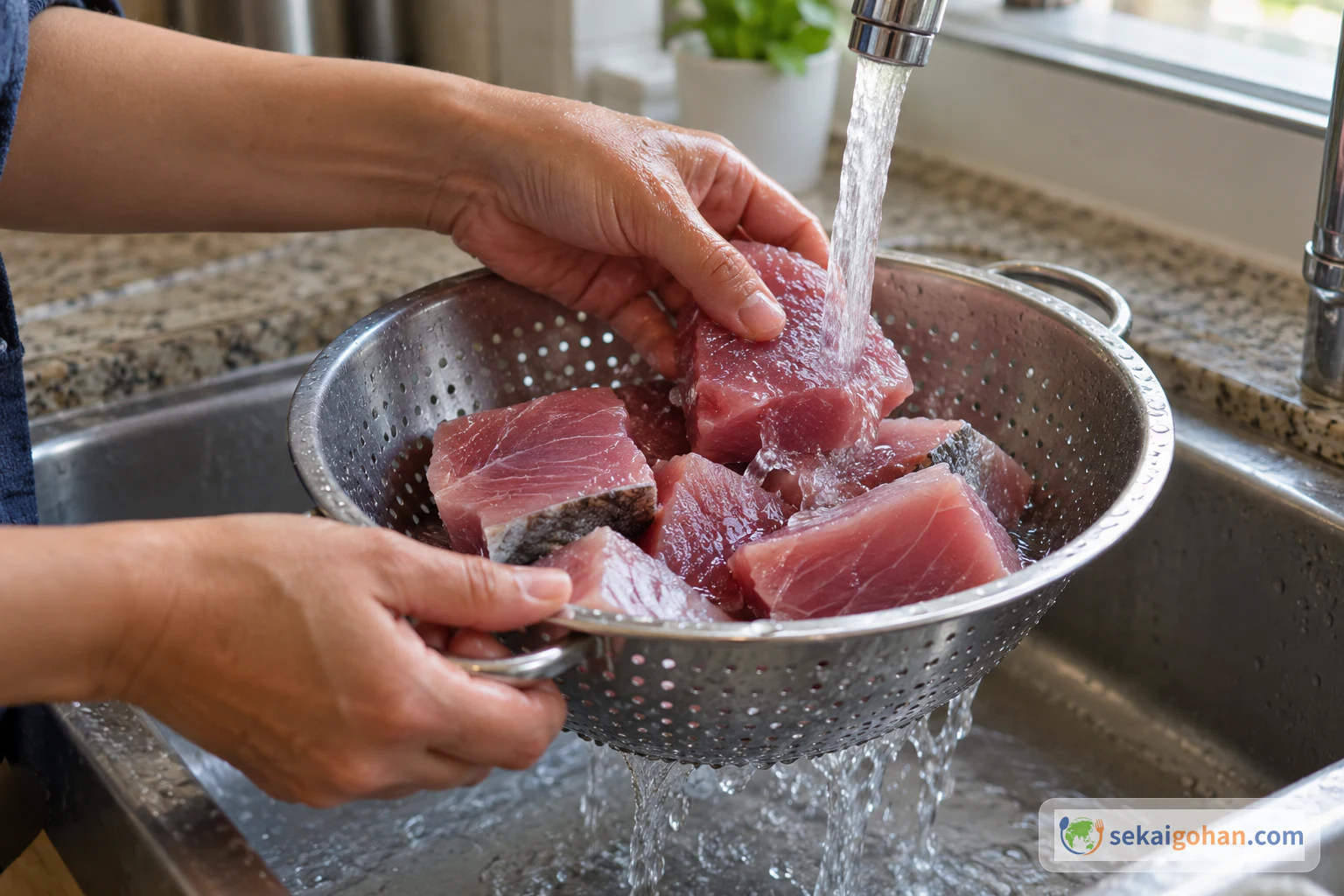
Cut the tuna into large chunks rather than small cubes. Big pieces hold together through the simmer, so you can lift whole pieces into each bowl and the broth stays clear of loose flakes.
This dish contains fish (tuna). Rihaakuru is also made from tuna. Keep both away from anyone with a fish allergy, and keep the boards and tools used for raw fish separate from the rest of the meal.
Equipment
- Large pot
- Colander
- Knife and cutting board kept for raw fish
- Spoon for skimming, and a small bowl for the foam
- Ladle
- Serving bowls and small dishes for the sides
Choosing the Fish and What to Let Go
Fresh, firm tuna is what this broth needs. Choose skipjack if you can find it. Otherwise, use another fresh tuna with firm flesh. The fishmonger's yellowfin or a smaller tuna both belong in this pot. Frozen tuna works if it is fully thawed before it goes in, though the broth and texture come out a little less good than with fresh fish. Leave tinned tuna on the shelf. It is already cooked, it has no bones or head to give to the water, and it falls apart in the pot.
Curry leaves are the one aromatic that is hard to find in some places. If you have none, leave them out and do not put anything in their place. A pot of fish, salt, onion and chilli is still garudhiya. Rihaakuru follows the same logic. If a shop selling Maldivian or South Asian groceries has it, put a little on the side. If not, the meal is complete without it.
| Keep | Let go if you must |
|---|---|
| Fresh, firm tuna, or frozen tuna fully thawed | Curry leaves (leave out, don't replace) |
| Large pieces, a gentle simmer and early skimming | Ginger or garlic |
| Rice, lime and chilli on the table | Rihaakuru |
Method: Skim Early, Simmer Gently
The whole pot takes about half an hour. Clean the fish and slice the onion first, and keep the rice warm and ready. The flavoured water heats while you finish the prep. Once the fish is in, the only hands-on work is the skimming at the start. After that, the pot simmers quietly while you set out the lime, chilli and onion.
When It Goes Wrong
| What you see | Why | What to do |
|---|---|---|
| The broth is cloudy and grey | The foam went unskimmed, or the pot boiled hard | Skim what you can and lower the heat. Next time, skim in the first minutes and keep to a gentle simmer |
| The fish has broken into shreds | Hard boiling, stirring, or pieces cut too small | Stop stirring and lift the remaining pieces out gently with the ladle. Cut larger chunks next time |
| The centre of the fish is still raw-looking | The simmer was too short for thick pieces | Keep simmering until the thickest piece flakes easily all the way through |
| The broth tastes thin | Too little salt for the amount of water | Add salt a pinch at a time and taste after each addition |
| The fish tastes dull | It was frozen and not fully thawed, or not fresh | Thaw frozen fish completely before cooking. Buy fresh, firm tuna when you can |
At the Table
Garudhiya is an everyday meal, eaten through the week with rice. Each person spoons broth over their rice, breaks the fish into it, and then makes it their own. Some squeeze lime over it, some add fresh chilli for heat, and red onion adds crunch. A little rihaakuru on the side gives a deeper, saltier fish note to anyone who wants it.
Ways households change it
- The fish: skipjack is the first choice if you can find it, and yellowfin or a smaller tuna goes in when that is what is available.
- Head and bones: adding them along with the chunks means the whole fish goes into the broth. Clean out the gills and dark blood first.
- Ginger or garlic: a thin slice of ginger or a couple of crushed garlic cloves adds a quiet aromatic edge. Leave both out for the plainest broth.
Leftovers
Garudhiya is made to be eaten hot, straight from the pot. Serve it as soon as it is ready, and don't leave the cooked broth and fish standing at room temperature for long once the meal is over.
Frequently asked questions
Is garudhiya spicy?
The chillies in the pot are slit but left whole, so the broth has a mild warmth rather than real heat. The real heat is at the table. Fresh chillies are served on the side, and each person adds as much as they like.
Can I eat it with something other than rice?
Rice is the usual partner. Some people eat garudhiya with roshi, the thin Maldivian flatbread, and tear it to scoop up the fish and broth.
Do I need rihaakuru?
No. Rihaakuru is a Maldivian tuna paste served in a small amount on the side. It adds a concentrated, salty fish flavour. If you can't find it, the broth, rice and other sides make a complete meal.