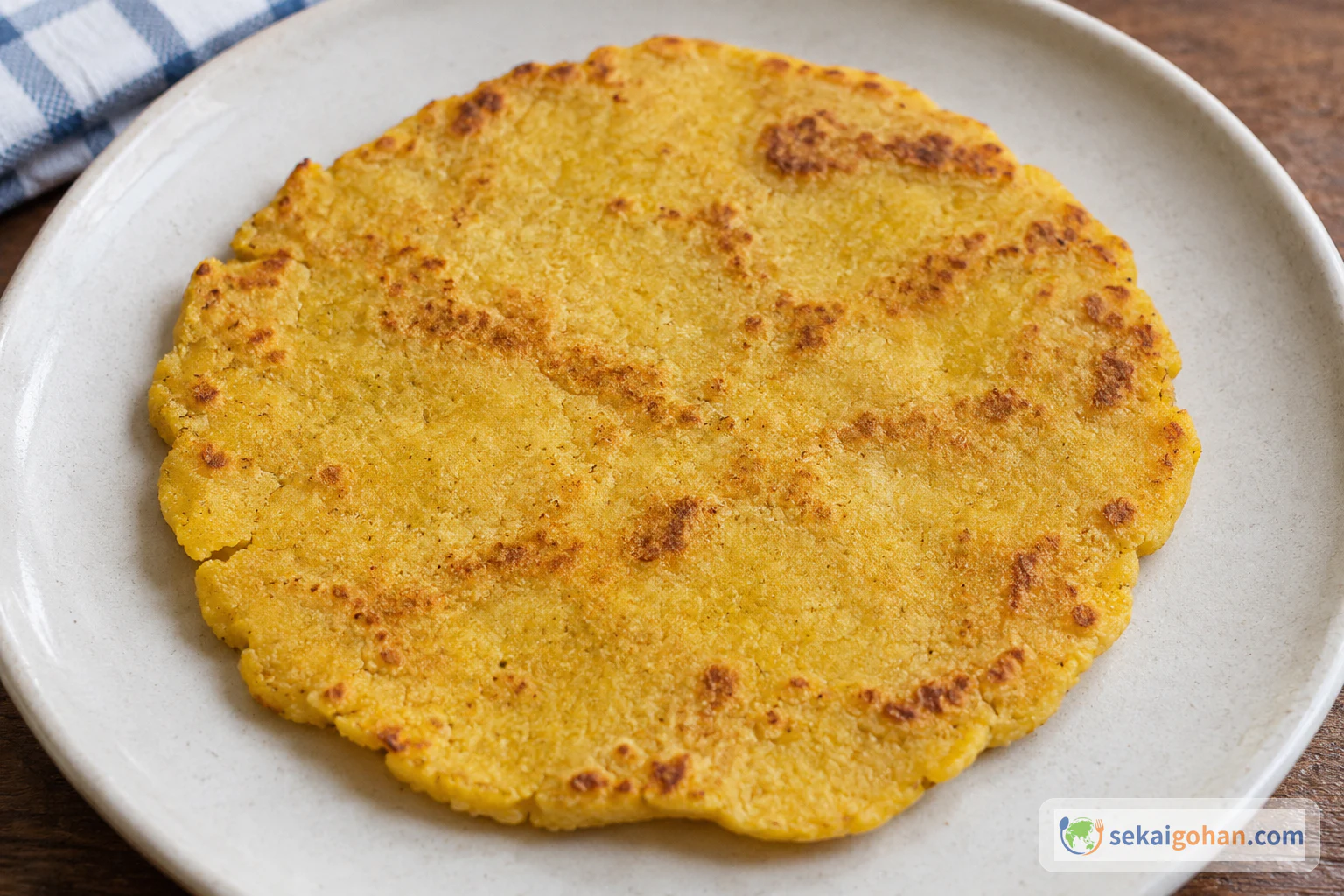
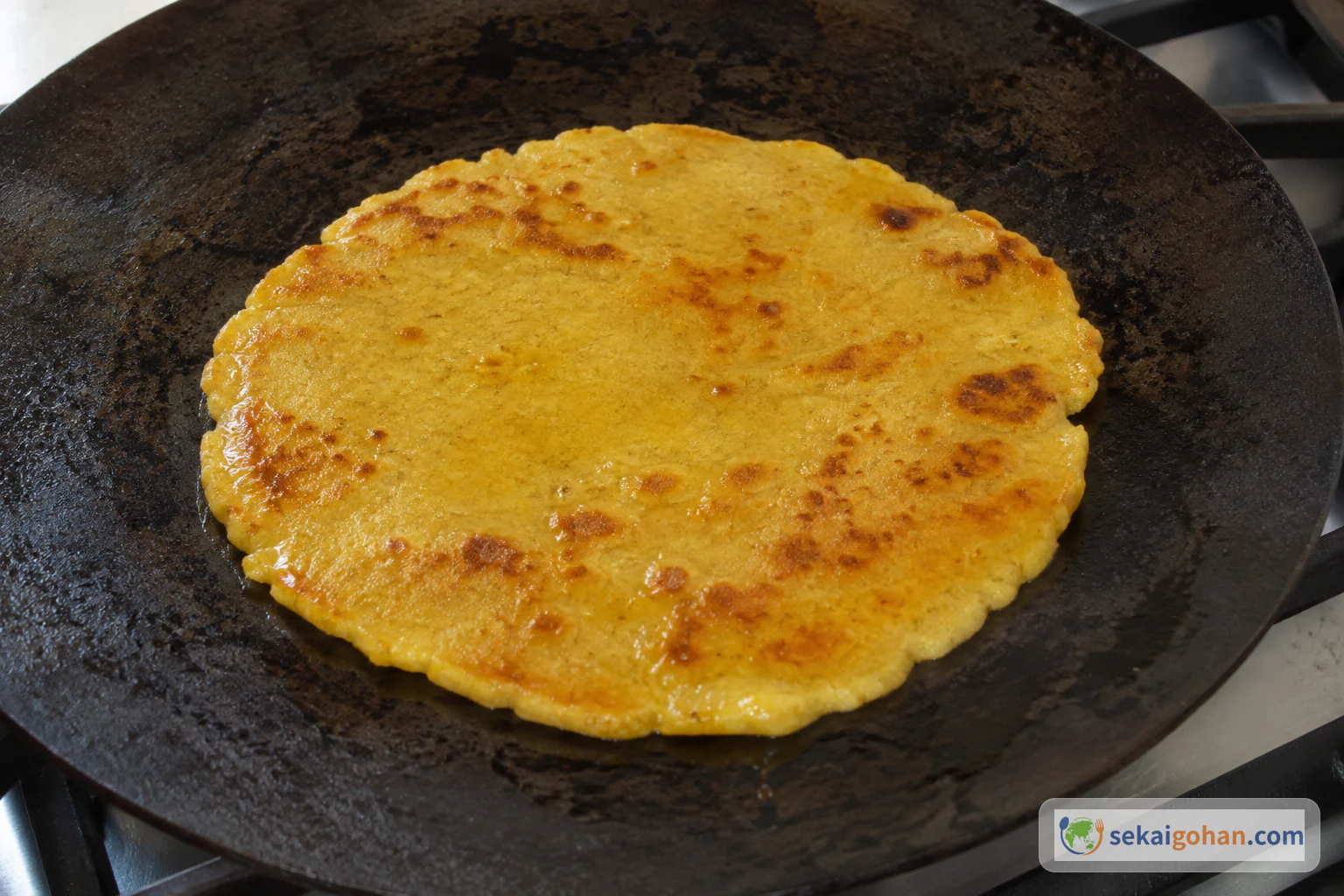
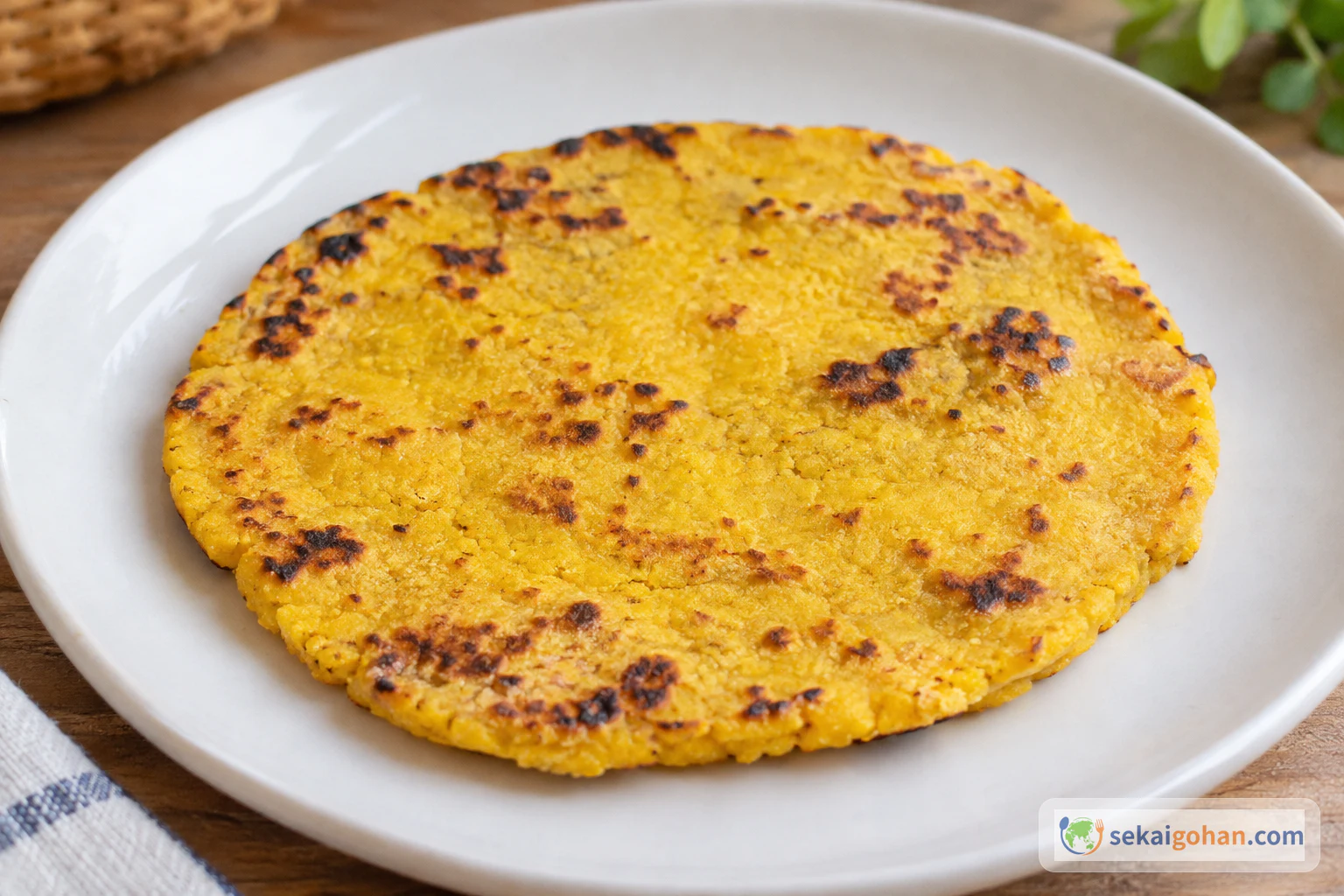
The tawa is hot and a little ghee is spreading across it when the first yellow round of dough goes down. The flat face starts to dry at the edges, golden-brown patches come up underneath, and the kitchen fills with the smell of toasting maize and butterfat. Makki di roti is the maize-flour flatbread of Punjab. It is made from nothing more than flour, salt, water and ghee, and it is shaped by hand rather than rolled thin. It eats denser and more crumbly than a wheat roti, with the grain's own flavour up front and ghee on both faces.
A Maize Roti From Both Sides of Punjab
Across Punjab, "roti" means the everyday unleavened bread cooked on a tawa, the flat iron griddle that sits on the flame in almost every kitchen. Most days that roti is wheat. Makki di roti is the maize-flour version, a regional turn on the same griddle bread, and it is the bread Punjab pairs with sarson da saag, cooked mustard greens. That pairing comes up again and again whenever Punjabi food is named, in Pakistan and across the border alike.
Punjab is one cultural region split between two countries, and the bread belongs to both. Cooks in Pakistani Punjab and in Indian Punjab make the same flatbread under almost the same name, and where it was first made is not settled. Calling it Pakistani or Indian draws a line the bread never crossed.
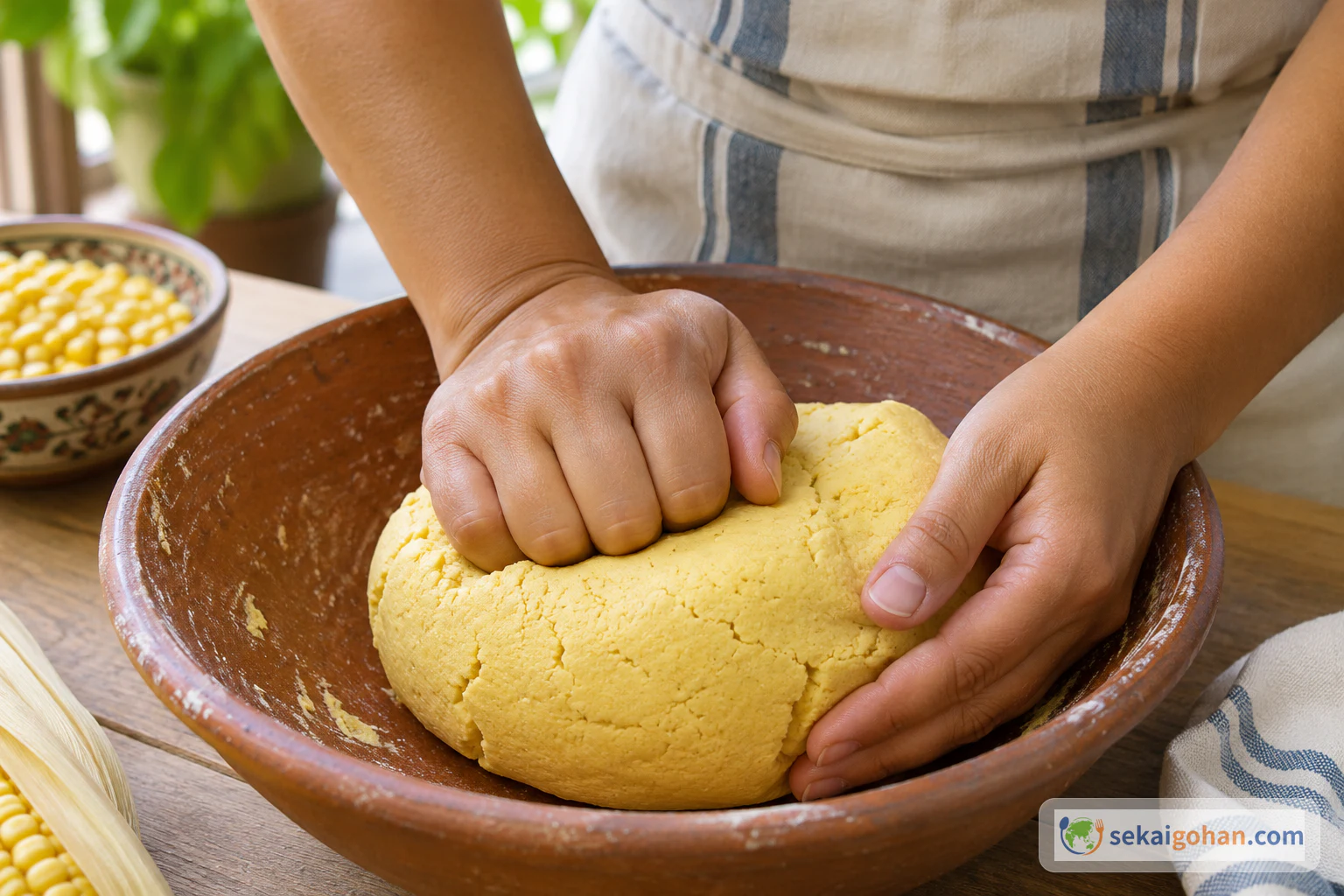
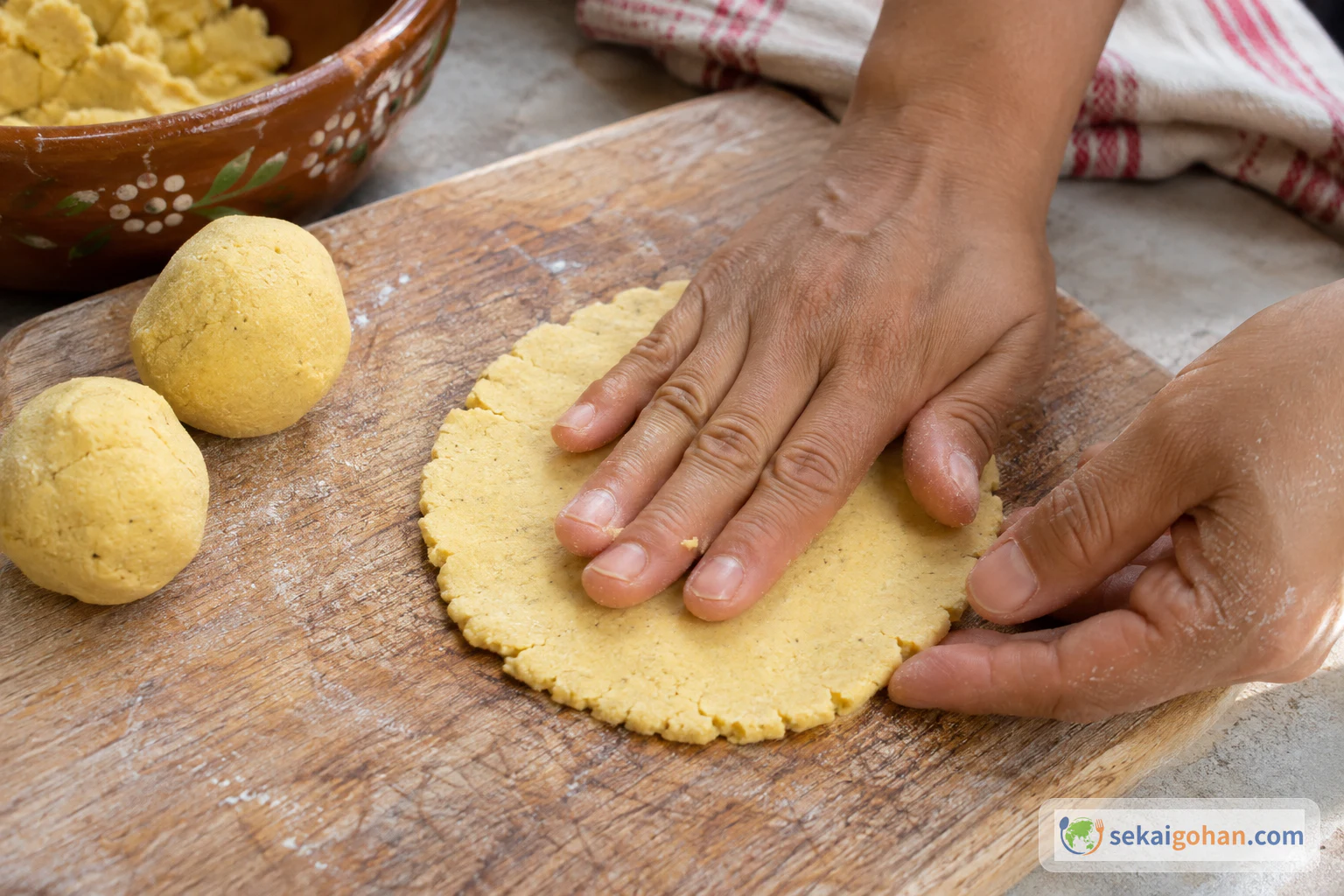
The dough behaves differently from wheat dough, and this is the thing to understand before you start. Maize flour has no stretch. It comes together into a ball with water but tears instead of pulling, so the rounds are pressed out with the hands and kept forgiving at the edges. Expect a rustic round with an uneven rim, and do not try for the paper-thin circle of a wheat chapati.
You will see it written makki di roti (the Punjabi form), makki ki roti and makai ki roti. All three name the same maize-flour flatbread. The flour itself is sold as makki atta in South Asian shops.
Ingredients (serves 4)
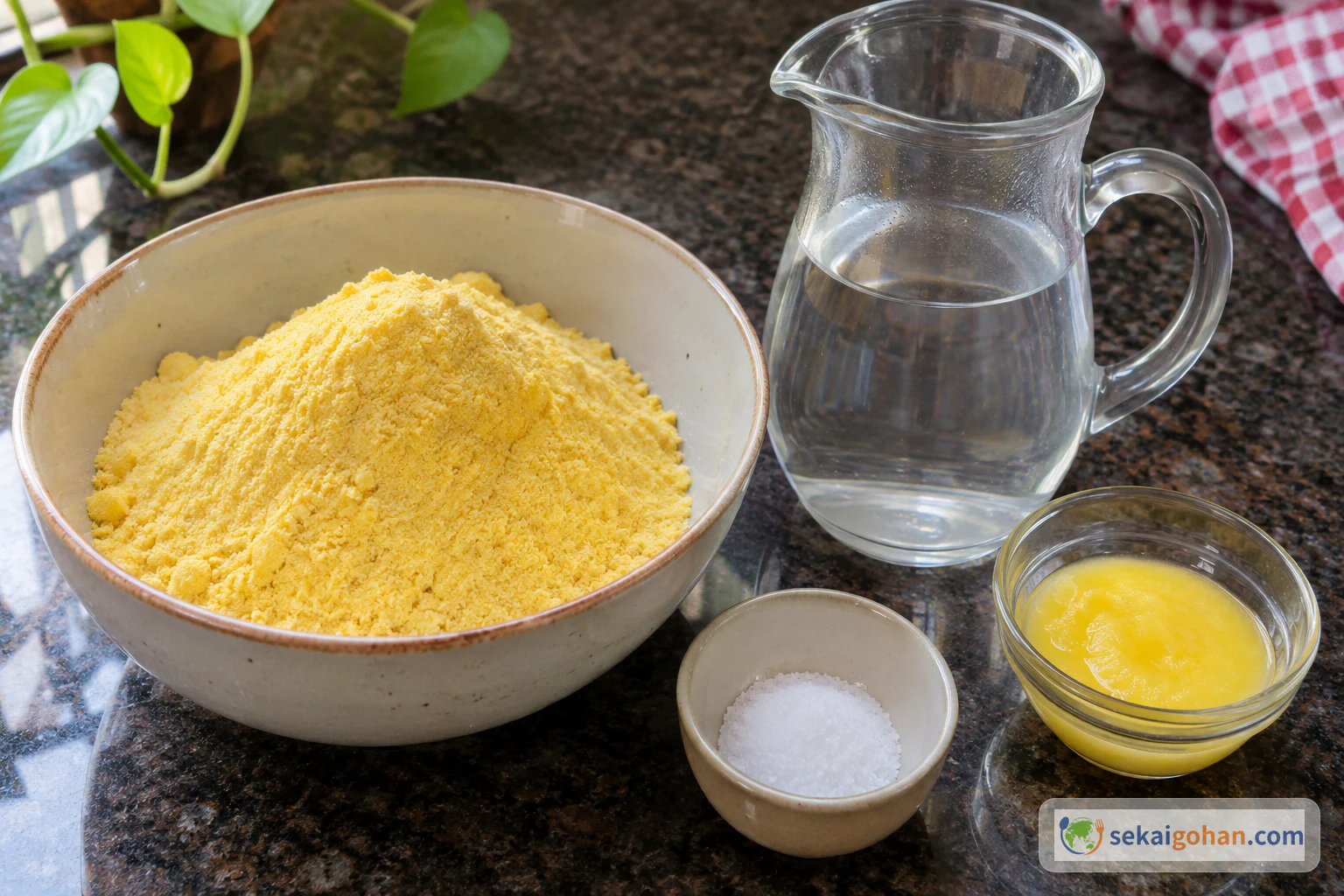
The dough holds only these four things. Keep wheat flour, seeds and dusting flour out of it; maize, salt, water and ghee are the whole bread.
Ghee and butter are dairy (milk). Maize flour is milled in many facilities alongside wheat, so read the pack label if wheat or gluten is a concern at your table.
Equipment
- A large mixing bowl
- A tawa or a flat, heavy griddle
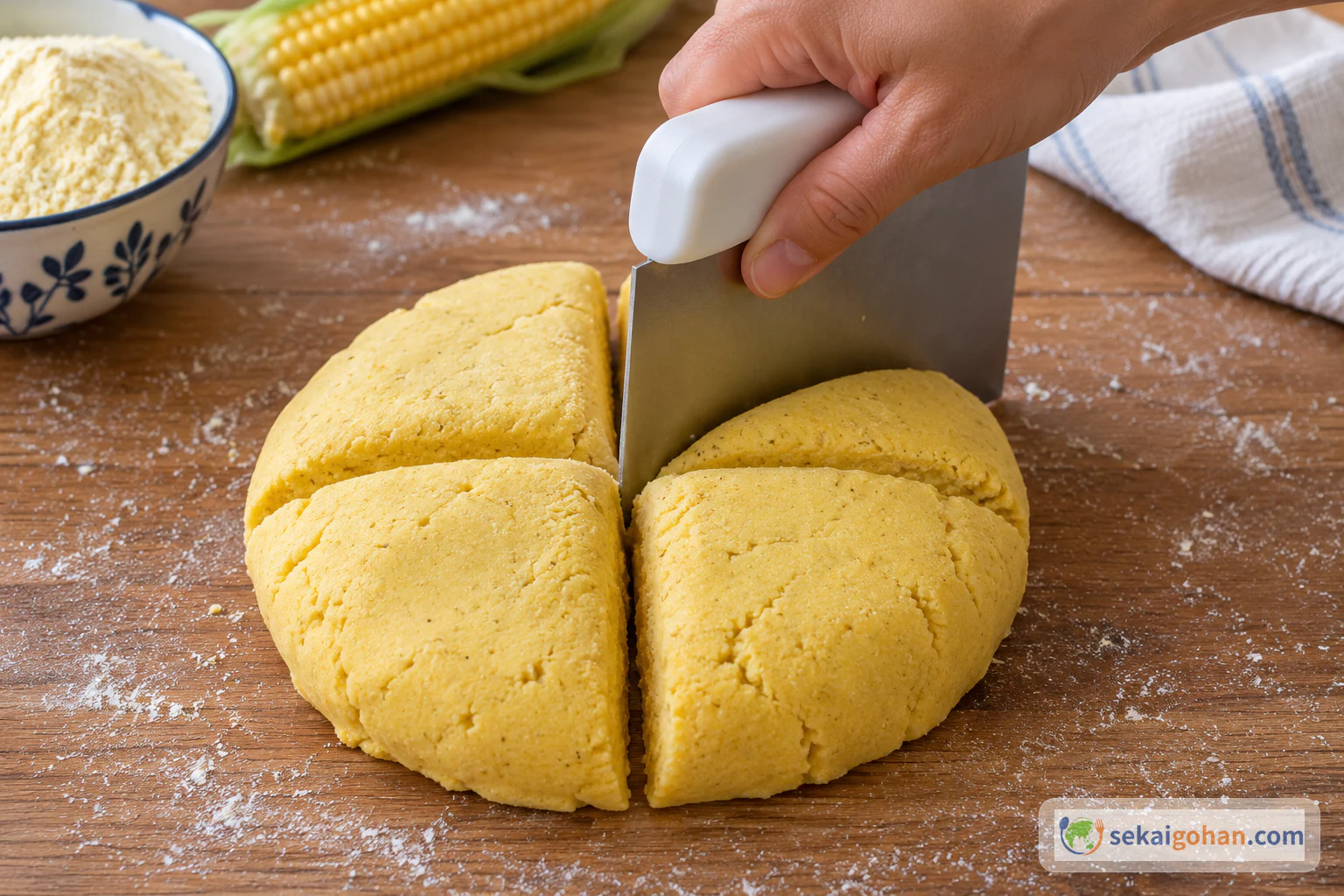
- A dough scraper or knife for dividing
- A clean board or work surface for shaping
- A flat spatula for turning
Choosing the Flour
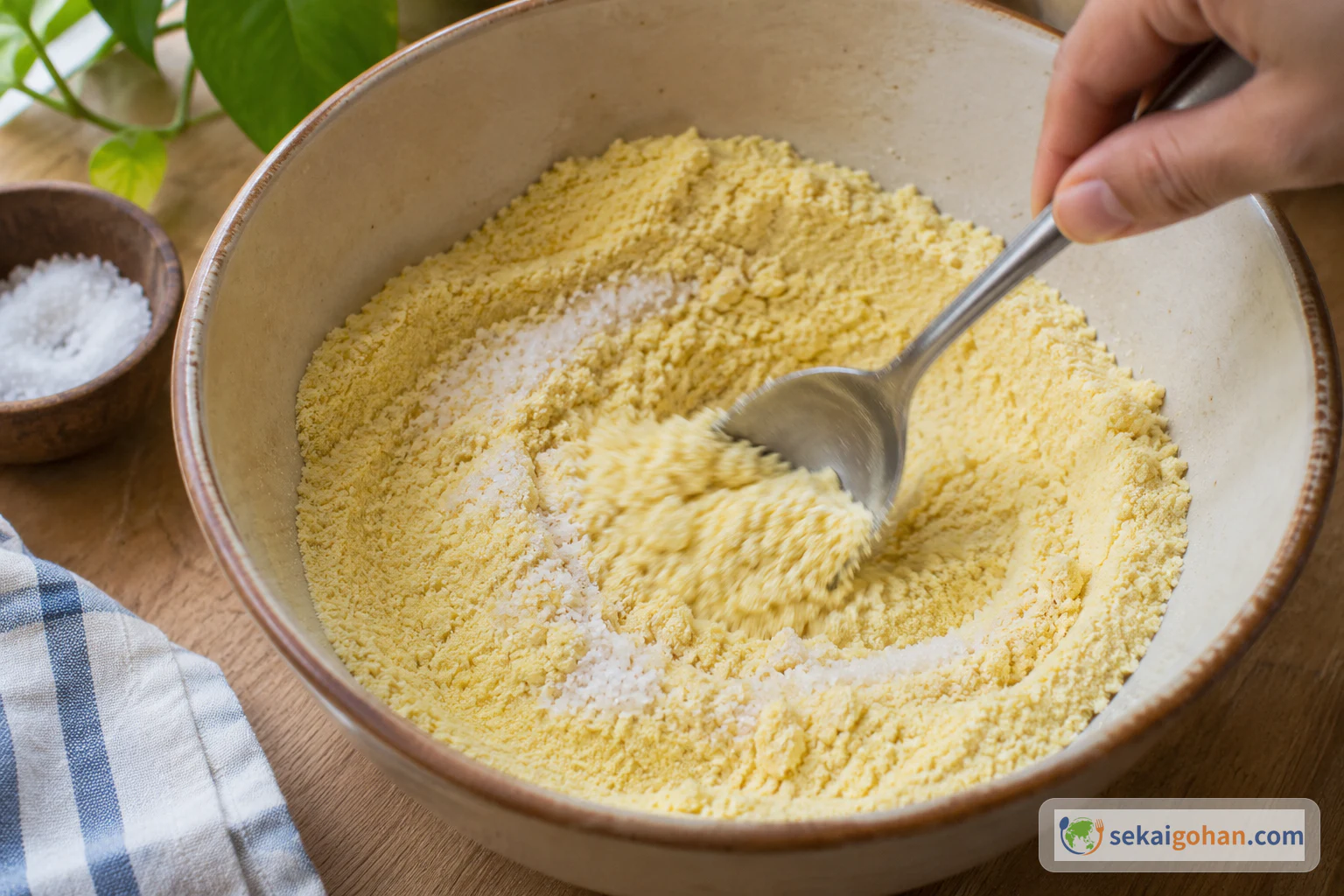
Everything here depends on the flour. What you want is edible maize flour ground fine, the kind sold as makki atta in Indian and Pakistani grocers and online. It is yellow, slightly gritty between the fingers and smells of corn.
| What you find | Use it? | What it does |
|---|---|---|
| Makki atta from a South Asian shop | Yes, first choice | The texture and flavour the bread is built on |
| Fine cornmeal | Yes, the best supermarket swap | Works well; a coarser grind makes the dough harder to shape and the edges crack more |
| Coarse cornmeal or polenta | Only as a last resort | The dough barely holds together and the rounds break |
| Cornstarch (sold as "cornflour" in the UK) | No | Pure starch, with no grain flavour and no body; it will not make this dough |
| Products labelled "corn flour" | Check the label | Some are milled whole grain, some are starch; buy only the milled grain |
Pinch a little between your fingers. Fine and slightly gritty is right; squeaky and silky like talc is starch. If the bag you have is on the coarse side, plan on pressing the rounds more gently and patching edges as you go.
Method
The work runs in two halves. The mixing, kneading, dividing and shaping take about 20 minutes, all at the counter. Then the tawa goes on and the four rounds take about 15 minutes of cooking between them. Shape all four before the first one goes on the heat, so you can stay at the stove once it starts.
When It Goes Wrong
| What you see | Why | What to do |
|---|---|---|
| The flour stays in crumbs and will not form a ball | Not enough water yet | Add lukewarm water a splash at a time and keep kneading until it holds |
| The rounds crack badly at the edge as you press | The dough is a little dry, or the flour is coarse | Wet your palms lightly, re-ball the piece and press more gently; patch small splits with a fingertip |
| The "dough" feels slick and never behaves like dough | The bag was cornstarch, not maize flour | Start again with milled maize flour or fine cornmeal |
| The roti sticks to the tawa | The tawa was not hot enough, or there was no ghee under it | Heat the tawa fully and spread ghee before each round goes on |
| The roti breaks when you turn it | It was turned too early, before the first side had set | Give the first side longer and slide the spatula fully under before flipping |
Serving
Makki di roti is a bread for the table, eaten hot in the middle of a meal. In Punjab its partner is sarson da saag, cooked mustard greens; the roti is torn and used to scoop up the greens. It also sits well next to any dal or vegetable dish that wants a bread.
For the cooking fat, ghee gives the richest smell on the tawa. Butter works in its place and cooks the roti the same way, with a milkier, lighter finish. Whichever you use, keep it to the tawa and the faces of the bread; the dough itself stays free of fat.
Frequently asked questions
Can I use masa harina instead?
No. Masa harina is maize that has been treated with alkali before grinding, which changes its flavour and the way the dough holds together. It makes a different bread. Look for makki atta or fine cornmeal.
Do I need a rolling pin?
No. The rounds are pressed out by hand, on the board or between your palms. Maize dough has no stretch and tends to crack under a pin, so hands give you more control.
What is desi ghee?
Desi ghee is the clarified butter used throughout South Asian kitchens, cooked until the milk solids turn nutty and are strained out. It handles the heat of a tawa well and gives the roti its toasty smell. You will find it in jars at South Asian grocers and many supermarkets.
Can I cook it in a regular frying pan?
Yes. A heavy, flat frying pan or griddle does the job of a tawa. What matters is a flat surface that holds heat evenly, so pick your heaviest pan and heat it fully before the first round goes on.