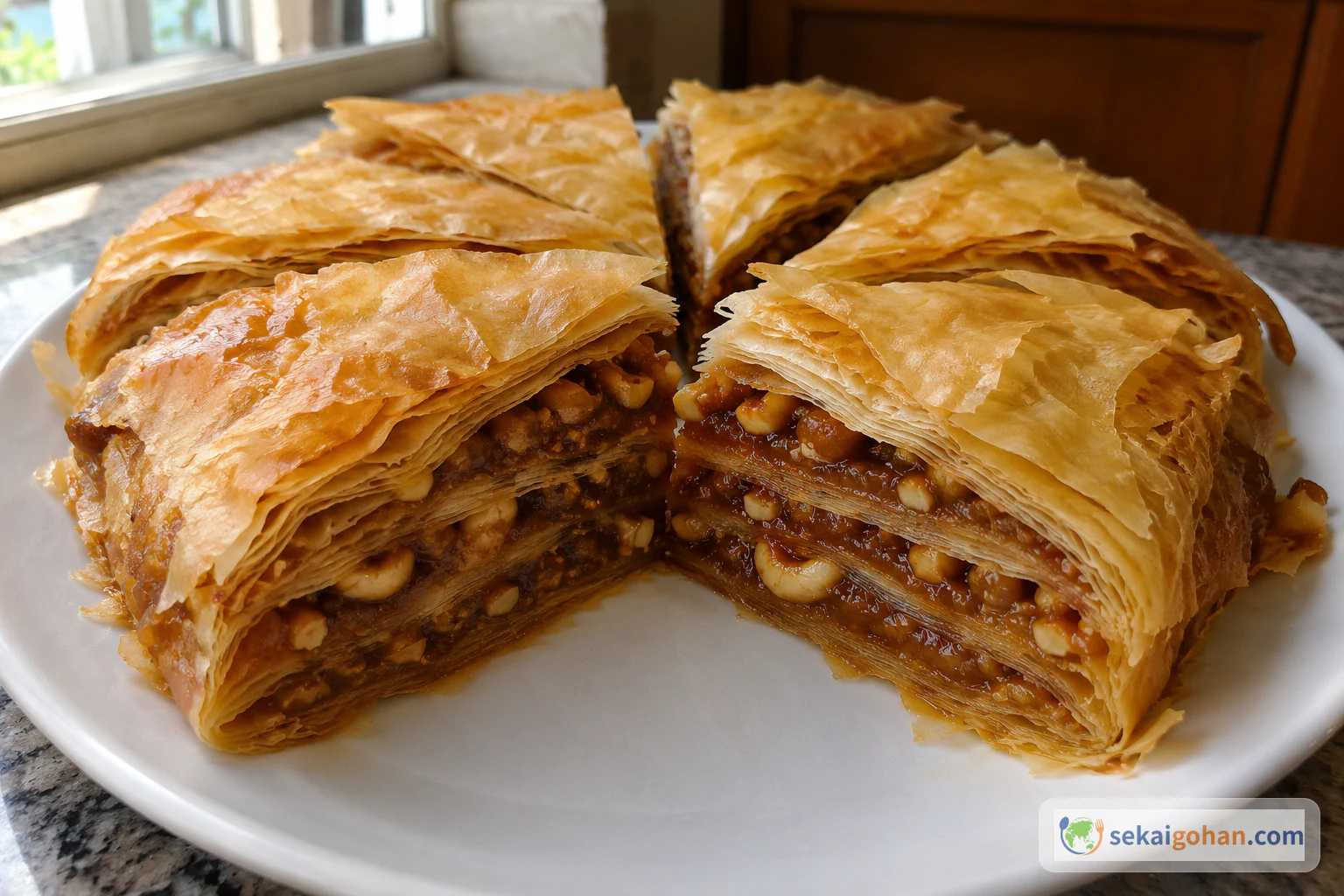
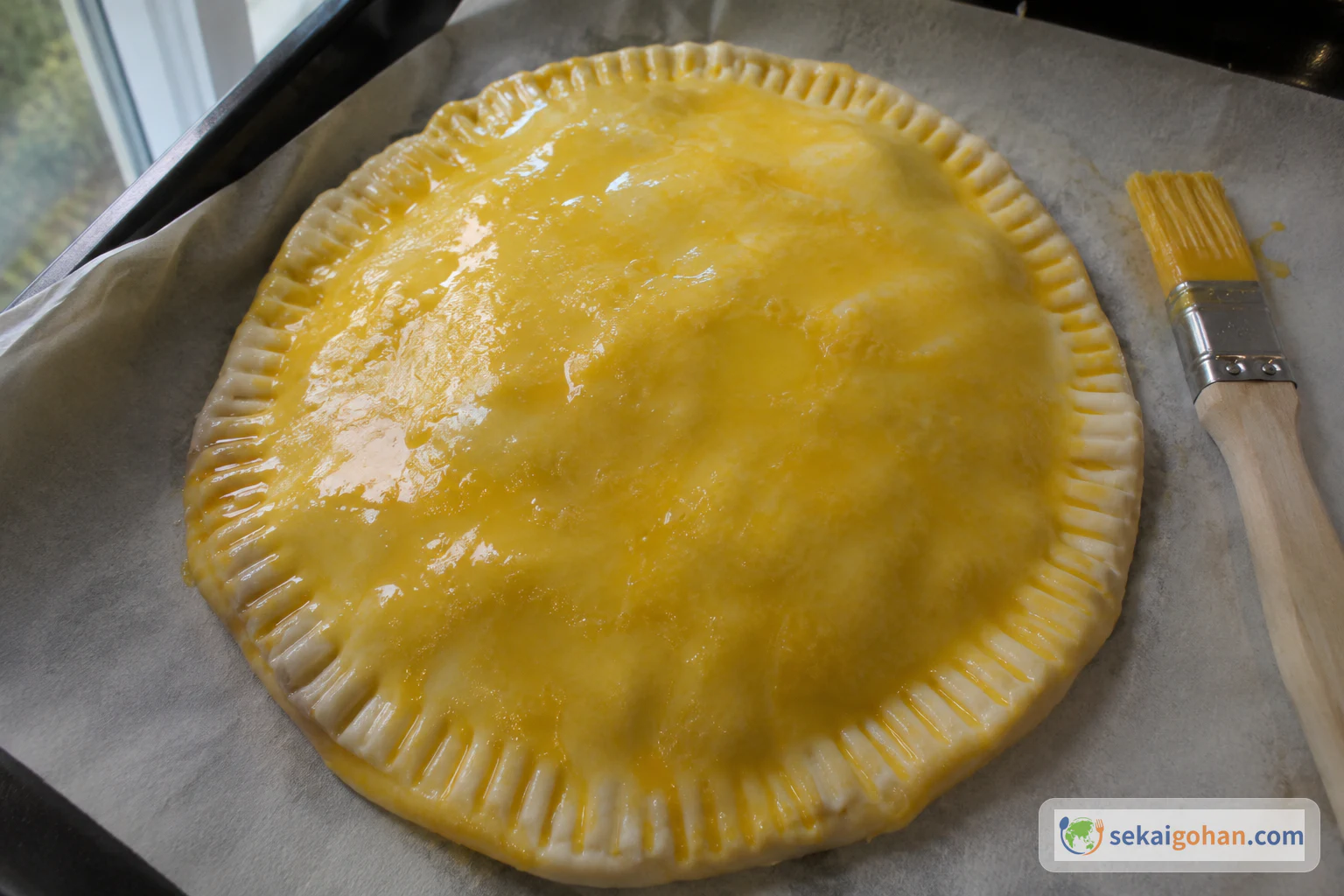
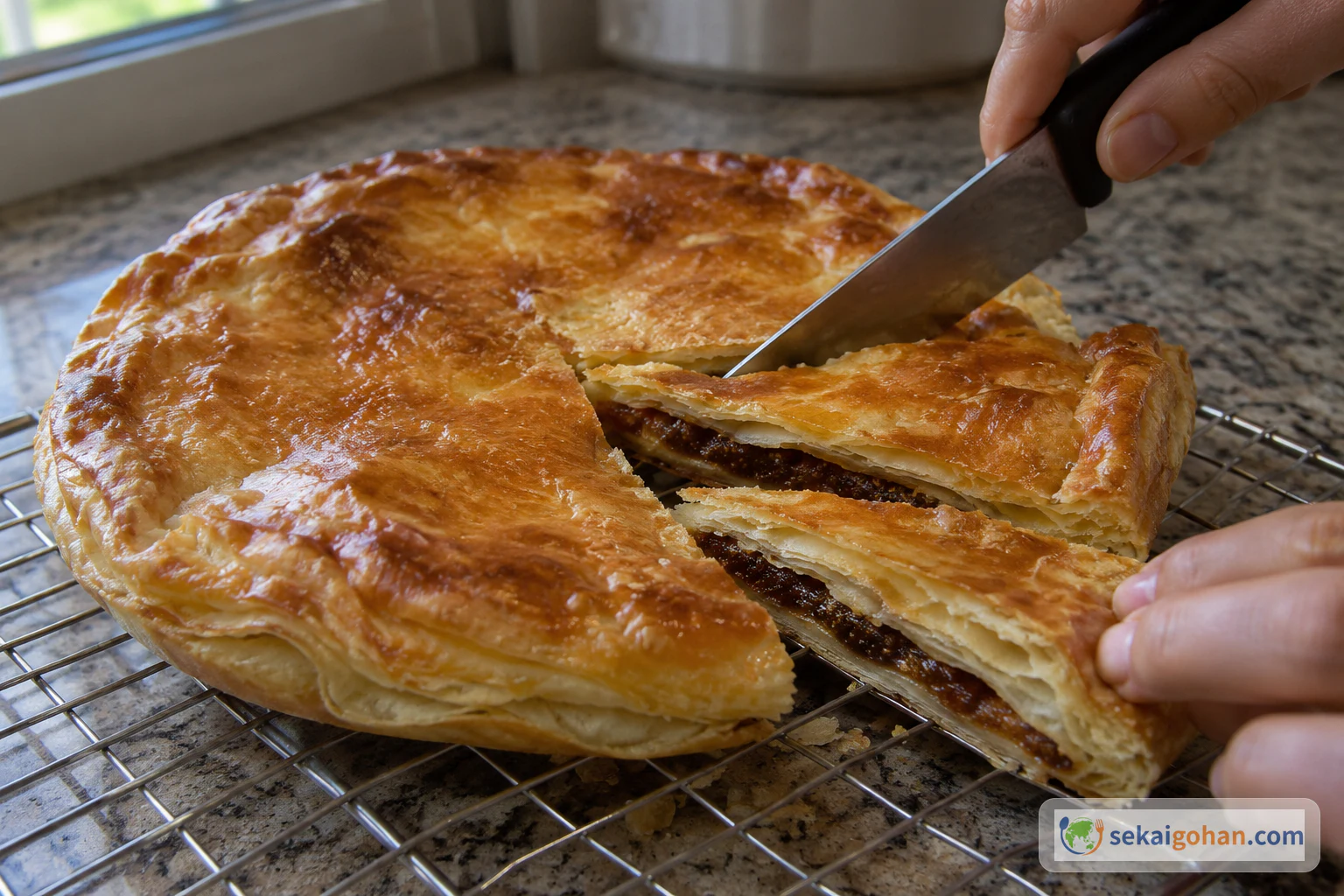
The round comes out of the oven a deep golden brown, and the sweet smell of the filling rises from its center. Once it has cooled, a knife goes through it in thin wedges, and every cut edge shows pale sheets of pastry pressed against a dark, glossy layer of cashew syrup. Bolo fiado is a Sri Lankan pastry of folded yeast dough stacked with finely chopped cashews cooked in thick sugar syrup and scented with rosewater. It is very sweet and nutty, with flaky layers that give way to a soft, sticky middle, and it turns up at Christmas, at Burgher family tables and at community Christmas sales.
A Christmas Pastry from Sri Lanka's Burgher Kitchens
The dish is traced to Portuguese influence on Sri Lankan baking. It is described as a layer cake of Portuguese origin made with local ingredients, and cashews are the clearest of those local ingredients. When and where it was first made is not settled. What is clear is the home it found. Bolo fiado is counted among the Burgher delicacies, the sweets of Sri Lanka's community of people with European ancestry, and Burgher cooking has long since spread into the wider food of Sri Lanka.
Its season is Christmas. One family's remembrance describes it as part of their Christmas cooking: rounds of thin sweet pastry layered with cashews, sugar and rosewater in a thick syrup. At a Burgher community Christmas sale, bolo fiado sits on the list of famous delicacies next to the other holiday sweets. It is a pastry made for an occasion, rolled, folded and chilled, then cut thin and shared.
The name is written both as bolo fiado and as bolo folhado. Cadju is another word for cashew, and one description of the dish uses it for the filling.
The shape varies from kitchen to kitchen. Some descriptions add raisins to the cashew and rosewater. There is also a quite different cake sold under the same name, built from thin batter layers baked in a loaf tin with jam, pumpkin preserve and golden syrup, raised with baking powder. The sponge-like Dutch layer cake is another dish again. The version here is the folded-pastry kind: yeast dough laminated with butter, rolled into rounds and stacked with cashew syrup.
Ingredients
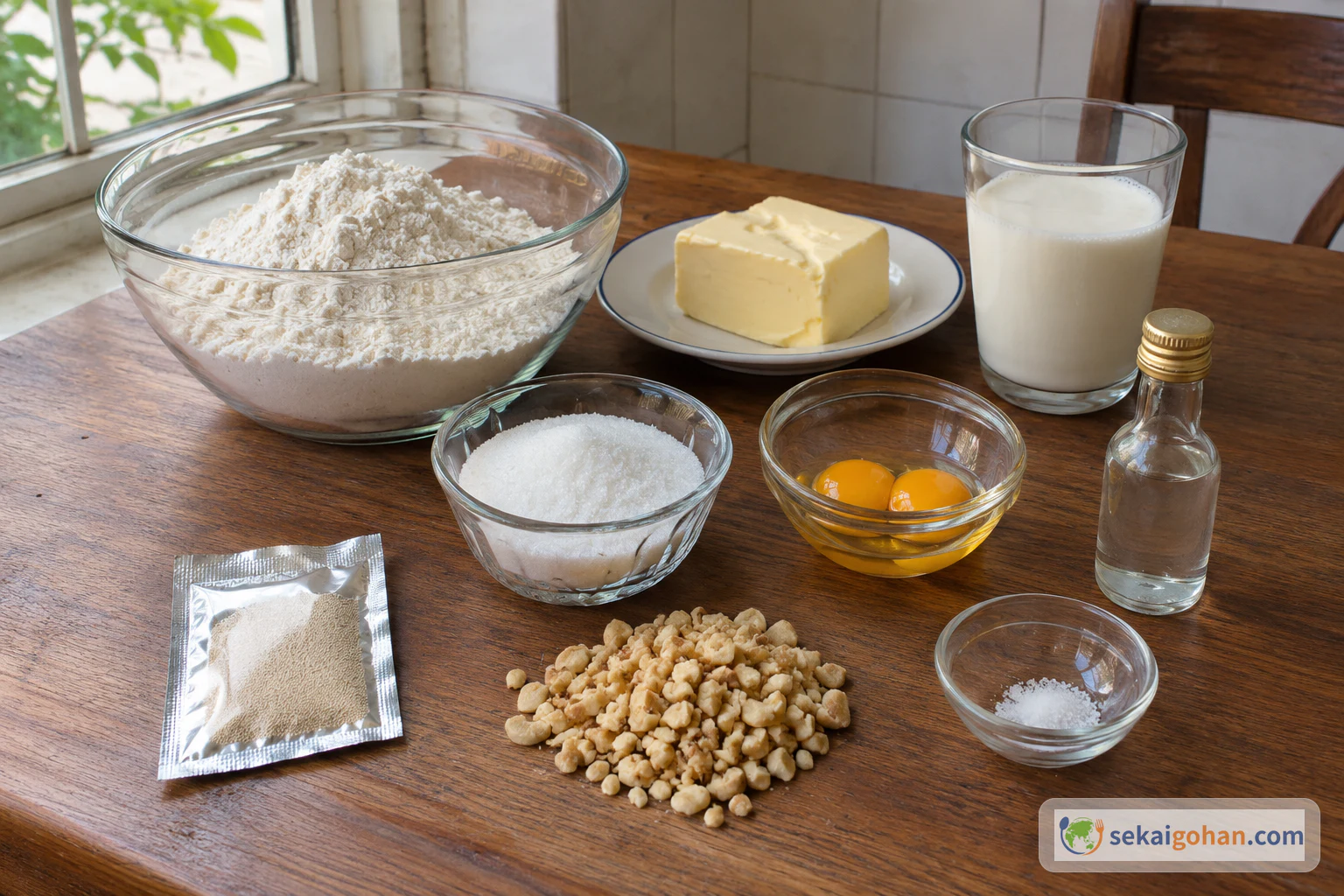
This pastry carries more filling than pastry, and that balance is the point.
Water is also needed: ¼ cup (60 ml) to dissolve the yeast and 1 cup (250 ml) for the syrup, plus a beaten egg for brushing the top.
Contains egg (yolks in the dough, beaten egg on top), milk (milk and butter), wheat (flour) and tree nuts (cashews).
Equipment
- US measuring cups and spoons
- Sieve
- Large mixing bowl and a small bowl
- Plastic wrap
- Rolling pin and a floured board
- Baking tray or tin, lined with baking paper
- Saucepan and wooden spoon
- Fork
- Pastry brush
- Sharp knife and a wire rack for cooling
Buying and Swapping
Everything except the rosewater is on an ordinary supermarket shelf. Rosewater is sold at baking-supply shops, import grocers and online; buy a small bottle, because a tablespoon goes a long way. Plain, unflavored cashews from the nut aisle are the right ones. Buy them whole and chop them finely yourself, so the pieces stay small and even and spread in a thin layer between the sheets of pastry.
Dried yeast comes in small sachets in the baking aisle.
Keep the cashews, the rosewater and the folded butter layers; these three are what make it taste like bolo fiado. Rosewater is the one thing to adjust freely: start with less if you are unsure of the scent, and add more to the cooled filling until it smells right to you.
Method
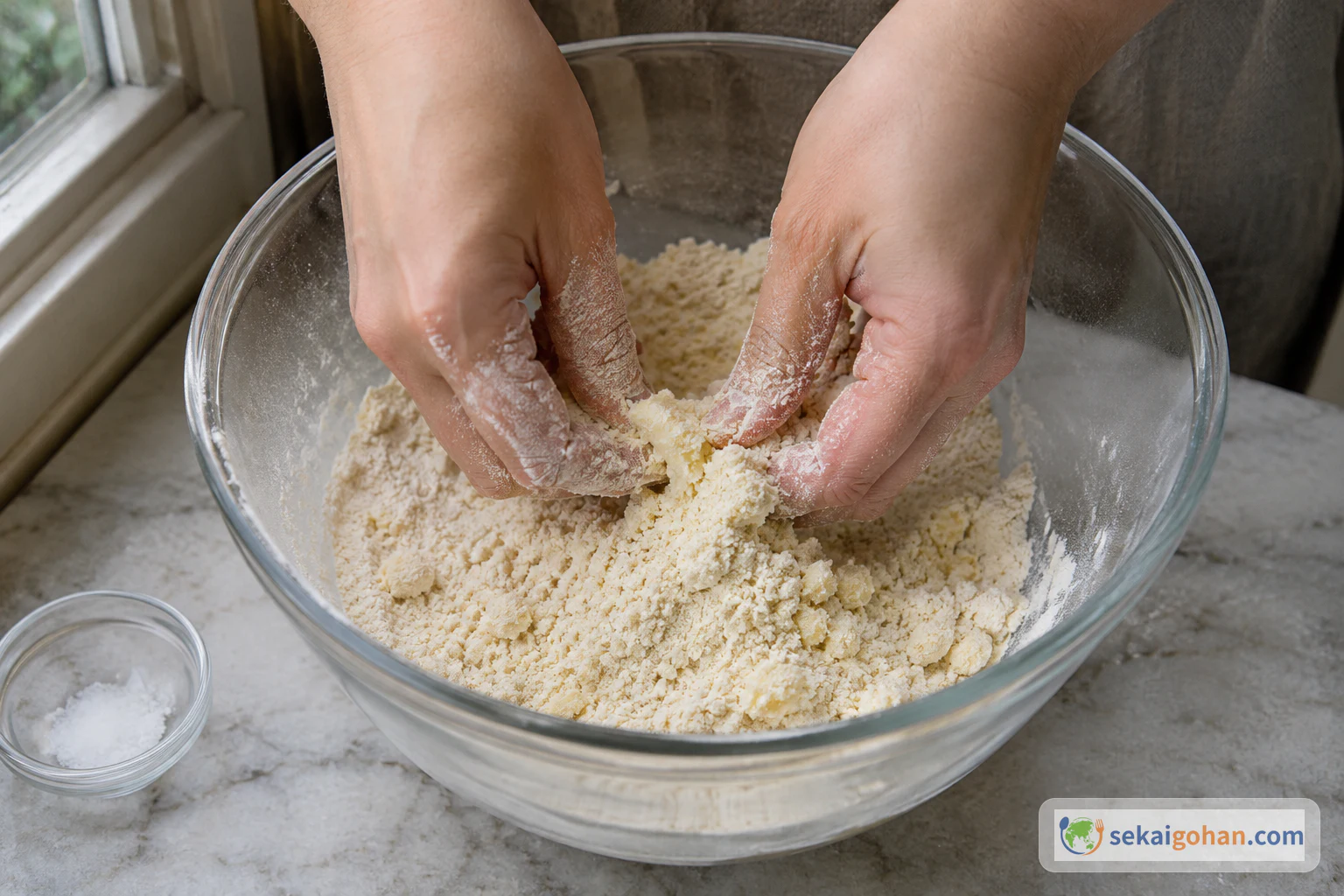
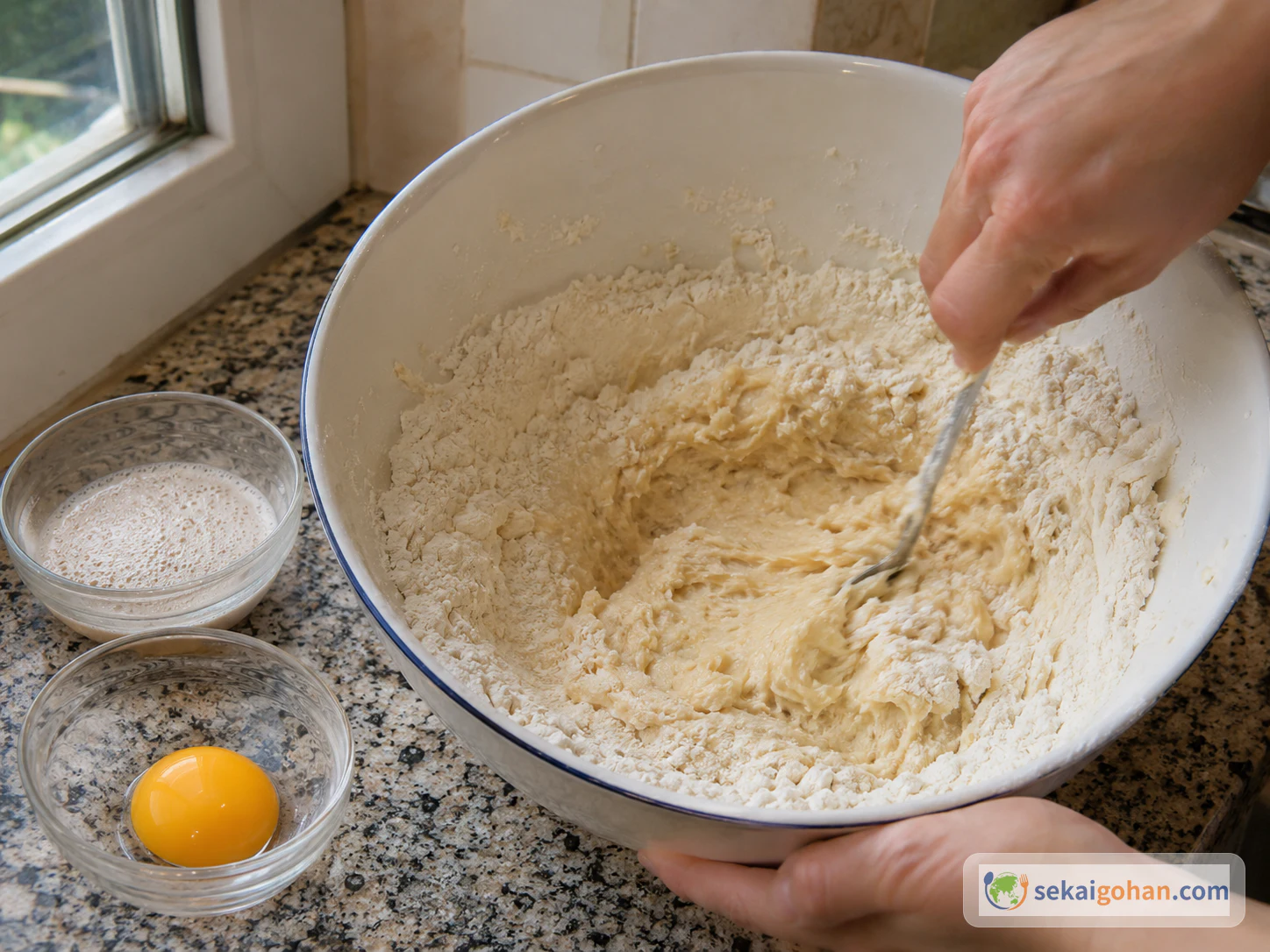
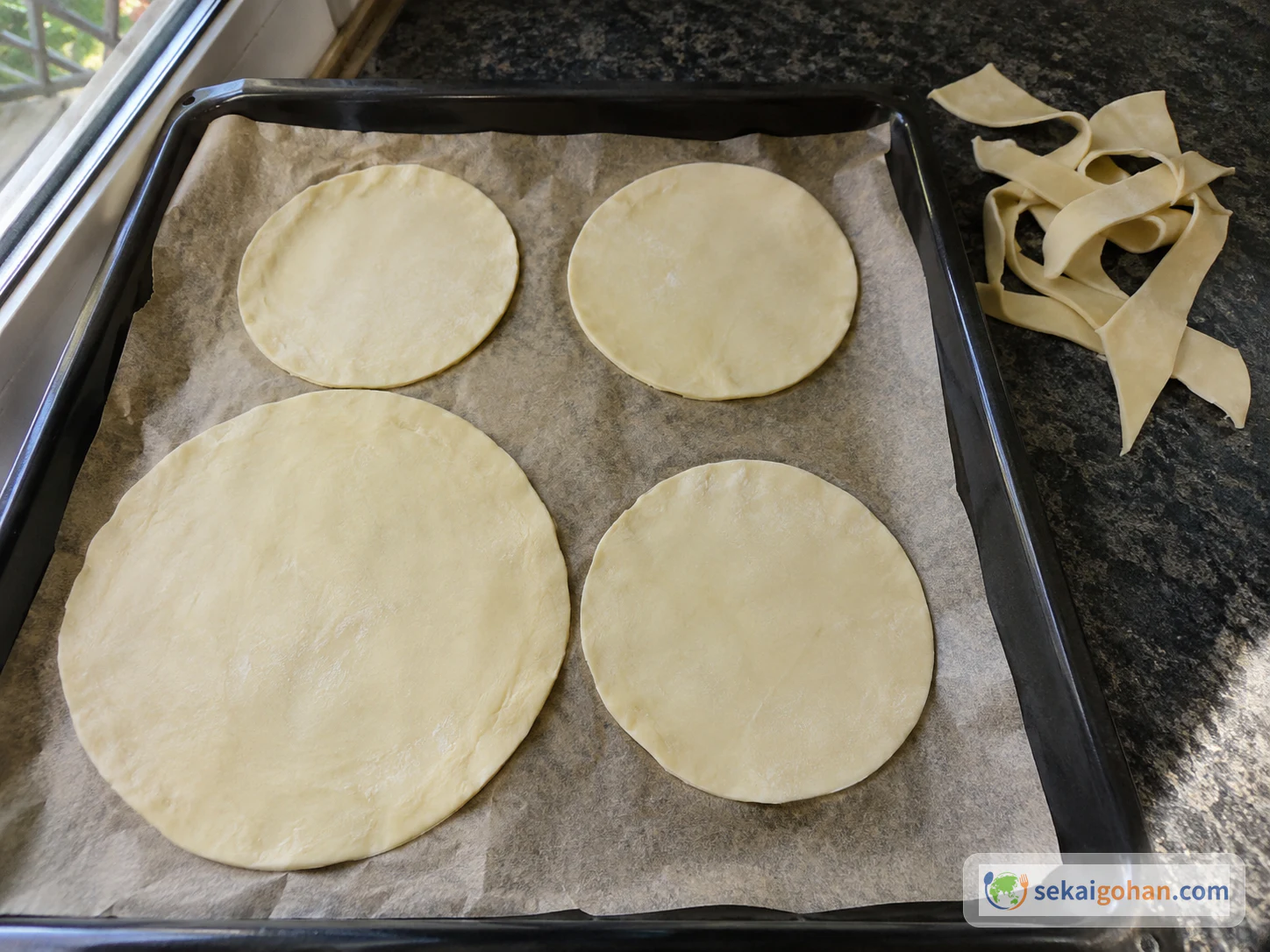
The work runs in three parts. Make the dough first and fold it, with time in the refrigerator between each fold. While the dough chills, cook the filling and let it cool completely. Then roll out the rounds, stack, seal and bake. The chilling is your hands-off time; use it for the syrup.
When It Goes Wrong
| What you see | Why | What to do |
|---|---|---|
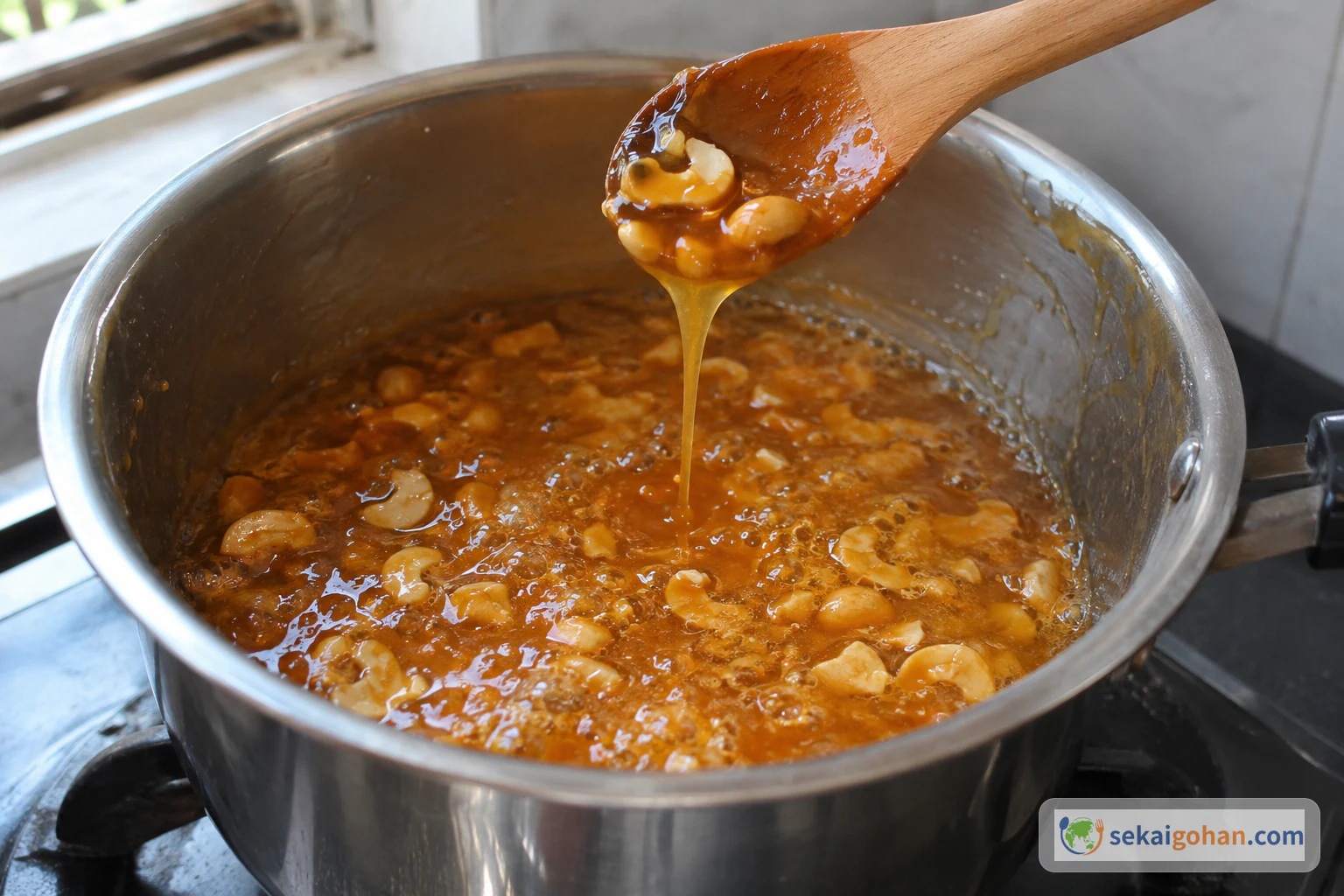
| The filling is hard and will not spread | The syrup cooked too long after the cashews went in | Take it off the heat while it still falls slowly from the spoon; it firms as it cools |
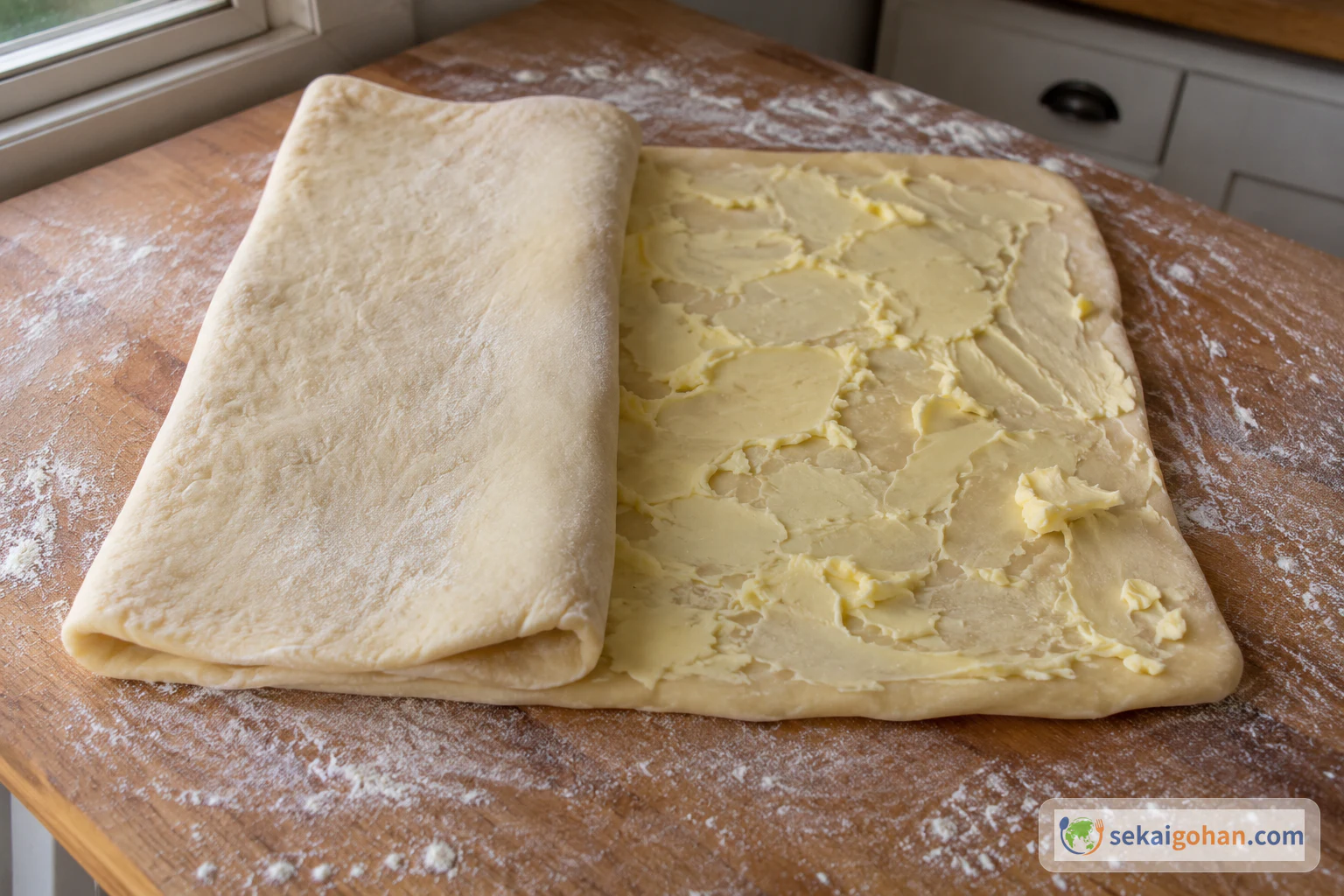
| The pastry bakes dense, with no layers | The butter warmed and smeared during folding | Chill the dough fully after every fold, and keep the board and rolling pin cool |
| The dough springs back and tears as you roll | It is too warm or has not rested | Return it to the refrigerator, then roll again once it is firm |
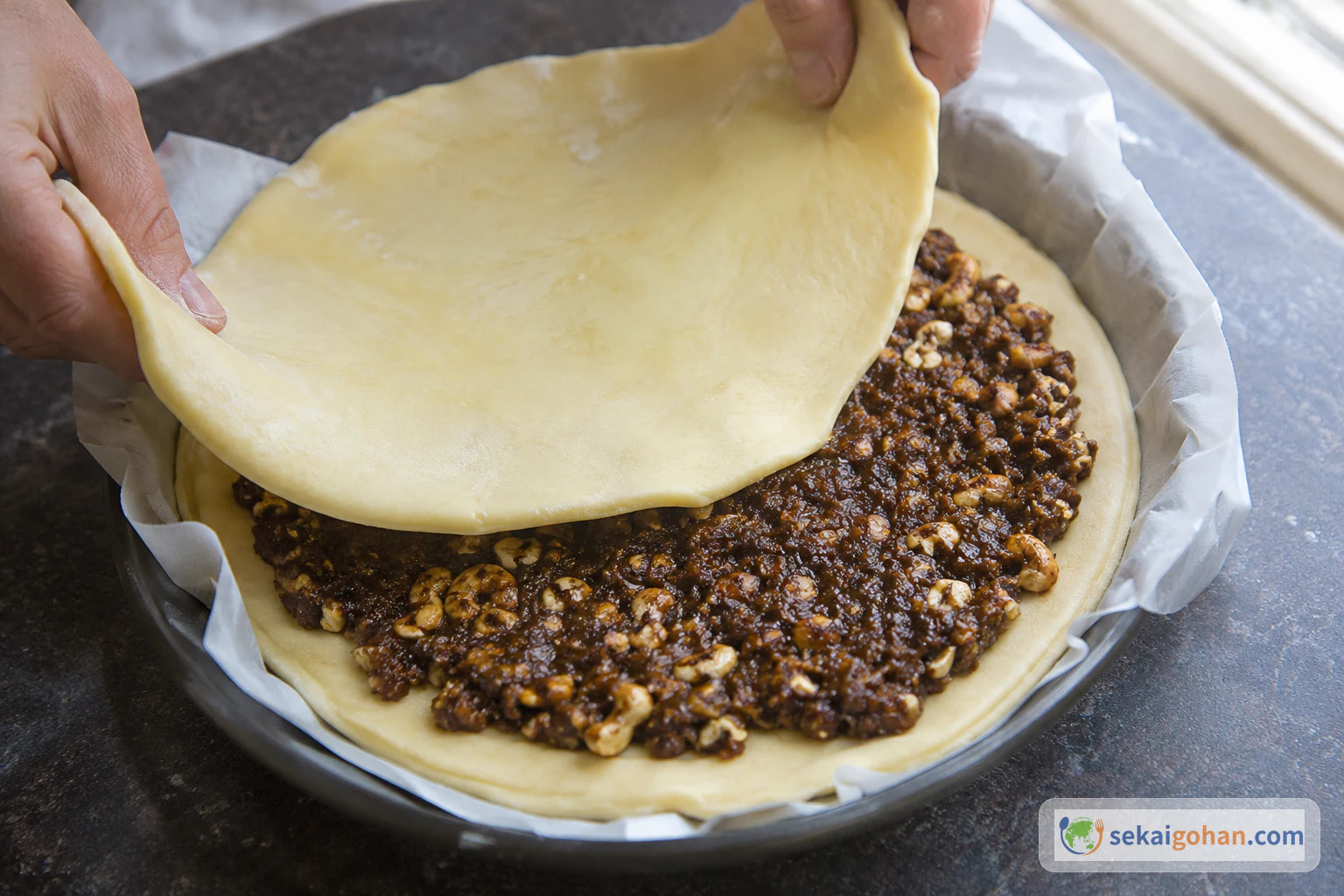
| Filling leaks out at the edge | Filling reached the border, or the seal was loose | Keep the 1-inch (2.5 cm) border clear and press the folded edge down all the way around |
| The top browns too fast | The oven stayed at the high temperature too long | Lower to 340°F (170°C) right at 15 minutes and finish there |
Serving and Variations
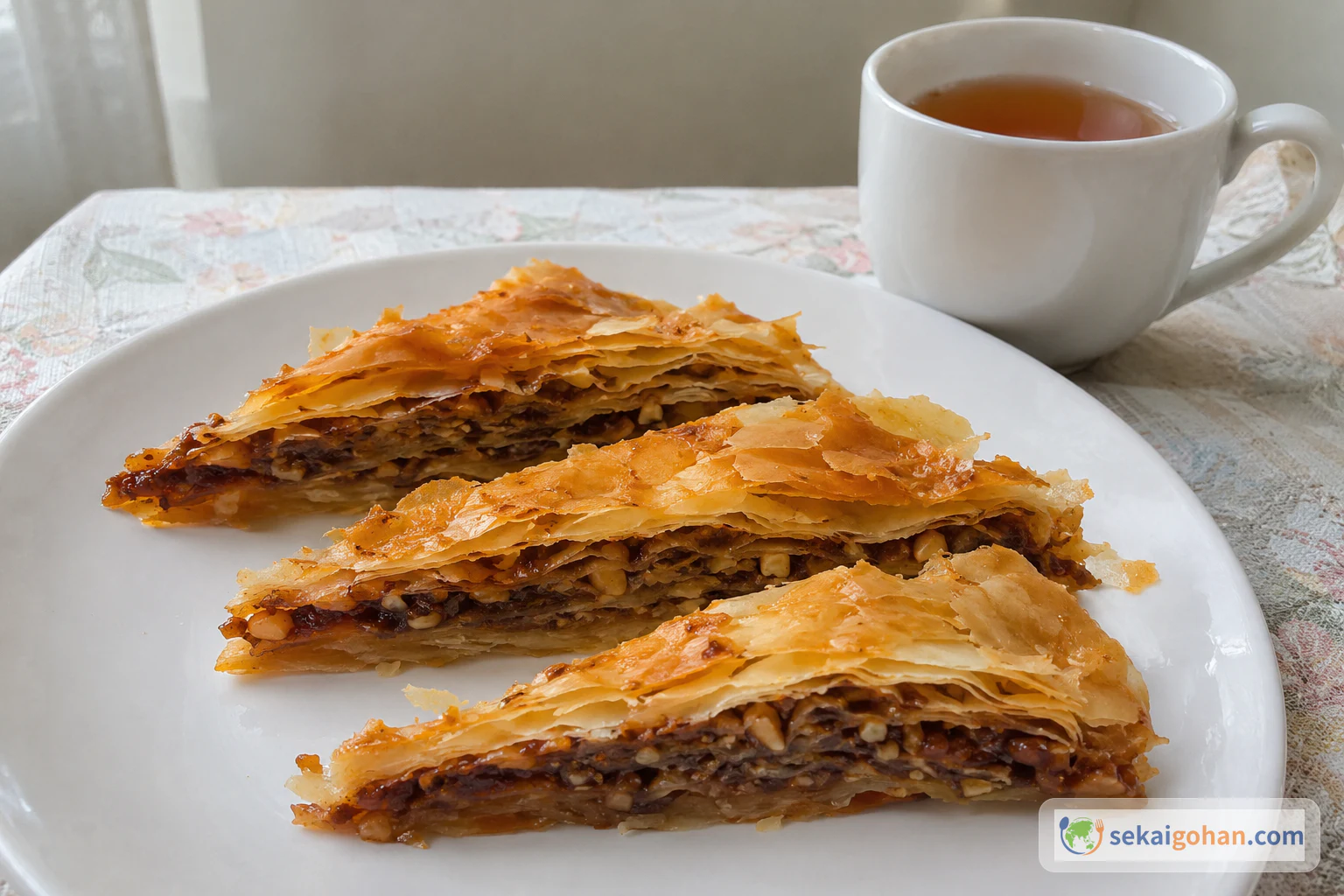
Bolo fiado is cut in thin wedges, and it needs to be: the cashew syrup is dense and very sweet, and a slim slice is enough to taste every layer. Set it out at Christmas with the other holiday sweets, or bring it whole to a family gathering and cut it at the table.
Variations
- Filling in two passes. For each layer, spread half the portion, then the other half on top. The amount stays the same, and the layer goes on thinner and more even, which shows clearly in the cut wedge.
- Lighter rosewater. Add half the rosewater, taste the cooled filling, then add more. Less rosewater lets the cashew and sugar come forward; the full spoon gives a clearly floral finish.
- Raisins with the cashews. Some versions of the dish include raisins. They add a fruity chew and dark flecks between the nuts.
- The batter-layer cake. The cake of thin batter layers with jam, pumpkin preserve and golden syrup is its own recipe with its own method. Make it separately rather than mixing its filling into this pastry.
Frequently asked questions
The dough has yeast. Why is there no rising time?
The dough rests only in the refrigerator, for 30 minutes after mixing and between folds. Keep it cold the whole way through, because cold dough is what keeps the butter in separate layers. The yeast adds lightness as it bakes.
What if I can't find rosewater?
Leave it out. The filling becomes a plain cashew-and-sugar layer, sweet and nutty without the floral note. The pastry and the method stay the same.
That much filling looks like too much. Can I use less?
Keep the full amount. Bolo fiado is meant to carry a lot of filling, and the three thick layers are what give each wedge its dense, sticky middle between the flaky sheets. Spread it evenly and keep the border clear, and it fits.