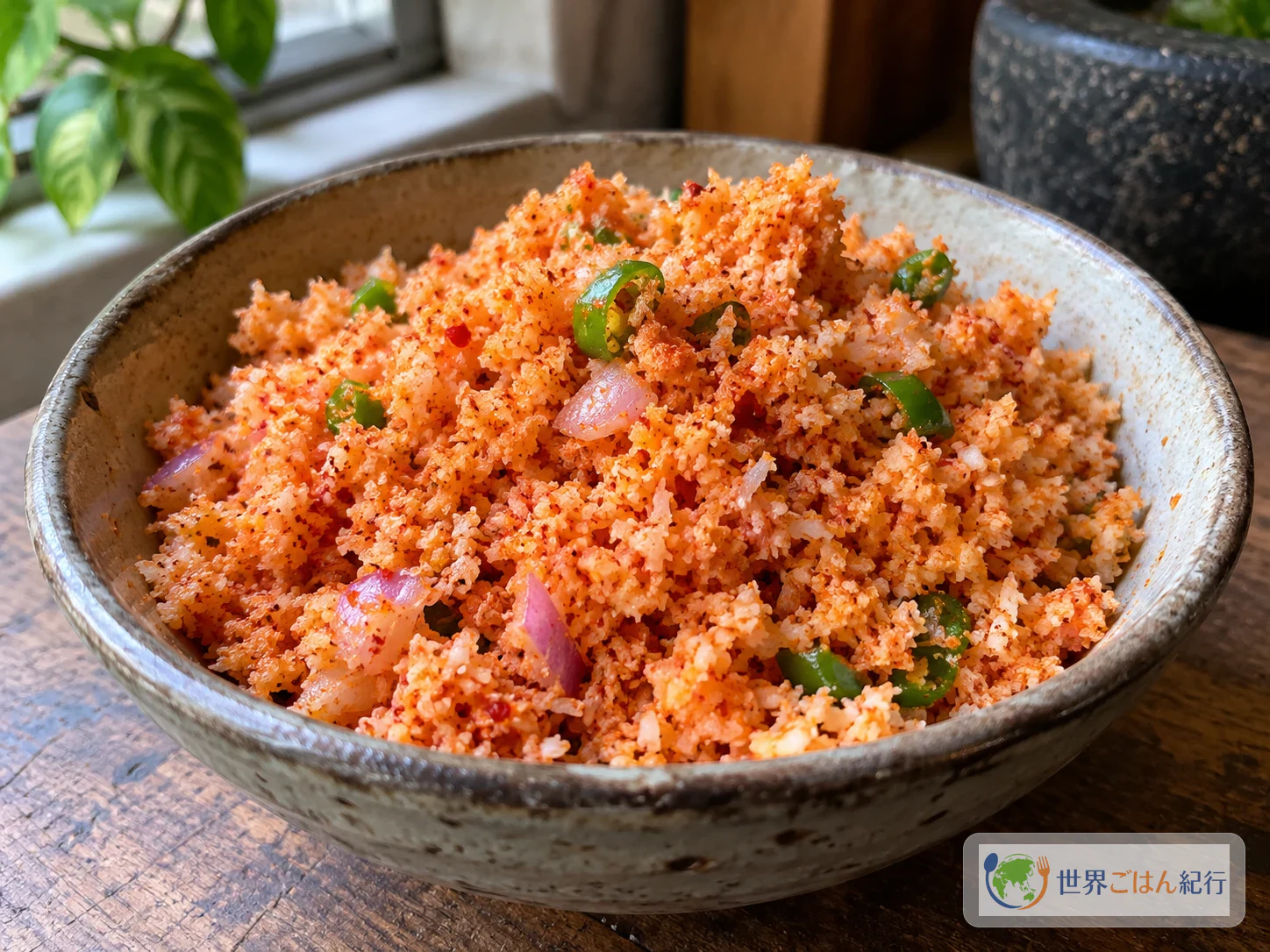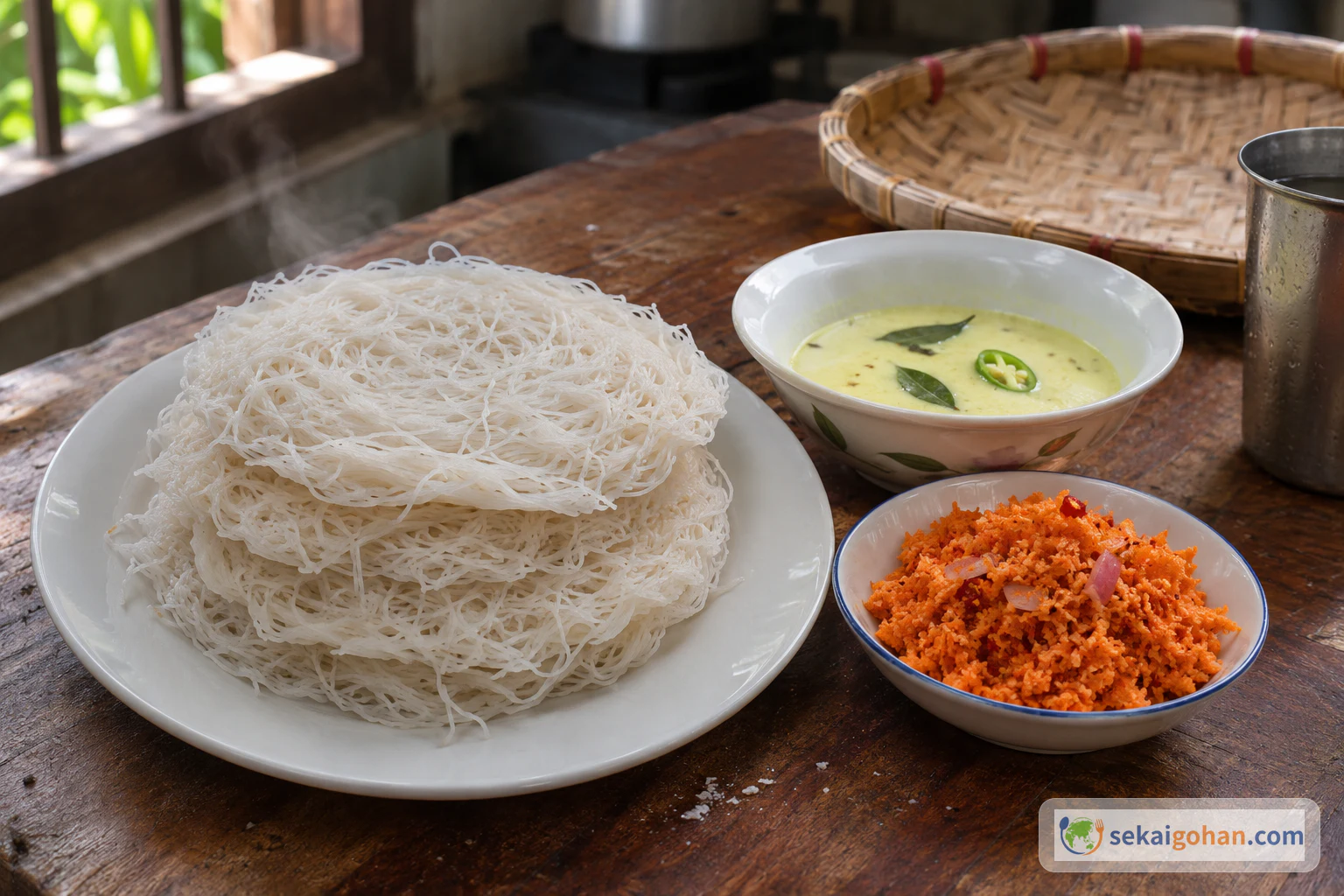
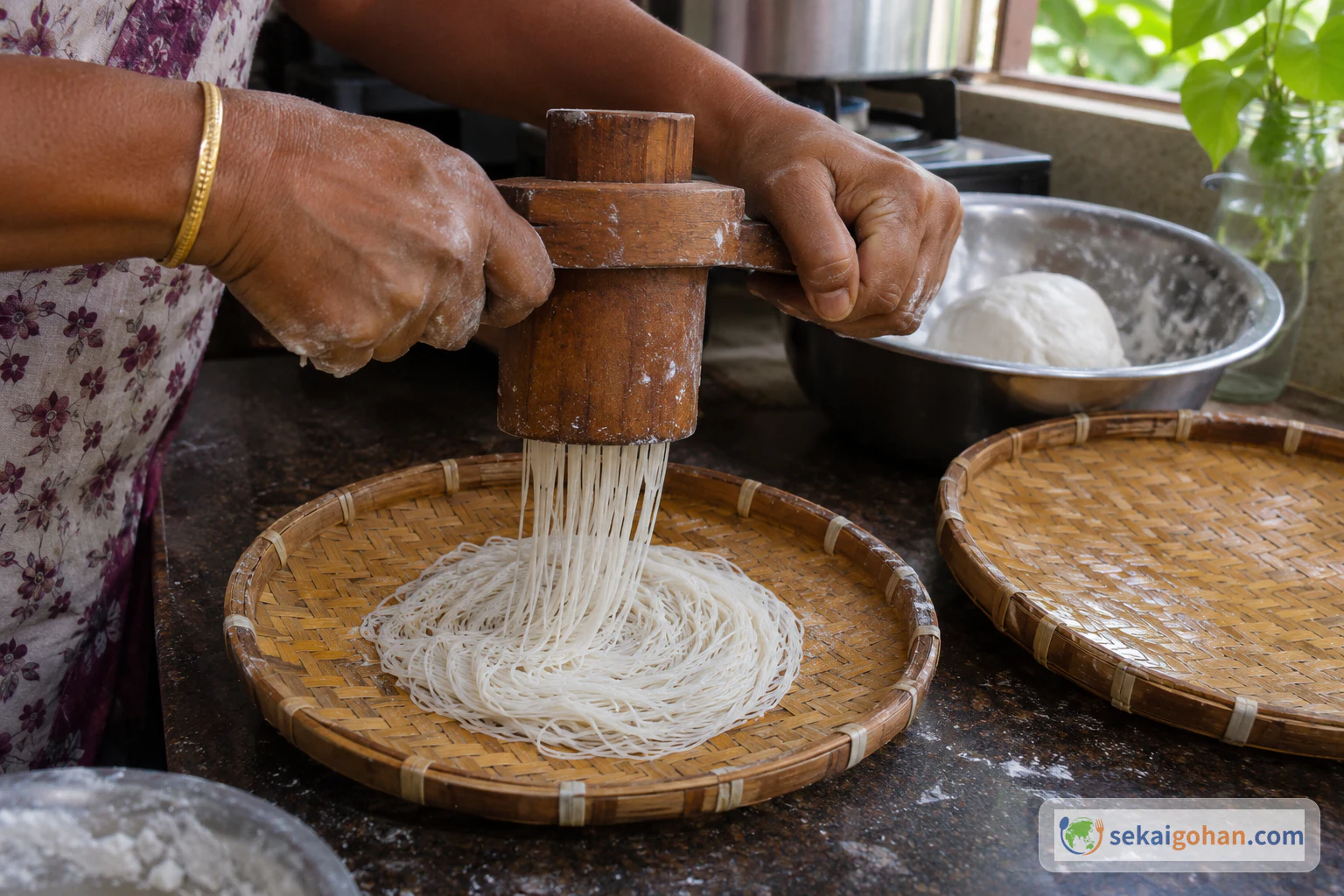
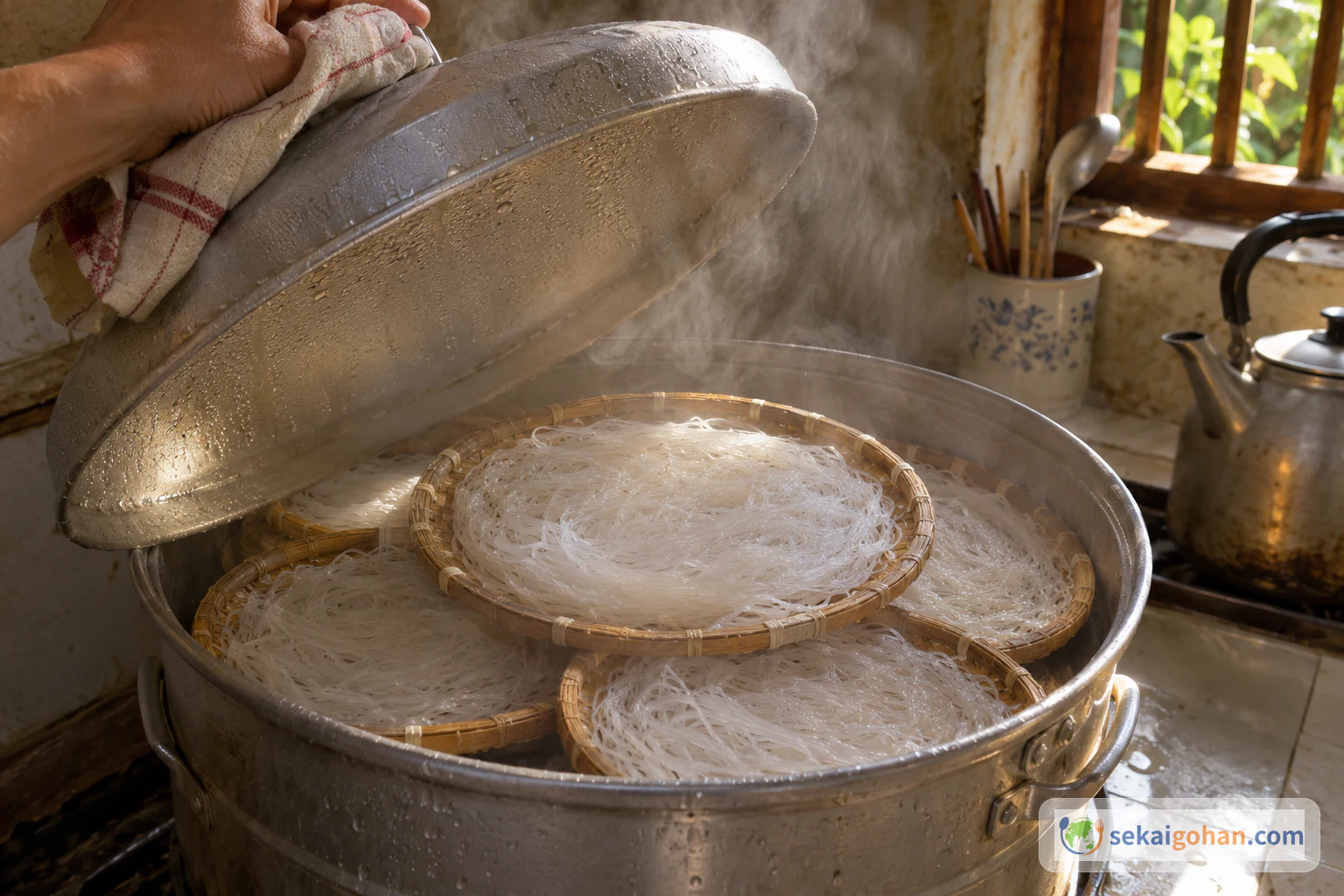
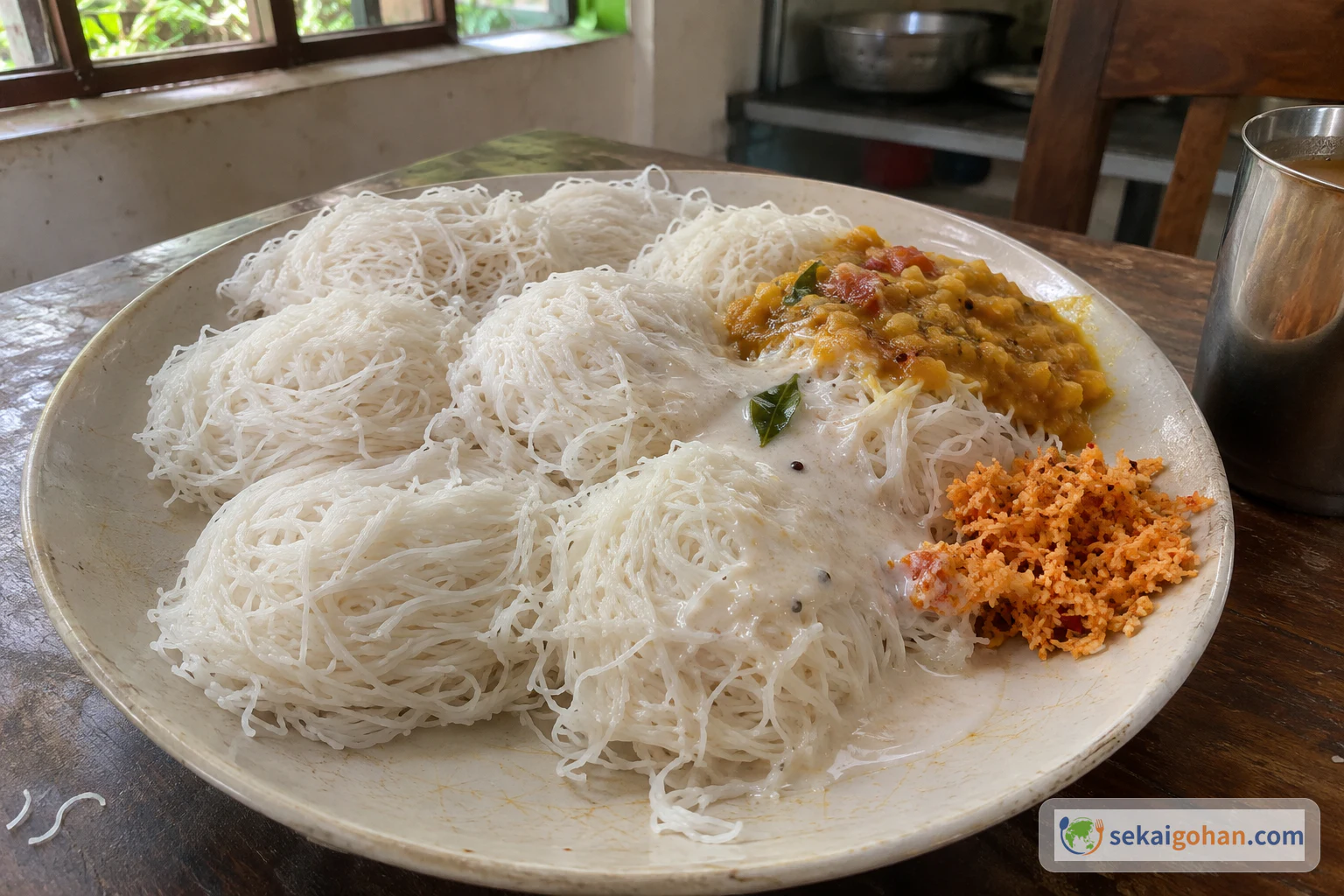
Before dawn, the neighbourhood string hopper maker is already at the press. Warm rice dough is pushed out in hair-fine threads and coiled into nests on small round woven trays. The trays go into the steamer in stacks and come out pale and set, sold by the count to families who order them by the dozen before school and work. On the plate there are eight to ten of them, with a spoonful of dal, a red heap of pol sambol and a thin coconut gravy that runs down between the strands. The nests taste of rice and a little salt, soft and springy, light enough to carry whatever is spooned over them.
Morning and Night, by the Count
A staple of the Sri Lankan table
String hoppers are eaten all over Sri Lanka, at breakfast and again at dinner. A Sri Lankan morning is savoury: curries and sambols, with rice-flour and coconut staples such as kiribath, pol roti and pittu, and string hoppers sit squarely in that line-up. In many homes the press and the trays are at the centre of the morning's work, the strands laid in circles and the trays stacked into the steamer one on top of another. The trays were traditionally woven bamboo; plastic and metal ones are now just as common.
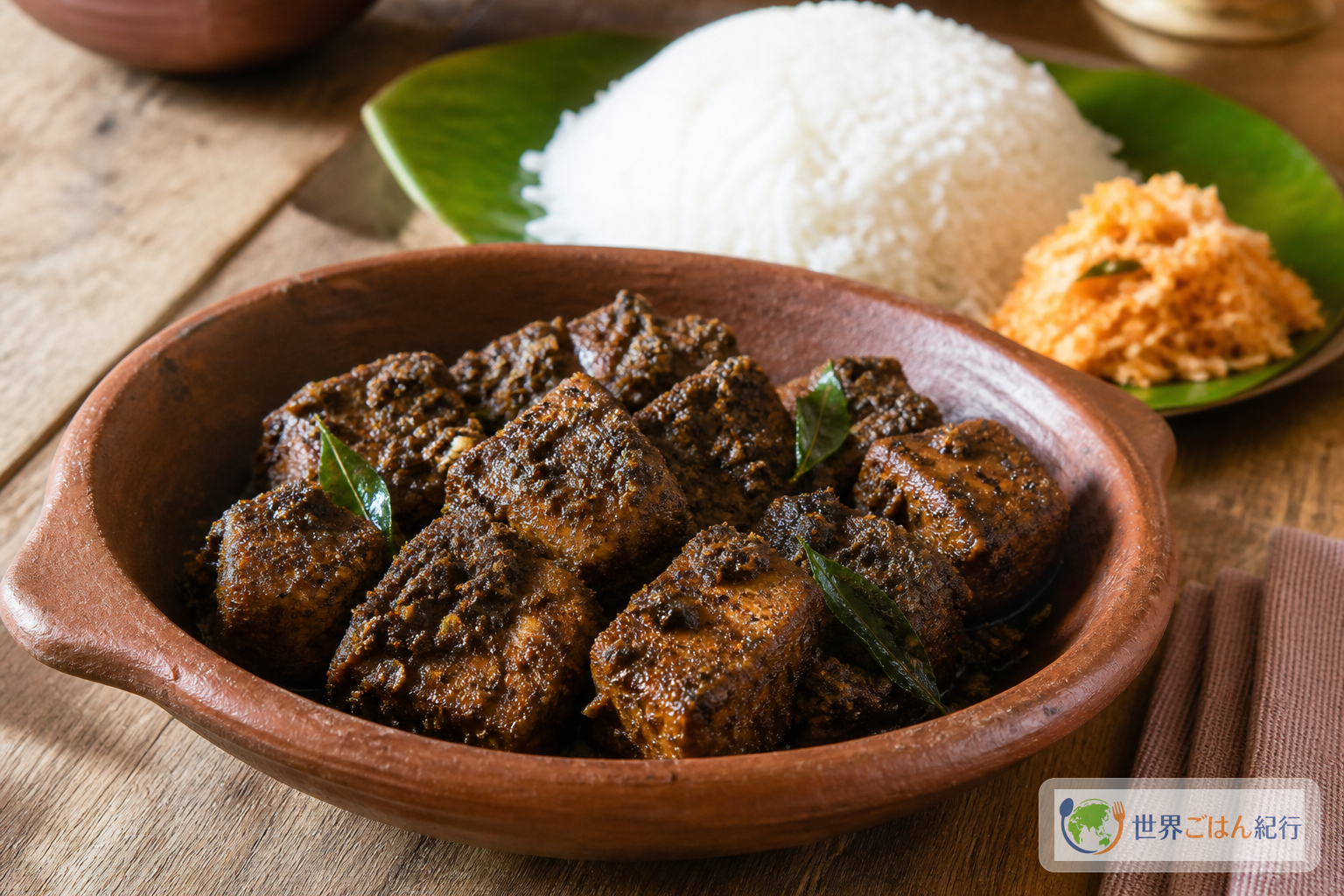
Plenty of households buy rather than make them. Families order by number, never by weight, from a neighbour who starts work before first light and supplies homes and the small eating houses called kade. At a kade the plate is eight to ten nests with dal, pol sambol and kiri hodi. At home the curry changes with the household: fish, chicken or a strong potato curry. Sri Lankan Tamil households add seeni sambol, sothi and other coconut gravies, and fish, chicken, mutton or egg curries alongside paruppu.
Hoppers are a different dish
The shared name sends many cooks the wrong way. Hoppers (appa) are bowl-shaped crisp pancakes made from a batter with coconut milk and yeast, poured into a round-bottomed pan. String hoppers are a dough of rice flour, salt and water, pressed into threads and steamed. They have no resting time and no rising.
| String hoppers | Hoppers (appa) | |
|---|---|---|
| Base | Rice flour, salt, water | Rice flour, coconut milk, yeast and more |
| Tools | Press, woven trays, steamer | Round-bottomed hopper pan |
| Cooking | Steamed | Poured into the pan and cooked |
| Shape | Flat nest of fine threads | Thin bowl |
Names and neighbours
In Sinhala the dish is ඉඳි ආප්ප (indi appa or idiappa), in Tamil இடியப்பம் (idiyappam). The same pressed and steamed rice noodle runs through South India as nool puttu, noolappam, shavige and semige, and turns up as putu mayam in Malaysia and Singapore and putu mayang in Indonesia. In South India it is also served with gassi or rasayana. The dish is often traced to Sangam-era Tamil poetry, from about 300 BCE to 300 CE, where idiyappam and appam appear among the wares of seaside vendors, but where it was first made is not settled. Sri Lanka and southern India share it, and both have made it their own.
Idiyappam is usually explained as idi, to crush or press, joined to appam. The story is retold often, which makes it a good explanation of the name rather than proof of where the dish began.
Ingredients (serves 3)
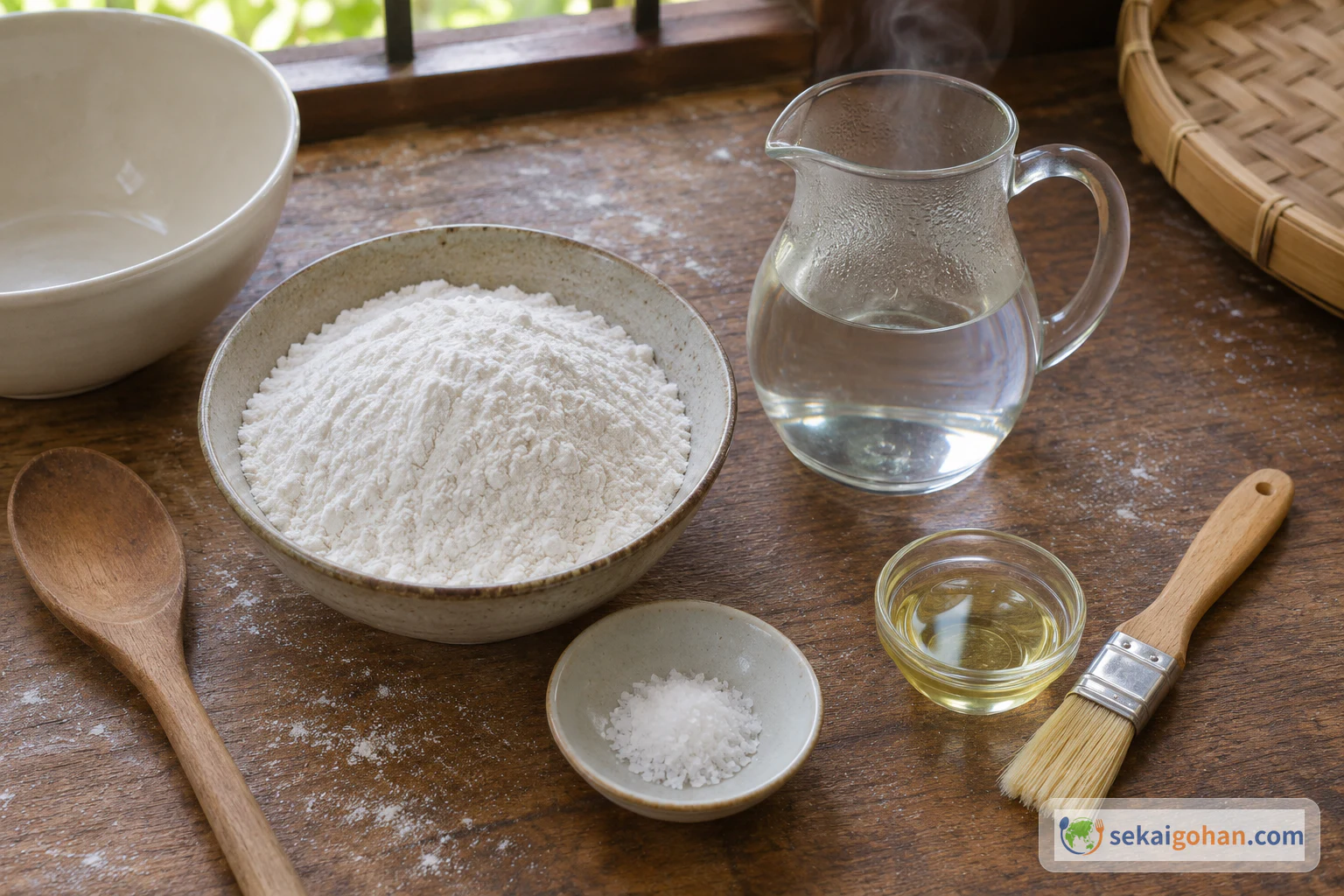
This makes 25 to 30 fairly thick nests. Everything depends on the flour, which is why the salt is weighed and the water goes in gradually rather than all at once.
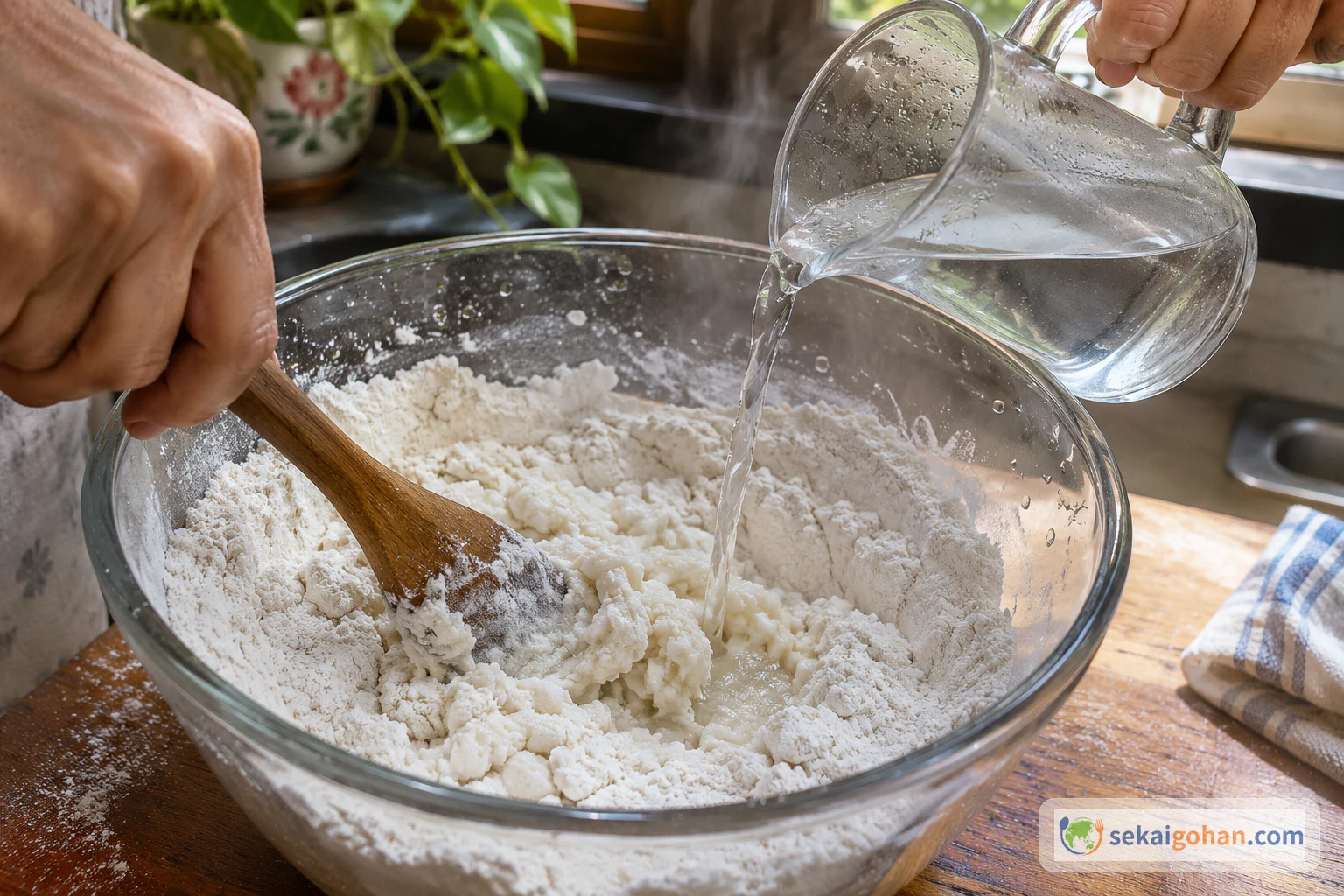
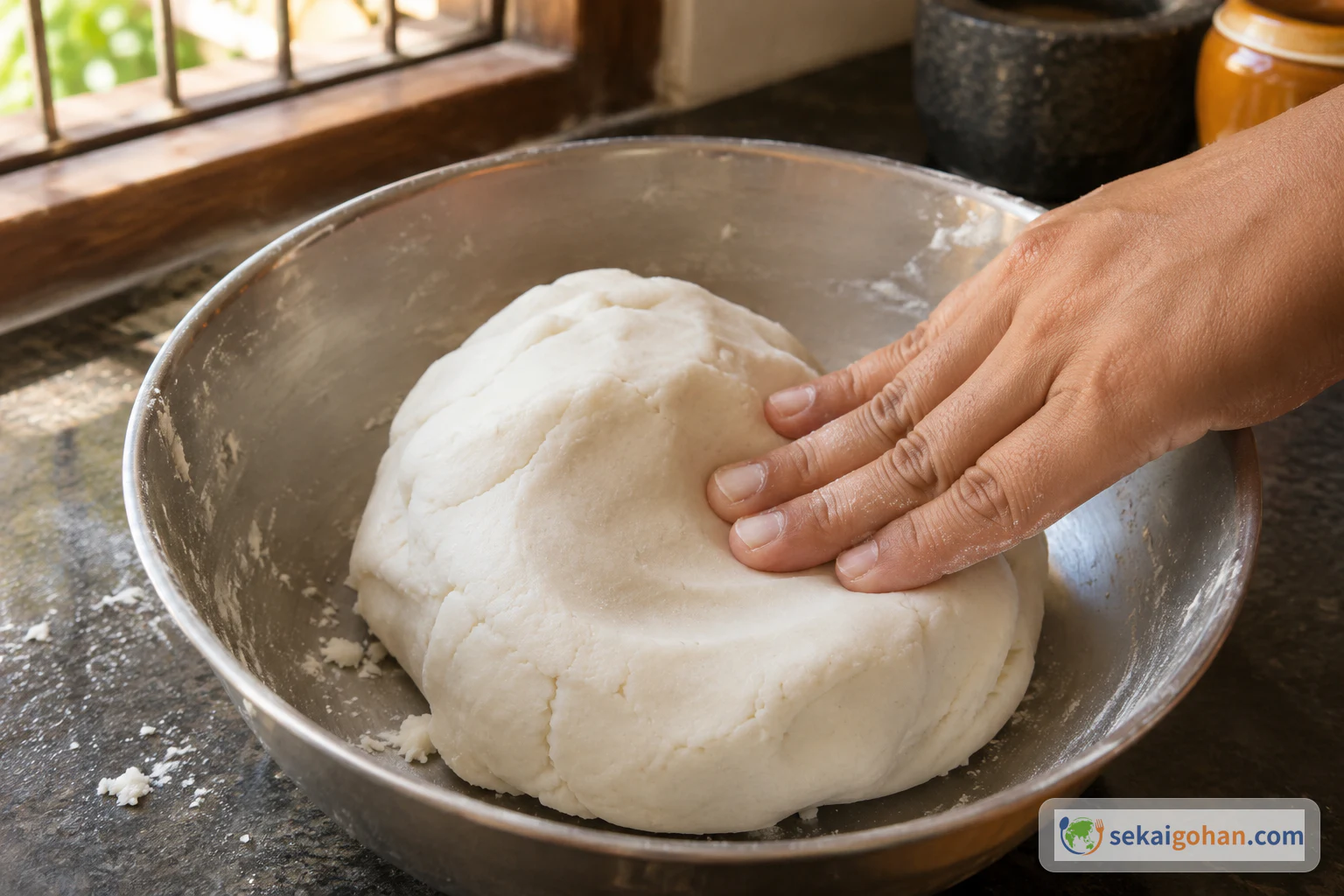
The water should be warm enough that you can keep a finger in it comfortably. Lukewarm water warms the flour slightly as it mixes, and the nests come out lighter and fluffier. Cold water gives a heavier dough.
Rice flour, salt, water and oil alone contain no gluten. Check the flour bag for the ingredients list and any statement about shared production lines with wheat. Kiri hodi made with Maldive fish adds fish to the plate, and pol sambol can contain Maldive fish too.
Equipment
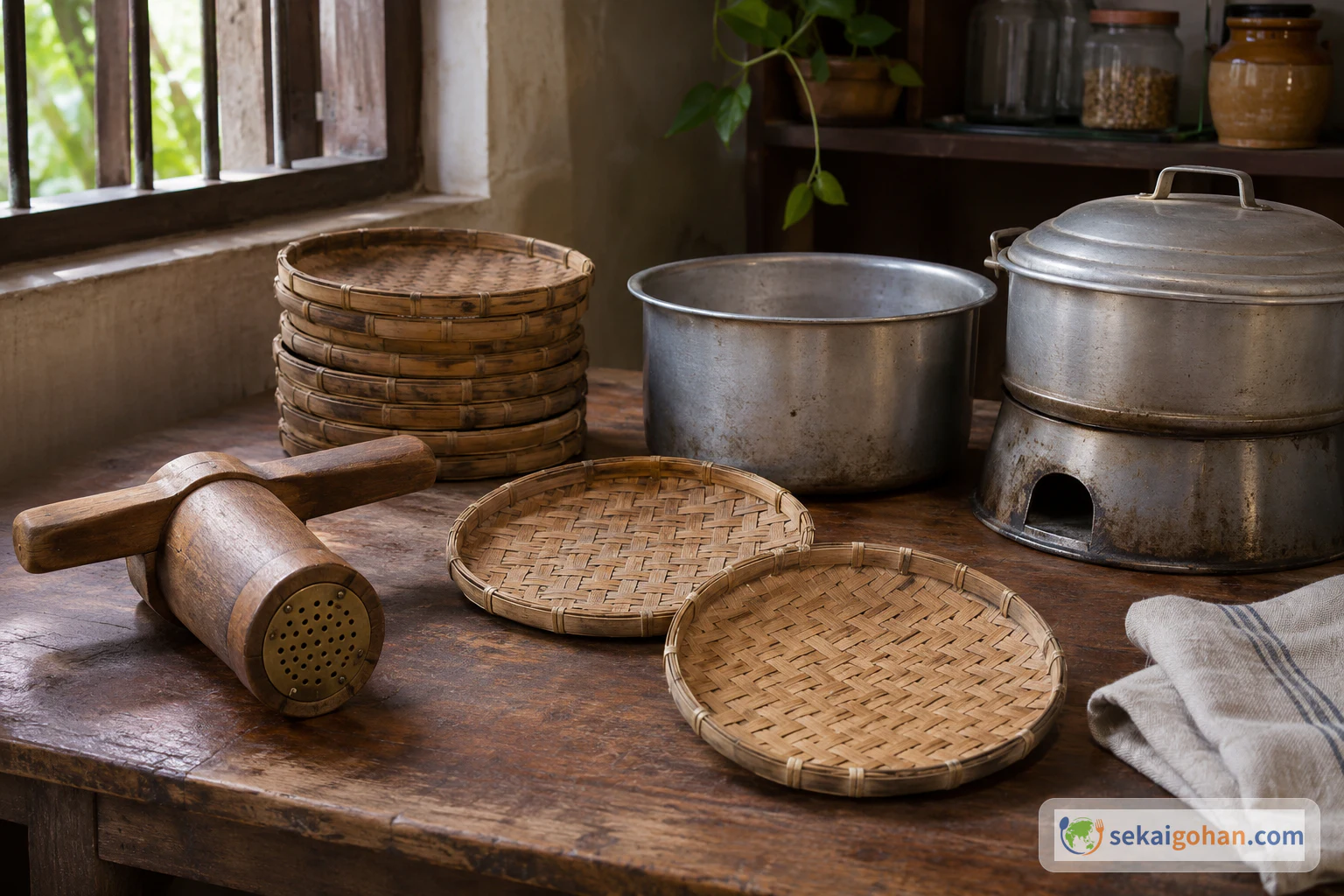
- String hopper press (idiyaappa wangediya in Sri Lanka, also sold as an idiyappam press or sev sancha): a cylinder with a finely perforated plate that pushes dough out in threads
- Small round woven steaming trays, ideally two sets; or parchment paper laid in the steamer basket
- A steamer, two-tier if you have one; a bamboo steamer works
- A large mixing bowl and a wooden spoon or sturdy spatula
- A pastry brush for oiling the trays
- A lidded container for keeping the steamed nests soft
Choosing the Flour and the Swaps
In Sri Lanka the flour is white or red rice ground and dry-roasted, sold as string hopper flour or idiappa flour. South Asian grocers and online shops carry it, and it is the one thing worth seeking out. White flour gives pale nests; red rice flour makes them darker with a deeper flavour, at the same amounts. Bags differ in how much water they drink, so judge the dough by feel over any number on the bag, and stay with one brand once it behaves well for you.
Away from a South Asian shop, use plain, non-glutinous rice flour. Japanese joshinko, made from ordinary uncooked short-grain rice, is a good example. Toast it in a dry frying pan over low heat, stirring constantly, for 6 to 8 minutes, then let it cool completely before you weigh it. Toasting brings the flavour and behaviour closer to the roasted flour used in Sri Lanka. A finer grind gives finer, smoother strands.
Glutinous rice flour is a different product. Mochiko, shiratamako and anything sold as sweet or glutinous rice flour are made from sticky rice, and they will not give separate, springy threads.
| Swap | What it changes |
|---|---|
| Toasted plain rice flour for string hopper flour | Close in flavour; water needs adjusting by feel |
| Red rice flour for white | Darker nests, fuller flavour, same method |
| Coconut oil for vegetable oil on the trays | A faint coconut note; releases just as well |
| Parchment paper or banana leaf for woven trays | The underside comes out smooth, without the woven pattern |
Method
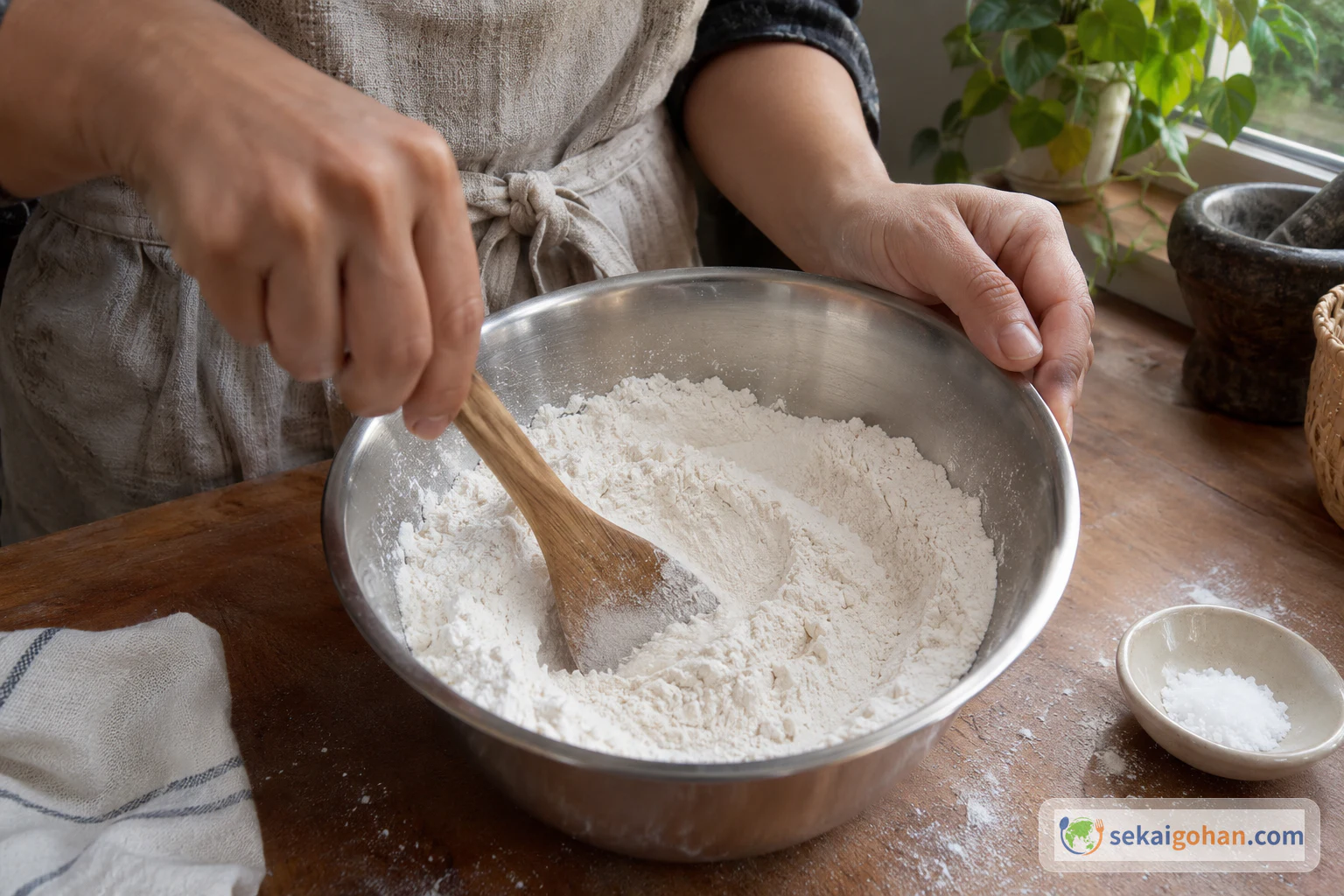
Make the dough first and start the steamer heating while you oil the trays. Press only as many nests as the steamer holds at once. While one batch steams, press the next on the second set of trays. The steaming is the only hands-off time, and with two sets of trays it disappears into the pressing.
When It Goes Wrong
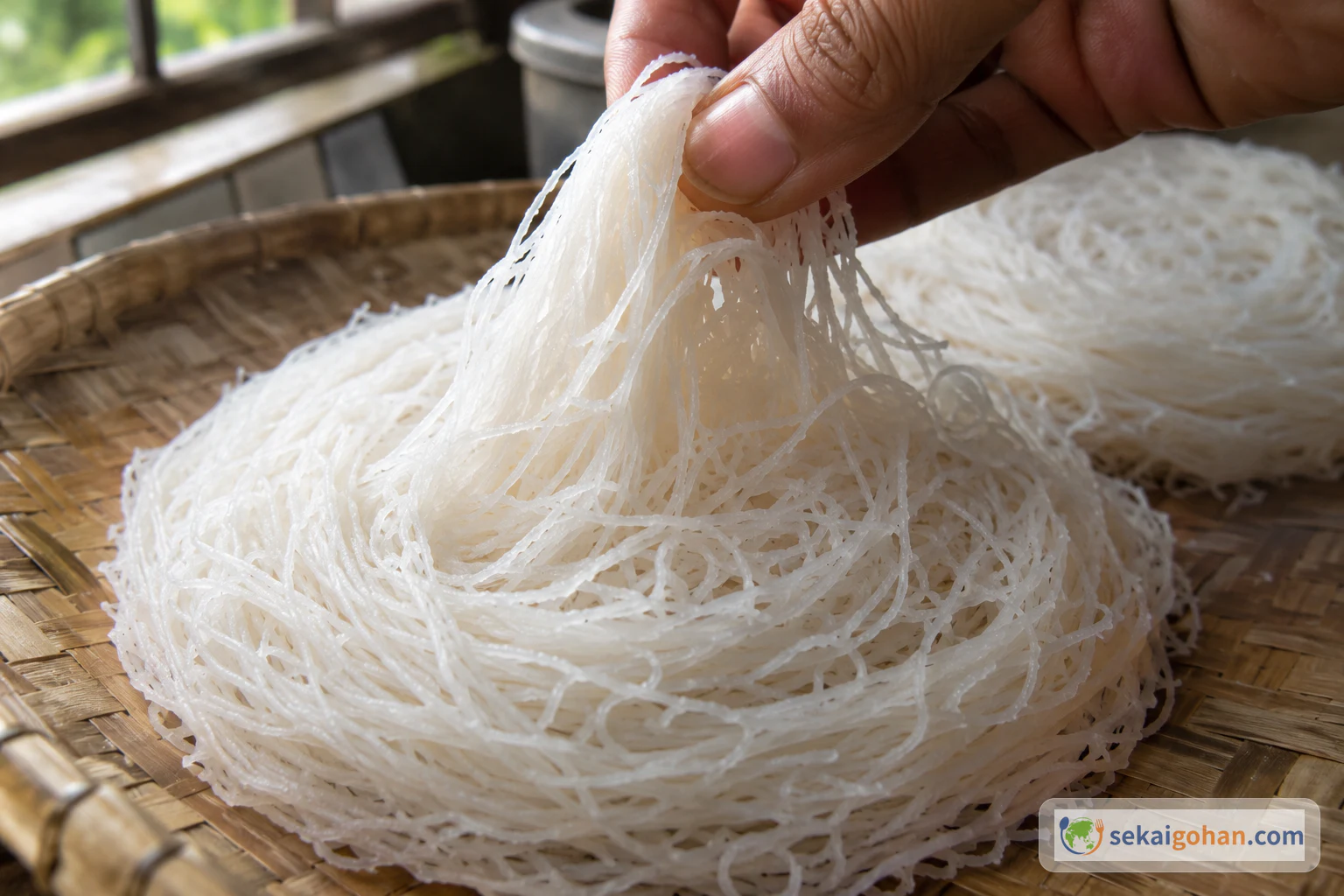
Most problems trace back to water in the dough or time in the steam. Fix the dough between batches; fix the steaming nest by nest.
| What you see | Why | What to do |
|---|---|---|
| Threads snap or the press will not push | Dough too stiff, or it has cooled and firmed up | Knead in a little water and press while the dough is still warm |
| Nests spread and fuse on the tray | Too much water | Knead in a little flour; keep the oil on the trays thin and even |
| Nests are pasty or floury inside | Not steamed long enough, or the dough was short of water | Return to the steamer and test by touch again; add a little more water to the next dough |
| Nests are dry and hard | Steamed too long | Test earlier in the next batch and stop at firm and springy |
| Nests tear when lifted off | Not enough oil on the tray | Oil the next trays properly before pressing |
| Steamed nests stiffen while you work | Left uncovered | Stack them straight into a lidded container |
Serving, Variations and Storage
At the table
Count out eight to ten nests per person. A spoonful of dal, pol sambol and kiri hodi make the classic plate; fish, chicken or a robust potato curry turn it into dinner. Taste one nest plain first and you will notice the rice and the salt, which is what the curries are seasoning.
Kiri hodi, the coconut gravy
Kiri hodi is thinner than a curry for rice, so it sinks into the nests instead of sitting on top. It is optional, but it is what makes the breakfast plate. Use 3 cups coconut milk, 2 onions, 4 garlic cloves, 4 green chillies, 8 curry leaves, 1½ tbsp fenugreek seeds, 3 pandan leaves (rampe), 1 cinnamon stick, 1 tbsp ground turmeric, 4 tbsp lime juice, 4 tbsp vegetable oil, 1½ tbsp Maldive fish (umbalakada), and salt to taste.
Stir the turmeric into the coconut milk. Heat the oil and fry the fenugreek, cinnamon and garlic, then add the curry leaves, pandan and chillies, then the onion. Add the Maldive fish, then pour in the coconut milk and keep it on low heat for 5 minutes. Finish with salt and lime. That much fenugreek and lime is on the strong side, so add the lime gradually and taste as you go. Every household sets its own balance of spice and chilli. Maldive fish gives savoury depth and a little body; bonito flakes are the closest swap if you cannot find it. Pandan is hard to replace.
Variations
- Red rice flour gives darker nests with a fuller, nuttier flavour, at the same amounts and method.
- Kurakkan (finger millet) flour, for part or all of the rice flour, makes a darker, earthier noodle. It absorbs water differently, so adjust the water by the feel of the dough.
- One large sheet: press the dough straight into the steamer basket in one big round and steam for about 5 minutes. Bring it to the table whole and let everyone tear off their share.
- Boiling-water dough: some households, Sri Lankan Tamil kitchens among them, mix the flour with boiling water instead of lukewarm. Mix with a spoon until the dough is cool enough to handle, then knead and judge it by the same feel.
- Sweet plate: serve the nests with grated coconut, jaggery or sugar, banana and coconut milk.
Leftovers
String hoppers are best straight from the steamer. Cool leftovers quickly, put them in a covered container and refrigerate promptly. Reheat them until hot through the centre before eating. Keep hands and tools clean, cool quickly and heat thoroughly. If leftovers smell off, feel slimy or crumble apart, throw them away.
Frequently Asked Questions
Can I make string hoppers without a special press?
The press is the heart of this dish, so a string hopper press or idiyappam press is the reliable choice. Any tool that pushes stiff dough out in thread-fine strands can stand in, as long as the holes are fine enough to give separate threads. Press onto parchment in the steamer basket if you have no woven trays.
Do I toast flour that is already labelled string hopper flour?
No. String hopper flour is sold already roasted and goes straight into the bowl. Toasting is only for plain, untoasted rice flour.
Does the dough need to rest before pressing?
Press it straight away. The dough firms up as it cools, and cool dough makes the threads snap. If the second half of the dough stiffens while the first batch steams, knead in a few drops of warm water before refilling the press.
What can I do with string hoppers that are left over?
Make string hopper kothu. Chop the nests and stir-fry them on a griddle or in a wide pan with vegetables, egg, meat and some curry gravy. The result is heavier and more strongly seasoned than the steamed nests.