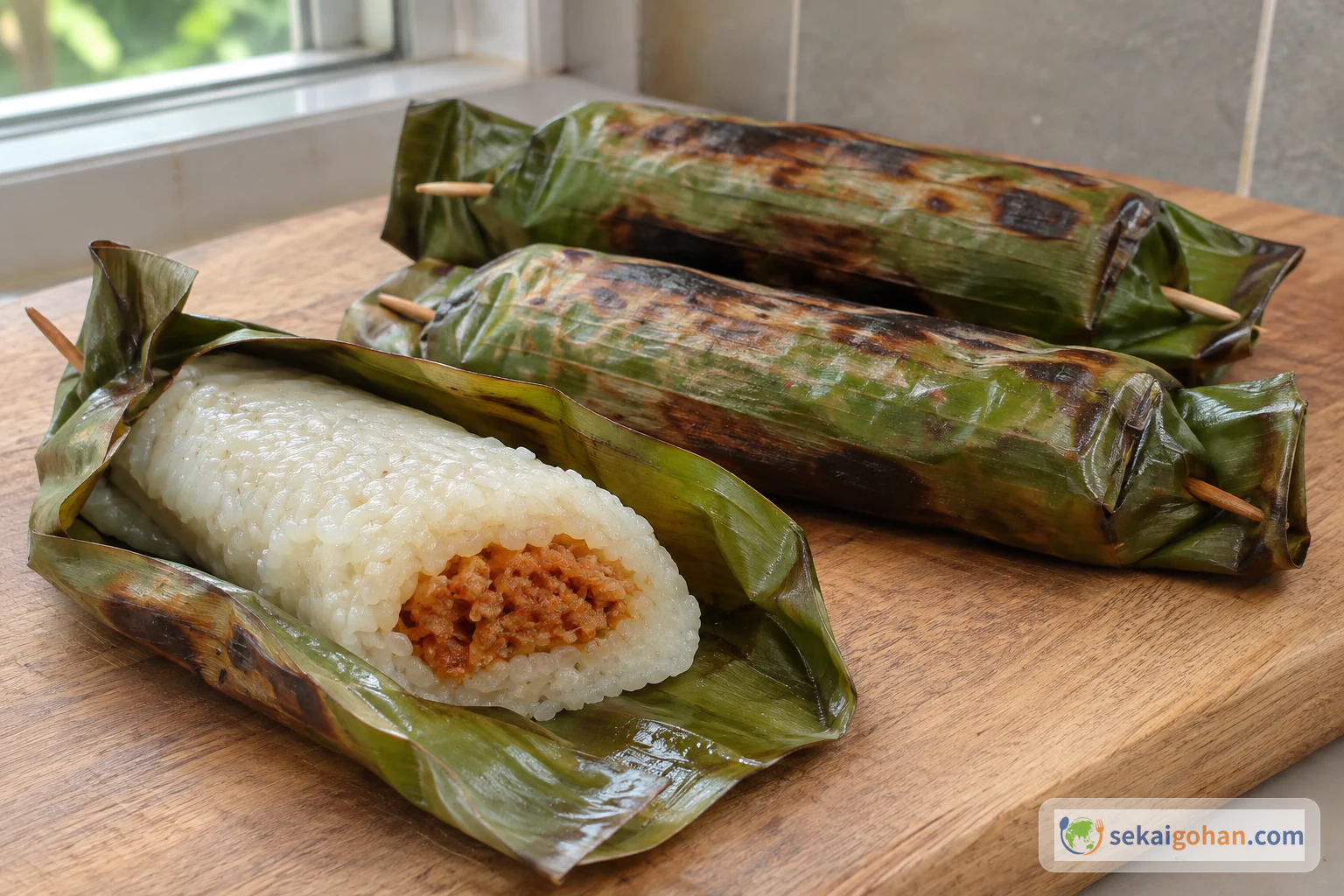
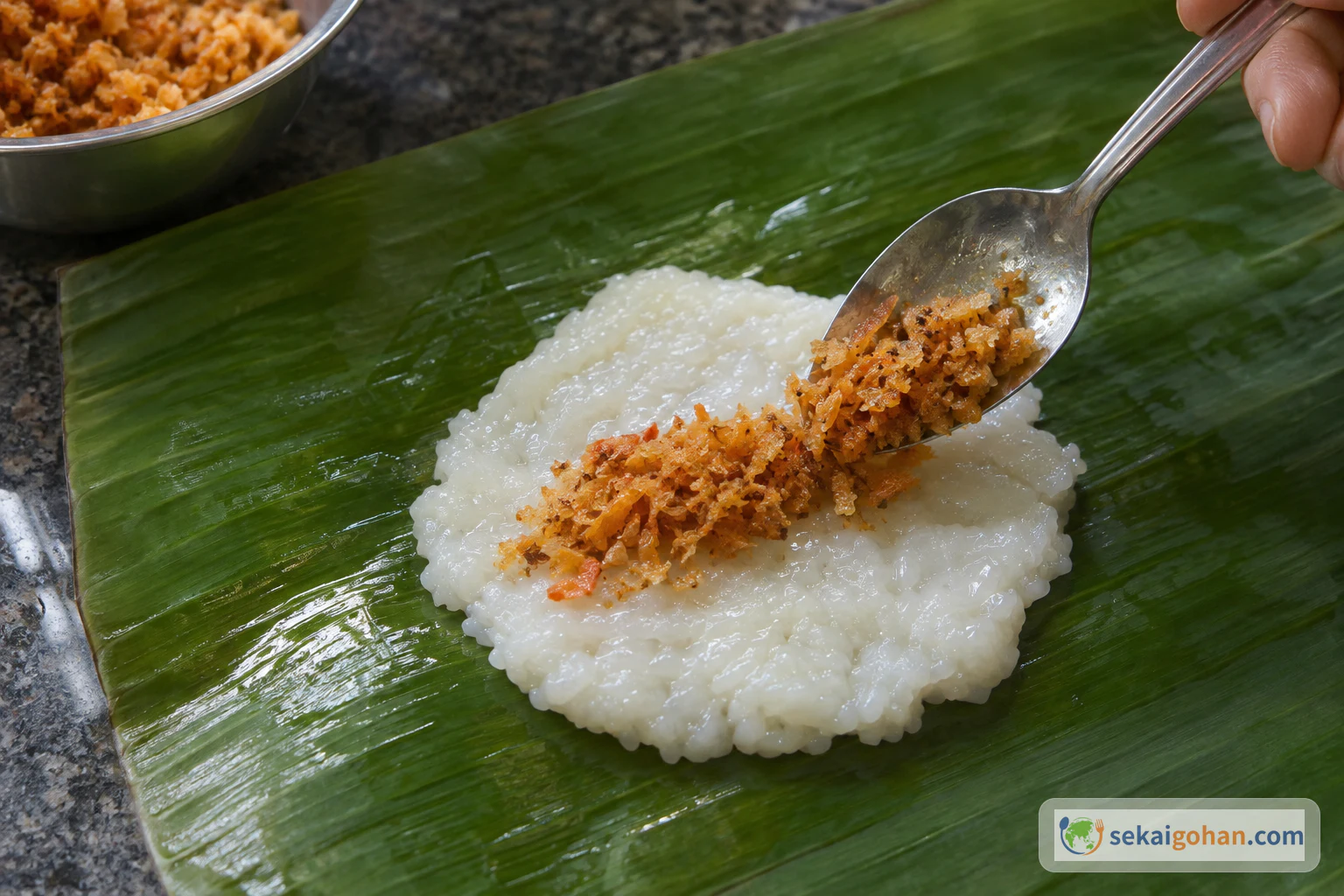
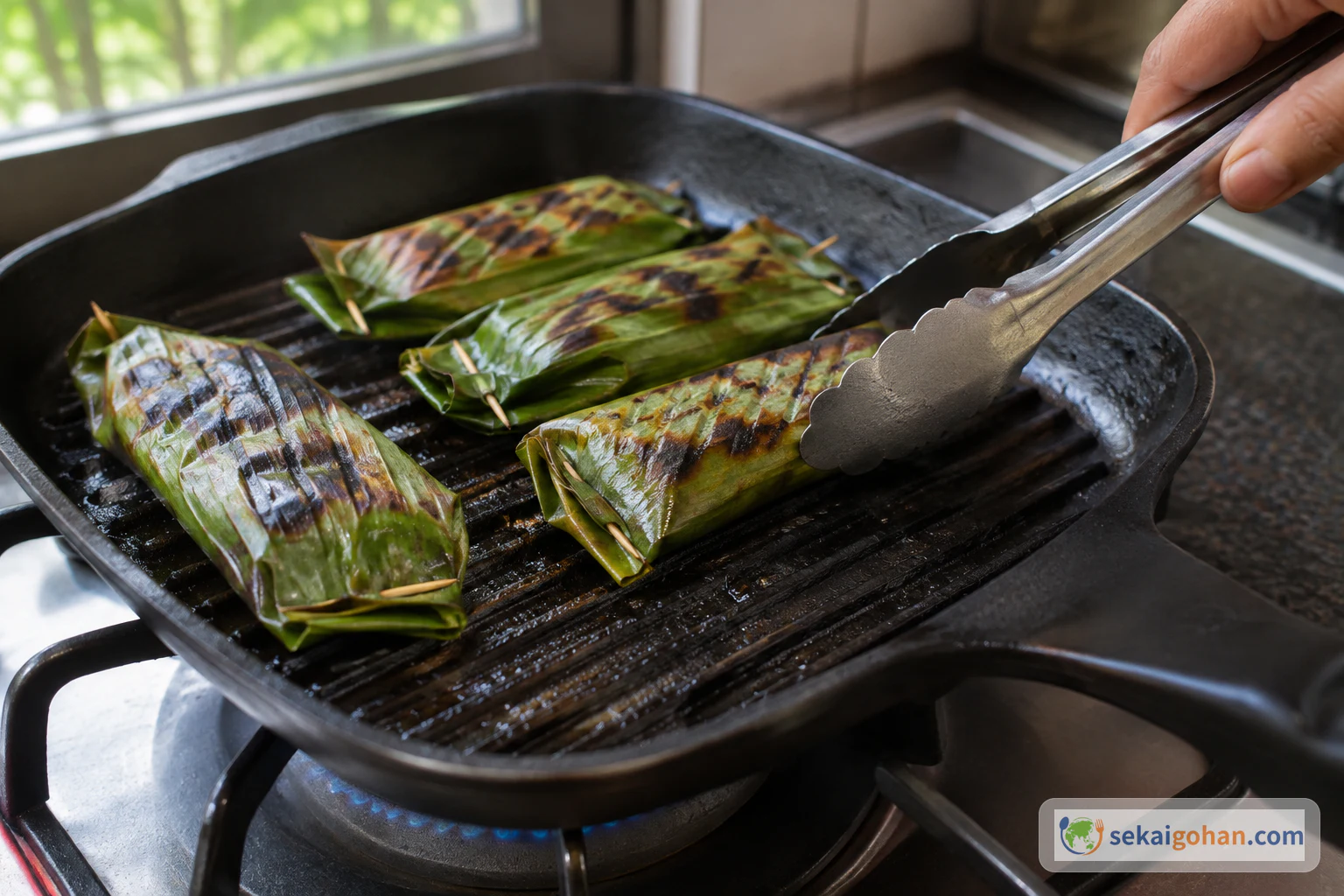
The leaf tells you first. As the oiled parcels hit the grill pan they hiss, the green skin blisters into dark patches, and the kitchen fills with the toasty, almost tea-like smell of scorched banana leaf. Open one and the inside is soft, white glutinous rice, lightly salty and sweet from coconut milk and pandan. At its center is a thin seam of dried shrimp sambal, spicy, savory and a little caramel-sweet from brown sugar. In Brunei, pulut panggang is a snack worth getting up early for. At Mei Fang, a long-standing Chinese restaurant in Tutong, the rolls can be gone by 8:30 a.m.
Grilled, Not Steamed: Where Pulut Panggang Sits
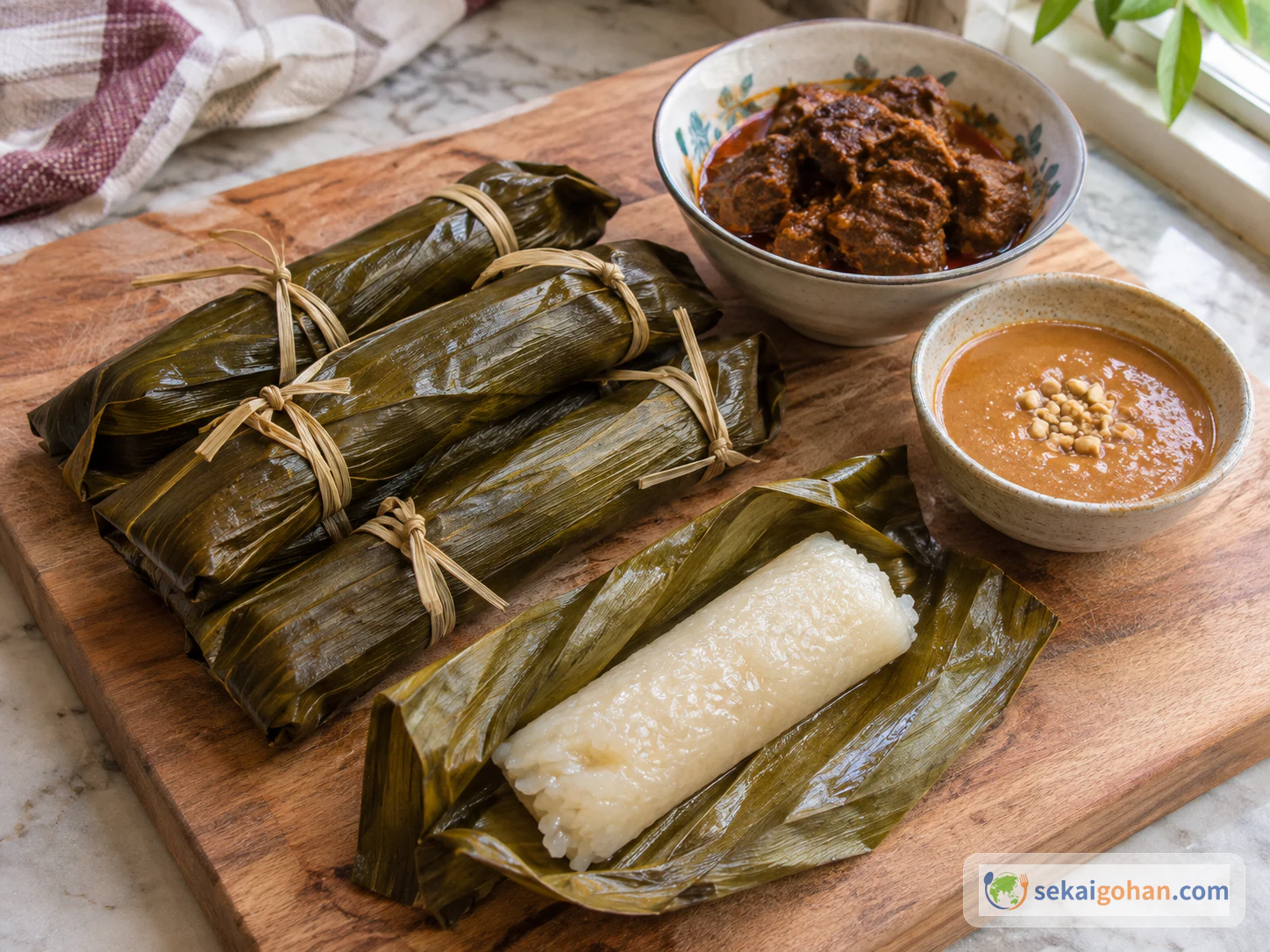
Brunei already has a famous glutinous rice roll, and it is steamed. Kelupis belongs to the Bisaya, Kedayan and Dusun peoples of Brunei and East Malaysia, and Brunei recognizes it as national cultural heritage. It is made from glutinous rice, coconut milk and salt, wrapped in Phrynium or Licuala leaves, steamed, and eaten with peanut sauce, rendang or curry. Pulut panggang is its close cousin. The difference is in the last step. The wrapped parcel goes onto the heat to grill rather than into a steamer, so the leaf chars and its smoke works its way into the rice.
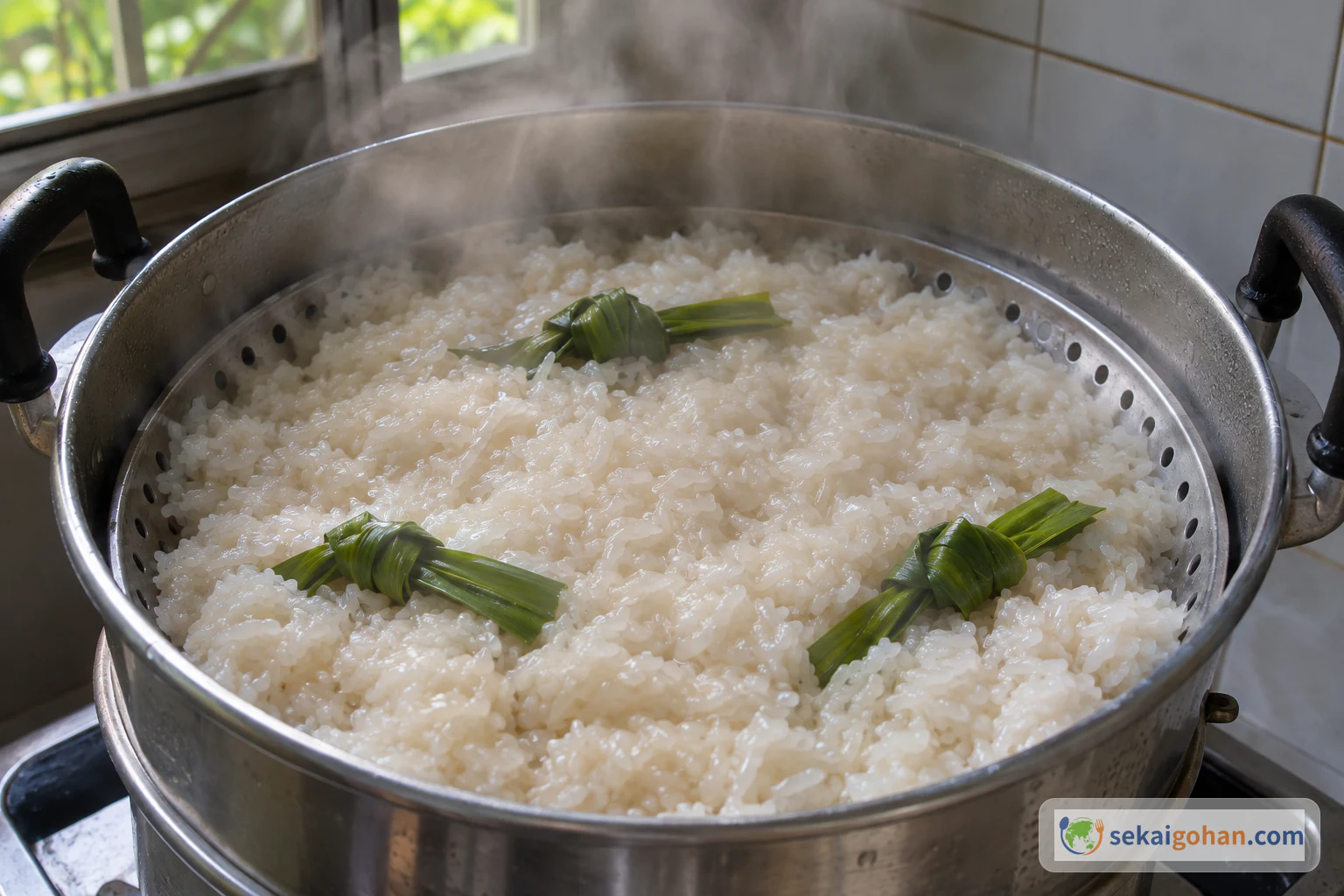
That does not mean no steamer at all. The rice is steamed with coconut milk and pandan before it is wrapped, as in the Nyonya-style recipe used here. Only the finished parcel skips the steam. It is the grill that gives pulut panggang its name and its flavor.
Pulut is glutinous rice and panggang means grilled. The spelling pulot panggang is common too. In Malaysian Nyonya kitchens the same rolls also go by rempah udang. Indonesia's lemper, sticky rice wrapped around a savory filling, is a relative.
What goes inside
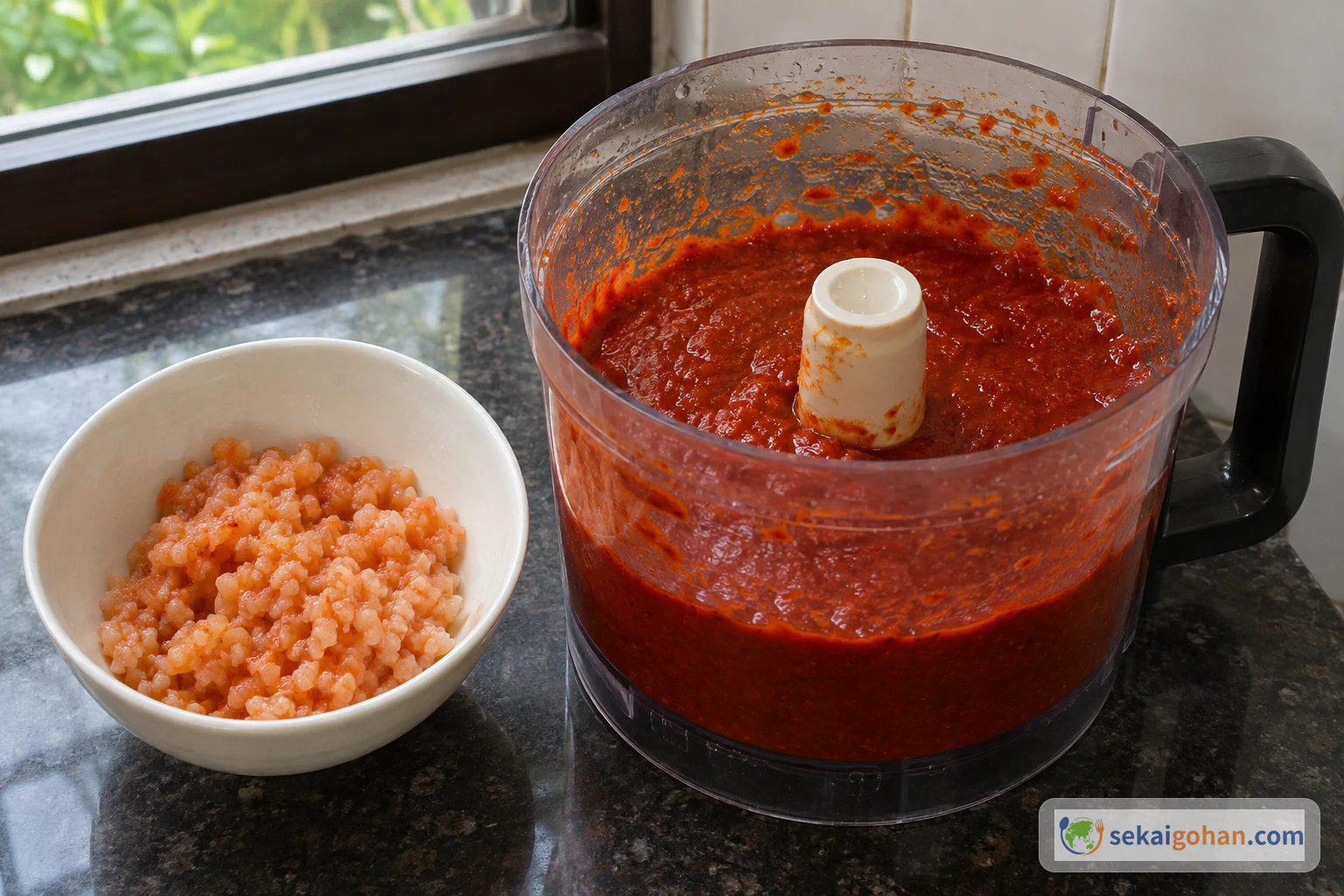
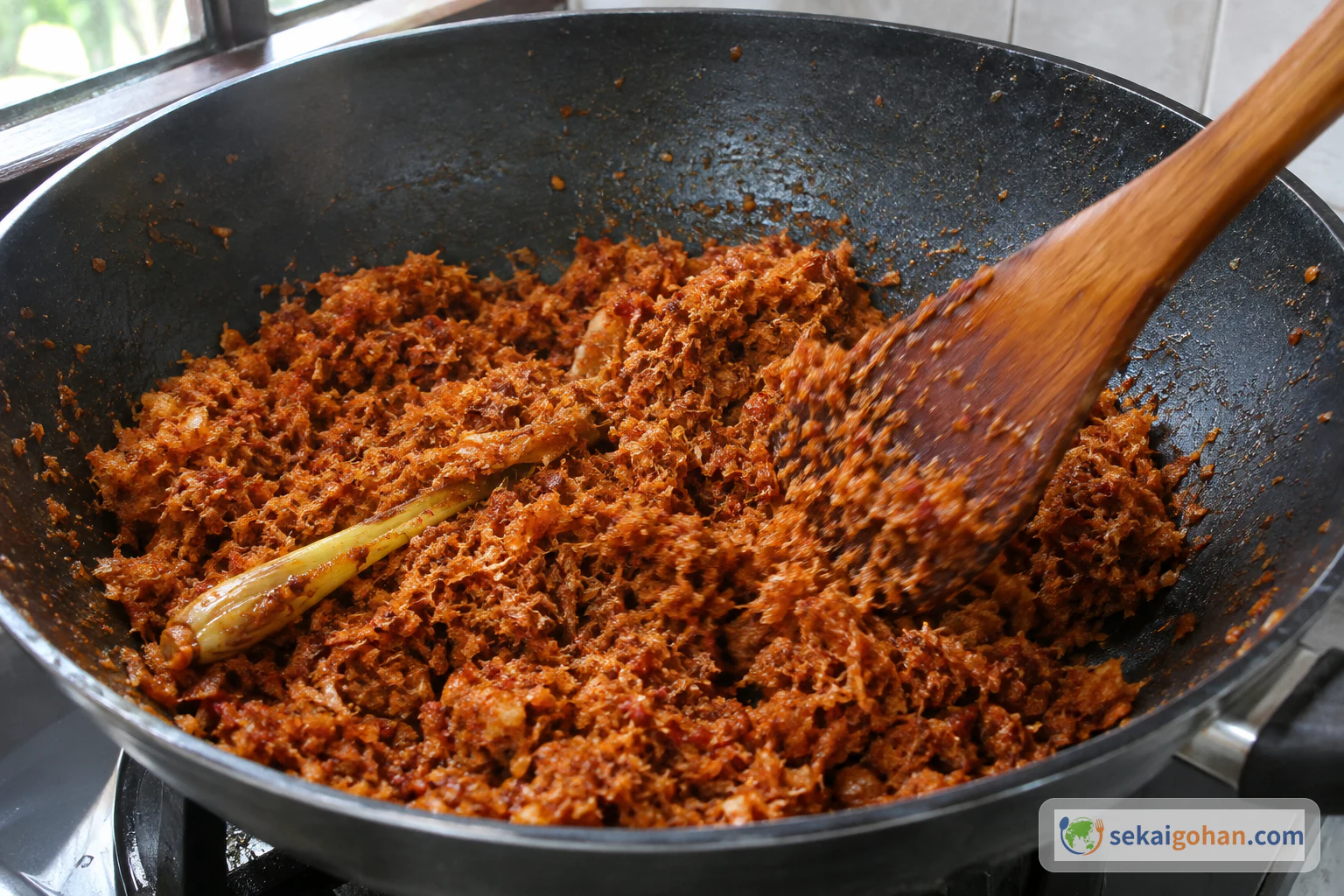
The filling changes with the kitchen. These rolls carry hae bee hiam, a dried shrimp sambal blended with chilies, shallots, garlic and shrimp paste, fried with lemongrass until dry and loose. It is the filling of the Nyonya-style recipe used here. Some Malaysian street-food versions go another way, with grated coconut fried with shrimp floss and sambal. Exactly what fills the rolls on Brunei counters, and which leaf wraps them, is not settled. What stays the same everywhere is the shape: a firm log of sticky rice, a savory core, a leaf wrapper and the scorch of the grill.
For more of the country's table, see our Brunei page.
Ingredients
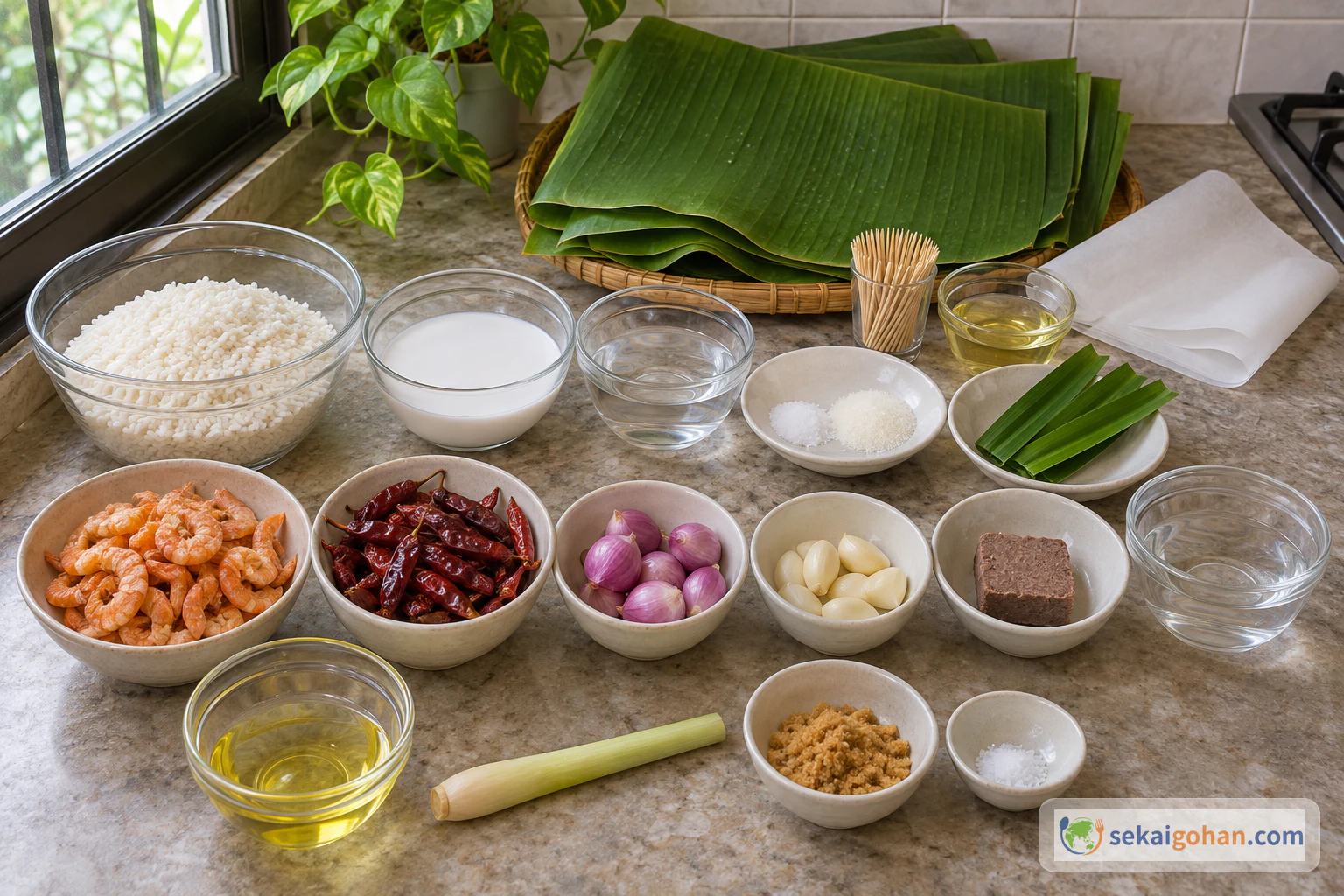
This makes about 10 rolls, depending on how big you roll them. The sambal makes about 16 tablespoons, more than the rolls use. The rest keeps well (see the FAQ).
Dried shrimp and shrimp paste (belacan) are essential to this filling. The rolls contain crustacean shellfish. Anyone with a shellfish allergy should not eat them. Check the labels on shrimp paste and dried shrimp for other allergens.
Equipment
- Steamer with a heatproof tray
- Food processor, or a mortar and pestle
- Wok or frying pan for the filling
- Nonstick pan or ridged grill pan
- Tongs
- Pastry brush
- Plastic wrap or baking paper, for pressing the rice
- Banana leaves, cut into 4 × 6-inch (10 × 15 cm) pieces
- Toothpicks
Buying and Substituting
Glutinous rice is the one thing you cannot swap. Sushi rice does not stick enough to make a firm roll. Look for bags marked glutinous rice, sweet rice or sticky rice at Asian grocers. Japanese mochigome works.
| Item | Where to find it | Swap and what it changes |
|---|---|---|
| Banana leaves | Frozen, at Asian grocers and online | Foil lined with baking paper holds the shape and can go on the grill, but the rolls lose the smoky leaf aroma |
| Pandan leaves | Fresh or frozen at Southeast Asian shops | Frozen leaves work. Dried pandan carries less scent |
| Dried shrimp | Asian grocers, near the dried fish | Buy whole dried shrimp. Shrimp floss is a different product and gives a fluffy filling |
| Shrimp paste (belacan) | Malaysian or Thai shops, in blocks | Thai or Malay shrimp paste in another form works. Miso and fish sauce are different foods |
| Coconut milk | Any supermarket, canned | Use coconut milk, not grated coconut or coconut cream |
Of these, the rice, the dried shrimp and the shrimp paste decide whether the rolls taste right. Foil instead of leaves or frozen instead of fresh pandan still gives a good snack, just one with less perfume.
Method
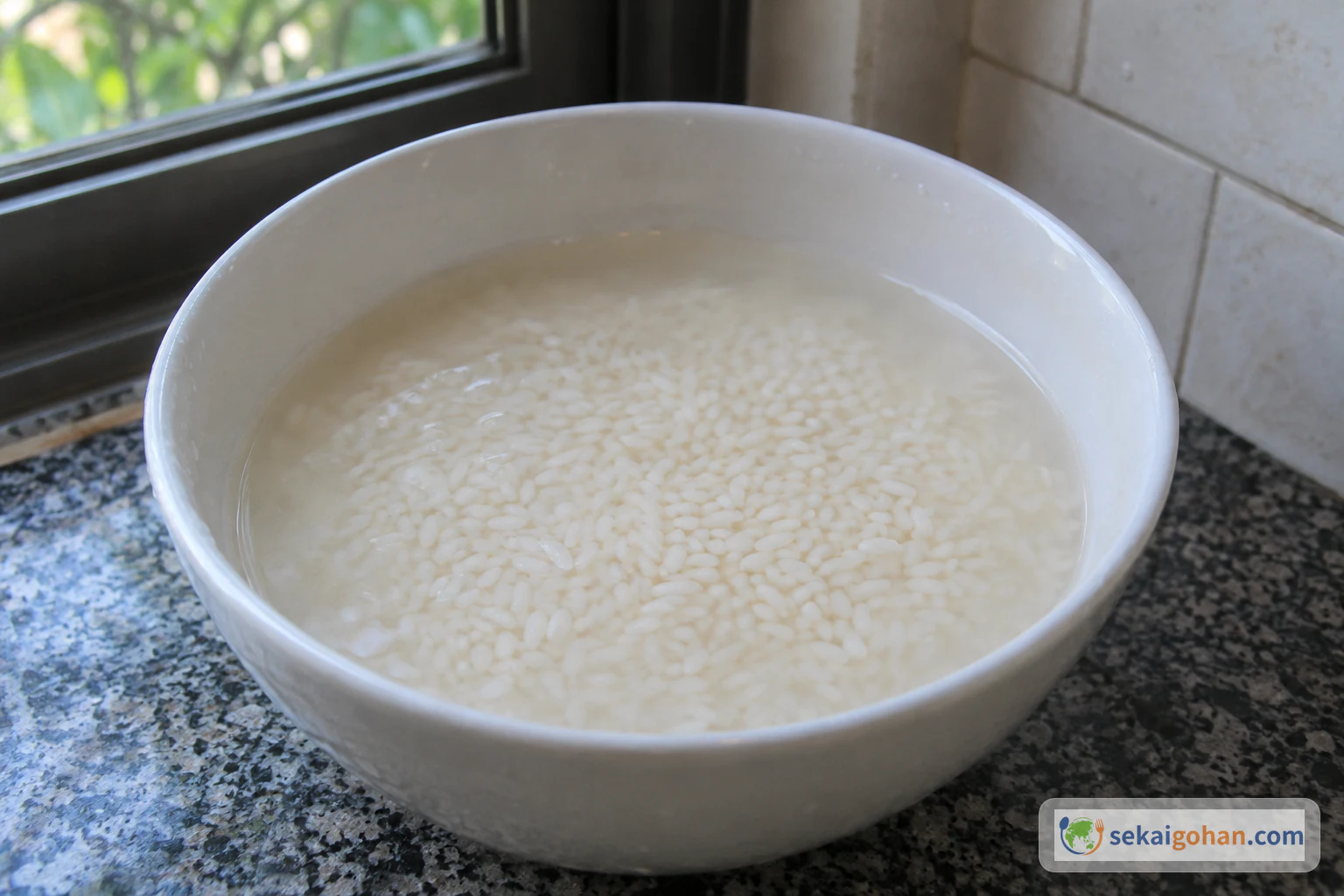
Soak the rice first, in the morning or overnight. While it soaks, make the filling and let it cool. The steaming is hands-off, and the rice needs time to cool afterward. Use that time to prepare the leaves. Rolling and grilling go quickly once both fillings are cold.
When It Goes Wrong
| What you see | Why | What to do |
|---|---|---|
| The roll falls apart or won't hold a log shape | Rice wasn't glutinous rice, or the rice was still warm | Use glutinous rice only, and let it cool fully before rolling |
| The rice inside is soggy around the filling | The filling still held moisture or was still warm | Fry the filling until it is dry and loose, and cool it completely |
| Hard, chalky centers in the rice grains | The rice was under-soaked or under-steamed | Soak for the full 4 hours or longer, and keep the steamer at a strong boil |
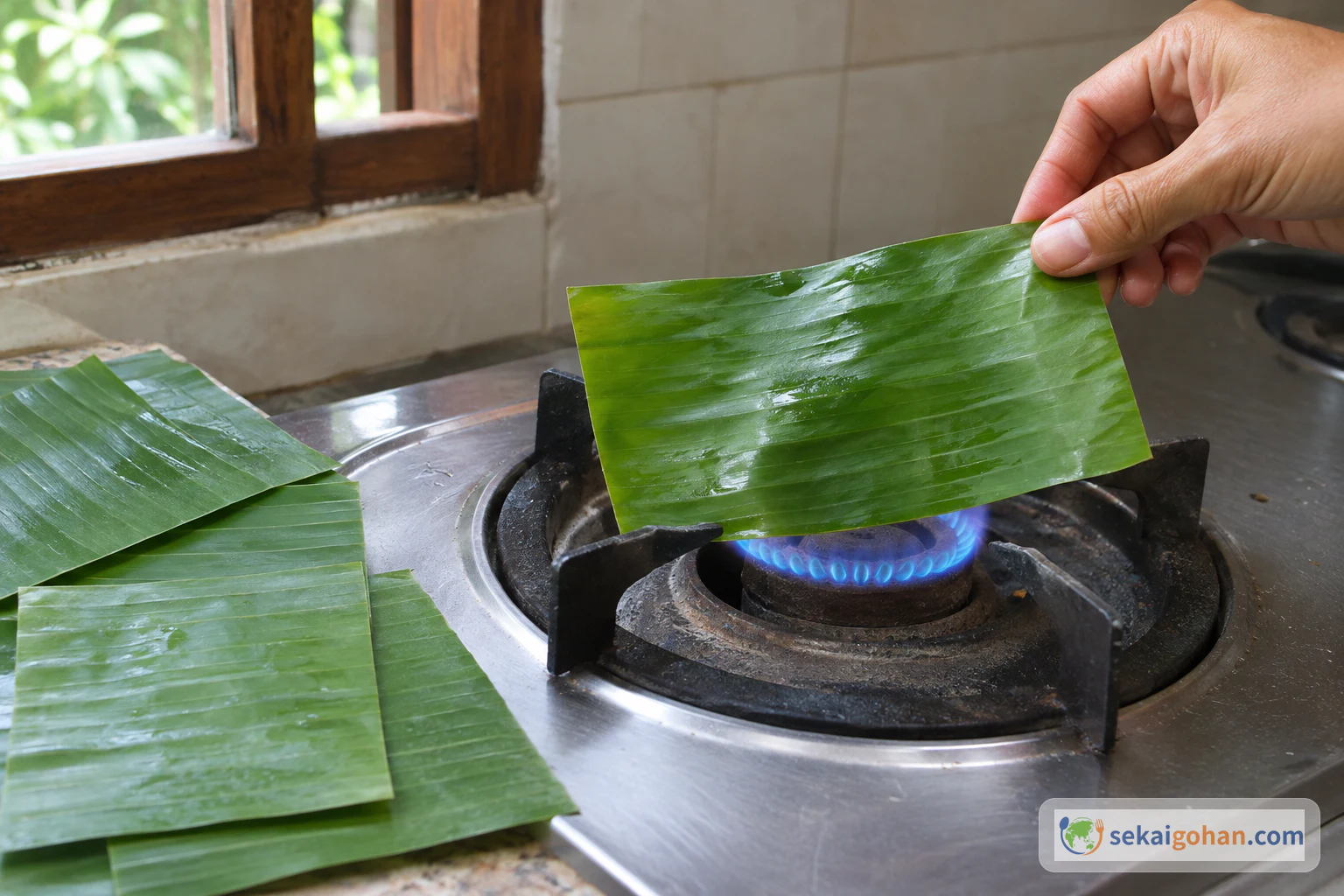
| The leaf cracks as you roll | The leaf was stiff | Pass it briefly over a flame until it softens |
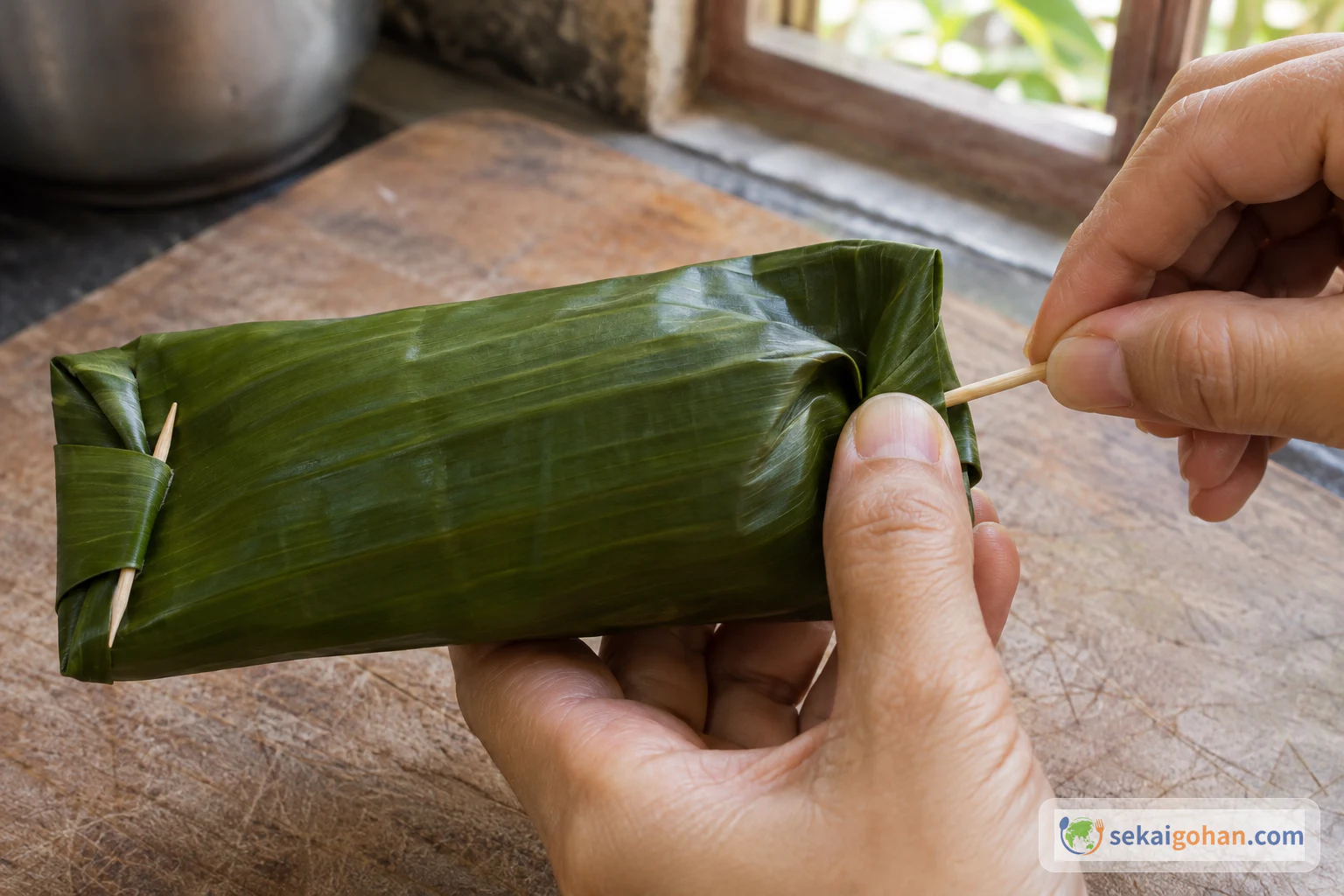
| The ends open on the grill | Loose roll, or the toothpick only caught one layer | Roll tighter and push the toothpick through every fold |
| Leaf burns black in seconds | Heat too high | Keep the pan at medium so the char builds over the full 3 minutes per side |
Serving and Variations
Serve them warm from the pan, still in their leaves. Each person unpins and unrolls their own, and the smell of the scorched leaf rises as it opens. At Mei Fang in Tutong, they can sell out by 8:30 a.m.
Variations
- Coconut and shrimp floss filling. Malaysian street-food versions fill the rolls with grated coconut fried with shrimp floss and sambal. In that style, the coconut milk goes into the rice after steaming, and the rolls are pan-grilled longer, 12–15 minutes on low heat. The filling is fluffier than the shrimp sambal version.
- Blue rice. Steep 40 butterfly pea flowers in a scant ½ cup (100 ml) of boiling water for at least 15 minutes, and use the infusion to tint the rice blue.
- Foil-wrapped. Foil lined with baking paper instead of banana leaf gives the same shape and a cleaner grill. It loses the leaf smoke that makes the dish.
Storing
Cool the grilled rolls, then refrigerate them promptly in a covered container. Eat them within a week, the sooner the better, since rice cooked with coconut milk spoils easily. They can also be frozen.
Frequently asked questions
Should I steam the parcels after wrapping them?
No. The rice is steamed once, before rolling, and the wrapped parcels go straight onto the grill. Steaming the parcels moves it toward kelupis and loses the charred leaf flavor.
Can I make the filling ahead?
Yes, and it is easier. Hae bee hiam keeps in a covered jar in the refrigerator for up to a month, or in the freezer for up to three months. Make it a day early and the rolling day is just soaking, steaming and grilling. The leftovers are good spooned over plain rice.
Grill pan or flat pan?
Either works. A ridged grill pan gives striped char and a little more smoke. A nonstick pan gives broader browned patches. Keep both at medium heat and brush the leaves with oil first.