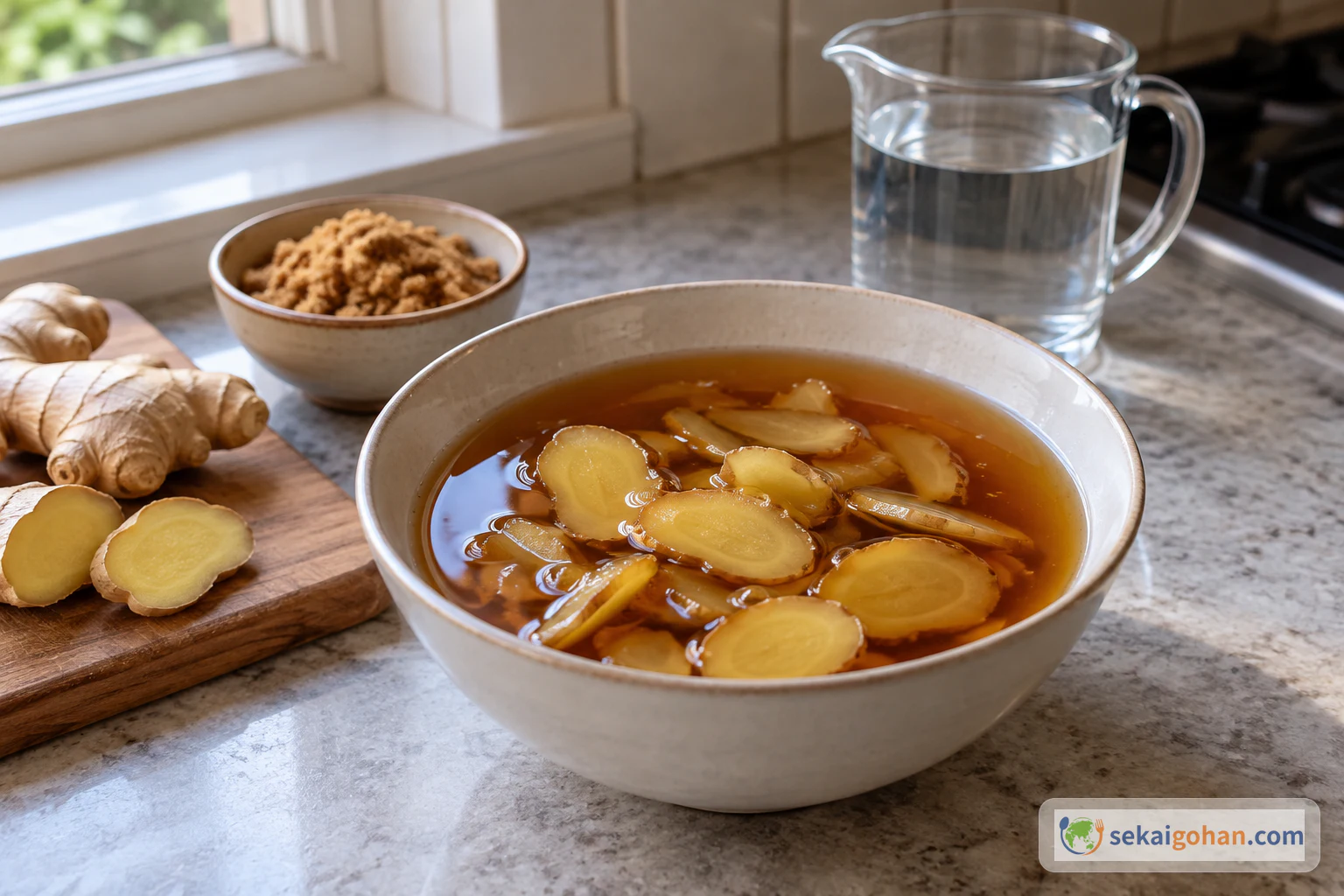
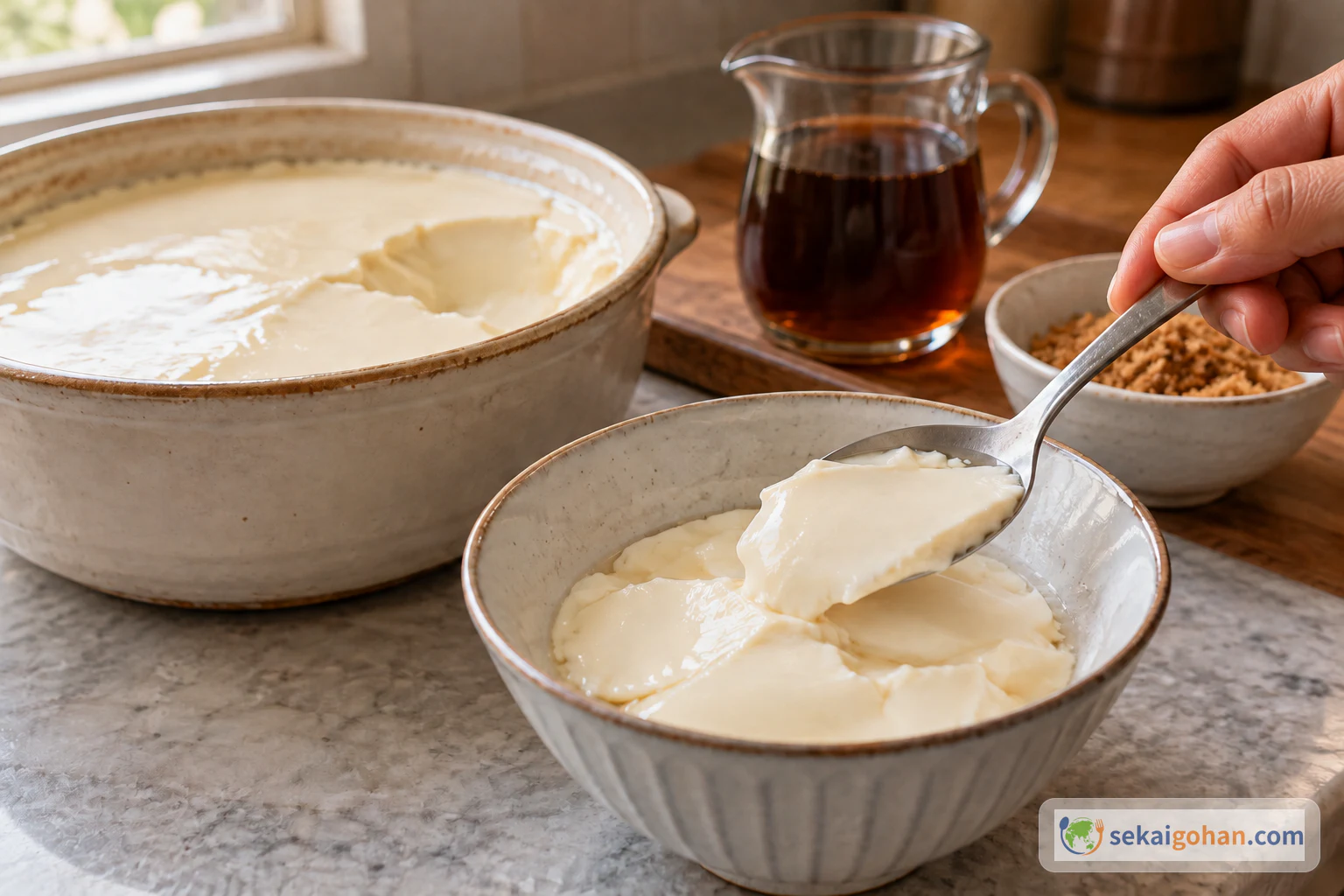
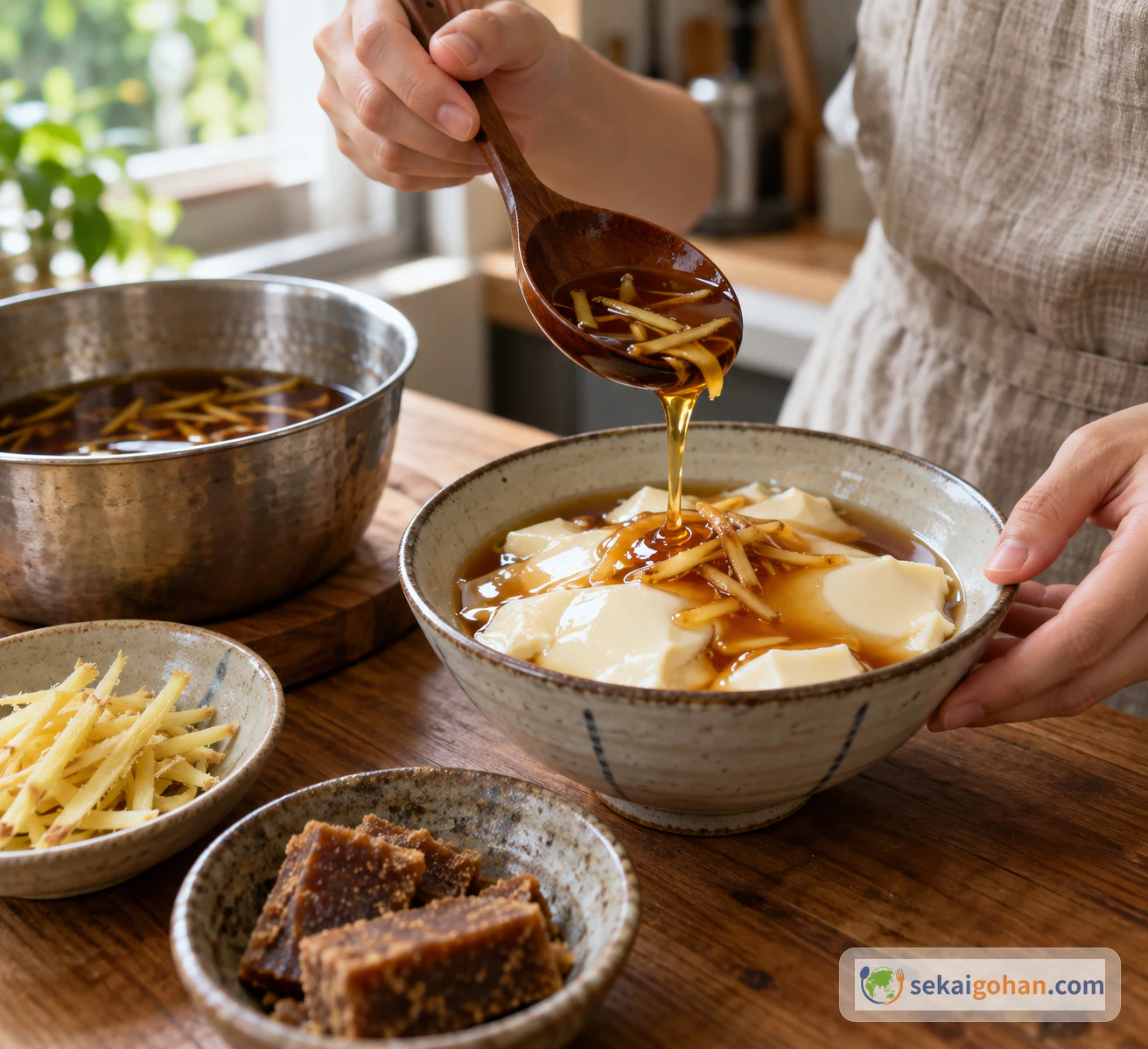
Tào Phớ: Soft Soy Milk Pudding, Shaved Thin, with Dark Ginger Syrup
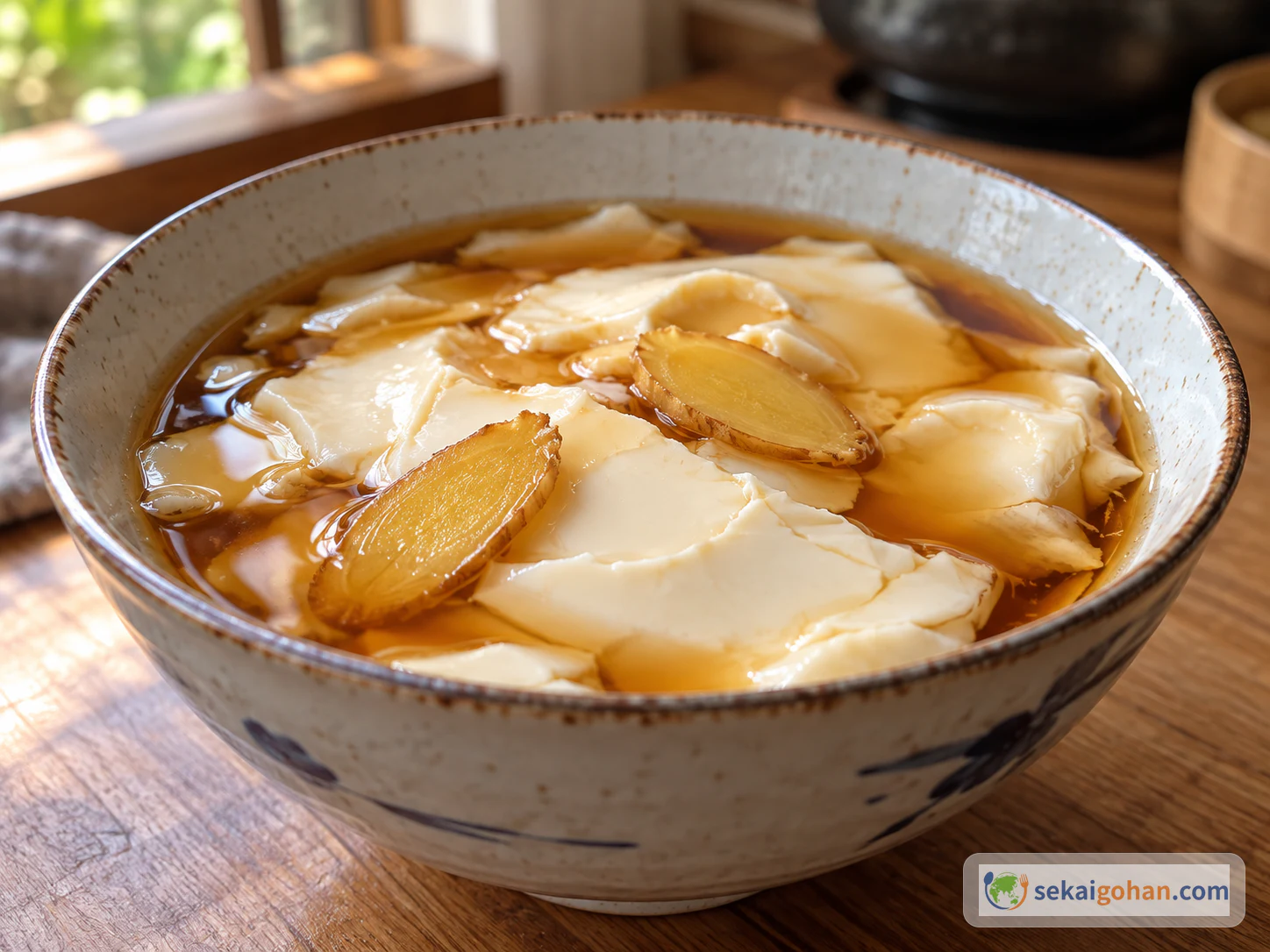
A pudding so soft it is shaved, not cut, into thin layers. A syrup with the bite of ginger and the deep sweetness of brown slab sugar. The two decisions that matter most are the soy milk you start with and the moment you add the coagulant.
In a report on old Hanoi, the Vietnamese broadcaster VTV recalls vendors calling out as they walked the narrow lanes. A thin layer of pudding is shaved into each bowl, then covered in syrup scented with jasmine or grapefruit blossom. Far to the south, Tuoi Tre News describes tofu pudding sellers in Saigon carrying their pots on shoulder poles through the neighborhoods and selling at the side of the street. There, the pudding often comes with hot ginger syrup, coconut milk and handmade tapioca pearls, sometimes over ice.
It is the same soft soy milk pudding, but it is not one fixed dish. VnExpress reports that the name itself changes as you travel through Vietnam: tào phớ in Hanoi, tàu pha in Hải Phòng, đậu hũ in Central Vietnam and tàu hũ in the South. The report describes the Hanoi style as having light jasmine-scented syrup and thinly shaved portions. It ties ginger to the Central style, and a thicker texture with coconut milk and newer toppings to the South. It also calls the snack popular and inexpensive in summer, sold by street vendors and in shops.
This article makes one version: the warm tofu pudding with ginger syrup published by the recipe author Trang on RunAwayRice under the names Dau Hu Nuoc Duong / Tao Pho. Fresh soy milk is set with cornstarch and glucono delta lactone (GDL), then served warm under a ginger and brown slab sugar syrup. The author's recipe card lists its cuisine as Asian, Chinese and Vietnamese. Treat it as one documented, Vietnamese-linked home recipe, not as the country's single traditional formula or the canonical form of any one city.
This recipe has not been kitchen-tested by Sekai Gohan. The amounts, units, heat levels, times and order of steps follow the author's published recipe as written. Any purchasing suggestions beyond that are labeled as our own.
Ingredients: Eight Lines, Two Separate Waters (Serves 8)
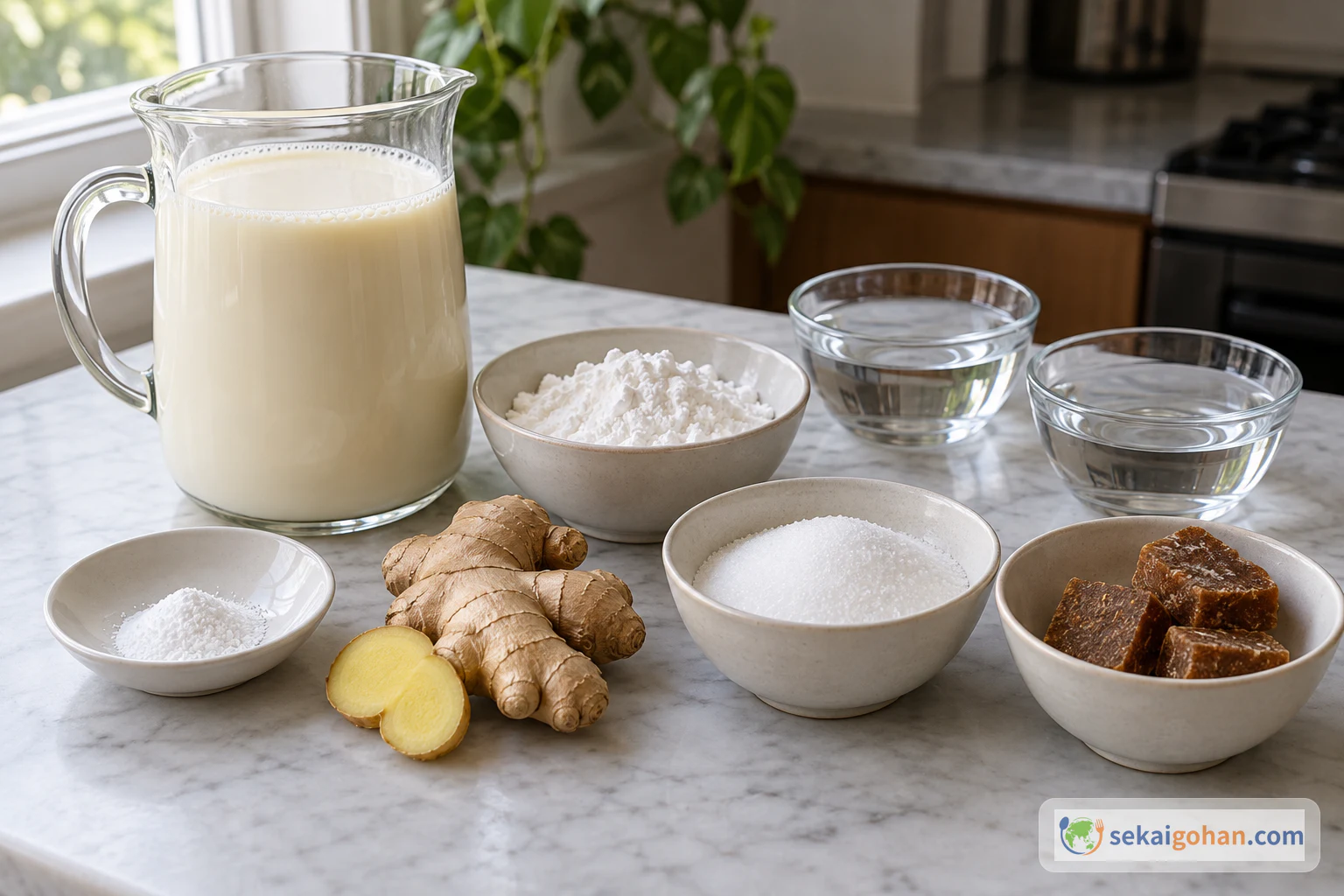
The recipe has four lines for the pudding and four for the syrup. Two different amounts of water appear: one for the starch slurry and one for the syrup. Keep them apart on your counter so neither goes into the wrong bowl. The recipe serves 8.
This dessert is made from soy milk, so it contains soy. When you buy cornstarch, GDL, brown slab sugar and soy milk, check each product's own label for ingredients and allergen information.
Equipment
- Medium saucepan
- Fine sieve
- Two small bowls (one for the slurry, one for the measured GDL), plus a small bowl for the ginger
- 2-quart bowl, for setting the pudding
- Medium bowl, for cooling the syrup
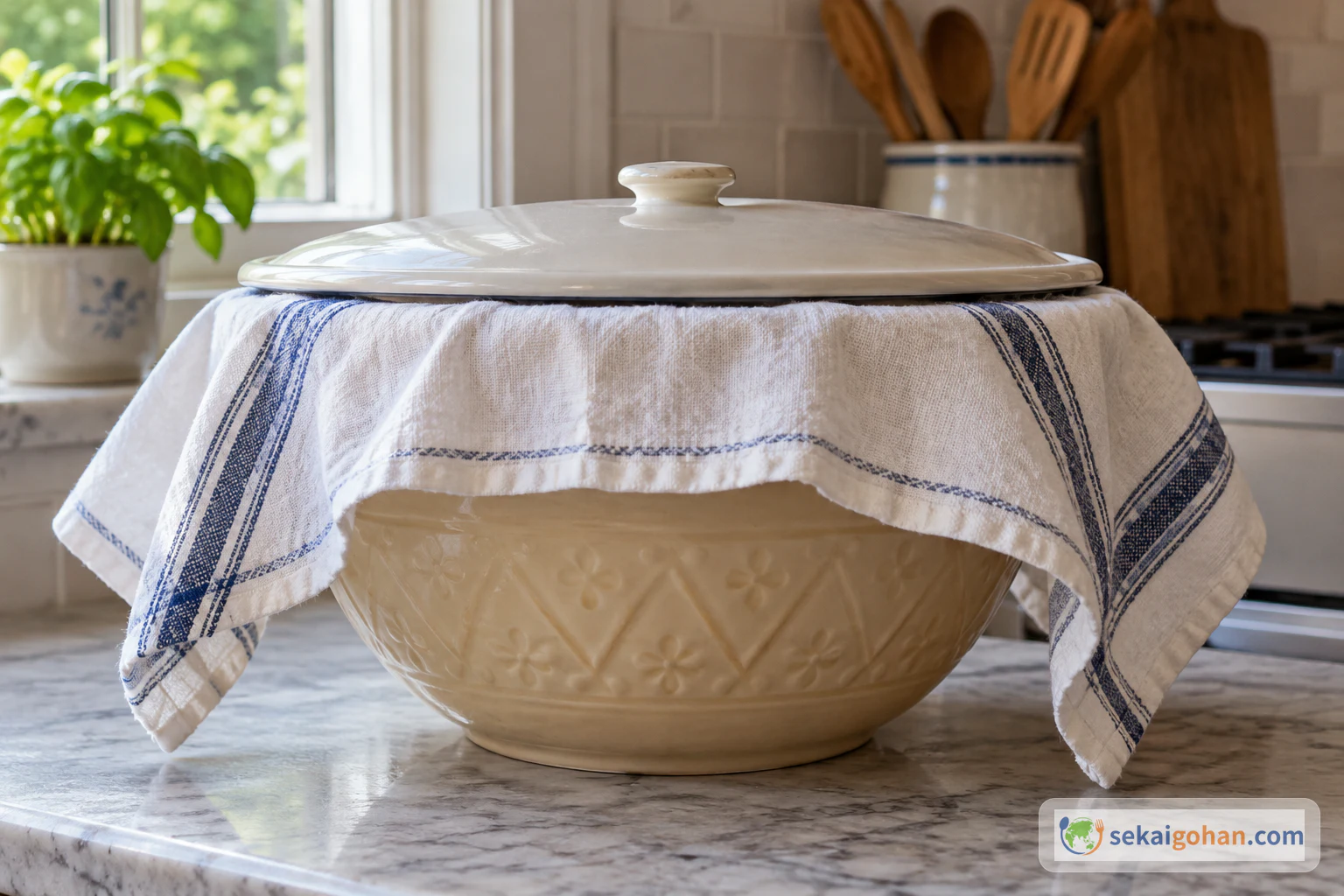
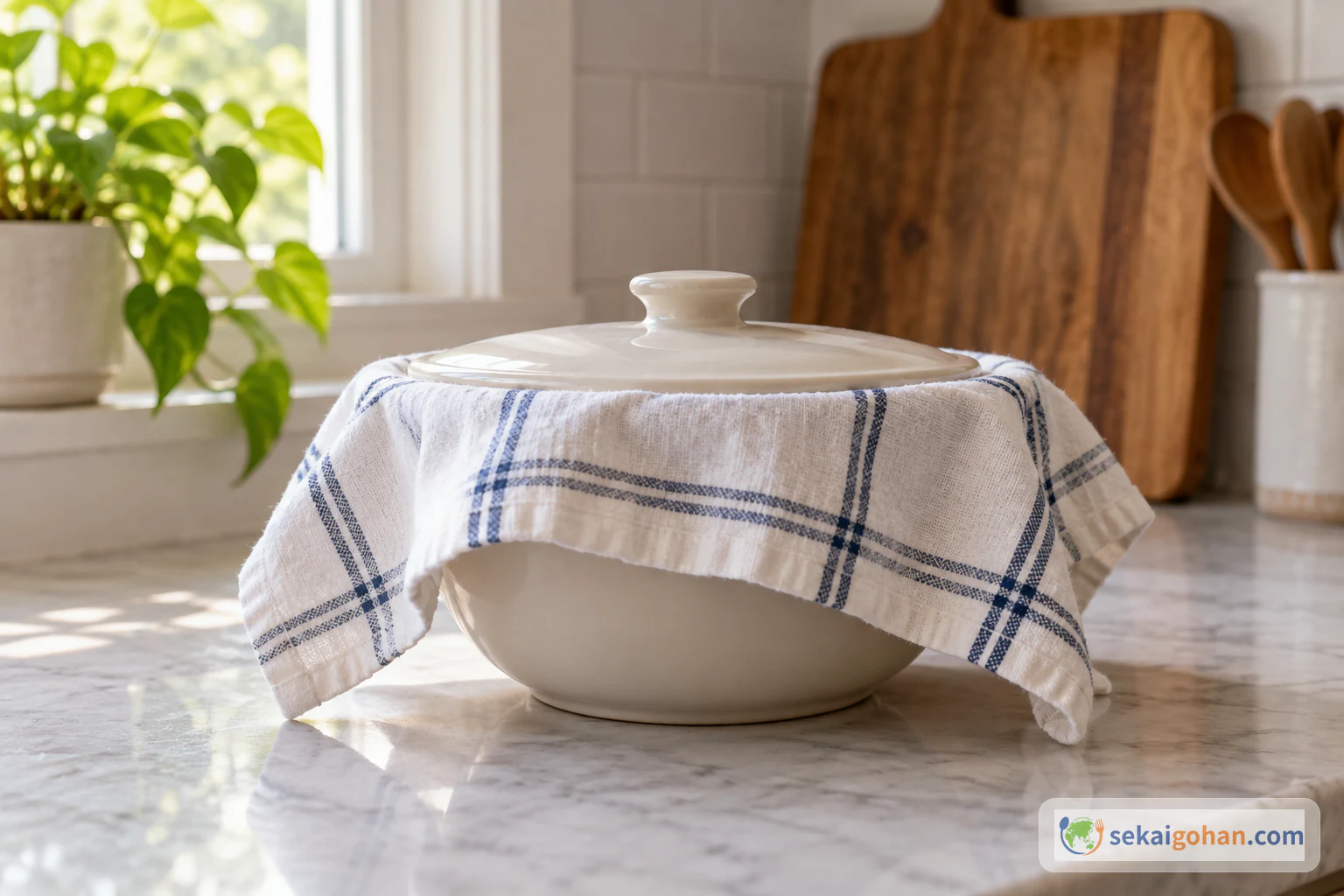
- Clean kitchen towel and a lid
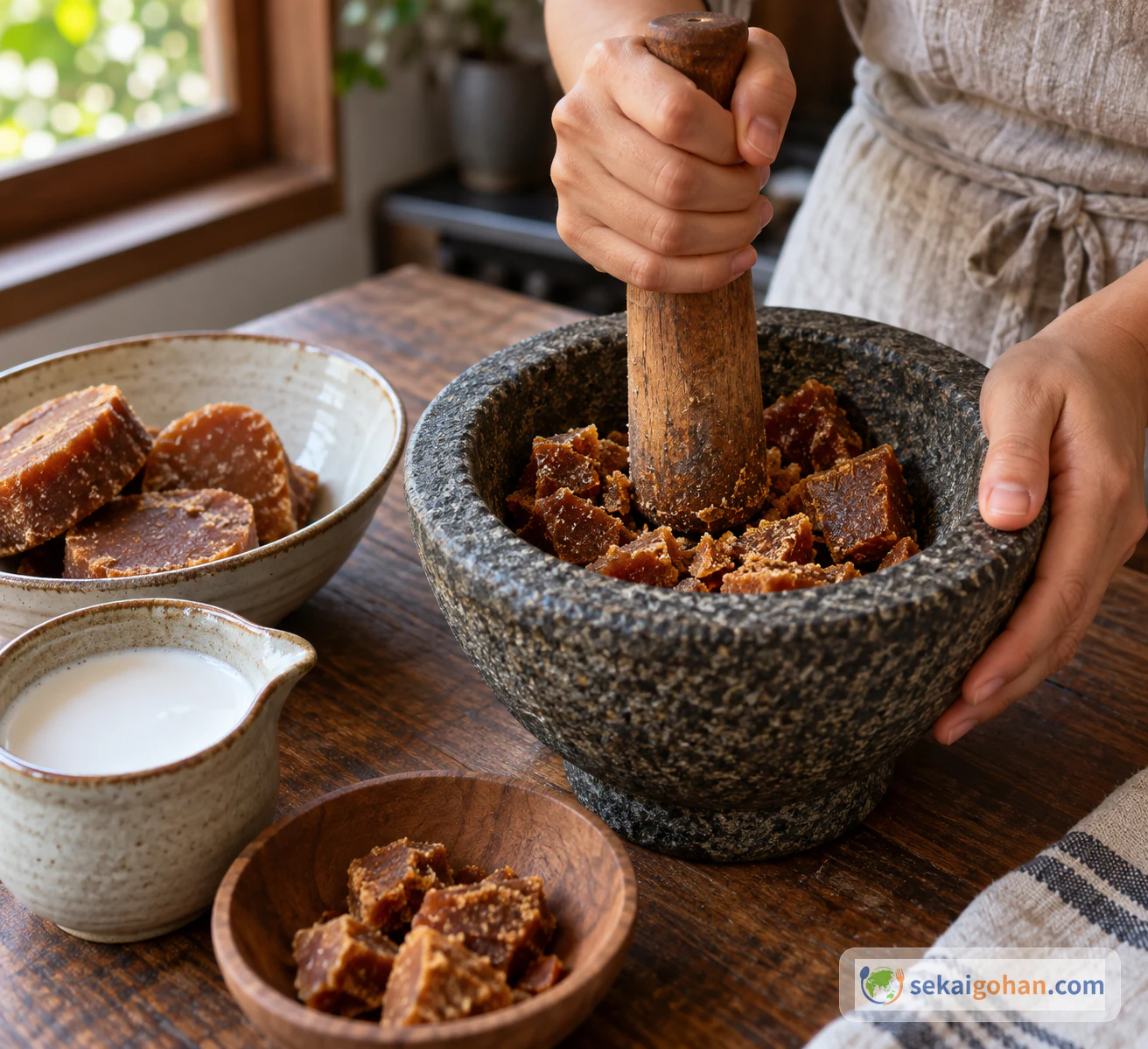
- Wooden pestle, for breaking the slab sugar
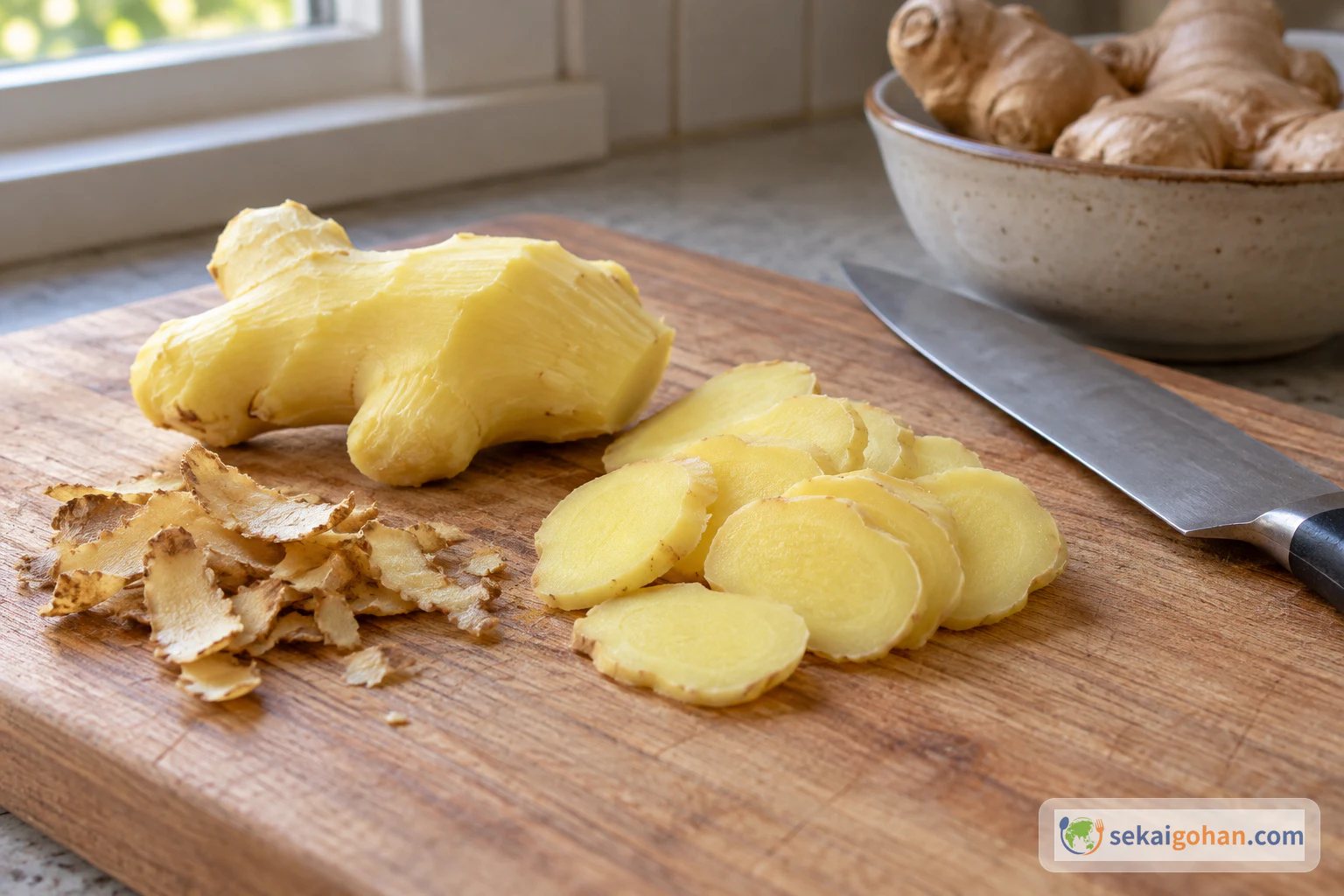
- Knife, for peeling and slicing the ginger
- Thin-edged serving spoon
- Serving bowls
This recipe uses ordinary kitchen tools. The one item worth thinking about is the spoon: you want a thin edge so it glides through the soft pudding in thin layers. If you already own a thin-rimmed spoon, you don't need to buy anything. Don't improvise sharp-edged serving tools; an ordinary thin-edged spoon is all this recipe needs.
Choosing and Substituting: Soy Milk, Starch, Coagulant and Sugar
Soy milk decides whether the pudding sets. Fresh, rich soy milk gives the intended soft set, and some supermarket soy milks don't set at all. Look for fresh, refrigerated soy milk; Asian grocers sell a suitable kind. Our own suggestion is plain, unsweetened, unflavored soy milk, so that added sugar or flavoring doesn't shift the sweetness the syrup is meant to supply. If a soy milk fails to set, don't try to rescue it by adding more GDL. Change the soy milk instead.
Cornstarch means corn starch. Use cornstarch only. Don't swap in potato starch and assume it behaves the same; that would be a different recipe.
GDL is its own coagulant. Glucono delta lactone is the coagulant here; its Vietnamese name is đường nho, and it is not the same as gypsum (bột thạch cao). Look for a product clearly labeled as food-grade glucono delta lactone, typically from specialty shops or online. GDL, gypsum and nigari are not interchangeable in this recipe. Other Vietnamese recipes that set the pudding with gypsum or with a packaged mix use their own separate formulas, covered under Variations below.
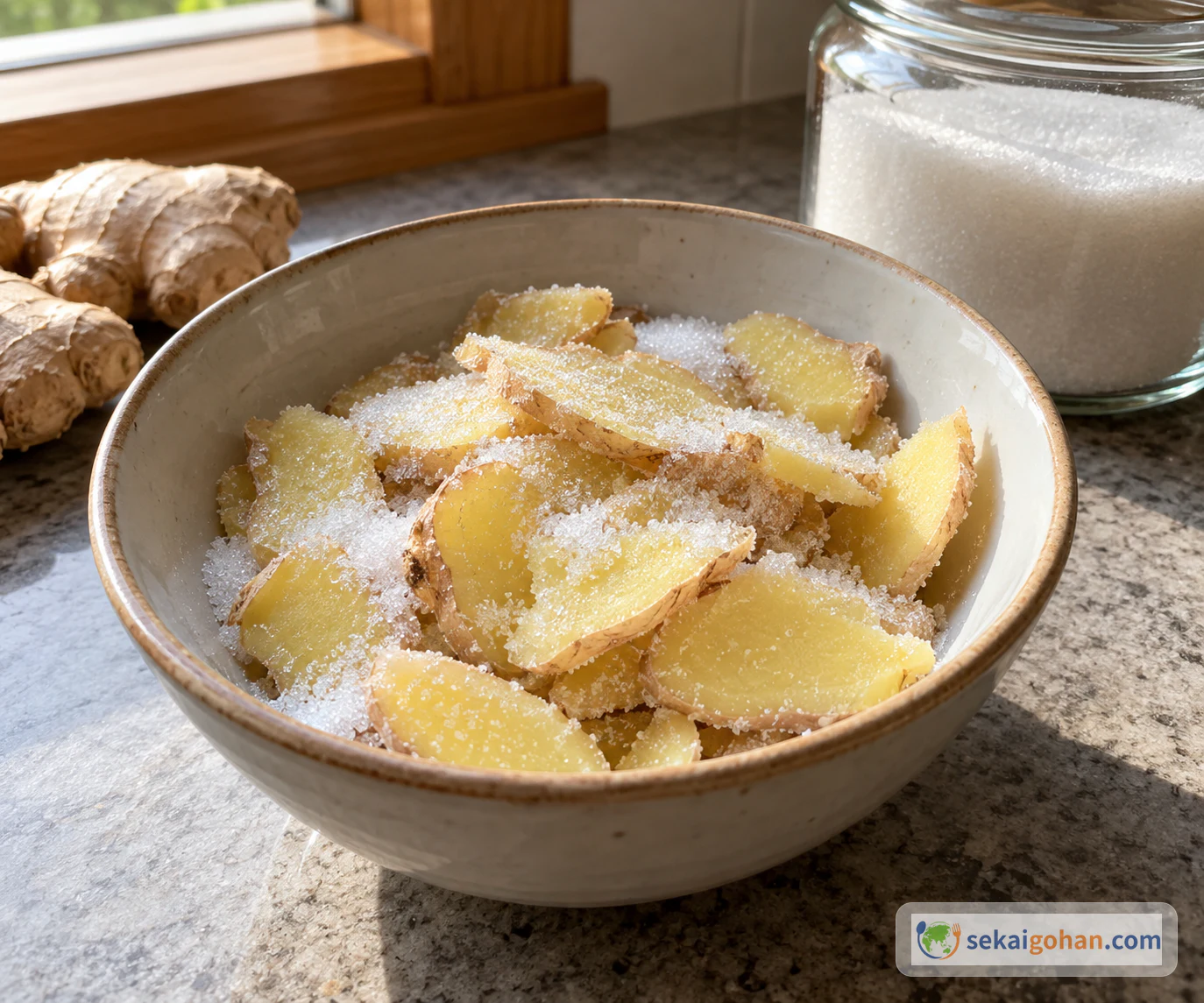
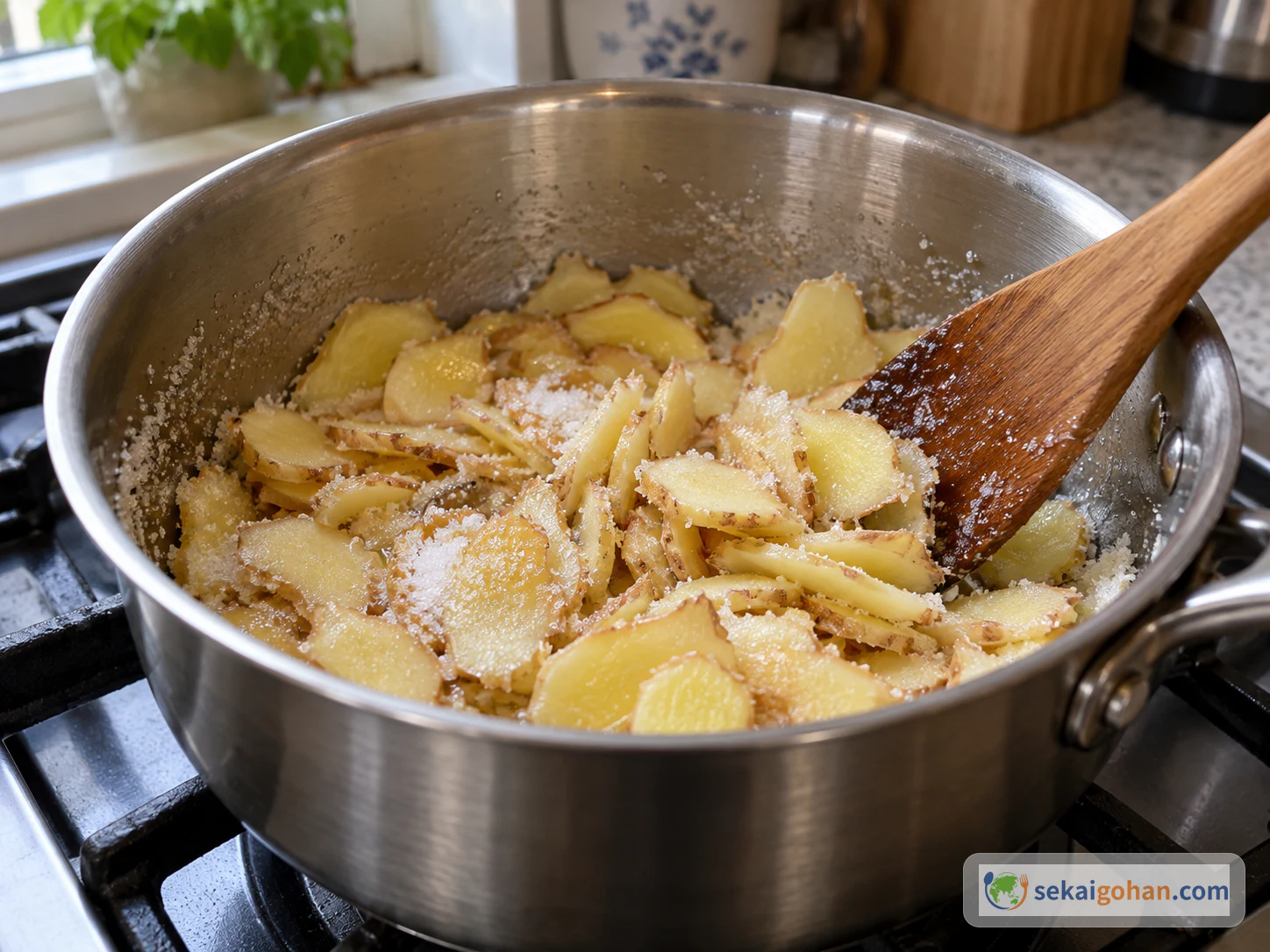
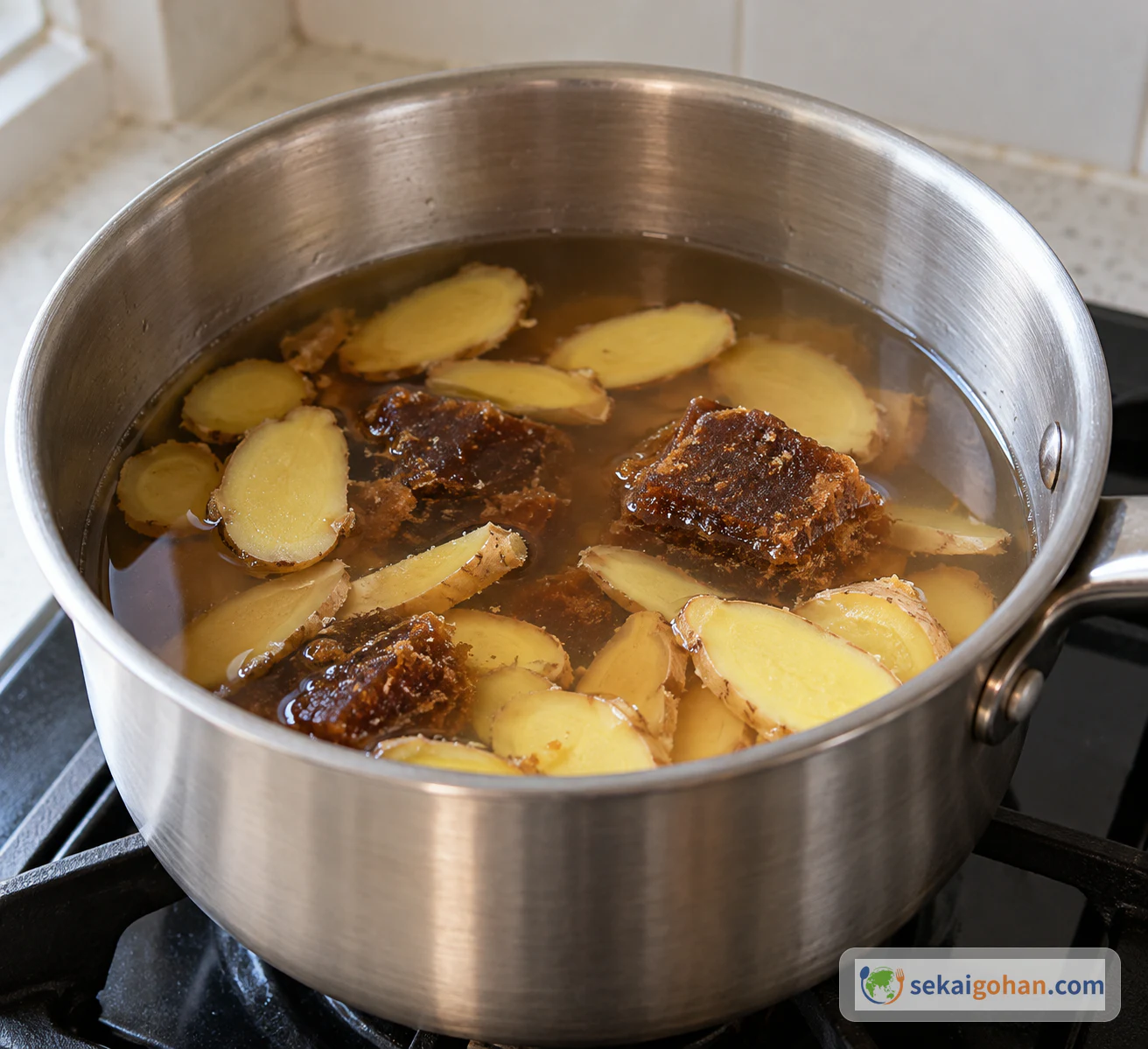
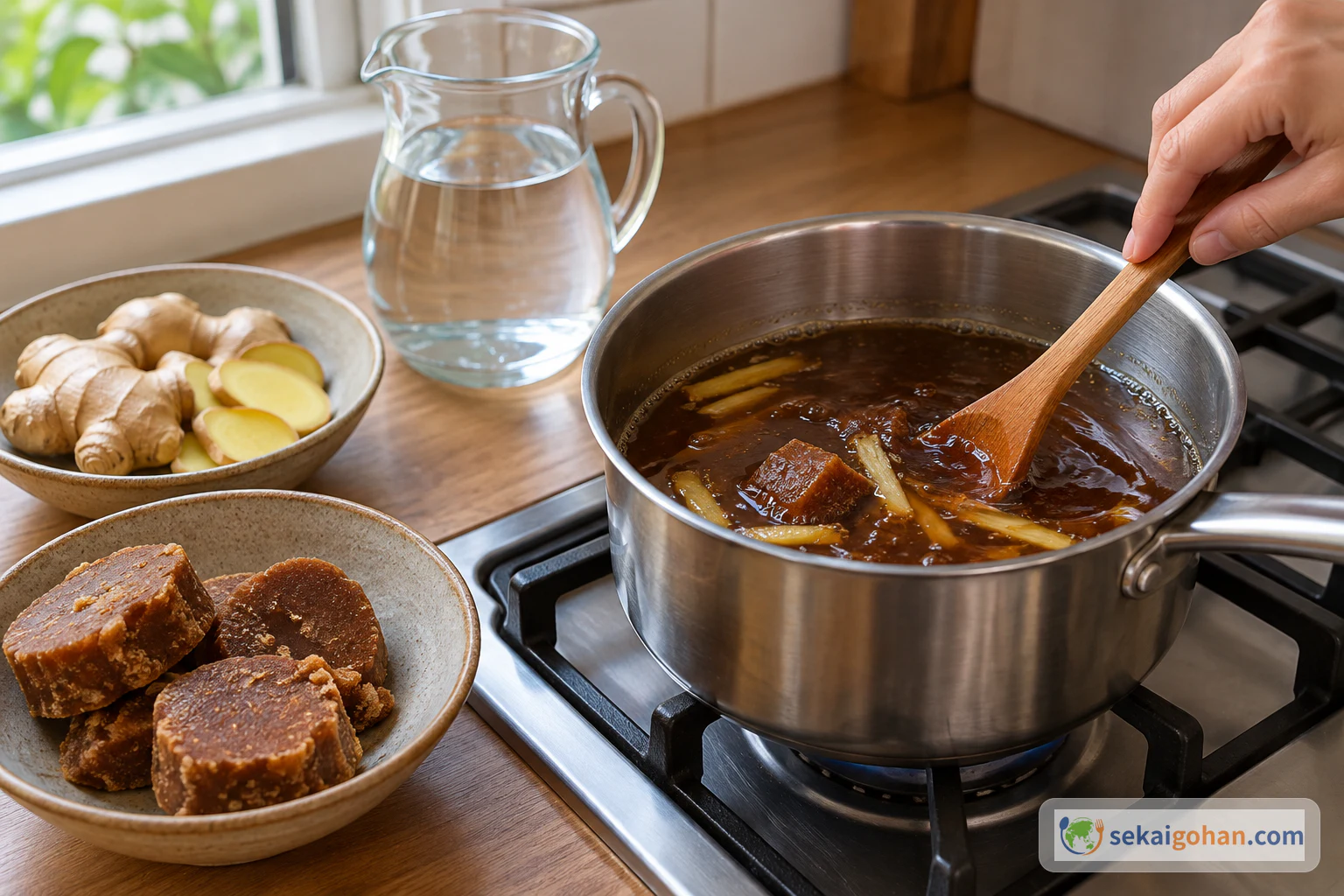
Brown slab sugar is the chosen sweetener. Brown slab sugar is available at Asian grocery stores, and this version uses it. Loose brown sugar at the same 9 oz is an option, and palm sugar is another alternative. Loose sugar skips the crushing step and makes a somewhat different syrup, so treat it as a substitute rather than the same version.
Method: Add the GDL Last, Stir Once, Leave It Alone
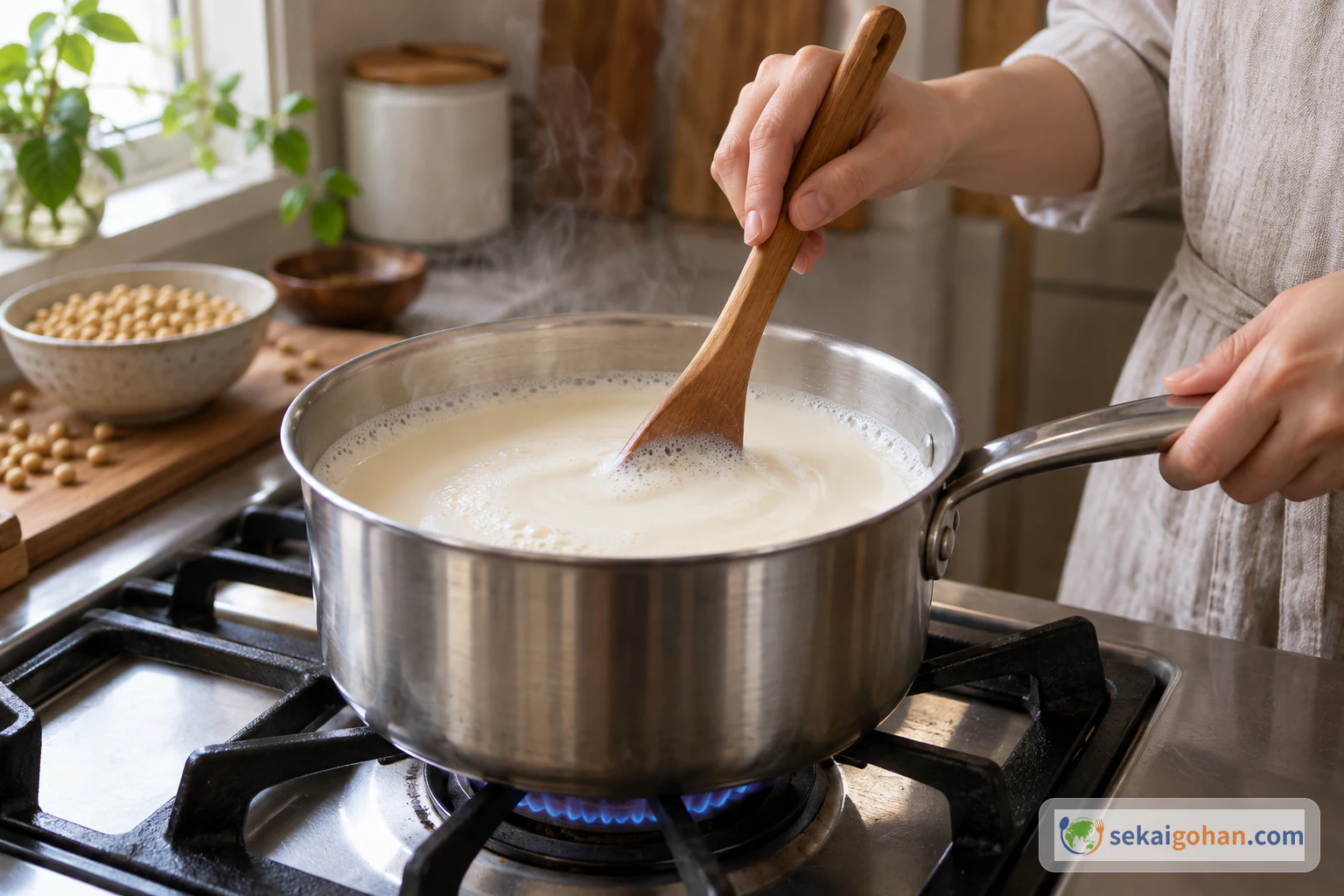
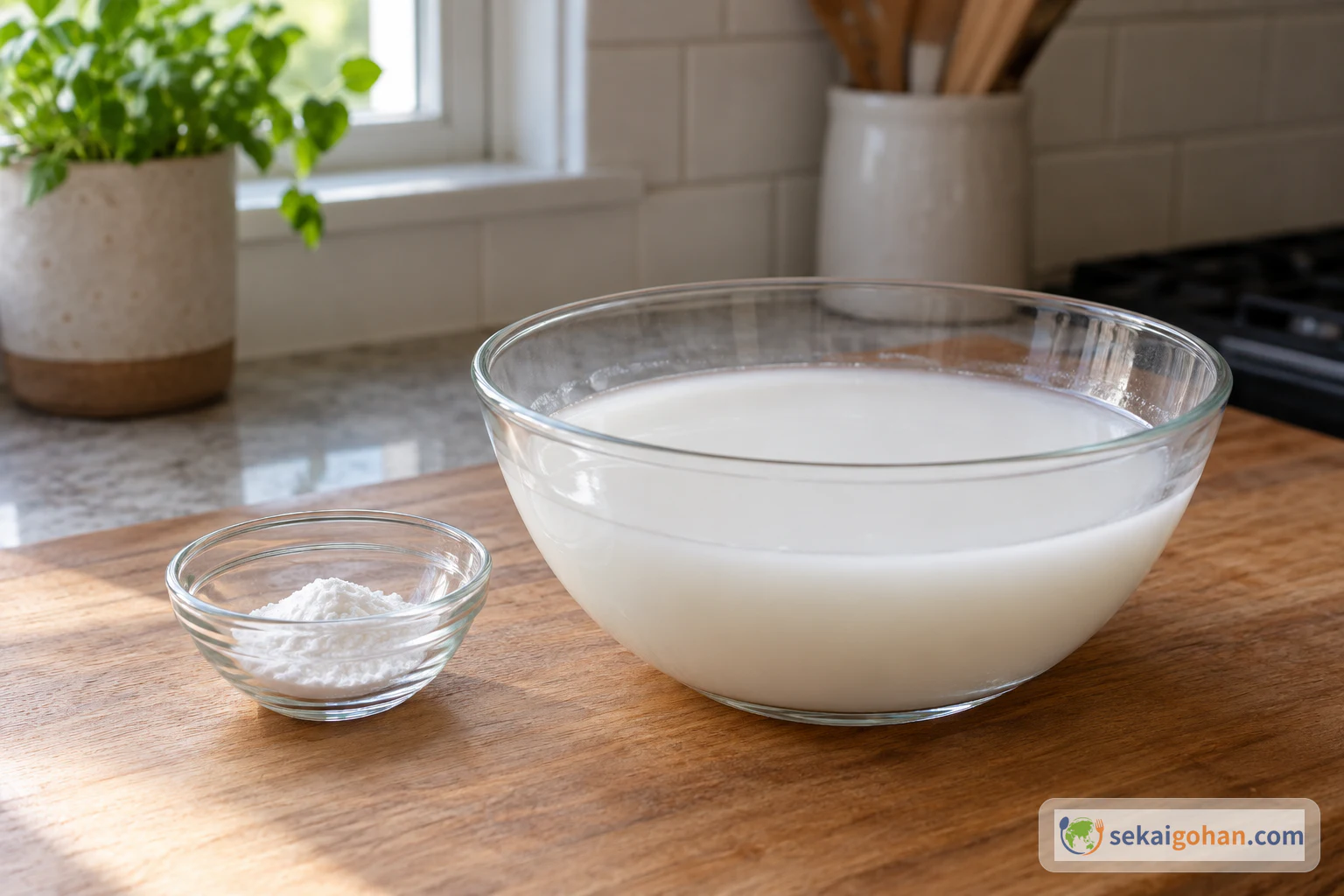
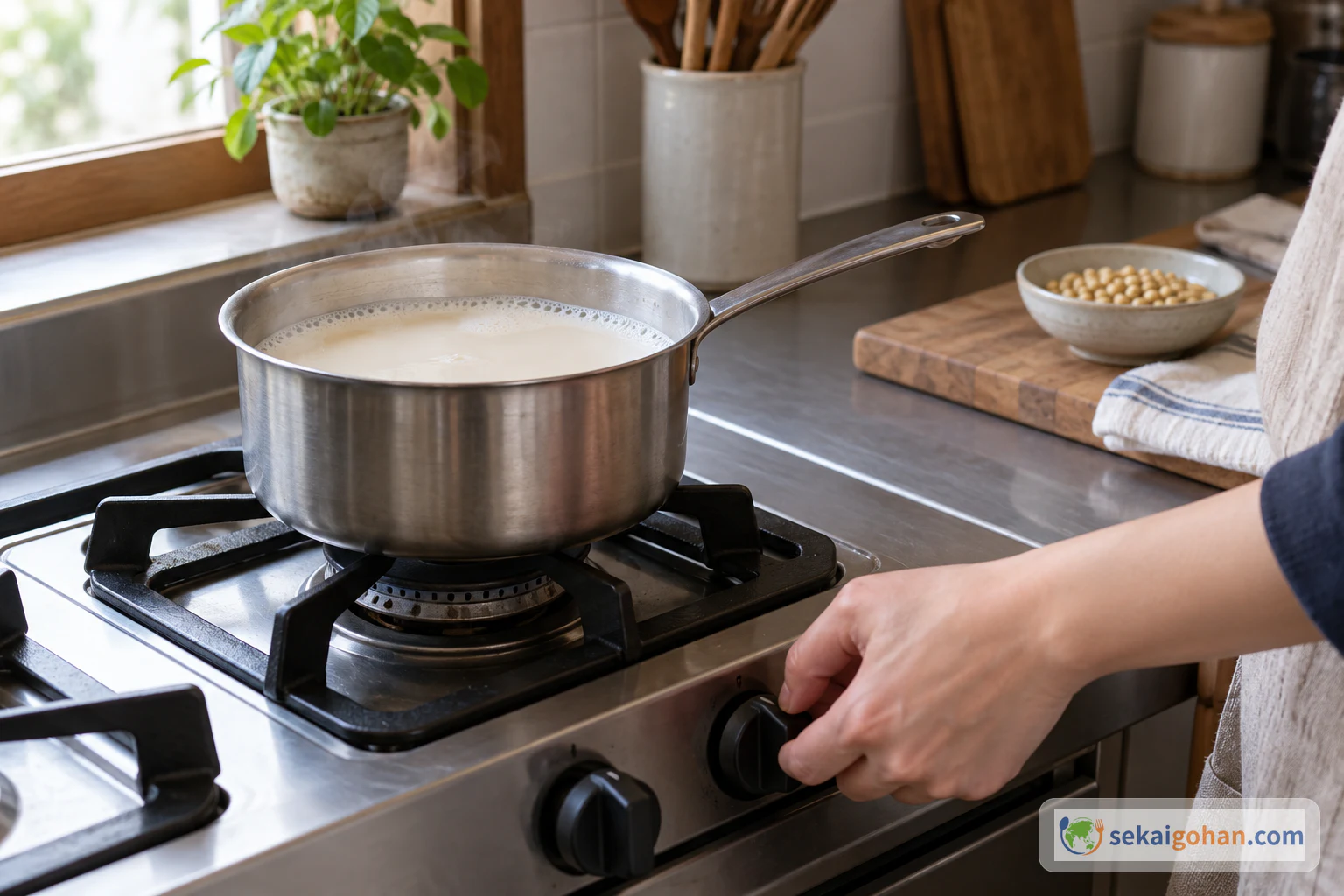
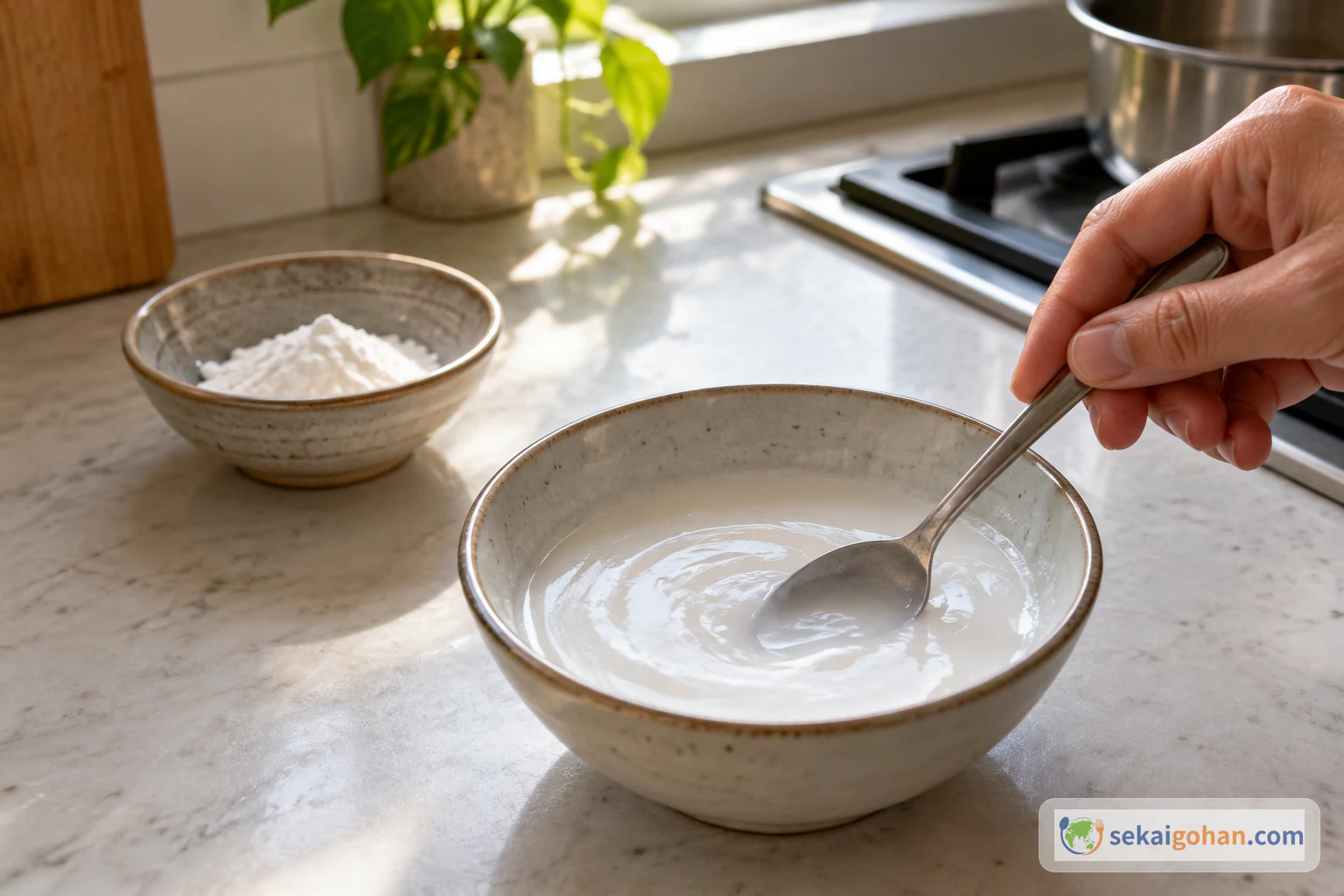
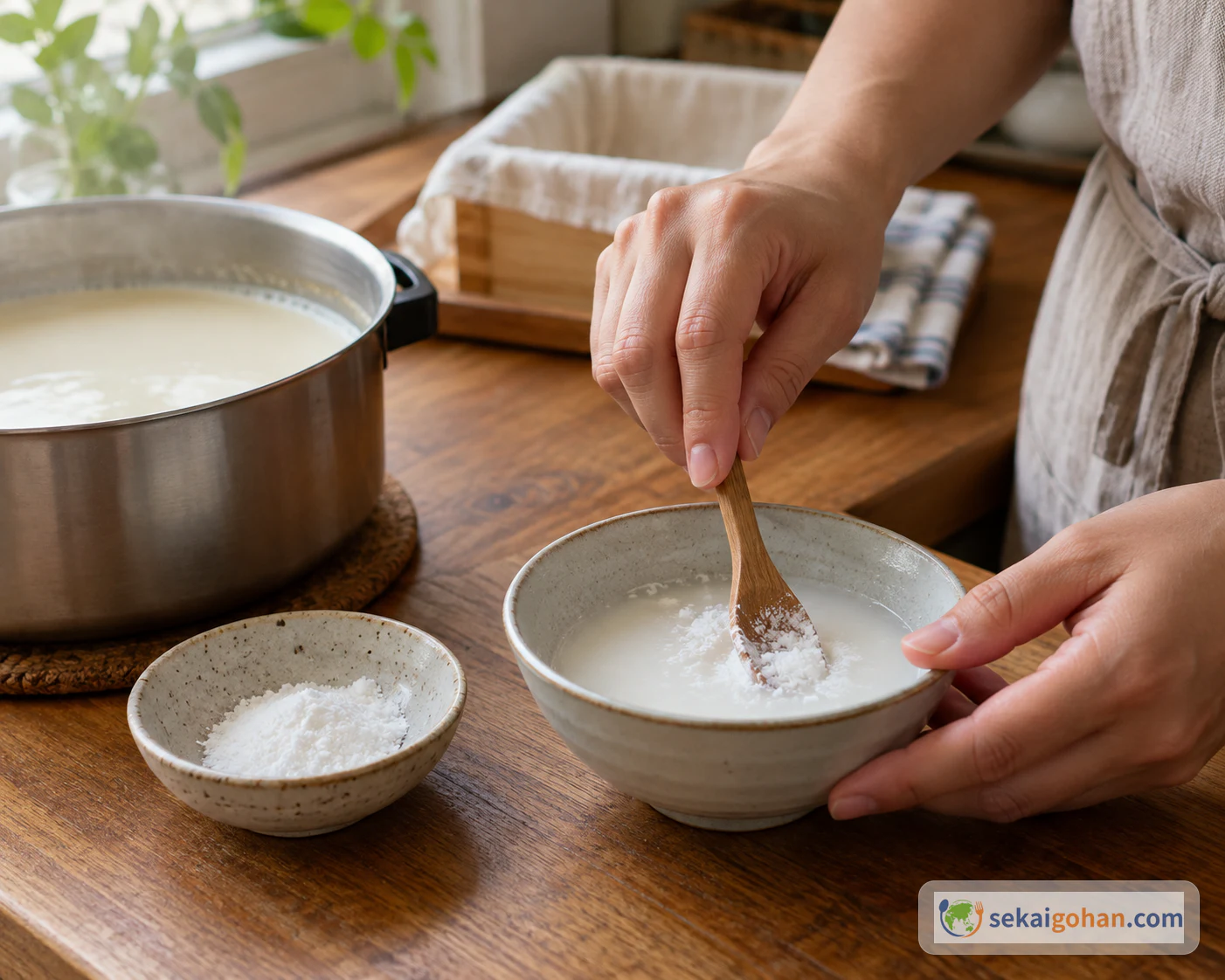
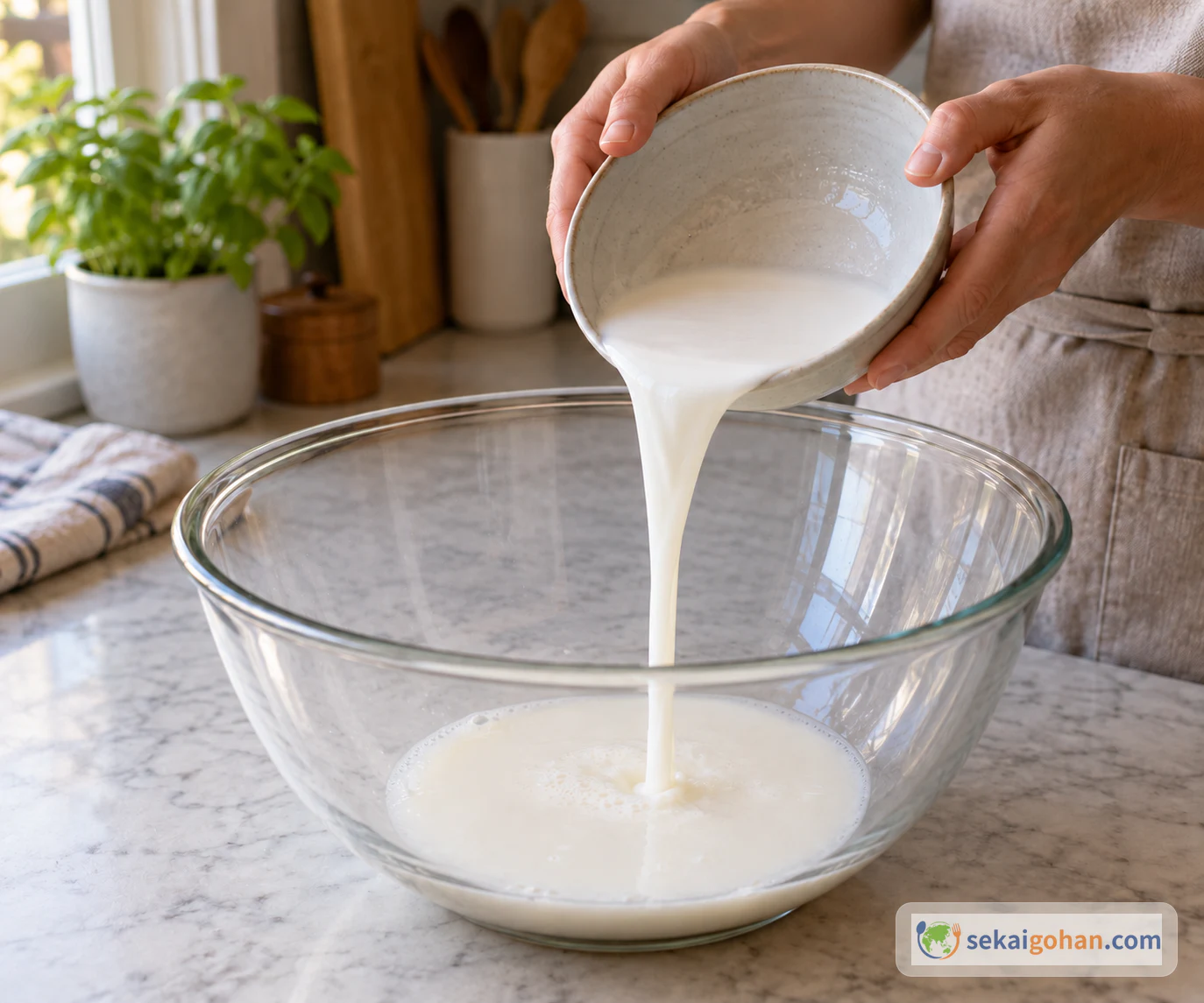
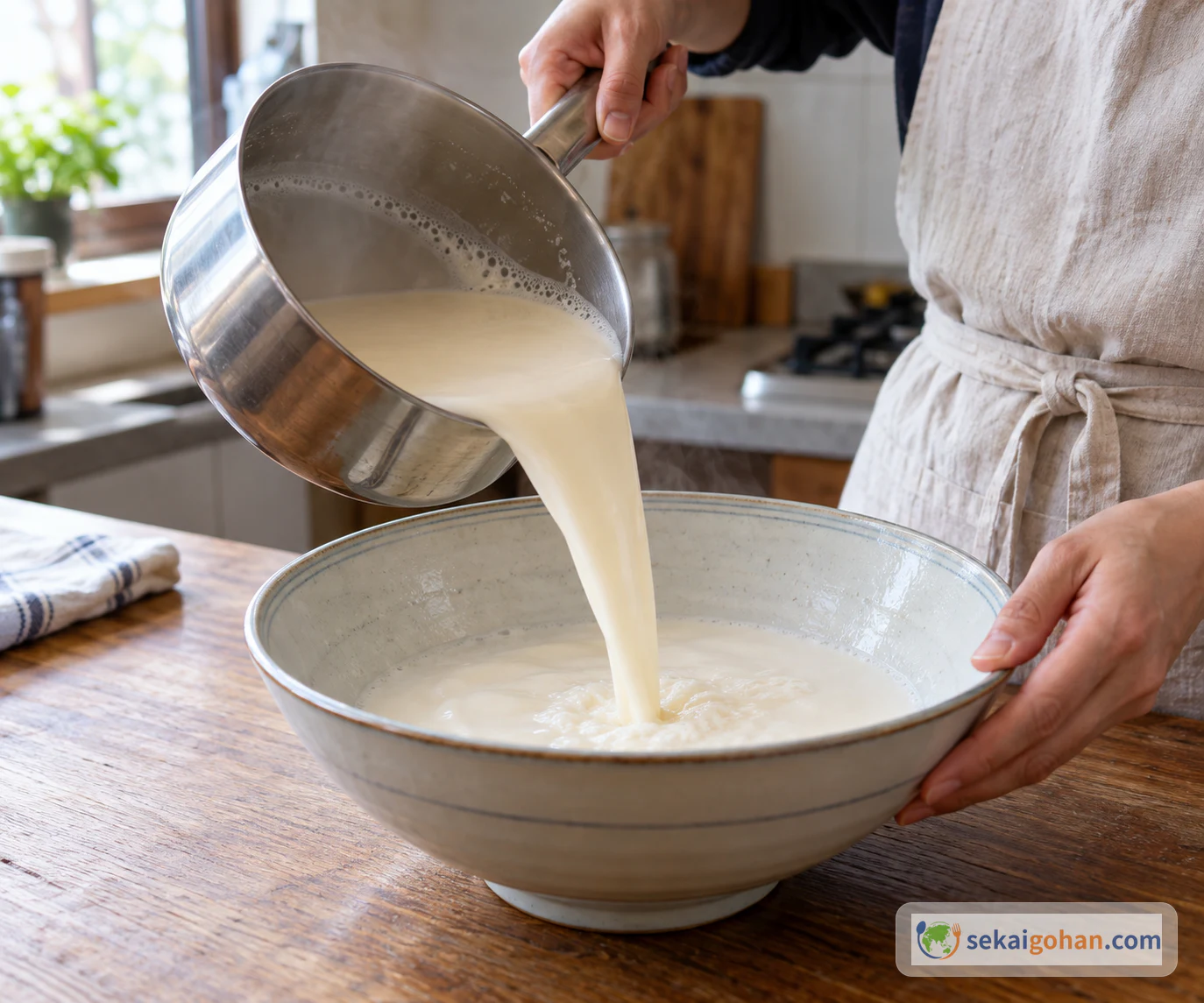
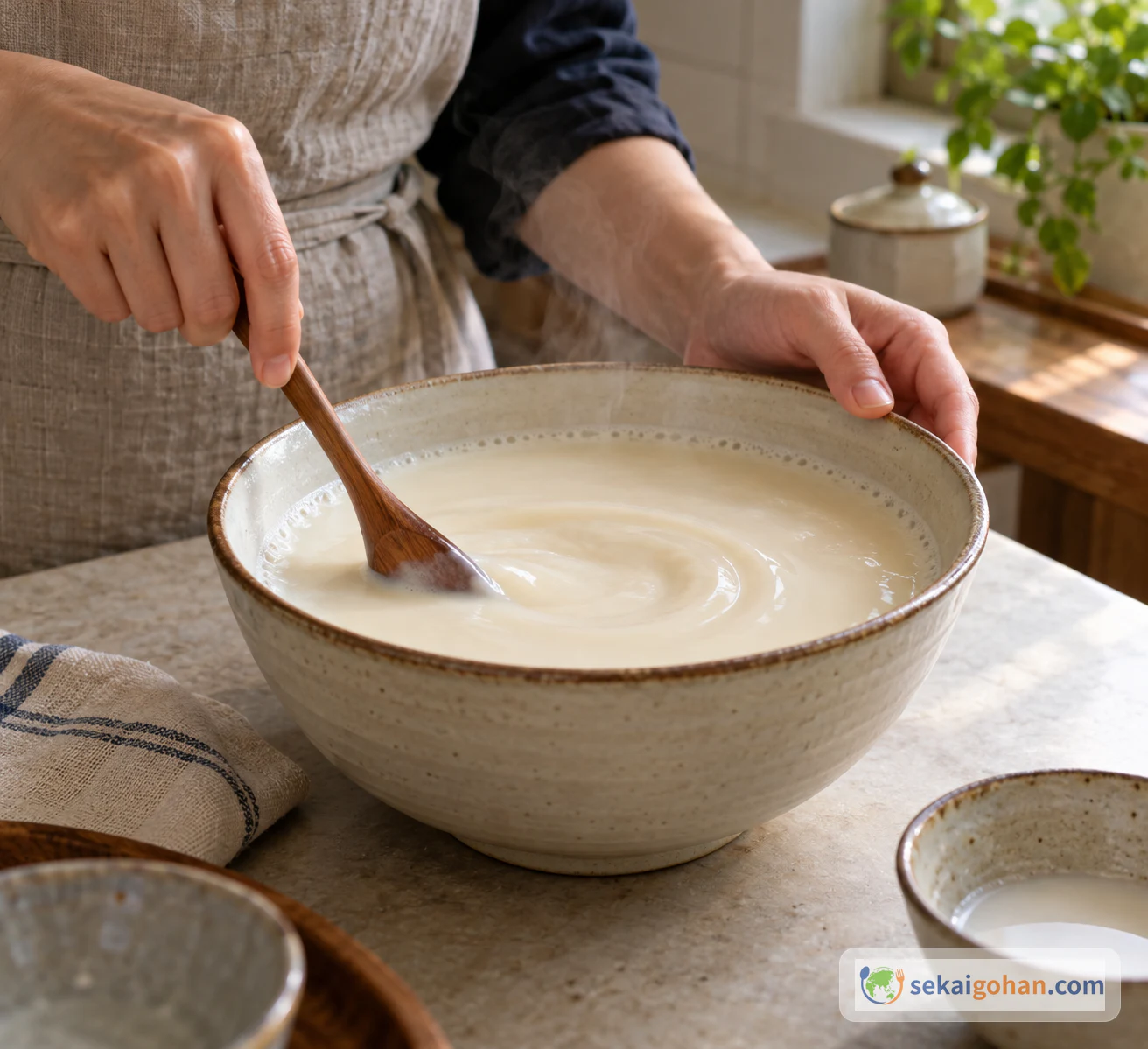
Keep the GDL apart until the soy milk has reached a gentle boil and the heat is off. Then stir it into the slurry, pour in the hot soy milk quickly, and stir only once. Steps 1–13 make the pudding, 14–21 make the syrup, and 22–23 are serving.
Allow about 10 minutes of prep and 30 minutes of cooking, 40 minutes in total, as a rough estimate only. The method also includes a 30-minute set, a 10-minute ginger rest, timed syrup cooking, and soy milk heating and syrup cooling with no fixed time, so judge each step by the state described rather than by a strict schedule.
When It Won't Set or the Surface Bubbles: What to Check
If the pudding stays liquid, look first at the soy milk. The author uses fresh, refrigerated soy milk and reports that two U.S. supermarket soy milks did not set in her kitchen. Increasing the GDL is not part of the recipe.
The author warns that GDL mixed into liquid ahead of time turns sour. Add it to the slurry only after the heat is off, right before pouring.
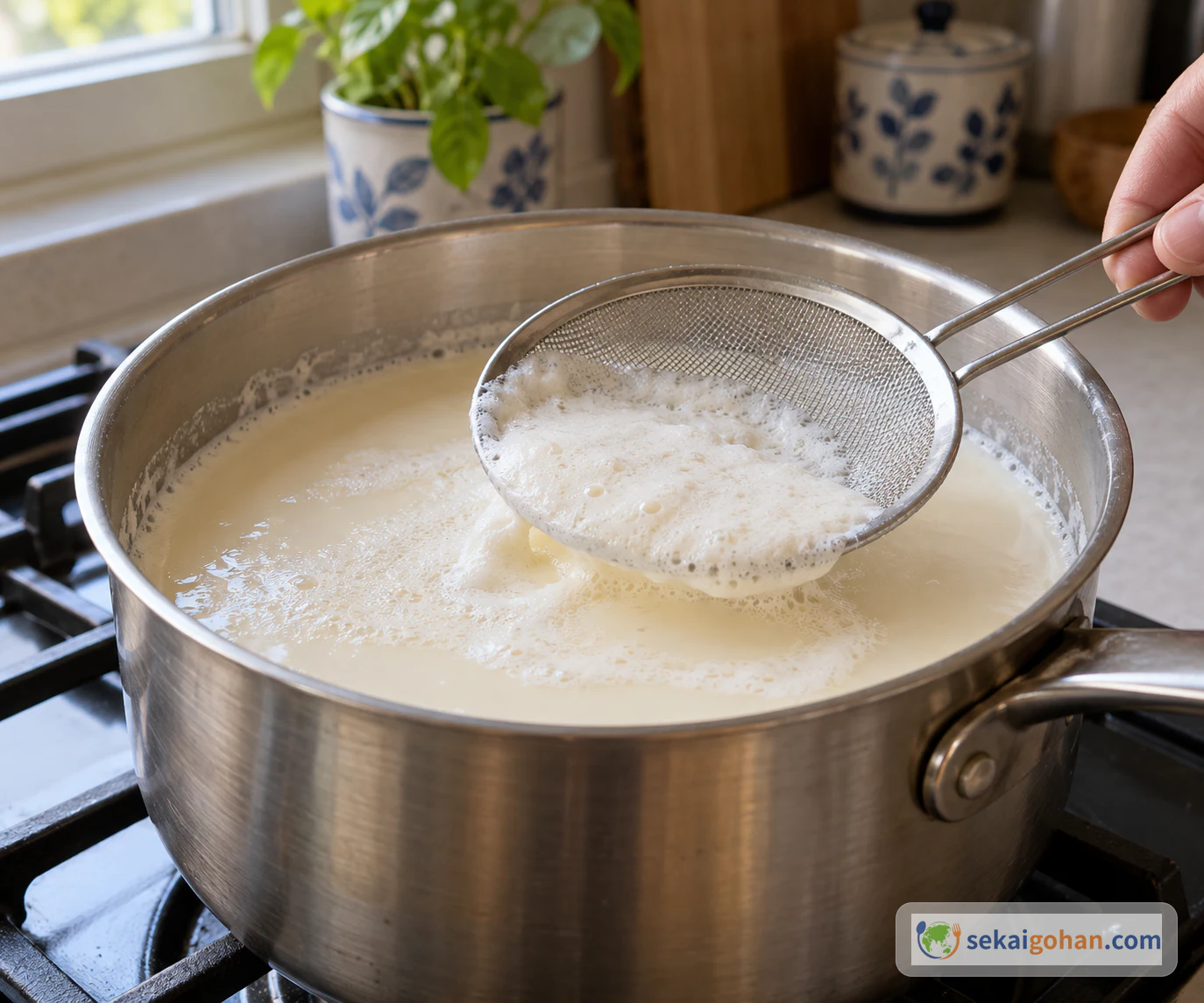
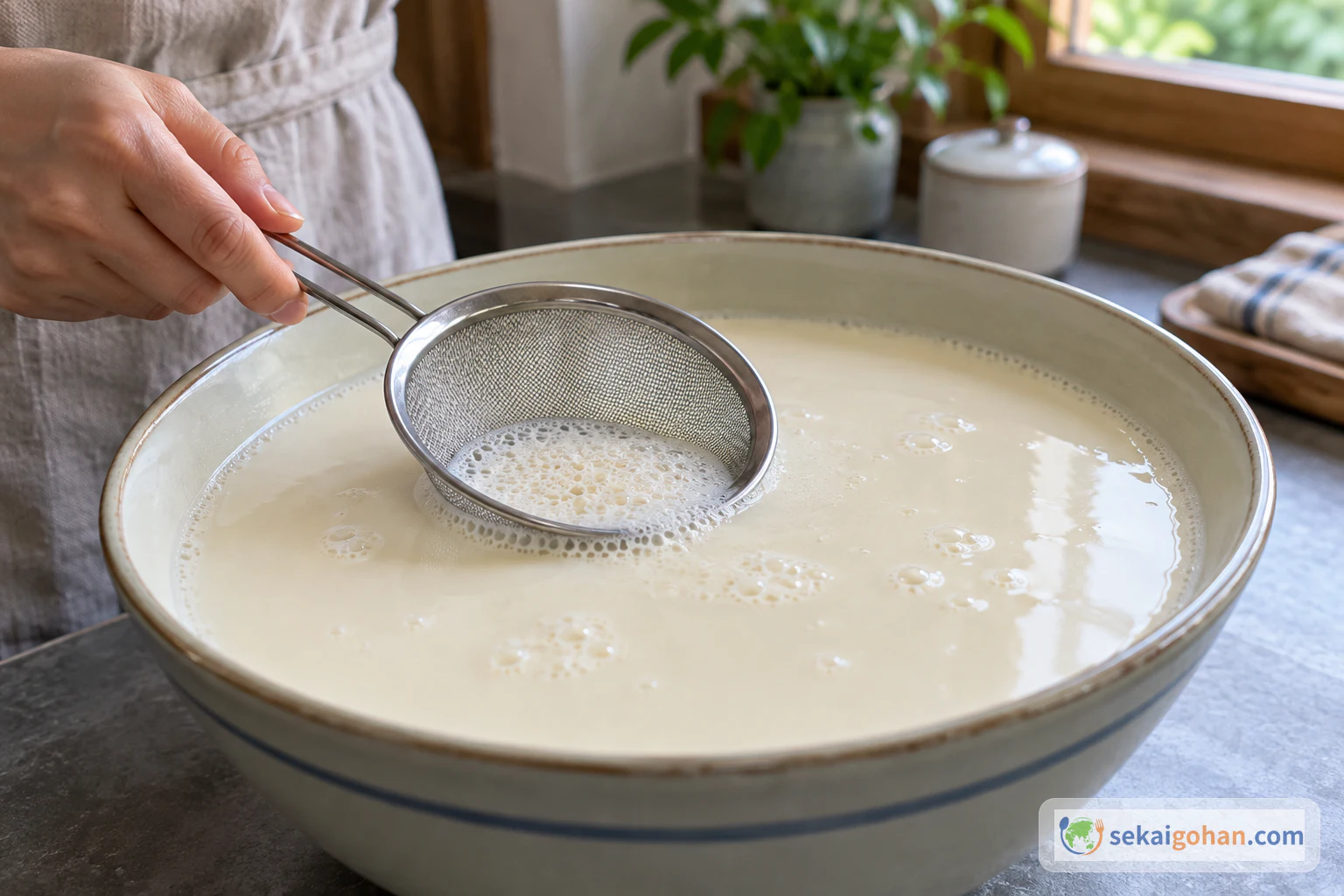
Skim the foam from the saucepan, and skim the bubbles again after pouring and stirring. Stir only the one time the recipe calls for.
| Condition | What the recipe points to | What to do |
|---|---|---|
| The pudding stays watery | The soy milk; the author reports two supermarket soy milks that didn't set | Use fresh, refrigerated soy milk next time. Don't add extra GDL or switch to another coagulant |
| A sour taste | GDL combined with liquid too early | Keep the GDL in its own dish until step 7, right before the hot soy milk |
| Bubbles or foam on the surface | Foam not fully removed | Skim at step 2 and again at step 11. Stir only once |
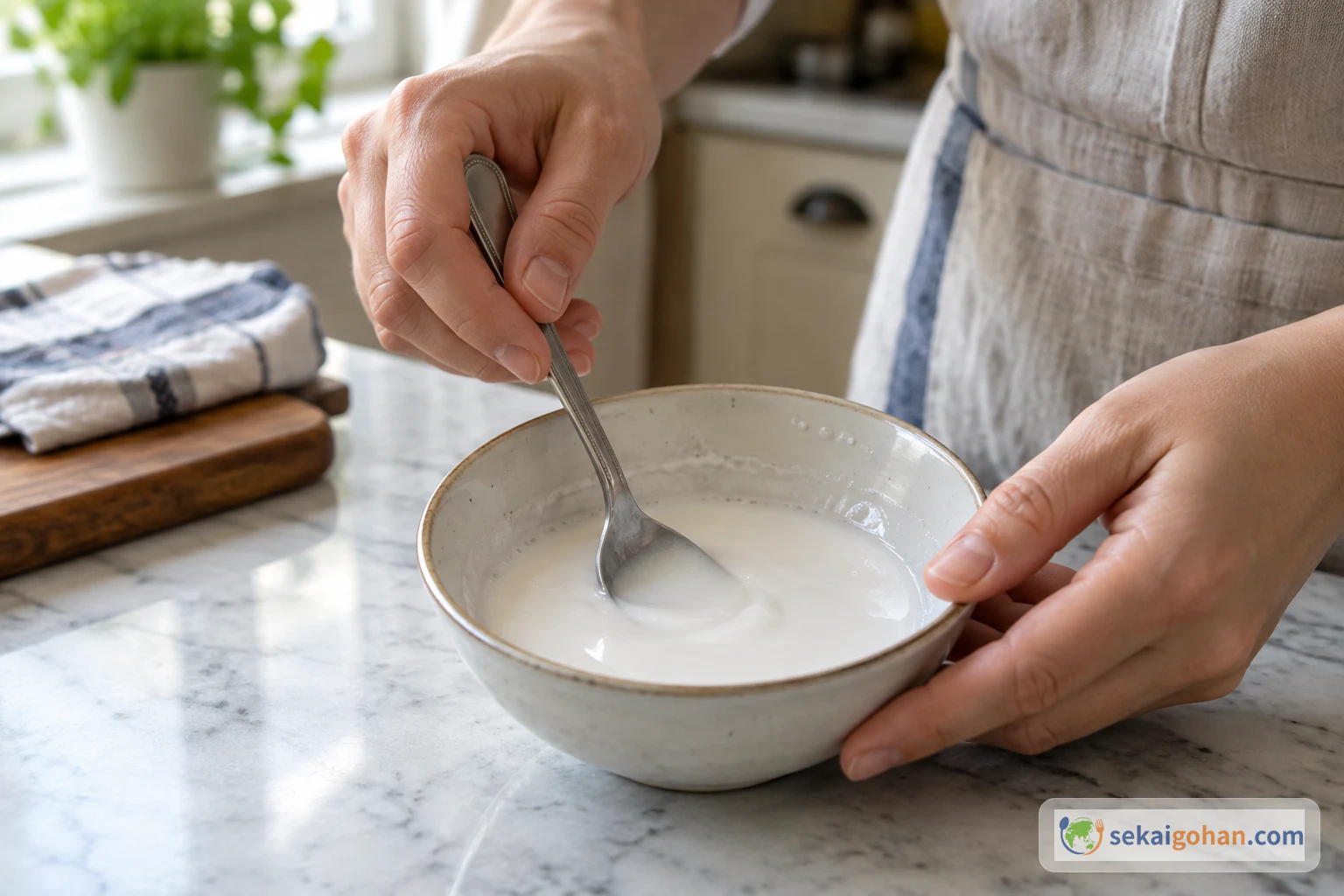
| The slurry looks uneven | Starch settled while it stood | Re-stir the slurry (step 6) before adding the GDL |
| Sugar lumps in the syrup | Slab sugar pieces too large or not fully melted | Break the slab sugar small, and stir over medium heat until it has dissolved completely |
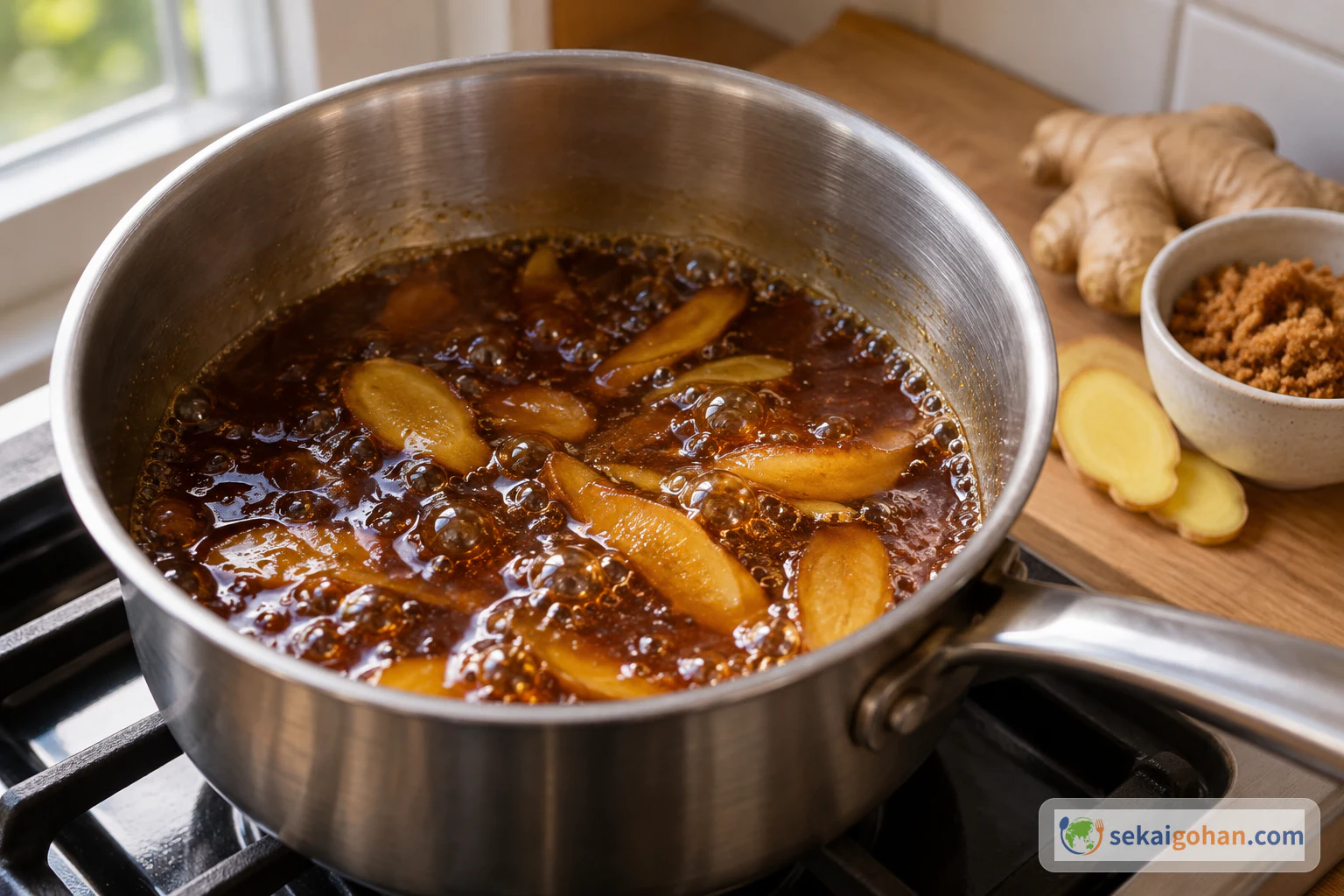
| The syrup is still thin | It hasn't been reduced long enough | After the sugar dissolves, cook another 5–6 minutes at medium-low |
Variations and Regional Styles: Kept Separate from This Recipe
The recipe above is one complete version. The variations below are separate dishes or separate reports. Mixing their ingredients or ratios into this recipe would produce something none of the sources describe.
- Loose brown sugar instead of slab sugar: The author's card lists brown sugar at the same 9 oz, and she also suggests palm sugar. There is no crushing step with loose sugar, and the color and depth of the syrup can differ. The source gives no exact amount or method for palm sugar.
- How much syrup per bowl: The author calls for a generous amount. Adjust per bowl to taste, without changing the amounts used to make the syrup.
- Hanoi's blossom-scented syrup: VnExpress and VTV describe jasmine or grapefruit blossom-scented syrup with thinly shaved pudding in Hanoi. Neither gives a recipe or quantities, so this version adds no flowers.
- Saigon's coconut milk and tapioca pearls: Tuoi Tre News reports Saigon servings with hot ginger syrup, coconut milk and handmade tapioca pearls, sometimes over ice. Again, there are no amounts or methods in the source.
- A packaged-mix version: Helen Le's recipe, labeled Vietnamese, uses an 85 g commercial tofu-mix pack containing a soy powder sachet and a small coagulant sachet. The page doesn't state the coagulant type or the sachet's weight, so none of its amounts can be transferred to this recipe.
- A gypsum version: A Nhan Dan Online article crediting VOV World describes a separate method made from soaked soybeans, set with gypsum, with a longer set and a syrup of palm sugar, pandan and ginger. It is a different formula, not a swap for GDL.
Names, Vendors and Regional Taste Across Vietnam
VnExpress notes that the origin of the name tào phớ is not clearly known, and presents a tofu-related explanation only as one theory. What can be said with confidence is how the names differ by place: tào phớ, tàu pha, đậu hũ, tàu hũ.
In Hanoi, VTV's report gathers memories of vendors calling out along the lanes and of thin layers shaved into bowls under blossom-scented syrup. It also describes a craft tradition associated with An Phú and a distinct method there that uses agar and pandan. These are reported accounts of local tradition; they don't settle where the dish began.
Moving south, the style changes. VnExpress links ginger to the Central version and describes Southern tàu hũ as thicker, often paired with coconut milk and newer toppings. Tuoi Tre News places Saigon's version in the memory of shoulder-pole vendors and street-side selling, with hot ginger syrup, coconut milk and tapioca pearls.
The recipe in this article sits closest to the ginger-syrup tradition: warm pudding with a dark ginger and slab sugar syrup. Reproducing it at home depends less on toppings than on three choices: a soy milk that sets, a true GDL coagulant, and the order in which the two meet.
Storage and Leftovers
The author says tào phớ is best on the day it is made. She suggests refrigerating any remaining pudding and using it within 2–3 days, and storing the syrup in an airtight container. She mentions the microwave for reheating but gives no time or power setting. Take the 2–3 days as the author's advice for quality, not a guaranteed safe period.
General household food-safety guidance from Japan's Ministry of Health, Labour and Welfare adds the following. Refrigerate foods that need refrigeration quickly, and keep the refrigerator at 10°C or below as a guideline. Divide leftovers into clean, shallow containers so they cool quickly, and eat them early. Don't leave prepared food at room temperature for long. This recipe is meant to be served warm soon after it sets, not kept warm for hours.
Frequently Asked Questions
Will ordinary store-bought soy milk set?
It depends on the product. The author recommends fresh, refrigerated soy milk and reports that two U.S. supermarket soy milks she tried did not set. That doesn't mean every shelf-stable soy milk will fail, but it isn't safe to assume one will work. Plain, unsweetened, unflavored fresh soy milk is our suggested starting point.
Can I use gypsum or nigari instead of GDL?
Not in this recipe. The author distinguishes GDL from gypsum, and gypsum-based versions use their own separate formulas and methods. Neither gypsum nor nigari should be swapped in at the same amount.
What if I can't find brown slab sugar?
The author's card lists brown sugar at the same 9 oz, and she also mentions palm sugar. With loose sugar, skip the crushing step. The source does not give an exact amount or method for palm sugar.
How long do leftovers keep?
The author suggests refrigerating leftover pudding and using it within 2–3 days, with the syrup in an airtight container. That is her recommendation, not a safety guarantee. Refrigerate quickly, cool leftovers quickly in shallow containers, and eat them early.
Sources
- Trang / RunAwayRice, "Tofu Pudding with Ginger Syrup (Dau Hu Nuoc Duong / Tao Pho)." The main recipe: all ingredients and amounts, step order, heat levels and times, yield, card time estimates, the author's notes on fresh soy milk, GDL versus gypsum, warm thin-layer service and storage. https://runawayrice.com/desserts/tofu-pudding-with-ginger-syrup/
- Helen Le / Helen's Recipes, "Tau hu nuoc duong - Silky tofu in ginger syrup." A separate Vietnamese recipe using an 85 g commercial tofu-mix pack, used for comparison only. https://helenrecipes.com/recipe-18-tau-hu-nuoc-duong-silky-tofu-in-ginger-syrup/
- VnExpress Du lịch / Trung Nghĩa, "Tào phớ - món giải nhiệt bình dân của người Việt." Regional names, regional serving styles, the uncertain origin of the name, and the dish as an inexpensive summer snack. https://vnexpress.net/tao-pho-mon-giai-nhiet-binh-dan-cua-nguoi-viet-4297255.html
- Tuoi Tre News / Linh To - Duc Noise, "Tofu pudding: Saigon's favorite sweet treat." Saigon's shoulder-pole vendors and reported servings with ginger syrup, coconut milk, tapioca pearls and ice. https://news.tuoitre.vn/tofu-pudding-saigons-favorite-sweet-treat-10367871.htm
- VTV.vn / Khánh An, "Quyến rũ hương vị tào phớ Hà Nội xưa." Hanoi vendor memories, thin shaving, blossom-scented syrup, and the reported An Phú tradition with its separate agar and pandan method. https://vtv.vn/doi-song/quyen-ru-huong-vi-tao-pho-ha-noi-xua-2024102717012036.htm
- Ministry of Health, Labour and Welfare (Japan), "家庭でできる食中毒予防の6つのポイント" (Six points for preventing food poisoning at home). General household guidance on quick refrigeration, the 10°C refrigerator guideline, cooling leftovers in shallow containers and eating them early. Not a shelf-life study for this dish. https://www.mhlw.go.jp/stf/seisakunitsuite/bunya/kenkou_iryou/shokuhin/syokuchu/01_00006.html
- Nhan Dan Online (page credits VOV World), "Sweet tofu pudding - A delicious dessert of Vietnamese people." A secondary report of a separate gypsum-based method; not used in this recipe. https://en.nhandan.vn/sweet-tofu-pudding-a-delicious-dessert-of-vietnamese-people-post53113.html