Cipera Manuk (Ayam Cipera): Karo Chicken in a Thick Corn-Flour Broth

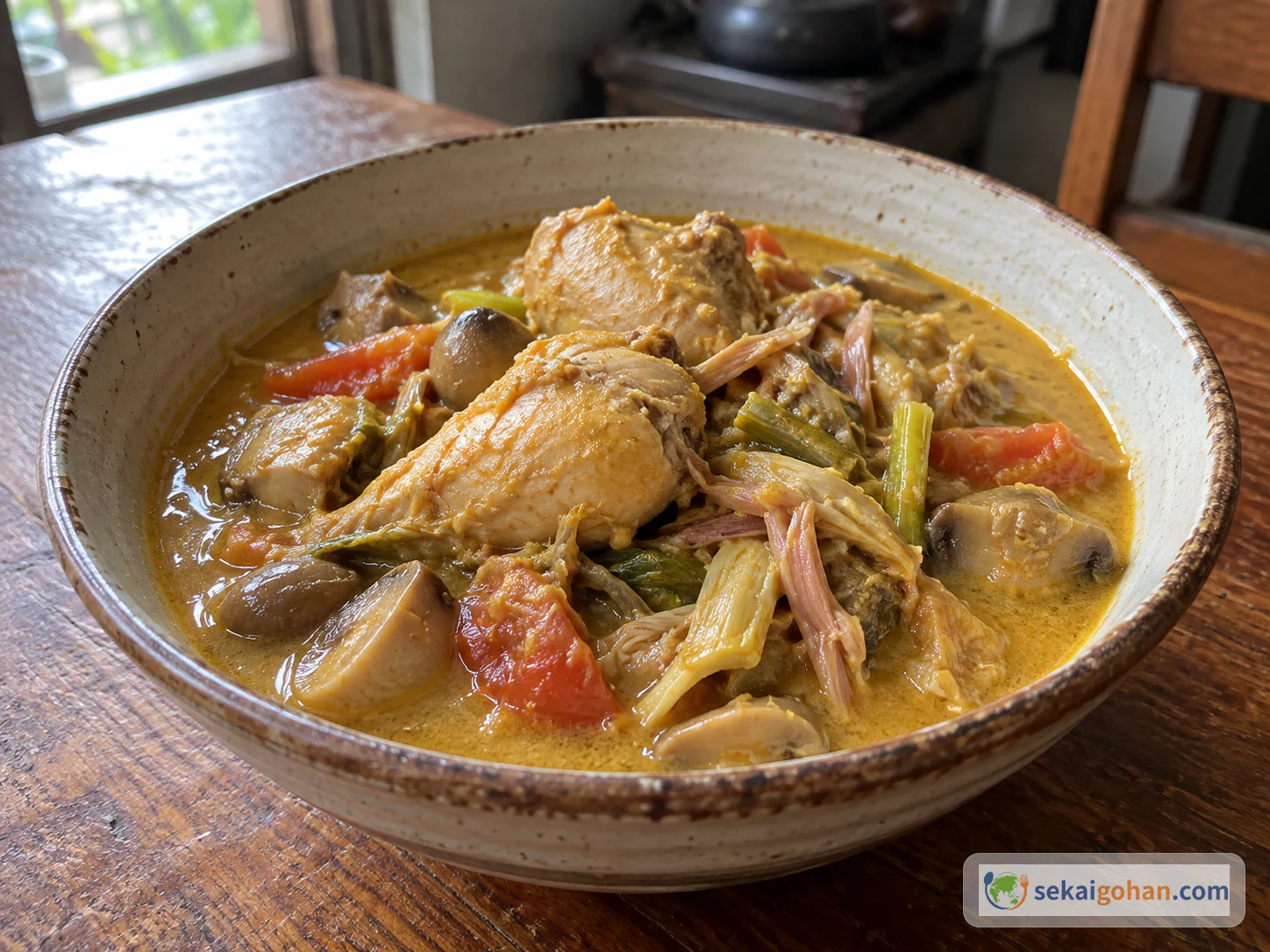
Karo cipera manuk: chicken in a thick corn-flour broth with the other ingredients cooked into the dish and no added garnish
Serves
4 servings
Cuisine
Indonesian

How to make cipera manuk (ayam cipera), a chicken dish from Karo in North Sumatra, Indonesia, simmered in a spiced broth and thickened with flour made from mature corn. Follows one published version with its own amounts and order: a ground paste boiled in water, chicken with scallion, celery and kecombrang flower, then mushrooms, corn flour and tomato, and coconut milk last.

Cooking flow

Cooking steps

STEP 11 / 10

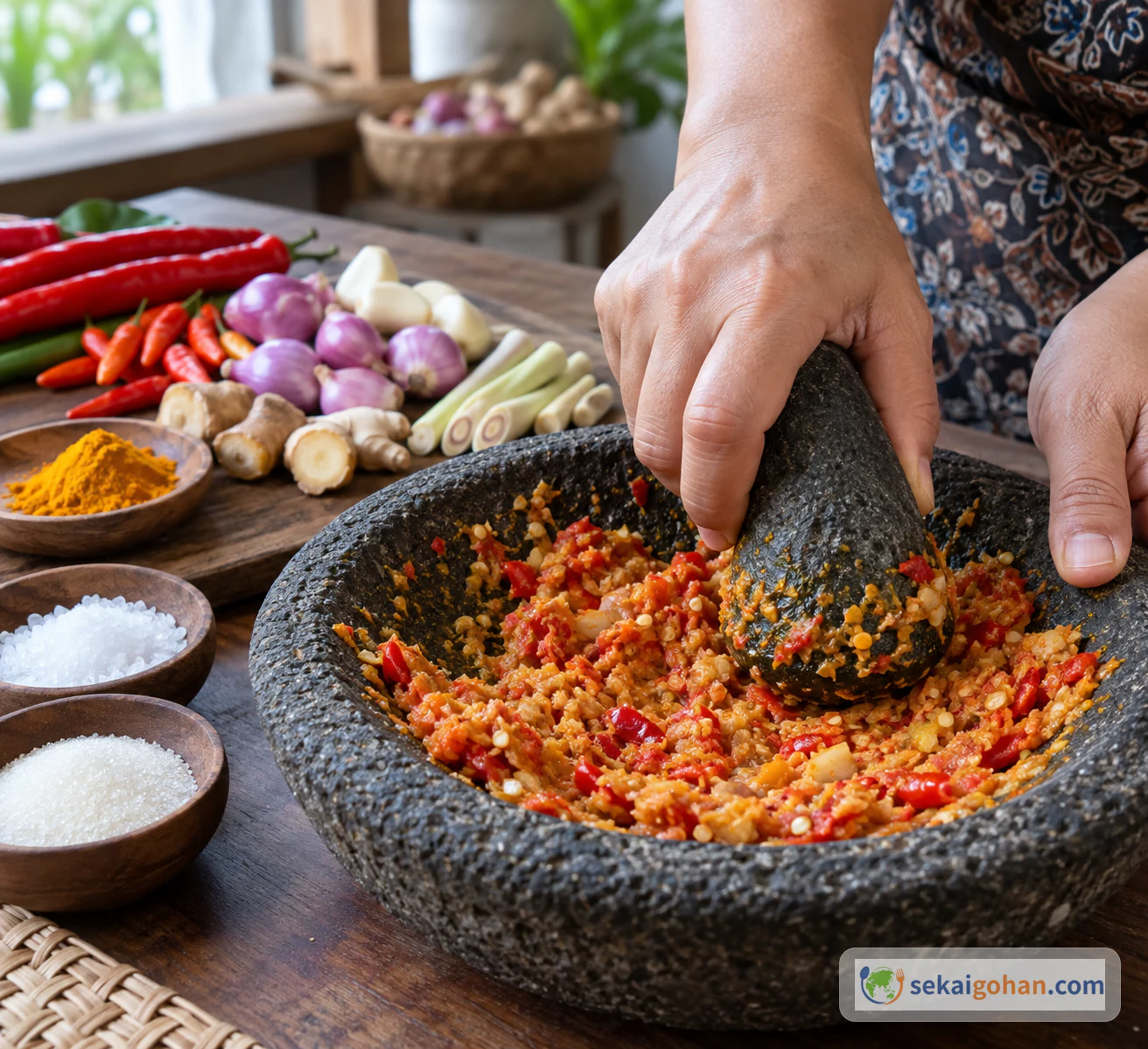
Grind Bahan 1 into a paste

Grinding the Bahan 1 ingredients into a paste in a mortar
Grind everything in Bahan 1 together. There is no pan and no oil at this stage.

Grind the red chilies, bird's-eye chilies, garlic, shallots, ginger, galangal, ground turmeric, white parts of the lemongrass, salt and sugar together into a paste. Do not fry it.

STEP 22 / 10

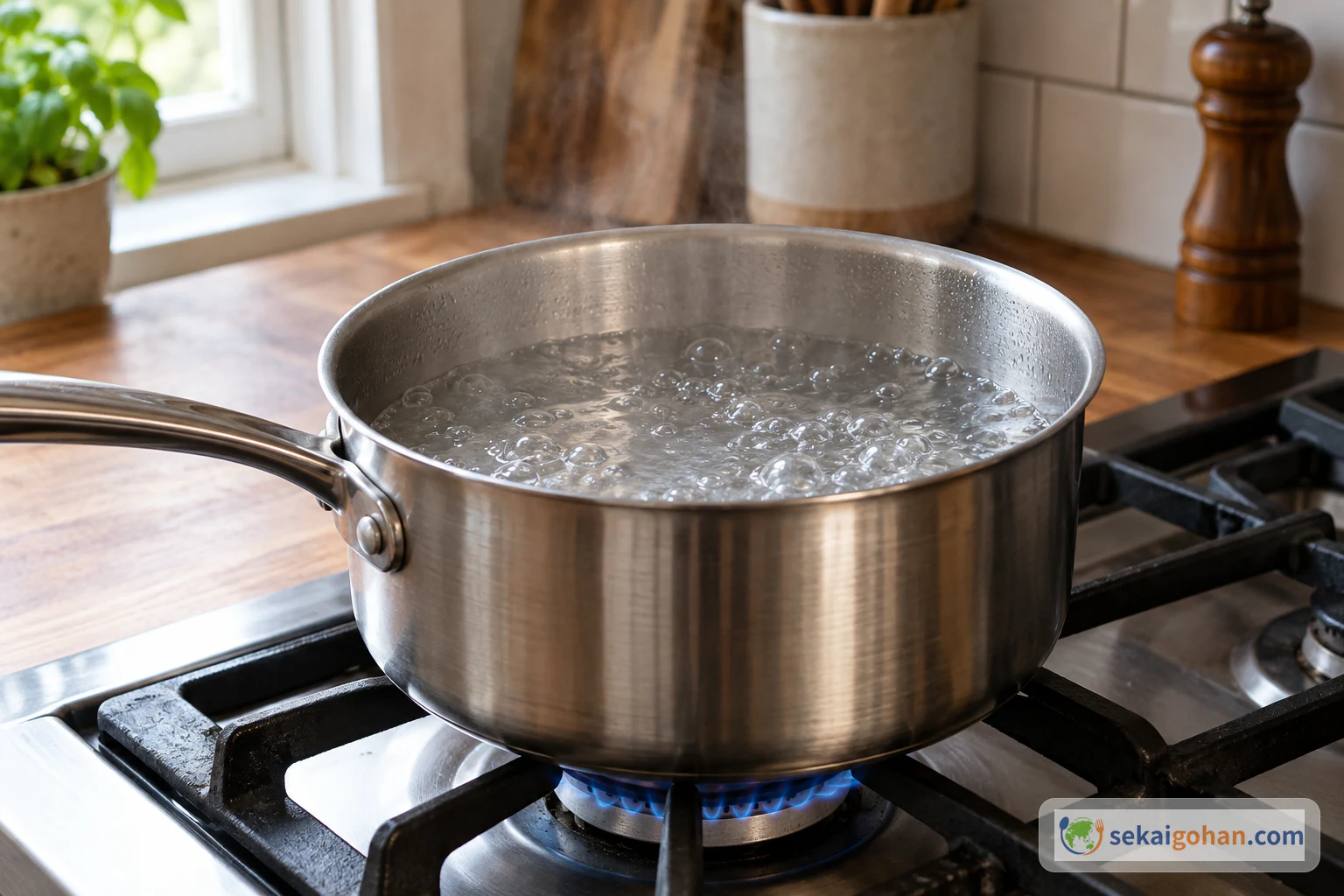
Bring the water to a boil

750 ml of water coming to a boil in a pot, with no paste or chicken added yet
Only water is in the pot at this point

Bring the 3 cups (750 ml) of water to a boil in the pot. The pot holds only water at this point.

STEP 33 / 10

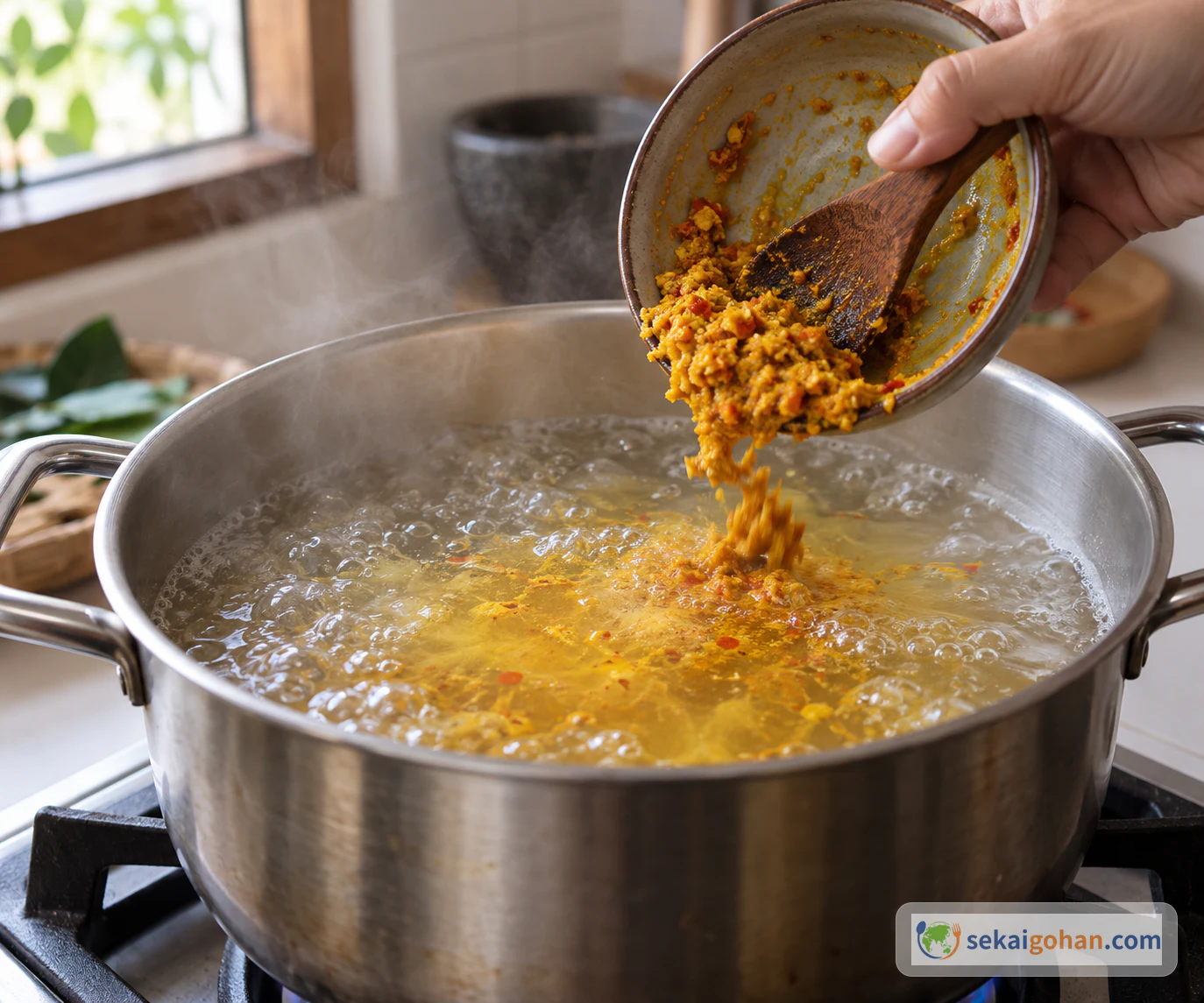
Add the paste and cook until fragrant

Adding the ground Bahan 1 paste to boiling water and cooking it until fragrant, without any oil
The paste is boiled in the water, not sautéed

Add the ground paste to the boiling water and cook until fragrant. Do not use oil.

STEP 44 / 10

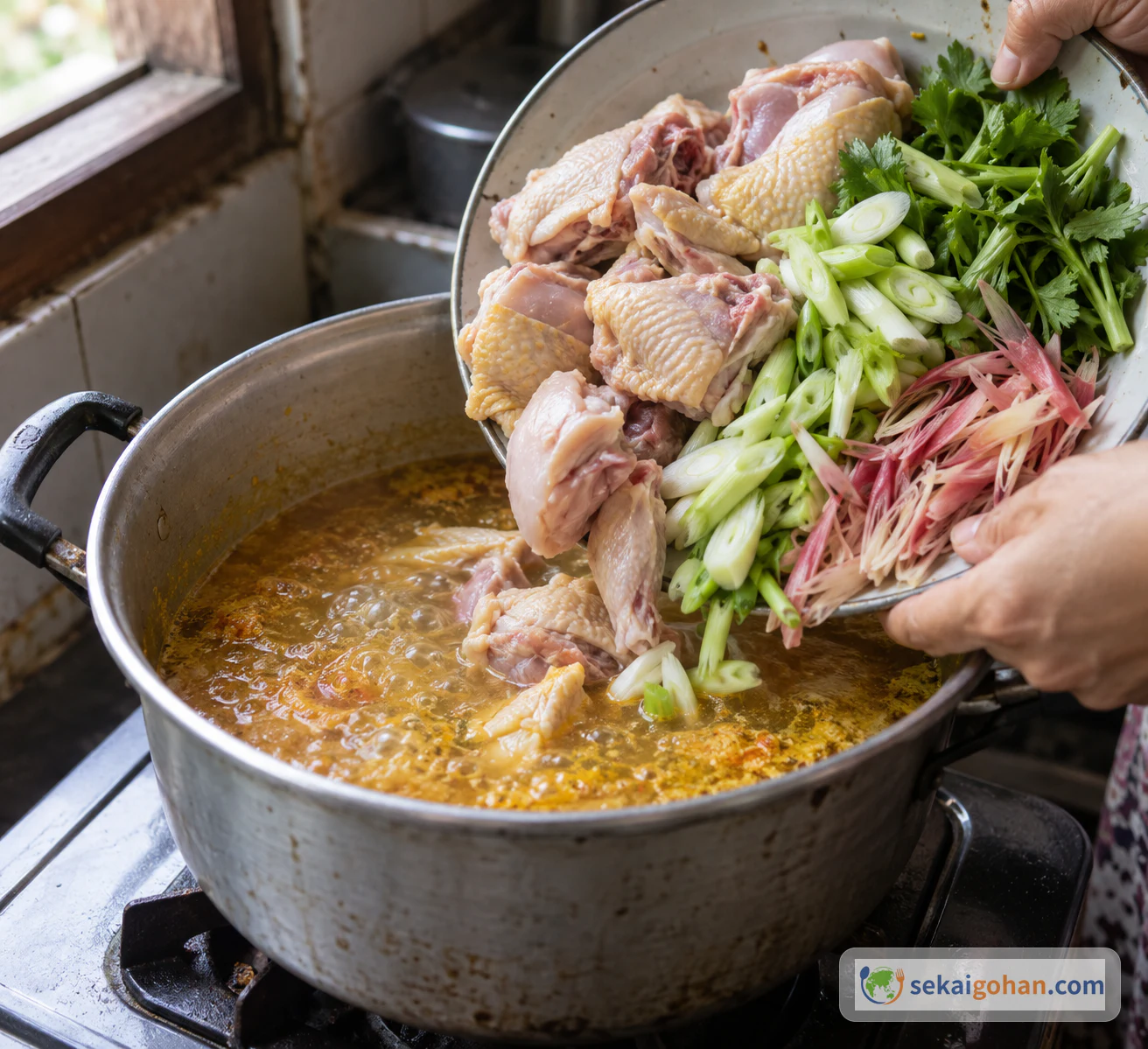
Add the chicken and Bahan 3

Adding the chicken with the Bahan 3 scallion, celery and kecombrang flower to the pot
The chicken and all three Bahan 3 ingredients go in together

Add the chicken pieces to the pot together with the sliced scallion, sliced celery and kecombrang flower.

STEP 55 / 10

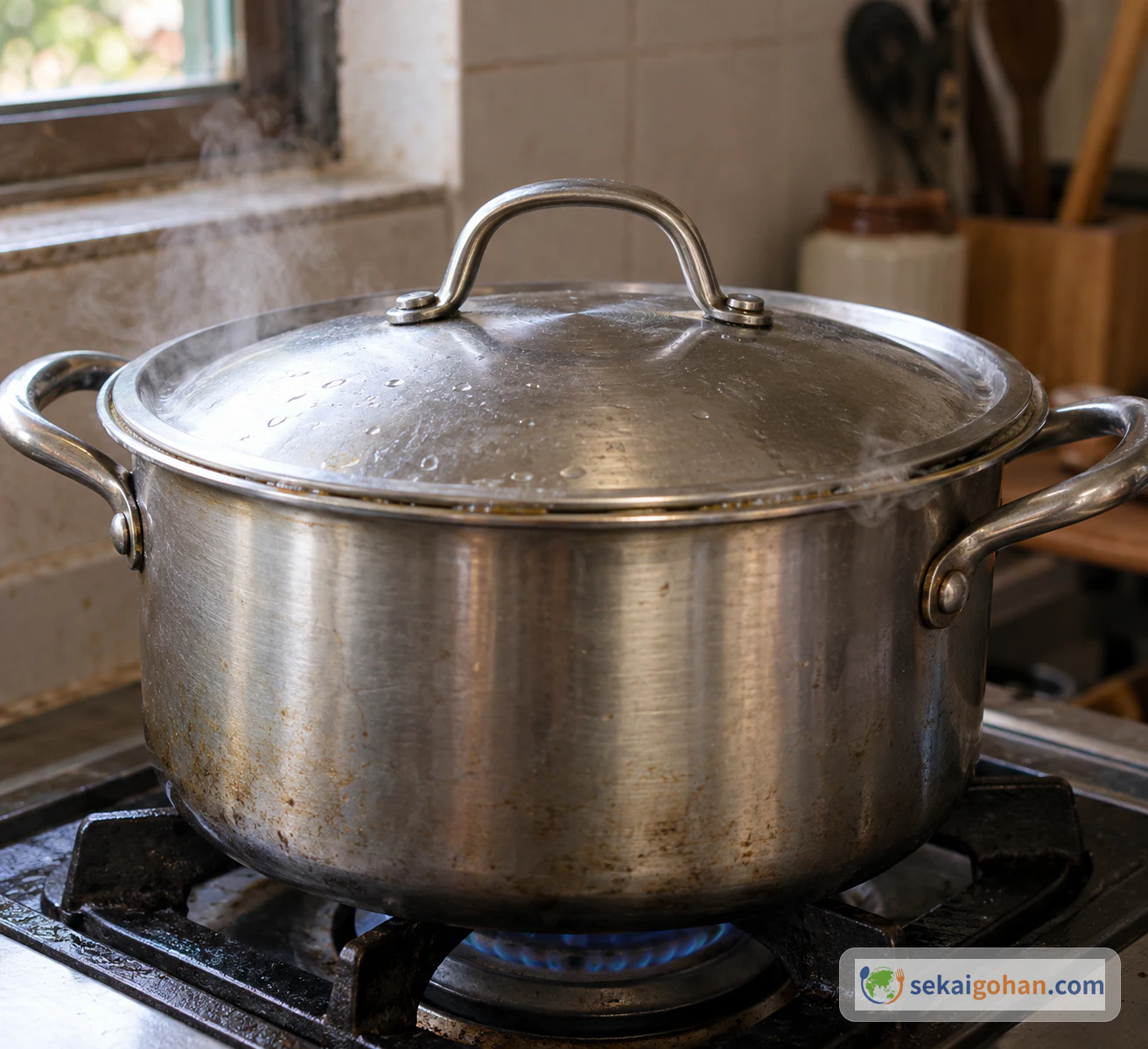
Cover and cook until the chicken begins to soften

The pot covered and cooking until the chicken begins to soften
Keep the lid on until the chicken just begins to soften

Put the lid on and cook until the chicken begins to soften.

STEP 66 / 10

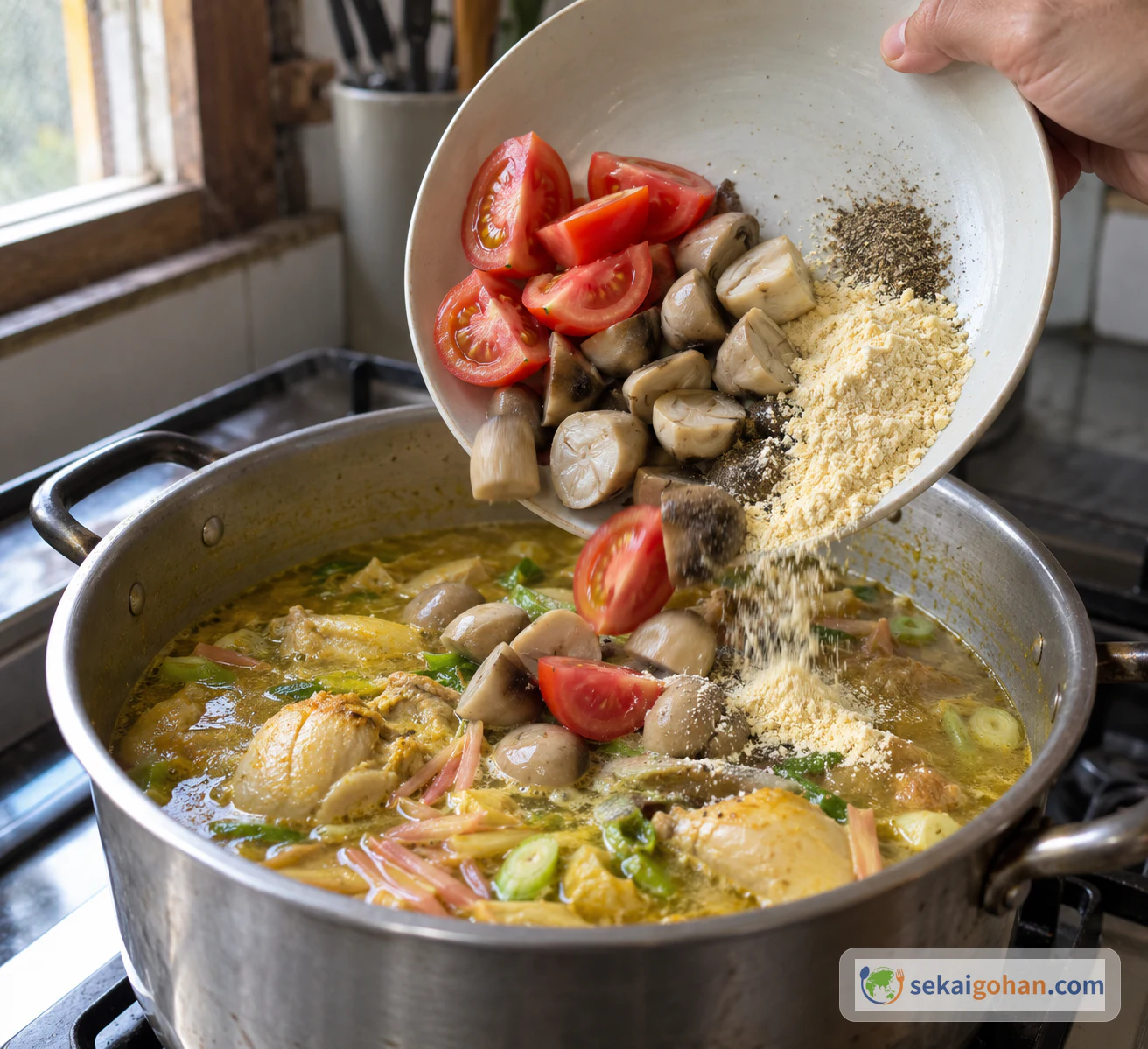
Add the mushrooms, corn flour, pepper and tomato

Adding the mushrooms, corn flour, pepper and tomato from the remaining Bahan 2, without adding more water or chicken
Only the remaining Bahan 2 goes in now, and the coconut milk waits

Add the straw mushrooms, mature-corn flour, ground pepper and tomato pieces. Do not add more water or chicken, and keep the coconut milk aside for now.

STEP 77 / 10

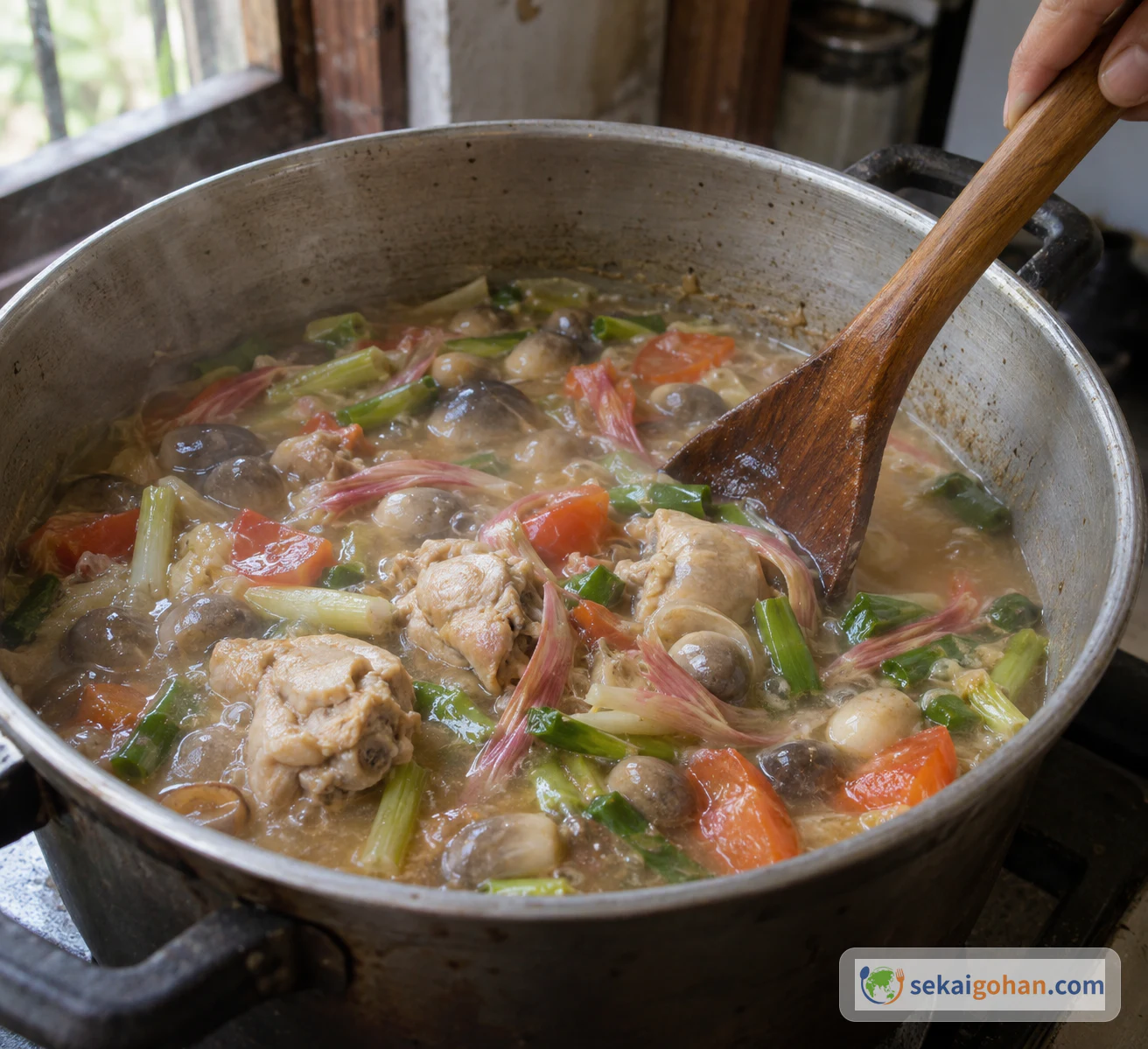
Stir until the broth thickens and everything is cooked

Stirring until the broth begins to thicken and the ingredients are cooked, before the coconut milk is added
The broth thickens before the coconut milk goes in

Stir and cook until the broth begins to thicken and everything is cooked through.

STEP 88 / 10

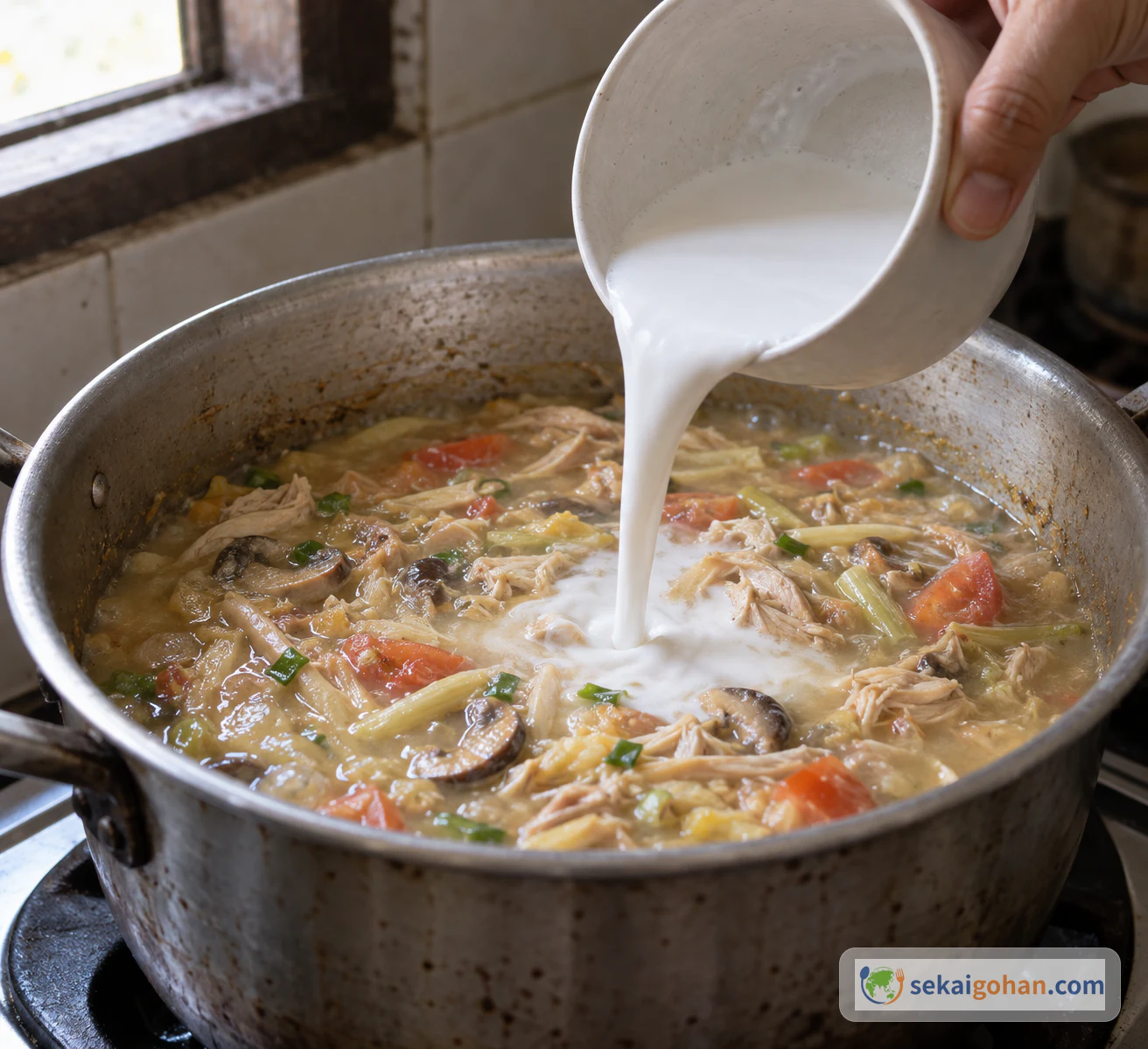
Add the coconut milk

Pouring the coconut milk last into the thickened pot
Coconut milk is the last ingredient to go in

Pour in the 1 cup (250 ml) of coconut milk.

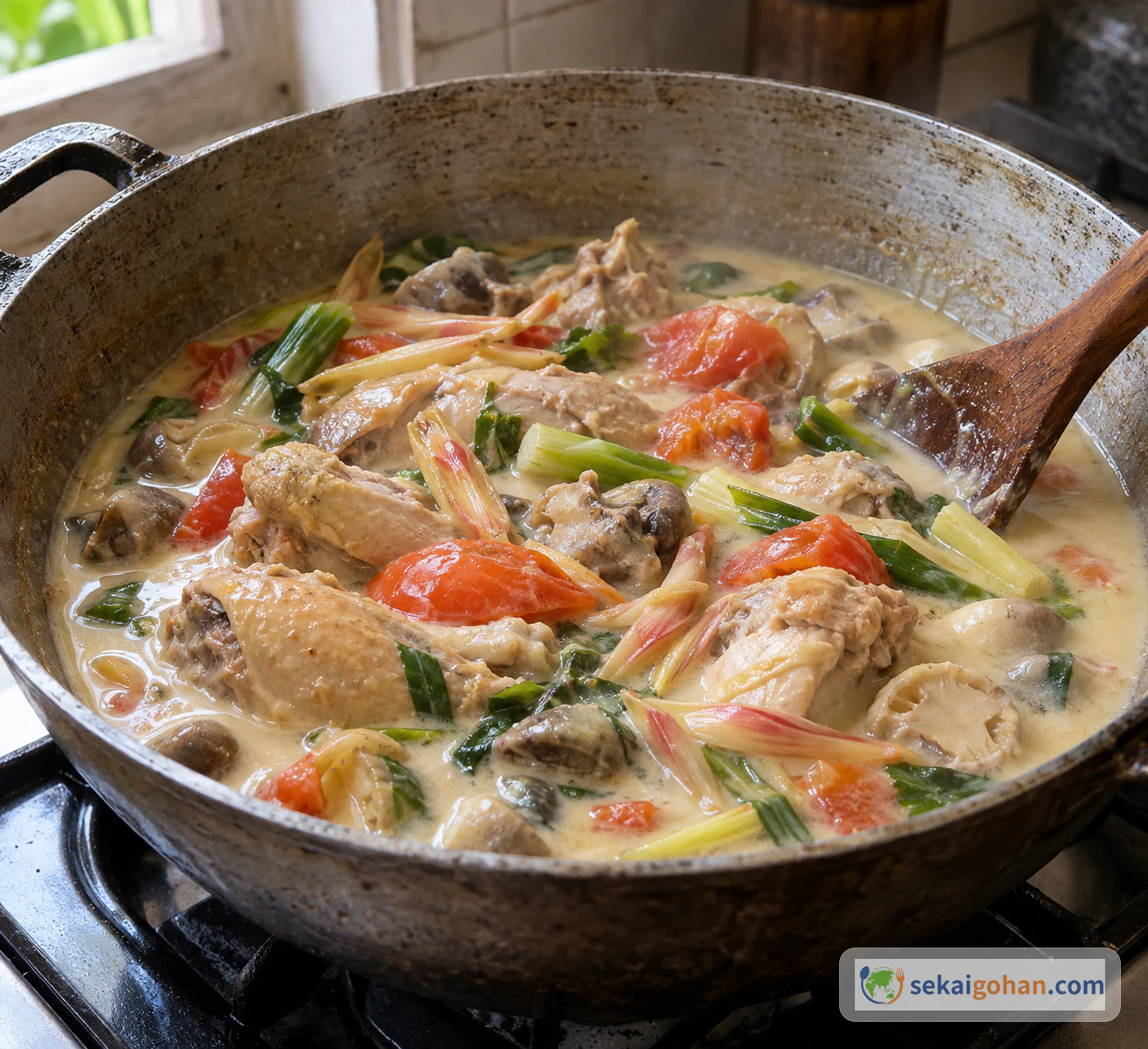
STEP 99 / 10

Stir and cook briefly

Cooking the pot briefly after stirring in the coconut milk
A short final cook after the coconut milk

Stir and cook briefly.

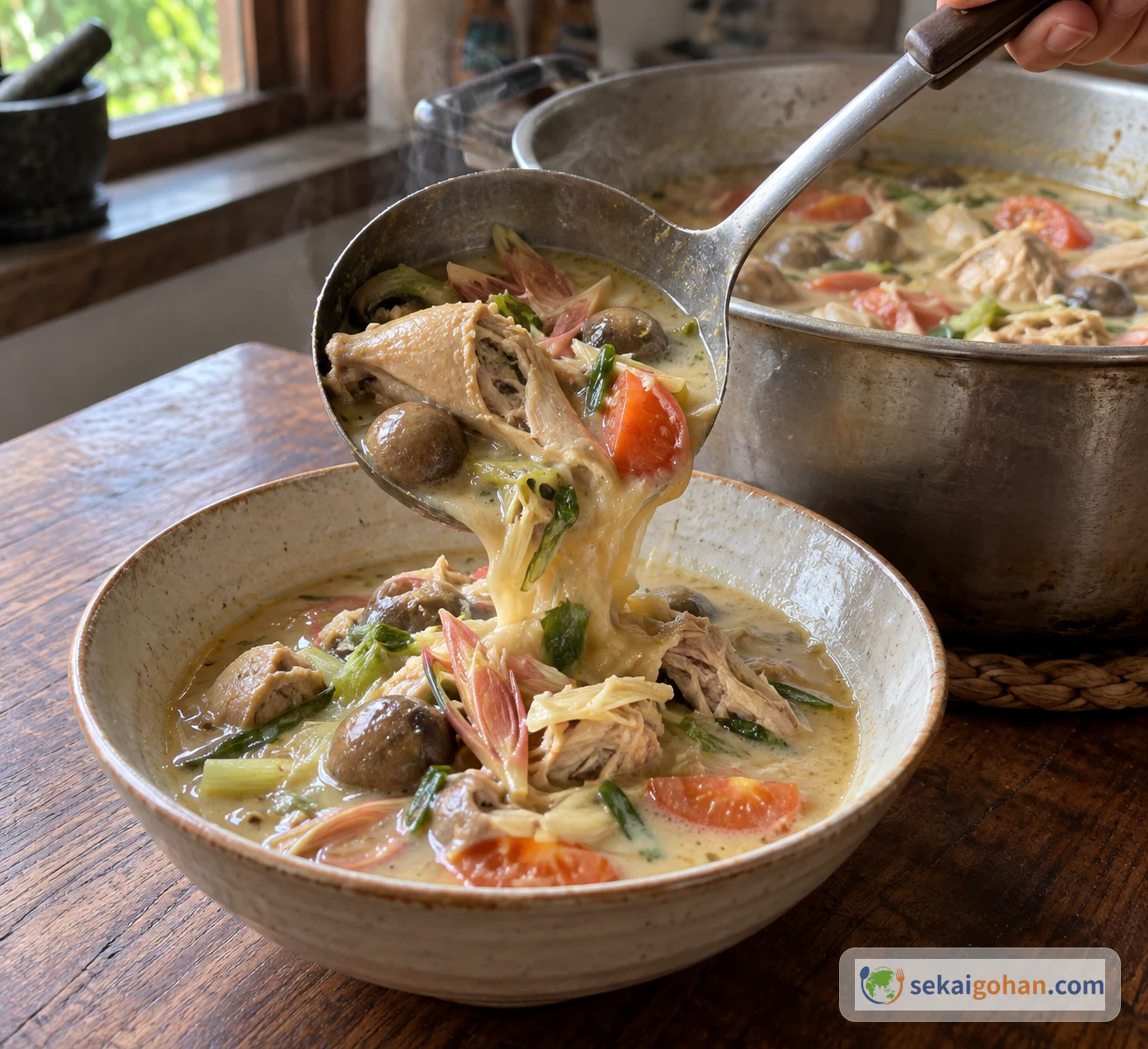
STEP 1010 / 10

Serve hot

Ladling the hot stew into a bowl, with no garnish added that is not part of the recipe
Serve straight from the pot without extra garnish

Take the pot off the heat and serve hot.

0 / 0
Ingredients

Ingredients

1 / 1

Ingredients

Ingredient Amount Role
Red chilies (cabe merah) 5 Bahan 1: ground into the paste
Bird's-eye chilies (cabe rawit) 5 Bahan 1: ground into the paste
Garlic (bawang putih) 3 cloves Bahan 1: ground into the paste
Shallots (bawang merah) 4 Bahan 1: ground into the paste
Ginger (jahe) 1 inch (3 cm) Bahan 1: ground into the paste
Galangal (lengkuas) 2 inches (5 cm) Bahan 1: ground into the paste
Ground turmeric (kunyit bubuk) 1/2 sdt Bahan 1: ground into the paste
Lemongrass, white part only (serai) 2 stalks Bahan 1: ground into the paste
Salt (garam) 1 sd t Bahan 1: ground into the paste
Sugar (gula) 1 sd m Bahan 1: ground into the paste
Water (air) 3 cups (750 ml) Bahan 2: brought to a boil first
Young kampung chicken, cut into pieces (ayam kampung muda) 1/2 bird Bahan 2: added with Bahan 3
Straw mushrooms (jamur merang) 2.75 oz (75 g) Bahan 2: added after the chicken starts to soften
Mature-corn flour (tepung jagung dari jagung asli, jagung tua di drymeal) 1 1/2 sdm Bahan 2: thickens the broth
Ground pepper (merica bubuk) 1/2 sdt Bahan 2: added with the mushrooms
Tomato, cut into 8 pieces (tomat) 1 Bahan 2: added with the mushrooms
Medium-thick coconut milk (santan sedang kentalnya) 1 cup (250 ml) Bahan 2: added last
Scallion, sliced (daun bawang) 1 stalk Bahan 3: added with the chicken
Celery, sliced (seledri) 1 stalk Bahan 3: added with the chicken
Kecombrang flower (bunga kecombrang) 1 Bahan 3: added with the chicken
0 / 0

A pot of water comes to a boil, and a freshly ground paste of red chilies, bird's-eye chilies, shallots, garlic, ginger, galangal, turmeric and lemongrass goes straight in. It bubbles away until fragrant, with no oil and no frying. Then come pieces of young chicken, sliced scallion and celery, and a whole kecombrang flower. Later, mushrooms, tomato and a spoonful of flour made from mature corn turn the broth thick, and coconut milk goes in at the very end. This is cipera manuk, also called ayam cipera, a chicken dish from Karo in North Sumatra. It serves 4 and takes about 15 minutes to prepare and 30 minutes to cook.

About Cipera Manuk

Ayam cipera is a Batak dish of kampung chicken in a thick corn-flour broth. It is usually eaten with hot rice. It also turns up at customary occasions and as a special family meal. For more dishes from across the country, see the Indonesia country page.

The name can be confusing. "Cipera" on its own can mean the corn flour itself, or a different dish built on young corn. Adding manuk points to the chicken version.

Other Dishes Called Cipera

Several dishes share the name. Each one is a different recipe.

Version What it is How it differs from this recipe
Karo family home recipe A household version from a Karo family Different amounts and ingredients, including asam patikala/gonje; the flour is roasted mature corn, pounded finely
Cipera Dawan Jaung Nguda A separate version Young corn and mushrooms, with no chicken and no corn flour
Ayam cipera A broad description of a Batak dish Mentions andaliman
Terites A Karo soup Made with partly digested cattle stomach contents, vegetables and herbs

Arsik, another dish from North Sumatra, is a fish dish. It shares a regional table with cipera, but the two are different dishes.

Ingredients
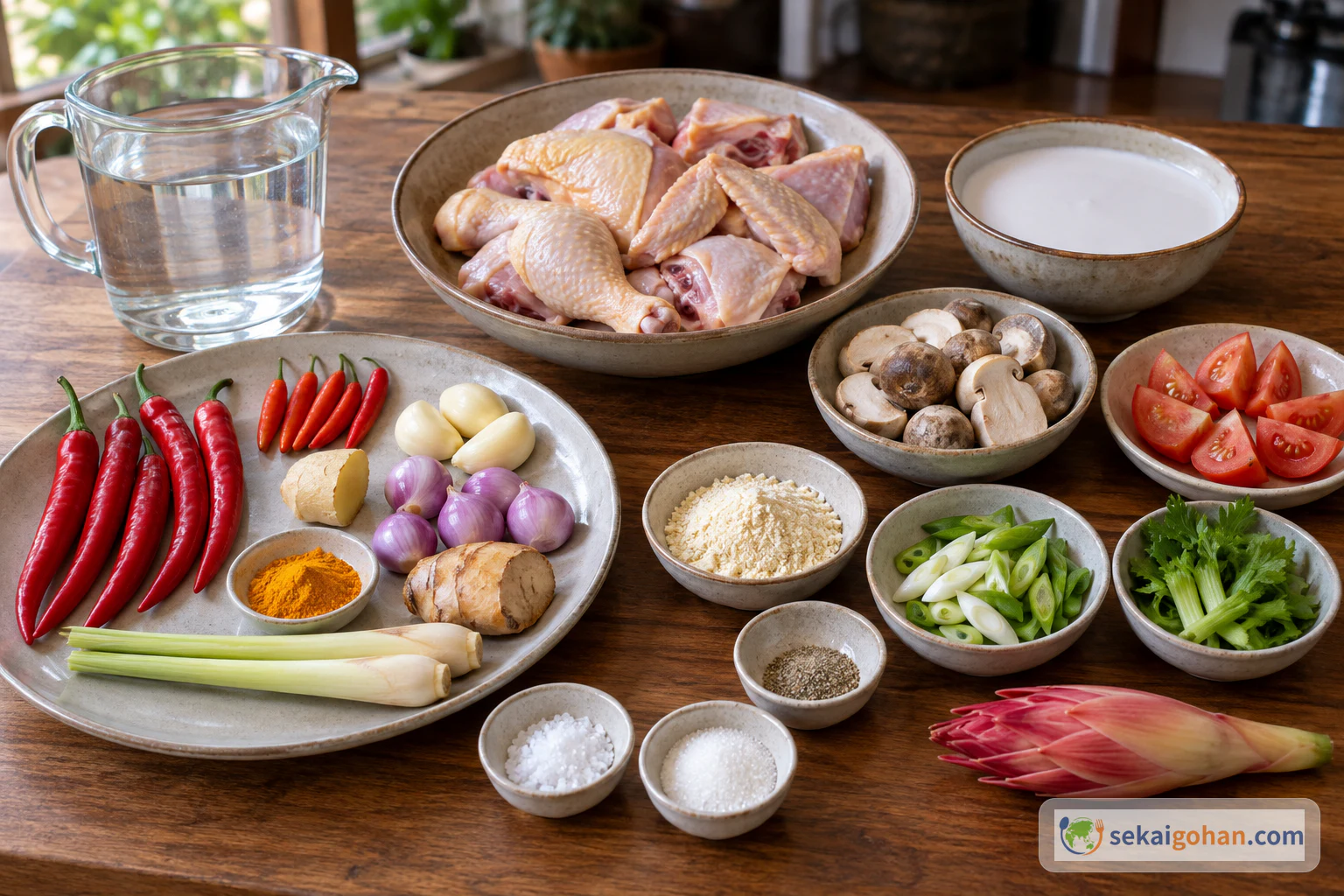
All the ingredients for Bahan 1 to 3, with the turmeric and pepper shown as plain powders without any brand labels
Bahan 1 is ground into a paste. Bahan 2 and Bahan 3 go into the pot in stages.

The ingredients fall into three groups. Bahan 1 is ground into a paste. Bahan 2 holds the water, chicken, mushrooms, corn flour, pepper, tomato and coconut milk. Bahan 3 holds the aromatics that go in with the chicken.

Equipment

  • A mortar and pestle, or another tool for grinding the paste
  • A pot with a lid
  • A spoon for stirring

Choosing Ingredients for Cipera Manuk

The ingredients come in three groups, Bahan 1, 2 and 3, and go into the pot in that order. The salt and sugar are listed as 1 sd t and 1 sd m.

The corn flour is not cornstarch. The recipe calls for tepung jagung dari jagung asli (jagung tua di drymeal), meaning corn flour from real corn, made from mature corn into a "drymeal." Cornstarch and Maizena are different products and won't give the same broth. Buy the drymeal ready-made. Roasting and pounding your own corn belongs to the Karo family home version.

The chicken is half of a young kampung chicken, cut into pieces. The kecombrang flower goes in whole. Keep it in the pot rather than swapping in asam cekala, the sour ingredient used in other versions of cipera. Jamur merang is the straw mushroom (Volvariella volvacea). For the spices, the recipe calls for Desaku turmeric powder and Ladaku pepper powder. When you shop, ask for the mature-corn flour, the kecombrang flower and the straw mushrooms by these names.

Method: From Boiling Water to a Thick Coconut Broth

Order matters more than minutes

Each ingredient goes into the pot exactly once. The water and chicken are already in the pot before the mushrooms, flour, pepper and tomato are added. The coconut milk always goes in last.

Cooking Cues and Common Mistakes

Most mistakes with cipera manuk come from adding steps the recipe doesn't have, such as frying the paste or slipping in an extra souring agent. In the pot, go by the cues. First the paste turns fragrant, then the chicken begins to soften. Next the broth thickens and everything cooks through. After the coconut milk goes in, it needs only a brief final cook.

Check What to watch
Paste Boiled in water until fragrant; no oil, no sauté step
Water and chicken Each goes in once: the water at the start, the chicken with Bahan 3
Bahan 3 Scallion, celery and kecombrang flower go in with the chicken
Remaining Bahan 2 Only the mushrooms, corn flour, pepper and tomato
Thickness Stir until the broth begins to thicken and everything is cooked through
Coconut milk Always last, then only a brief cook
Additions No asam cekala, andaliman, cornstarch, oil, drizzle or garnish

Frequently Asked Questions

Is the paste sautéed before simmering?

No. Bring the water to a boil, add the ground paste and cook it until fragrant. No oil is used.

Can I use cornstarch instead of the corn flour?

No. Use the mature-corn flour ("jagung tua di drymeal"). Cornstarch and Maizena are different products.

Should I add asam cekala or andaliman?

Neither is in this ingredient list. Andaliman appears in broader descriptions of ayam cipera, and a sour ingredient appears in a Karo family home version.

How long does it take?

About 15 minutes to prepare and 30 minutes to cook. Watch for the cues in the method: the paste turns fragrant, the chicken begins to soften, the broth thickens and everything cooks through, and then a brief final cook follows the coconut milk.

What should I serve it with?

Serve it hot, with hot rice, the way it is usually eaten.

Sources

  • Rasa Sayange, "Cipera Manuk," recipe credited to Rudy Choirudin; the site footer identifies PT Motasa Indonesia. The adopted recipe: dish description as a Karo, North Sumatra chicken dish thickened with corn flour; the Bahan 1–3 ingredients and amounts; the method order; the listed yield and preparation and cooking times; and the brand names Desaku and Ladaku. https://rasasayange.co.id/read/resep/20170911/cipera-manuk.html
  • Indonesia Travel, "Ayam Cipera." Describes ayam cipera as a Batak dish of kampung chicken in a thick corn-flour broth that may appear at customary occasions or as a special family meal and is usually eaten with hot rice; also mentions andaliman. Used only for this cultural summary, not for the recipe. https://www.indonesia.travel/gb/en/travel-ideas/gastronomy/cipera
  • Cookpad, "Resep Cipera Ayam (Gulai Ayam Khas Tanah Karo)" by Deasy Chichi Tarigan. A separate home recipe with the contributor's Karo family memories and a description of cipera flour as roasted, finely pounded mature corn. Used for comparison only. https://cookpad.com/id/resep/3569156
  • Budaya Indonesia, "Cipera Dawan Jaung Nguda." A user-contributed entry describing a version made with young corn and mushrooms, without chicken or corn flour. Used for comparison only. https://budaya-indonesia.org/Cipera-Dawan-Jaung-Nguda
  • FAO AGRIS, "Gastronomic ethnobiology of 'terites'—a traditional Batak Karo medicinal food: A ruminant's stomach content as a human food resource" (bibliographic record of a Journal of Ethnic Foods article). The abstract describes terites as a Karo soup based on partly digested cattle stomach contents. Used only to distinguish it from cipera. https://agris.fao.org/search/en/providers/122535/records/65df000063b8185d9caa3b0e
  • IPB University repository, Melie (1990), "Tempe Jamur Merang: Karaketeristik Fisikokimia, Mikrobiologi dan Organoleptik." The abstract links jamur merang with Volvariella volvacea and straw mushroom. Used for naming only. https://repository.ipb.ac.id/handle/123456789/29952
  • 日本ふくろ茸ファーム (Japan Fukurotake Farm), "ふくろ茸って?" Lists the scientific name Volvariella volvacea and the English name Straw Mushroom. Used for naming only. https://www.fukurotake.jp/ふくろ茸って?/