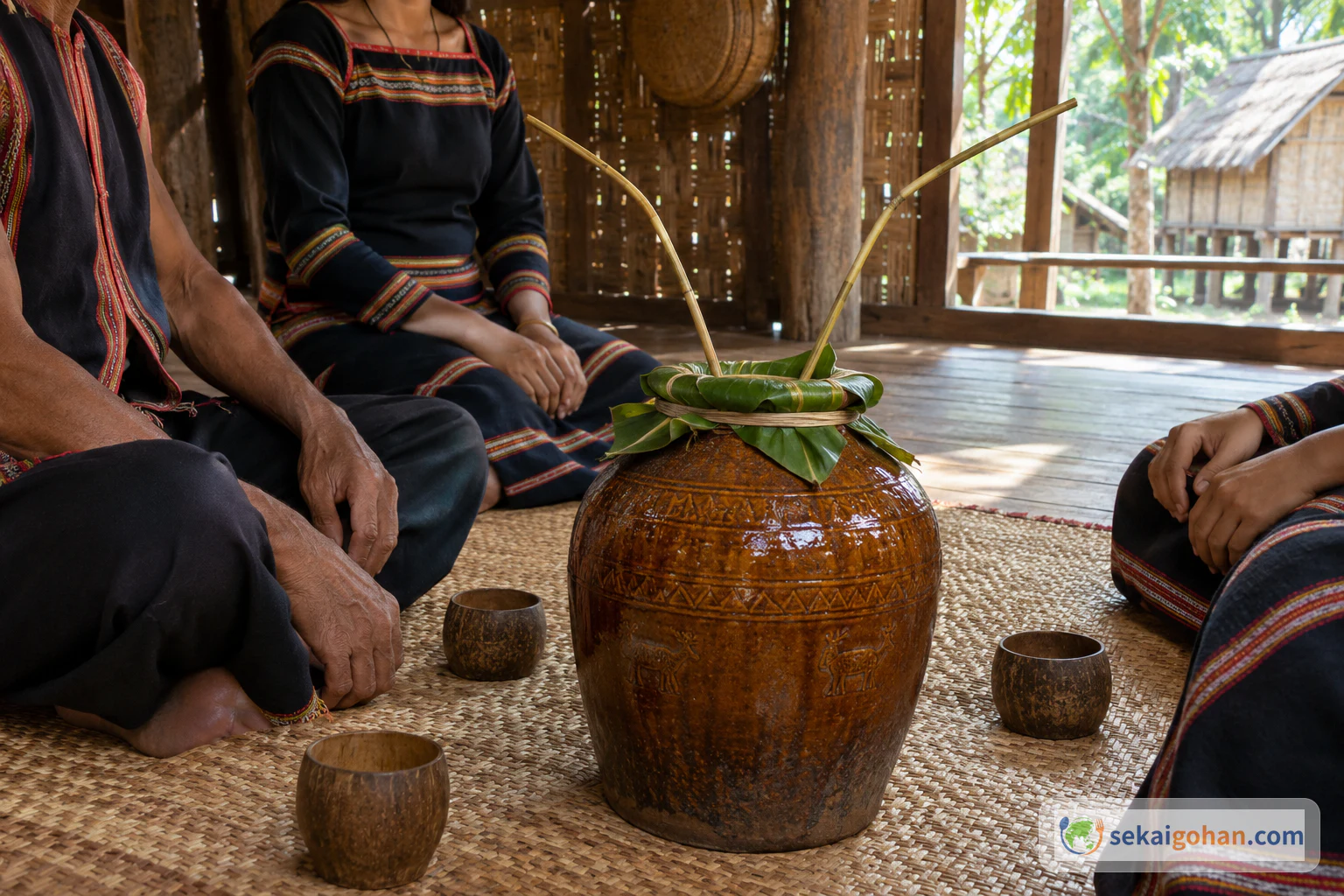
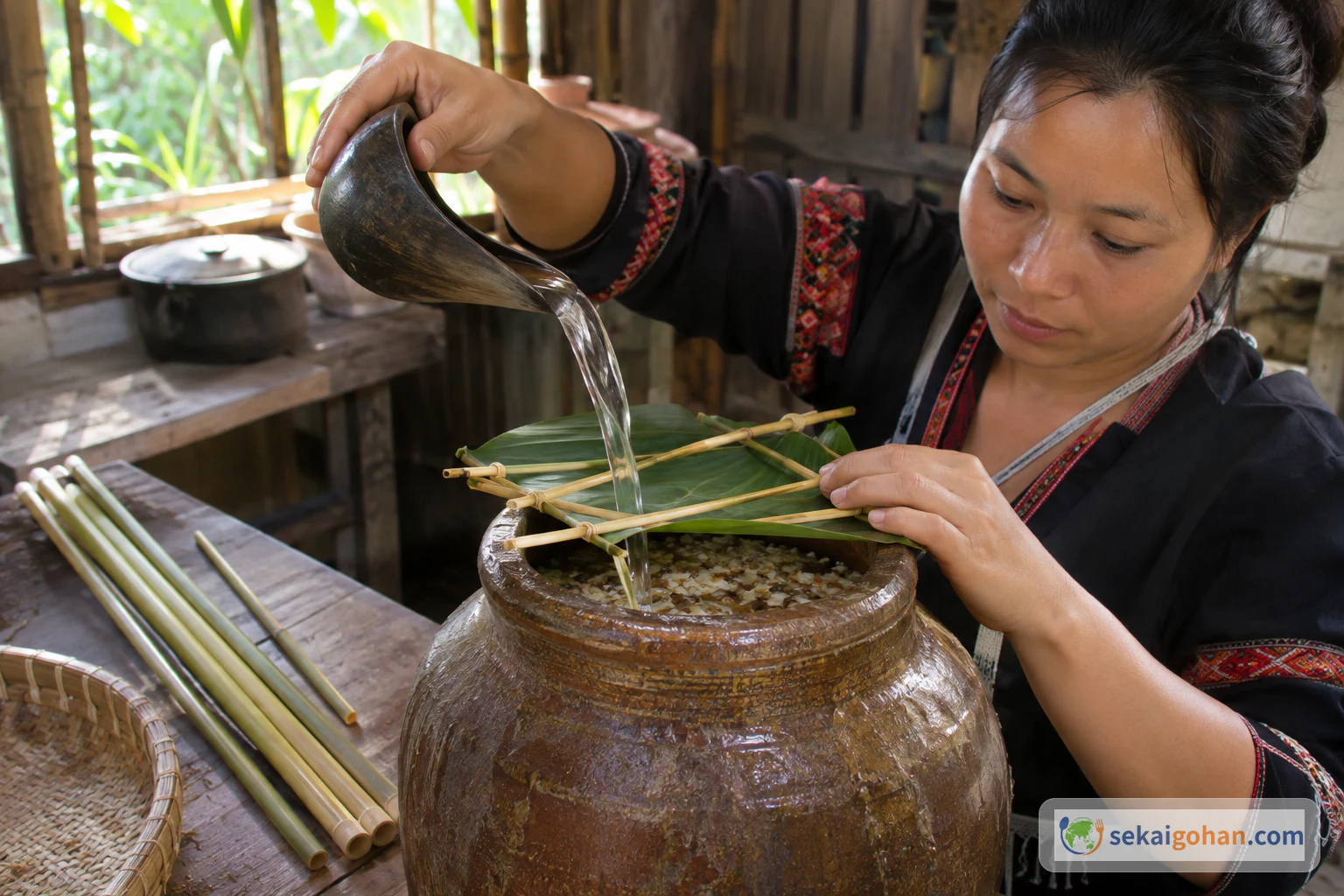
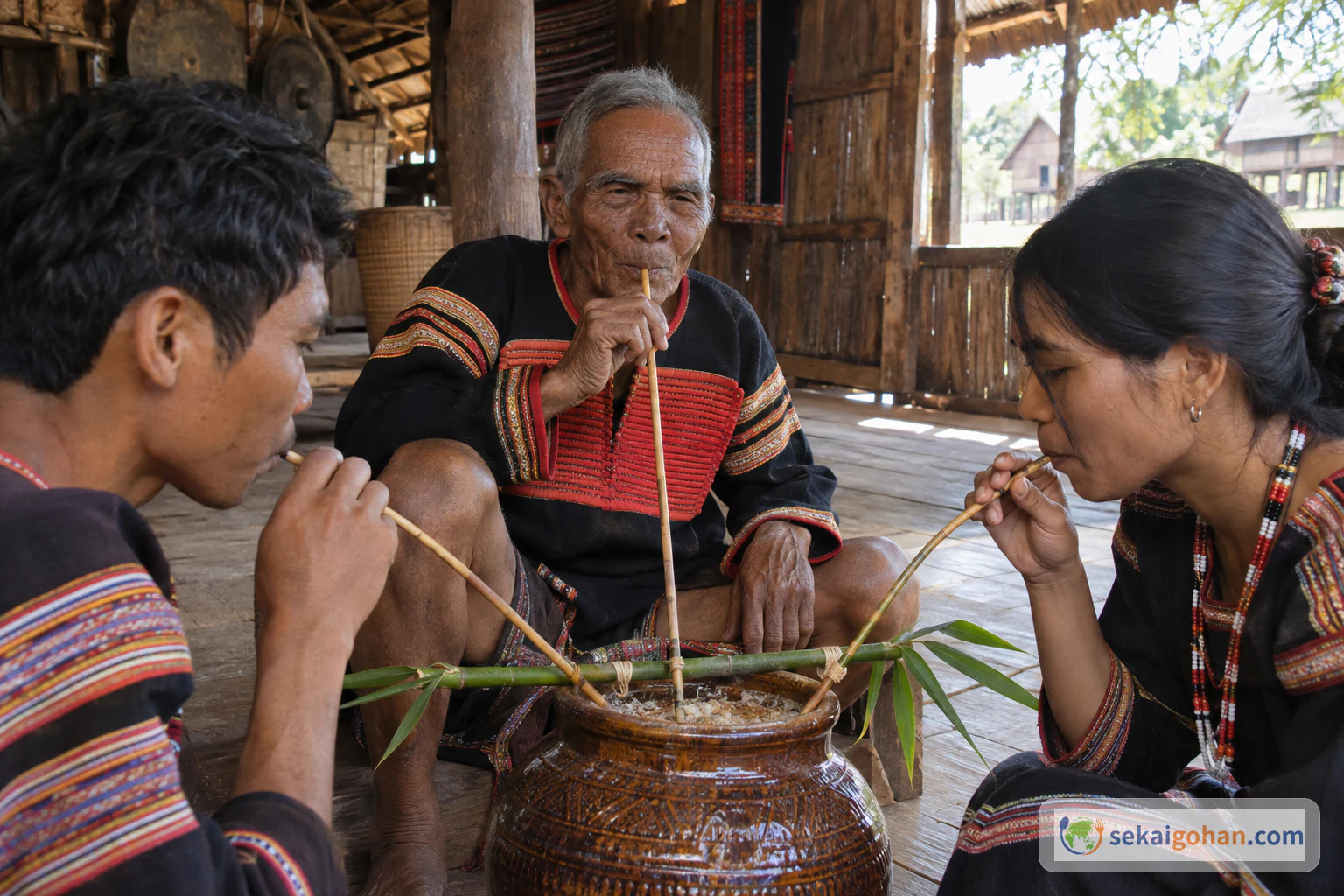
The seal comes off, and the host pours clear water from a buffalo horn into the jar while the guests settle in. A leaf and a few bamboo strips go over the mouth, then the long bamboo straws go in, and the oldest guest leans in first. Rượu cần is the jar wine of Vietnam's Central Highlands and the northwest, made from glutinous rice fermented with a leaf-and-bark yeast ball called men. It is never distilled, and it is drunk together from one jar. Some jars are sweet and others are bitter, and each people brews its own.
A Jar for the Whole House
Many peoples, many jars
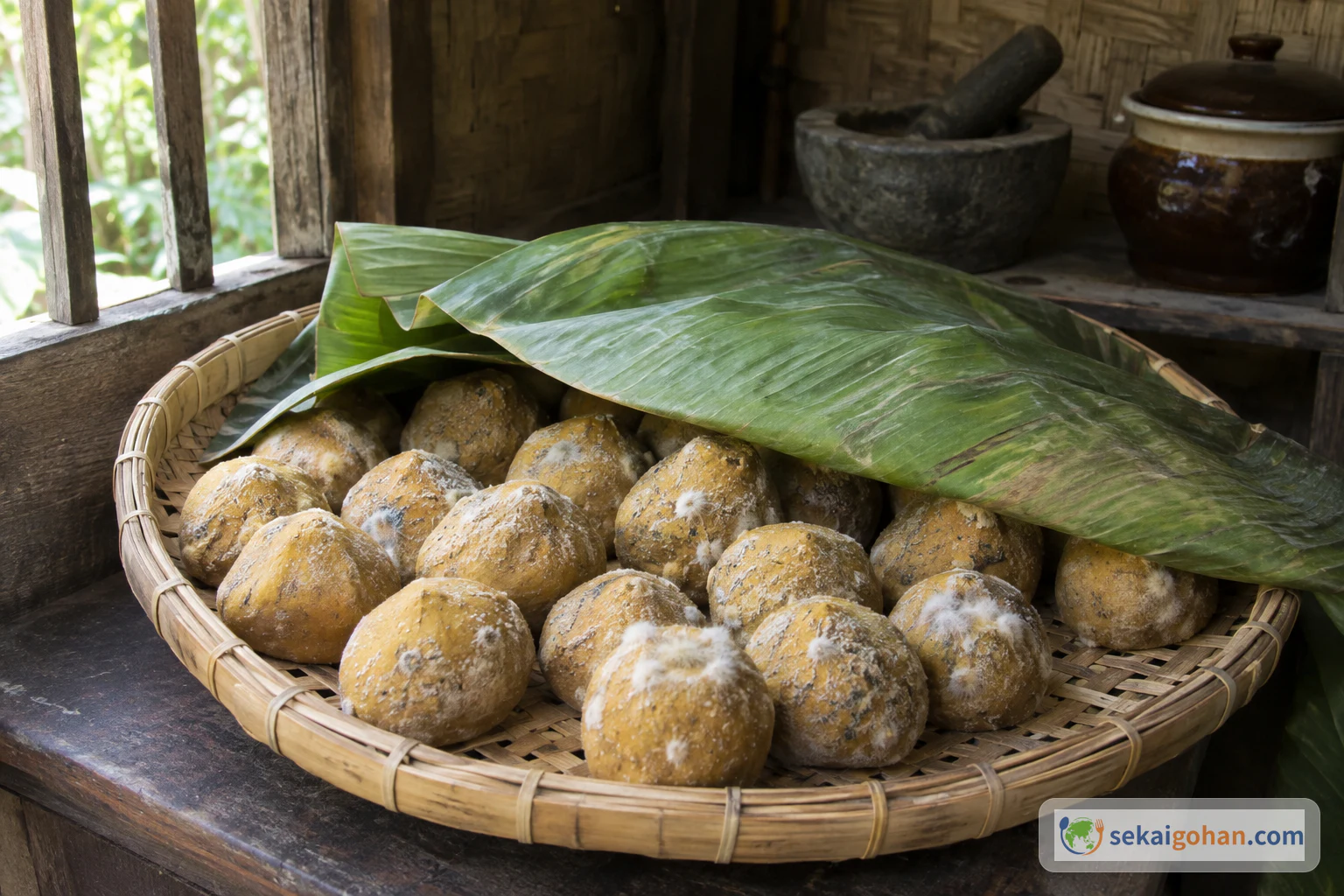
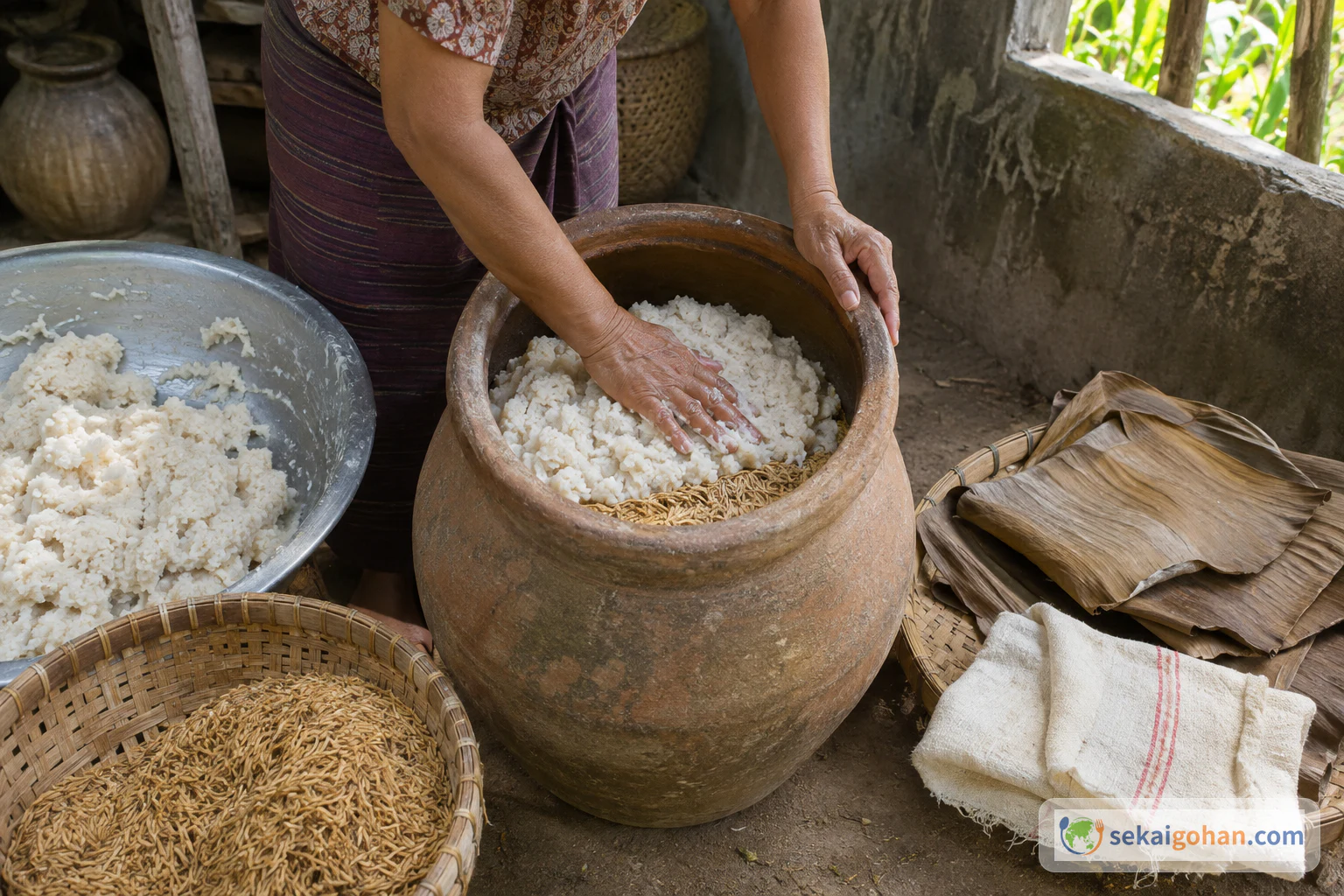
Rượu cần belongs to many ethnic groups at once, and the jar changes with each of them. The S'Tiêng of Bù Gia Mập and Bù Đăng call it đ'rắp s'lung and brew it from glutinous rice with leaves, bark and roots gathered in the forest. The K'Ho make it from brown rice or corn layered with rice husks. Other jars carry cassava, corn or black glutinous rice alongside the white rice. The yeast ball changes as well. One S'Tiêng sweet jar uses K'rai Đăng bark with Ler leaves, and the bitter jar uses Hơ Muôn'L bark. Some highland men balls are made with chilli, ginger, galangal and sugarcane.
The S'Tiêng brew two styles, a sweet jar traditionally poured for women and a bitter jar for men. Their craft of making it, as folk knowledge and traditional skill, is listed as national intangible cultural heritage.
Tết, weddings and the jar at the place of honour
Before Tết, families start gathering the makings about a month ahead: đế leaves, water steeped with hiam bark, and rice roasted and crushed with galangal and chilli, all dried for half a day. Some bury the sealed jar in the yard for one to two months so it is ready for the new year. The jar is also part of festivals, weddings and funerals. One jar serves about ten people. At a festival a single straw goes into it. At a wedding there are two.
The jar is always set at the place of honour, and guests and elders drink first. The details of the ritual differ from one place to the next. In some villages the straw rests on the rim between sips, the first mouthful is offered to the spirits, and the softened rice left at the bottom is eaten once the drinking is done.
Cần is the drinking straw, and the name follows the way the wine is drunk. Rượu đế is a distilled spirit. Rượu nếp and cơm rượu are other glutinous rice preparations with their own place at the table. Rượu cần is the one that stays in its jar and is drunk through bamboo with water added.
More dishes from the same country are gathered on the Vietnam page.
Ingredients
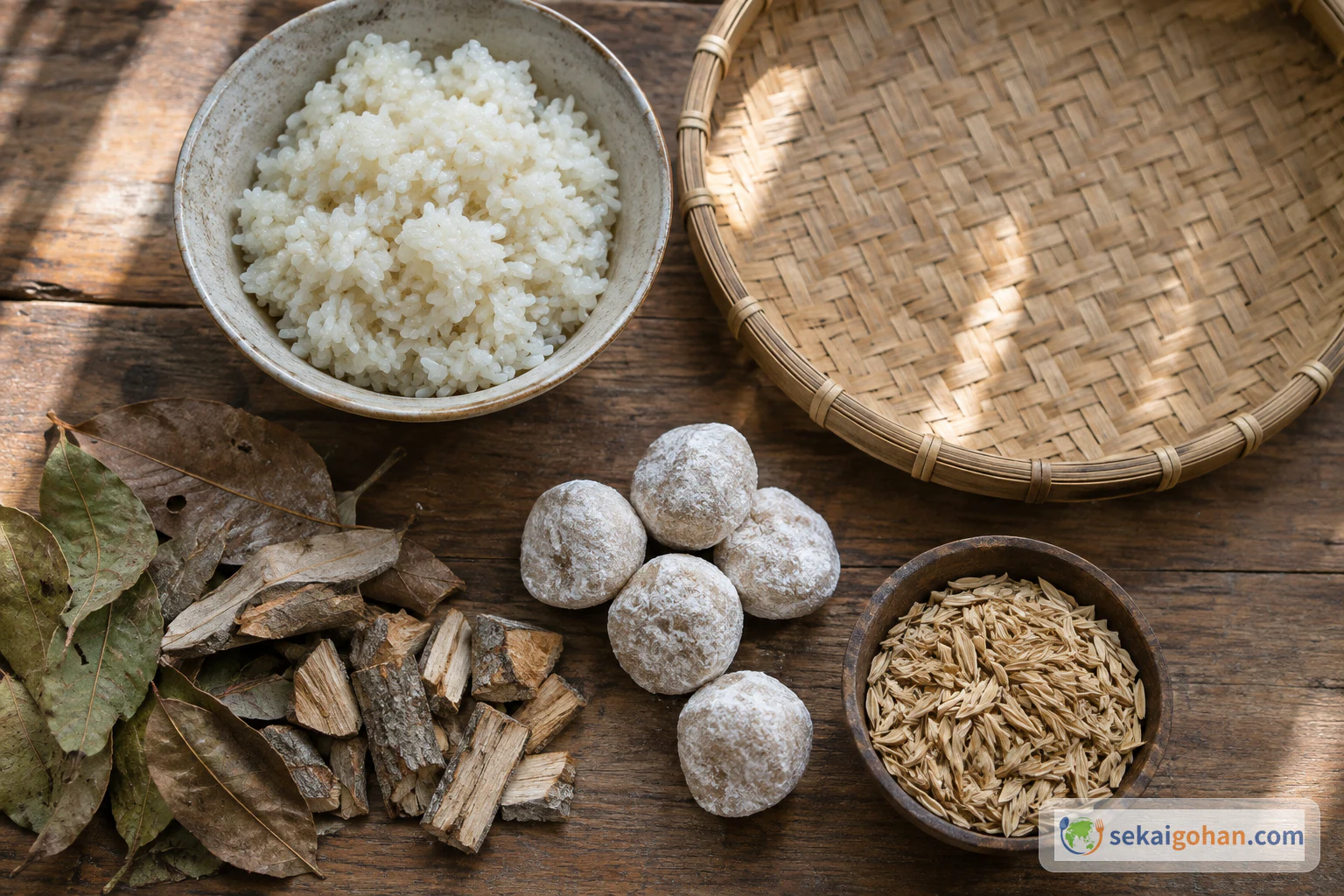
This is the S'Tiêng bitter jar, with husk layering from the K'Ho jar for packing.
Equipment
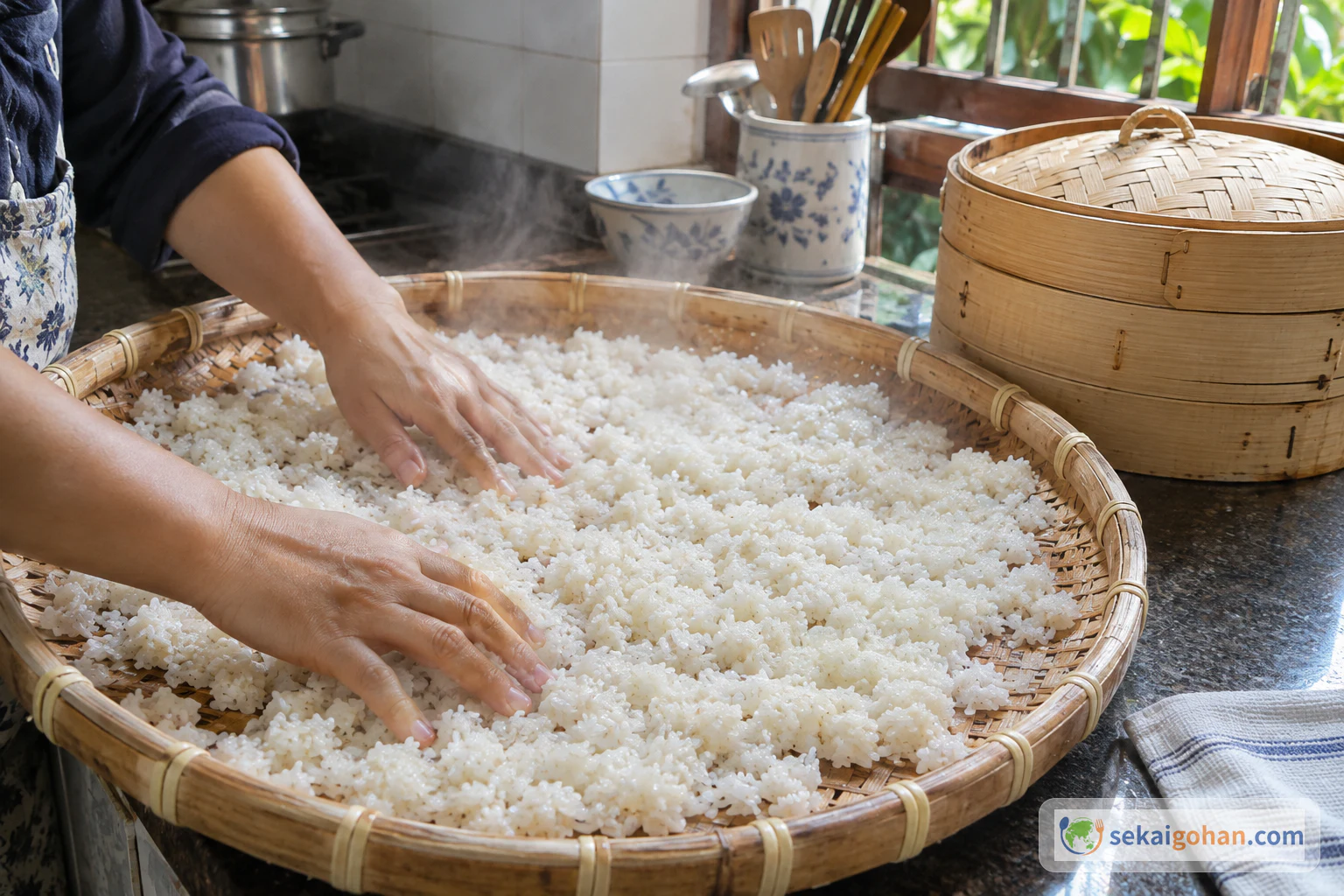
- Bamboo tubes for cooking the rice
- Flat woven bamboo trays (nia)
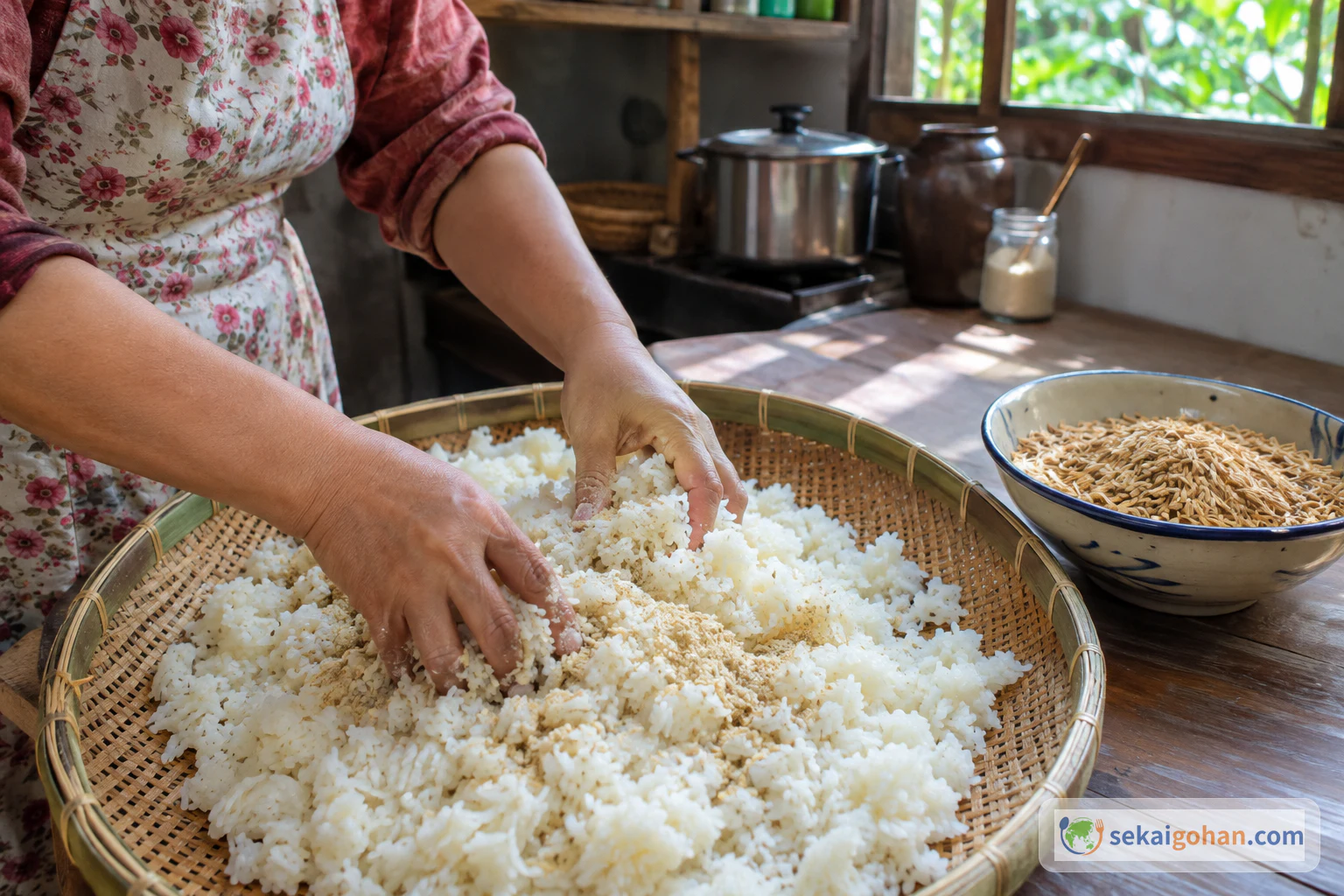
- Mortar and pestle, for grinding rice and pounding the cooked rice
- Fresh banana leaves for covering the men, dried banana leaves for pressing the mash
- A large clay jar (ché, ghè or chum), washed and dried
- Beeswax, or a paste of ash and water, for the seal; or banana leaves and a cloth
- Dry thatch grass, for singeing the men
- A buffalo horn or ladle for the water
- Long bamboo straws and 3 to 4 thin bamboo strips
Choosing the Grain, the Yeast and the Leaves
Glutinous rice is the base. Brown rice gives the K'Ho jar, and corn gives a slower one. Corn needs two to three months in the jar, and rice needs about one. Cassava or black glutinous rice can be added to the rice rather than replacing it.
The men decides which jar you end up with. Bark and leaves chosen for a sweet jar give a sweet wine, and Hơ Muôn'L bark gives the bitter one. Buy leaves, bark and men only as products sold for food, and never pick bark or leaves from the wild or use ornamental plants. Prareng and the forest barks are hard to find away from the highlands. Without them the wine moves away from the jar it is named after, so use them when you can get them.
Method
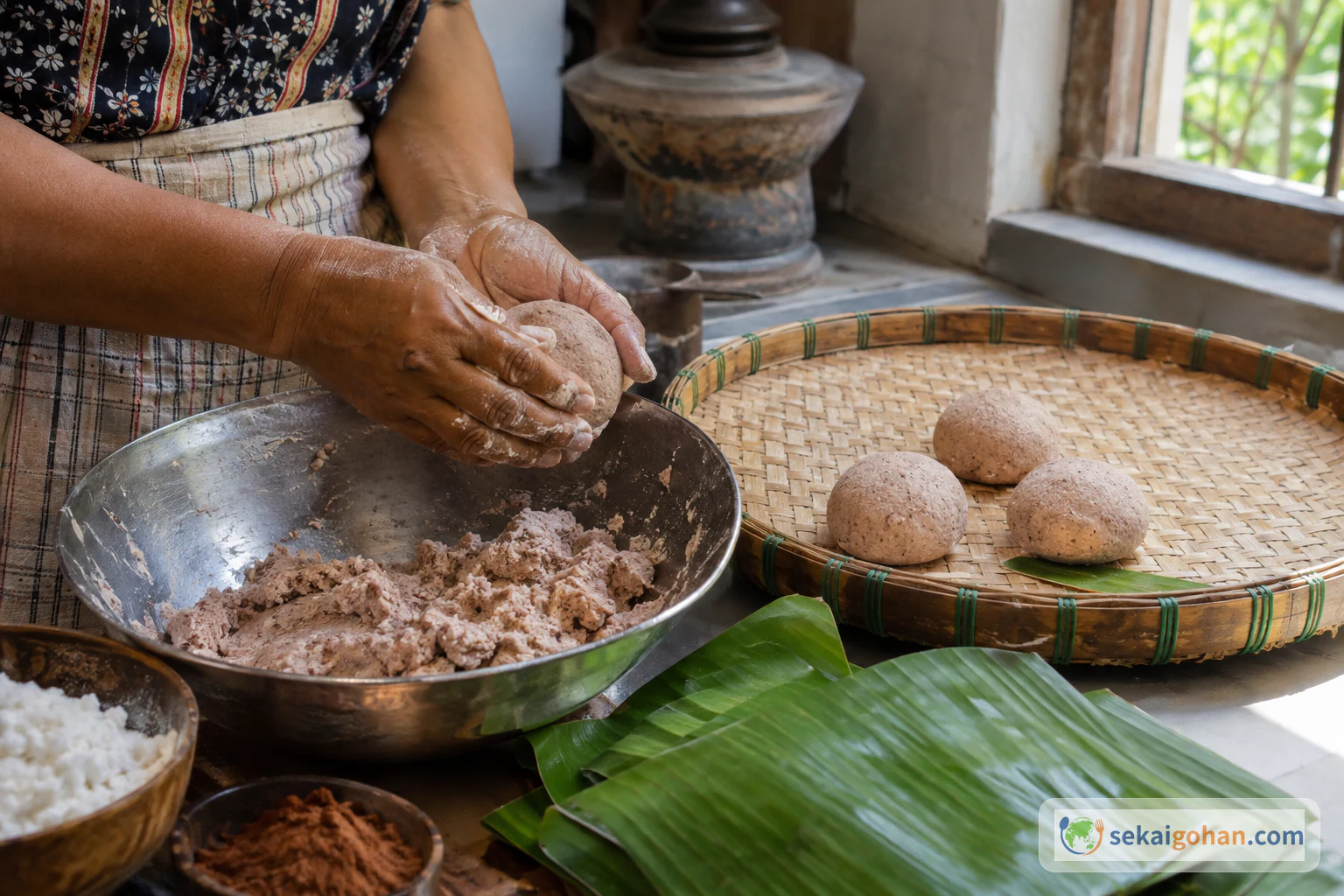
The men comes first and needs two to three days on its own, then it is dried and hung. After the men is ready, the rice is cooked, pounded and packed, and then the jar sits sealed in the shade for at least 20 days for a sweet jar, and one to two months for most jars. In Japan, making a drink of 1% alcohol or more at home without a licence is restricted by the Liquor Tax Act, so readers there should check the rules or enjoy rượu cần where it is made.
Wash your hands, the trays and the jar, and dry the jar before packing. Keep the jar in a cool, shaded corner and keep to the men ratio and the fermentation time. If the jar smells wrong, grows mould other than the white bloom on the men, or turns an unexpected colour, throw the batch away.
The host tops up the jar between drinkers, a little at a time. That keeps the jar going all evening, and it means the drinkers never pour for themselves.
When It Goes Wrong
| What you see | Why | What to do |
|---|---|---|
| The wine is sour | Too much men | Next time, keep to one ball for each 2.2 lb (1 kg) of rice |
| The mash rots instead of fermenting | Too little men | Throw it away; measure the men exactly next time |
| The mash sets in hard lumps | No husks were mixed into the mash | Mix husks through the mash |
| Mould in colours other than white, or an off smell | The jar, hands or tools were not clean | Throw the batch away; wash and dry the jar and keep it in the shade |
| The straw sucks up grains | Nothing is holding back the solids | Lay the leaf and 3 to 4 bamboo strips over the mouth before adding water |
Serving and Variations
What goes on the table
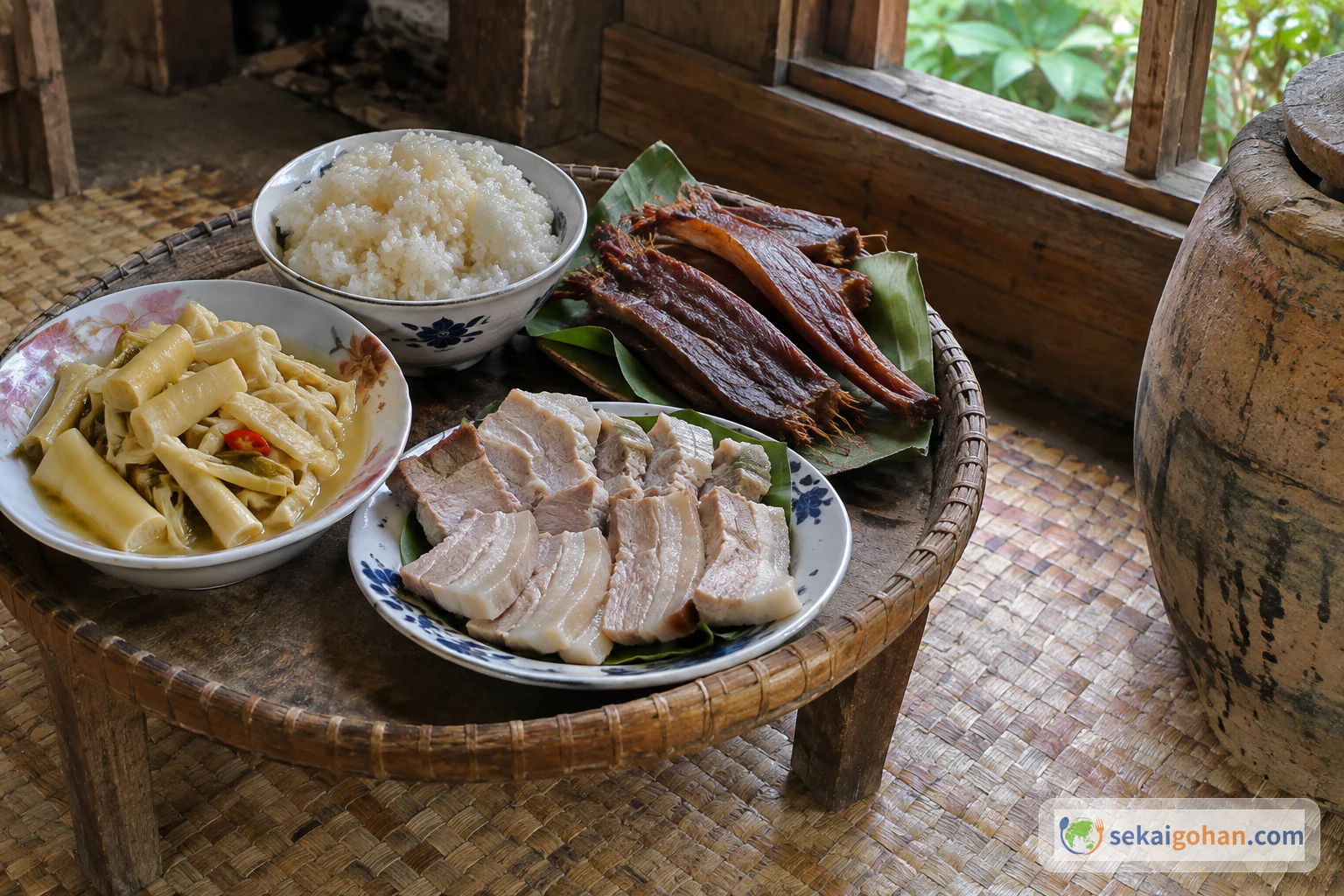
The jar is drunk with food. Sour or bitter bamboo shoots, dried meat, sticky rice, boiled pork and chicken all go around it. The sour, salty things set off the wine. Sticky rice cooked in bamboo, like cơm lam, sits naturally beside a jar that was also started in bamboo tubes.
The main risk is drinking too much, because the host keeps the jar topped up. Drink slowly and eat as you go, and do not mix it with other alcohol. Drink only from a jar made by a village or family you trust. It is fine to decline politely. Anyone pregnant or breastfeeding, anyone driving, and anyone under the legal drinking age should not drink it.
Variations
- Sweet jar. K'rai Đăng bark and Ler leaves go into the men in place of Hơ Muôn'L bark, and the wine comes out sweet. It needs at least 20 days in the jar.
- Brown rice or corn. The K'Ho jar uses brown rice or corn with husk layers. A corn jar takes two to three months.
- Spiced men. Chilli, ginger, galangal and sugarcane go into the men, and the cooked grain rests on the nia for two nights and a day before it goes into the jar. Leave it in the shade for one to two months.
Frequently asked questions
How strong is rượu cần?
Strength runs from about 10 to 25 percent, and every jar is different. The more water the host adds, the lighter each draw becomes. Sweet jars and bitter jars sit in the same range.
What happens to the rice at the bottom?
It softens in the wine and the water. In some villages it is eaten once the drinking is finished. That is the end of the evening around the jar.
Do I have to drink every time the jar comes to me?
No. Declining politely is accepted. Where the branch is used, drinking down to one notch is the courtesy, and you can take a small sip and pass the straw on.
Why a straw and not cups?
Everyone drinks from the same jar, and the straw reaches the liquid through the leaf and bamboo strips that hold back the solids. One jar serves about ten people this way, and the host only has to fill one vessel.