The Table's Background: When Black Steam Rises, the Kitchen Moves Toward East Java
The moment you lift the lid, behind the sweet steam of beef rises a deep scent that is neither black sesame nor char. Rawon looks a little forbidding for its blackness, but in the mouth it is surprisingly round. It is East Java's black beef soup, built from beef shank broth, a fried bumbu of aromatics and the earthy richness of kluwek.
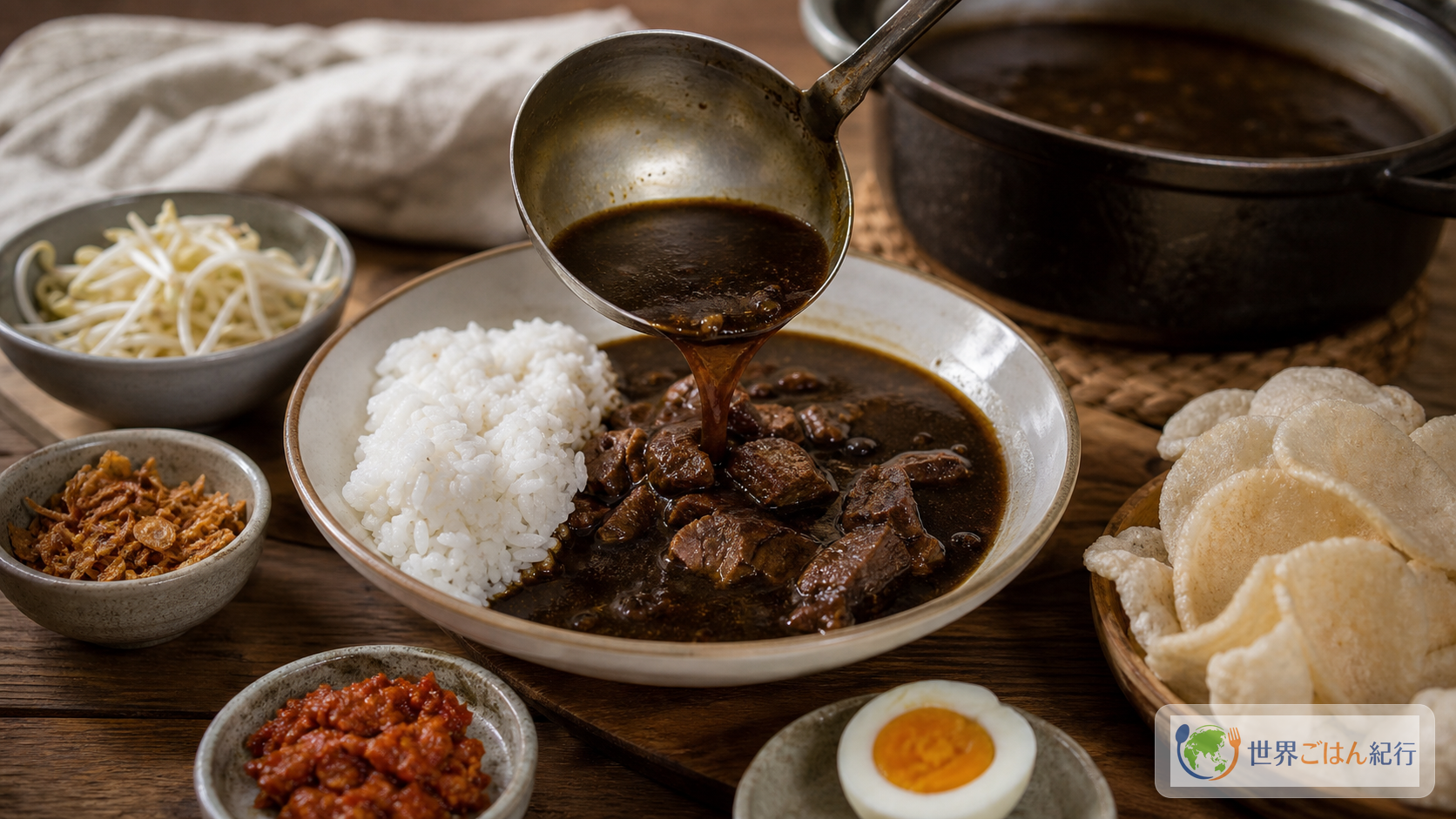
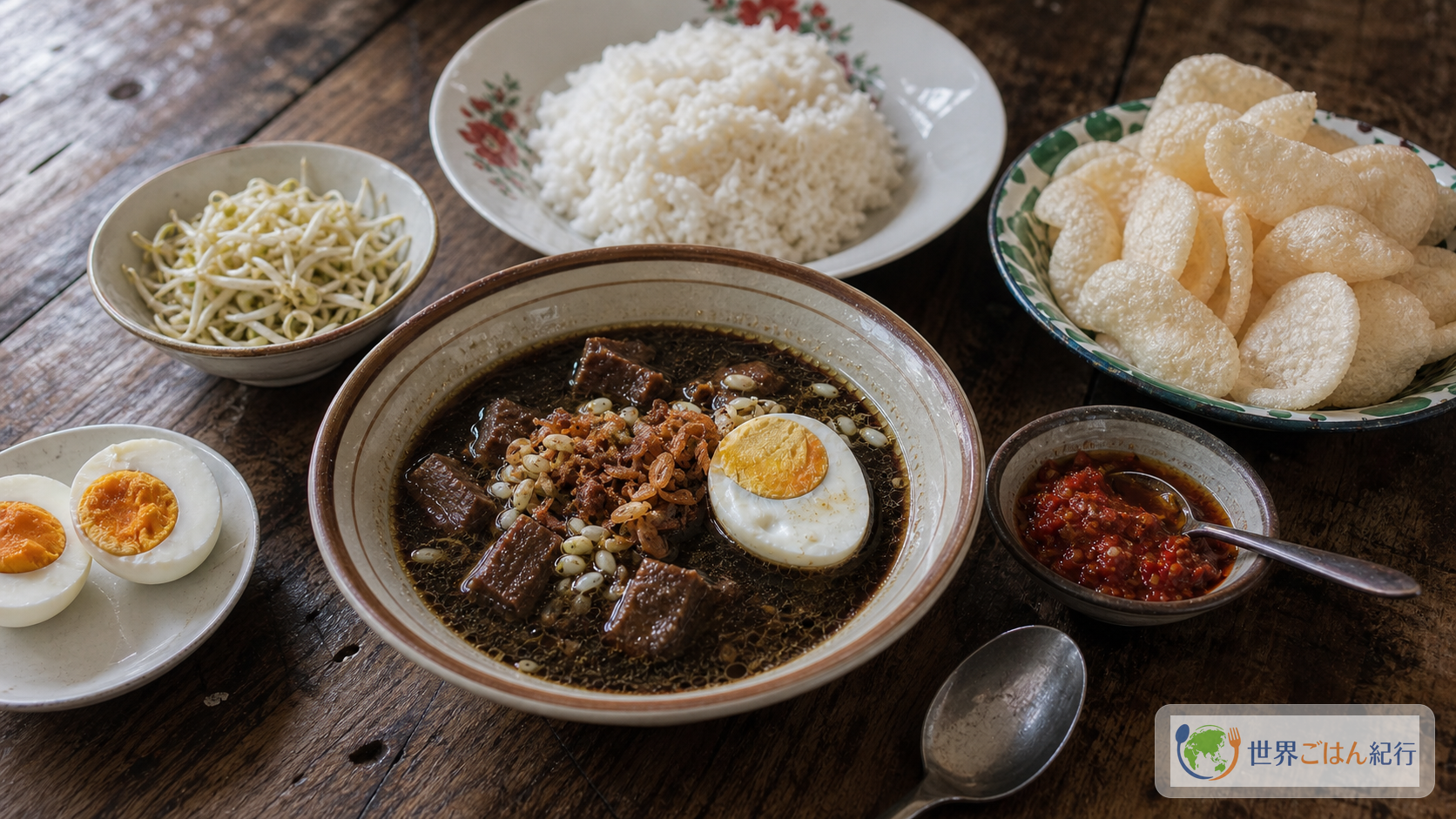
Rawon is known as a dish eaten widely in eastern Java, Indonesia, especially around Surabaya. The center of the black color is kluwek (also called keluak or kepayang, the fermented and processed seed of Pangium edule). Locally it is served with white rice, short bean sprouts, salted egg, sambal and krupuk, and the soup is ladled over the rice bit by bit.
The crux of making it away from Java is not the beef but the kluwek. This is not a dish you can blacken with a similarly named spice. Pushing the color with black sesame, cocoa or caramel will not reach rawon's depth. At the same time, kluwek is an ingredient that needs care. This article does not go into processing raw seeds at home and is built on the premise of using processed edible kernels, or a store-bought bumbu rawon.
Among Indonesian dishes, rendang (in Japanese) is the rich meat dish where coconut is cooked down, and soto ayam is a yellow chicken soup. Rawon sits between them, satisfying like meat yet light enough to eat as a soup. For a rice dish, pair it with nasi uduk, and for street-stall aroma, sate ayam, and the Indonesian table widens at once.
Kluwek is the seed of Pangium edule, traditionally made edible by soaking in water, fermenting and heating. Avoid cracking and using raw seeds, or seeds of unknown processing state, at home. Here the premise is processed edible kernels, paste, or store-bought bumbu rawon.
Background: A Black Soup Raised in East Java
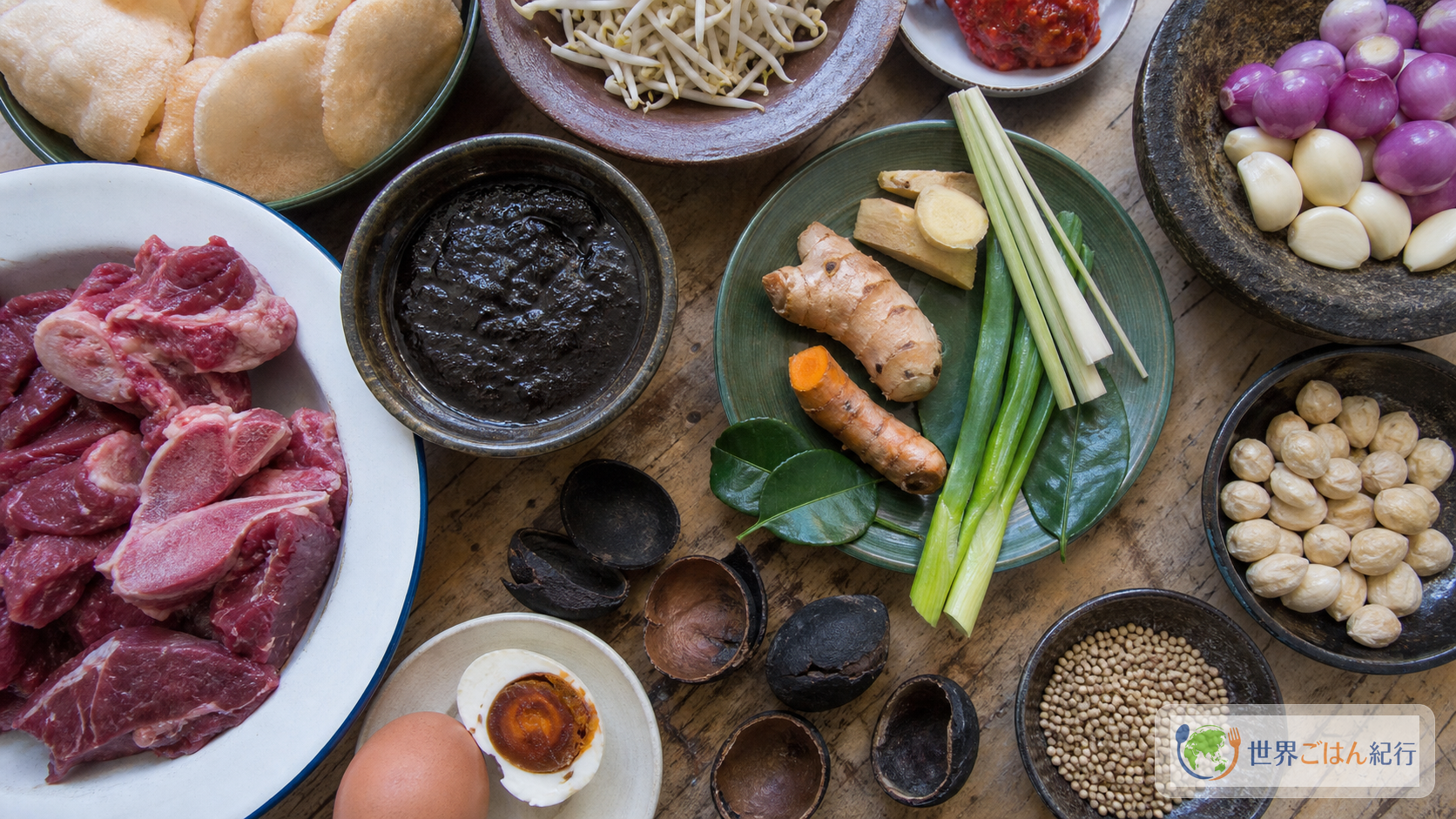
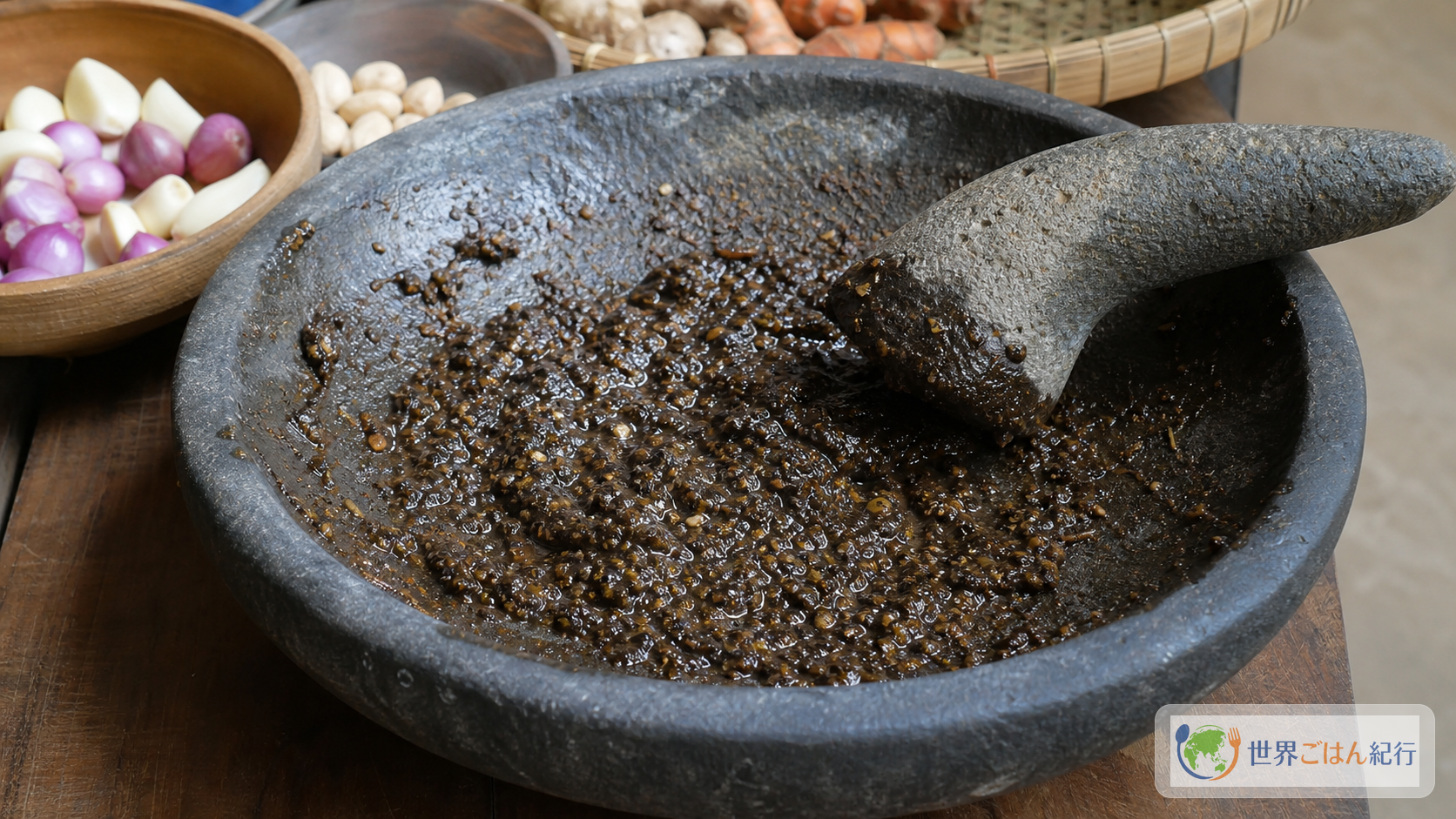
Rawon is translated as "black beef soup," but it is not merely black. In an ethnic food study of Indonesian cuisine published in the Journal of Ethnic Foods, rawon is treated as a dish of East Java, with kluwek at the center as the ingredient that creates the black color and aroma. Local recipes combine kluwek with shallots, garlic, candlenuts, coriander, turmeric, lemongrass, makrut lime leaves and salam leaves.
Kluwek is an ingredient whose taste is hard to sum up in a word. It is like a nut, like dried shiitake, and has the earthy richness of black beans cooked long. It is not strong in heat or sourness; it darkens the back of the soup. That is why the step of applying heat to open its aroma matters. Just dissolving the paste directly in the broth gives the black color, but a raw, muddy smell tends to stay.
What is interesting about the East Javanese way of eating is placing light things beside the black soup. Short bean sprouts are the crisp escape; salted egg is the fat and salt to receive the rich soup; sambal is the adjuster that adds heat plate by plate; krupuk is the role that makes texture. Thinking about the rice and sides, not just perfecting the soup, gets you closer to the local table.
| Element of the table | Role | Practical answer at home |
|---|---|---|
| Black soup | The richness of kluwek and beef | Processed kluwek, or bumbu rawon |
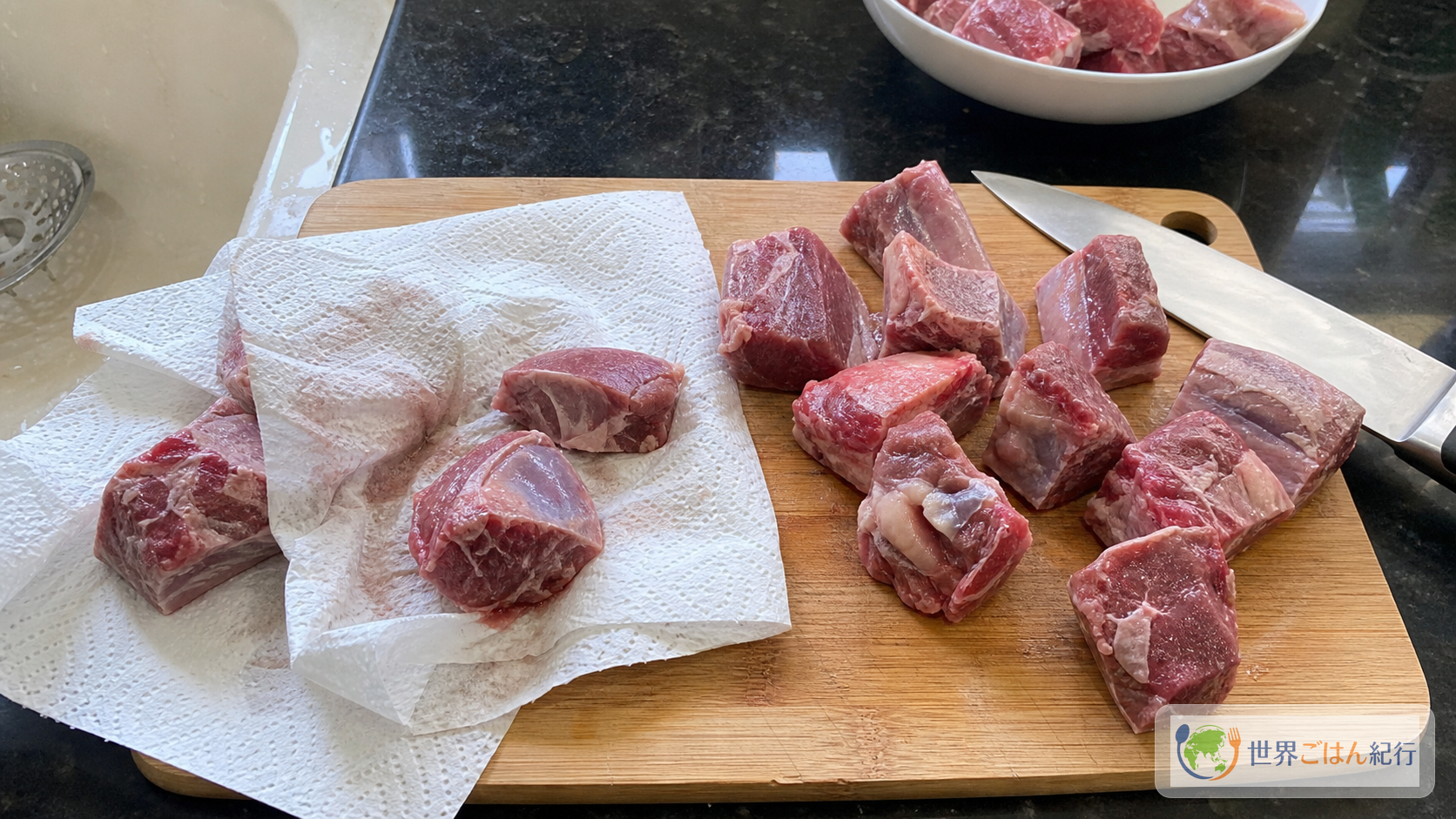
| Beef | Broth and satisfaction | Beef shank, chuck, stew-cut cubes |
| Bean sprouts | Lightness and texture | Mung bean sprouts, blanched briefly |
| Salted egg | Saltiness and rounding fat | A boiled egg sprinkled with salt will do |
| Krupuk | Texture | Shrimp chips or fried crackers can substitute |
In Indonesian it is written rawon. Kluwek is also spelled keluak, kluwak, kepayang and so on. This article uses "rawon" and "kluwek" consistently.
Ingredients (serves 4)
This serves 4. Rawon settles in flavor once cooled, so if you serve it at dinner, cooking it at midday and reheating before eating also suits. Beef shank is the easiest to work with, but supermarket stew beef also works. In that case do not cut the simmering time short; wait until it breaks apart tenderly.
This dish may contain beef, shrimp-containing seasoning, nuts, soy and wheat. Terasi, sambal, krupuk and store-bought bumbu differ in ingredients by product. If you have a food allergy, always check the labels.
The Crux of Shopping Is Kluwek and Herbs
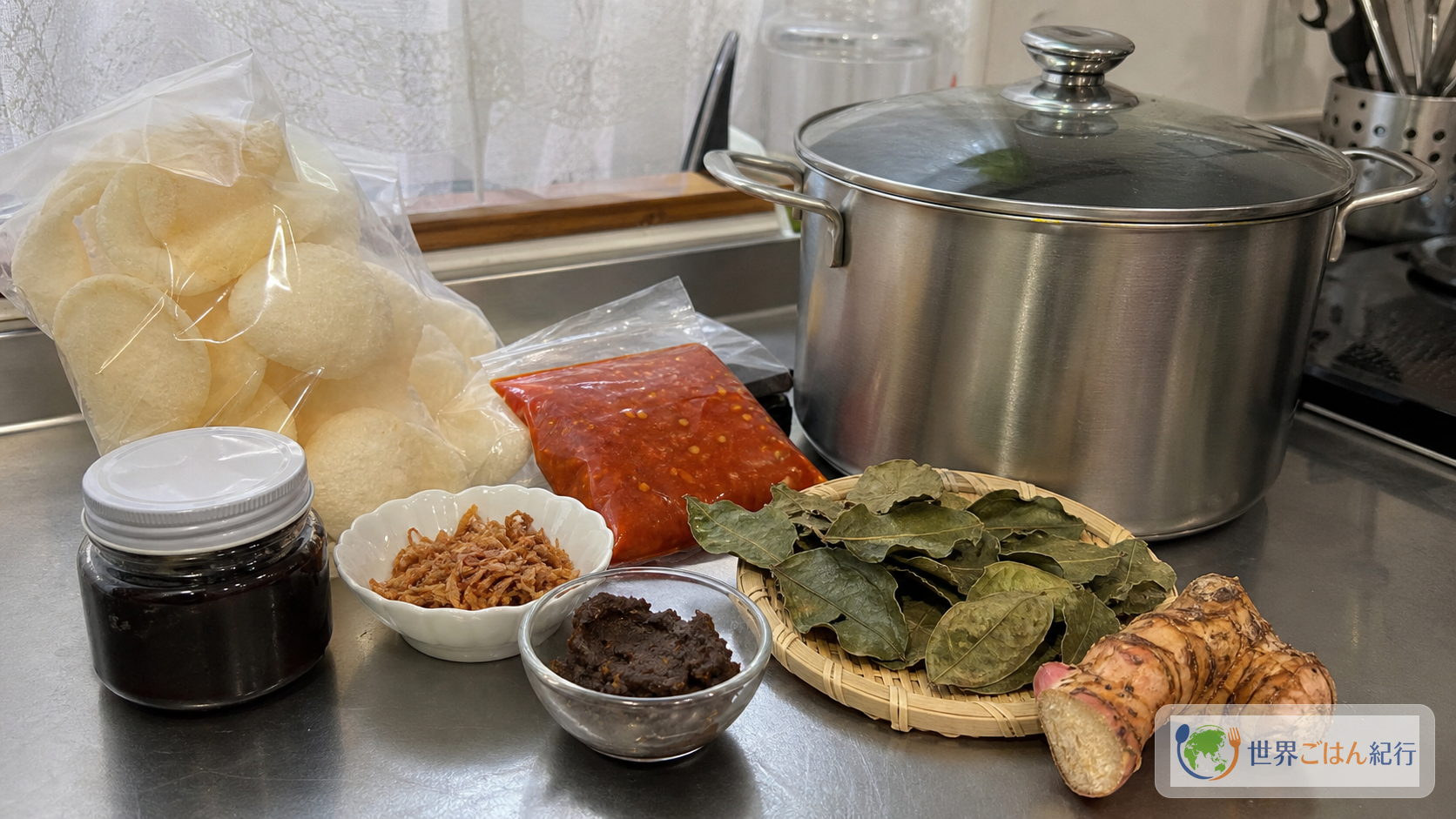
The first thing to look for in rawon is kluwek. At import and Indonesian grocery stores it is sometimes sold as processed edible kernels, paste, or bumbu rawon. Rather than buy an unfamiliar shelled fruit and process it at home, choose something processed for eating from the start. If you use store-bought bumbu, it often already contains salt and sugar, so adjust salt at the end.
Once you have kluwek, the next thing worth gathering is the herbs. Galangal resembles ginger but has a harder aroma and tightens the outline of the soup. Makrut lime leaves give a Southeast Asian scent even in small amounts. Krupuk and sambal are not essential, but they set the rhythm of eating the black soup on and on.
| What to buy | Priority | Reason |
|---|---|---|
| Processed kluwek, bumbu rawon | Top | The center of blackness and richness. Hard to substitute for color alone |
| Galangal | High | An aroma that cuts the heaviness of beef |
| Makrut lime leaves | Medium | Adds a bright citrus note to the soup |
| Sambal | Medium | Lets heat be divided at the table |
| Krupuk | Medium | Creates the lightness of the local table |
For kluwek alone, rather than a substitute, it is worth waiting for the day you can get it. Galangal and lime leaves can also go into ayam betutu and tom yum goong (in Japanese), so if you keep cooking Southeast Asian food they are unlikely to be wasted.
Method: Simmer the Meat, Then Add the Black Bumbu
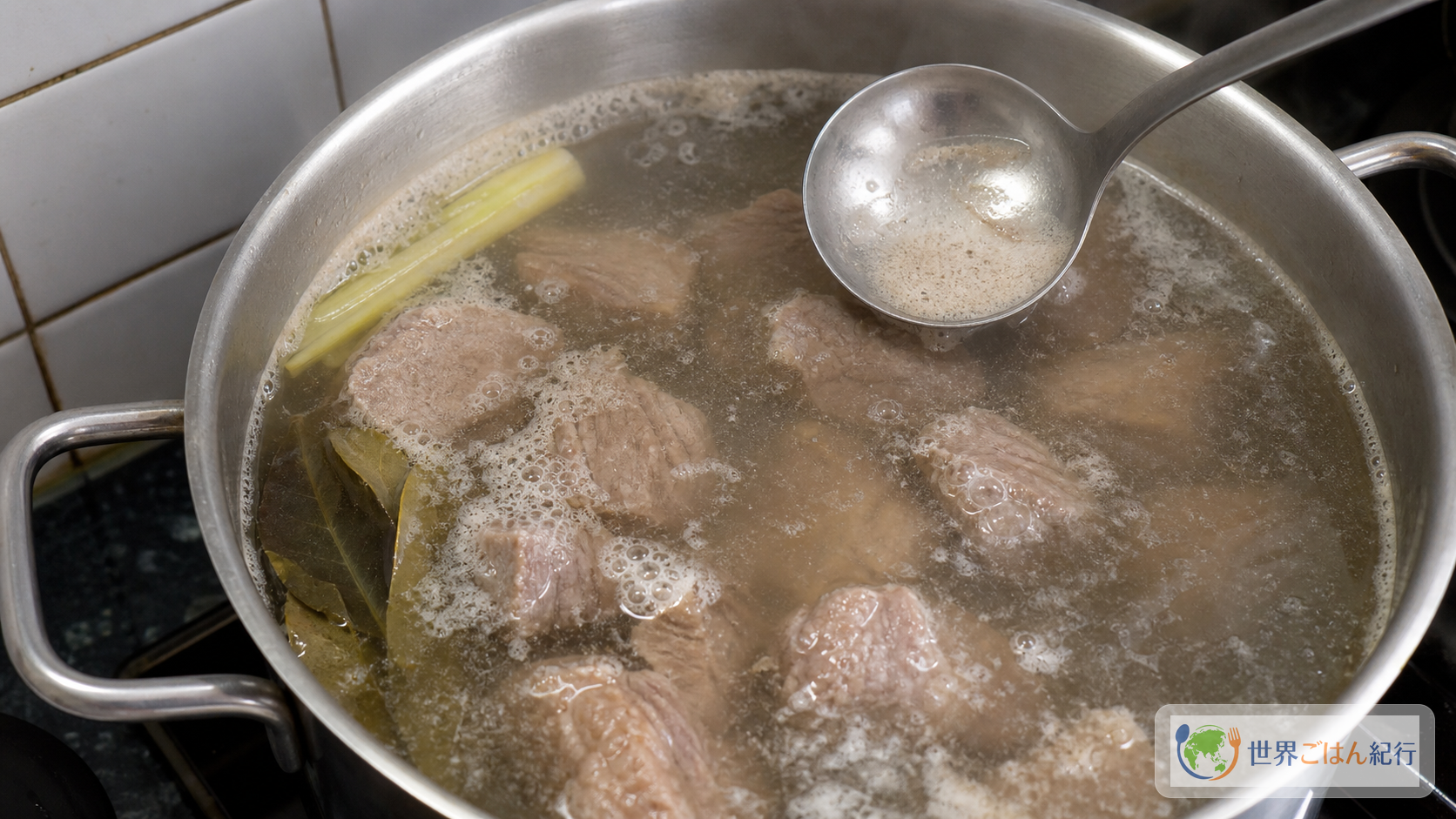
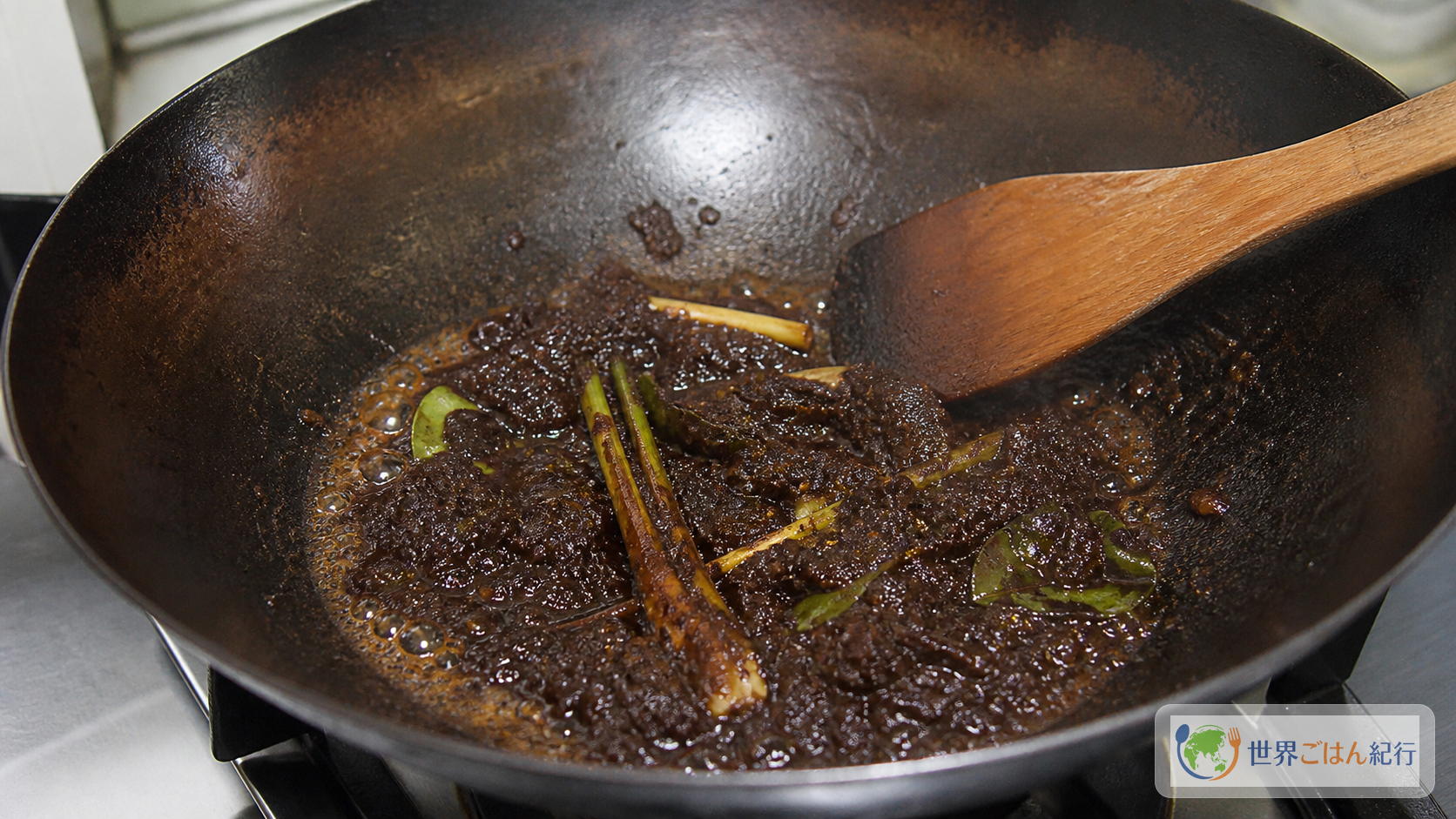
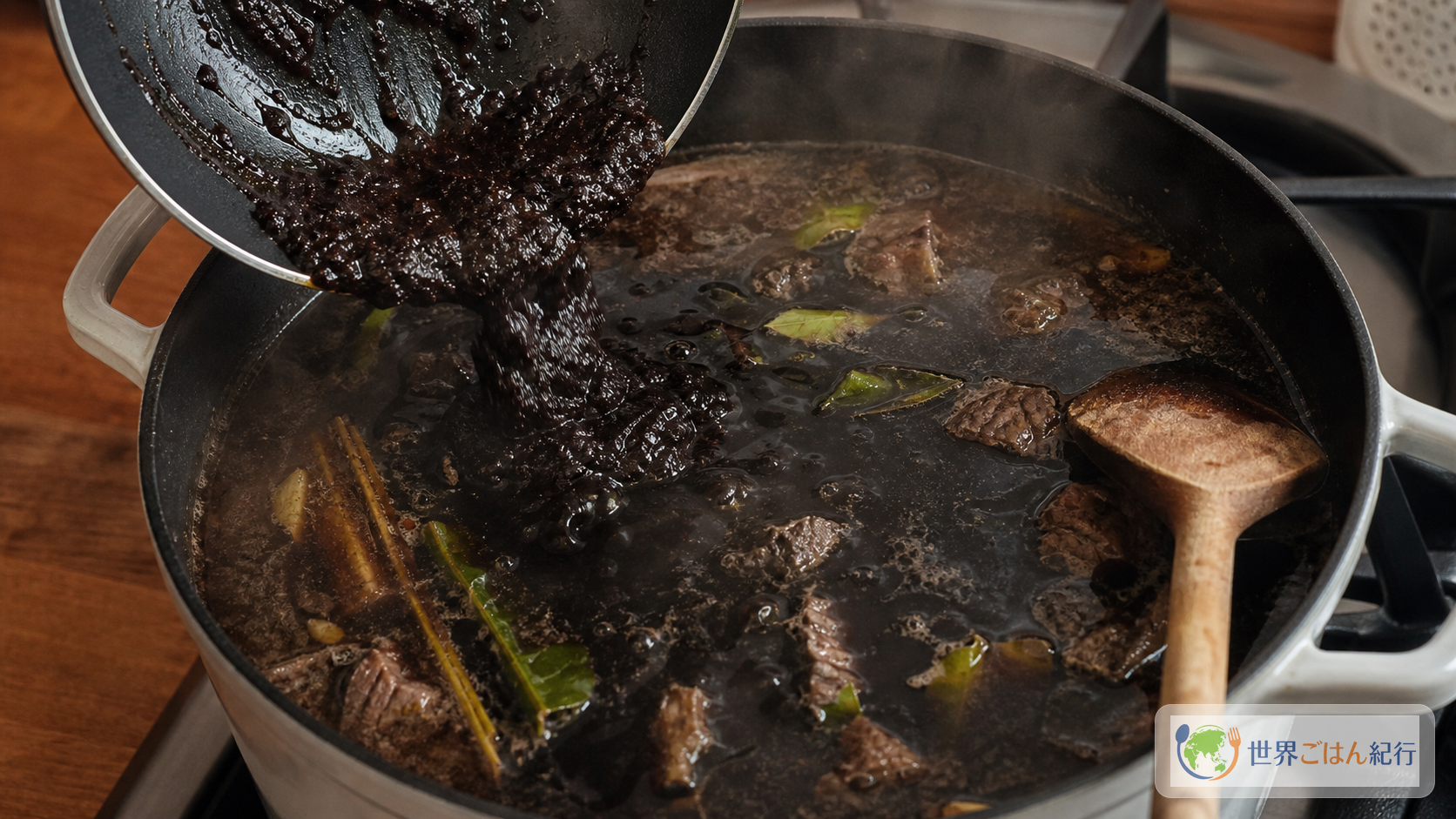
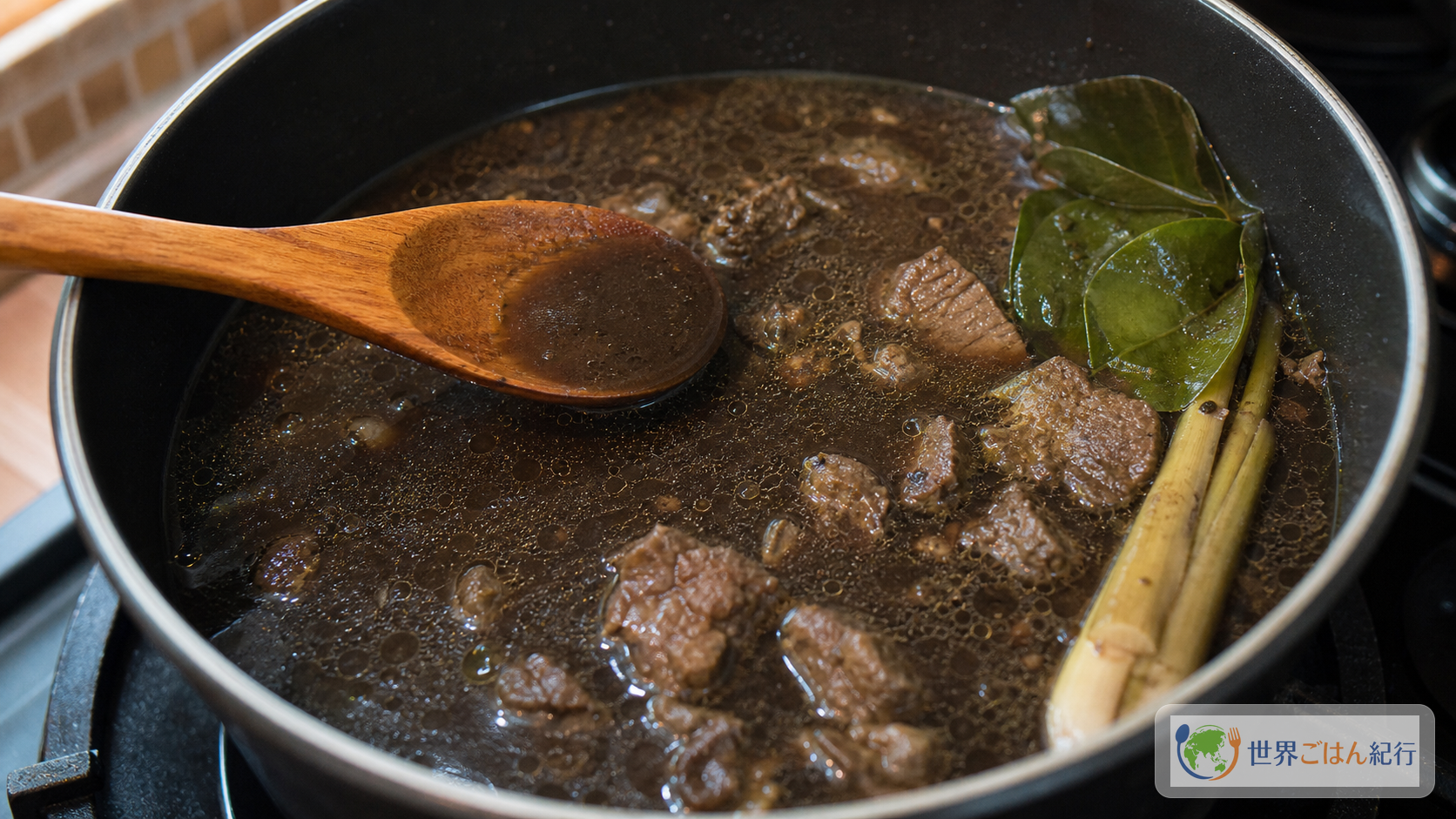
Rawon is not a dish where you coat the meat with black paste from the start and sear it. You simmer the beef first to make a clear broth, fry the bumbu in a separate pan to open its aroma, and then combine. Kluwek's aroma is heavy, so proceeding patiently over gentle heat makes it come together neatly.
Freshly made, the kluwek aroma comes forward. If you have time, turn off the heat and rest 30 minutes, then reheat on low for 10 minutes before eating. The black soup gets into the beef and the saltiness rounds out.
A Branching Table for Moving Toward the Real Thing at Home
Rawon easily becomes a different beef soup if you substitute wrongly. You need not make everything with local ingredients, but separating what to protect from what can move makes failure less likely.
| Ingredient in doubt | Direction to protect | Practical answer | Direction to avoid |
|---|---|---|---|
| Kluwek | Processed black edible kernel | Store-bought paste, bumbu rawon | Processing raw seeds at home, substituting black sesame |
| Beef | A cut that gives broth and can braise | Shank, chuck, stew cubes | Thin-sliced meat simmered briefly |
| Herbs | Lemongrass, lime leaves, salam | Prioritize lemongrass; for salam, 1 bay leaf | Adding more bay leaf and drifting Western |
| Heat | Added at the table | Sambal on a separate plate | Making the whole pot very hot |
| Sides | Sprouts, egg, krupuk | Sprouts, boiled egg, shrimp chips | Making the soup alone complete |
On a day without kluwek, rather than force a black soup, switching to rendang (in Japanese) as another Indonesian beef dish gives more satisfaction. Rawon's blackness is itself the design of its flavor, so rather than push on with a substitute, making it on a day when the ingredients are in hand preserves the meaning of the dish.
Beef shank is ideal, but stew-cut cubes are fine the first time. What matters is matching the simmering time to the meat. Even if the stew meat is small, do not stop at 45 minutes; wait until it breaks apart with chopsticks. If liquid drops, add hot water, and decide the seasoning last.
Why It Fails: Not Black, Muddy, Tough Meat
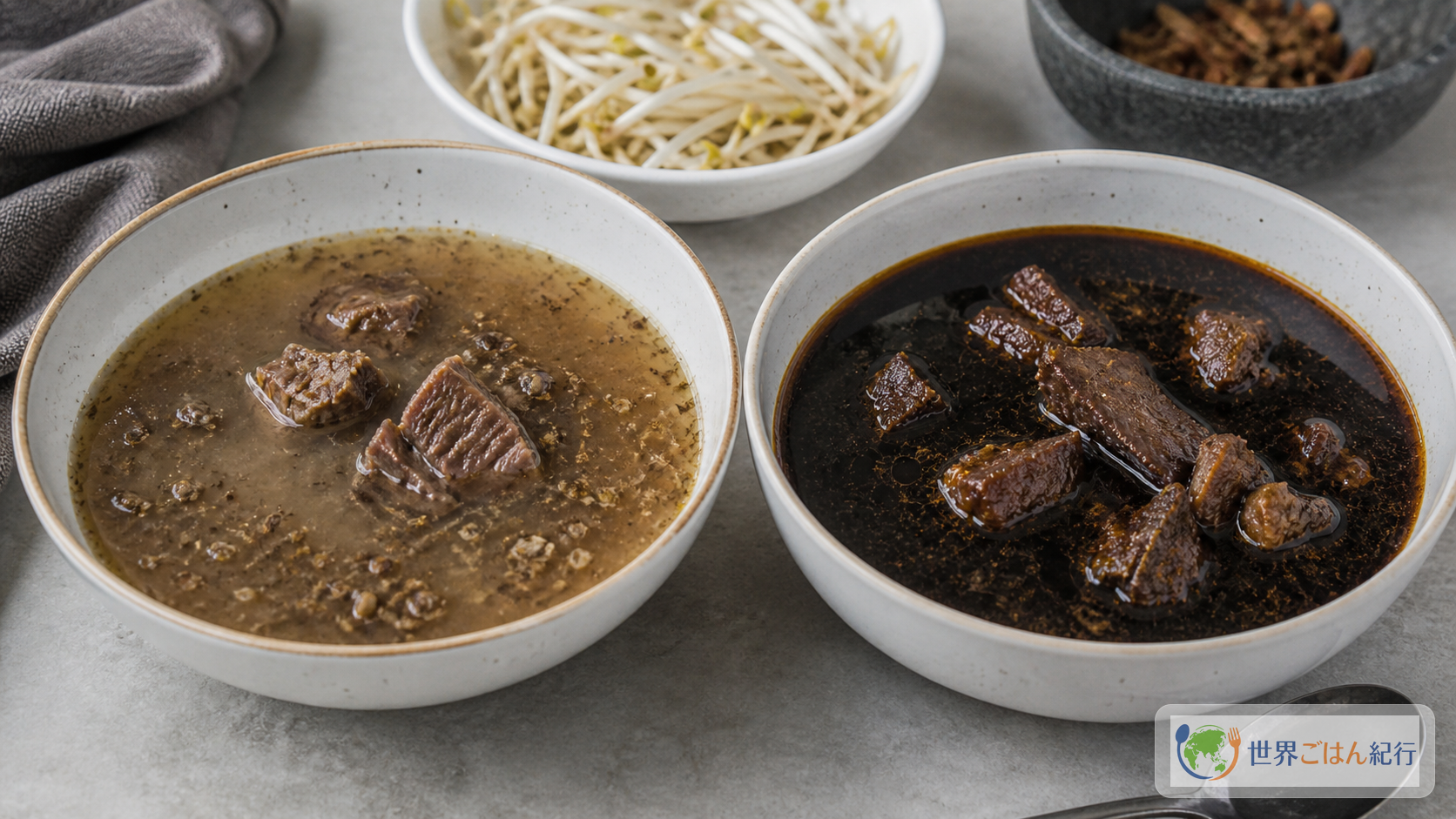
If it does not turn black, there is too little kluwek, or the bumbu was simply dissolved directly into the soup. First take the bumbu into a separate pan and fry it again over medium-low for 3 minutes. When oil seeps out, return it to the soup. If you want a deeper color and add lots of black sesame, it becomes not rawon but a sesame-flavored beef soup.
If a muddy smell remains, the kluwek or aromatics were not cooked enough. Simply simmering on low does not open the aroma. In the step of frying the bumbu, wait until the raw garlic smell is gone and oil floats at the edges. Rushing on high heat gives a burnt smell, so keep to medium-low.
If the meat is tough, it is simply underdone. Beef shank takes longer than it looks. Add 100 ml water and cook 20 minutes more on low. Boiling hard tightens only the surface and leaves the sinew in the center hard. Waiting until a skewer or chopsticks go in without resistance gives a tastier result in the end.
If the soup is salty, do not just dilute with water; add 150 ml hot water and 1/2 tsp sugar and heat 5 minutes. It also matters to taste it with rice. Rawon on its own is a little strong, and just right combined with rice is closer to how it is eaten locally.
Storage and Reheating
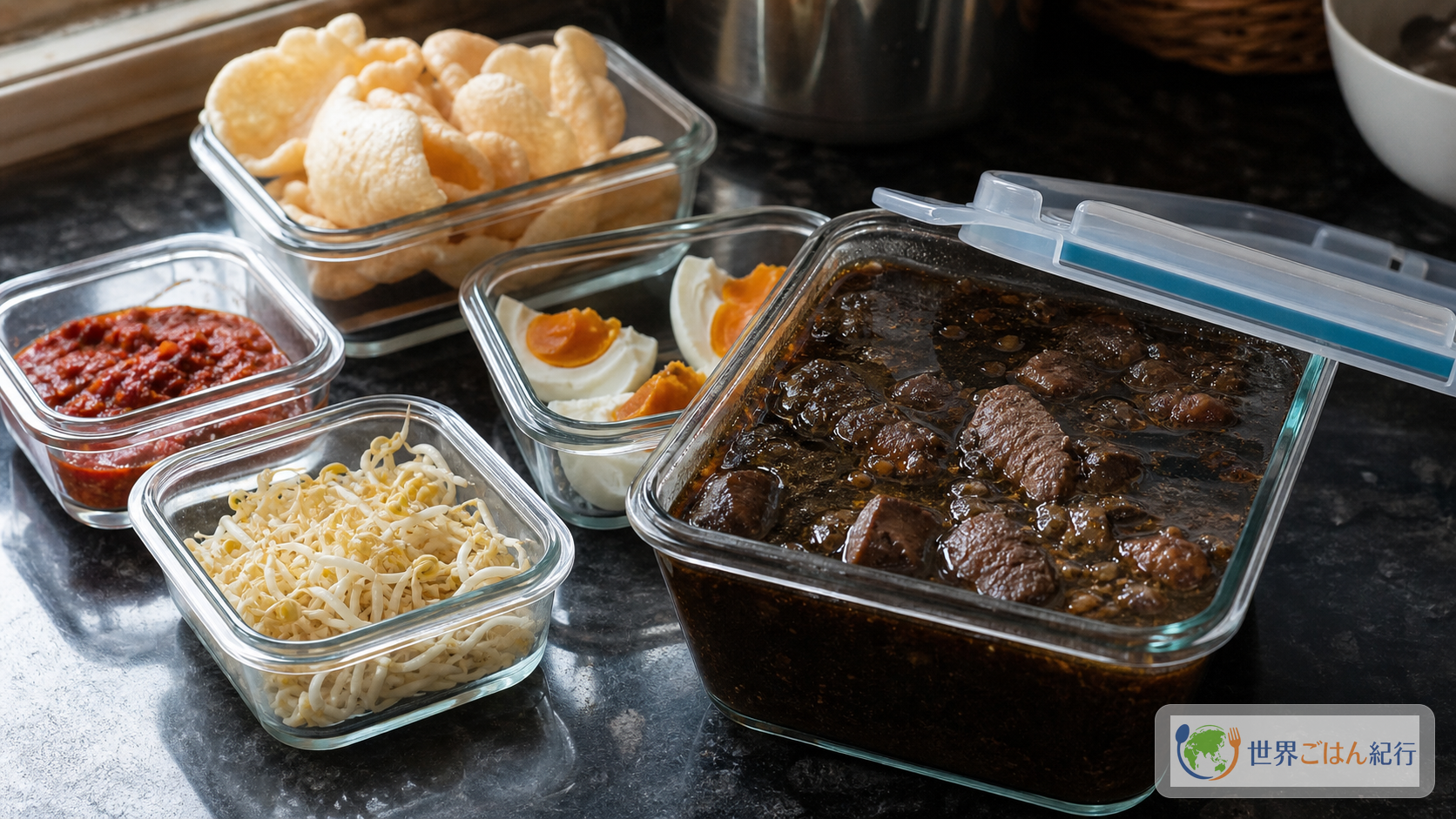
Cool the rawon itself a little and move it to a container within 2 hours. A guide is 3 days in the refrigerator and 3 weeks in the freezer. Always keep the bean sprouts, egg, krupuk and sambal separate. Stored in the soup, the sprouts release water and the black soup goes thin.
Reheating suits a pot. Add 2 tbsp water or hot water per portion and heat 8 minutes on low. Turn off the heat when the surface bubbles lightly and steam has returned to the center of the beef. In a microwave, use a deep heatproof container, cover loosely with plastic wrap, heat at 600 W for 2 minutes, stir, then 1 more minute.
To freeze, keep only the beef and soup. Thaw half a day in the refrigerator, or partly thaw the bag under running water, then put in a pot over low heat. Freezing rounds kluwek's aroma a little, so after reheating a little sambal brings back the outline.
FAQ
Can I make it without kluwek?
The center of the flavor changes, so we do not recommend it as rawon. Pushing color alone with black sesame, cocoa or caramel will not produce kluwek's distinctive richness. On a day you cannot get it, it is more natural to switch to rendang (in Japanese), another beef dish, or soto ayam, a soup of aromatics.
Can I make it with only store-bought bumbu rawon?
Yes. Use 70 g store-bought bumbu in place of this article's black bumbu. But salt and oil content differ by product, so adjust salt last in 1/2 tsp steps. If the aroma is weak, adding 1 stalk lemongrass and 2 makrut lime leaves gives dimension even in a home pot.
Can I make it quickly with thin-sliced beef?
You can, but it is unlikely to become a proper rawon soup. If you use thin slices, simmer only the soup for 45 minutes first and add the meat in the last 5 minutes. The meat is tender to eat, but you lose the broth and gelatin of beef shank.
Can I make it milder?
Yes. Put no chili in the pot and serve sambal on a separate plate. Rawon itself is a dish of aroma and richness more than heat. At a table with people who dislike heat, make the soup gentle and let only those who want it add sambal from 1/2 tsp.
What if I have no salted egg?
You can use an ordinary boiled egg. Halve it and sprinkle a pinch of salt on the cut surface before serving, which comes a little closer to the salted egg's role. Simmering the egg in the soup clouds the yolk and makes it look heavy, so add it only at the end.
Dishes to Cook with Rawon
On a day when black beef soup is the star, adding rice and light vegetables brings the table together. For a fragrant rice, nasi uduk pairs well. Coconut-and-lemongrass rice meets rawon's black soup, so you enjoy the tables of East Java and Jakarta at once.
To add heat or a side, have a sambal substitute ready. Sambal is easier for a family to adjust when put beside the plate rather than mixed into the pot. For a vegetable dish, gado-gado, and for another meat dish, sate ayam is natural.
Compared within Indonesian cooking, rawon is a black soup, rendang a rich braise cooked down until dry, and soto ayam a yellow chicken soup. Just comparing them as "soups" shows how each island uses its ingredients.
Sources
- Murtini, E.S. and Murdianti, A. "Rawon: an Indonesian traditional ethnic food from East Java." Journal of Ethnic Foods, 2024. https://journalofethnicfoods.biomedcentral.com/articles/10.1186/s42779-024-00239-1 (accessed 2026)
- Indonesia Travel. "Rawon: Black Beef Soup from East Java." https://www.indonesia.travel/ (accessed 2026)
- Recipes Indonesia. "Rawon: Black Beef Soup." https://recipesindonesia.com/indonesian-soup-recipes/black-beef-soup/ (accessed 2026)
- Heriyanto, N.M. and Subiandono, E. "Ecological status of pangi Pangium edule Reinw." J-Stage / Forestry and Forest Products Research Institute. https://www.jstage.jst.go.jp/article/jfr/5/1/5_1_35/_article (accessed 2026)