Yellow sauce covering the skewers: West Sumatra's satay
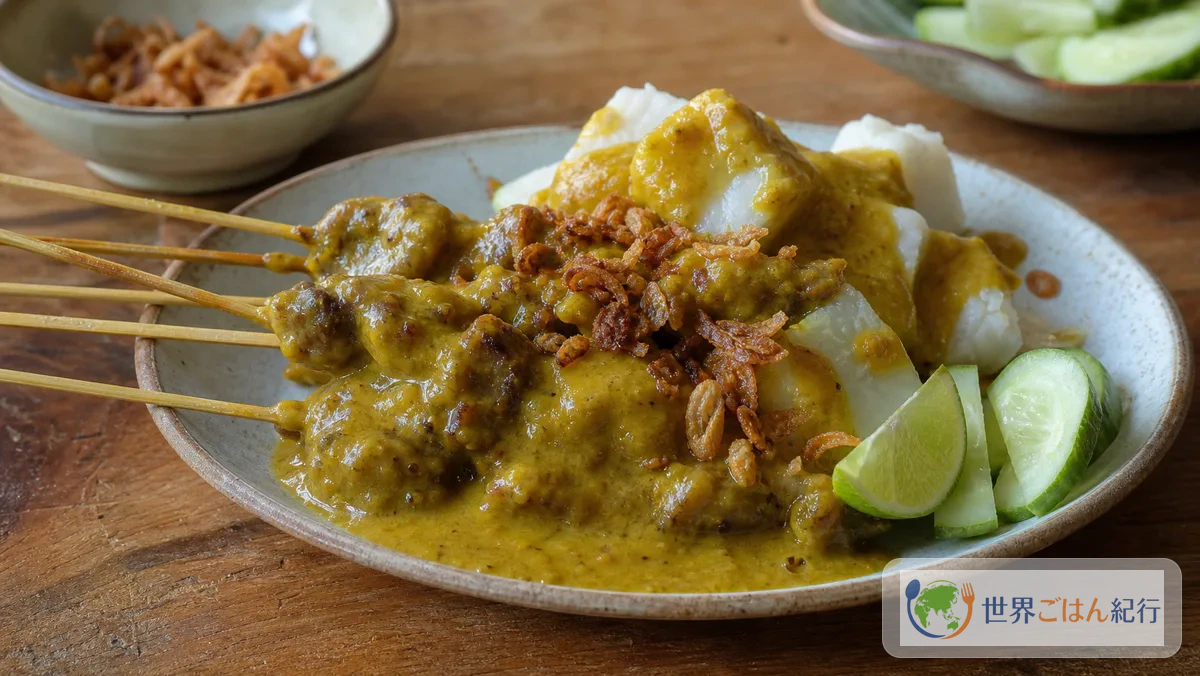
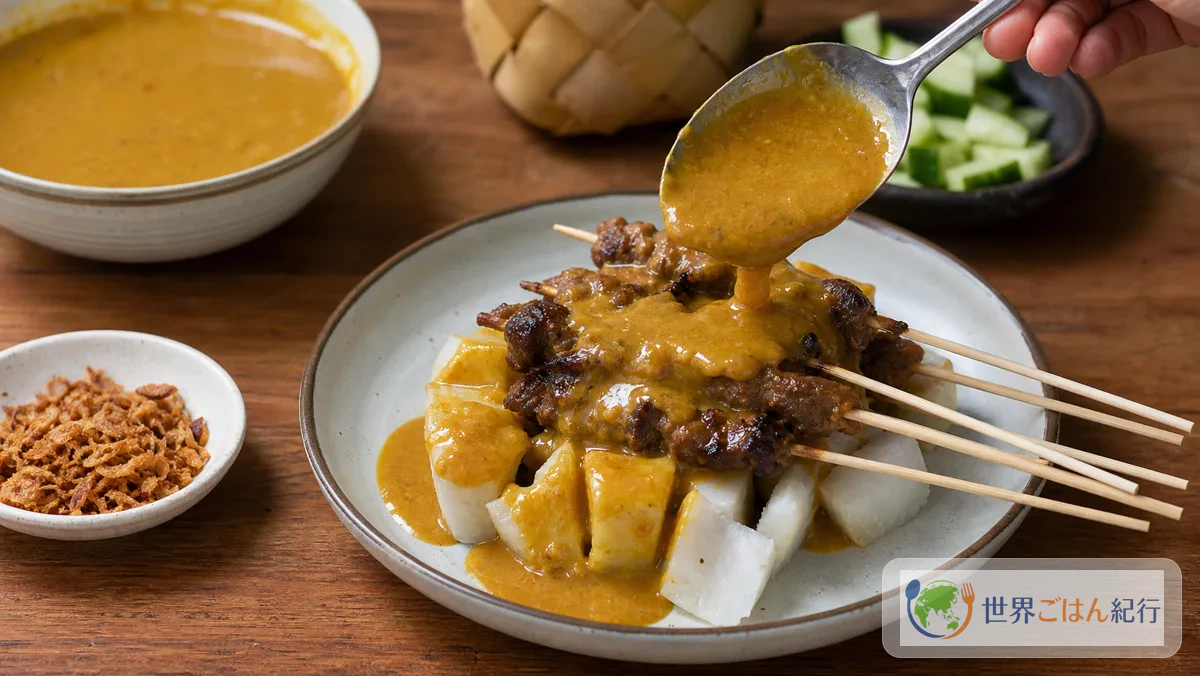
Picture skewers like yakitori and look at the plate, and sate padang comes as a small surprise. A yellow sauce is poured thickly over it, so thick that you cannot see the outline of the meat. Unlike the sweet peanut sauce of sate ayam, the aromas of turmeric, coriander, cumin, galangal and lemongrass come first. It is less sweet than a grilled skewer wearing the aroma of a hot soup.
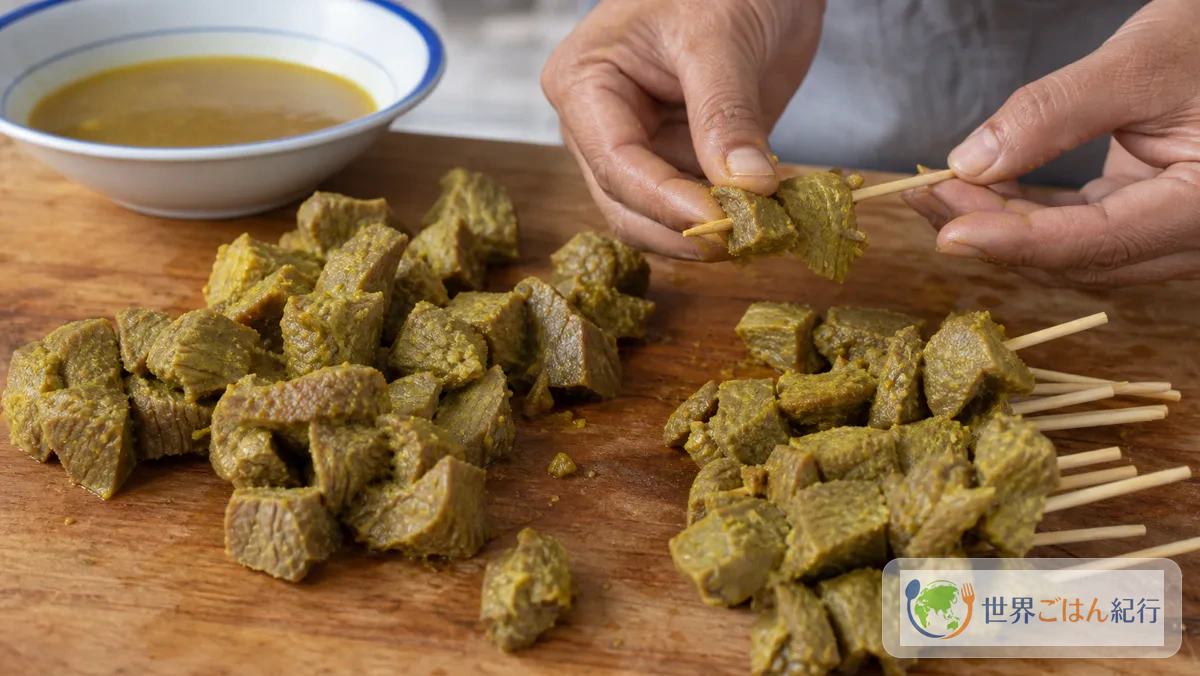
Sate padang is a beef satay loved in the Minangkabau cultural area of West Sumatra, Indonesia. Beef, beef tongue and offal are simmered tender in an aromatic broth, threaded on skewers and grilled until fragrant, then dressed with that cooking liquid thickened with rice flour. It is skewered meat that is simmered first. It is a grilled dish where the sauce is the star in the end. This two-stage approach is what differs most from other satay.
If you make it at home, you do not need to gather beef tongue or offal for a first batch. Chunks of beef shank, shoulder or chuck rib, simmered in aromatic broth and then threaded in small pieces, get you quite close to the real plate. What matters is not to stop at grilling the meat but to return the aroma of the cooking liquid to the rice-flour sauce.
This article centers on the Padang-style yellow sauce and sets quantities for a chunk of beef from an ordinary supermarket. The strong heat of the original is toned down a little so it can be adjusted with sambal at the table. It also covers the spices people hesitate over when shopping, lumps in the rice-flour sauce, tough beef, storage and reheating.
In Indonesian it is sate Padang, and in English also written Padang satay. Here we write "sate padang" throughout. Padang is the name of a city in West Sumatra province, and as a dish name it is used to include styles from the surrounding region.
Background: Padang, Pariaman and a long street sauce
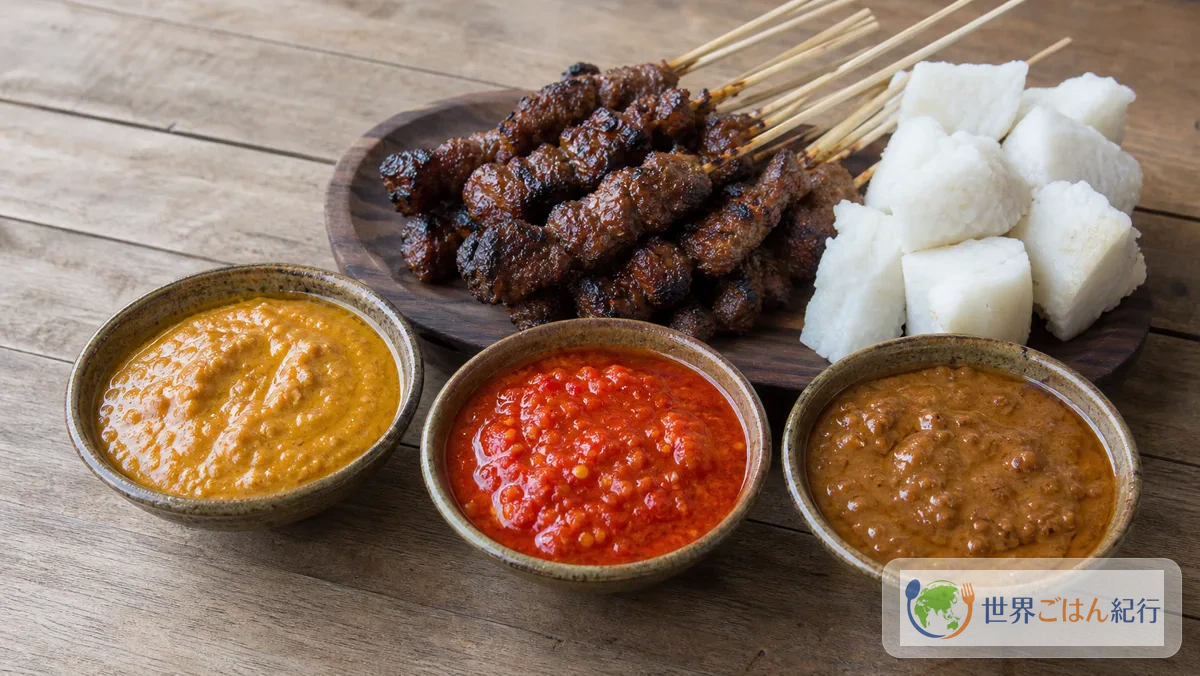
Indonesian satay has regional differences too large to sum up under one dish name: the sweet peanut sauces of Java and Madura, Bali's sate lilit that wraps fish or chicken around a stick, and sate kambing, goat meat eaten with sweet soy sauce. Among them, sate padang stands out for returning the soup in which the beef was simmered to the sauce.
In local introductions, sate padang is described as a dish whose color and heat change around Padang, Pariaman and Padang Panjang. Roughly, Padang leans yellow, Pariaman is strongly red and hotter, and Padang Panjang goes toward a slightly brown, rich direction. Trying to reproduce all of them at home would scatter things, so this article takes the yellow Padang style as the standard.
| Direction | Impression of the sauce | Heat | If making it at home |
|---|---|---|---|
| Padang | Turmeric yellow, rice-flour thickness | Medium | Good for the first time. The outlines of meat and sauce are easy to follow |
| Pariaman | Red chili color comes forward | Hot | Bring it closer with table sambal afterward |
| Padang Panjang | Brown with a rich spice feel | Medium to hot | Reducing the cooking liquid a little more brings it closer |
What people hesitate over when making sate padang elsewhere is the cut of beef. In Indonesia, beef tongue and offal are often used, but at home the prep work and managing the smell are difficult. For a first batch, it is safer to simmer beef shank or shoulder until it reaches a firmness that can be skewered. Unlike a satay that is only grilled, there is a simmering step, so even a somewhat tough cut becomes easy to eat if you give it time.
The rice-flour thickened sauce is also the heart of this dish. Made with potato starch alone it turns clear like a Chinese-style glaze, and with all-purpose flour it turns heavy. Rice flour turns soft and cloudy and holds the yellow of the spices, so it is an ingredient that brings you close to the street sauce of sate padang.
Ingredients (serves 4): think of the beef and the yellow sauce separately
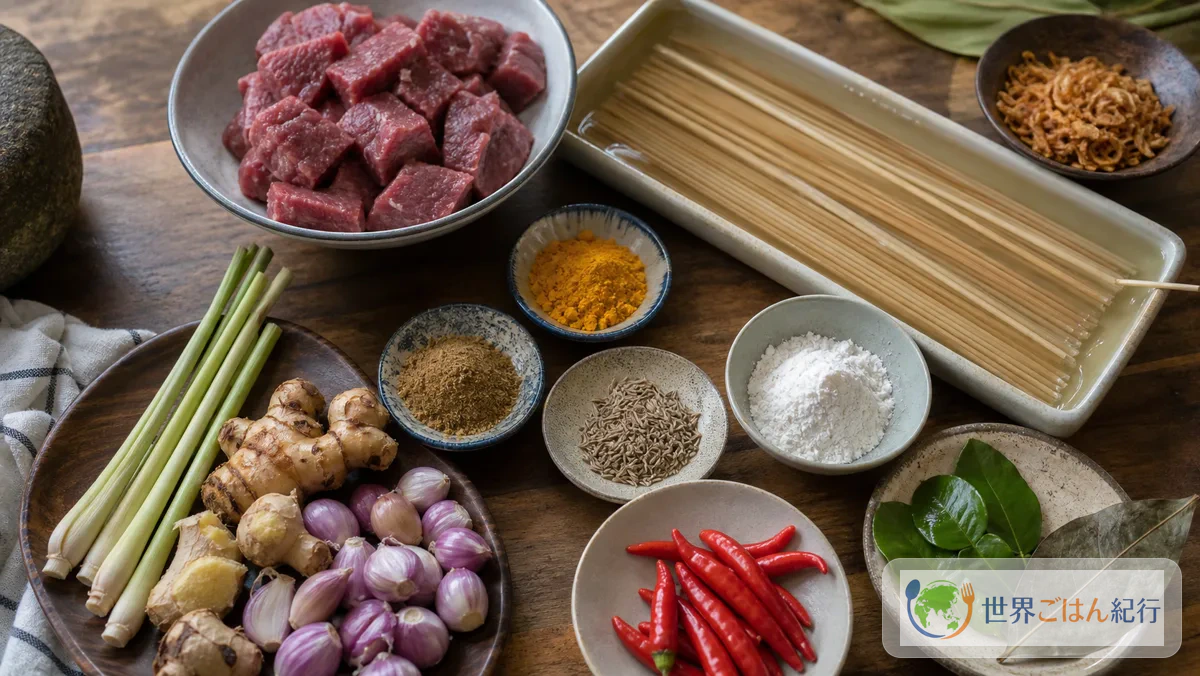
This makes about 16 short skewers for 4 people. As a main it serves 4; alongside nasi uduk or vegetable dishes it is a quantity 5–6 people can pick at. Beef feels tough if it has too little fat, so besides shank, include shoulder and chuck rib as candidates.
This dish uses beef. Commercial fried onions, sambal and spice blends may contain wheat, soy, shrimp or nuts. Check the ingredient labels, and if you have an allergy, switch to a safe product.
An easy way to prepare lontong-style rice
Put 600 g warm, firmly cooked rice on plastic wrap and press it into a rectangle about 2 cm thick. Once cool enough, chill it in the refrigerator for about 30 minutes and cut it into 2.5 cm squares. It is different from real lontong or ketupat, but it fully plays the role of catching the yellow sauce. If you are short of time, a small serving of plain rice on the side is fine.
Ingredients that are hard to choose: invest in aroma, not in meat
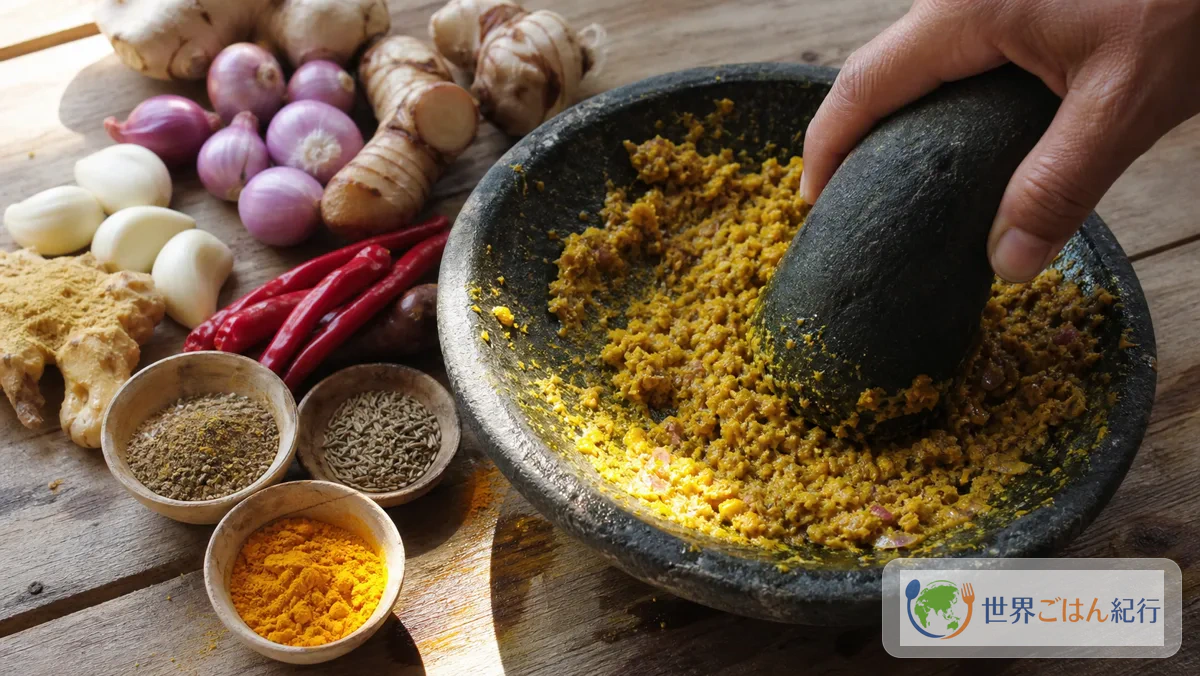
Beef, onion and rice flour are fine from an ordinary supermarket. What is worth seeking out are the spices that decide the aroma of sate padang. Turmeric, coriander and cumin in particular form the skeleton of the yellow sauce. They can also go into rendang and soto ayam, so it is a plus that this is not a one-time purchase.
Curry powder can produce the yellow color alone, but it drifts toward a curry flavor. For sate padang, using turmeric on its own makes it easier to build the earthiness of the rice-flour sauce and the street-food character.
Cumin can be used ground, but lightly crushed whole seeds leave a toasty note deep in the cooking liquid. Unlike Indian cooking, where the seeds are popped in oil, here they are dissolved into the liquid as part of the aromatic paste.
Ground coriander builds depth rather than heat. In the beef broth, it rounds off the sharpness of ginger and galangal, and keeps the rice-flour sauce from being monotonous.
Method: simmer, skewer, grill, and return the cooking liquid to the sauce
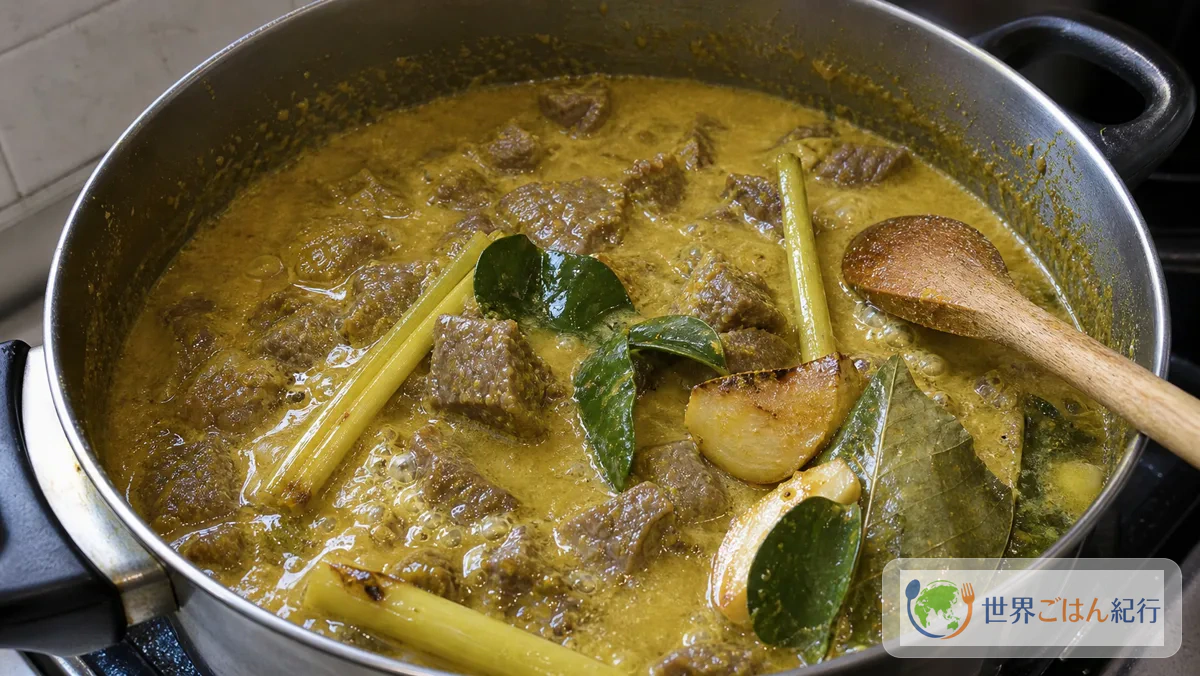
With sate padang, nearly all the flavor is settled before grilling. If the aromatic broth is made thin, the final sauce is also vague. Conversely, boiling the meat hard makes it tough. Open the aroma over medium heat, soften the meat over low heat, and grill only at the end to add toastiness. Proceed in that order.
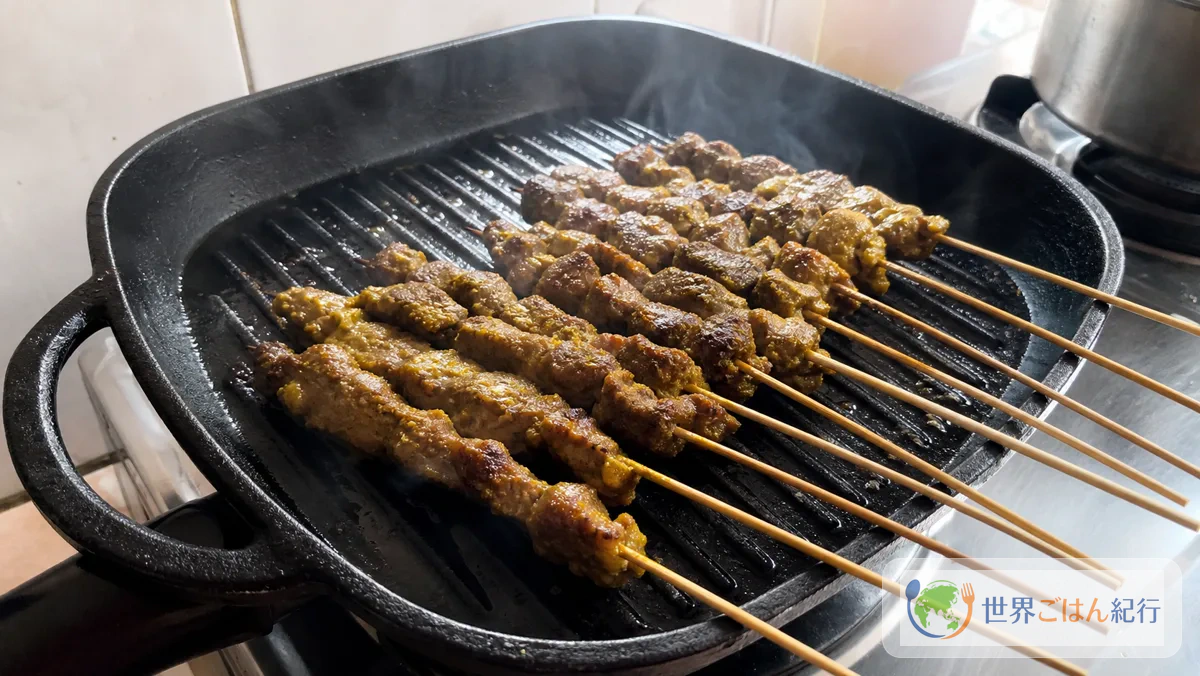
The meat in sate padang is not grilled to cook it through but to return toastiness to meat that was already simmered. If you scorch it over high heat, the meat turns tough, so make only the browning in a short time.
A decision table for getting closer to the real thing in a home kitchen
The names of the ingredients can make sate padang feel difficult, but dividing by role makes decisions easier. What is hard to move: simmering the beef, the yellow spices and the rice-flour thickening. What may be moved: the cut, the heat and how to make the lontong.
| Where you hesitate | Local-style | Practical answer at home | Verdict |
|---|---|---|---|
| Meat | Beef tongue, offal, beef | Beef shank, shoulder, chuck rib | A chunk of meat is easiest for a first batch |
| Aroma | Shallot, galangal, turmeric leaf | Onion, extra ginger, bay leaf | Make the cooking liquid more aromatic rather than reproduce it fully |
| Color | Fresh turmeric | Ground turmeric | Too much turns bitter, so add by the teaspoon |
| Thickening | Rice flour | Non-glutinous rice flour is fine | Potato starch alone gives a different texture |
| Heat | Simmer plenty of red chili | Less chili, sambal on the side | Easy for a family to split by heat level |
| Rice | Lontong, ketupat | Press firmly cooked rice | Plain rice is fine the first time |
| Grilling | Charcoal | Grill pan, broiler | Return the aroma in a short time |
Without galangal, ginger alone is not a complete substitute. Galangal has more citrus and woody aroma than ginger and lightens the aftertaste of the cooking liquid. But for a first batch outside Indonesia, adding a little more lemongrass and makrut lime leaf has a better success rate than hunting for galangal.
If you use potato starch instead of rice flour, it becomes a clear glaze and moves away from the dull yellow sauce of sate padang. If you truly have no rice flour, buying non-glutinous rice flour is steadier than dissolving 2 tsp potato starch and 2 tsp all-purpose flour in water. Rice flour can also go into fried-food batter and rice flour pancakes, so it is an ingredient that is easy to use up.
Failure causes: tough meat, lumpy sauce, weak flavor
| Failure | Main cause | How to fix |
|---|---|---|
| Meat is tough | Boiled hard, not simmered long enough | Add 20 more minutes over low heat. Add hot water to keep the liquid |
| Meat falls apart | Over-simmered, cut while hot | Cut after cooling. Put crumbled meat into the sauce |
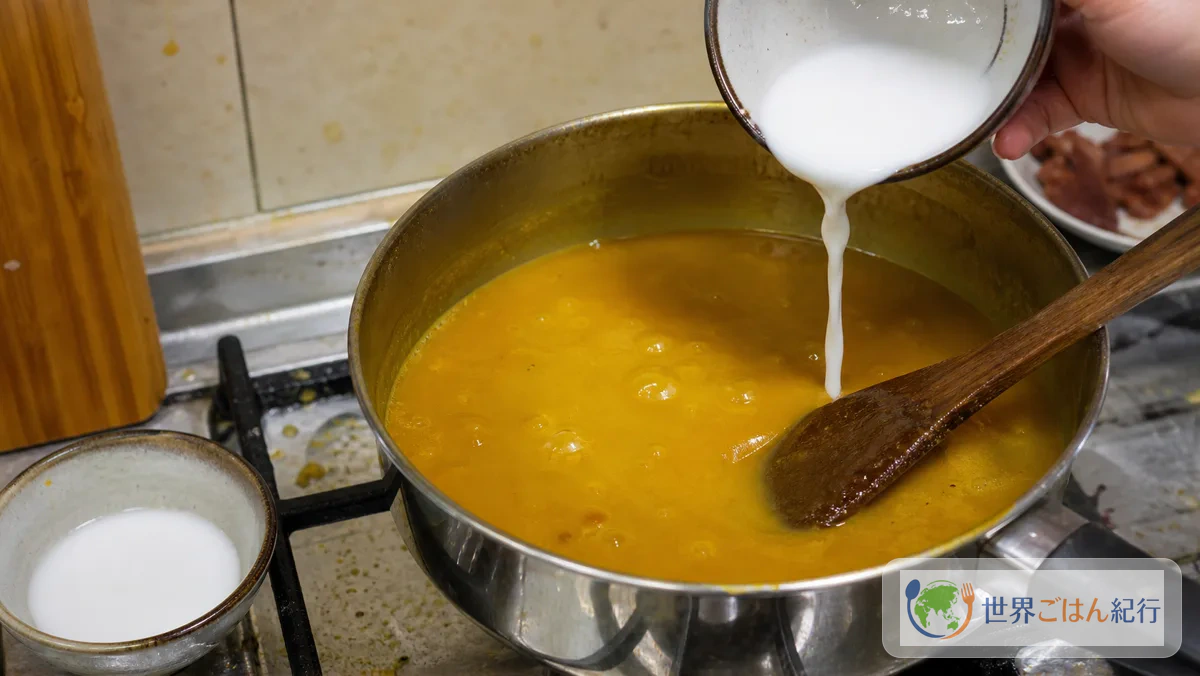
| Sauce is lumpy | Rice flour water added all at once | Strain into another pot and mix again over low heat |
| Sauce is thin | Thin cooking liquid, too little rice flour | Reduce over low heat. Add 2 tsp rice flour dissolved in water |
| Tastes like curry | Used a lot of curry powder | Build with turmeric, coriander and cumin |
| Aroma is heavy | No acidity, too much oil | Squeeze lime at the end and serve cucumber |
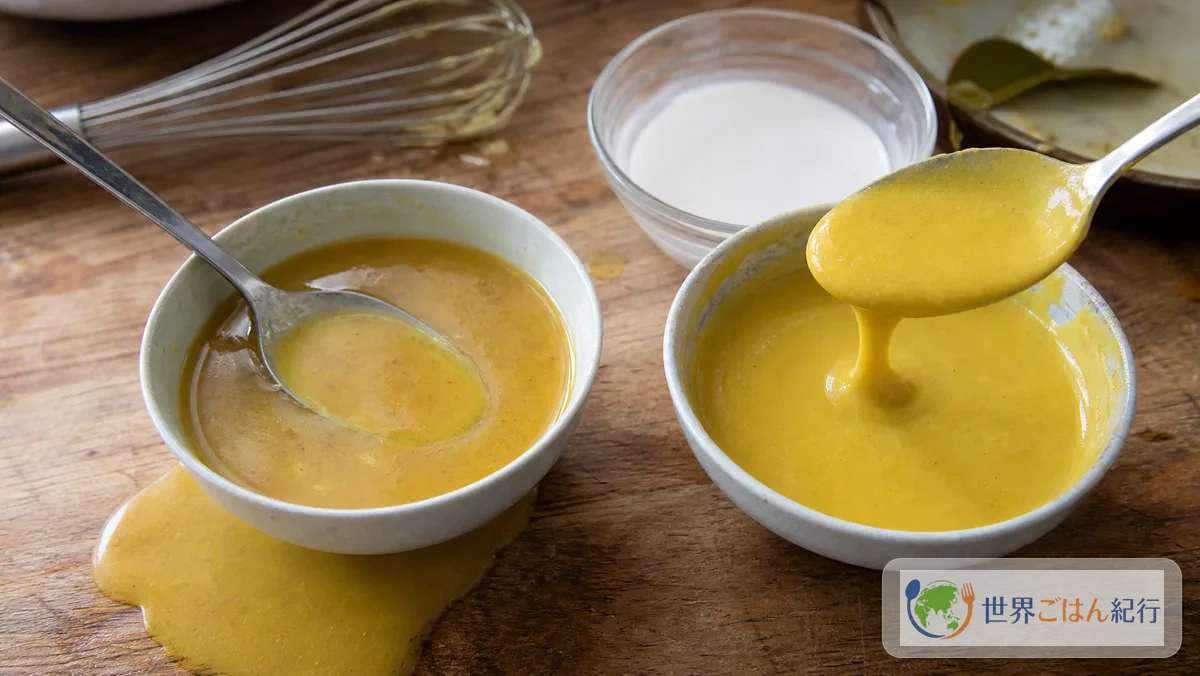
With a rice-flour sauce, putting flour directly into boiling cooking liquid makes lumps immediately. Always dissolve it well in cold water and pour it in a thin stream. If lumps remain, do not panic and raise the heat. Keep it low and mix with a whisk. If there are many large lumps, straining through a sieve and returning to the pot is faster.
When the flavor is weak, it is better not to try to fix it with salt alone. First reduce the cooking liquid a little to deepen the aroma. If it is still weak, add a small amount of coriander and cumin rather than turmeric. More turmeric deepens the color but tends to bring earthiness and bitterness.
Eating, storing and making ahead
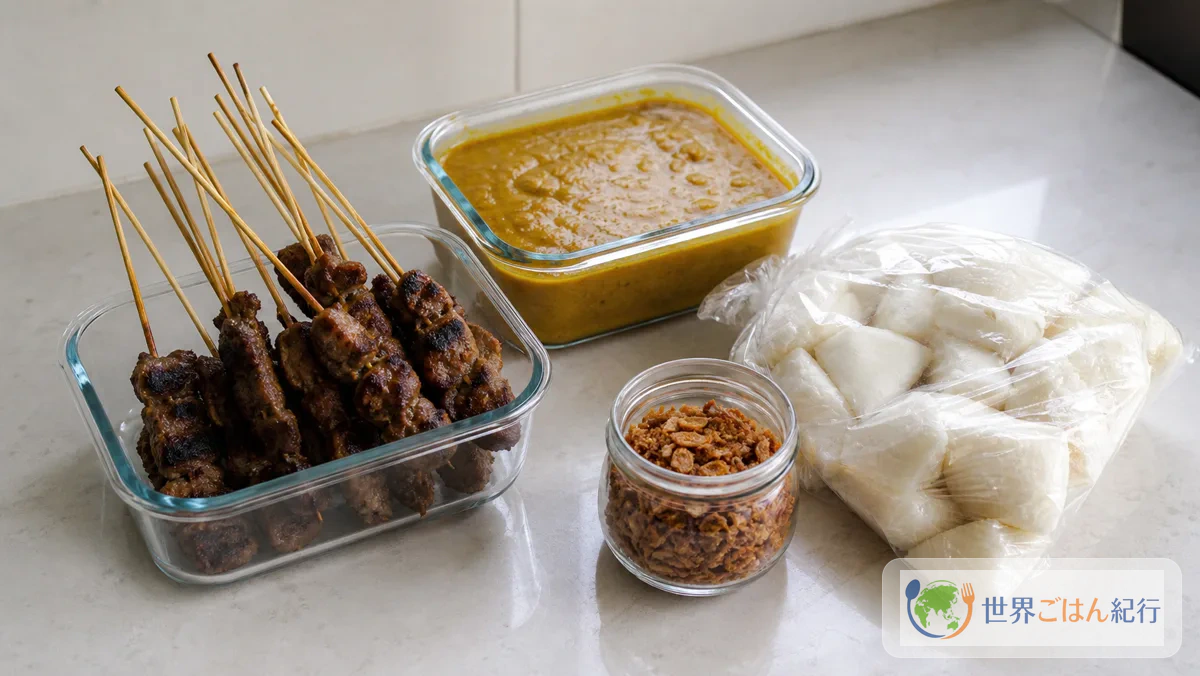
Sate padang is complete when eaten with rice. Letting lontong-style rice or firm white rice soak up the yellow sauce is more satisfying than picking at the skewers alone. Putting cucumber, lime, sambal and a light vegetable beside it keeps the dish from getting heavy even with the rich sauce.
At the table, it runs better not to make everyone's plate spicy from the start. Put the lontong-style rice and skewers in the center of the plate and pour plenty of yellow sauce over them. Adjust heat with sambal, acidity with lime and lightness with cucumber, separately. Because the sauce gets heaviness from rice flour, putting a palate cleanser a little at a time at the edge of the same plate, rather than outside the plate, makes it easier to return to between bites.
When serving with plain rice, spreading it thin on a flat plate suits it better than a bowl. The sauce coats the surface of the rice, and you can scoop the meat from the skewers with it. For children or people who dislike heat, pour a little less sauce and let them add more from a separate small bowl, which reduces leftovers. For adults, squeezing lime just before eating and adding fried onions brings back the aroma of a street-stall plate.
To widen it into an Indonesian menu, it is easier to eat on a different day from the rich rendang, even though both use beef. To compare skewers, the sweet peanut sauce sate ayam; as a rice dish, the gently coconut-scented nasi uduk; and for adjusting heat, sambal substitute connect naturally.
For storage, separate the skewers, sauce, rice and vegetables. Cool the grilled skewers and keep them in the refrigerator until the next day. Put the sauce in a clean container, about 2 days in the refrigerator. Rice-flour sauce firms up when cold, so when reheating, put it in a pot, add 2–3 tbsp hot water and stir over low heat. Heating in a microwave alone sets only the edges, so if possible bring it back in a pot.
If freezing, only the simmered meat before grilling suits it. Freeze the simmered meat unskewered in portions and use within 2 weeks. Thaw in the refrigerator, thread onto skewers the same day and grill. Rice-flour sauce tends to separate when frozen, so it is cleaner to freeze only the cooking liquid and thicken it again with rice flour on the day you eat.
Frequently asked questions
Can I make it with thin-sliced beef?
I do not recommend it. Sate padang is a dish in which the meat is simmered and then threaded on skewers, so thin slices fall apart easily and lack the chew of skewered meat. If you must use them, season thin slices in an aromatic marinade without simmering and grill them briefly as a different dish.
How do I change it if I use beef tongue or offal?
Beef tongue is easier to handle if you parboil it and peel it first. Offal needs prep for the smell, so it is steadier not to force it at home. If you put ease of eating ahead of local character, beef shank or shoulder is enough.
If I have no rice flour, can I substitute potato starch?
A small amount will thicken it, but the texture is clear and jiggly. For the cloudy yellow sauce of sate padang, use rice flour. If you use potato starch, keep it to about half the amount of rice flour, and take care not to firm it as much as a glaze.
Can I make a non-spicy sate padang?
Yes. Use 1 red chili and remove the seeds. Putting the sambal on a separate dish and letting each person add some makes it easy to split. But removing the chili completely makes the aroma too round, so even for people who dislike heat, a little tightens the flavor.
Is it not authentic without charcoal?
The aroma of charcoal is a charm, but it is not essential at home. Sate padang is a dish where the sauce weighs heavily, so browning the surface in a grill pan or broiler is enough. Using charcoal indoors is dangerous, so do not try to reproduce it at home.
If I make it ahead, how far can I go the day before?
You can go up to simmering the beef the day before. Refrigerate the cooked meat and liquid separately, and on the day cut the meat, thread it and grill it, then thicken the liquid with rice flour. If you make the sauce too, it tends to firm in the refrigerator, so finishing it on the day you eat is cleaner.
Summary: sate padang is a dish of cooking liquid more than of grilling
Sate padang is a dish of simmering liquid and sauce more than the name "grilled skewers" suggests. Beef is simmered in an aromatic broth, and its aroma is returned to the sauce thickened with rice flour. The grilling at the end is not to cook through but to add toastiness to the surface of the meat.
For a first batch, it is enough to get just the beef shank or shoulder, turmeric, coriander, cumin and rice flour right. Add galangal and makrut lime leaves as far as you can find them. When the yellow sauce coats the rice and skewers, it brings a richness typical of a West Sumatran street stall, completely different from the peanut-sauce sate ayam.
If you keep cooking Indonesian food, compare it with the sweet peanut sauce of the same skewer dish, sate ayam, and if you move on to a rich beef dish, go to rendang. For a vegetable dish to set beside rice, gado-gado also suits. Once you have gathered the spices, you can extend quite far from West Sumatra to tables across Indonesia.