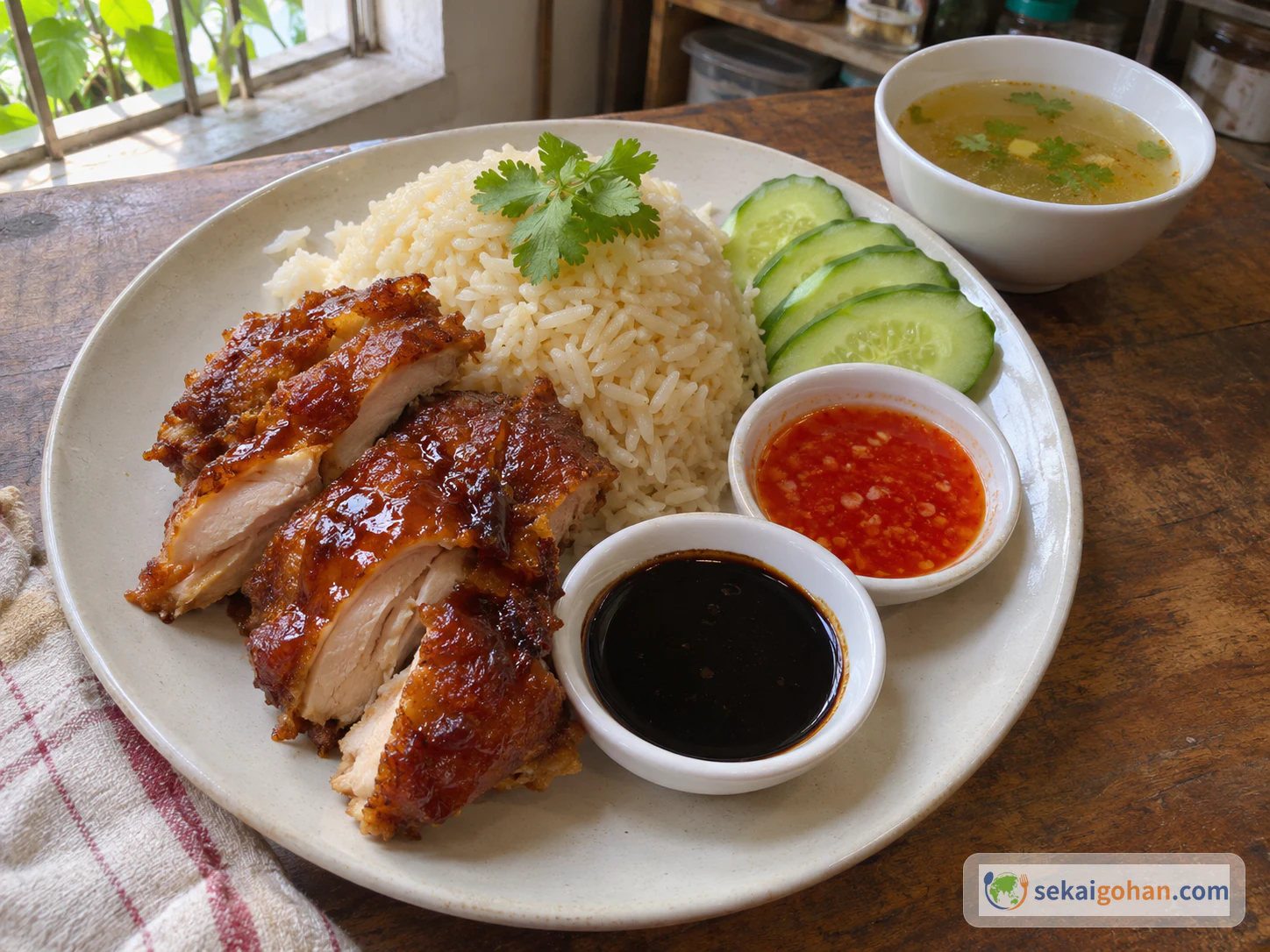
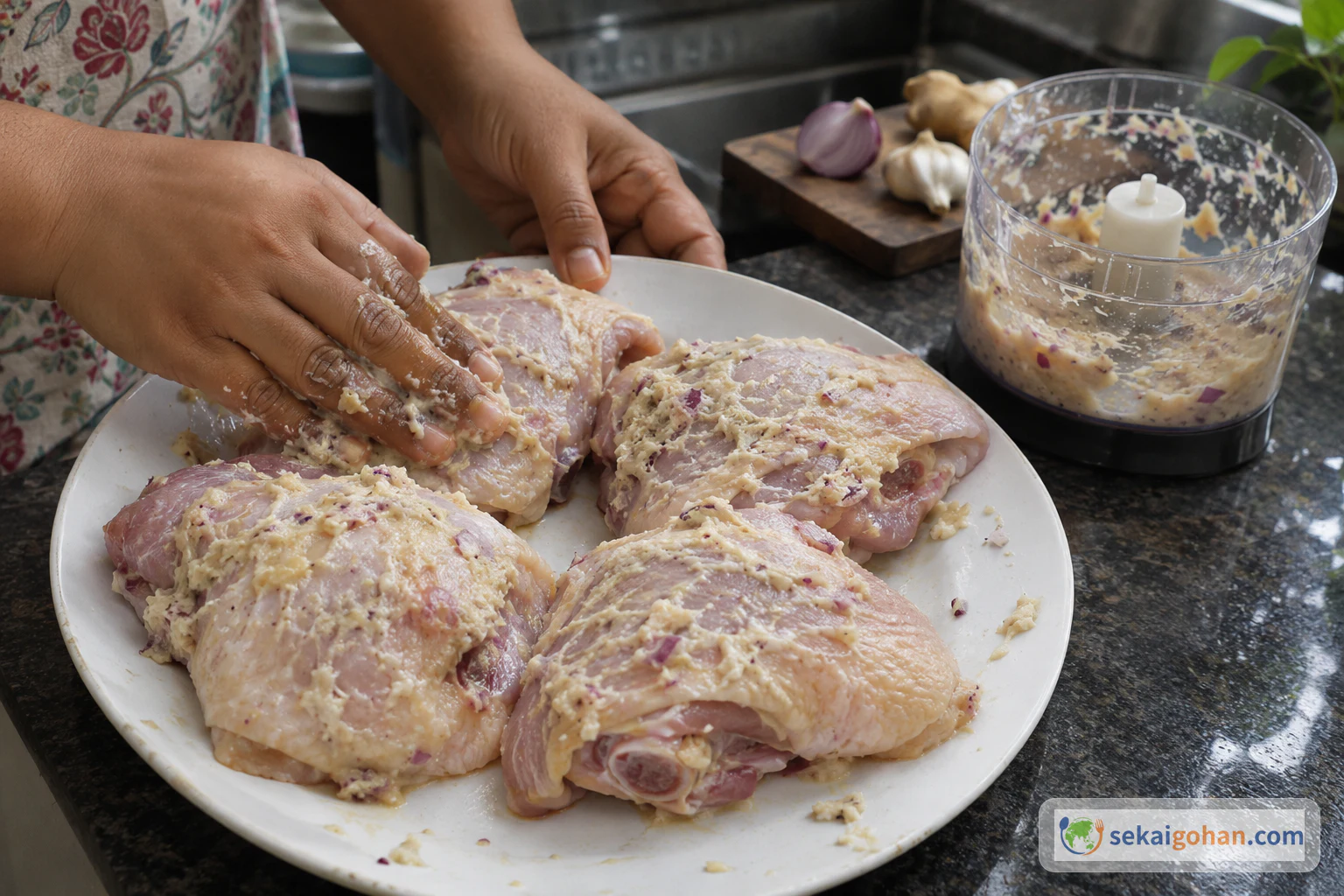
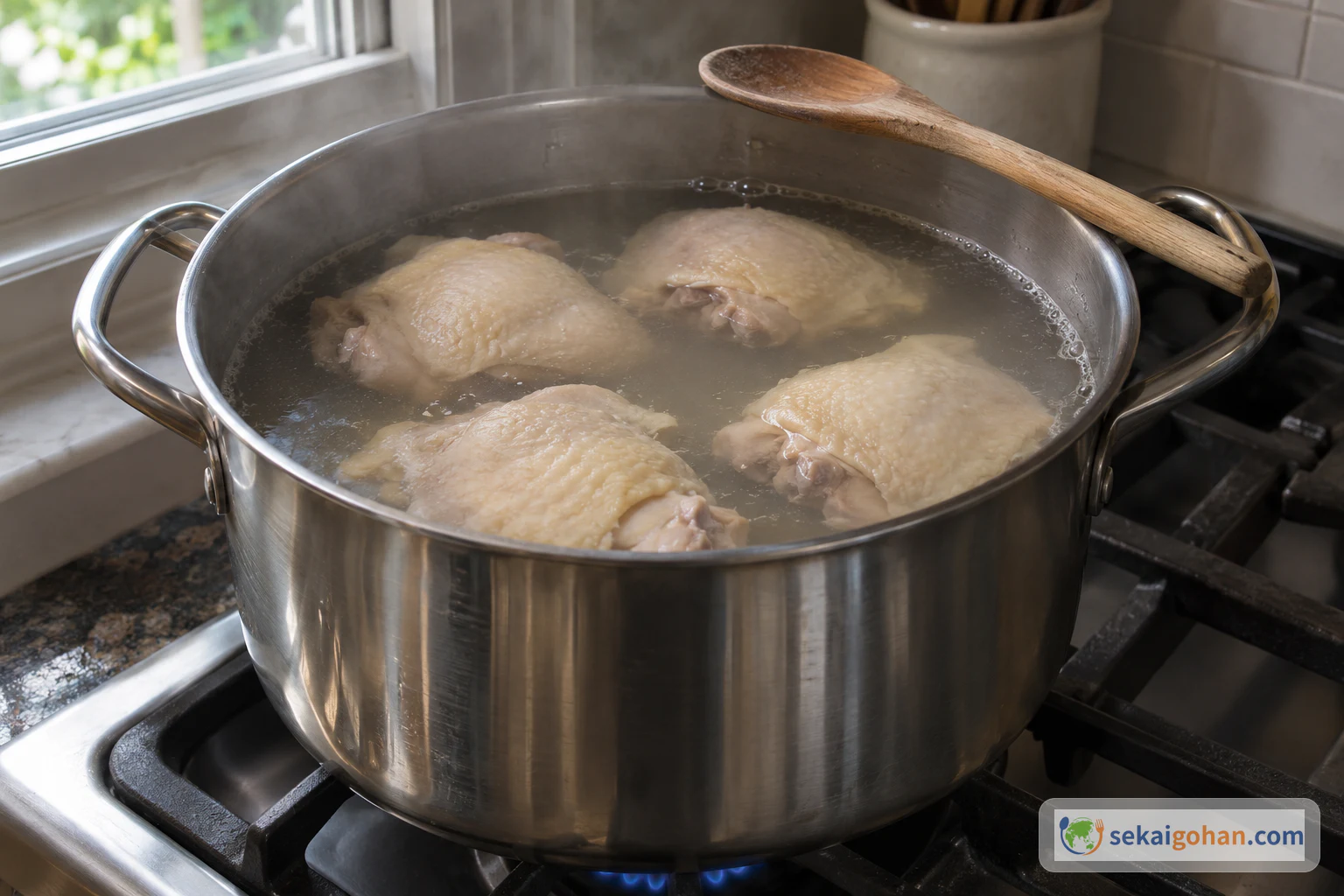
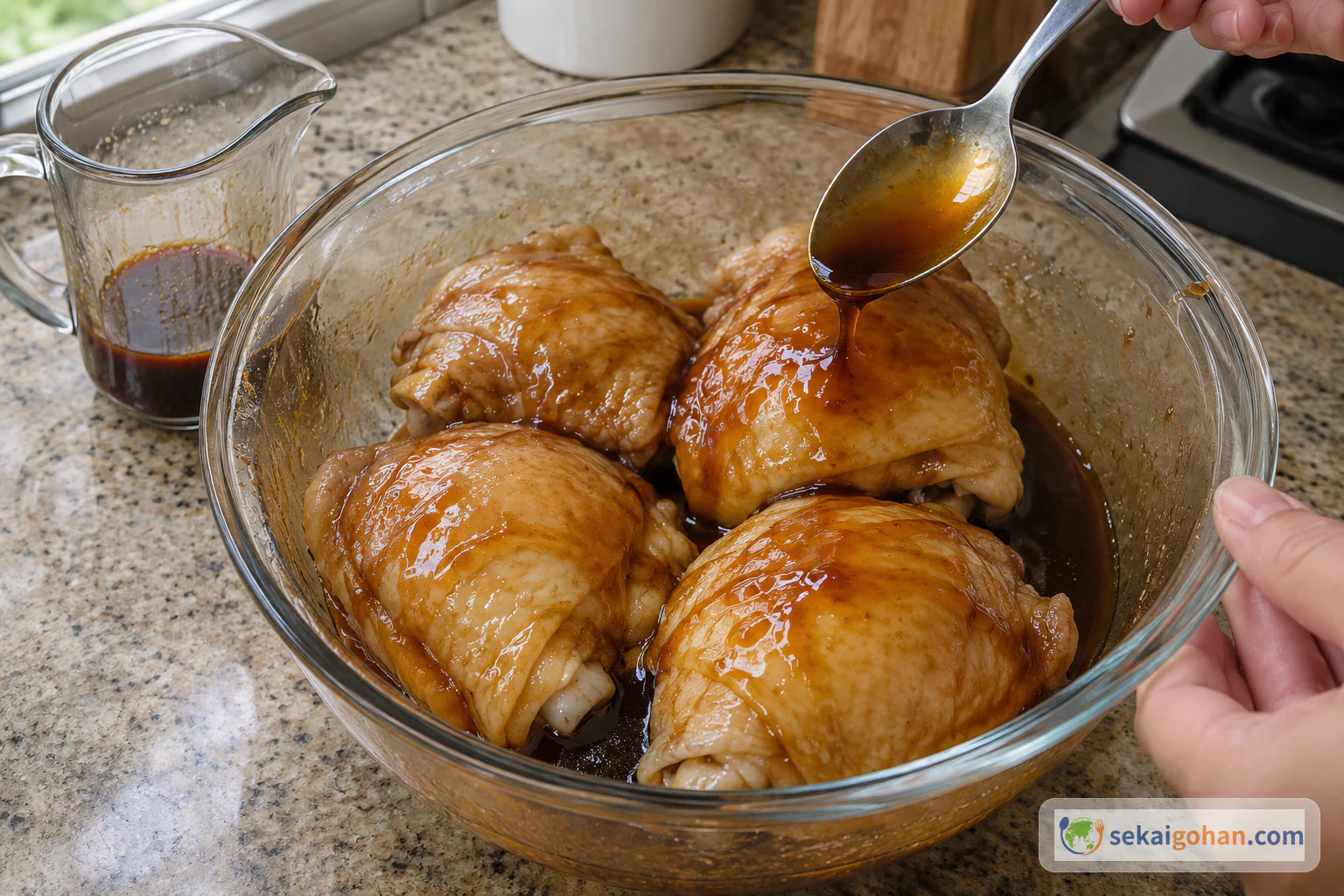
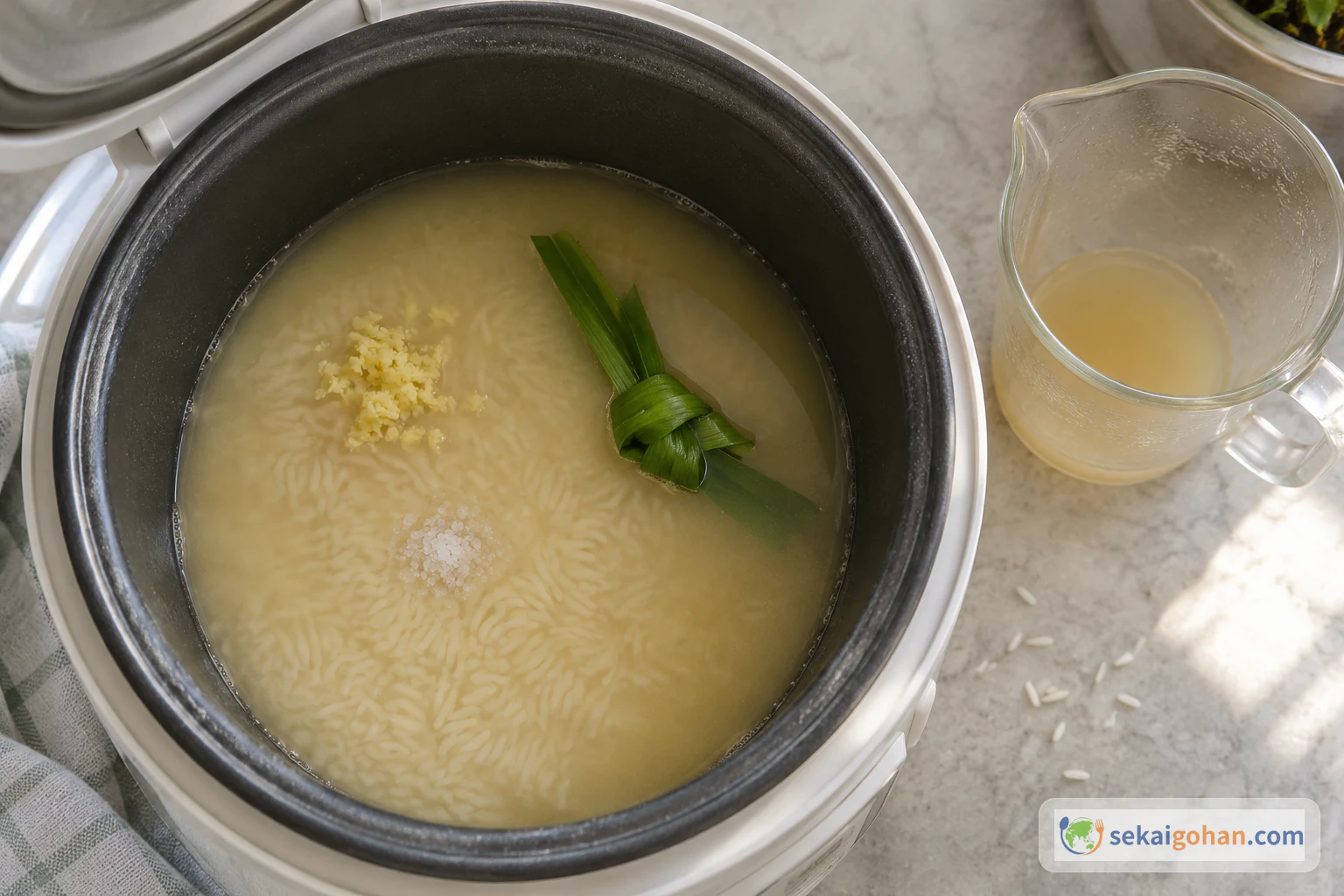
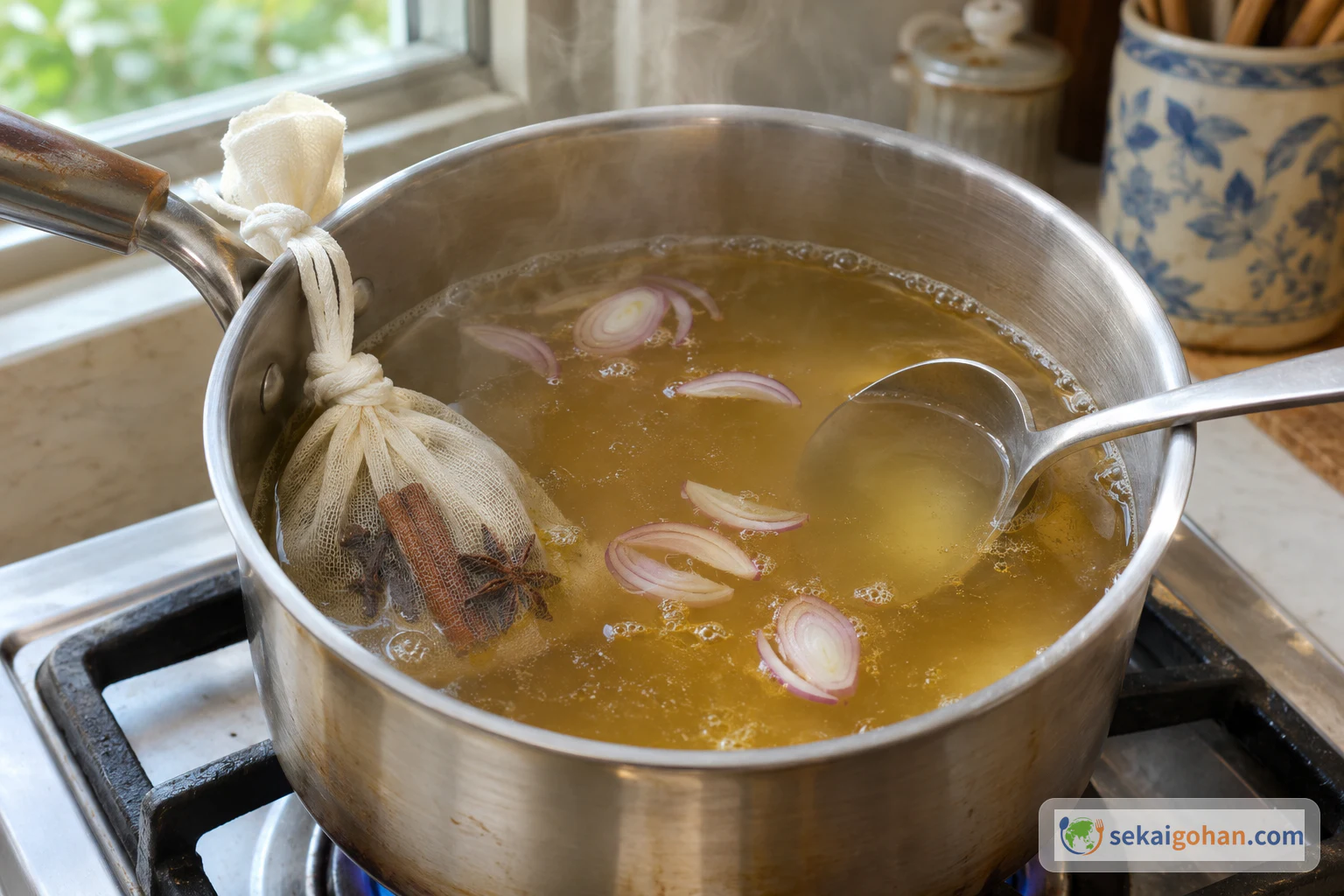
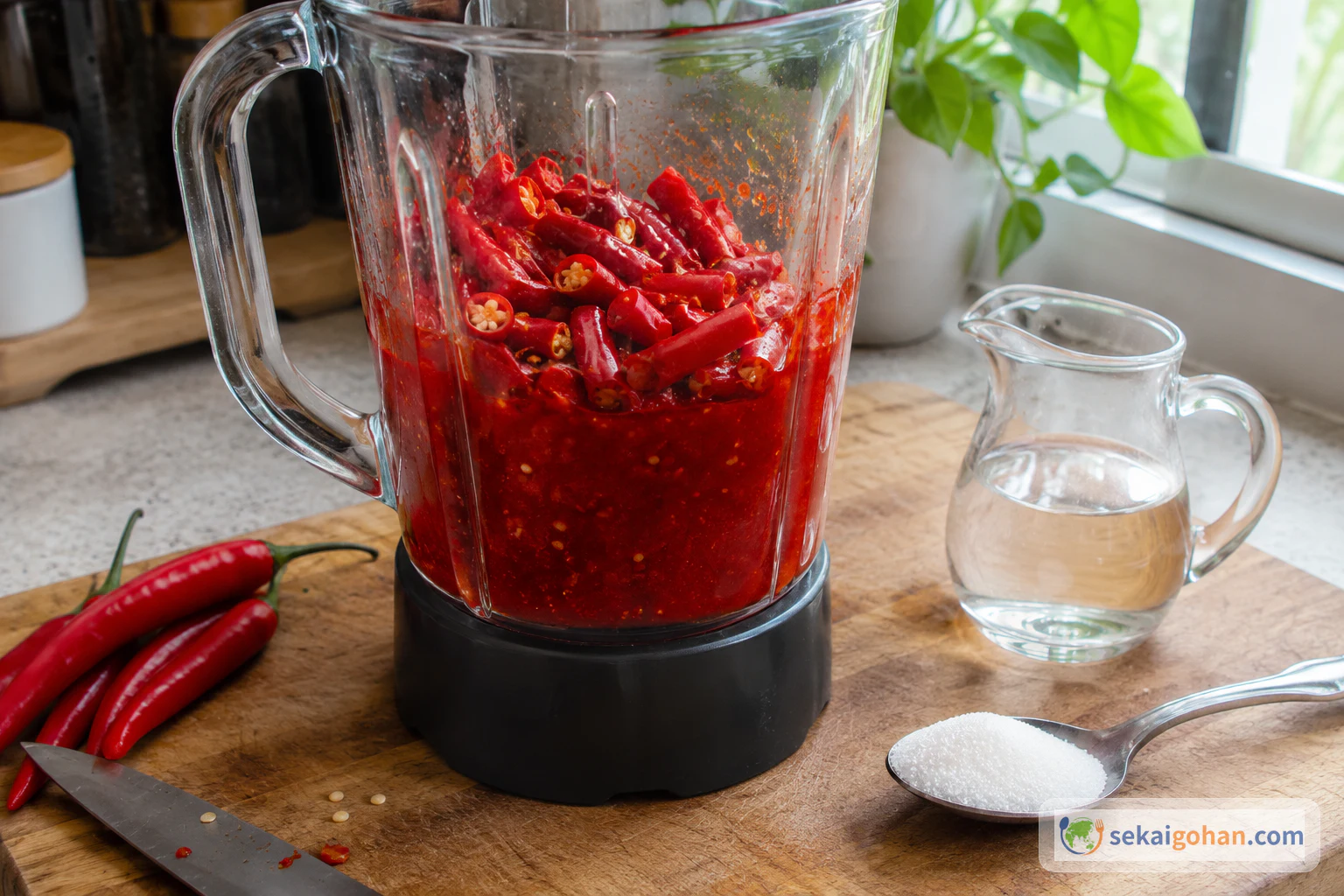
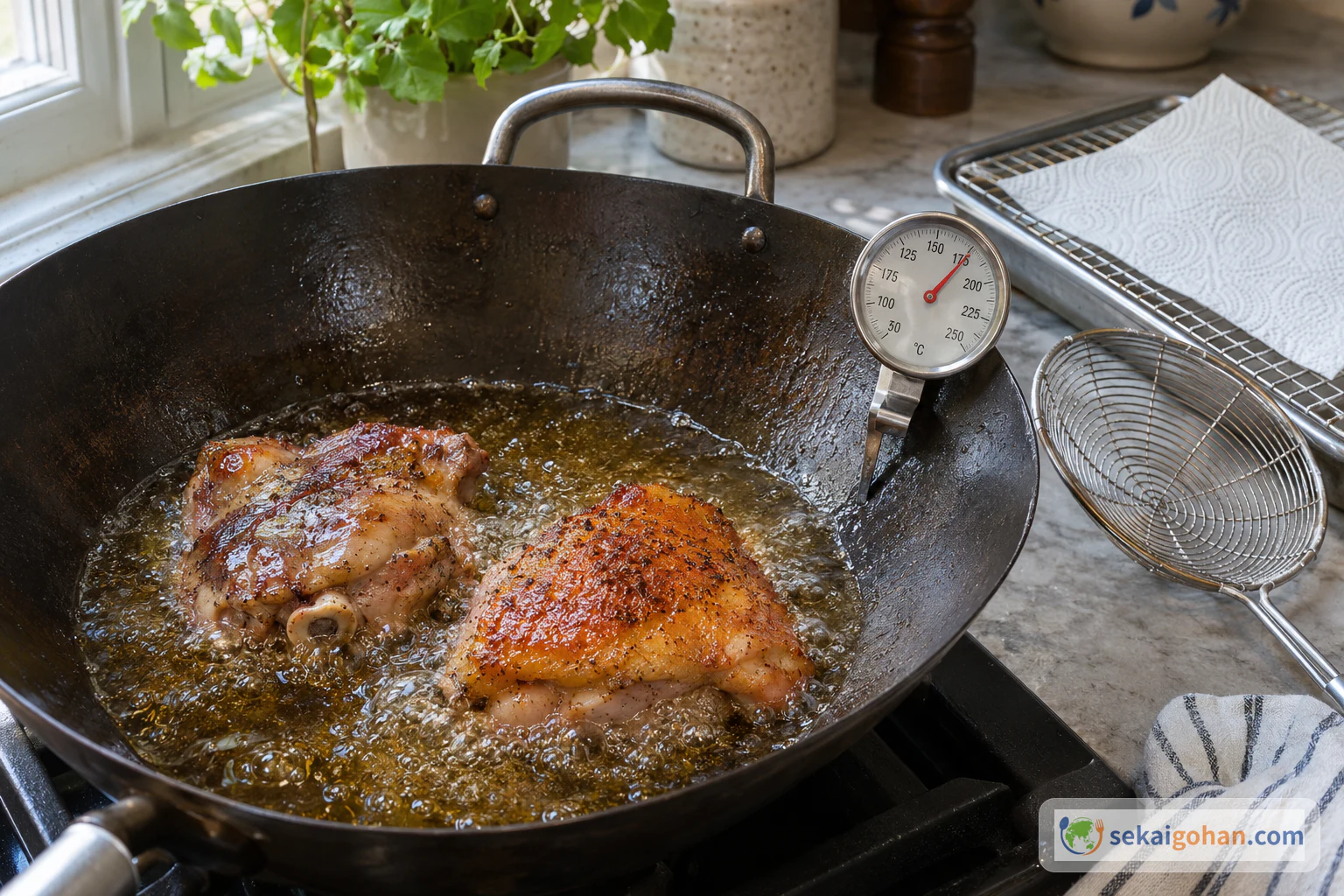
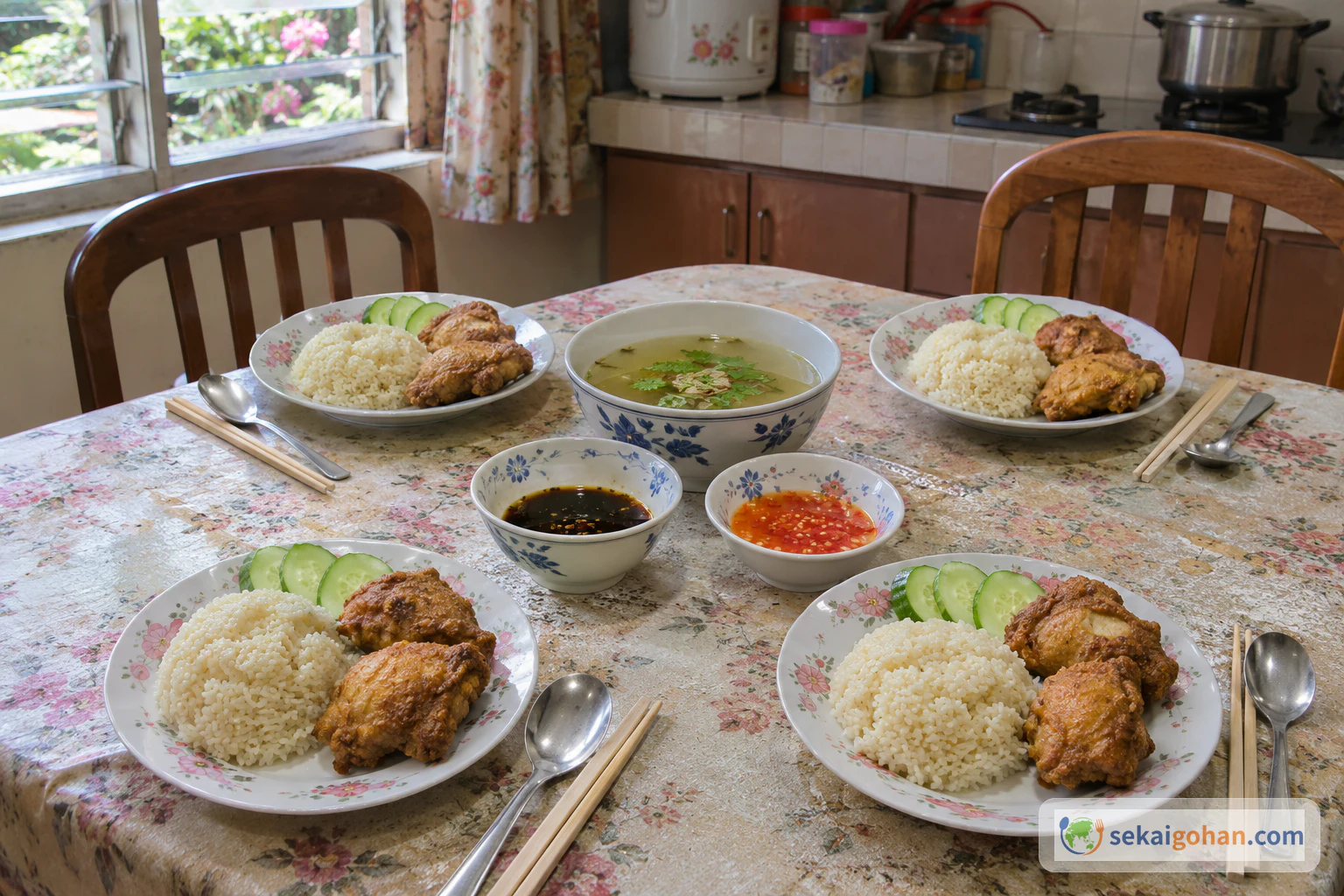
The glazed thighs go into the wok, and the oil answers with a steady hiss. Within minutes, honey and sweet soy turn the skin a deep, shining brown. In a Malaysian kitchen this is nasi ayam, the Malay side of the country's chicken rice. The chicken is rubbed with a ginger, garlic and red onion paste, poached, glazed and fried. The rice cooks in the poaching stock with ginger and pandan, and the plate comes with a sweet soy dip, a sharp vinegared chili sauce and a small bowl of spiced soup.
Hainanese chicken rice takes the other road. The bird is poached, plunged into ice water and served cool and pale, the rice is fried in chicken fat and garlic before it cooks, and the sauces are chili, ginger and dark soy. Nasi ayam eats warmer and louder: crackling sweet-salty skin, soft rice that smells of the stock it drank, and a chili sauce that cuts straight through the glaze.
Two Chicken Rices in One Country
From Hainan to the Malay Peninsula
Chicken rice traces back to Wenchang chicken on Hainan Island. In the mid-19th century, Hainanese migrants sailed to British-ruled Singapore, and many found work as cooks in colonial households. From there, their chicken rice spread across the Malay Peninsula. After Malaysia and Singapore separated in 1965, each country's version grew in its own direction, shaped by local tastes.
In Malaysia today, two lines sit side by side. Chinese-Malaysian Hainanese stalls serve pak cham kai, white chicken poached in water, with garlic chili sauce, dark soy and coriander. Malay cooks prefer their chicken roasted or fried rather than served poached, and they go lighter on ginger and garlic than the Hainanese do. Outside Malaysia, nasi ayam is much less known than its Hainanese cousin, but at home it is just as popular. It is everyday food, and every household keeps its own mix of paste, glaze and sauce.
Nasi ayam is chicken rice in Malay. Rice sits so firmly at the center of Malaysian eating that nasi also stands for a meal itself.
How the plate changes across Malaysia
Even the shape of the rice shifts from town to town. In Malacca, cooks mash the cooked rice and press it into balls about the size of ping-pong balls. In cities with large Cantonese and Hakka communities, people tend to choose plain steamed white rice over fragrant rice. Some Malay home cooks skip the pot and the wok altogether and bake the chicken, and they perfume the rice with turmeric, cardamom, star anise and cinnamon. Where nasi ayam ends and the next household's version begins is a matter of taste. The rest of the country's table, from coconut rice to grilled chicken, is gathered on the Malaysia page.
Ingredients (serves 4)
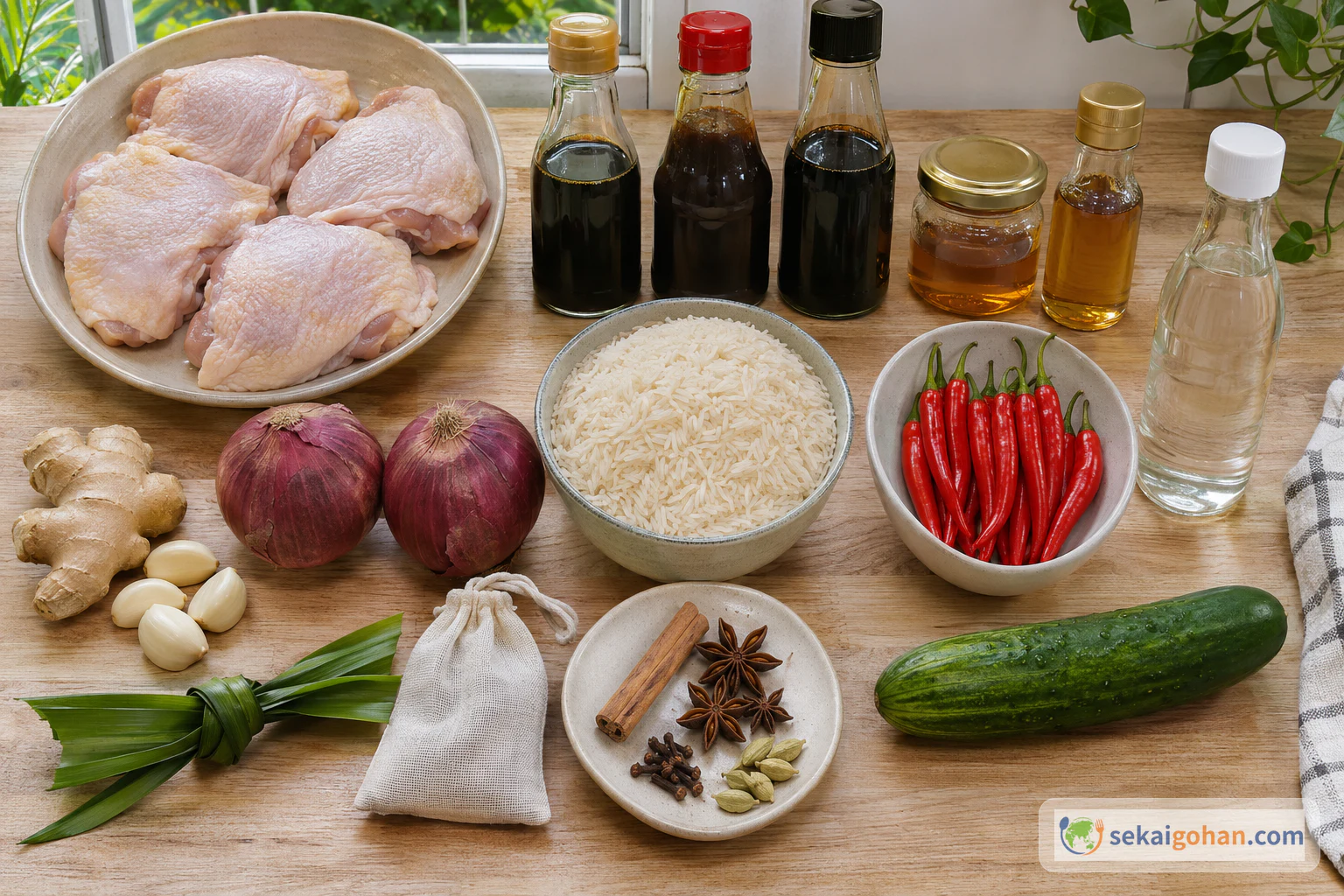
Four bone-in thighs stand in for a whole bird here. They need no carving and fit in a home pot and wok. The paste, glaze, rice, soup and sauces keep their full amounts, so the seasoning sits a little stronger on the smaller amount of meat. All of the stock comes from the poaching water.
This dish contains chicken, soy and wheat (light soy sauce and kecap manis), sesame (sesame oil) and shellfish (oyster sauce). Check the labels on bottled sauces and spice blends for other allergens and shared-facility statements.
Equipment
- Blender or food processor
- Deep pot for poaching
- Cooking thermometer (for the chicken and the oil)
- Rice cooker
- Two small saucepans
- Wok or deep frying pot
- Spider strainer, wire rack and paper towels
- Splatter screen
- Fine sieve and a measuring jug
- Muslin bag, if you tie your own soup spices
- Clean jar with a tight lid for the sambal
A thermometer answers both questions that decide this dish: whether the meat at the bone has reached 167°F (75°C), and whether the oil is hot enough to crisp without smoking. A clip-on dial model that sits on the wok rim lets you watch the oil while your hands are busy.
Choosing and Substituting
The taste of nasi ayam rests on three things: the kecap manis glaze, the rice cooked in the chicken's own stock, and the pairing of sweet soy dip with sour chili. Hold on to those and the plate reads as Malaysian. The pandan leaf is lovely but optional; if you cannot find it, leave it out.
| Item | What to buy | If you swap it |
|---|---|---|
| Kecap manis | Indonesian or Malaysian sweet soy, at Asian grocers or online | Regular soy sauce sweetened with brown sugar or honey gets close; the color is lighter and the sweetness flatter |
| Light soy sauce | Chinese-style light soy, salty and pale | Japanese light (usukuchi) soy is a different sauce; the glaze shifts in salt and sweetness |
| Soup spice bag | Ready-made rempah sup, which carries the balance of spices for you | Tie cinnamon, star anise, cloves, coriander seed, fennel seed, cumin seed, cardamom and mustard seed in muslin, a little of each |
| Pandan leaf | Frozen leaves at Southeast Asian shops | Leave it out; the rice loses its sweet, grassy note |
| Long-grain rice | Jasmine rice | Japanese short-grain rice needs less stock (see the troubleshooting table) and turns out a different, stickier dish |
| Honey | Any mild honey | Corn syrup or maple syrup work; the aroma changes |
| Sesame oil | Toasted sesame oil | Untoasted sesame oil is fine, with a quieter smell |
| Red shallot | Asian red shallots | A few thin slices of red onion |
| Apple cider vinegar | Any clear cider vinegar | Rice vinegar or wine vinegar; the sauce smells different |
| Bone-in thighs | Skin-on thighs | Boneless thighs cook faster, so start checking the center sooner in both poaching and frying |
Method
The work runs in a clear line. The chicken gets its paste first and sits in the fridge; poaching follows, and the stock it leaves behind feeds everything else. While the poached thighs sit in their glaze, start the rice, then make the soup, the dip and the sambal as the rice cooker works. Frying comes last, right before you eat, so the skin reaches the table still crackling.
Do not rinse raw chicken; the splashes spread germs around the sink and onto nearby food. Pat juices off with paper towels instead. Wash anything raw chicken touched, hands, knives and cloths, with detergent, and scald or bleach the cutting board. When frying, use a thermometer and keep the oil between 340°F and 345°F (170°C and 175°C). Never heat it until it smokes; oil left on the heat climbs toward about 700°F (370°C), where it can ignite by itself. Stay at the stove the whole time the oil is on, use a burner with overheat protection if you have one, and remember that oil put out once can flare again until it cools.
After poaching, measure the strained stock before anything else. The rice, soup, dip and sambal all draw on it, and 2 quarts (2 L) of water will not quite cover every use once the pot has steamed and the chicken has drunk its share. If you are short, top up with water (the stock will taste lighter), or make the soup with 3⅓ cups (800 ml) of stock instead.
When It Goes Wrong
| What you see | Why | What to do |
|---|---|---|
| Pink meat or red juices near the bone | Too little time in the poaching water or the oil | Do not judge by color. Check for 167°F (75°C) at the bone; if it falls short, finish in a 355°F (180°C) oven |
| Skin dark brown while the inside is still cool | Oil too hot | Keep the oil at 345°F (175°C) or below; once the color is there, move the chicken to the oven |
| Oil spits and the skin tears | Wet skin going into the oil | Pat the poached thighs thoroughly dry before glazing |
| Sticky, broken rice | Too much liquid or rough washing | Keep to the stock amount in the table; with Japanese short-grain rice, use a scant 2 cups (450 ml) |
| Dip tastes too salty | Light soy, oyster sauce and kecap manis stacking up | Thin the dip with more stock; a spoonful of sambal's sourness also pulls it back |
| Sambal burns too much | Chili seeds | Remove more seeds next time and rebalance with sugar and vinegar. Do not add milk or yogurt; that makes a different sauce |
At the Table, Variations and Leftovers
At the table
Nasi ayam is everyday food, a plate for lunch or dinner rather than a feast. The cucumber cools the mouth between bites of glazed skin, the soup comes alongside to sip, and the two sauces stay separate: sweet soy for depth, sambal for brightness.
Variations
- Oven-baked chicken. Skip the wok and bake the glazed thighs at 390°F (200°C) until the thickest part reads 167°F (75°C). There is no oil spatter to manage, and the skin comes out softer and less crisp.
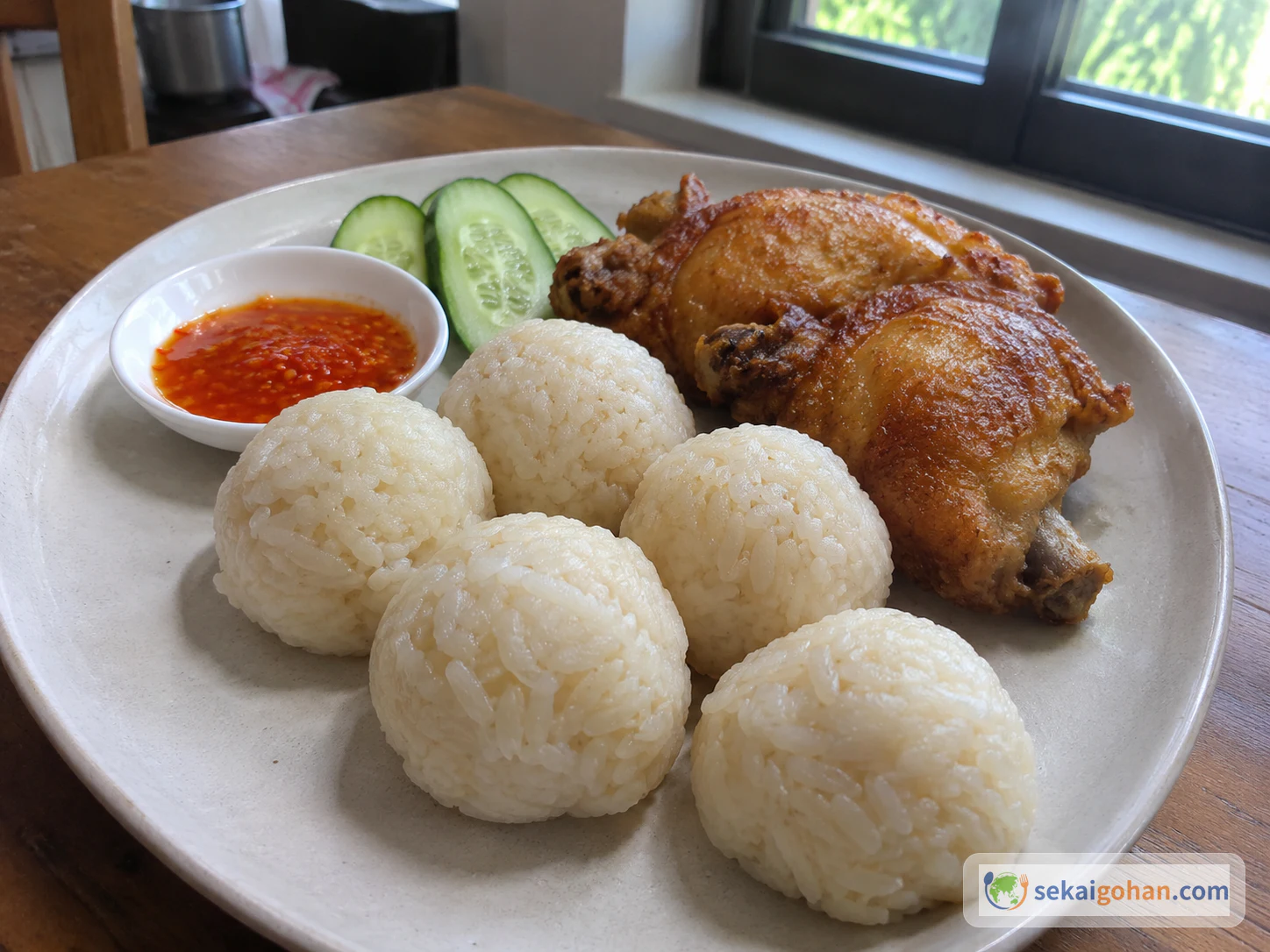
- Malacca-style rice balls. Mash the cooked rice lightly and press it into balls about the size of ping-pong balls. The plate looks entirely different, and small hands can pick them up.
- Less sweet glaze. Cut back the kecap manis and add more black pepper. The sweetness steps back, and the chicken's own flavor comes forward.
- Lighter soup. Use half the spice bag and add more shallot. The broth smells gentler, which suits children.
Storage
Cool leftovers, then refrigerate them promptly in separate covered containers for the chicken, rice, soup and each sauce. Eat the chicken and rice by the next day and the soup within 2 days. The sambal keeps for up to a week in a sealed jar in the fridge; make it in small batches, and throw it out if its smell, sourness or any bubbling changes. To reheat, splash the chicken with a little soup, cover it and warm it at low microwave power until hot through. Sprinkle the rice with 2 tsp of soup, warm it and fluff it. Always bring the soup back to a boil.
Frequently Asked Questions
Why poach the chicken before frying?
Poaching cooks the thighs through at a gentle heat, so the oil only has to color and crisp the outside. Across Southeast Asia, fried chicken is often boiled first and fried hot afterward for exactly this reason. Frying raw bone-in thighs would leave you choosing between a burnt crust and an underdone center.
Is nasi ayam penyet the same dish?
No. Nasi ayam penyet comes from Surabaya in East Java and has spread from Indonesia into Malaysia. Penyet means pressed or flattened, and the fried chicken is lightly pounded before serving, with its own set of sides.
Why does the rice take so much stock?
Long-grain rice cooked this way takes a little more stock than its weight, and Malaysian commercial kitchens cook nasi ayam rice with almost exactly the same balance. Some households use equal measures of rice and liquid, which gives a firmer grain. Start with the amount in the table, then adjust to your own rice cooker.
Can I make parts of it ahead?
The sambal is the easiest piece to make early, since it keeps in the fridge. The soup can be made earlier the same day and brought back to a boil before serving. Fry the chicken just before eating so the skin stays crisp.