Xôi: Sticky Rice Cooked by Steam Alone, Before Any Topping
Glutinous rice and water, and nothing else. Rinse, soak, drain, and steam until the grains are glossy and tender with no hard core. No salt, oil, coconut or toppings go into this base.
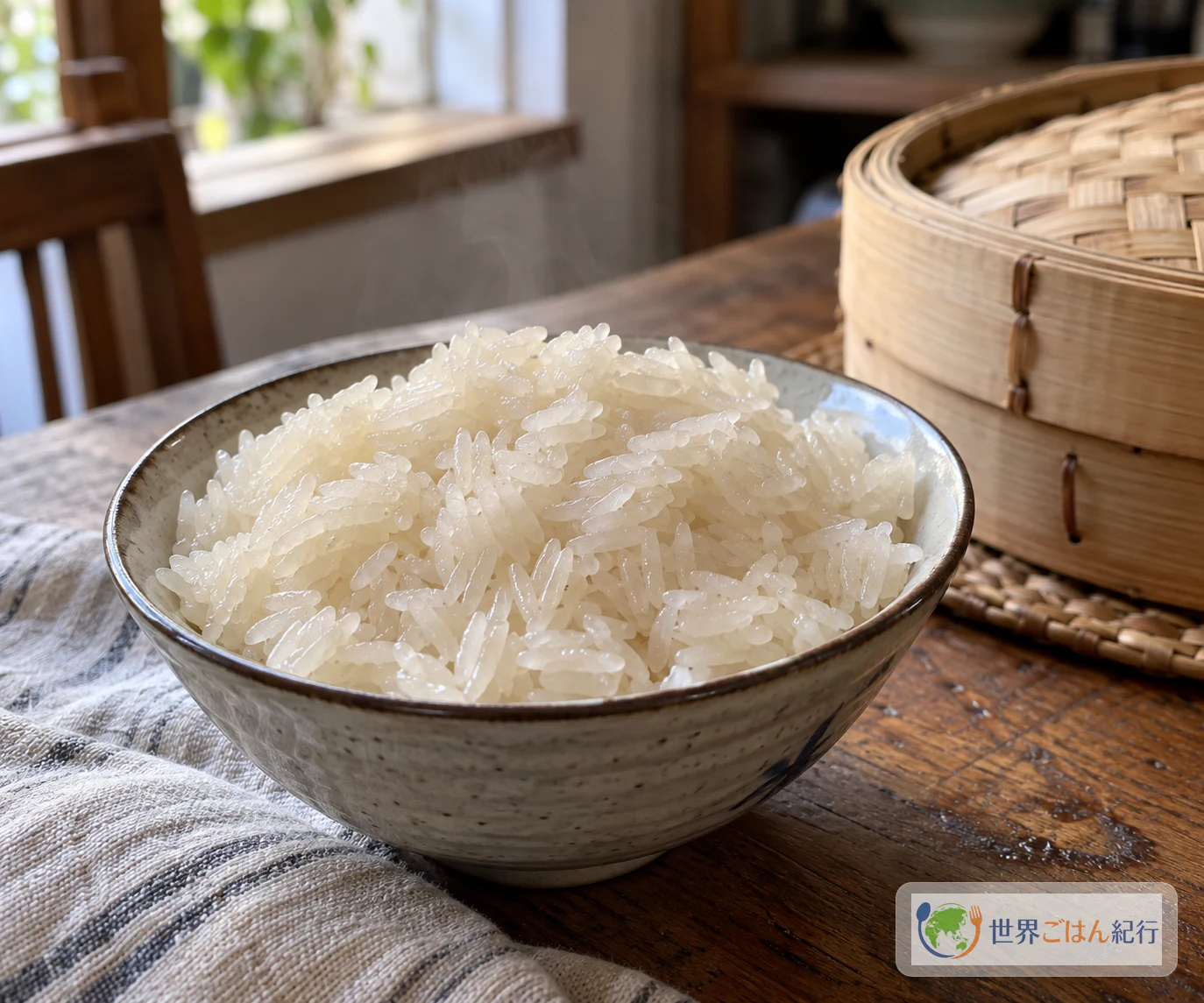
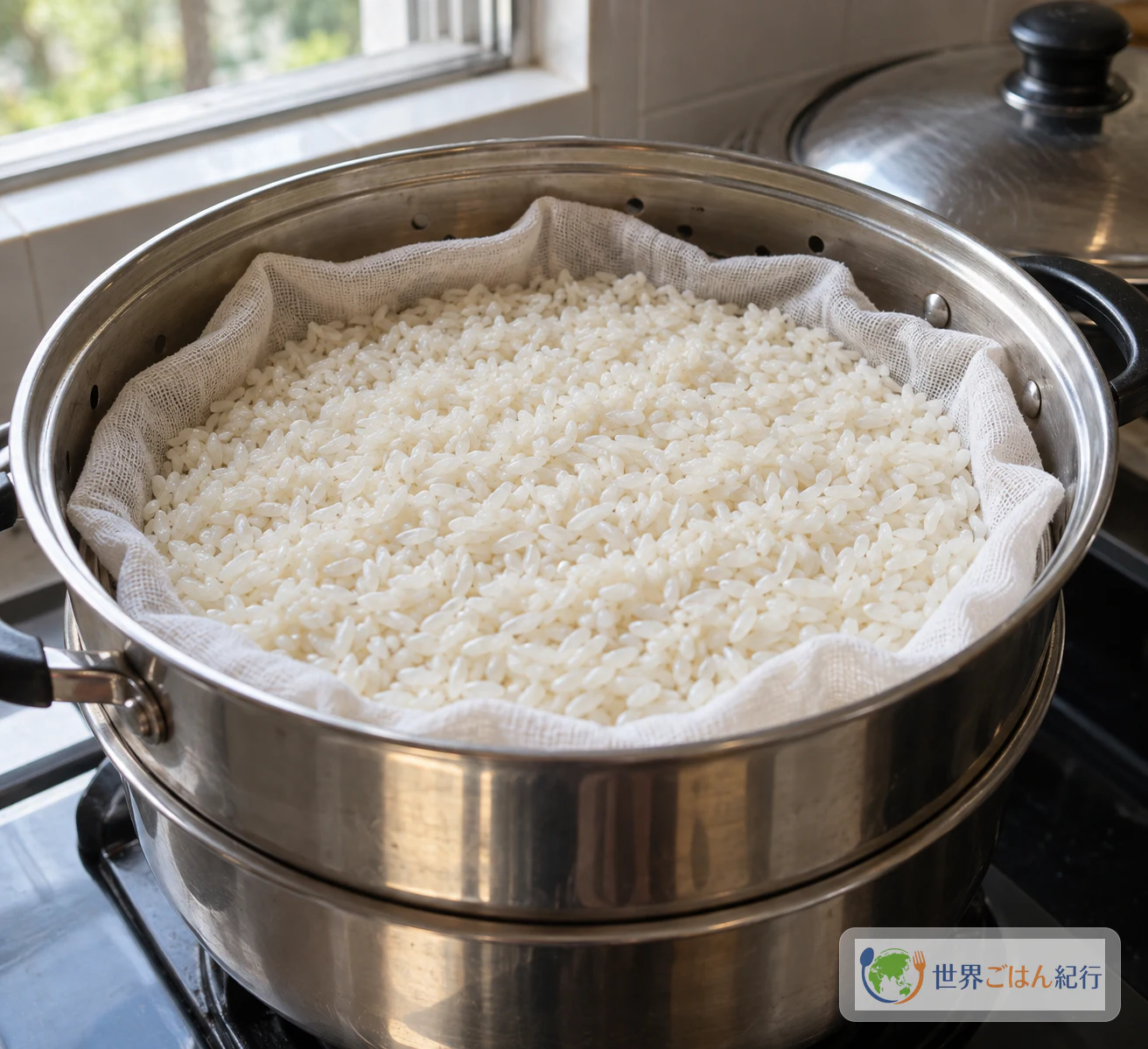
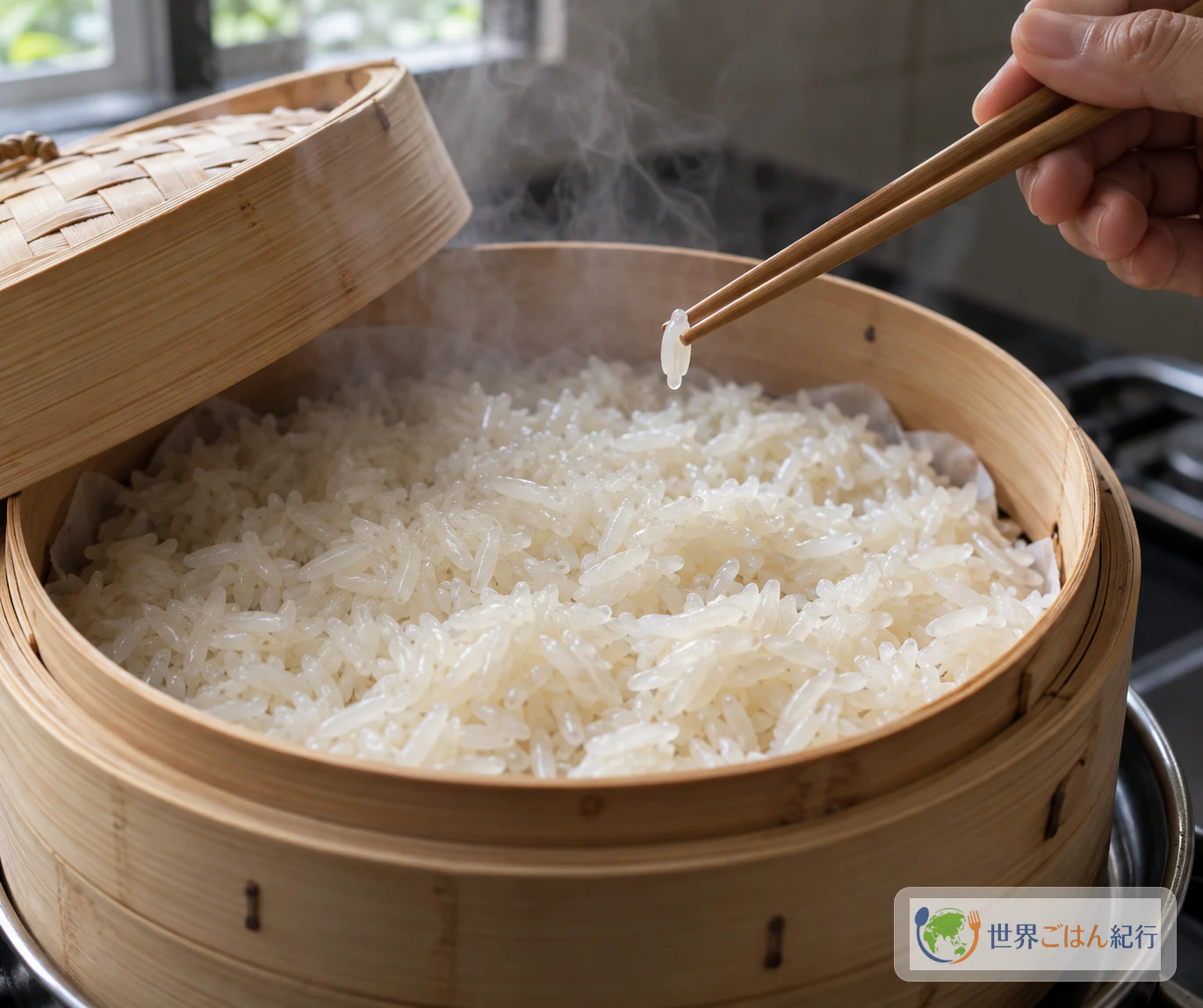
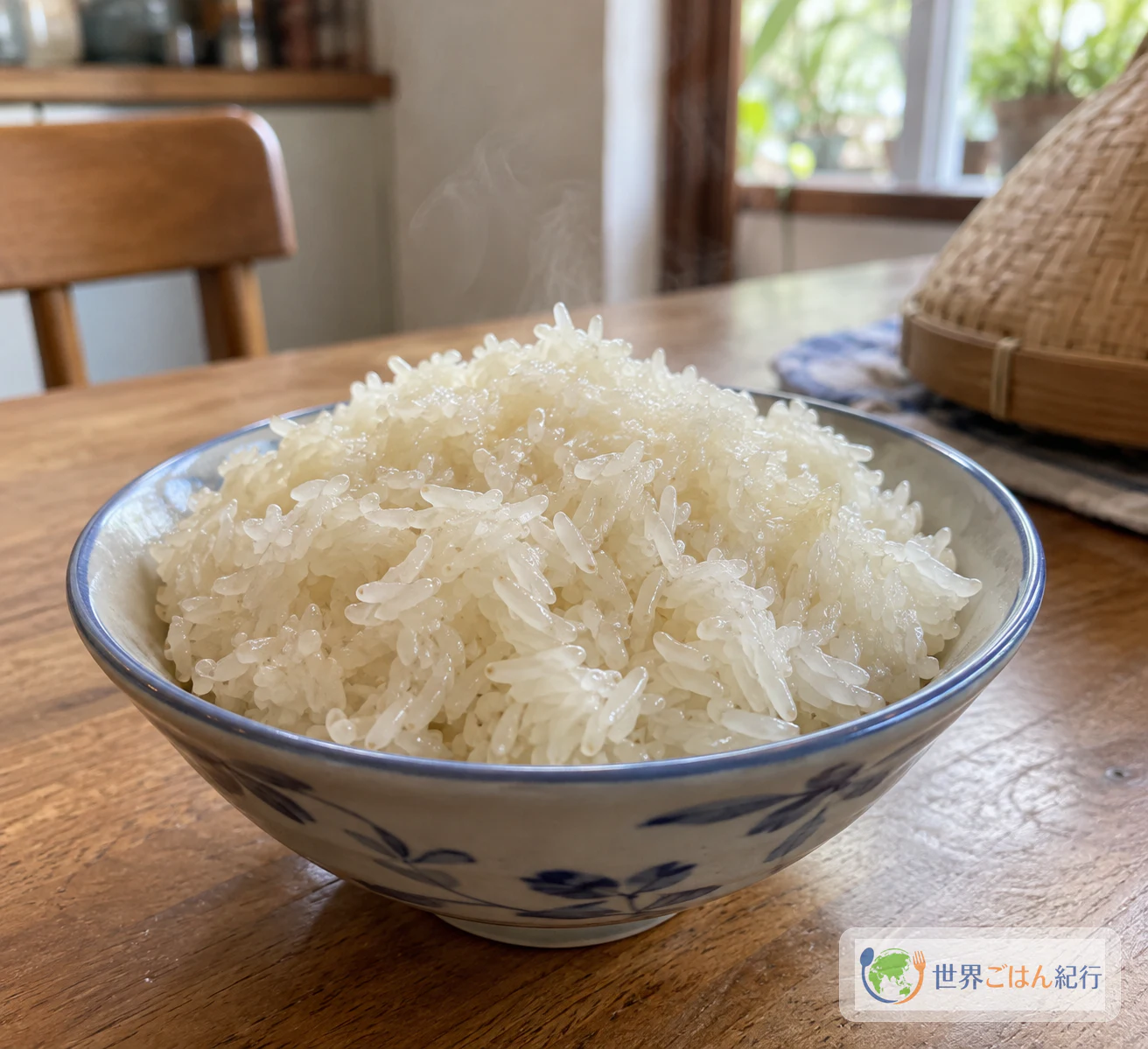
Lift the lid of the steamer and a cloud rises off the rice. Underneath, the grains have turned a translucent, glossy white, and they hold together softly when you pinch them, without dissolving into paste. This is xôi in its plainest form: Vietnamese glutinous rice cooked not in water but over it, by steam.
The name xôi does not point to one fixed recipe. It covers a broad family of sweet and savory sticky-rice dishes with many named variants, from rice coated in mung bean to rice tinted with fruit. Vietnamese steamed sticky rice includes dishes such as xôi xéo, xôi gấc, xôi lạc, xôi đậu xanh and xôi vò. This article does not try to cover all of them. It shows one starting point: the white steamed rice that comes before any topping or color.
Xôi also turns up at the start of the day. A Vietnam Airlines guide to Vietnamese breakfast lists xôi among the dishes eaten in the morning, in a picture of early-morning food vendors and filling breakfasts built on rice, noodles and bread. For more dishes and context from the same country, see the Vietnam country page.
Ingredients: Glutinous Rice and Water, in US Cups
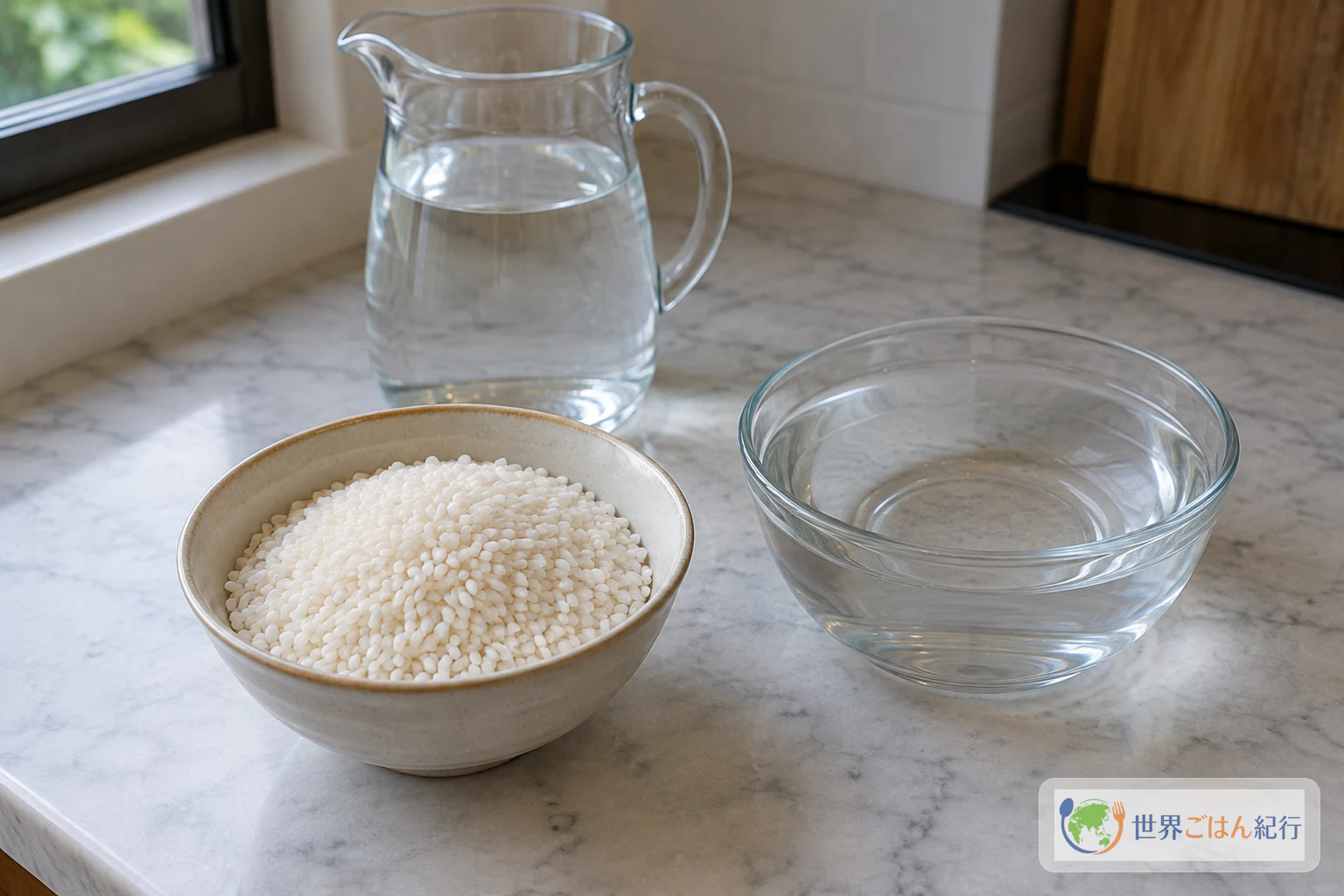
This recipe makes 2 servings. Do not swap in a Japanese 180 mL rice-cooker cup.
The base recipe is glutinous rice and water only. If you serve anything on top or alongside, check that item's own ingredients for allergens separately; it is not part of this formula.
Equipment
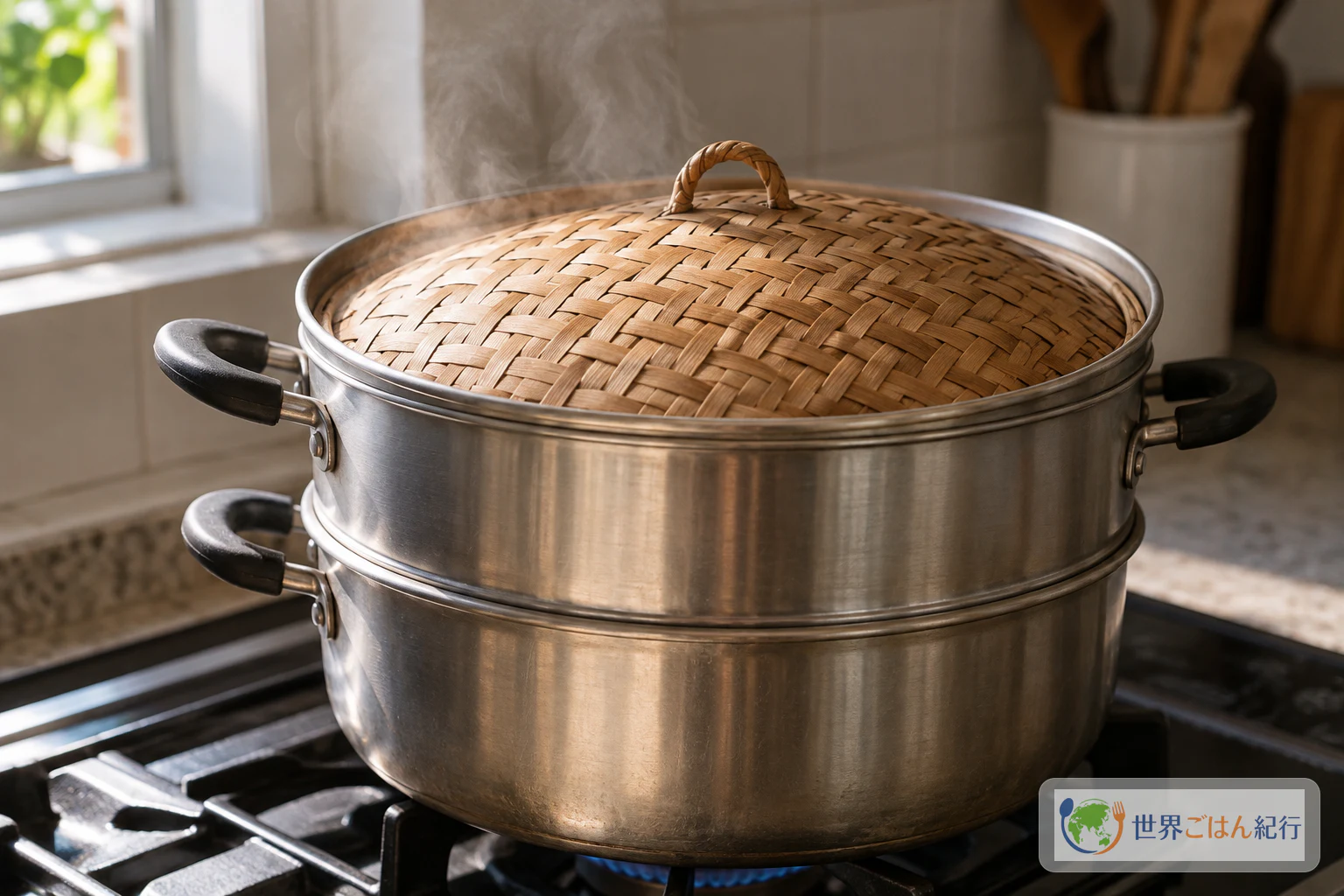
- A lidded stovetop steamer with a perforated insert
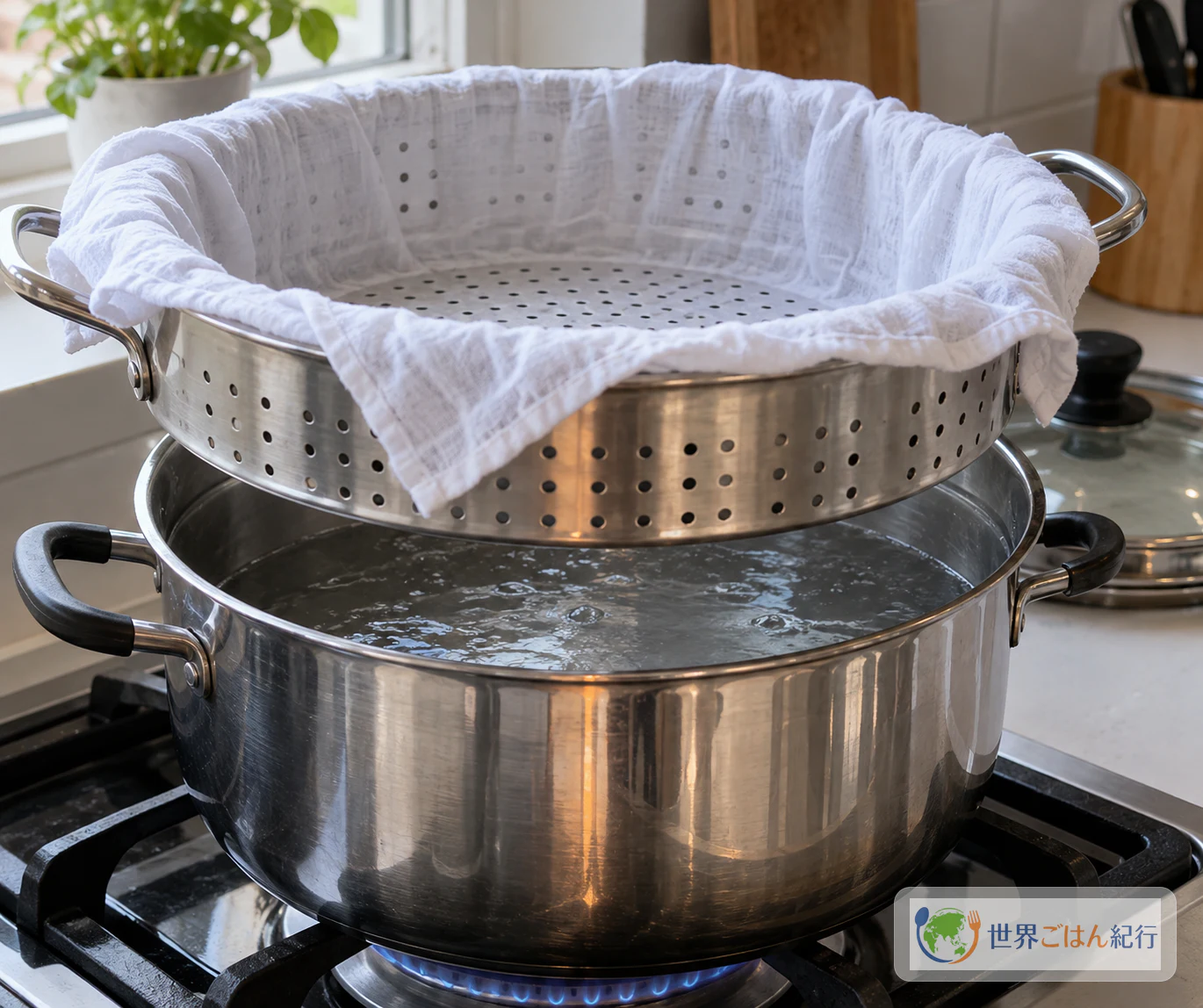
- A clean, thin cotton cloth or parchment paper to line the insert
- A bowl for rinsing
- A covered, food-safe container for soaking in the refrigerator
- A fine colander for draining
- Chopsticks or a spoon for tasting a grain
Choosing the Rice and Judging Substitutes
The main version here uses long-grain glutinous rice. Japanese short-grain glutinous rice (mochigome) is a practical alternative that is easy to find in many places, but expect a difference in texture: variety, grain shape and how well the rice is drained after soaking all change how it steams. Treat it as a close cousin, not an exact equivalent.
Ordinary non-glutinous rice is not a substitute for this formula. It is a different grain, and it will not give you xôi.
No salt, oil, coconut, sugar, leaves or toppings are added. If you want a seasoned or colored sticky rice, that is a different named dish with its own recipe; see the variations below.
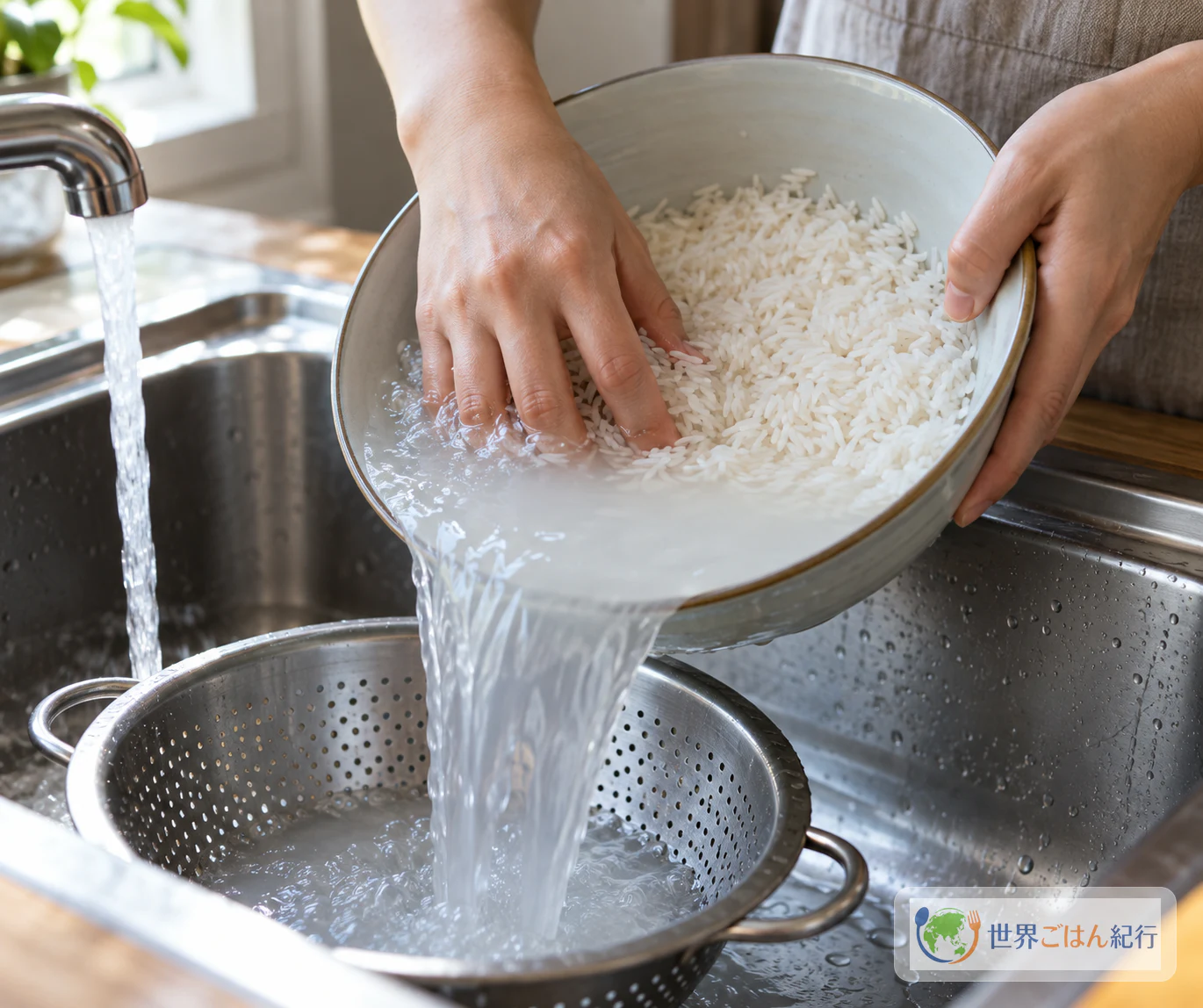
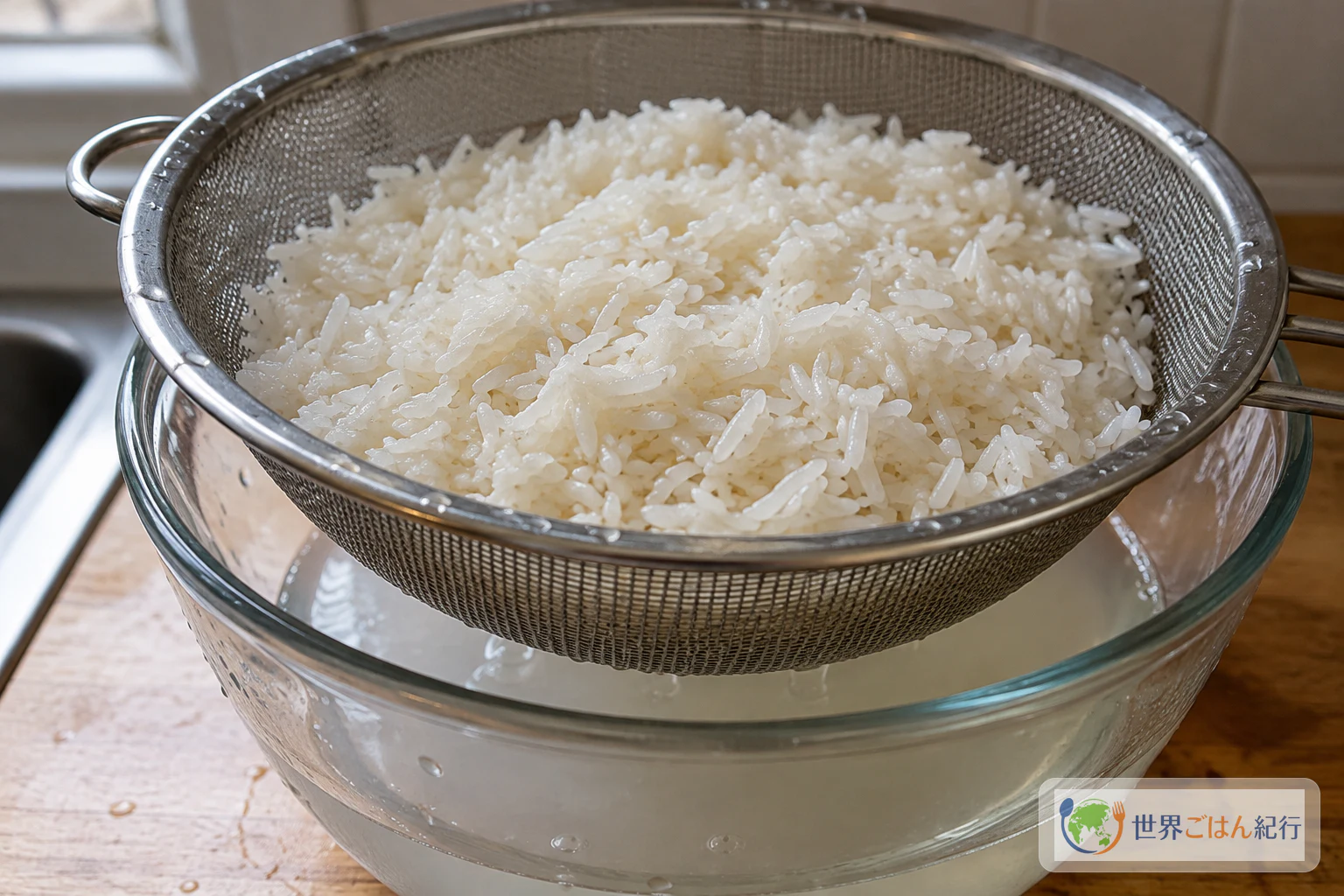
Method: Rinse, Soak, Drain, Steam, Taste
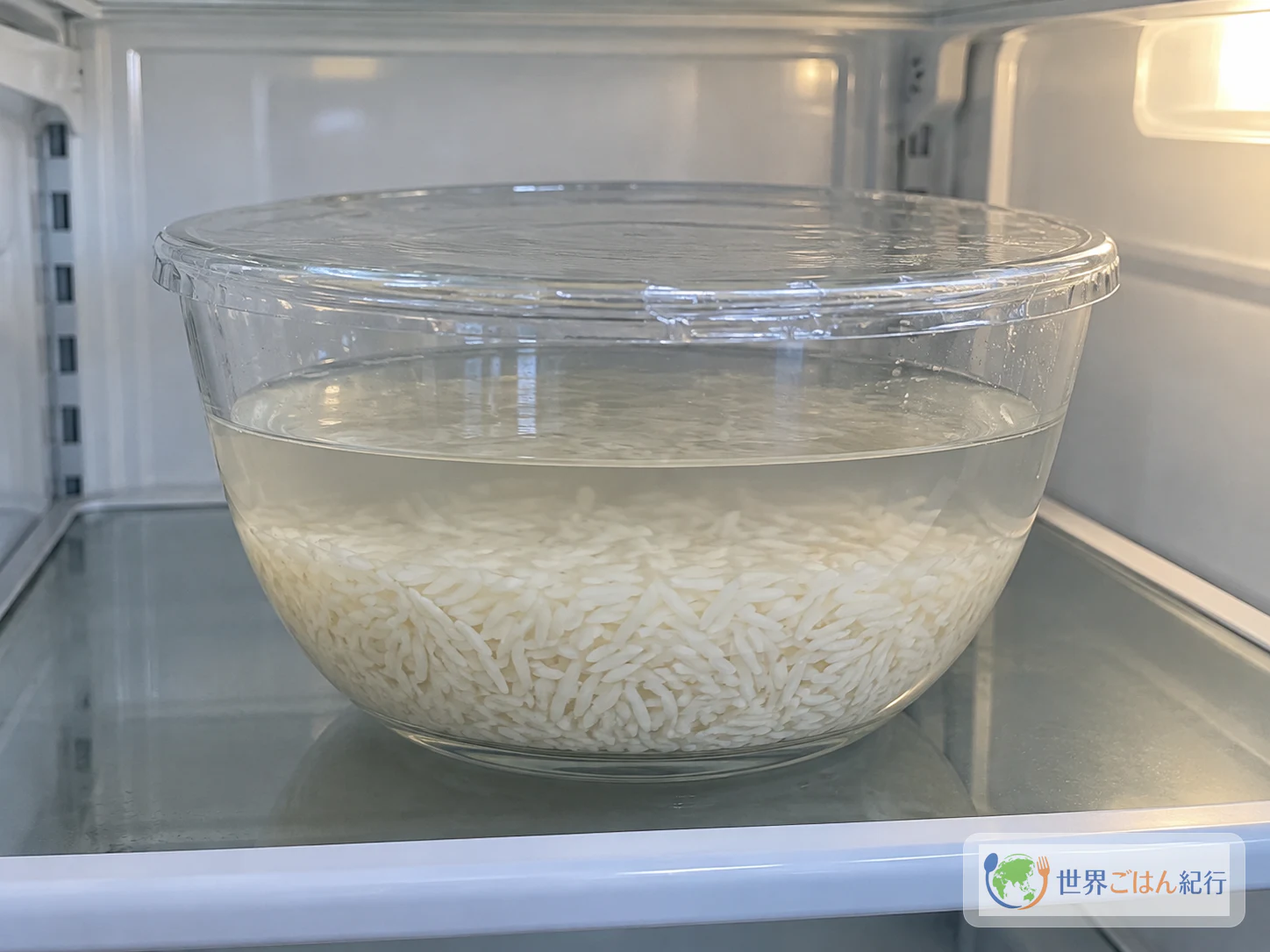
Soak for 4 hours or overnight and steam for 40 minutes. This version soaks for 4 hours in the refrigerator. Steamers vary, so decide that the rice is done by tasting a grain, not by the timer alone.
When It Doesn't Turn Out: Hard Cores and Sticky Patches
| Condition | Likely direction | What to do |
|---|---|---|
| The center of the grain is hard or chalky at 40 minutes | Steamers and rice vary; the soak may not have reached the center | Cover and steam a few more minutes, then taste again. Repeat until no core remains |
| The rice is sticky and wet in places | A kitchen judgment rather than a confirmed cause: the rice may not have drained well, or the lining may have held moisture | For next time, drain more thoroughly and lay the cloth or paper more thinly |
| The bottom layer is soggy | The rice may have been in contact with the water | Check that the water stays well below the insert, following the steamer's water line |
Adding water to the rice or simmering it is outside the source method; that turns it into a different kind of cooked rice. Keep fixing problems with steam and time.
Plain Xôi and Its Named Relatives
The variants below are separate dishes with their own ingredients and methods. Their amounts and steps are not part of this recipe.
Plain steamed rice is one base among many. Here is how some of the named dishes differ:
| Dish | What sets it apart |
|---|---|
| Plain xôi (this recipe) | Glutinous rice and water, steamed, with no seasoning, color or topping |
| Xôi vò | Mung beans are steamed and crushed, then coated onto the rice grains. Reported regional differences include a more savory taste in the north, and turmeric tint, coconut cream and sugar in southern preparations |
| Xôi xéo | A separate dish pairing sticky rice with mung bean and fried shallots |
| Xôi gấc | Sticky rice colored with gấc fruit |
| Xôi lạc, xôi đậu xanh | Further named members of the steamed sticky-rice family |
| Xôi ngũ sắc | Five-colour festive sticky rice with its own regional and cultural background (see below) |
Xôi at the Table: Breakfast and a Family of Dishes
The clearest picture of xôi in daily life is the morning. Vietnam Airlines' breakfast guide includes xôi among the foods sold by early-morning vendors, alongside other substantial breakfasts built on rice, noodles and bread. That is a travel guide's view, not a study of eating habits, so it is best taken as one window onto how xôi is eaten, not a rule for every household.
The family is wide. Xôi vò, for example, appears in settings that range from street stalls to ancestor-offering meals, and its mung-bean coating is a method of its own. Xôi ngũ sắc, five-colour sticky rice, is described by Viet Nam's national tourism authority as a festive dish tied to the beliefs and customs of ethnic communities in the northern mountains, where in that account the five colors stand for the five elements. The same source names the glutinous rice varieties nếp cái hoa vàng and nếp ngỗng and mentions serving it hot with sesame salt or Vietnamese pork sausage. Those details belong to xôi ngũ sắc; they are not the story of plain white xôi or of Vietnam as a whole.
The origins and early history of xôi are not established by the sources used here, so this article does not tell them. What it can show is narrower and practical: rice that smells of glutinous grain, tender grains that keep their shape, and a texture that comes from steam.
Leftovers and Food Safety
According to Japan's Ministry of Health, Labour and Welfare, spores of Bacillus cereus can survive ordinary cooking, so cooked rice should not be left at room temperature for a long time.
The simplest approach at home is to steam only what you will eat and serve it soon after cooking. If you do have leftovers, divide them into small, shallow portions, cool them quickly, and refrigerate at 8°C or below, keeping storage as short as you practically can.
The same guidance also describes hot holding at 55°C or above. That refers to a dedicated hot-holding cabinet, not to letting rice cool on the counter at home, so for home cooking, rely on serving promptly and on quick cooling and refrigeration. Reheating rice that has sat out at room temperature does not make it safe again.
Frequently Asked Questions
Is xôi the same thing as sticky rice?
Xôi is the name for a whole family of steamed sticky-rice dishes, both sweet and savory. This recipe is one example: plain steamed glutinous rice with nothing added.
Why does the rice need to soak?
The source recipe calls for a soak of at least 4 hours, as preparation that lets the rice steam through evenly. Skipping the soak is not part of this method. Even after soaking, taste a grain at the end to check for a hard core.
Can I make it in a rice cooker?
The source cautions that the water ratio for a rice cooker has to be worked out for each model, so there is no universal ratio to give here. This recipe is built around a steamer.
Can I make it sweet or savory?
Xôi as a family includes many sweet and savory dishes, but this base has no seasoning at all. Seasoned versions such as xôi vò are separate dishes with their own recipes, not small adjustments to this one.
Can I leave leftover xôi at room temperature?
No. Do not leave cooked rice out for long. Divide leftovers into small portions, cool them quickly and refrigerate at 8°C or below, and keep storage short.
Sources
- Becca Du, Cooking Therapy, "How to make homemade Xoi (Vietnamese Sticky Rice)." The plain recipe followed here: 1 cup glutinous rice, 2 cups soaking water, 2 servings as stated by the source, rinsing 4–5 times, soaking 4 hours or overnight, draining, steaming 40 minutes and tasting for doneness; also the breadth of xôi as a category of sweet and savory dishes. https://www.cooking-therapy.com/xoi/
- Việt Nam News, "Rice - the traditional soul of a nation." The named dishes within Vietnamese steamed sticky rice, and the method, settings and regional differences of xôi vò specifically. https://vietnamnews.vn/life-style/1111946/rice-the-traditional-soul-of-a-nation.html
- Vietnam Airlines, "Top 20 Vietnamese Breakfast Dishes: What Locals Eat Every Morning." Xôi listed among Vietnamese breakfast foods, with early-morning food vendors. https://www.vietnamairlines.com/go/en/plan-book/travel/travel-guide/vietnamese-breakfast
- Viet Nam National Authority of Tourism, "Five-colour sticky rice, the quintessence of Vietnamese cuisine." Xôi ngũ sắc only: its association with northern mountainous ethnic communities, the five-element symbolism in the source's account, the rice varieties named, and how it is served. https://vietnam.travel/node/1731
- Ministry of Health, Labour and Welfare (Japan), "食中毒予防のための情報(セレウス菌)" (Information for preventing food poisoning: Bacillus cereus). Spore survival after cooking, avoiding leaving cooked rice at room temperature, and small portions, rapid cooling and storage at 8°C or below, or hot holding at 55°C or above. https://www.mhlw.go.jp/content/11130500/000759552.pdf