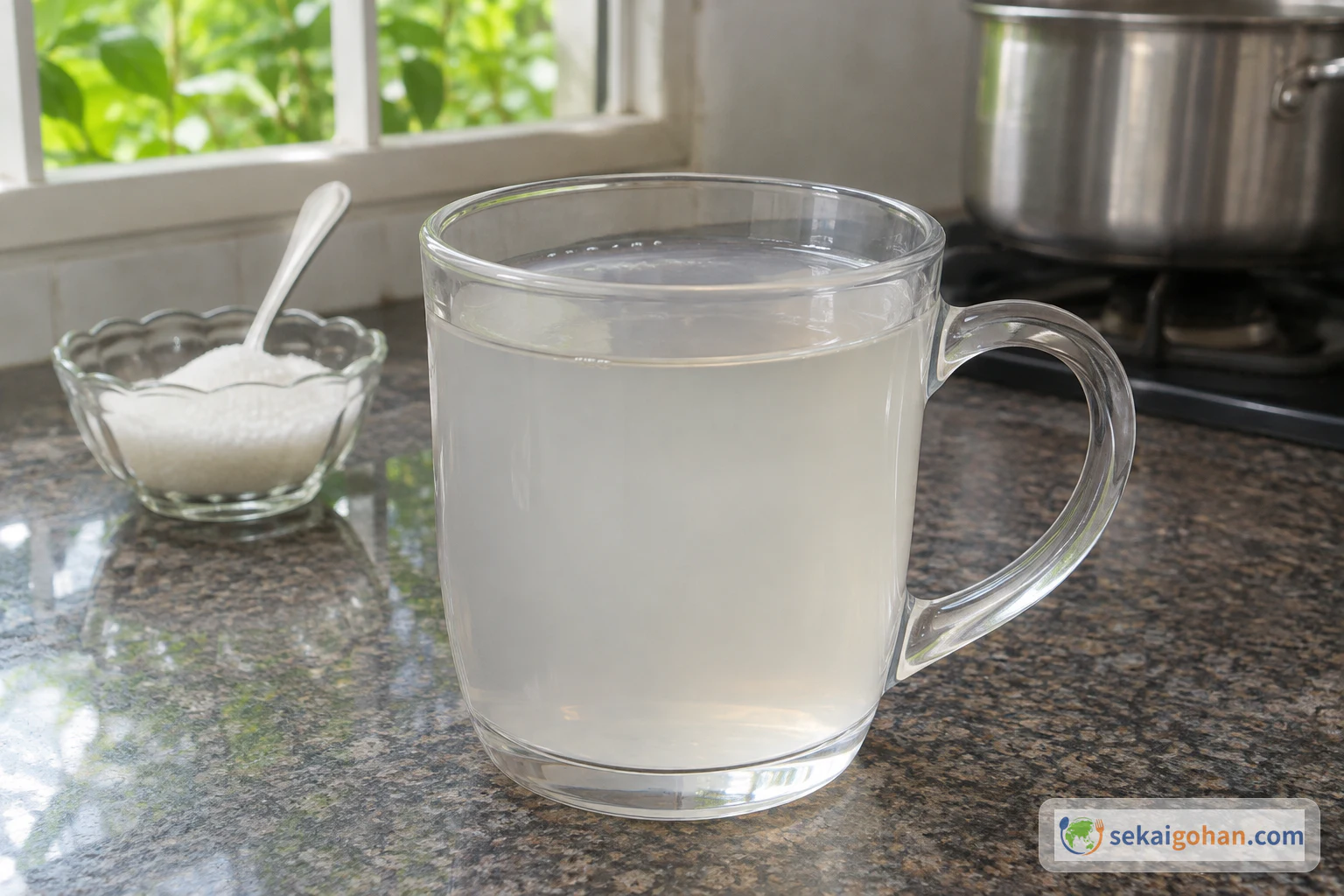
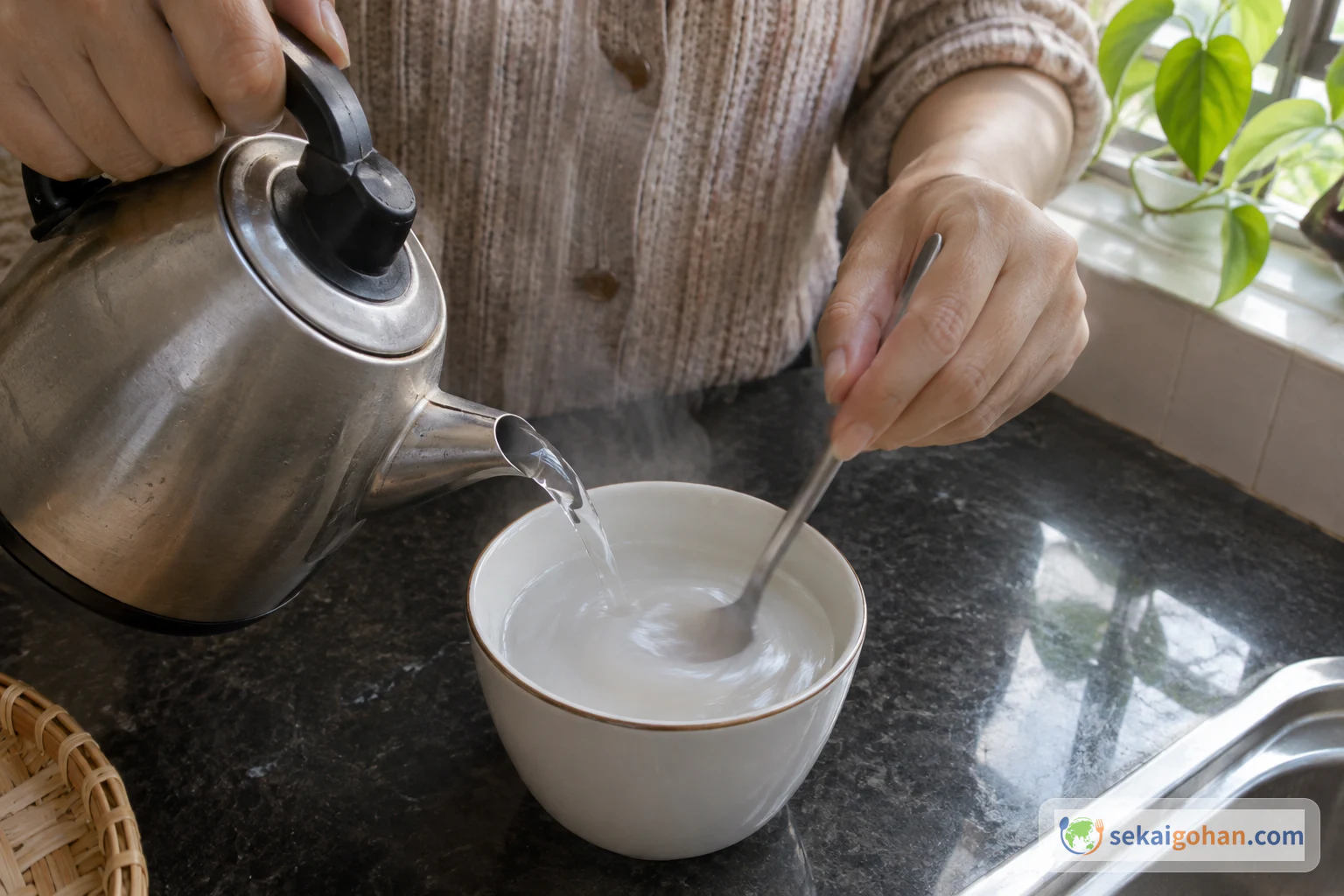
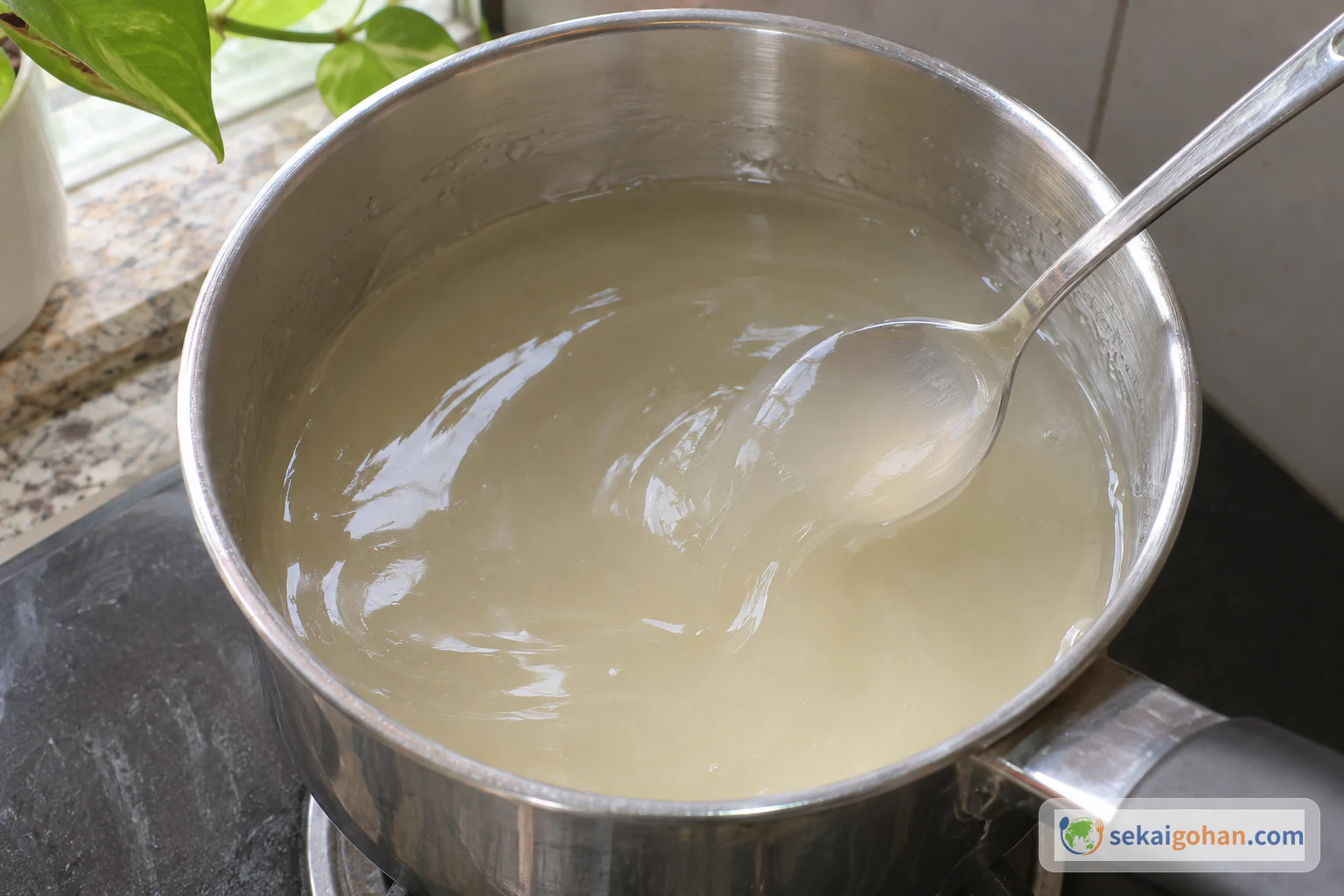
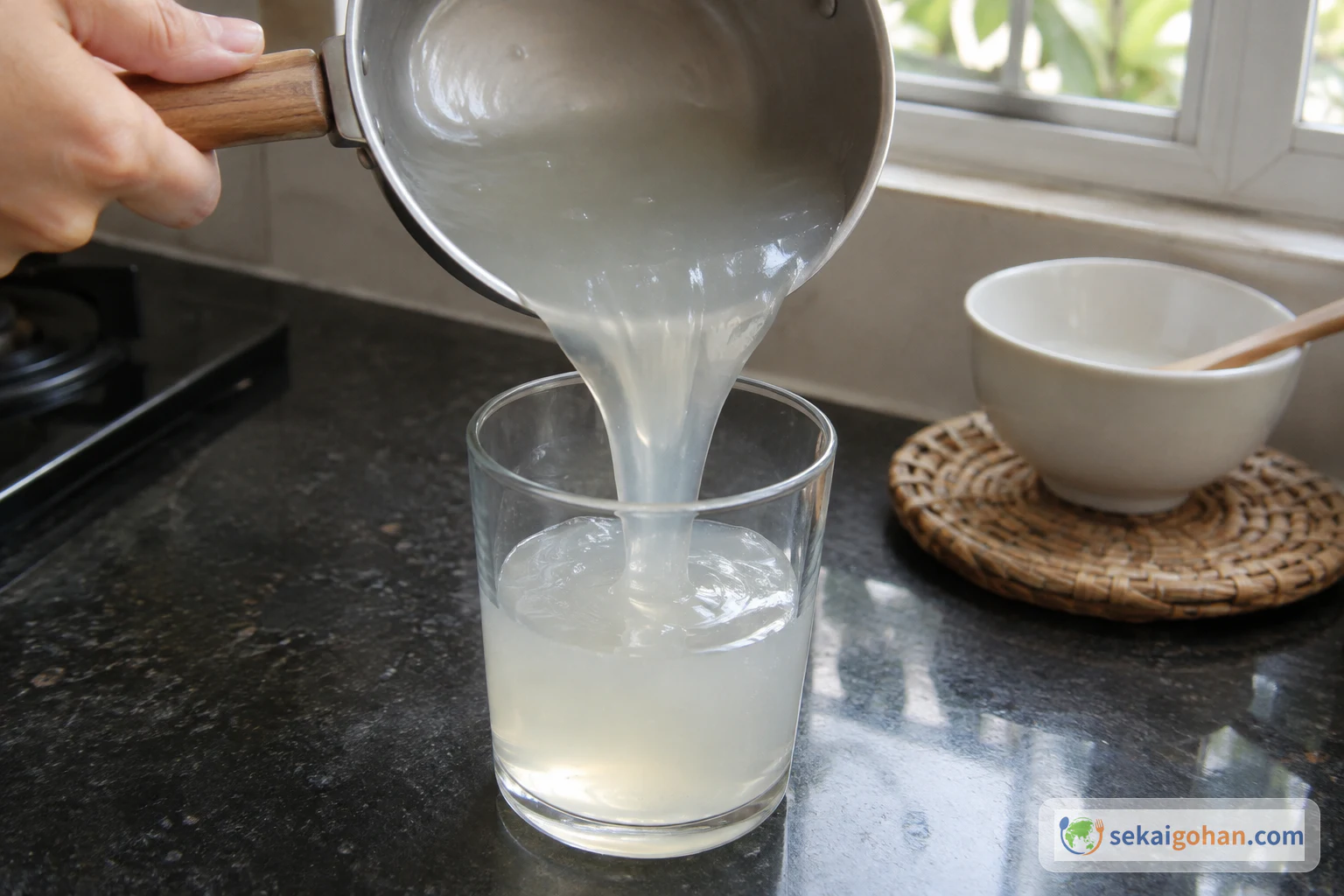
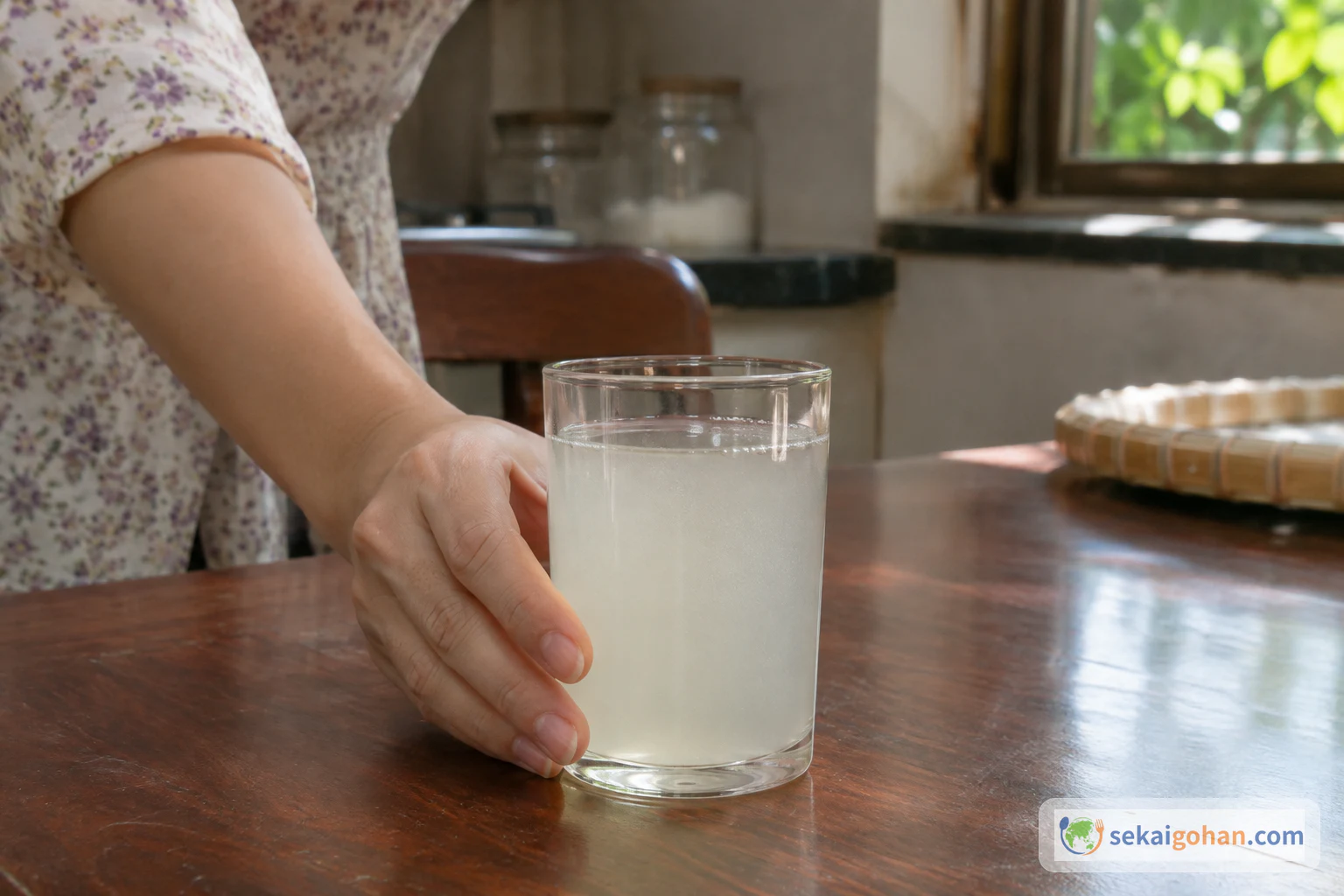
The kettle stream hits a cup of milky slurry, the spoon keeps turning, and the white begins to thin and turn glassy. A soft floral smell lifts with the steam as the starch thickens. Nước sắn dây hoa bưởi is a Vietnamese drink made from kudzu starch that carries the scent of pomelo blossom. It comes to the glass smooth, lightly thick and translucent, and it is as sweet as you choose to make it.
Kudzu, Blossom and a Glass of Clear Starch
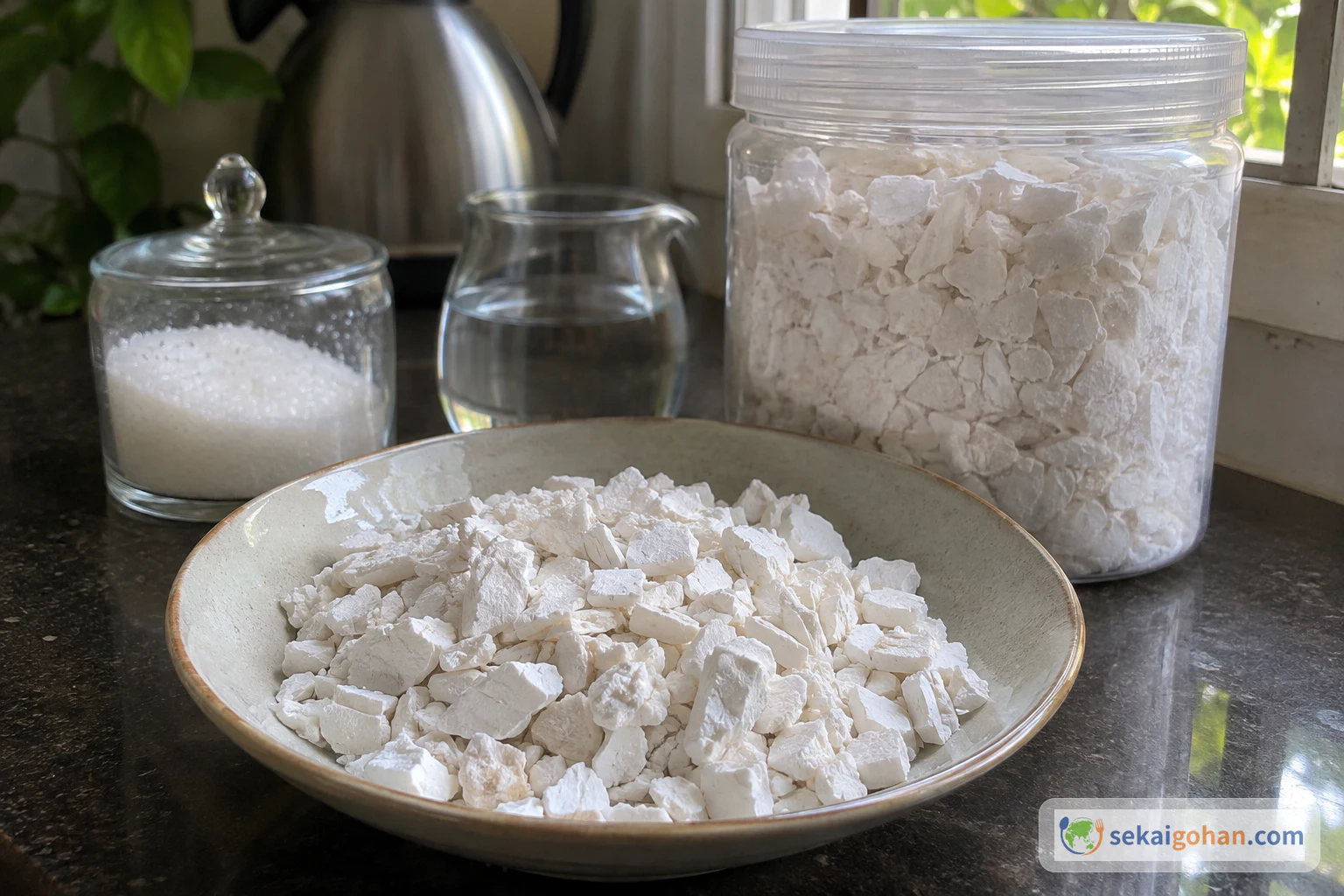
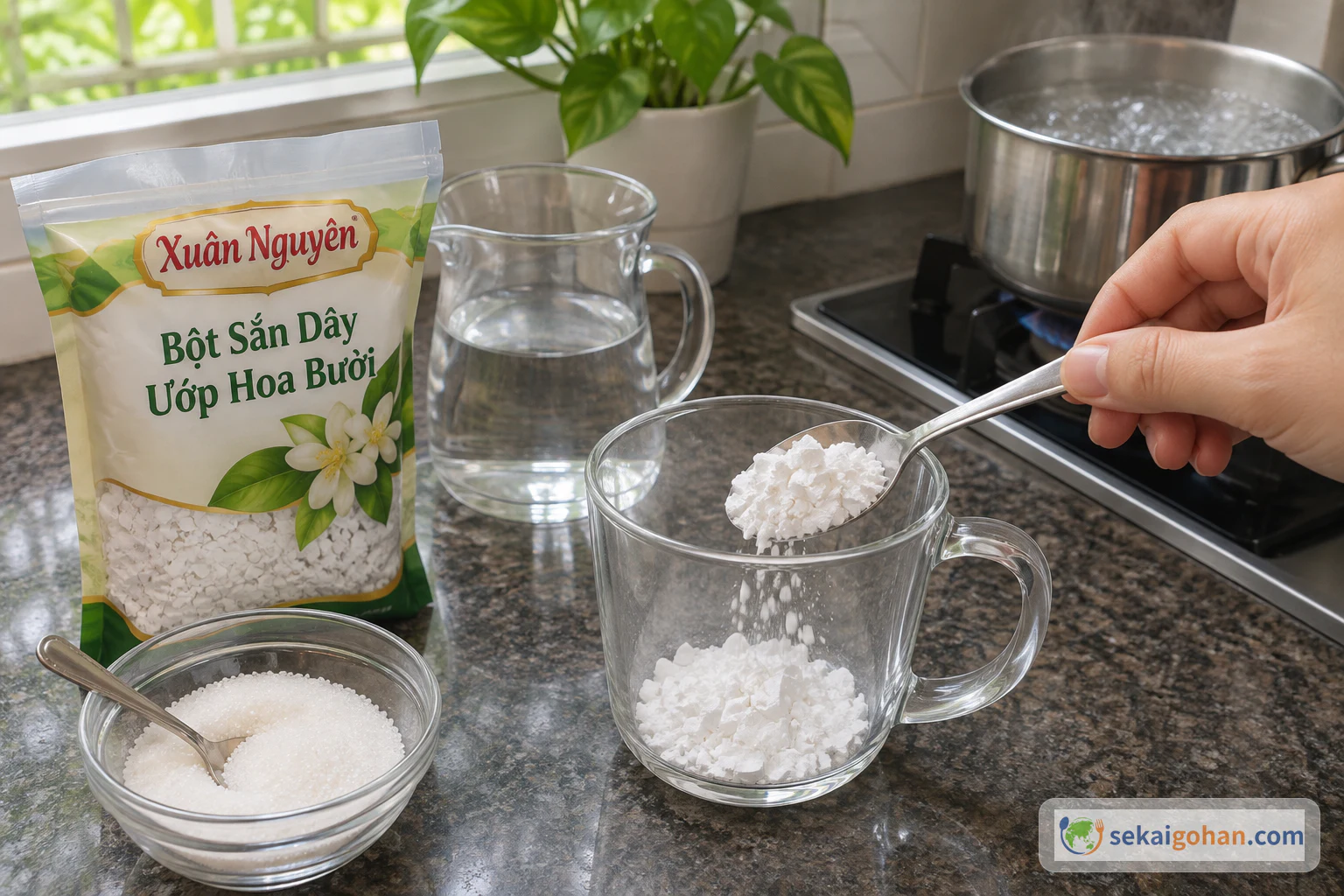
The name lays out the whole drink. Sắn dây is kudzu, a vine of the Pueraria genus whose starch is dried and sold in small, pale, irregular pieces. Hoa bưởi is the blossom of the pomelo tree. The fragrance arrives in the starch itself: the scented product is packed as kudzu starch blended with natural pomelo-flower aroma, so nothing is steeped or infused at home. You open the pack, measure, add water, and the scent rides along into the cup.
Kudzu starch belongs to a different plant from the starches most Western and Japanese kitchens keep. It is a separate thing from cassava or tapioca, and from the potato starch sold in Japan as katakuriko. Each of those sets differently and tastes different, which is why the name on the pack matters here. Packaged scented kudzu starch is made into drinks and other preparations, and the cup method below follows the directions for a packaged scented starch: a cool-water slurry, then boiling water poured in while you stir until the starch turns clear.
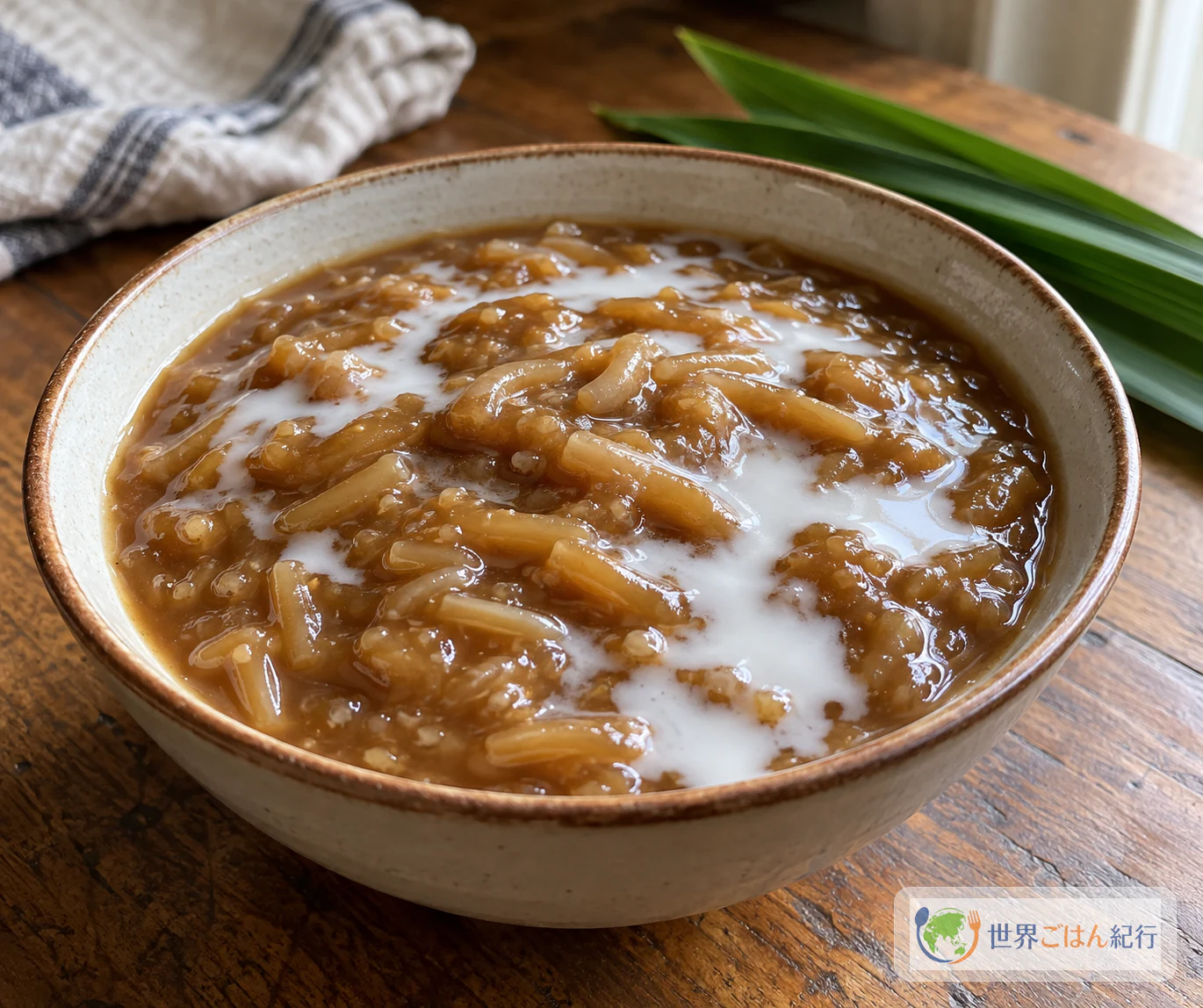
Kudzu starch and pomelo blossom also meet in a neighbouring dish, chè đường, a sweet porridge in which kudzu starch is cooked with mung beans, sugar and pomelo flower water. Sweet chè of this kind sit among Vietnam's summer refreshments. The drink here is simpler and thinner, with no beans and no separate flower water, so keep the two apart when you shop and when you cook. For more of the country's food, start at the Vietnam page.
Nước means water or drink, sắn dây is kudzu, and hoa bưởi is pomelo blossom. On packs, look for "bột sắn dây ướp hoa bưởi": bột is the starch or powder, and ướp means scented.
Ingredients
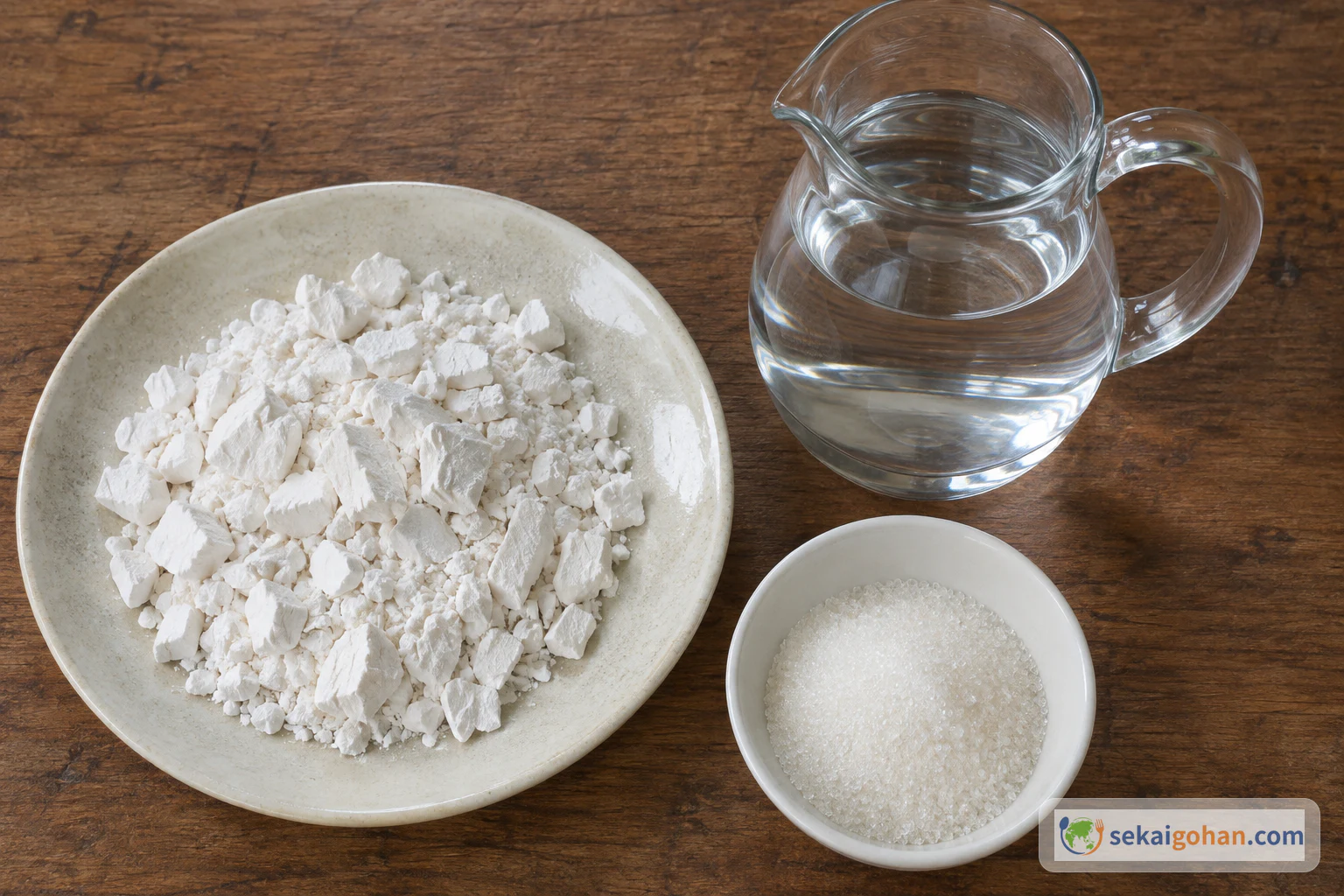
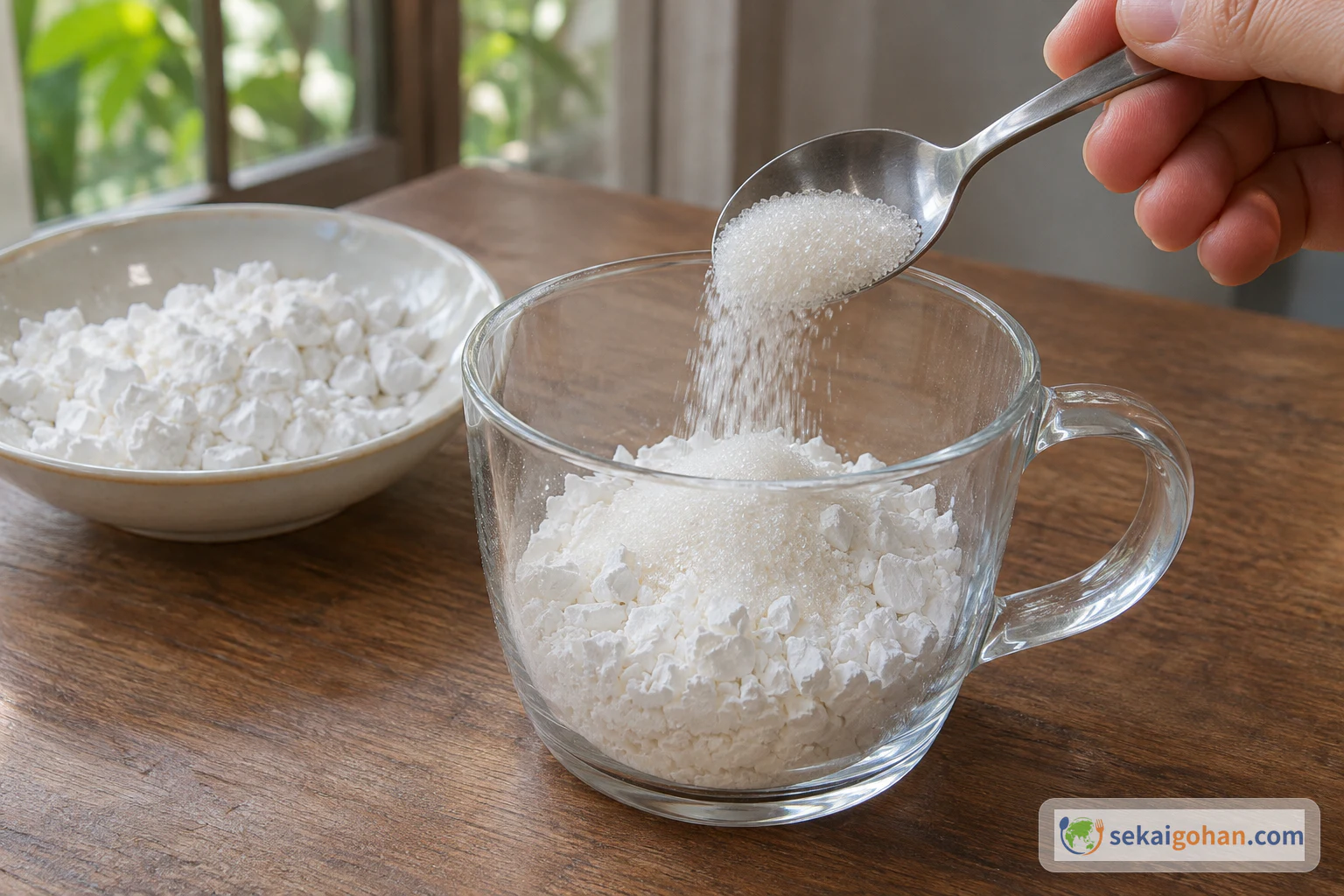
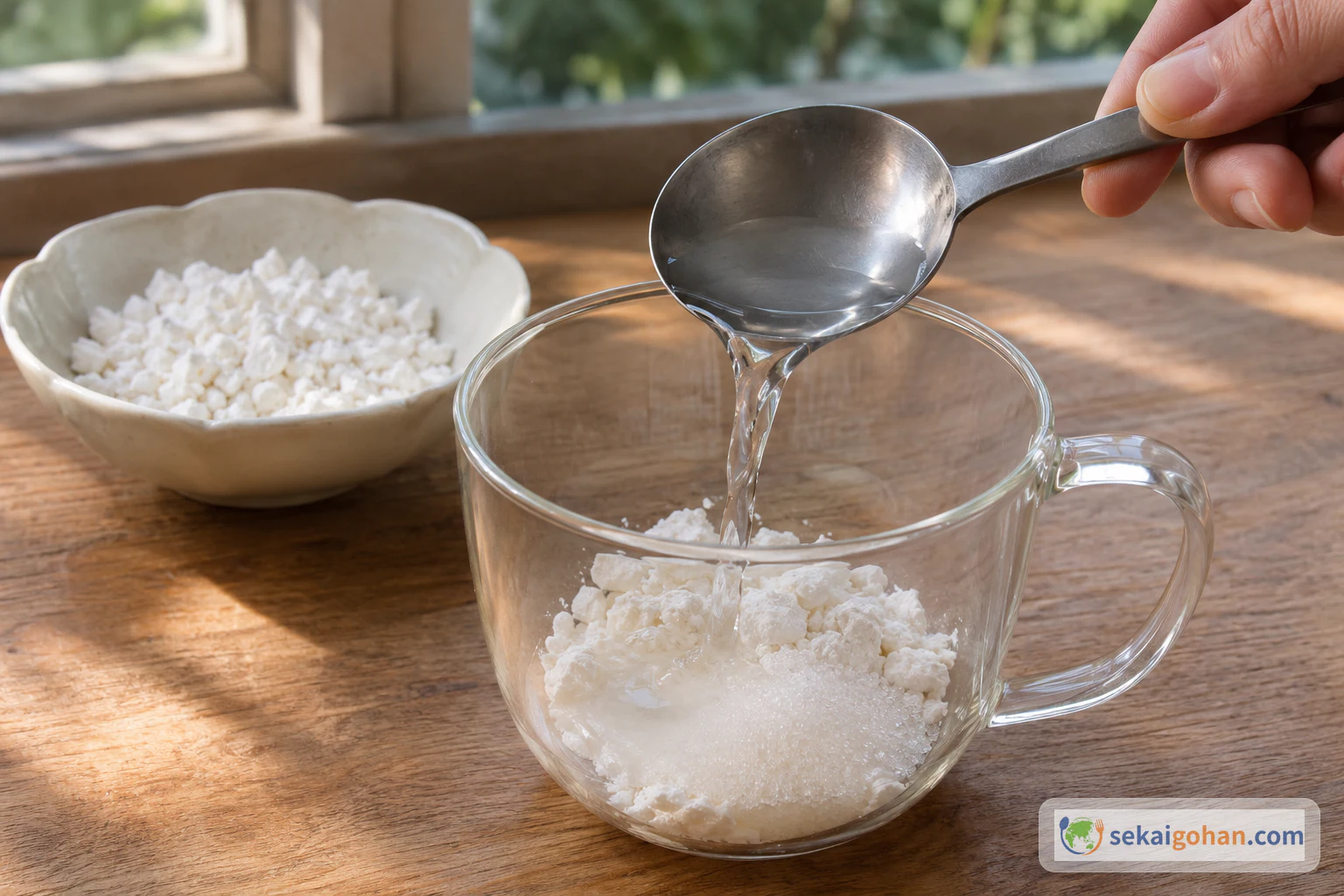
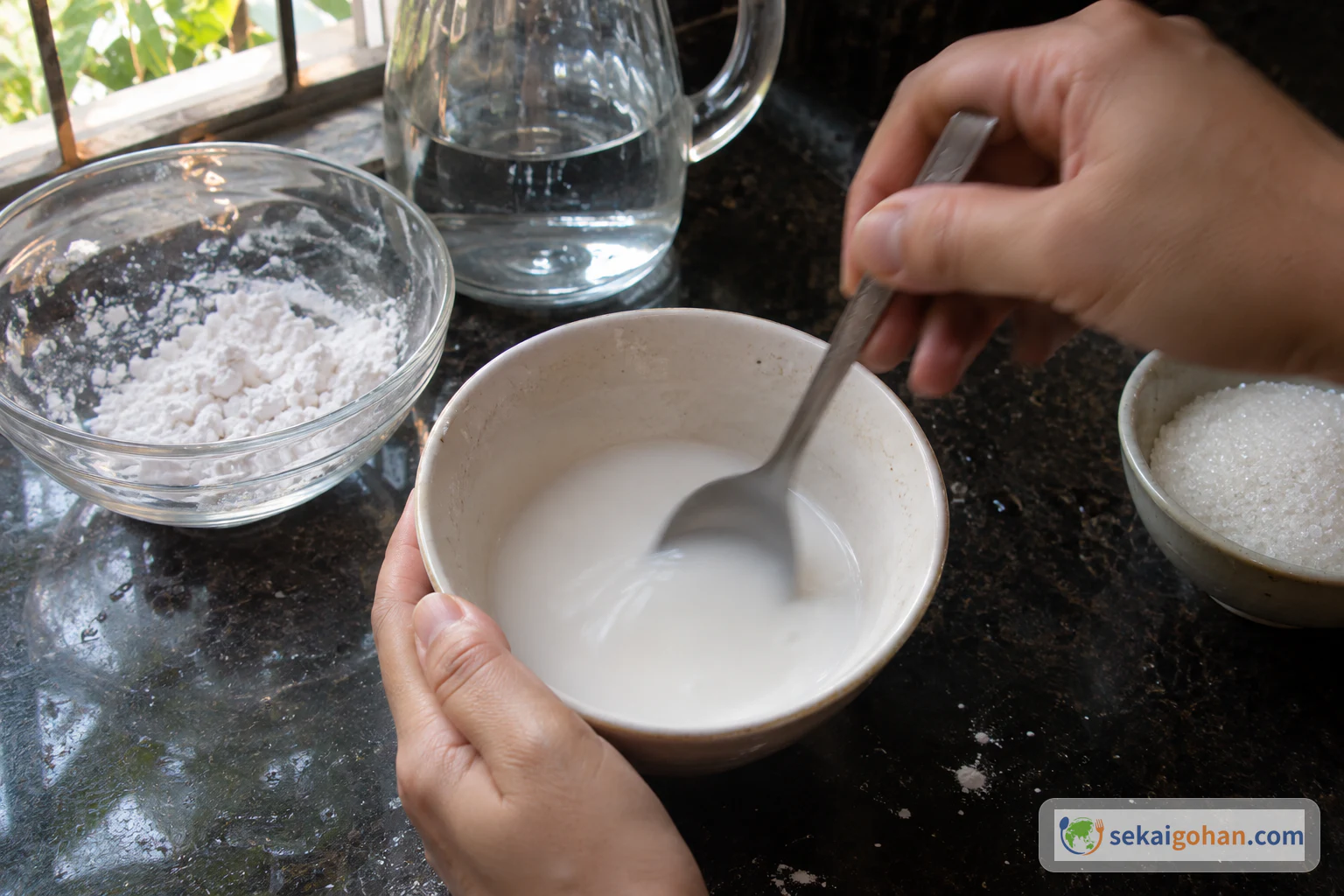
Put the sugar on top of the dry starch before any water touches the cup. Then add the cool water, so starch and sugar dissolve together into one slurry.
The scented starch is kudzu starch with natural pomelo-flower aroma. Read the ingredient line and any allergen or shared-facility statement on the pack you buy before serving it to someone with allergies.
Equipment
- A small heatproof cup or small saucepan for mixing, used off the heat
- A tablespoon, used for both the starch and the cool water
- A kettle for the boiling water
- A heatproof glass for serving
Buying the Starch and What Not to Swap
Look for bột sắn dây ướp hoa bưởi at Vietnamese or wider Asian grocers, or from online shops that sell it as food. Read the ingredient line before you buy: it should list kudzu starch and natural pomelo-flower aroma, for example 99% kudzu starch and 1% aroma. Brands differ in how much scent they carry, so the pack decides how floral the glass smells. Buy only starch sold for eating, and never add cosmetic essential oils or blossoms picked from a tree or garden.
| If you use | What you get |
|---|---|
| Plain kudzu starch | A plain kudzu drink with the same texture and none of the blossom; it is no longer the hoa bưởi version |
| Potato starch (katakuriko) | A different starch with a different set; keep it for other dishes |
| Tapioca or cassava starch | A different plant and a different texture; keep it for other dishes |
The starch has to be kudzu, and the blossom has to come from the scented pack. Everything else in the cup is water and, if you like, sugar.
Method
The whole drink comes together in one cup, and the only hands-off moment is waiting for the kettle. Set the starch, sugar and cool water out first and put the kettle on, so the water is at a full rolling boil when the slurry is ready. From the first pour, both hands are busy until the cup turns clear.
Buy starch sold as food and make it with clean spoons, a clean cup and drinking water. The cool-water slurry is raw starch in unboiled water, and the boiling-water pour is the cooking step, so never drink the slurry on its own. Stand the cup on a steady surface and pour slowly, keeping your stirring hand clear of the kettle stream.
A slow stream gives the spoon time to pull each splash of boiling water through the whole slurry. Pouring fast or pausing the spoon is what leaves clumps.
The boiling water sets the thickness. Pour a little less than you think, look, then add more; more water always thins it, and nothing brings back the body once it is gone.
When It Goes Wrong
| What you see | Why | What to do |
|---|---|---|
| Clumps or white specks in the clear drink | The slurry was still gritty, the pour was too fast, or the spoon stopped | Keep stirring hard while you pour; next time stir the cool slurry until completely smooth and pour slower |
| The drink stays milky | The water had dropped off the boil, or not enough has gone in | Reboil the kettle and keep pouring in a thin stream while stirring until it turns clear |
| Too thick to drink | Too little boiling water | Add more boiling water, slowly and while stirring, until it loosens |
| Thin and watery | Too much boiling water | Drink it as it is; next time stop pouring sooner |
| No blossom smell | Plain kudzu starch was used | Buy the pack labelled ướp hoa bưởi for the scented version |
Serving and Variations
This is a drink for the moment it is made. Make one glass at a time and drink it fresh, in a heatproof glass, while it is still glossy and the scent is rising. There is no make-ahead or keeping step: mix it, pour it, serve it.
Unsweetened or sweet
With no sugar, the floral smell and the soft body of the starch carry the glass alone. A little sugar rounds it out and pushes it toward the sweet chè family; add it at the dry stage, as in step 2.
Thick or thin
Stop the boiling water early and you get a spoonable, almost pudding-like cup. Keep pouring and it becomes a looser drink you can sip from the rim. The kettle is your only thickness control, so decide before you start which one you want.
Plain kudzu
Made with plain kudzu starch, the drink has the same texture and a clean, neutral taste. It is a good way to learn the pour-and-stir rhythm, though without the blossom it loses the hoa bưởi in its name.
Frequently asked questions
What size spoon should I use?
Use the same tablespoon for the starch and the cool water. Keeping one spoon holds the starch-to-water balance steady, and the boiling water then decides the final thickness.
My starch is in hard, irregular pieces. Is something wrong with it?
Dry kudzu starch is sold in small, pale, irregular pieces, and that is how it should look. The pieces break down in the cool water as you stir in step 3.
Is it a health drink?
Treat it as a drink, not a remedy. Enjoy it for its fragrance and its smooth, lightly thick body, and leave any medical questions to a doctor.