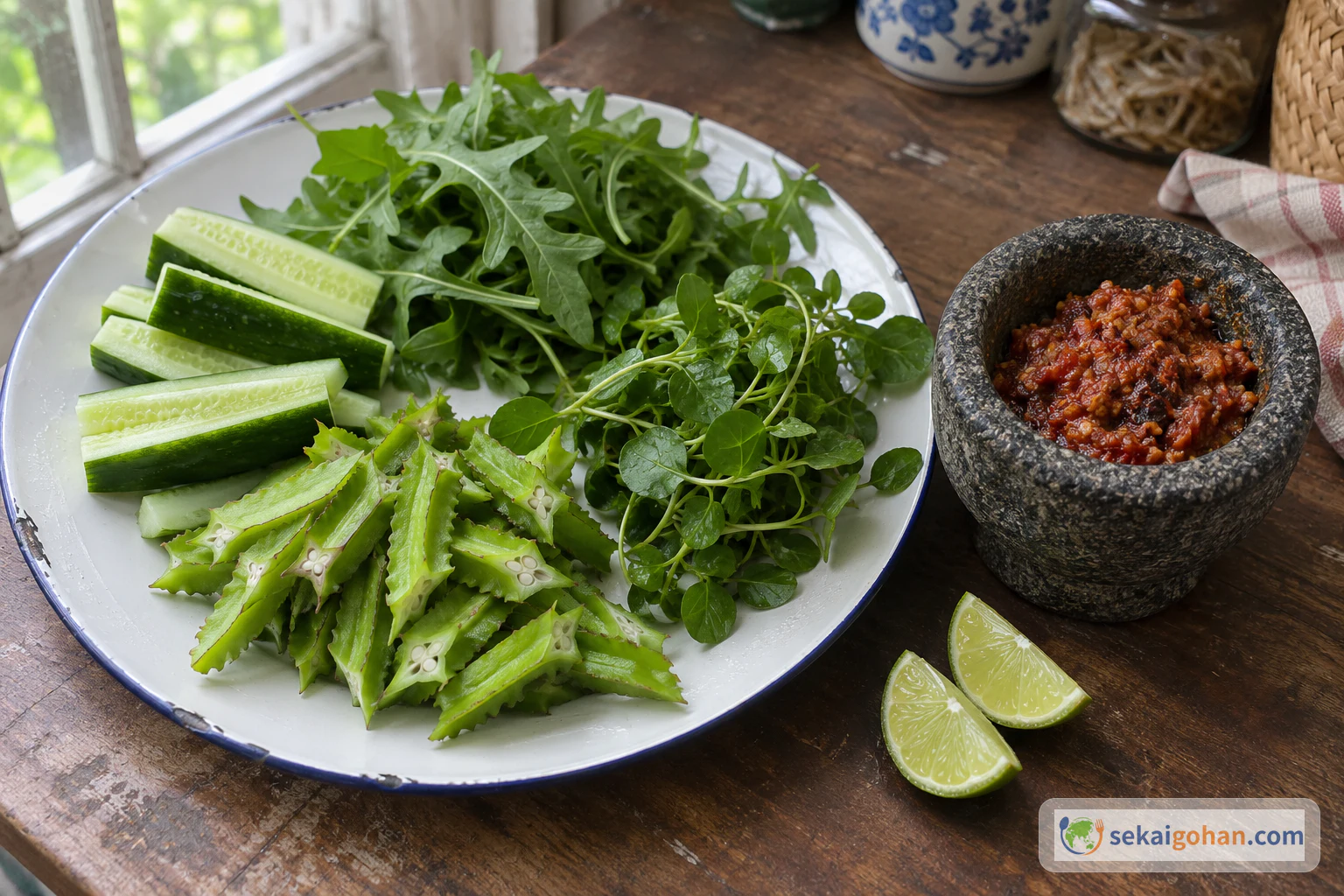
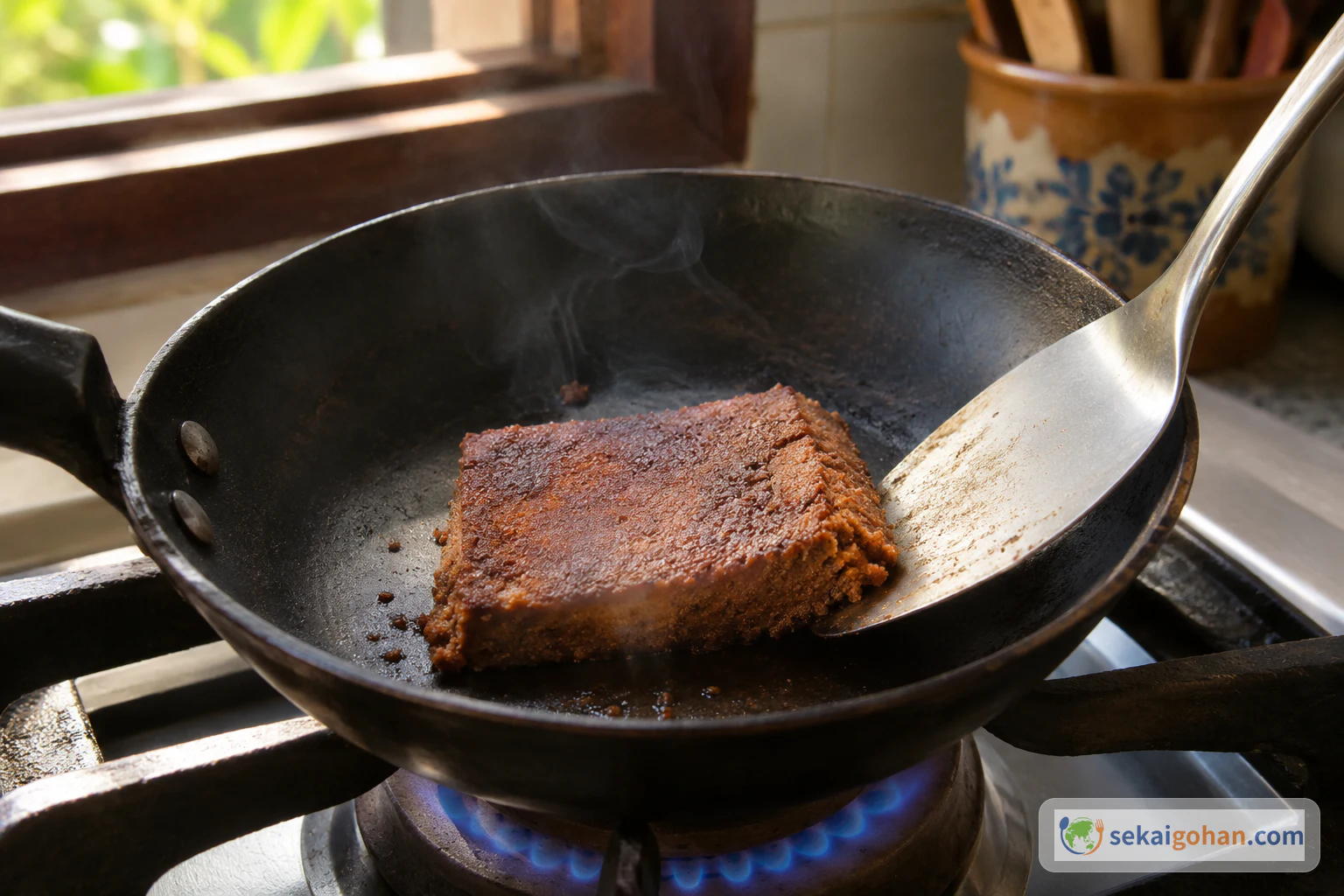
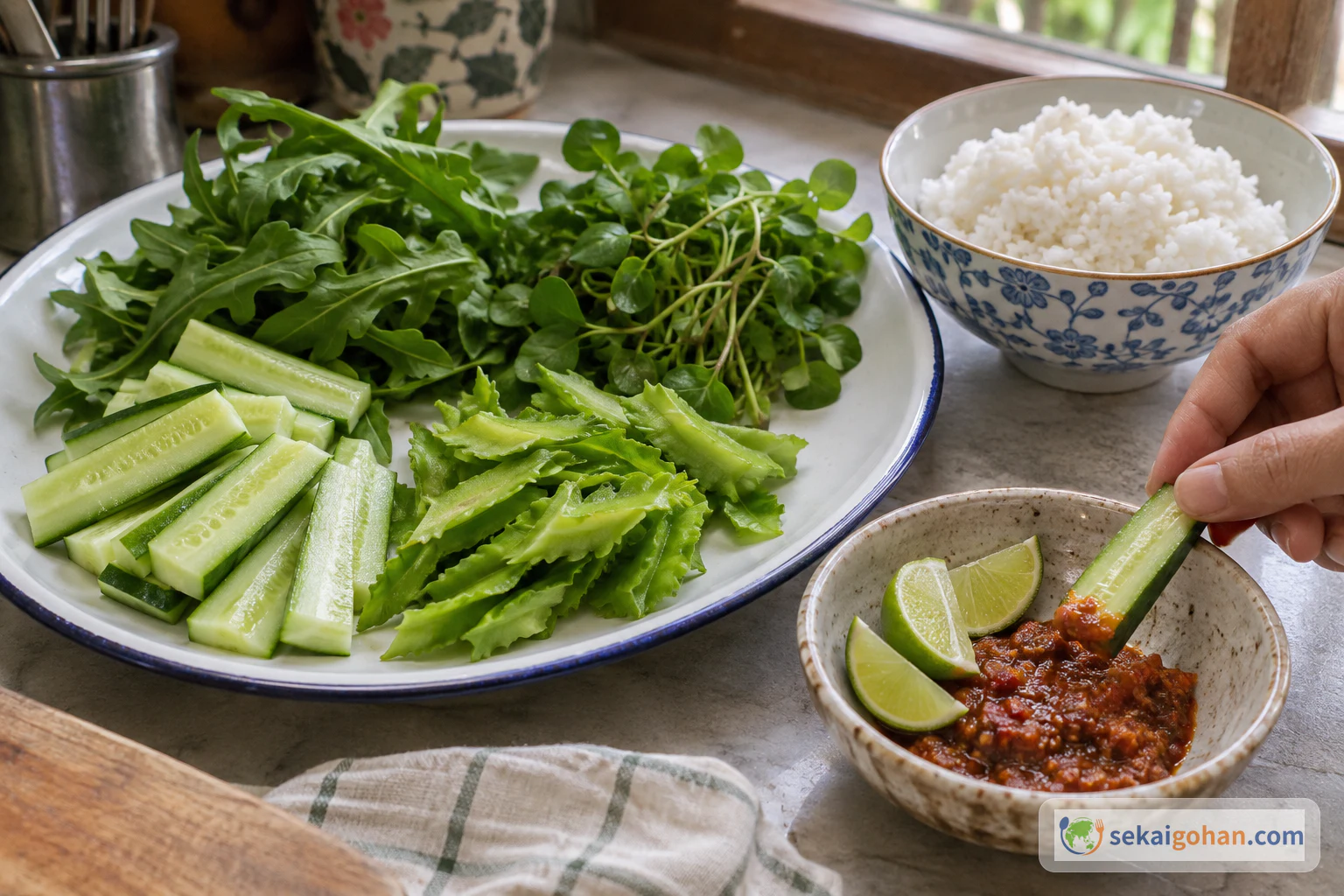
A hand reaches past the rice, takes one cool stick of cucumber and dips just its tip into a small bowl of red, rough-textured sambal. Before that, the kitchen smelled of shrimp paste toasting dry in a pan, sharp and roasted, until the block crumbled. Ulam is that whole movement: raw vegetables and leaves, a fierce dipping sambal and a plate of rice, eaten together at a Malaysian table. The vegetables taste green, crisp and a little bitter. The sambal brings salt, heat, the deep savoury pull of fermented shrimp and a flash of lime.
A Way of Eating Before It Is a Dish
In Malay, ulam is the name for raw leaves and fruits, such as pegaga and petai, eaten with rice. It is a way of eating rather than one fixed plate. More than 120 plants are eaten as ulam in Malaysia, and they cover every part of the plant: leaves (daun), young shoots (pucuk), pods and seeds (biji), fruits (buah), flowers (bunga) and roots or tubers (ubi). Many of them have long been gathered rather than farmed. People sort them by how easily the market supplies them, into the ulam you see everywhere and the ulam you rarely find. The leaves can be eaten raw or blanched, and they come to the table with a sauce: sambal belacan, budu, cincalok.
The plate is a side dish. It sits next to rice and the main dishes of the meal and is never a salad on its own. Nothing is tossed. Each person takes a piece, dips it, and eats it with a mouthful of rice. Its close relatives work the same way: lalab, ngapi yay and nam phrik. Nasi ulam and nasi kerabu are different again, since there the herbs are chopped and mixed into the rice itself.
What actually goes on the plate
Ulam is everyday food. Among adults in Selangor, 82.1% say they like ulam, rising to 92.3% among Malays. Cucumber is the most eaten, by 60.6%, followed by kacang botol (winged beans) at 33%, pegaga at 31.5%, petai at 29%, lettuce at 27.6% and ulam raja at 21.9%. A typical day's ulam is modest, a median of 30 to 39 g. People who like it give the taste, the aroma and the belief that it is good for them as their reasons.
Raw is the custom, though it is far from the only way. 52% eat ulam that is partly cooked or boiled, and the favourites for that are young cassava leaves at 31.5%, banana flower at 20.1% and okra at 12.5%. The plate here follows the most ordinary home form on the Malay peninsula: raw vegetables arranged loose, with sambal belacan in its own bowl. The only heat in the whole recipe is the dry-toasting of the belacan. What else goes on the plate changes from shop to shop and from home to home. The vegetable mix and amounts here are our own plan, built from the most-eaten items in the Selangor survey, and the arugula and watercress are our stand-ins for ulam raja and pegaga.
The word goes back to Proto-Malayic *hulam, and it turns up as "olam" in a word list made at Ternate in 1598. Where and when people first ate this way is not settled. For more of the country's cooking, see the Malaysia page.
"If there is ulam, there must be sambal." The Malay saying means that everything has its partner, and the plate is built the same way, with greens on one side and the sambal that wakes them up on the other.
Ingredients (serves 4)
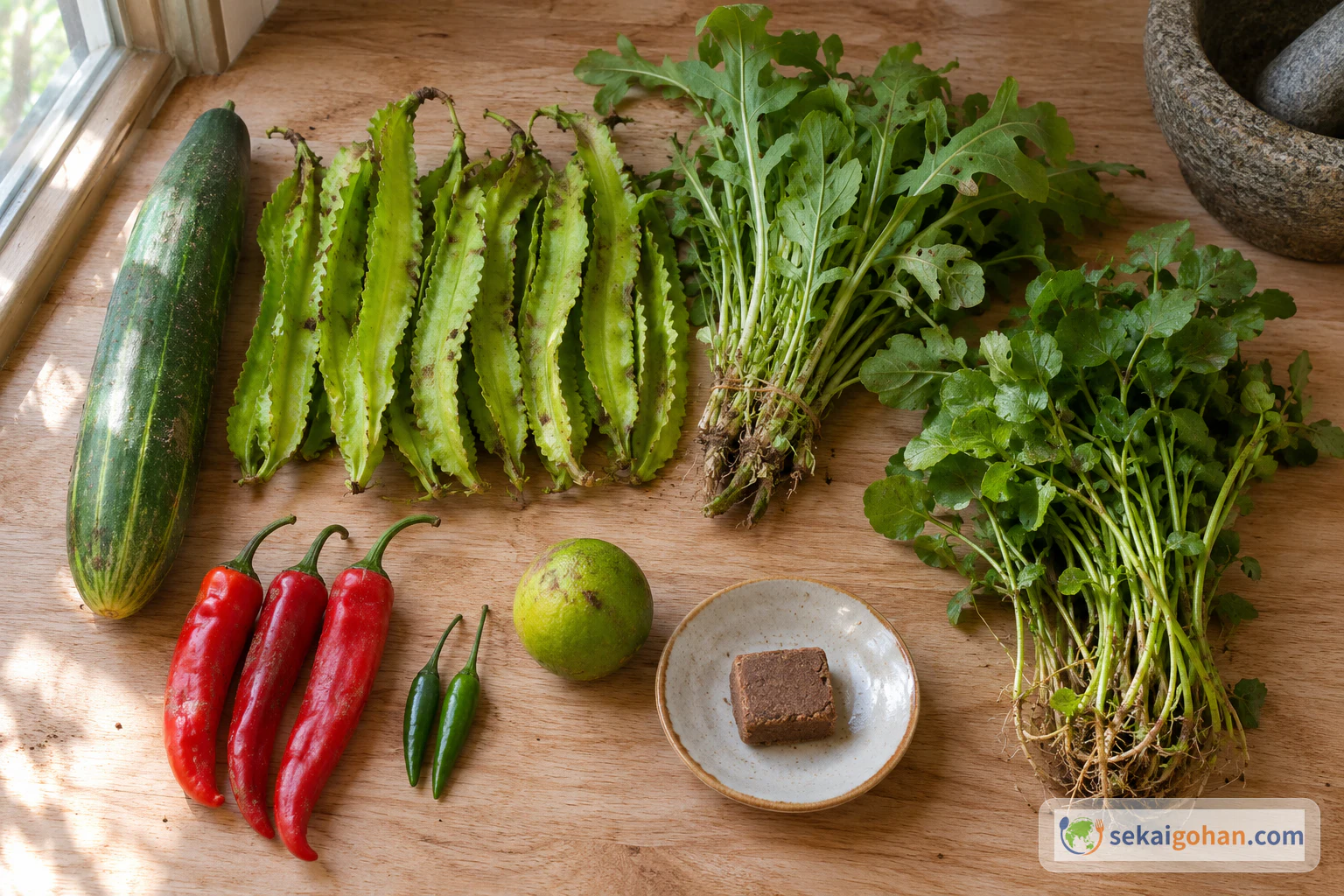
The vegetables are a side for four. The sambal makes enough for four to five people to dip into. There is no oil, salt or sugar in the list. The salt comes from the belacan.
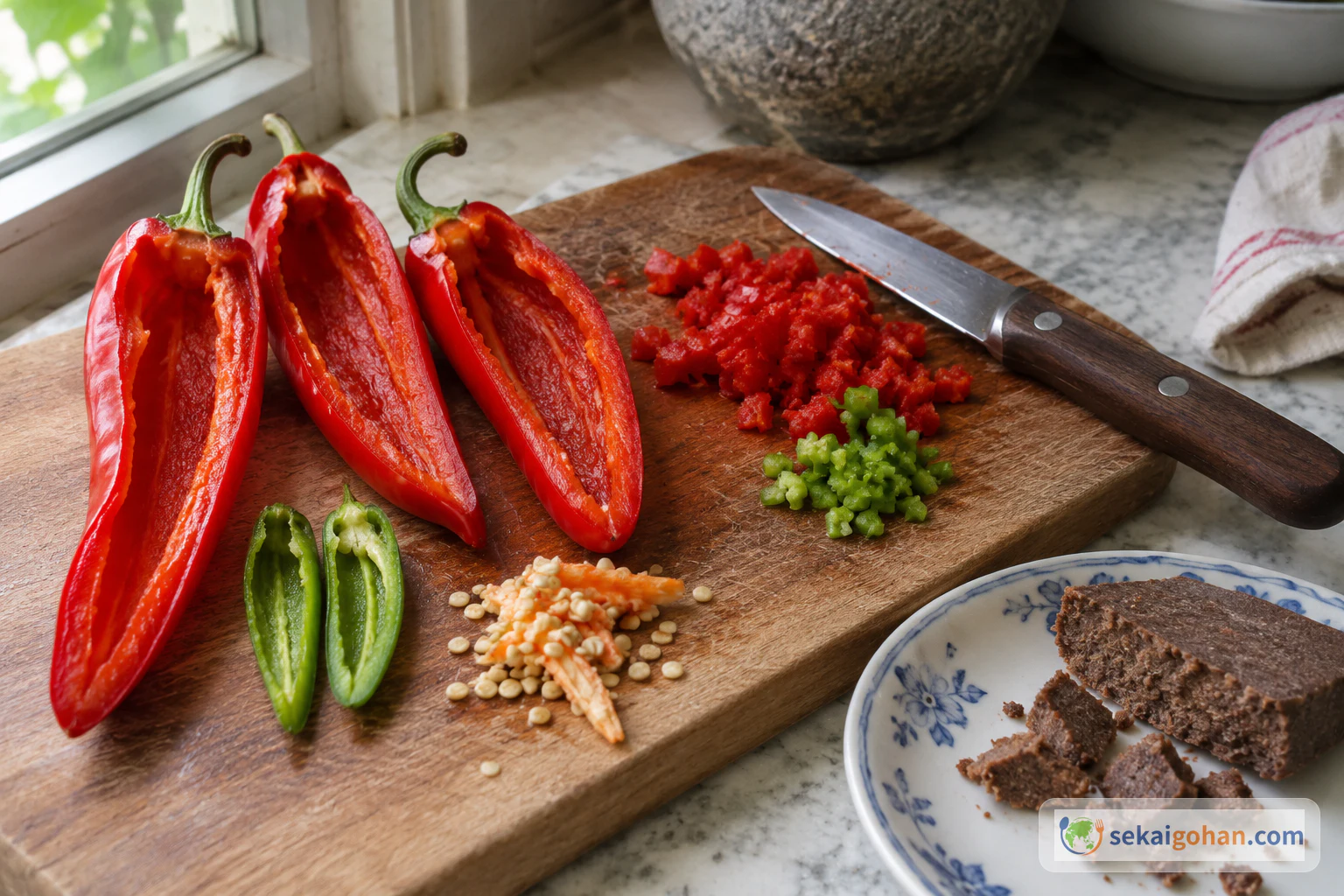
The vegetables only need to be clean, cold and dry. All the effort goes into toasting the belacan and pounding the chillies, so keep those amounts as given and adjust heat only through the bird's eye chillies.
Belacan is made from shrimp, so it contains crustacean shellfish. Winged beans and petai are legumes. Leave out arugula or watercress for anyone who reacts to them. Check the label of the belacan you buy for its ingredients and allergen statements.
Equipment
- Stone mortar and pestle
- Small frying pan
- Spatula
- Salad spinner or a clean kitchen cloth
- Colander
- Clean chef's knife, paring knife and cutting board
- Small bowl for the sambal
- Large platter
Choosing and Substituting
Buy firm, solid belacan, the kind sold as a block, at a Southeast Asian grocer or online. Salt and fermentation differ a lot between brands, so follow the label for how to store it once opened. Belacan is always a bought ingredient here; do not try to ferment shrimp paste at home. Winged beans turn up at Southeast Asian grocers. In Japan they have long been grown in Okinawa, where they are called uriizun. They are a tropical Asian plant, harvested when the pods reach 4 to 6 inches (10 to 15 cm), and they taste somewhere between snow peas and green beans.
Ulam raja (Cosmos caudatus) and pegaga (Centella asiatica) are not commonly sold as food in Japan. Do not hunt for an exact match. Aim instead for the three layers the plate needs: something green and fresh, something bitter, something that crunches.
| On the Malaysian plate | Swap abroad | What changes |
|---|---|---|
| Ulam raja | Arugula | Bitter and peppery; the aroma has a different character |
| Ulam raja | Shiso or garland chrysanthemum (shungiku) | Closer in feel, yet still a different scent |
| Pegaga, daun selom | Watercress | Keeps the fresh, waterside green |
| Winged beans | Snap peas, blanched first | Softer, sweeter bite and no four-cornered shape |
| Petai | Leave it out | The plate loses its strongest bitter note |
| Calamansi juice | Lime | Either one works; the amounts are in step 5 |
Keep the cucumber and the belacan. Without them the plate stops tasting Malaysian, and they are the easiest parts to find.
Method
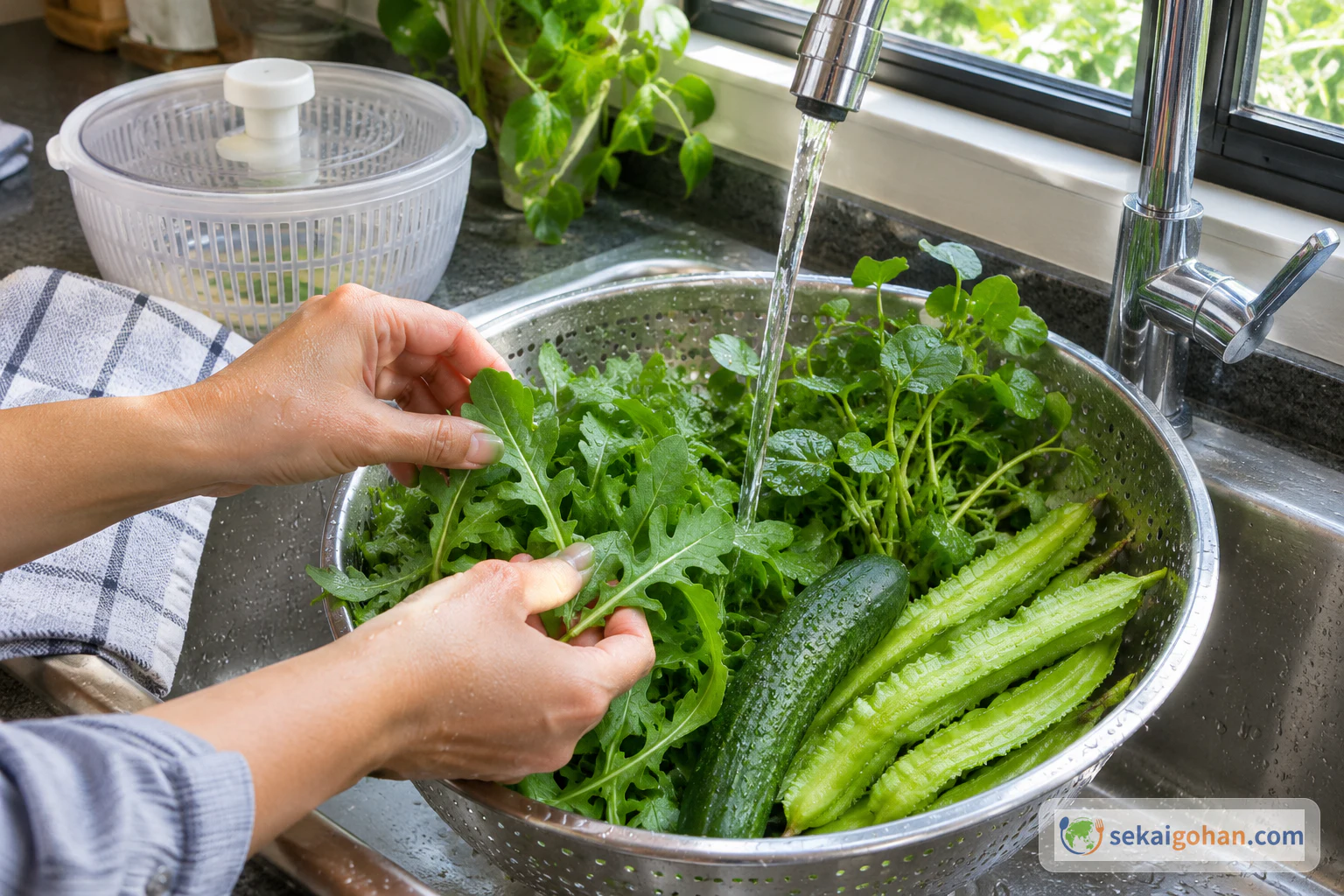
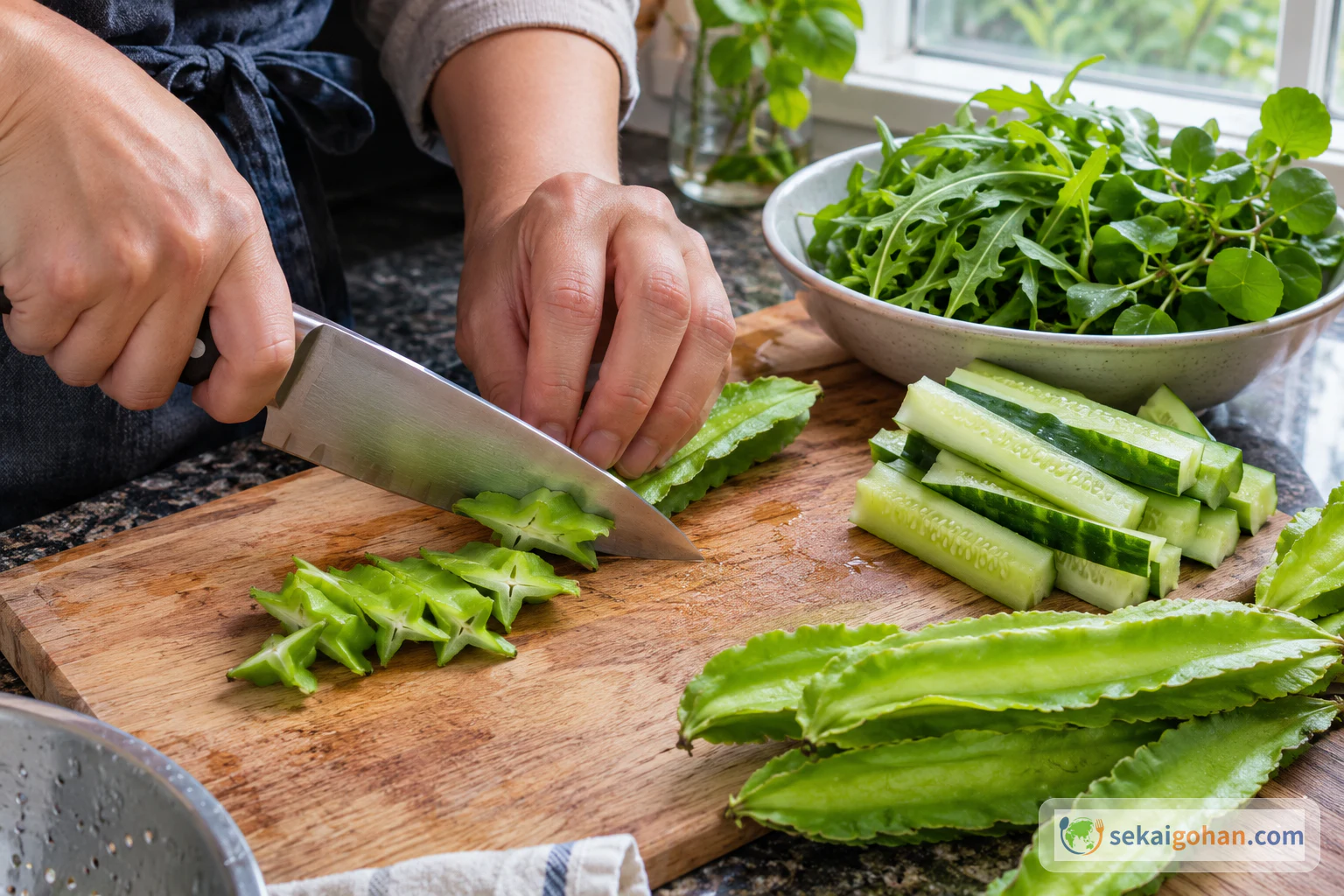
Get the vegetables washed, cut and dried first, then cover them and keep them cold while you make the sambal. The sambal comes together fast, in about five minutes of prep and five of cooking. Pound it last, just before eating, because the lime smells brightest right after it goes in.
Eating the vegetables raw is the Malaysian custom, and blanching only the portion you will eat is just as normal. For children, older people, anyone pregnant and anyone whose immunity is low, skip the raw vegetables or cook them. Toast the belacan in a dry pan with no oil, and turn the heat down as soon as it smokes. Keep your fingers clear of the blade when you slice the narrow winged bean pods on the diagonal.
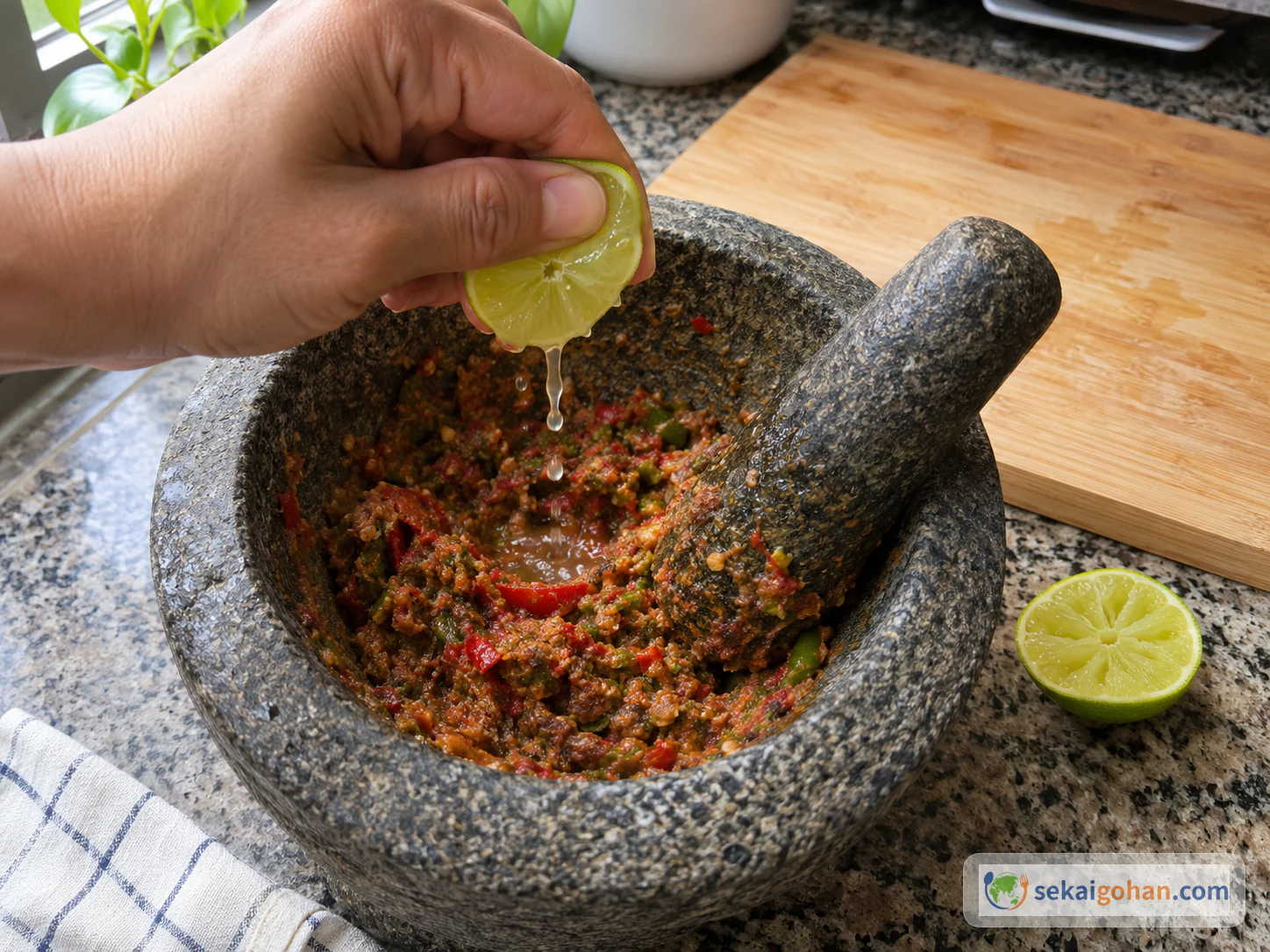
Stop pounding while the paste still has texture. A sambal ground perfectly smooth loses the bite that makes each dip taste different from the last.
Liquid wilts the leaves within minutes. Keeping the sambal in its own bowl keeps the vegetables crisp from the first piece to the last.
When It Goes Wrong
| What you see | Why | What to do |
|---|---|---|
| The sambal tastes bitter | The belacan scorched | Make it again. Lime does not cover a burnt taste. Next time, lower the heat at the first smoke |
| The sambal is too hot | Too many bird's eye chillies for your table | Take a smaller amount on each piece today, and use fewer bird's eye chillies next time |
| The plate turns watery | The vegetables were not dry enough | Drain and pat them dry again just before serving, and dip rather than toss |
| The sambal tastes flat or under-salted | Belacan brands differ in salt | Add salt a little at a time. More belacan adds salt, and more fermented smell with it |
| Someone at the table is wary of raw vegetables | Children, older people, pregnancy, low immunity | Blanch just their portion briefly, or serve them a cooked dish instead |
Serving, Variations and Storage
At the table
Ulam belongs beside rice and the main dishes. It works especially well next to grilled fish such as ikan bakar, and next to fried dishes, where the raw crunch and the sharp sambal cut through the richness. Set the plate where everyone can reach it, because people keep going back for one more piece.
Variations
- Add budu. Put a small dish of this fermented fish sauce next to the sambal. It turns the salt toward fish rather than shrimp.
- Add cincalok. This salted, fermented small shrimp brings a sourer, sharper dip. It is shrimp too, so the allergen warning still applies.
- Blanch some of the plate. Blanch winged beans or okra briefly and set them beside the raw vegetables. You lose some crunch, and you gain a softer bite. About half of the Selangor adults surveyed eat some of their ulam partly cooked or boiled.
- Toward nasi ulam. Herbs chopped and mixed into rice make a separate dish of their own. Chopping this platter into rice will not give you the same thing.
Storage
Eat cut vegetables soon, since bacteria multiply quickly at the cut surfaces. Put any leftovers in a clean, covered container and refrigerate them promptly. Do not carry them over to the next day. Cover the sambal and refrigerate it, then finish it the same day, while the fresh-pounded aroma is still there. Store the unopened and opened belacan as its label says.
Frequently asked questions
Can I use a blender instead of a mortar?
Pound by hand when you can. A blender spins the paste smooth very quickly, and the coarse middle texture is the point. Any mortar and pestle you already own will do, as long as you stop while the sambal still has bits in it.
Can I make the sambal without belacan, or with another shrimp paste?
Without belacan, the sambal loses its salt and its savoury depth, and it becomes plain chilli and lime. Other fermented shrimp pastes differ in salt and fermentation, so do not swap one in at the full 10 g. Start with less and taste.
Are winged bean flowers edible?
Yes. The flowers can go raw into a salad, so if you grow winged beans, add a few to the plate. The pods also cook well beyond ulam: boiled for salads and dressed dishes, in stir-fries and as tempura.
Lime or calamansi, which is better?
Either works. Calamansi is smaller and more fragrant, and it is common in Malaysia. Lime is easier to find abroad. Add the juice after pounding and stir it in, so the citrus stays bright.