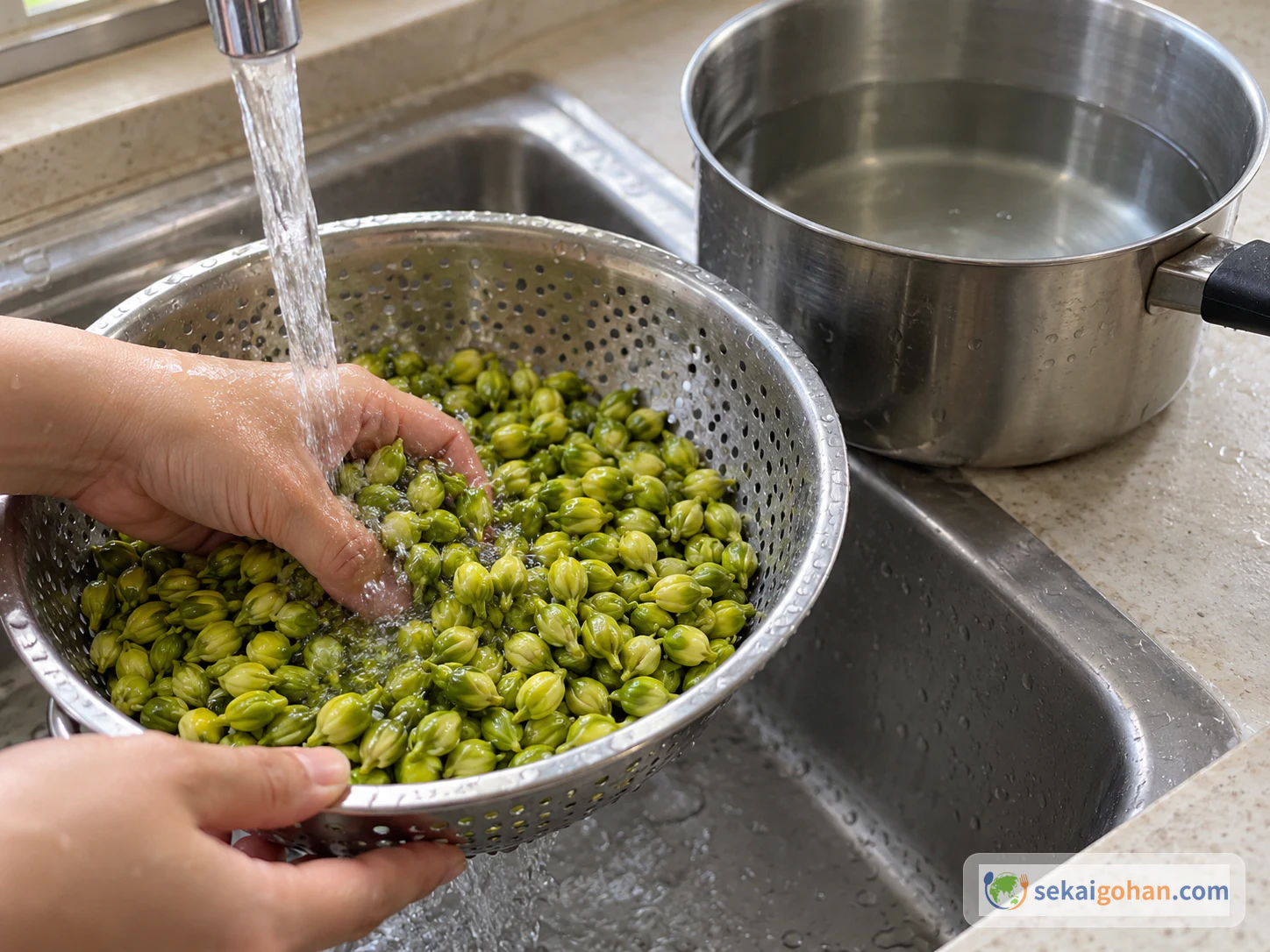
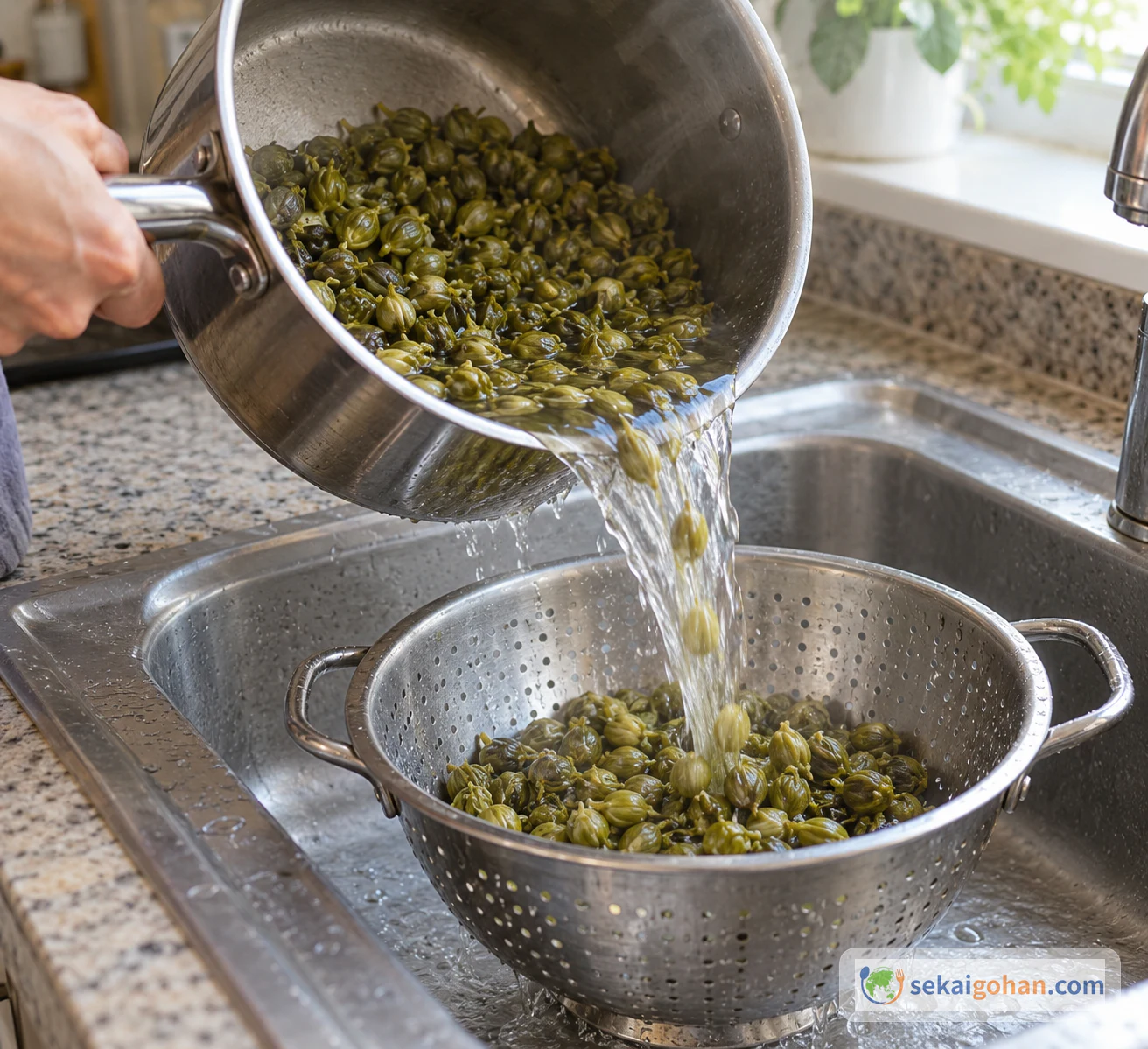
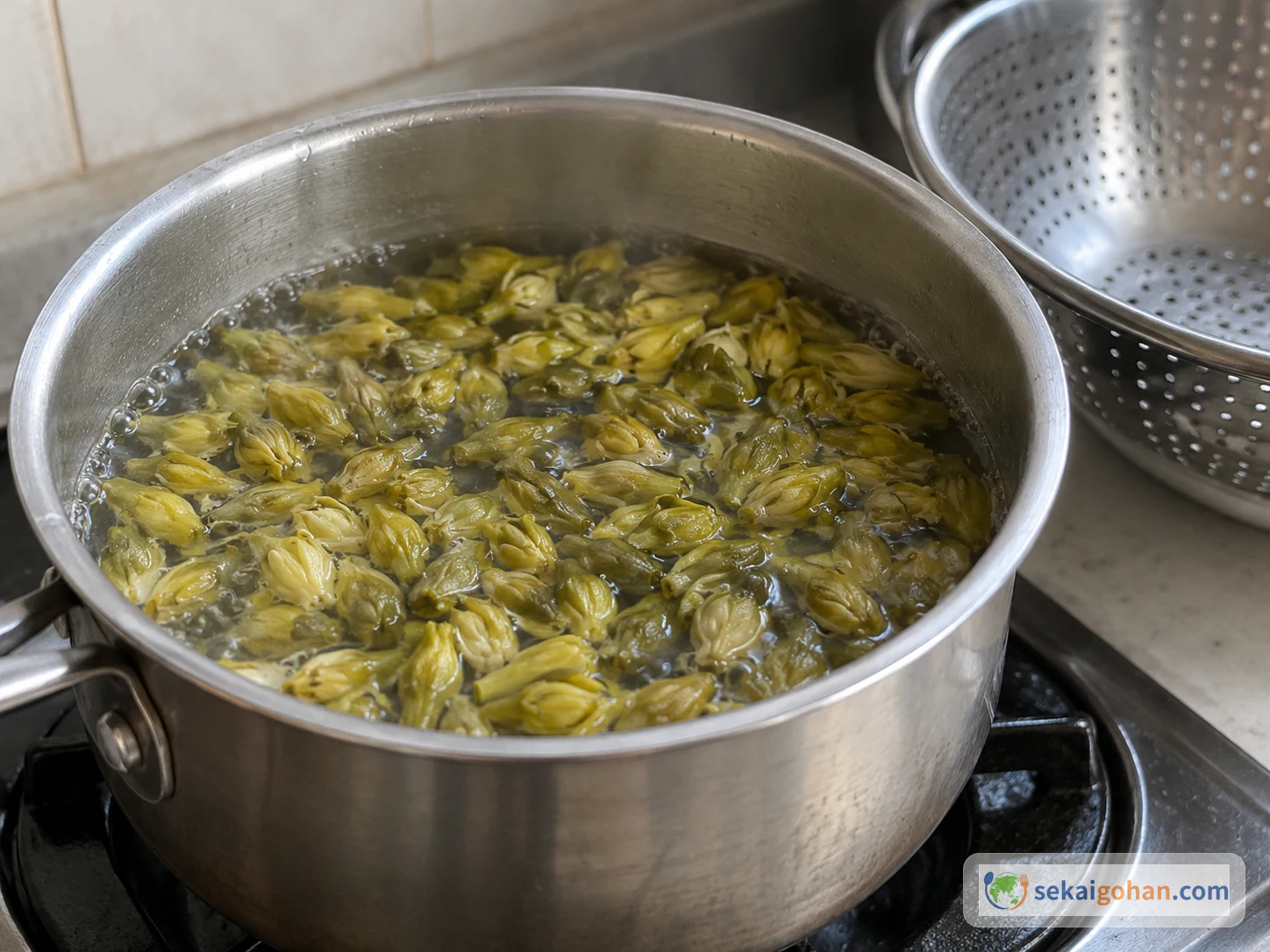
Around the full moon of Tazaungmone, mezali buds appear in the markets of Upper Myanmar, sold fresh and also already blanched in hot water. At home they go into a pot of boiling water small, green and tightly closed, and they come out soft, still carrying a bitterness that boiling tames but does not erase. Mezali phu thoke tosses those buds with boiled potato, raw onion, ground peanuts, roasted sesame, garlic fried in oil and the juice of two lemons.
It is a side dish, eaten in small helpings with a cup of hot tea. Each bite is tart and nutty, sharp from the onion, with the bitter green note of the buds running underneath.
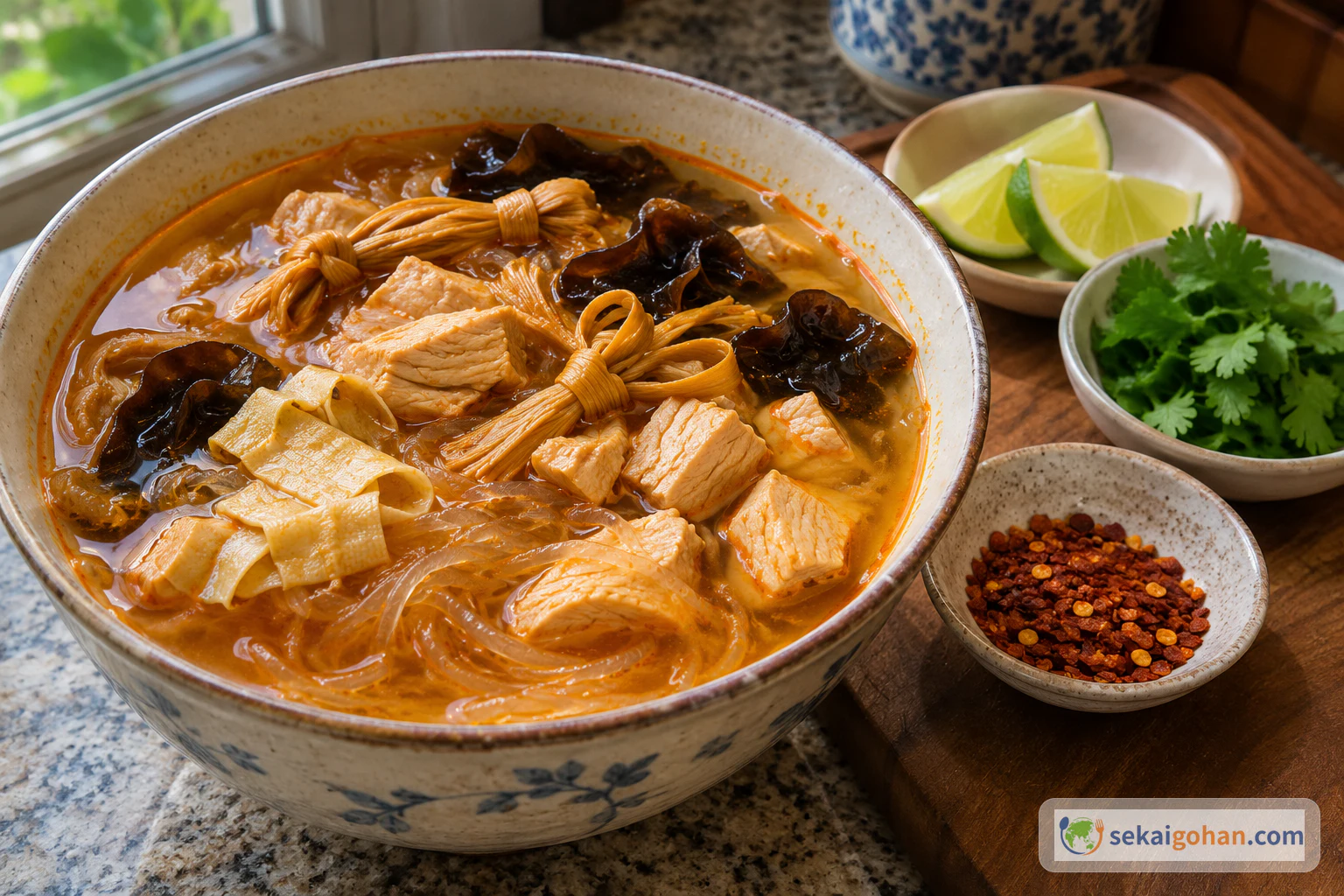
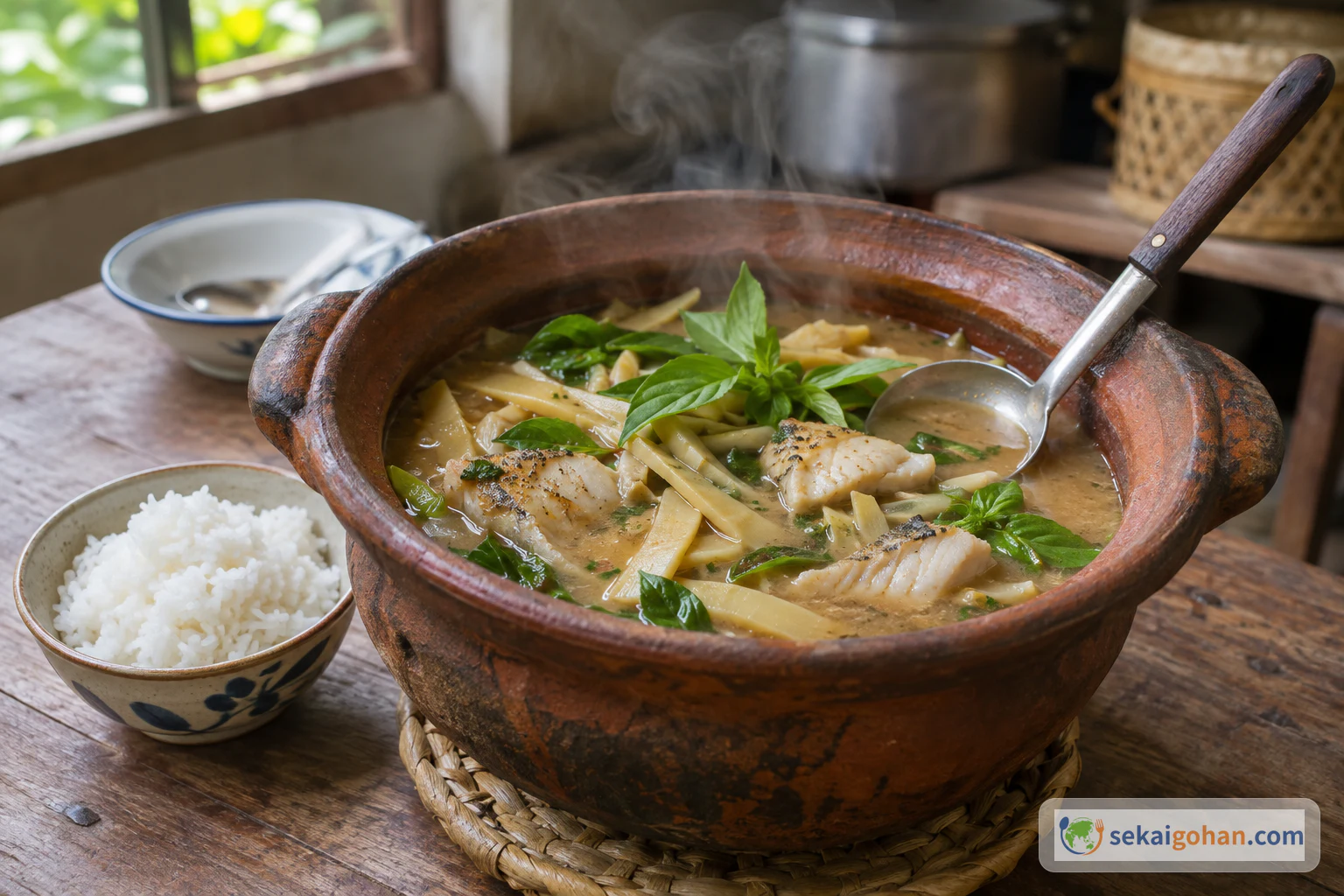
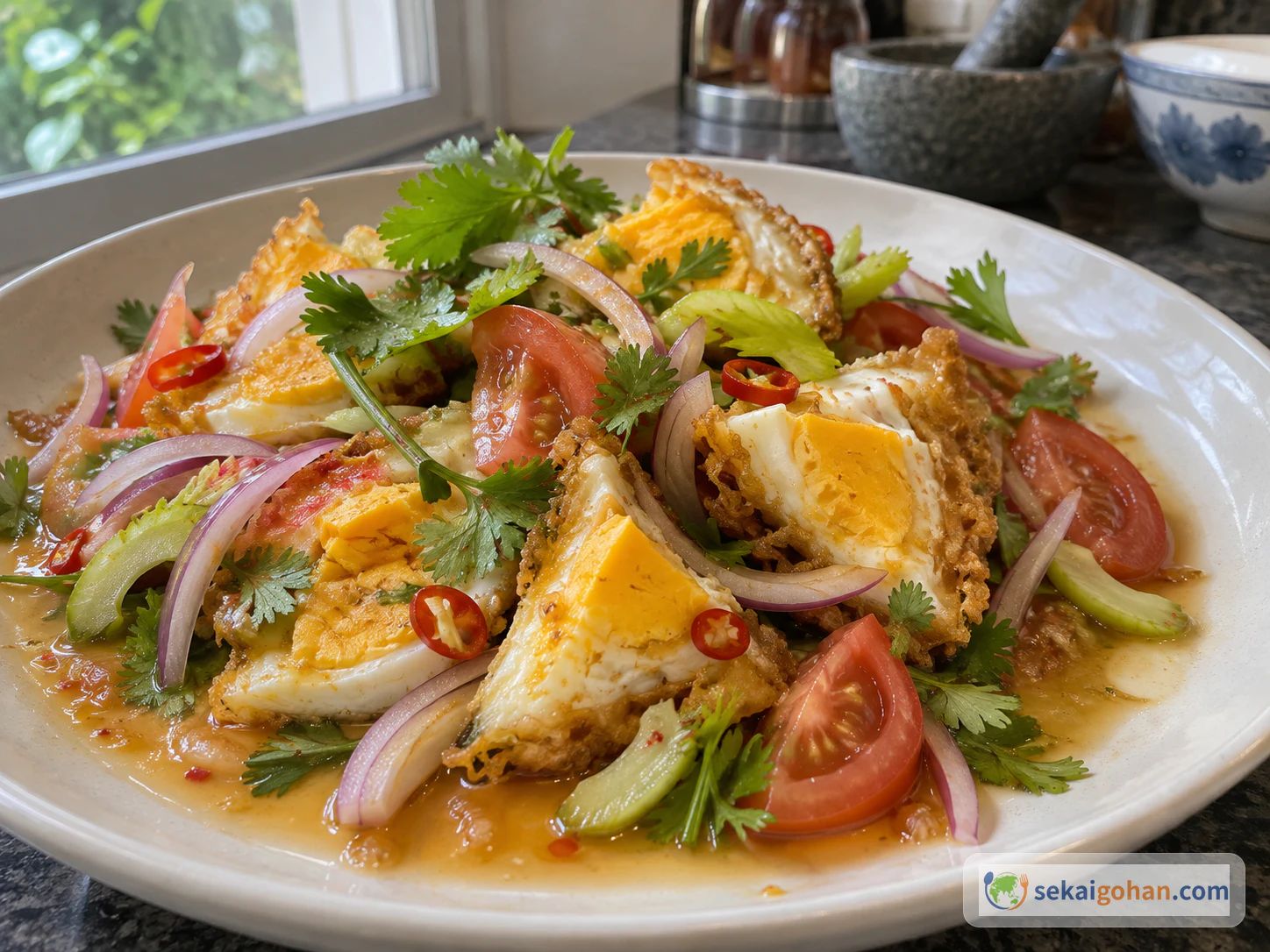
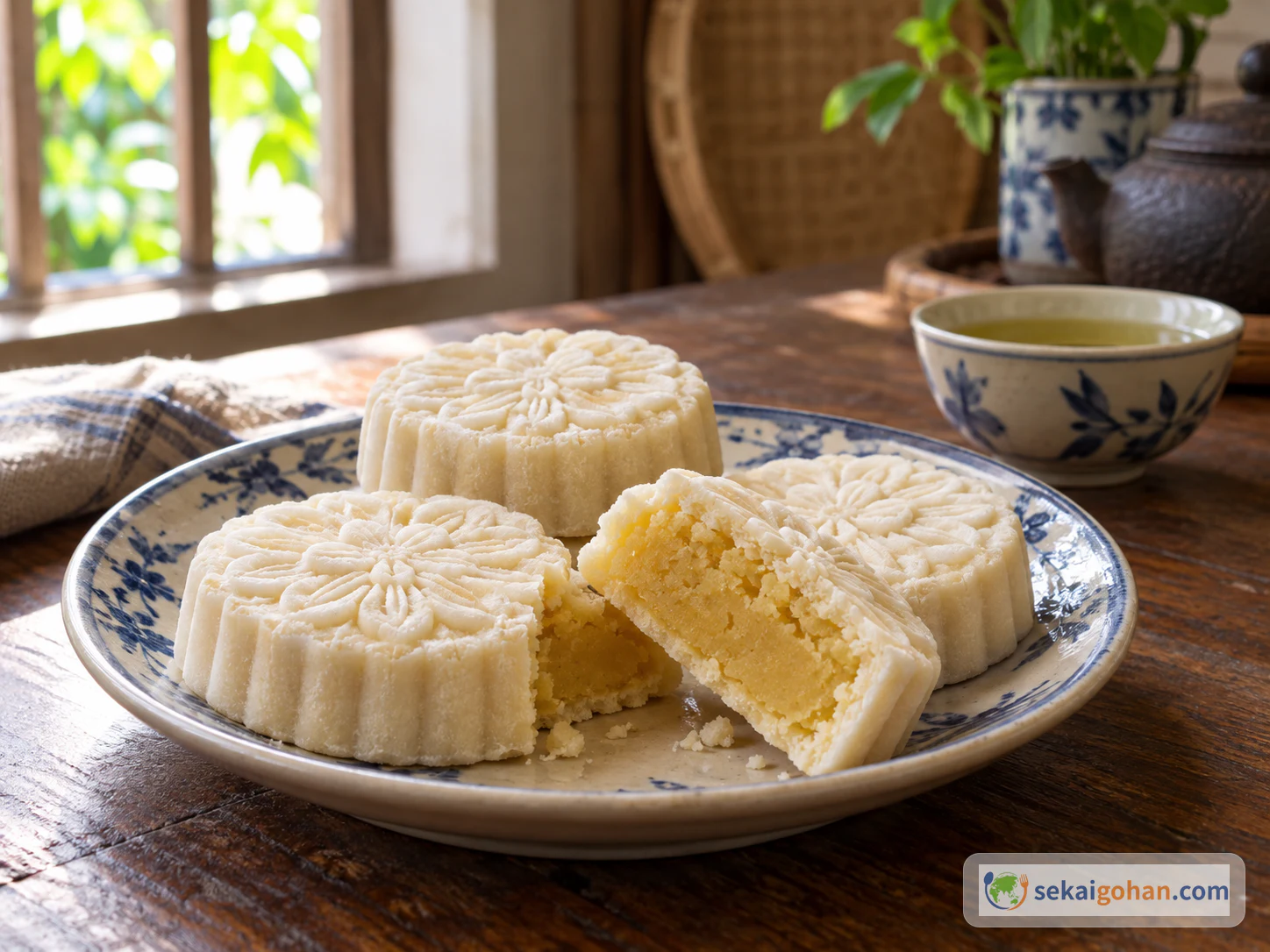
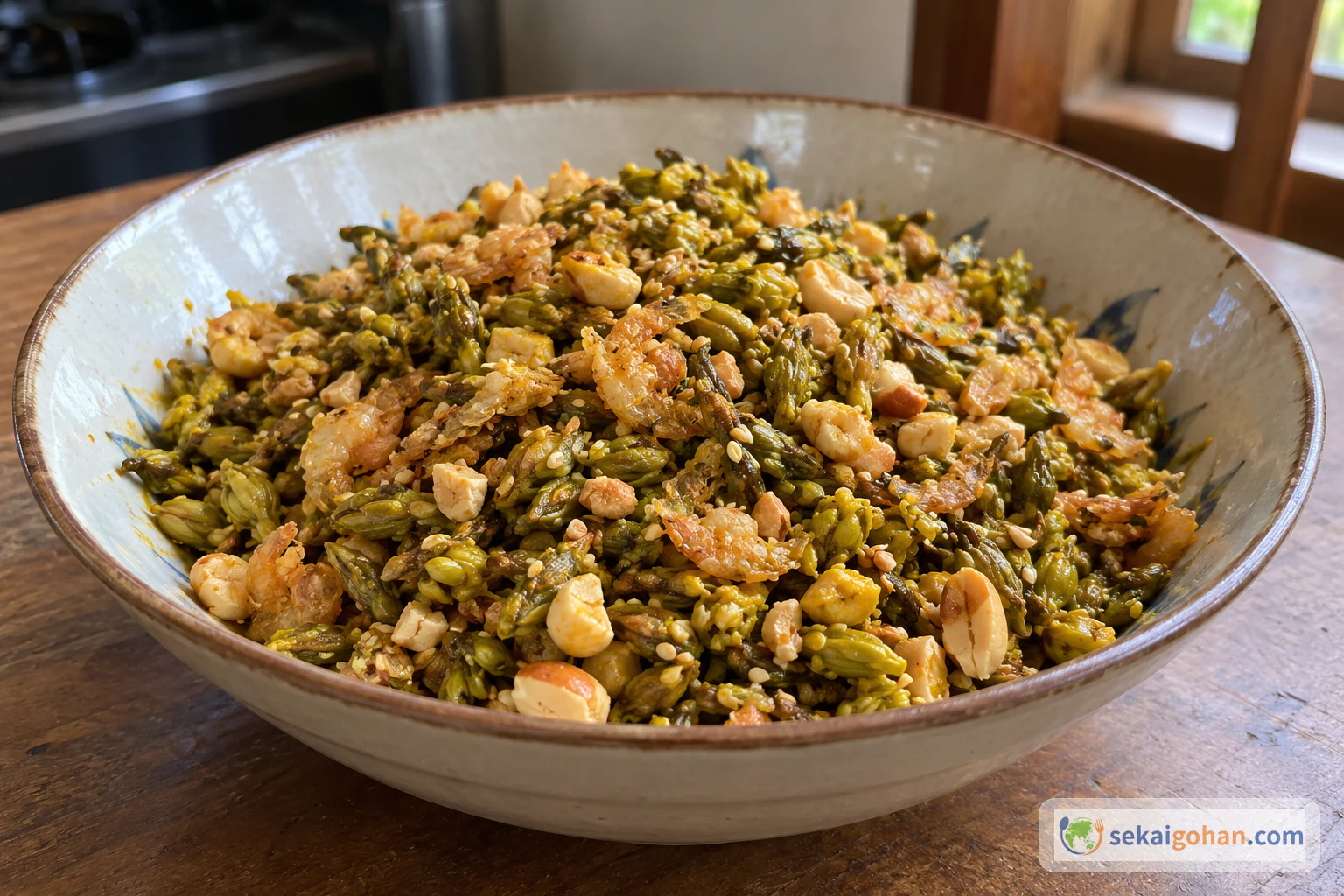
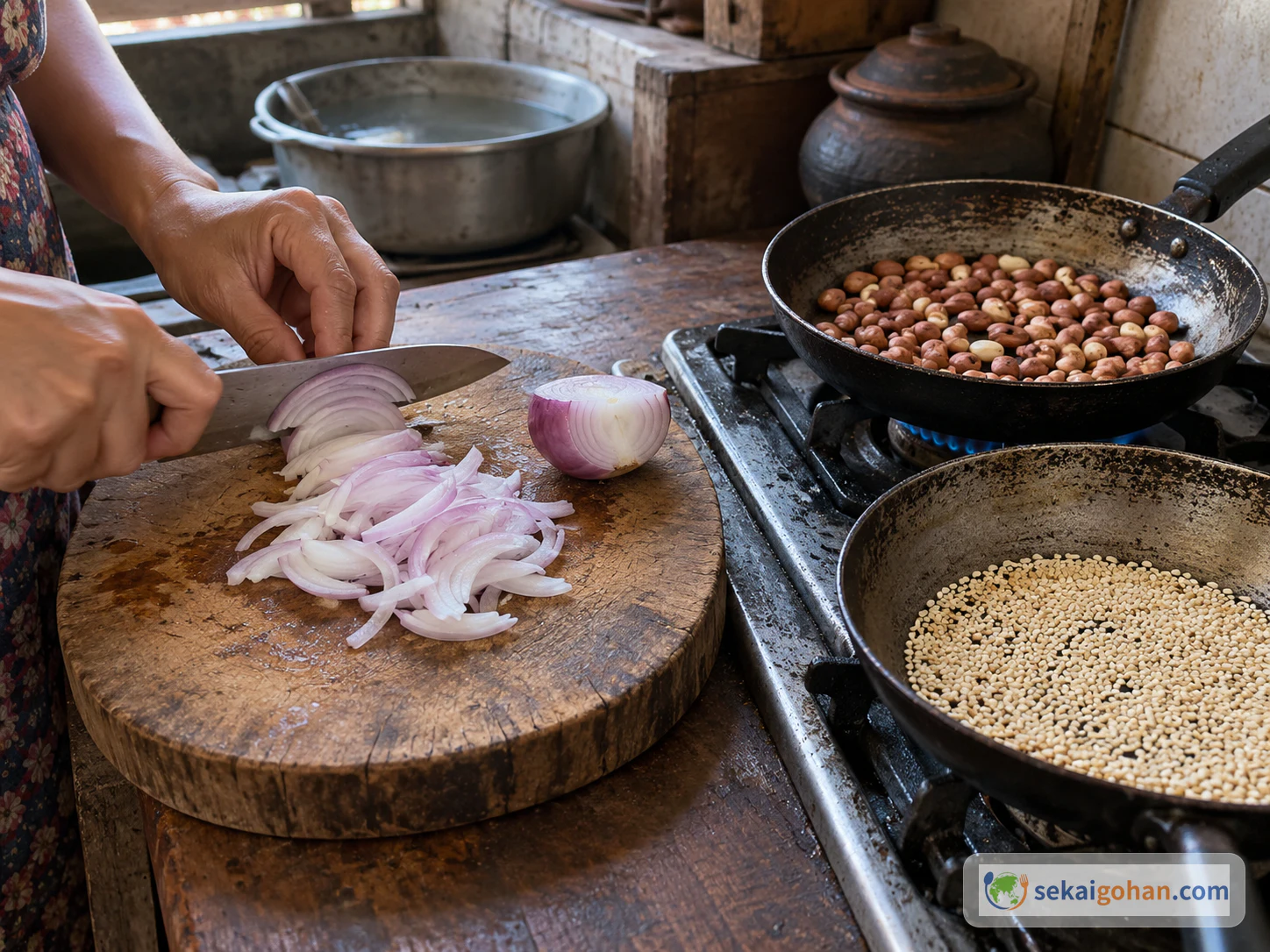
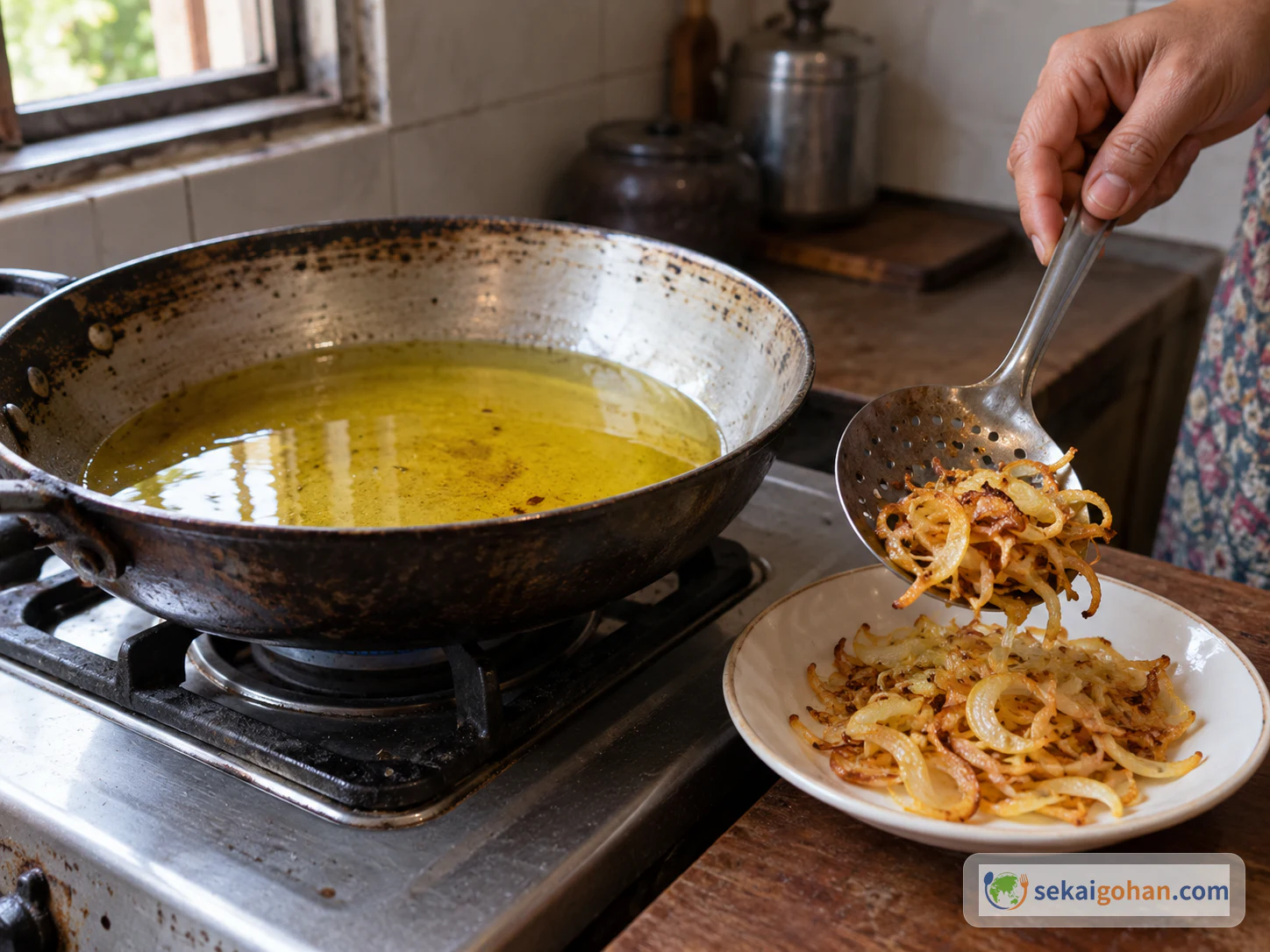
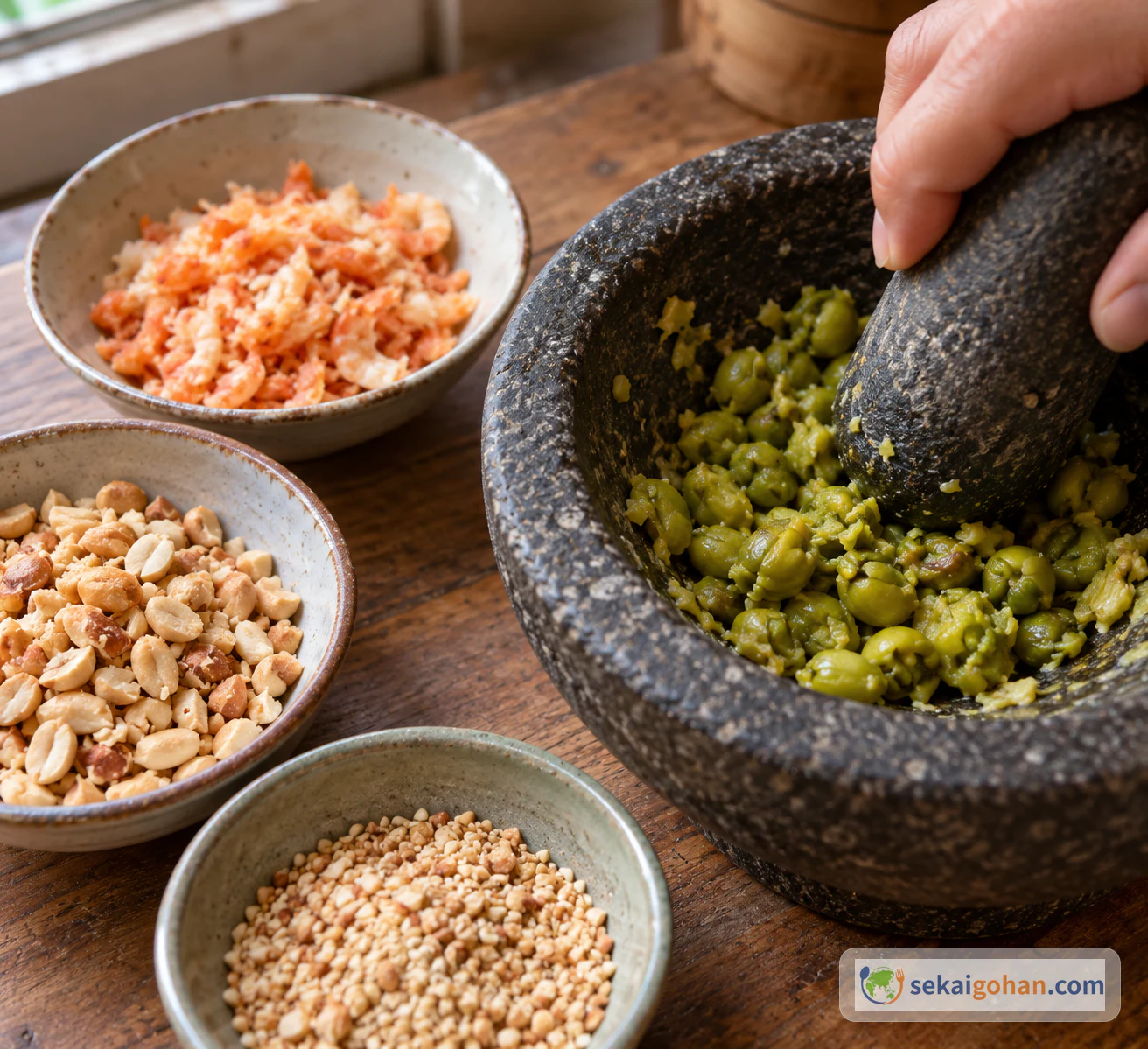
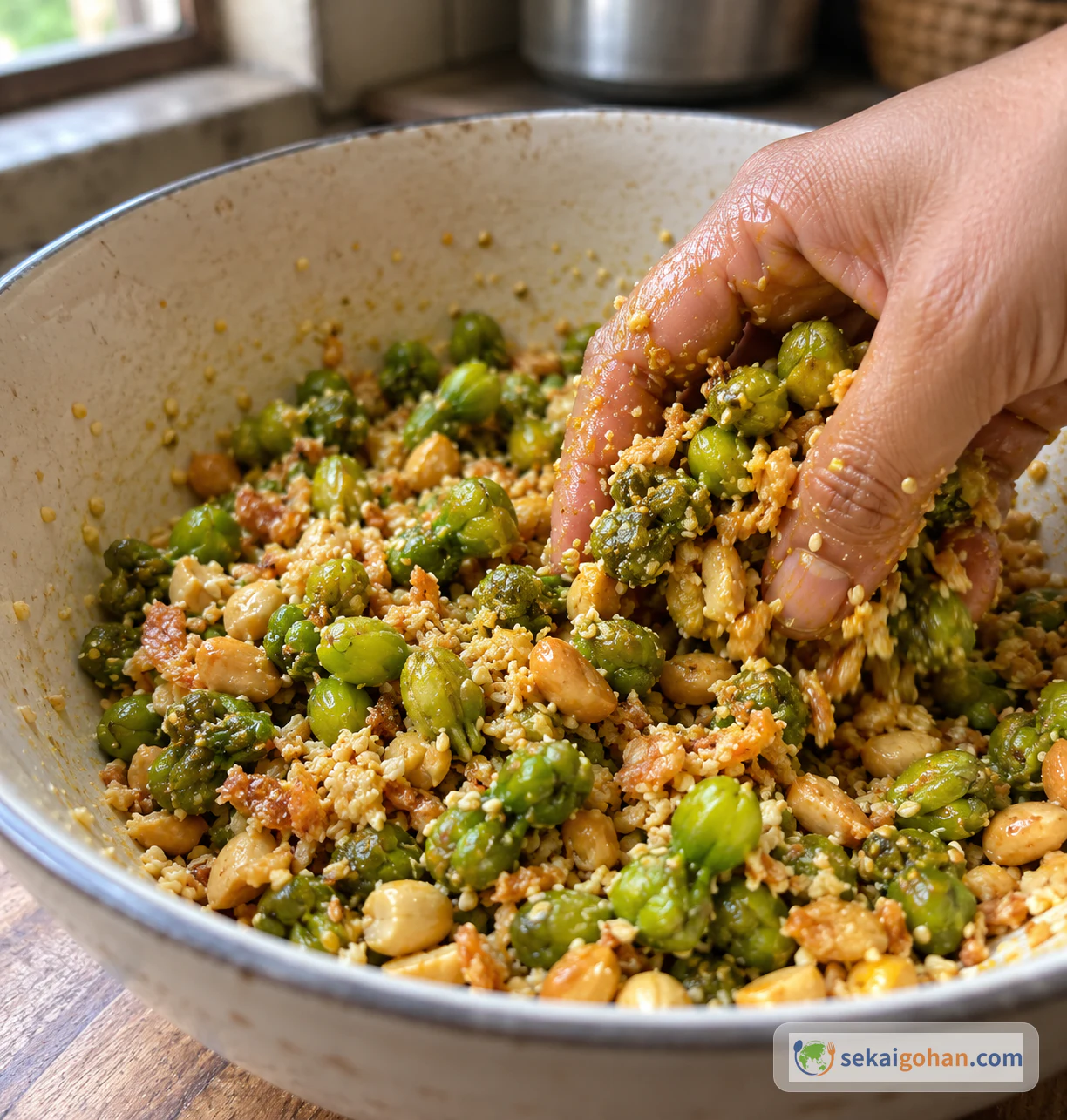
The photographs on this page show the dried-shrimp and turmeric-onion version described under Variations, not the potato-and-lemon salad in the main recipe.
Mezali Buds, the Full Moon and the Burmese Salad Bowl
The name says what is in the bowl. Mezali is the Burmese name of the tree Senna siamea, long filed under its older name Cassia siamea; phu is the bud, and thoke is the Burmese word for a tossed salad, the same family that gives Myanmar lahpet thoke. In Burmese script the dish is written မယ်ဇလီဖူးသုပ်. The salad is made from the flower buds alone, picked before they open.
In English the dish is usually called cassia flower bud salad, and that word trips people up. The "cassia" here is the mezali tree, Senna siamea. Cassia bark, cinnamon sticks and the dried cinnamon buds sold as a spice come from a different plant and have nothing to do with this salad.
The buds are a seasonal food. In Tazaungmone, the Burmese month of festivals and merit-making, cassia bud snack fairs are held and the salad is tied to the full-moon day. In season, the markets of Kyaukse, south of Mandalay, sell the buds two ways, fresh and blanched in hot water. You can read more about the country's table on our Myanmar page.
Every household dresses the buds a little differently. The version below adds boiled potato and lemon, which turns the salad into something soft and bright that holds its own on the plate. Market cooks in Kyaukse dress the boiled buds with fried oil, thinly sliced onion, dried-shrimp powder, peanuts and sesame. A restaurant in Taungoo serves the dish with bean powder, dried prawn, garlic oil, lime juice and fish sauce. The buds are the constant, and everything around them moves.
Ingredients (serves 2)
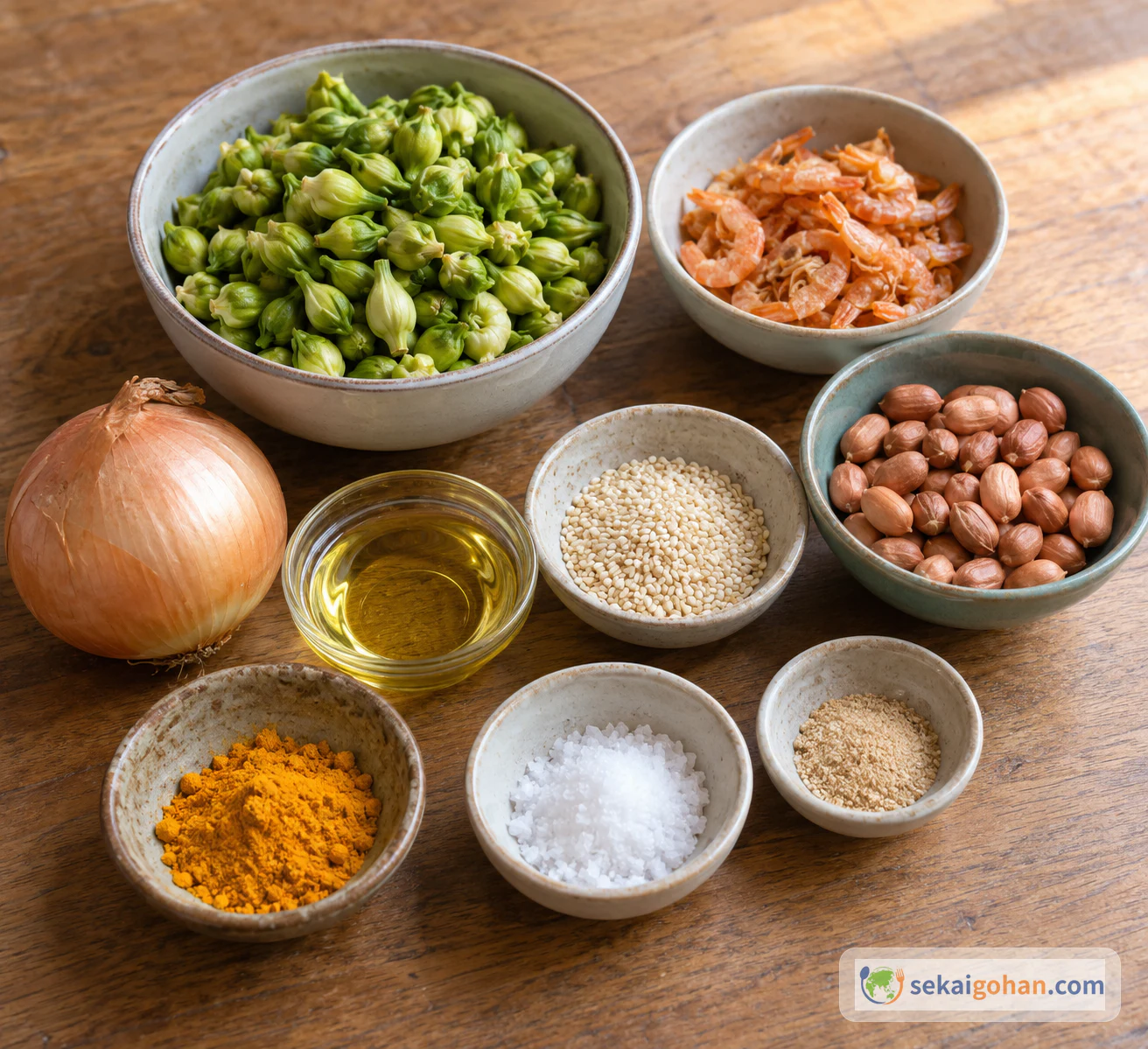
These amounts are our home guide for two people as a side dish, and cooks who know the dish adjust them by taste. The lemon and salt are the two to move first.
Cut the onions small, then rinse them under cold water and drain well. Rinsing takes the harshest edge off raw onion so it stays crisp without shouting over the buds.
This salad contains peanuts and sesame. The dried-shrimp version under Variations also contains shellfish, and its seasoning powder should be checked on the package.
Equipment
- Two saucepans, one for the buds and one for the potatoes
- A colander
- A dry frying pan for roasting the peanuts and sesame
- A small pan for frying the garlic
- A mortar and pestle for the peanuts
- Knife and cutting board
- A large mixing bowl and a small heatproof bowl
Choosing the Buds and What Can Change
There is no stand-in for the buds. Buy them only from a seller that sells them for eating, labelled mezali buds or Senna siamea flower buds. The method below starts from fresh buds; the blanched buds sold in Myanmar markets are already partly cooked.
Buy only buds sold as food and named as mezali or Senna siamea flower buds. Never use wild-picked or ornamental plants, and never identify the tree yourself from a photo. Senna leaves, dried flower teas and capsules are different products and do not belong in this salad. Serve it as a side dish now and then, not every day. Anyone who is pregnant or breastfeeding, has liver disease or takes regular medication should ask a doctor before eating it. The boiling times in this recipe are for taste and texture; they are not a safety measure.
Everything else is easy to find, and each swap changes something you can taste:
| Ingredient | Swap | What changes |
|---|---|---|
| Lemons | Lime juice | Works the same way; add it gradually and taste |
| Onions | Fewer onions | A milder, gentler salad with more room for the buds |
| Raw peanuts | Peanuts already roasted | Skip the roasting and grind them |
| Potatoes | Leave them out | A sharper salad where the buds and nuts lead |
Method
The buds and the potatoes boil side by side, and that is where the hands-off time lives. Roast the nuts and cut the onions while the pots bubble, then fry the garlic so its oil has time to cool before the toss.
When It Goes Wrong
| What you see | Why | What to do |
|---|---|---|
| The buds are still sharply bitter | They had only one boil | Before dressing them, give them the second boil in fresh water |
| The garlic tastes acrid | The oil was too hot or the garlic went past pale gold | Start again with fresh oil over medium heat and pull it out earlier |
| The onion overpowers everything | Raw onion went in unrinsed, or too much of it | Rinse and drain it well; next time use fewer onions |
| The salad tastes flat | Not enough salt or lemon | Add salt a pinch at a time, then a little more lemon, tasting between each |
| The peanuts taste burnt | The pan was too hot | Roast over medium heat, keep them moving and tip them out as soon as they smell toasty |
Serving and Variations
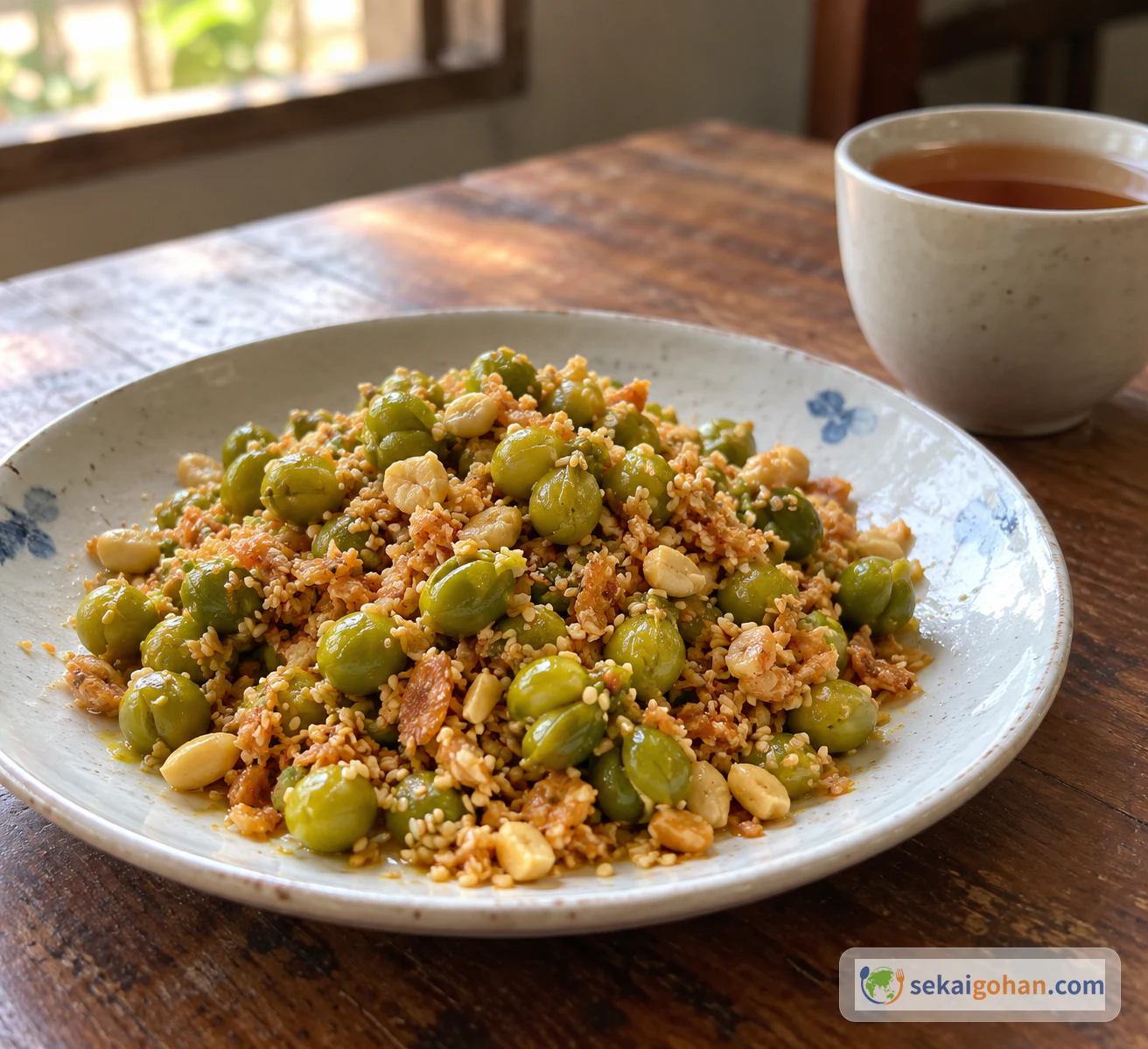
Serve the salad on small plates beside a cup of hot tea. It belongs to the season of the Tazaungmone full moon, and a plate of it at that time of year marks the month the way the bud fairs do.
The dried-shrimp and turmeric-onion version
This version leaves out the potatoes, lemon and garlic and builds a savoury, golden salad instead. Put the rinsed buds in a pot about half full of water, boil, pour that first water away, then refill and keep cooking. Change the water until the buds are tender after the third change; stopping after the second keeps them more bitter. Fry thinly sliced onion with turmeric in oil until golden, lift the slices out and let the oil cool. Pound the dried shrimp, roasted peanuts and sesame coarsely, each on its own, and pound the buds lightly just to break them. Toss the pounded buds, shrimp, peanuts and sesame with the cooled oil, salt and a little seasoning powder, then taste and adjust. The shrimp brings a salty depth of the sea, and the turmeric oil turns the buds gold.
With green chili
For a salad with heat, slice fresh green chili thinly and mix it in at the end. It cuts through the oil and wakes up the bitterness of the buds.
The Taungoo restaurant style
Dress the buds with bean powder, dried prawn, garlic oil, lime juice and fish sauce. The dressing is built on bean powder, garlic oil, lime juice and fish sauce rather than potato and lemon.
Frequently Asked Questions
Can I use lime instead of lemon?
Yes. Use the juice of limes in place of the two lemons and add it gradually, tasting as you go. Lime gives the salad the same sour backbone.
What if I can only find blanched buds?
Blanched buds are sold in Myanmar markets alongside fresh ones, ready for salad. They have already been in hot water, and the boiling times in this recipe are written for fresh buds, so follow the seller's directions for blanched ones.
Can I make it without potatoes?
Yes. The market and dried-shrimp versions are made without them. The salad becomes sharper and more bud-forward. In the dried-shrimp version the buds are pounded lightly.