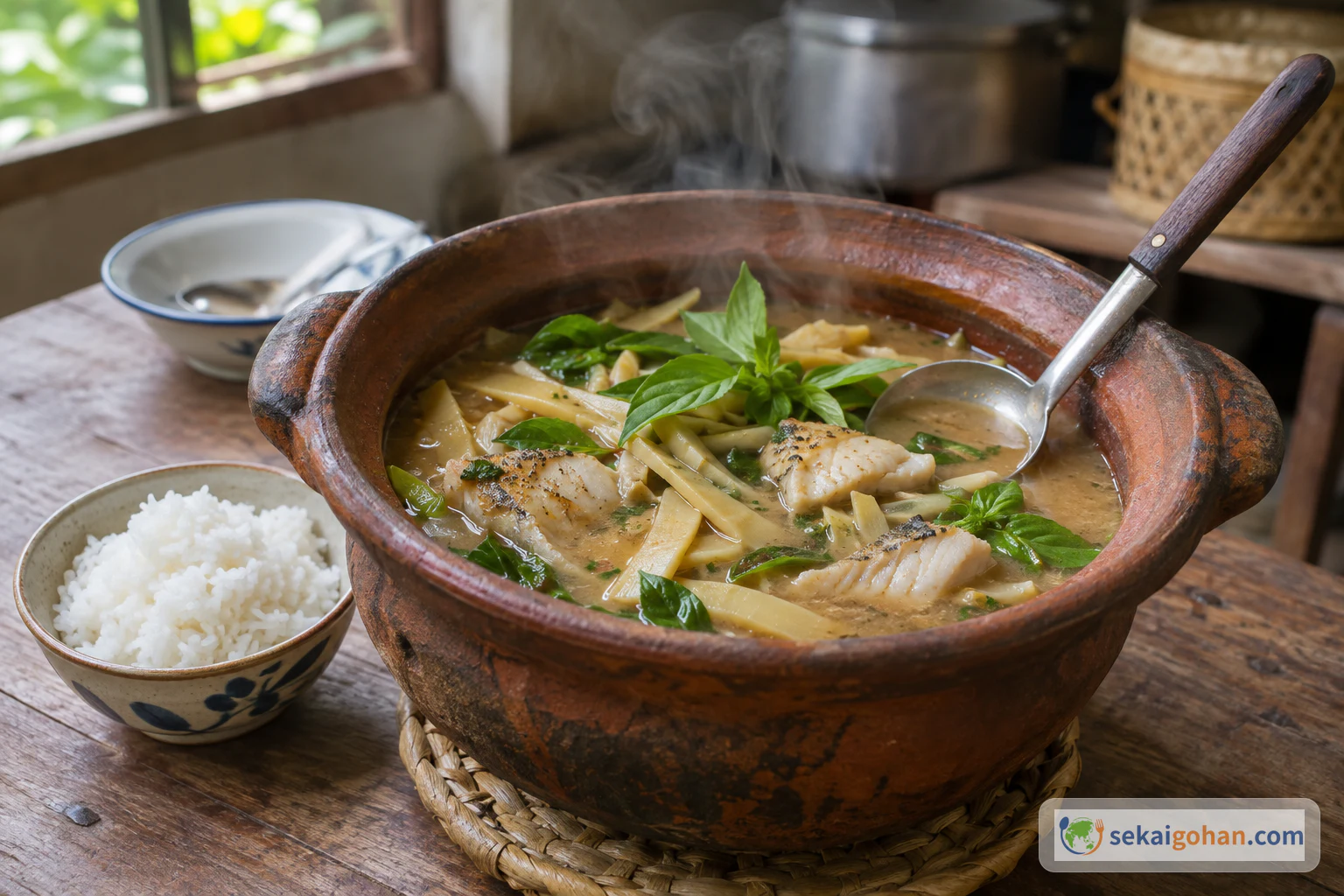
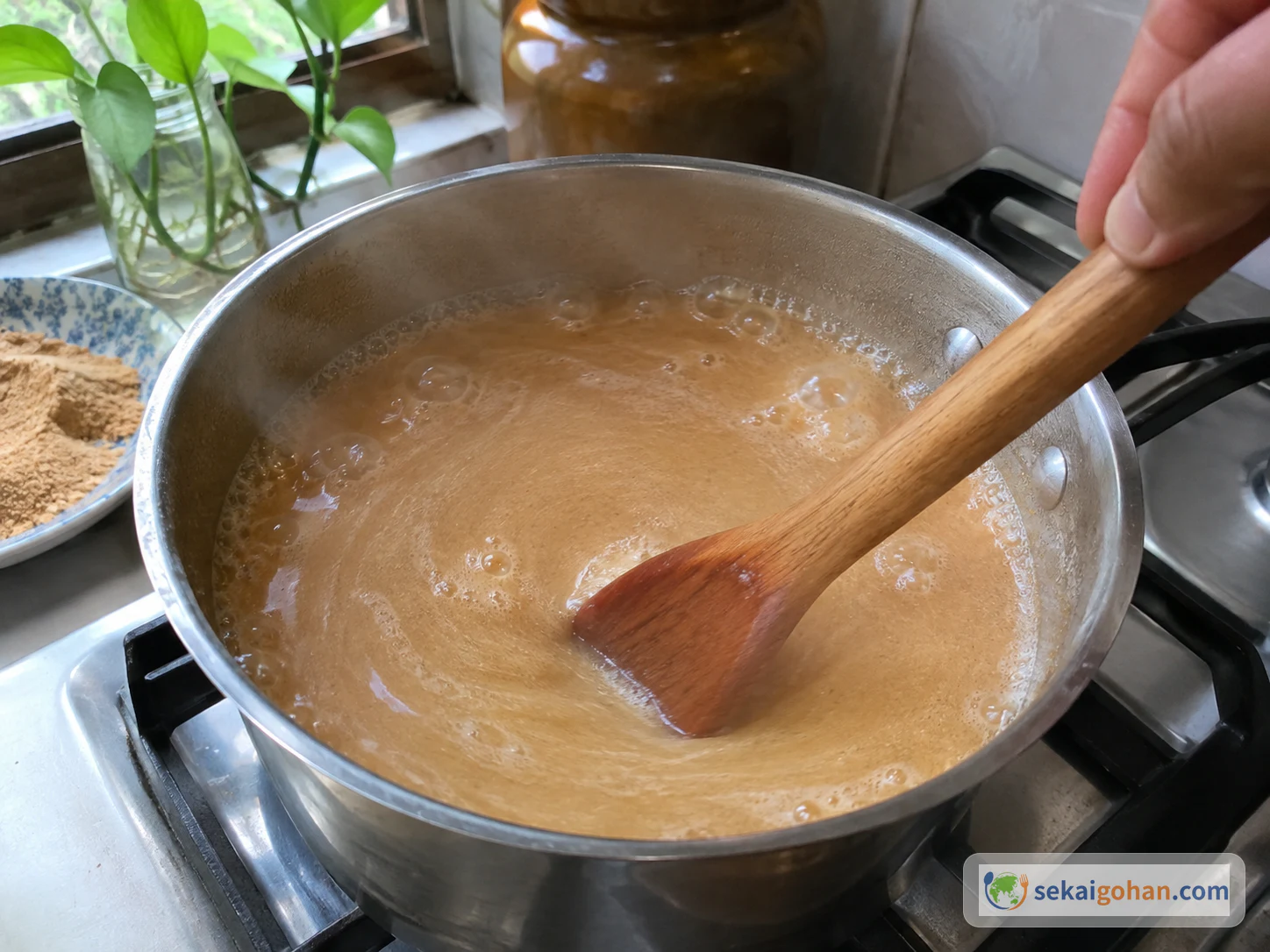
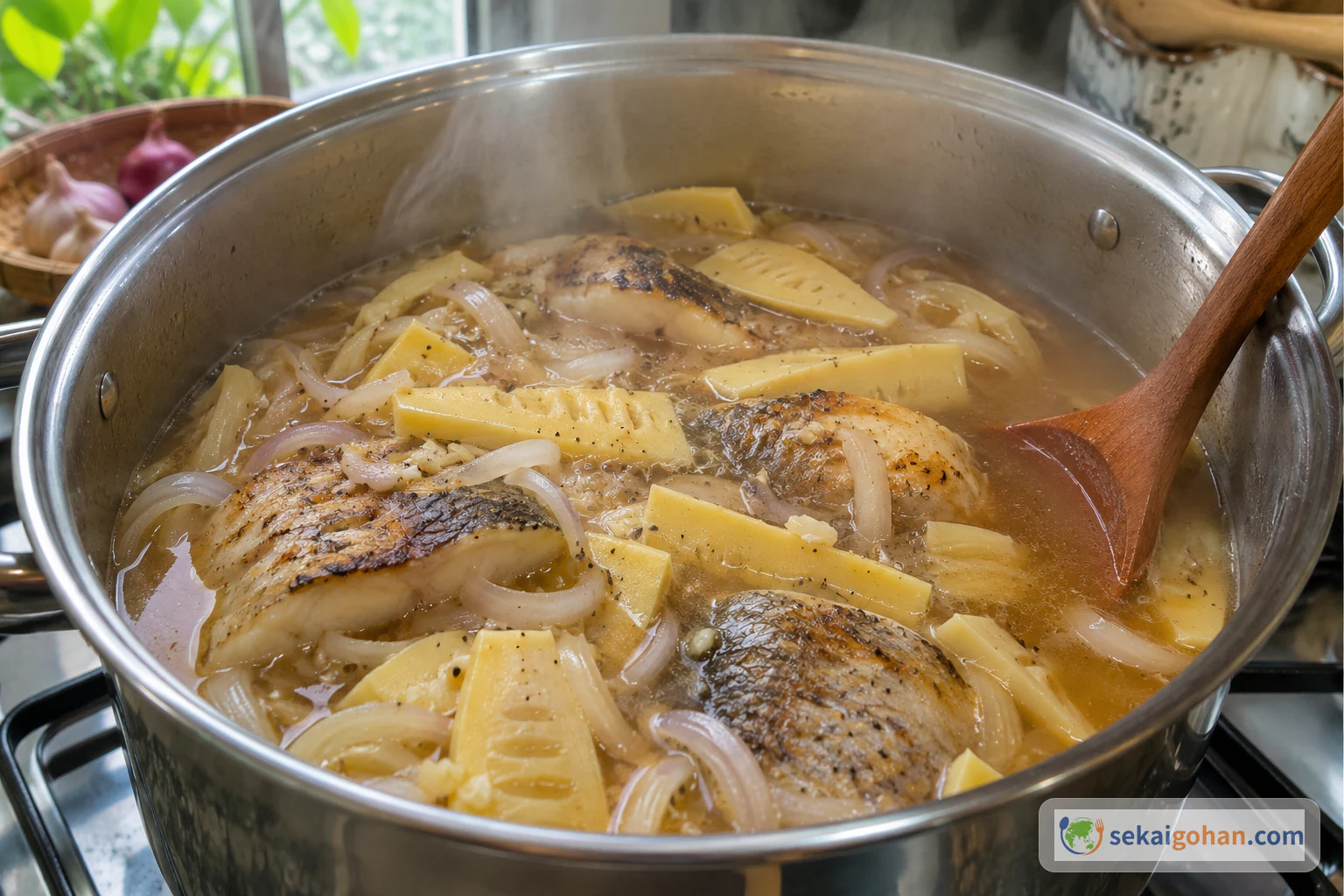
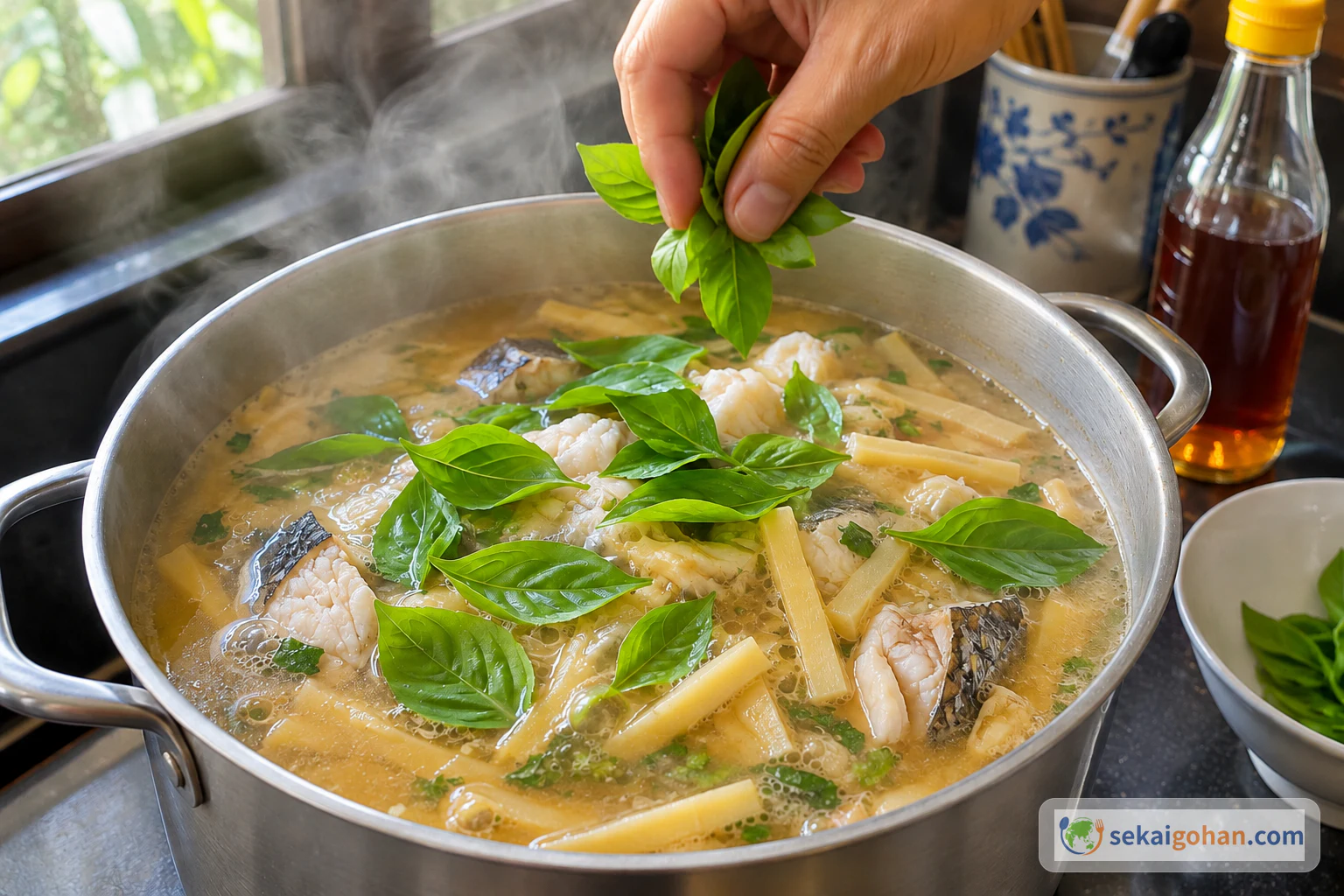
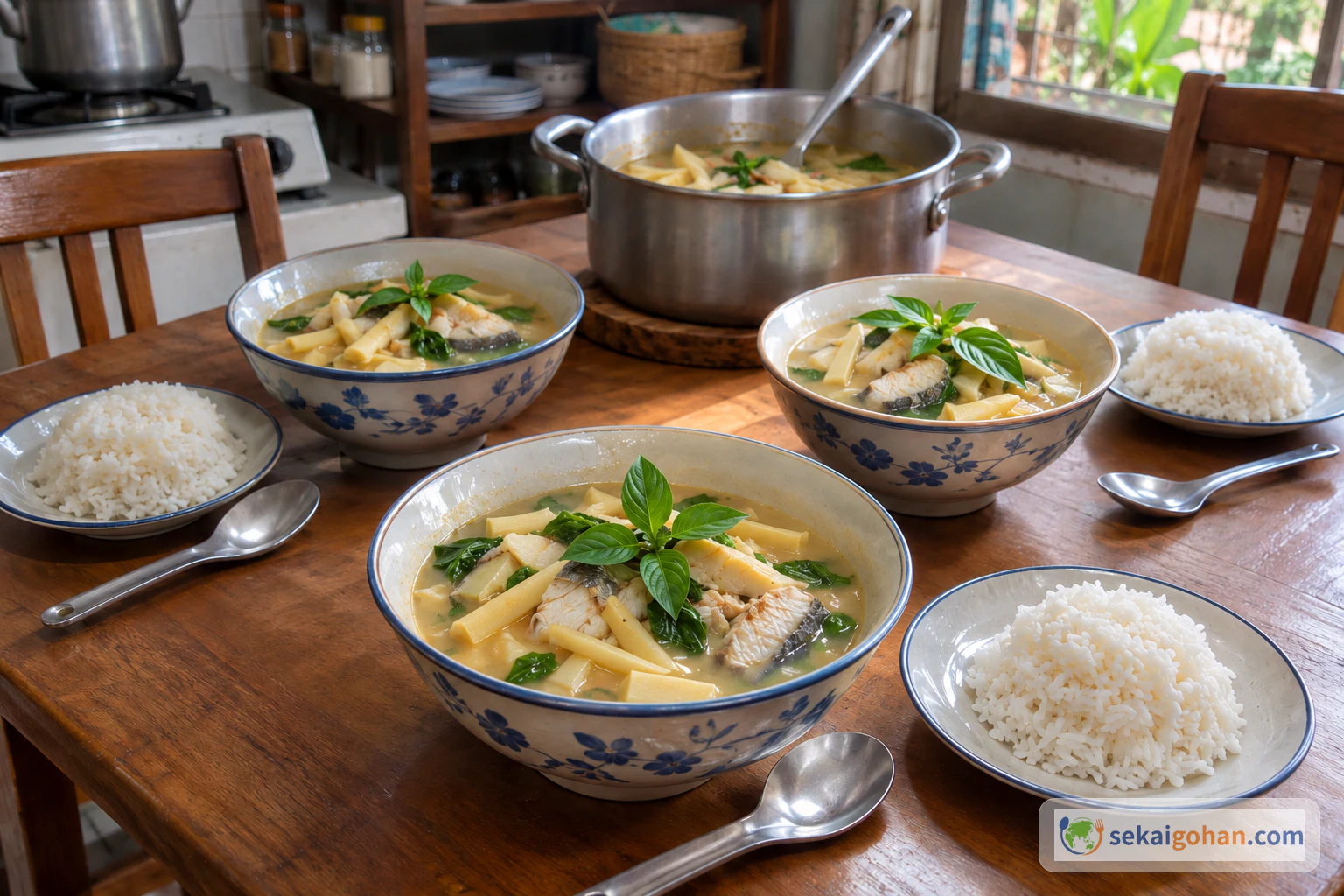
The rice powder in the dry pan turns from white to deep gold, and the kitchen starts to smell like popcorn. That smell is the base of talabaw. Stirred into water and brought to a boil, it becomes a soft, toasty broth that holds thin slices of bamboo shoot, pieces of lightly grilled fish, onion and garlic. Fish sauce and sugar sit side by side in the pot, pepper gives a final edge, and a handful of basil scattered over the top just before it reaches the table opens the whole thing up.
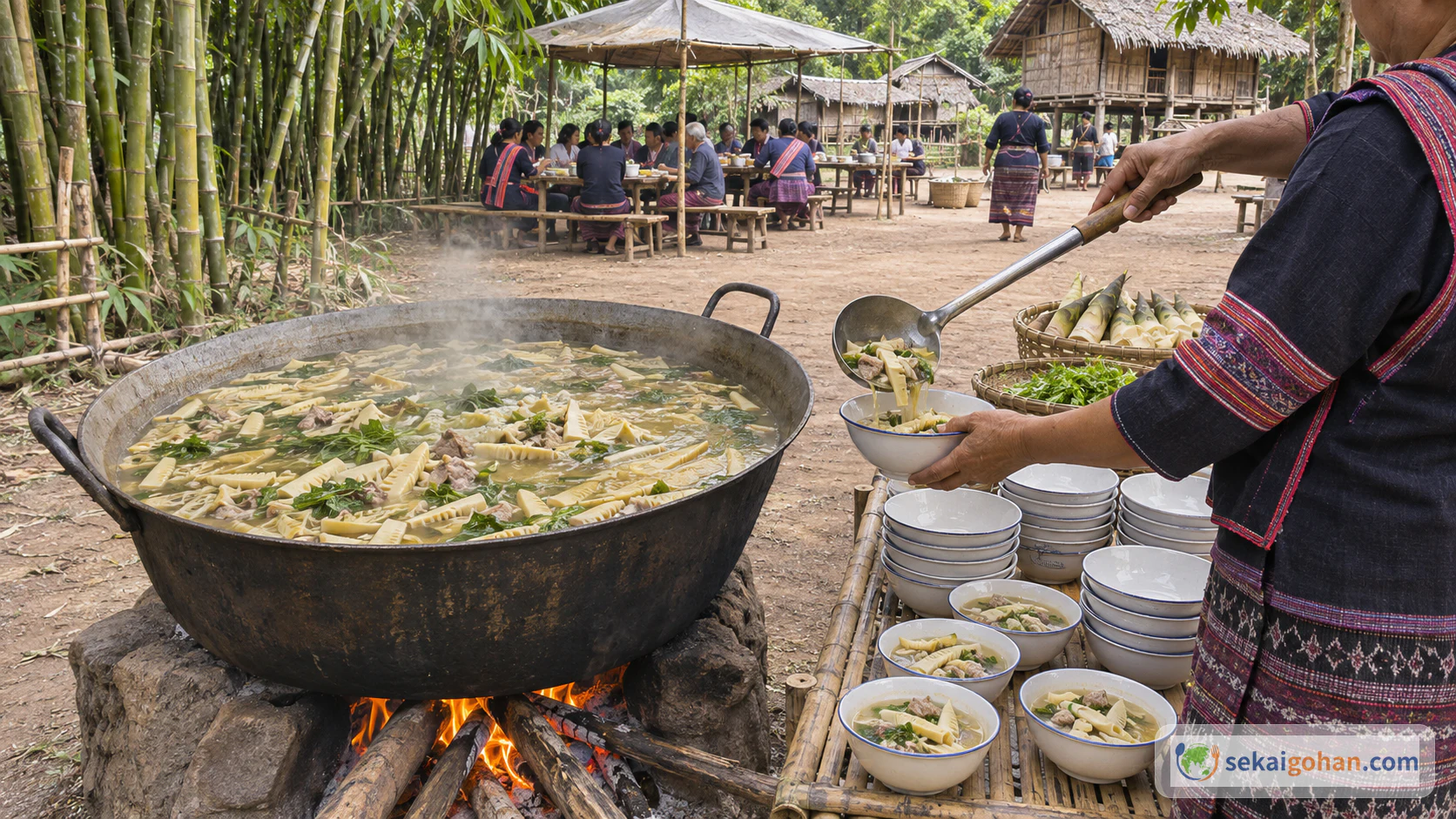
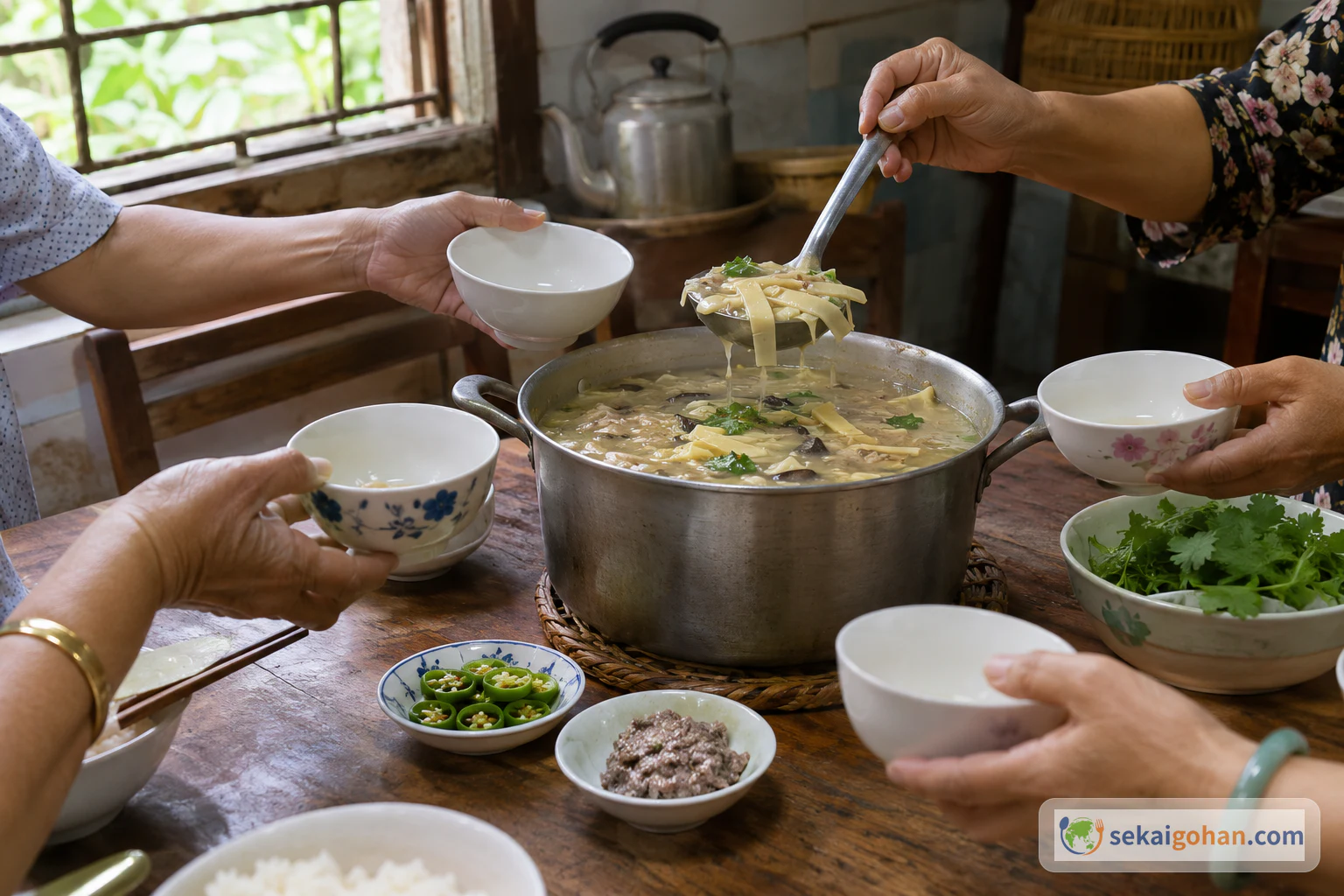
Talabaw is the great soup of the Karen (Kayin) people of Myanmar. It arrives in the pot it was cooked in, and everyone ladles a generous bowl to eat with a small portion of rice.
Great Soup from the Bamboo Hills
A soup that made a little rice go a long way
The Karen lived in hill villages close to bamboo forest. They rarely went down to the town markets and gathered much of their food from the forest itself. Rice was expensive, so the meal was built the other way round from what many cooks expect: a big bowl of soup and only a little rice. Bamboo shoots, freshwater fish and a spoonful of toasted rice for body turned what the forest gave into something that filled everyone at the table. Nobody wrote down when it was first made; talabaw has lived in village memory and in the pot.
Bamboo shoots are the backbone of the dish and they follow the season. Fresh young shoots go in while they are coming up, and once the season has passed, Karen cooks turn to lacto-fermented shoots instead. Shoots from giant bamboo are prized for their sweetness.
One pot, many households
Every household has its own talabaw. Some cook it thick, close to a stew, and some keep it as a clear broth. The pantry of possible additions is wide: fish paste, green chilli, okra, lemongrass, the leaves of moringa (drumstick tree) and climbing wattle, bean curd, tamarind water, a few shreds of meat or seafood. The version below keeps to the core, with toasted rice for body, bamboo for bite and fish for aroma, and no oil in the pot at all.
Talabaw is counted among the best-known soups in Myanmar and sits at the centre of Karen cooking. On 8 July 2018, the Myanmar Restaurant Association and the Kayin State Government held the first Karen traditional food fair at Zwekabin Hall in Hpa-an, with a talabaw cooking competition at its heart. The then Chief Minister, Nang Khin Htwe Myint, urged visitors to make a habit of eating it.
How it differs from mohinga
Readers who know mohinga from central Myanmar will recognise the idea of a soup given body by a starch. Mohinga leans on chickpea flour, while talabaw takes its depth from rice toasted until golden, and the colour of that toast decides how deep the soup tastes. More dishes from the country are collected on the Myanmar page.
Talabaw is also spelled talapaw, and it is sometimes called Takapaw. In Burmese it is written တာလပေါ and in S'gaw Karen တၢ်လပီၣ်. In Karen the name means "great soup".
Ingredients (serves 3)
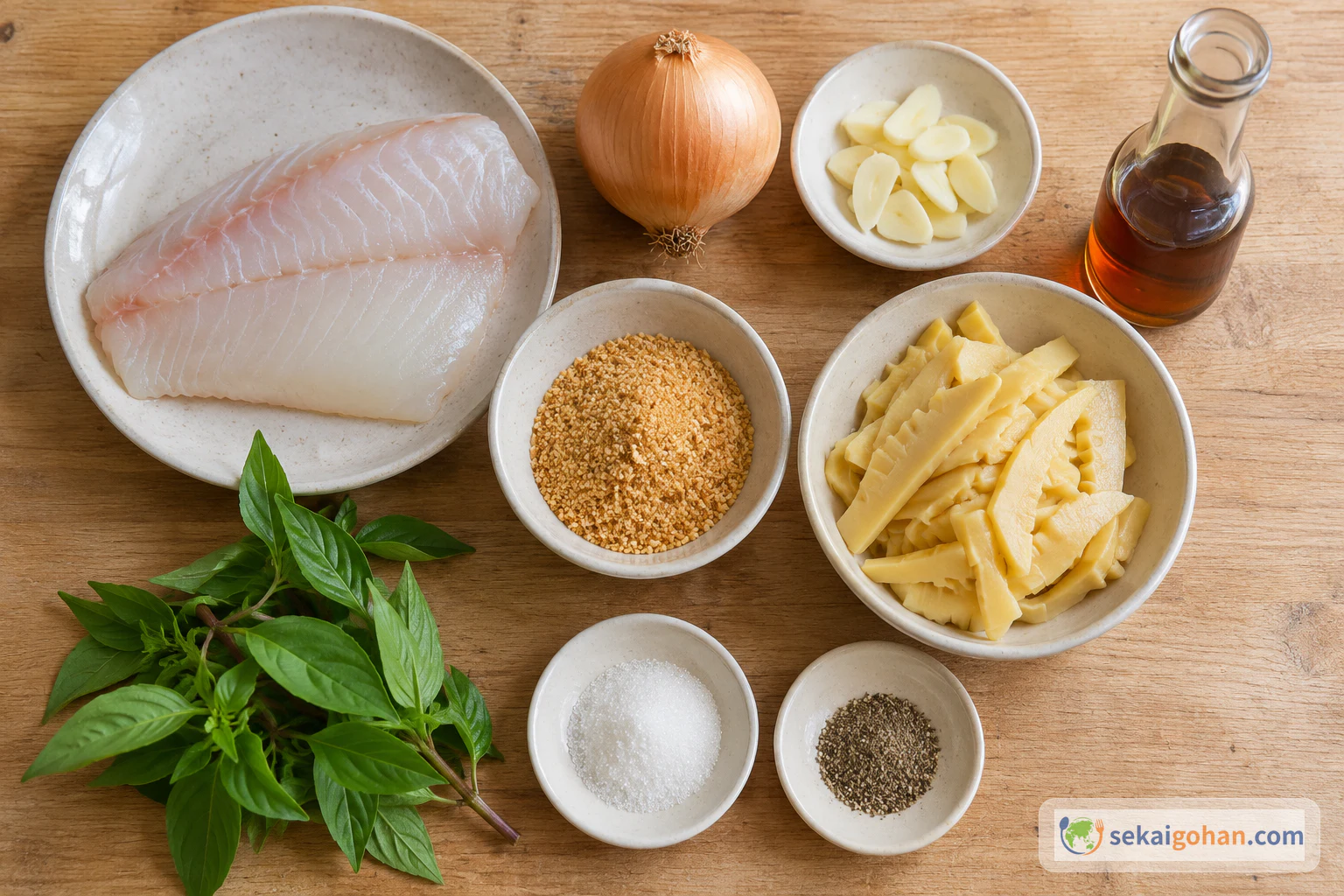
A spoonful of each is what gives talabaw its shape: savoury and sweet at the same level, with pepper on top. Cut the sugar and the green, sharp edge of the bamboo comes forward. Taste only once both are in.
Talabaw contains fish, and fish sauce is made from fish. It is unsuitable for anyone with a fish allergy.
Equipment
- Heavy dry skillet, for toasting the rice
- Heavy, deep pot for the soup
- A second pot for boiling the bamboo shoots, with a lid
- Small bowl and spoon for mixing the rice slurry
- Slotted spoon or strainer
- Skillet or grill for the fish
- Mortar and pestle, only if you start from whole rice grains
- Ladle and deep bowls for serving
Shopping and Substitutes
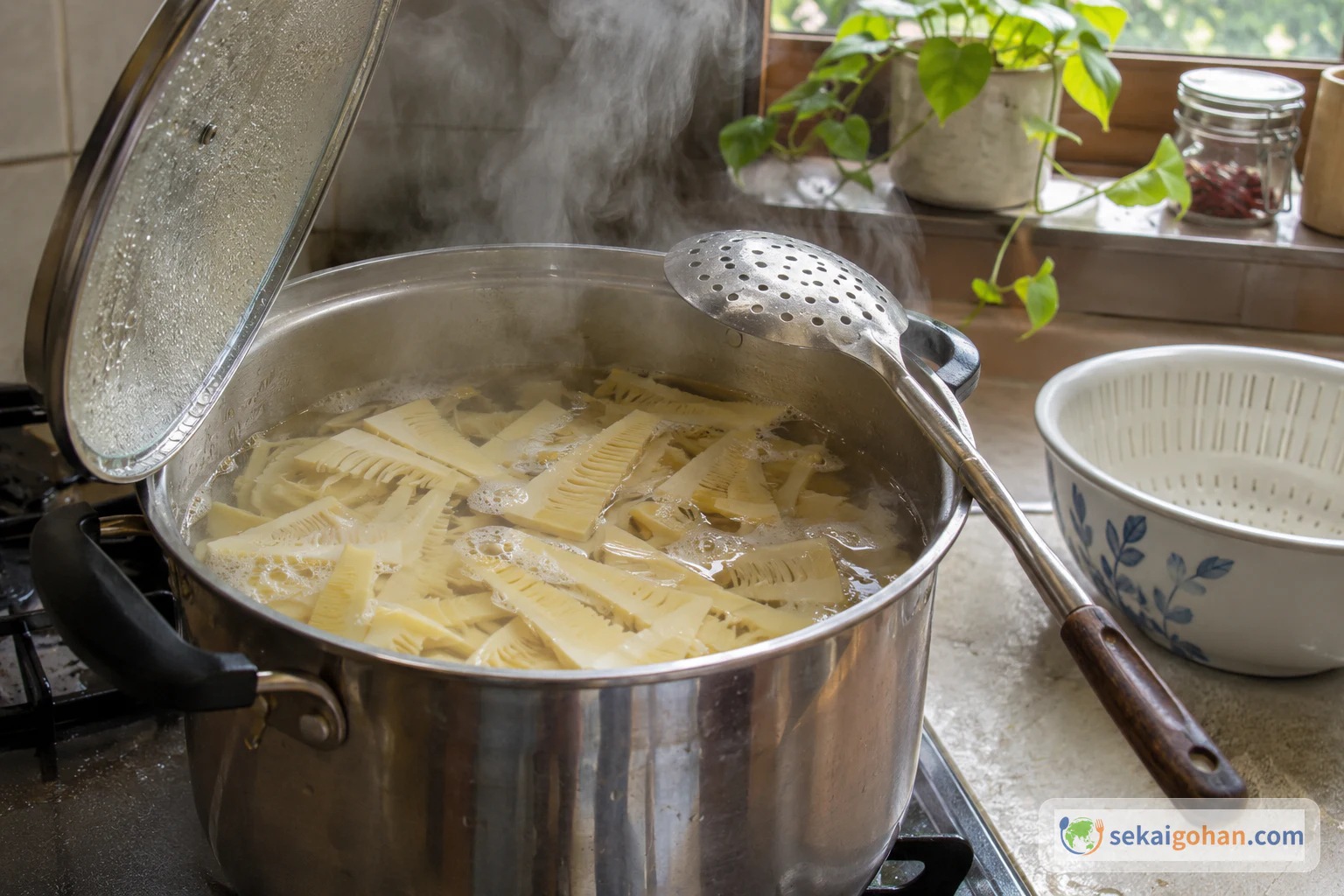
Water-packed bamboo shoots in a pouch or can are the easiest buy and the safest choice. They are already processed and carry very little of the natural compound that makes raw shoots unsafe. Any Asian grocer has them and many supermarkets do too. Fresh raw shoots work as well, as long as you give them the full peeling and boiling in step 3 below.
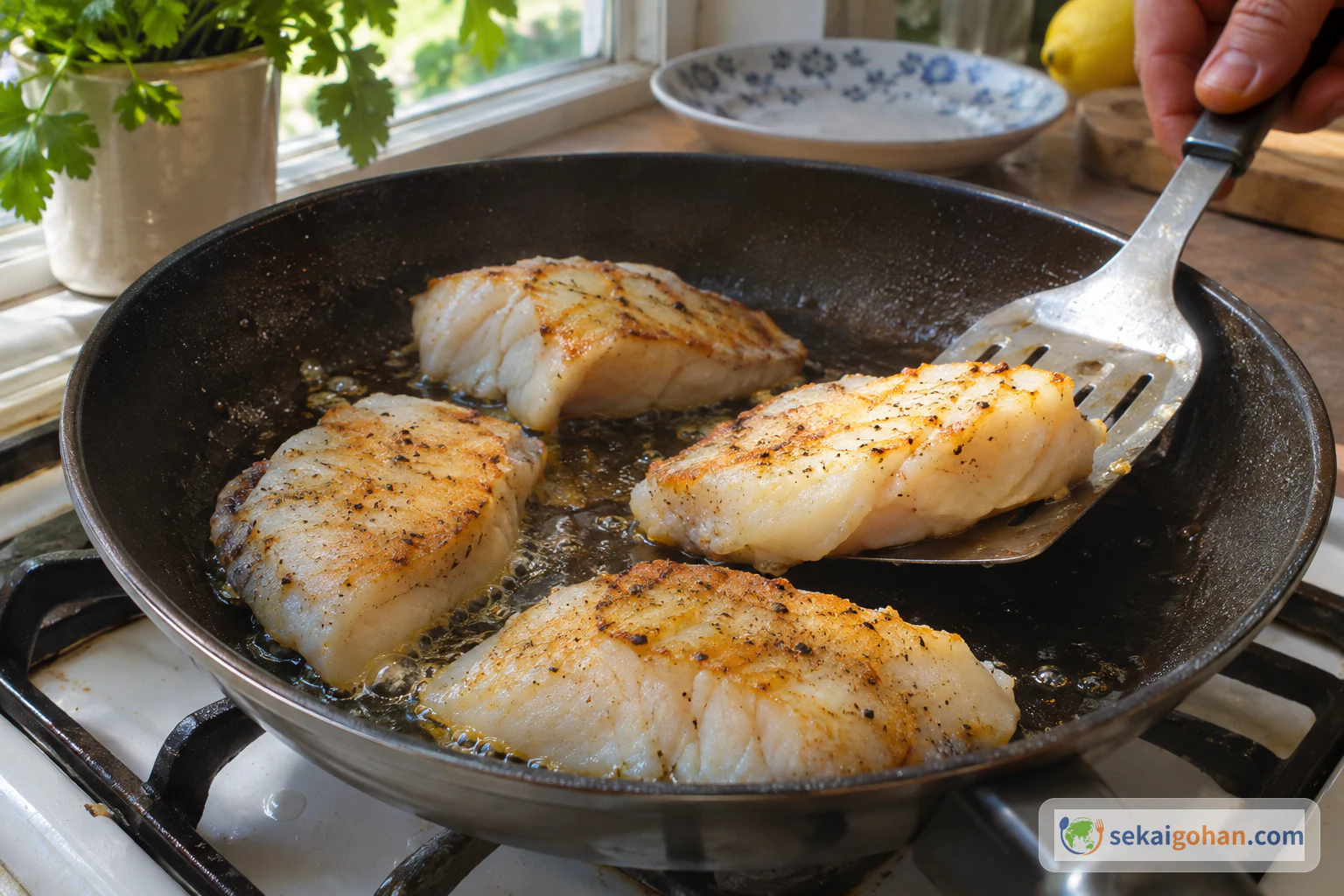
Snakehead is a freshwater fish and is hard to find outside its home waters. A firm white fish fillet from the fish counter takes its place well. You lose some of the freshwater aroma, and grilling the fish until it takes a little colour brings back a toasty note that fills the gap.
The rice in talabaw is pounded, then heated in a dry pan. Plain (non-glutinous) rice flour toasted in a skillet gives a similar result with far less work. Fish sauce comes from any Asian grocer; brands differ in saltiness, so taste before adding more. Ordinary sweet basil from the supermarket is the right herb.
What has to stay for the soup to taste like talabaw: the toasted rice, the bite of the bamboo, the fish, and the fish sauce, sugar and pepper together. The type of fish is the one thing you can let go of abroad.
Method
The work runs in three separate places before it all comes together. The rice base goes into the soup pot first and can sit at a gentle simmer while the bamboo shoots boil in their own pot and the fish takes colour in a skillet. Once everything is ready, the soup comes together quickly, and the basil goes in after the heat is off.
Pale rice powder tastes of raw rice and leaves the broth flat. Keep going until it is deep gold and smells of popcorn. The colour of the toast sets the depth of the whole pot.
Raw bamboo shoots contain taxiphyllin, a compound that releases cyanide, and the tip third of the shoot holds the most. Peeling, slicing thinly and then boiling lets most of it escape: boiling sliced shoots for 15 minutes cuts it by about 91%. Boil raw shoots in lightly salted water for the full 15 minutes (8 to 10 minutes is the shortest time advised for sliced shoots). Always pour the boiling water away and never use it in the soup.
Fish dropped raw into a simmering, thickened soup breaks into flakes that drift through every bowl. A short grill firms the surface, so the pieces hold together and add a toasted note.
When It Goes Wrong
| What you see | Why | What to do |
|---|---|---|
| Lumps of rice powder in the broth | The powder went into the pot dry and seized in the hot water | Next time, always mix it into cold water first. For now, press the lumps against the side of the pot with a spoon and keep stirring as it simmers |
| The soup tastes of raw rice and lacks depth | The rice was toasted too lightly | Toast the powder until it is deep gold and smells of popcorn. Pale powder will not make up the difference later |
| The bamboo is hard, tastes green, or leaves a tingling or bitter feeling on the tongue | The shoots were not boiled long enough | Stop and do not eat them. Return them to fresh boiling water and boil until tender, then discard that water. Give raw shoots the full 15 minutes |
| The fish has broken into flakes all through the soup | It went in raw, or the soup was stirred hard | Grill the fish first, add it late and stir by lifting from the bottom |
| The basil has turned dark and its scent is gone | It cooked over the heat | Scatter the basil only after the heat is off |
Serving, Variations and Leftovers
At the table
Bring the pot to the middle of the table and let everyone ladle their own bowl. The amounts here make three generous bowls of soup with a small portion of rice on the side, the proportion that grew out of making rice last. Each spoonful of rice is eaten with plenty of broth. If you like heat, put out a saucer of sliced green chillies and one of fish paste for people to add as they eat; both belong to the Karen pantry and keep the pot itself mild for everyone.
Variations
- Chicken version. A modern way uses boneless chicken thigh, simmered with shallots, garlic, lemongrass and dried chilli flakes, then finished with greens, split green chillies and coriander. Chicken makes the broth rounder and less fishy. In the village version, pounded dried fish takes the place of the chicken, which brings back a deeper, saltier fish flavour.
- More greens. Okra, lemongrass, moringa leaves, climbing wattle leaves, bean curd or a little tamarind water all belong in talabaw. Okra thickens the soup further, lemongrass lifts it, and tamarind pulls it towards sour.
- The oil version. Some Kayin cooks crush the onion and garlic with the flat of a knife, fry them in hot oil, pour in the rice slurry and boil it hard before adding the shoots and the grilled fish. The result is richer, with the taste of fried aromatics. These cooks also add the bamboo cooking water as stock; keep to the safety rule here and always discard that water.
- Fermented shoots and frog. Out of season, Karen cooks use lacto-fermented bamboo shoots, which give the soup a sour tang. In the rainy season, grilled frog meat sometimes takes the place of fish. This kitchen sticks to water-packed shoots and fish.
Leftovers
Talabaw is at its best the moment the basil goes in. Cool any leftovers, then cover and refrigerate them promptly. The rice thickening sets as it chills, so add hot water when reheating and stir until the soup is loose again and steaming throughout.
Frequently asked questions
Can I toast whole rice grains instead of flour?
Yes. Toast the grains in a dry pan the same way until deep gold and fragrant, let them cool, then grind them coarse in a mortar and pestle or a grinder. Aim for a texture between sand and flour. Some cooks use glutinous (sticky) rice for this, which gives a slightly silkier body.
What is a dinner spoon?
It is the ordinary spoon you eat with, not a measuring spoon. Two of them, filled the way you would scoop food, give the soup its body. If the soup ends up thicker than you like, loosen it with hot water; if it is thin, simmer it a little longer.
Is talabaw spicy?
This version is not: its edge comes from the pepper. Many Karen households add green chilli, either in the pot or on the side. Serving chillies at the table lets each person decide.
Why haven't I heard of it before?
For a long time talabaw was cooked mostly in Karen homes and was little known elsewhere, even inside Myanmar. Events like the 2018 Karen food fair in Hpa-an brought it to a wider audience, and today it counts among the best-known soups in the country.