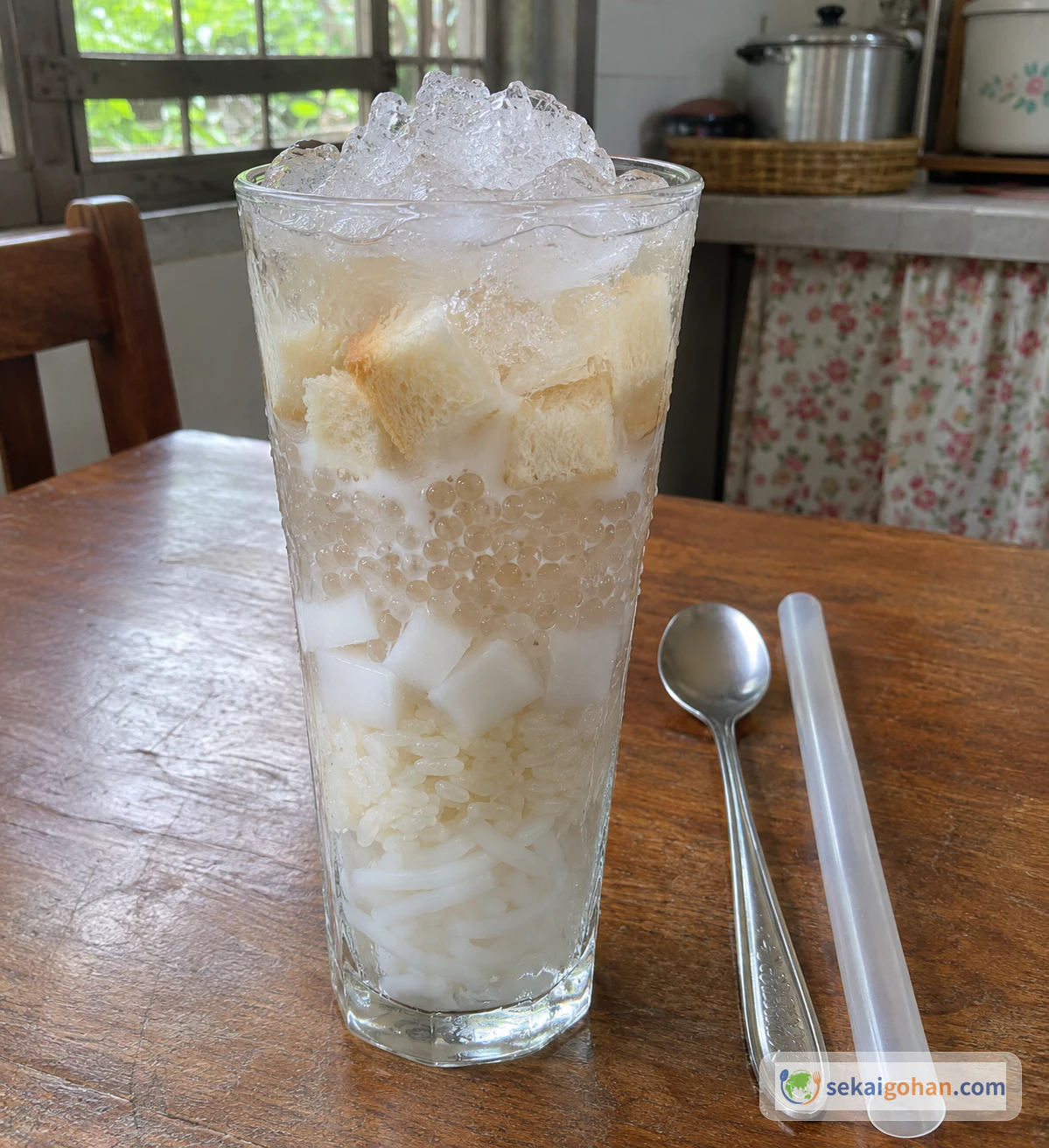
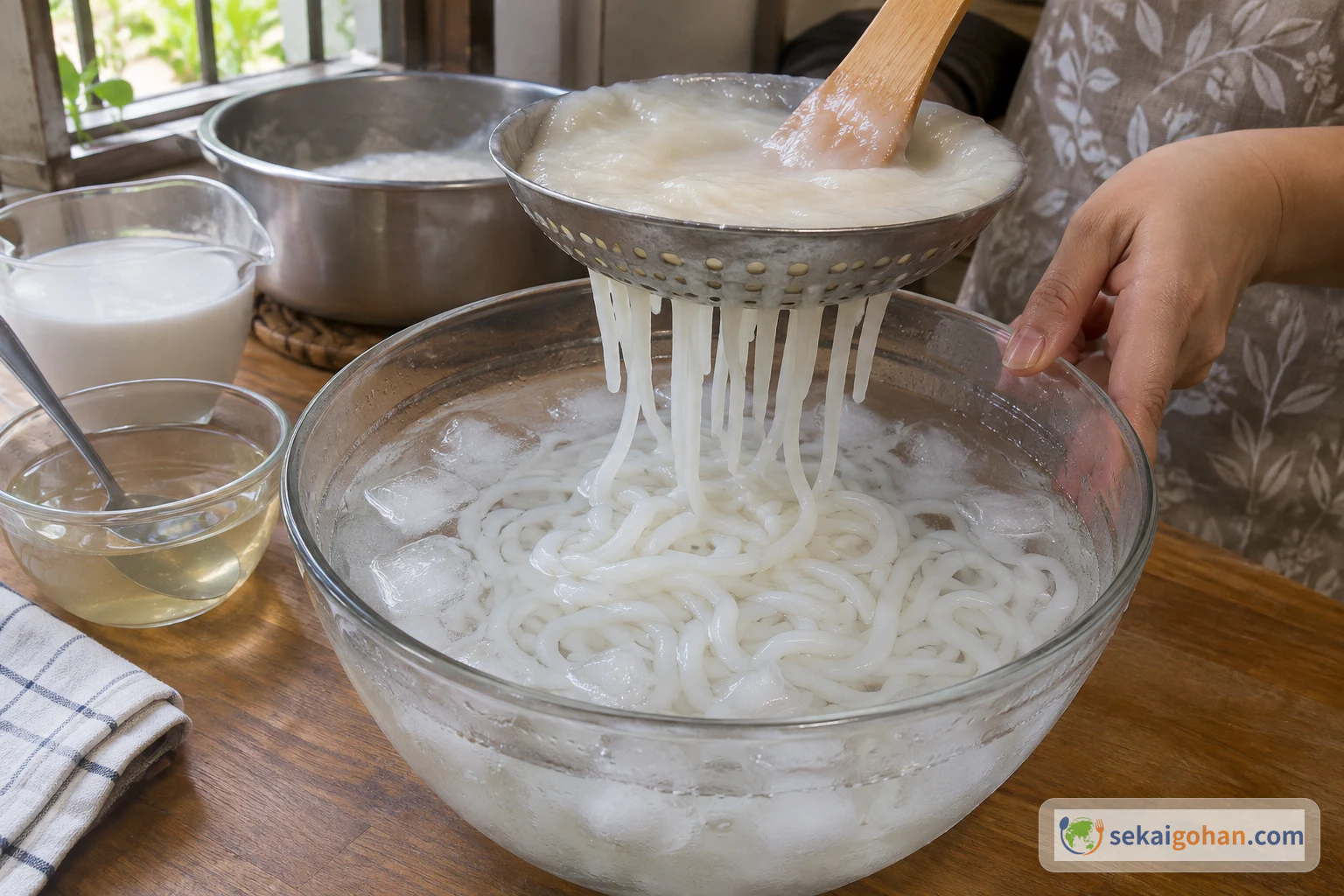
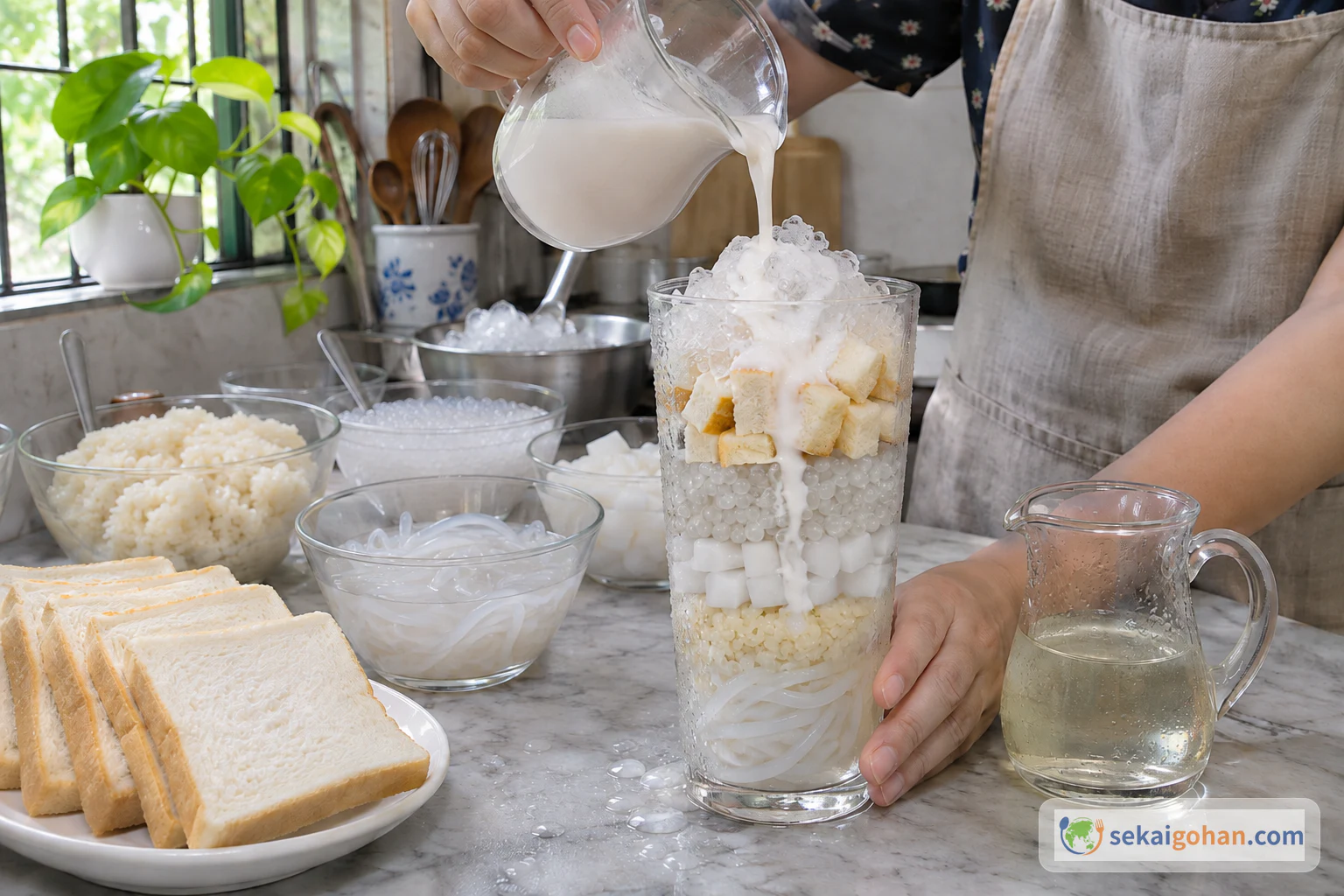
The coconut milk goes in last. You pour it thin and pale over a glass already packed with ivory jelly strands, sticky rice, white cubes of coconut jelly, clear sago and soft squares of bread, and you watch it sink through the crushed ice and find its way down between the layers. A long spoon and a wide straw go in together, because shwe yin aye sits halfway between a drink and a dessert. In Myanmar it is the cold sweet of Thingyan, the April New Year water festival, made for the heat of that season. It tastes of lightly salted coconut and plain sugar syrup, and every spoonful brings a different chew: slippery, sticky, bouncy, soft.
Thingyan, Street Stalls and a Glass for the Neighbours
Thingyan is the Burmese New Year in April, celebrated with water thrown in the streets, and the food of those days carries a special weight. Shwe yin aye is made at home and given away: families prepare it as an offering, hand it out and share it with the neighbours, and many households give it out for free during the festival. A cold, filling glass in the hottest weeks of the year is a generous thing to give.
Outside the festival it belongs to the street. In Yangon and Mandalay it is sold from stalls and in markets, and on hot afternoons people gather around the vendors to buy a glass. Stalls dress it up with coloured syrups and a choice of fruit (durian, avocado, lychee, strawberry, papaya, watermelon), custard, ice cream, extra jellies, dried fruit, even chocolate chips. In the hill country it was hard to come by; it is a food of the hot towns. At home the glass is simpler, with cubes of plain white bread and sometimes chia seeds, and one writer likens its mix of textures to Indian falooda.
ရွှေရင်အေး is usually explained as shwe (gold), yin (chest or heart) and aye (cool), which gives the English gloss "golden heart cooler": a sweet that cools you from the inside.
South and centre, white and green
The jelly changes with the region. One Myanmar home cook explains that in southern Myanmar white rice-flour jelly is eaten with palm sugar syrup under the name mont let saung, while in Yangon and Mandalay the jelly is tinted green with pandan and paired with coconut milk. This is one cook's account, not a rule for the whole region. The glass in this recipe keeps the jelly its natural ivory and leaves the green as a choice.
Two neighbours share ingredients with shwe yin aye and stay separate dishes. Mont let saung is its own sweet, built around the rice-flour jelly and syrup; here that jelly is one layer among several. Kyauk kyaw is a firm agar jelly. The word mont covers the whole family of Burmese flour-based sweets and snacks, which is why it turns up in so many names. Alongside the noodle soups, rice dishes and salads of Myanmar's cooking, this is the cold sweet that marks the turn of the year.
Ingredients (serves 5)
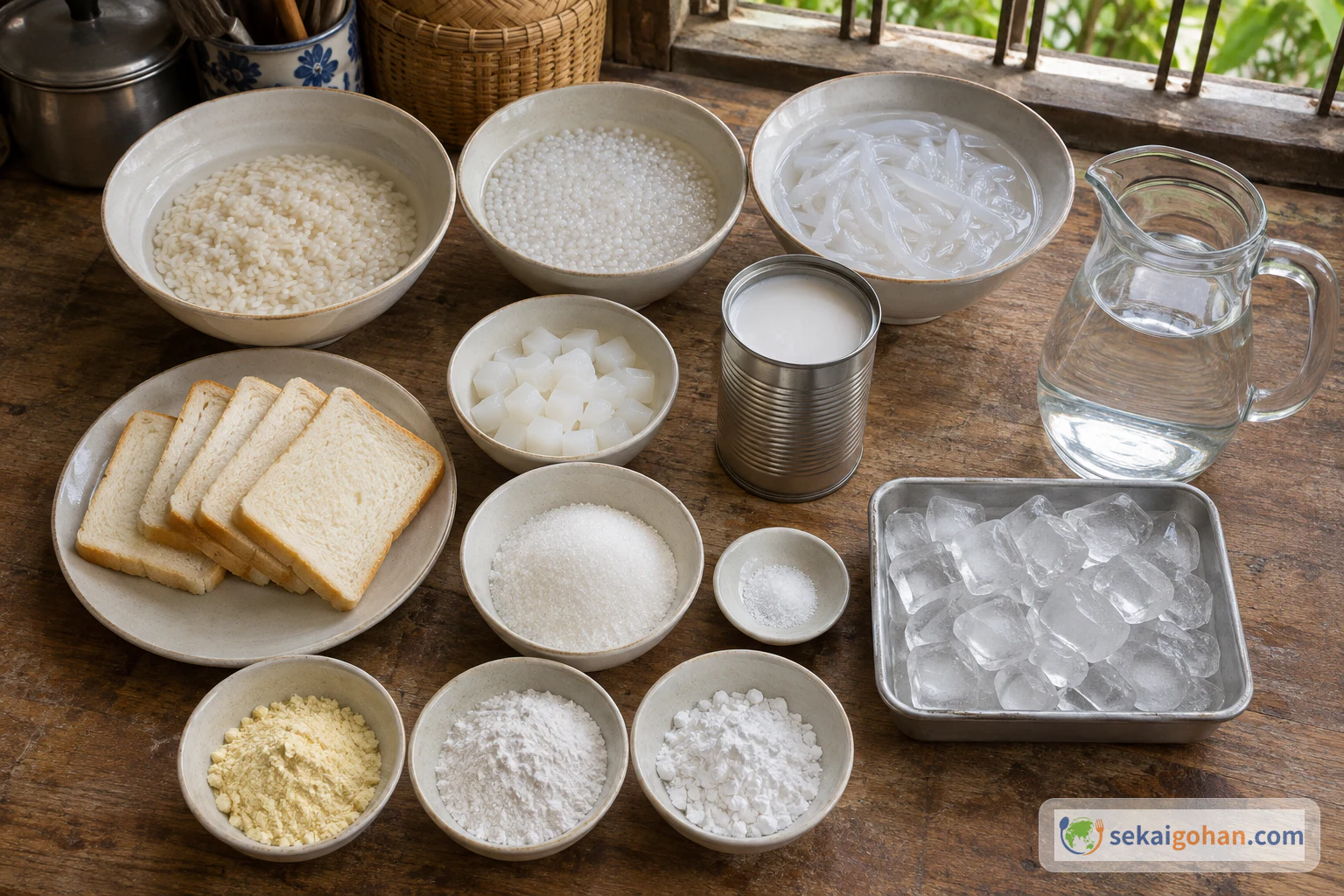
There are two separate measures of water: one cooks the jelly, the other thins the coconut milk. Measure them into different jugs before you start, so the jelly does not end up loose and the milk does not end up heavy.
This glass contains wheat (bread) and coconut. Some versions of shwe yin aye are finished with evaporated or condensed milk; there is no dairy in these ingredients, so keep it that way by sweetening only with the syrup, and check the bread label as well.
Equipment
- Steamer and a clean cloth to line it
- Colander and a fine-mesh sieve
- Two small saucepans and a large pot for the sago
- Whisk and wooden spatula
- Perforated ladle or coarse sieve, and a large bowl for iced water
- Shallow tray, cutting board and knife for the coconut jelly
- Measuring jugs
- Five tall glasses, long spoons and wide straws
Choosing and Substituting
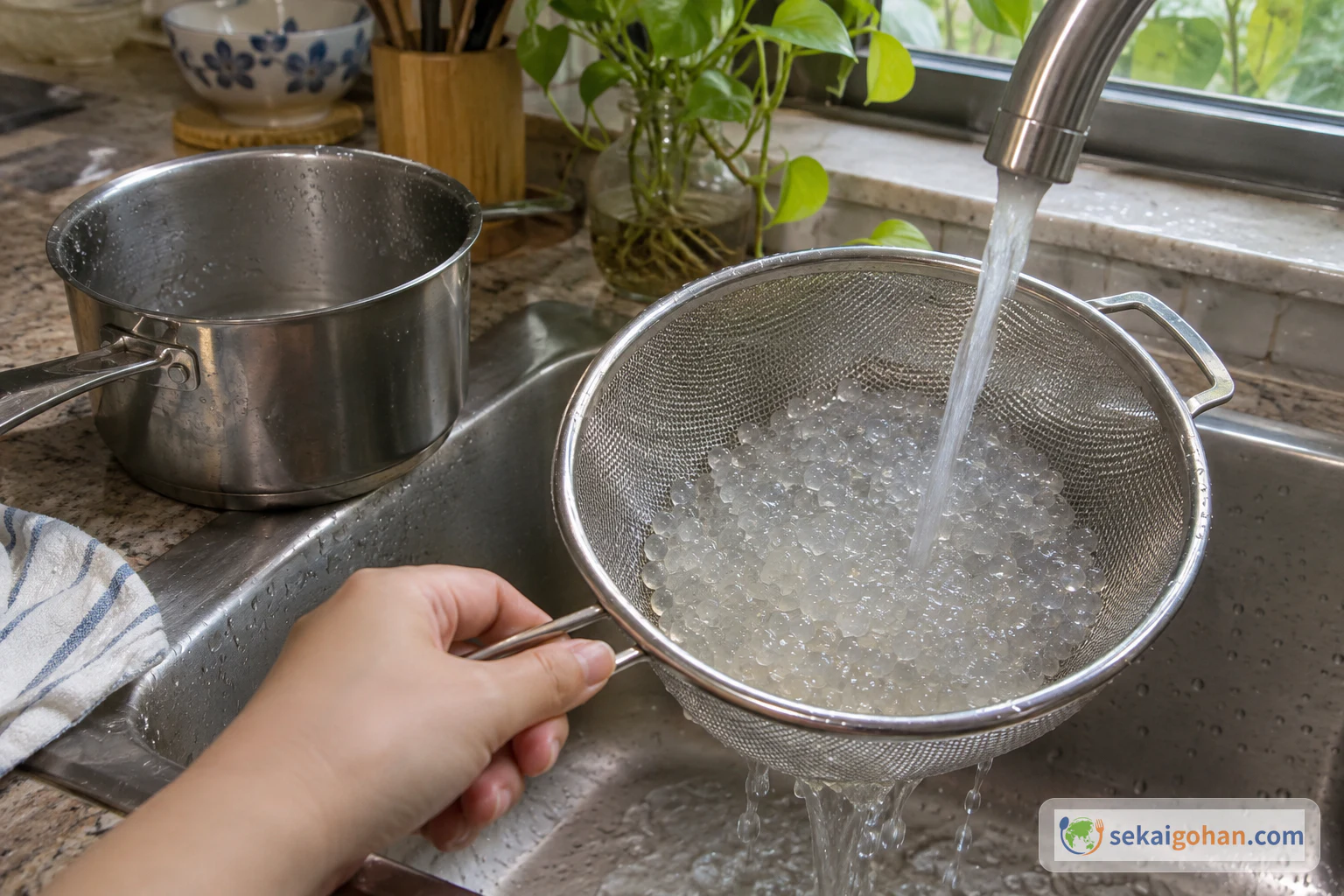
Small sago pearls are what you want, the kind sold for desserts at Asian grocers. Large brown bubble-tea tapioca is a different size and gives a different glass, so check the pearl size on the bag. Mung bean flour, rice flour and tapioca flour are all sold at Asian grocers and baking-supply shops; use fine rice flour of the dessert kind. If you find only mung bean starch, the starch glass noodles are made from, you can try it in place of mung bean flour, but this swap is untested and the jelly will thicken with a different body.
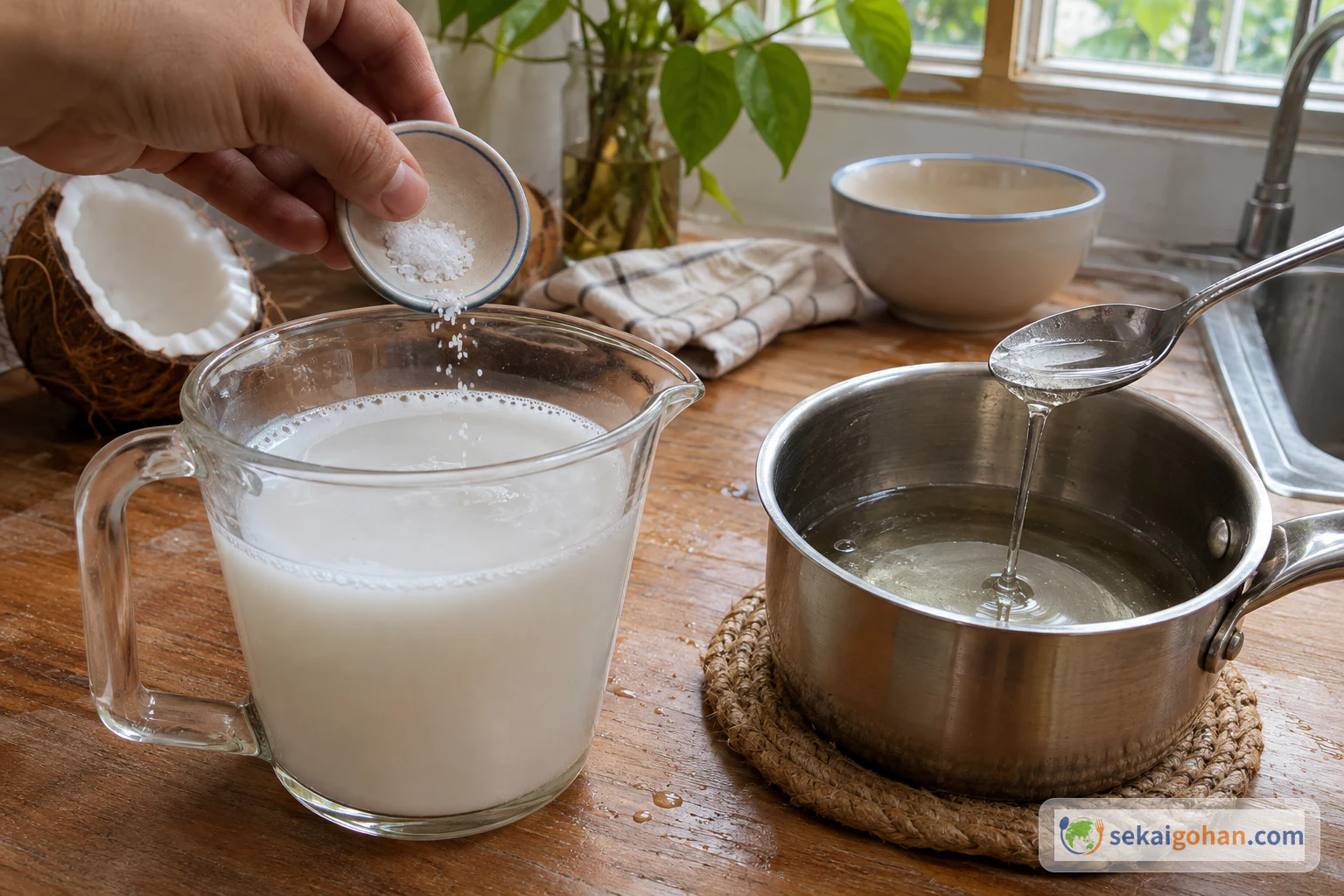
Coconut milk cans come in more than one size, so measure by volume rather than by can. The amount here is about three quarters of a 1¾-cup (400 ml) can. Shake the can well.
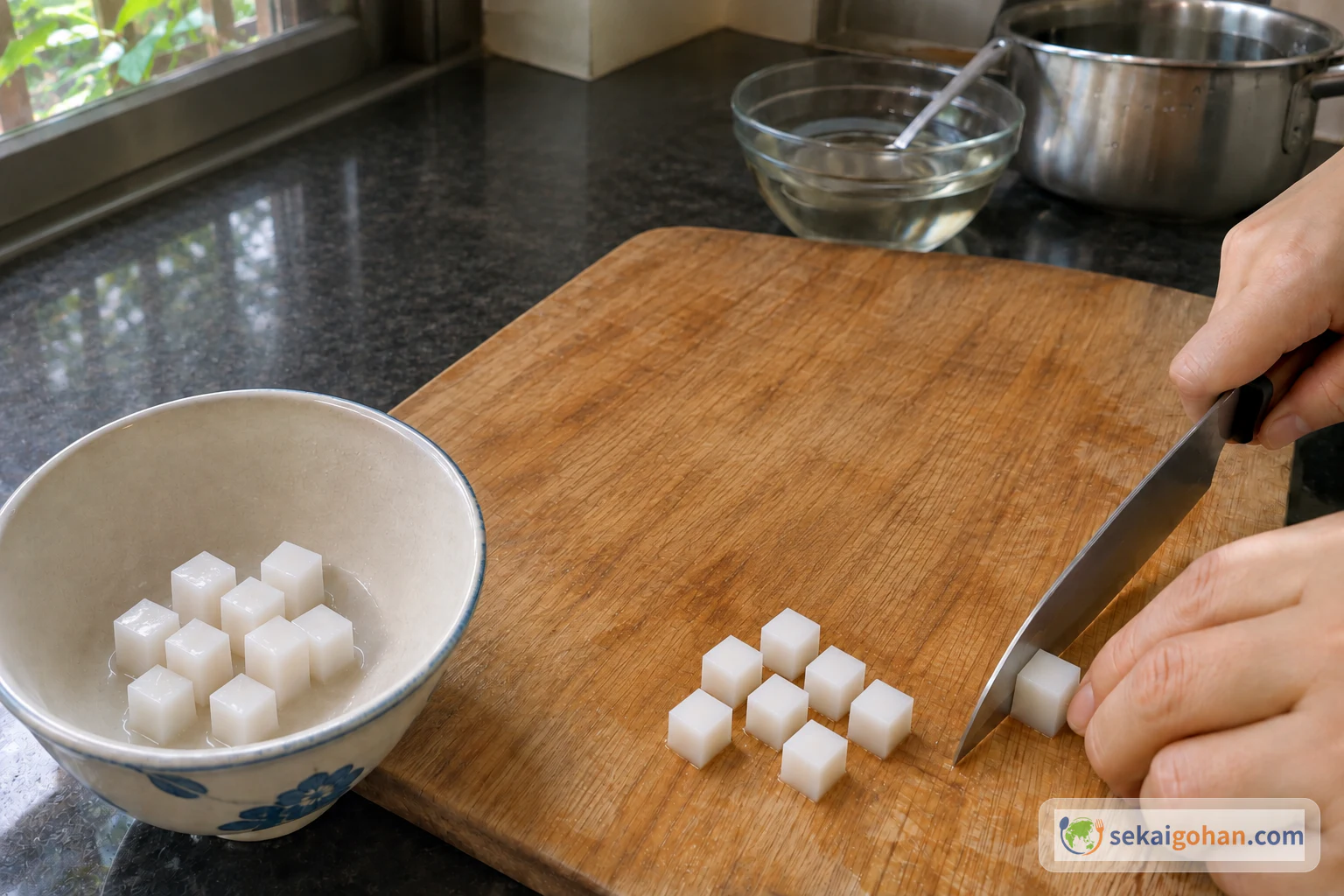
The 25 g coconut jelly sachet from Myanmar is hard to find abroad. Two swaps work. Set coconut milk with powdered agar following the agar's own directions and cut it into the same cubes, or leave the coconut jelly out; it is a small part of each glass and the dessert still holds together without it. Coconut jelly is also made from scratch in a deep tray with gelatin, sugar and a full can of coconut milk, but that batch is far bigger than five glasses need.
Pandan juice only changes the colour, so skip it freely. For the bread, plain white sandwich slices are right; crusts on or off is your choice.
Method
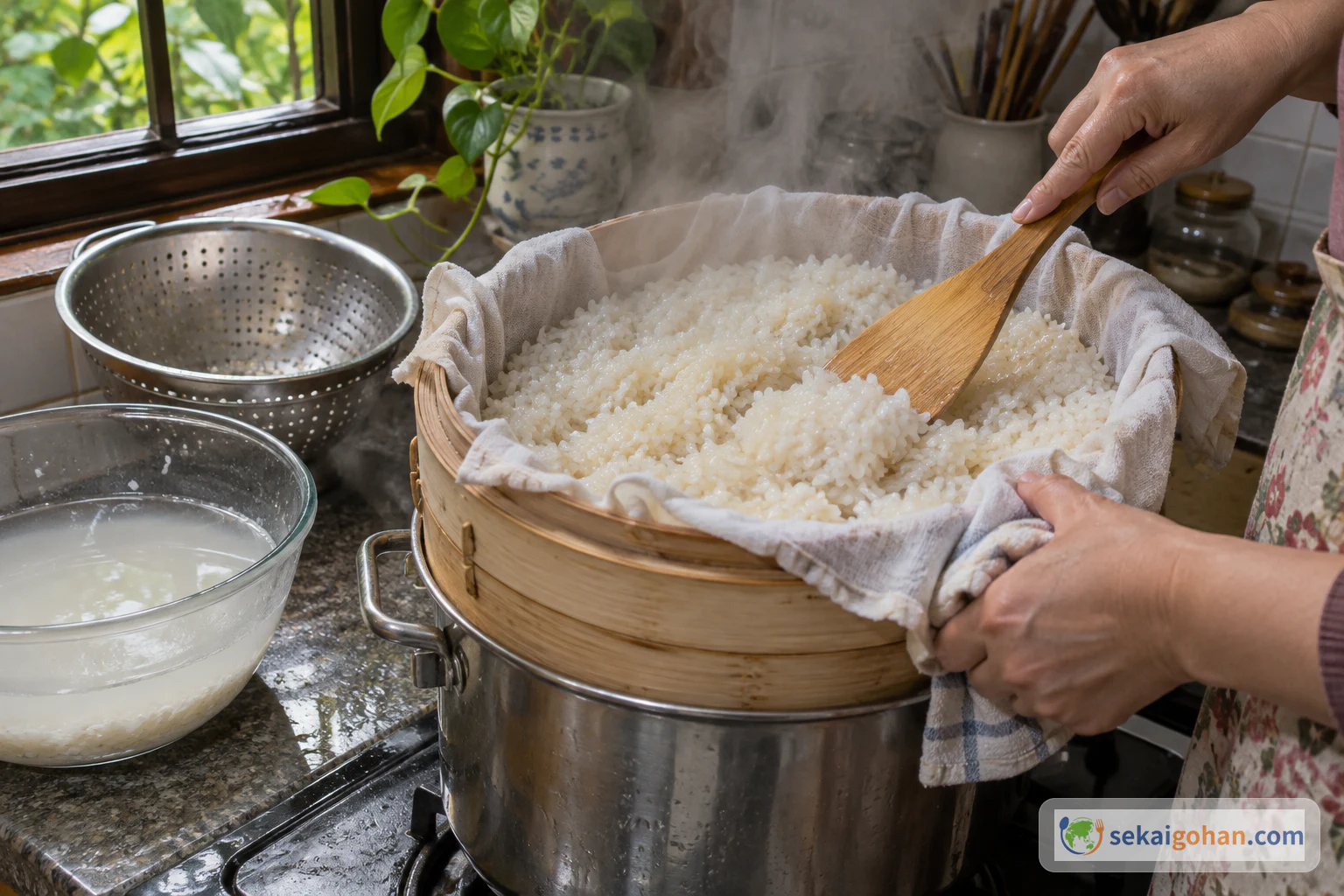
The sticky rice is the only thing that needs planning: start soaking it at least six hours ahead. While it steams, make the jelly and boil the sago. The coconut jelly sets and the coconut milk and syrup chill while you work, so the hands-off time is spent in the refrigerator. Nothing meets until the glasses are built, and the bread is cut last.
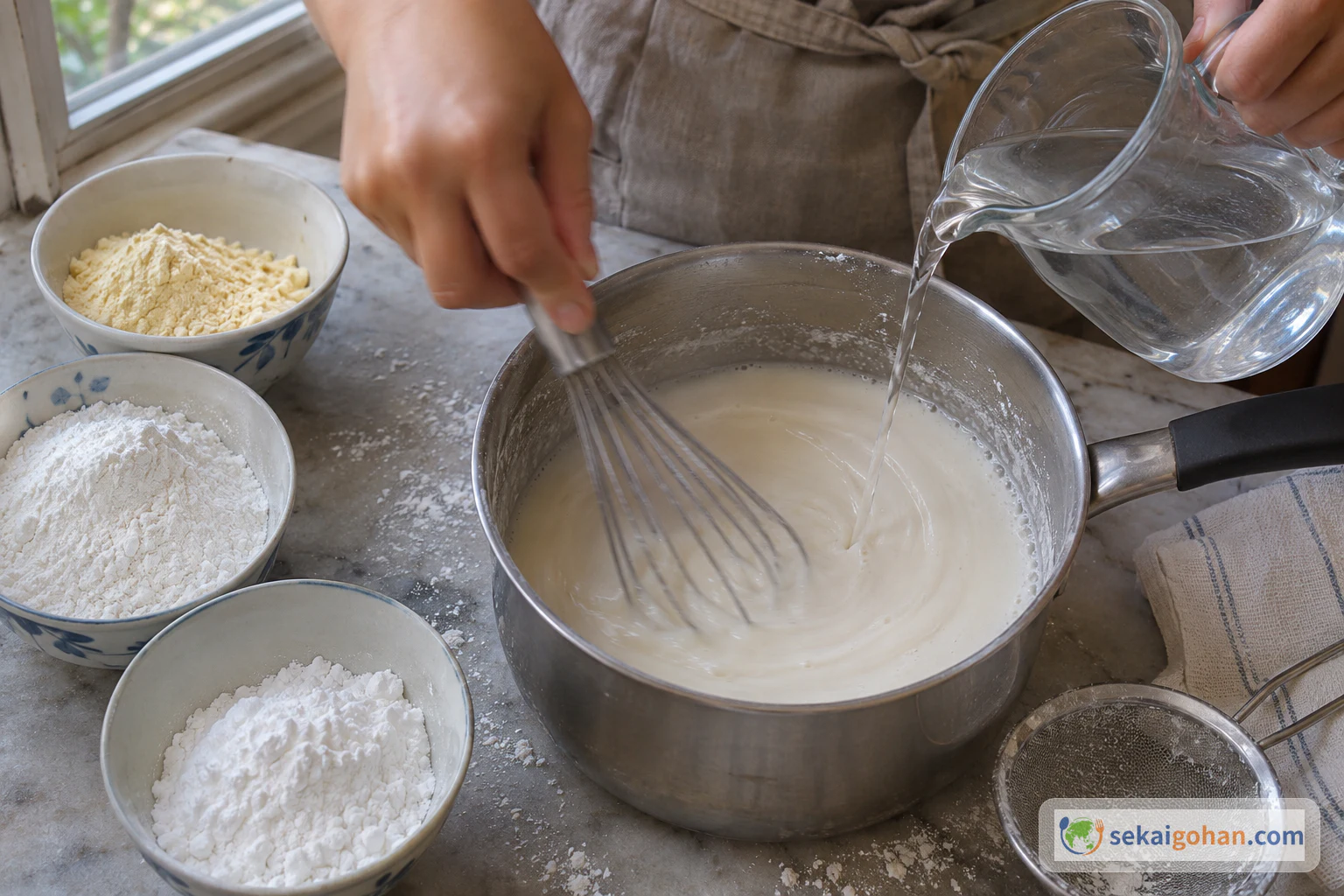
Stir the jelly in a single direction from the moment the water goes in until it leaves the heat. This keeps the batter smooth and the set even.
Assemble only when people are ready to eat. Once the coconut milk goes in, the bread starts to soften, and the glass is at its best within the first five minutes.
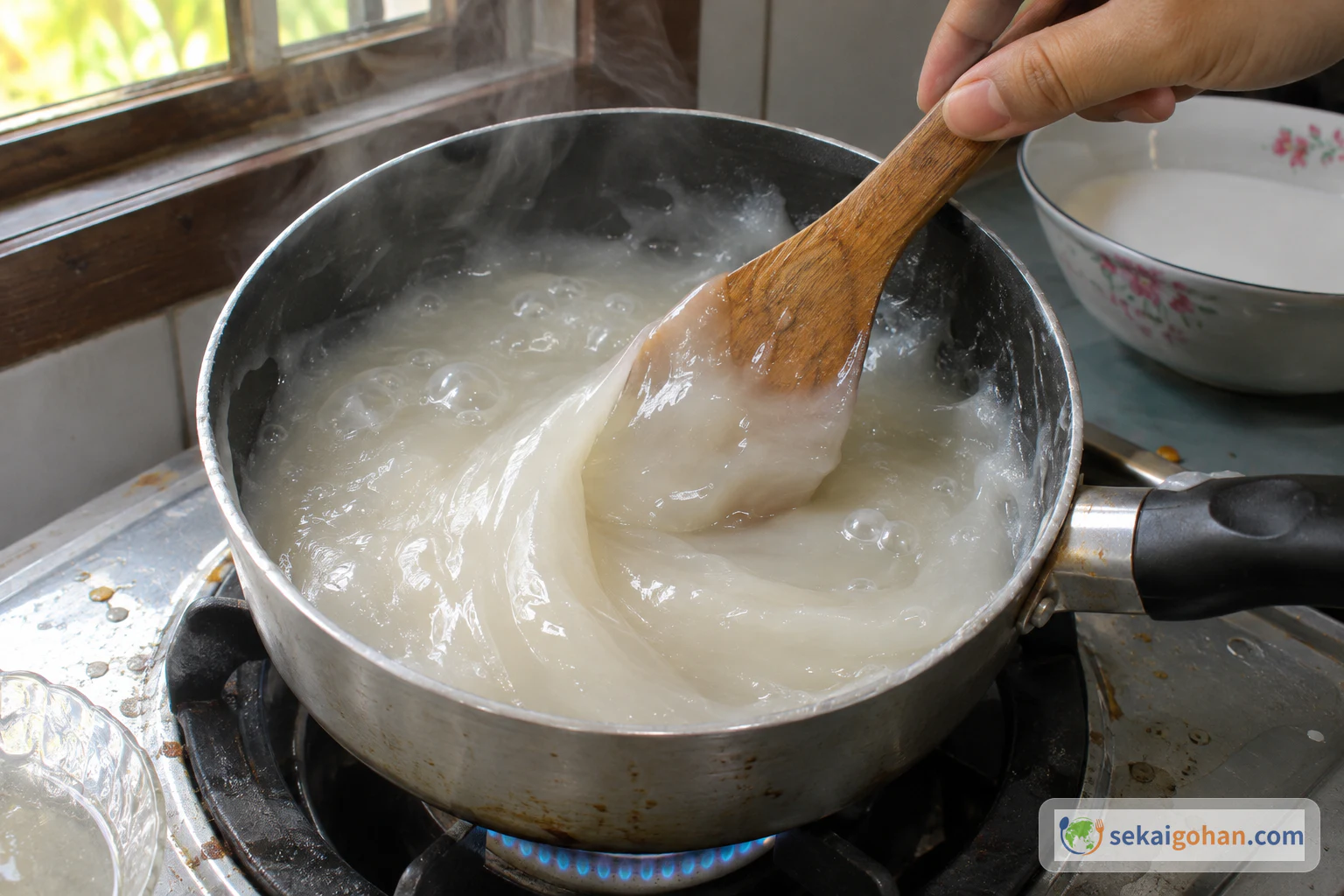
Lift the steamer lid away from you, and keep hands clear of the rising steam. The cooked jelly and the sugar syrup are much hotter than they look and cling to skin; press the jelly with a spatula, never your fingers, and let the syrup cool before tasting.
When It Goes Wrong
| What you see | Why | What to do |
|---|---|---|
| The jelly stays soft or will not set | Too much water, or it left the heat too soon | Cook until it pulls away from the pan bottom. If it still will not set once cold, start a new batch; adding flour to reheated jelly makes lumps |
| Lumps in the jelly | The water went in all at once | Add the first water in a thin stream while whisking in one direction |
| Sago with a hard white core | Pearls too large, too little water, or not enough stirring | Use plenty of boiling water and keep going until every pearl is clear |
| The bread turns to porridge | Bread went in too early, or too much ice melted | Cut and add the bread at the last moment, use day-old bread, and eat straight away |
| Too sweet | The syrup carries all the sugar | Serve the syrup on the side and cut back only the syrup; keep the coconut milk and ice as they are |
| The coconut milk separates | The can was warm, or the milk was heated | Chill the opened can, shake well, and never bring the milk to the boil |
Serving, Variations and Storage
At the table
Shwe yin aye is a whole snack in a glass, best on a hot afternoon. For a crowd, keep every component cold in its own container and build each glass as it is wanted, the way it is handed out at Thingyan, one glass at a time.
Variations
- Green pandan jelly: add pandan juice in step 3 for the Yangon and Mandalay look. The colour changes; the taste barely does.
- Southern style: leave the jelly white and swap the sugar syrup for palm sugar syrup. The glass turns darker and toasty, closer to mont let saung.
- Evaporated milk: finish each glass with a small drizzle of canned evaporated milk. It tastes richer and now contains dairy.
- Fruit, stall style: add cubes of avocado, lychee or papaya on top. This goes beyond the home glass and leans toward the colourful street versions.
Making ahead and storage
Make the components ahead and keep them apart. Cool everything you cook promptly, then cover and refrigerate. The rice-flour jelly keeps up to 2 days in the refrigerator; boiled sago keeps 1 day refrigerated, covered with water. Cover an opened can of coconut milk, refrigerate it and use it soon. Cut the bread only when you assemble.
Keep the refrigerator at 50°F (10°C) or colder and do not leave soaked rice or cooked components standing at room temperature. Once a glass is assembled, do not save it: the ice melts, the flavour thins and the bread falls apart.
Frequently asked questions
Why is there bread in it?
The cubes soak up the coconut milk and turn soft and spoonable, a texture none of the other layers give. Bread is a normal part of shwe yin aye in Myanmar, especially in home glasses. Day-old bread soaks up the milk without breaking down as fast.
Is agar or gelatin better for a homemade coconut jelly?
Agar sets at room temperature and stays firm in a glass of ice water, which suits this dessert. Gelatin sets differently and softens faster as it warms. Either way, follow the setting product's own directions for the amount.
Can I buy rice-flour jelly ready-made?
In Myanmar, ready-made mont let saung jelly is the usual choice. Outside the country it is rarely sold, so make it from mung bean, rice and tapioca flour as in steps 2 to 4.
Is it eaten only at Thingyan?
It is the signature cold sweet of the festival, and it is also a hot-season staple of street stalls in Yangon and Mandalay. Any hot day is a good day for it.