
Lift the steamer lid, and the scent of white rice rises
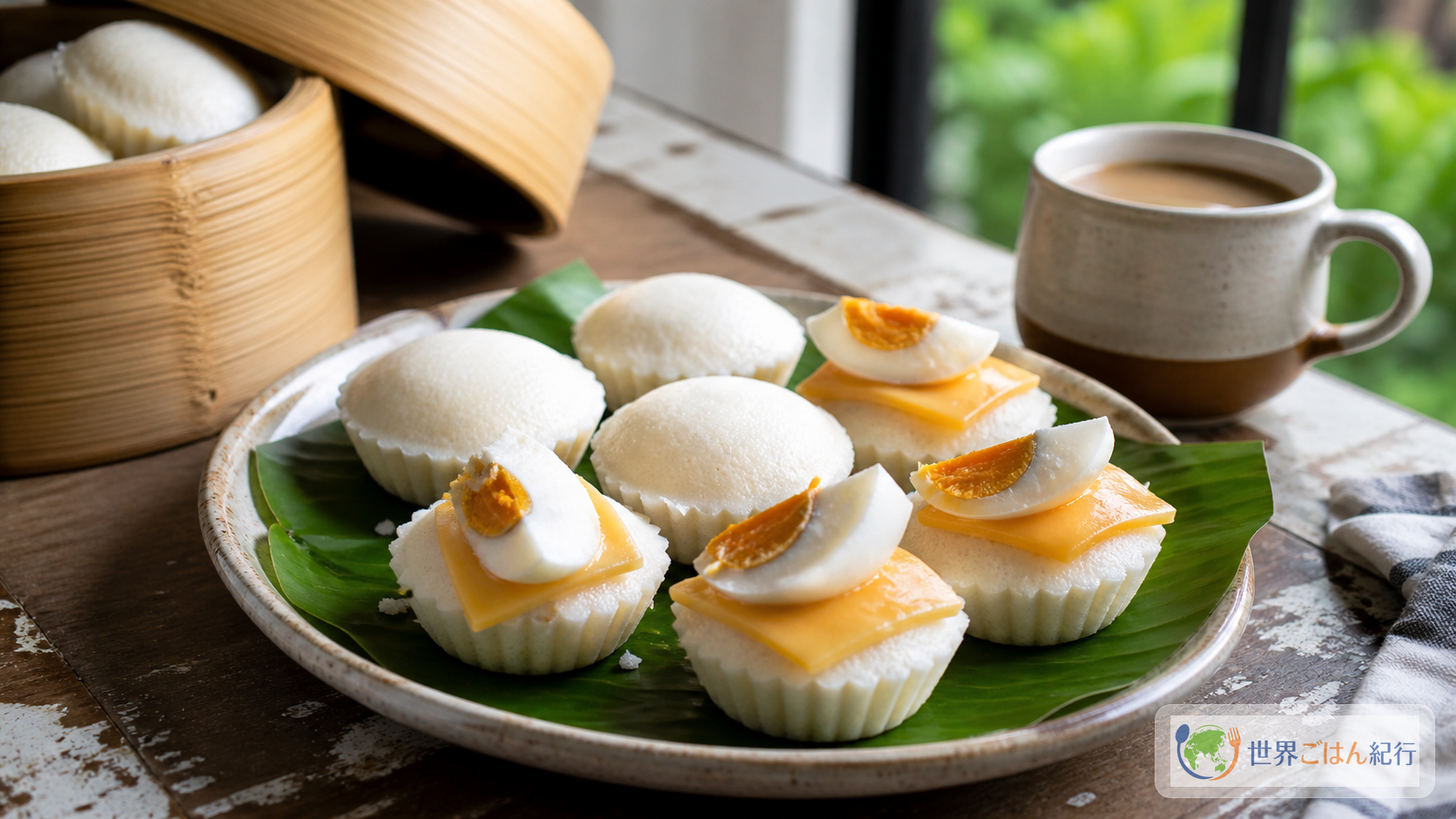
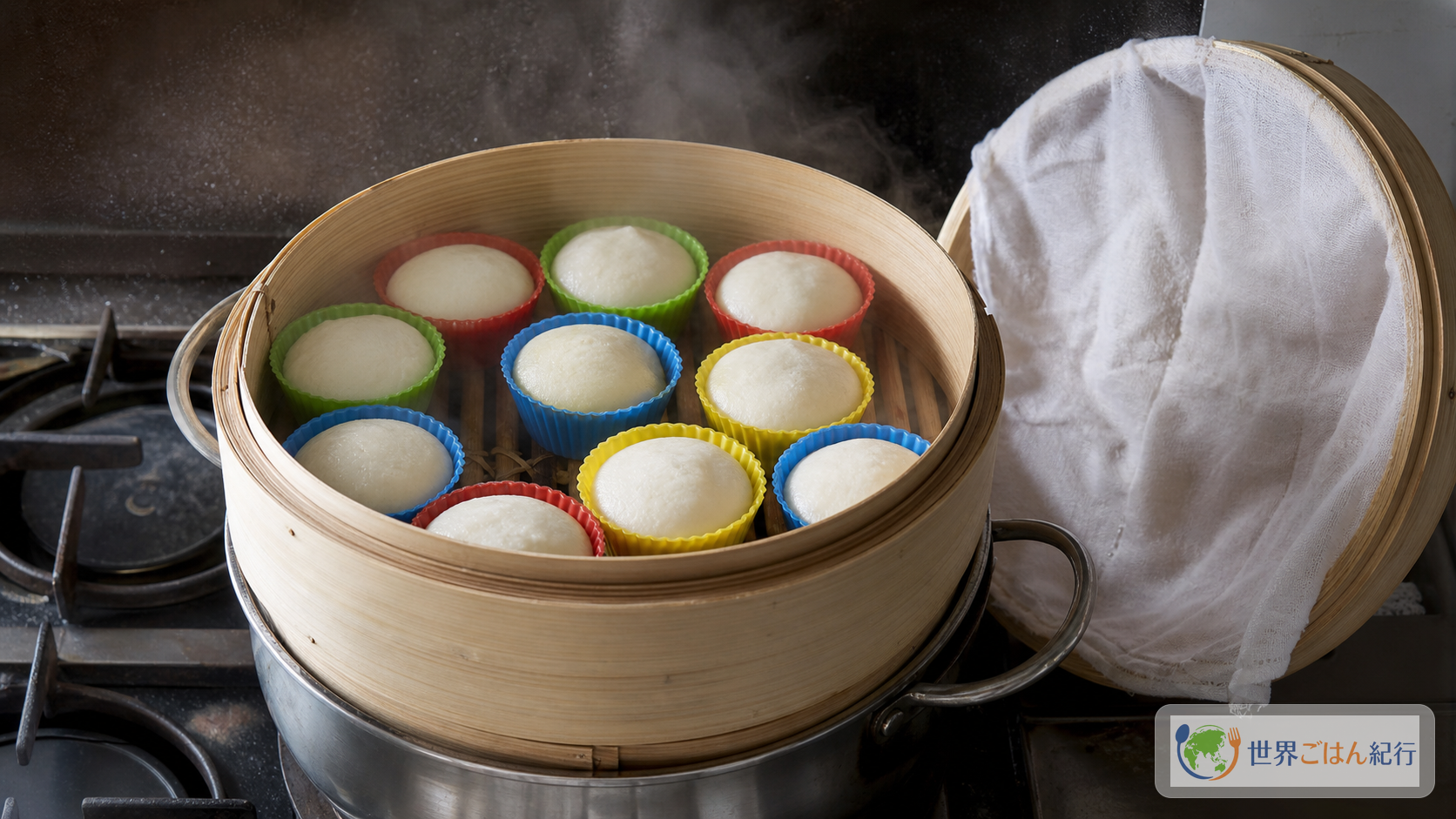
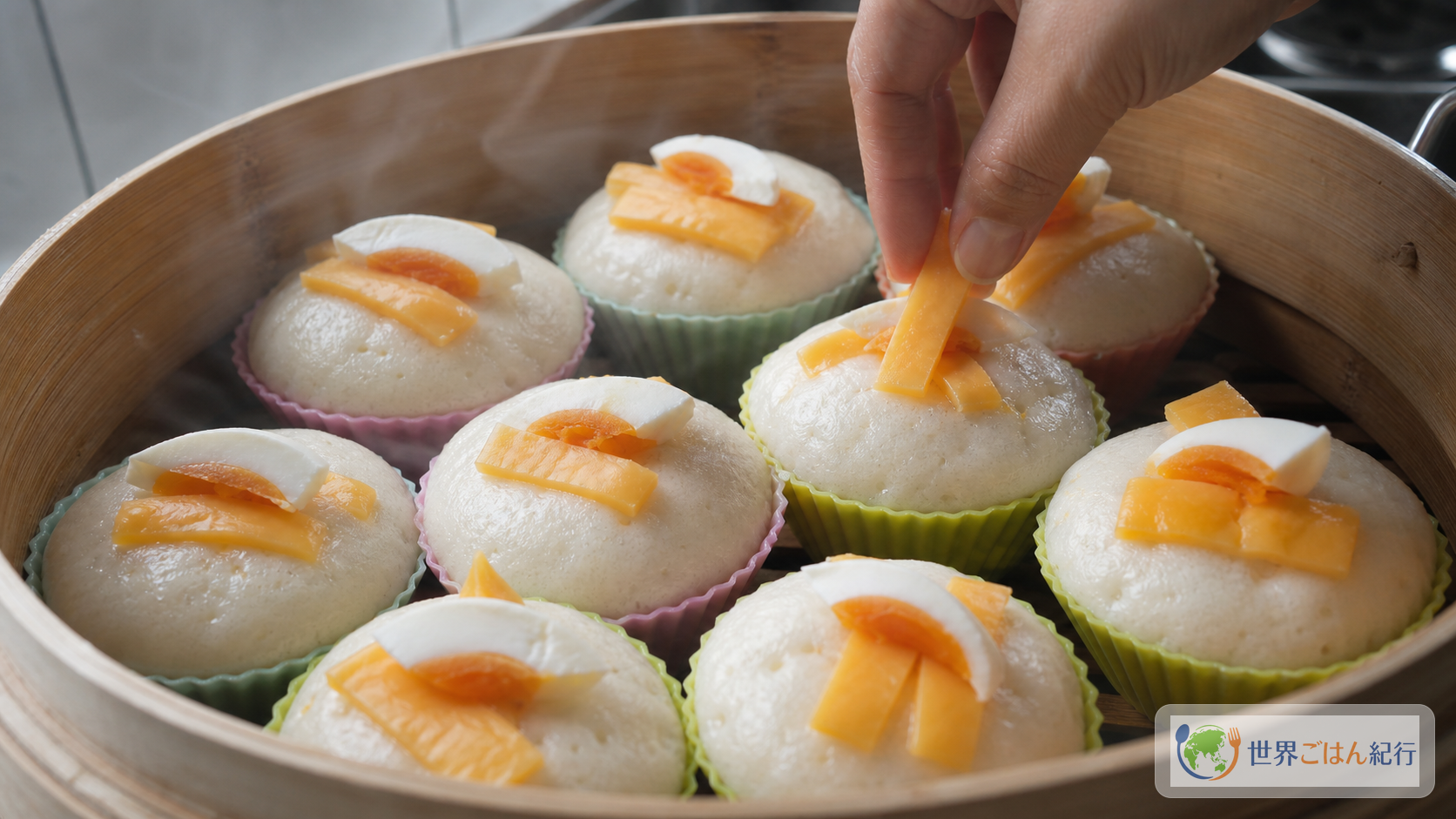
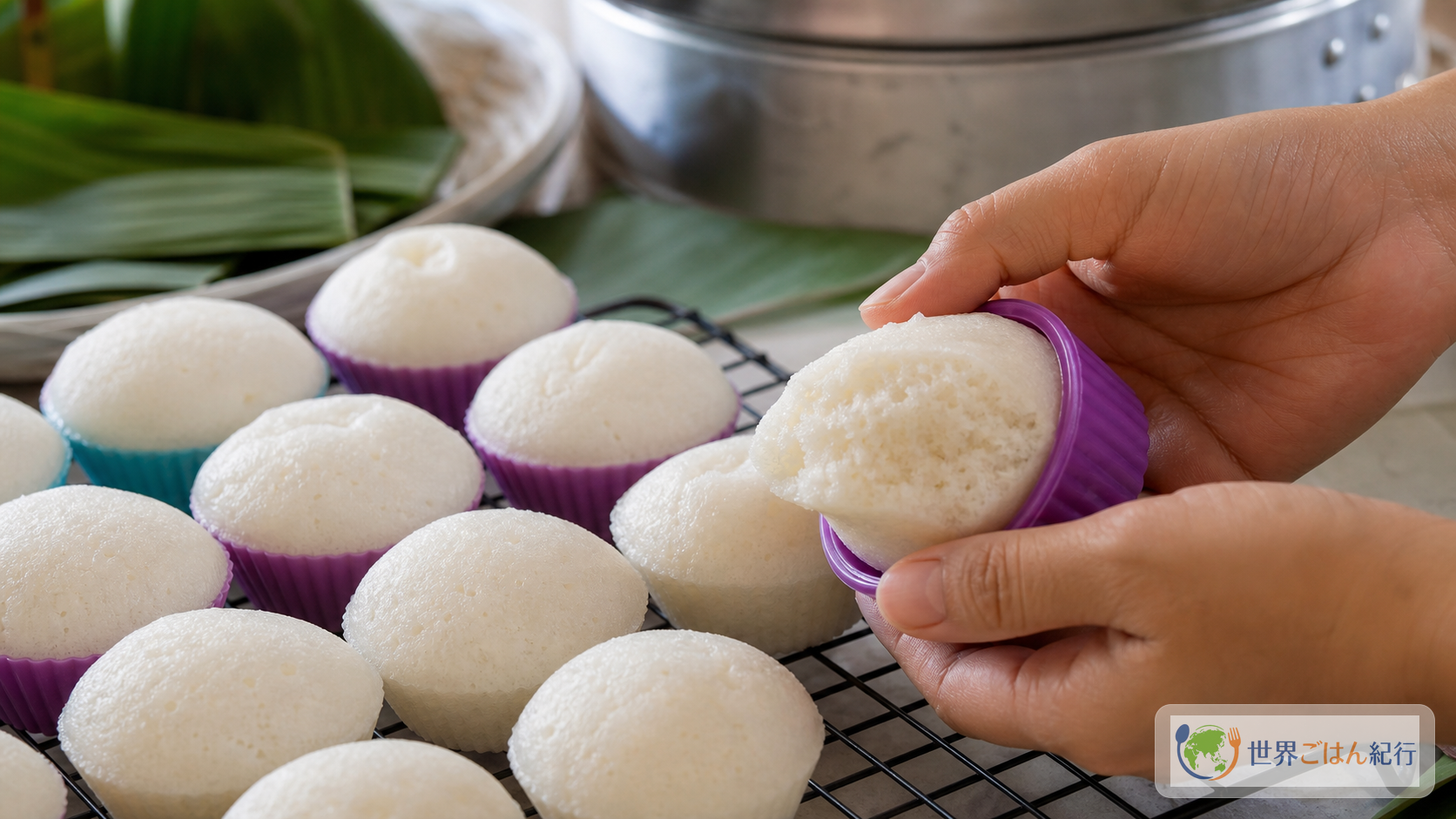
Lift the steamer lid, towel and all, and you'll see small white cakes that have puffed up, their surfaces dotted with tiny holes. In the steam the cheese softens just a little and the salted egg yolk crumbles. Filipino puto doesn't announce that it's done with a dramatic golden crust; you know it's ready by the gentle aroma of rice flour and coconut milk.
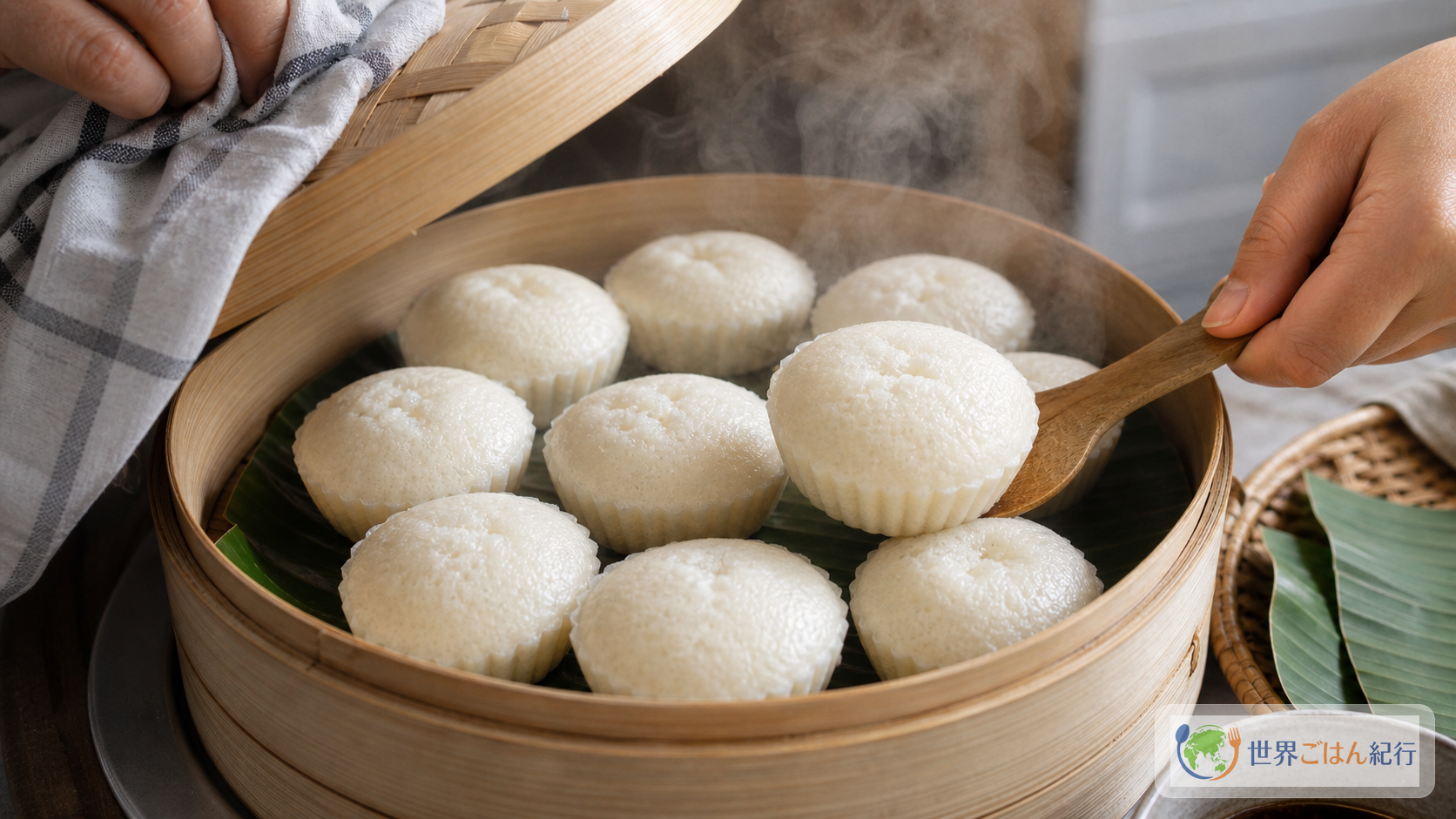
Puto is one of the Filipino rice sweets known as kakanin. Traditionally, rice is soaked in water, lightly fermented and ground into a rice batter called galapong, which is then steamed. At home, versions made with rice flour, coconut milk and baking powder are also widespread, and Filipino recipes often describe making white putong puti or putong bigas with rice flour.
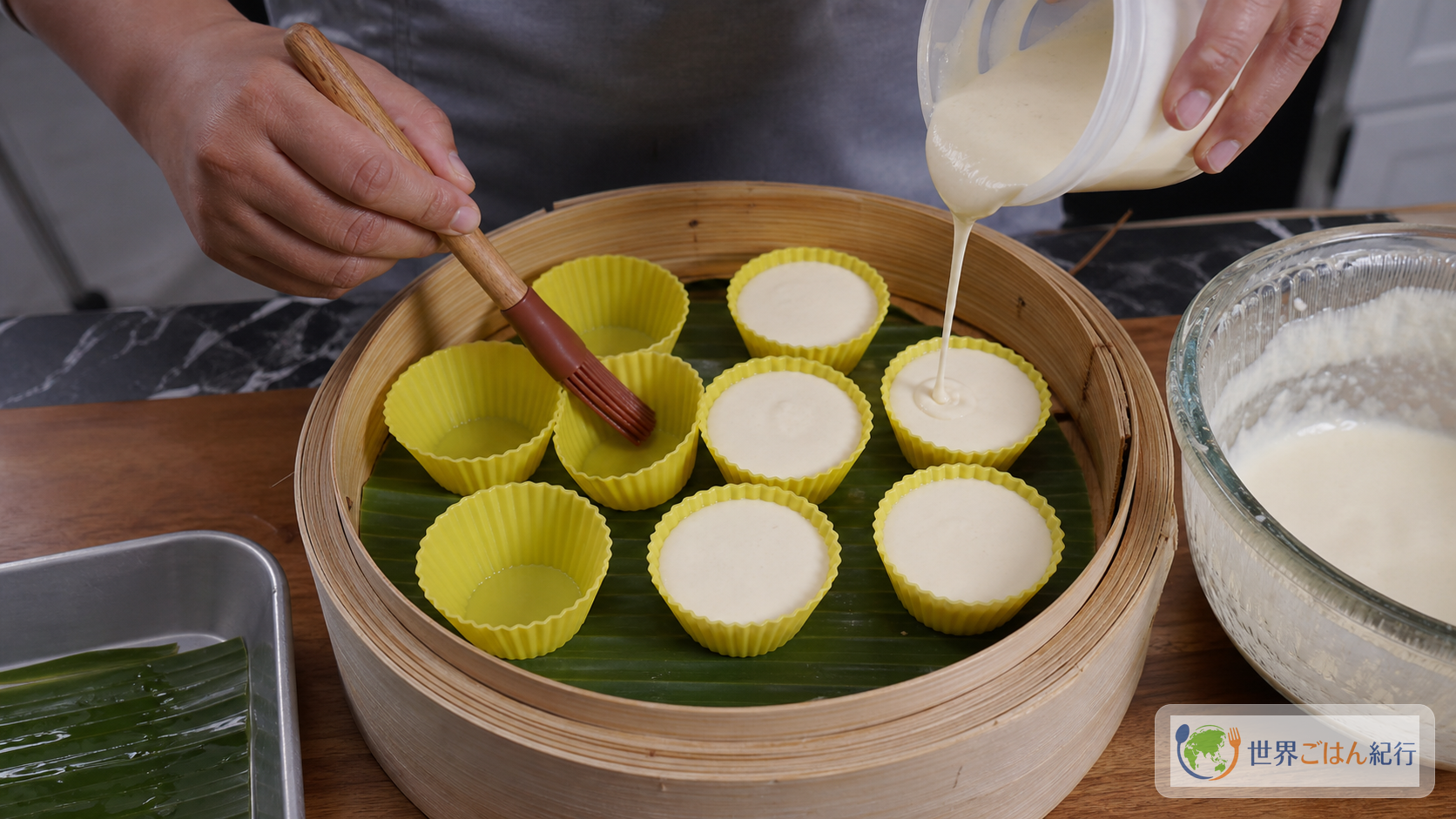
The make-or-break part in a home kitchen is the steaming, not tracking down ingredients. If the heat is too low, the cakes barely rise; if drips from the lid land on the batter, the tops turn blotchy. Steam them hard for too long, on the other hand, and you get a dry steamed bun instead of something fluffy. This recipe makes 12 silicone cups about 7 cm (2 3/4 in) across, with a batter that comes out white, moist and not too cracked in a home steamer.
Puto is also used as an umbrella term for Filipino steamed rice cakes. There's white rice-flour putong puti, puto cheese topped with cheese, purple puto bumbong, and related cakes such as the brown-sugar-colored kutsinta; they vary a lot by region and ingredient. This article sticks to an easy-to-make white puto with a little cheese and salted egg on top.
Ingredients (makes 12 small cakes)
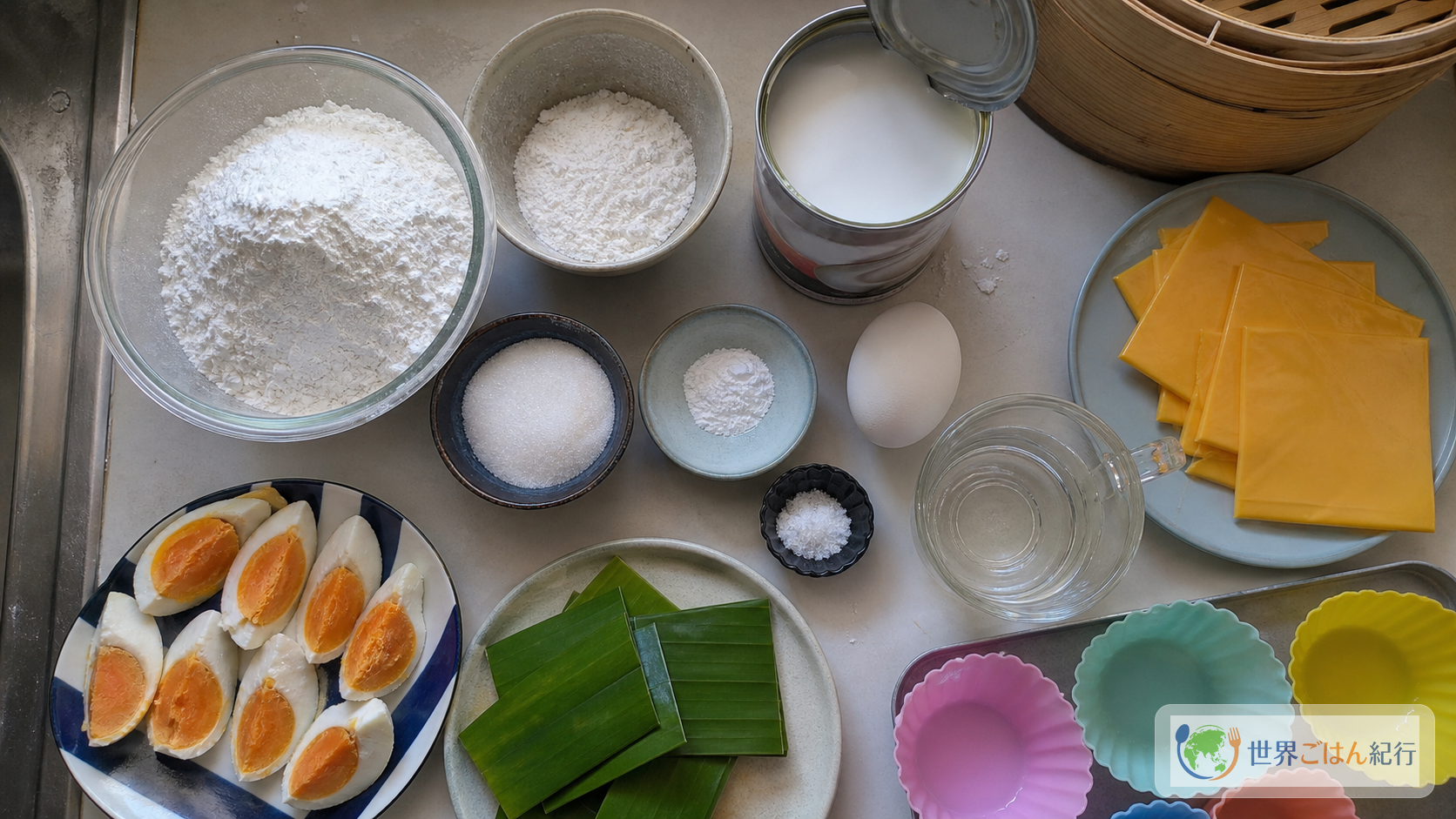
These amounts fill 12 silicone cups 6 to 7 cm (about 2 1/2 in) across. Metal pudding molds work too, but for a first attempt, smaller molds filled shallowly make it easier to judge doneness. Fill each mold only 70% full.
This recipe uses egg and dairy. Rice flour, baking powder and cheese may be made on lines that also handle wheat or soy, so check the package labels if you have allergies. Salted egg is very salty; for children or a lower-sodium table, cheese alone is easier to eat.
What you can swap, and what's hard to replace
Puto looks white and soft, but swapping flours changes the texture a lot. Think it through in this order.
| Role | Ingredient to keep | Possible substitute | What changes |
|---|---|---|---|
| Rice aroma | Fine rice flour | Regular rice flour (joshinko) | Regular rice flour gives a slightly firmer bite |
| Moistness | Coconut milk | Half milk, half water | The Filipino-style aroma is weaker |
| Rise | Baking powder | No substitute | Old powder makes cakes spread sideways and turn heavy |
| A light chewiness | Glutinous rice flour | Use rice flour only | Fluffy, but the chewy finish is shorter |
| Topping | Cheese and salted egg | Cheese only | Still sweet-salty, but the salted-egg aroma is gone |
Salted egg isn't essential. Plenty of Filipino puto cheese uses cheese alone, and for a home snack that works perfectly well. Still, a little salted egg adds saltiness and the crumbly richness of the yolk to the sweet rice batter, so the cakes don't feel out of place next to a savory dish such as pancit canton.
Worth buying
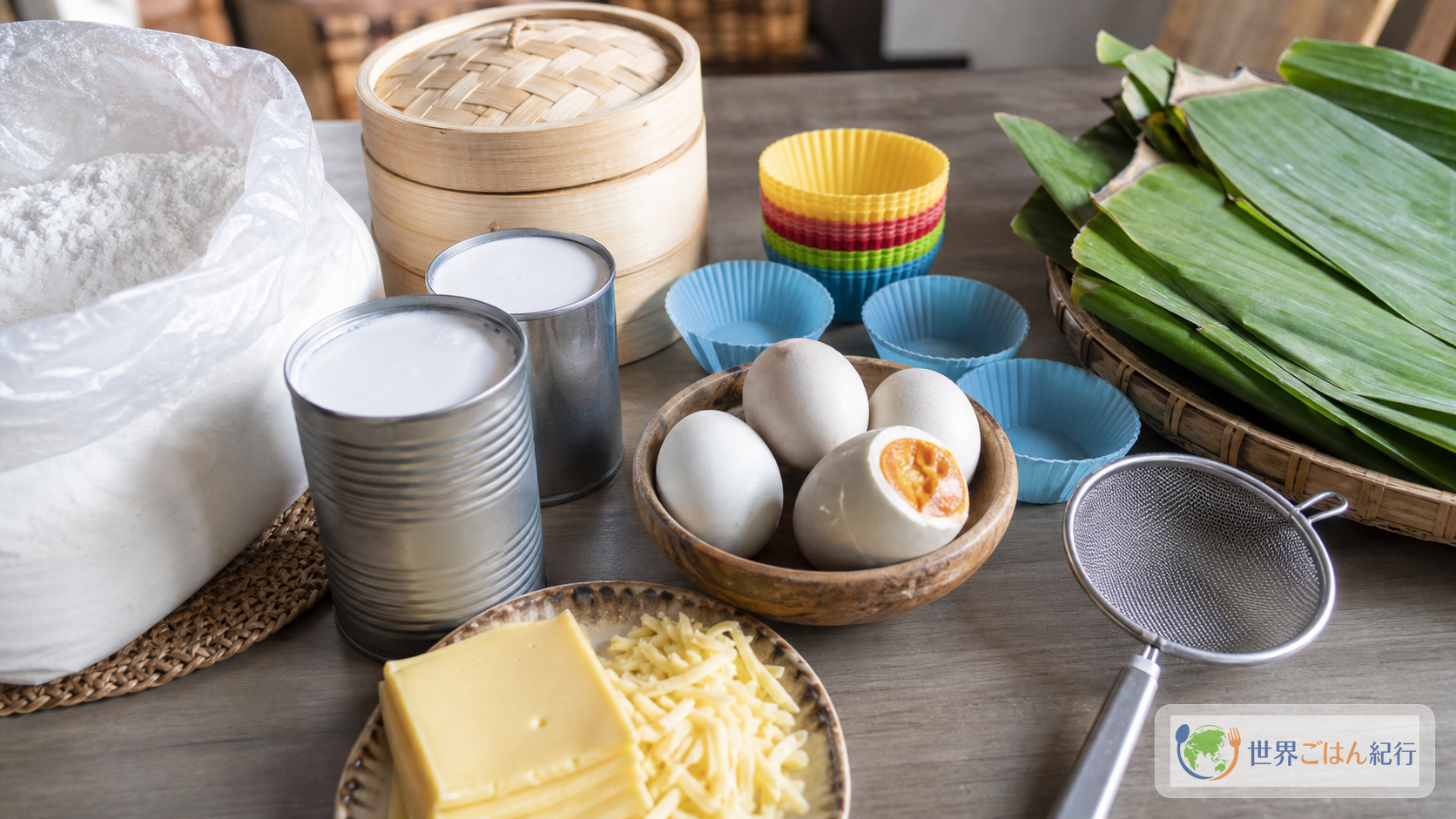
Sugar, eggs and cheese from any grocery store are fine. What's worth seeking out at an Asian grocery or online is finely milled rice flour, coconut milk, and a steamer that gives steady steam. Puto has so few ingredients that the quality of the flour and the steam shows directly in the texture.
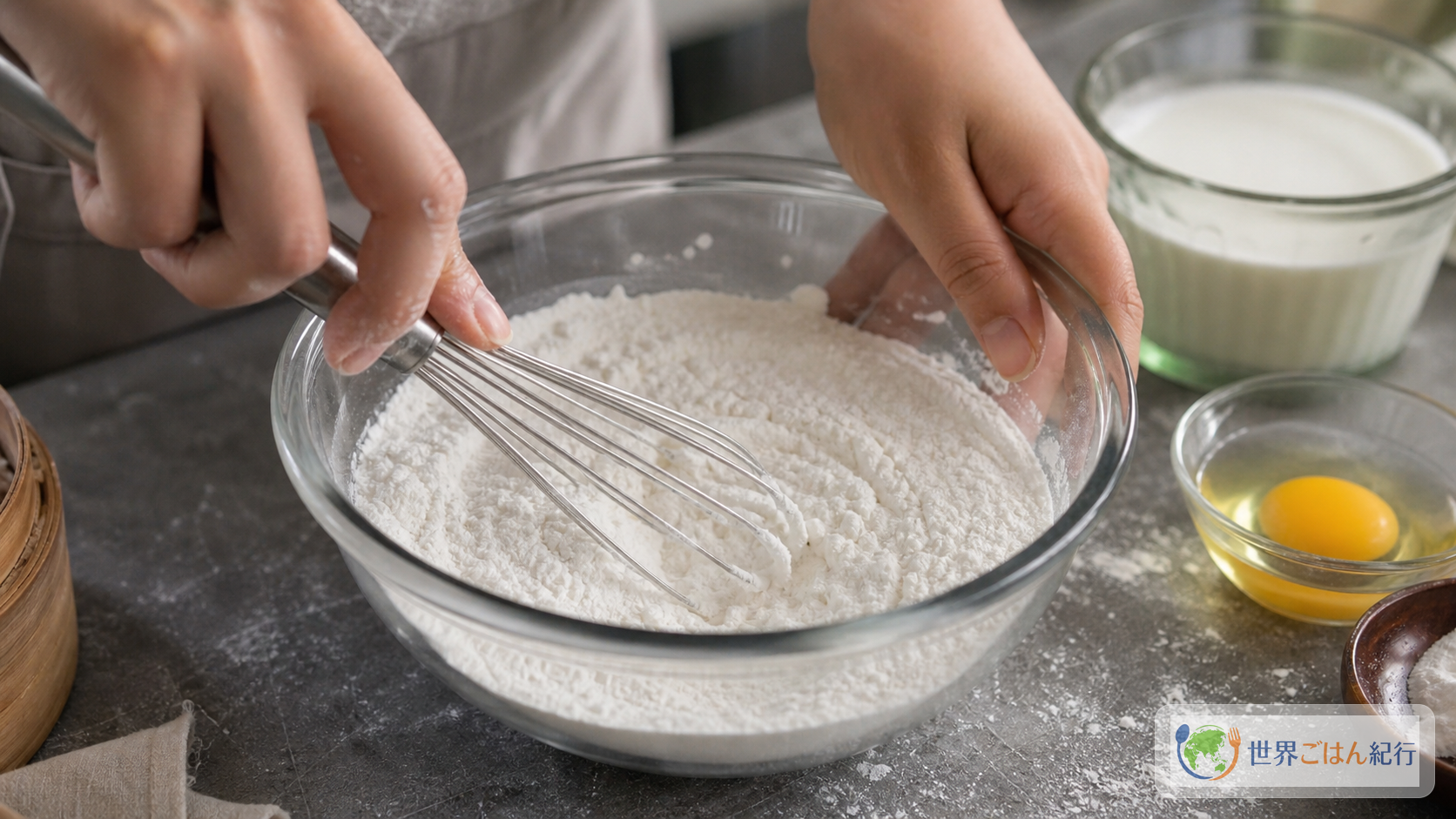
Choose a rice flour that is finely milled and doesn't clump; the batter will come out whiter and smoother. Regular rice flour works too, but sift coarse flour through a strainer before using it.
Coconut milk supports both the aroma and the moistness. Made with water alone, the cakes are lighter, but once they cool the dryness of the rice flour comes forward. Shake the can well before opening, and if it has separated, warm it in a small pan to body temperature until smooth.
A bamboo steamer isn't essential, but it keeps drips off the batter and makes it easier to get clean tops. If you use a metal steamer, wrap the lid in a clean kitchen towel and tie the corners on top so not too much steam escapes.
Steaming method: keep drips off and steam briefly
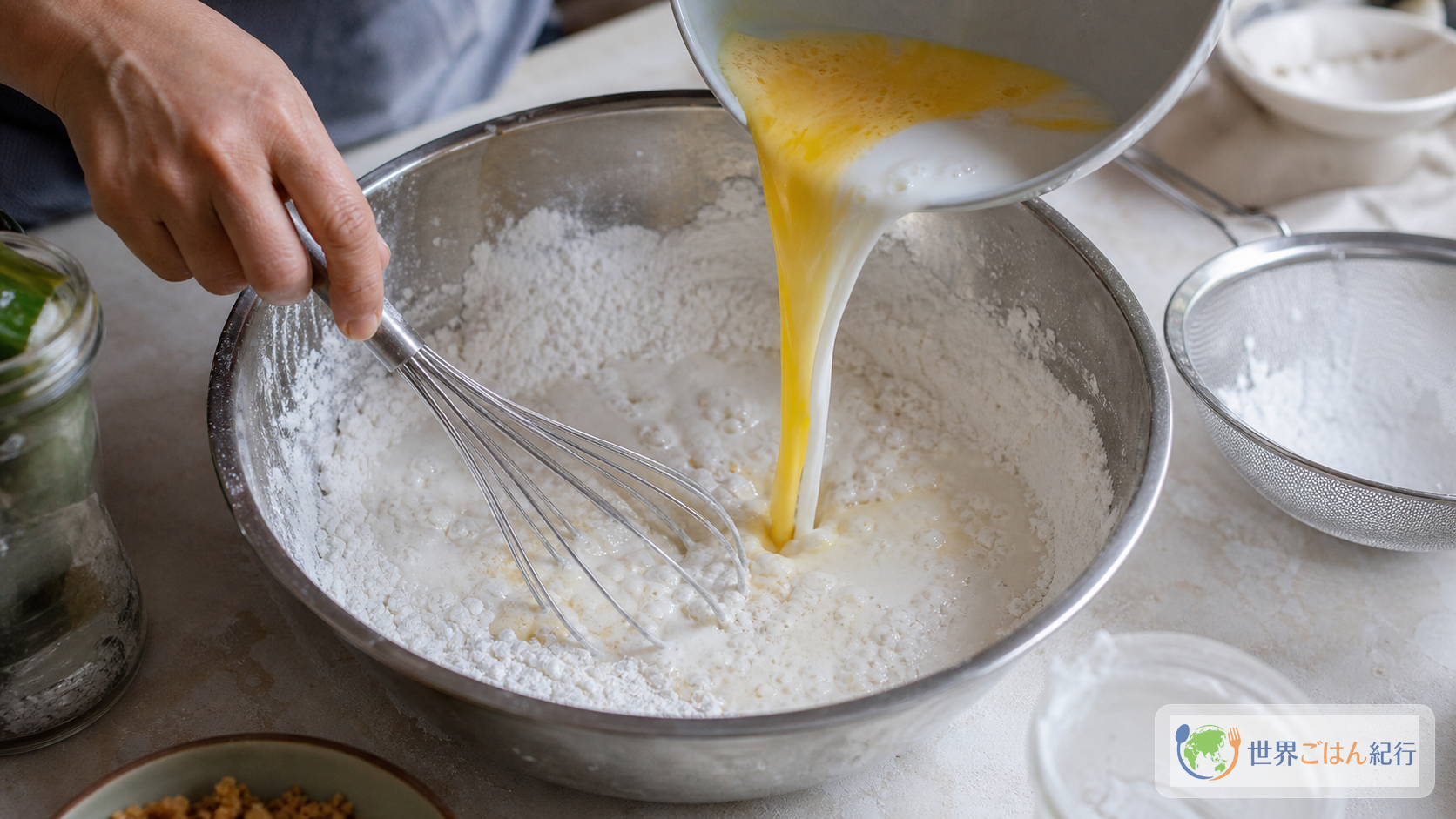
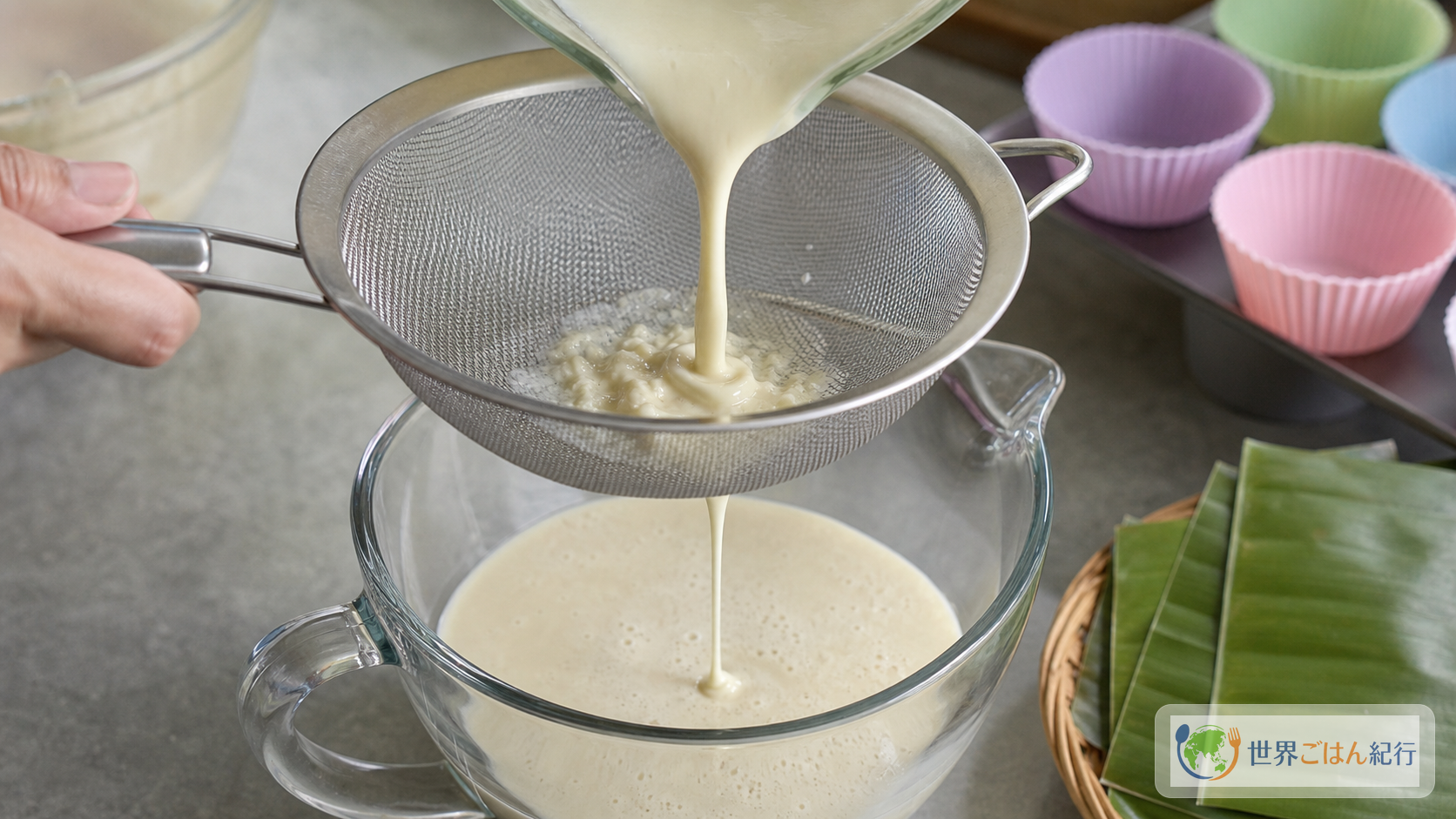
Rice flour settles quickly, so stir from the bottom once more right before pouring into the molds. Get the steamer going with plenty of steam before the batter goes in. If you warm it slowly over weak steam, the flour sinks before the cakes rise.
Common problems and how to fix them
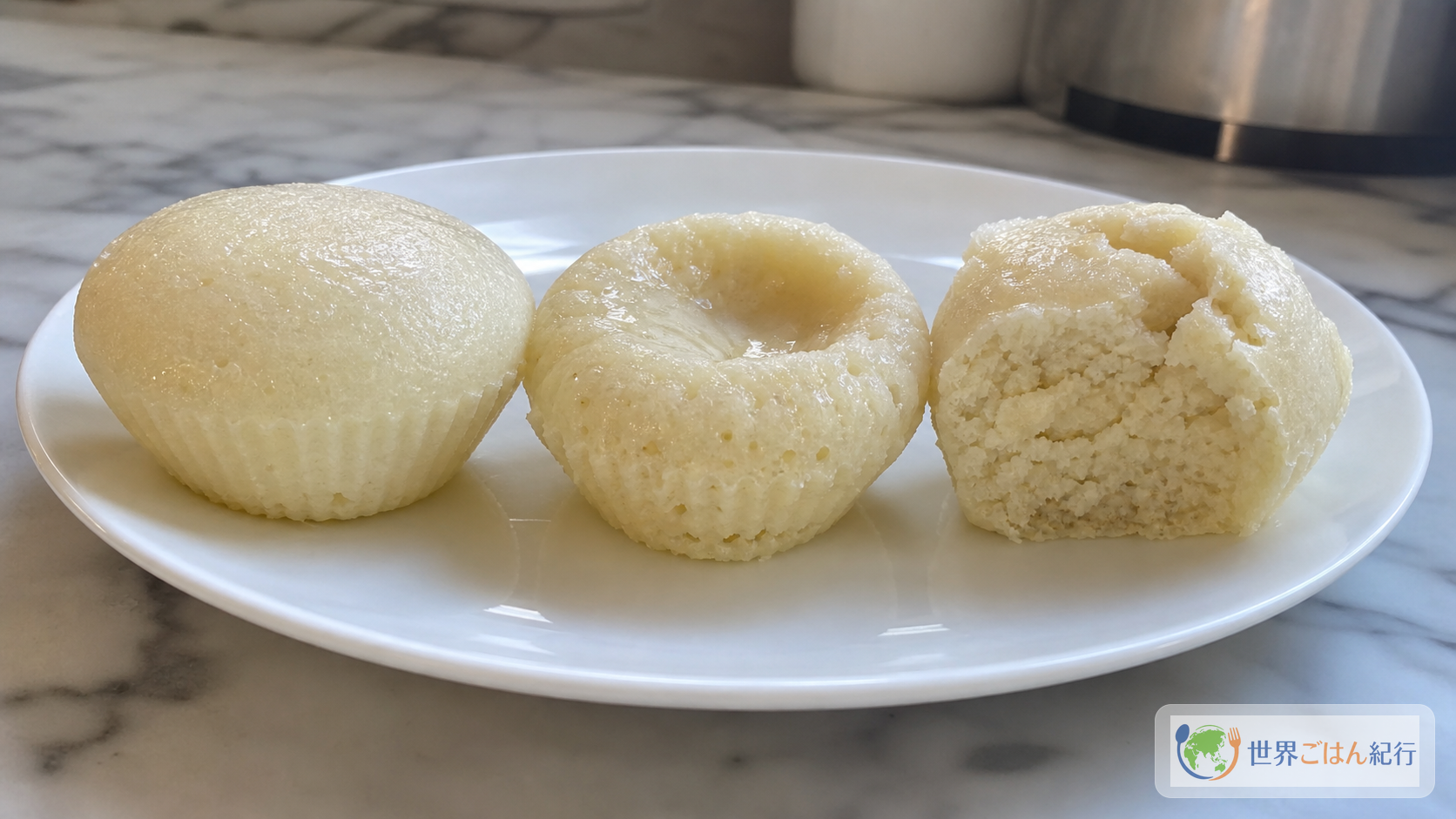
Puto has no browning, so judge it by the top, the bottom and the bubbles inside when you break one open. When it doesn't turn out, work through the causes one at a time.
| Problem | Cause | Fix |
|---|---|---|
| The center sinks | Weak steam, or the lid was opened partway | Start over medium-high heat and don't open the lid for the first 8 minutes |
| Blotchy tops | Drips fell from the lid | Wrap the lid in a towel. A bamboo steamer drips less |
| Floury bottoms | The batter wasn't restirred before pouring | Stir from the bottom right before pouring into the molds |
| Dry | Oversteamed, or not enough liquid | Stop as soon as the skewer test passes. Add 2 tsp water |
| Heavy and too chewy | Too much glutinous rice flour | Cut glutinous rice flour to 20 g and raise rice flour to 160 g |
| Bitter or chemical-tasting | Old baking powder, or too much | Stick to 8 g and use fresh baking powder |
Puffing the cakes with strong steam can leave small cracks on top. As long as they aren't split wide open and dry, that's not a failure. Filipino home recipes include both smooth white puto and slightly cracked, fluffy puto. Because this version is topped with cheese, the heat is set to keep cracking to a minimum.
How puto is eaten, and pairing it with savory dishes
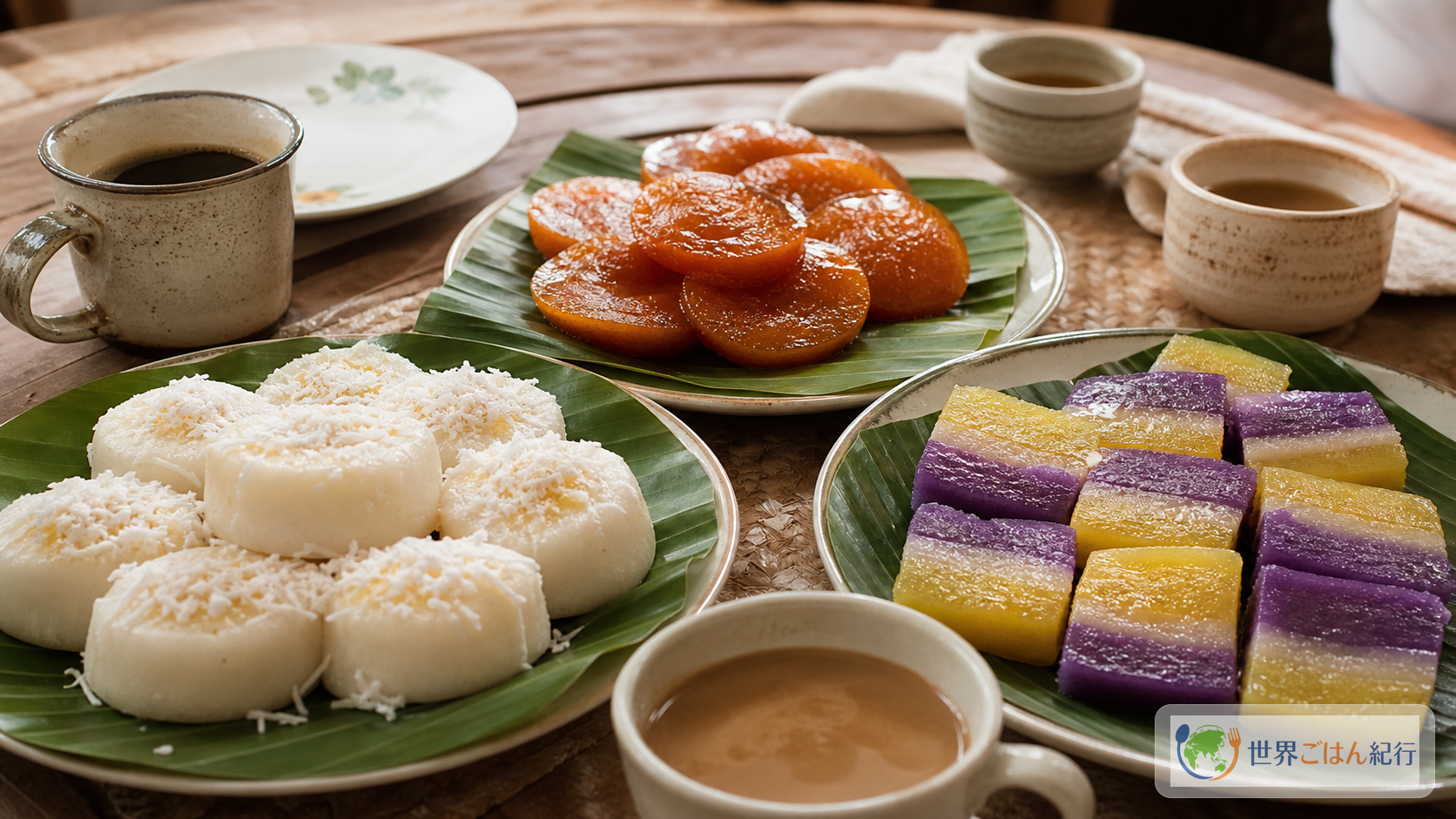
Puto can be a snack on its own, but in the Philippines it's also served with savory dishes. Pairing white puto with a rich stew like dinuguan (in Japanese) is especially well known. Even if you don't go as far as making a pork blood stew, a few small puto next to soy-sauce-seasoned pancit canton or tangy sinigang (in Japanese) give your palate a sweet rice-flour break.
As a snack, set it out with other kakanin such as kutsinta or sapin-sapin (in Japanese) to see the range of Filipino rice sweets. If you'd rather branch out from rice cakes toward bread, ensaymada (in Japanese), layered with butter, sugar and cheese, fits naturally into a merienda spread. Puto is fluffy, kutsinta is bouncy and chewy, and sapin-sapin has chewy layers. Making them all at once is a lot of work, but puto has a short hands-on time, which makes it an easy one to try on a weekend afternoon.
There are regional differences, too. The small fermented rice cakes of Calasiao, puto bumbong steamed in bamboo tubes around Christmas, puto pao filled with meat: the same name covers very different cakes. For a first attempt, start with the white putong puti style to get a feel for the steam and the flour, then branch out to ube, pandan, cheese and salted egg.
What's worth keeping when you aim for an authentic version at home is the light aroma of a mostly rice-flour batter, steam brought up quickly for a short cook, and just a touch of salt on a sweet batter. On the other hand, banana leaves, salted egg and special metal molds can all be replaced: parchment paper instead of banana leaves, cheese alone instead of salted egg, and small silicone cups are plenty. The key is not to let puto drift into an ordinary steamed bun, but to keep the whiteness of the rice flour and the scent of the steam at the center.
Storage and reheating
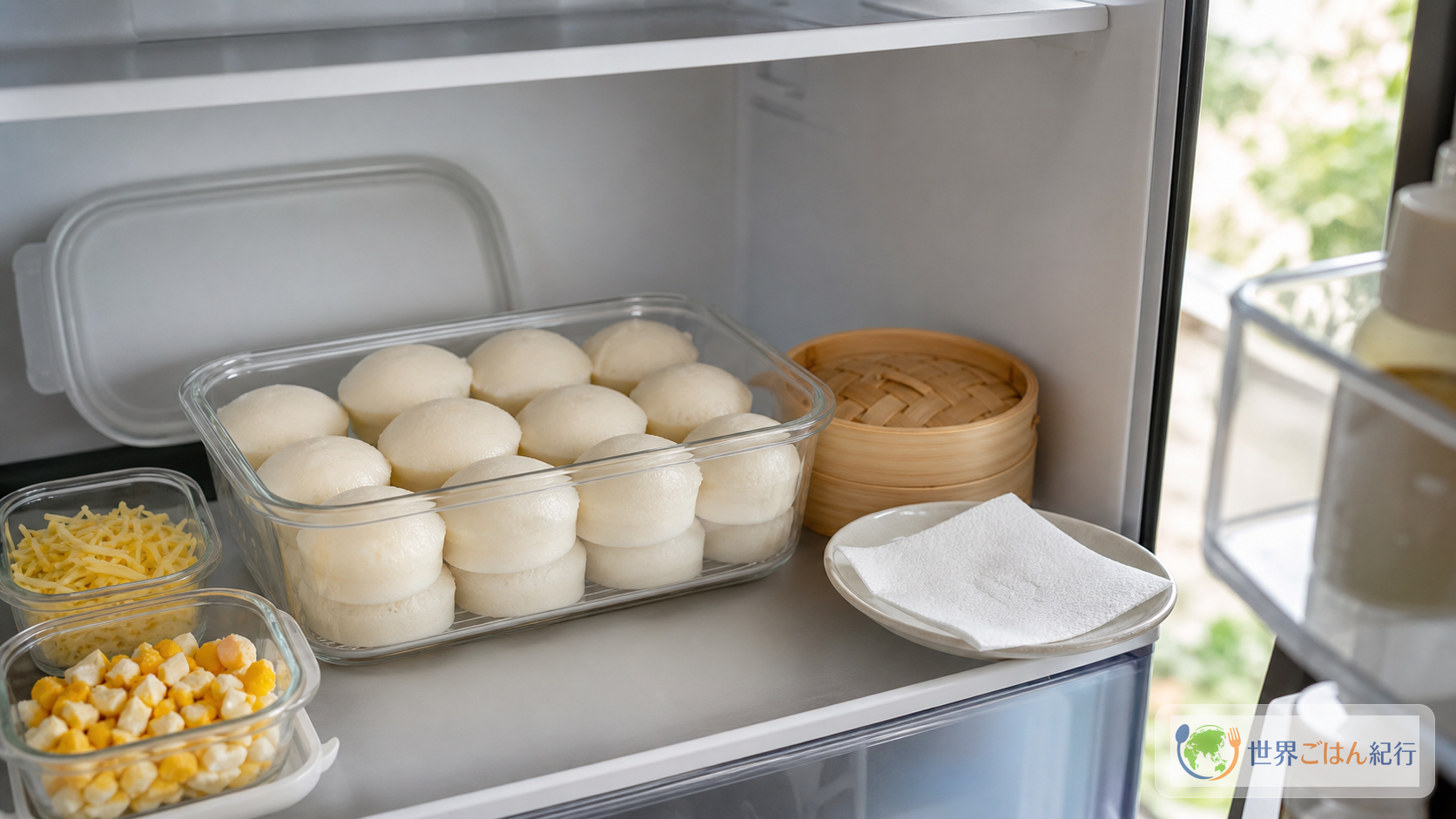
Puto is softest freshly made. If you'll eat it at room temperature, keep it in a lidded container so it doesn't dry out, and finish it the same day. Cakes topped with cheese and salted egg shouldn't sit out long at room temperature; refrigerate them once they've cooled slightly.
Refrigerated, they keep for up to 2 days. Put them in a container and close the lid without pressing plastic wrap directly onto the surface. To reheat, set the steamer over medium heat and steam for 3 to 5 minutes once the water is simmering. In a microwave, arrange them on a plate, sprinkle with 1 tsp water, cover loosely with plastic wrap and heat at 600 W for 20 to 30 seconds. Heat them too long and the edges harden.
You can freeze them, but the rice-flour cake dries out a little. Freeze only plain cakes without cheese or salted egg, wrapped individually, and use them within 2 weeks. Reheat from frozen in a steamer over medium heat for 7 to 8 minutes, stopping once the tops have puffed back up.
Dishes to make alongside
- Kutsinta - Another kakanin, made bouncy and chewy with brown sugar, lye water and tapioca starch.
- Sapin-sapin (in Japanese) - A layered celebration sweet made with coconut milk and glutinous rice flour.
- Pancit canton - Serving sweet puto with a savory noodle dish brings you close to a Filipino table.
- Chicken inasal (in Japanese) - A tangy, char-grilled chicken dish to serve before the sweet steamed cakes.
FAQ
Q. Can I make it with wheat flour instead of rice flour?
You can, but it becomes something closer to a different dish. Wheat-flour puto exists as a modern home recipe, but the rice aroma and clean bite are weaker. This page centers on fine rice flour to keep the character of putong puti. To use wheat flour, use 120 g cake flour and 60 g rice flour, and reduce the water by 20 ml.
Q. Should the batter rest overnight?
If you have time, resting it in the fridge for 3 hours to overnight lets the flour absorb liquid and makes the cakes a little moister. However, batter with baking powder in it can rise less the longer it sits. If you rest it, either stir in an extra 1 tsp baking powder just before steaming, or, as in this recipe, rest it briefly and steam right away for more reliable results.
Q. Where can I buy salted eggs?
You can sometimes find them labeled "salted egg" at Filipino, Chinese or other Asian grocery stores. If you can't get them, don't force it; use cheese alone. A hard-boiled egg sprinkled with salt won't give you the firm, salty yolk of a true salted egg, but as a home snack it's perfectly pleasant.
Q. Silicone cups or metal molds: which is better?
For your first time, silicone cups are easier to unmold. Metal molds heat faster and give neat, straight sides, but without enough oil the cakes break when you unmold them. If you use metal molds, oil them lightly and plan on steaming 1 to 2 minutes less.
Q. Can I make them less sweet?
You can reduce the sugar to 60 g. Go lower and you lose not only sweetness but also moistness. To serve with savory dishes, 60 g works well; as a stand-alone snack, 75 g. If you top them with cheese and salted egg, cutting the sugar too much makes the saltiness stand out.



