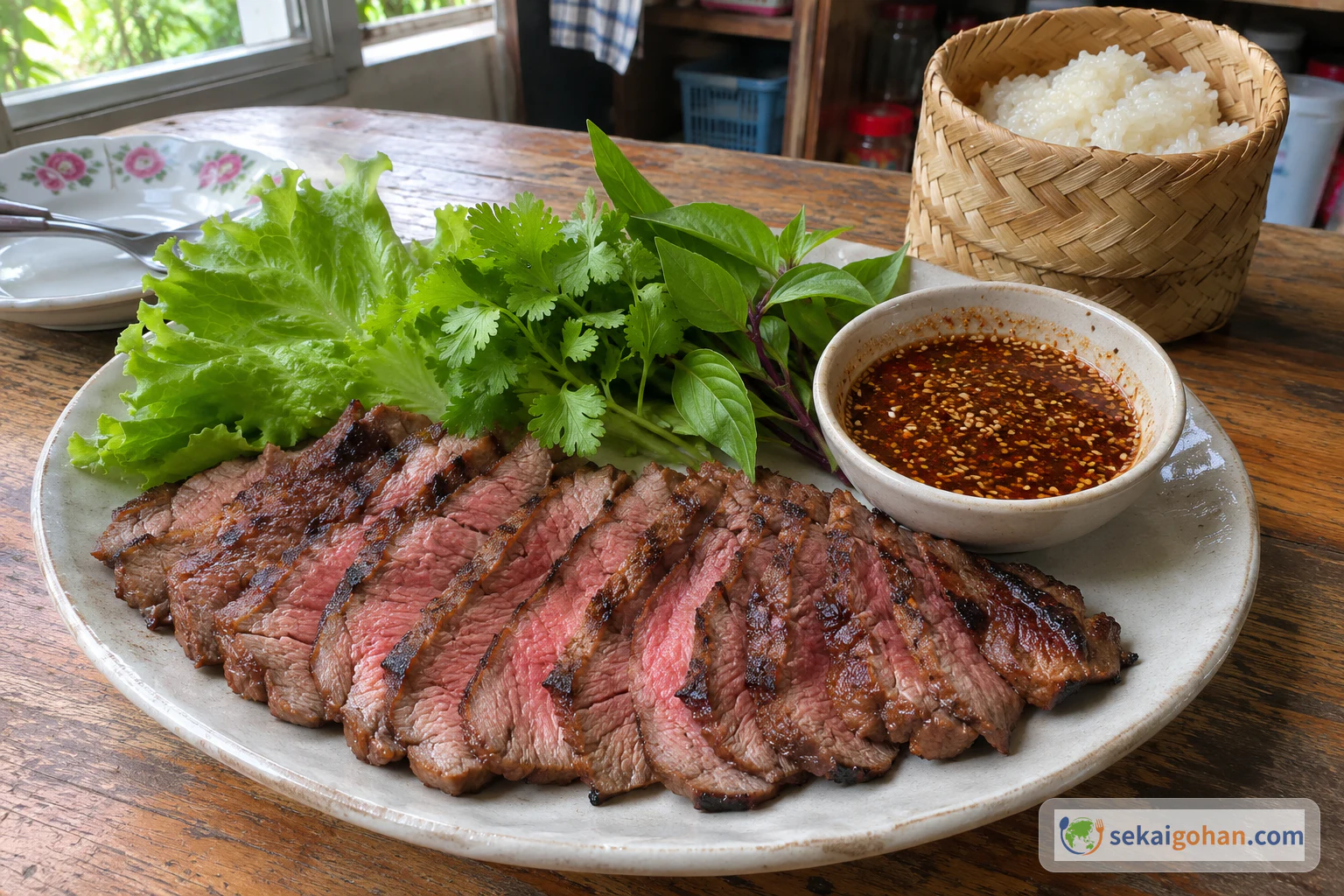
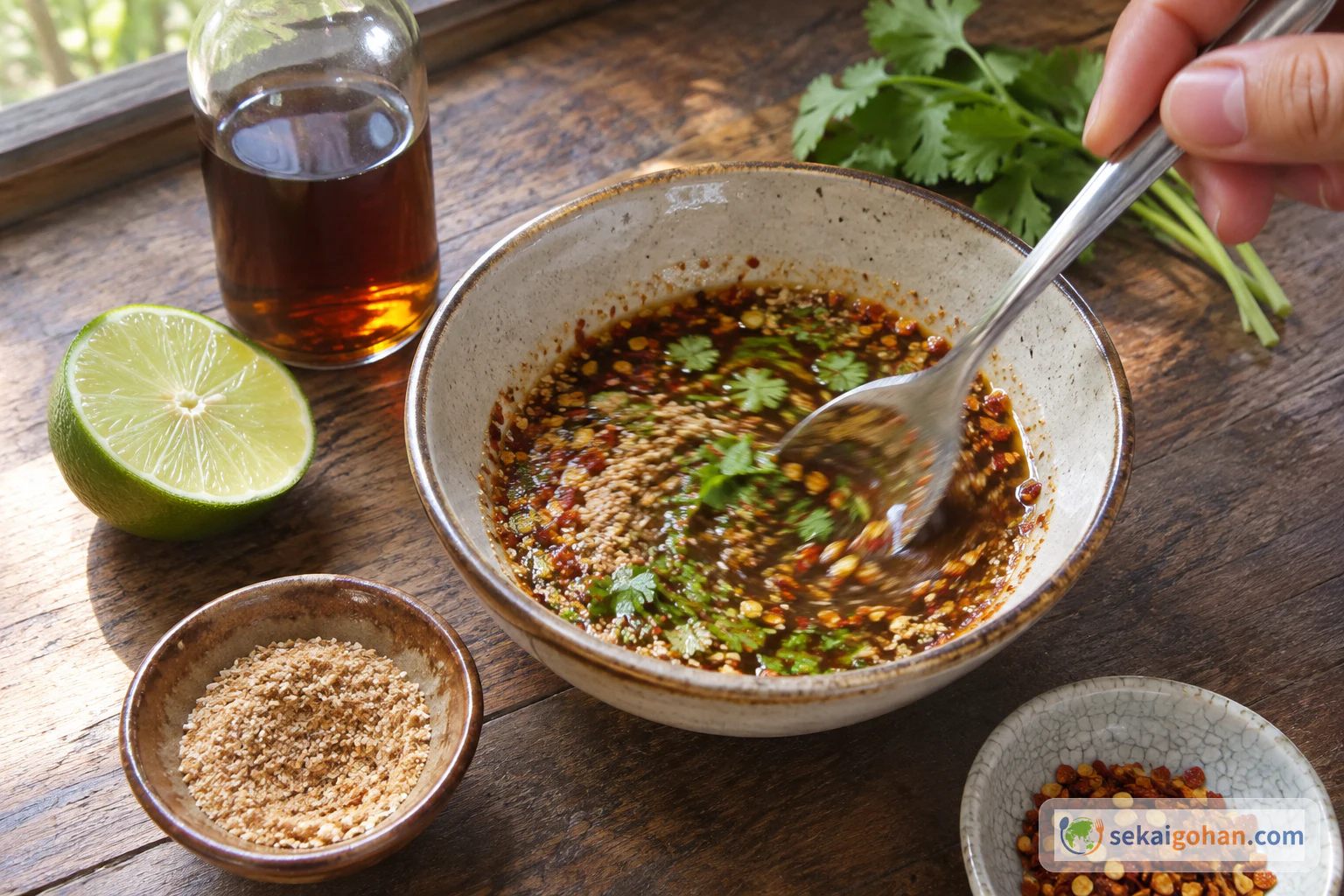
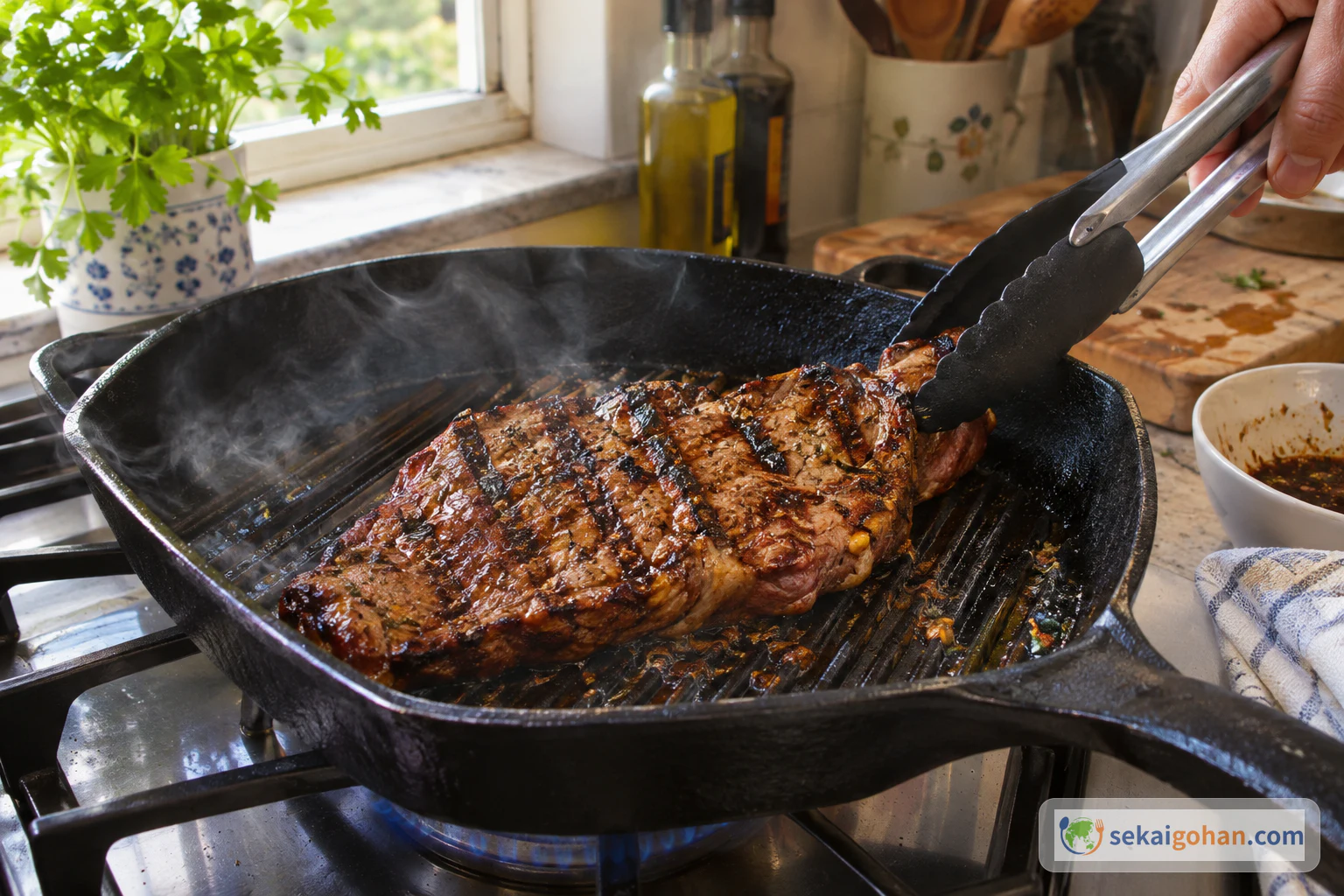
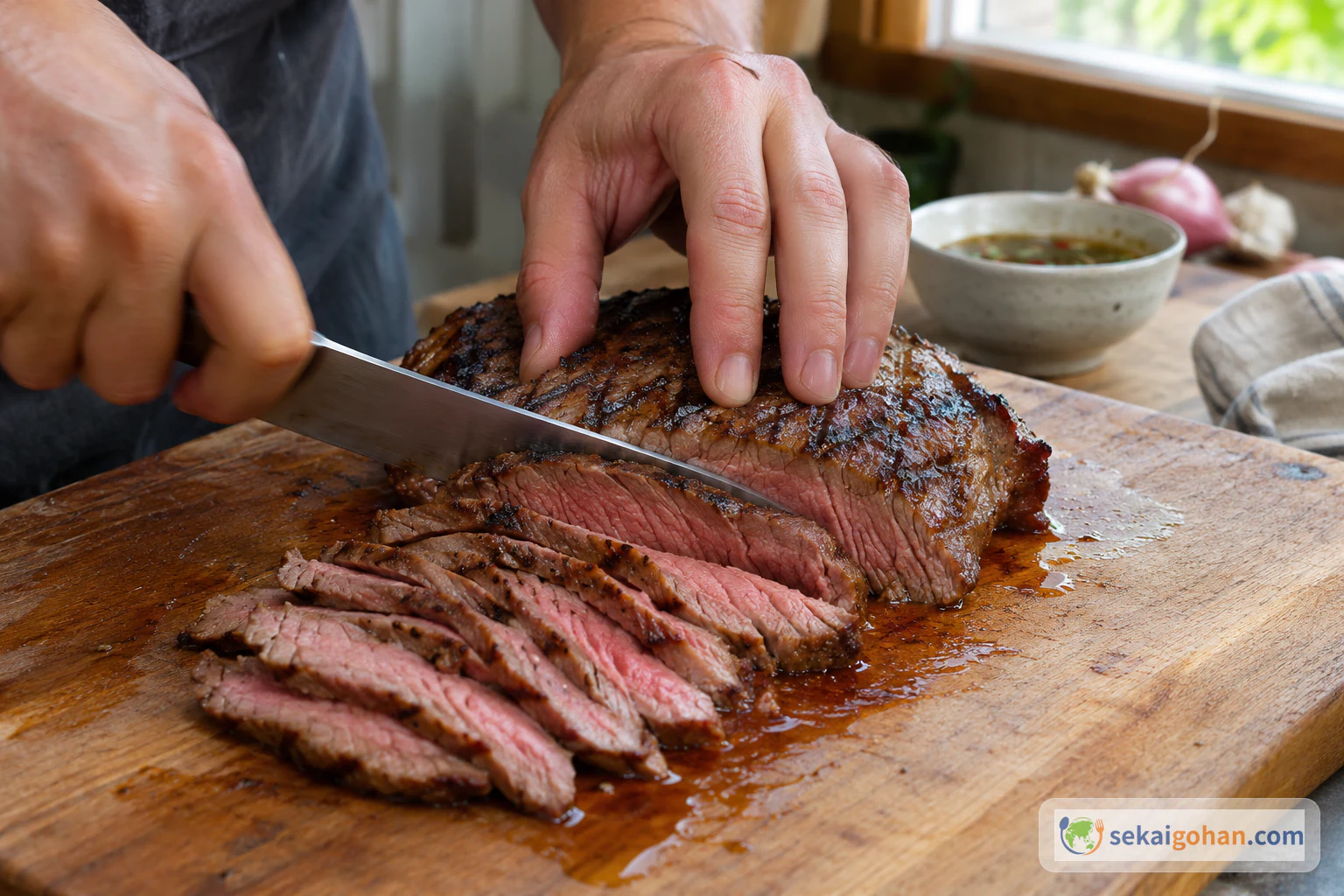
The marinade hits the hot iron and the sugar in it starts to catch, dark at the edges, with a smoke that smells of garlic and caramel. A few minutes later the steak is resting on the board, and the little bowl beside it is what everyone reaches for: a thin, dark red sauce flecked with chili and toasted rice. You slice the beef, dip it, fold it into a lettuce leaf or press it against a pinch of sticky rice, and eat with your fingers. Suea rong hai is grilled marinated beef from northeastern Thailand, salty and peppery from the marinade, with the dipping sauce doing most of the talking. The jaew is hot, sour, salty and sweet at once, and the toasted rice gives it a nutty, grainy finish.
The Crying Tiger of Isan
In Thai the dish is เสือร้องไห้, written in English as suea rong hai, seua rong hai or sua rong hai. Suea is tiger and rong hai is to cry, so it travels as "crying tiger" or "weeping tiger", and in Malay as daging harimau menangis. The name comes from a folk tale, and the tale has more than one telling. In the best known, a tiger brings down a cow but cannot get past the bones to the brisket, so villagers carry off the cut it left and cook it, and the tiger weeps for the meal it lost. Other explanations point at the meat itself: the layered lean and fat of brisket look like a tiger's hide, the fat dripping from the grill is the tears, and the grill marks are the stripes. Brisket is sometimes called "tiger meat" in Thailand.
The traditional cut is brisket, which is why the name and the meat are tied together in the tale. Ribeye and sirloin are recommended for a fast grill because they stay juicier, and the name came along with the dish.
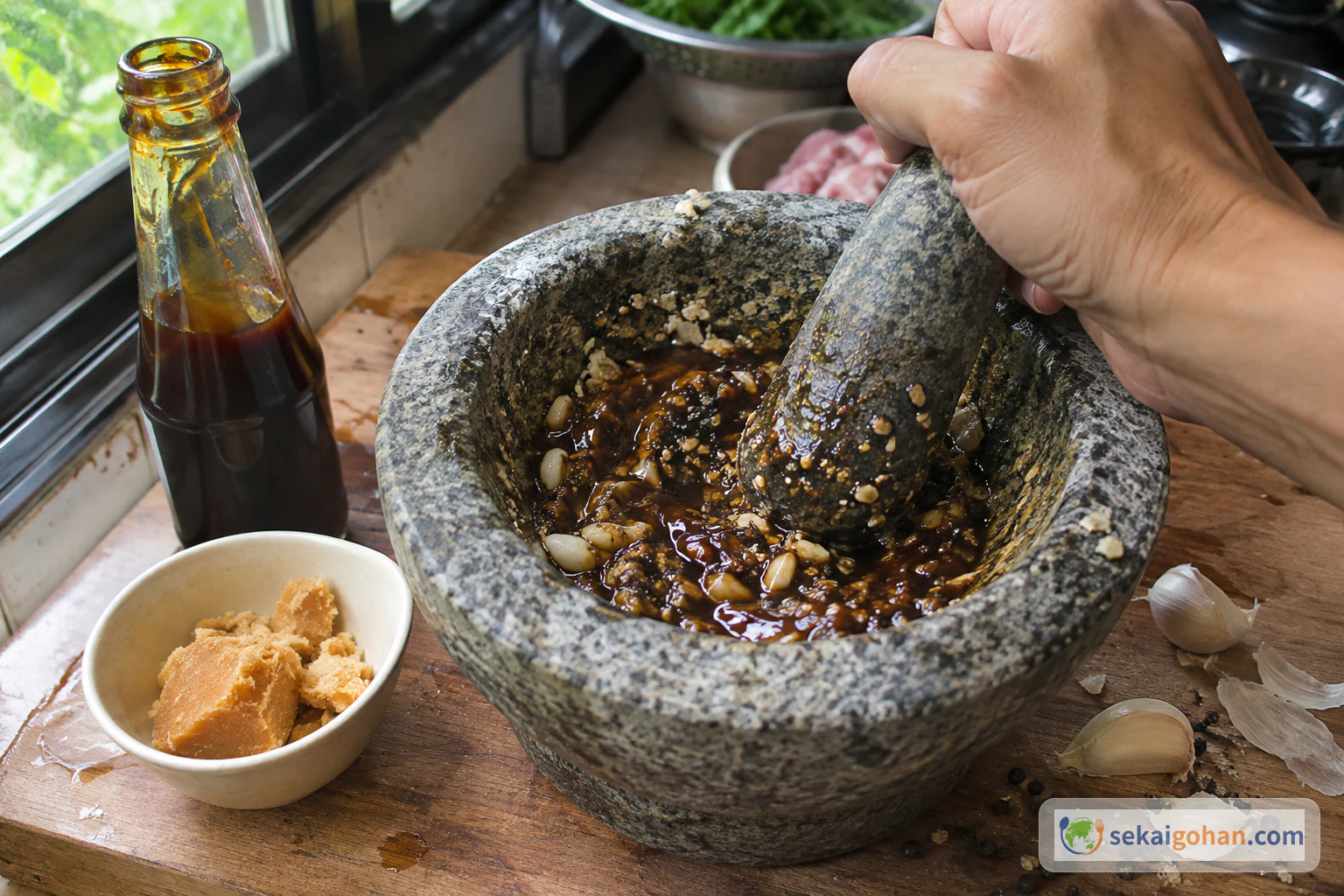
The dish is usually traced to Isan, the northeast, and Thai recipe sites still file it under Isan food. Today it turns up far beyond the region, at food courts and street stalls all over Thailand, and every stall has its own recipe. The usual marinade is salt, sugar, pepper and fish sauce; some cooks add soy sauce, oyster sauce, garlic or cilantro. The version here leans on pounded garlic and whole black pepper with Thai seasoning sauce and oyster sauce, which gives a darker, glossier crust.
At the table it belongs with the other dishes of the Isan meal: something grilled, a sharp dip, sticky rice in a basket. Kai yang, the grilled chicken of the northeast, and som tam, the pounded green papaya salad, share that table, and a plate of som tam can sit beside it. Some people wrap the slices in lettuce, some eat them with plain rice, others with sticky rice and raw vegetables. For more of the country's cooking, see the Thailand recipe collection.
The sauce changes from kitchen to kitchen too. Some cooks melt tamarind paste with palm sugar for a darker, fruitier jaew, and some scatter in chopped shallot and herbs. This jaew keeps to lime, fish sauce, white sugar, chili flakes and toasted rice, so the sourness stays bright and the toasted rice comes through clearly.
Ingredients (serves 2)
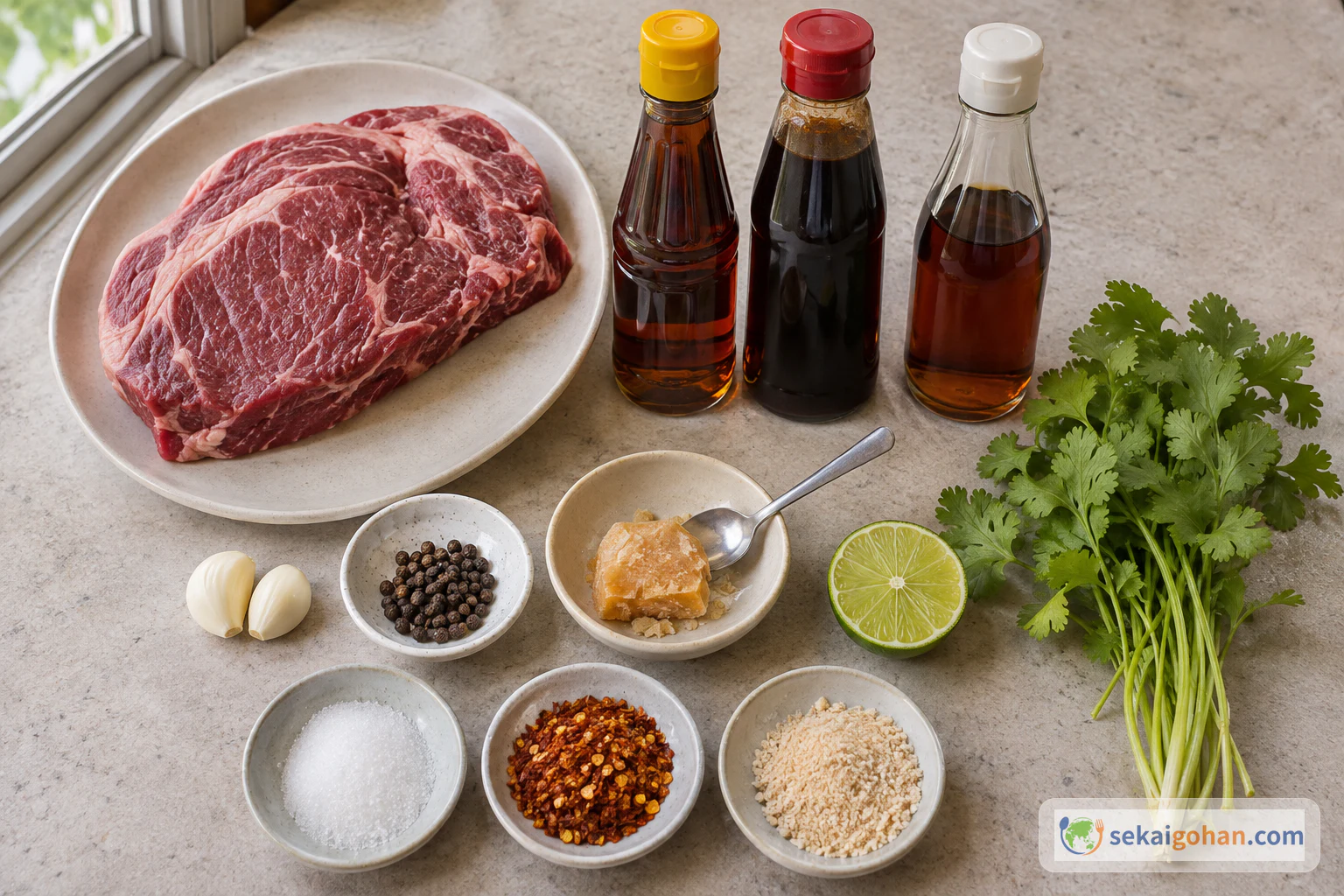
There is no salt and no oil in the recipe. The two sauces carry all the salt, so taste before adding any.
Fish sauce contains fish. Oyster sauce is made from oysters (shellfish). Golden Mountain sauce and oyster sauce contain soy and usually wheat. Cilantro belongs to the celery family. Check the labels on every bottled sauce for allergens and shared-facility statements.
Equipment
- Mortar and pestle, stone or ceramic
- Cast-iron grill pan or a charcoal grill
- Dry skillet for toasting the rice
- Spice grinder (optional, in place of the mortar for the rice)
- Tongs
- Cutting board and a sharp knife
- Meat mallet, if using brisket
- Kitchen thermometer
Choosing the Beef and the Thai Pantry
Ribeye and sirloin are the easiest cuts for a fast grill: ribeye is fattier and juicier but browns unevenly, sirloin is leaner and cleaner in flavor. Flank and skirt also work. Brisket is the traditional tiger meat and has the striped lean and fat of the story, but it carries a lot of connective tissue, so it needs pounding and a long marinade (see the variations below).
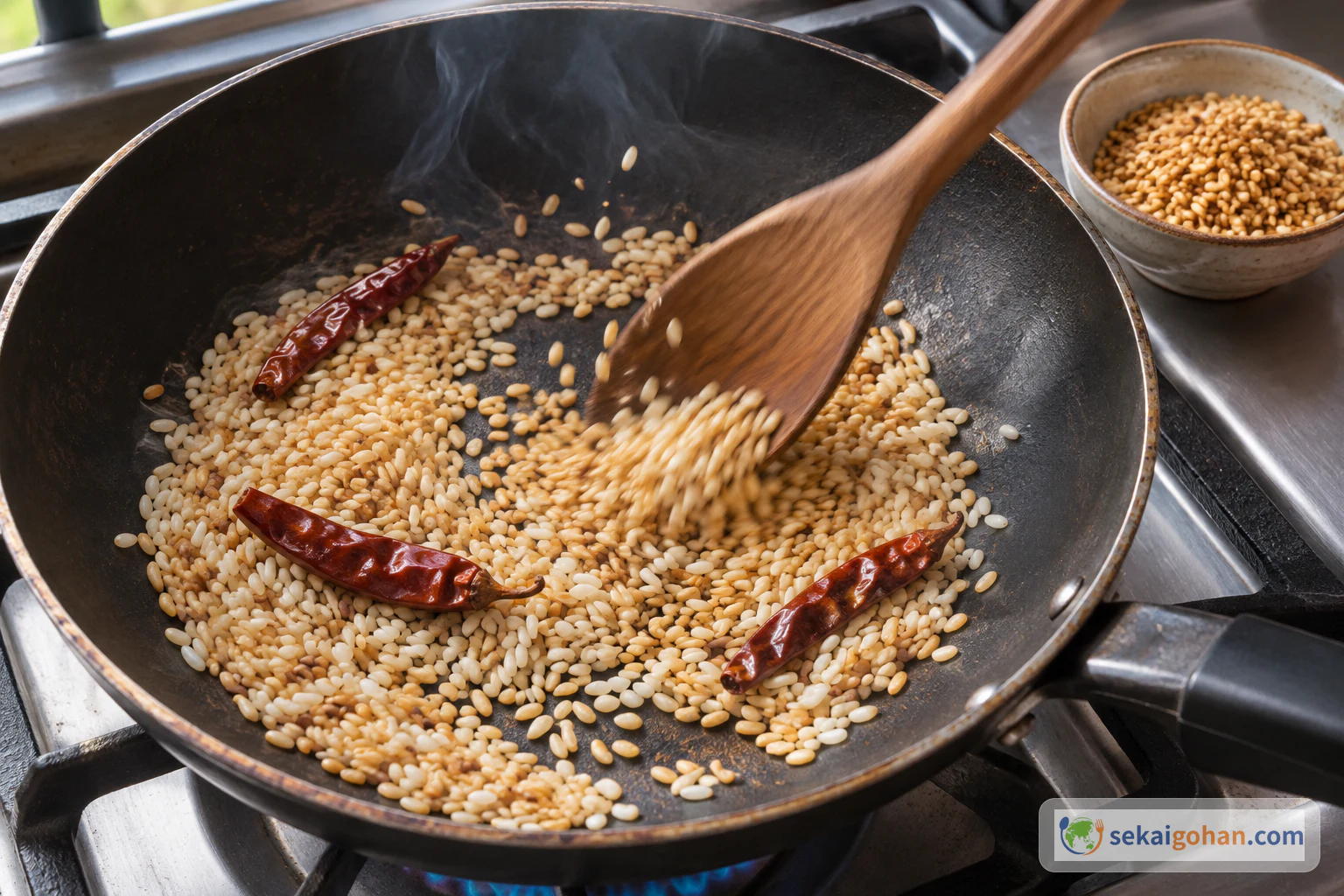
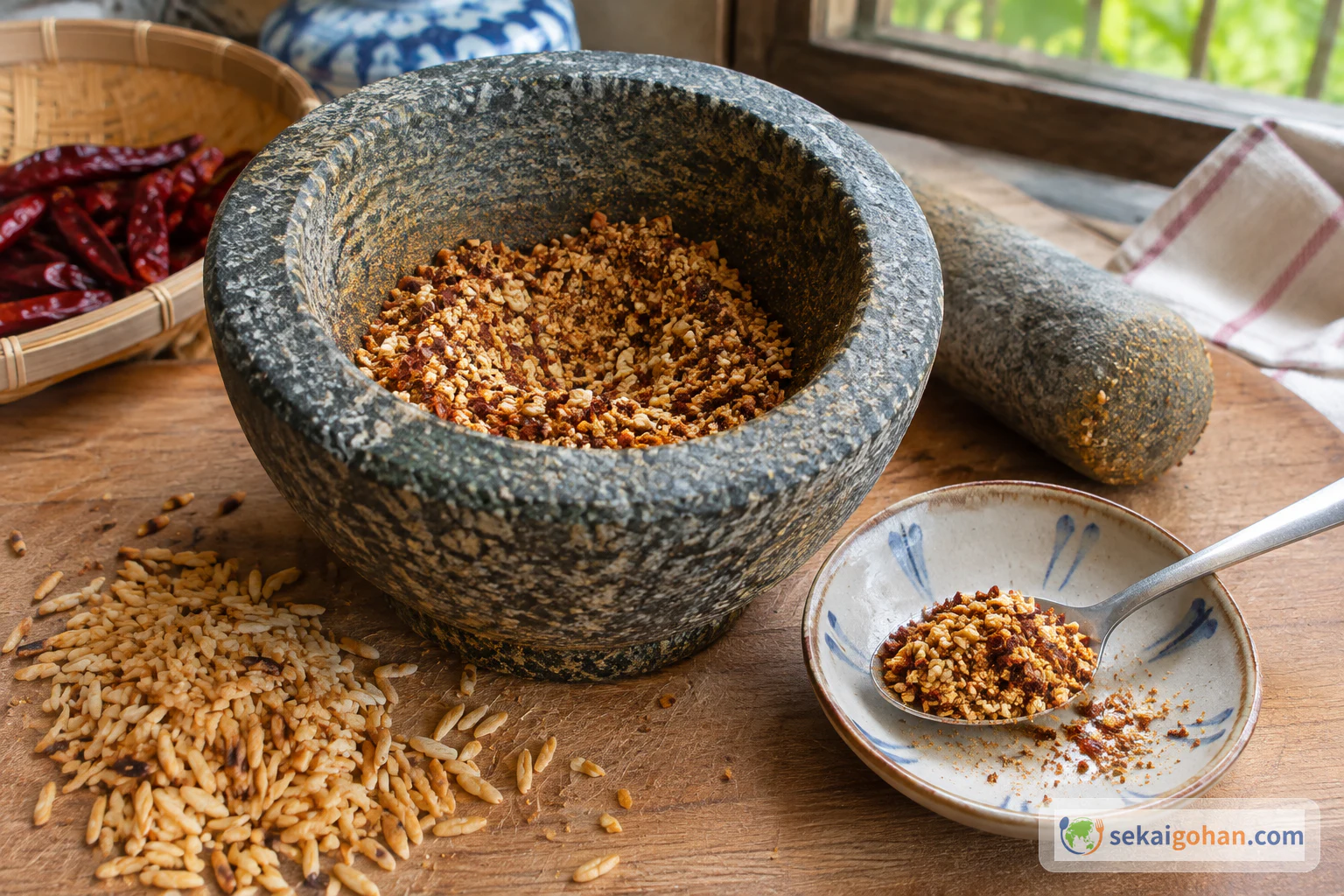
Only two things send you to an Asian grocer or online. Golden Mountain seasoning sauce is a Thai seasoning sauce, rounder and sweeter than soy sauce. Light soy sauce with a pinch of sugar fills in, but the soy edge comes forward and the sweetness and depth drop. Toasted rice powder comes ready-made in packs; making it yourself takes a few minutes and smells stronger.
The rest makes small differences:
- Palm sugar: tastes faintly of coconut and molasses. Raw cane sugar or light brown sugar is the nearest swap; plain white sugar gives a flatter sweetness.
- Black peppercorns: crush them whole. Pre-ground pepper loses most of its fragrance.
- Thai chili flakes: Korean chili powder is a different heat and a different color, so it shifts the jaew away from Isan.
- Cilantro: chop the stems in too for a stronger smell, or leave it out if you dislike it.
What keeps the dish tasting like Isan is the jaew with its toasted rice. The cut of beef can follow what your butcher has.
Method
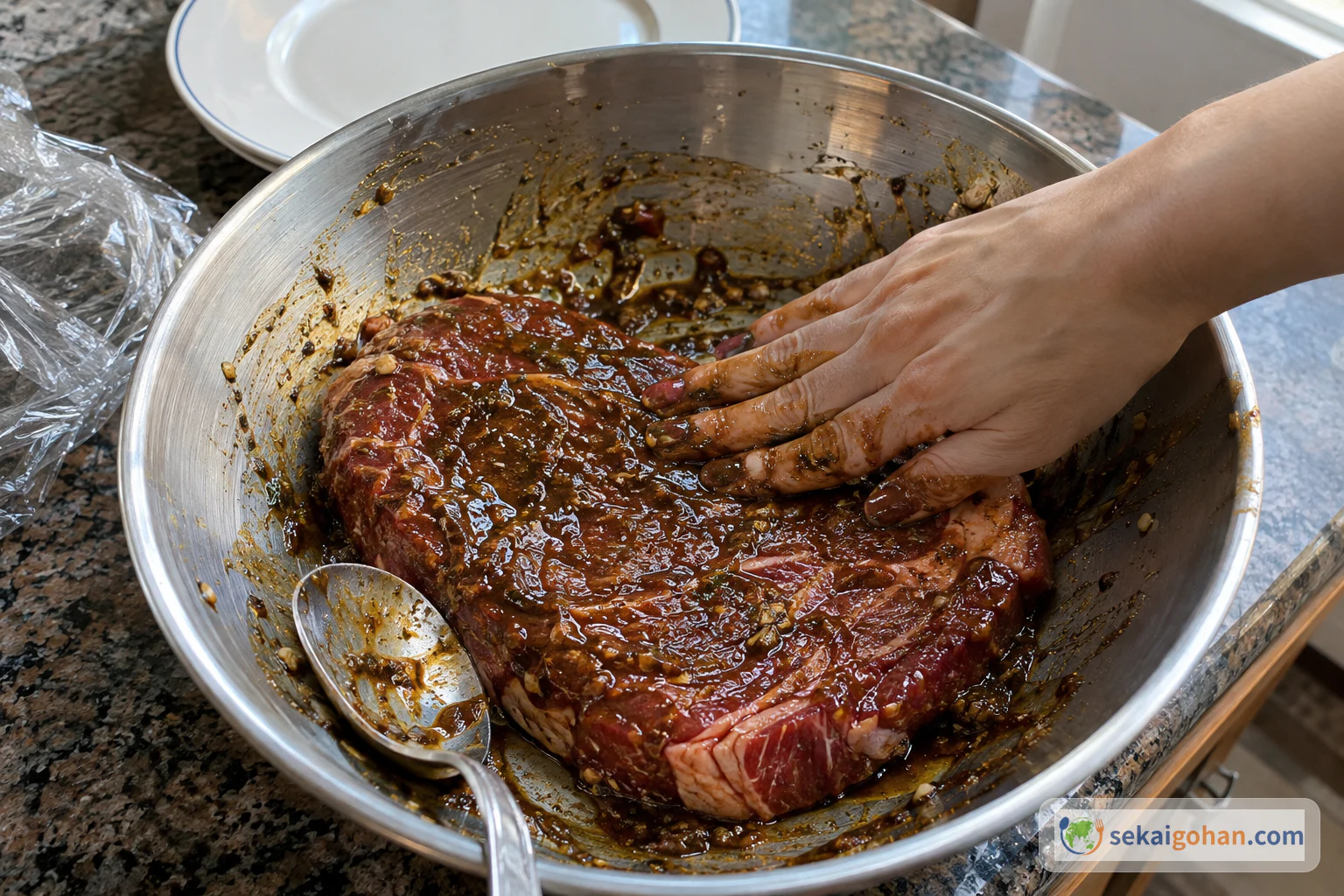
Make the marinade first, because the beef needs 30 minutes to an hour in it. That wait is when you toast and grind the rice and mix the jaew base. The grilling itself takes minutes, so have everything on the counter before the pan goes on the heat. At Thai stalls the beef usually comes off the grill around medium-rare to medium; at home, cook ordinary steak through to the center (see the warning after step 7).
When It Goes Wrong
| What you see | Why | What to do |
|---|---|---|
| The beef is tough and hard to bite through | Overcooked, sliced along the grain, or a cut with lots of connective tissue | Shorten the grilling and always slice across the grain. For brisket, cut it ¼ inch (0.5 cm) thick, pound it, and marinate 4 to 5 hours |
| Burnt outside, raw inside | Heat too high; the sugar in the marinade scorches fast | Drop to medium and tent with foil. On a thick steak, lower the heat before you add time |
| The jaew is too hot | Too many chili flakes, or a hotter brand | Mix in half the flakes first and add the rest to taste. Thai chili flakes can run hotter than other chili flakes |
| The jaew is too sweet | The sugar reads strongly before the beef is there to balance it | Keep the sugar as written, taste with a slice of beef, then add a little lime or fish sauce |
| The jaew is gritty or tastes of raw rice | Ground too coarse, or the rice was undertoasted | Grind to coarse black pepper texture. Toast until golden and popcorn-scented |
| The jaew has turned thick and pasty | The rice powder sat too long in the liquid | Stir it in right before serving. Make the base ahead, never the finished sauce |
Serving, Variations and Leftovers
At the table
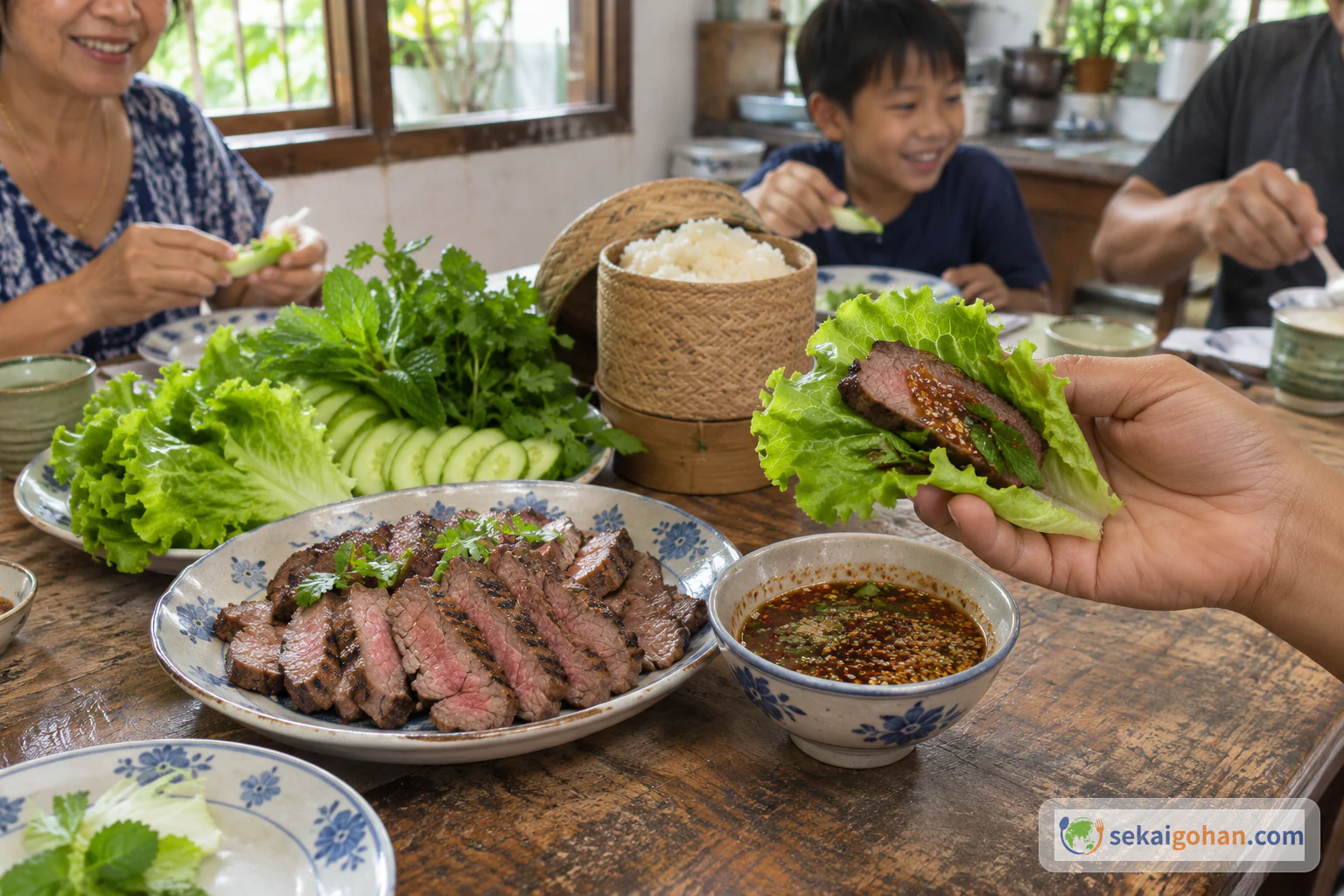
Put the beef in the middle with the jaew in a small bowl, a basket of sticky rice, crisp lettuce and raw vegetables such as cucumber. Pinch off some sticky rice, press a slice of beef on it and dip, or fold beef and sauce into a lettuce leaf. Plain rice works just as well. A plate of som tam beside it makes a full Isan meal. For children, serve the jaew separately and cut the chili flakes in their portion.
Variations
- Pounded brisket: the traditional cut. Slice it ¼ inch (0.5 cm) thick, pound it with a mallet and marinate 4 to 5 hours until it is almost cured. Sear fast and stop at medium; the result is chewier and beefier, with the striped fat of the tale.
- Baking soda tenderizer: some Thai home cooks add ½ tsp baking soda to a generous 1 lb (500 g) of fatty beef, along with garlic, pepper, oyster sauce, seasoning sauce and light soy, then grill over low heat. The meat comes out softer and stays moist inside.
- Milk marinade: a sweetened and evaporated milk marinade with fish sauce on brisket gives soft, sweet, milder meat, far from the peppery crust here.
- Tamarind jaew: melt tamarind paste with palm sugar, let it cool, then add lime, toasted rice and chili. Darker, fruitier and stickier than the lime jaew.
Leftovers
Cool the beef and the jaew, then refrigerate promptly in clean, covered containers. Plan to finish them the next day; they keep no longer than 3 to 4 days in the fridge. Freezing does not suit this dish. Reheating toughens the beef, so eat it cold; if you want it warm, give it a short turn in a skillet, never a long blast in the microwave.
Frequently asked questions
Can I marinate the beef overnight?
Yes. Keep it covered in the fridge and take it out 30 minutes before grilling so it reaches room temperature. The longer marinade gives a saltier, darker crust, so grill a touch more gently to keep the sugar from scorching.
I have no grill pan or charcoal. What else works?
A heavy cast-iron skillet gives the same browning without the stripes. You can also roast the steak in a 480°F (250°C) oven for about 10 minutes. Either way, the jaew and the slicing stay the same.
What temperature should the thermometer read?
The well-known figure of 167°F (75°C) held for at least 1 minute is where most pathogens die in ground meat products; it is not a doneness target for a whole steak. For this dish, use the thermometer alongside the cut-open center and cook until no raw red remains.
Can I make the jaew ahead?
Mix the base of lime, fish sauce, sugar and chili earlier in the day and keep it covered. Stir in the toasted rice powder and cilantro only when the beef comes off the grill.