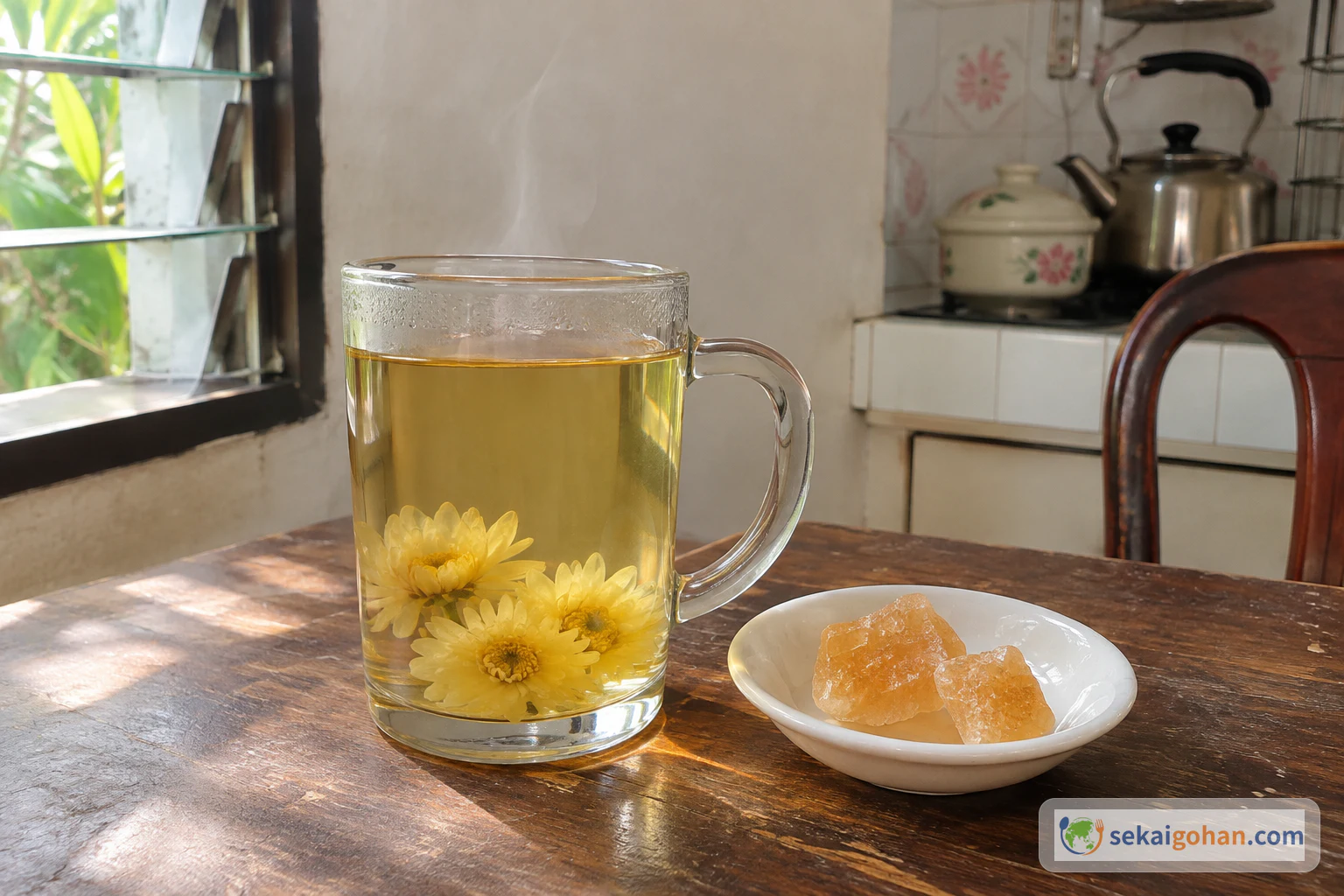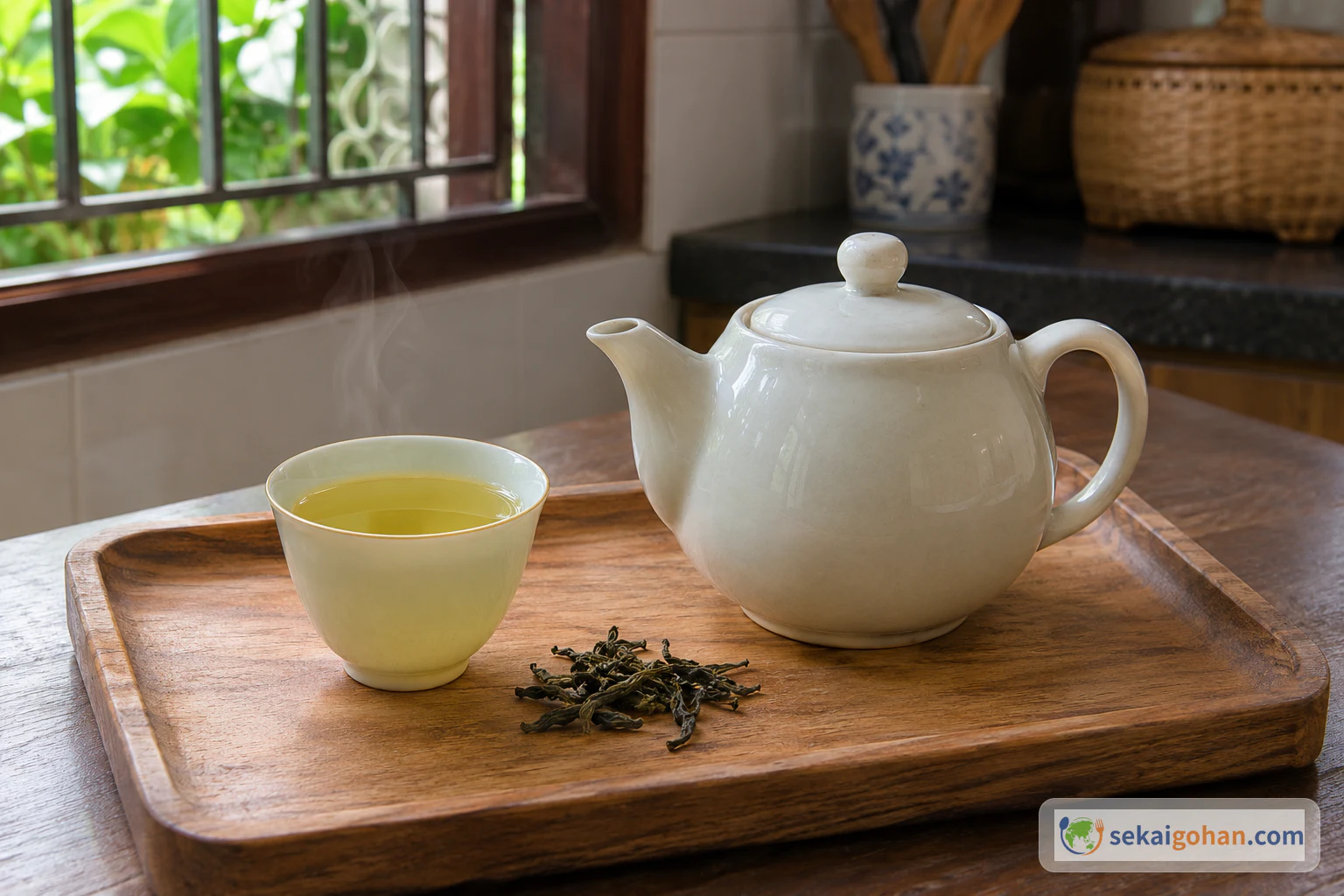
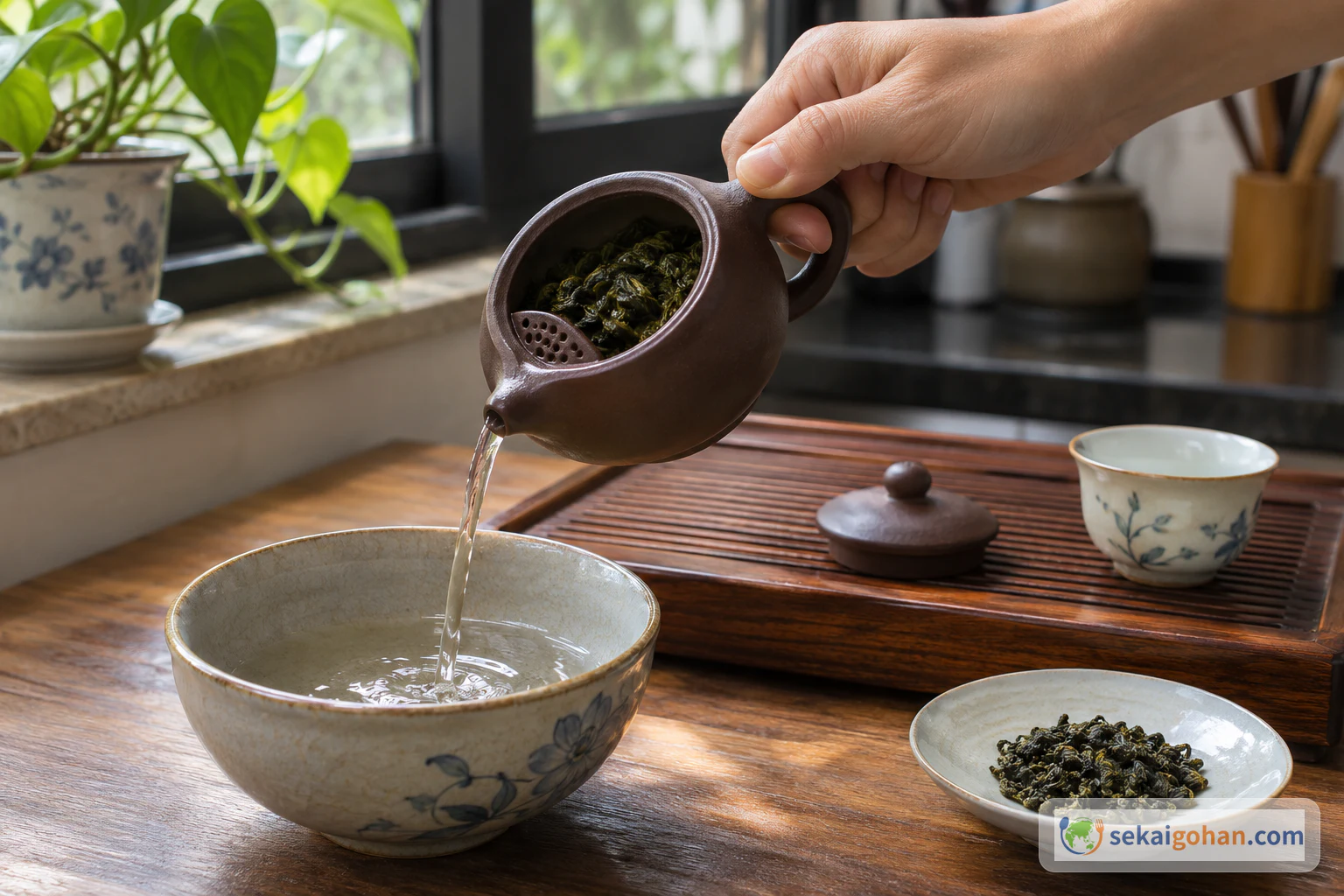
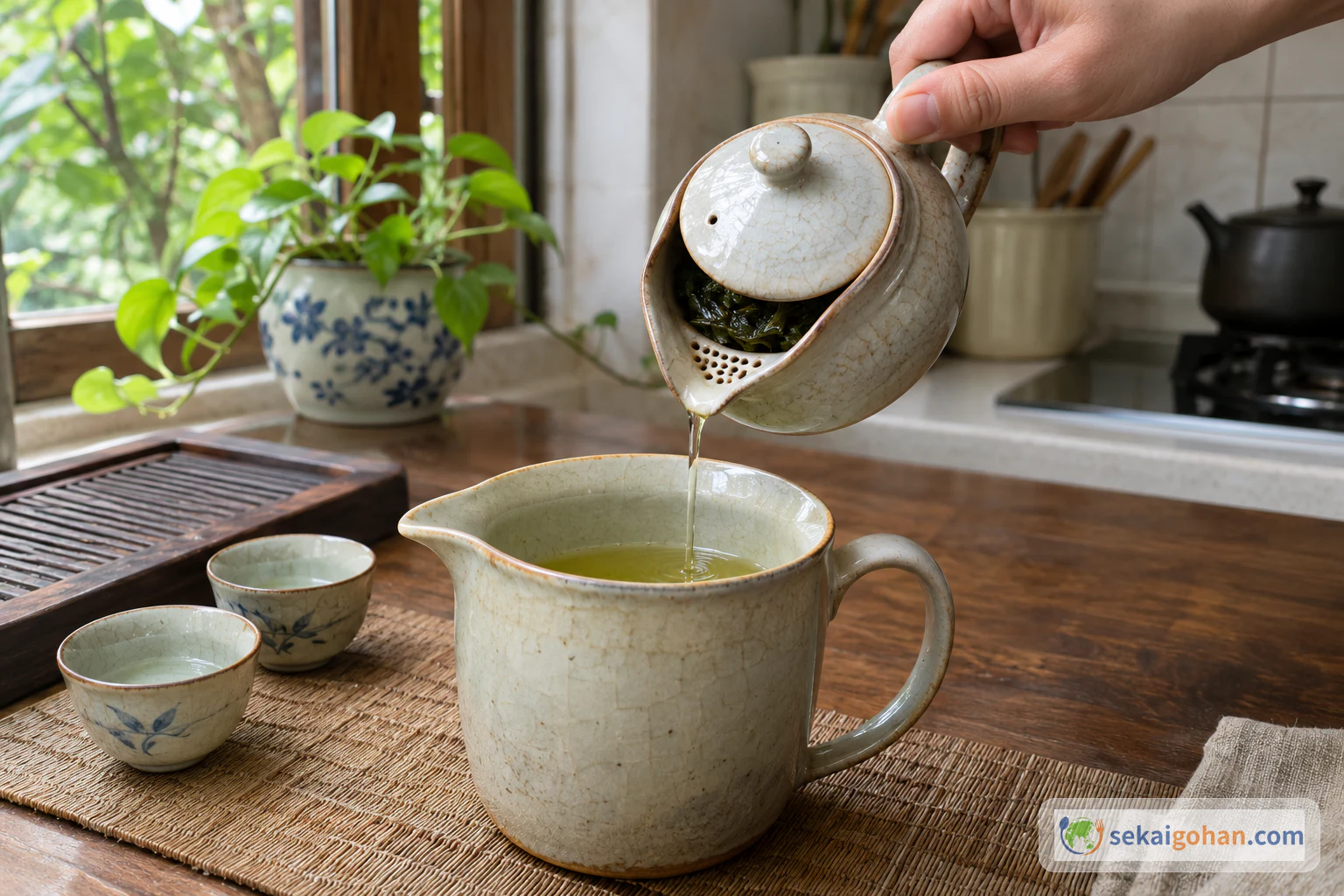
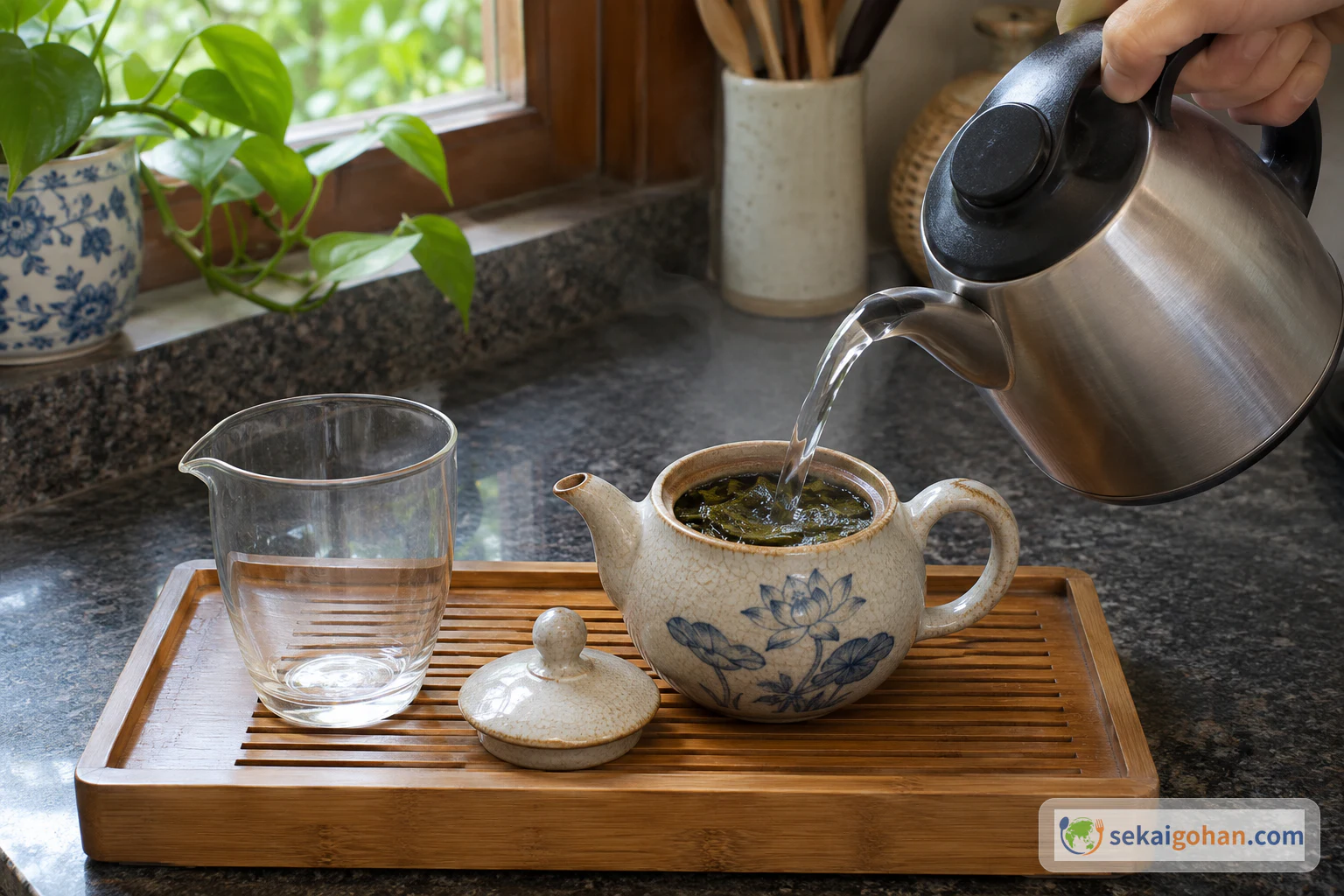
Pour away the five-second rinse, lift the lid of the warm pot, and the damp leaves breathe out lotus before a single cup is filled. That scent was put there by hand, flower by flower, on Hanoi's West Lake in the weeks of the summer bloom. Trà sen is green tea that has absorbed the perfume of the lotus, and it is drunk clean, in small cups, with nothing added. The first cup is green tea wrapped in a soft, sweet floral note, the second carries the most lotus, and by the fourth the flower has gone and what is left is a clean green tea.
Trà Sen: A Summer of Lotus Pressed into Dry Leaves
The lake in summer
Hanoi's lotus tea belongs to Hồ Tây, West Lake, and to one lotus in particular: Bách Diệp, the hundred-petal lotus, chosen for the strength of its scent. The work follows the bloom, from May to July. Large flowers that are only half open are picked, because they still hold their stamens packed tight inside. In Quảng Bá village on the northeast shore, hundreds of people keep the craft going, and families in Quảng An and Tây Hồ still scent tea both ways the lake has always done it.
The base is a good green tea that takes up scent well, such as Thái Nguyên tea or Shan Tuyết from the high mountains. Lotus tea from Huế is sold as finished tea too, made with white lotus, but the anther-scented tea of West Lake is the one counted finest.
Two ways to put a lotus into tea
The first way works overnight. In the afternoon or evening, dried tea is packed into the heart of the flower, the petals close around it, and the tea is gathered the next morning, having spent the night breathing in the lotus. A quicker fresh-flower scenting, ướp sen xổi, takes 24 to 48 hours.
The second way uses the anthers from the stamens, called gạo sen. About 1,000 flowers give 2.2 lb (1 kg) of anthers, and up to that much goes into around 2.2 lb (1 kg) of finished tea. The anthers are scattered through the dried tea in a container and left for a day; the next day they are lifted out and the tea is heated again before the next round. Each round runs a day or two, the tea goes through five rounds, and some batches up to eight, so one batch takes weeks. A modern variation freeze-dries the whole flower. All that handwork is why the best West Lake tea sits among the costly teas.
Who it is poured for
The lotus runs deep through Vietnamese symbolism, and lotus tea is the cup for distinguished guests, for festivals, and for quiet hours with nothing urgent ahead. It has been called the King of Teas and is tied in memory to royalty and scholars. A legend says Emperor Tự Đức drank his lotus tea brewed with dew gathered from the lotus pond; it is told as a story, and how much of it happened is not settled. Among the drinks of Vietnam, this is the one that asks you to slow down.
Trà sen, chè sen and chè ướp sen all mean this lotus-scented green tea. Trà tim sen is a separate tea made from the dried green embryo inside the lotus seed, and trà lá sen is brewed from lotus leaves. Chè hạt sen, the sweet lotus-seed soup of Huế and Hanoi, shares the word "chè" and is a dessert eaten with a spoon.
Ingredients (serves 4)
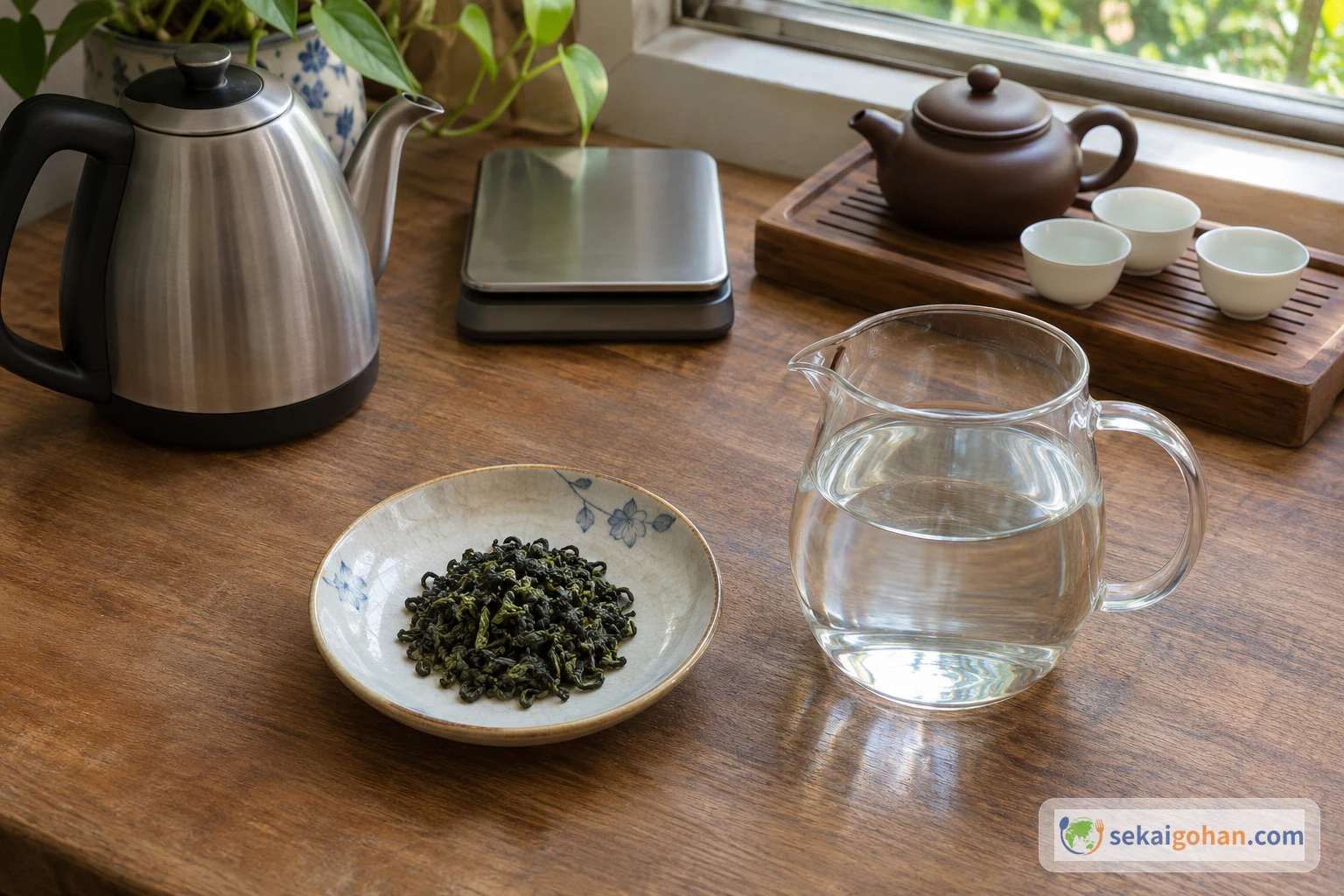
This tea shows the water. Soft or filtered water lets the lotus come forward; hard or strongly flavored water pushes it back behind bitterness.
Equipment
- Small scale that reads to 0.1 g
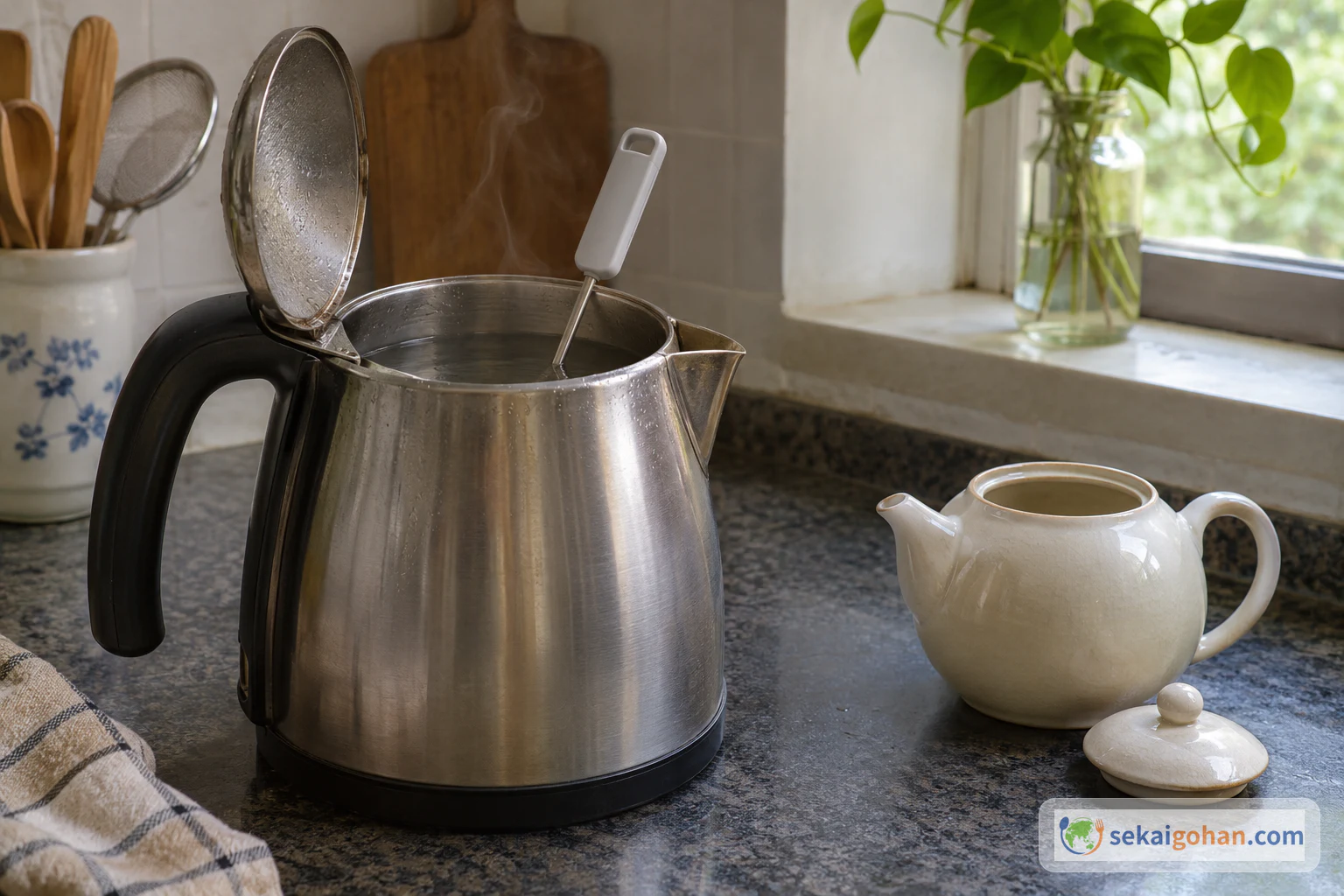
- Kettle, plus a thermometer or a temperature-set electric kettle
- Small teapot with a lid
- Separate pitcher large enough to take a full pot
- Small, thin-walled cups
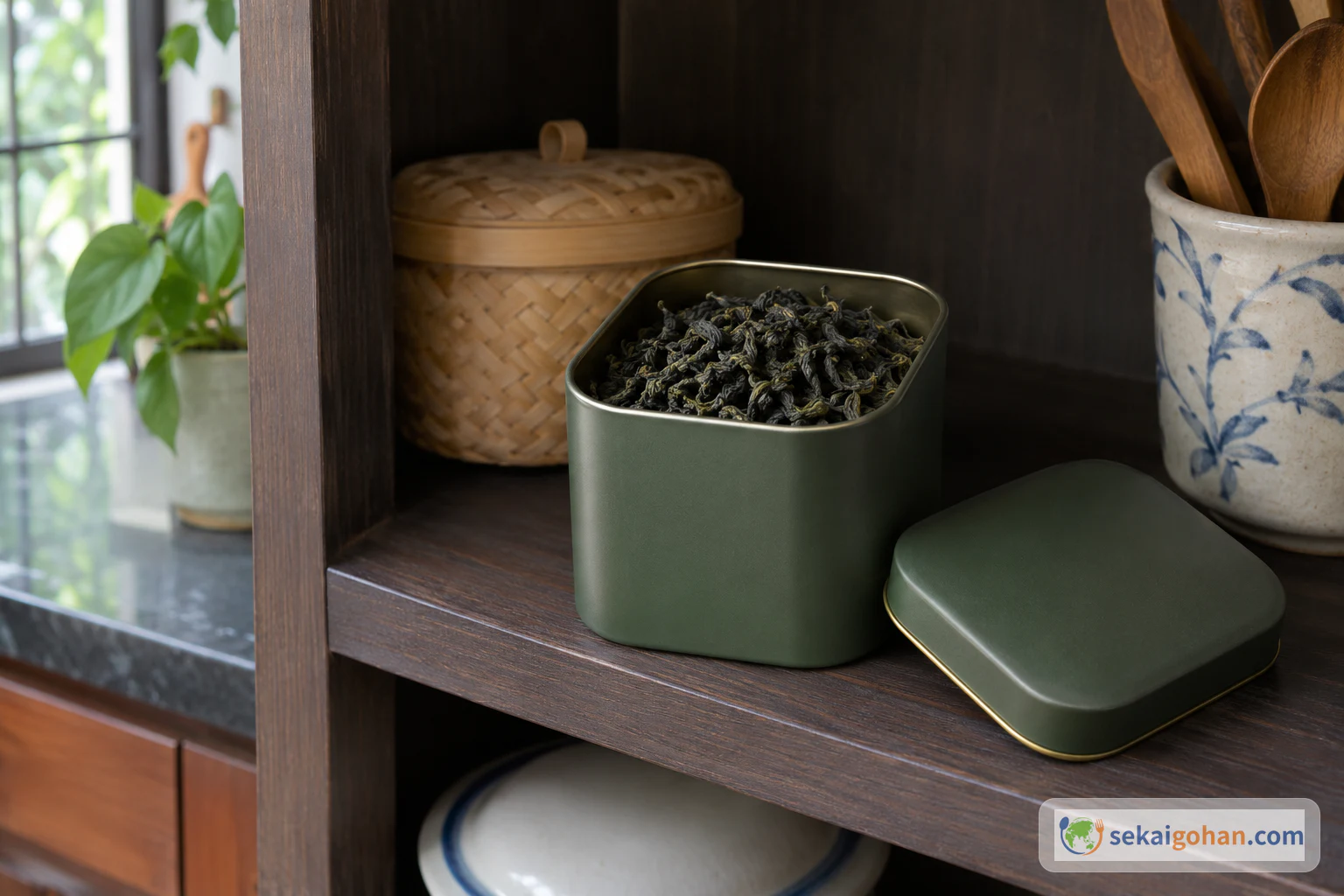
- Airtight, opaque tin for the dry tea you have left
Buying and Keeping Lotus Tea
Look for tea made in Hanoi, with Quảng An or Tây Hồ on the label. Vietnamese grocers carry it, and some sellers ship from Hanoi; that tea is the expensive end, and the one worth the money for this cup.
The boxes on supermarket shelves labelled "lotus flavor" are green tea with added flavoring. The scent is blunt and single-note, and it fades fast across infusions. If the label names anther scenting or flower stuffing, you are holding scented tea. A middle route is a good green tea brewed with dried lotus stamens, ideally bought in their own pack; the lotus then comes from the stamens in the pot instead of from days of scenting.
The scent is volatile and fades with time, heat and light, so buy small amounts and drink them soon. Keep the dry tea in an airtight, opaque tin, somewhere cool and out of the light. Throw away brewed leaves after the session; only unused dry tea goes back into storage.
Method: Short Steeps, Poured Off to the Last Drop
The whole pot moves in under a minute at a time, so have everything on the tray before you start: leaves weighed, pitcher and cups out, water boiled. The only waiting is the 2 to 3 minutes the boiled water stands to cool. After that, each infusion is a few seconds of attention and a full pour.
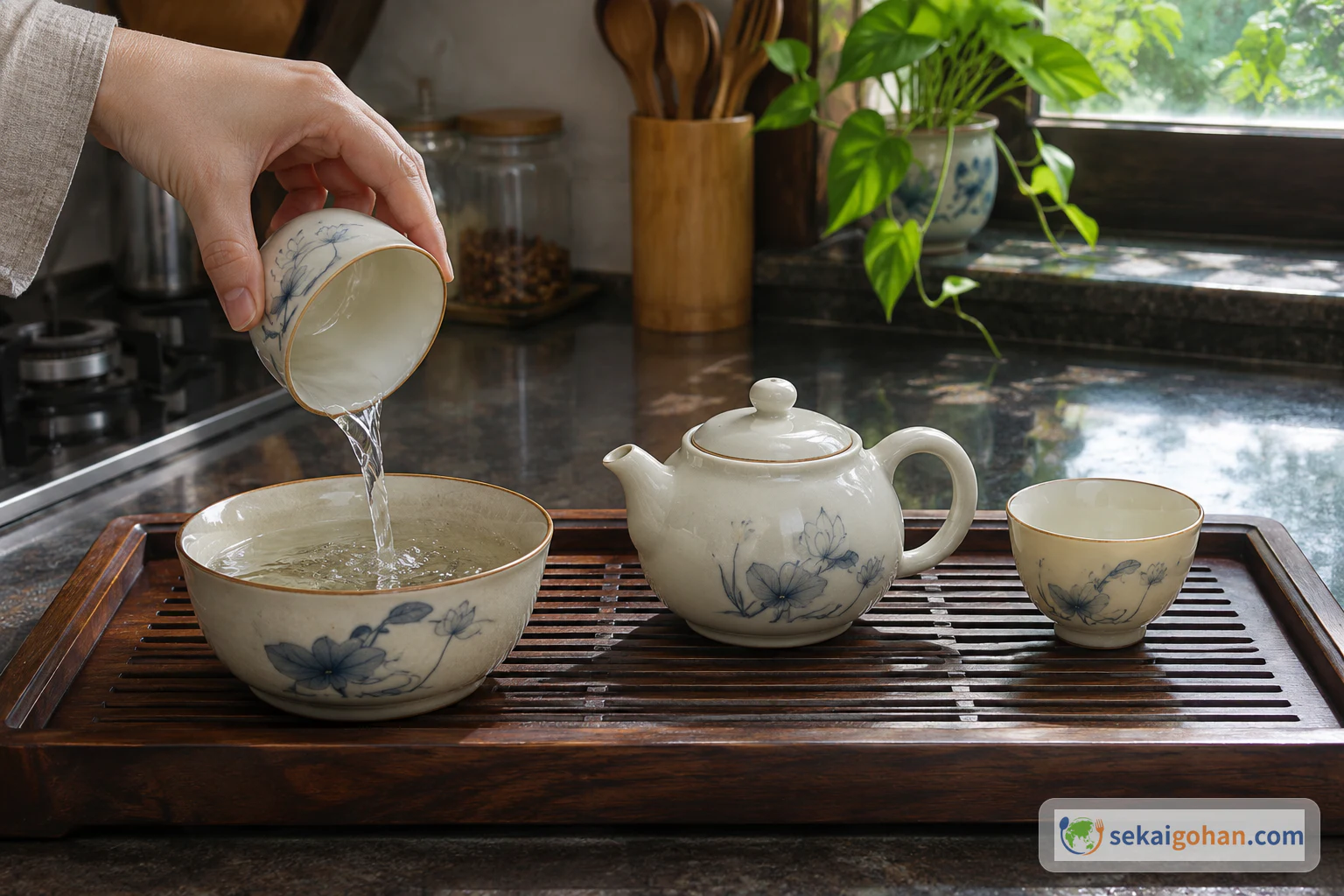
The water is very hot and thin cups heat through at once. Hold the pot by its handle, pour away from your hand, and set cups down before filling them.
When It Goes Wrong
| What you see or taste | Why | What to do |
|---|---|---|
| Bitter cup | Water poured straight off the boil, a long steep, or water left on the leaves | Let boiled water stand 2 to 3 minutes and pour everything off at 25 to 30 seconds |
| Lotus gone after the first cup | Cold pot and cups pulling the aroma down | Warm the pot and every cup before the leaves go in |
| Little lotus at all | Past the fourth infusion, old tea, or a "lotus flavor" box | Expect the peak at the second infusion; buy fresh tea in small amounts and read the label for the scenting method |
| Liquor with a reddish tinge | Oxidation during the long, damp anther scenting | Can happen with anther-scented tea; color alone tells you neither how it was made nor how fresh it is |
| Flat, chalky or off taste | Hard or strongly flavored water | Switch to soft or filtered water |
Serving and Variations
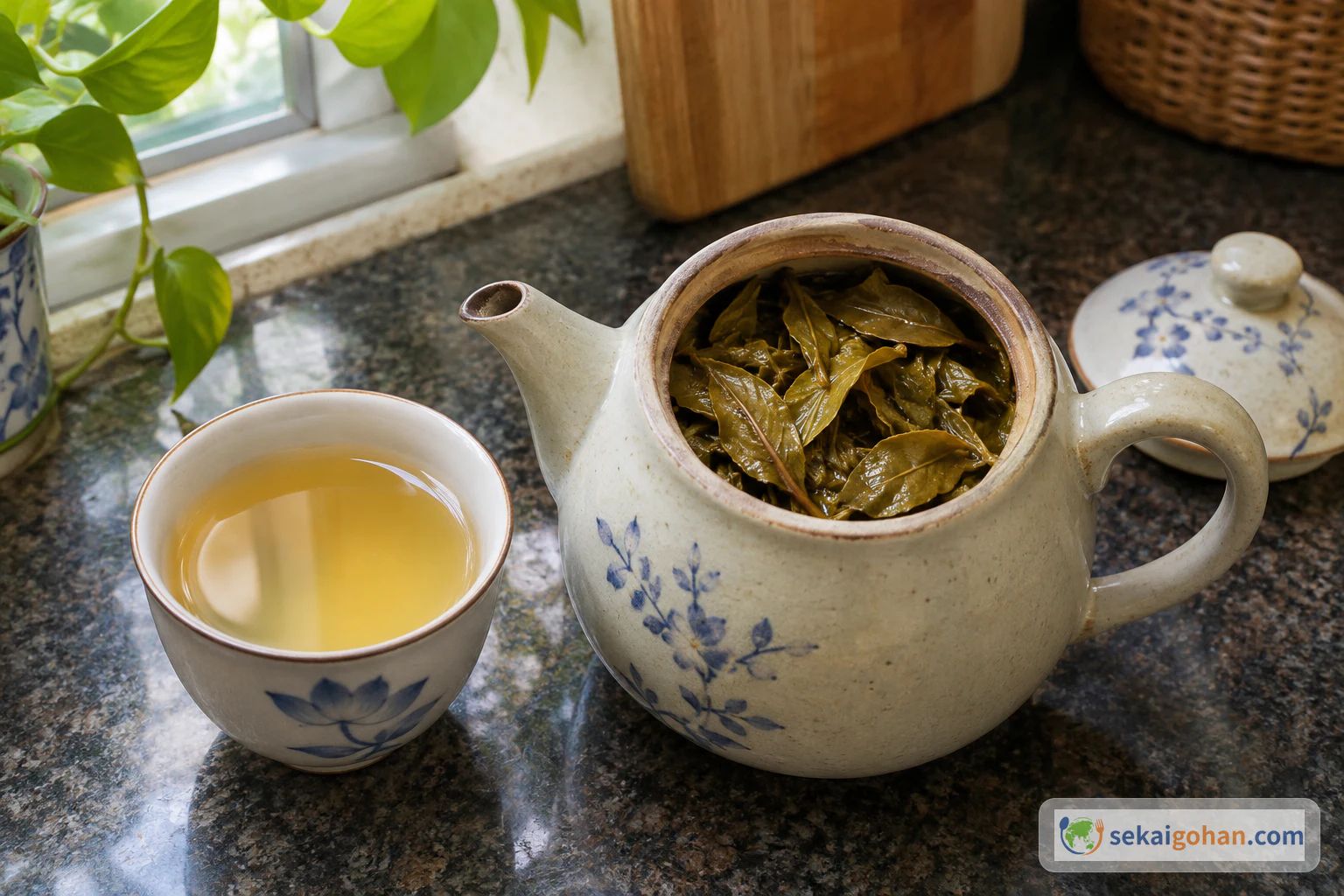
Pour into small cups and drink each infusion while it is hot, before the scent lifts away. No sugar, lemon or milk: all of the sweetness and perfume is already in the leaves, and anything added covers it. This is a pot for a guest, for a holiday morning, or for an hour when nobody needs to be anywhere, with the conversation moving at the pace of the refills.
Cooler and longer
A gentler brew uses about 160°F (70°C) with steeps kept under 2 minutes. The cooler water draws the tea out more slowly, so you trade the quick, bright first cup for a longer wait and a softer edge.
A white lotus tea from Huế
A white lotus tea from Huế is brewed at 175–185°F (80–85°C), 0.2 oz (5 g) of leaves to 1 cup (250 ml) of water, with a first steep of 20 seconds and 30 seconds for each after. Keep these figures for that tea; they are for a different tea and amount than the main recipe, so do not mix them with it.
The infusions side by side
Pour each round into its own small cup and line them up. Tasting the first, second, third and fourth together shows the lotus rise, peak and fall back into green tea in one sitting.
Frequently Asked Questions
Does lotus tea have caffeine?
Yes. Trà sen is green tea, so it carries caffeine. For a sense of scale, Chinese green tea comes in at about 31–40 mg per 8 fl oz (237 ml) cup; lotus tea has no separate figure of its own.
Can I scent my own tea with lotus at home?
Buy it finished. The scenting is workshop craft built on fresh flowers from the lake in season, anthers by the kilo, and rounds of drying that run for weeks. At home, the work that counts is the brewing.
Can I float a lotus flower or petals in the cup?
Leave them out. Lotus tea is drunk clean, and the scent you want is already in the leaves. A fresh flower adds nothing the tea does not already carry.