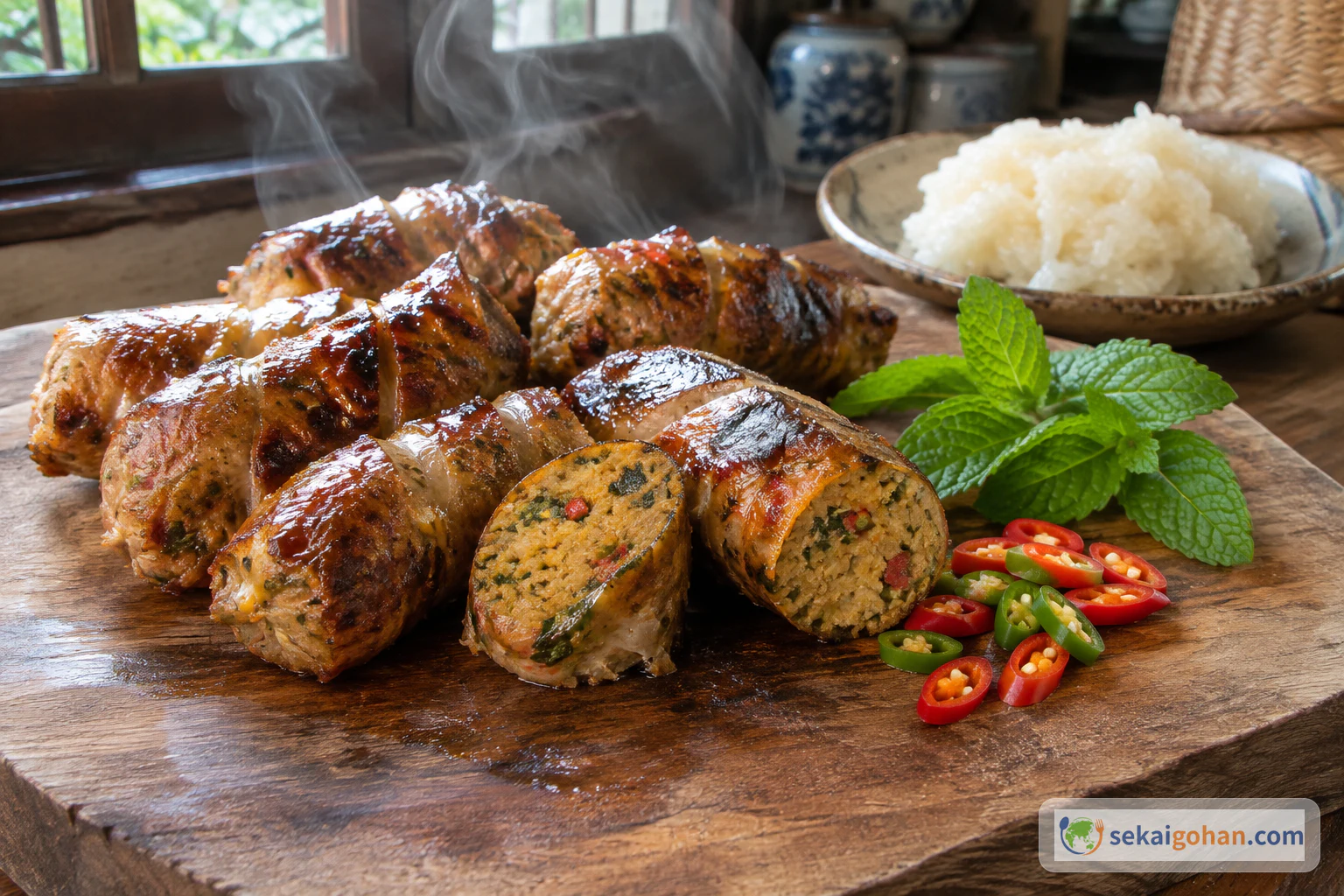
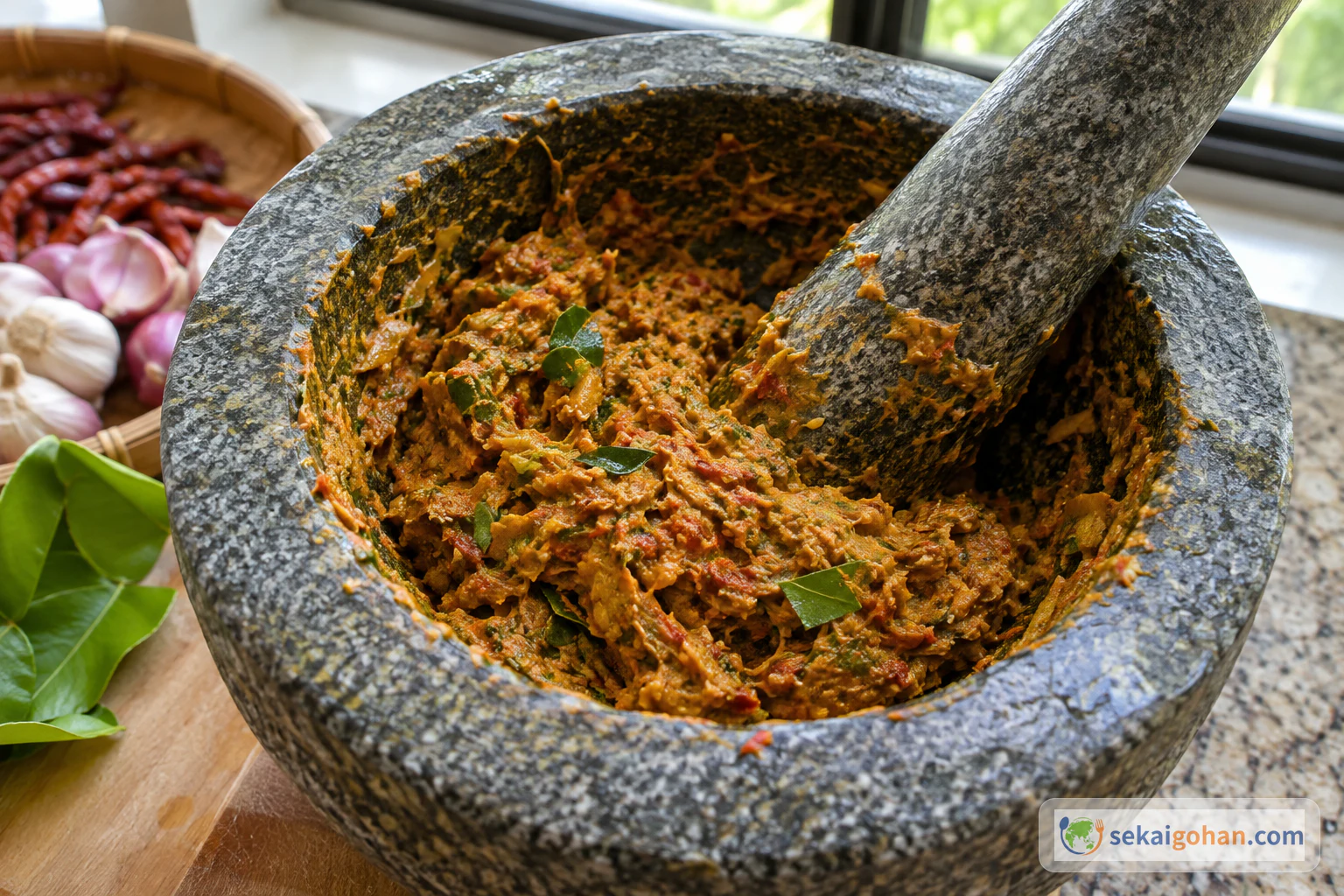
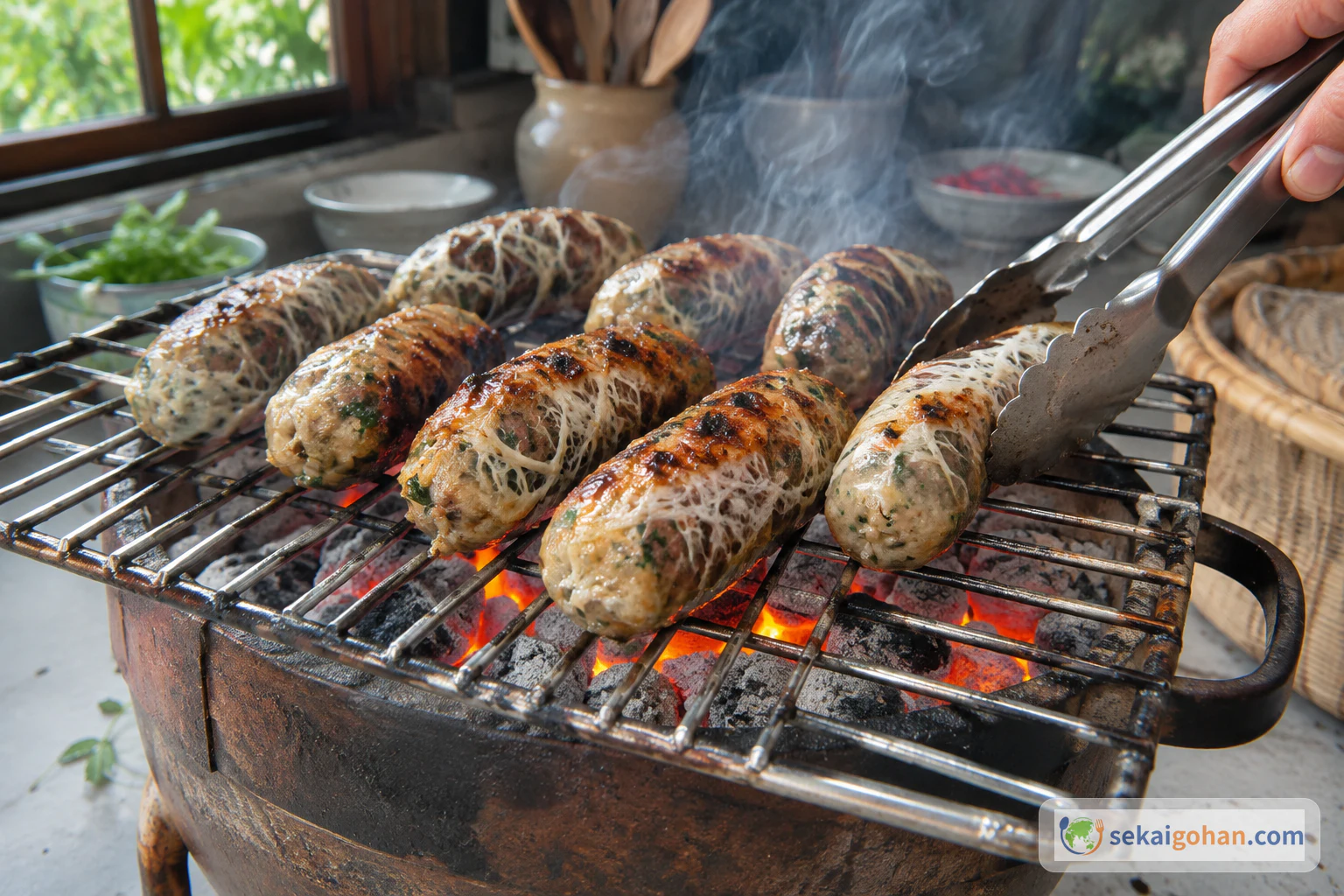
At the street stalls of Chiang Mai, coils of sausage sit over low charcoal. The fat drips and spits, and the smoke smells of lemongrass and lime leaf. When someone orders, the vendor lifts a length off the grill, chops it into pieces and drops them into a bag. That is sai ua, the herb sausage of northern Thailand. The pork is coarse and juicy and tinted yellow by turmeric. Galangal gives it a cool, piney edge and coriander root gives it an earthy one, and the dried chillies bring a slow heat that builds as you chew.
A Sausage of Northern Thailand, Laos and the Shan Hills
The name is usually read as two parts. Sai means intestine, and oua refers to the way the sausage is made, so the whole is understood as a stuffed intestine. In English it also goes by Chiang Mai sausage or Lao sausage. In Laos it is written ໄສ້ອັ່ວ, and in Myanmar's Shan State a close relative is called sai long phik.
Those other names point to a wider family. The same kind of herb sausage is made across northern Thailand, Laos and northeastern Myanmar, and where it began is not settled. One line of thought places it in Luang Prabang, the old royal city of Laos. Other accounts point to northern Thailand and northeastern Myanmar. What all of them share is the core idea: fresh herbs pounded into pork.
Sai ua comes in more than one form. It can be fermented, dried and grilled, or grilled fresh. The version here is the fresh one, grilled slowly so the fat renders and the herbs perfume the smoke. In villages where pork was scarce, sausage like this was once food for special days, which may explain all the work that goes into it. Today it is a favourite of street stalls, and it sits comfortably on a table with other grilled dishes such as kai yang and a bowl of chilli relish like nam prik kapi. For more dishes from the north and the rest of the country, see the Thailand page.
You will see it written sai ua, sai oua or sai aua, and in Thai script ไส้อั่ว. Searching for "Chiang Mai sausage" or "Lao sausage" brings up the same family.
Ingredients (makes 12 sausages)
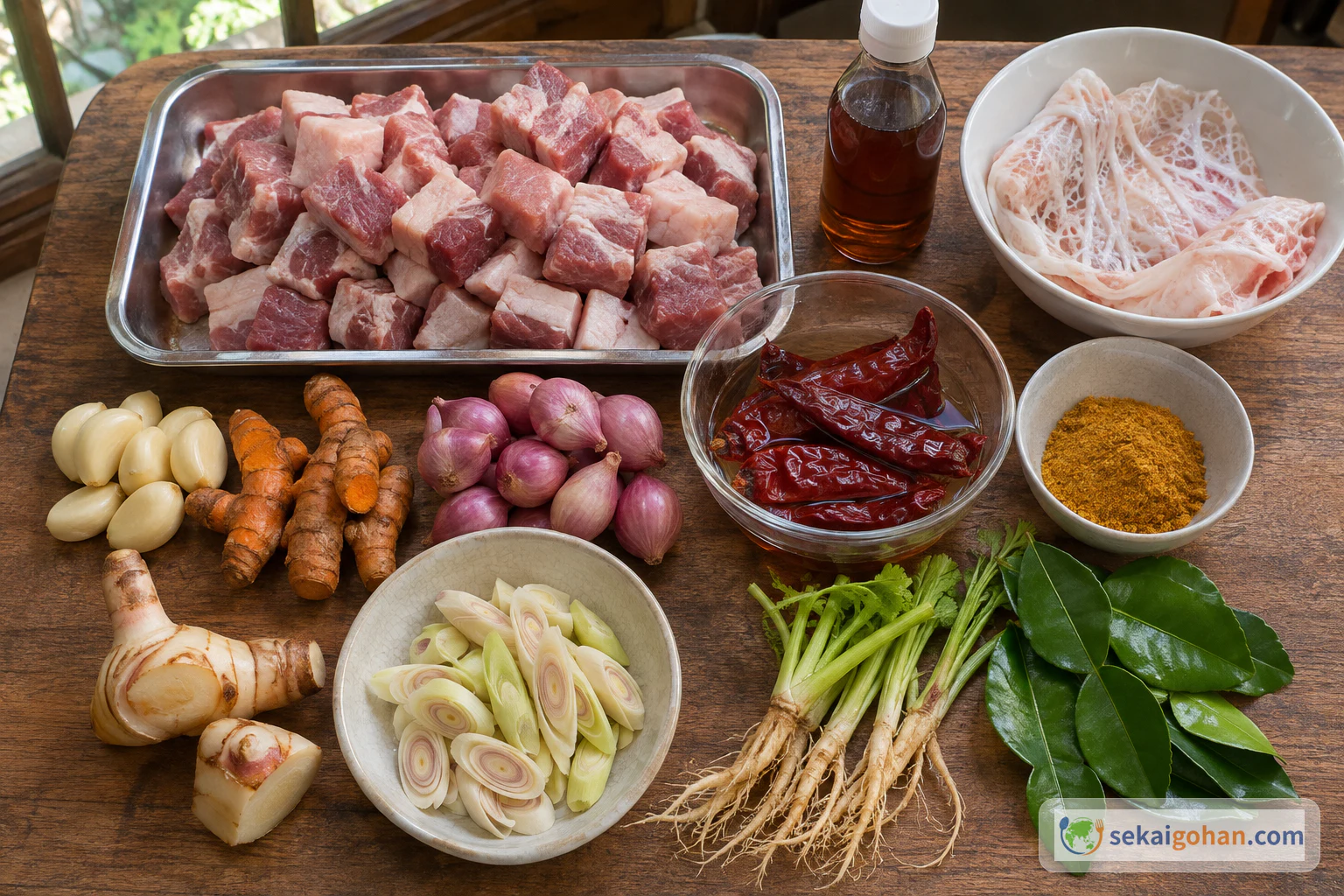
This batch makes twelve sausages of 3½ oz (100 g) each. To make less, choose one factor and apply it to every ingredient. At half, for example, you use 1.1 lb (500 g) pork and 1 oz (30 g) garlic to make six sausages.
Fish sauce contains fish. Check the labels on curry powder and on any sausage casing you use. Both can contain other allergens or be made in shared facilities.
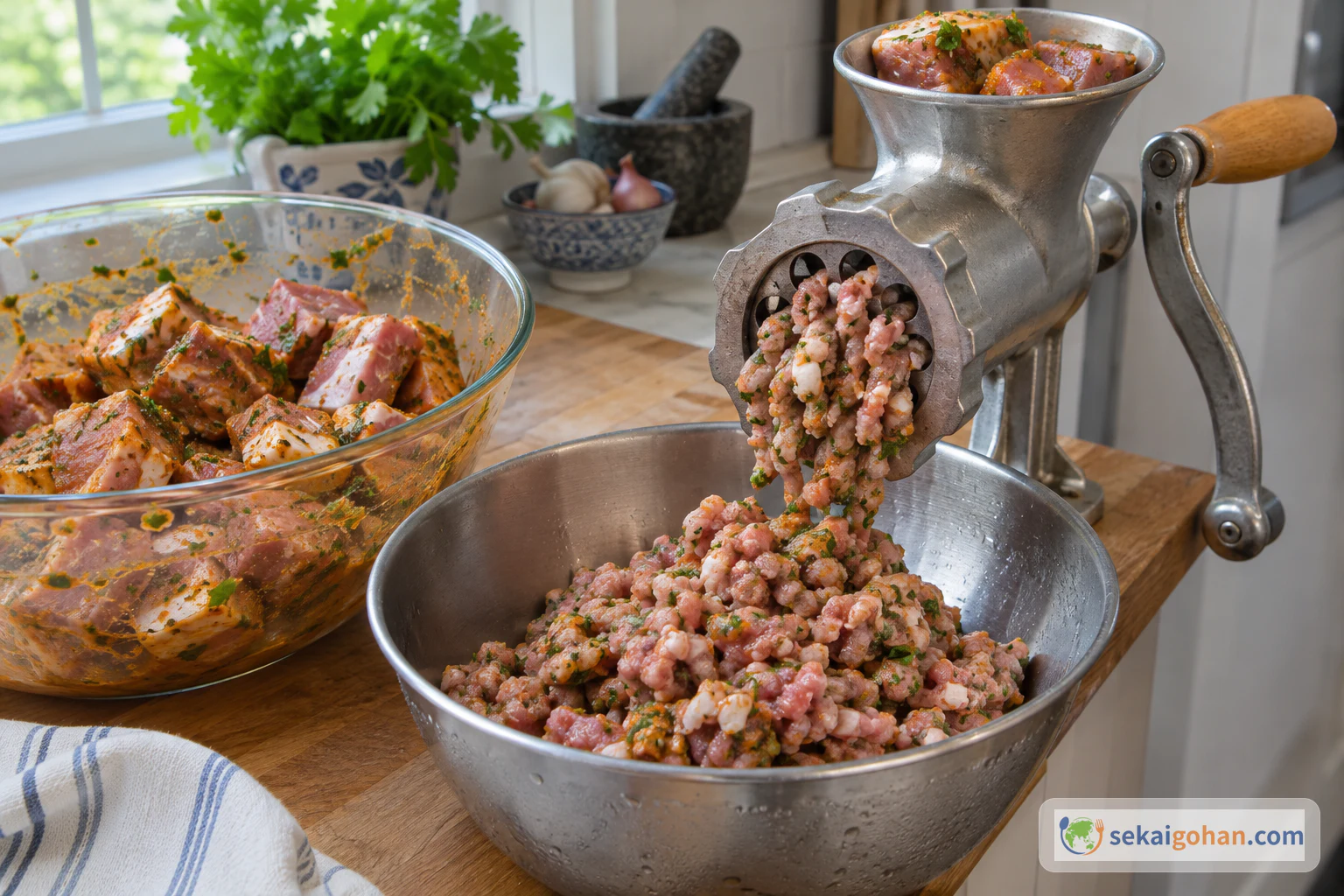
The juicy bite comes from the fat. Aim for roughly 7 parts lean to 3 parts fat. If your shoulder looks lean, make up the difference with pork belly or back fat before mincing.
Equipment
- Oven and roasting tray
- Large mortar and pestle
- Meat mincer with a coarse plate
- Kitchen scale
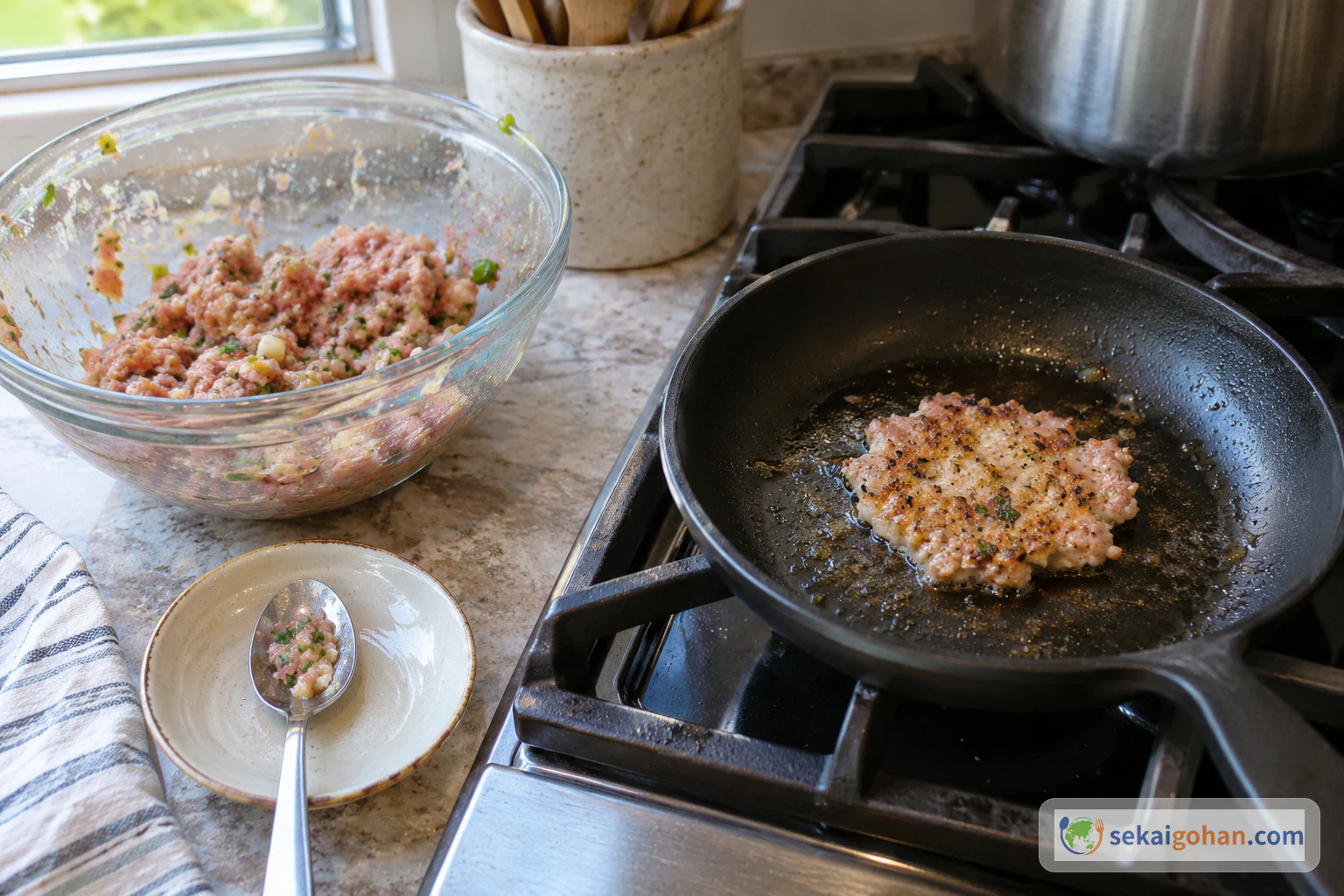
- Small skillet
- Charcoal grill and tongs
- Instant-read thermometer
Choosing and Substituting
What makes sai ua taste of the north is the scent of lemongrass, galangal, makrut lime leaf and coriander root, carried by pork fat. Spend your effort on those. Galangal and lime leaves can be hard to find fresh, so look for them frozen at an Asian grocer. Frozen lime leaves work well. Frozen galangal or galangal paste works too, but the piney edge is weaker. Fish sauce is worth choosing with care because the recipe uses a lot of it, and saltiness varies from bottle to bottle. That variation is the reason you test-fry before shaping.
| Ingredient | Swap | What changes |
|---|---|---|
| Coriander root | Coriander stems | Works well. The earthiness is a little lighter |
| Thai shallots | Small shallots or a small red onion | Slightly less perfume, a similar sweetness |
| Fresh turmeric | A small amount of ground turmeric | Color stays. The fresh, earthy note fades |
| Fresh galangal | Frozen galangal or paste | Usable, with a softer, flatter aroma |
| Lean pork shoulder | Shoulder plus pork belly or back fat | Restores the fat the sausage needs |
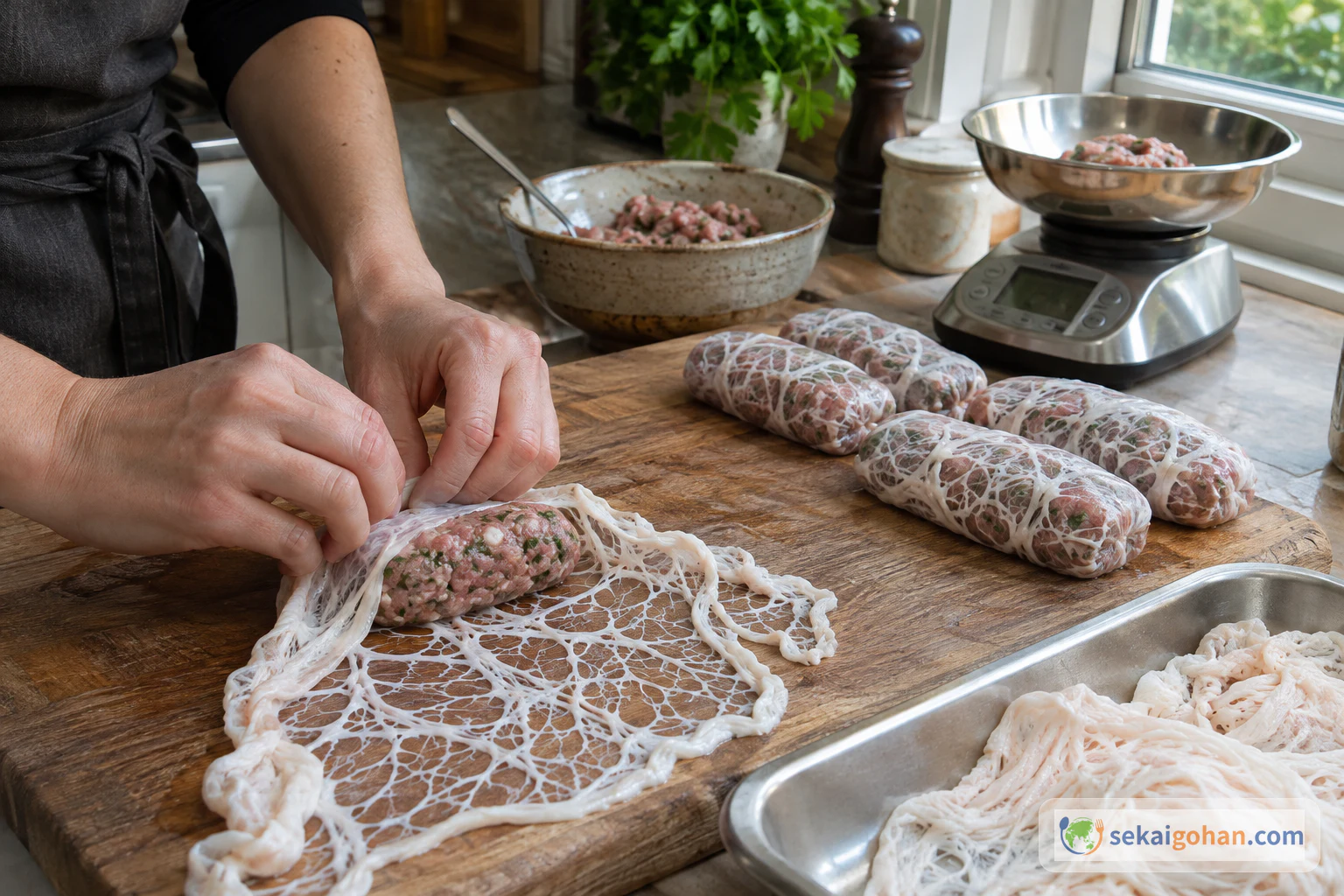
| Caul fat | Hog casing, or a bare patty | See the variations below |
Caul fat is the lacy membrane of fat that butchers use to wrap meat. Ask a butcher for it in advance, since it is rarely on display. Curry powder here is the dry powder, used in a small amount, and curry paste is a different ingredient.
Method
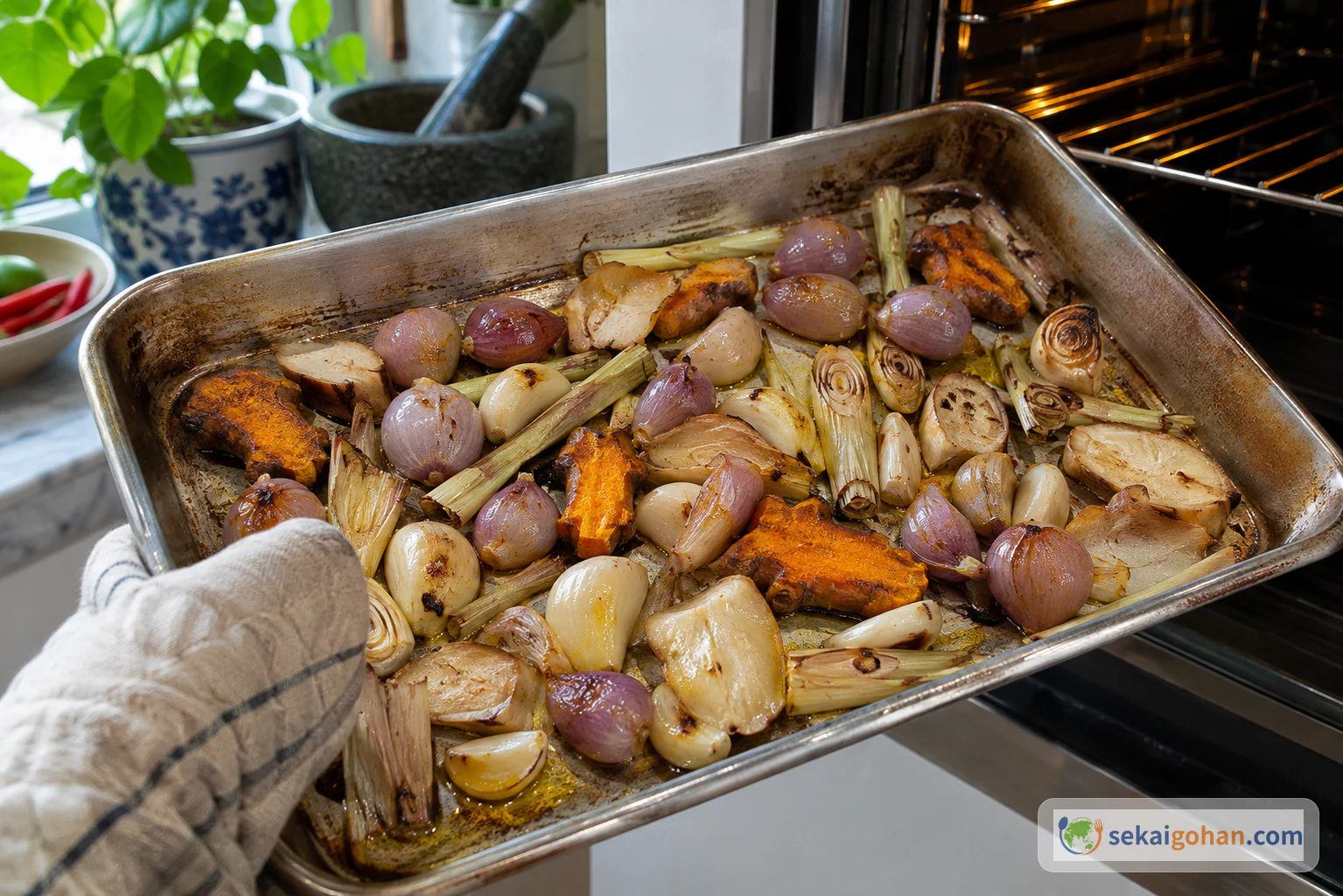
The aromatics come first. You roast them, let them cool and pound them, and the oven does the early work while you prepare the pork. After mincing, the mixture goes into the refrigerator, which gives you a break before the test-fry and the wrapping. The grilling at the end is slow and needs your attention.
Eat sai ua only fully cooked, with the center at 160°F (71°C) or above. Keep the raw mixture cold while you work. Wash your hands, board and tools after handling raw pork.
When It Goes Wrong
| What you see | Why | What to do |
|---|---|---|
| The caul fat chars black while the center is still raw | The fire is too hot | Move the sausages to the edge of the grill and wait for the coals to calm down before going on |
| The cooked sausage is crumbly and greasy | The fat melted during mixing or mincing | Keep the meat and bowl cold, and stop mixing as soon as the paste is spread through |
| Stringy bits in each bite | The lemongrass was not pounded fine | Next time, pound until no strands catch on the pestle |
| The sausage tastes flat | Too little fish sauce for your bottle | Serve with the lime and fish sauce dip, and adjust more at the test-fry next time |
| A casing splits on the grill | Trapped air or a fire that is too hot | Prick the casing with a skewer and grill over low heat |
Serving and Variations
At the table
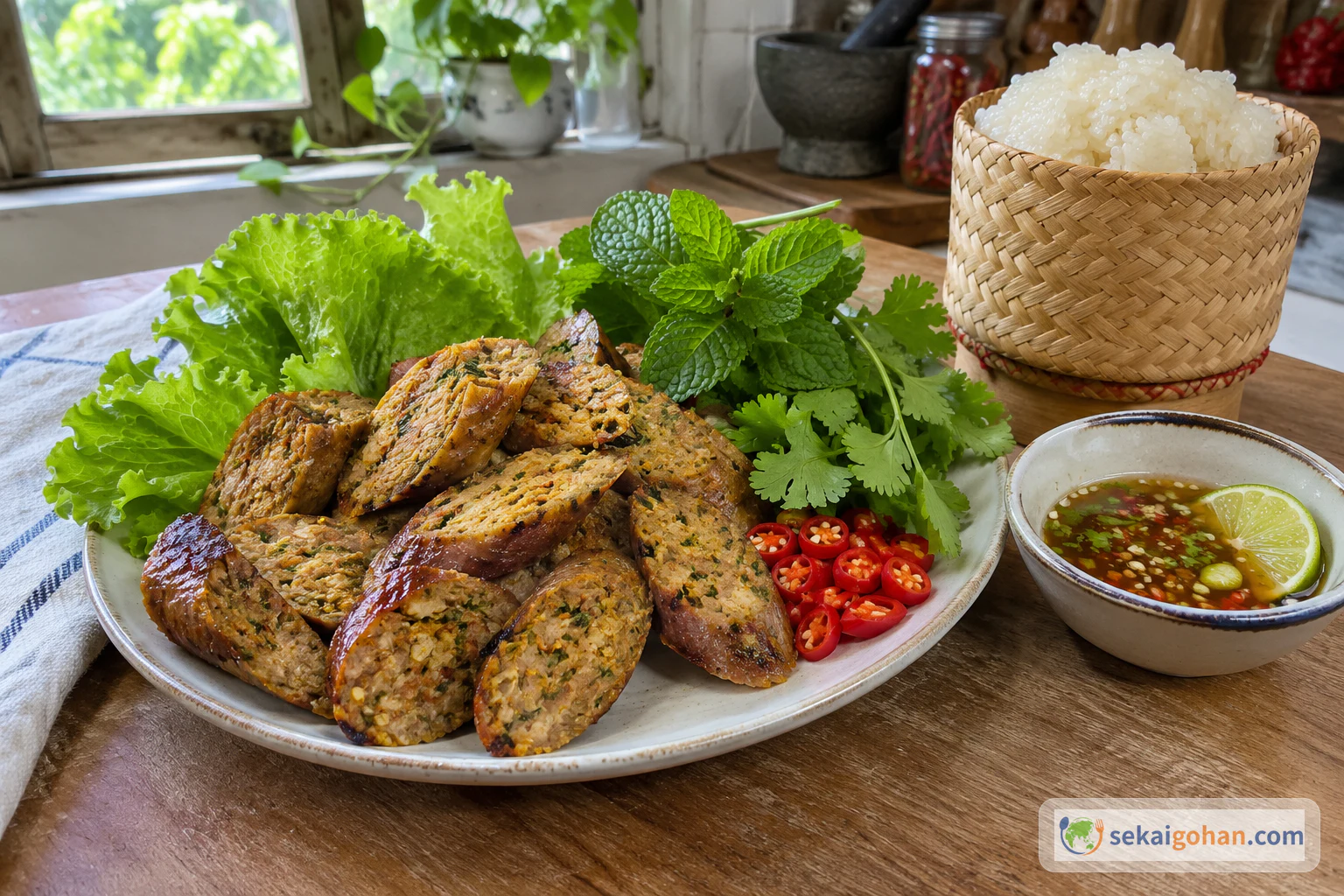
Slice the sausage on the diagonal into bite-size pieces, the way the stalls chop it for their bags. Sticky rice is the natural partner. Pinch off a ball, press it against a slice and eat them together. Put out lettuce leaves for wrapping, along with fresh mint and coriander and sliced bird's eye chillies for anyone who wants more heat. A small bowl of lime juice sharpened with fish sauce works as the dip. The sourness cuts through the fat, and the mint cools the slow burn of the dried chillies.
Three other ways to make it
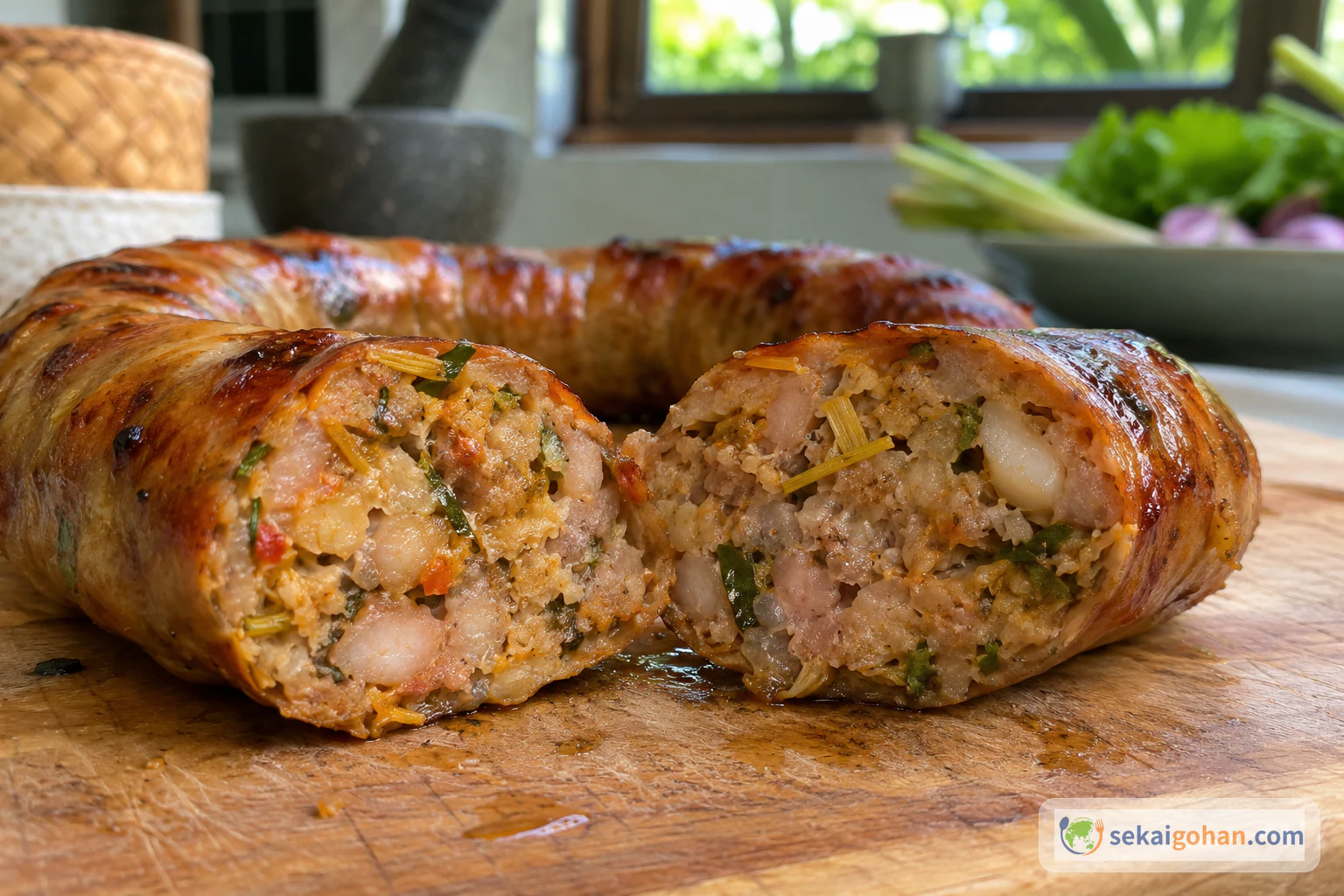
In casing. Stuff the same mixture into hog casing for the long coils seen at markets. Prick the casing with a skewer so it does not burst, and grill slowly over low heat until the center reaches 160°F (71°C). The casing gives a firmer snap than caul fat.
As bare patties. Without caul fat or casing, shape the mixture into small flat ovals. Cook them over low heat in a skillet or on the grill until the center reaches the same temperature. You lose the crisp, rendered skin, but the herb flavor stays.
Without a mincer. Buy coarsely ground pork shoulder and chopped pork back fat. Pound the paste first, then fold it through gently with the fish sauce and curry powder. Overworking melts the fat and gives a dense, bouncy texture, so stop mixing while you can still see pieces of fat.
Frequently asked questions
How spicy is sai ua?
The dried chillies give a steady, warming heat rather than a sharp one, and this amount gives a moderate burn. Use the test-fry to decide: add more soaked chilli to the mix if you want it hotter. Fresh bird's eye chilli at the table lets each person turn it up.
Can I make the fermented, sour kind at home?
Make the fresh, grilled kind at home. Fermented sausage is a separate craft that depends on careful control. The fresh version is ready the same day and cooks through on the grill.
Why use curry powder in a Thai sausage?
Its small amount sits in the background and rounds out the fresh herbs without making the sausage taste of curry. Use dry curry powder; curry paste is a different ingredient.
Can I make a half batch?
Yes. Halve every ingredient, including the fish sauce and the lime leaves, and you get six sausages at the same size. Keep the 3½ oz (100 g) portion size so the grilling behaves the same way.