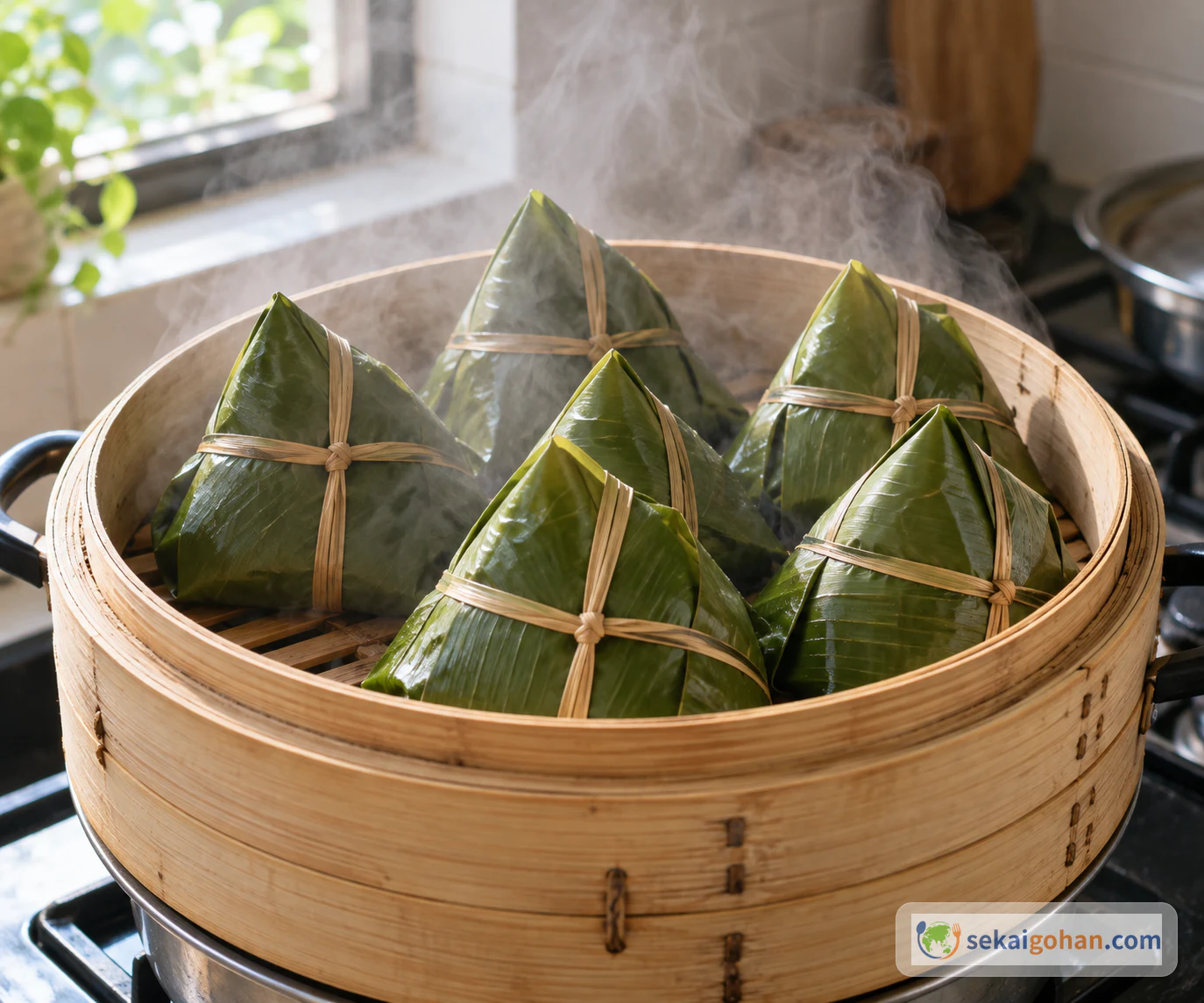
Bánh Giò: A Soft Rice Wrapper Around Pork and Mushrooms
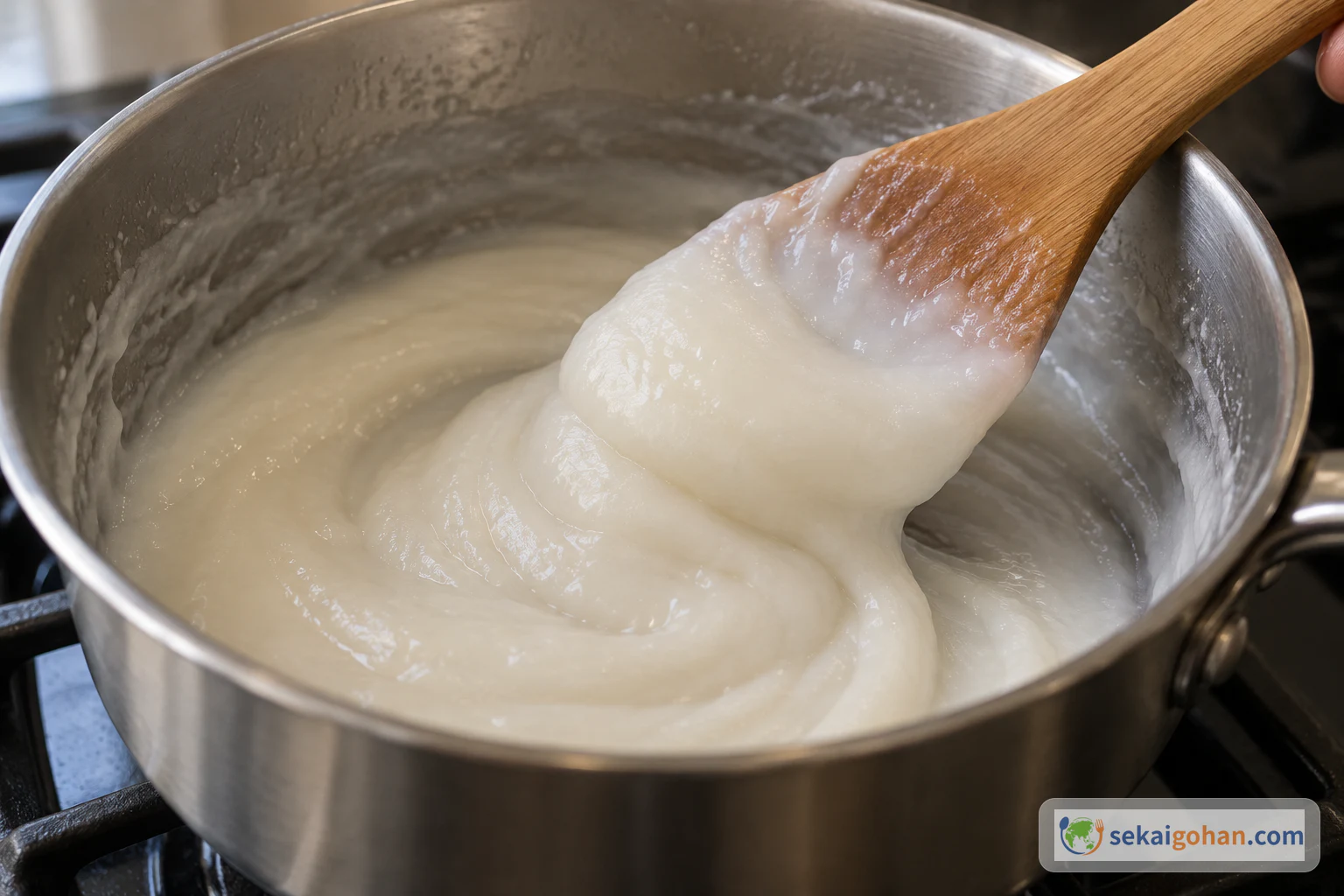
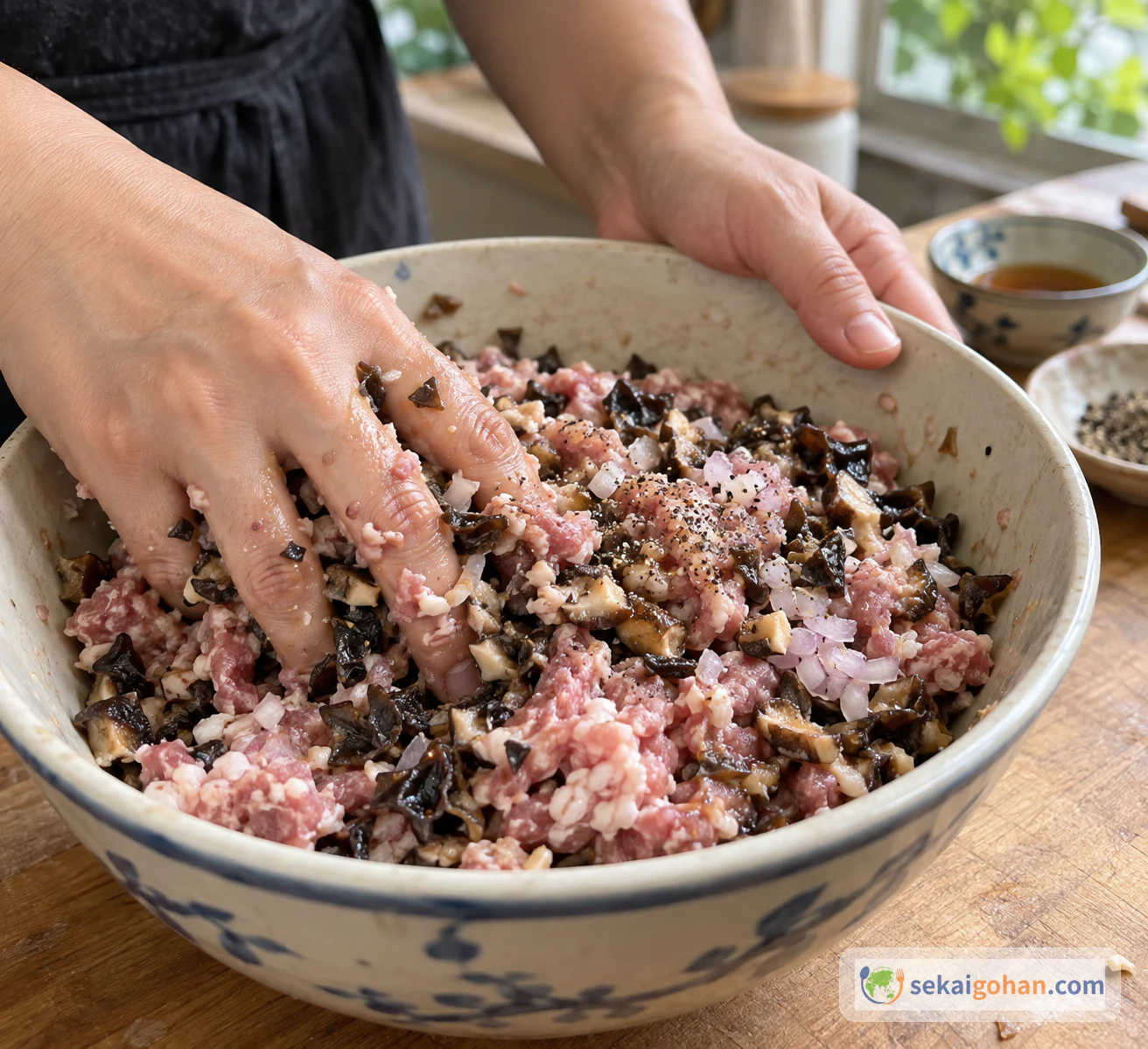
The outside is a white wrapper made mostly of rice flour. The inside is minced pork with wood ear and shiitake. Getting there depends on stirring the flour mixture over very low heat into a heavy, smooth paste.
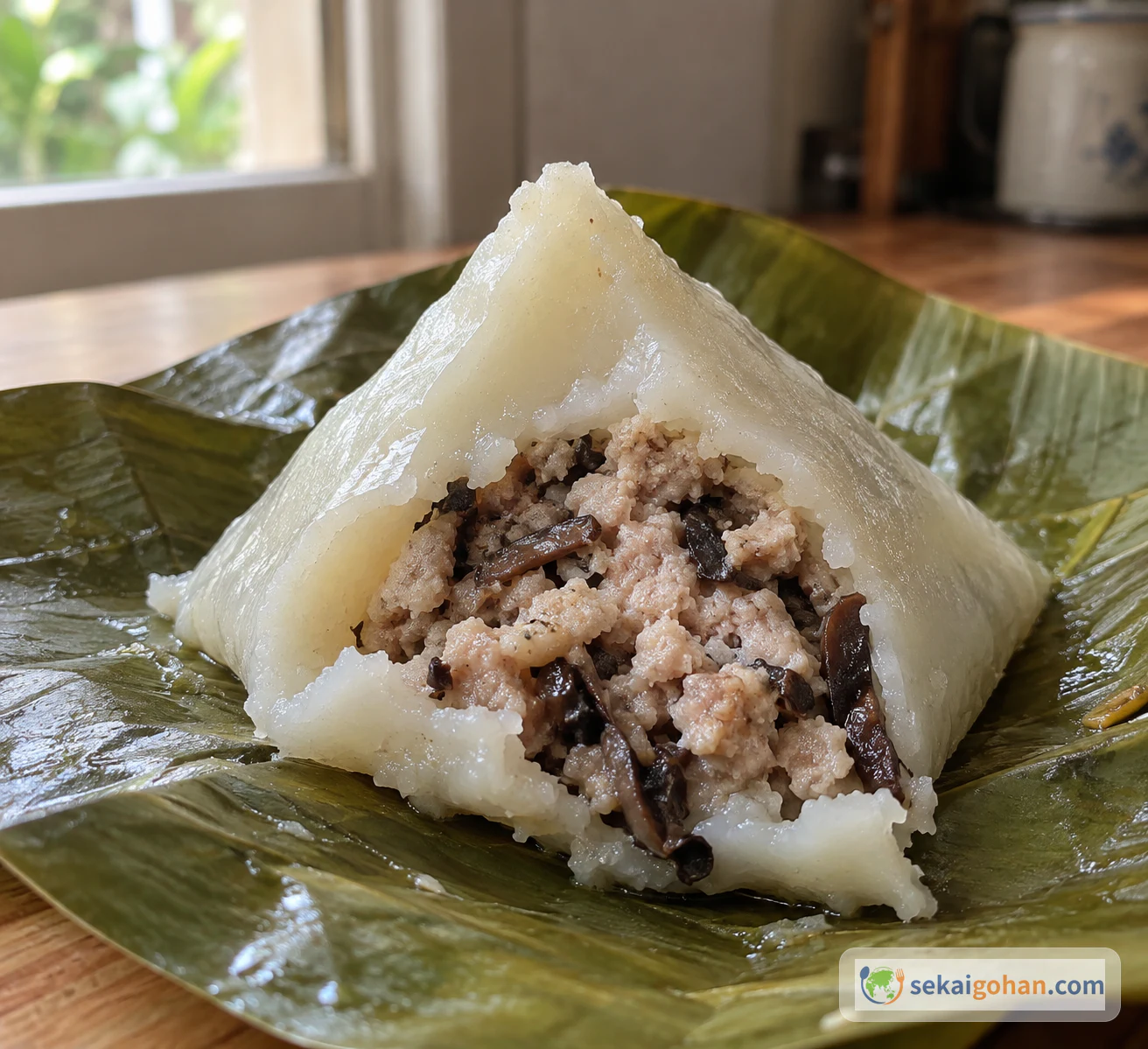
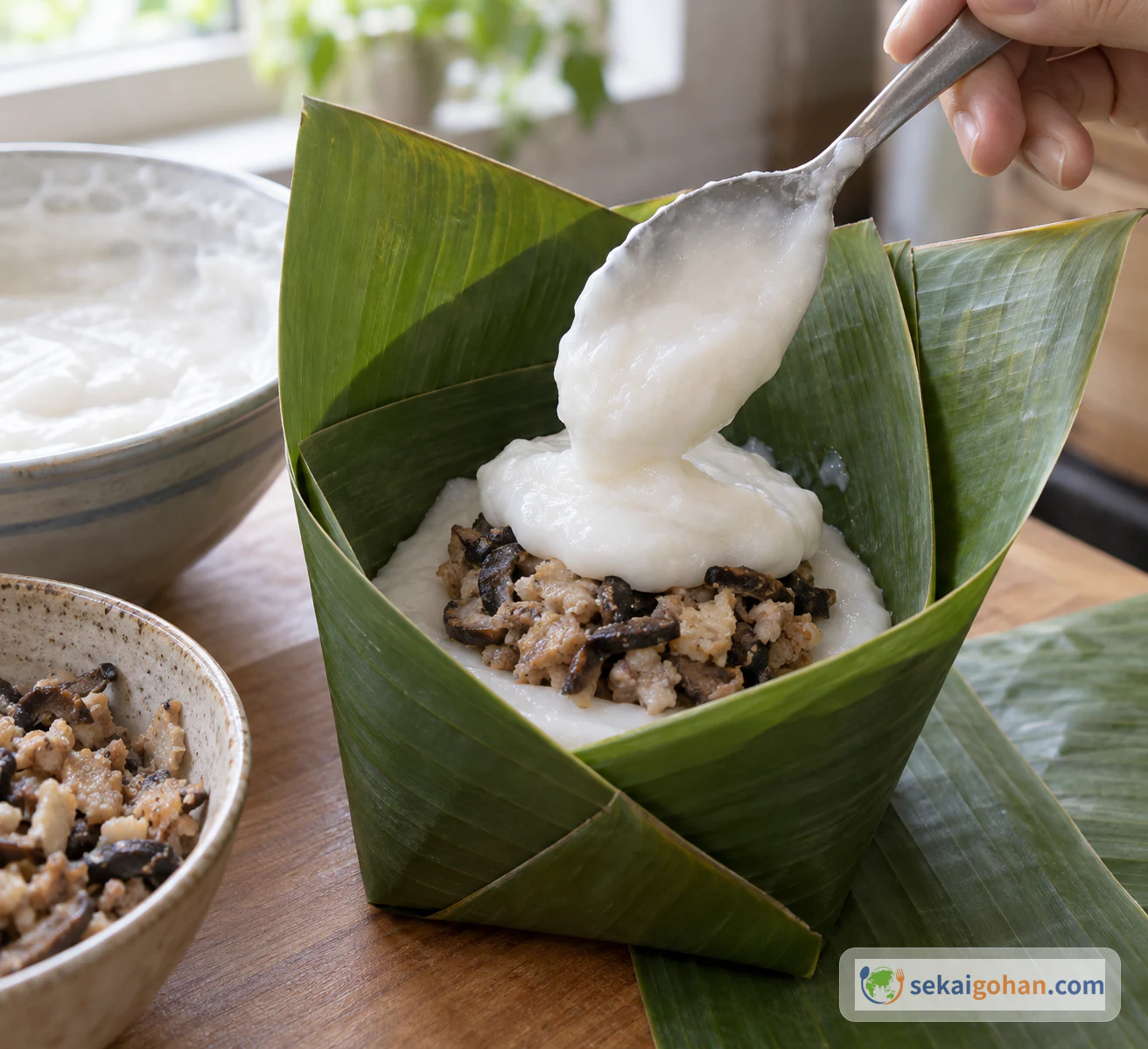
In Hanoi, bánh giò belongs to the food of alleys and small street stands, where it is sold as a breakfast or snack. Each one is a banana-leaf pyramid. Untie it and you find a white rice-flour wrapper with a filling of minced pork and mushrooms at its center.
This article follows one formula: "Cách làm bánh giò Hà Nội với bột tự pha," a recipe from a home cook published by Dân trí. It gives no serving count, parcel count, or portion weight, so none appears here. Other recipes and articles appear only as background and are not blended into the amounts or steps.
Sekai Gohan has not kitchen-tested this recipe. The Dân trí recipe gives no time or temperature for pre-steaming the raw pork filling, and this article does not supply one or name a safe internal temperature. Neither the look of the filling nor the final steaming time of about 30 minutes is proof that the pork is done, so follow your local food-safety authority's guidance for cooking pork. The composition of seasoning powders varies by product, so read the labels if you are avoiding any allergen.
With the accent marks removed, bánh giò can look like bánh gio, also called bánh tro, a sweet sticky-rice cake soaked in ash water. That is a different dish. Bánh giò is also different from bánh gối, a fried dumpling, and bánh tẻ, a differently shaped steamed rice-flour cake.
Ingredients for the Wrapper and Filling
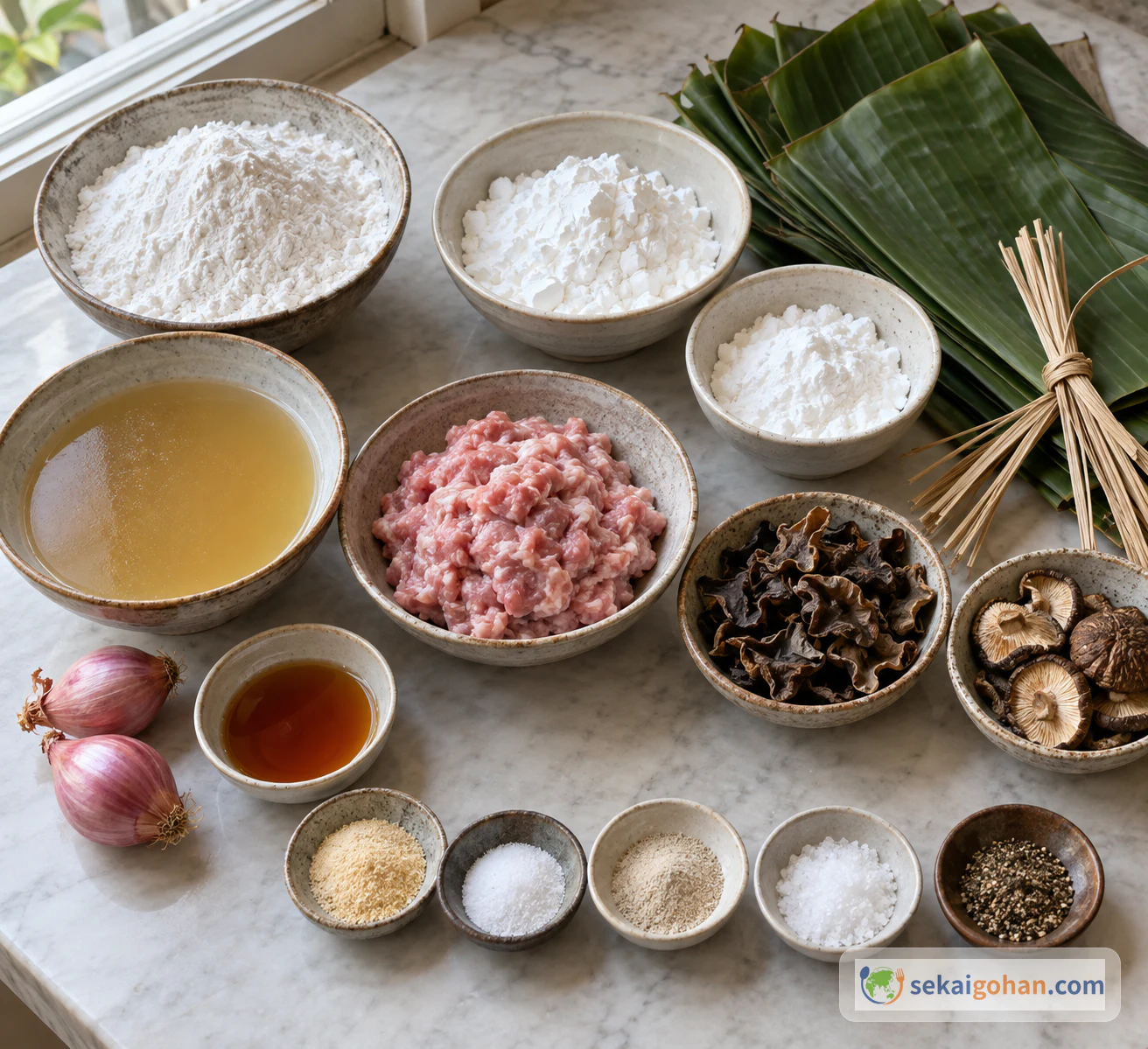
Bone seasoning powder goes in the wrapper. Seasoning salt powder and stock seasoning powder are two separate ingredients, and both go in the filling.
Equipment
- Mixing bowls
- Whisk
- Saucepan
- Wooden spatula
- Knife and cutting board
- Spoon
- Clean cloth
- Steamer
- String or ties for the parcels
Choosing and Substituting
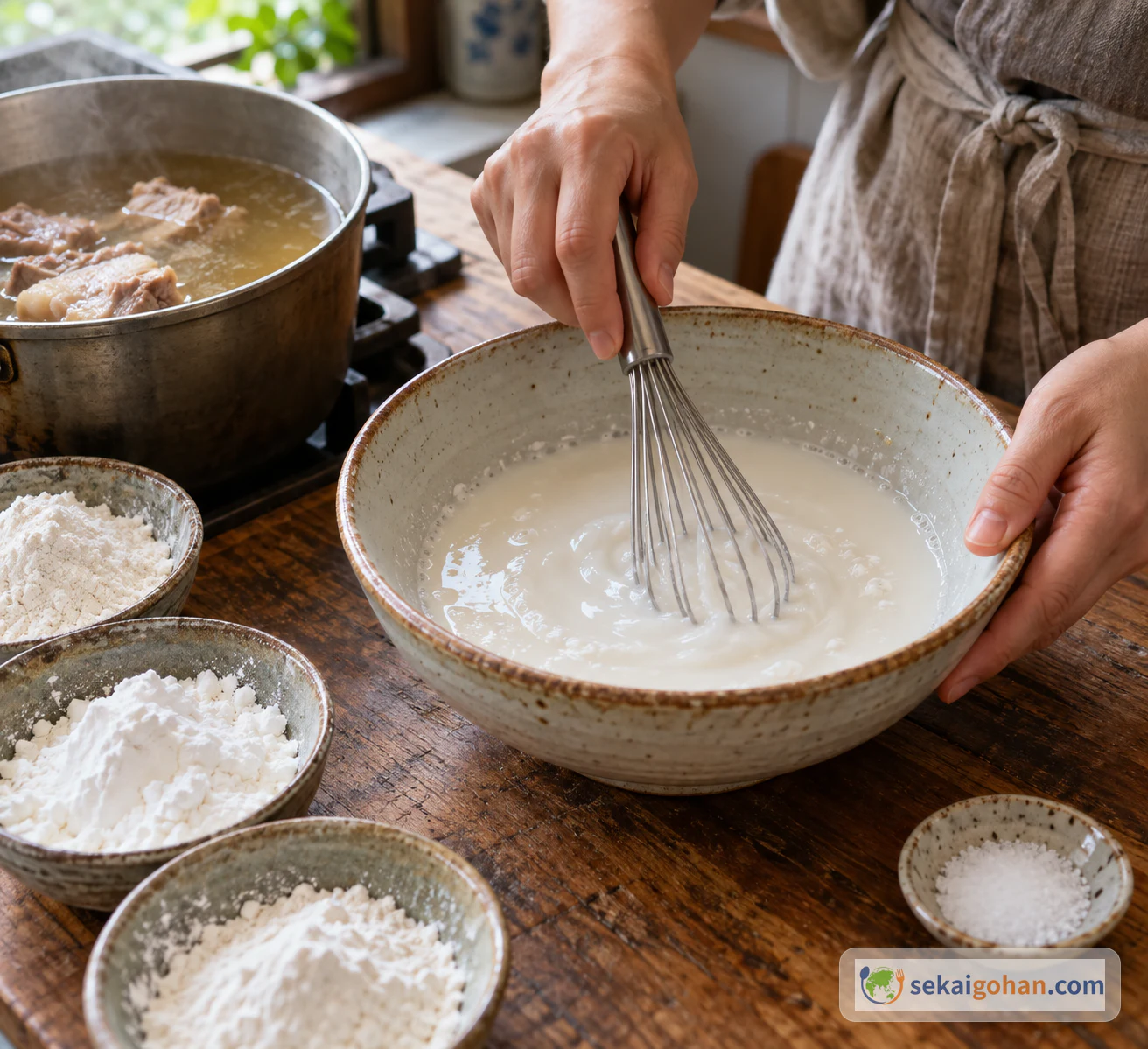
- Rice flour: Use ordinary non-glutinous rice flour, not glutinous rice flour.
- Starches: Corn starch and potato starch are not interchangeable in this recipe. For the 30g starch, choose potato or tapioca and do not combine them. Where potato starch is hard to find, Japanese katakuriko can be used instead, though it may not be identical.
- Stock or water: Pork bone stock brings more savoriness and salt than water. The seasoning amounts stay as listed either way.
- Seasoning powders: Products vary in composition, so read the labels. If you can't find Vietnamese seasoning salt, plain salt plus a stock seasoning can stand in, though it is not an equivalent and the flavor may differ.
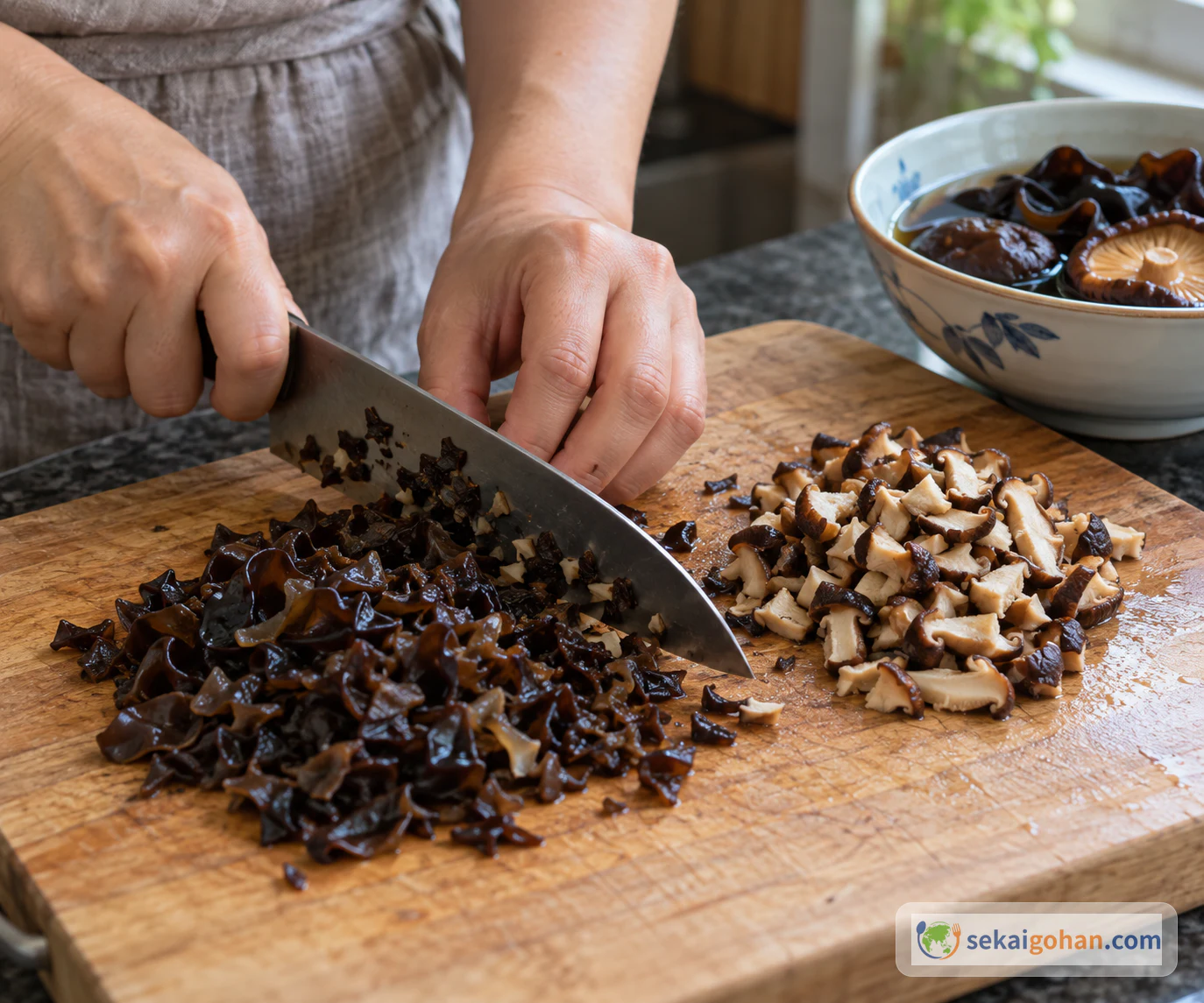
- Shallots and mushrooms: Use the counts listed; there is no gram weight or onion equivalent for them.
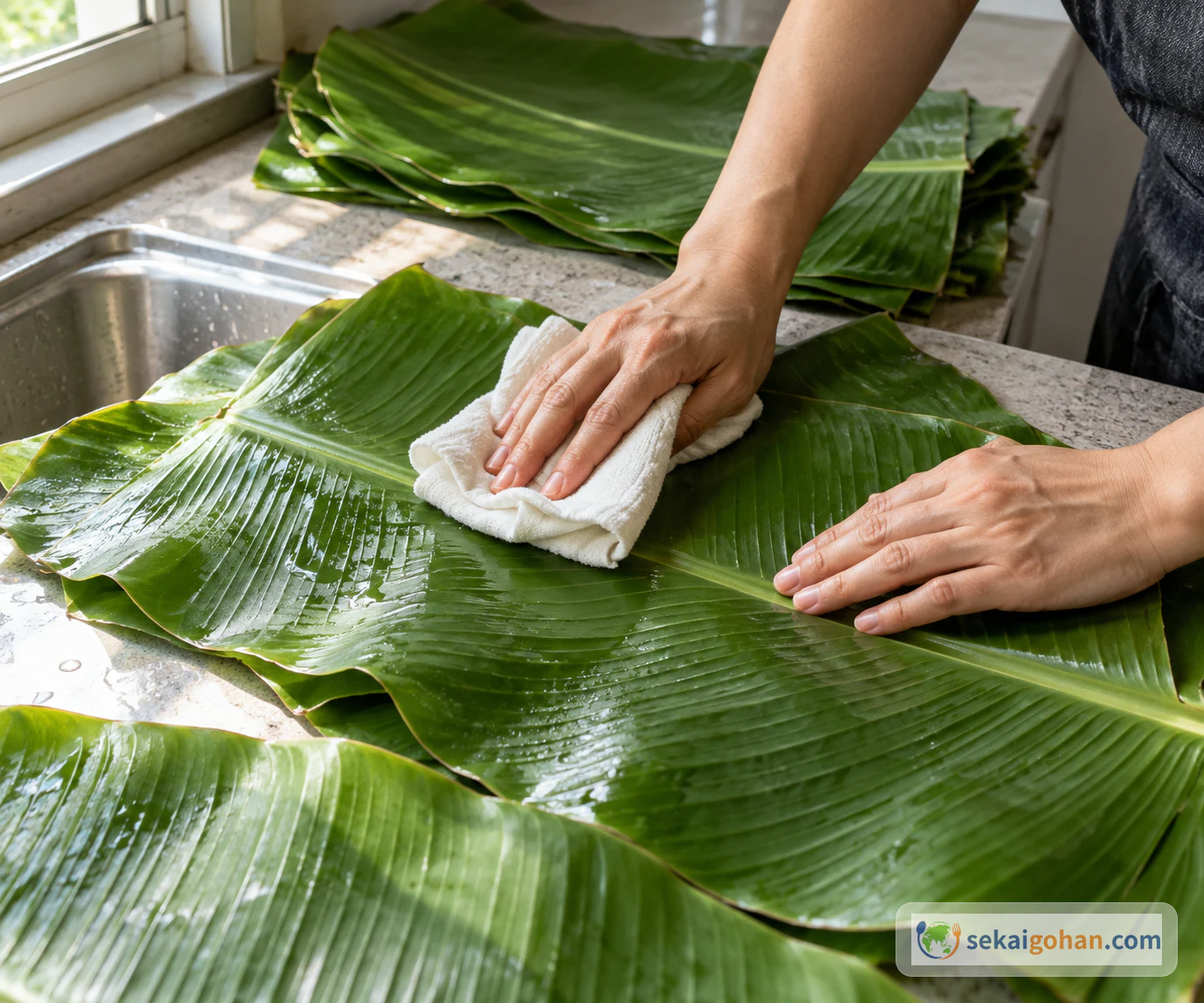
- Banana leaves: They may not be sold at every supermarket, so try specialty or frozen-food shops. Baking parchment is a fallback, not the same method. It changes the aroma and how the parcel wraps.
Method: Paste, Filling, Wrap, Steam
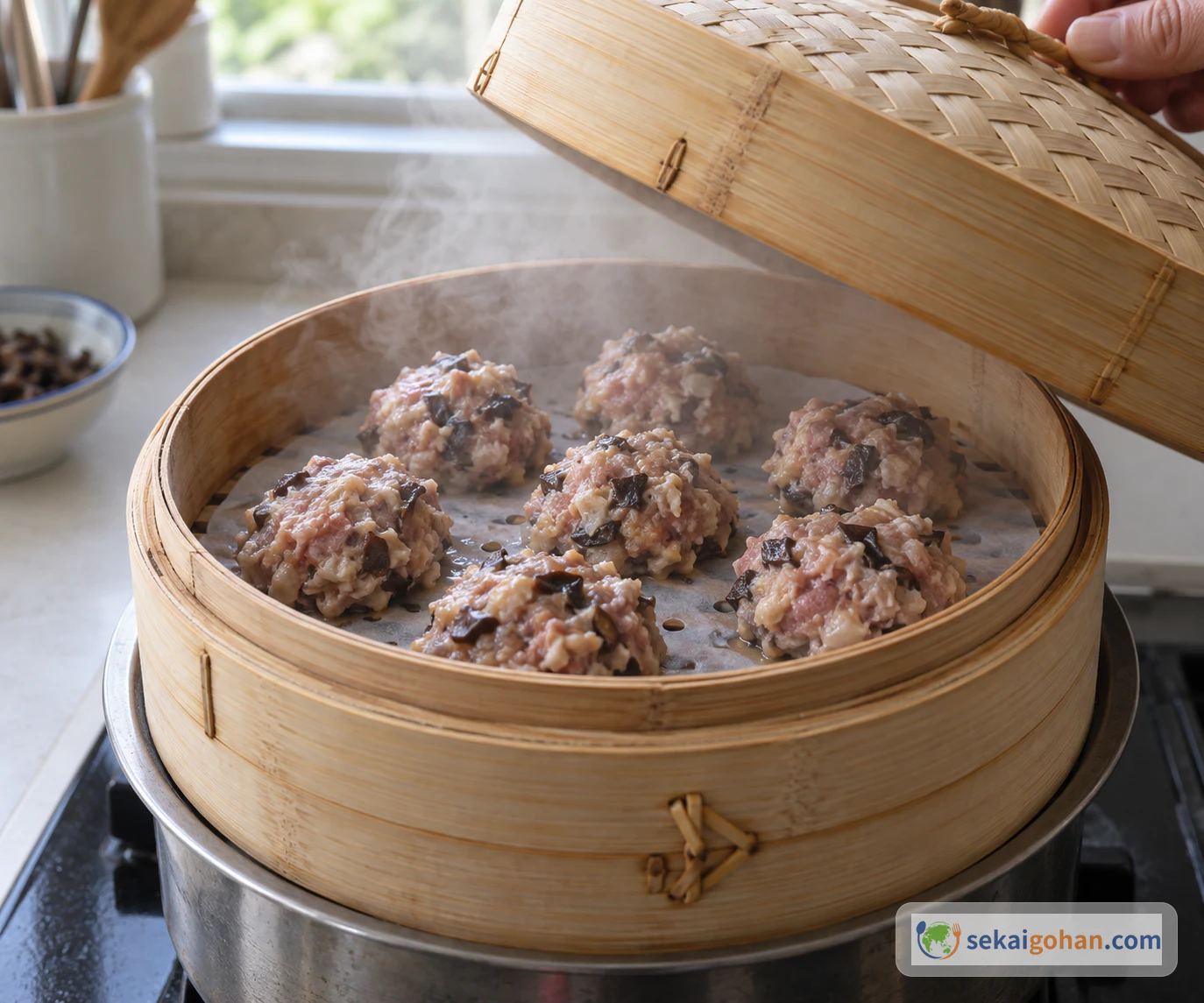
The filling is steamed twice: once on its own to set it, then again inside the finished parcel. Get the paste cooked and cooling before you start wrapping.
Opening the Parcel
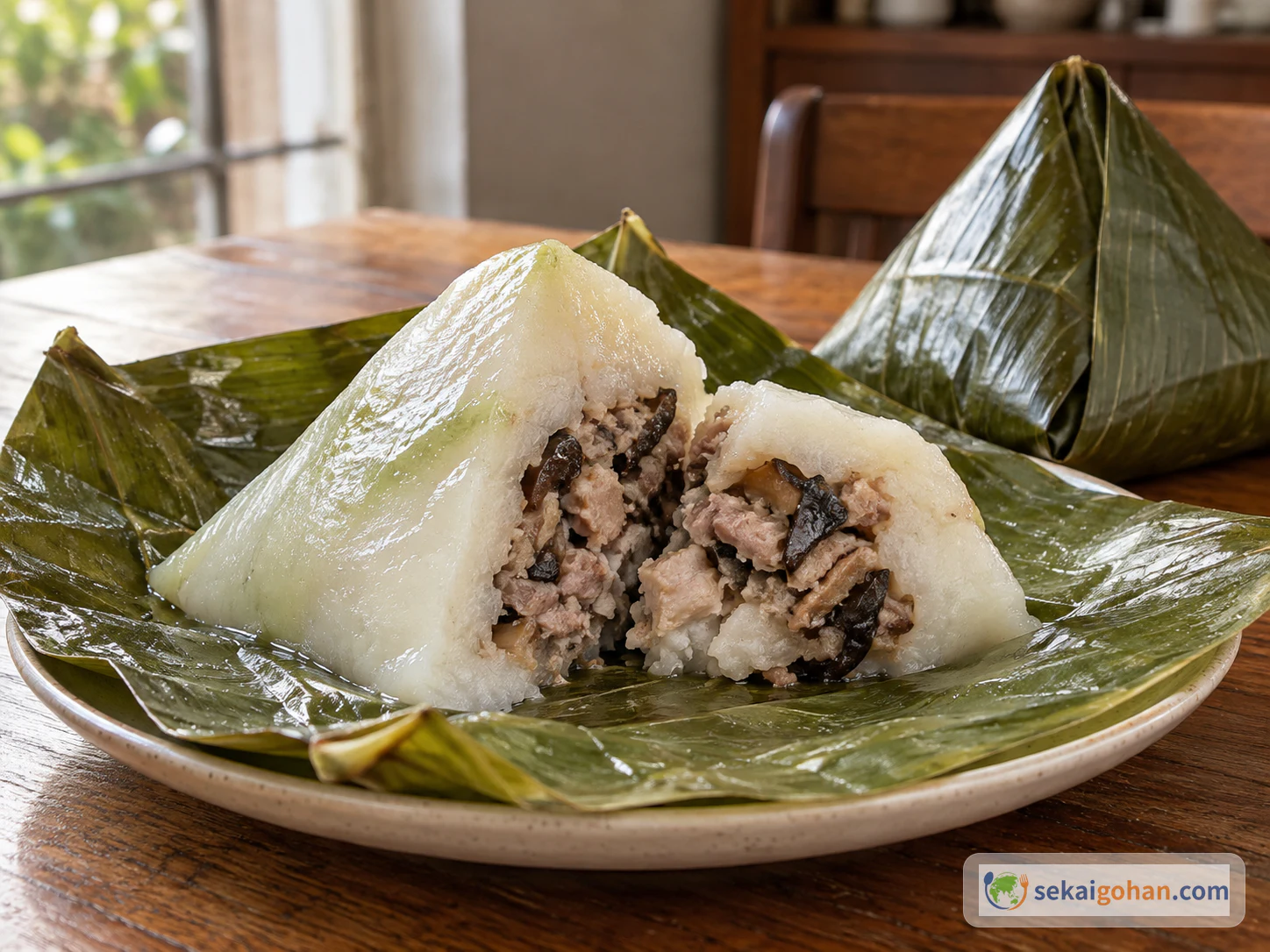
Untie the string and open the leaves on a plate. The recipe lists no dipping sauce or garnish, so none is added here.
Troubleshooting
| What you see | What to check | What to do |
|---|---|---|
| The paste is still thin | It may need more stirring over the heat | Keep stirring over very low heat until it turns heavy; judge by the texture |
| The paste catches on the pan | The heat, and whether you are reaching the bottom and sides | Turn the heat down and keep scraping as you stir |
| The filling won't hold its shape | Whether it has set in the pre-steam | Steam it until it is set and cooked through before wrapping |
| Filling shows through the paste | Whether the top layer of paste was too thin | Add more paste before folding the leaves closed |
| A leaf tears as you fold | How the leaf was prepared | Prepare a fresh piece as in step 6 and keep the two crossed layers |
| The result tastes too salty | Your stock and seasoning powders, since products vary | Next time consider water or an unsalted stock; salt levels here are not product-specific |
Variations: Other Versions, Kept Separate
The versions below show how the dish varies. Their ratios and times belong to their own methods, so don't swap them into this formula piece by piece.
| Reference | What differs from this recipe |
|---|---|
| Viet World Kitchen (Andrea Nguyen) | A separate 8-dumpling family formula with its own rice flour and cornstarch dough ratio, wrapped in banana leaf plus foil and steamed for 40–45 minutes |
| VietNamNet / Hanoitimes | Describes minced lean meat and cat-ear mushroom in banana or phrynium leaf, with 45 minutes of cooking the flour and 20 minutes of boiling |
| GoVietnam.travel | Describes one common variation with shiitake and quail egg, using a partially cooked flour dough |
Bánh Giò in Hanoi
Dân trí places bánh giò among Hanoi's street and alley foods, and VietNamNet, in a feature credited to Hanoitimes, describes it as a breakfast or snack sold at small street stands. Viet World Kitchen describes it as a northern Vietnamese pyramid dumpling, and GoVietnam.travel also ties it to northern Vietnam and Hanoi. Those sources focus on Hanoi and the north, so this article doesn't call it a staple of every Vietnamese table. For more of the country's food, see our guide to Vietnam.
The story behind the name is less settled. Andrea Nguyen of Viet World Kitchen connects it to makers of giò, the Vietnamese pork sausage, who used leftover pork, and attributes that account to her mother. It is a family explanation, not an established etymology. GoVietnam.travel proposes a 1940s–1950s date for the dish, but that is travel-guide commentary, and we don't treat it as established history.
Frequently Asked Questions
How many parcels does this make?
The Dân trí recipe gives no parcel count, serving count, or filling weight per parcel, so we don't state a yield. It only says to divide the filling into portions.
When does the bone seasoning powder go in?
The recipe lists 2 tsp for the wrapper but doesn't say when to add it. Adding it with the salt in step 2 is our editorial placement, not a stated instruction.
What is a "rice spoon"?
Thìa cơm is the spoon unit the Vietnamese recipe uses for the fish sauce. We keep it as written because no confirmed conversion exists, and it should not be assumed to equal a tablespoon.
How long should I pre-steam the filling?
The recipe gives no time or temperature, only that the filling is steamed to set before wrapping. Please don't borrow a time from another recipe. Check the pork against your local food-safety authority's guidance.
Can I use water instead of pork stock?
Yes, the recipe allows either, in the same 1300g total. Stock brings more savoriness and salt than water, but no separate seasoning amounts are given for each.
How long does bánh giò keep, and how do I reheat it?
Our references give no storage period or reheating method, so this article doesn't state one. Follow your local food-safety authority's guidance for cooked pork dishes.
Sources
- Ngọc Linh, Dân trí, "Cách làm bánh giò Hà Nội với bột tự pha." The adopted recipe: wrapper and filling amounts, the cooked paste, pre-steamed filling, crossed banana-leaf wrapping, steaming for about 30 minutes, and bánh giò's place among Hanoi street and alley foods. https://dantri.com.vn/van-hoa/cach-lam-banh-gio-ha-noi-voi-bot-tu-pha-20210513134621813.htm
- Andrea Nguyen, Viet World Kitchen, "Vietnamese Rice and Pork Pyramid Dumplings Recipe (Banh Gio)." A separate family recipe used for comparison, the northern Vietnamese description, and the family account of the name. https://www.vietworldkitchen.com/blog/2018/05/vietnamese-rice-and-pork-pyramid-dumplings-recipe-banh-gio.html
- VietNamNet Global (text credited to Hanoitimes/VNN), "'Banh gio' – Triangular rice dumpling." The breakfast and snack context at small Hanoi street stands, and a differing method used for comparison. https://vietnamnet.vn/en/banh-gio-triangular-rice-dumpling-E112639.html
- GoVietnam.travel, "Bánh giò – Vietnamese Savoury Cake." Travel-guide description of the dish and its quail-egg variation; its dating is not adopted as established history. https://govietnam.travel/en/food/banh-gio/