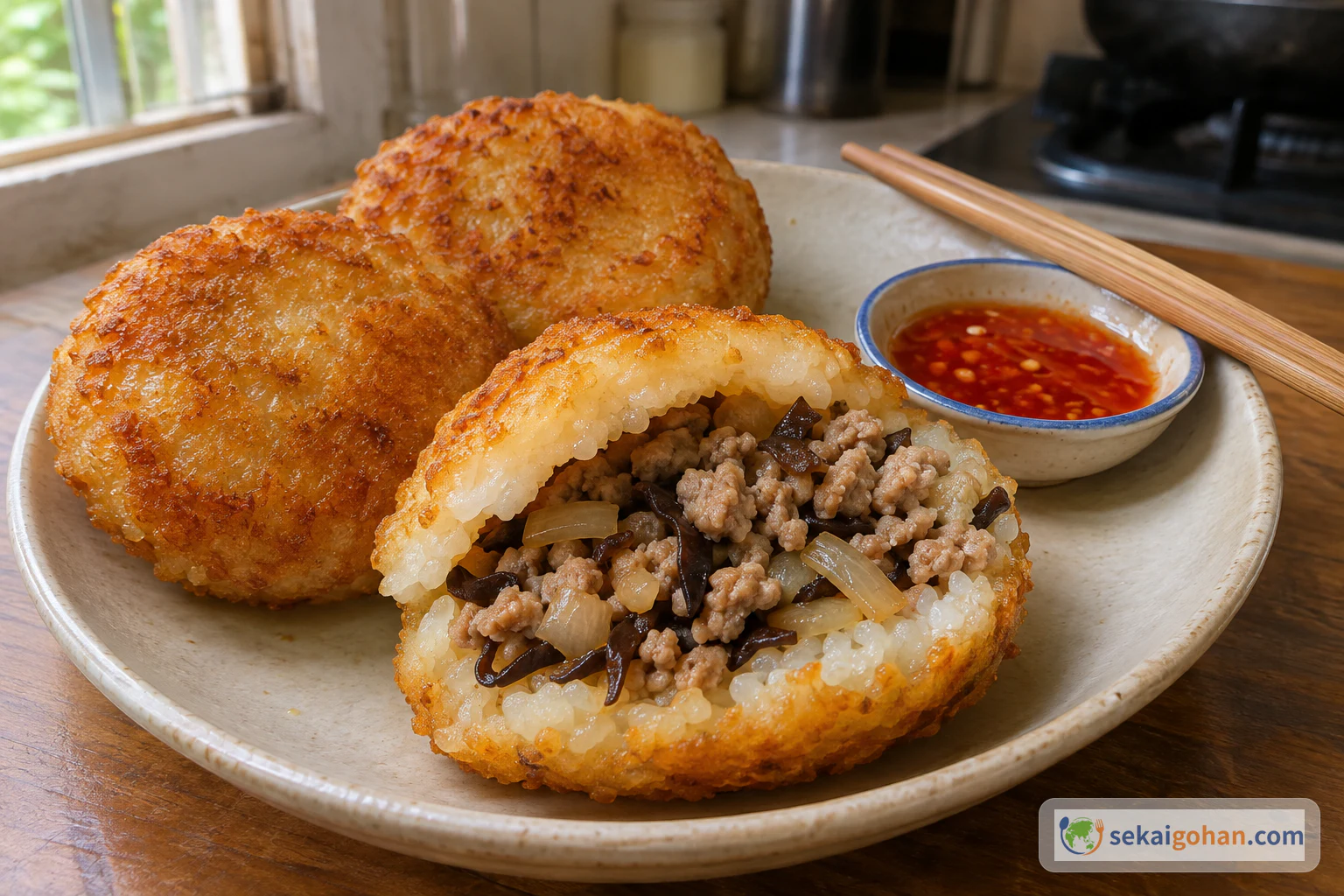
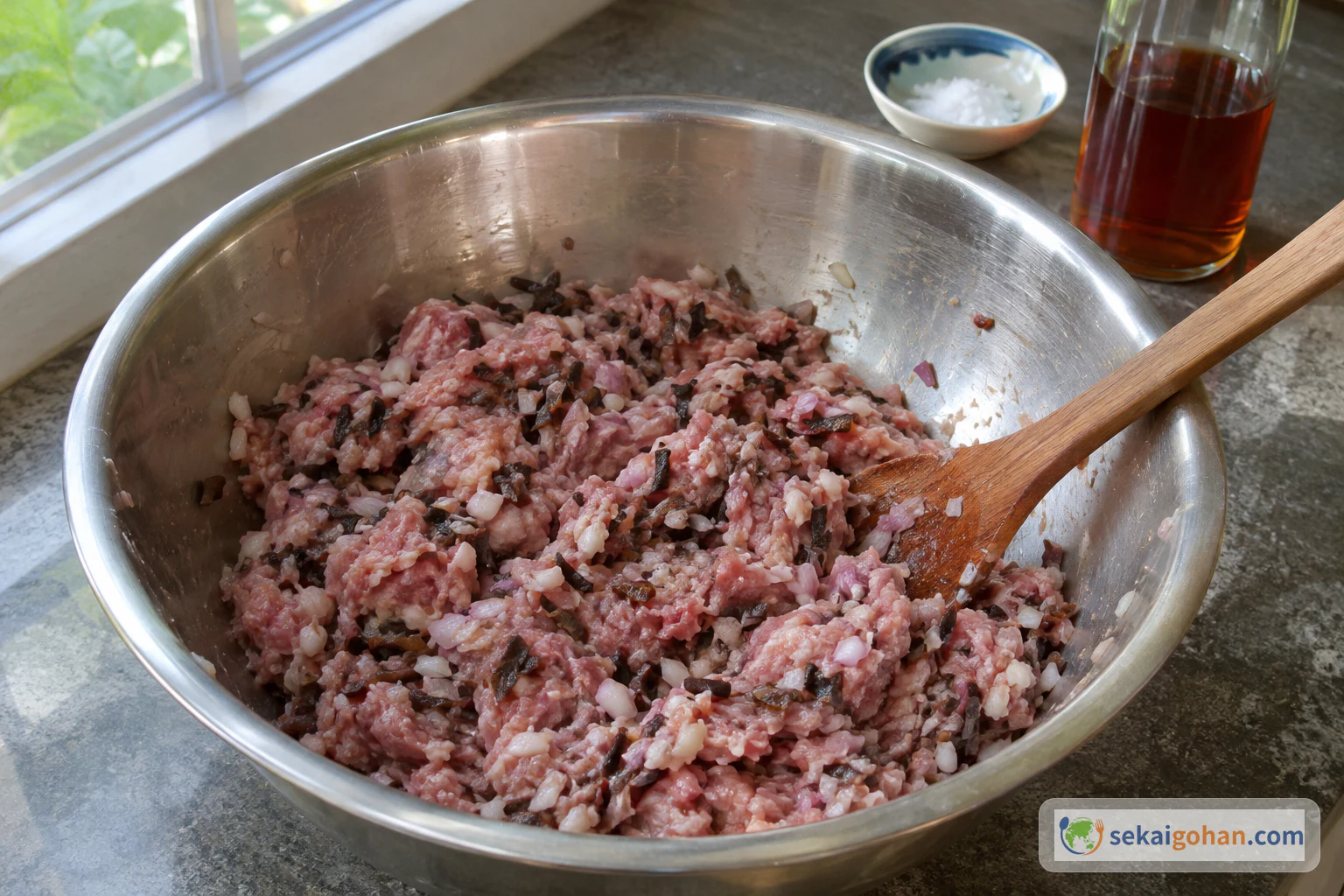
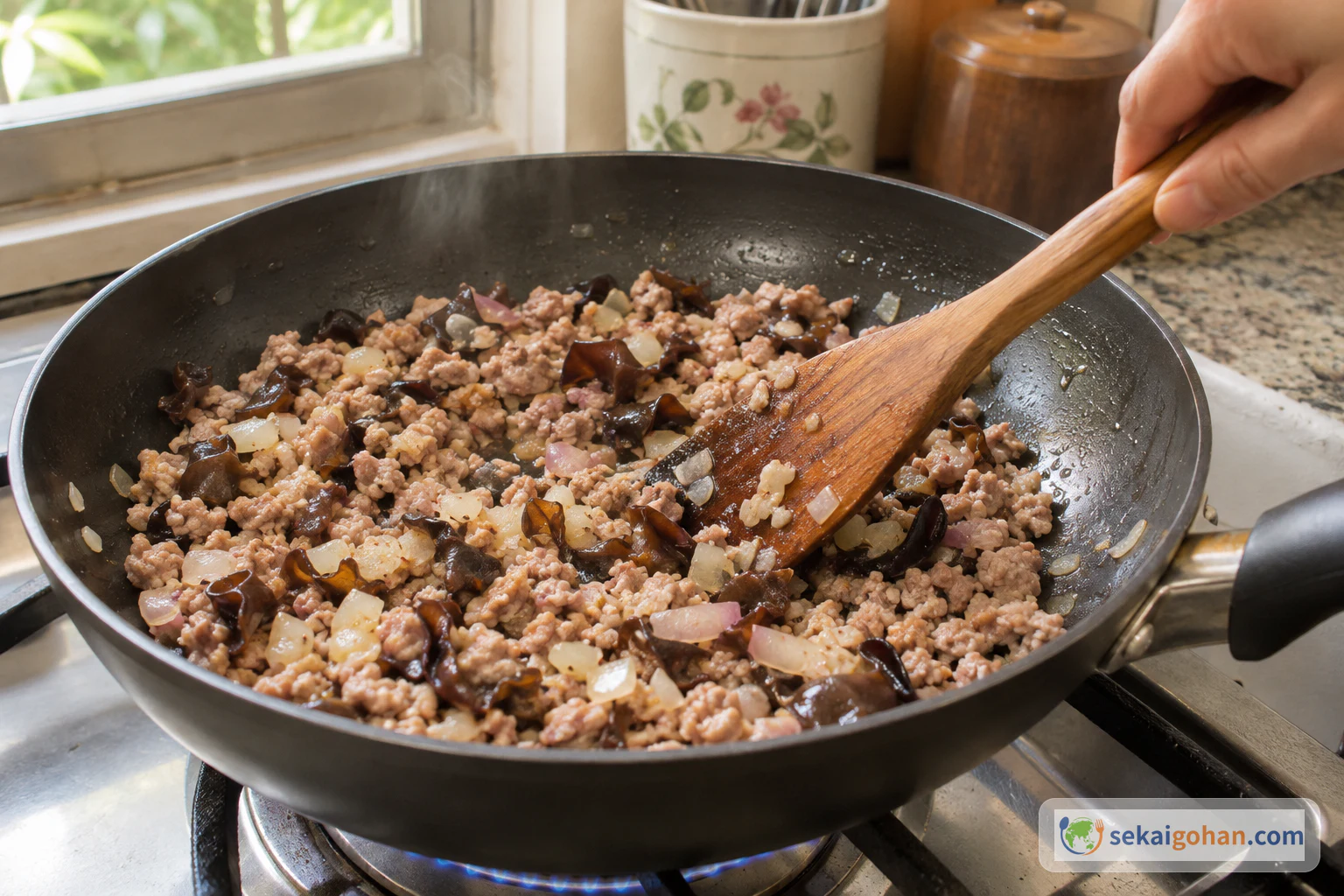
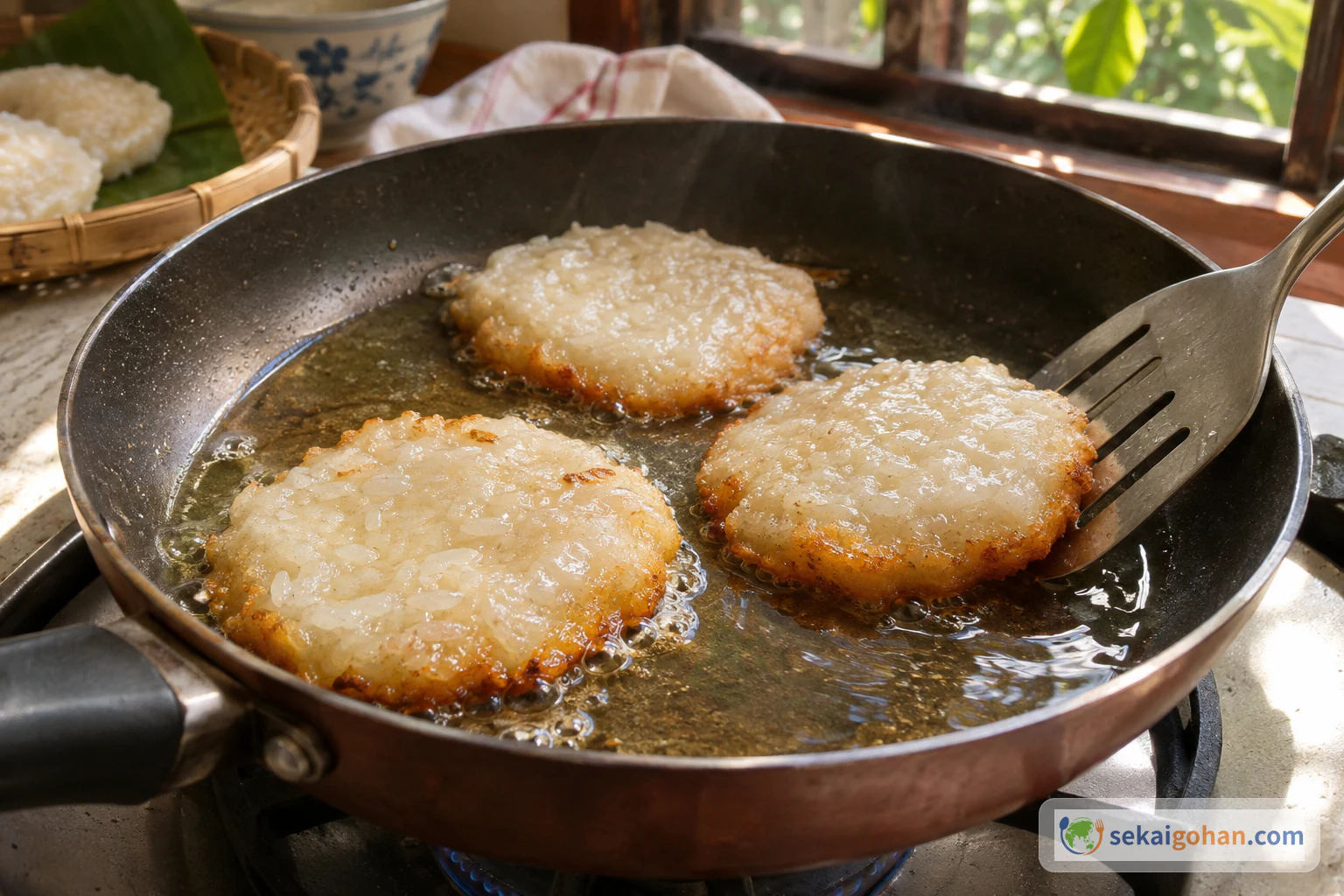
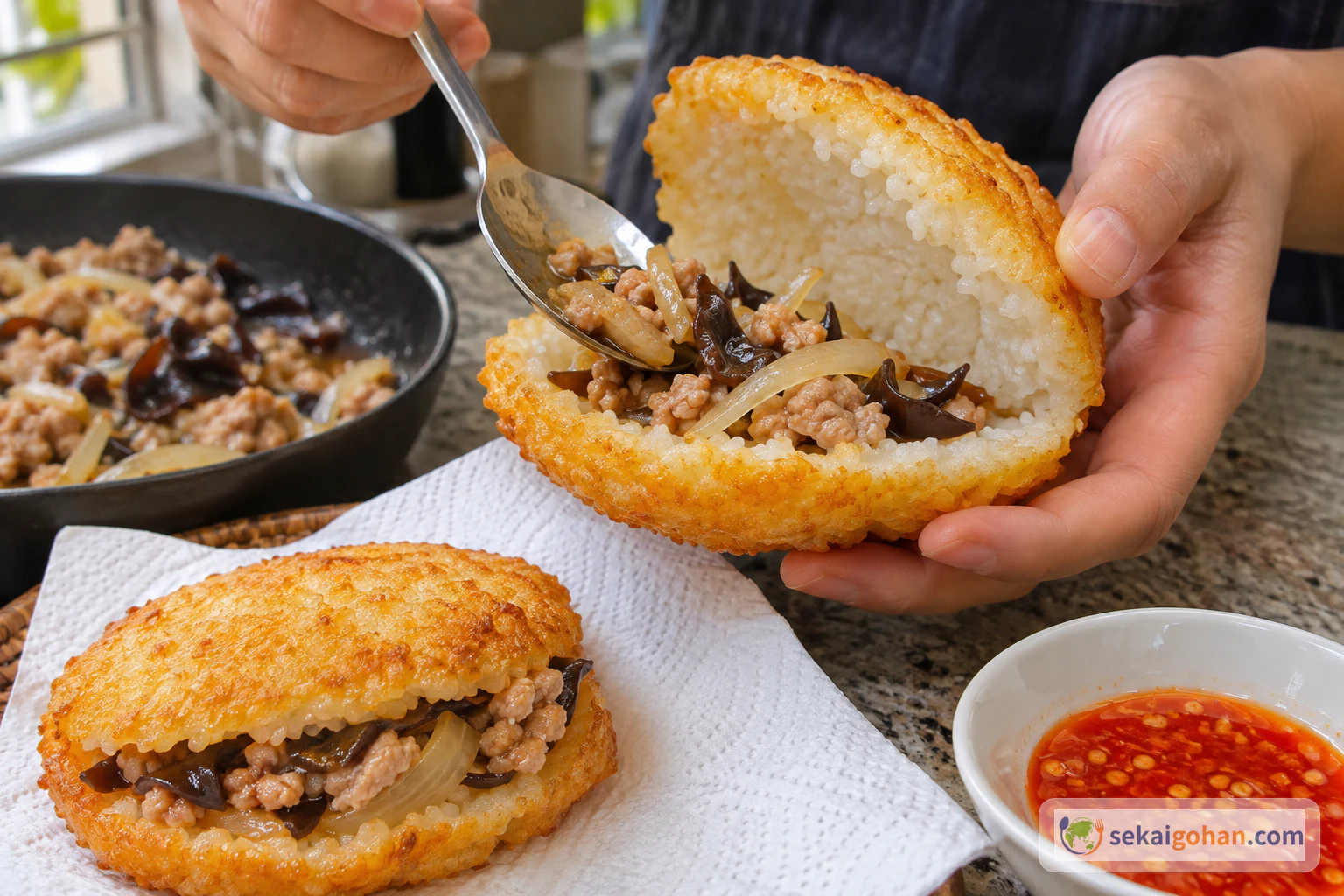
A flat disc of sticky rice goes into a shallow film of oil, and the edges start to bubble and turn gold while the top still looks pale and soft. When it comes out, the shell is crisp and the inside stays tender and chewy, so you can split it like a book. Into the opening goes a hot spoonful of ground pork, wood ear mushroom and onion, and over the top goes a line of red chili sauce. This is xôi chiên, fried sticky rice from the street stalls of Ho Chi Minh City, where a plate was priced at under a dollar, around 24,000 đồng, at the time the recipe was written. People eat it for breakfast and again as an afternoon snack, warm in the hand, with the crunch giving way to soft rice and savory filling.
Fried Sticky Rice from Saigon's Stalls to Pleiku's Evenings
The name is plain Vietnamese. Xôi is the family of sticky rice dishes, and chiên means fried. In Saigon the most common form is the one made here: cooked glutinous rice shaped into rounds, pan-fried, then opened and filled with a stir-fry of pork, wood ear and onion, finished with chili sauce. Some cooks leave the filling out entirely and eat the crisp rice on its own.
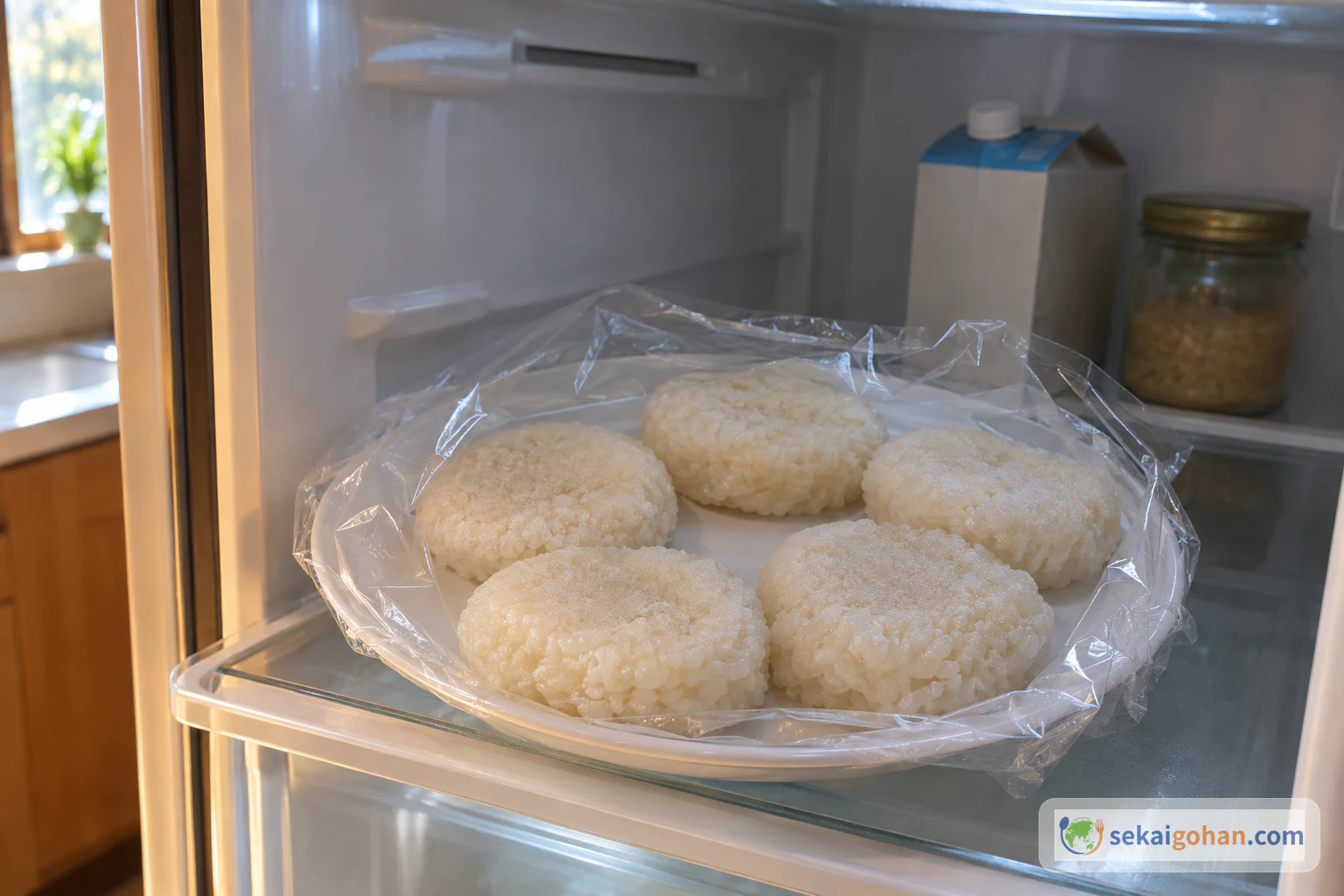
At home it is also a way to use up rice. Families cook plenty of xôi for Tết, the Lunar New Year, and for rằm, the full-moon day of the lunar month, and what is left over gets shaped, chilled until the surface dries, and fried. The idea will feel familiar to anyone who has crisped up yesterday's rice cake in a pan.
How it changes away from Saigon
In Pleiku, in Gia Lai province up in the Central Highlands, a writer from there remembers the smell of xôi chiên drifting through the streets in the evening. Home cooks there use a cookie cutter to build the cake in three layers, rice, then filling, then rice again, so the pork is sealed inside before the cake ever reaches the pan. The stalls in front of schools have moved with the times, and some now tuck in cooked mung beans or a boiled egg instead.
The other xôi chiên
Search for the name and you will also meet xôi chiên phồng, a different dish common in the south. Here sticky rice and mung beans are steamed, pounded together, cut into discs and deep-fried in oil at 355°F (180°C) until they puff into golden, hollow balls. They are sweet, often made with sesame and sugar, and go alongside grilled chicken or roast duck, or get dusted with powdered sugar and eaten on their own. Stalls selling fried sticky rice in Đồng Nai are traced back to 1952, though how far back the dish really goes is not settled. None of the phồng ingredients belong in the pork-filled cakes below.
At a 2009 food festival in Ho Chi Minh City, cooks made a single xôi chiên phồng to set a record: about 74 inches (187 cm) around, 23½ inches (59.5 cm) across and 16 inches (41.5 cm) tall. It took 22 lb (10 kg) of steamed sticky rice, 1 lb 5 oz (600 g) of white sugar and about 10½ quarts (10 L) of oil.
Xôi chiên sits in a long line of Vietnamese sticky rice cooking, from leaf-wrapped bánh chưng to cơm lam cooked in bamboo, and it shares the street-snack spirit of bánh xèo and the crunch of chả giò. For more of the country's food, see the Vietnam page.
Ingredients (serves 4)
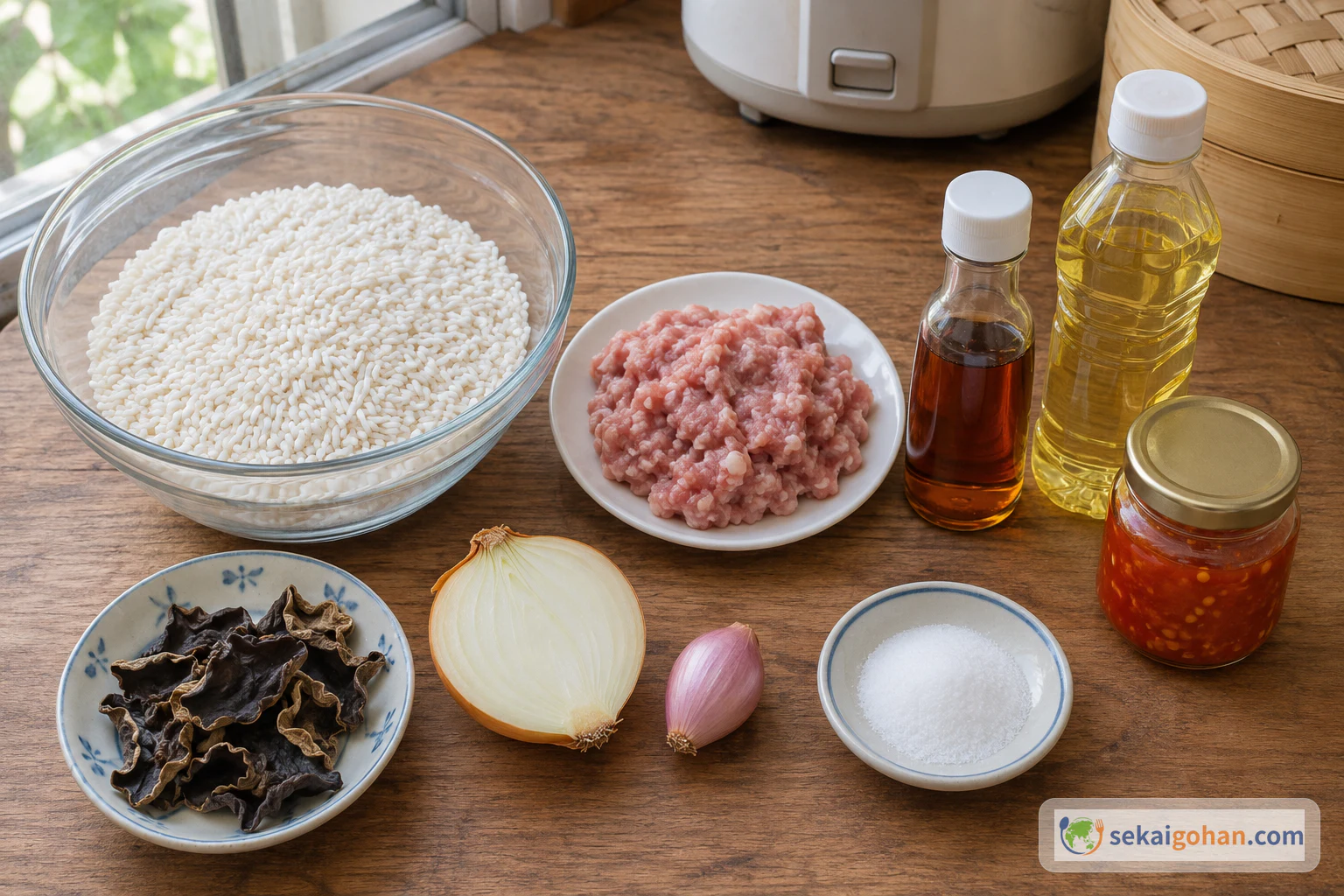
The filling is seasoned with one thing only, salt or fish sauce, so it tastes of pork and mushroom rather than sauce. The chili sauce on top does the rest of the work.
Fish sauce contains fish. Chili sauce and ketchup can contain soy, and some chili sauces contain wheat. Check the ingredient labels on every bottle before cooking for anyone with allergies.
Equipment
- Rice cooker
- Kitchen scale
- US ½-cup (120 ml) measuring cup
- Bowls for rinsing the rice, soaking the mushroom and mixing the filling
- Colander
- Cutting board and knife
- Low-sided 10-inch (26 cm) frying pan
- Spatula
- Plate and plastic wrap for chilling the cakes
Choosing and Substituting
Glutinous rice is the one thing you cannot swap. Look for bags labeled glutinous rice or sweet rice at an Asian grocery or online; Ordinary long-grain, jasmine or short-grain table rice will not hold together or turn chewy, so keep to sticky rice.
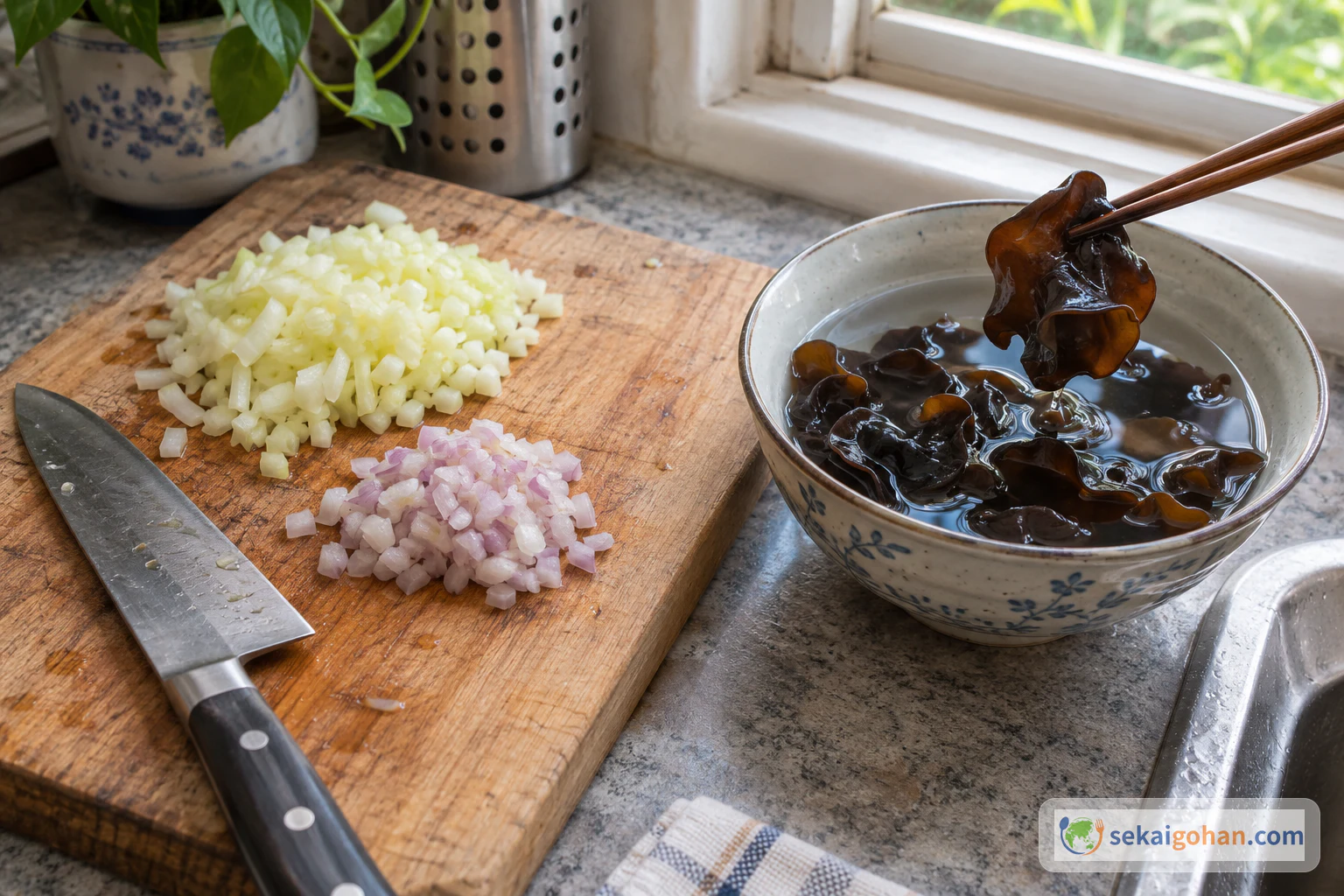
Dried wood ear mushroom comes in small bags at the same shops, and a ⅓ oz (10 g) handful swells a great deal in hot water. Fish sauce gives the filling a deeper, rounder savor than salt; if you do not keep it, salt alone makes a clean-tasting filling. Use Vietnamese nước mắm when you have the choice. A small onion or a red onion stands in well for the shallot, with a little less perfume.
Mai Quế Lộ is an optional addition to the filling. The filling is complete without it, so leave it out rather than reach for another spirit. For the chili sauce, Sriracha is easy to find. For children or anyone who wants no heat, use ketchup instead; it adds sweetness and keeps the tang.
Method
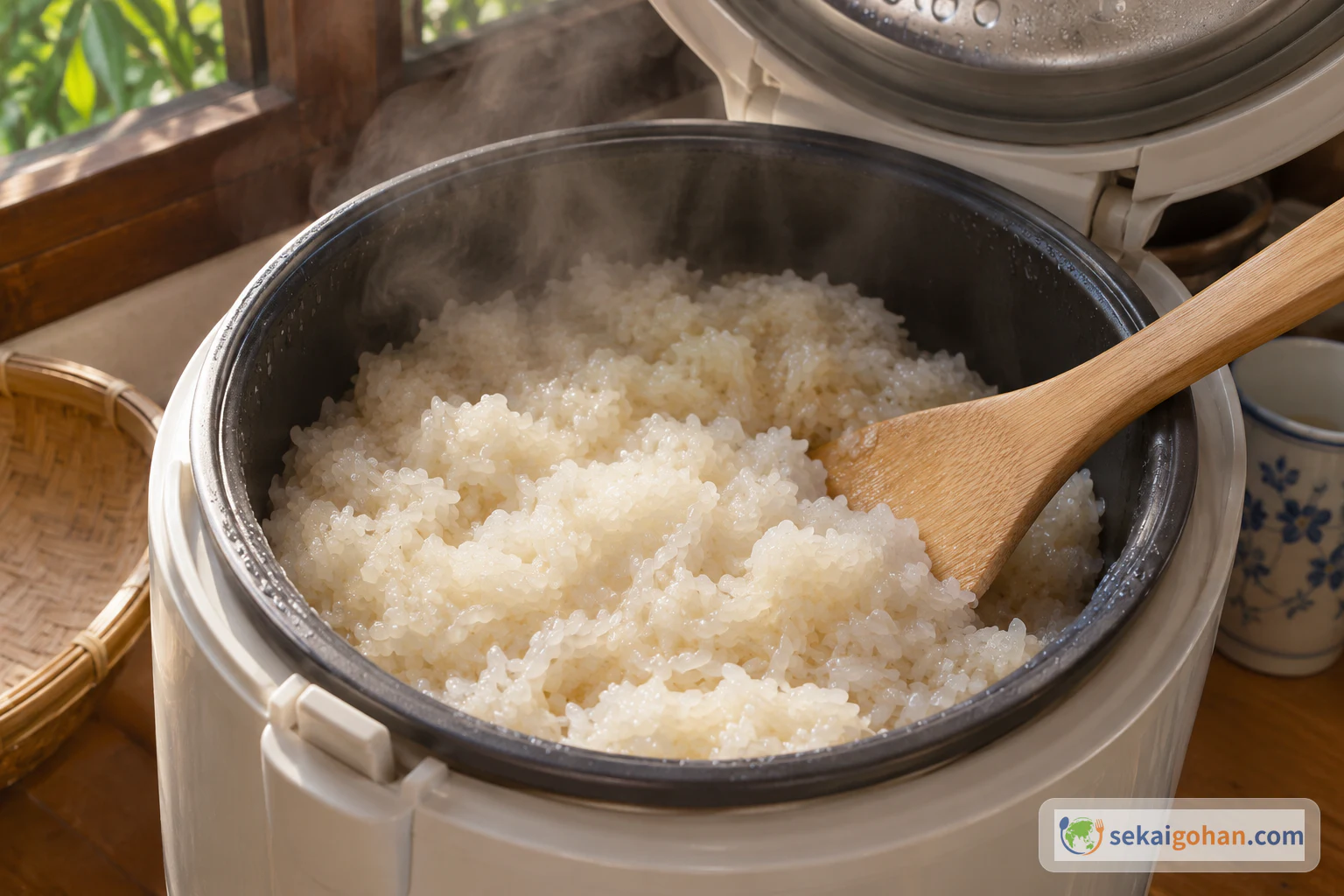
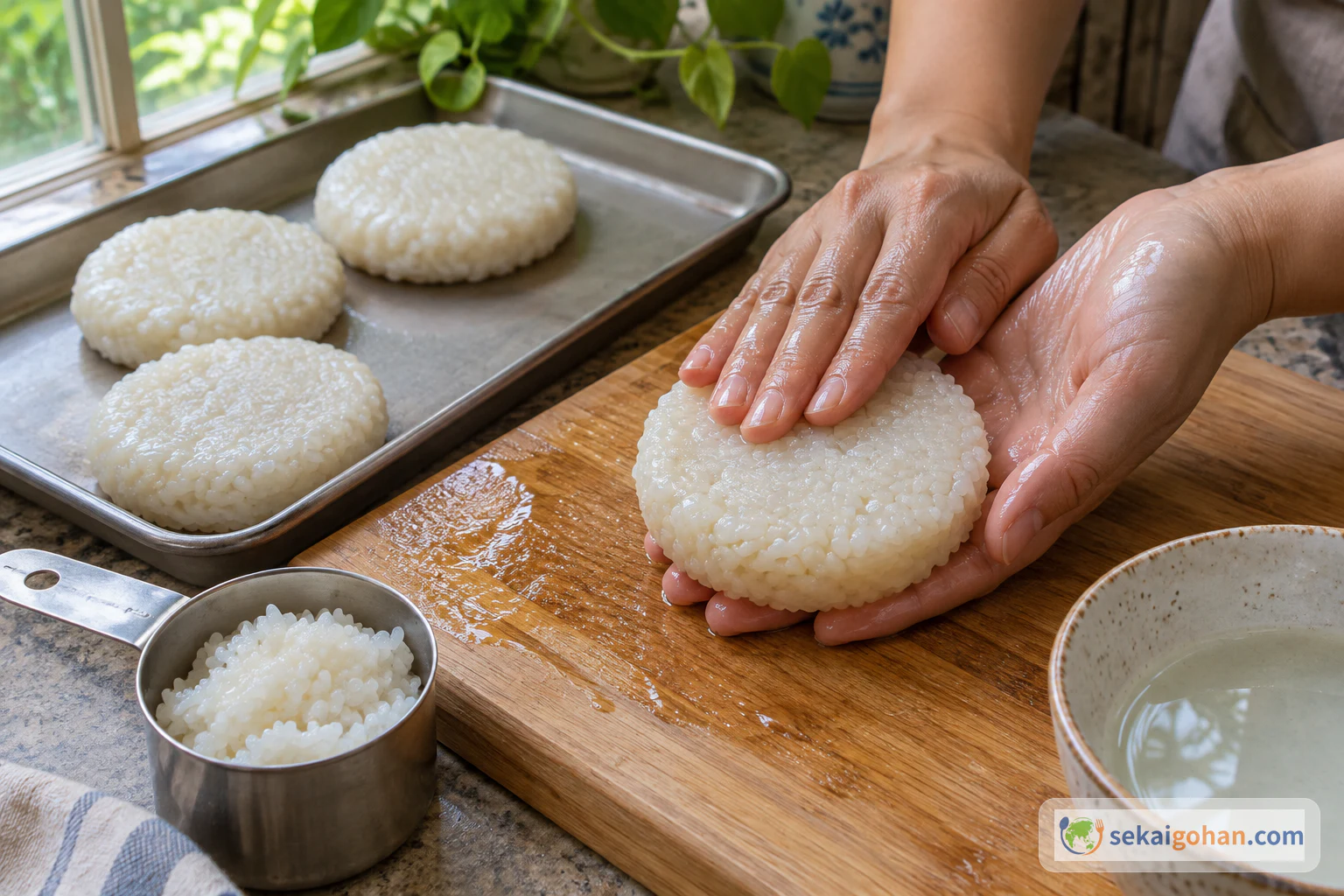
The rice cooks hands-off in the cooker while you soak the mushroom and build the filling, so start the rice first. Cook the filling before you fry the cakes, keep it warm, then shape, chill and fry the rice. Filling happens at the last moment, while the cakes are still hot.
Sticky rice is easiest to press while it is warm. Shape it soon after the cooker opens, then send the cakes to the refrigerator. Rice left to cool on the counter stiffens, cracks when you shape it and sits in the temperature range where bacteria grow.
Two tablespoons of oil in a low-sided pan gives you a crisp shell without turning this into a deep-fried snack. Less oil and the rice sticks and scorches; much more and the cakes soak it up and turn greasy.
Do not leave cooked rice or shaped cakes at room temperature for long. The spores of bacteria that grow on cooked rice survive 30 minutes at boiling point, so reheating does not make rice that sat out safe; cooling it quickly is what protects you. Cook the pork filling to 167°F (75°C) at its center for at least 1 minute. Damp cakes spatter in hot oil, so chill them first, keep the heat at medium and lower them into the pan gently.
When It Goes Wrong
| What you see | Why | What to do |
|---|---|---|
| The shell is hard but the center is cold or chalky | Too little water in the cooker, or the lid was opened too early | Cover the rice with water to just above its surface and keep the lid closed for the full 10 minutes on warm |
| The cake crumbles in the pan or cracks when you fill it | The rice cooled and stiffened before shaping, or the cake is very thick | Shape the rice while it is warm. On thick cakes, cut a shallow slit and keep one edge joined |
| Oil spits and the surface stays sticky | The shaped rice is still wet on the outside | Chill the cakes for about 15 minutes before frying |
| The cakes stick and tear when turned | Too little oil or too much heat | Use 2 tbsp oil and hold medium heat. If a cake will not release, leave it longer; it lets go once the crust forms |
| Filling falls out of the cake | The mushroom and onion are chopped too coarsely, or the filling is wet | Chop the vegetables finely and cook the filling until the juices are gone |
| The cakes taste flat | The filling is lightly seasoned by design | Add more chili sauce at the table, or scatter pork floss over the filling |
Serving, Variations and Storage
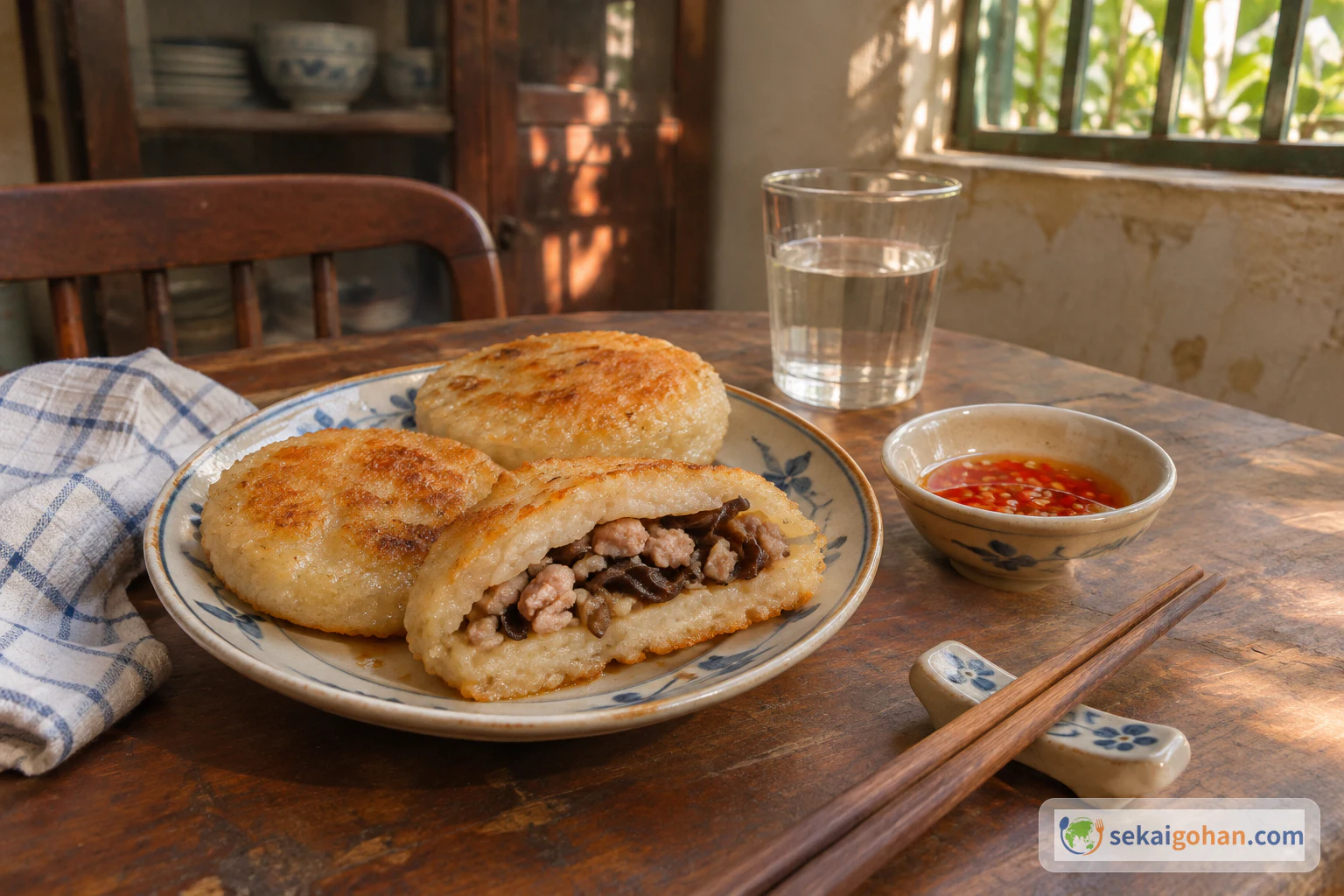
Xôi chiên is a snack that also makes a meal. Serve the cakes as soon as they are filled, with the chili sauce on the table so everyone adds their own, as a breakfast or an afternoon bite.
Variations
- Pork floss. Scatter chà bông, fluffy dried pork, into the filled cake for a sweet-savory, melting layer. It adds salt, so go easy with any extra chili sauce.
- Scallion oil. Stir chopped scallions with 1 tbsp oil and microwave for about 30 seconds, then brush the cut face of the cake before filling. It adds a fresh green, oniony sheen.
- Mung beans or boiled egg. Fill the cakes with cooked mung beans or slices of boiled egg, the way some school-gate stalls in the Central Highlands do now. The cake becomes milder and more filling.
- No filling. Fry the cakes and eat them without filling. A crust with chewy rice inside is satisfying on its own.
Storage and reheating
Store the fried cakes and the filling separately. Cool them quickly, divide them into small covered containers and refrigerate promptly at 46°F (8°C) or below; eat within 3 days. The rice hardens as it chills. To serve, pan-fry the cakes again or warm them in the oven for 10–15 minutes, watching so they do not scorch, and heat the filling until it is hot all the way through. Fill the cakes just before eating.
Frequently asked questions
Why is the rice not soaked first?
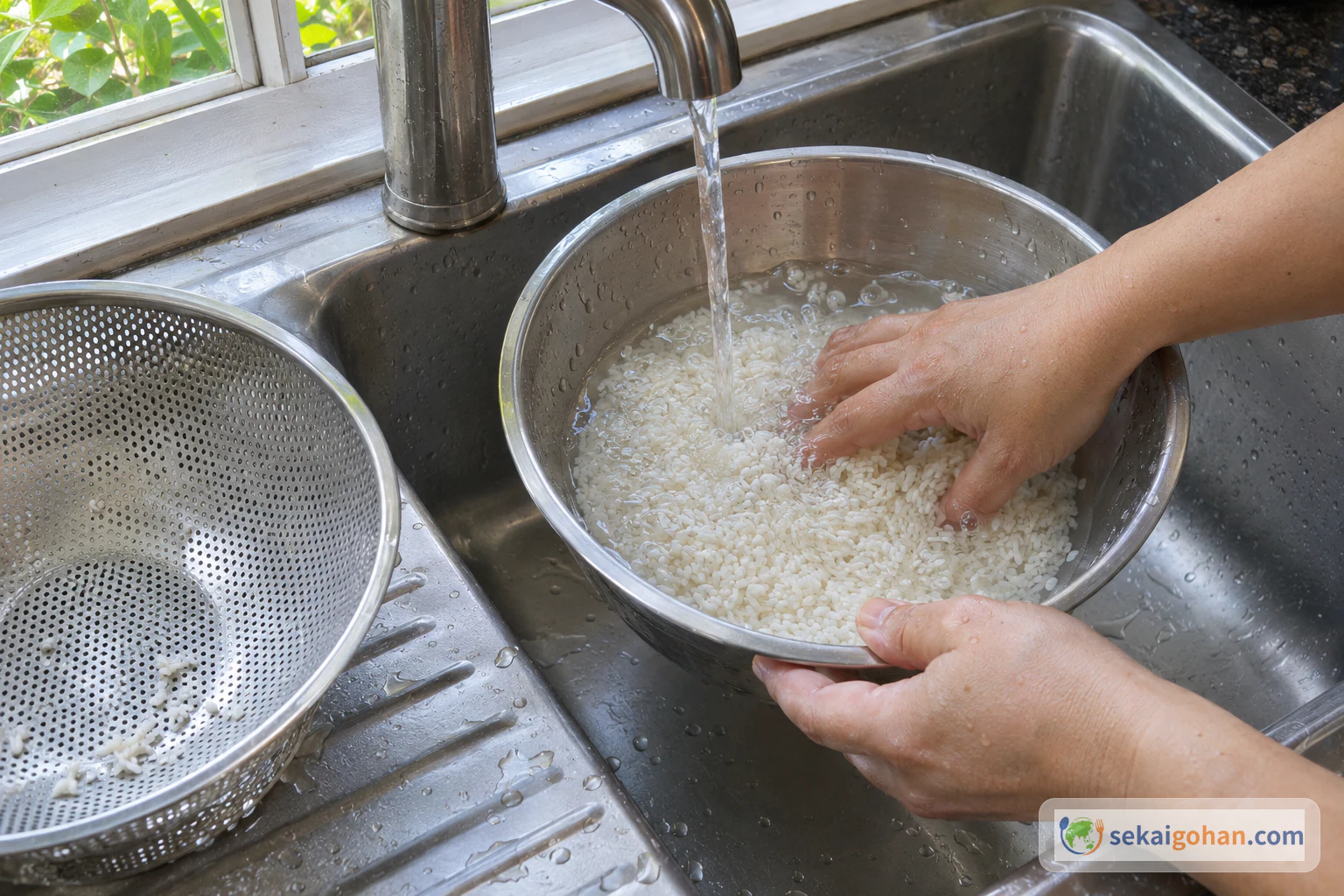
The cake depends on rice that is cooked through but not waterlogged. Rinsed, unsoaked rice with water just over its surface cooks to that firm, sticky texture. Soaking changes how much water the grains take up, so the water level used here no longer applies.
Do I need a deep pot of oil?
No. A low-sided frying pan with 2 tbsp oil gives these cakes their crisp shell. The deep pot of oil belongs to xôi chiên phồng, the sweet puffed version, which is a different dish.
Can I use leftover sticky rice?
Yes, using up leftover xôi is one of the reasons families make it. Shape the leftover rice into rounds, then chill, fry and fill the cakes as usual.
Can I make the filling ahead?
Yes. Cook the filling, cool it quickly and refrigerate it covered, apart from the rice. Reheat it until it is steaming hot before you fry the cakes, and fill them only when the shells are fresh from the pan.