Canh Khoai Mỡ: A Violet Soup That Thickens Itself
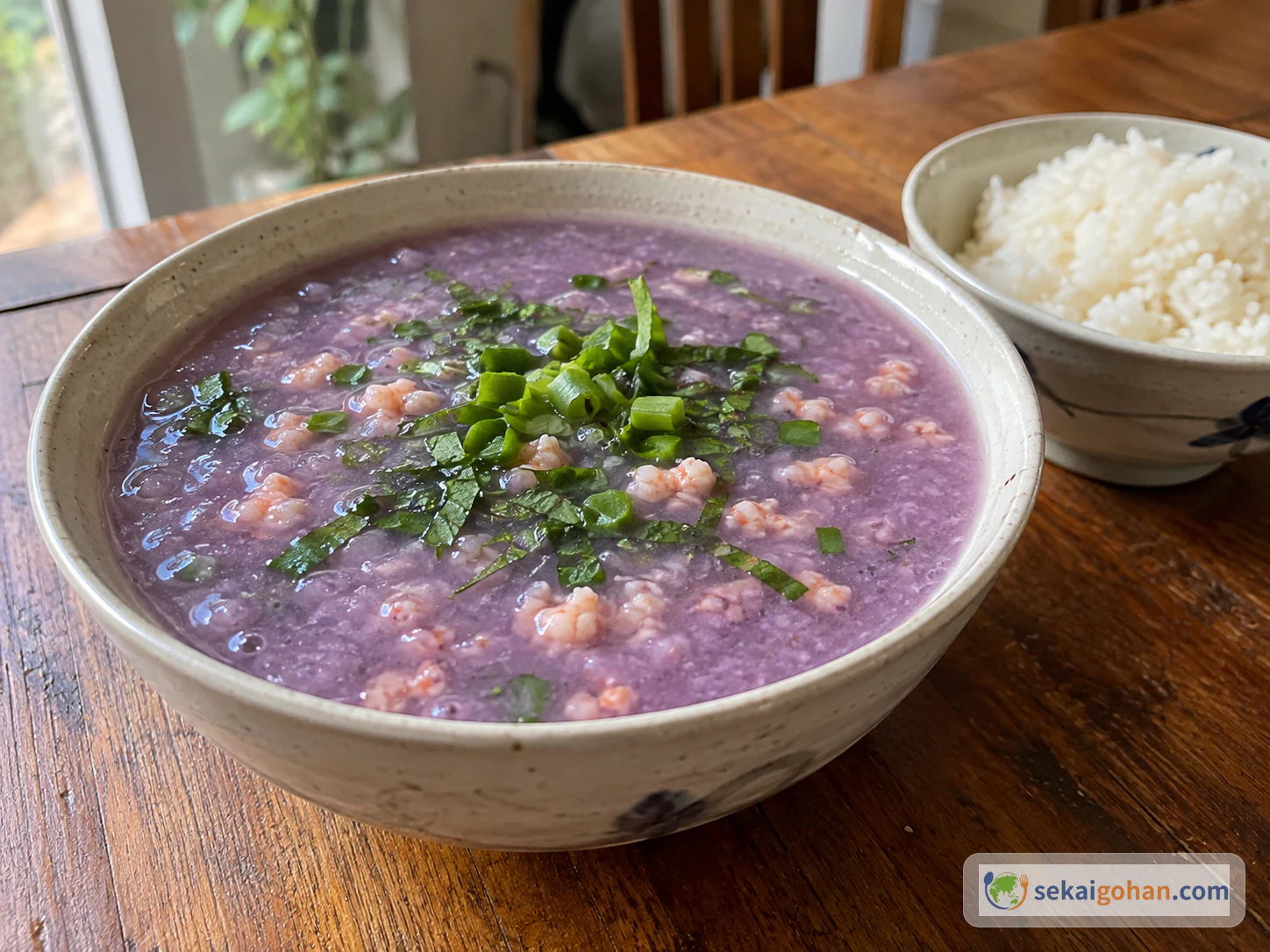
A naturally violet broth made silky by the yam alone, small tender bits of shrimp throughout, and fresh green herbs added at the very end. No cream, no flour, no cornstarch.
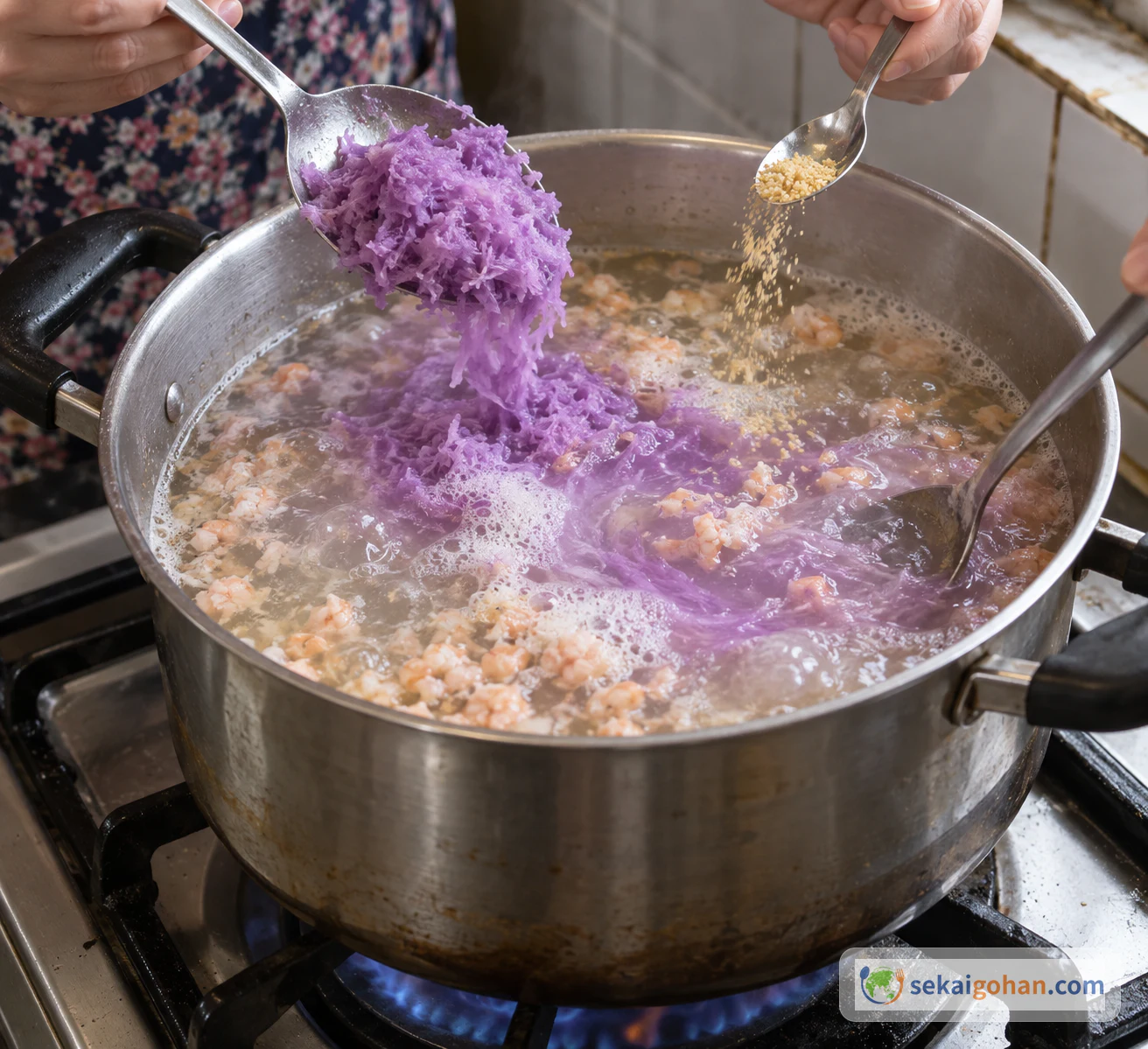
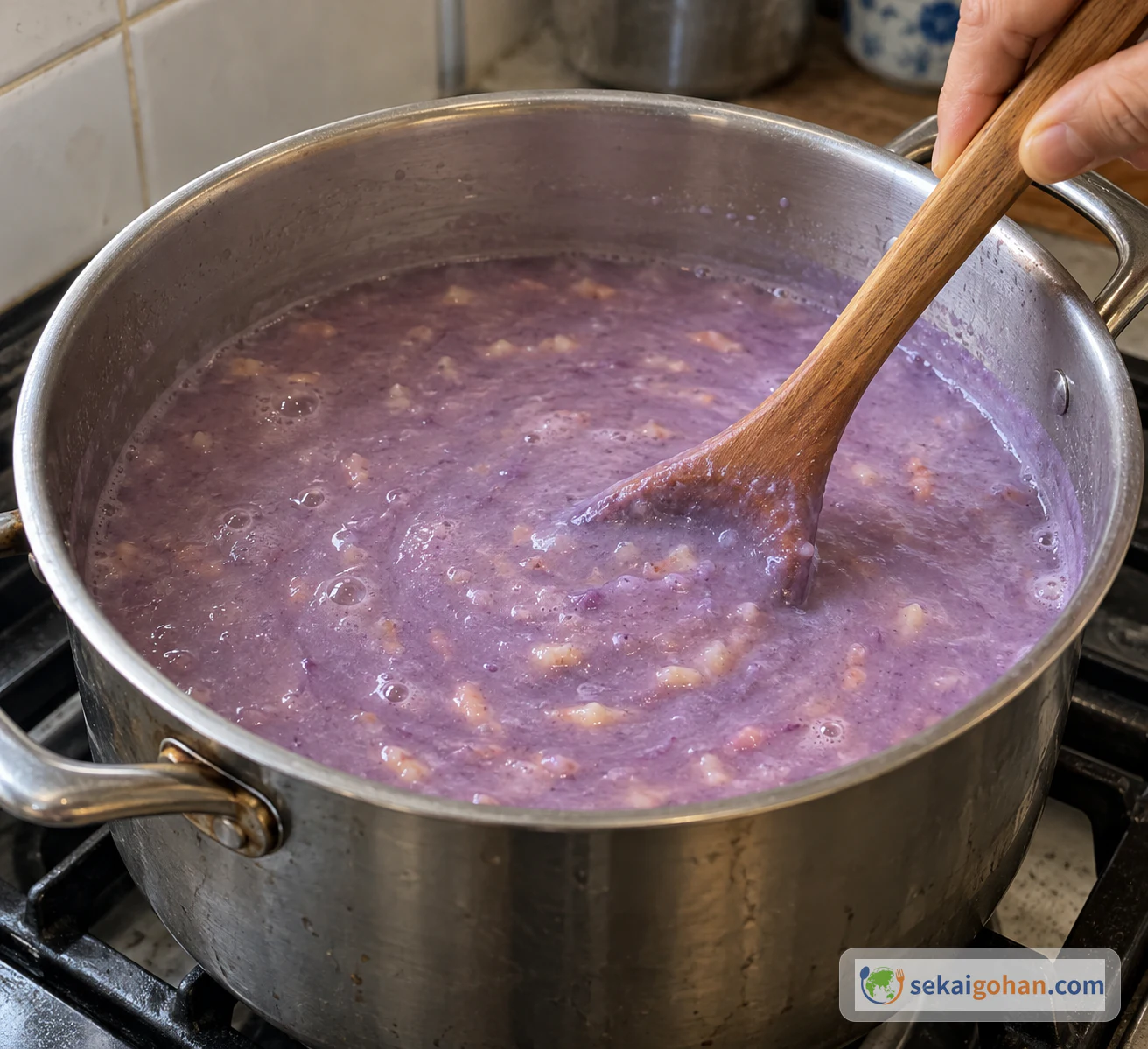
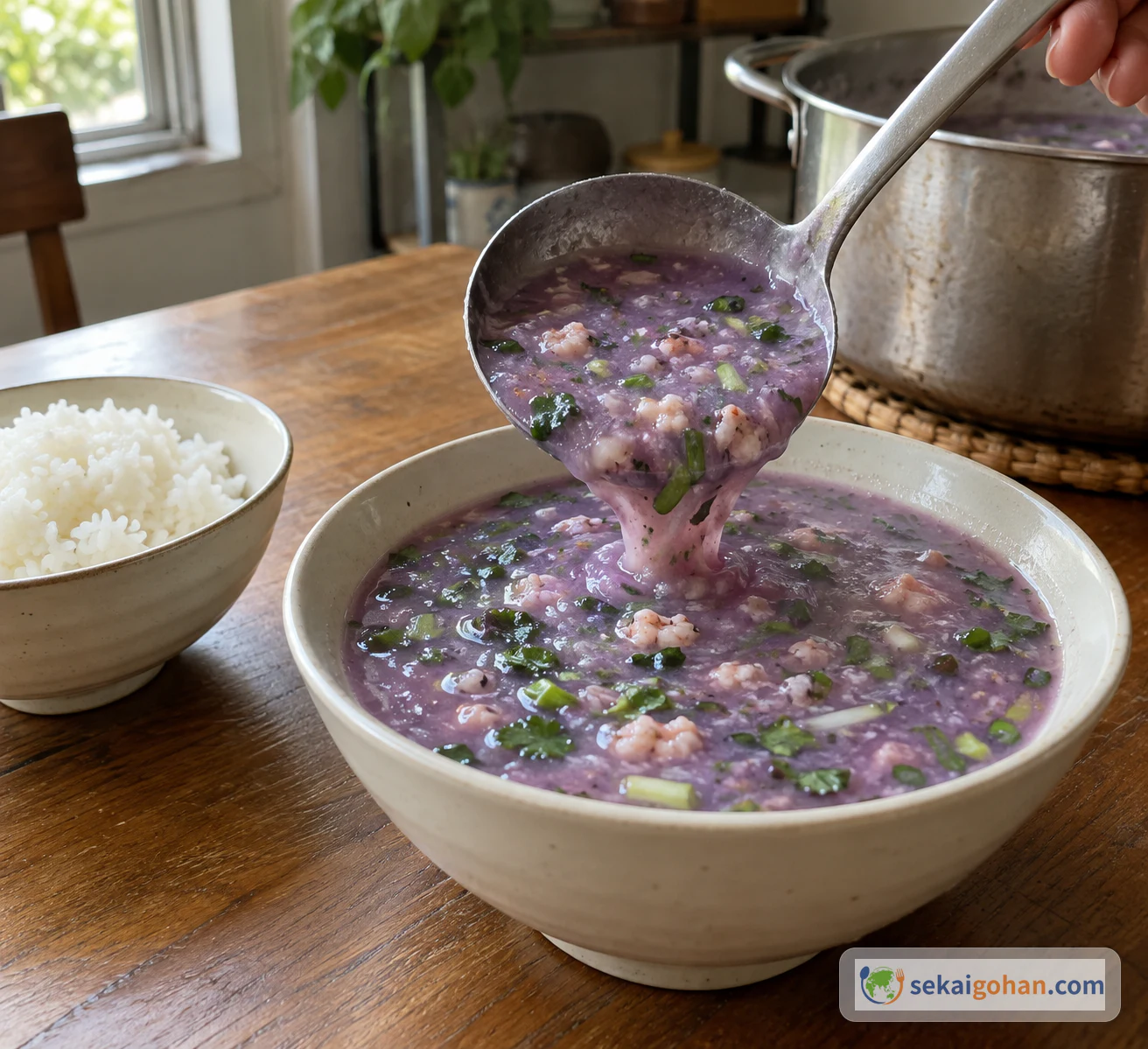
Vietnamese recipe author Vicky Pham describes canh khoai mỡ as a soup that sits on the family table beside steamed rice and other protein dishes, shared in a family-style meal. In the bowl it is an unmistakable color: a cloudy, thickened violet, flecked with minced shrimp and the bright green of chopped herbs.
Canh is the everyday Vietnamese category of brothy soup, and khoai mỡ is the yam that gives this one its color and body. The dish is also called canh khoai tím. As the MM Bon Appétit recipe points out, purple yam in Vietnamese cooking is used savorily, and here it gives the soup a thick, creamy texture without any dairy.
This article follows a single recipe: the four-serving, frozen-grated-yam version with minced fresh shrimp from MM Bon Appétit. Its amounts and order are kept together rather than mixed with other versions. Sekai Gohan has not kitchen-tested this recipe; the amounts and steps are presented as that recipe gives them. For more dishes from the same table, see our Vietnam country page.
Why It Turns Thick: The Yam Does the Work
The body of this soup comes entirely from the yam. The yam is finely grated, then simmered in the broth so its starch and fibers spread through the liquid. Vicky Pham likewise describes grated or spoon-scraped yam as the source of body in the broth. That is why there is no thickener in the ingredient list, and why the yam you buy matters more than anything else.
Khoai mỡ is the Vietnamese name for the yam Dioscorea alata L. A study published in the journal of the Vietnam Academy of Agricultural Sciences identifies yam as D. alata and records other local names for khoai mỡ, including khoai vạc, củ mỡ and củ cái; it also reports local yam varieties maintained by farmers at sites in northern Vietnam. Kew's Plants of the World Online accepts D. alata as a species native to tropical Asia, including Vietnam. A survey of root and tuber crops in Vietnam lists D. alata separately from sweet potato (Ipomoea batatas) and taro (Colocasia esculenta), and records its accessions as human food.
That botanical distinction is the practical one in the kitchen too. The MM Bon Appétit recipe calls for purple yam and is clear that it is not purple sweet potato. Purple sweet potato and taro are different plants, and they will not give this soup the same texture.
Where it comes from, and what changes between kitchens
Recipe authors do not agree on a region. Sophie Pham of Delightful Plate calls the soup Southern Vietnamese, while another recipe author labels it Central Vietnamese, so this article simply calls it a Vietnamese soup.
What does vary is the protein and the texture. The MM Bon Appétit recipe lists minced fresh shrimp, ground pork, dried shrimp, riblets or chicken as separate versions; Vicky Pham notes the soup is commonly made with shrimp, dried shrimp or ground pork; and Sophie Pham notes that households differ between a smooth soup and a chunkier one. The version below uses minced fresh shrimp only.
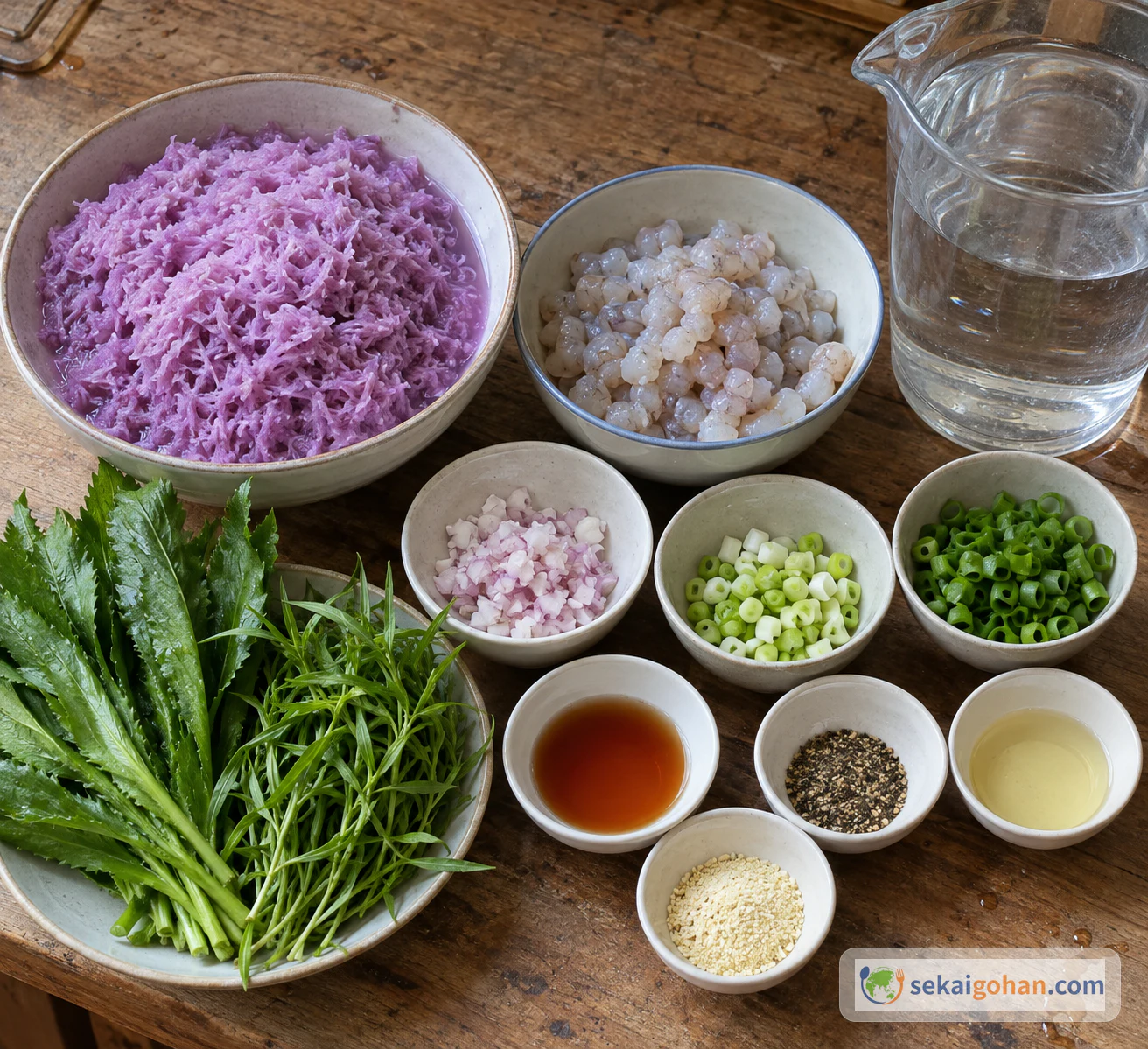
Ingredients (Serves 4)
Warm white rice is a natural partner on the table, served in its own small bowl. It is not part of the soup itself.
Choosing and Substituting
- The yam: Look for frozen grated yam labeled khoai mỡ or purple yam. Do not substitute taro, purple sweet potato or ube-flavored powder; they are different ingredients and the soup will not come out the same.
- Fresh yam instead of frozen: Whole fresh yam can be used, at about 500 g for four servings. It makes a thicker soup and may need extra water, so add water gradually by eye. See the FAQ for more.
- The herbs: If you can't find culantro or rice paddy herb, use more green onion.
- The bouillon: Use granules. Powdered bouillon can differ in how densely it packs and how salty it is, so don't swap in 2 tsp of powder as if it were the same.
- Salt and sugar: None are added. Seasoning comes from the fish sauce and bouillon.
Equipment
- A soup pot large enough for 1.5 L of water plus the yam, with room to stir
- A sharp knife or a food processor, for mincing the shrimp
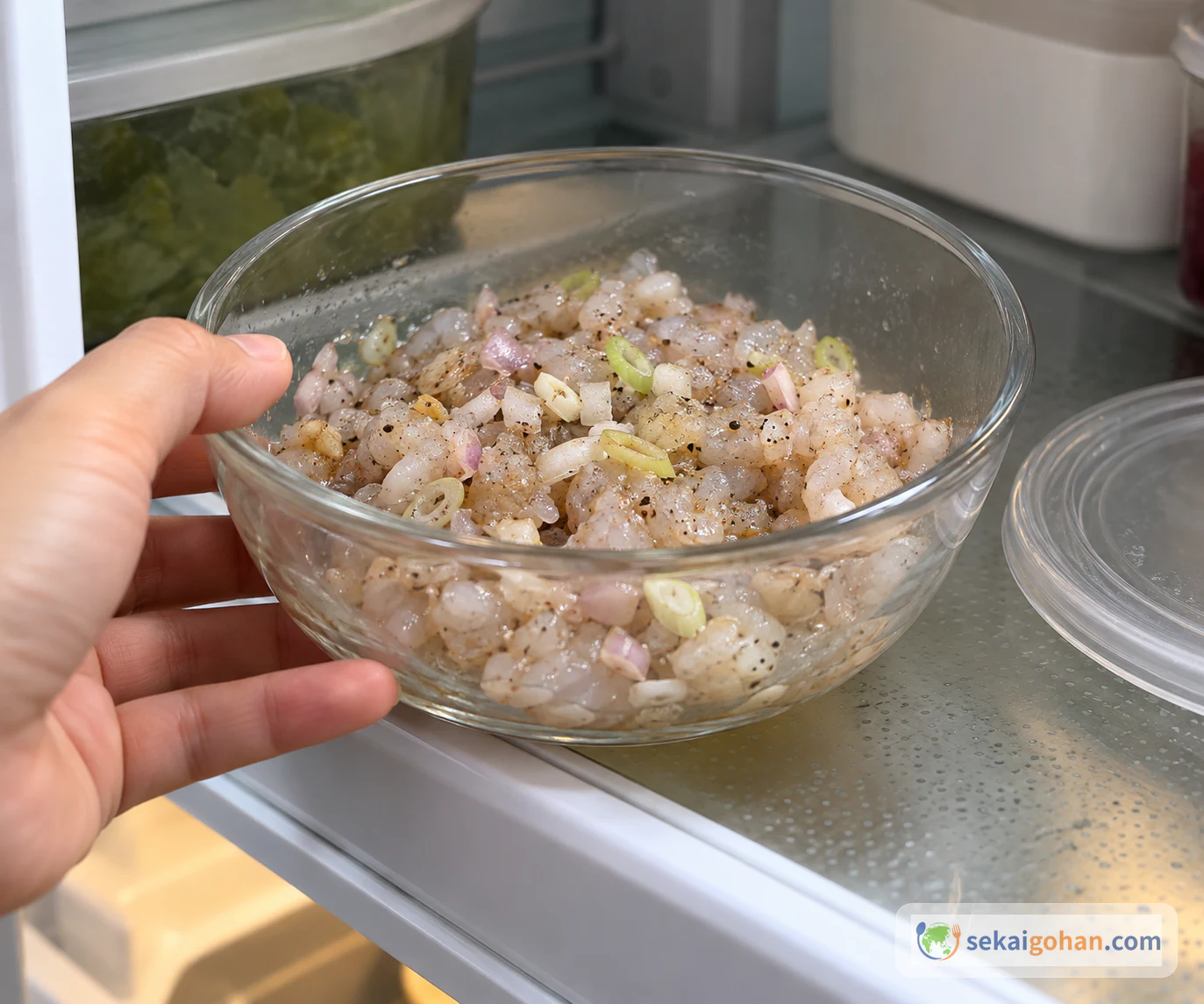
- A small bowl with a cover, for marinating the shrimp in the refrigerator
- A wooden spoon or spatula that can scrape the bottom of the pot
- A spoon or small skimmer for removing foam
- A ladle and soup bowls
- An instant-read thermometer, if you have one
Keep fresh shrimp in the refrigerator until you use it, and marinate it in the refrigerator rather than on the counter. Keep raw seafood away from ready-to-eat foods, and wash the knife, board, bowl and work surface that touched it before using them for anything else. Cook the shrimp until the flesh is firm, pearly and opaque, and don't judge by color alone; cook most seafood to 145°F, and check with a thermometer if you can insert a probe.
Method: Cook the Shrimp First, Add the Yam Only at a Boil
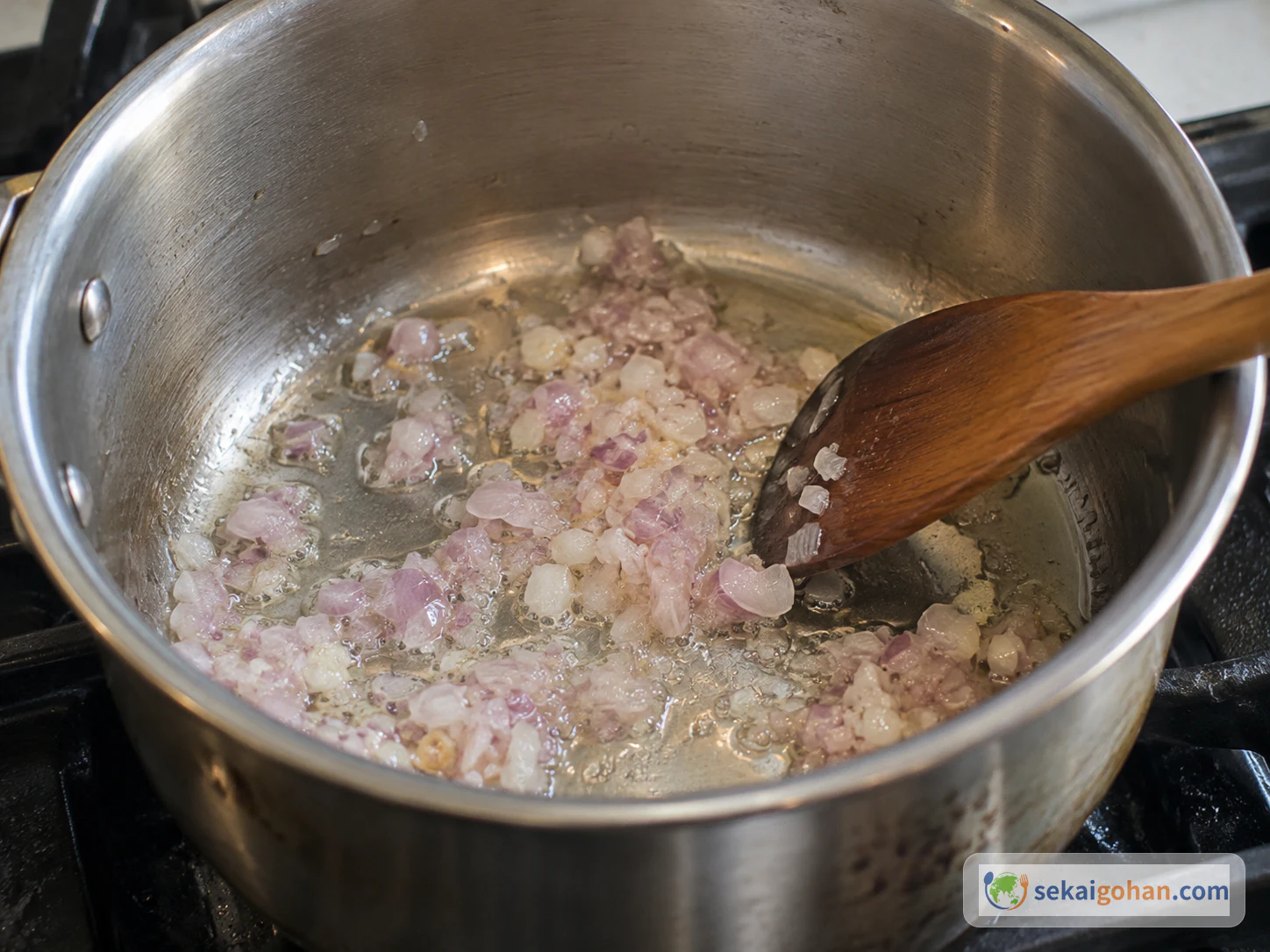
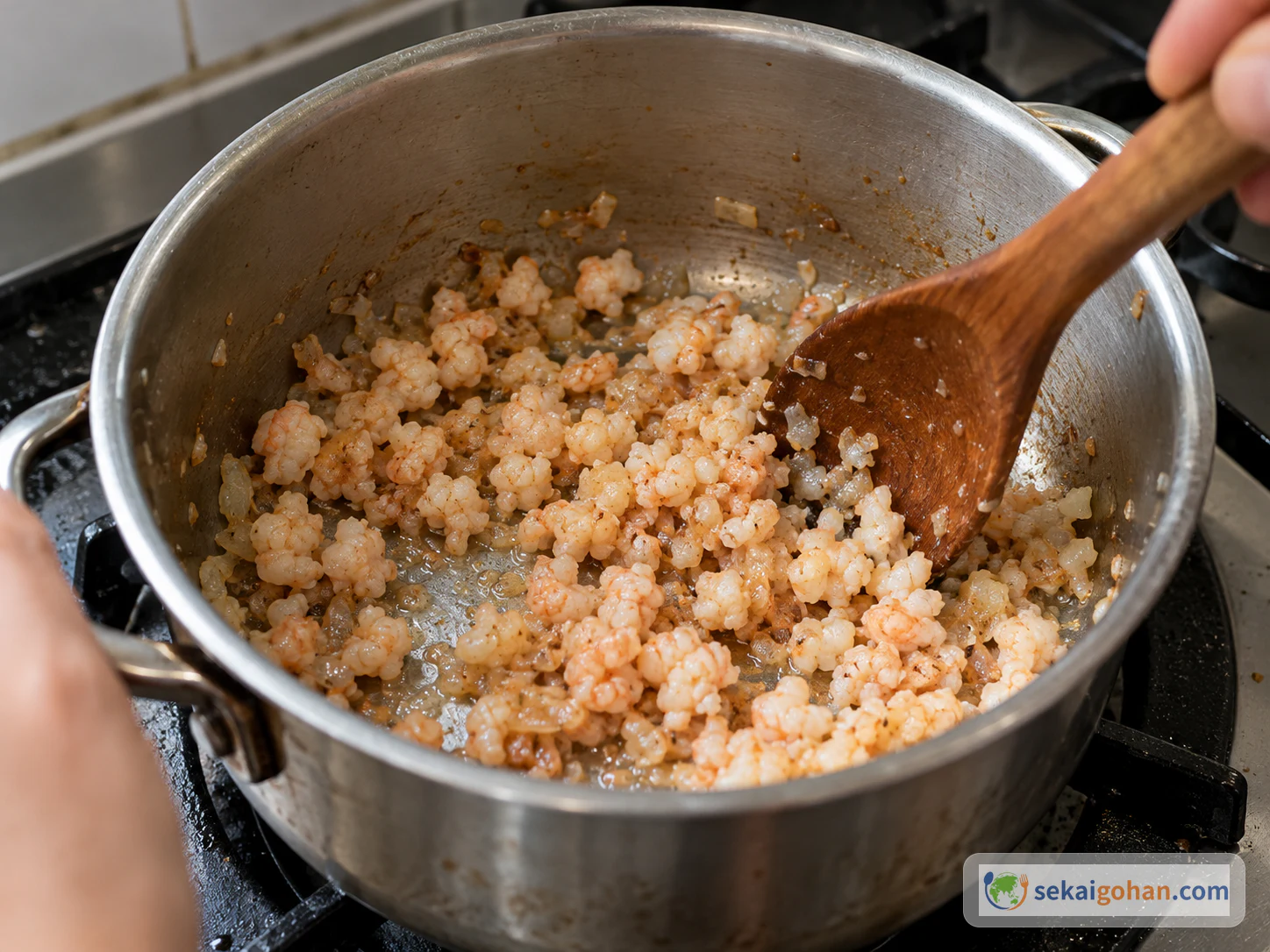
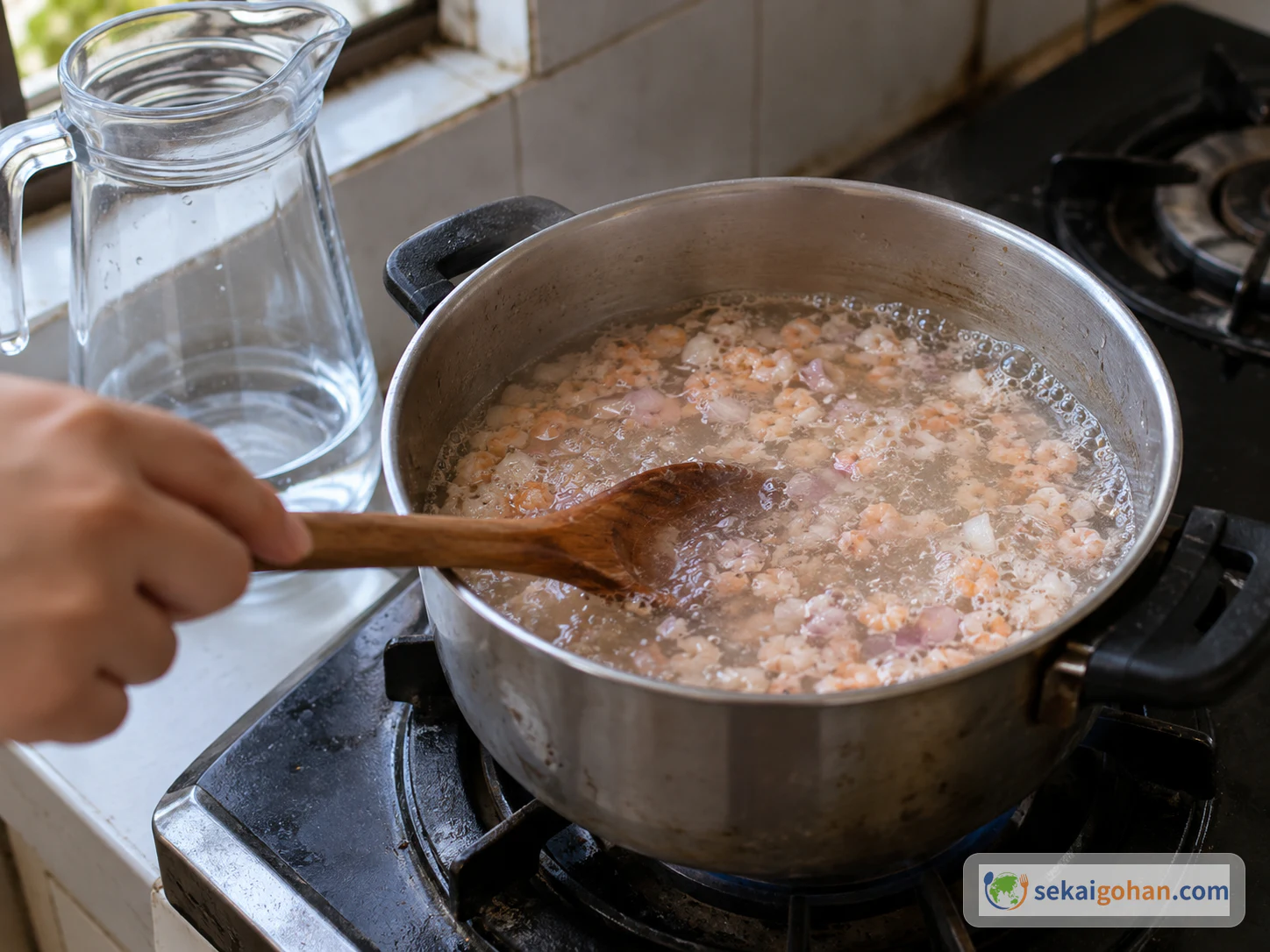
The yam and bouillon go in only after the water has come to a full boil. Before that, the shrimp is fully cooked in the pot.
Troubleshooting
| Condition | Likely cause | What to do |
|---|---|---|
| The soup is too thick | The yam has released a lot of starch, or fresh yam was used | Add water a little at a time and stir, until it pours the way you like |
| Yam is sticking to the bottom | Not stirred often enough while simmering | Stir from time to time, scraping the bottom of the pot with each pass |
| The shrimp is in large lumps | Clumps weren't broken up while sautéing | Mince the shrimp finely in step 1 and break it apart with the spoon in step 3 |
| The yam went in before the water boiled | Order of steps | Bring the pot to a boil and continue from step 5; next time wait for the boil first |
| The flavor tastes flat | Not enough seasoning at the end | Add fish sauce a little at a time and taste between additions |
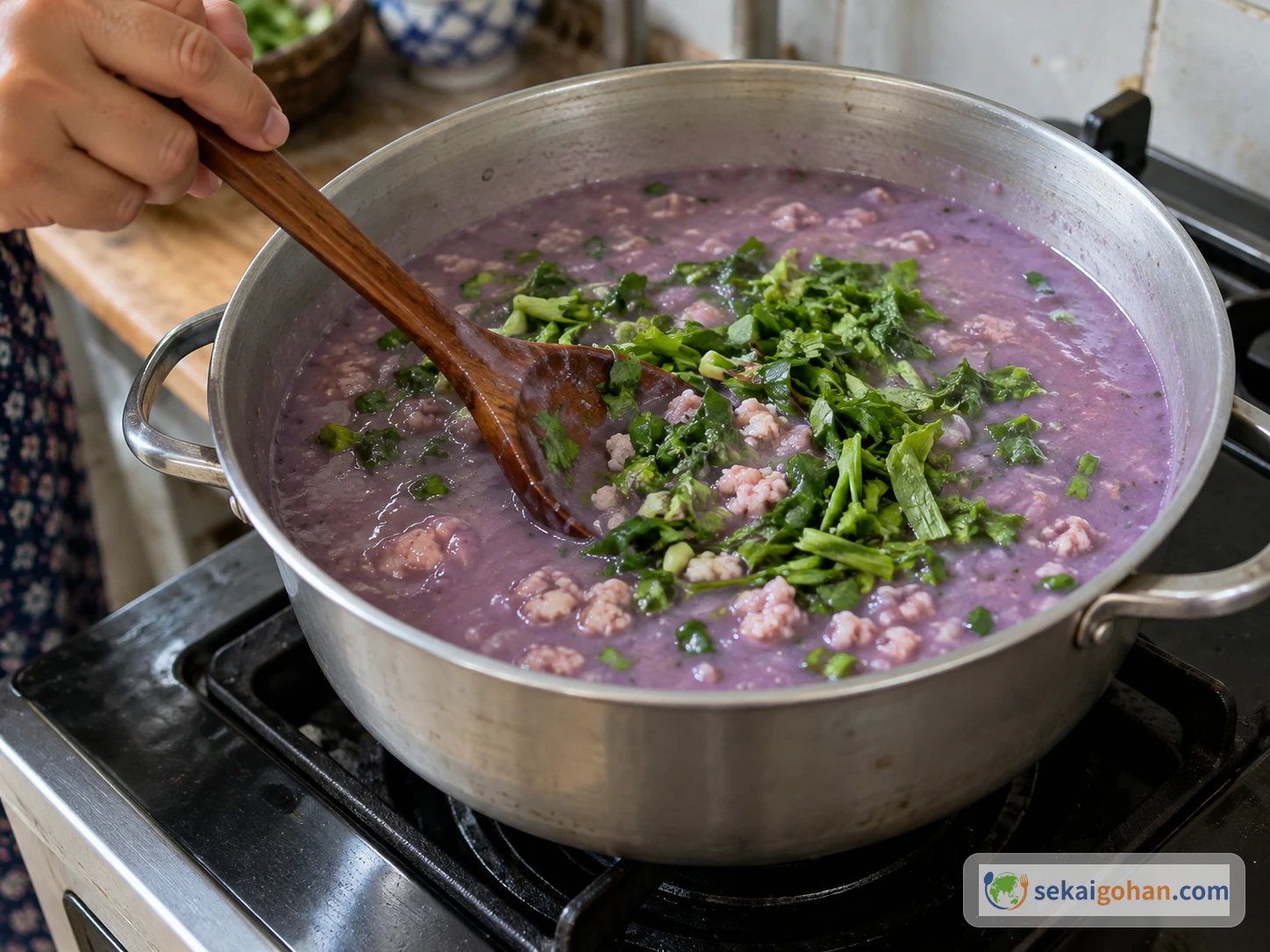
| The herbs look dull and wilted | Added too early | Add them only at the end, as the heat goes off, and scatter some fresh over each bowl |
Variations Within the Same Dish
- Fresh yam instead of frozen: About 500 g of whole fresh yam for four servings, with extra water as needed because it cooks up thicker.
- Herbs: Culantro and rice paddy herb can be used together or one alone; more green onion stands in when neither is available.
- Texture: Households differ between a smooth soup and a chunkier one. Frozen grated yam, as here, gives the smooth end of that range.
- Protein: Vietnamese recipe authors make this soup with ground pork, dried shrimp, riblets or chicken instead of fresh shrimp. Those are separate recipes with their own amounts and timing, so this version keeps to shrimp alone rather than adjusting these quantities.
Frequently Asked Questions
Can I use purple sweet potato, taro or ube powder instead of the yam?
No. Purple yam (Dioscorea alata) is a different plant from purple sweet potato and taro, and the MM Bon Appétit recipe makes the point that purple yam is not purple sweet potato. The thickness of this soup comes from the yam itself, so a substitute won't give the same body or flavor, and ube-flavored powder is not a vegetable at all.
Can I use fresh yam instead of frozen grated yam?
Yes. The MM Bon Appétit recipe allows whole fresh yam, suggesting about 500 g for four servings, and gives 15–20 minutes as a simmer guide (versus about 10 minutes for frozen grated yam). It also notes that fresh yam makes a thicker soup and needs extra water, without giving a fixed amount, so add water by eye. Some recipe authors who work with raw yam suggest wearing gloves when peeling it, because the skin can irritate.
Do I need to drain the frozen yam after thawing?
No. Thaw it and add it to the pot as is.
I only have powdered bouillon. How much should I use?
The 2 tsp in this recipe is measured as granules. Powdered bouillon can pack differently and vary in salt, and there is no established equivalent, so add it gradually and taste before using the full amount.
How do I know the shrimp is cooked?
Look for flesh that is firm, pearly and opaque, but don't rely on color alone. The FDA advises cooking most seafood to 145°F; use a thermometer if you can get a probe into the shrimp.
Which region of Vietnam is this soup from?
Recipe authors label it differently: Delightful Plate calls it Southern Vietnamese, and another author calls it Central Vietnamese. Rather than pick one, this article presents it as a Vietnamese home soup.
What should I serve with it?
Vietnamese recipe authors describe it as part of a family-style meal, eaten with steamed rice alongside other dishes. A small bowl of warm white rice on the side is the simplest way to serve it.
Sources
- MM Bon Appétit, "Canh khoai mỡ – Canh khoai tím • Vietnamese purple yam soup." The recipe followed in this article: four servings, the frozen-grated-yam amounts and order of steps, the fresh-yam alternative and its need for extra water, the simmer guides, the herb substitution, the list of protein versions, and the dish's savory use of purple yam and dairy-free creaminess. https://mmbonappetit.com/canh-khoai-mo/
- Vũ Linh Chi, Lê Văn Tú, Nguyễn Thị Ngọc Huệ, Lã Tuấn Nghĩa, "Study on using indigenous knowledge in on-farm conservation of yam germplasm," Vietnam Academy of Agricultural Sciences journal. Identification of khoai mỡ as Dioscorea alata L., its local names khoai vạc, củ mỡ and củ cái, and farmer-maintained local varieties in northern Vietnam. https://tapchi.vaas.vn/sites/tapchi.vaas.vn/files/tapchi/2021-09/tc4_12.pdf
- Royal Botanic Gardens, Kew, "Dioscorea alata L.," Plants of the World Online. Accepted species status and native range in tropical Asia, including Vietnam. https://powo.science.kew.org/taxon/urn:lsid:ipni.org:names:317625-1
- Vu Linh Chi, Nguyen Thi Ngoc Hue, Luu Ngoc Trinh, "Root and Tuber Crops in Vietnam: Focus on yam germplasm," Ethnobotany Research & Applications. The distinction between D. alata, sweet potato and taro in Vietnamese crop collections, and the use of D. alata as human food. https://ethnobotanyjournal.org/index.php/era/article/download/136/121/494
- Vicky Pham, "Canh Khoai Mỡ (Vietnamese Purple Yam Soup)." Serving with steamed rice in a family-style meal, common protein choices, grated yam as the source of body, and frozen grated yam as a practical form. https://vickypham.com/blog/canh-khoai-mo-vietnamese-purple-yam-soup/
- Sophie Pham, "Vietnamese Purple Yam Soup (Canh Khoai Mỡ)," Delightful Plate. Serving with rice, household differences between smooth and chunkier textures, and its Southern Vietnamese label. https://delightfulplate.com/vietnamese-purple-yam-soup-canh-khoai-mo/
- U.S. Food and Drug Administration, "Selecting and Serving Fresh and Frozen Seafood Safely." Cooking most seafood to 145°F, signs that shrimp is done, refrigerating fresh seafood, and keeping it separate from ready-to-eat foods. https://www.fda.gov/food/buy-store-serve-safe-food/selecting-and-serving-fresh-and-frozen-seafood-safely