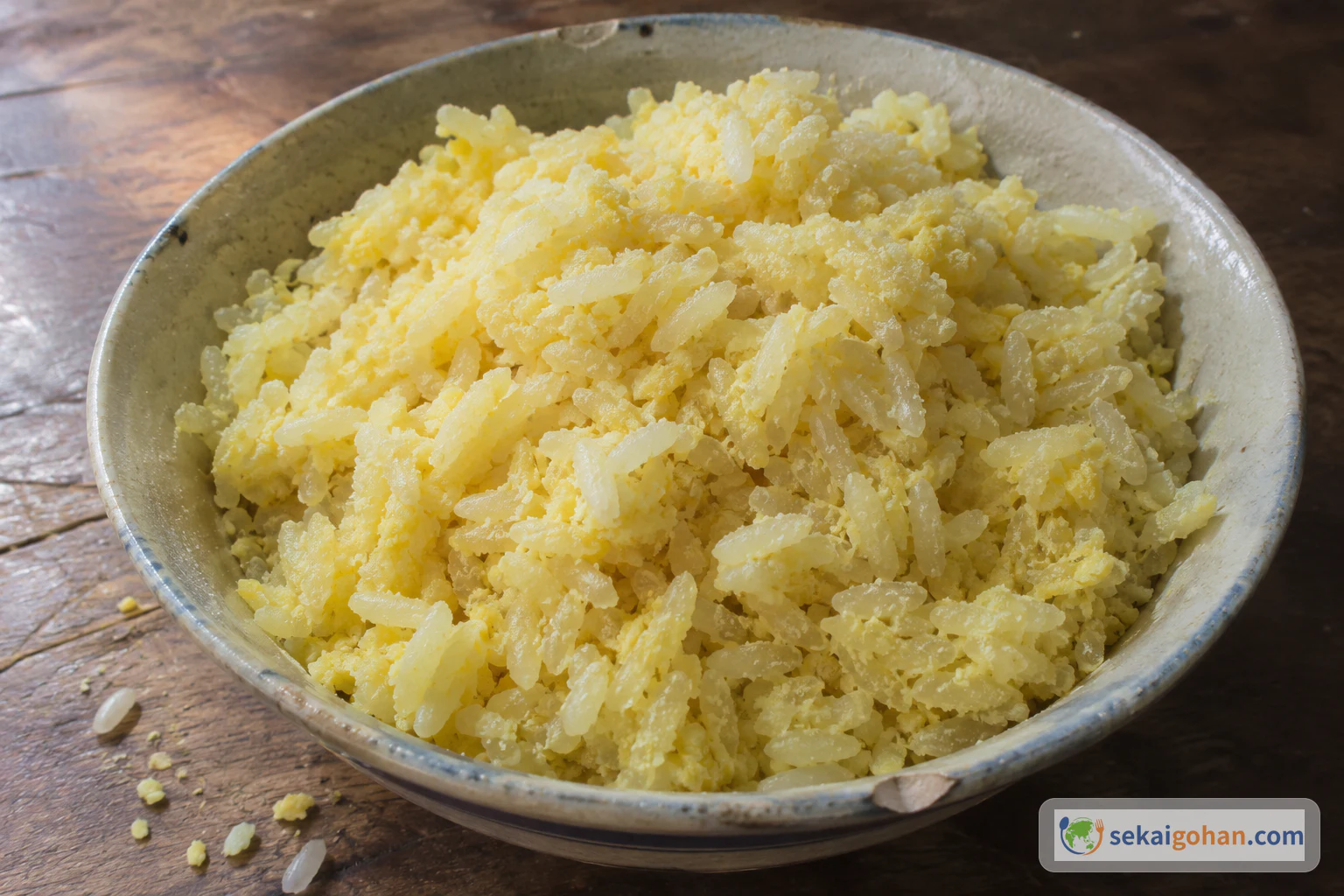
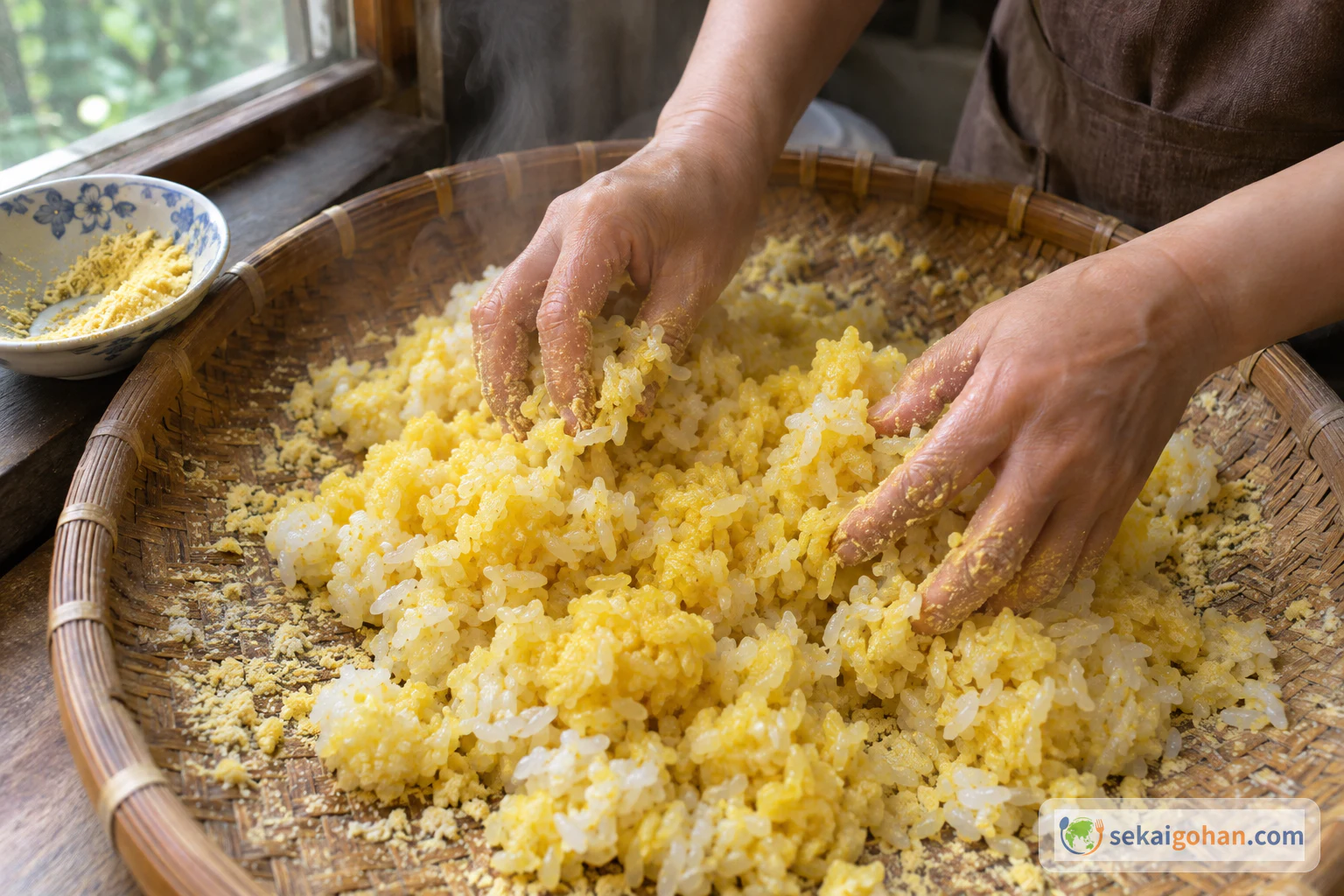
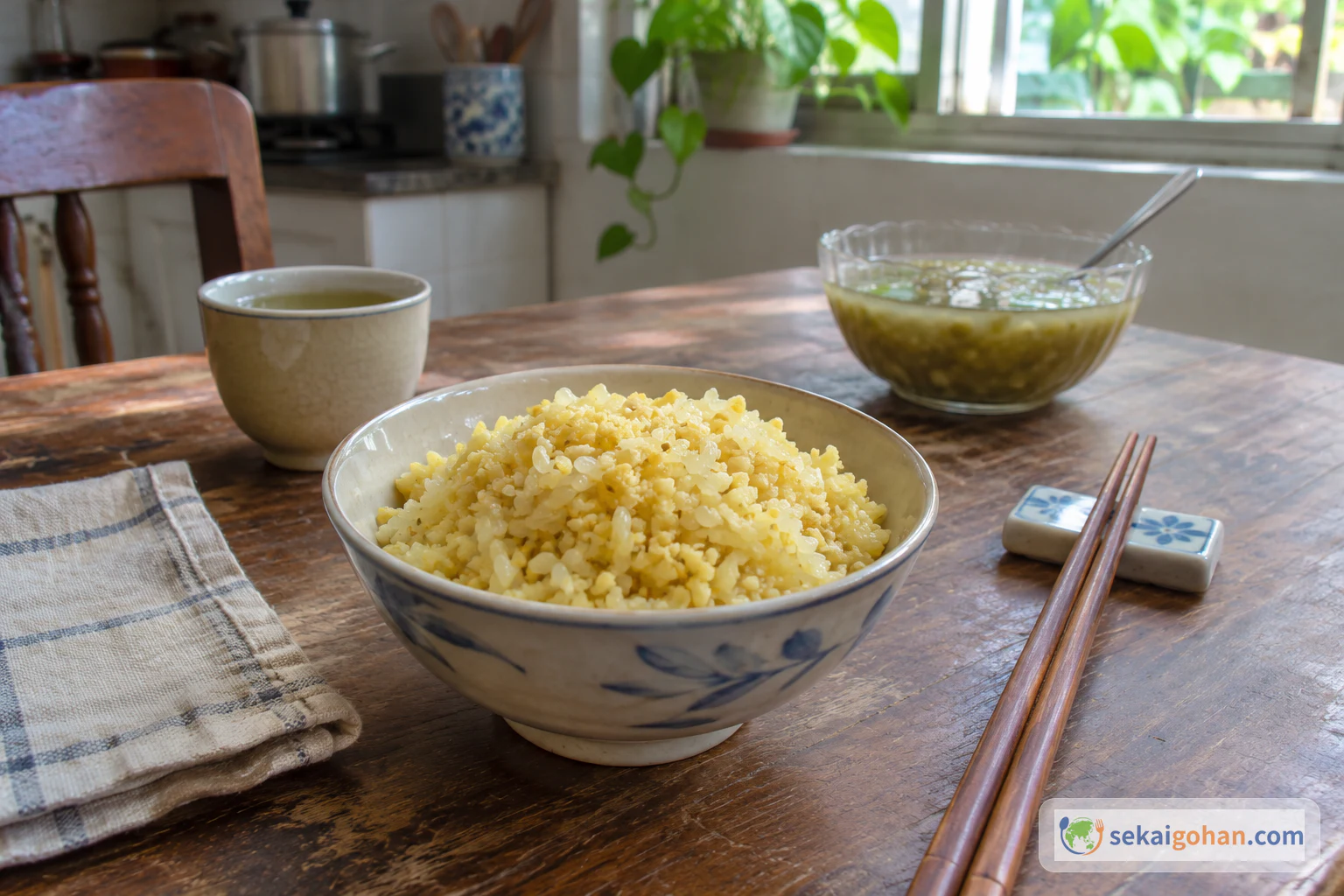
When the steamer lid comes off, the rice underneath is glossy and only faintly dusted with gold. You tip it into a wide tray, scatter the rest of the mung bean powder over it and work it through with your fingertips, and the clumps give way until the grains roll apart, each one yellow on the outside and white within. That is xôi vò, the mung-bean-coated sticky rice of Hà Nội and the northern cities around it. It tastes of the rice first, sweet and chewy, then of the steamed bean, soft and nutty, with just enough salt to hold the two together.
The Sticky Rice Whose Grains Fall Apart
In Vietnamese, xôi is steamed sticky rice, and vò is the rubbing: the motion of hands working cooked mung bean into the grains. The name describes the technique, and the technique describes the result. Most xôi comes out of the steamer as a soft, cohesive mass you can pinch into a ball. Xôi vò is the one whose grains stay separate, loose and light, each wearing its own thin coat of bean.
Xôi began as plain steamed glutinous rice. Mung beans, black beans, lotus seeds, peanuts, sesame, gấc fruit and coconut came later, and each one turned the same steamed rice into a different dish. Across Vietnam, xôi is a breakfast the way bread is in the West, sold by vendors on almost every street, eaten plain, with pork cooked in a clay pot or with chicken, or dipped in crushed sesame and salt. You can find more of that everyday food on our Vietnam page.
At the Hà Nội table
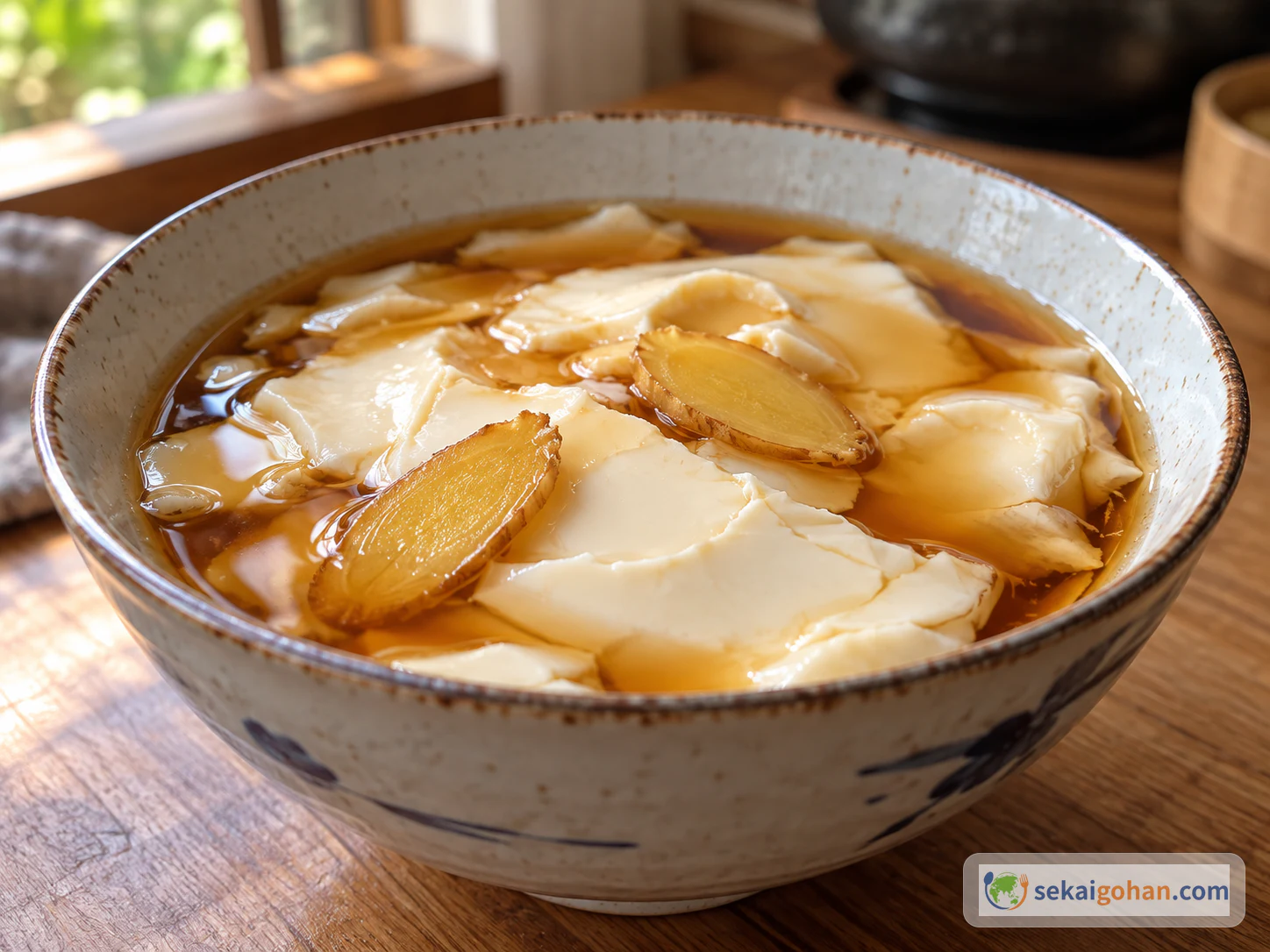
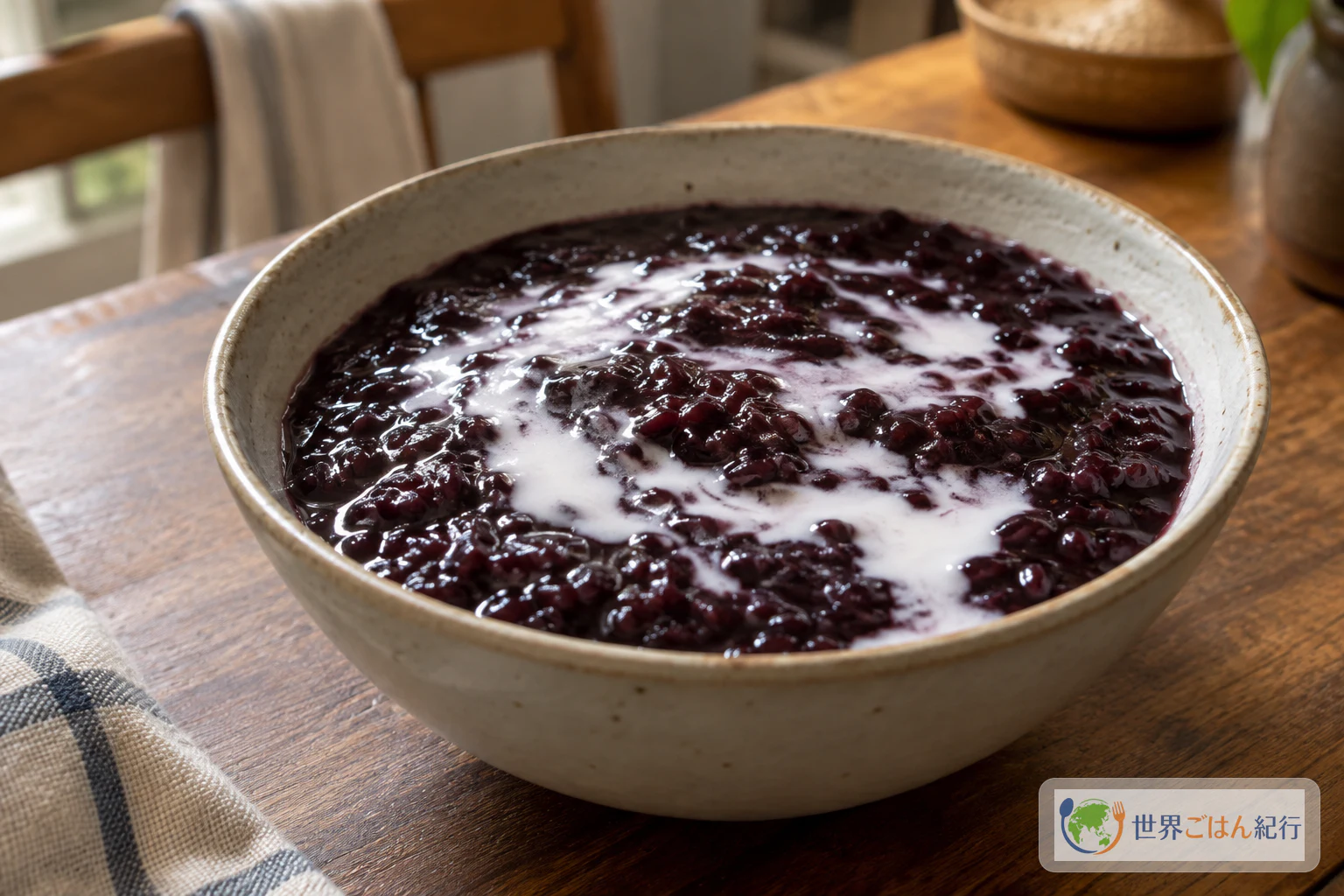
In Hà Nội, xôi vò belongs to celebration. It is a dish of Tết, the Lunar New Year, and a regular on cỗ, the ceremonial trays set out for the new year. Another Tết dish is the leaf-wrapped bánh chưng. At northern banquets it often arrives with chè, the sweet soups: chè hoa cau, chè đỗ dài, chè bà cột, or a simple jasmine-scented sugar syrup. Xôi can also stand as the main staple of a banquet, eaten with meat and salads, or come at the end of a meal with tea. At the Phu Thuong Sticky Rice Festival in Tây Hồ, Hà Nội, the city's xôi dishes are laid out side by side.
Hà Nội cooks call the finished look of xôi vò "kim bao ngân": gold wrapping silver. The gold is the fine mung bean coat, the silver is the plump white grain inside it. When you break a grain open at the table, that two-tone cross-section is what you are looking for.
Its neighbours on the xôi stall
The dishes that share a stall with xôi vò each handle the bean differently. Xôi xéo carries thin slices of mung bean paste and fried shallots on top of the rice, so the bean sits on the rice. Xôi đậu xanh has whole beans mixed through the rice before steaming, with no outer coat. Xôi gấc is red from the gấc fruit and is the xôi most often placed on ceremonial trays and served at weddings. Xôi vò is the one where the bean is ground to powder and rubbed onto every grain.
Further south, xôi vò is less common, and where it is made it is adapted with sugar and coconut milk. Southern cooks also tend to eat it with savoury dishes such as roast chicken, braised pork belly or roast pork, while the north reaches for chè. For the same glutinous rice cooked a completely different way, look at cơm lam, the rice cooked inside bamboo tubes in the mountains.
Ingredients (serves 4)
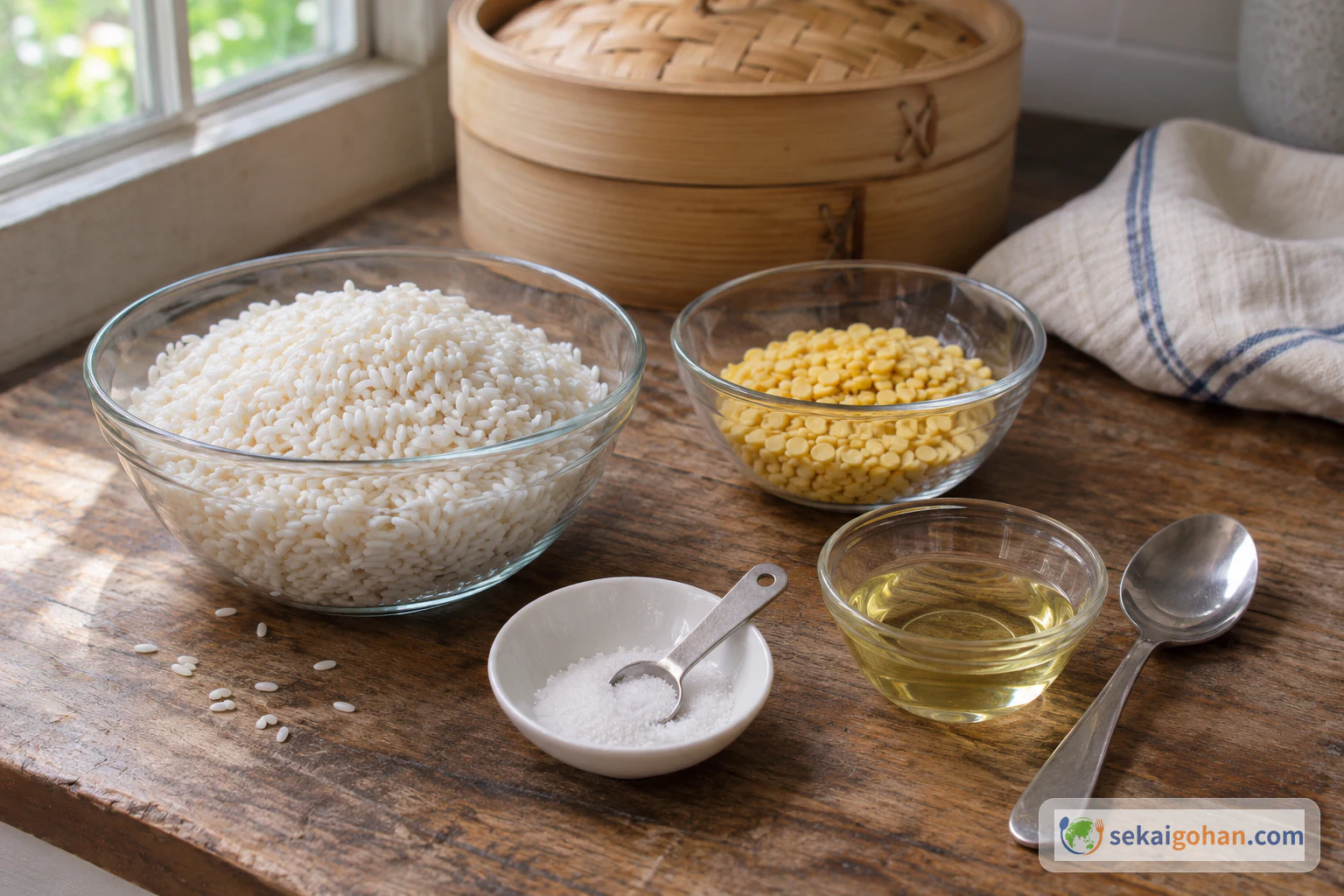
The ⅛ tsp goes on the beans before steaming and the ½ tsp goes into the rice. Seasoning both sides separately is what keeps the rice and the coating tasting of themselves. If your set has no ⅛ tsp spoon, use a quarter of a level ½ tsp.
The coating is mung bean, a legume. Check the label on your cooking oil. If you serve chè or meat alongside, those are separate dishes, so check their ingredients too.
Equipment
- Steamer basket, bamboo if you have one, set over a pot
- Damp cotton cloth or parchment to line the basket so grains do not fall through the gaps
- Thin kitchen towel to wrap the lid of a metal steamer
- Food processor or small food chopper
- Colander and paper towels
- Wide mixing bowl
- Wide tray or shallow bamboo tray for the final rubbing
- Two bowls for soaking
Buying the Rice and the Beans
The rice must be glutinous rice, sold as sticky rice, sweet rice or glutinous rice; ordinary long- or medium-grain rice will not turn chewy and glossy in the steamer. Thai and Japanese glutinous rice both work, and the amounts stay the same whichever you use. Short-grain glutinous rice gives plump grains that stay separate. In Hà Nội the prized varieties are nếp cái hoa vàng and nếp nhung, which you will rarely see abroad.
The beans are the one item worth a trip to a Chinese or Southeast Asian grocer. Look for peeled split mung beans: small, flat and yellow, often labelled "split mung bean" or "peeled mung bean". Whole green mung beans are a different product on the same shelf, so read the bag. The oil should be neutral, such as vegetable or rice bran oil. Sesame or olive oil brings its own aroma, and chicken fat belongs to the older Hà Nội method described under variations.
What makes this taste like Hà Nội is three things: grains that separate, a coating that smells of steamed bean, and rice that is sweet and springy inside. Any swap that costs one of those turns it into a different dish.
Method
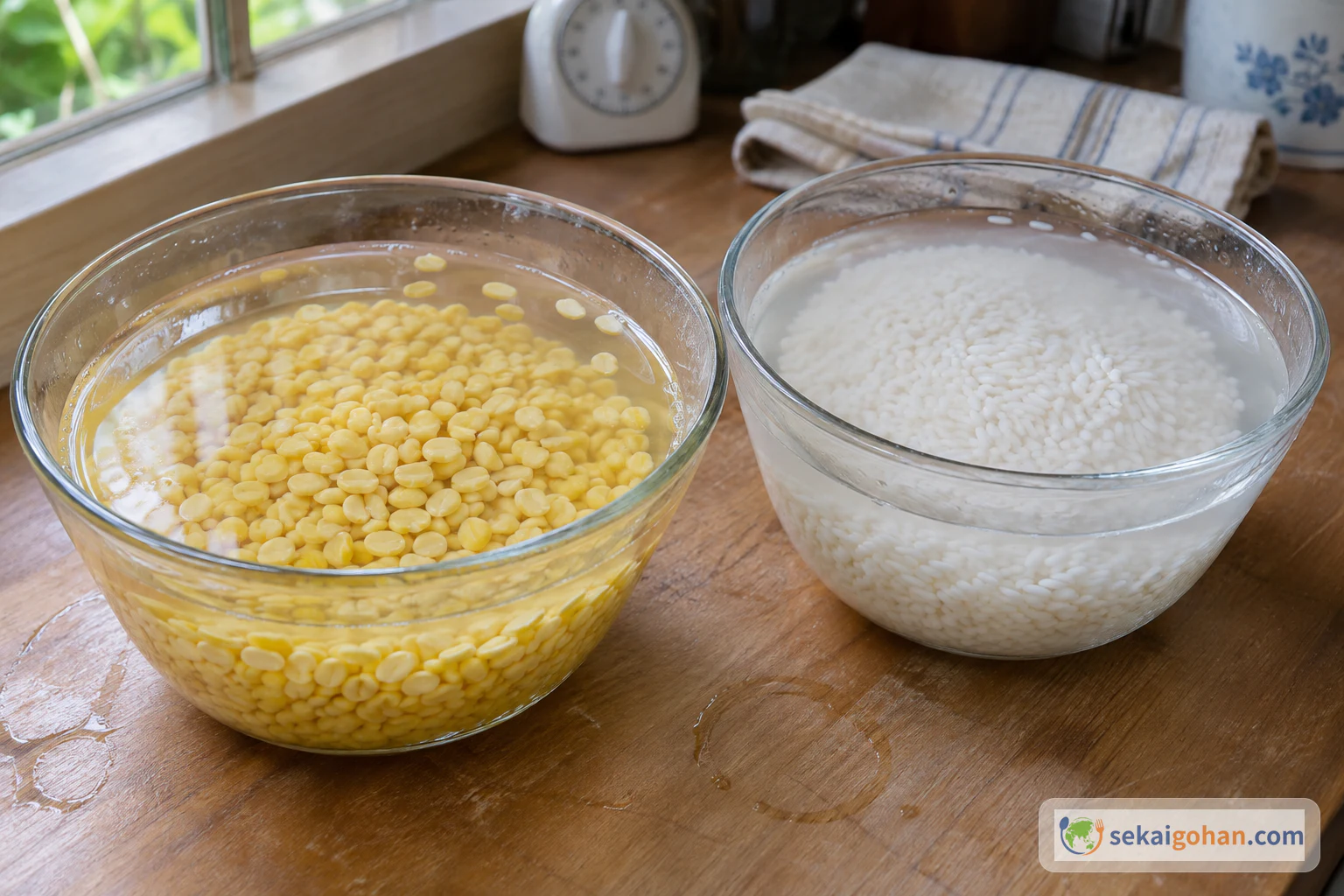
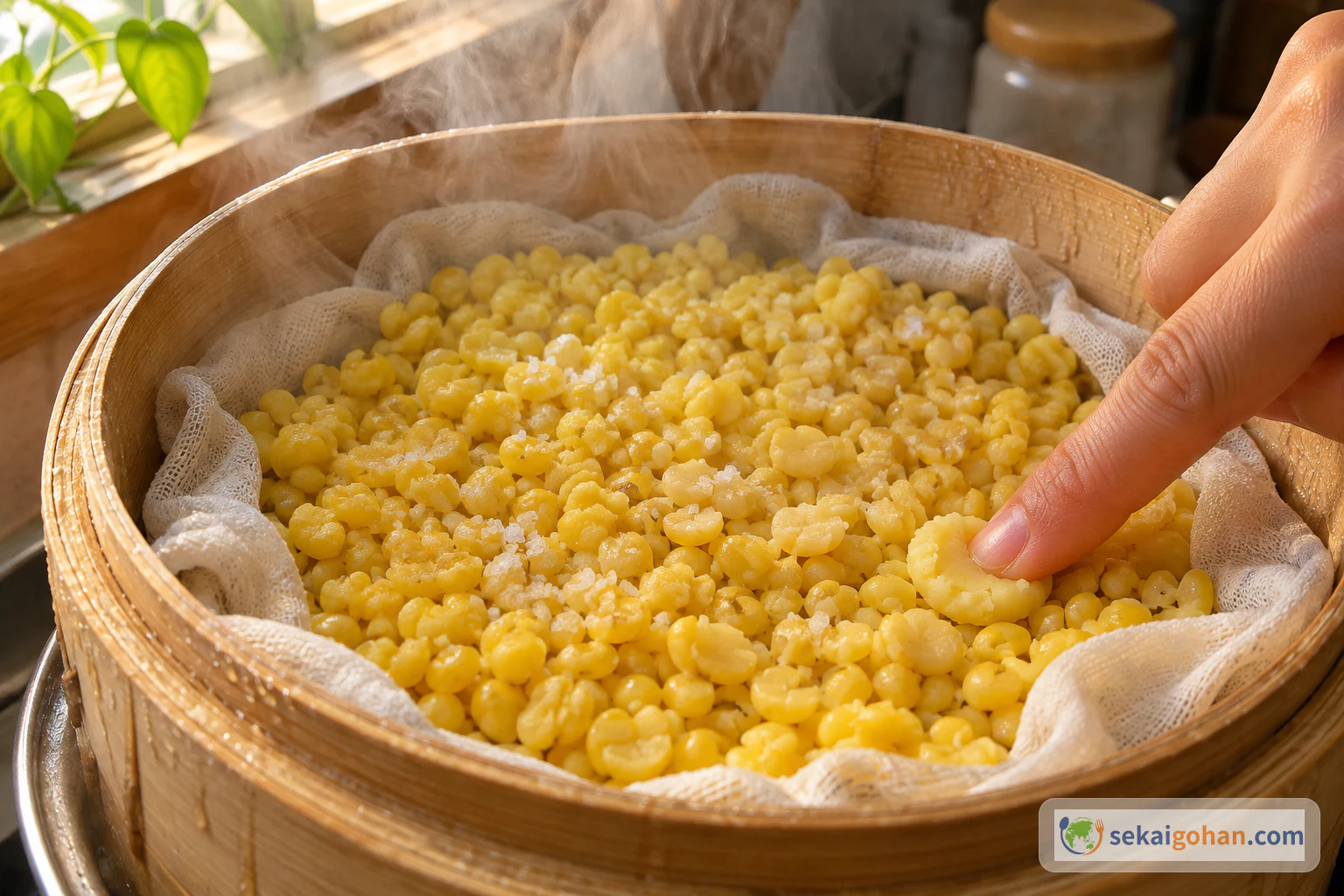
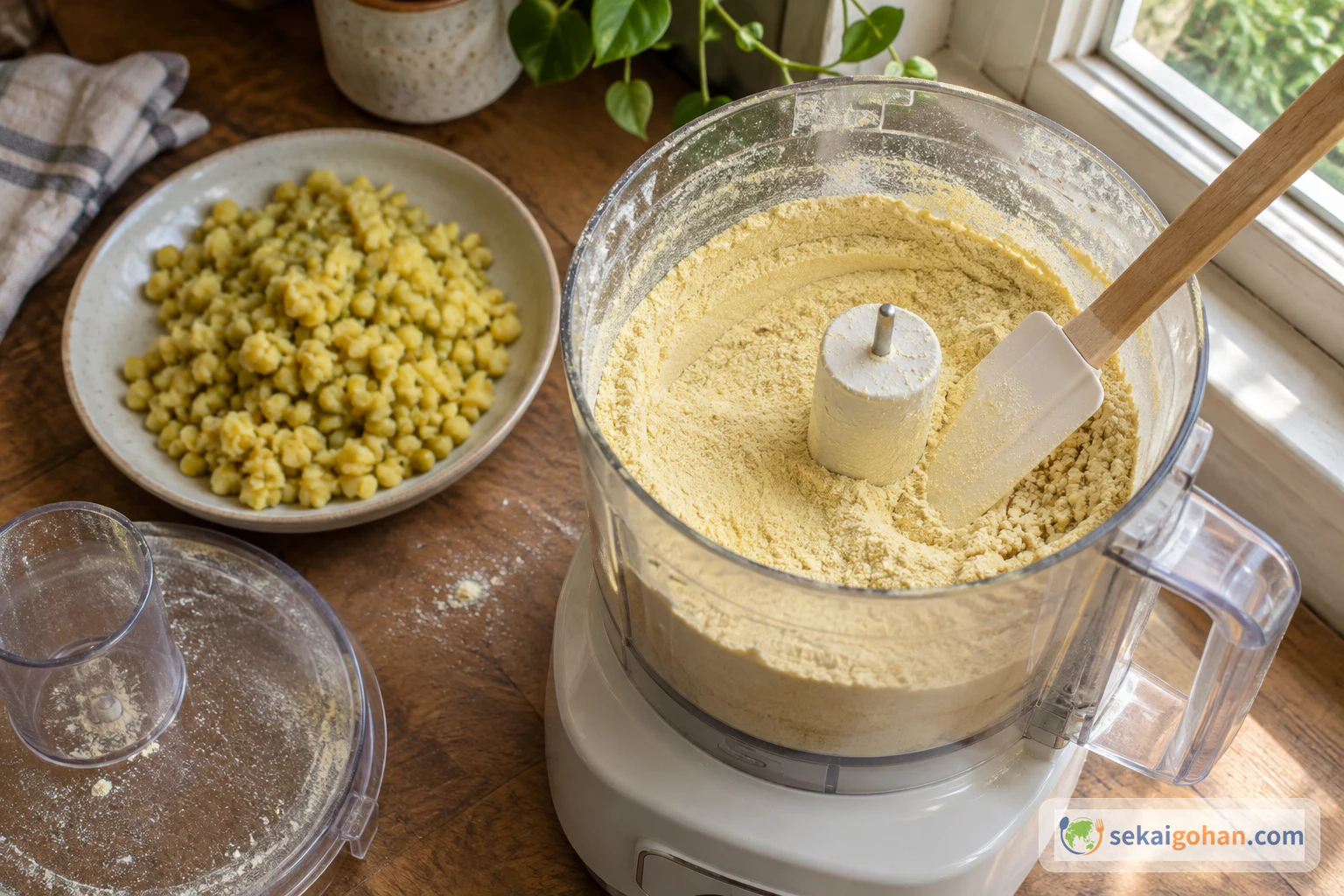
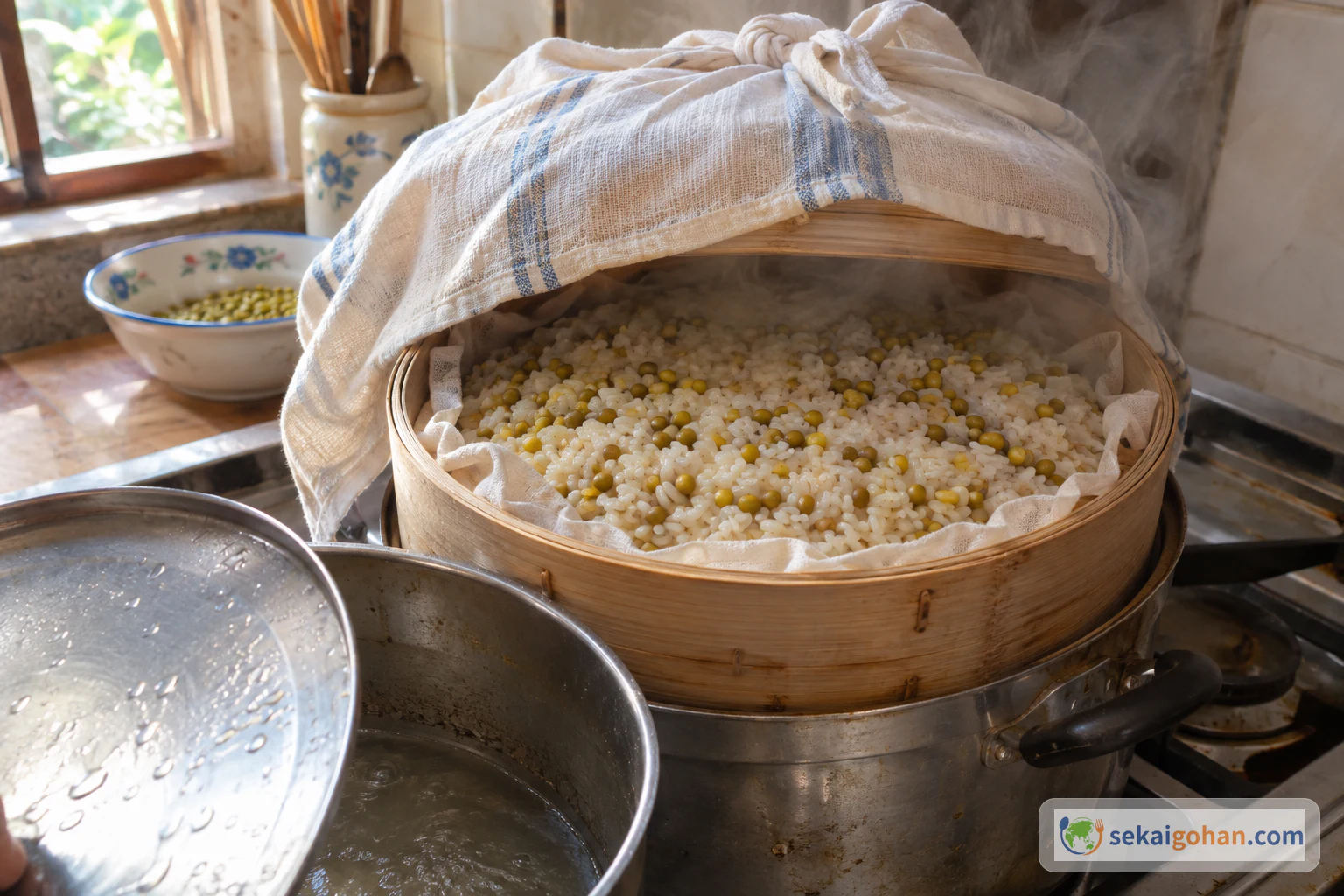
The beans lead. Both rice and beans soak for 2 to 4 hours in separate bowls, then the beans go into the steamer first. While they steam, drain the rice and let it dry; once the beans are ground, half the powder goes into the rice before it steams and half goes on afterwards. Soaking and steaming are hands-off time, and the only work that needs your full attention is the grinding and the final rubbing.
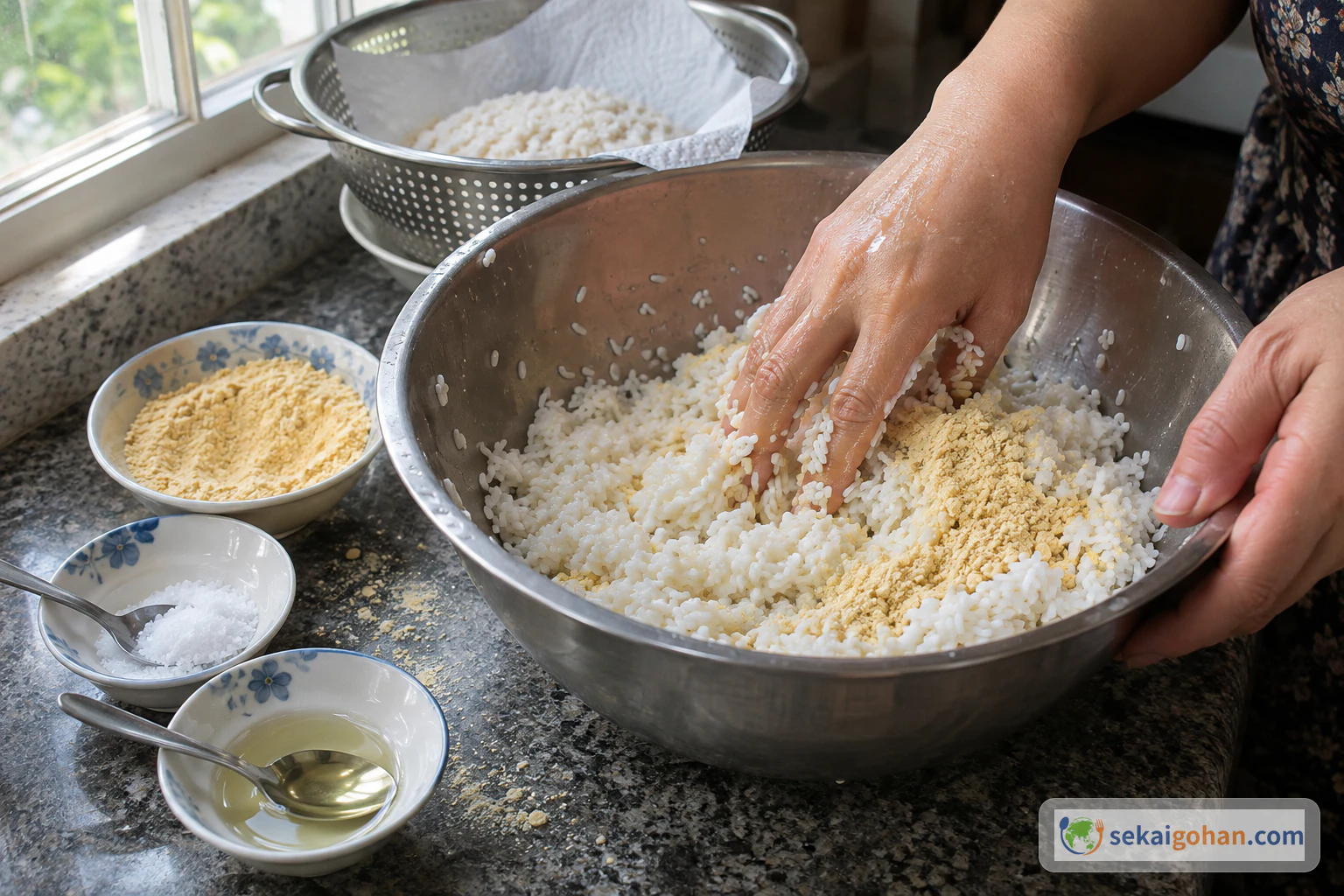
Mixing half the bean powder into the raw rice seasons and loosens the grains from the inside of the steamer. The other half goes on after steaming, and that is the layer that gives xôi vò its gold surface and its loose texture. Putting all the powder in at the start leaves you with a paler, heavier rice.
Wet rice is the main reason xôi vò clumps. Drain it well in a colander, then blot it with paper towels before it meets the powder, oil and salt. The drier the grains, the better the powder clings and the cleaner they separate later.
When It Goes Wrong
| What you see | Why | What to do |
|---|---|---|
| Grains stick together in a mass | Rice went in wet, too much steam, or condensation dripped from the lid | Blot the rice dry before mixing, wrap the lid in a towel and keep the water in the pot low |
| The powder forms lumps | Beans were ground while still wet, or the grind is too coarse | Let the steamed beans cool and lose moisture first, then grind in short bursts with stirring |
| Hard core in the rice | Soak too short, rice spread too thick, or steaming stopped too early | Soak the full 2 to 4 hours, spread the rice thin, and steam a few minutes more until a grain is soft through |
| Flat, dull flavour | All the salt went to one side | Season the beans and the rice separately; add a pinch of salt at the table if needed |
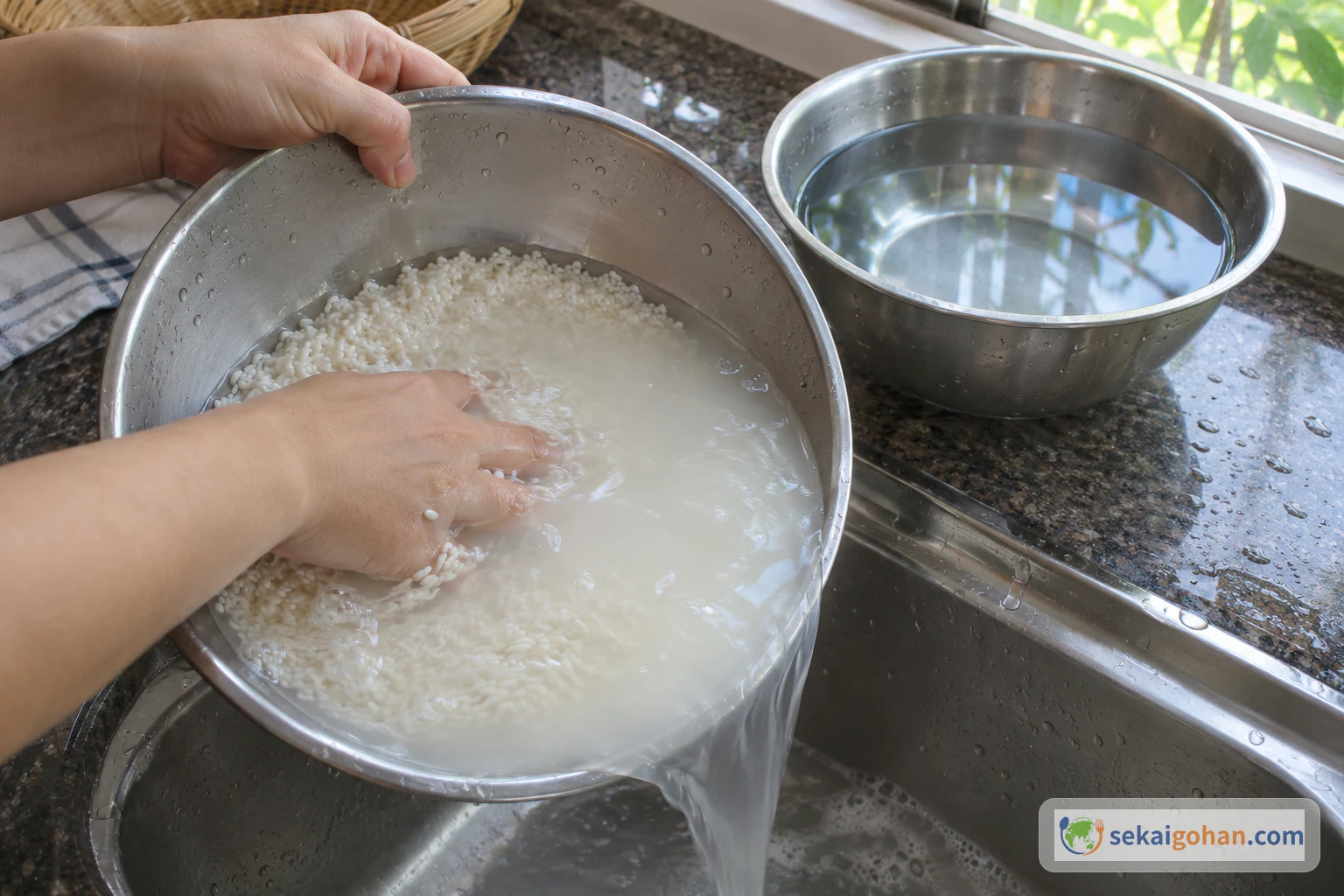
| Sour smell from the soaked rice or beans | Warm soaking water or rinsing that stopped too soon | Rinse until the water runs clear and soak in the refrigerator on hot days |
| The rice stays white | The second half of the powder was skipped | Rub the rest of the powder in after steaming; that layer makes the gold |
Serving, Variations and Storage
What goes with it
Eaten on its own, xôi vò already has sweetness and richness from the rice and bean. The northern way is a bowl of sweet chè beside it, mung bean chè above all, the pairing that appears at banquets and over Tết. The southern way is savoury: roast chicken, braised pork belly or roast pork on a separate plate, with the rice as the staple. Either way, the side dish is served next to the xôi, never mixed into it.
Variations
The older Hà Nội method, "3 vò 2 lửa." The phrase means three rubbings and two fires. The rice soaks for 6 to 8 hours and is air-dried, the hulled beans are steamed with salt, pounded hot in a mortar and pressed into firm balls, then shaved paper-thin over the rice and rubbed in. The rice steams once until about three-quarters cooked, gets sugar, a second shaving of bean and a drizzle of chicken fat, steams again, and is rubbed a third time. The result is sweeter and richer, with a finer coat.
The southern coconut version. Here the soaked rice rests in coconut milk and water before it meets the ground bean, salt and sugar, and it is steamed in two batches. It comes out rich and sweet, closer to a dessert rice, and its amounts are its own; the coconut milk and sugar do not belong in the table above.
Storage
Rice and beans are known sources of Bacillus cereus, whose spores survive ordinary cooking. Do not leave xôi vò at room temperature. Cook only what you will eat and serve it promptly. To keep leftovers, divide them into small portions, cool them quickly and store at 46°F (8°C) or below, or hold them hot at 131°F (55°C) or above.
Frequently asked questions
I can only find whole green mung beans. Can I use them?
Yes, with an extra job. Soak them, then rub them between your hands in the water until the green hulls slip off, and wash the hulls away before steaming. Any hulls you leave behind tint the coating green and make the powder coarser on the tongue.
Can I make it without a food processor?
Pound the steamed beans in a mortar while they are still hot, which is how the older Hà Nội method does it. Work until no whole pieces remain and the paste is smooth enough to crumble finely over the rice. It takes more effort and brings you closer to the traditional shaved coating.
Is xôi vò supposed to be sweet?
This northern version is seasoned only with salt, and its sweetness comes from the rice itself. Sugar belongs to the older Hà Nội method and to the southern coconut version. If you want sweetness at the table, serve a bowl of chè or jasmine-scented sugar syrup on the side.