
When red oil glimmers in the pot, an Angolan dinner begins
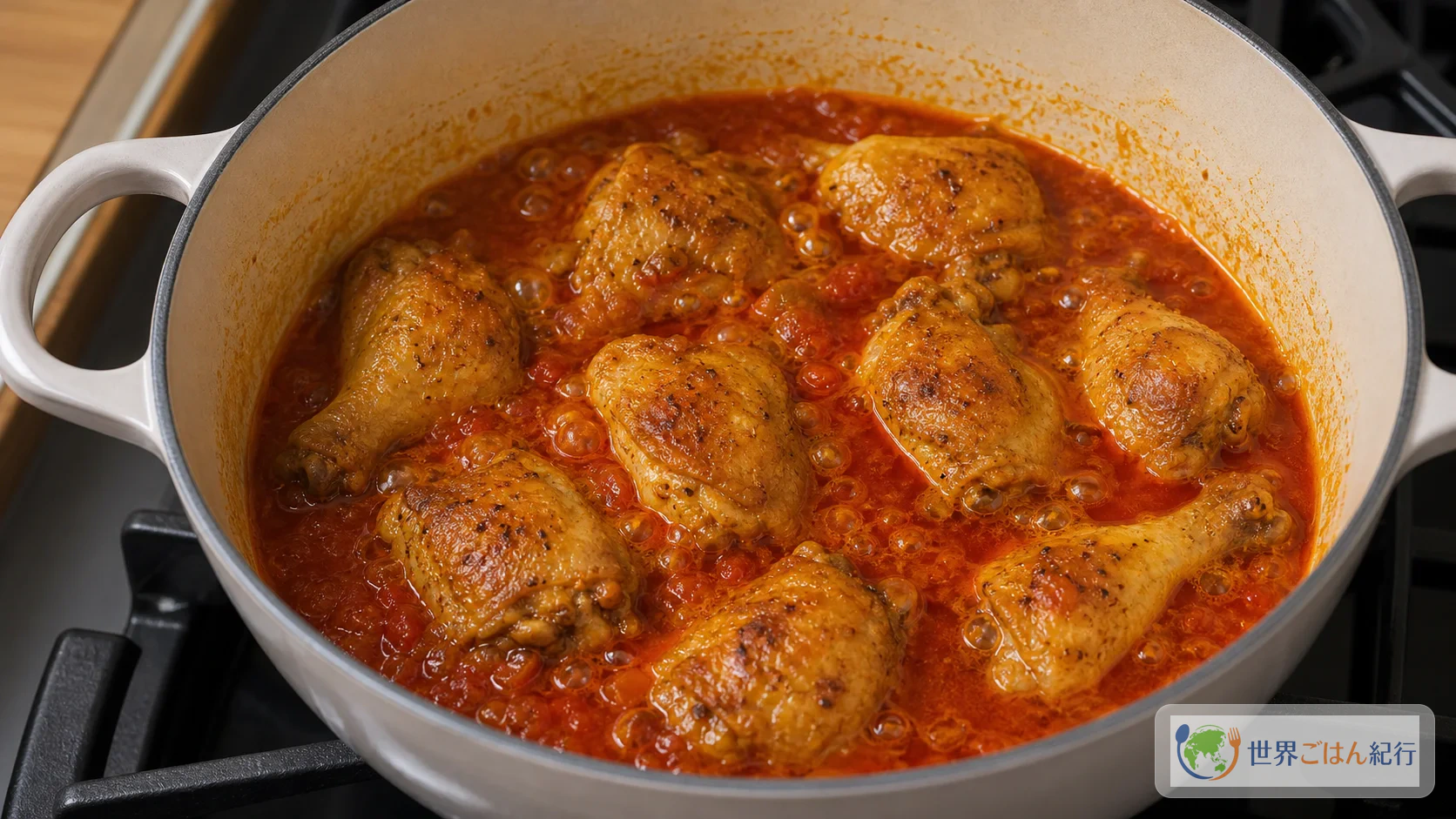
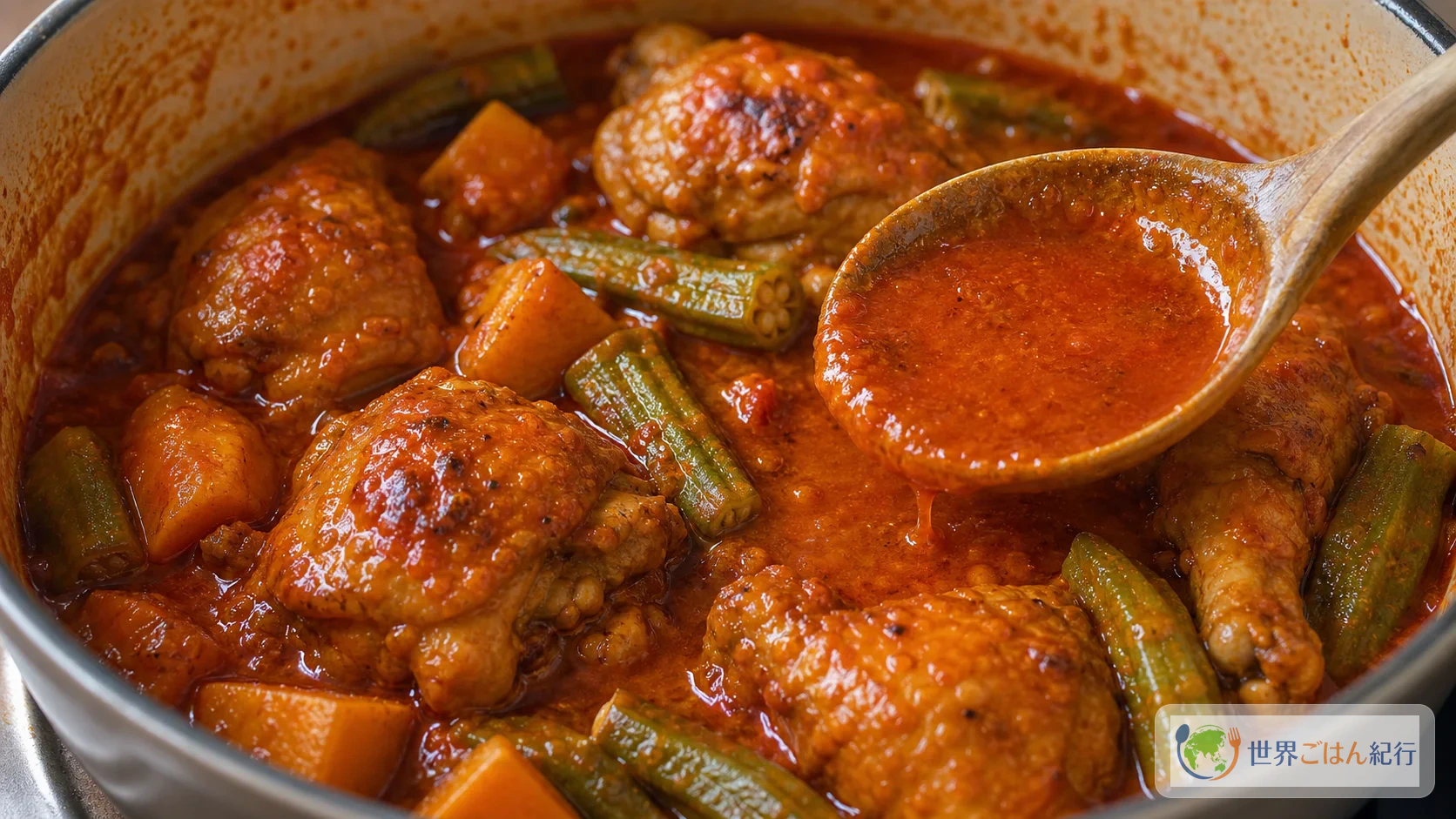
Before the chicken goes in, pour red palm oil into the pot. Unlike ordinary vegetable oil, it spreads across the bottom in a deep sunset color. Drop in garlic and onion, and a sweet, slightly earthy aroma rises. The first time you make it, that smell alone tells you: tonight is not your usual chicken stew.
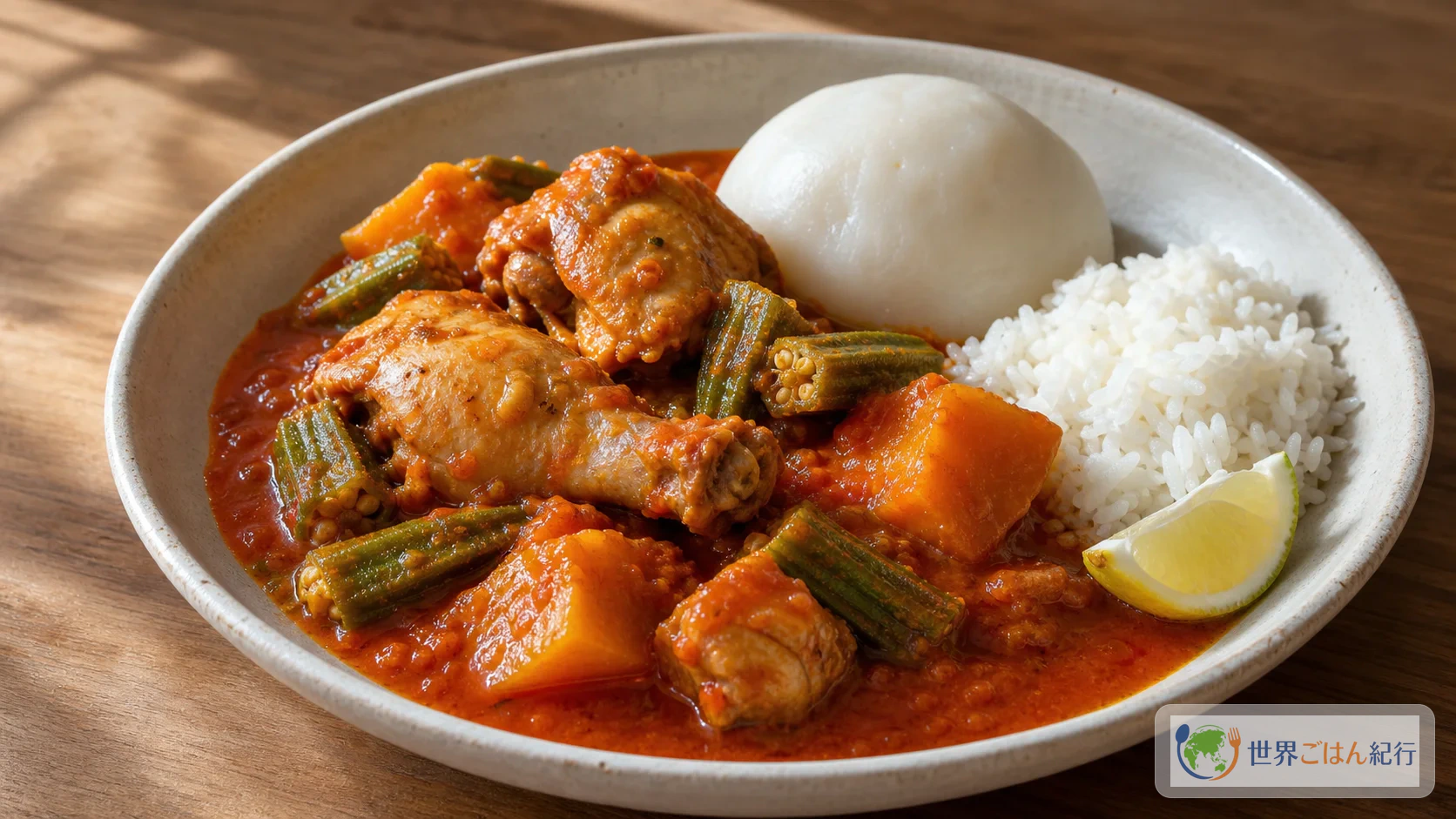
Muamba de galinha (also spelled moamba de galinha) is one of Angola's signature chicken stews. Chicken, red palm oil, onion, garlic, tomato, chili and okra go into the pot, and depending on the household, squash or eggplant too. In Portuguese, galinha means chicken. Muamba is widely used for palm-based sauces and stews in Central Africa.
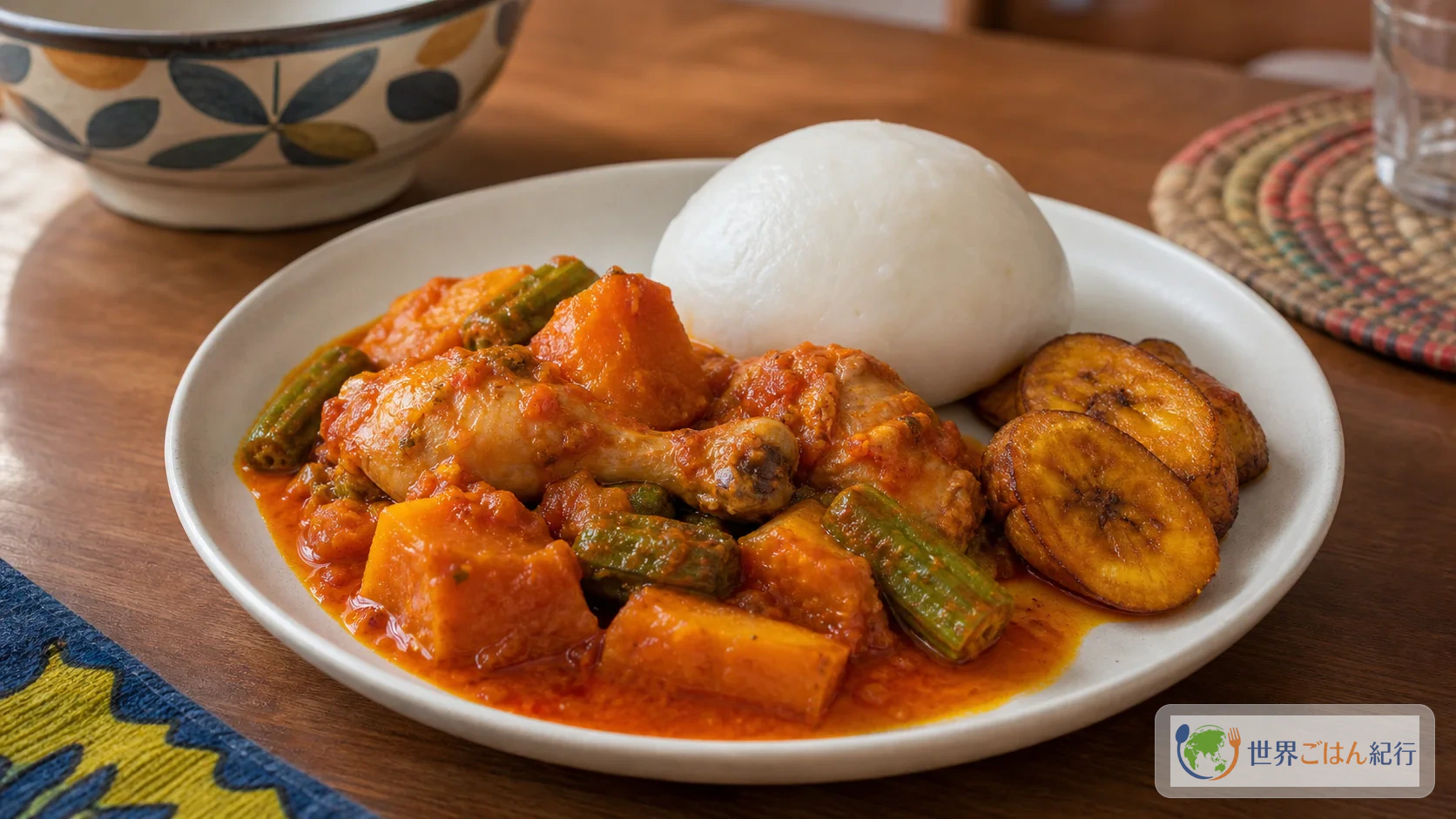
Angolan tourism food guides also present muamba de galinha as a national dish of "chicken simmered with palm oil, okra, garlic, onion and chili." Comparing English-language recipes, what matters more than any particular spice is the combination of red palm oil, okra, squash, and funge or rice. Get those right and you can come quite close even with supermarket chicken thighs.
A similar dish is poulet moambe (in Japanese) from the Democratic Republic of the Congo. Both are chicken stews born in the culture of the oil palm, but the Angolan version, true to the Portuguese-speaking world, puts lemon, garlic, chili, and eating with white rice or funge front and center. This article keeps imported ingredients to a minimum while protecting one thing: the aroma of red palm oil.
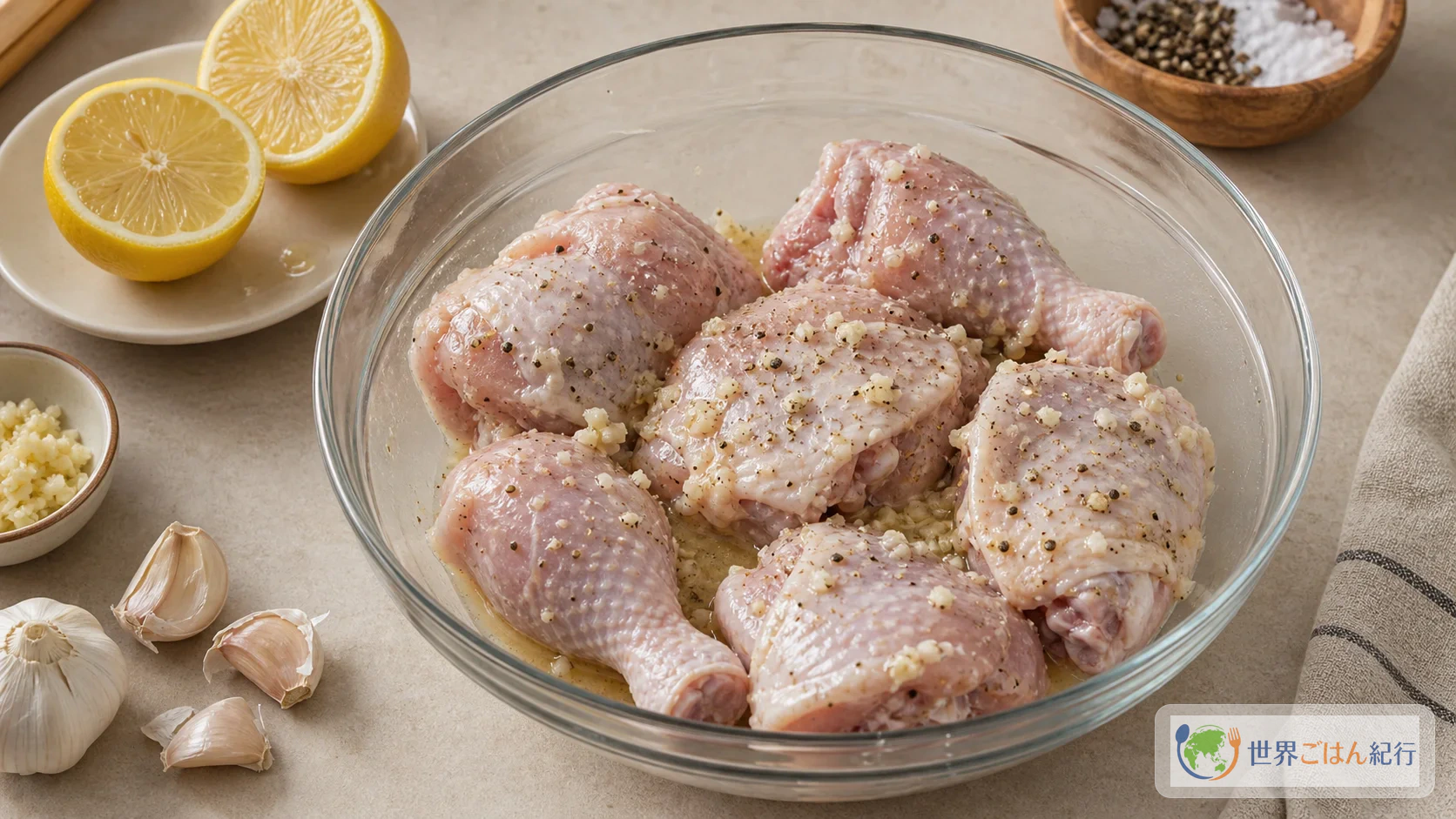
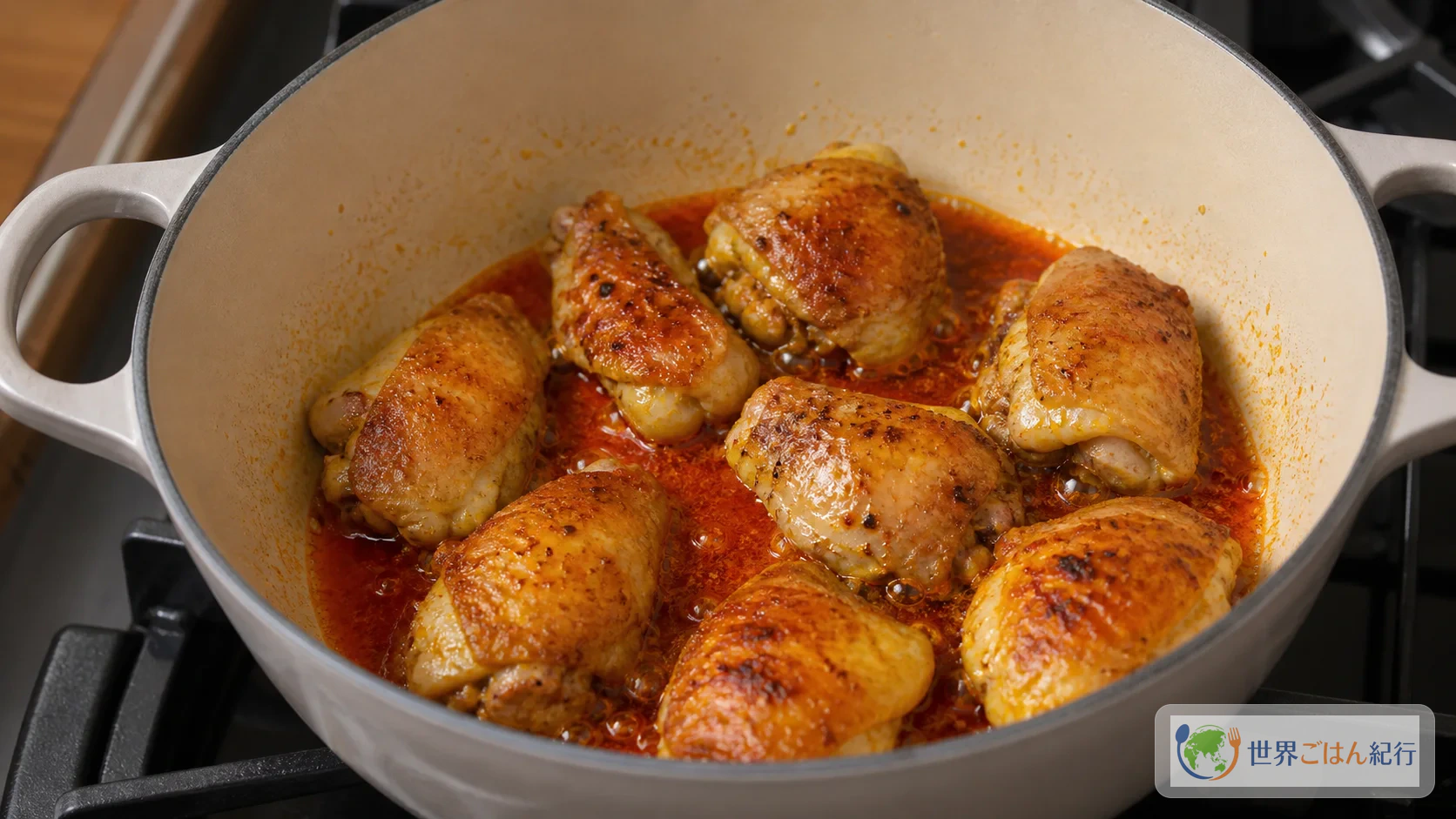
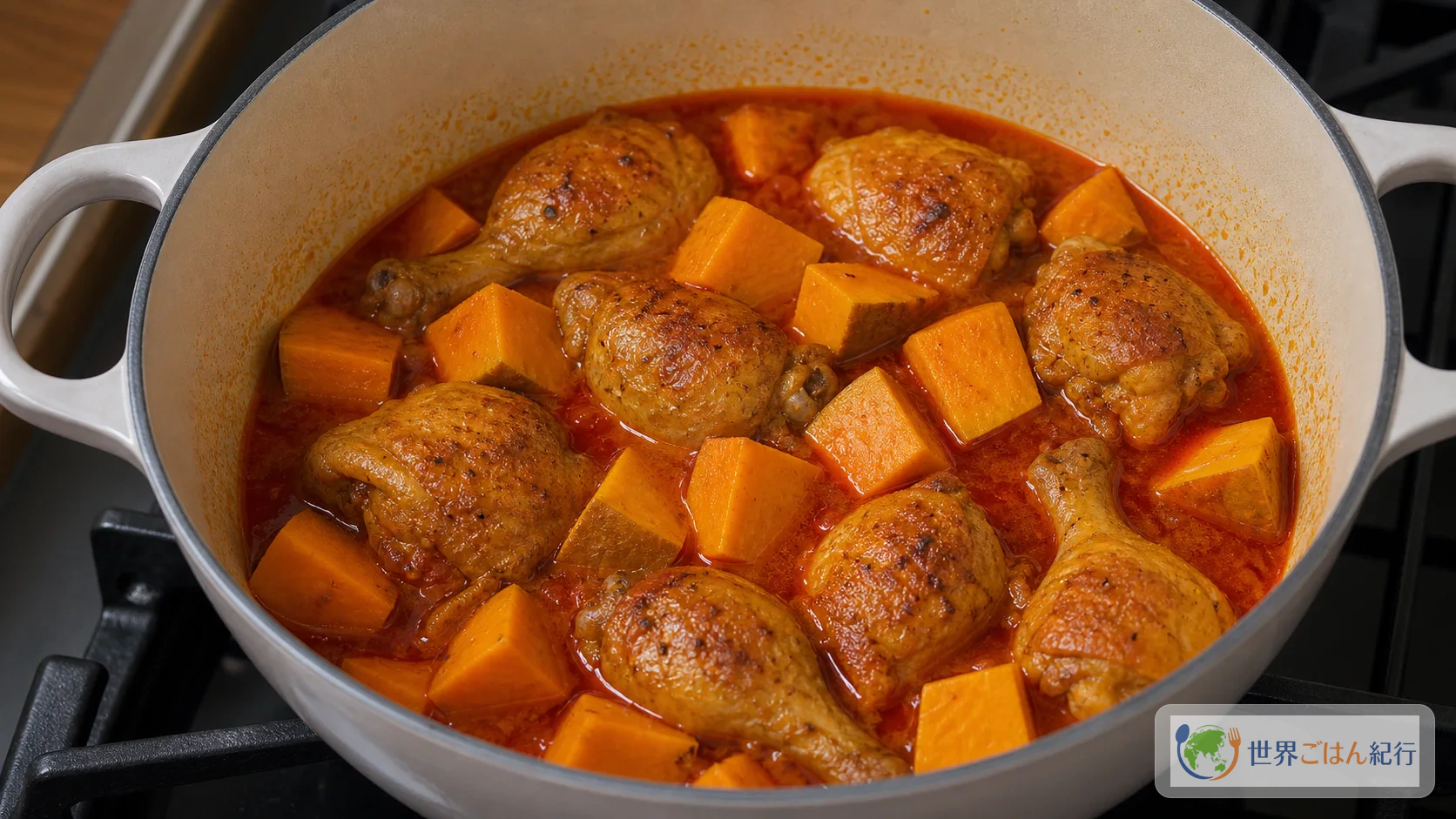
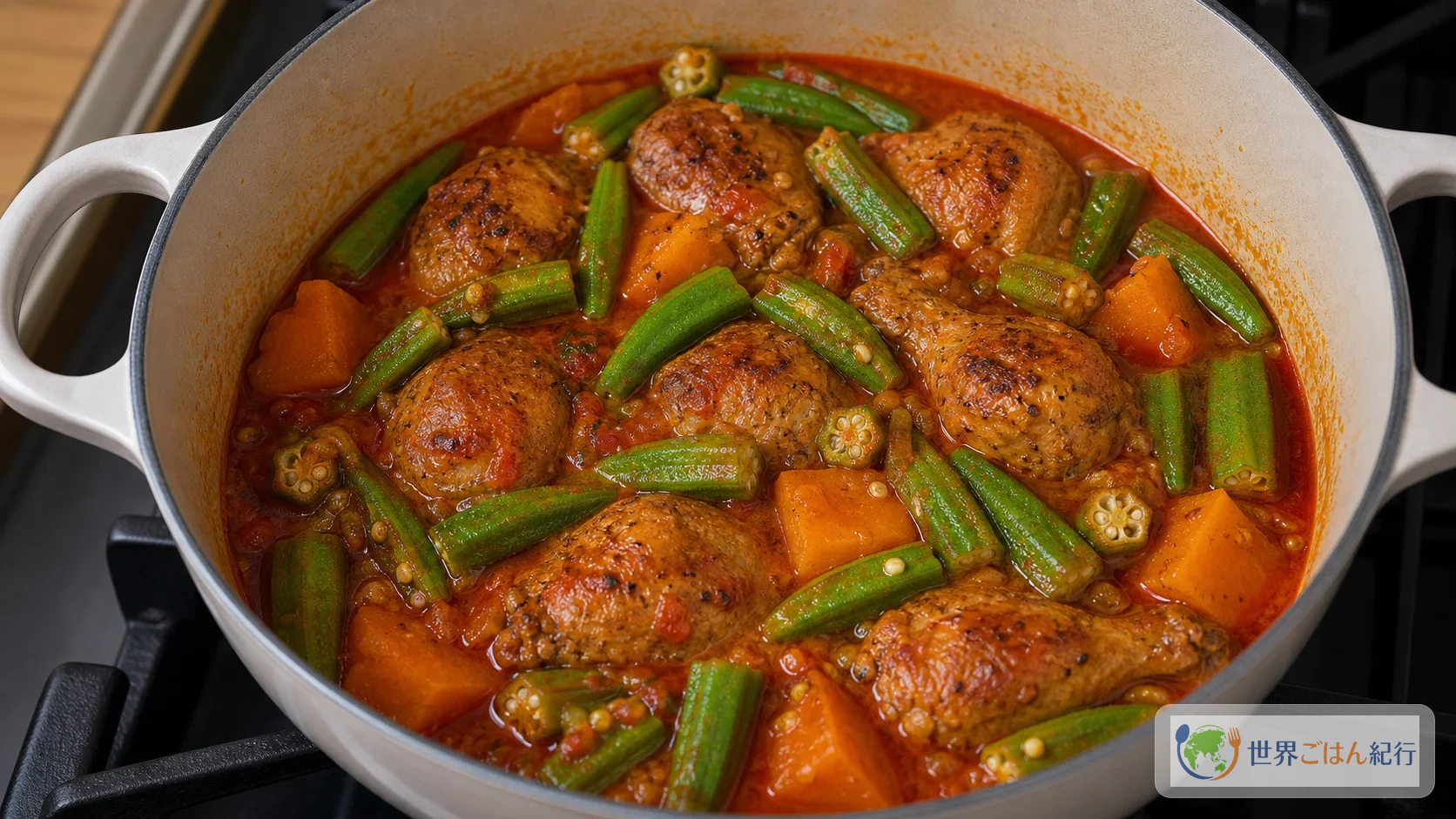
This article makes a home version: bone-in chicken thighs marinated with lemon and garlic, browned in red palm oil, then simmered with tomato, onion, squash and okra. It also covers how to go further if you can find palm nut paste, realistic substitutes if you can't, and a funge-style accompaniment.
The background — palm oil, funge and the Portuguese-speaking table
Angolan cooking layers together the staple-food culture of inland Africa, seafood from the coast, palm oil, cassava, chili, and the influence of the Portuguese colonial era. Whether in eateries in the capital, Luanda, or in home kitchens, rich stews come with funge (also spelled funje) or white rice.
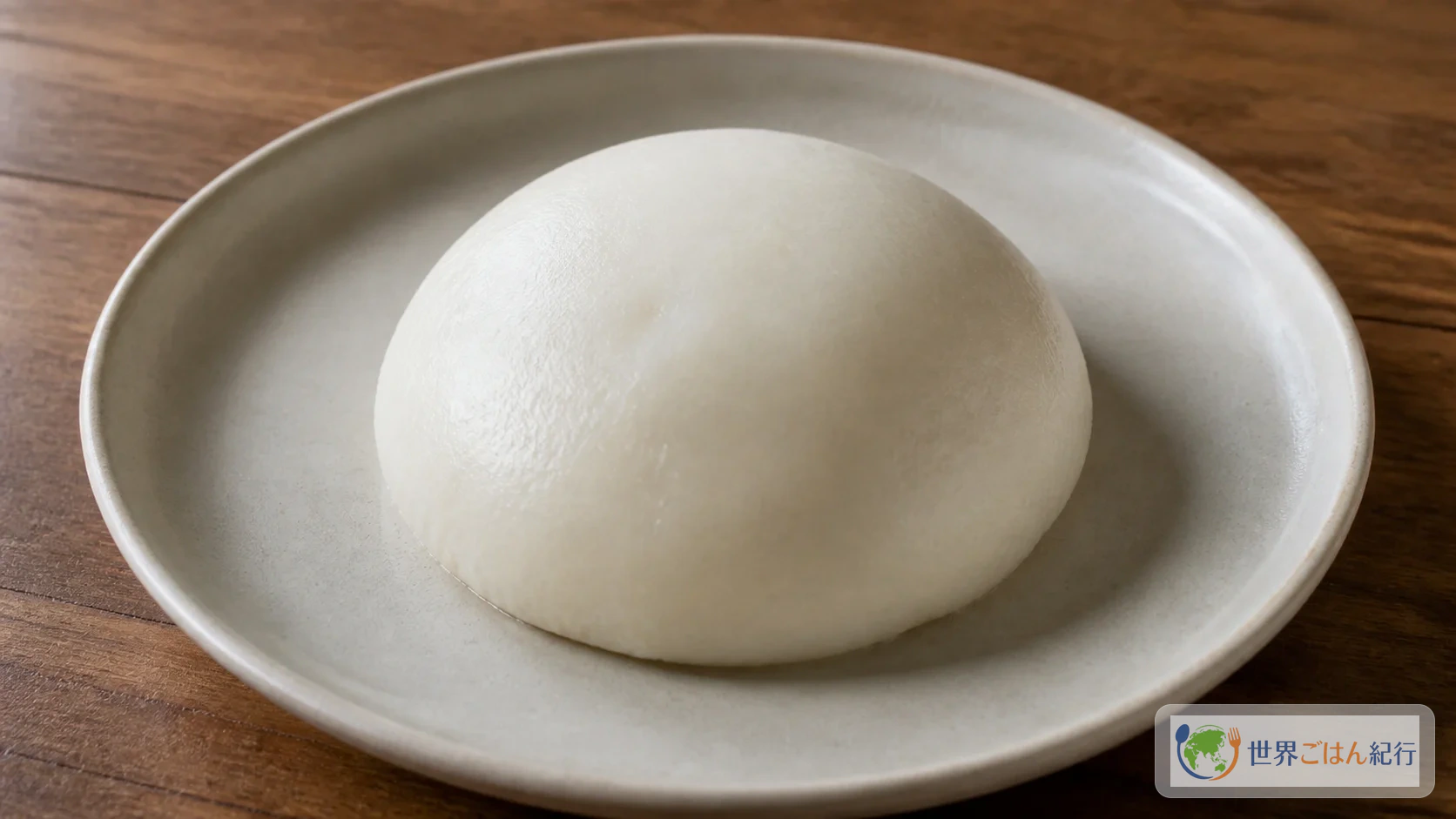
Funge is a staple made by stirring cassava flour or cornmeal into hot water. Its flavor is mild, and even more than white rice, it devotes itself to catching sauce. White rice is perfectly fine the first time you make muamba, but knowing about funge changes how you see the dish. The rich palm oil sauce isn't meant to be eaten on its own; it's a flavor completed by coating a bland staple. The same idea of a staple catching sauce connects to Ghana's fufu and Tanzania's ugali (in Japanese).
Palm Done Right's Angolan recipe describes muamba de galinha as closely related to the moambe-style dishes of the Congo River basin, made with chicken, red palm oil or muamba de dendém, onion, garlic, okra and a chili called gindungo. Global Table Adventure's home version marinates the chicken in lemon, garlic and chili, browns it, simmers it gently, and adds squash and okra in the second half.
Muamba is often summed up in one line as "an Angolan chicken stew." But read English-language recipes and the focus is far more specific: the aroma of red palm oil, the body from okra, the sweetness of squash, how the chili goes in, and eating it with funge or rice. When those five come together, it's no longer just chicken in tomato sauce but an Angolan pot.
Muamba isn't "an African-style curry loaded with spices." If anything, the spices are restrained, and red palm oil and the sweetness of the vegetables take the lead. At home, too, not scorching the palm oil and adding the okra last will bring you closer to the original than adding curry powder.
Ingredients (serves 4) — protect the red palm oil, even a little
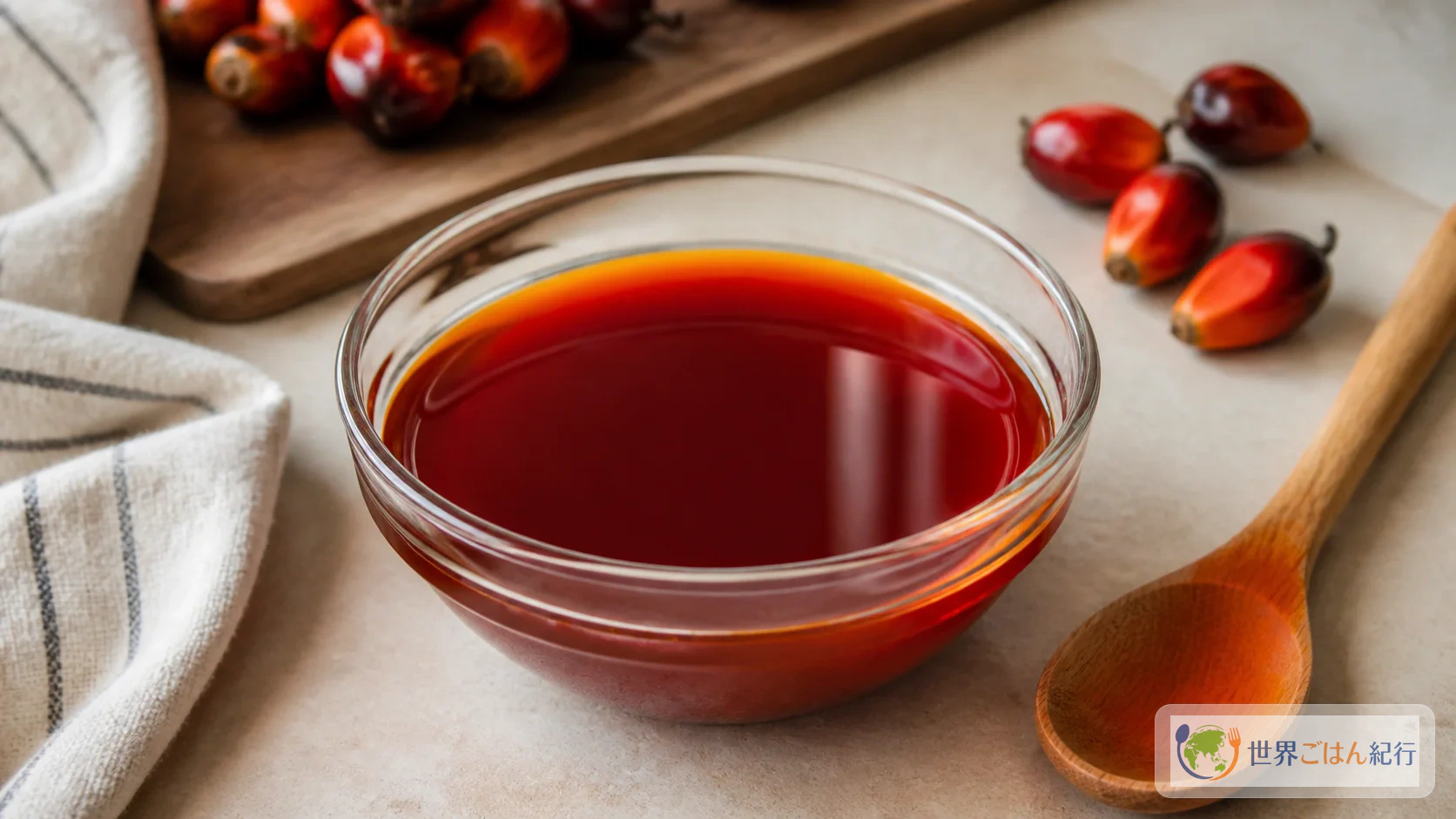
Muamba's ingredients are less daunting than they look. Chicken, onion, garlic, tomato, squash and okra are all at an ordinary supermarket. The issue is red palm oil. Substitute too much here and the heart of the dish disappears. The shopping approach is the same as for egusi soup (in Japanese), which also uses palm oil and imported ingredients, or yassa chicken (in Japanese), which keeps the spices simple: narrowing down the "must-have ingredients for the first try" makes it easier to keep cooking.
This recipe uses chicken. Store-bought bouillon cubes and stock may contain ingredients derived from wheat, milk, soy, chicken or beef. Cook the chicken all the way through, and for bone-in pieces check that no red remains near the bone.
Ingredients and equipment for this dish
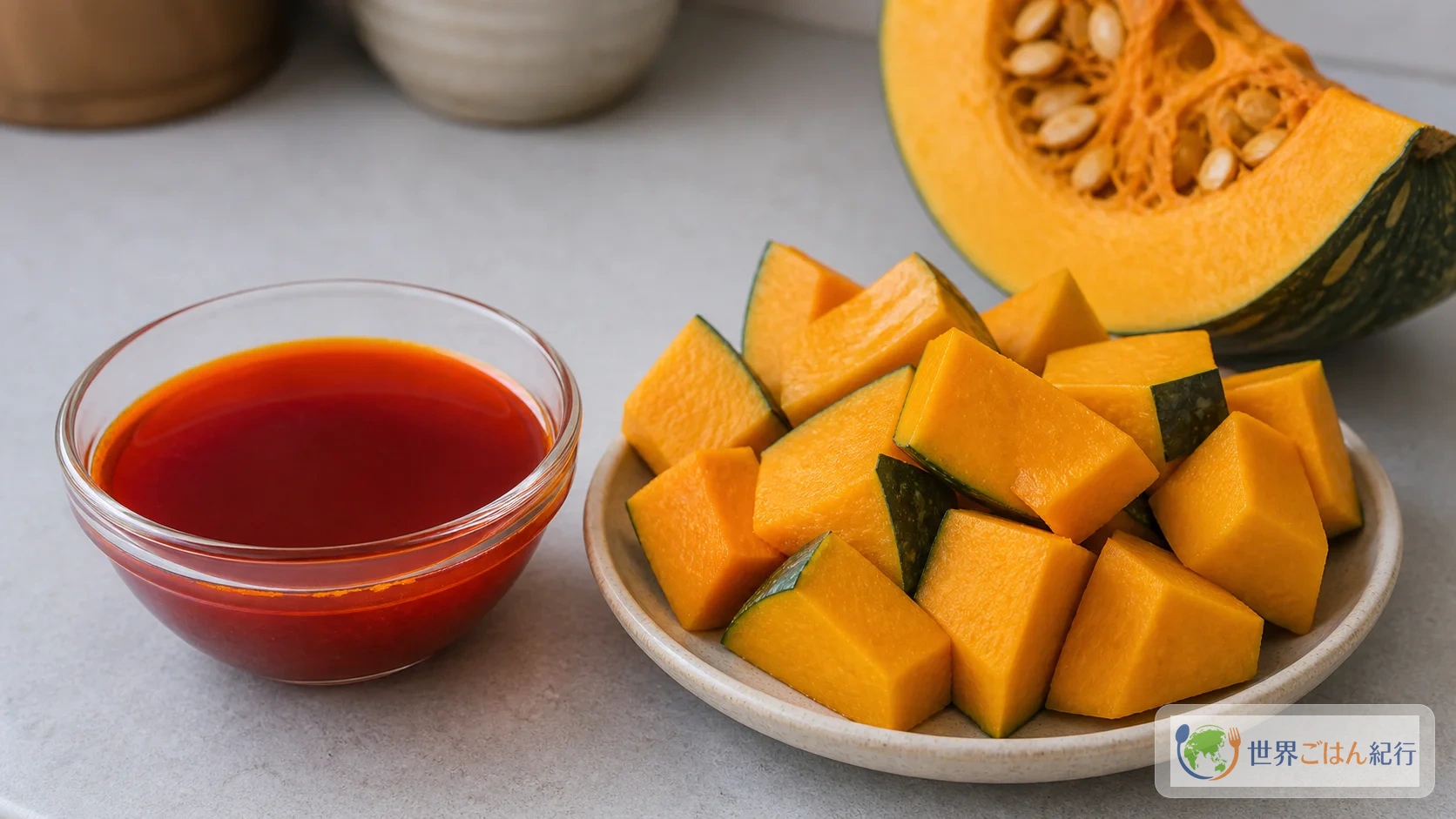
Red palm oil is often hard to find at a regular supermarket. It's worth looking for at African grocery stores or online. Even a small amount changes the aroma of the whole dish, so it's an ingredient to have from your first try.
If you want to go funge-style, use cassava flour. The dish works with white rice alone, but eating it with a cooked flour staple shows you how rich the sauce really is.
Frozen okra is perfectly fine. When fresh okra is expensive, adding frozen sliced okra at the end is actually less likely to go wrong.
Palm oil stews scorch easily on the bottom, so a heavy pot suits them better than a thin saucepan. A wide base makes it easier to brown the chicken and keeps the reduction steady.
For your first try, make it with just "chicken thighs, red palm oil, onions, tomatoes, squash, okra and white rice." Cassava flour, habanero and palm nut paste can wait until the second time. Handling the red palm oil without scorching it does more for the flavor than adding rare ingredients.
Method — brown the chicken, build a red sauce with vegetables
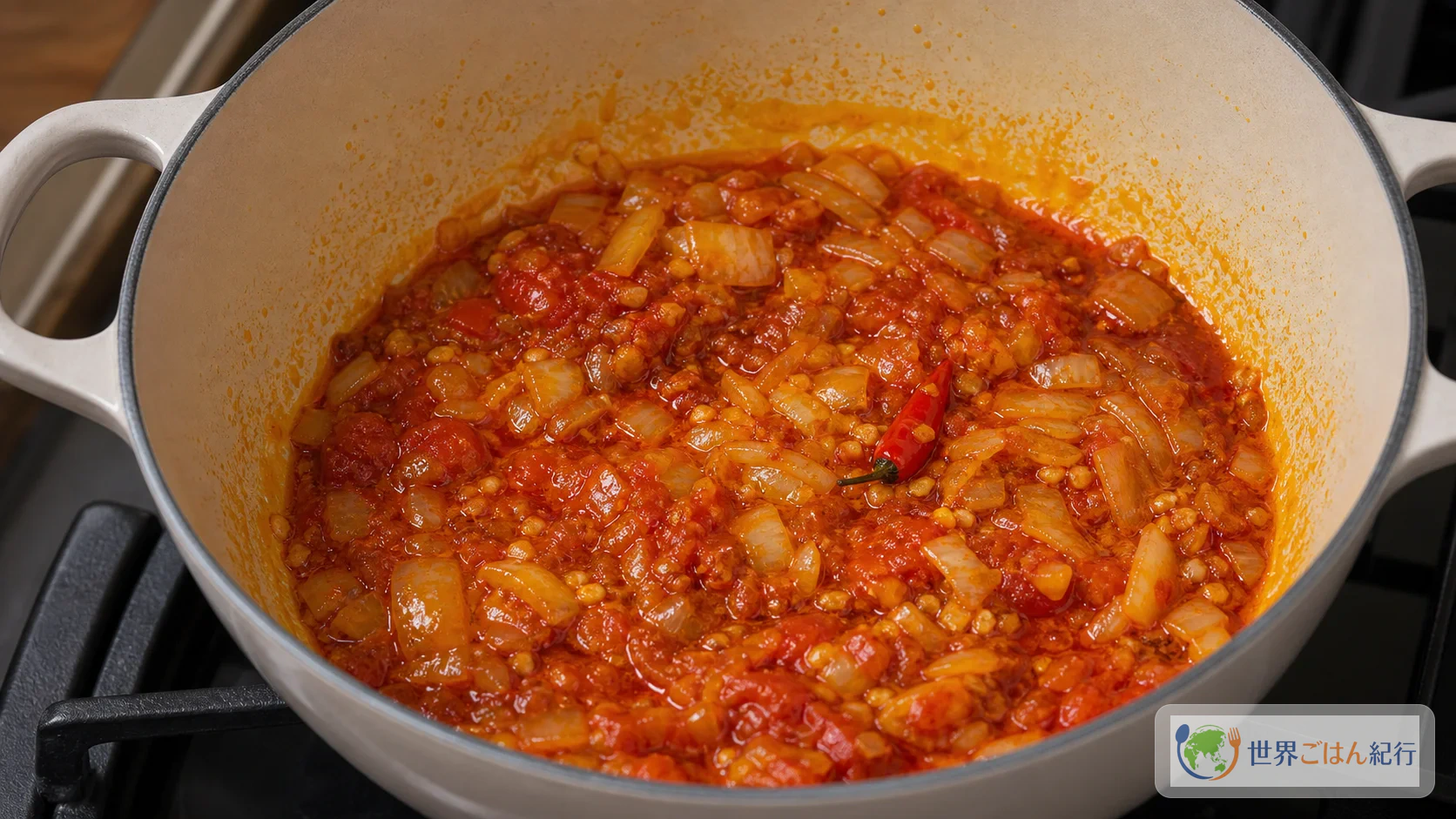
If you put everything in the pot at once, the chicken skin turns too soft and the aroma of the palm oil goes flat. Brown the chicken first, make the sauce with onion and tomato, then add the squash and okra in stages, and the dish comes together even on a home stove.
Making a funge-style accompaniment
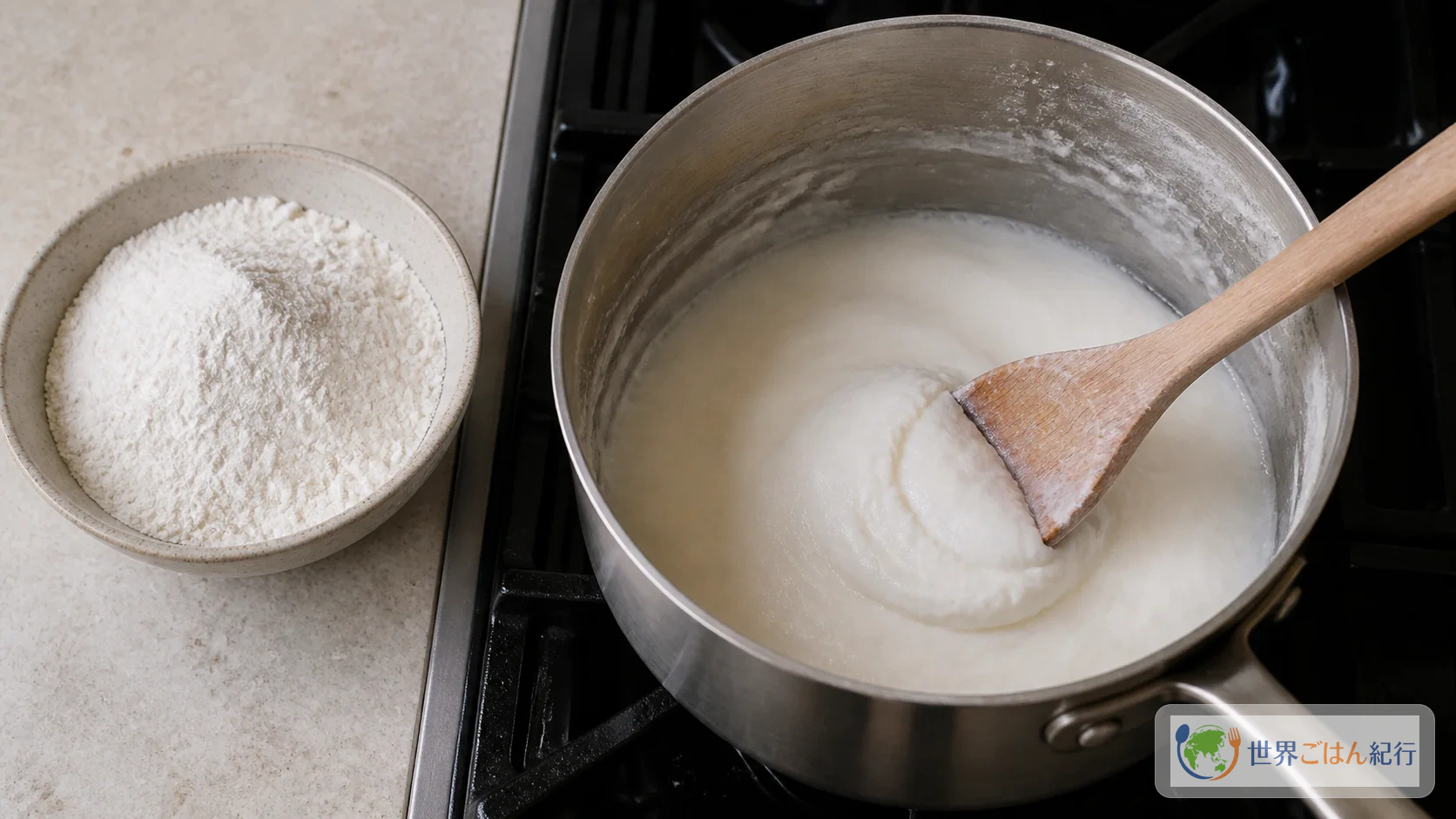
Bring 500 ml water and a pinch of salt to a boil in a small pot. Add 150 g cassava flour little by little, stirring constantly with a wooden spoon. It lumps easily, so don't add it all at once. Work it over low heat for 5–7 minutes, and turn off the heat when it firms up into a soft, chewy mass. Wet a small bowl, shape the funge into a round, and serve it alongside the muamba.
If you're eating it with white rice, rice cooked slightly firm works well. Because the sauce has oil in it, very soft rice makes the whole thing heavy. A bean-and-rice dish like waakye (in Japanese) makes it a feast, but white rice is plenty for the first time. If you have the energy, compare it with thieboudienne (in Japanese), which brings fish and rice together on one plate, or the tomato rice jollof rice, and you'll see the difference in how West and Central Africa think about staples.
Bone-in chicken tends to stay pink near the bone. Simmering times are a guide, so adjust for the size of the pieces. If you have a thermometer, aim for an internal temperature of 75°C (167°F). Don't leave the pot at room temperature for long after taking it off the heat, and refrigerate any portion you won't eat promptly.
A decision table for getting closer to the original in a home kitchen
Muamba suddenly feels out of reach if you try to collect every rare ingredient. Separate what to protect from what you can swap, and it fits into a weeknight dinner.
| Ingredient or step in question | Closer to the original | Realistic at home | Why it matters |
|---|---|---|---|
| Palm flavor | Red palm oil, muamba de dendém | 3–4 tbsp red palm oil | The core of color and aroma. Avoid leaving it out entirely |
| Chicken | Bone-in whole chicken or bone-in thighs | Drumsticks, bone-in thighs, chicken thighs | Bone-in gives the sauce savory depth |
| Chili | Gindungo | Dried red chili, a little habanero, cayenne | Mild in the pot and added at the table suits a family meal |
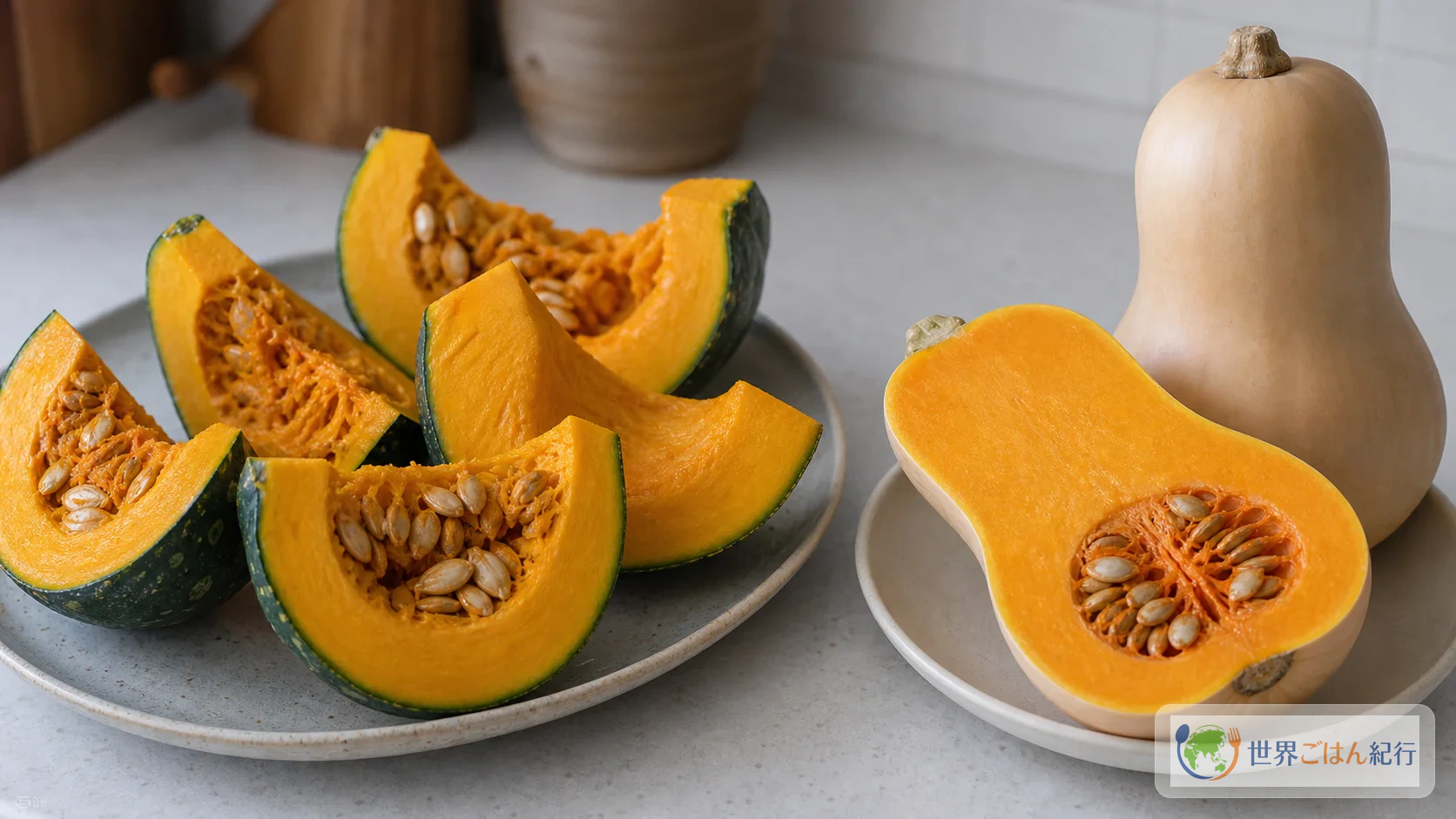
| Squash | Butternut, sweet squash | Kabocha, sweet potato | Sweetness balances the heaviness of the oil |
| Okra | Whole or in large pieces | Fresh okra, frozen sliced | Creates body. Don't add it too early |
| Staple | Funge, rice | White rice, polenta, mashed potatoes | You need a bland staple to catch the rich sauce |
If you use palm nut paste
If you can find canned palm nut cream, palm soup base or dendê-style sauce at an African grocery store or online, add 200–300 g after the tomatoes have cooked down. In that case, reduce the red palm oil to 2 tbsp. Salt and thickness vary by can, so don't add all the stock at once; adjust 100 ml at a time.
That said, there's no need to hunt down canned palm nut for your first try. Home-style Angolan muamba takes shape with red palm oil, tomato, onion, chicken and okra. If you make the Congolese poulet moambe (in Japanese) as a richer palm nut sauce and treat the Angolan version as a palm oil stew of chicken and vegetables, comparing the two becomes part of the fun.
When you're tempted to add curry powder
Faced with a pot of red oil and chicken, it's tempting to reach for curry powder. But muamba's aroma doesn't head in the direction of curry. Add cumin or turmeric and it drifts away from Angolan cooking toward "African-style chicken curry." For your first try, skip the curry powder and finish it with just chili, garlic, tomato and palm oil.
Red palm oil is the one thing better not left out completely. 1 tbsp alone gives too faint an aroma, so for 4 servings aim for at least 3 tbsp. If you really don't like it, you can cut it to 2 tbsp and make up the color with paprika, but at that point the dish has moved quite far from the original.
Common mistakes — avoiding oily, sour or watery results
Muamba goes wrong because of heat control more than unusual ingredients. Red palm oil has a strong aroma, so scorching it makes bitterness stand out. Too low a heat, on the other hand, leaves the oil and tomato separated in a heavy sauce.
If it's oily
You may have used too much palm oil, or the moisture from the tomatoes and onions may not have cooked off. Next time, reduce the palm oil to 3 tbsp and cook the onion and tomato down thoroughly before returning the chicken. If a lot of oil floats on top at the end, you can skim off just 1–2 tbsp with a spoon. Remove it all, though, and the aroma goes with it.
If it's sour
You added too much lemon juice or didn't cook the tomatoes down enough. Keep the lemon to 2 tbsp in the marinade, and add any extra acidity at the table. A sour pot rounds out with a little more squash. Balancing it with the sweetness of squash or sweet potato is more in keeping with muamba than adding sugar.
If it's watery
If you keep the lid on right to the end, the sauce stays thin. Before adding the okra, take the lid off and reduce for 5 minutes. Chopped okra thickens more but also gets slimier. Remember: whole or halved pods give a cleaner result, sliced rounds a thicker one, and you'll find it easy to adjust.
If the chicken is tough
You may have simmered boneless thighs too long. For boneless, 20–25 minutes of simmering is plenty. Bone-in pieces hold up to longer cooking, but boiling hard makes the meat seize up. Keep the heat low enough that the surface just trembles.
Storage, making ahead, and eating it the Angolan way
Muamba is delicious the day it's made, but the next day the sauce soaks into the chicken, the squash melts a little, and the flavor mellows. Like any good stew, it's well suited to making ahead.
Storage guidelines
Once it has cooled slightly, transfer it to shallow containers and refrigerate. It keeps about 3 days in the refrigerator and about 1 month in the freezer. Don't leave it out at room temperature. In hot weather especially, leaving the pot on the counter makes it spoil easily.
If freezing, remove as much okra as you can, or freeze it accepting that the texture will change. Adding fresh okra when you reheat restores both look and texture. Squash breaks down a little when frozen, but it melts into the sauce, so that's fine.
Eating it the next day
The next day, spooning it over white rice is plenty, but if you have time, pair it with firmly cooked polenta or mashed potatoes. Even without funge, you can recreate the idea of coating a bland staple in a rich sauce. If you're pairing it with bread, lightly toasted thick-sliced sandwich bread catches the sauce better than a baguette.
Building a menu
For an all-African meal, serve fufu or waakye as the staple, with a tangy tomato and onion salad on the side so the table doesn't feel heavy. If you're pairing stews, rather than the peanut-based mafé (in Japanese), compare it with fish-and-rice thieboudienne (in Japanese) or onion-and-lemon yassa chicken (in Japanese) to see the differences in flavor.
At the Angolan table, people often take a small piece of funge, press it lightly into the sauce and eat it. With white rice too, instead of mixing everything together at the start, topping each bite with sauce makes the oil feel less heavy. A squeeze of lemon at the end sharpens the aroma of the red palm oil. The Visit Angola food guide we consulted also describes funge as a staple served alongside stews and grilled dishes.
Frequently asked questions
Q1. Can I make it without red palm oil?
You can, but it will taste much less like muamba. If you really can't find it, make it as an "African-style chicken stew" with 2 tbsp vegetable oil, 1 tbsp paprika and 2 tbsp unsweetened peanut butter. Still, this article recommends using red palm oil, even a small amount.
Q2. Is palm oil bad for you?
This article doesn't recommend palm oil for any health benefit. It treats it as an ingredient needed for muamba's aroma and color. It's an oil high in fat, so keep the amount to 3–4 tbsp and plan on eating it with white rice or funge and vegetables. If you have a medical condition or dietary restrictions, use your own judgment based on your situation.
Q3. Can I make it mild enough for kids?
Yes. Add the chili whole and take it out partway through to leave mostly its aroma. Chopping it in from the start makes the whole pot spicy, so avoid that on days the whole family is eating. It's safest for adults to add chili flakes, cayenne or hot sauce at the table.
Q4. Is squash essential?
Not essential, but recommended in a home kitchen. Its sweetness balances the richness of the palm oil and gives the sauce natural body. Sweet potato works as a substitute. Potatoes are delicious too, but they move away from the sweetness of the Angolan version.
Q5. How is it different from Congolese poulet moambe?
They have a lot in common. Both simmer chicken in a palm-based sauce. The Congolese version is often described as a rich sauce built around palm nut cream, while the Angolan version puts red palm oil, okra, squash, lemon, garlic, and eating it with funge or rice front and center. For a detailed comparison, see Congolese poulet moambe (in Japanese).
Q6. What drinks go well with muamba?
The oil makes it rich, so cold beer, sparkling water or iced tea with lemon pair well. For something non-alcoholic, ginger ale works nicely too. If you pair it with a sweet drink, it overlaps with the sweetness of the squash, so add a slice of lemon to freshen the finish.
Related African dishes
Making muamba de galinha shows you that African stews aren't just "spicy" or "exotic." The combination of oil, beans, nuts, leafy greens and staple shifts the center of gravity of each dish.
To follow palm oil cooking, Congo is close by; to discover the richness of peanuts, Mali; to move on to a tangy chicken stew, Senegal. The ingredients overlap a little, so after buying red oil, okra, chicken and rice, you can move straight on to the next dish.
For a richer taste of palm nut cream, try Congolese poulet moambe (in Japanese); for a rich West African stew simmered with peanut butter, Malian mafé (in Japanese) is close. On days you want chicken lighter and tangier, move on to Senegalese yassa chicken (in Japanese), made with onion and lemon, and you'll find a chicken stew with an entirely different center of gravity.
If you're interested in the range of staples, good comparisons are Ghanaian waakye (in Japanese), rice and beans served with spicy sauce and eggs; Ghanaian fufu, pounded from cassava or yam; and Tanzanian ugali (in Japanese), made by stirring cornmeal. If you love rice, red tomato rice, Nigerian jollof rice, is easy to bring to the table too.
If dishes thickened with vegetables or seeds catch your interest, read Nigerian egusi soup (in Japanese), made with melon seeds; Cameroonian ndolé (in Japanese), with bitter leaf and peanuts; and the deeply spiced Ethiopian doro wat (in Japanese) with Ethiopian injera (in Japanese), and African stews suddenly take on new dimensions.
To branch out into meat dishes, there's bunny chow (in Japanese) from Durban, South Africa, Kenya's nyama choma, and Morocco's tagine (in Japanese). Angolan muamba is a doorway, through "palm oil and staples," to reading all of these dishes.
Sources
The background, ingredients and method in this article were cross-checked against English-language explanations and recipes for Angolan food and reworked for a home kitchen.
- Visit Angola, "Angola Food Guide: Traditional Dishes & Where to Try Them", https://angolatourism.org/guides/angola-food-guide/ (consulted for Angolan cooking overall and the place of muamba, funge and palm oil)
- Palm Done Right, "Muamba de Galinha", https://palmdoneright.com/palm-oil-recipes/muamba-de-galinha/ (consulted for the combination of red palm oil, okra, squash, gindungo and funge)
- Global Table Adventure, "Angolan Chicken Stew | Muamba de Galinha", https://globaltableadventure.com/recipe/muamba-de-galinha-chicken-stew/ (reference for the lemon marinade, browning the chicken and the simmering method)
- Whats4Eats, "Muamba de Galinha (Angolan spicy chicken and vegetables)", https://www.whats4eats.com/poultry/muamba-de-galinha-recipe (consulted for an Angolan-style stew using dendém, squash and okra)



